Tibetan Thanka and Deities

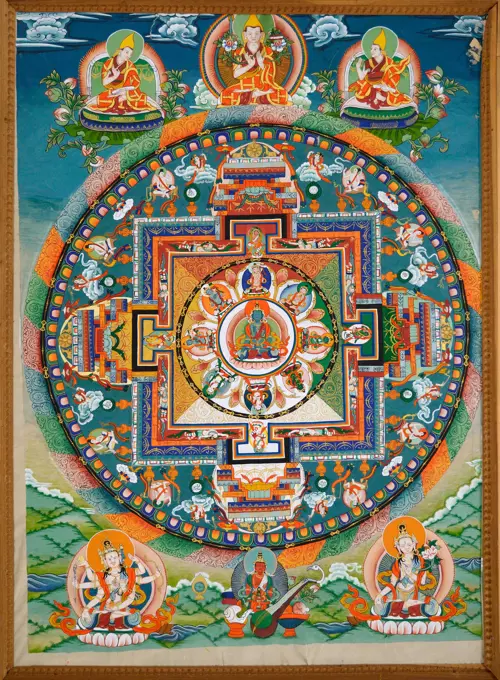
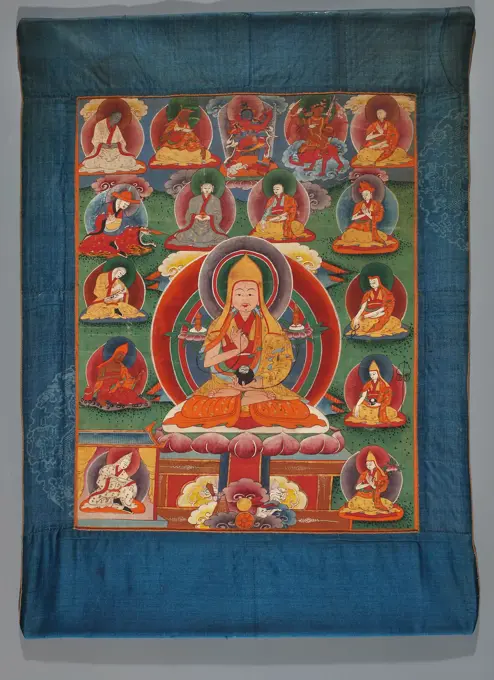
Colorful Tibetan Buddhist thangka artworks showcasing various deities and figures from the Geluk Order, rich in detail and tradition, featuring vibrant colors and intricate patterns.

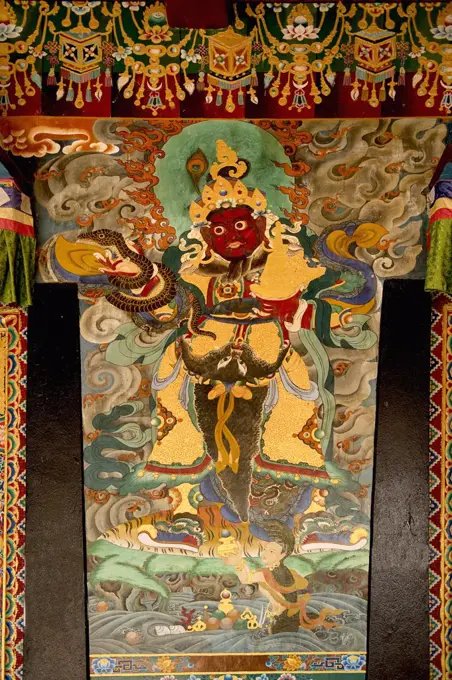
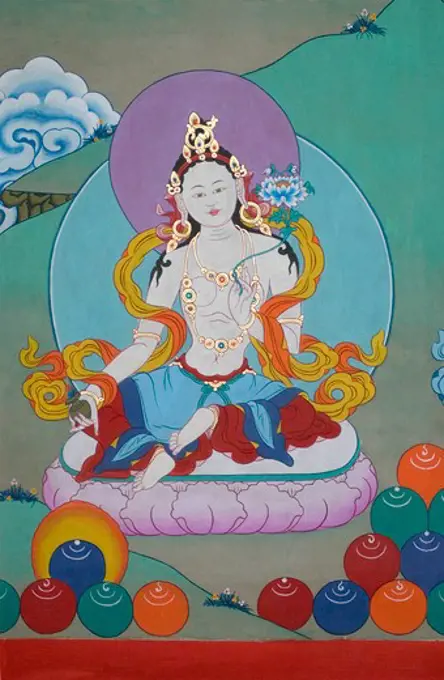
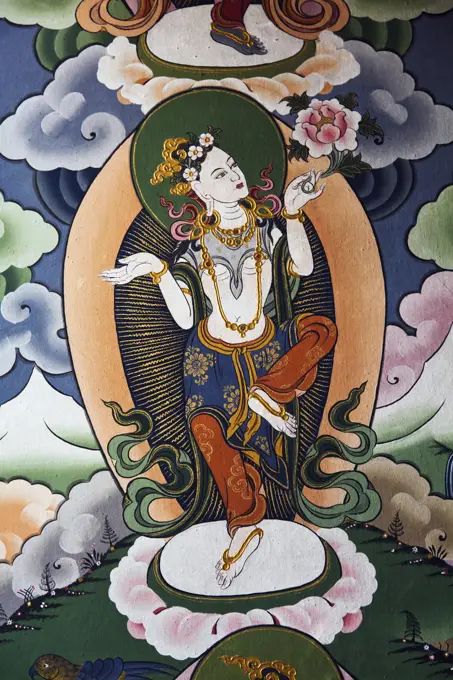
Tibetan tantric goddess, Kopan monastery, Kathmandu, Nepal, Asia
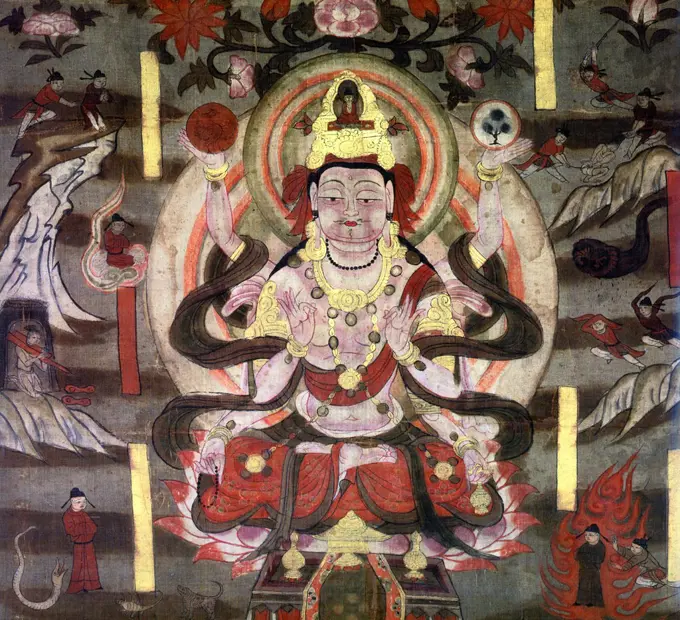
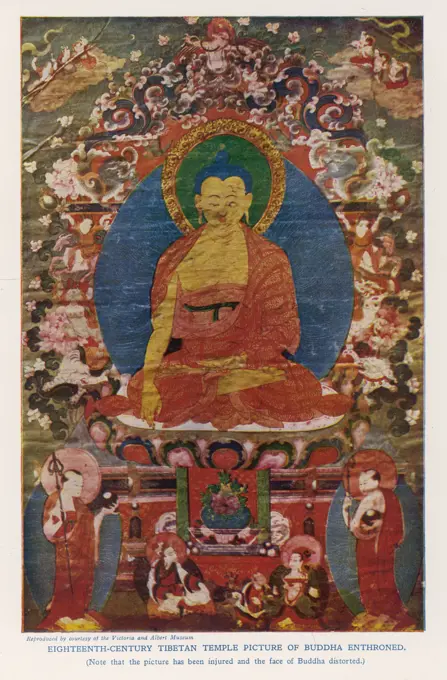
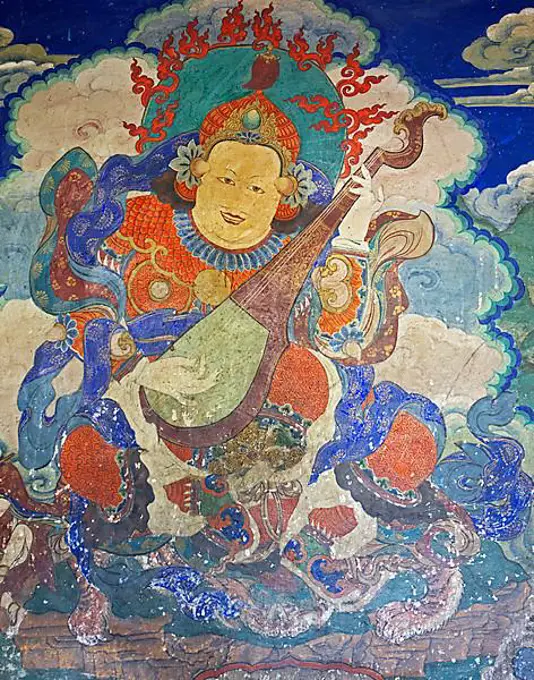
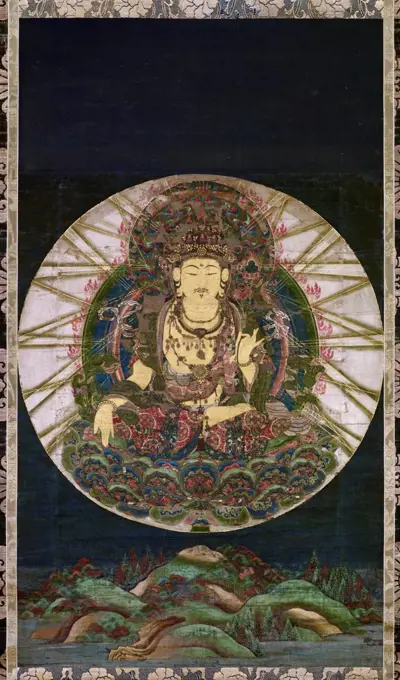
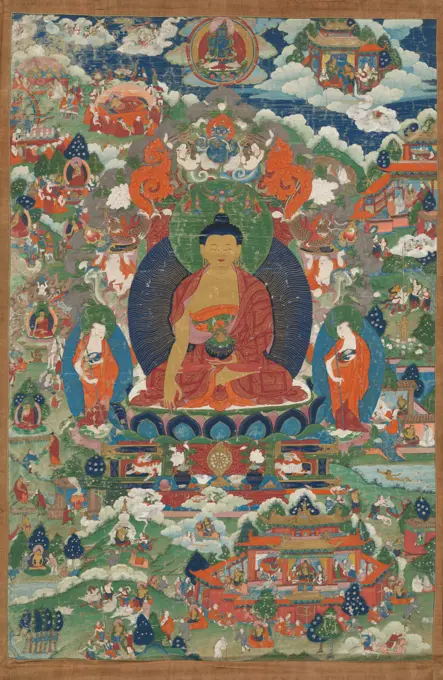
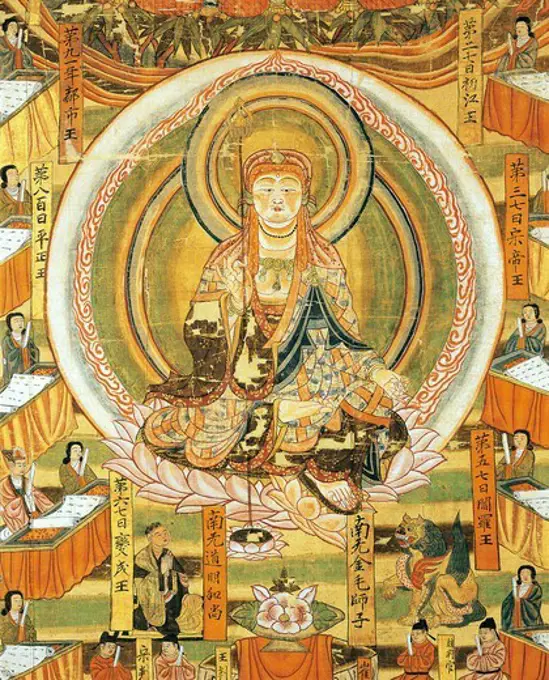
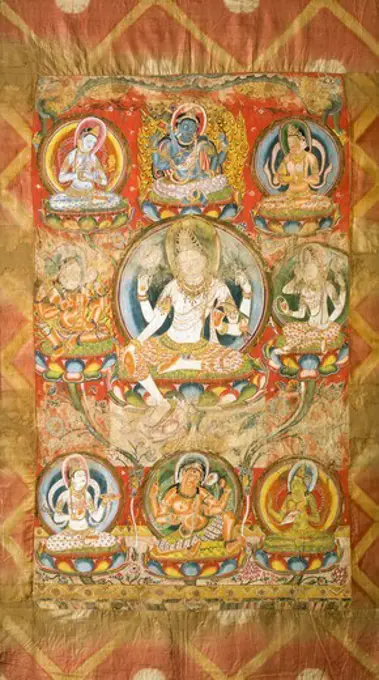
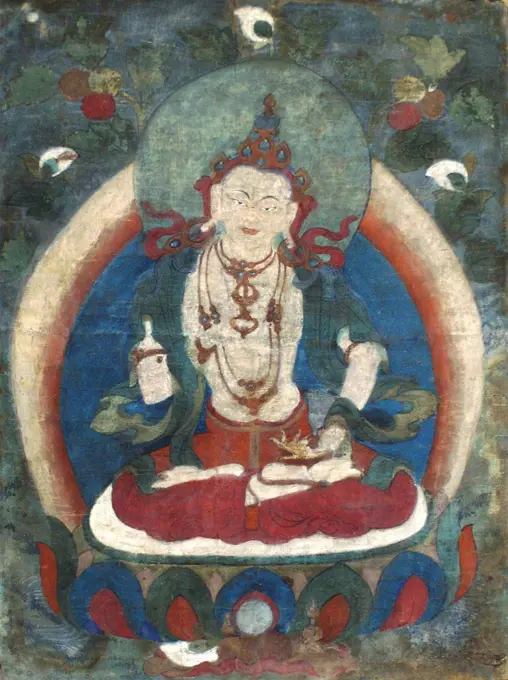
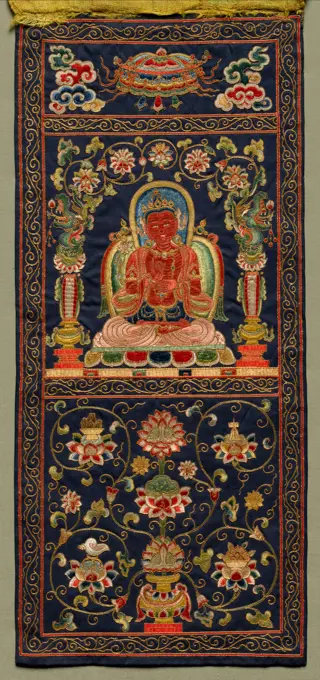
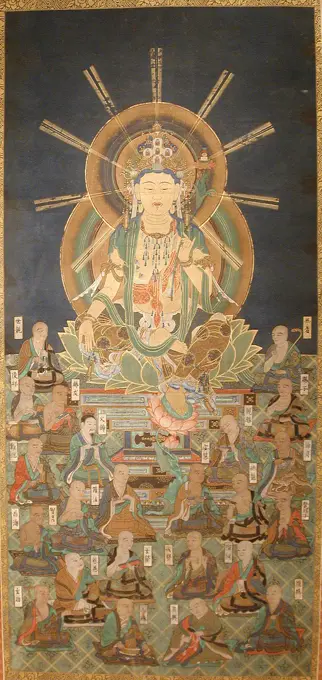
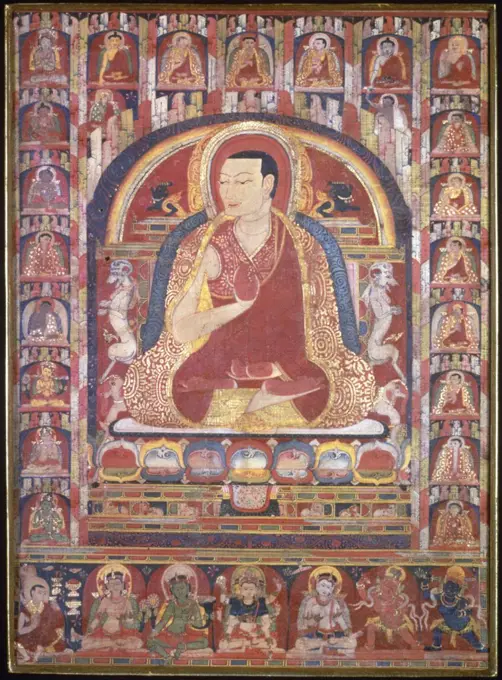
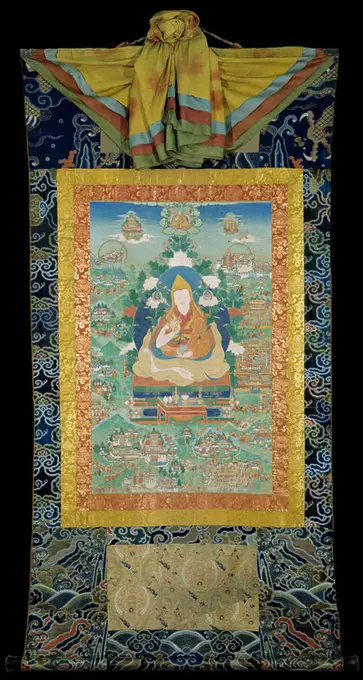
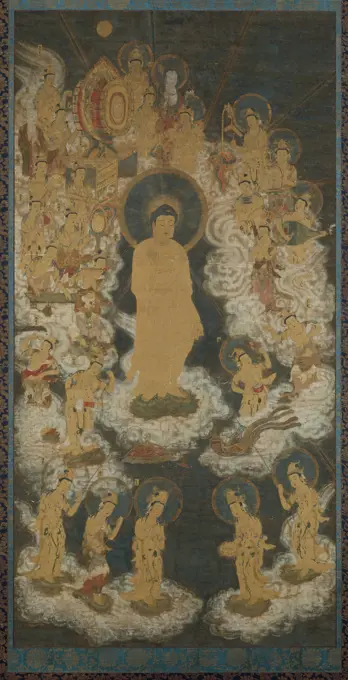
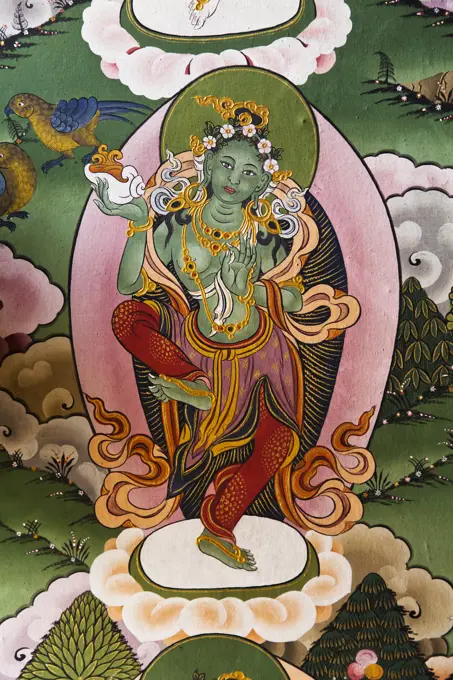
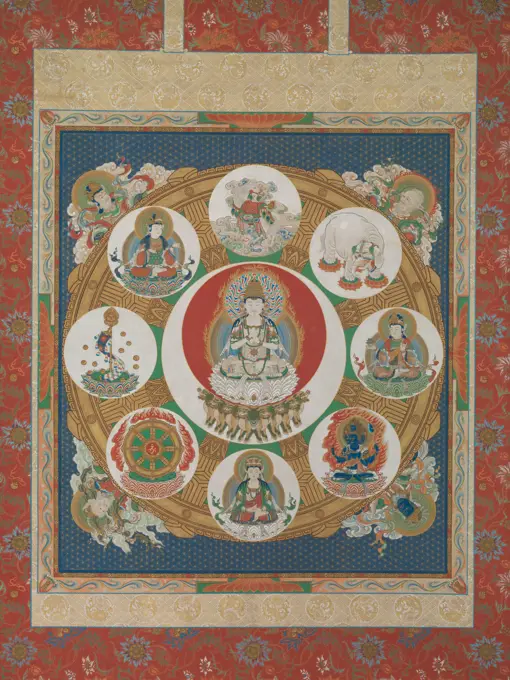
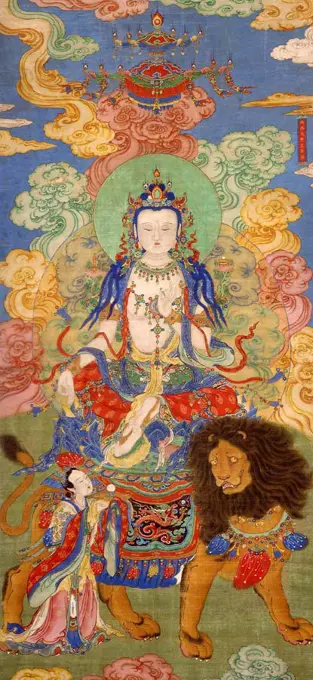
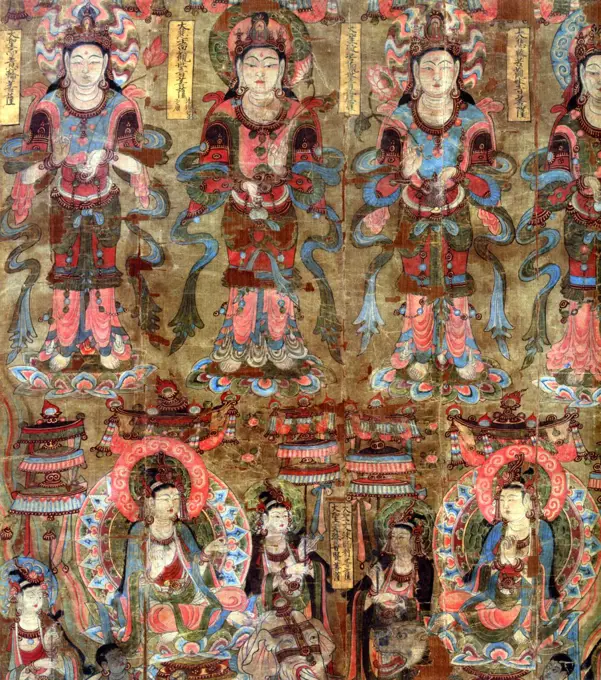
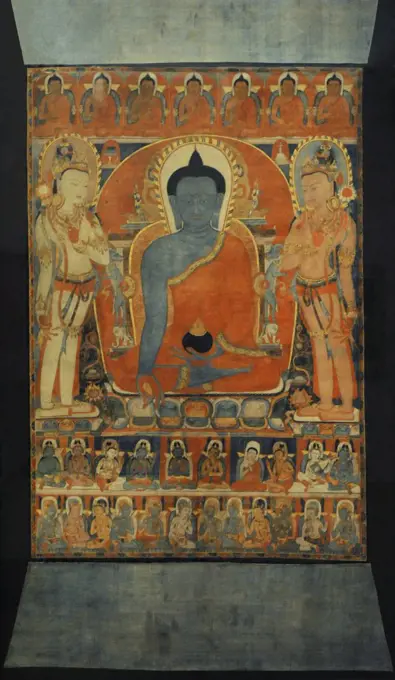
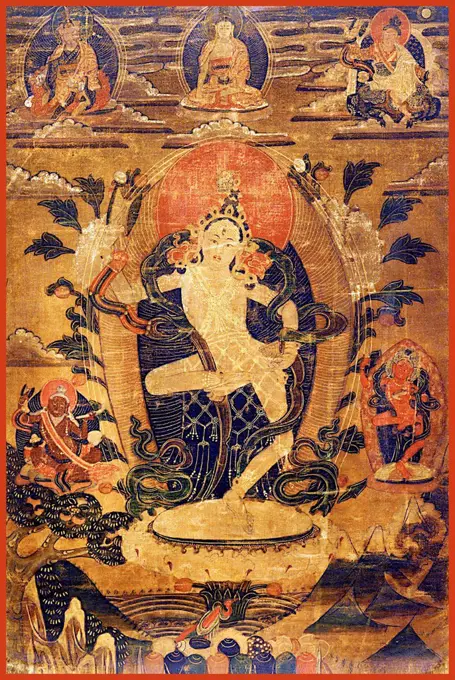
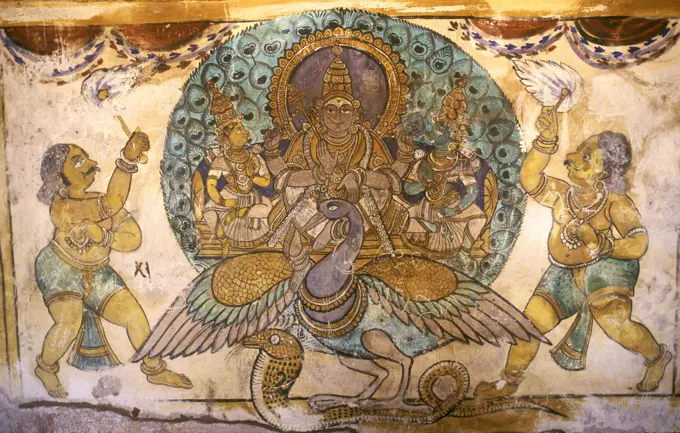
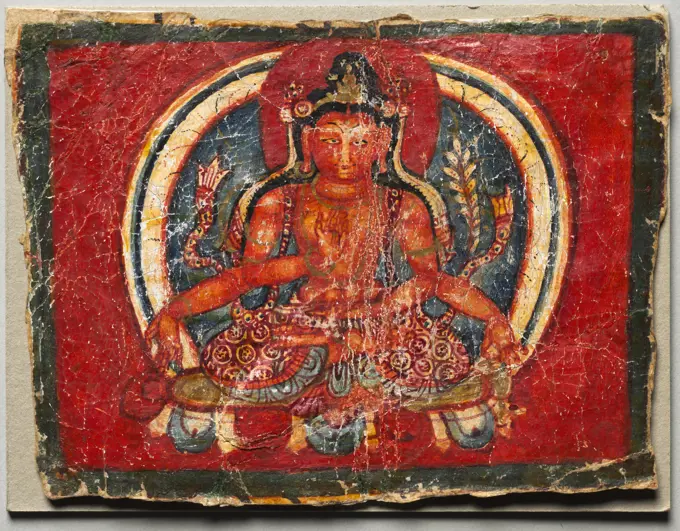
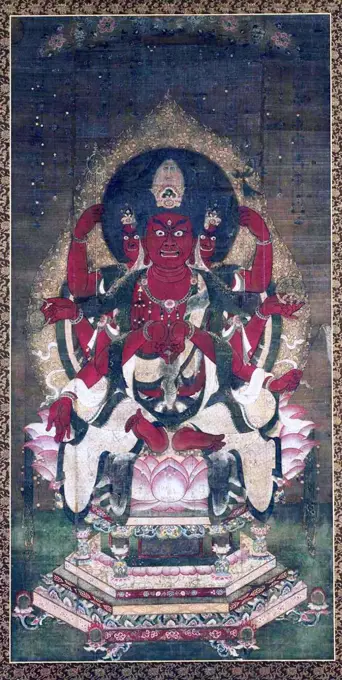
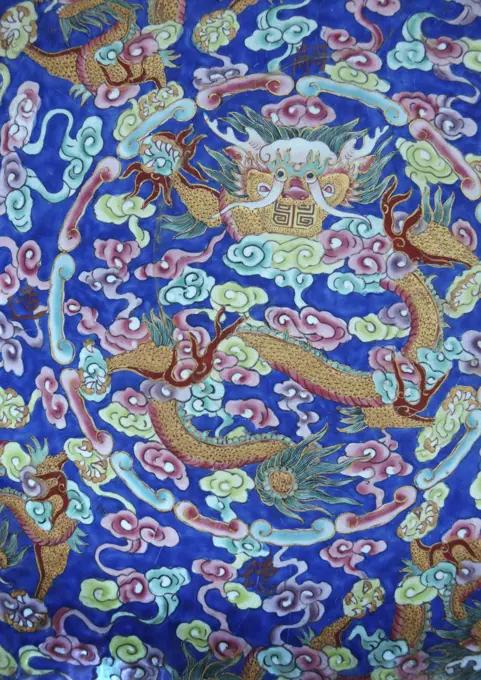
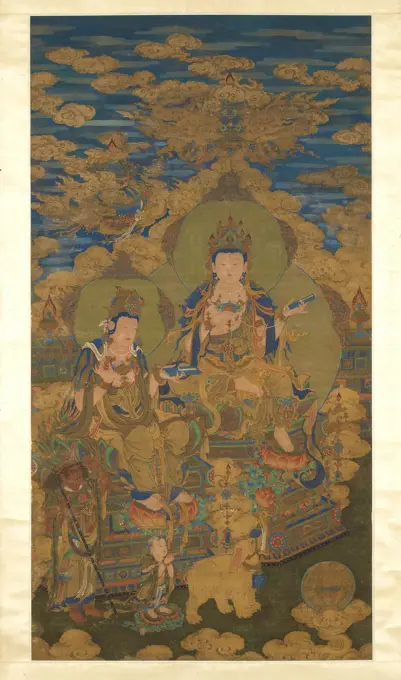
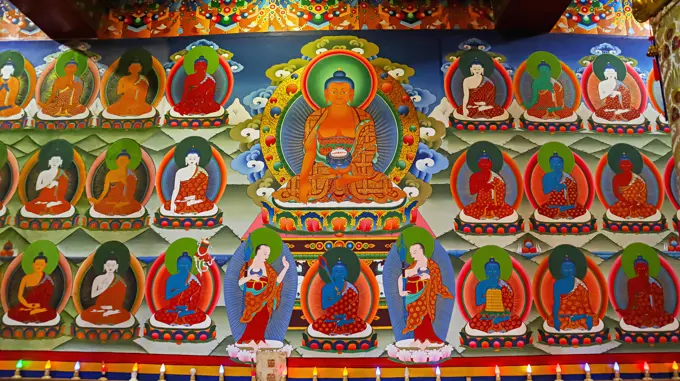
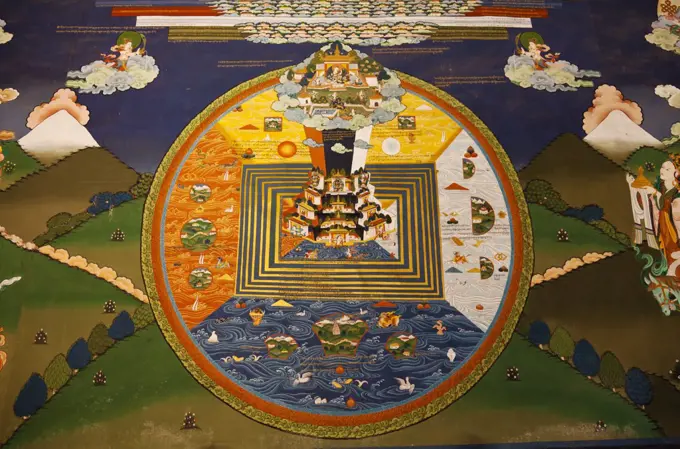
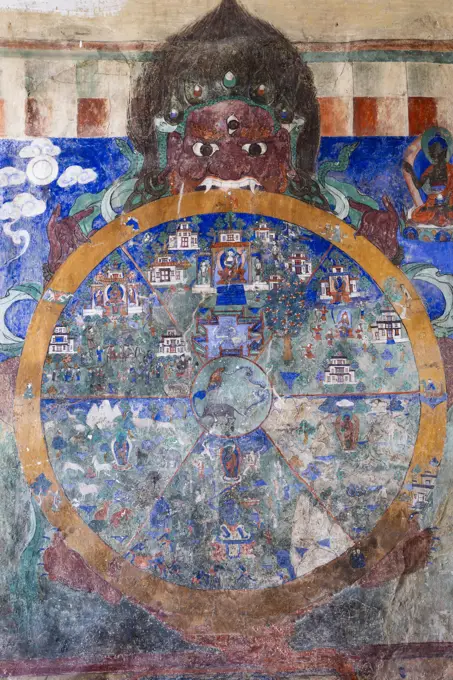
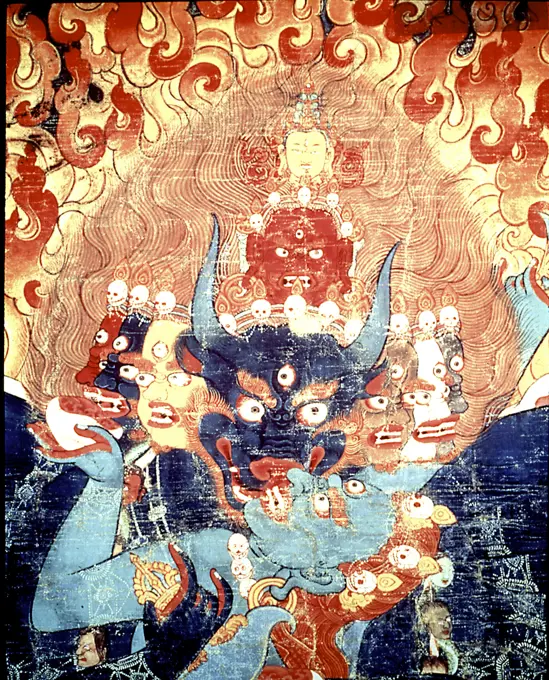
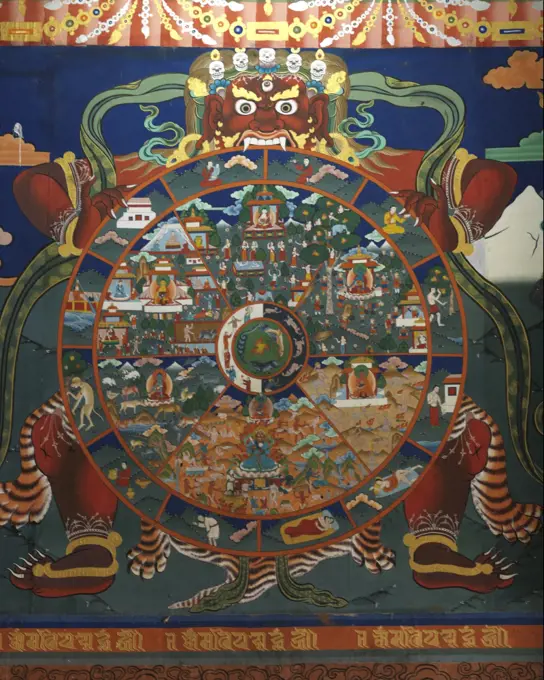
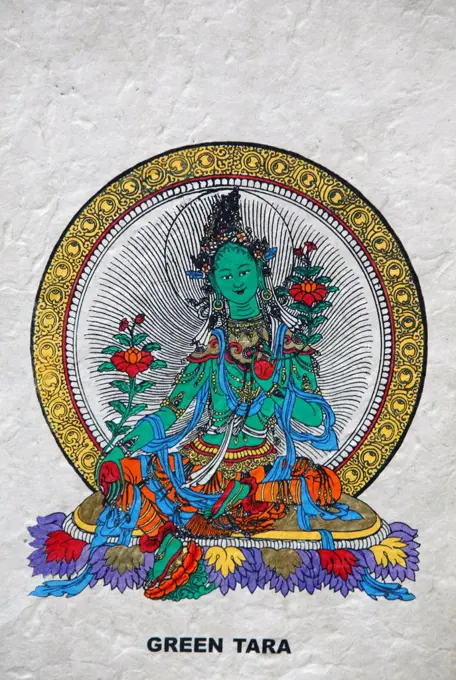
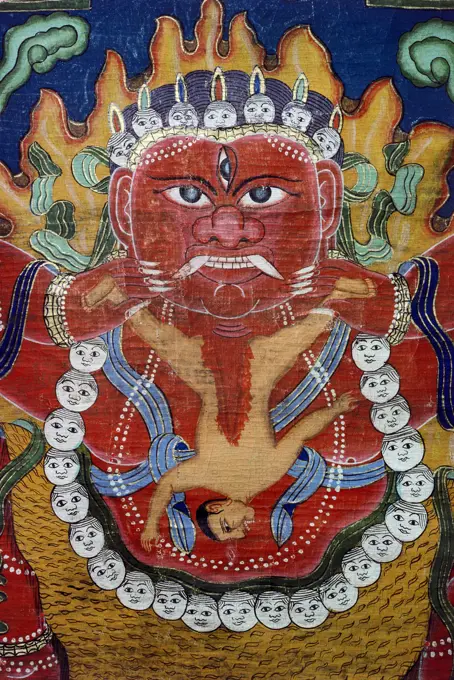
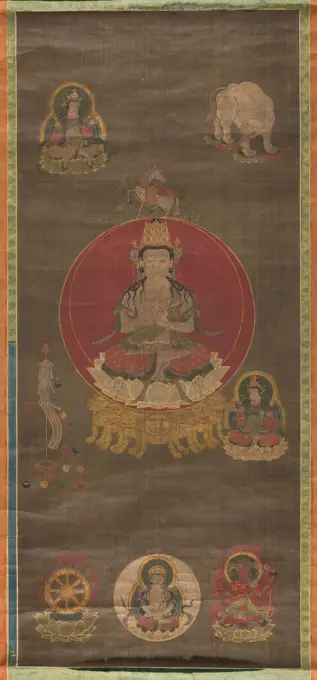
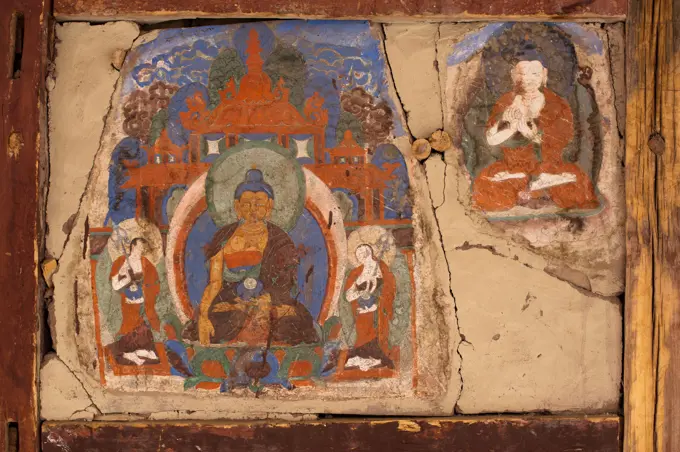
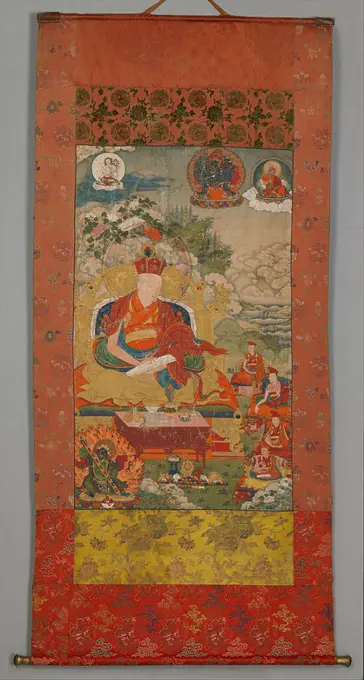
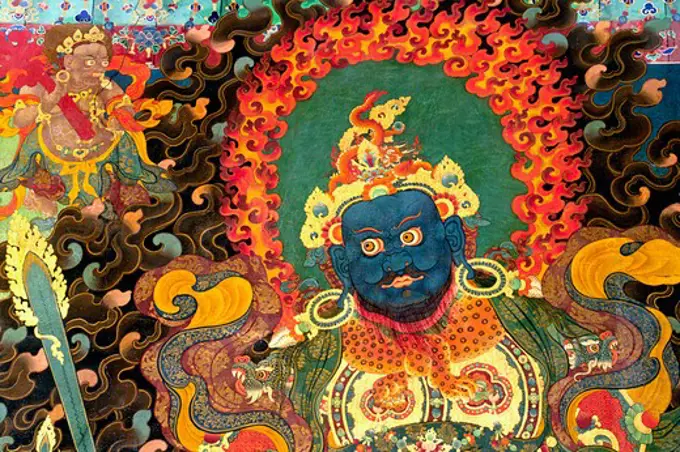
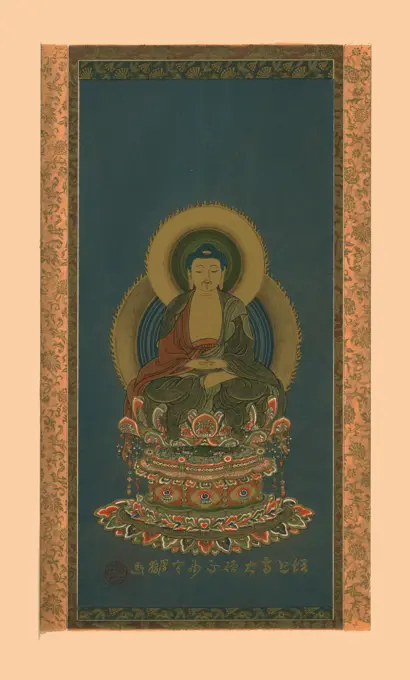
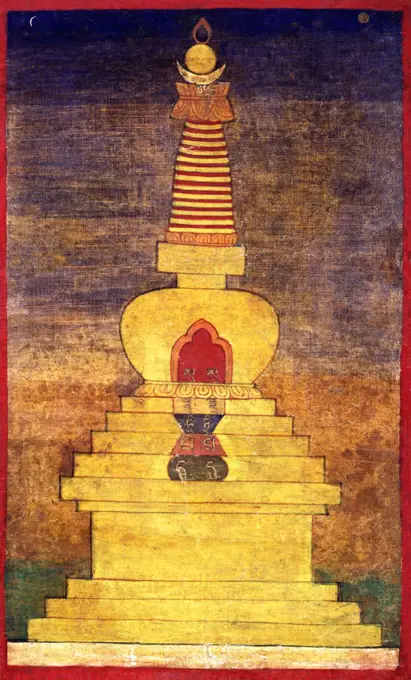
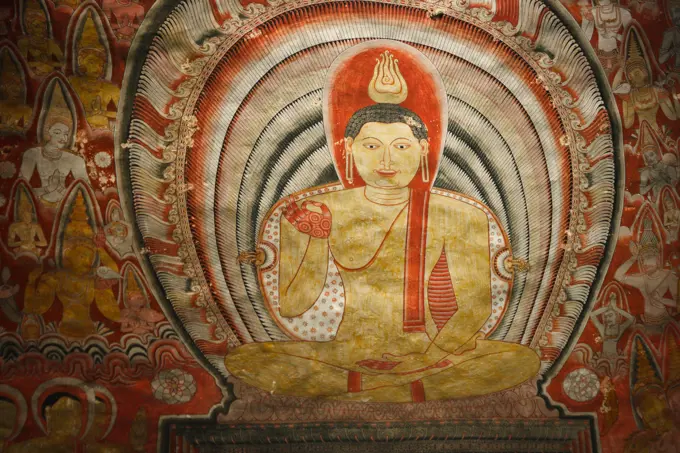
Tibetan Buddhist Thanka depicting the deities and Lamas of the Geluk Order. Painted silk and cotton, beginning of 20th century. A thangka, (tangka, thanka or Tanka) is a Tibetan Buddhist painting on cotton, or silk appliqué, usually depicting a Buddhist deity, scene, or mandalaImage of Avalokitesvara from the Mogao Caves, Dunhuang. Collected by Sir Marc Aurel Stein, c. 1902. Avalokiteśvara ('Lord who looks down') is a bodhisattva who embodies the compassion of all Buddhas. He is one of the more widely revered bodhisattvas in mainstream Mahayana Buddhism. The lesser scenes portrayed around the main portrait show a man in stocks, another menaced by a snake, and a third about to be beheaded. The Mogao Caves, or Mogao Grottoes (Chinese: mò gāo kū), also known as the Caves of the Thousand Buddhas and Dunhuang Caves, form a system of 492 temples 25 km (15.5 miles) southeast of the center of Dunhuang, an oasis strategically located at a religious and cultural crossroads on the Silk Road, in Gansu province, China. The caves contain some of the finest examples of Buddhist art spanning a period of 1,000 years. The first caves were dug out 366 AD as places of Buddhist meditation and worship. The Mogao Caves are the best known of the Chinese Buddhist grottoes and, alongTAPIZ DE SEDA ESTILO TARTARO - DETALLE. Location: PRIVATE COLLECTION. MADRID. SPAIN. BUDDHA. VAIROCANA.Amitayus, the Bodhisattva of Limitless Life. Date/Period: 1761; Qing Dynasty (1644-1911), Qianlong Period (1736-1795). Textiles. Appliquéd silk with cloth mounting Appliquéd silk with cloth mounting. Height: 635.51 mm (25.02 in); Width: 444.75 mm (17.50 in). Author: Chinese unknown.White Tara and Green Tara 1450-1500 Western Tibet (Guge) In this unique arrangement of an extremely rare subject, two taras are seated on lotus thrones rising from pools set in a mountainous backdrop. The White Tara, represented with the multiple eyes of omniscience, sits in meditation posture, while the Green Tara hangs one leg pendant. Both lower one hand in the boon-giving varada mudra. The two wives of the first king of Tibet, Songtsen Gampo, were understood to be emanations of Tara; the princess from Nepal is identified with White Tara and the Chinese princess with Green Tara. As King Songtsen Gampo is accepted as a manifestation of Avalokiteshvara, the bodhisattva and the two taras depicted here are understood to evoke the historical figures credited with establishing Buddhism in Tibet. A Kashmiri influence is detectable in the Guge school, seen here in the sculpted torsos and dress.. White Tara and Green Tara. Western Tibet (Guge). 1450-1500. Distemper on cloth. PaintingsAncient wall paintings from the Lamaist Monastery of Hemis, Laddakh, India.fine arts, Tibet, painting, Fitfty scenes form the life of Padnasambhana, silk, 18th/19th century, Ethnological Collection, Zuerich University,Temple Hanging. Tibet, 19th century. Textiles. Silk satin, silk damask, silk plain weave with gilt-paper supplementary weft patterning, and silk satin with silk and gilt-paper supplementary weft patterning bound in twill (lampas), pieced and appliquéd, with silk cord trim.Tibetan tantric goddess, Kopan monastery, Kathmandu, Nepal, AsiaSIDDHARTHA GAUTAMA, known as  the BUDDHA ('Enlightened One')  Eighteenth century Tibetan  temple painting, depicting  the Buddha enthroned     Date: 563 BC - 483 BCAvalokitesvara, Bodhisattva of compassion, painting on silk, China. Chinese Civilisation, Tang Dynasty, 7th-10th century.Painted Banner (Thangka) of Amitayus Buddha Surrounded by One Hundred Buddhas 1801-1900 Tibet. Pigment on cloth .'Green Tara'. Buryatia, Early 20th century. Dimensions: 7x5 cm. Museum: State Hermitage, St. Petersburg.Tsong-kha-pa and scenes from his life. Date: 18th century. Opaque watercolor on cloth. Origin: Tibet. Museum: Freer Gallery of Art and Arthur M. Sackler Gallery.Banner of the Lamaico Temple, Dakini dancing with a great necklace of skulls, Tibet. Tibetan Civilisation, 19th century.Mural painting, Sankar Monastery or Gompa, Leh, Ladakh, India, AsiaJapan: The bodhisattva Kokuzo Bosatsu (Akasagarbha), hanging scroll, painting on silk, Kamakura Period (13th Century), Tokyo National MuseumDancing Red Ganapati of the Three Red Deities. Date/Period: 15th century - 16th century. Painting. Pigments on cloth Pigments on cloth. Author: UNKNOWN.Complicated wall art with Buddhist deities in the Tawang monastery, Tawang, Arunachal Pradesh, India. Complicated wall art with Buddhist deities in the Tawang monastery, Tawang, Arunachal Pradesh, India.The green Tara. Gouache.Mandara (pantheon), c.1700. Tibet, Qing dynasty (1644-1911), 18th century.Six paths of rebirth and the ten kings Bodhisattva Ksitigarbha, 983, painting on silk, China. Detail. Chinese Civilisation, 8th year of the Taiping Xingguo period,10th century.Choijin Lama Temple, Thangka painting representing the deity Sita Mahakala, Ulaanbaatar, Mongolia, AsiaPadmasambhava, (Sanskrit Padmakara; Tibetan Pemajungne; Chinese Lianhuashang) or 'Lotus Born', was a guru from Oddiyana (modern Swat) who is said to have transmitted Vajrayana Buddhism to Bhutan and Tibet and neighbouring countries in the 8th century. In those lands he is better known as Guru Rinpoche ('Precious Guru') or Lopon Rinpoche, or, simply, Padum in Tibet, where followers of the Nyingma school regard him as the second Buddha. His Pureland Paradise is Zangdok Palri (the Copper-coloured Mountain). He is further considered an emanation of Buddha Amitabha and traditionally even venerated as a second Buddha. He was born into a Brahmin family of Northwest India.Artwork on the interior walls of Drepung Monastery near Lhasa in Tibet, Tibet Autonomous Region ChinaMandala of the Five-deity Amoghapasha, the infallible laccio, painting on silk from the Mogao Caves in Dunhuang, Gansu Province, China. Chinese Civilisation, Tang Dynasty, 7th-10th century.Vajrasattva, Tibetan culture  Thangka with the Seventh Bodhisattva, 1368-1424. China, Ming dynasty (1368-1644). Embroidery, silk and gold thread on silk satin ground; overall: 43.8 x 19.5 cm (17 1/4 x 7 11/16 in.); mounted: 56.8 x 31.8 cm (22 3/8 x 12 1/2 in.). In remarkably pristine condition, this embroidery is from a dispersed set that included images of protectors and bodhisattvas. The embroidery technique and pictorial style are Chinese, but the subject matter and the type of devotional hanging called a thangka are associated with Tibetan Buddhism. Historical records state that during the early Ming dynasty (1368-1644), gifts of Buddhist art were sent from China to Tibet, since relationships between Chinese rulers and Tibetan monastic patriarchs were strong and amicable during this time. A Tibetan inscription on the back notes that this figure is the seventh bodhisattva,” indicating the position in which it would have hung in a temple hall. Odd-numbered works were hung on one side of the main image, and evenDetail from Chinese Emperor's court robe, 19th century. Artist: UnknownBon or Bon Po (Bonpo) is a sect of Tibetan Buddhism. It developed in the eleventh century onward  and established its scriptures mainly from terma (hidden treasures) and visions by tertons (discoverers of ancient texts) such as Loden Nyingpo.Hoss Mandala 16th century Japan This painting is a manifestation of the transmission of Hoss-school teachings from India and China to Japan. One of the eight earliest Buddhist schools, Hoss (Faxiang in Chinese; Dharmalakshana in Sanskrit) was founded by the great monk Genj (Xuanzang in Chinese; 596-664) and his eminent disciple Kiki, also known as Jion Daishi (Guiji in Chinese; 632-682).As the legendary founder of the Hoss sect, Miroku Bosatsu (Maitreya Bodhisattva) is enshrined as the central deity, facing forward. Depicted against a lozenge-grid background are twenty-three patriarchs of the Hoss school in three-quarter view, arranged symmetrically in two groups, flanking the central image. Each of them can be identified with a name written in a cartouche next to the image. Chinese and Japanese priests appear below the Indian patriarchs. All of the figures are portrayed wearing detailed and colorful garments in a schematic manner that suggests a date of the second half of the siShakyamuni Buddha Surrounded with Scenes of his Life , 18th century. Hanging scroll, painting on canvas, 39 1/2 x 23 1/4 in. (100.4 x 59 cm).   Asian Art 18th centuryBuddha Vairocana. Date/Period: 14th century. Painting. Pigments on cloth Pigments on cloth. Author: UNKNOWN.Buddhist tantra, Tibetan culture, Watercolor on silk, circa 1273, Usa, Baltimore, Walters Art Museum, 28,2x21Green Tara Thangka, Manjusri Monastery, Ulaanbaatar, Mongolia, AsiaThe Fifth Dalai Lama's Descent from the Pure Lands. Date/Period: 18th century. Painting. Pigments on cloth Pigments on cloth. Height: 1,794 mm (70.62 in); Width: 1,028.70 mm (40.50 in). Author: UNKNOWN.Wall mural of 4 headed yogic emanation of Aviloketisvara, Tagong  Monastery (Lhagang Gompa) - Kham (E. Tibet), Sichuan Province, ChinaPhysician Yutog Yontan Gonpo. Date/Period: Late 17th century. Painting. Ground mineral pigment on cotton Ground mineral pigment on cotton. Author: UNKNOWN.Painted buddha in a buddhist temple of Kathmandu, Nepal, AsiaIndia,  Sikkim, Art in the architecture of a Buddhist Monastery. Detail of wall paintings.Mural painting from the Lamaist Monastery of Hemis, Laddakh, India.Buddhist Deity Green Tara with Twenty-oneManifestationsGaruda-Feathered Hayagriva and ConsortWelcoming Descent of Amida and Bodhisattvas late 14th century Unidentified artist Like many of the works of art created to represent the Pure Land belief in salvation through faith, raig ("welcoming descent") paintings like this one were indispensable religious furnishings at the time of death. Such raigo paintings depict the scene in which Amida (Sanskrit: Amitabha) and his attendants descend from heaven to take a believer back to the Western Paradise on a lotus throne. The scrolls were often hung by the bedside of the dying to ensure the prospect of rebirth in paradise. Since traditionally the dying lay with their heads to the north and their faces turned west, raig paintings usually depict the Buddha and his entourage coming from the upper left down toward the lower right so as to meet the gaze of the dying. Sometimes silken cords were attached to Buddha's hand, offering the dying physical assistance during the journey to paradise. Listen to experts illuminate this artwork's storyWall painting in the small butter lamp lhakhang at Dochu La.Mandala of the One-Syllable Golden Wheel 18th century Japan The Mandala of the One-Syllable Golden Wheel (Japanese: Ichiji Kinrin Mandara) envisions the power of a single Sanskrit syllable, the utterance of which calls forth a personification of the cranial protuberance of the Buddha. It is used in rituals for the prevention of disaster, for the expansion of wealth, and for success in love, as well as for assuring safe delivery of children, career success, and propitious weather. The figural representation of the sound sits at the center of the mandala on a lotus pedestal borne by eight lions. It resembles the Buddha Dainichi (Sanskrit: Vairochana) and holds its hands in a sacred gesture known as the wisdom-fist mudra, which symbolizes the non-duality of perfect wisdom and the deluded nature of unenlightened beings. The surrounding figures and forms represent the seven emblems of sovereignty of supreme rulers and the deity Butsugen Butsumo, literally Buddha-eye, Buddha-mother,” who crMahasthamaprapta Bodhisattva late 17th-early 18th century Unidentified artist About 1900 the French Sinologist Paul Pelliot acquired a large group of paintings in Beijing that had come from a Qing imperial repository. Included in that group was a partial set of paintings that were created for the Water-Land ritual, a Buddhist mortuary ceremony conducted for the salvation of all the souls of the dead, whether on land or at sea. This painting may have come from the same set. A cartouche in the upper right corner of the composition identifies the deity portrayed here as Mahasthamaprapta (Dashizhi, in Chinese), a bodhisattva or enlightened being whose name means "one who has attained great power." Seated on a strikingly realistic lion mount and accompanied by a female attendant bearing a pearl, the bodhisattva holds the stem of a lotus with two blossoms that appear above his shoulders, one supporting a pearl, the other a thunderbolt-like implement (vajra). His right hand forms the mudra foAvalokitesvara (Sanskrit: 'Lord who looks down') is a bodhisattva who embodies the compassion of all Buddhas. He is one of the most widely revered bodhisattvas in mainstream Mahayana Buddhism. The Chinese name for Avalokitasvara is Guanshyin (Guanyin, Goddess of Mercy), and is generally represented as female. Mañjusri is a bodhisattva associated with transcendent wisdom (Sanskrit. prajña) in Mahayana Buddhism. Samantabhadra (Sanskrit: 'Universal Worthy'), is a Bodhisattva in Mahayana Buddhism associated with Buddhist practice and meditation. Together with Shakyamuni Buddha and fellow bodhisattva Manjusri he forms the Shakyamuni trinity in Buddhism.World Erotic Art Museum. Love and passion in Tantric Buddhist art. Unknown artist Tibet. Thangka. Miami, Florida, USA.VIRUDHAKA The KING OF THE SOUTH guards the entryway to the MAIN ASSEMBLY HALL of SERA JE COLLEGE - SERA MONASTERY, LHASA, TIBETBhaisajyaguru, the Medicine Buddha. Tangut State of the Western Xia (982-1227). Khara-Khoto. Late 12th-13th century. Tangka: colours on cotton.The State Hermitage Museum. Saint Petersburg. Russia.Asia, Bhutan. Wheel of Life mural on wall at Trongsa Dzong.Machig Labdrön (Tibetan: མ་གཅིག་ལབ་སྒྲོན་, Wylie: Ma-gcig Lab-sgron) was a renowned 11th century Tibetan Tantric Buddhist practitioner and teacher. Machig Lapdrön was a great Tibetan yogini who originated several Tibetan lineages of the Indian tantric practice of Chöd. Machig may have come from a Bönpo family and, according to Chogyal Namkhai Norbu Rinpoche, developed Chöd by combining native Tibetan Bönpo shamanism with the Dzogchen teachings. Machig's Chöd, also known as Mahamudra Chöd, has been widespread in Tibet since Machig's lifetime. It is also called 'The Beggars' Offering' or 'The Cutting-Off-Ritual. ' Chöd is a visionary Buddhist practice of cutting attachment to ones corporeal form (in terms of the dualistic proclivity to relate to one's corporeal form as a reference-point that proves ones existence). In some lineages of the Chöd practice, chodpas and chodmas (practitioners of Chöd) use a bell, small drum (a Chöd damaru), and a thigh-bone trumpet (kangling) made of human Lord subrahmanya with valli and devasena on peacock eighteenth century mural in Brihadeeshswara temple Thanjavur Copyright: xMxAmirtham/DinodiaxPhotoxFour-armed Maitreya, c. 1150-1200. Western Tibet or Kashmir (?), Guge School (?), c. early 13th century. Color and varnish on paper (manuscript fragment); overall: 6.8 x 9 cm (2 11/16 x 3 9/16 in.).Hayagriva (also Hayagreeva; Sanskrit: Hayagriva) is a horse-headed deity that appears in both Hinduism and Buddhism and is known as Bato Kannon in Japan. In Hinduism, Hayagriva is also considered an Avatar of Vishnu. He is worshipped as the God of Knowledge and Wisdom, with a human body and a horse's head, brilliant white in color, with white garments and seated on a white lotus. Symbolically, the story represents the triumph of pure knowledge, guided by the hand of God, over the demonic forces of passion and darkness. In Japan, Bato Kannon  is the Horse-Headed Kannon (Guanyin). Protector of Animals. Bato Kannon appears in the Mahavairocana Sutra (Jp. = Dainichikyo ; composed sometime in the 6th / 7th century AD) and other tantric texts. He is thus a member of the esoteric pantheon. Bato is also one of the Six Kannon. In this latter role, Bato protects those reborn in the animal realm (chikushodo ), a realm characterized by stupidity and servitude. In Japan, farmers pray to BCHINA, Yunnan Province, Lijiang. Lijiang Old Town, Mural at the Mu Family Mansion.Asia, Vietnam. Naga ceramic plate, The Citadel, Hue, Thua Thien-HueVaishravana, Guardian of Buddhism and Protector of Riches Tibet early 15th century Vaishravana is a complex Buddhist deity who embodies many strands of thought and belief. Tibetans understand him foremost as the premier of the four guardians of the cardinal directions (lokapalas), associated with the North. In this role he serves as a protector (dharmapala) of Buddhist law. Here we see Vaishravana seated on his snow-lion mount in a stormy atmosphere, accompanied by his generals, the eight Lords of the Horses (asvapati), each riding a storm cloud. Central is Vaishravana himself, dominant is scale and represented emerging from a tumultuous skyscape. He is dressed as a warrior-king in full battle armor with a patterned tunic suggestive of chain-mail armor, mounted with a large lozenge chest-plate with pearl-and-lotus medallion and Chinese-style lion-face protective lappets on the shoulders. Decorated high boots point to his Central Asian ancestral connections. This celebrated Tibetan deitTwo versions of bodhisattva Guanyin, c. 1750, Ding Guanpeng, Chinese, active 1740-1768, 60 1/2 x 31 15/16 in. (153.67 x 81.12 cm) (image), Ink and color on silk, China, 18th century, The court painter Ding Guanpeng was prominent during the Qianlong reign (1736-95) as a painter of Buddhist and Daoist subject matter. In this exquisitely painted hanging scroll, subtle shades of blue and gold combine with fluid drawing and fine details to give the composition a courtly elegance. The scene depicts two versions of Guanyin, the bodhisattva of compassion, each sumptuously attired in silk and jewelry and holding sutras (Buddhist scriptures) while seated in the position of 'royal ease' atop elaborate pedestals. In the foreground are an arhat (one who has attained enlightenment) carrying a walking staff, the child prodigy Sudhana seeking spiritual council, and a six-tusk white elephant, all paying homage to Buddhist thought.Mural of White Tara in a Tibetan Monastery in Dabpa County, Kham - Sichuan Province, China, (Tibet)painting of lord Buddha, Sikkim, india Copyright: xDebasishxBanerjee/DinodiaxPhotoxLiving wall paintings that Lord Buddha represent in various meditative and teaching attitudes, Tawang Monastery, Arunachal Pradesh, India. Living wall paintings that Lord Buddha represent in various meditative and teaching attitudes, Tawang Monastery, Arunachal Pradesh, India.Wall paintings with motifs of Buddhist mythology in the Trashi Chhoe Dzong monastic fortress, Thimphu, Bhutan, AsiaSera Monastery, Tibet, China, AsiaDipanka Buddha (Buddha lighthouse keeper);  1. PO. 20th century (1901-00-00-1950-00-00);Wall painting in Trongsa Dzong. Trongsa Dzong, built on a spur overlooking the gorge of the Mangde River, is the largest dzong fortress in Bhutan.Chijang Posal (Korean version of Ksitigarbha) as Supreme Lord of the Underworld. Ksitigarbha is a bodhisattva primarily revered in East Asian Buddhism, usually depicted as a Buddhist monk in the Orient. The name may be translated as 'Earth Treasury'. Ksitigarbha is known for his vow to take responsibility for the instruction of all beings in the six worlds between the death of Gautama (Sakyamuni) Buddha and the rise of Maitreya Buddha, as well as his vow not to achieve Buddhahood until all hells are emptied. He is therefore often regarded as the bodhisattva of hell beings, as well as the guardian of children and patron deity of deceased children and aborted foetuses in Japanese culture. Usually depicted as a monk with a nimbus around his shaved head, he carries a staff to force open the gates of hell and a wish-fulfilling jewel to light up the darkness.Buddhistisches Wandgemälde, tibetischer Buddhismus, Todesgott Yama hält das Rad des Lebens, Kloster Dskit, bei Hunder, Nubra-Tal, Ladakh, Jammu und Kaschmir, Indischer Himalaya, Nordindien, Indien, Asien Buddhistisches Wandgemälde, tibetischer Buddhismus, Todesgott Yama hält das Rad des Lebens, Kloster Dskit, bei Hunder, Nubra-Tal, Ladakh, Jammu und Kaschmir, Indischer Himalaya, Nordindien, Indien, Asien LicenseRF Copyright: xZoonar.com/WalterxG.xAllgöwerx 23250783The Thirteen-Deity Yamantaka. Father-Mother. Tibet 17th 18th cent.Mural at Rinpung Dzong, Paro Valley, Paro District, BhutanBuddhist fresco Wheel of Dharma. Old buddhist fresco at the wall of tibetan monastery Copyright: xZoonar.com/NatalliaxYaumenenkax 4752554Vaishravana, GAURDIAN OF THE NORTH , WALL FRESCO to protect gompa (monastery) entrance, LAMAYURU - LADAKH, INDIASouvenirs, handicrafts in Madurai, South India, India, Asia, Traditional depiction of a Hindu goddess, flanked by elephants and flower motifs, Impressions from South India, Thanjavur, Madurai, Kovalam, Malabar Coast, Malabar, Kerala, AsiaWall painting in the small butter lamp lhakhang at Dochu La.Mural inside Tagong Monastery, Tagong, western Sichuan, ChinaGreen Tara, Buddhist symbol of prosperity. Kopan monastery.Korea,Seoul,Jogyesa Temple,Daeungjeon or Hall of the Great Hero,Exterior Panels depicting Life of BuddhaGoddess Kali Tanka Painting  Tibetan Art NepalPainted Banner (Thangka) of the Avalokiteshvara Incarnation of the Rain God Rato Matsyendranatha 1701-1900 Nepal. Opaque watercolor on textile .wall painting of demon, hemis gompa, leh, ladakh, Jammu and Kashmir, india Copyright: xAshaxAdatia/DinodiaxPhotoxBuddhist teacher. unknown, painterCosmic Man with Diagrams of Newar Yogic Six Chakra Transformation. Central Tibet, circa 19th century. Paintings. Mineral pigments and gold on cotton cloth; silk bordersPema Osel Ling Monastery. Ganesh or Ganapati, elephant-headed Hindu god. Wall painting..Mandala ichiji kinin (zon About one syllable);  XVIII-XIX century (1790-00-00-1810-00-00);Japanese (culture), kakemono, painting, mandala, Japanese art, purchase (provenance)Old mural at Buddhist monastery wall. India Old mural at Buddhist monastery wall. India, Ladakh, Hemis monastery Copyright: xZoonar.com/ xImxPerfectxLazybonesx 5284036Situ Panchen Chokyi Jungne (1699-1774). Date/Period: Early 18th century. Painting. Pigments on cloth Pigments on cloth. Author: The Tenth Karmapa.Painted buddha in a buddhist temple of Kathmandu, Nepal, AsiaDragon on Silk Robe, 19th century. Embroidery. CHINA.Detail of a seated Buddha above skulls on the crown of Raktayamari, from a rare and imperial embroidered silk thanka, Yongle period (1403-1424). 335.3 x 213.4cm.It is estimated that between two thirds and three quarters of the Bhutanese population follow Vajrayana Buddhism, which is also the state religion. About one quarter to one third are followers of Hinduism. Buddhism was introduced to Bhutan in the 7th century AD. According to legend, Guru Rinpoche ordered the Tibetan king Trisong Detsen to have 108 temples built all over the Himalayas. Doing so would aid in subduing a demoness and allow for the construction of Samye Temple in neighbouring Tibet.'Part of a Ritual Crown Depicting Buddha'. Hara-Hoto, 13th-14th centuries. Dimensions: 33,5x51 cm. Museum: State Hermitage, St. Petersburg.Ceiling paintings at the Kertha Gosa pavilion (former Hall of Justice), in Puri Semarapura Palace, Klungkung, Bali, Indonesia.VIRUDHAKA, the GAURDIAN KING of the SOUTH, at the entrance to the MAIN HALL OF SERA ME COLLEGE - LHASA, TIBETHACHIJI-MONJU (ASTA-SIKHA MANJUSRI ) AND EIGHT ATTENDANTS. Date/Period: 1200/1300. Painting. Author: UNKNOWN.China, Xizang, Colorful painted image at Sera Monastery; LhasaAmitabha, early 19th century, (1886).  Artist: Abbot of Zojoji.A stupa (Sanskrit: stūpa, Pāli: thūpa, literally meaning 'heap') is a mound-like structure containing Buddhist relics, typically the remains of Buddha, used by Buddhists as a place of worship. The term 'chorten' is used for a stupa in Tibetan Buddhism, notably in Tibet, Bhutan, Sikkim, parts of Nepal and Mongolia. Stupas are an ancient form of mandala.Tibet, Yungbulakang Palace (temple), mural paintingAncient Buddha image in Dambulla Rock Temple caves, Sri Lanka