White Tara and Green Tara 1450-1500 Western Tibet (Guge) In this unique arrangement of an extremely rare subject, two taras are seated on lotus thrones rising from pools set in a mountainous backdrop. The White Tara, represented with the multiple eyes of omniscience, sits in meditation posture, while the Green Tara hangs one leg pendant. Both lower one hand in the boon-giving varada mudra. The two wives of the first king of Tibet, Songtsen Gampo, were understood to be emanations of Tara; the princess from Nepal is identified with White Tara and the Chinese princess with Green Tara. As King Songtsen Gampo is accepted as a manifestation of Avalokiteshvara, the bodhisattva and the two taras depicted here are understood to evoke the historical figures credited with establishing Buddhism in Tibet. A Kashmiri influence is detectable in the Guge school, seen here in the sculpted torsos and dress.. White Tara and Green Tara. Western Tibet (Guge). 1450-1500. Distemper on cloth. Paintings
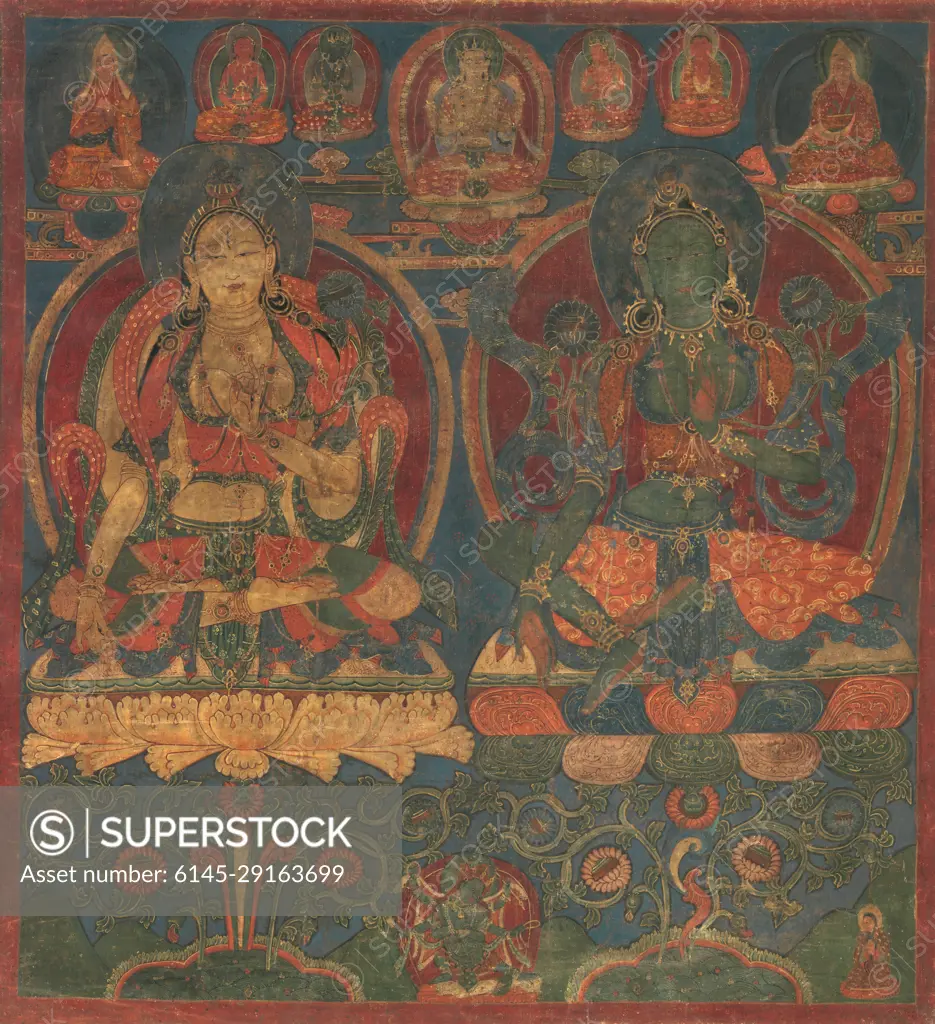
SuperStock offers millions of photos, videos, and stock assets to creatives around the world. This image of White Tara and Green Tara 1450-1500 Western Tibet (Guge) In this unique arrangement of an extremely rare subject, two taras are seated on lotus thrones rising from pools set in a mountainous backdrop. The White Tara, represented with the multiple eyes of omniscience, sits in meditation posture, while the Green Tara hangs one leg pendant. Both lower one hand in the boon-giving varada mudra. The two wives of the first king of Tibet, Songtsen Gampo, were understood to be emanations of Tara; the princess from Nepal is identified with White Tara and the Chinese princess with Green Tara. As King Songtsen Gampo is accepted as a manifestation of Avalokiteshvara, the bodhisattva and the two taras depicted here are understood to evoke the historical figures credited with establishing Buddhism in Tibet. A Kashmiri influence is detectable in the Guge school, seen here in the sculpted torsos and dress.. White Tara and Green Tara. Western Tibet (Guge). 1450-1500. Distemper on cloth. Paintings by Piemags/PL Photography Limited is available for licensing today.
Looking for a license?
Click here, and we'll help you find it! Questions? Just ask!
Click here, and we'll help you find it! Questions? Just ask!
DETAILS
Image Number: 6145-29163699Royalty FreeCredit Line:Piemags/PL Photography Limited/SuperStockCollection:PL Photography Limited Contributor:Piemags Model Release:NoProperty Release:NoResolution:3653×4000