Fine ArtVintageFootageSubscriptionBoardsFree ResearchPricing
  • Fine Art
  • Vintage
  • Footage
  • Subscription
  • Boards
  • Free Research
  • Pricing

Rocket Launch Events

Images depicting rockets during launches, both day and night. Dramatic skies, smoke trails, and lighting effects create an exciting atmosphere.
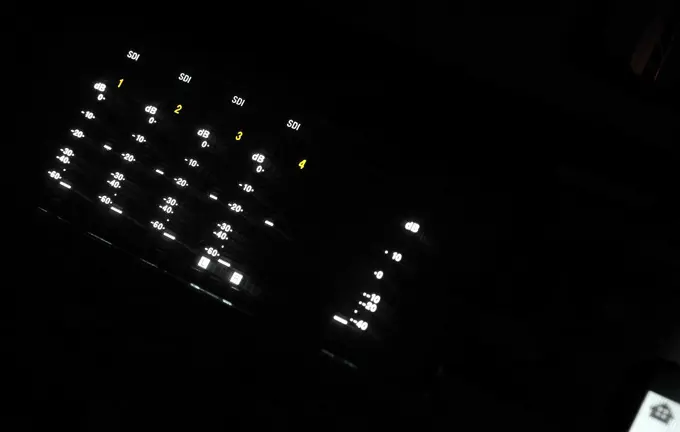
Macro shot-display of the broadcast video player, equalizer Perspective macro shot of the equalizer display of the professional digital betacam recorder. Shallow dof. Visible data: sound scale, decibels, left, right channels, meters Copyright: xZoonar.com/DanilxRoudenkox 3395069
70 assets in this story
6145-45160818
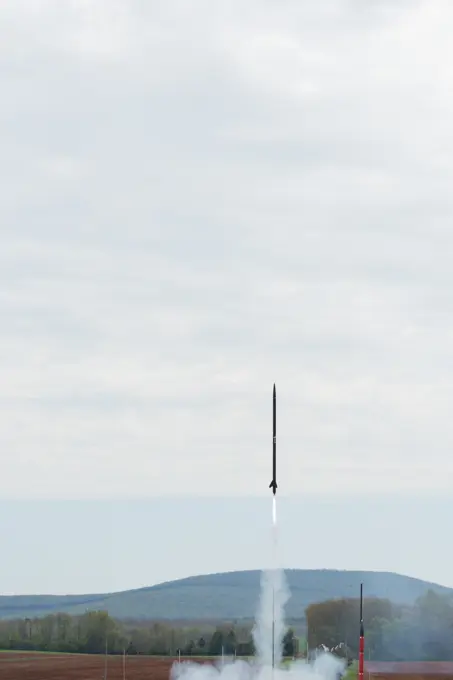
After eight months of designing, building and testing, the middle school, high school and college and university teams launched their rockets as part of NASA Student Launch on Sunday, April 8. The rockets and their payloads are designed to fly to 1-mile in altitude before deploying recovery systems that brings them safely to the ground.
4316-5390
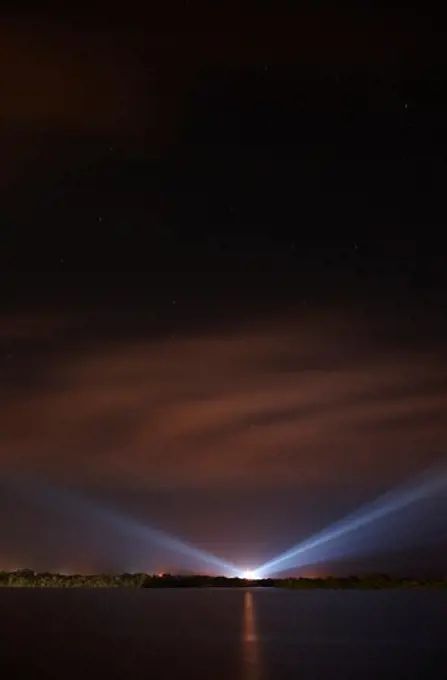
Powerful xenon floodlights illuminate Space Shuttle Endeavour on launch pad 39A and ready to depart on STS-132 at NASA Kennedy Space Center, Merritt Island, Florida, USA
6145-44578614
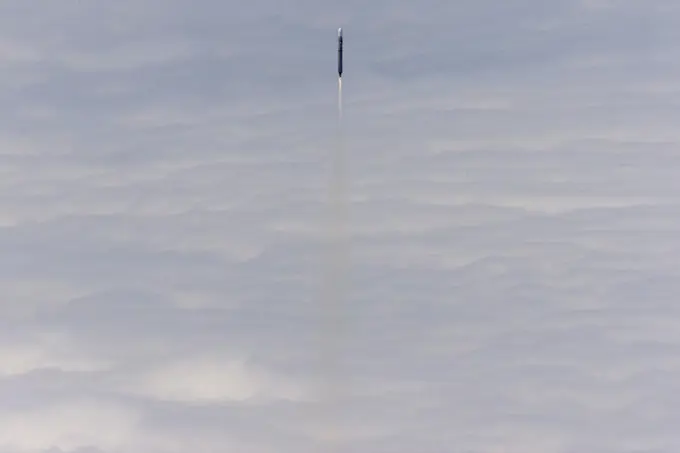
VANDENBERG AIR FORCE BASE, CALIF. --  The National Oceanic and Atmospheric Administration (NOAA) spacecraft (NOAA-M) streaks above a cloud layer after a successful launch at 2:23 p.m. EDT aboard a Titan II rocket from Vandenberg Air Force Base, Calif. NOAA-M is another in a series of polar-orbiting Earth environmental observation satellites that provide global data to NOAA's short- and long-range weather forecasting systems
6145-44469173
A SpaceX Falcon 9 rocket with the company's Crew Dragon spacecraft onboard is seen illuminated by spotlights on the launch pad at Launch Complex 39A as preparations continue for the Crew-4 mission, Tuesday, April 26, 2022, at NASAs Kennedy Space Center in Florida. NASAs SpaceX Crew-4 mission is the fourth crew rotation mission of the SpaceX Crew Dragon spacecraft and Falcon 9 rocket to the International Space Station as part of the agencys Commercial Crew Program. NASA astronauts Kjell Lindgren, Robert Hines, Jessica Watkins, and ESA (European Space Agency) astronaut Samantha Cristoforetti are scheduled to launch on 3:52 a.m. ET on April 27 from Launch Complex 39A at the Kennedy Space Center.
4316-5393
Powerful xenon floodlights illuminate Space Shuttle Endeavour on launch pad 39A and ready to depart on STS-133 at NASA Kennedy Space Center, Merritt Island, Florida, USA
6188-64695604
Macro shot-display of the broadcast video player, equalizer Perspective macro shot of the equalizer display of the professional digital betacam recorder. Shallow dof. Visible data: sound scale, decibels, left, right channels, meters Copyright: xZoonar.com/DanilxRoudenkox 3395069
6145-45147156
The Orbital ATK Antares rocket, with the Cygnus spacecraft onboard, launches from Pad-0A, Sunday, Nov. 12, 2017 at NASA's Wallops Flight Facility in Virginia. Orbital ATKs eighth contracted cargo resupply mission with NASA to the International Space Station will deliver approximately 7,400 pounds of science and research, crew supplies and vehicle hardware to the orbital laboratory and its crew.
6145-45068579
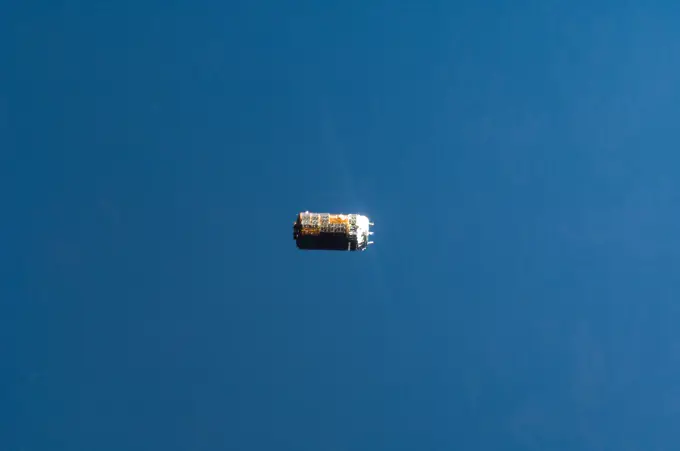
ISS040-E-089802 (8 Aug. 2014) --- The Georges Lemaitre” Automated Transfer Vehicle (ATV-5), photographed by an Expedition 40 crew member, flies directly under the International Space Station at a distance of about 3.7 miles to test sensors and radar systems designed for future European spacecraft. After its fly-under” of the station, the ATV will move in front of, above, and behind the outpost for the final days of its two-week rendezvous that will lead to an automated docking to the aft port of the Zvezda Service Module on Aug. 12.
6145-45230012
The main parachutes begin to deploy as the Boeing CST-100 Starliner spacecraft lands in White Sands, New Mexico, Sunday, Dec. 22, 2019. The landing completes an abbreviated Orbital Flight Test for the company that still meets several mission objectives for NASAs Commercial Crew program. The Starliner spacecraft launched on a United Launch Alliance Atlas V rocket at 6:36 a.m. Friday, Dec. 20 from Space Launch Complex 41 at Cape Canaveral Air Force Station in Florida.
6145-44471733
Artemis I will be the first integrated flight test of NASAs deep space exploration system: the Orion spacecraft, Space Launch System (SLS) rocket and the ground systems at Kennedy Space Center in Cape Canaveral, Florida. The first in a series of increasingly complex missions, Artemis I will be an uncrewed flight that will provide a foundation for human deep space exploration, and demonstrate our commitment and capability to extend human existence to the Moon and beyond. During this flight, the uncrewed Orion spacecraft will launch on the most powerful rocket in the world and travel thousands of miles beyond the Moon, farther than any spacecraft built for humans has ever flown, over the course of about a three-week mission.
6145-55970174
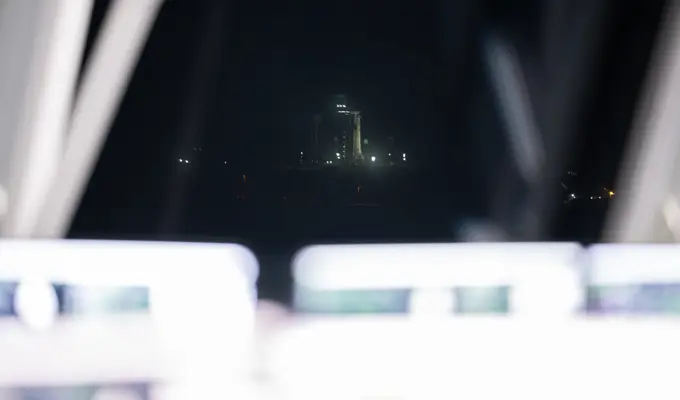
NASAs SpaceX Crew-6 Final Launch Operations Rehearsal . A SpaceX Falcon 9 rocket and Dragon spacecraft are seen through the windows of firing room four during a dress rehearsal in preparation for the launch of NASAs SpaceX Crew-6 mission with NASA astronauts Stephen Bowen and Warren "Woody" Hoburg, UAE (United Arab Emirates) astronaut Sultan Alneyadi, and Roscosmos cosmonaut Andrey Fedyaev onboard, Thursday, Feb. 23, 2023, in the Rocco A. Petrone Launch Control Center at NASAs Kennedy Space Center in Florida. NASAs SpaceX Crew-6 mission is the sixth crew rotation mission of the SpaceX Dragon spacecraft and Falcon 9 rocket to the International Space Station as part of the agencys Commercial Crew Program. Bowen, Hoburg, Alneyadi, and Fedyaev are scheduled to launch at 1:45 a.m. EST on Feb. 27, from Launch Complex 39A at the Kennedy Space Center.
6145-44575733
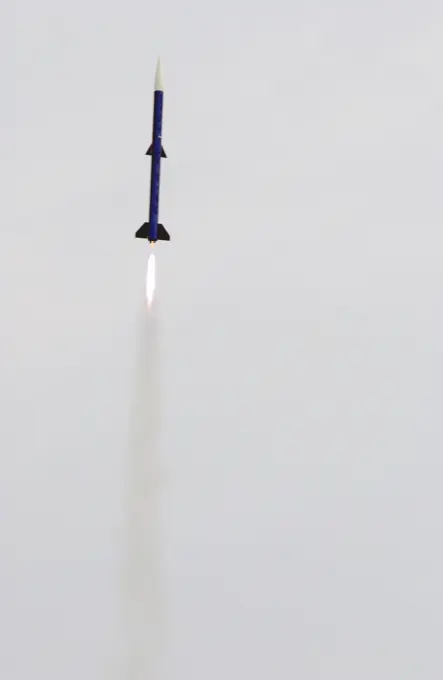
Filled with anticipation, students from three Huntsville area high schools Randolph, Sparkman, and Johnson High Schools, counted down to launch the rockets they designed and built at the Army test site on Redstone Arsenal in Huntsville, Alabama. The projected two-mile high launch culminated more than a year's work and demonstrated the student team's ability to meet the challenge set by the Marshall Space Flight Center's (MSFC) Student Launch Initiative program to apply science and math to experience, judgment, and common sense, and proved to NASA officials that they have successfully built reusable launch vehicles (RLVs), another challenge set by NASA's SLI program. MSFC's SLI program is an educational effort that aims to motivate students to pursue careers in science, math, and engineering. It provides hands-on, practical aerospace experience. In this picture, a rocket built by Johnson High School students soars to it projected designation.
6145-44481632
NASAs Space Launch System (SLS) rocket with the Orion spacecraft aboard is seen atop the mobile launcher at Launch 39B at NASAs Kennedy Space Center in Florida. Artemis I mission is the first integrated test of the agencys deep space exploration systems: the Space Launch System rocket, Orion spacecraft, and supporting ground systems. The mission is the first in a series of increasingly complex missions to the Moon. Launch of the uncrewed flight test is targeted for no earlier than Sept. 3 at 2:17 p.m. ET. With Artemis missions, NASA will land the first woman and first person of color on the Moon, using innovative technologies to explore more of the lunar surface than ever before.
6145-45074052
CAPE CANAVERAL, Fla. - The Falcon 9 rocket lifts off Space Launch Complex 40 at Cape Canaveral Air Force Station in Florida, carrying the SpaceX CRS-4 mission to orbit. Liftoff was at 1:52 a.m. EDT.The mission is the fourth of 12 SpaceX flights NASA contracted with the company to resupply the space station. It will be the fifth trip by a Dragon spacecraft to the orbiting laboratory. The spacecrafts 2.5 tons of supplies, science experiments, and technology demonstrations include critical materials to support 255 science and research investigations that will occur during the station's Expeditions 41 and 42.
1899-51630673
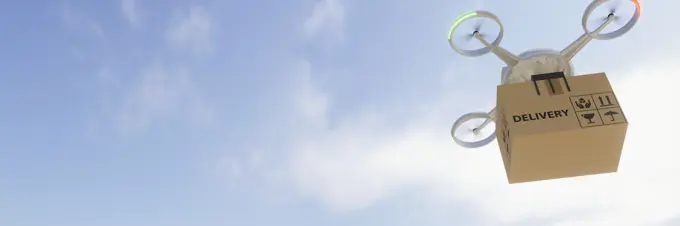
Futuristic drone delivering packages 3d render
1848-51754945
Kr
6188-64730257
Lamp on a wind turbine lamp on a wind turbine
6145-45284717
The SpaceX Falcon 9 rocket carrying the Sentinel-6 Michael Freilich spacecraft lifts off from Space Launch Complex 4 at Vandenberg Air Force Base in California, Nov. 21, 2020, at 9:17 a.m. PST (12:17 p.m. EST). The Sentinel-6/Jason-CS (Continuity of Service) mission consists of the Sentinel-6 Michael Freilich satellite, which will be followed by its twin, the Sentinel-6B satellite, in 2025. The Sentinel-6/Jason-CS mission is part of Copernicus, the European Unions Earth observation program, managed by the European Commission. Continuing the legacy of the Jason series missions, Sentinel-6/Jason-CS will extend the records of sea level into their fourth decade, collecting accurate measurements of sea surface height for more than 90% of the worlds oceans, and providing crucial information for operational oceanography, marine meteorology, and climate studies. NASAs Launch Services Program at Kennedy Space Center was responsible for launch management.
6145-44734226
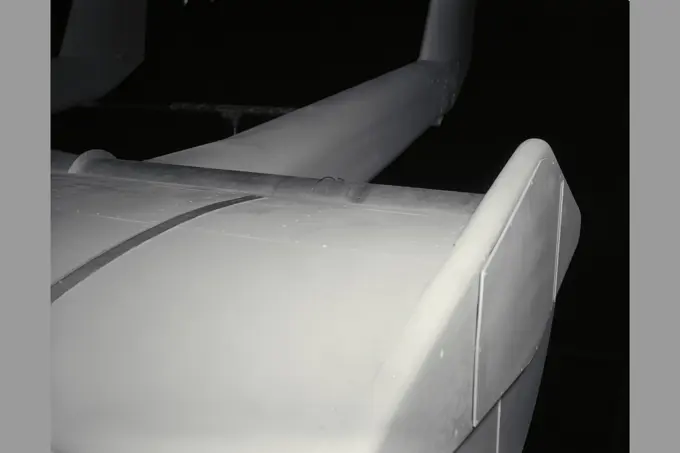
2-Prop. R.C.F. (Rotating Cylinder Flap) in 40 x 80ft. wind tunnel. front view detail of flap
6145-45147675
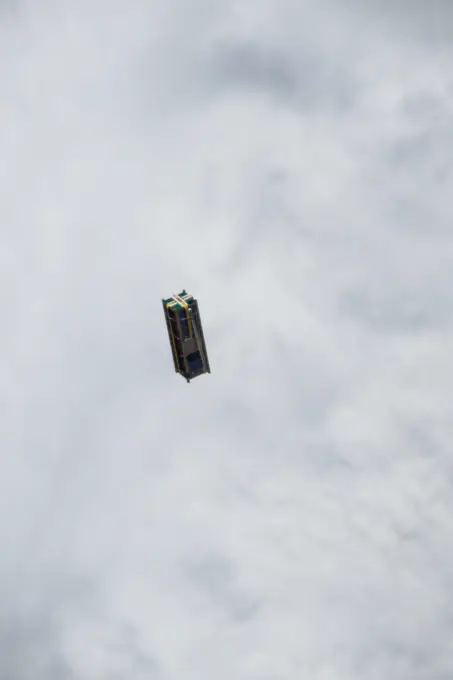
iss053e234598 (11/21/2017) --- A view of OSIRIS-3U Satellite Deployer Number 8 after deployment from the NanoRacks CubeSat Deployer Number 13. OSIRIS-3U is an integrated CubeSat that conducts measurements of the Earths ionosphere, in coordination with a ground-based astronomy observatory.
4197-66705393
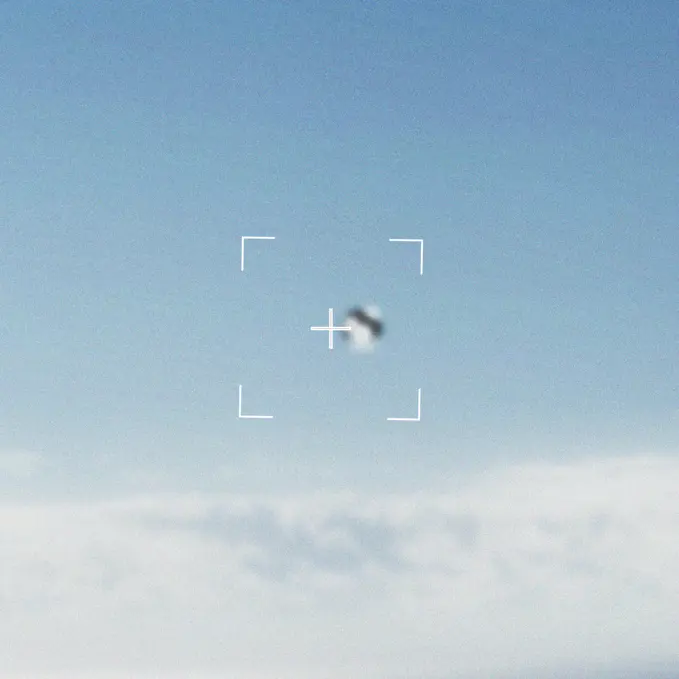
Alien, spaceship and camcorder of UFO in sky for fantasy, science fiction and space abduction. Extraterrestrial, travel and viewfinder lens frame of flying saucer for discovery, explore and galaxy
6145-58968969
A view from the side windows as plasma surrounds the vehicle during reentry on Orion's first flight test, Exploration Flight Test-1 (EFT-1), on December 5, 2014.
6145-44890700
ISS031-E-067328 (24 May 2012) --- The SpaceX Dragon commercial cargo craft approaches the International Space Station on May 24, 2012 for a series of tests to clear it for its final rendezvous and grapple on May 25. At 3:58 a.m. (EDT), Dragon performed a height adjust burn to bring it to a path 2.4 kilometers below the station. During this fly-under,” Dragon established UHF communication with the station using its Commercial Orbital Transportation Services (COTS) Ultra-high frequency Communication Unit (CUCU). Dragon performed a test of its Relative GPS system, which uses the relative positions of the spacecraft to the space station to determine its location. On May 25, Expedition 31 Flight Engineers Don Pettit and Andre Kuipers will use the Canadarm2 robotic arm to grapple the supply ship about 8:06 a.m., with the berthing to the Earth-facing side of the station’s Harmony node following about 11:20 a.m. Dragon is scheduled to spend about a week docked with the station before returnin
6145-58958646
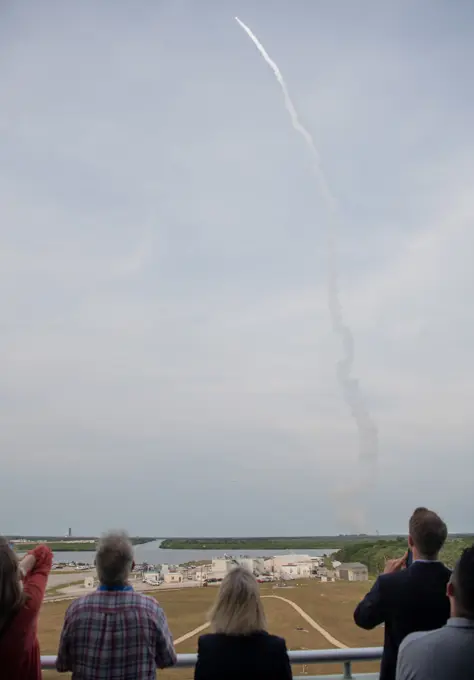
CAPE CANAVERAL, Fla. -- The United Launch Alliance Atlas V 401 rocket carrying NASA's Tracking and Data Relay Satellite-K, TDRS-K, is no more than a pinpoint of light in the night sky, following liftoff at 8 48 p.m. EST from Space Launch Complex 41 on Cape Canaveral Air Force Station in Florida. The TDRS-K spacecraft is part of the next-generation series in the Tracking and Data Relay Satellite System, a constellation of space-based communication satellites providing tracking, telemetry, command and high-bandwidth data return services.
6145-45233654
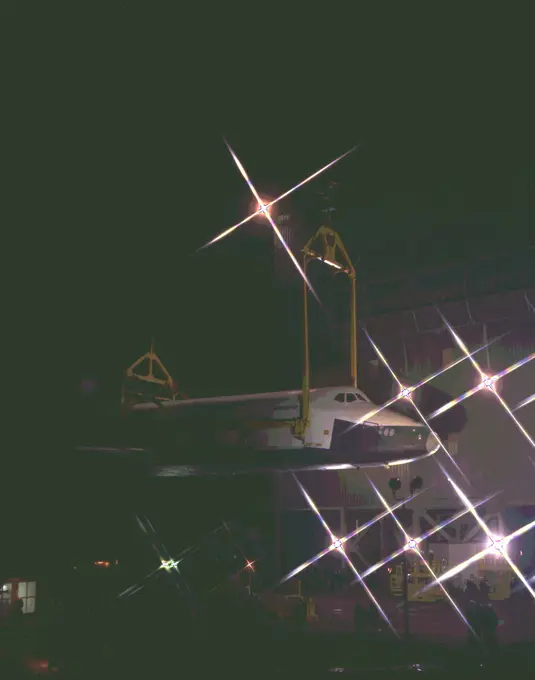
Shown here is the Shuttle Orbiter Enterprise being erected, just prior to installation into the Marshall Space Flight Center (MSFC) Dynamic Test Stand, for a Mated Vertical Ground Vibration Test (MVGVT).
6145-44898200
ISS032-E-009997 (27 July 2012) --- The unpiloted Japan Aerospace Exploration Agency (JAXA) H-II Transfer Vehicle (HTV-3) approaches the International Space Station. The Japan Aerospace Exploration Agency launched HTV-3 aboard an H-IIB launch vehicle from the Tanegashima Space Center in southern Japan at 10:06 p.m. EDT July 20 (11:06 a.m. July 21, Japan time). The HTV is bringing 7,000 pounds of cargo including food and clothing for the crew members, an aquatic habitat experiment, a remote-controlled Earth-observation camera for environmental studies, a catalytic reactor for the stations water regeneration system and a Japanese cooling water recirculation pump. The vehicle will remain at the space station until Sept. 6 when, like its predecessors, it will be detached from the Harmony node by Canadarm2 and released for a fiery re-entry over the Pacific Ocean.
6145-44864326
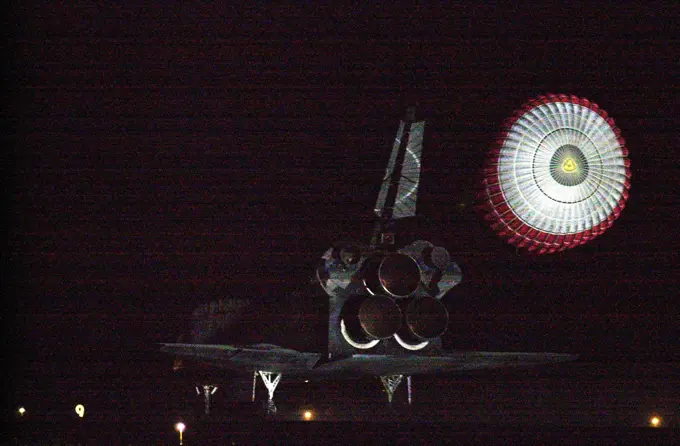
CAPE CANAVERAL, Fla. -- Xenon lights illuminate space shuttle Endeavour's unfurled drag chute as the vehicle rolls to a stop on the Shuttle Landing Facility's Runway 15 at NASA's Kennedy Space Center in Florida for the final time. Main gear touchdown was at 2:34:51 a.m. EDT, followed by nose gear touchdown at 2:35:04 a.m., and wheelstop at 2:35:36 a.m. On board are STS-134 Commander Mark Kelly, Pilot Greg H. Johnson, and Mission Specialists Mike Fincke, Drew Feustel, Greg Chamitoff and the European Space Agency's Roberto Vittori.STS-134 delivered the Alpha Magnetic Spectrometer-2 (AMS) and the Express Logistics Carrier-3 (ELC-3) to the International Space Station. AMS will help researchers understand the origin of the universe and search for evidence of dark matter, strange matter and antimatter from the station. ELC-3 carried spare parts that will sustain station operations once the shuttles are retired from service. STS-134 was the 25th and final flight for Endeavour, which has sp
6145-58965535
KENNEDY SPACE CENTER, FLA. -- STS-32R lifts off from Pad 39-A at 7 35 a.m. EST. Columbia is scheduled to deploy the Syncom IV-5 defense communications satellite and retrieve NASA's Long duration Exposure Facility (LDEF) during a 10-day mission, the longest Shuttle flight to date. The mission also includes a variety of experiments, including Protein Crystal Growth. This photo was taken from the Shuttle Training Aircraft.
1848-68788025
Wires against blue sky with white clouds, view from bottom to top
6145-58967017
STS135-S-219 (21 July 2011) --- Space shuttle Atlantis returns to Earth for the last time on Runway 15 at NASA's Kennedy Space Center in Florida just before sunrise July 21, 2011. Atlantis touched down on Runway 15 at 5:57 a.m. (EDT), bringing an end to the STS-135 mission and NASA's Space Shuttle Program. Onboard are NASA astronauts Chris Ferguson, commander; Doug Hurley, pilot; Sandy Magnus and Rex Walheim, both mission specialists. On the 37th shuttle mission to the International Space Station, STS-135 delivered more than 9,400 pounds of spare parts, equipment and supplies in the Raffaello multi-purpose logistics module that will sustain station operations for the next year. STS-135 was the 33rd and final flight for Atlantis, which has spent 307 days in space, orbited Earth 4,848 times and traveled 125,935,769 miles.
6145-54676297
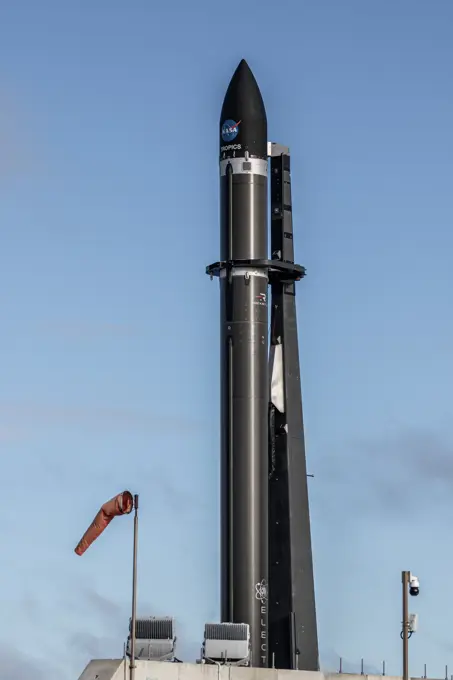
TROPICS Rocket Launch. A Rocket Lab Electron rocket is poised for launch atop Pad B, Launch Complex 1, in Māhia, New Zealand. Launch time is May 8 at 1 p.m. New Zealand time (May 7 at 9 p.m. EDT). The Electron rocket is carrying two NASA CubeSats designed to study tropical cyclones, including hurricanes and typhoons. NASAs Time-Resolved Observations of Precipitation structure and storm Intensity with a Constellation of Smallsats (TROPICS) CubeSats will provide data on temperature, precipitation, water vapor, and clouds by measuring microwave frequencies, providing insight into storm formation and intensification.
6145-45083875
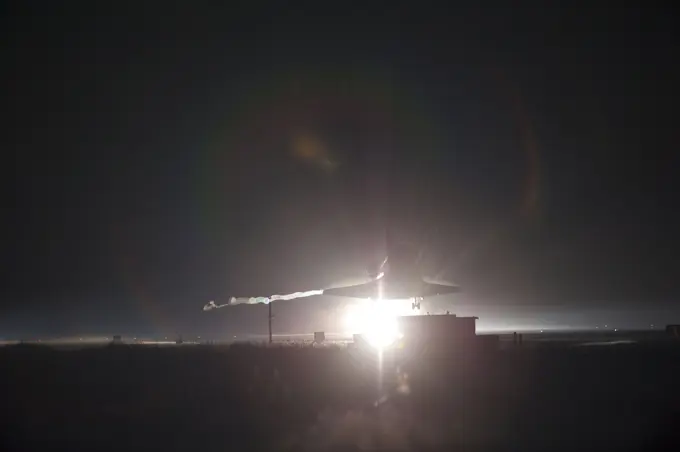
CAPE CANAVERAL, Fla. - NASAs Project Morpheus prototype lander soars overhead during free flight test No. 15 at the north end of the Shuttle Landing Facility at Kennedy Space Center in Florida. During the 97-second test, onboard autonomous landing and hazard avoidance technology sensors, or ALHAT, surveyed the hazard field for safe landing sites, then guided the lander forward and downward to a successful landing.
6145-45284729
The first-stage booster of a SpaceX Falcon 9 rocket lands at Vandenberg Air Force Base in California during the launch of the Sentinel-6 Michael Freilich mission. The Falcon 9 carrying the satellite lifted off from Vandenbergs Space Launch Complex 4 on Nov. 21, 2020, at 9:17 a.m. PST (12:17 p.m. EST). The Sentinel-6/Jason-CS (Continuity of Service) mission consists of the Sentinel-6 Michael Freilich satellite, which will be followed by its twin, the Sentinel-6B satellite, in 2025. The Sentinel-6/Jason-CS mission is part of Copernicus, the European Unions Earth observation program, managed by the European Commission. Continuing the legacy of the Jason series missions, Sentinel-6/Jason-CS will extend the records of sea level into their fourth decade, collecting accurate measurements of sea surface height for more than 90% of the worlds oceans, and providing crucial information for operational oceanography, marine meteorology, and climate studies. NASAs Launch Services Program at Ken
6145-58967007
STS135-S-185 (21 July 2011) --- Xenon lights cast a halo of light on space shuttle Atlantis as the spacecraft approaches Runway 15 at NASA's Kennedy Space Center in Florida for the final time. Securing the space shuttle fleet's place in history, Atlantis marked the 26th nighttime landing of NASA's Space Shuttle Program and the 78th landing at Kennedy. Main gear touchdown was at 5:57:00 a.m. (EDT) on July 21, 2011, followed by nose gear touchdown at 5:57:20 a.m., and wheelstop at 5:57:54 a.m. Onboard are NASA astronauts Chris Ferguson, STS-135 commander; Doug Hurley, pilot; Sandy Magnus and Rex Walheim, both mission specialists. On the 37th shuttle mission to the International Space Station, STS-135 delivered more than 9,400 pounds of spare parts, equipment and supplies in the Raffaello multi-purpose logistics module that will sustain station operations for the next year. STS-135 was the 33rd and final flight for Atlantis, which has spent 307 days in space, orbited Earth 4,848 times and
6145-45073816
CAPE CANAVERAL, Fla. - The Falcon 9 rocket soars into the night sky leaving an exhaust cloud hovering over Space Launch Complex 40 on Cape Canaveral Air Force Station in Florida. The SpaceX CRS-4 mission is underway.  Liftoff was at 1:52 a.m. EDT.The mission is the fourth of 12 SpaceX flights NASA contracted with the company to resupply the space station. It will be the fifth trip by a Dragon spacecraft to the orbiting laboratory. The spacecrafts 2.5 tons of supplies, science experiments, and technology demonstrations include critical materials to support 255 science and research investigations that will occur during the station's Expeditions 41 and 42.
6145-45206750
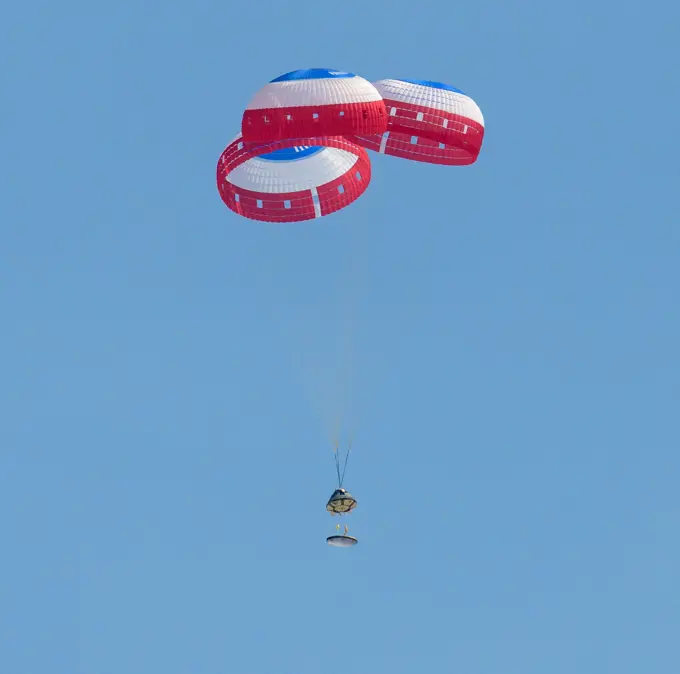
Boeings CST-100 Starliners parachute system is tested above the U.S. Armys Yuma Proving Ground in Arizona on June 26, 2019. This “high Q” test involved dropping a dart-shaped device - functioning as a Starliner weight simulant - from a C-17 aircraft and intentionally inflating the parachutes at higher pressures than expected during missions. The data gathered from this parachute test will help validate the system is safe to carry astronauts to and from the International Space Station as part of NASAs Commercial Crew Program. Boeing is targeting an uncrewed Orbital Flight Test to the space station this summer, followed by its Crew Flight Test. Starliner will launch atop a United Launch Alliance Atlas V rocket from Space Launch Complex 41 at Cape Canaveral Air Force Station in Florida.
6145-44489507
NASAs SpaceX Crew-5 Falcon 9/Dragon Rollout to Launch Pad 39A. In this three-minute exposure, a SpaceX Falcon 9 rocket with the company's Crew Dragon spacecraft onboard is seen as it is rolled out to the launch pad at Launch Complex 39A as preparations continue for the Crew-5 mission, Saturday, Oct. 1, 2022, at NASAs Kennedy Space Center in Florida. NASAs SpaceX Crew-5 mission is the fifth crew rotation mission of the SpaceX Crew Dragon spacecraft and Falcon 9 rocket to the International Space Station as part of the agencys Commercial Crew Program. NASA astronauts Nicole Mann and Josh Cassada, Japan Aerospace Exploration Agency (JAXA) astronaut Koichi Wakata, and Roscosmos cosmonaut Anna Kikina are scheduled to launch at 12:00 p.m. EDT on Oct. 5, from Launch Complex 39A at the Kennedy Space Center.
6145-44705973
Next-Generation Aircraft, Pratt and Whitney Ultra-High Bypass Integration test at NASA Ames 11ft. wind tunnel (test 11-0182) assess the interaction effects of a scaled Pratt & Whitney geared turbofan on a Boeing 737-800 fuselage in an effort to use emerging technologies to make next-generation airliners quieter, more fuel efficient and lower on emissions. (printed in Aviation Week & Space Technology April 8, 2011 issue)
6145-45046670
CAPE CANAVERAL, Fla. - The Project Morpheus prototype lander soars high after launching on its sixth free flight test at the north end of the Shuttle Landing Facility at NASAs Kennedy Space Center in Florida. The 82-second test began at 11:32 a.m. EST with the Morpheus lander launching from the ground over a flame trench and ascending to 465 feet. The lander flew forward, covering 633 feet while performing a 55-foot divert to emulate a hazard avoidance maneuver before descending and landing on a dedicated pad inside the automated landing and hazard avoidance technology, or ALHAT, hazard field. Morpheus landed 10 inches west of its intended target. Project Morpheus tests NASAs ALHAT and an engine that runs on liquid oxygen and methane, or green propellants, into a fully-operational lander that could deliver cargo to other planetary surfaces. The landing facility provides the lander with the kind of field necessary for realistic testing, complete with rocks, craters and hazards to avoi
6188-56036832
Two antique wind power plant Two antique wind turbines on Mallorca to drive a watering system. Copyright: xZoonar.com/JFsPic xThielemannx 10943293
6145-45186785
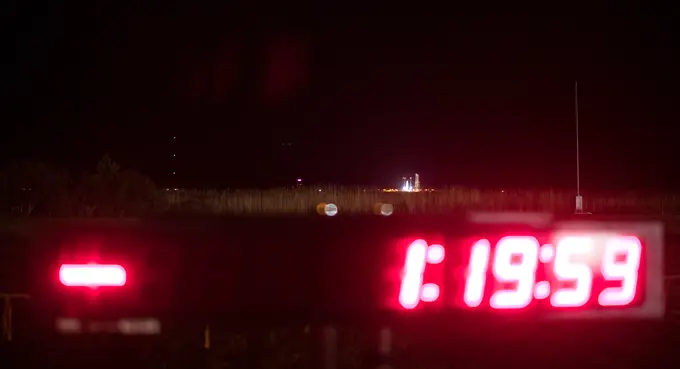
The Northrop Grumman Antares rocket, with Cygnus resupply spacecraft onboard, is seen in the distance on Pad-0A with a viewing site countdown clock in the early hours of Saturday, Nov. 17, 2018 at NASA's Wallops Flight Facility in Virginia. Northrop Grumman's 10th contracted cargo resupply mission for NASA to the International Space Station will deliver about 7,400 pounds of science and research, crew supplies and vehicle hardware to the orbital laboratory and its crew.
4316-3257
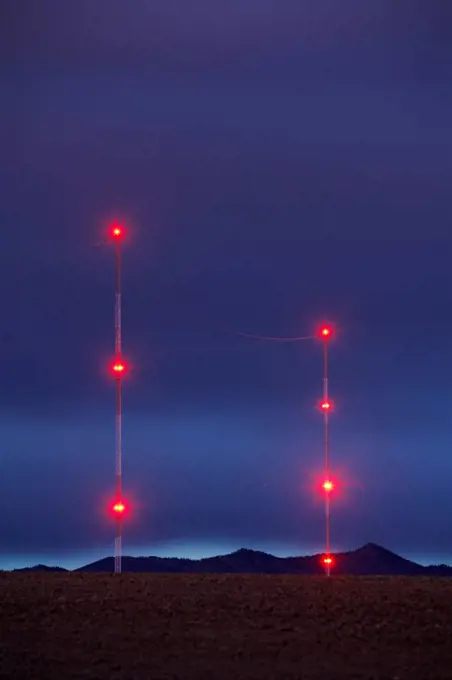
Dusk view of the radio transmission towers of the NIST (National Institute of Standards and Technology) WWVB atomic clock, north of Fort Collins, Colorado. WWVB is the radio call sign for the station.
6145-55970207
NASAs SpaceX Crew-6 Preflight. A SpaceX Falcon 9 rocket with the company's Dragon spacecraft on top is seen illuminated by spotlights on the launch pad at Launch Complex 39A as preparations continue for the Crew-6 mission, Sunday, Feb. 26, 2023, at NASAs Kennedy Space Center in Florida. NASAs SpaceX Crew-6 mission is the sixth crew rotation mission of the SpaceX Crew Dragon spacecraft and Falcon 9 rocket to the International Space Station as part of the agencys Commercial Crew Program. NASA astronauts Stephen Bowen and Warren "Woody" Hoburg, UAE (United Arab Emirates) astronaut Sultan Alneyadi, and Roscosmos cosmonaut Andrey Fedyaev are scheduled to launch at 1:45 a.m. EST on Feb. 27, from Launch Complex 39A at the Kennedy Space Center.
6145-58964031
KENNEDY SPACE CENTER, Fla. -- With the drag chute reflected in the bright lights at the Shuttle Landing Facility, Atlantis prepares to land on Runway 15 at the Shuttle Landing Facility to complete a 12-day, 18-hour, 34-minute-long STS-104 mission. Main gear touchdown occurred at 11 38 55 p.m. EDT. At the controls is Commander Steven W. Lindsey. Other crew members on board are Pilot Charles Hobaugh and Mission Specialists Michael Gernhardt, Janet Lynn Kavandi and James F. Reilly. This is the 18th nighttime landing for a Space Shuttle, the 13th at Kennedy Space Center. The mission delivered the Joint Airlock Module to the International Space Station, completing the second phase of the assembly of the Space Station
4269-23973
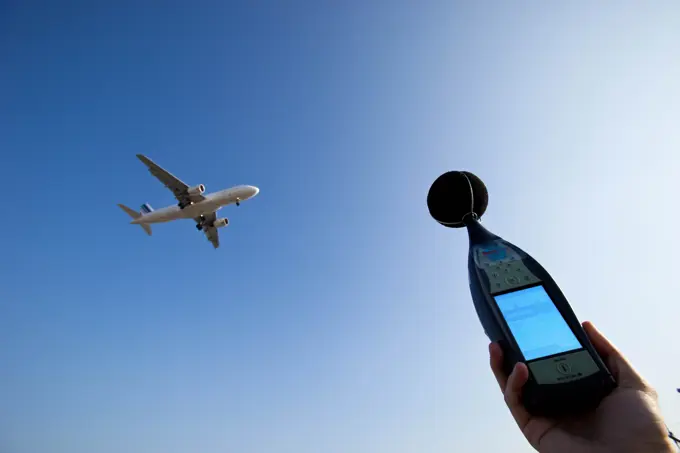
Sound level meter used by Bruiparif to measure decibels.
6188-58500326
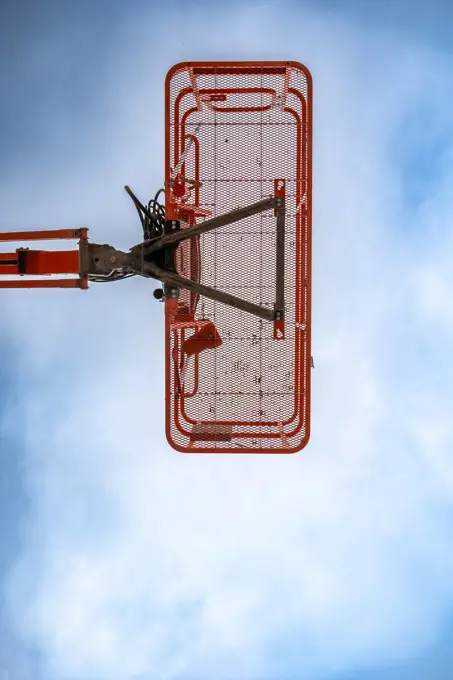
directly underneath a caged aerial work platform lift. directly underneath a caged aerial work platform lift. High quality photo Copyright: xZoonar.com/STEVENxWHITEx 21524173
6019-19040186
Large Cat Windvane in Malta
6145-58968965
A view from the top hatch window as the parachutes deploy on Orion's first flight test, Exploration Flight Test-1 (EFT-1), on December 5, 2014.
6145-44527344
KENNEDY SPACE CENTER, Fla. -- With the drag chute reflected in the bright lights at the Shuttle Landing Facility, Atlantis prepares to land on Runway 15 at the Shuttle Landing Facility to complete a 12-day, 18-hour, 34-minute-long STS-104 mission. Main gear touchdown occurred at 11:38:55 p.m. EDT. At the controls is Commander Steven W. Lindsey. Other crew members on board are Pilot Charles Hobaugh and Mission Specialists Michael Gernhardt, Janet Lynn Kavandi and James F. Reilly. This is the 18th nighttime landing for a Space Shuttle, the 13th at Kennedy Space Center. The mission delivered the Joint Airlock Module to the International Space Station, completing the second phase of the assembly of the Space Station
1815R-110452
Network with fiber lights
6145-45119971
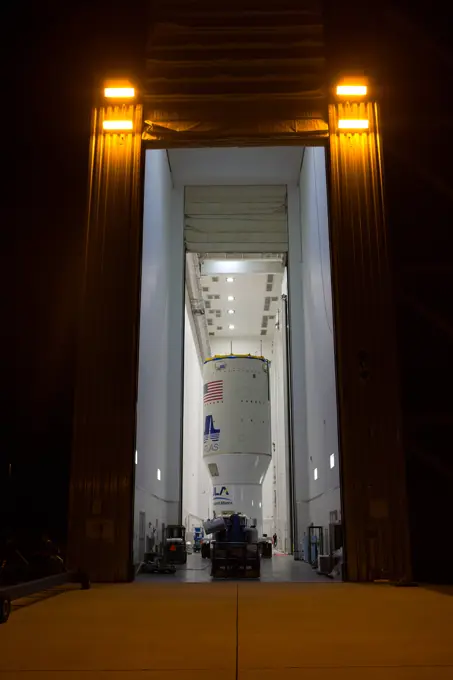
The United Launch Alliance Atlas V Centaur second stage emerges from the Launch Vehicle Integration Facility aboard a transport trailer for delivery to the Vertical Integration Facility at Space Launch Complex 41 at Cape Canaveral Air Force Station in Florida. The Geostationary Operational Environmental Satellite (GOES-R) will launch aboard the Atlas V rocket in November. GOES-R is the first satellite in a series of next-generation NOAA GOES Satellites.
6145-45057622
CAPE CANAVERAL, Fla. - NASA's Project Morpheus prototype lander performed a free-flight test from a launch pad at the north end of the Shuttle Landing Facility at NASAs Kennedy Space Center in Florida. The 97-second test began at 2:30 p.m. EDT with the Morpheus lander launching from the ground over a flame trench and ascending more than 800 feet. The vehicle, with its recently installed autonomous landing and hazard avoidance technology, or ALHAT, sensors surveyed the hazard field to determine safe landing sites. Morpheus then flew forward and downward covering approximately 1,300 feet while performing a 78-foot divert to simulate a hazard avoidance maneuver. The lander descended and landed on a dedicated pad inside the ALHAT hazard field. Project Morpheus tests NASAs ALHAT and an engine that runs on liquid oxygen and methane, which are green propellants. These new capabilities could be used in future efforts to deliver cargo to planetary surfaces.The landing facility provides the
6145-58962639
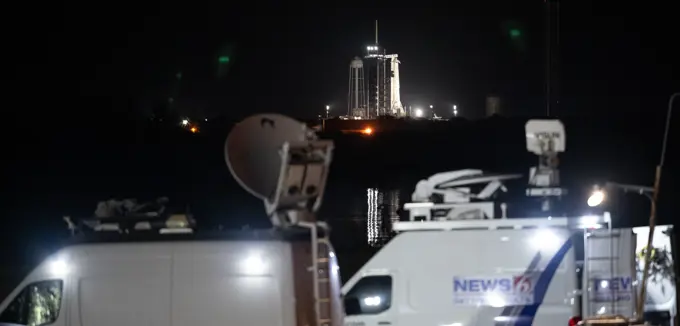
KENNEDY SPACE CENTER, FLA. - Media are waiting at NASA Kennedy Space Centers Shuttle Landing Facility for the early morning landing of Space Shuttle Discovery, returning from the successful Return to Flight mission STS-114. The landing was eventually deferred to Edwards Air Force Base in California due to weather concerns. The landing occurred at 8 11 a.m. EDT, guided by Mission Commander Eileen Collins. Discovery spent two weeks in space on Return to Flight mission STS-114, where the crew demonstrated new methods to inspect and repair the Shuttle in orbit. The crew also delivered supplies, outfitted and performed maintenance on the International Space Station. A number of these tasks were conducted during three spacewalks.
6145-44474187
The Boeing CST-100 Starliner spacecraft jettisons the heat shield as it lands at White Sands Missile Ranges Space Harbor, Wednesday, May 25, 2022, in New Mexico. Boeings Orbital Flight Test-2 (OFT-2) is Starliners second uncrewed flight test to the International Space Station as part of NASA's Commercial Crew Program. OFT-2 serves as an end-to-end test of the system's capabilities.
6145-45088281
The SpaceX Falcon 9 rocket carrying NOAAs Deep Space Climate Observatory spacecraft, or DSCOVR, rises above the treeline as a realtime camera view of the launch is visible on the countdown clock at NASAs Kennedy Space Center in Florida. The Falcon 9 launched from Space Launch Complex 40 at Cape Canaveral Air Force Station at 6:03 p.m. EST. DSCOVR is a partnership between NOAA, NASA and the U.S. Air Force, and will maintain the nation's real-time solar wind monitoring capabilities.
6145-44552623
Workers begin unloading the Cassini orbiter from a U.S. Air Force C-17 air cargo plane after its arrival at KSCs Shuttle Landing Facility from Edwards Air Force Base, California. The orbiter and the Huygens probe already being processed at KSC are the two primary components of the Cassini spacecraft, which will be launched on a Titan IVB/Centaur expendable launch vehicle from Cape Canaveral Air Station. Cassini will explore Saturn, its rings and moons for four years. The Huygens probe, designed and developed for the European Space Agency (ESA), will be deployed from the orbiter to study the clouds, atmosphere and surface of Saturns largest moon, Titan. The orbiter was designed and assembled at NASAs Jet Propulsion Laboratory in California. Following postflight inspections, integration of the 12 science instruments not already installed on the orbiter will be completed. Then, the parabolic high-gain antenna and t
6145-44764681
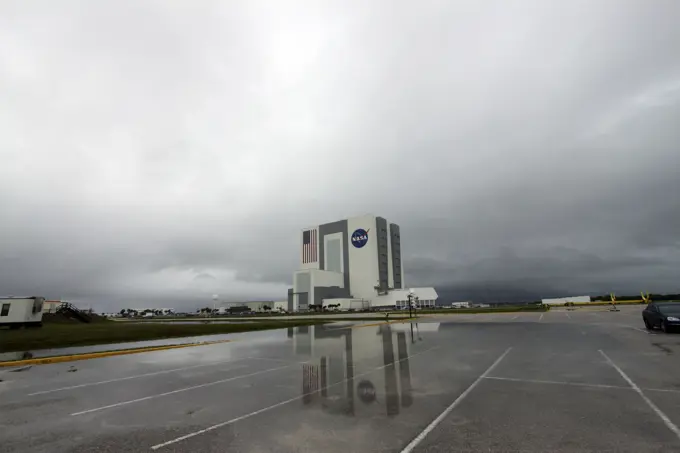
CAPE CANAVERAL, Fla. - Standing water collects on the surface of a parking lot across the street from NASA Kennedy Space Center's Vehicle Assembly Building, the aftermath of thunderstorms in the vicinity of Kennedys Shuttle Landing Facility. Two landing opportunities for space shuttle Atlantis to conclude the STS-125 mission were waved off May 22 due to violations of the end-of-mission landing weather criteria.  Through five spacewalks on the STS-125 mission, NASA's Hubble Space Telescope was refurbished and upgraded with state-of-the-art science instruments that will expand Hubble's capabilities and extend its operational lifespan through at least 2014.
4128-111584733
Unidentified Flying Object (UFO), computer illustration.
6145-44473479
NASA Deputy Administrator Pam Melroy, second from right, watches as a United Launch Alliance Atlas V rocket with Boeings CST-100 Starliner spacecraft aboard launches from Space Launch Complex 41 at Cape Canaveral Space Force Station, Thursday, May 19, 2022, from NASAs Kennedy Space Center in Florida. Boeings Orbital Flight Test-2 (OFT-2) is Starliners second uncrewed flight test and will dock to the International Space Station as part of NASA's Commercial Crew Program. OFT-2 launched at 6:54 p.m. ET, and will serve as an end-to-end test of the system's capabilities.
6145-44858805
An faint profile outline of the space shuttle Endeavour is seen projected in the sky as powerful xenon lights illuminate launch pad 39a shortly after the rollback of the Rotating Service Structure (RSS) from Endeavour, Thursday, April 28, 2011, at Kennedy Space Center in Cape Canaveral, Fla. During the 14-day mission, Endeavour and the STS-134 crew will deliver the Alpha Magnetic Spectrometer (AMS) and spare parts including two S-band communications antennas, a high-pressure gas tank and additional spare parts for Dextre. Launch is targeted for Friday, April 29 at 3:47 p.m. EDT.
6145-45085414
CAPE CANAVERAL, Fla. -- NASA Administrator Charlie Bolden spoke to members of the media before looking over the agency's Orion spacecraft this morning for the first time since it returned to Kennedy Space Center following the successful Orion flight test on Dec. 5. Bearing the marks of a spacecraft that has returned to Earth through a searing plunge into the atmosphere, Orion is perched on a pedestal inside the Launch Abort System Facility at Kennedy where it is going through post-mission processing. Although the spacecraft Bolden looked over did not fly with a crew aboard during the flight test, Orion is designed to carry astronauts into deep space in the future setting NASA and the nation firmly on the journey to Mars.
6145-44858583
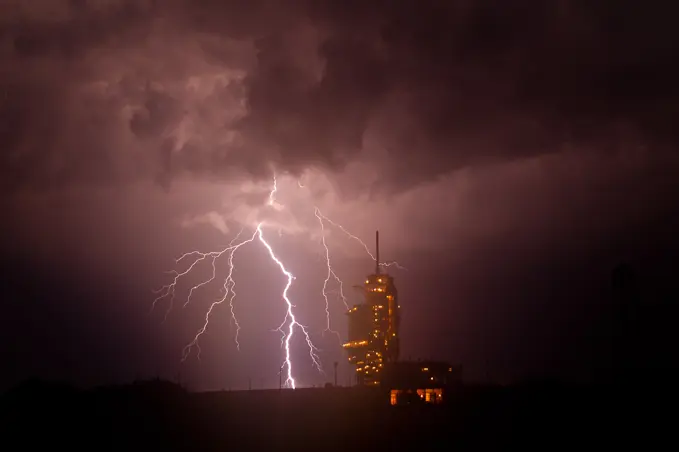
The space shuttle Endeavour is seen on launch pad 39a as a storm passes by prior to the rollback of the Rotating Service Structure (RSS), Thursday, April 28, 2011, at Kennedy Space Center in Cape Canaveral, Fla. During the 14-day mission, Endeavour and the STS-134 crew will deliver the Alpha Magnetic Spectrometer (AMS) and spare parts including two S-band communications antennas, a high-pressure gas tank and additional spare parts for Dextre. Launch is targeted for Friday, April 29 at 3:47 p.m. EDT.
6145-44836047
CAPE CANAVERAL, Fla. -- As the sun begins to rise at Launch Pad 39A at NASA's Kennedy Space Center in Florida, the STS-133 crew members are in the pad's White Room preparing to board space shuttle Discovery during the Terminal Countdown Demonstration Test (TCDT). Part of TCDT includes practicing the final hours of a real launch day when astronauts put on their launch-and-entry suits, ride to the pad in the Astrovan and strap into the shuttle.Discovery and its STS-133 crew will deliver the Permanent Multipurpose Module, packed with supplies and critical spare parts, as well as Robonaut 2, the dexterous humanoid astronaut helper, to the International Space Station. Launch is targeted for Nov. 1 at 4:40 p.m.
6145-45081801
At NASA's Kennedy Space Center in Florida, the new countdown clock at the spaceport's Press Site is being tested. The modern, multimedia display is similar to the screens seen at sporting venues. The new screen will be nearly 26 feet wide by 7 feet high, a foot taller than the original clock. The historic countdown clock was designed by Kennedy engineers and built by space center technicians before Apollo 12 in 1969. NASA has requested to acquire the countdown clock from the agencys Artifact Working Group at the agency's Headquarters for display at the Kennedy Space Center Visitor Complex.
1525-25669762
hand hold digital screen perspective of Big Satellite Dish antenna, vertical
6145-44484173
Several projects under NASA's Advanced Air Mobility or AAM mission are working on different elements to help make AAM a reality in emergency operations. This concept graphic shows how a future AAM vehicle could aid in disaster response.
6145-44467055
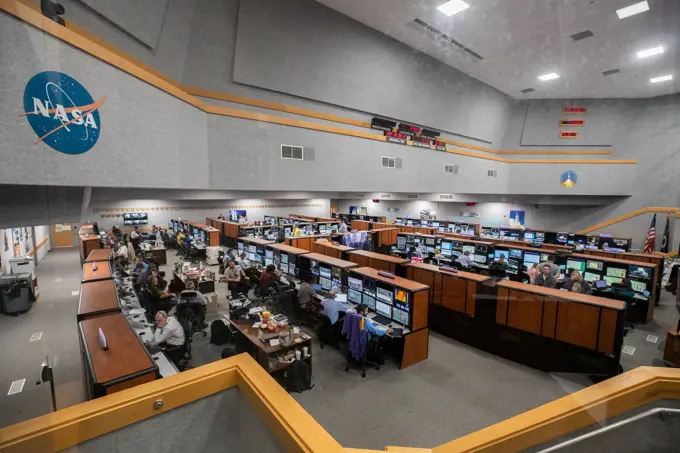
Members of the Artemis I launch team participate in a wet dress rehearsal for the Artemis I mission on April 14, 2022, inside the Launch Control Center at NASAs Kennedy Space Center in Florida. The wet dress rehearsal is the final major test before launch and allows the team to run through all countdown operations prior to liftoff. The first in an increasingly complex series of missions, Artemis I will test NASAs Space Launch System rocket and Orion spacecraft as an integrated system prior to crewed flights to the Moon.
6145-44471938
Artemis I will be the first integrated flight test of NASAs deep space exploration system: the Orion spacecraft, Space Launch System (SLS) rocket and the ground systems at Kennedy Space Center in Cape Canaveral, Florida. The first in a series of increasingly complex missions, Artemis I will be an uncrewed flight that will provide a foundation for human deep space exploration, and demonstrate our commitment and capability to extend human existence to the Moon and beyond. During this flight, the uncrewed Orion spacecraft will launch on the most powerful rocket in the world and travel thousands of miles beyond the Moon, farther than any spacecraft built for humans has ever flown, over the course of about a three-week mission.
6145-55187148
Psyche on the Launch Pad. A SpaceX Falcon Heavy rocket with the Psyche spacecraft onboard is seen at Launch Complex 39A next to the countdown clock, as preparations continue for the Psyche mission, Friday, Oct. 13, 2023, at NASAs Kennedy Space Center in Florida. NASAs Psyche spacecraft will travel to a metal-rich asteroid by the same name orbiting the Sun between Mars and Jupiter to study its composition. The spacecraft also carries the agency's Deep Space Optical Communications technology demonstration, which will test laser communications beyond the Moon.
1525-21178323
Video monitor with picture from security cameras
PREVIOUS
of 1
NEXT
2401 S. Ervay, Suite 206
Dallas, Texas 75215
United States
Browse
CategoriesGalleriesFree Research
For Creators
License Your ContentSuperStock For StudentsFrame of Mind BlogContributor PortalNew Image SpotlightLicense AI Imagery
Resources
About UsLicensingTerms & ConditionsAPI AccessPrivacyPricing
Contact
+1 866 236 0087help@superstock.com Contact form
©2026 SuperStock. All Rights Reserved. -A
This site is protected by reCAPTCHA and Google Privacy Policy and Terms of Service apply.