Medieval Helmets

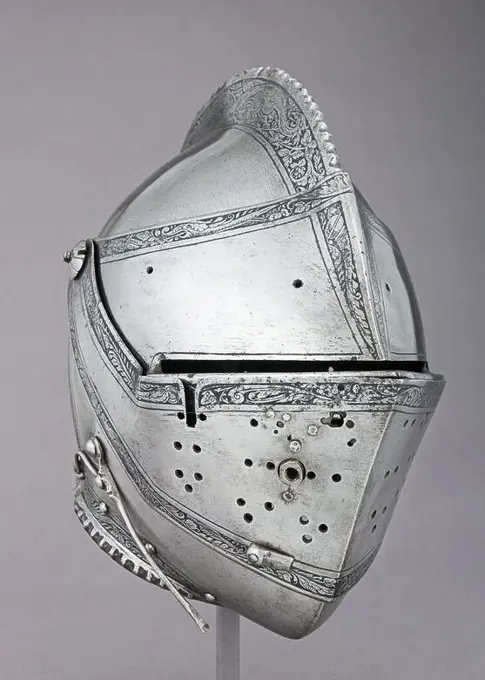
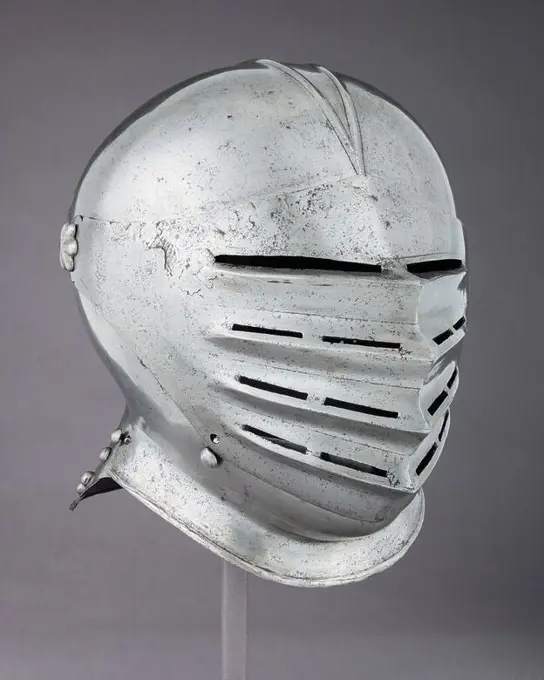
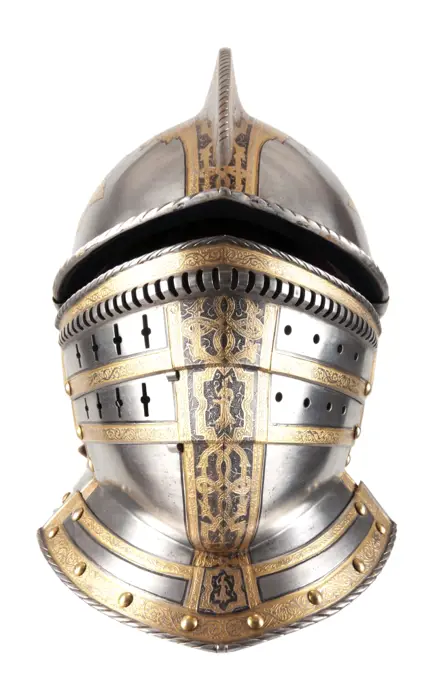
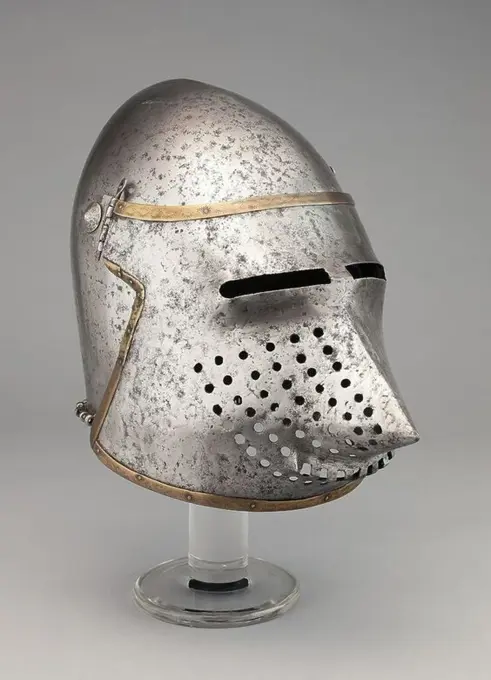
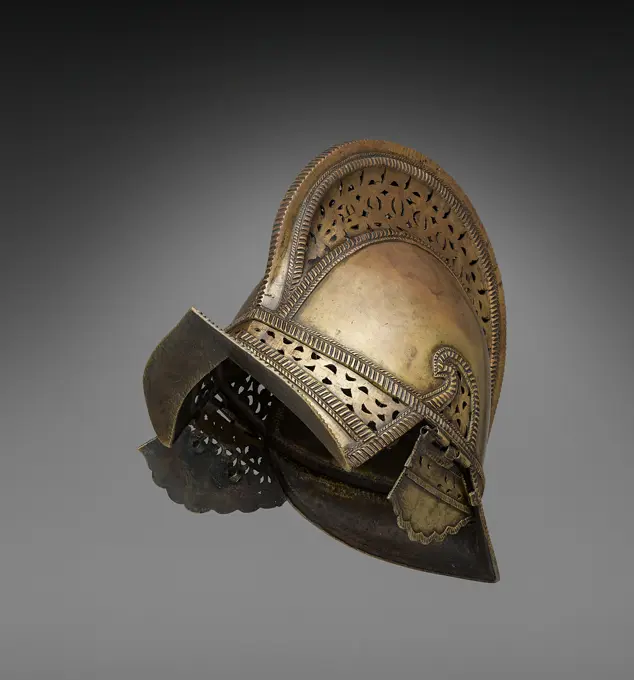
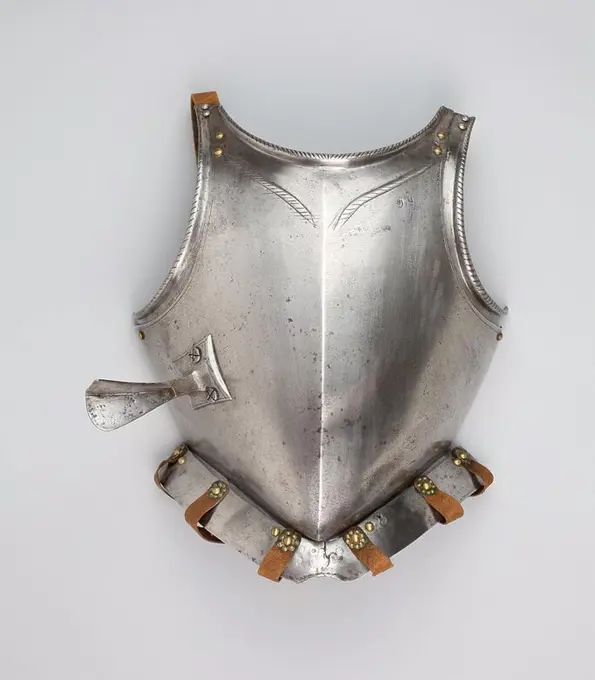
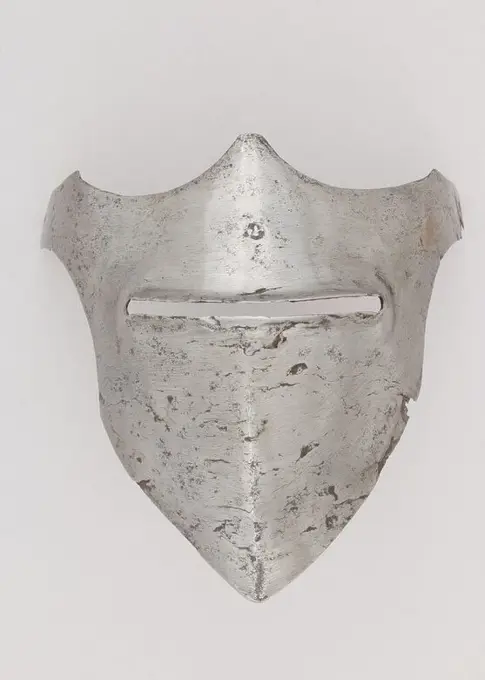
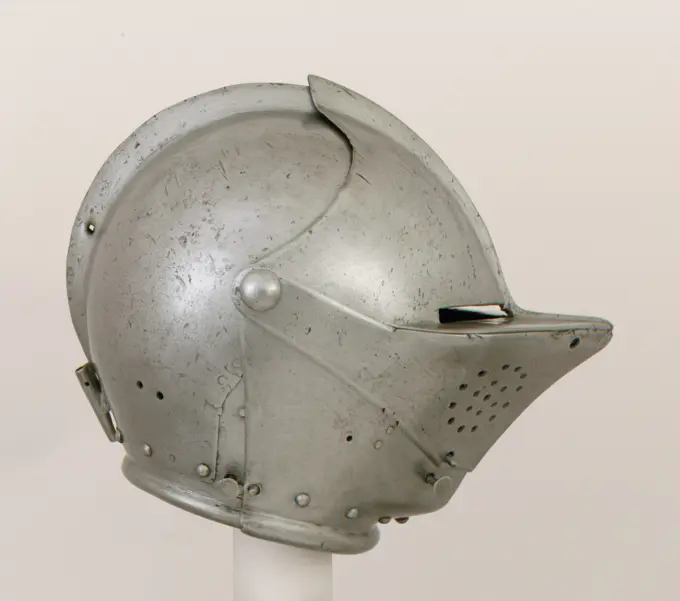
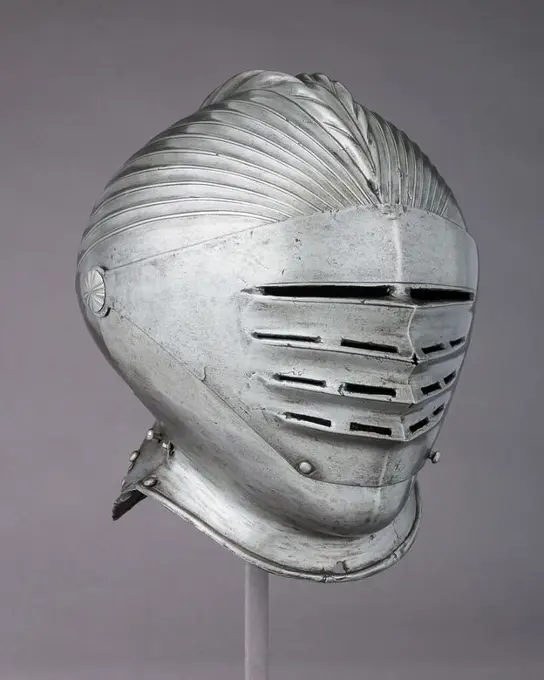
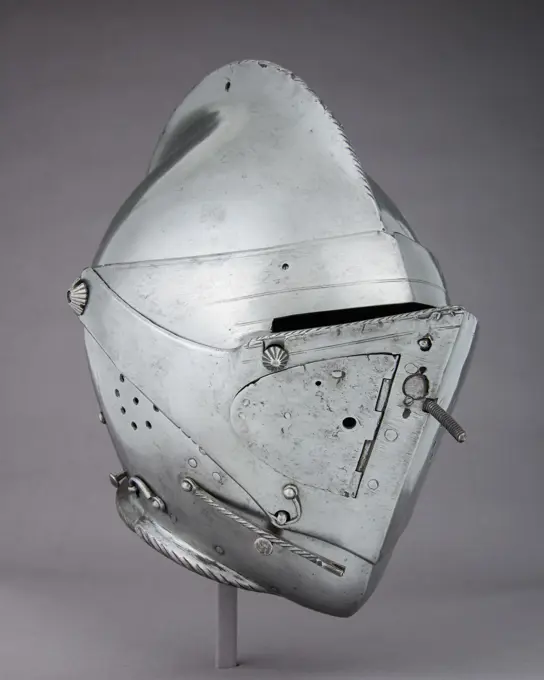
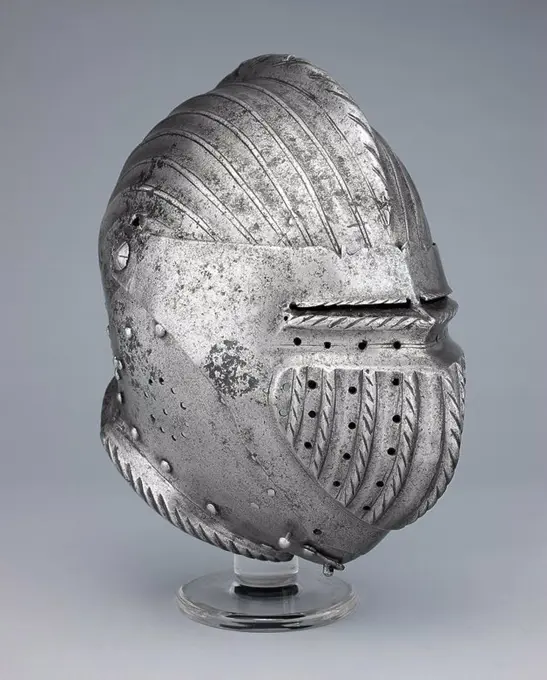
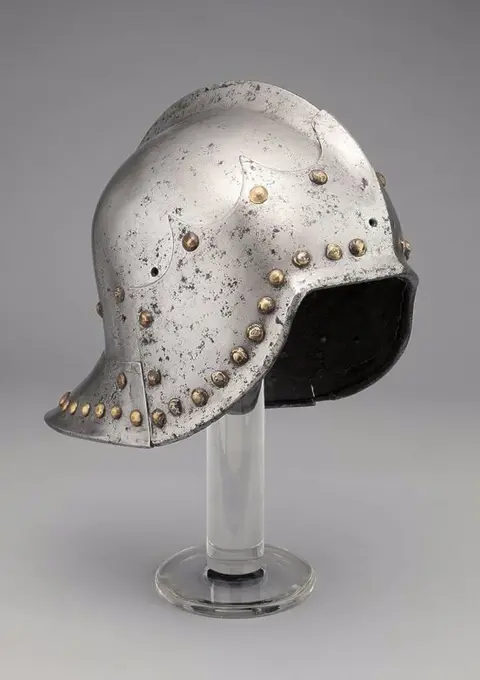
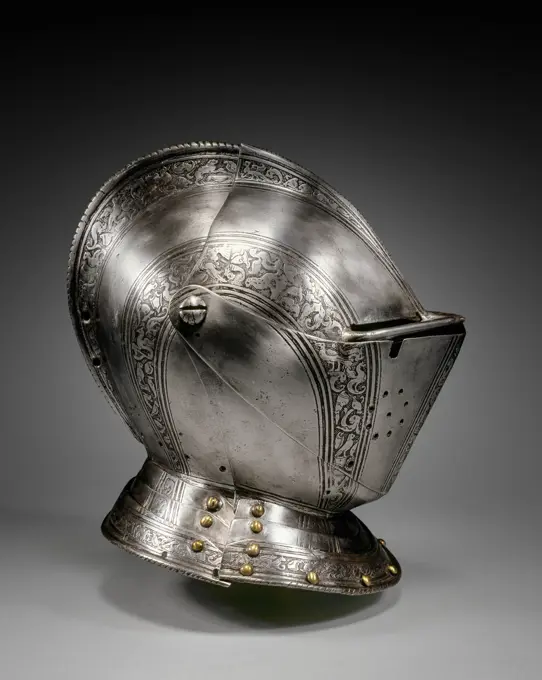
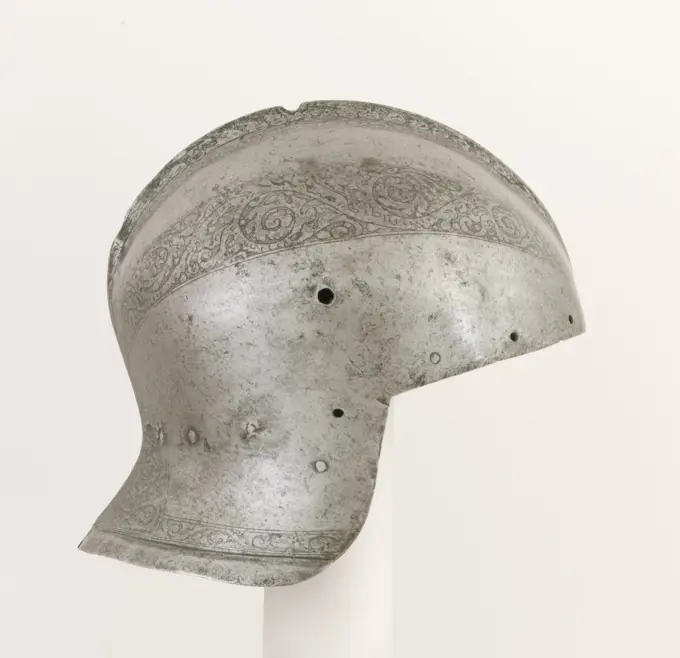
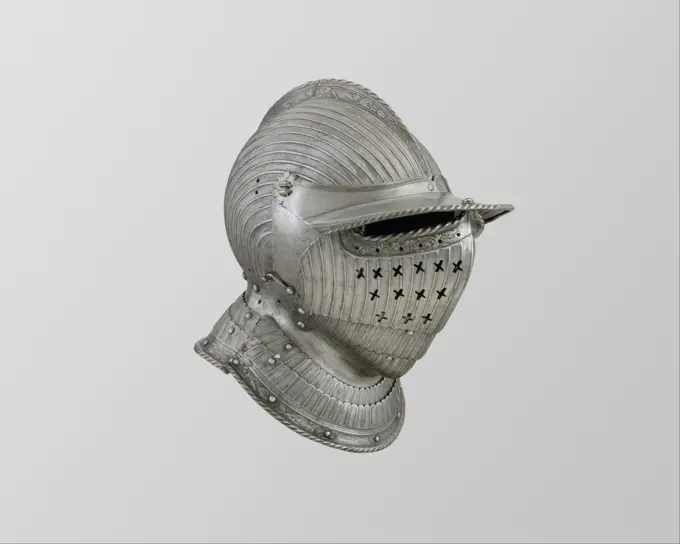
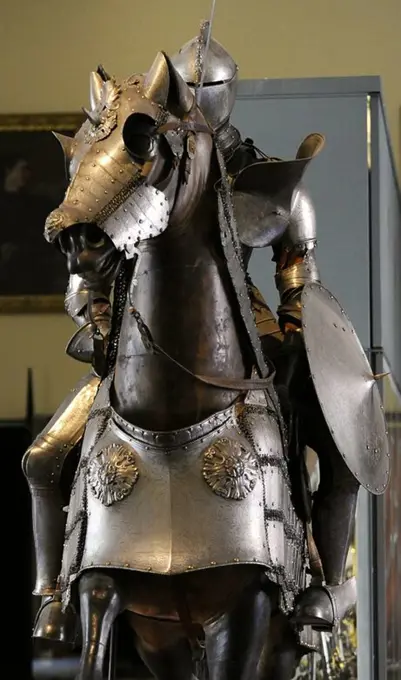
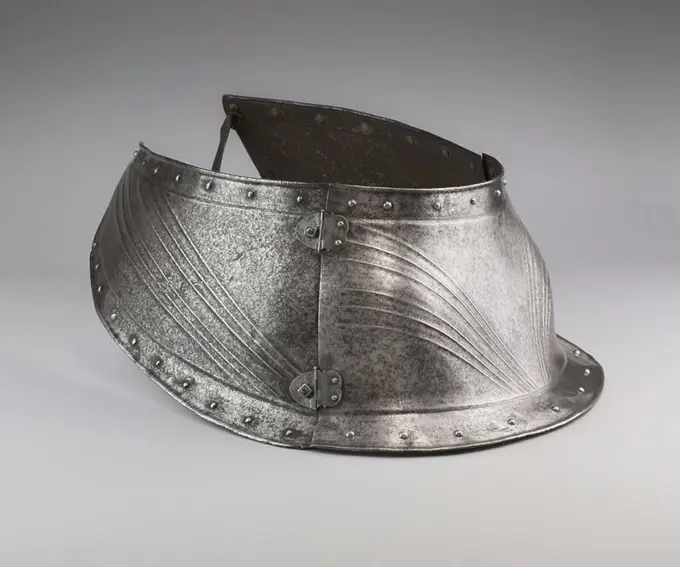
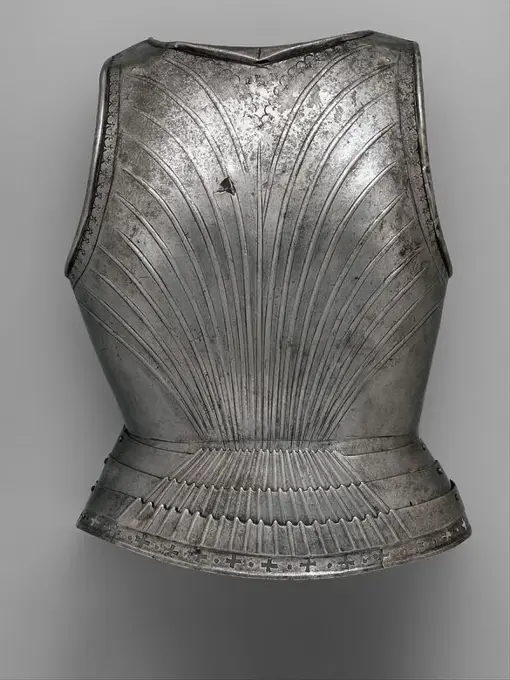
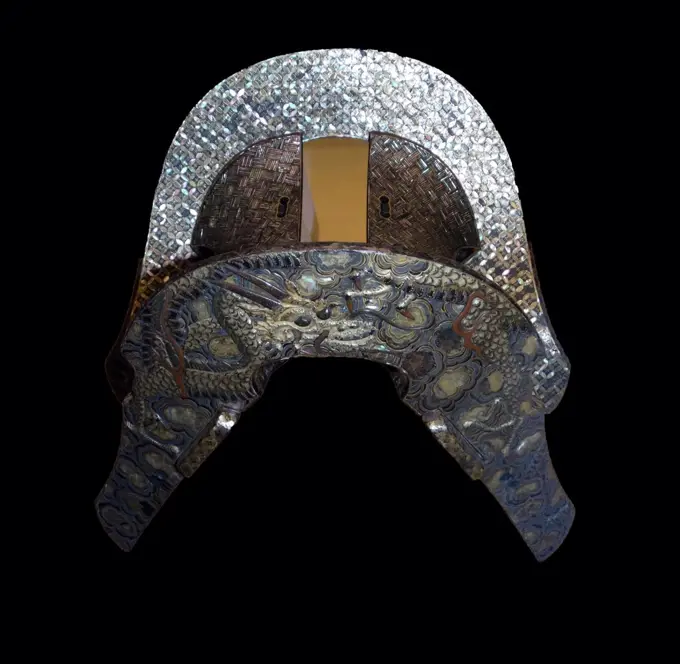
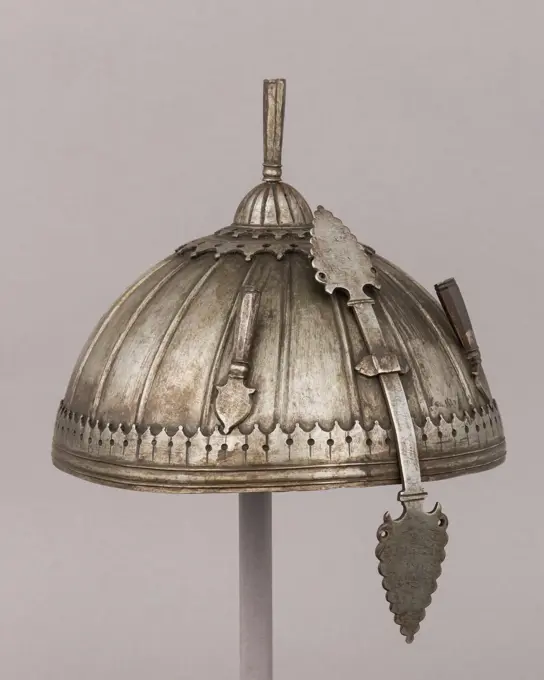
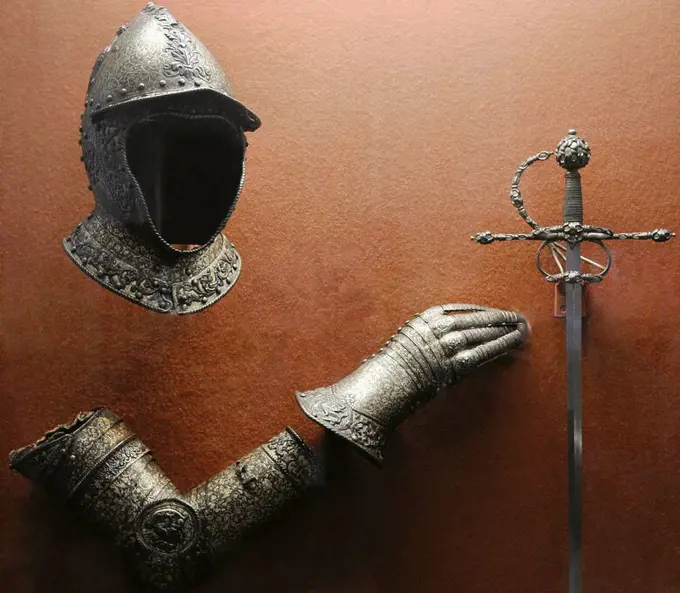
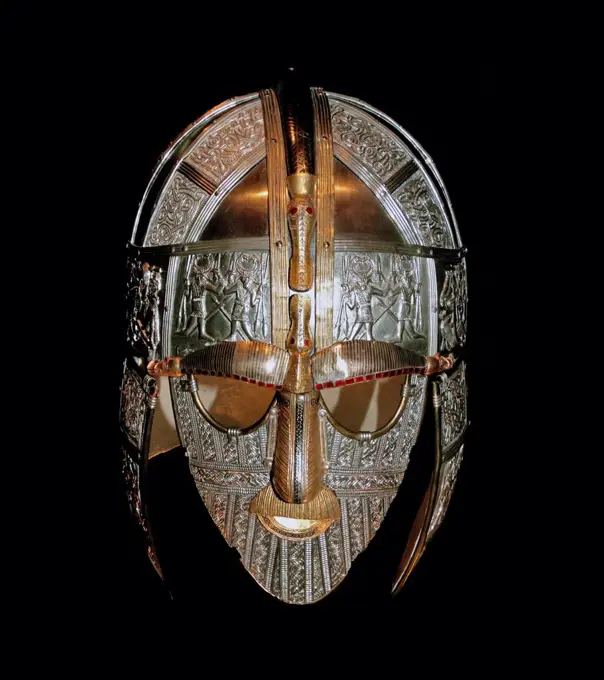
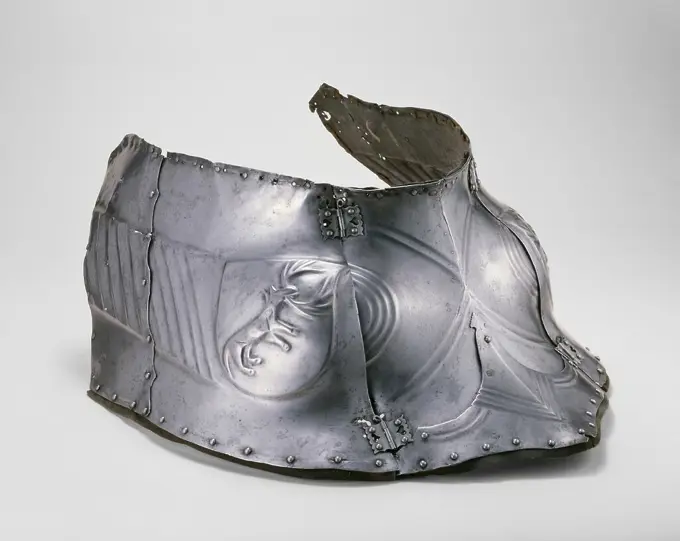
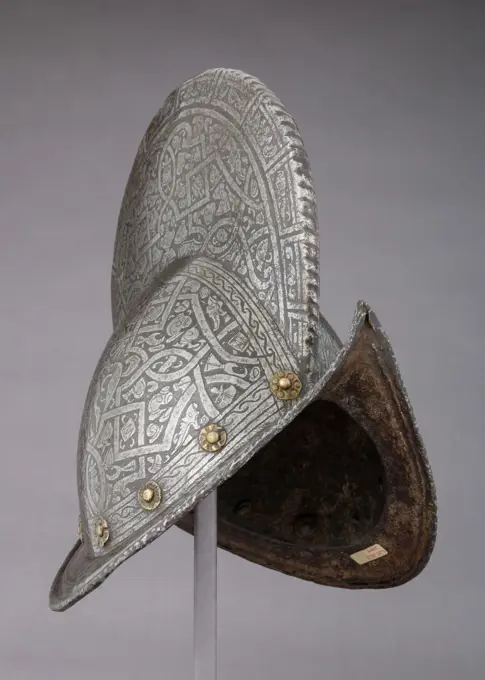
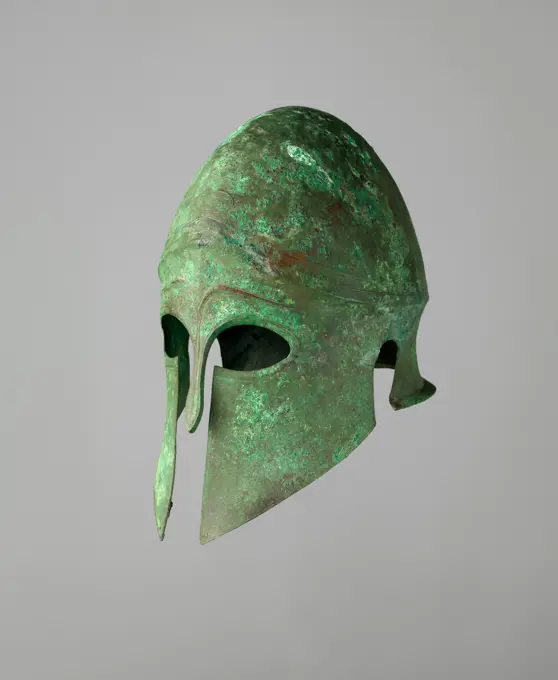
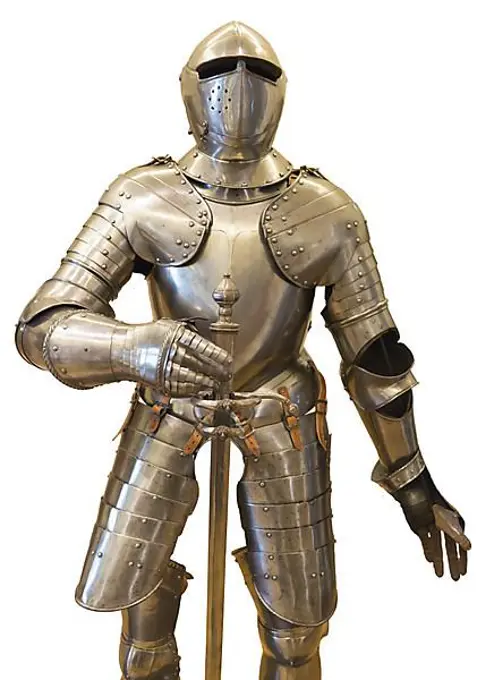
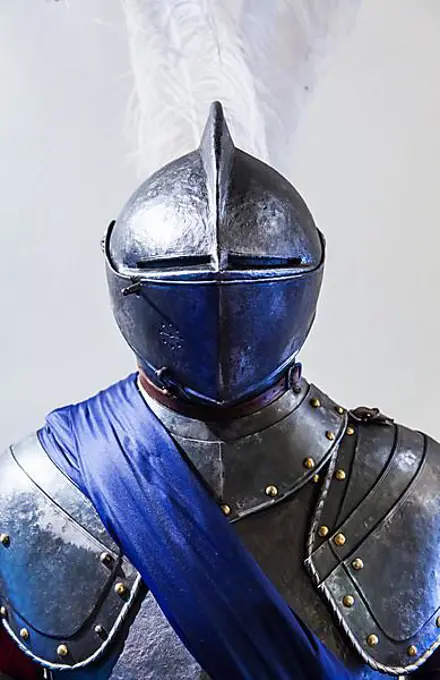
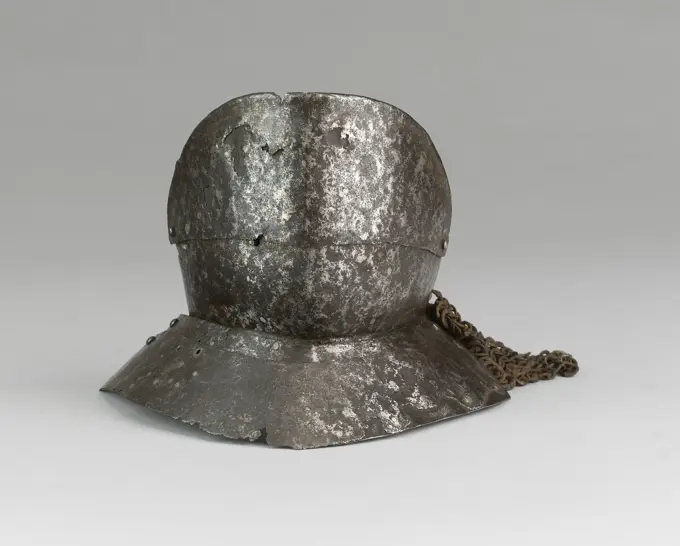
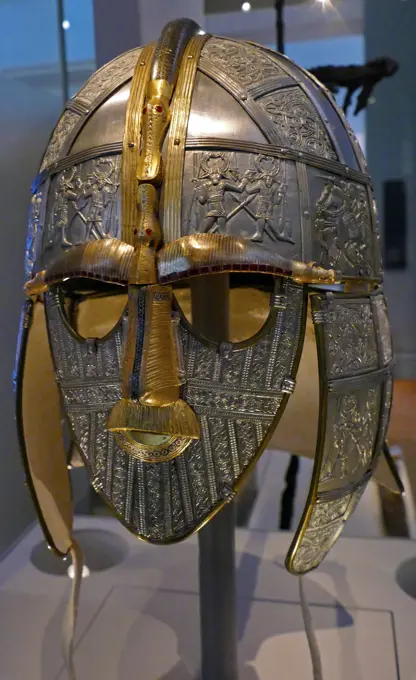
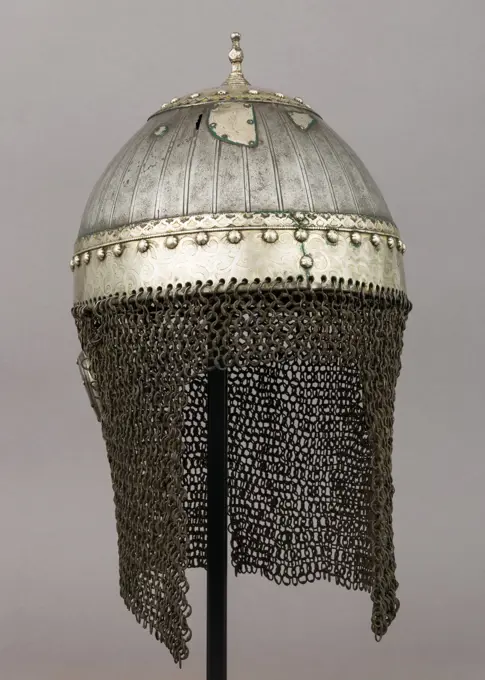
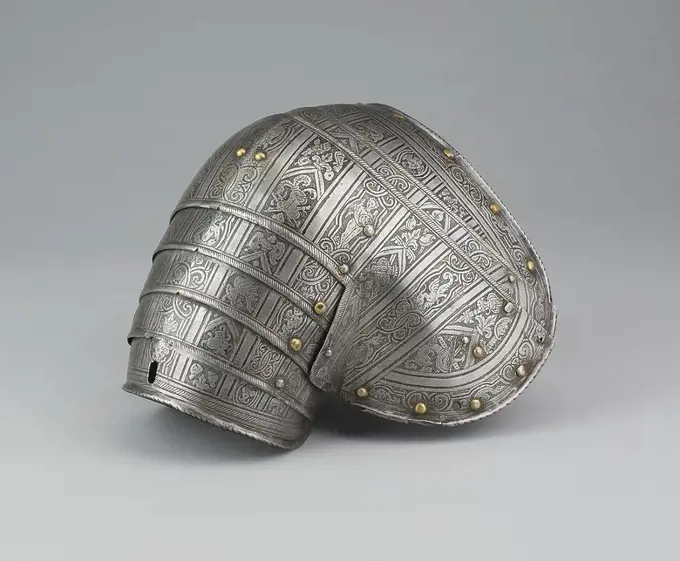
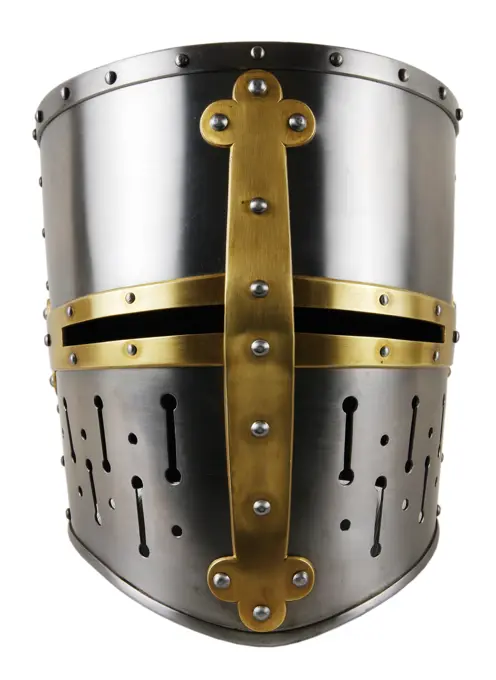
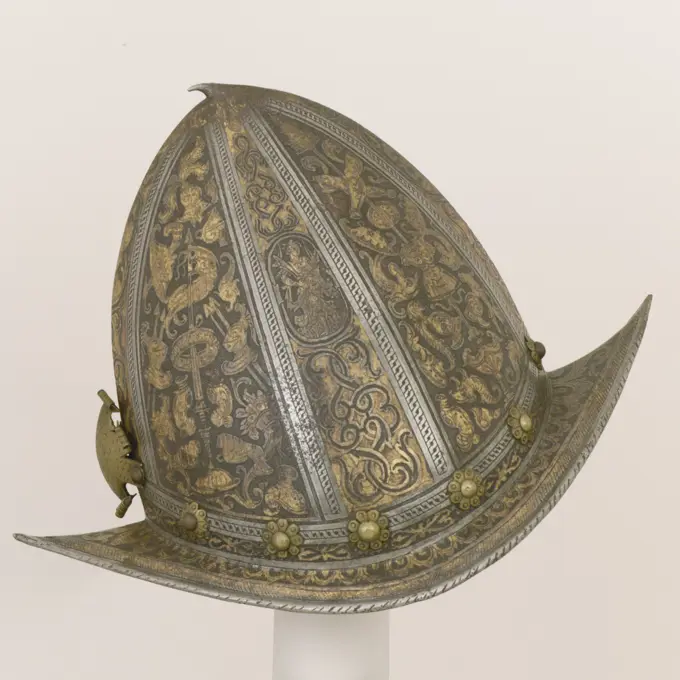
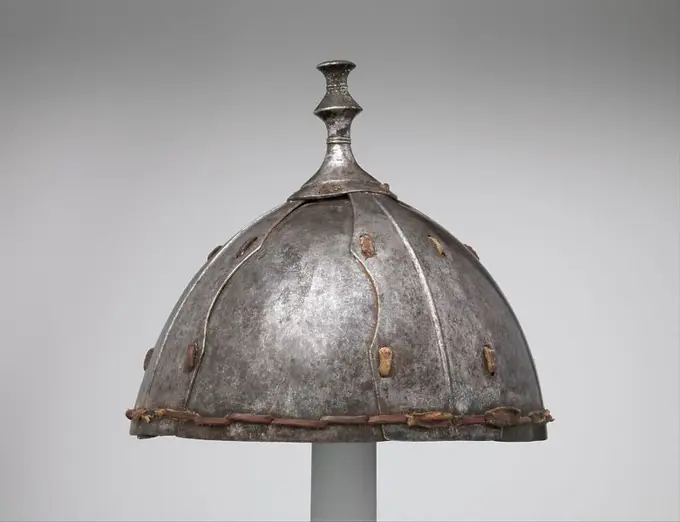
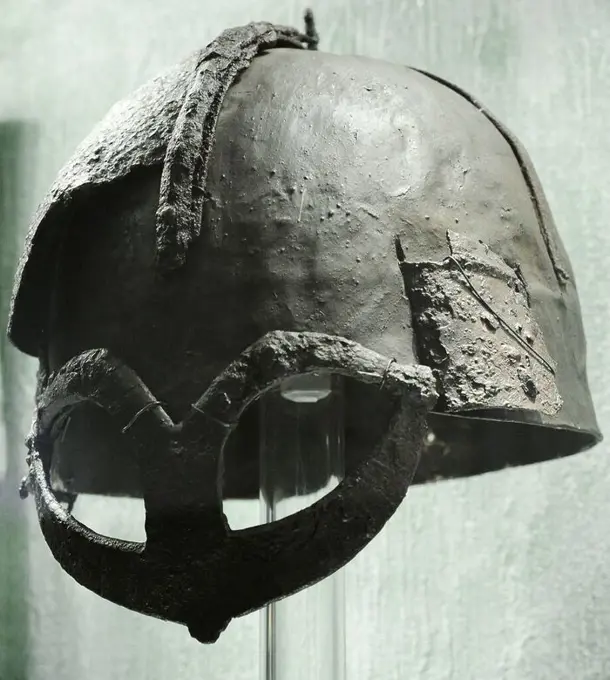
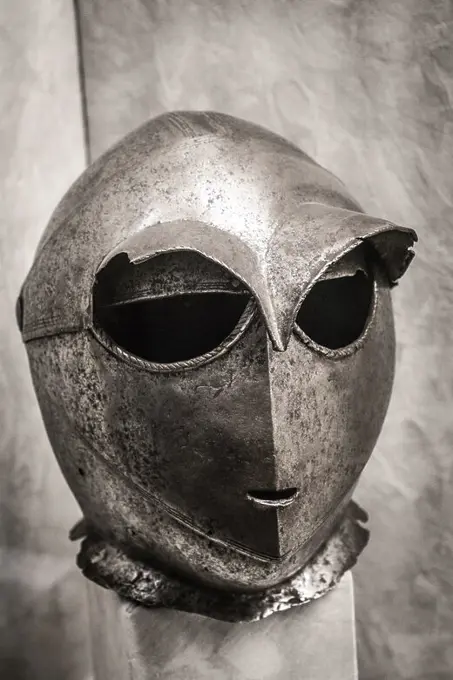
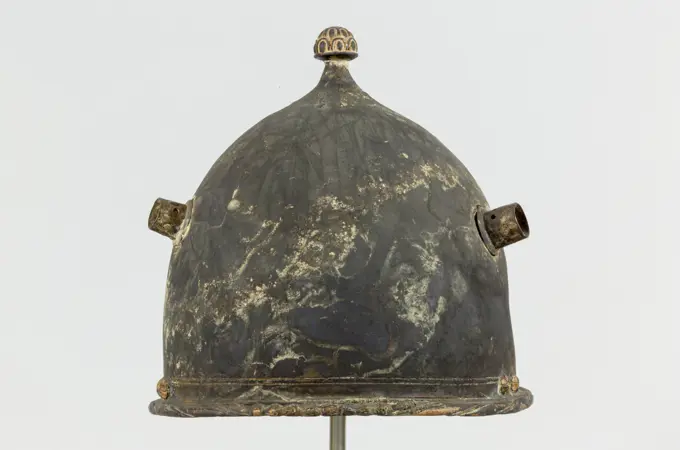
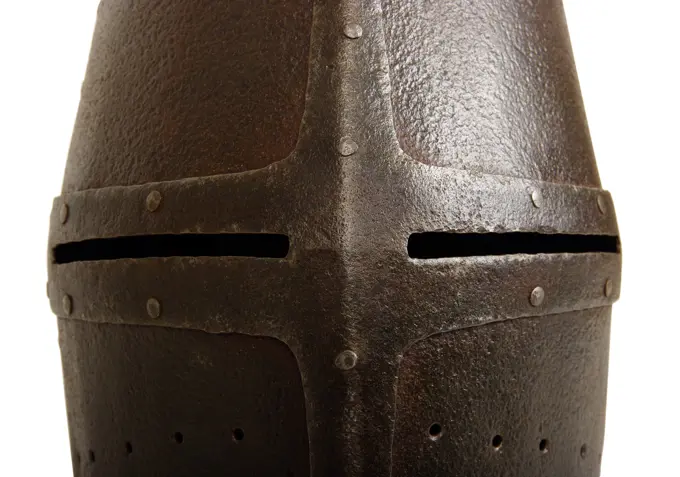
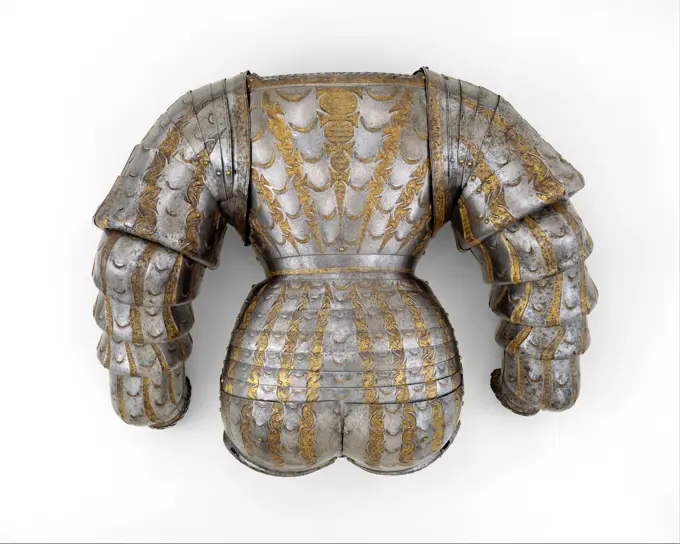
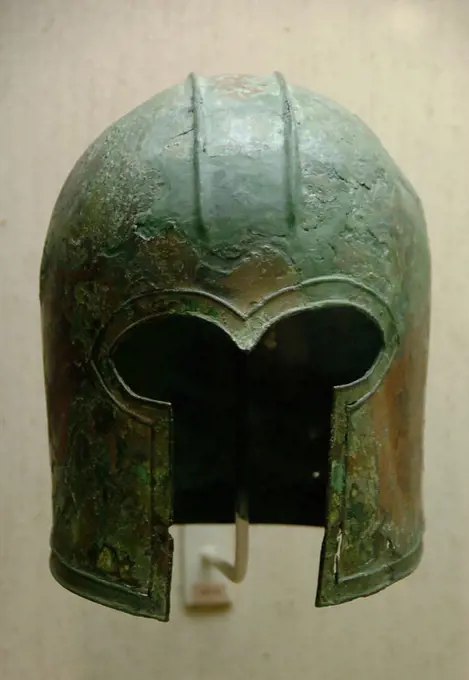
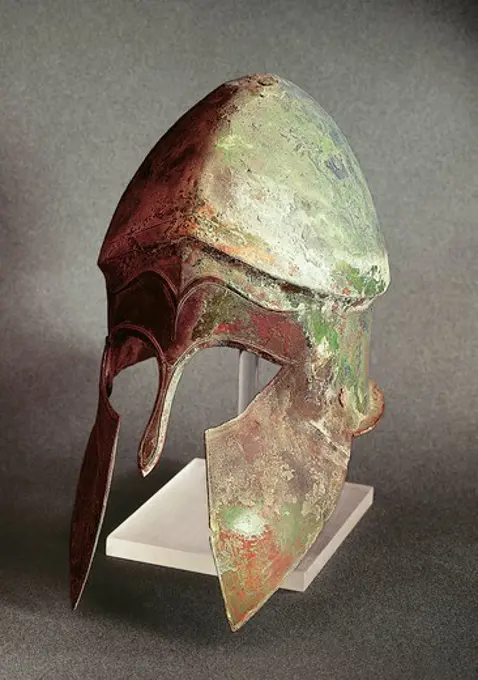
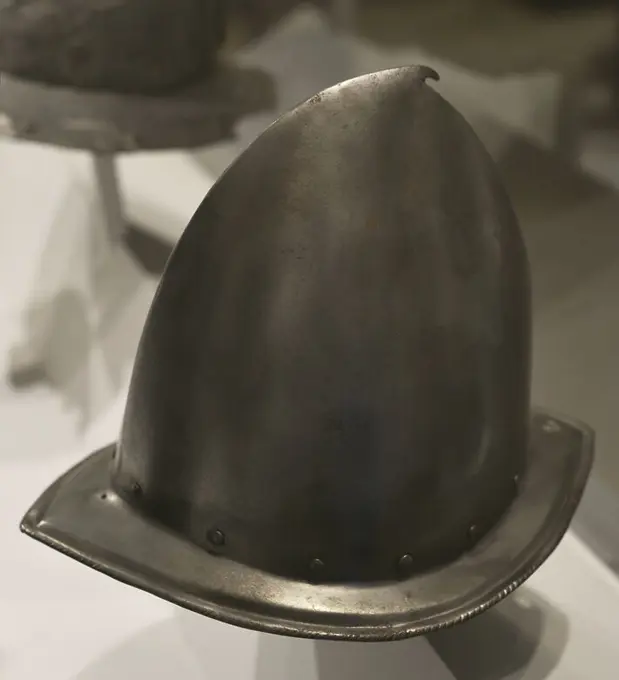
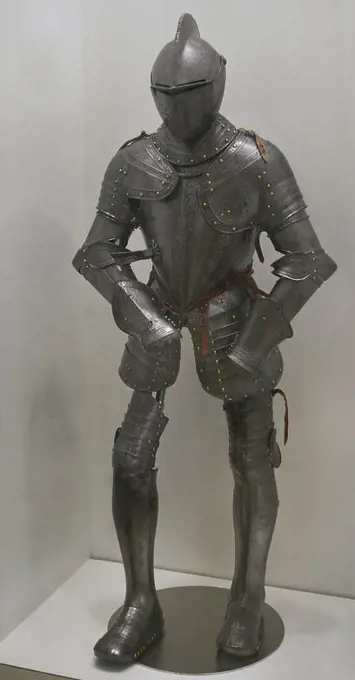
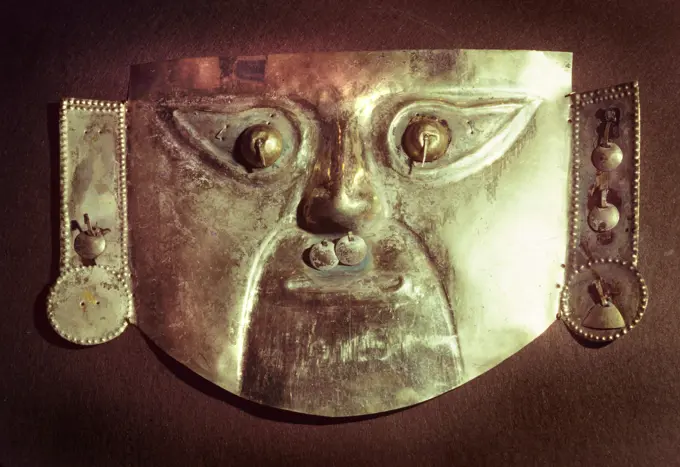
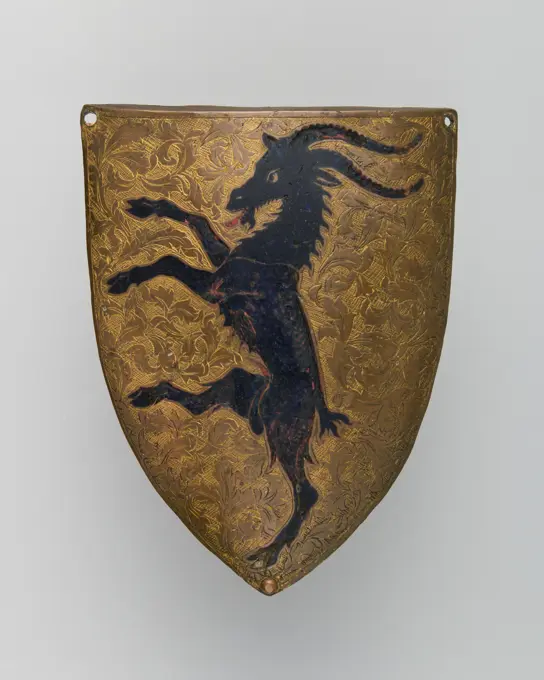
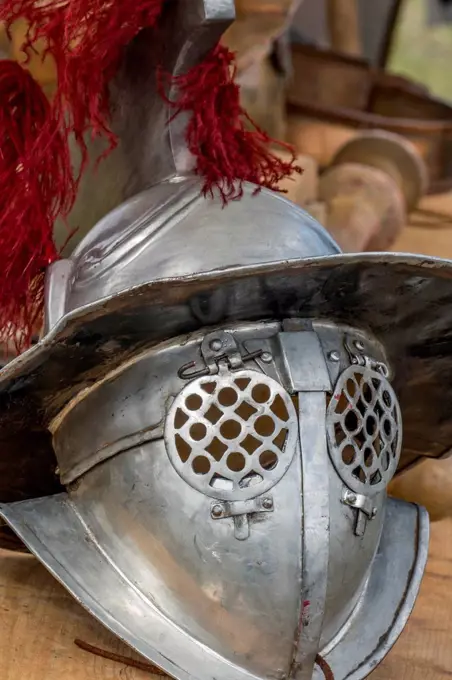
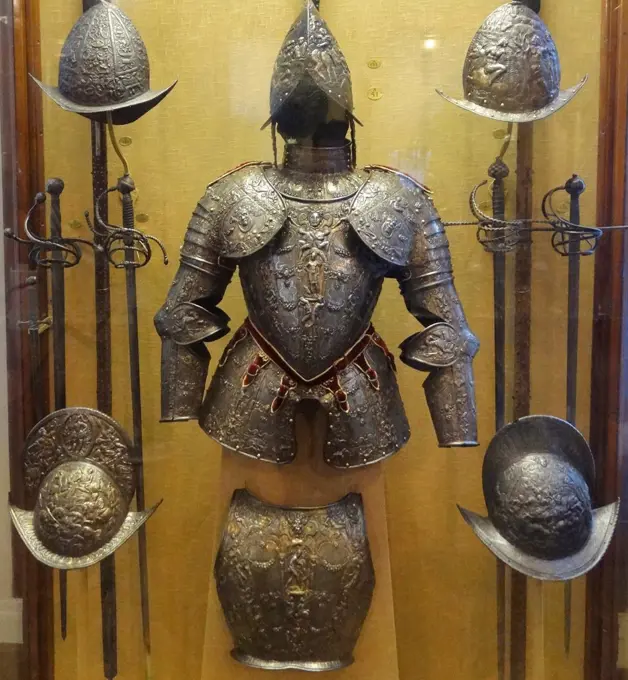
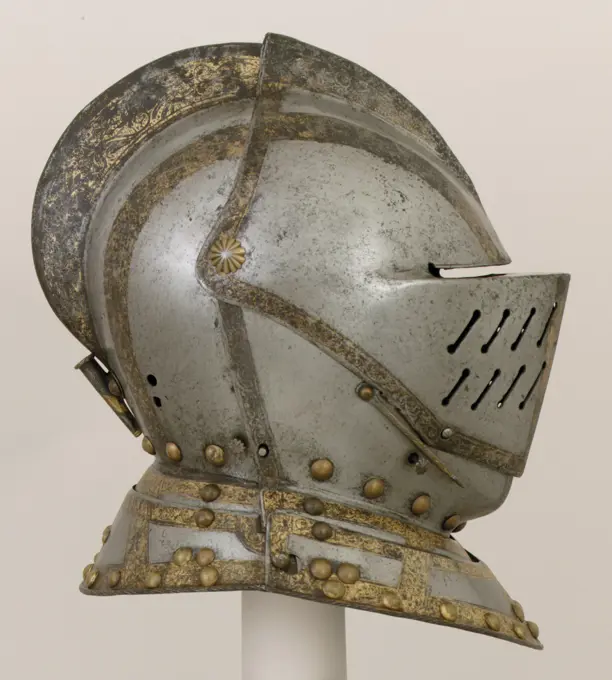
Diverse collection of ornate helmets from the 15th and 16th centuries, highlighting craftsmanship and design for combat and tournaments.
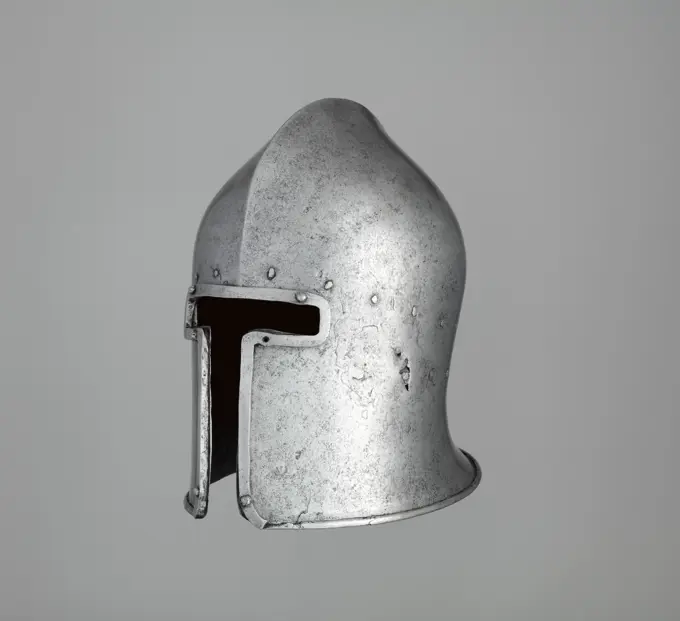
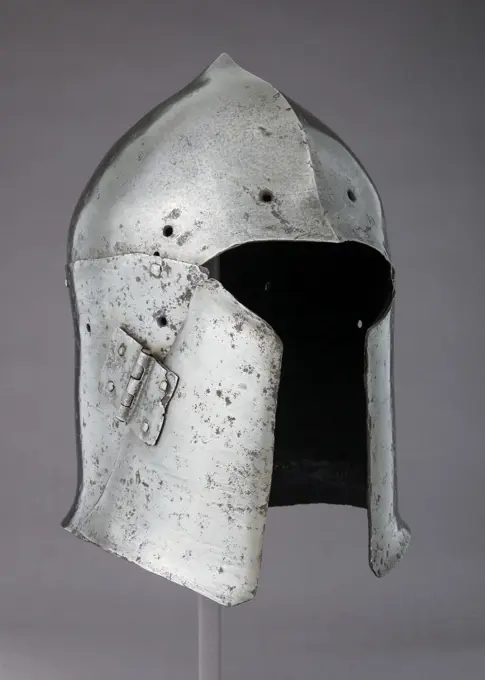
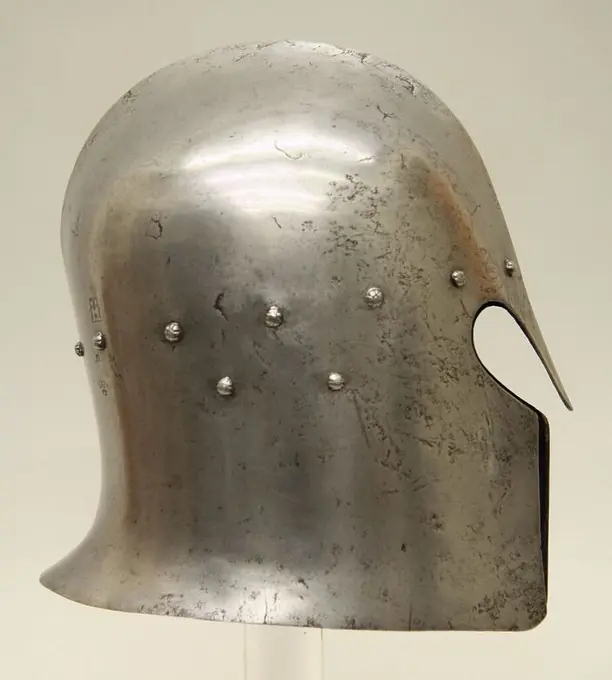
Barbute ca. 1460 Italian, Milan The english term barbut (from the italian, barbuta) denotes a characteristically tall form of visorless helmet with narrow T- or Y-shaped face opening that was worn almost exclusively in Italy in the third quarter of the fifteenth century. This barbut is forged from a single plate of steel, its hemispherical skull rising to a sharp comb at the top and descending at the sides and back almost to the tops of the shoulders; the back of the helmet has an elegant profile that curves inward to follow the nape of the neck, then turns outward to form a short tail. The face opening is T-shaped and is reinfored by an applied band of iron held by decorative rosette rivets. The series of rivets encicling the middle of the bowl formerly secured a strap on the inside, to which was sewn a padded lining; below this, on either side, is a pair of rivets to secure the chin straps, now also lost.This elegantly proportioned and gracefully shaped barbut demonstrates the virtuo