Lunar and Ceres Surface Features

High-resolution images of various lunar and Ceres craters, showcasing impact features, textures, and surface details.
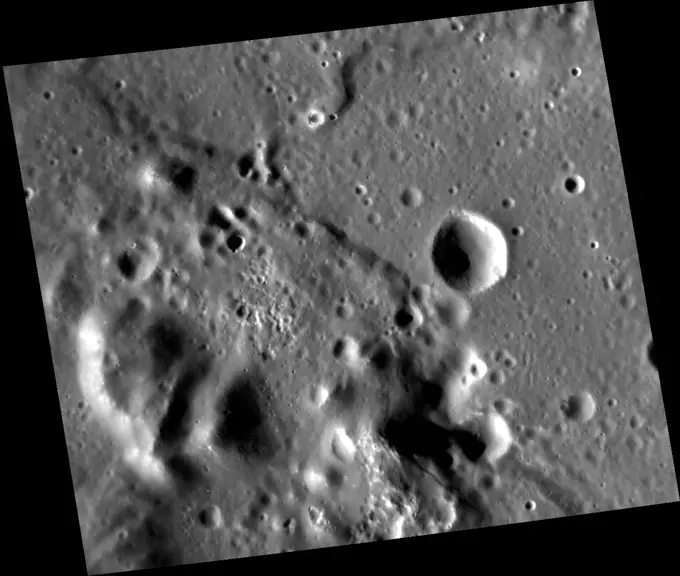
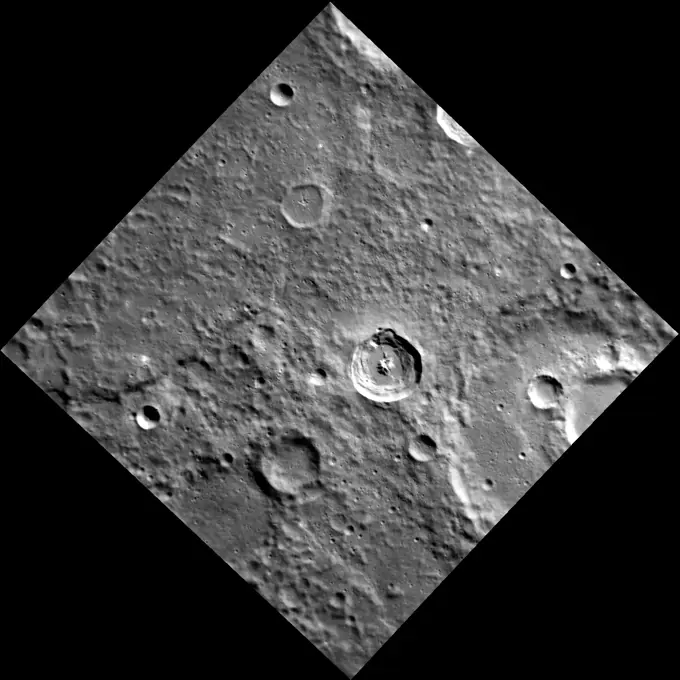
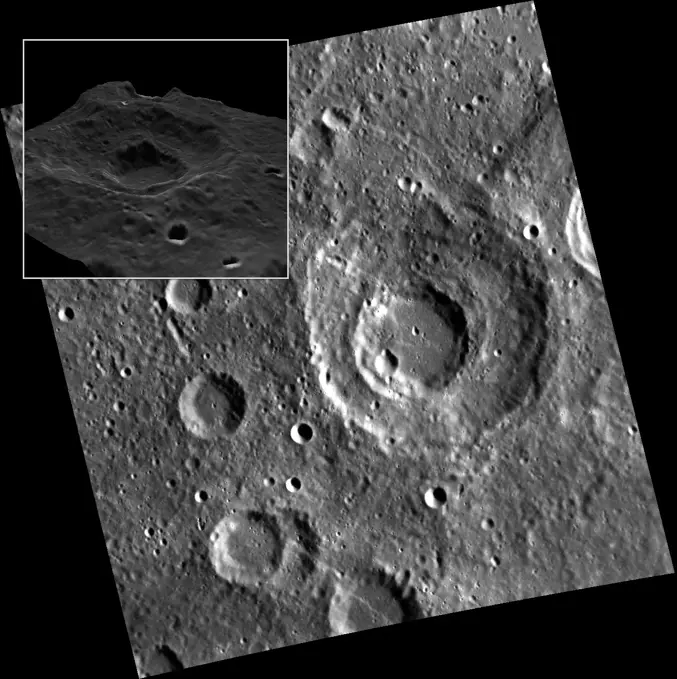
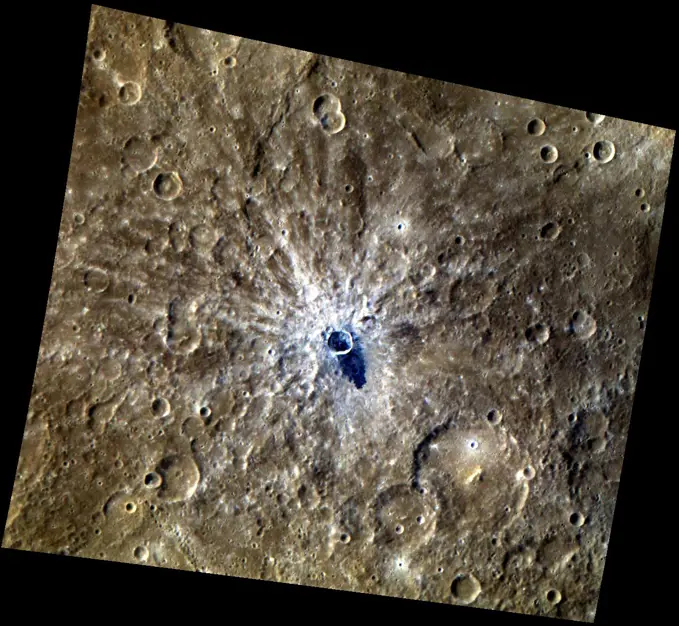
Another Small Volcano

Assets in this Story

6145-44810774
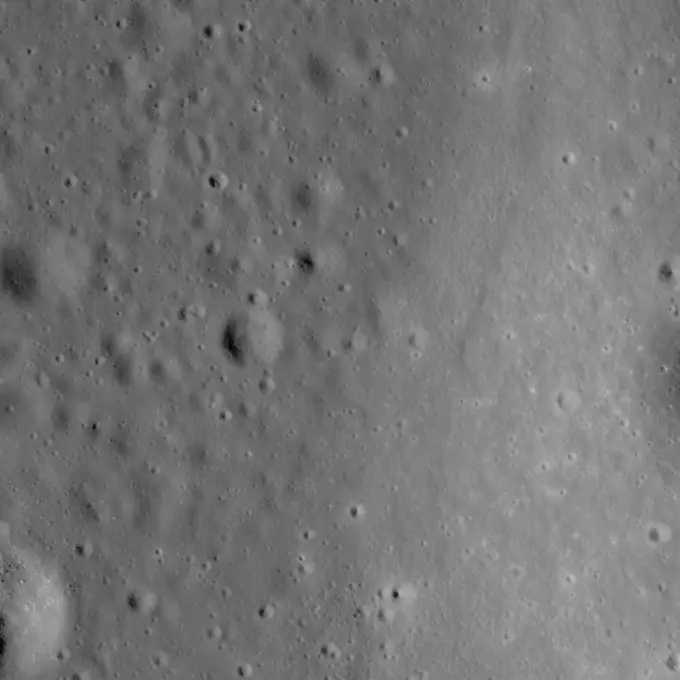
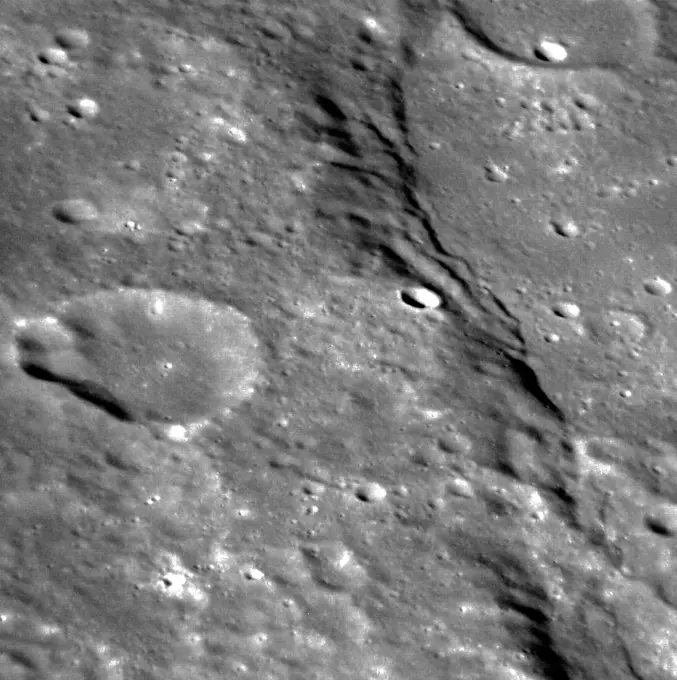
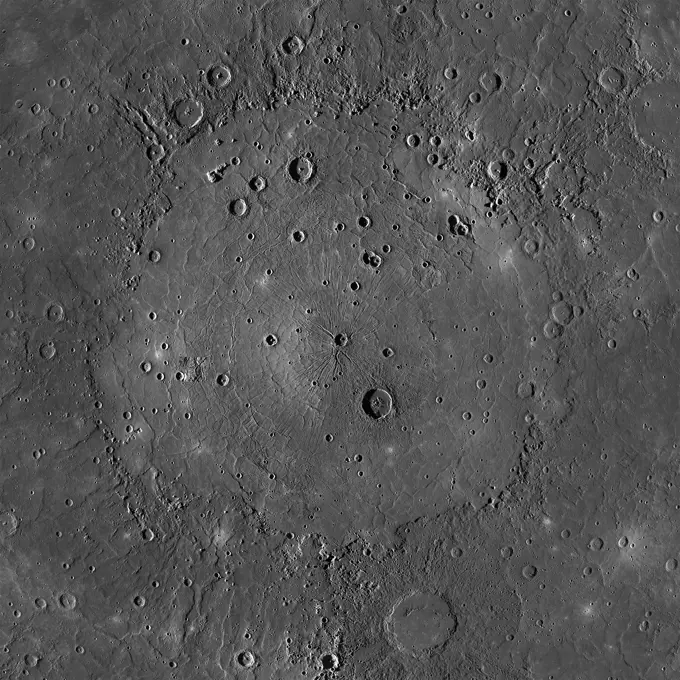
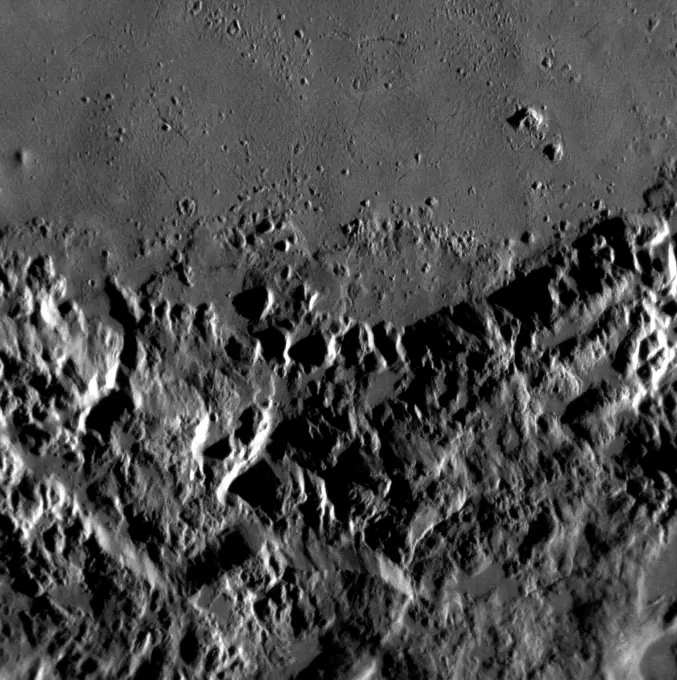
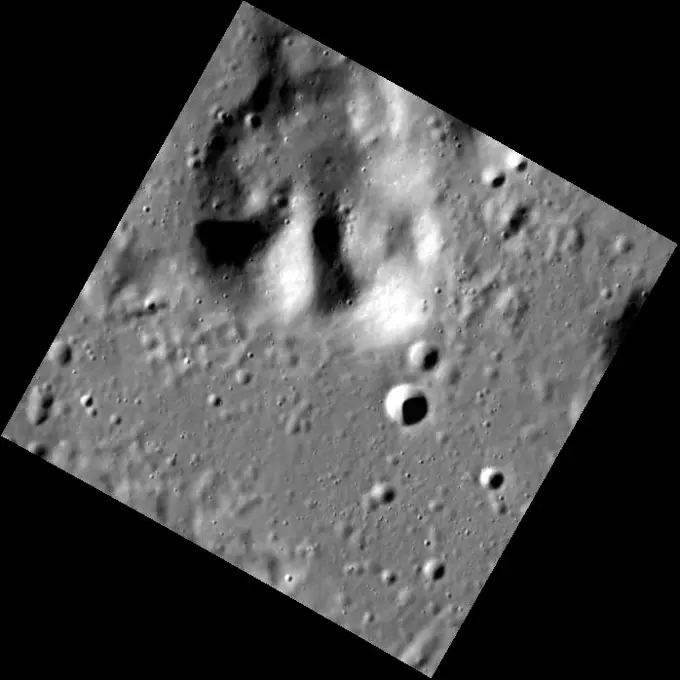
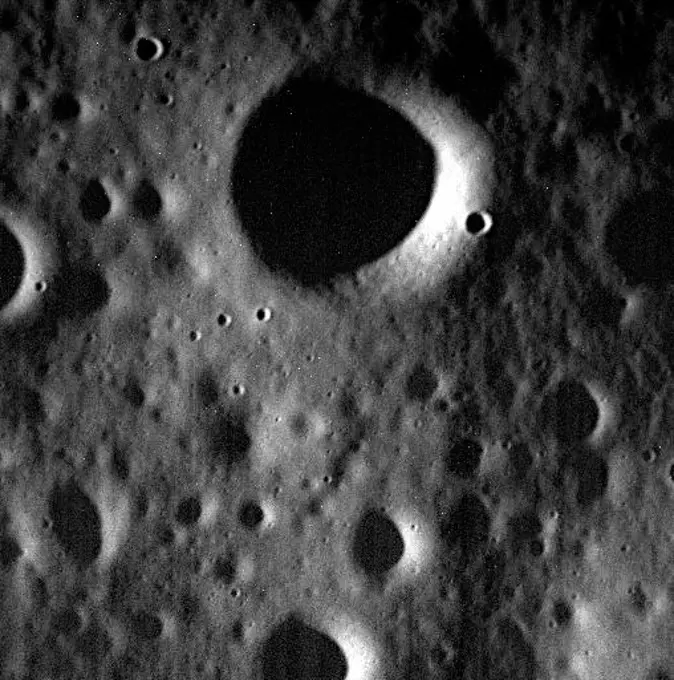
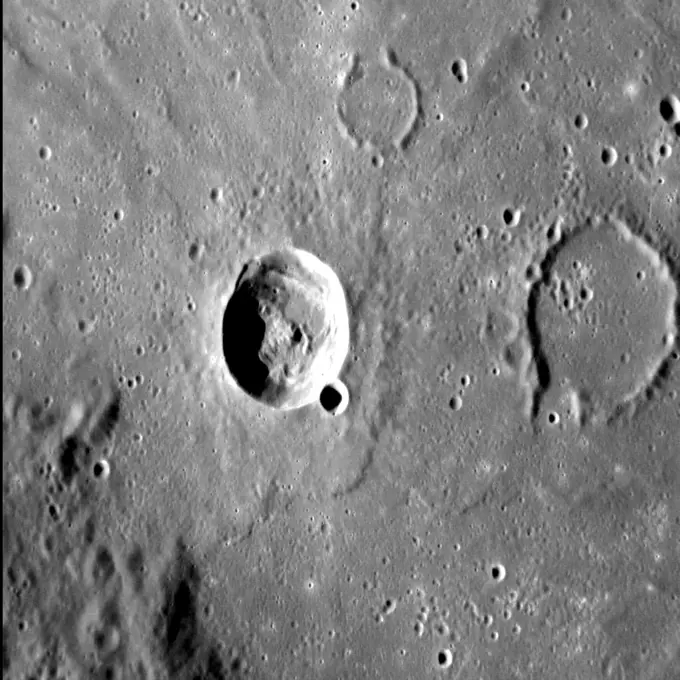
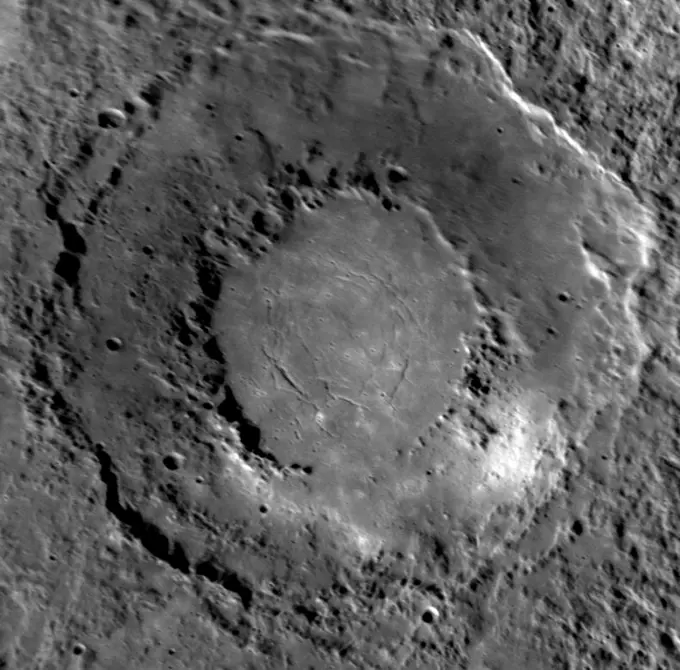
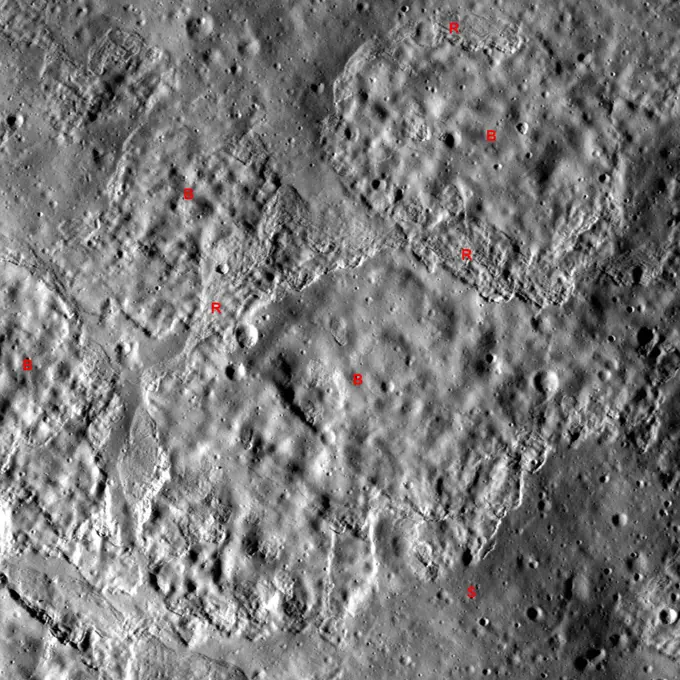
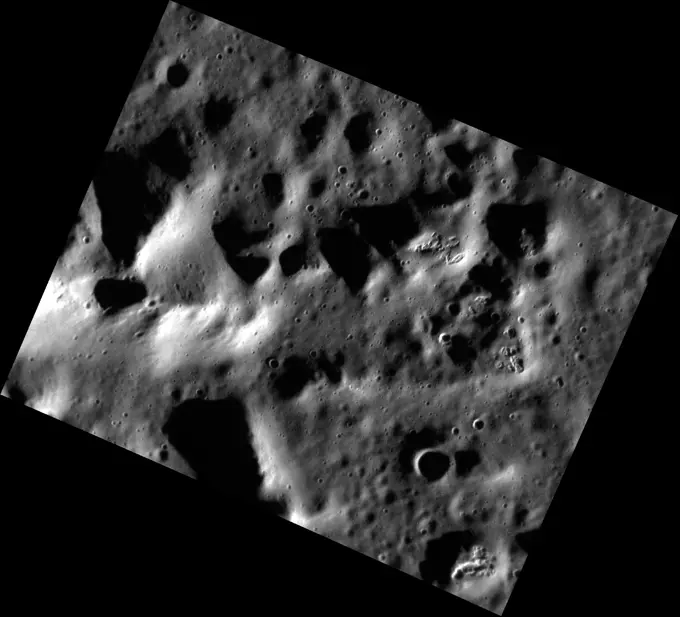
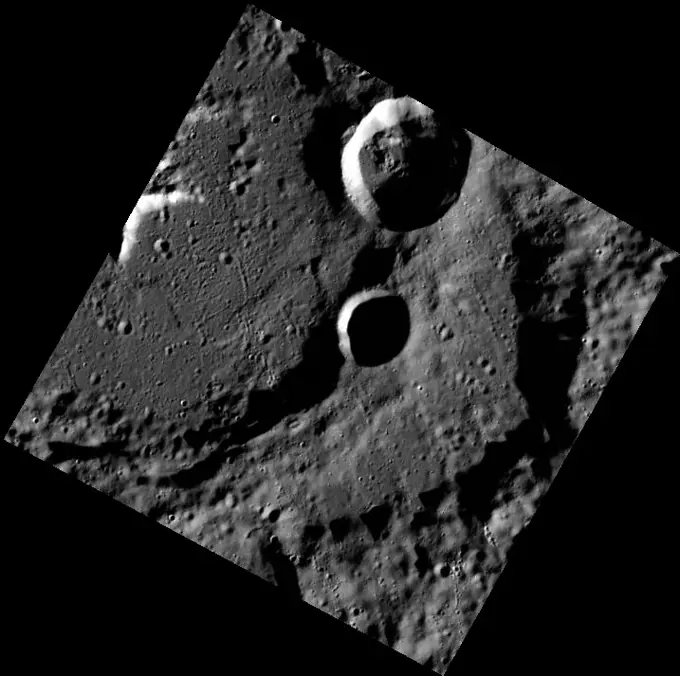
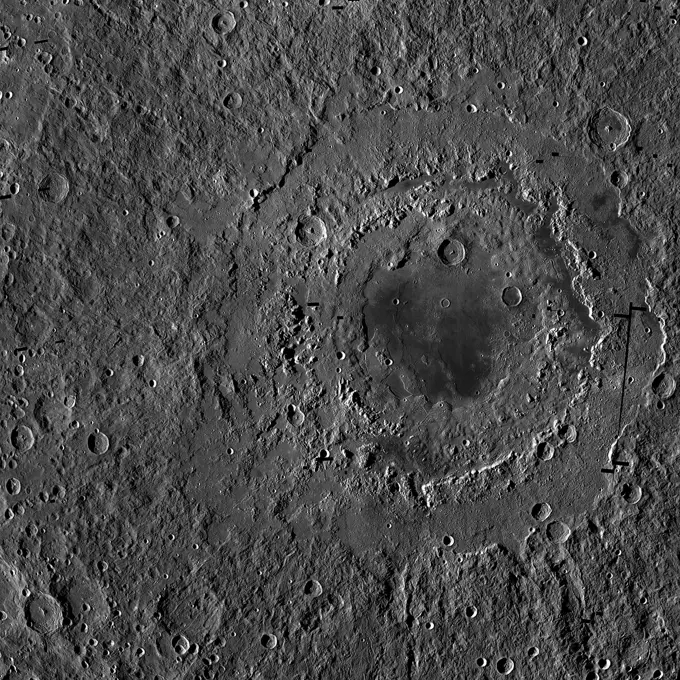
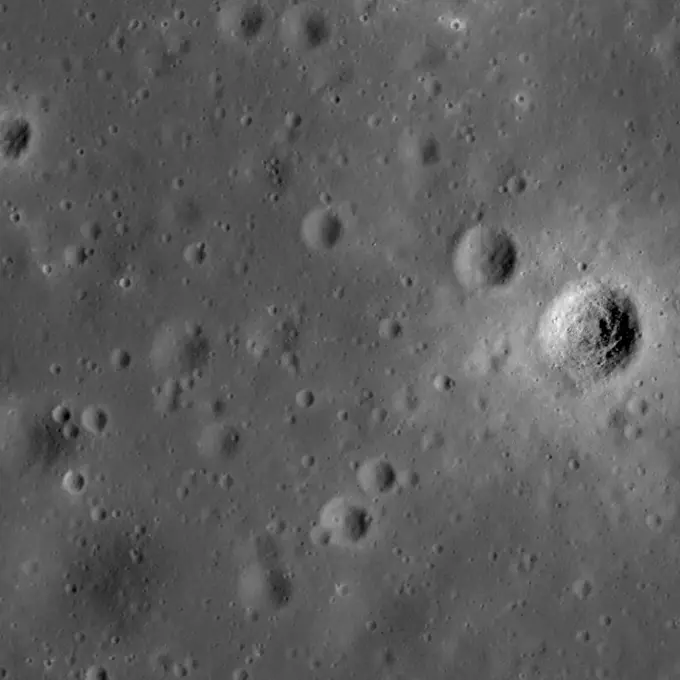
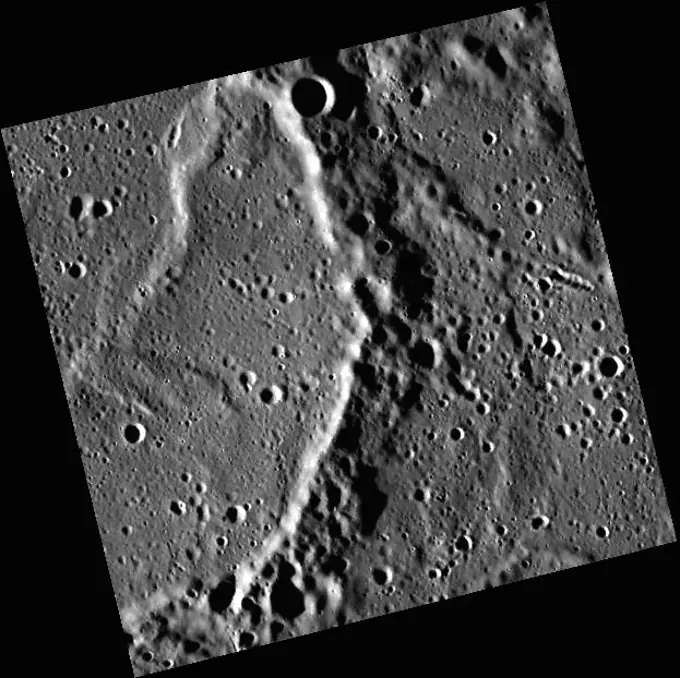
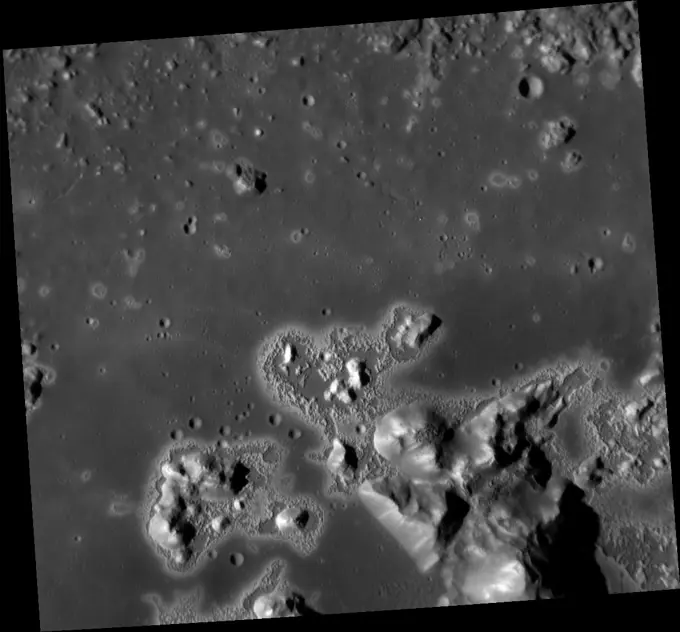
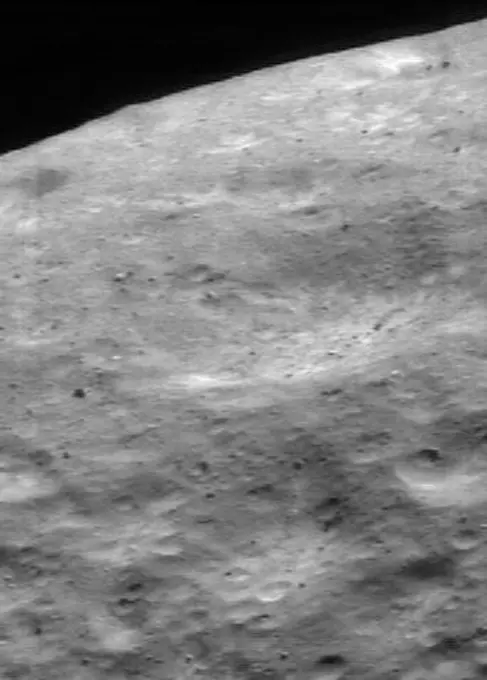
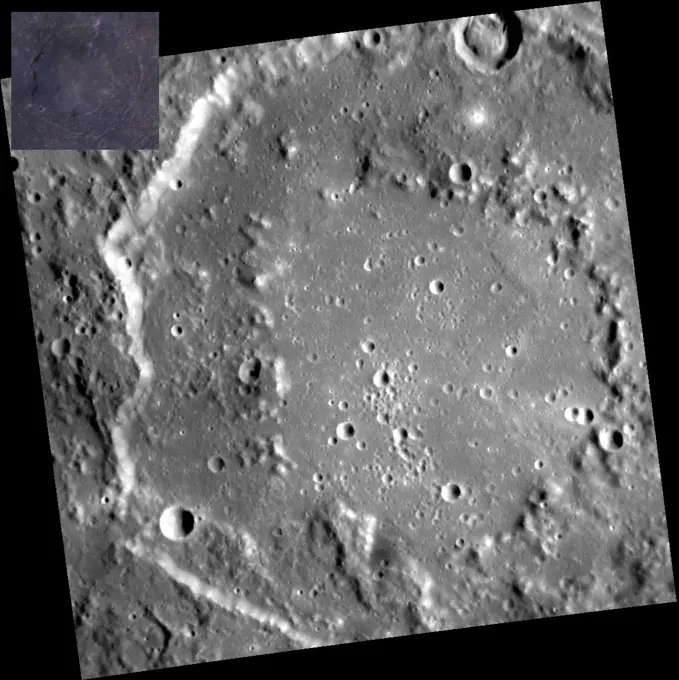
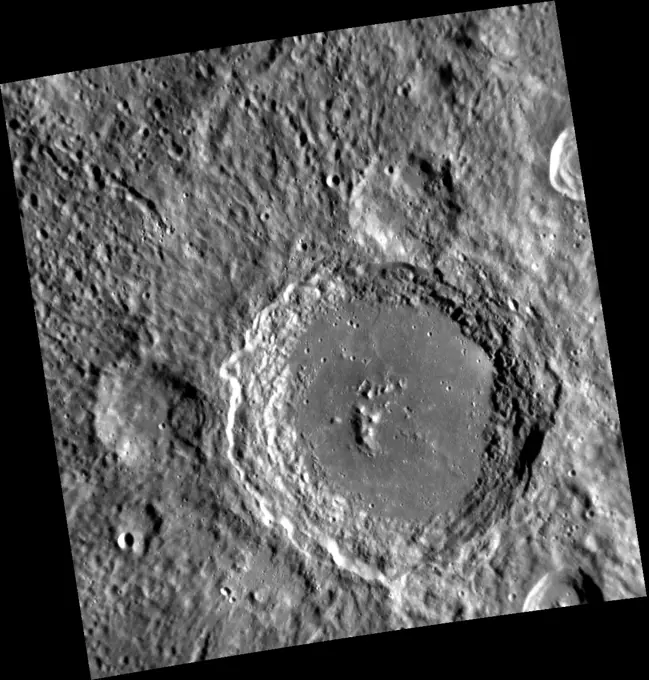
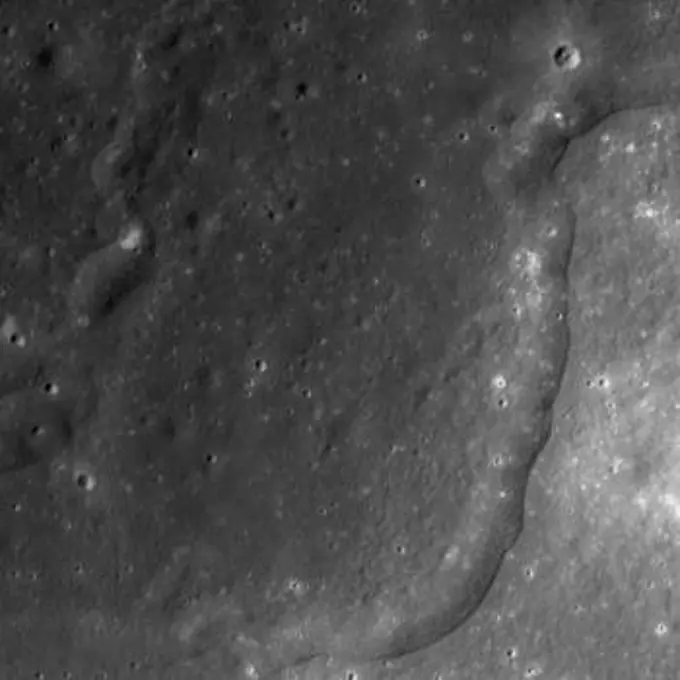
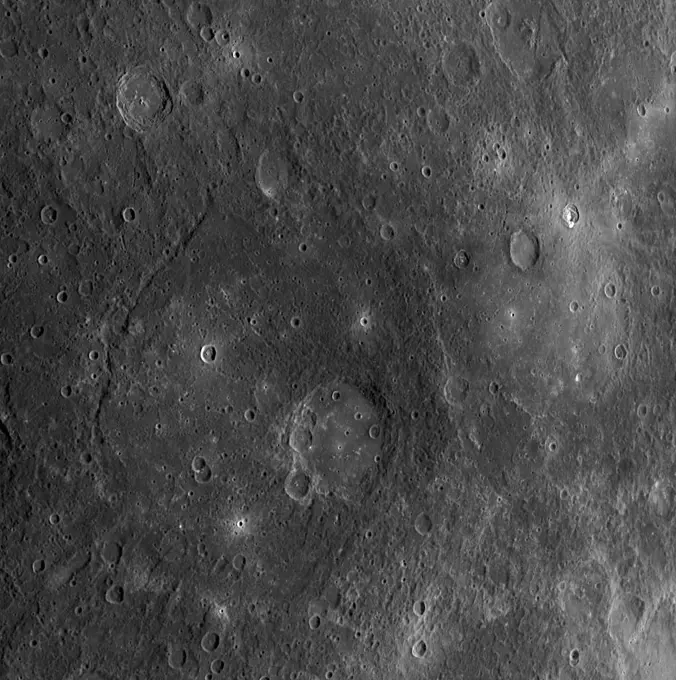
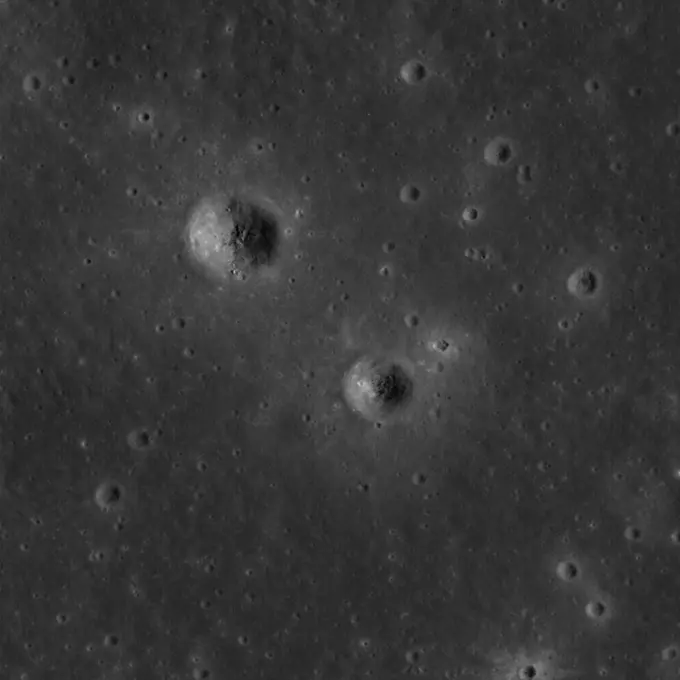
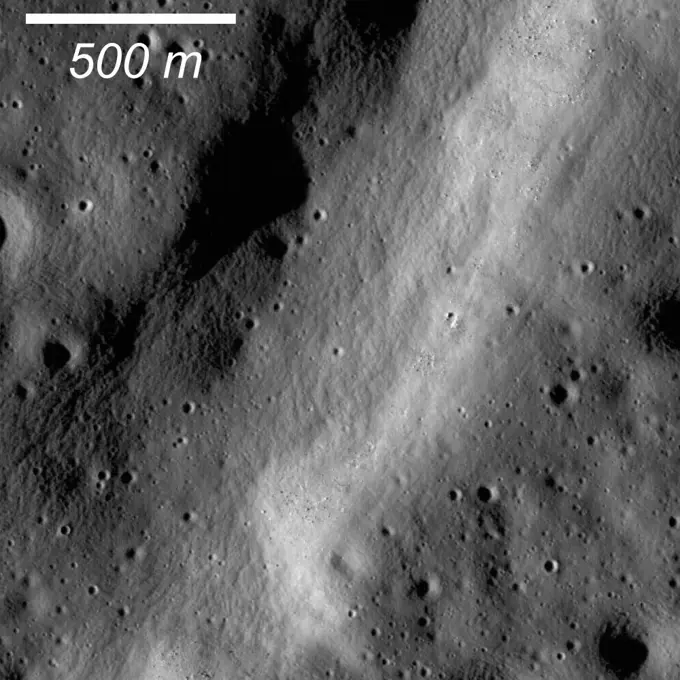
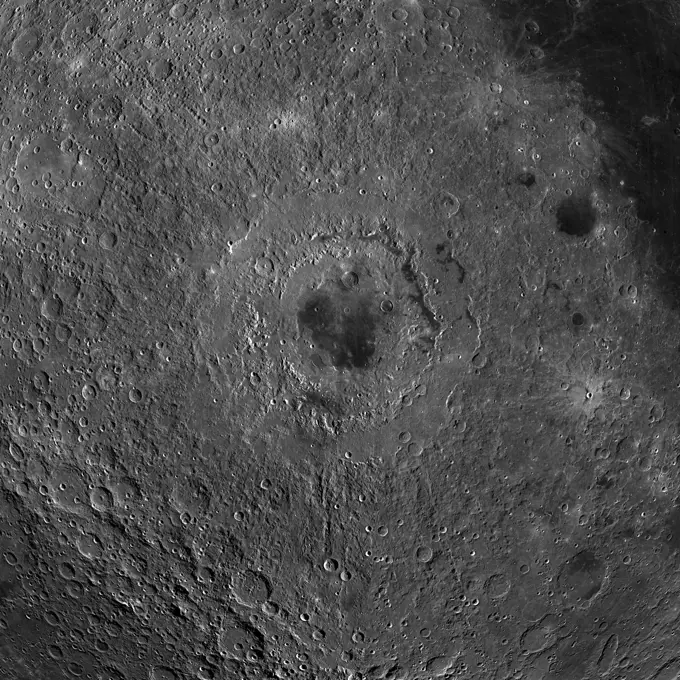
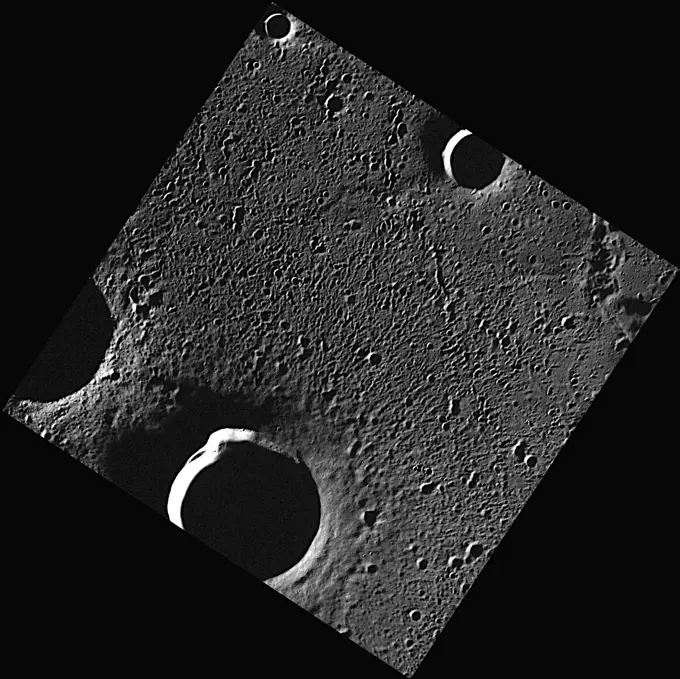
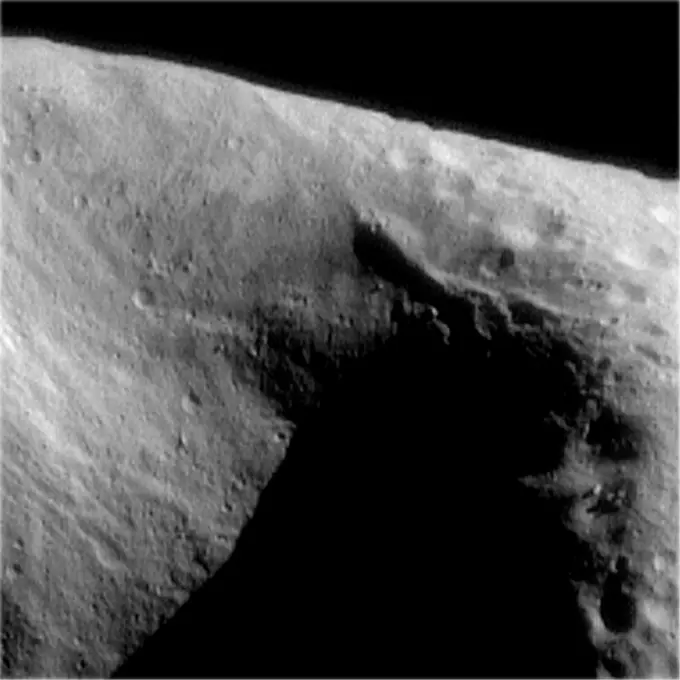
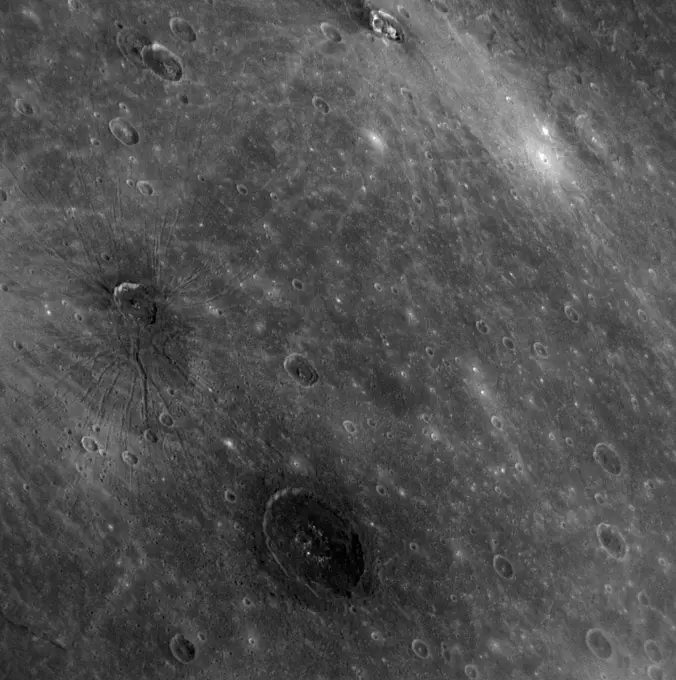
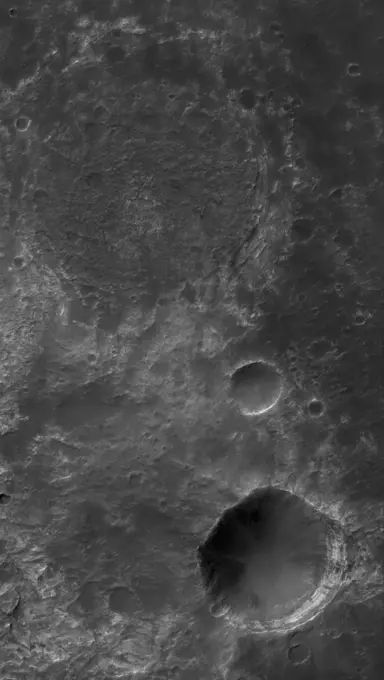
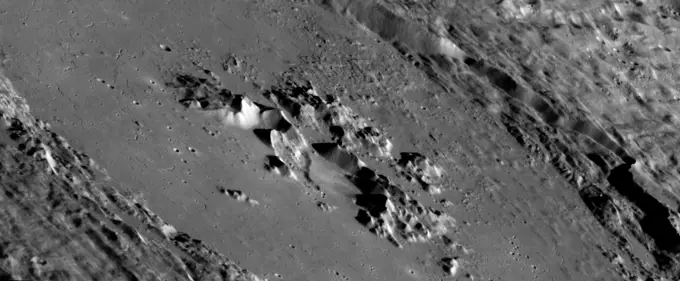
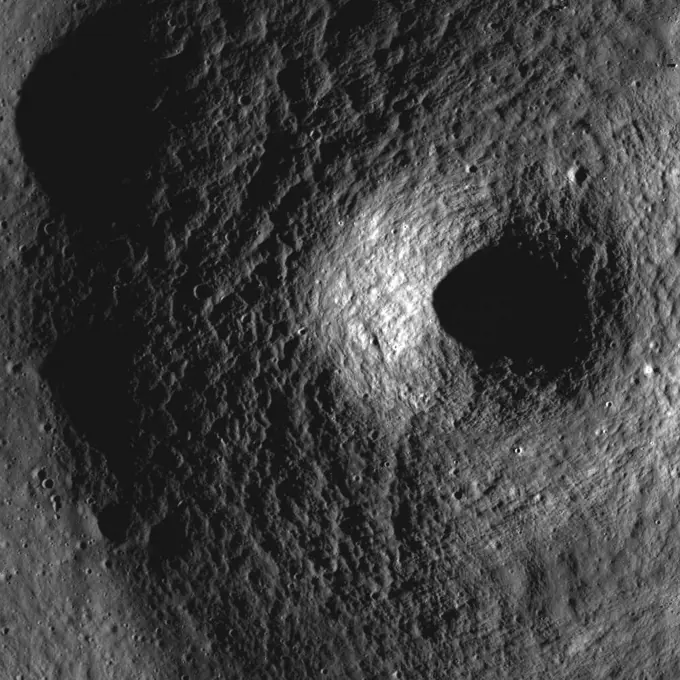
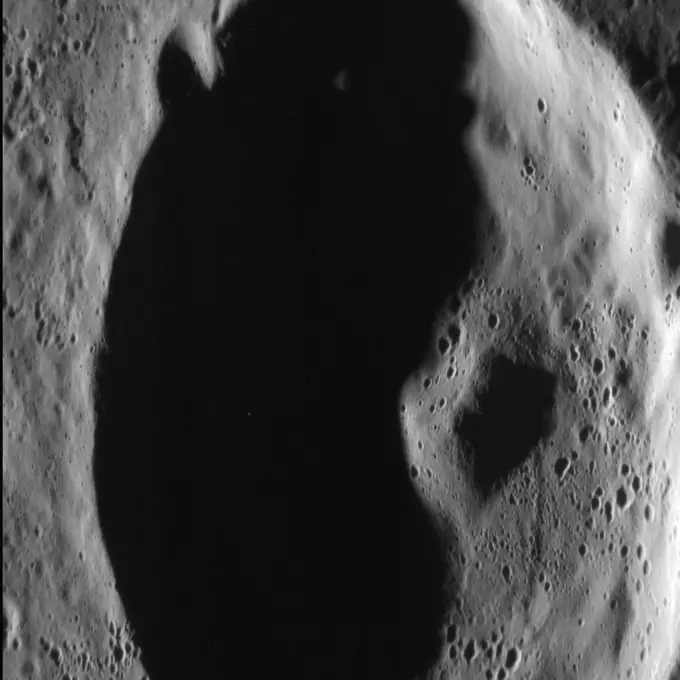
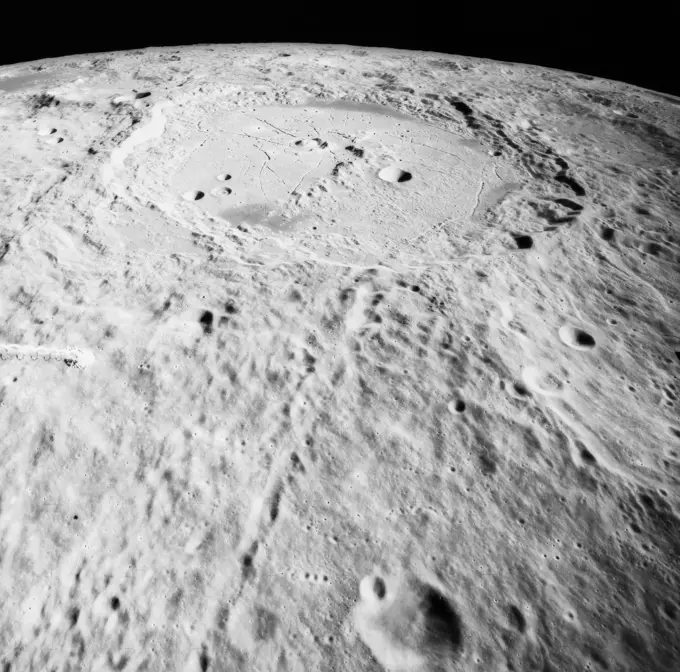
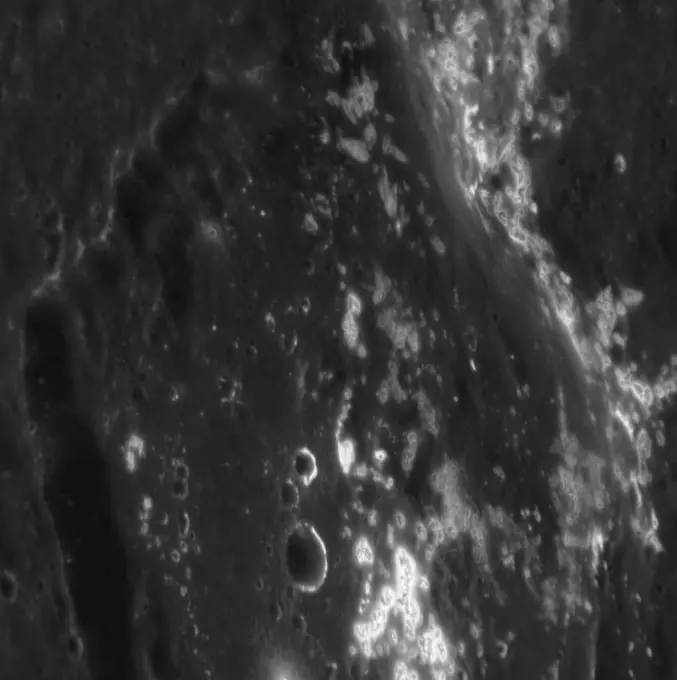
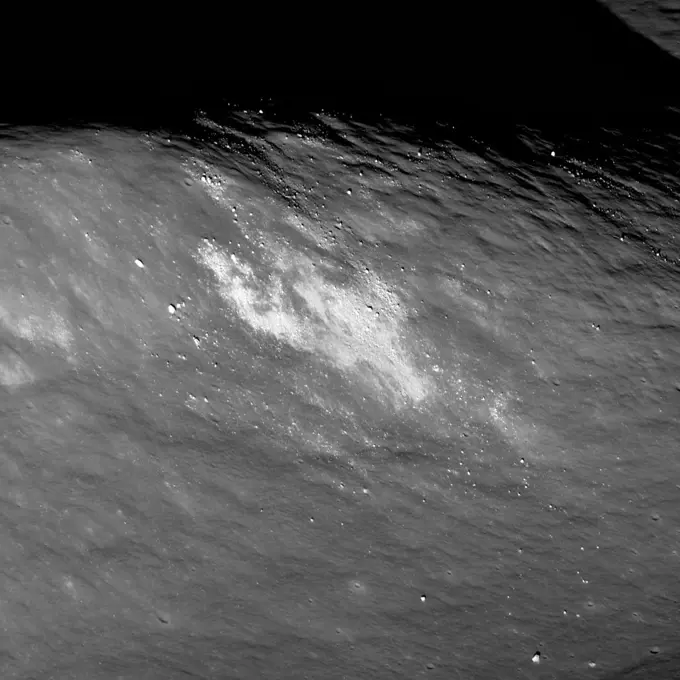
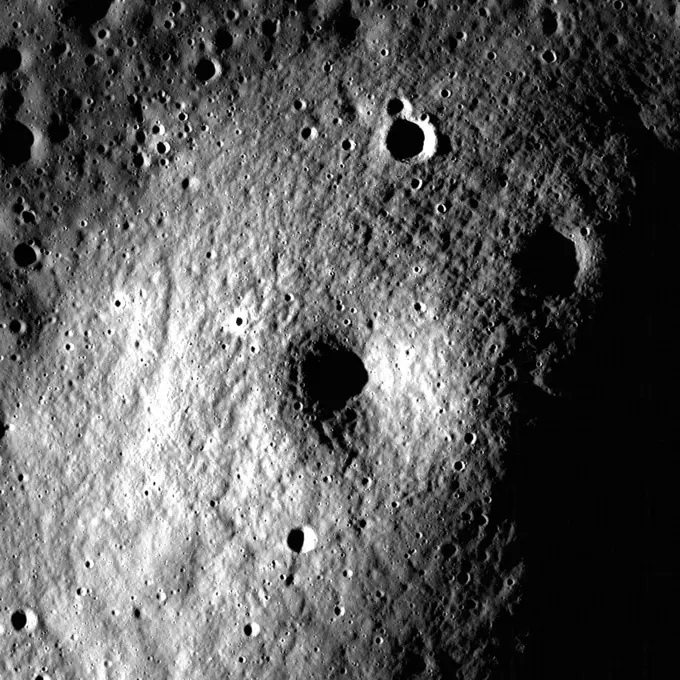
This high resolution image taken by NASA's Lunar Reconnaissance Orbiter shows the floor of the Apollo Basin, a large (538 km diameter) double-ringed impact crater in the southern hemisphere of the far side.
6145-45116773
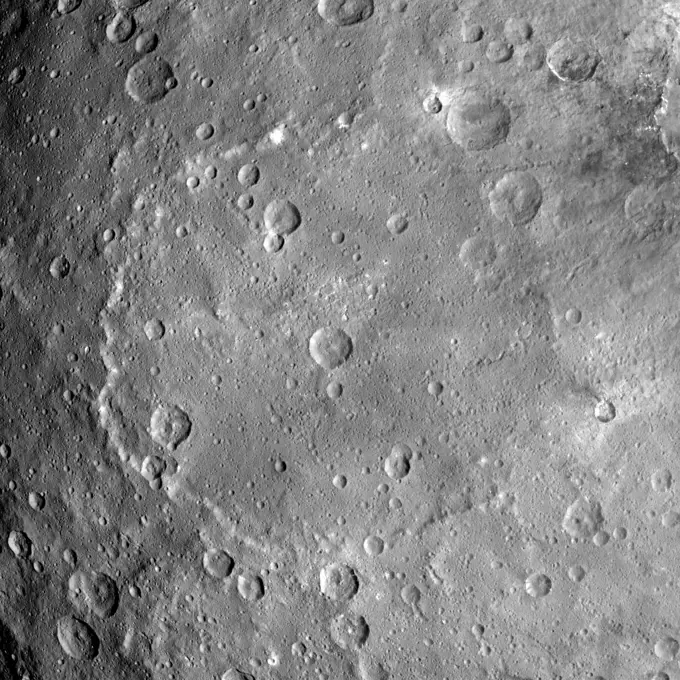
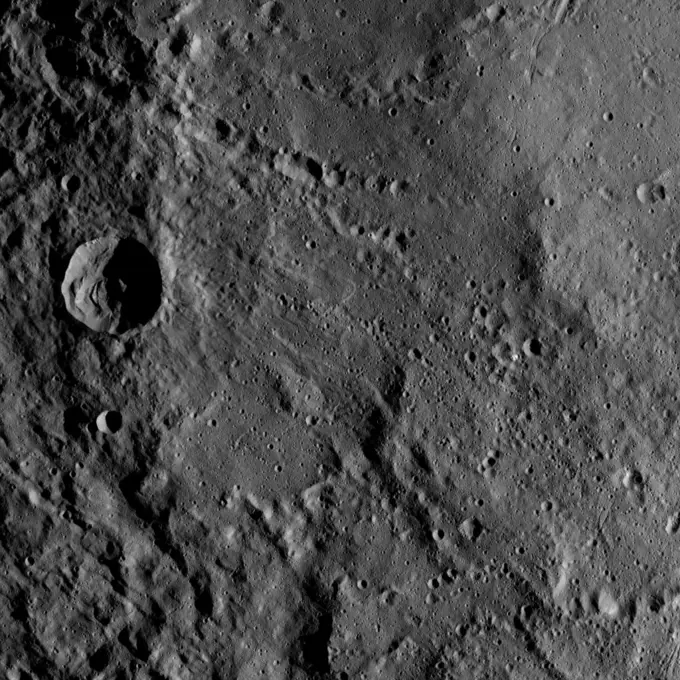
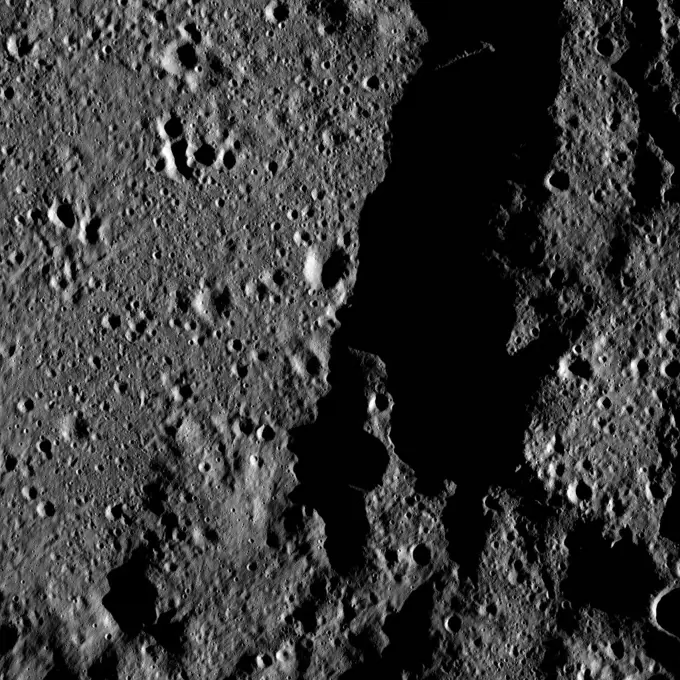
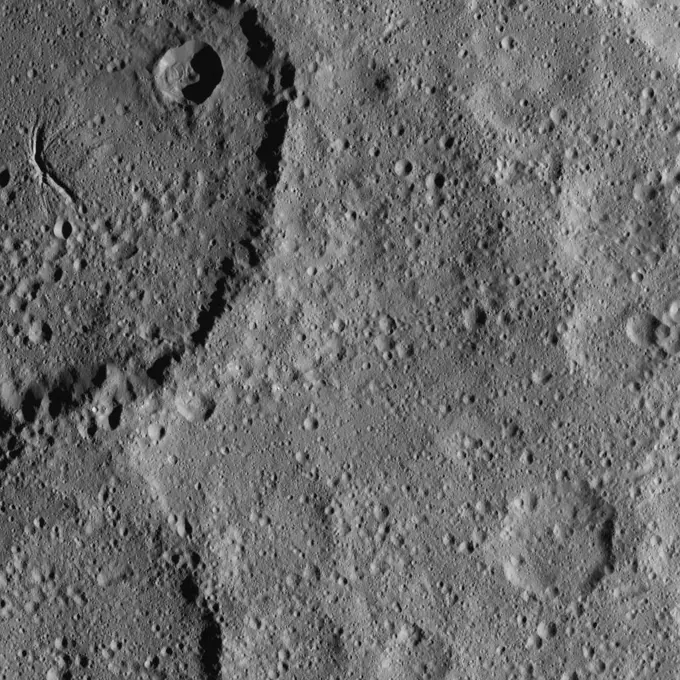
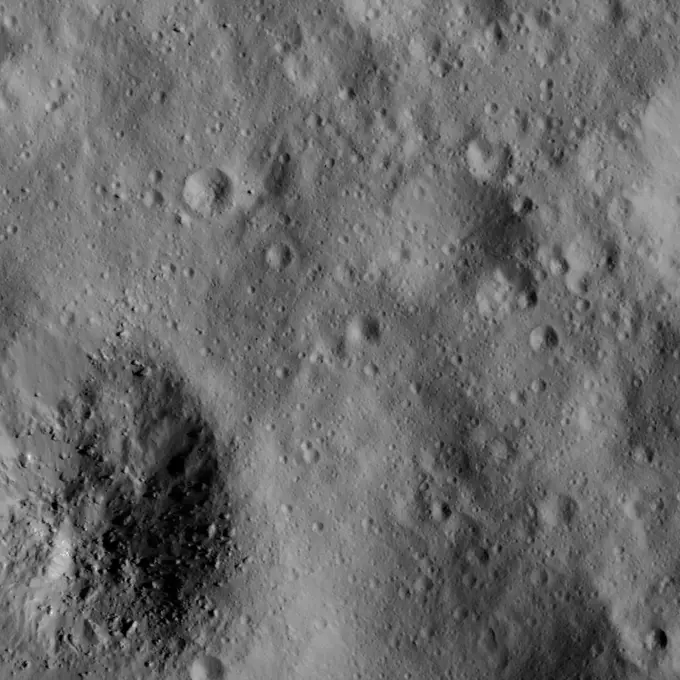
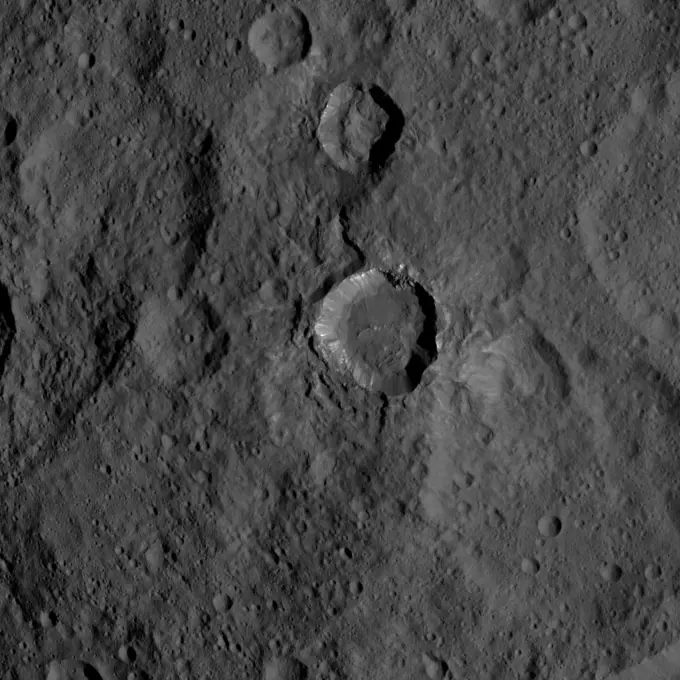
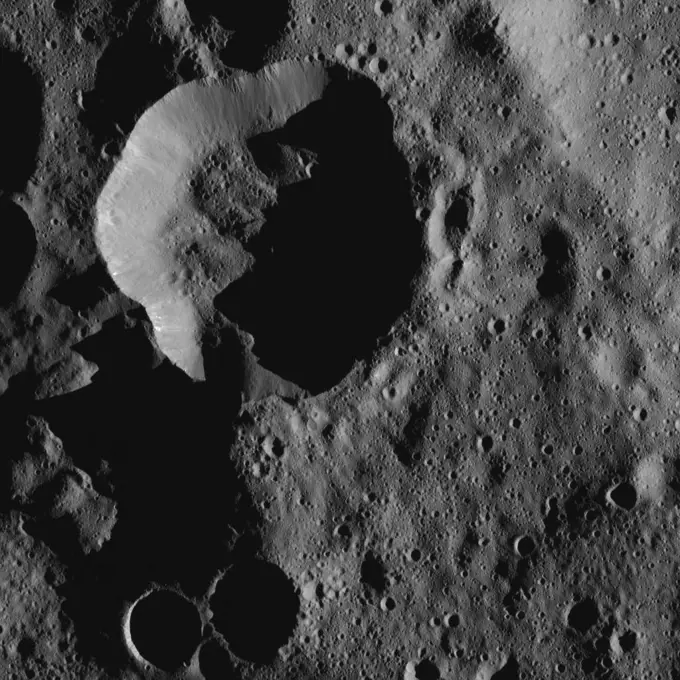
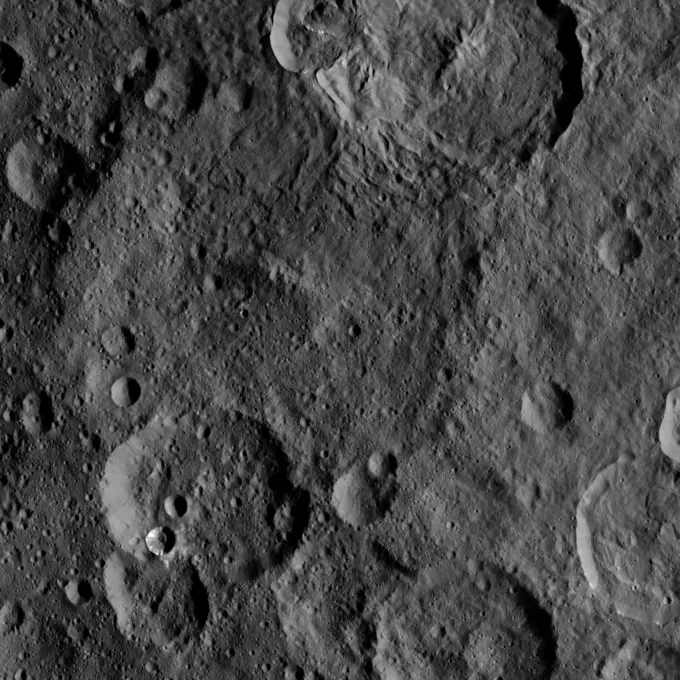
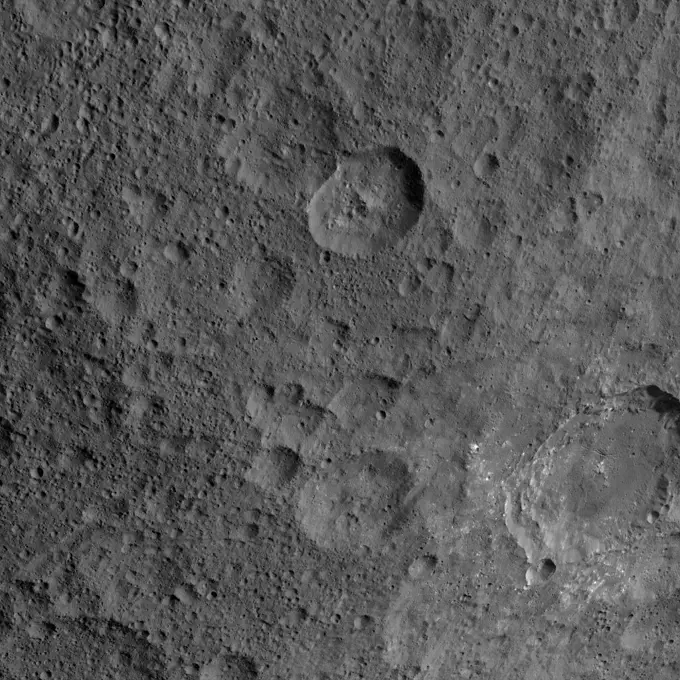
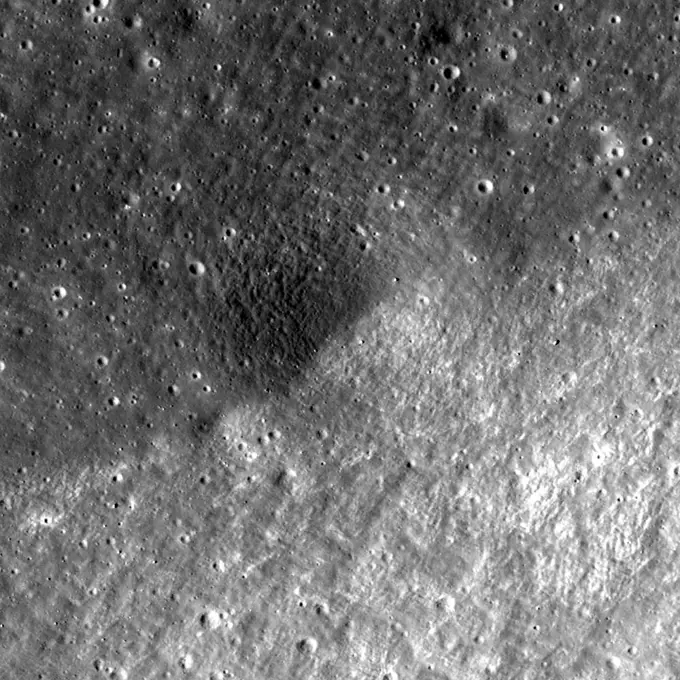
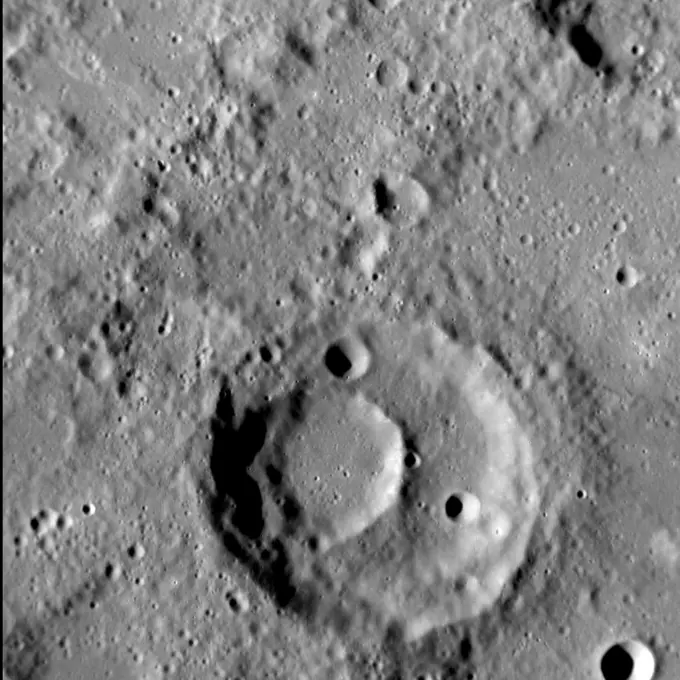
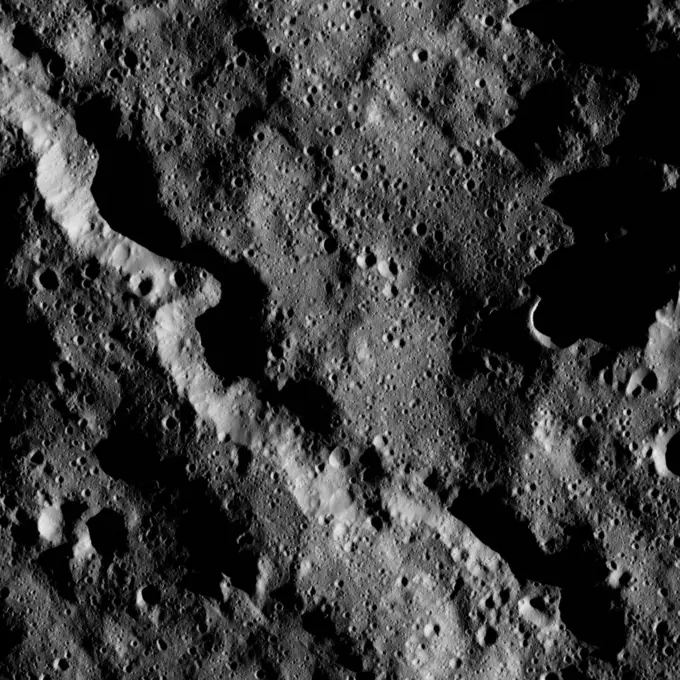
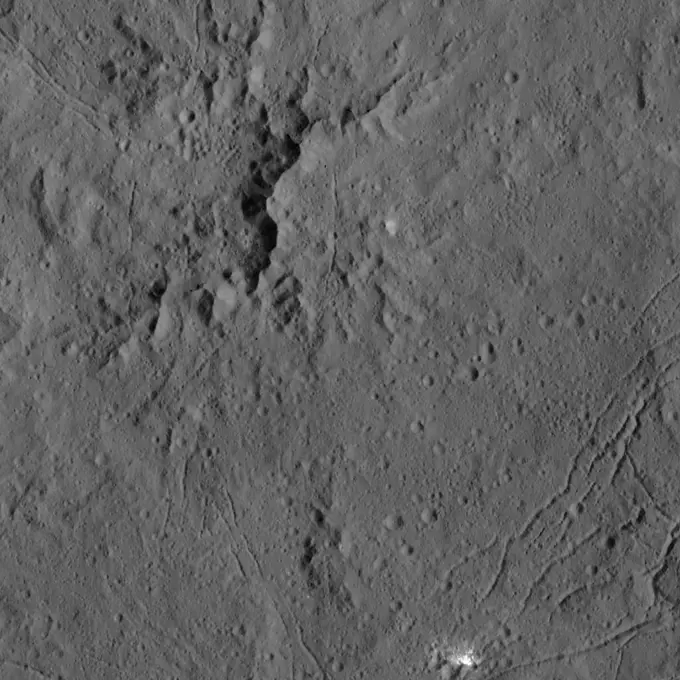
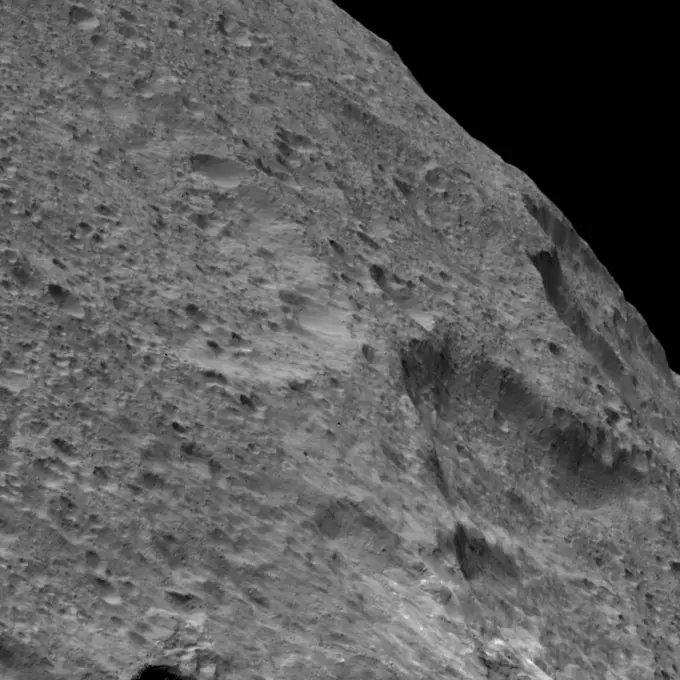
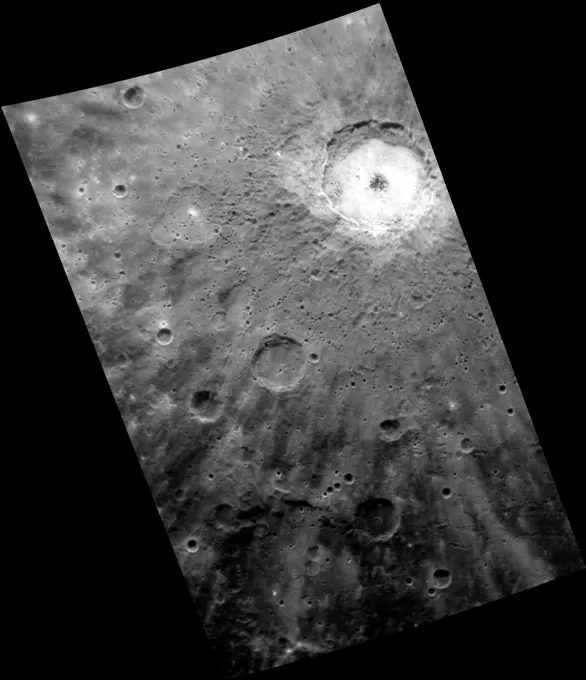
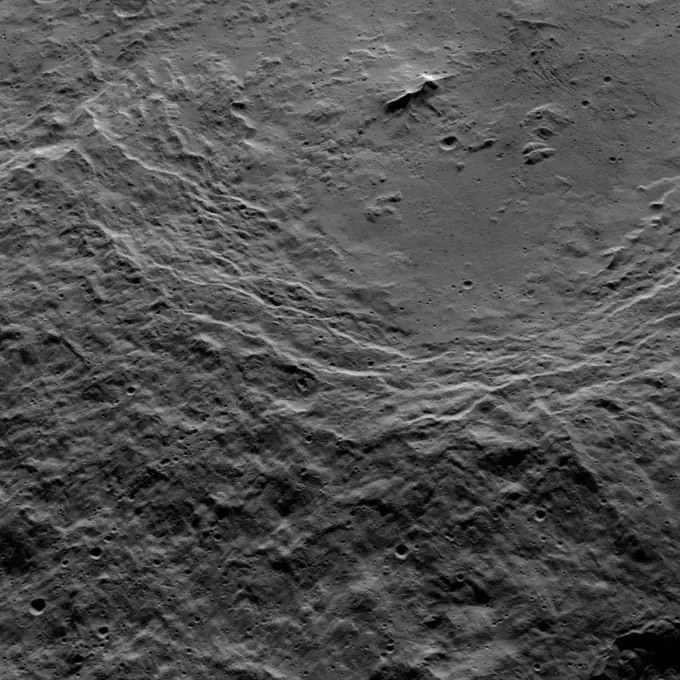
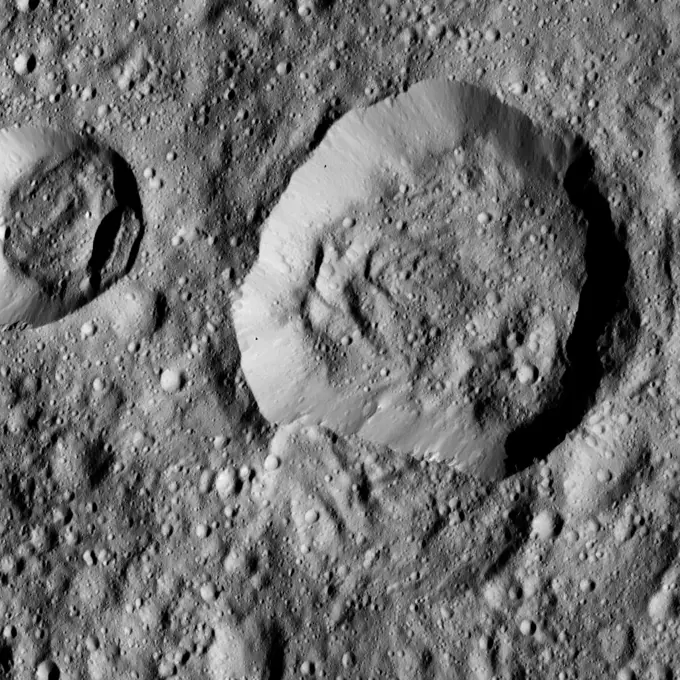
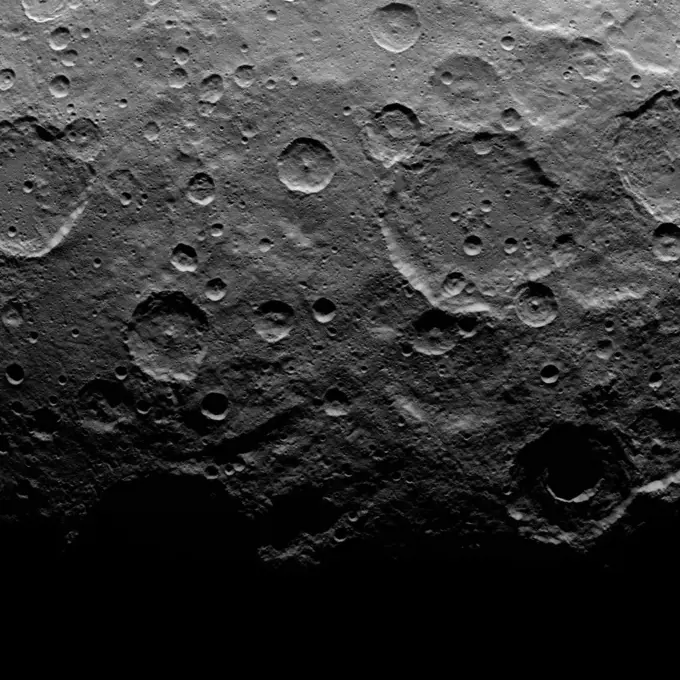
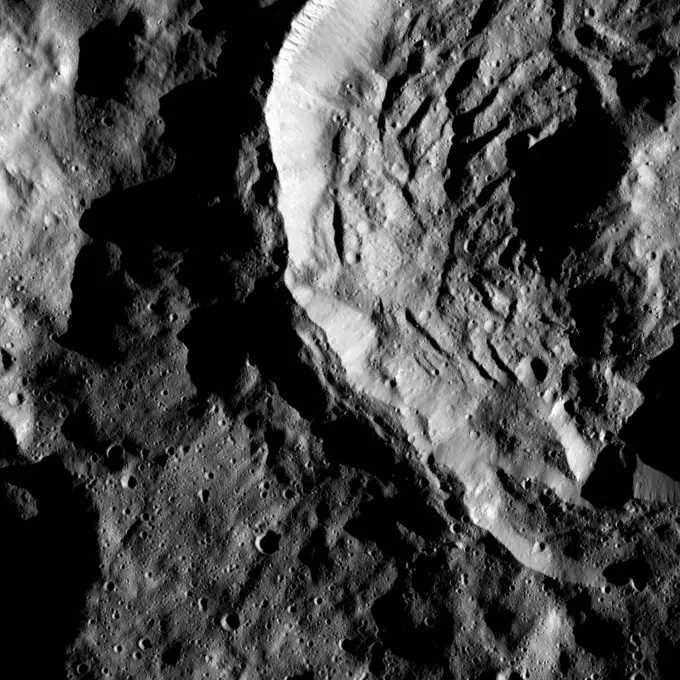
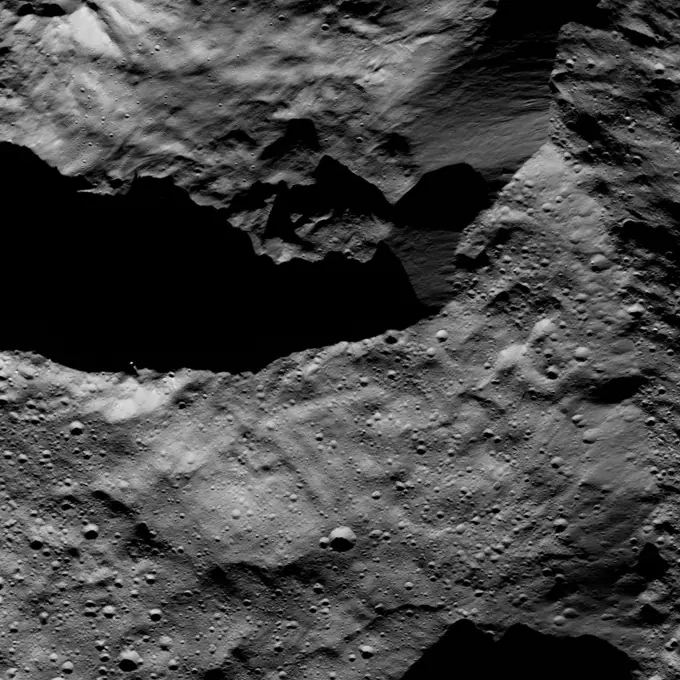
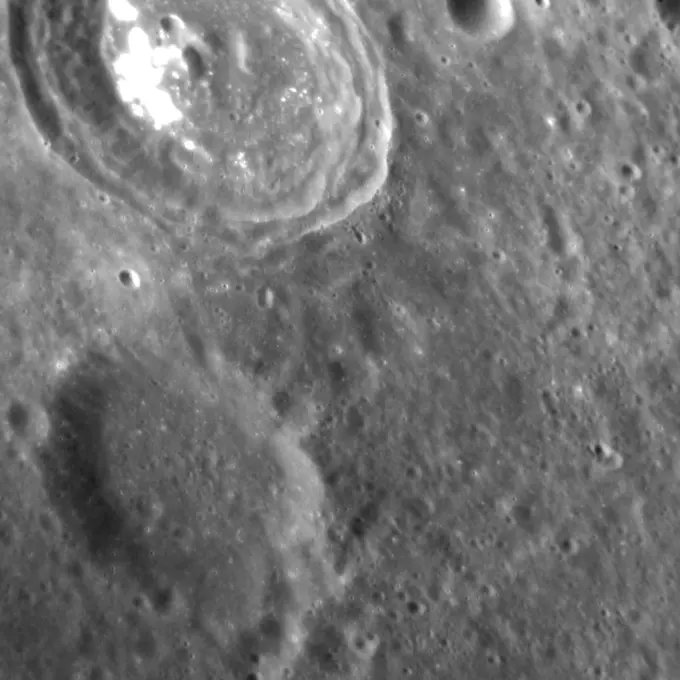
NASA's Dawn spacecraft views a portion of the northern rim of Urvara Crater (101 miles, 163 kilometers wide) in this scene from Ceres taken on June 3, 2016, at a distance of about 240 miles (385 kilometers) above the surface.
6145-45018507
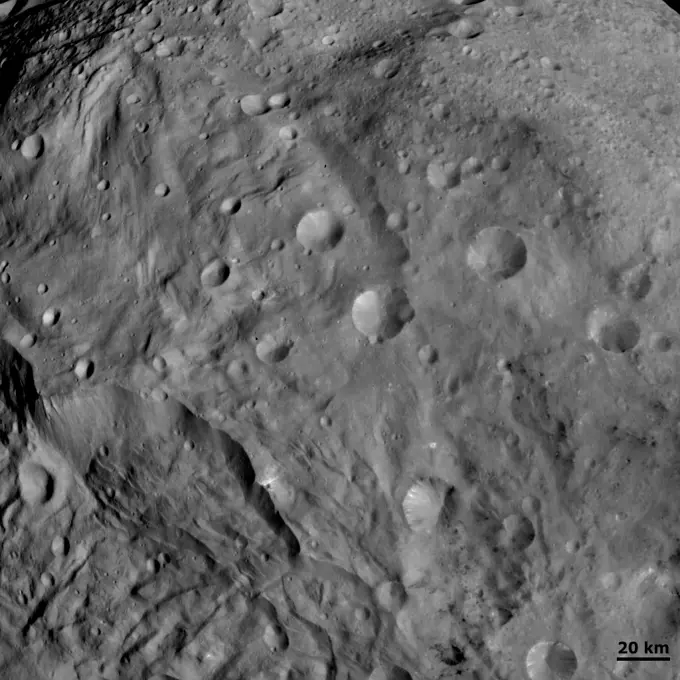
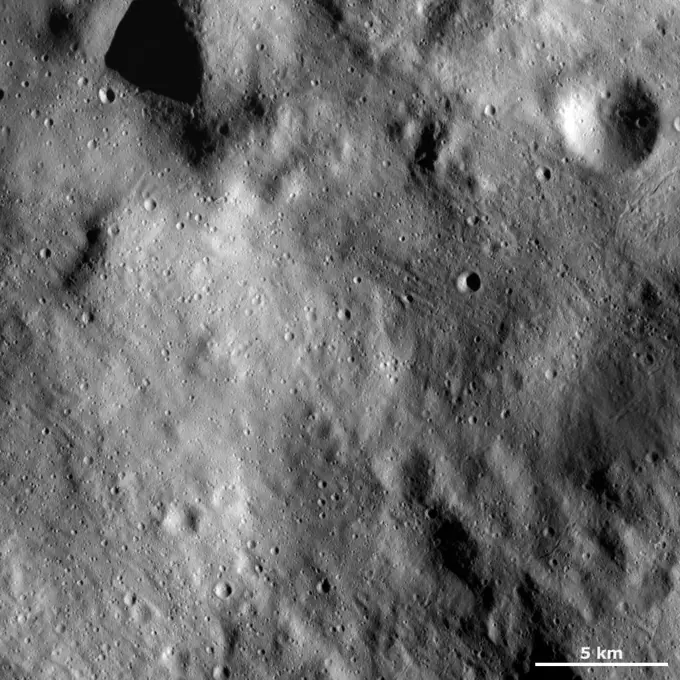
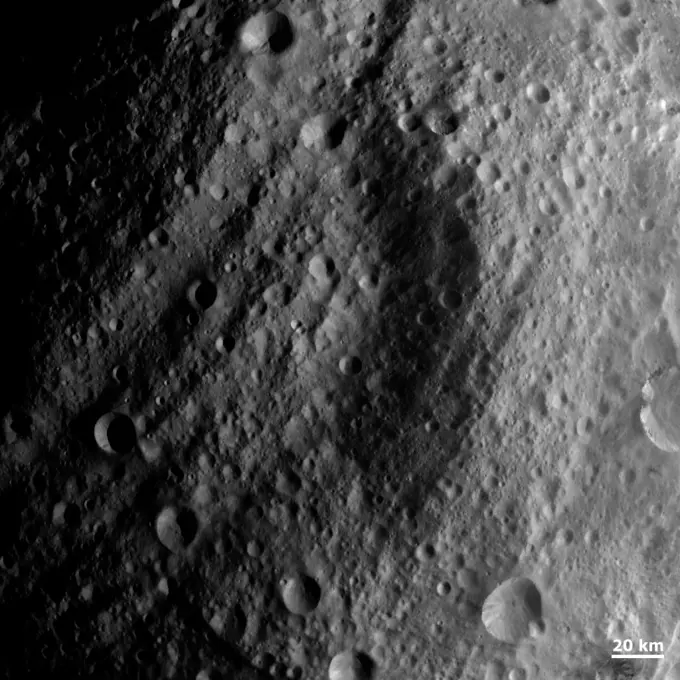
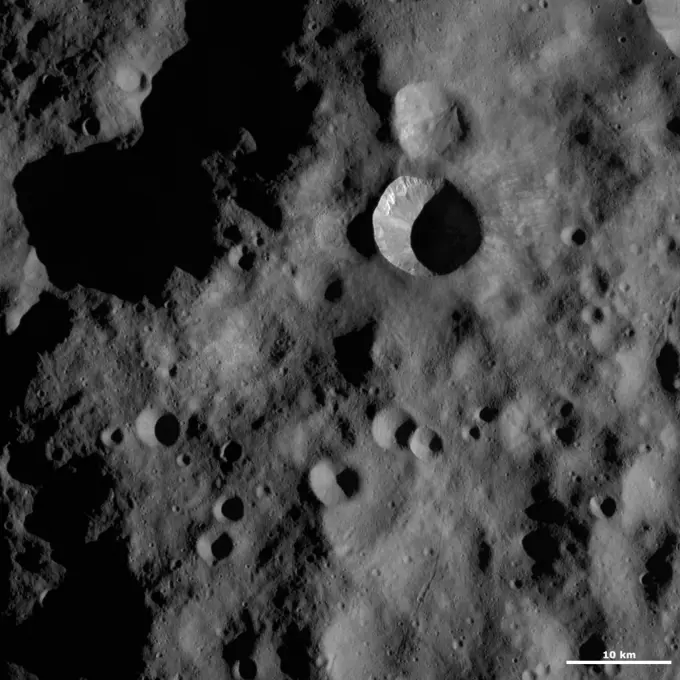
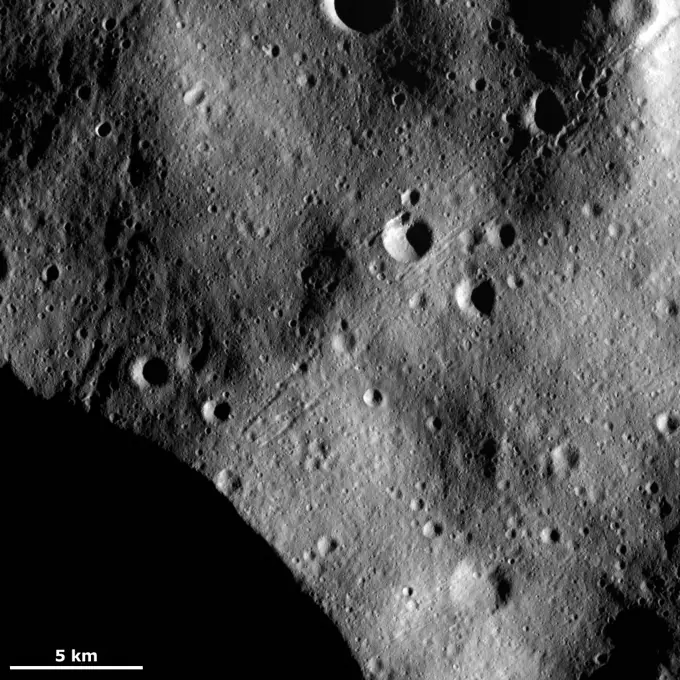
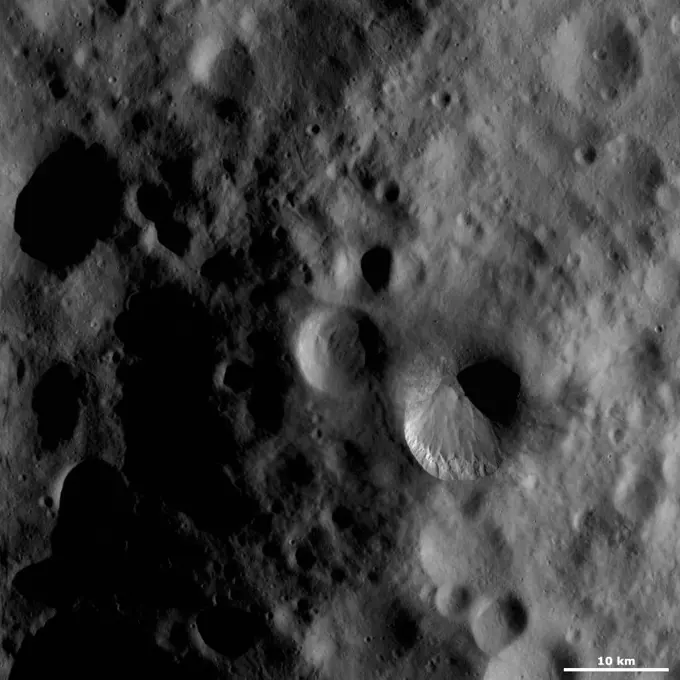
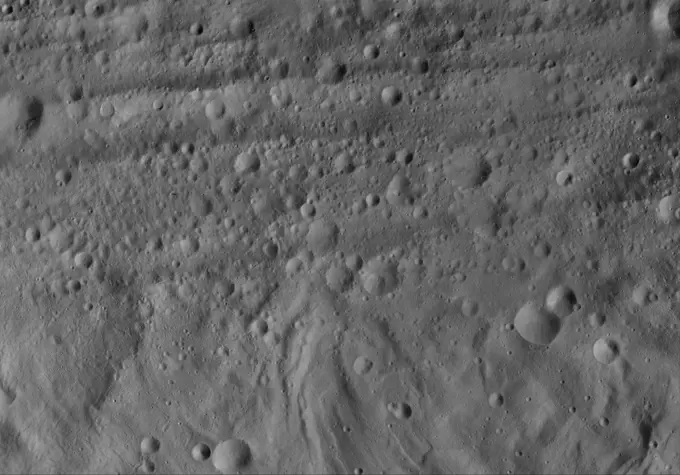
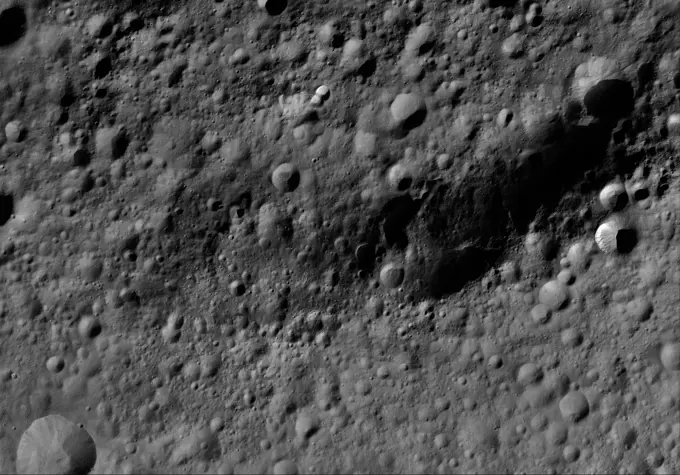
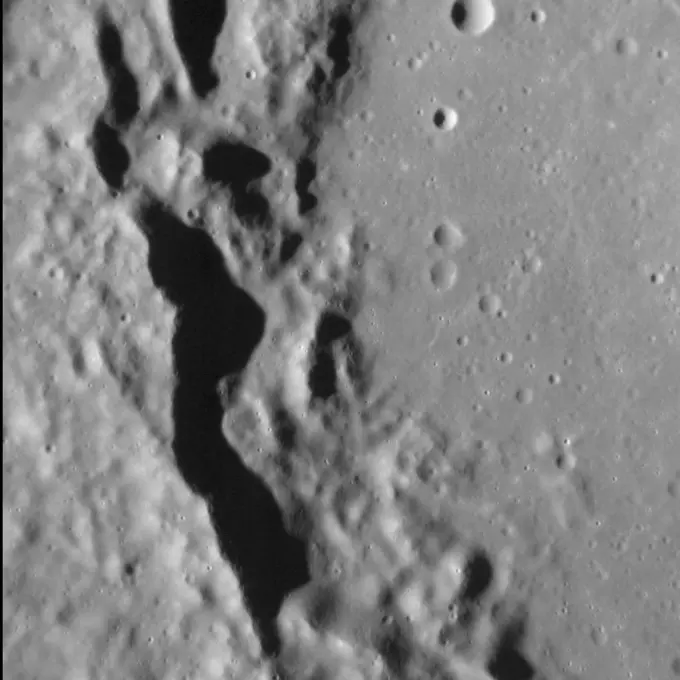
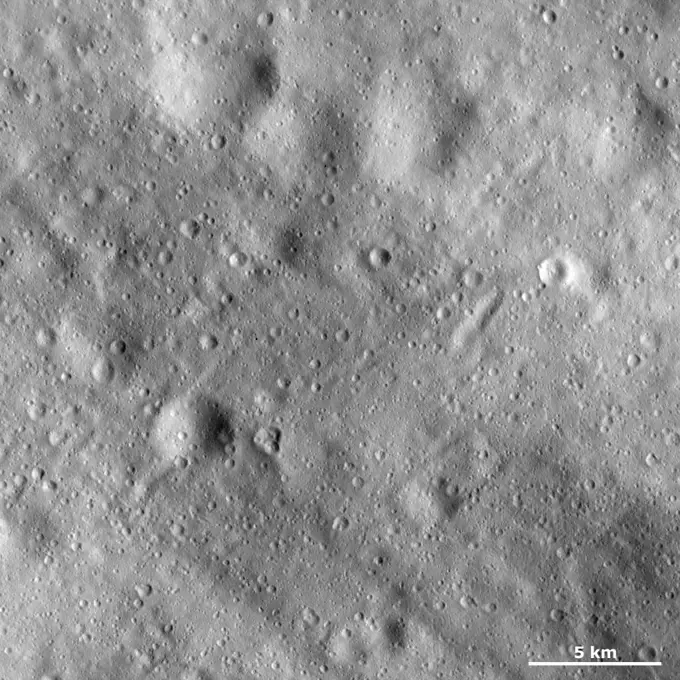
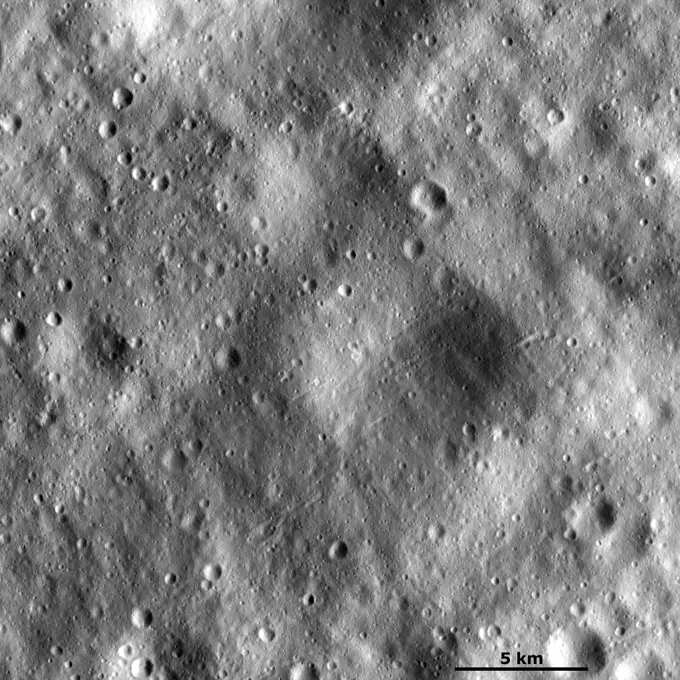
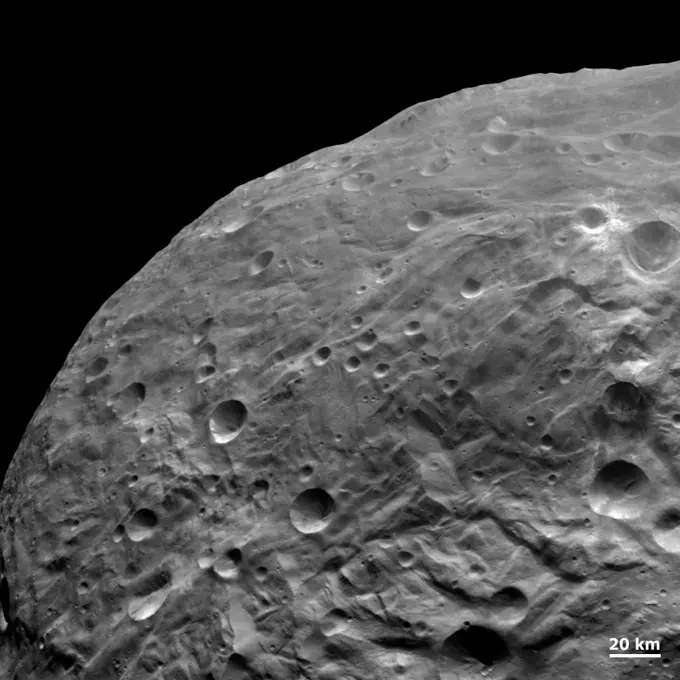
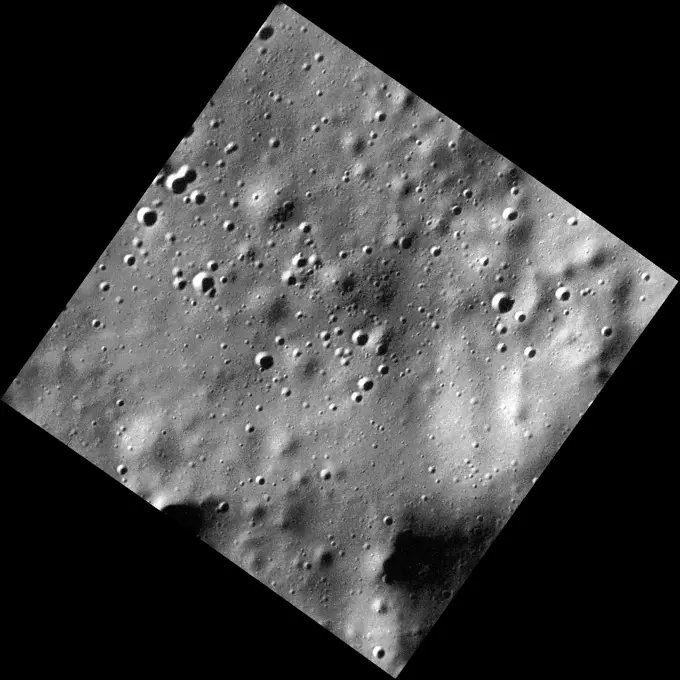
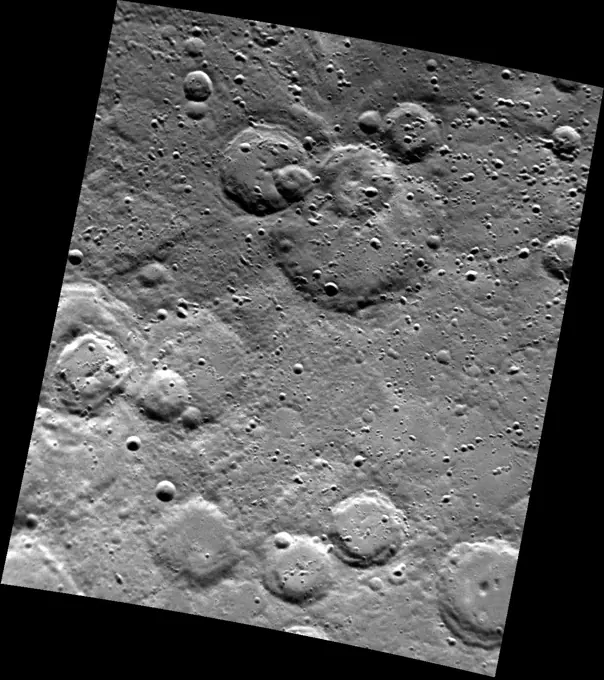
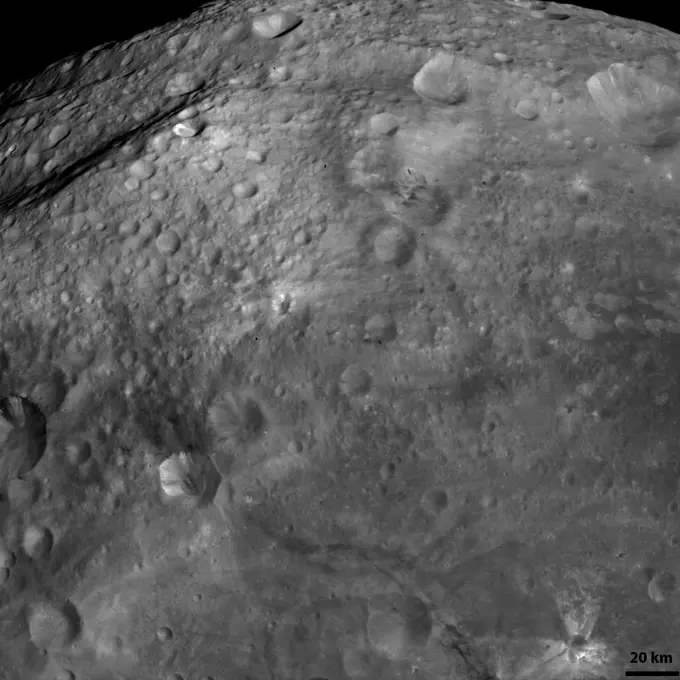
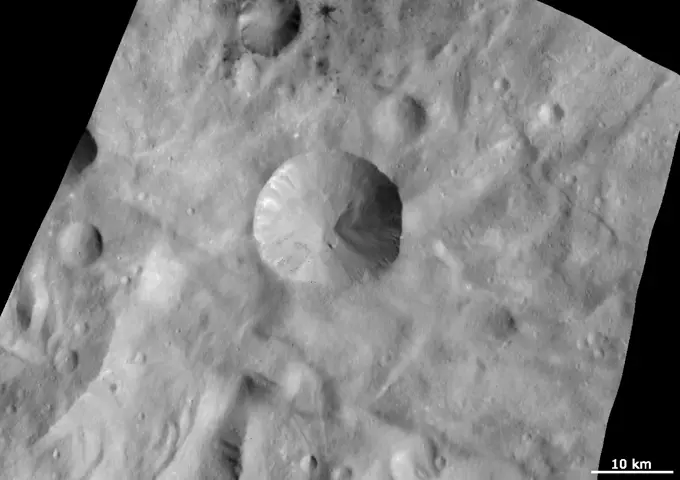
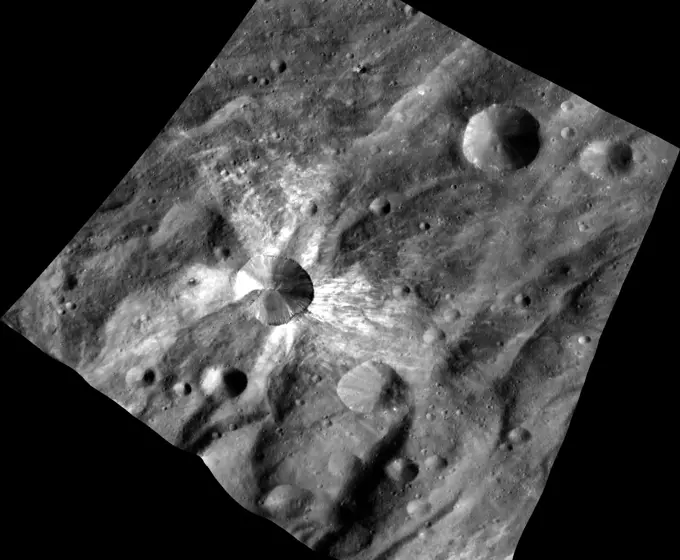
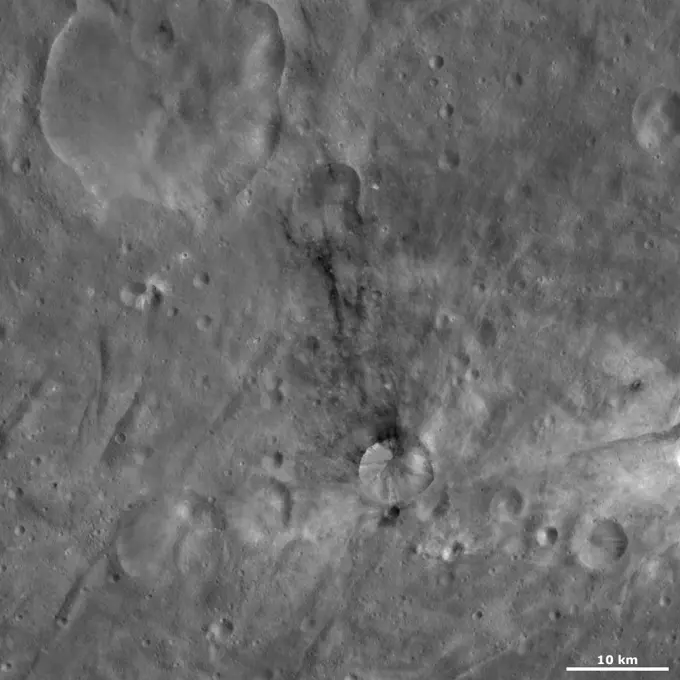
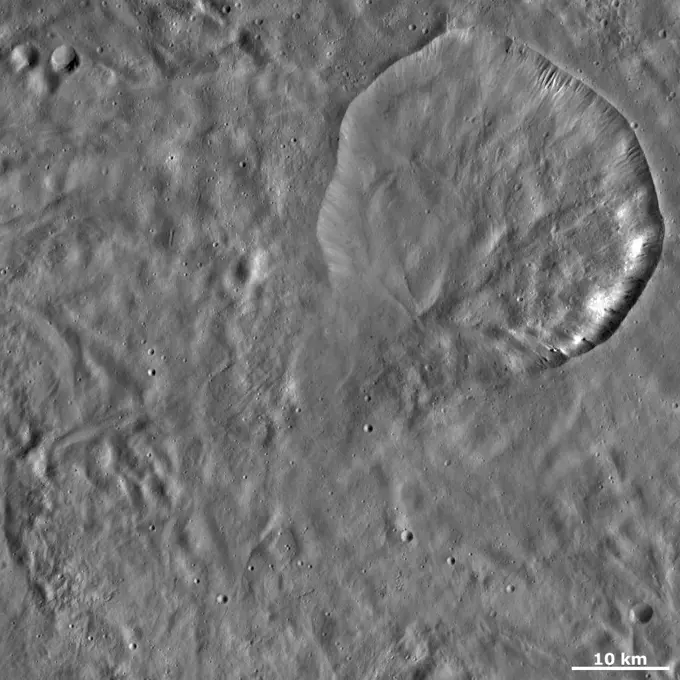
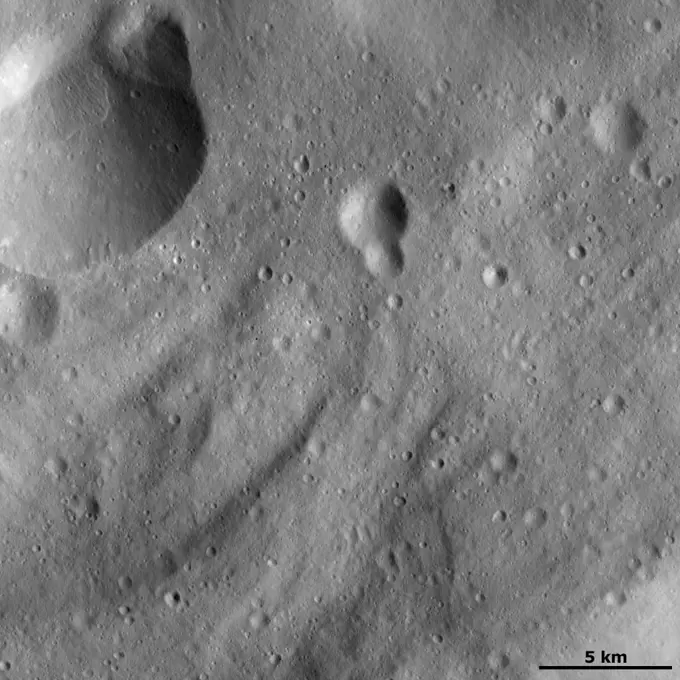
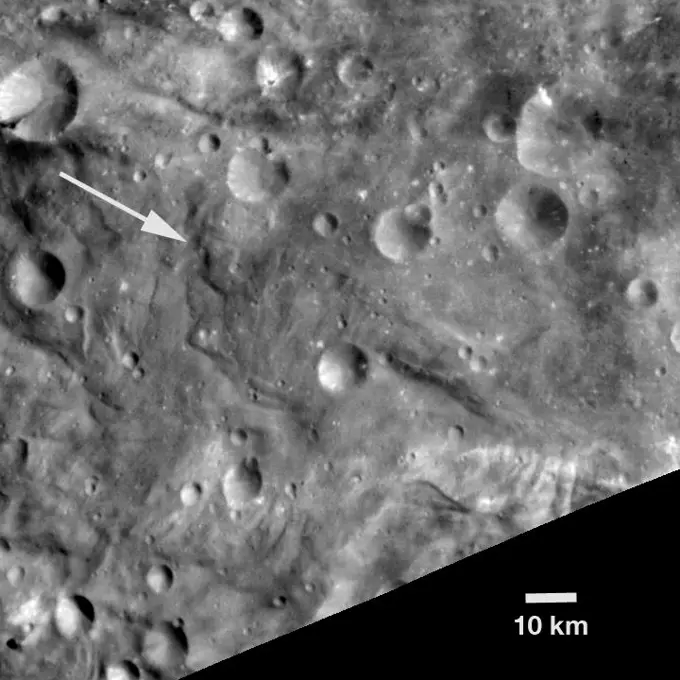
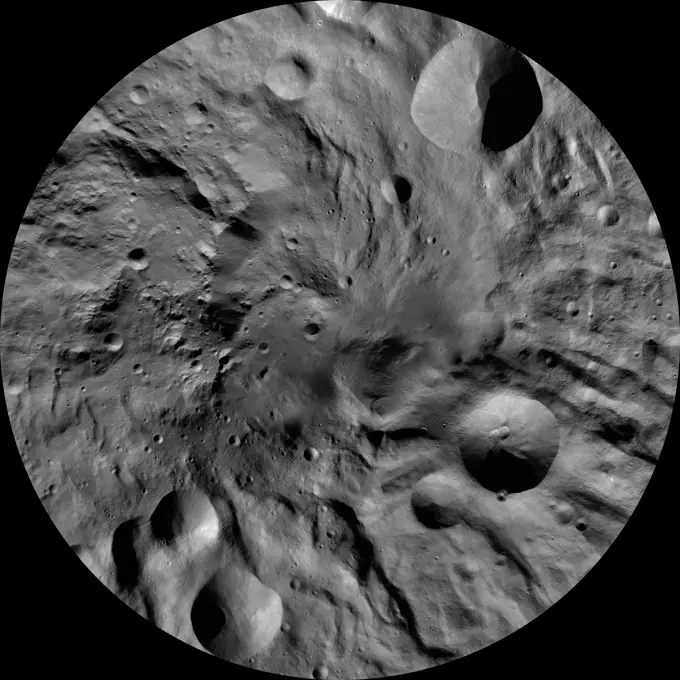
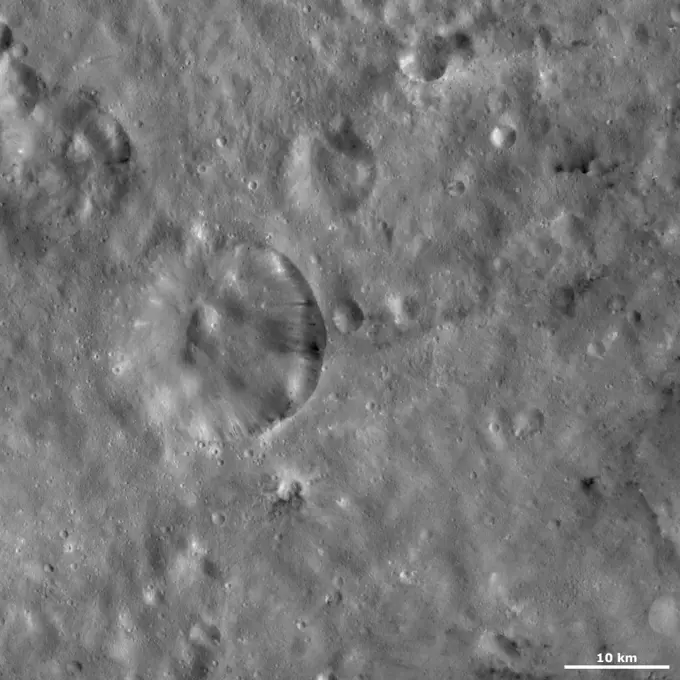
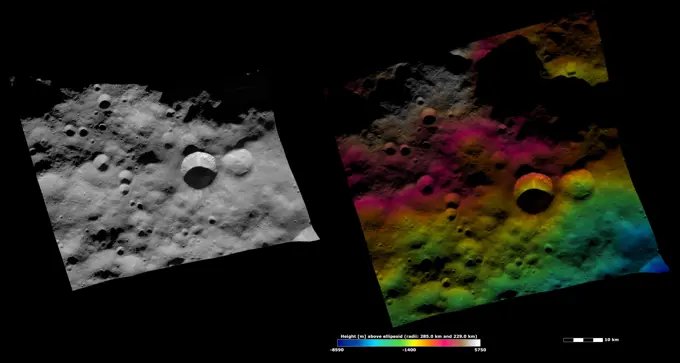
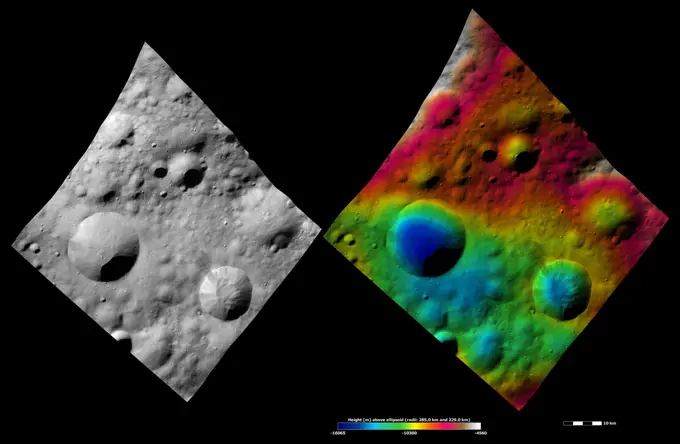
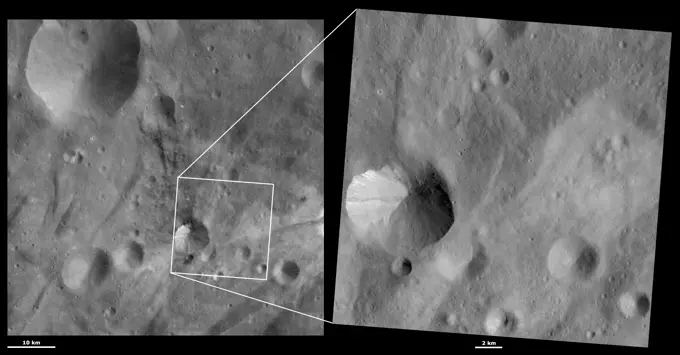
This image from NASA's Dawn spacecraft shows craters of different sizes and shapes in Vesta's southern hemisphere. The freshest craters can be classified as fresh scarp rimmed craters and the less fresh classified as partly degraded subdued rim craters.
6145-45105245
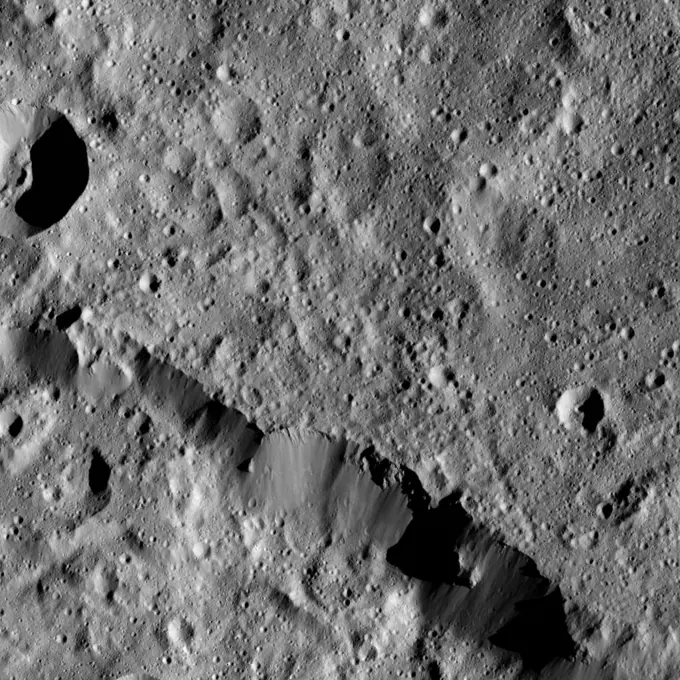
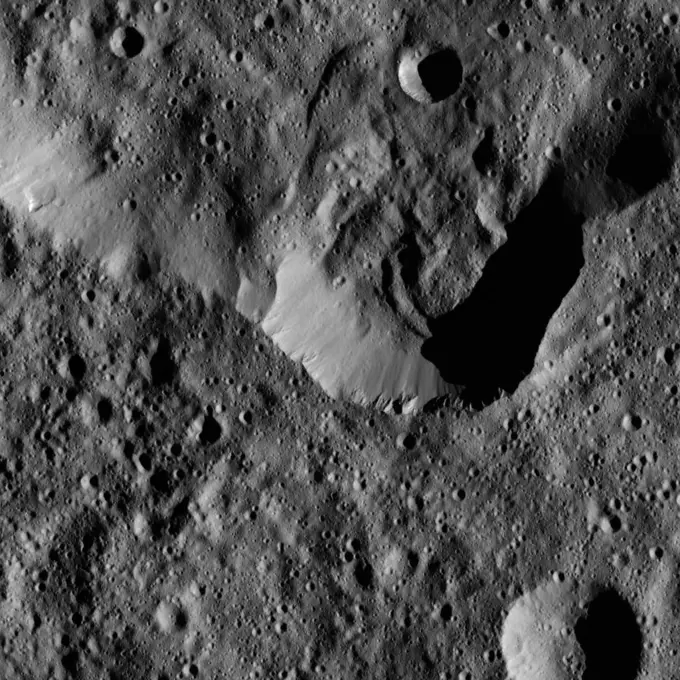
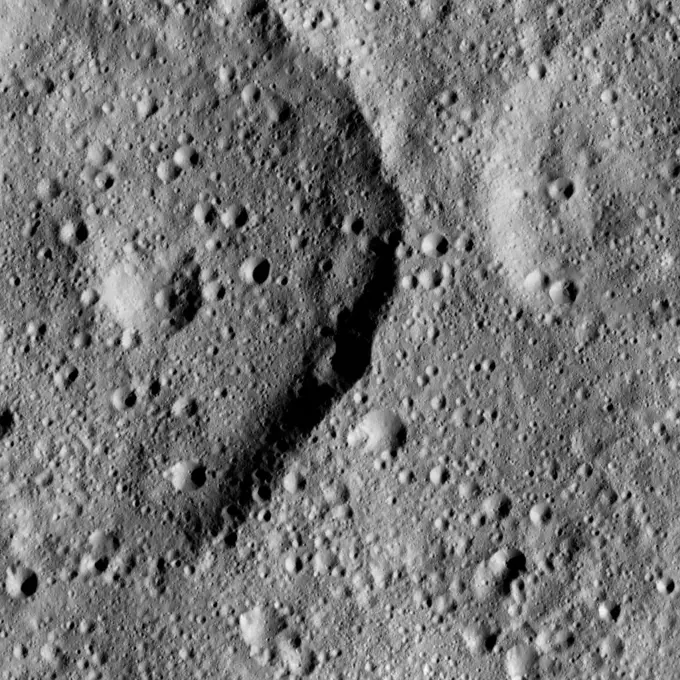
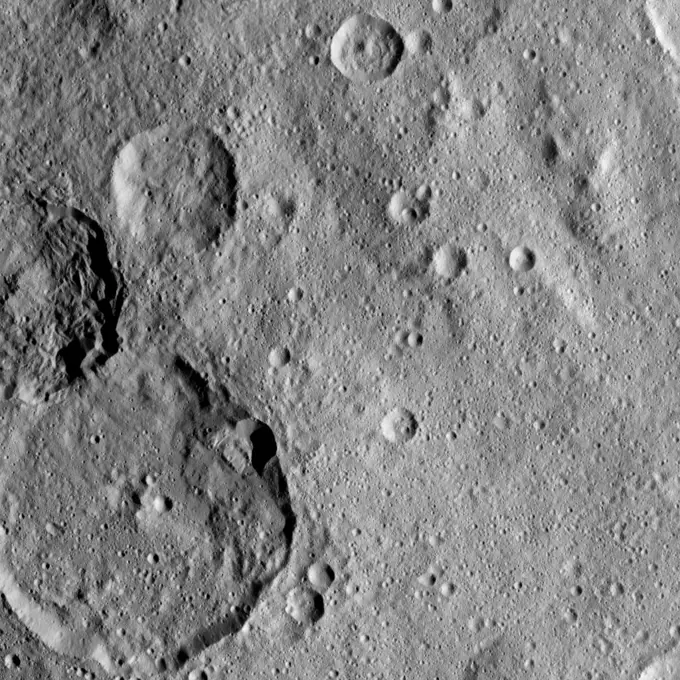
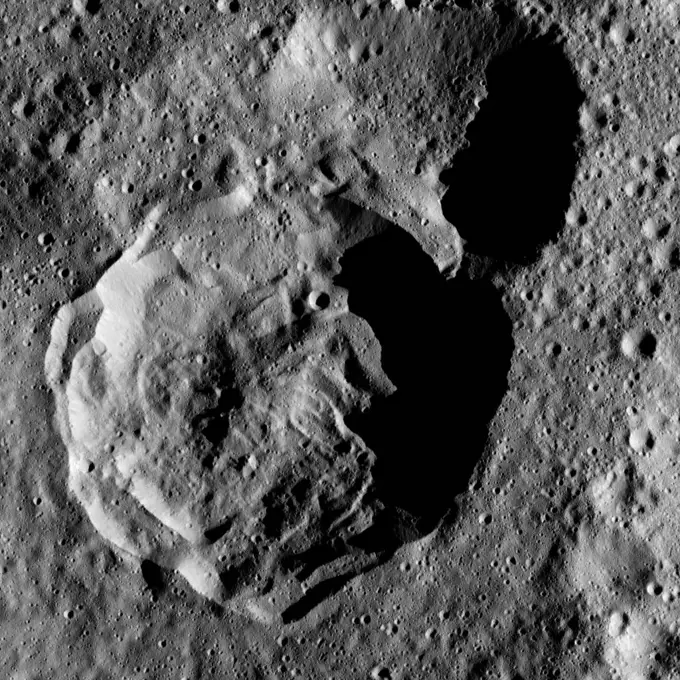
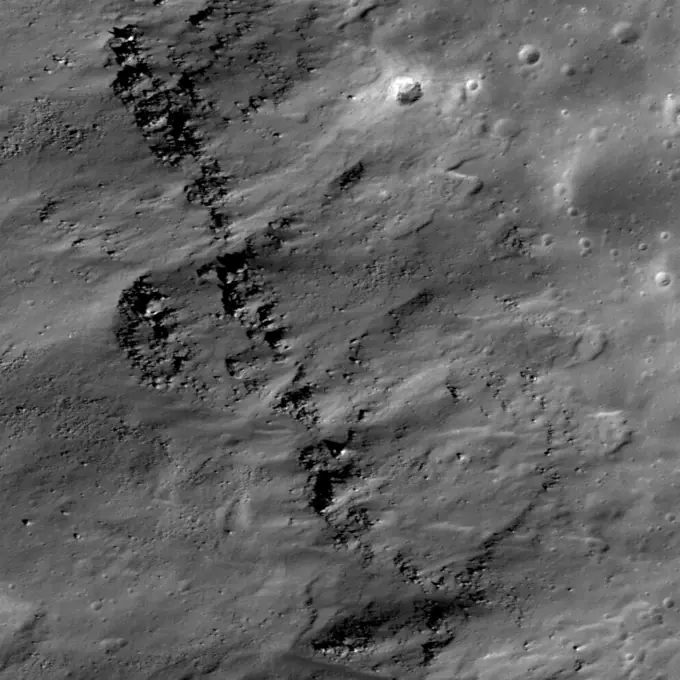
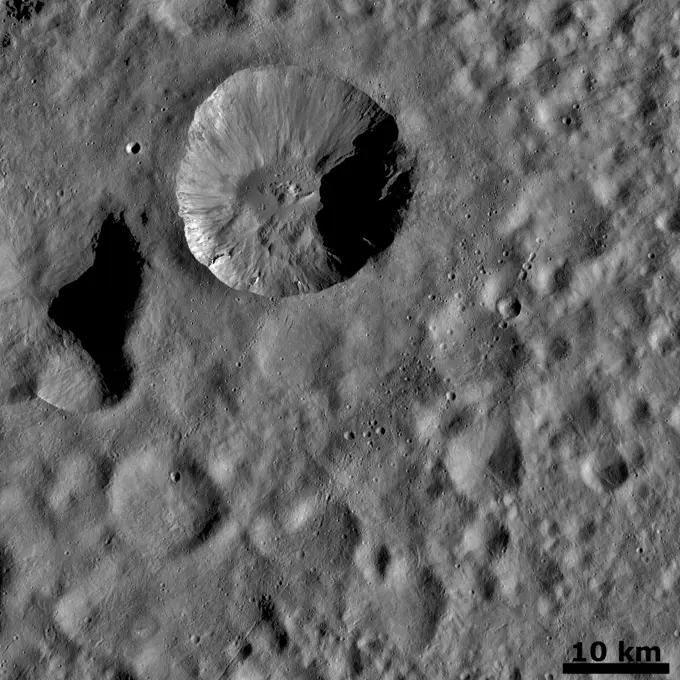
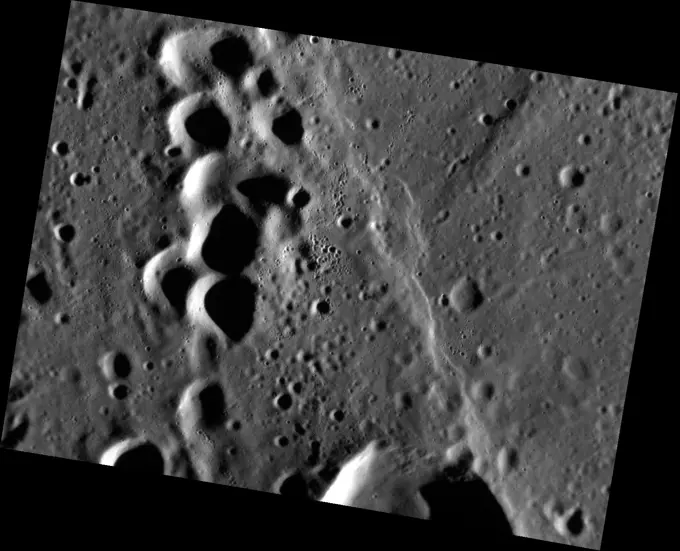
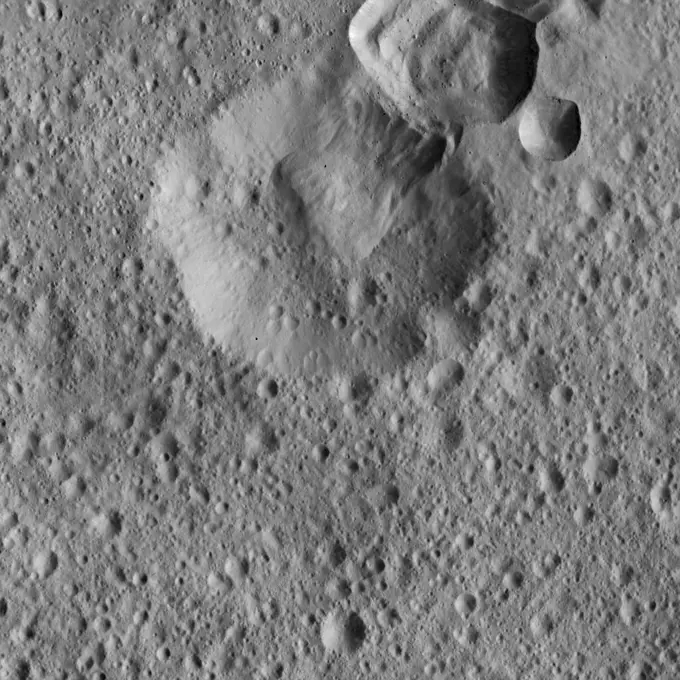
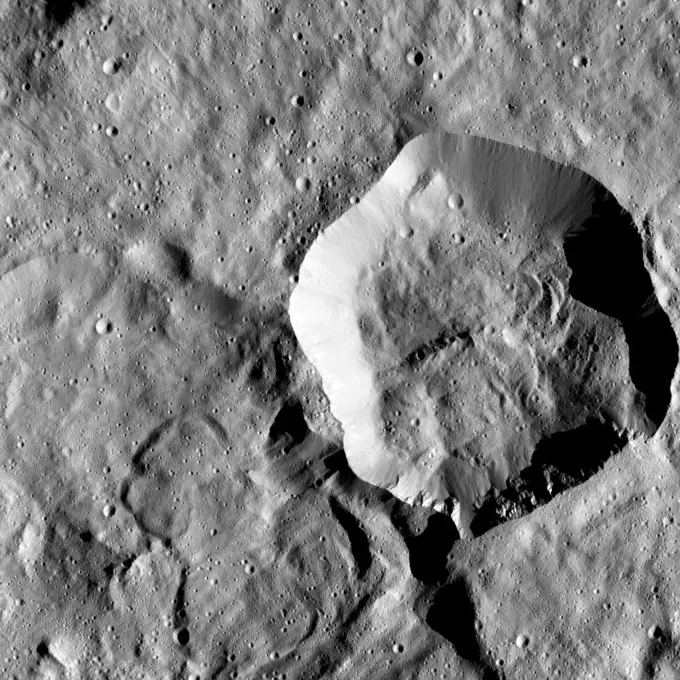
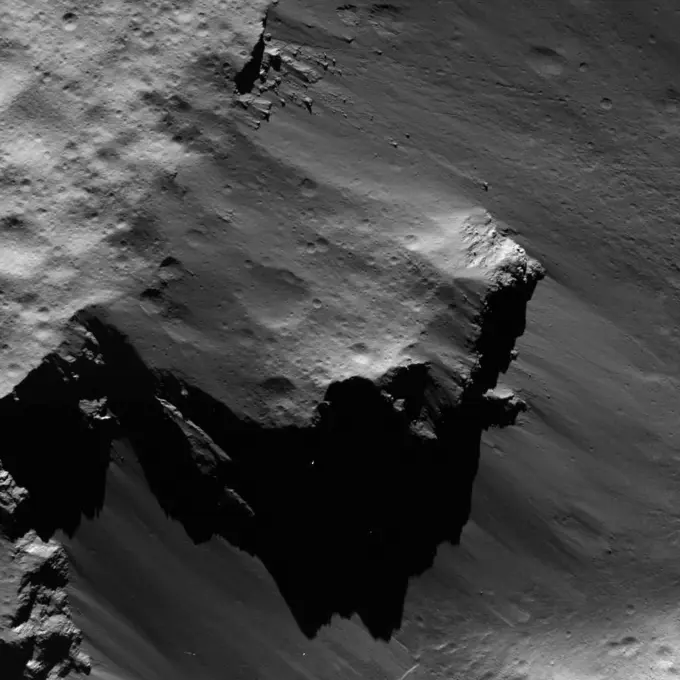
This image, taken by NASA's Dawn spacecraft, shows a portion of the southern rim of Jarovit Crater in the northern hemisphere of Ceres. Compacted material forms spurs along the upper part of the crater wall, near the center of the image.
6145-45111090
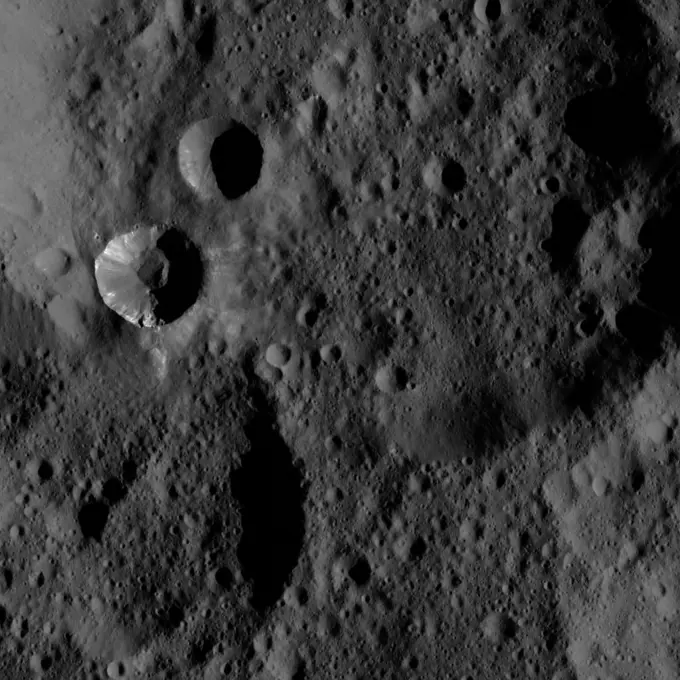
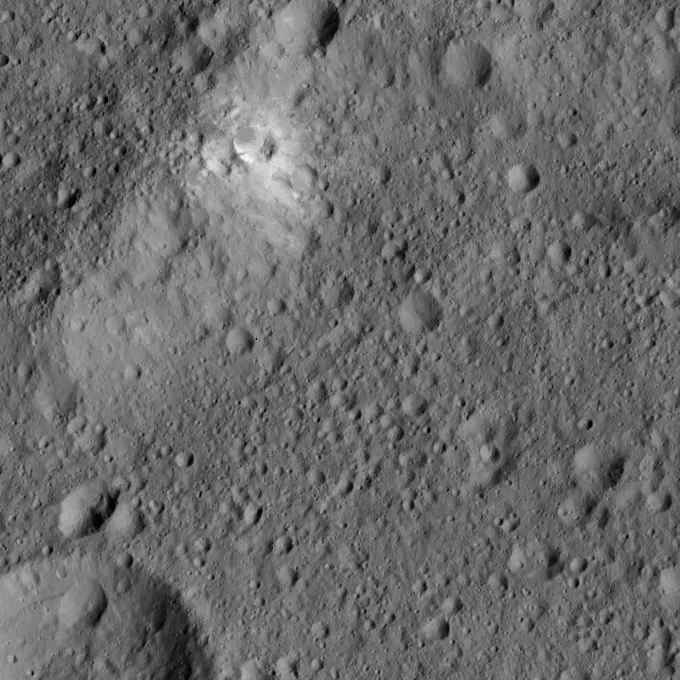
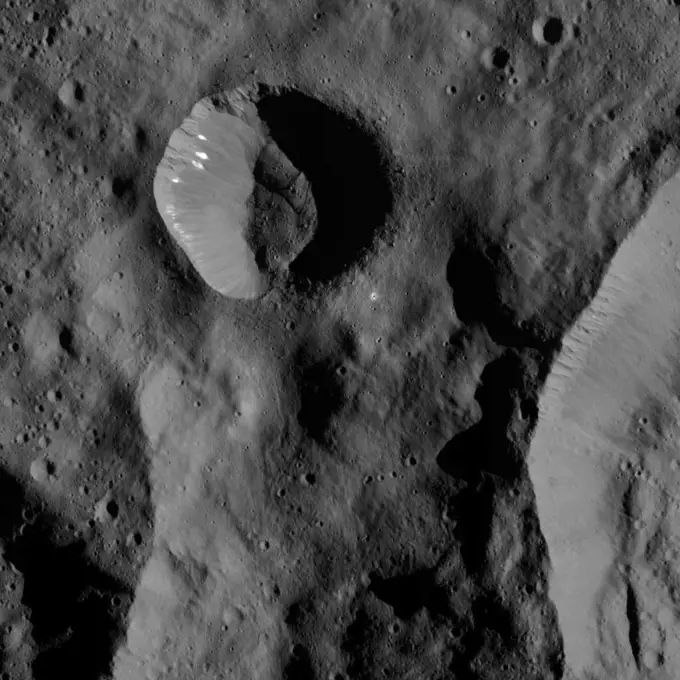
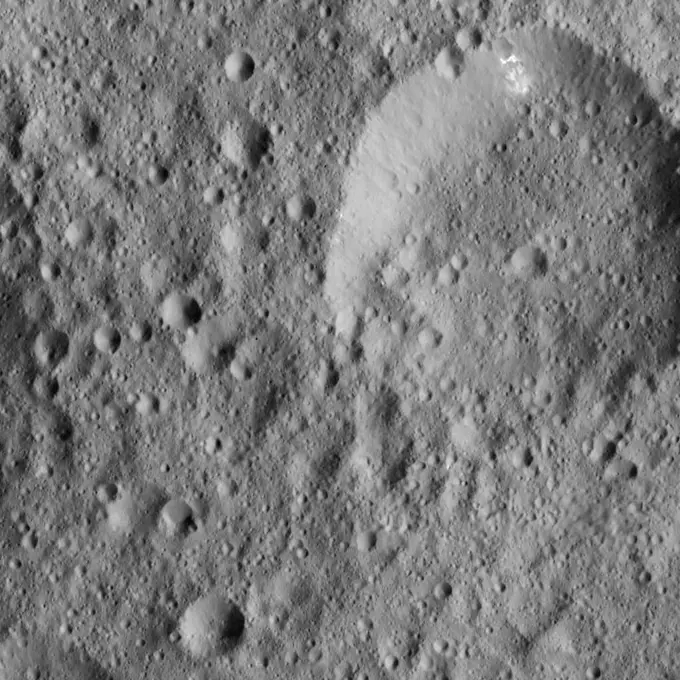
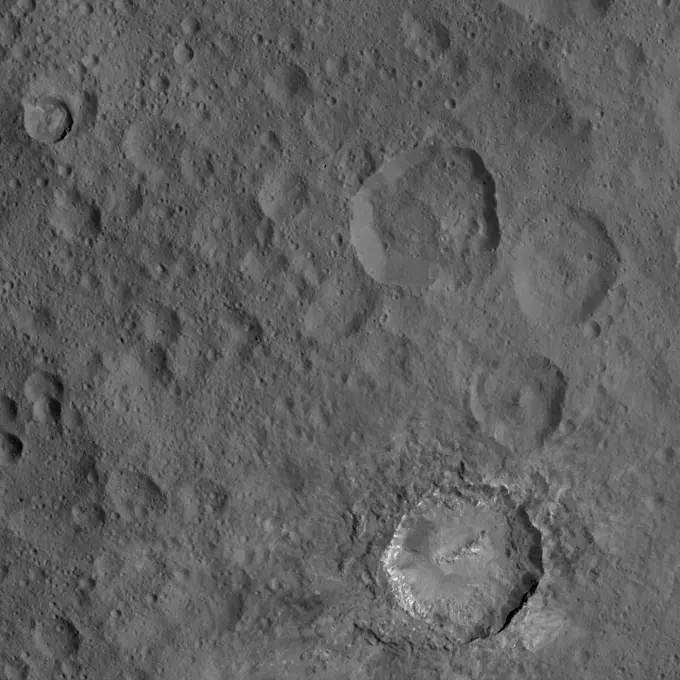
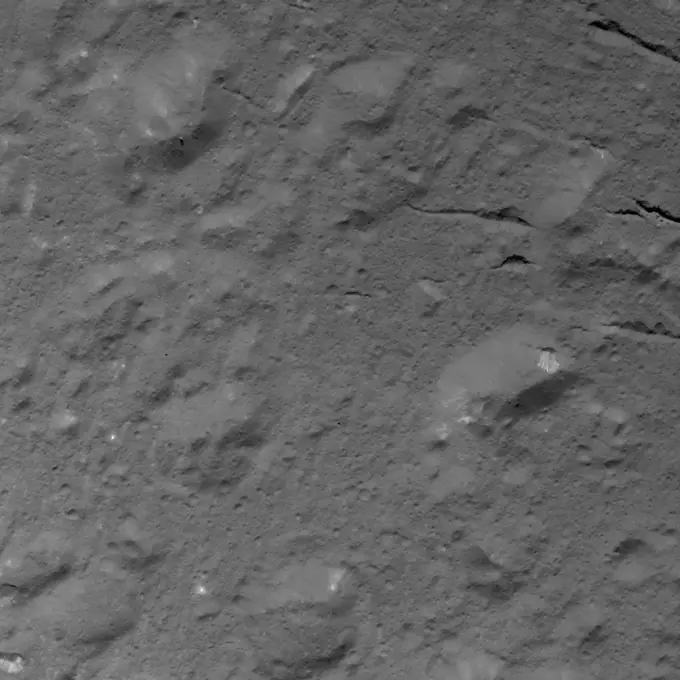
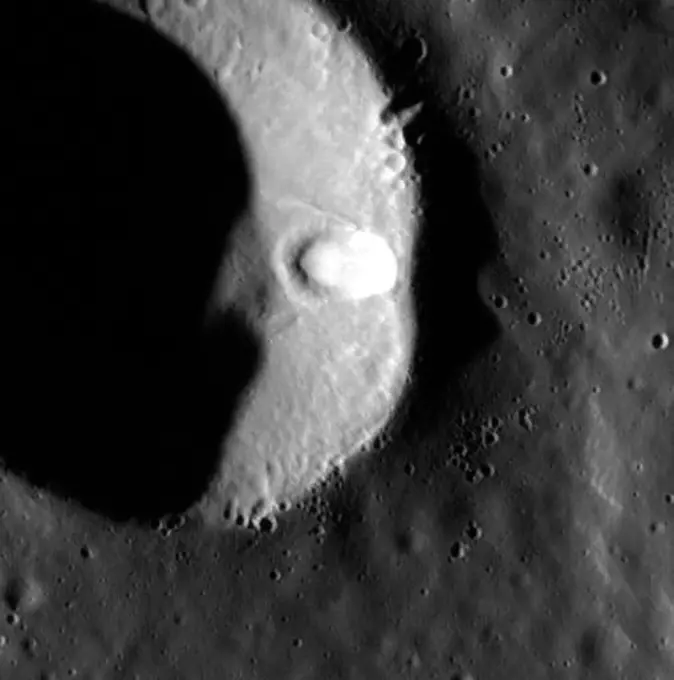
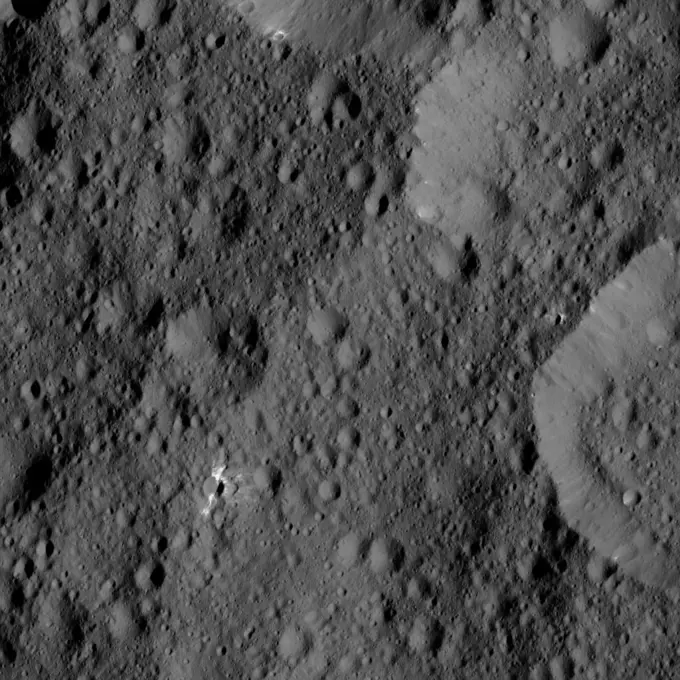
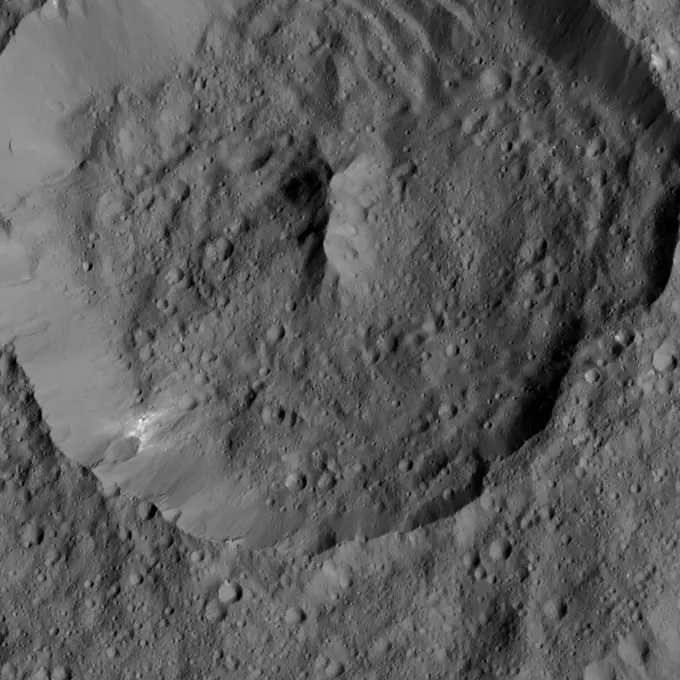
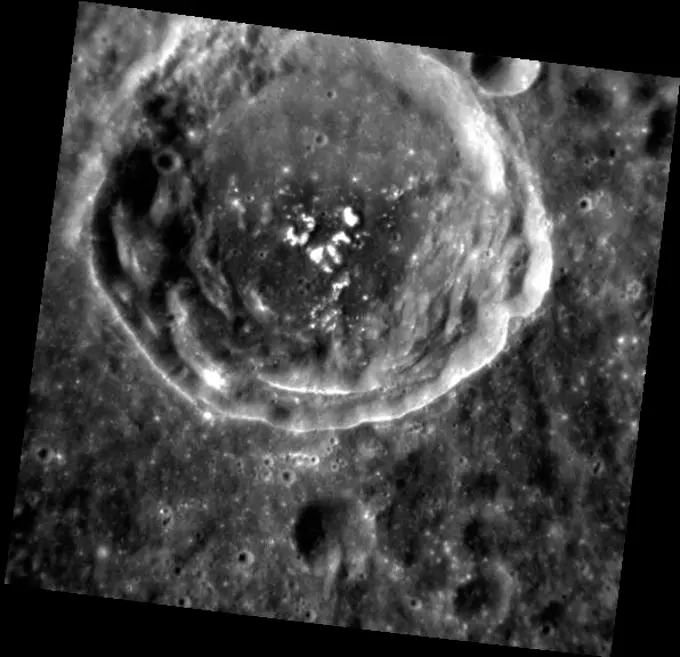
Patches of bright material can be seen on the walls of a relatively fresh crater on Ceres in this view from NASA's Dawn spacecraft.
6145-58965381
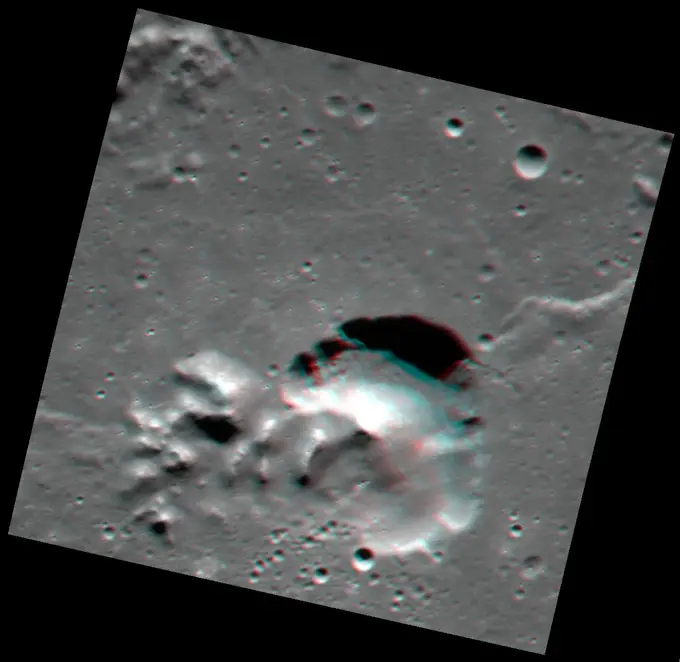
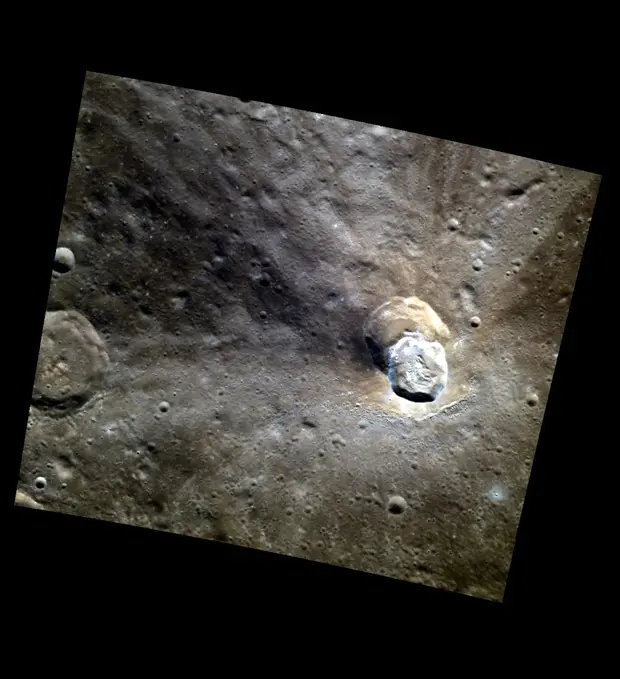
Another Small Volcano
6145-45103190
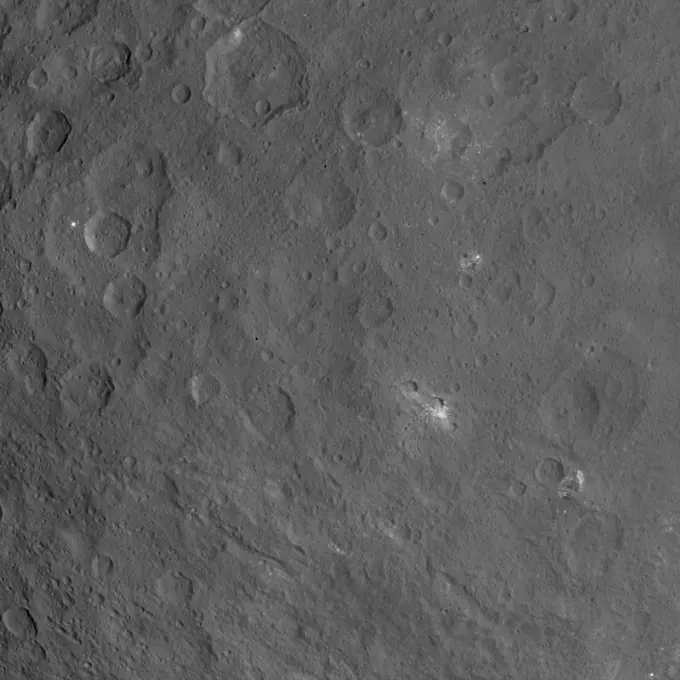
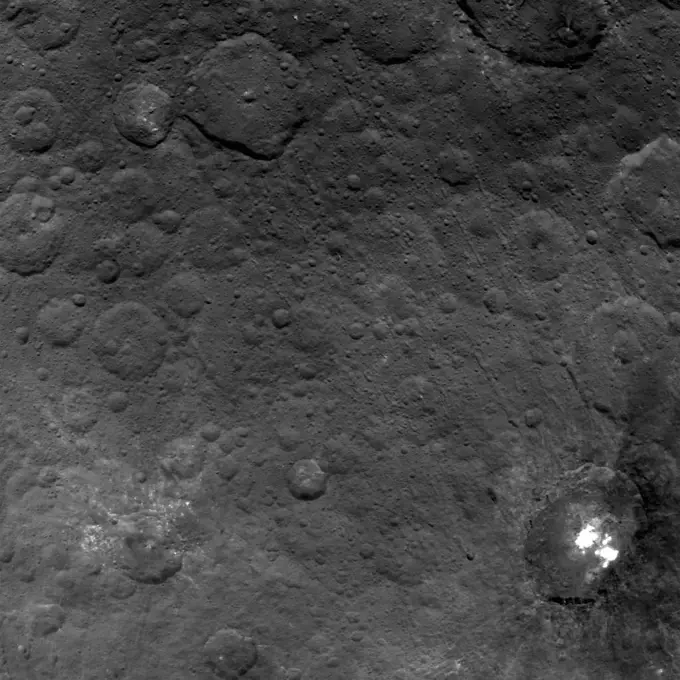
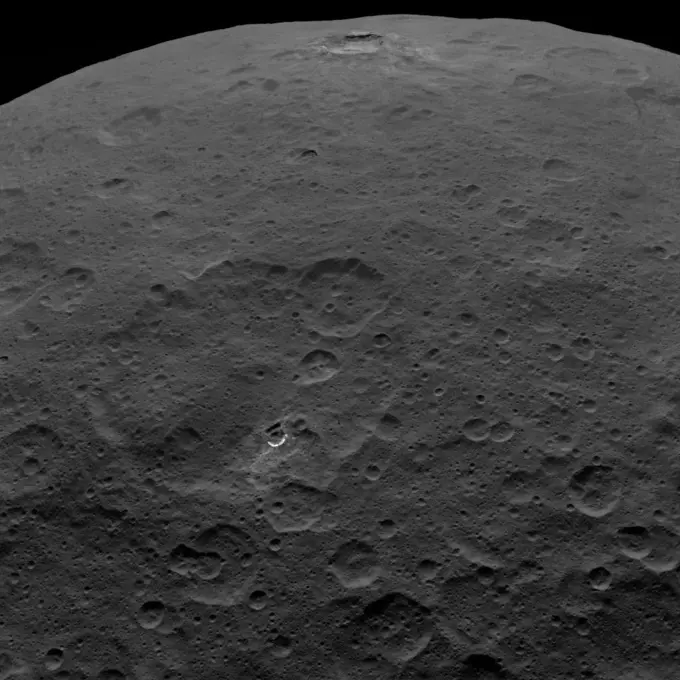
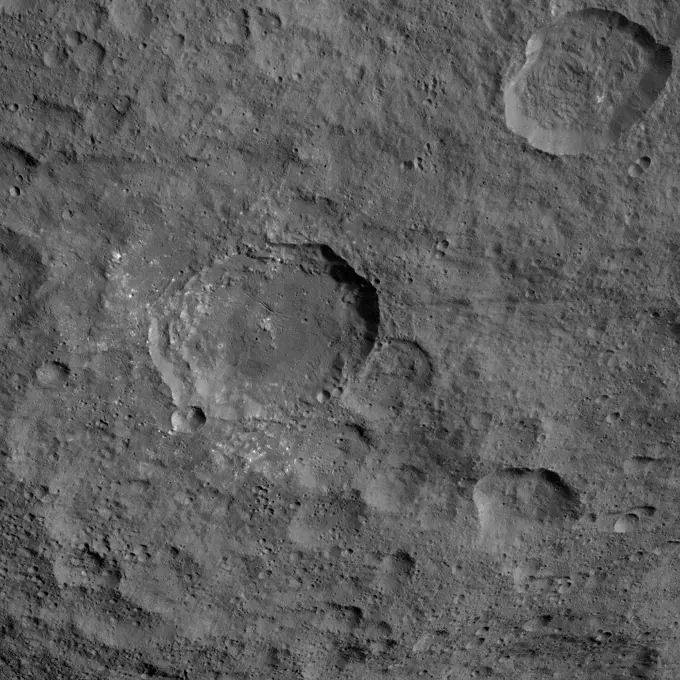
NASA's Dawn spacecraft captured this portion of the southern hemisphere of Ceres on Dec. 20, 2015. The image is centered at approximately 46 degrees south latitude, 101 degrees east longitude.
6145-45094905
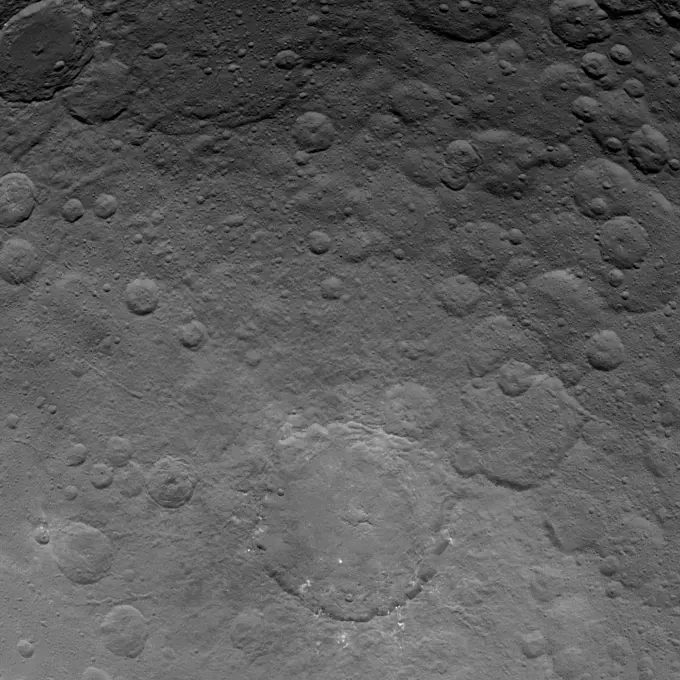
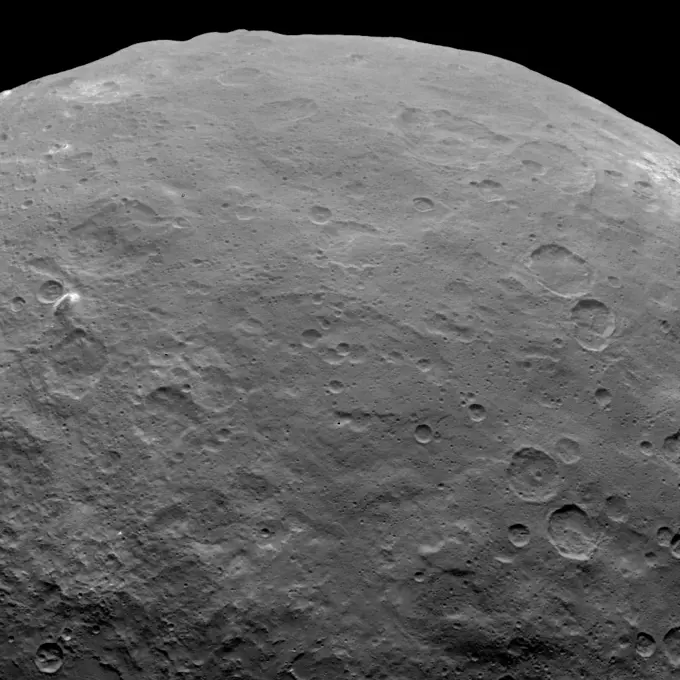
This image, taken by NASA's Dawn spacecraft, shows dwarf planet Ceres from an altitude of 2,700 miles (4,400 kilometers). The image, with a resolution of 1,400 feet (410 meters) per pixel, was taken on June 24, 2015.
6145-44518749
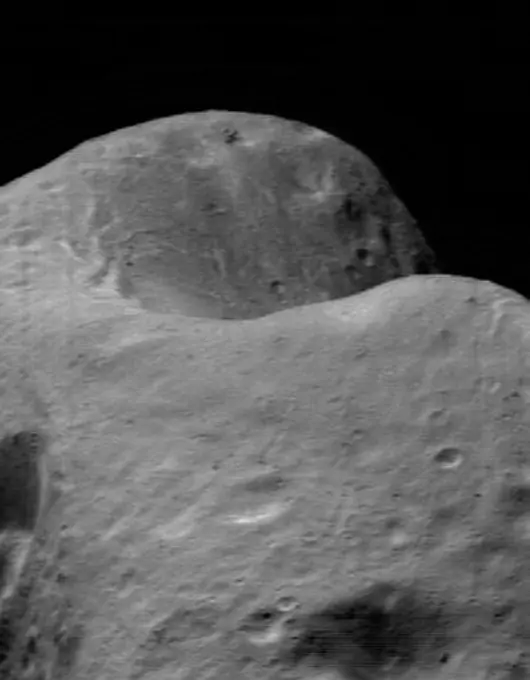
An Eraser Mark on Eros
6145-45258130
This image from NASA's Dawn spacecraft shows the largest crater on Ceres, called Kerwan. The crater has an appearance scientists refer to as relaxed, meaning its sharp features have softened since Kerwan formed. Its overall shape looks something like a pancake, especially when viewed near Ceres' limb. The origin of its polygonal shape is not yet well understood; it might be due to large faults in the subsurface generated by other large impacts, as has been suggested for other craters. The smaller crater named Insitor sits in the center of Kerwan. The dark material seen at top right is ejecta from Dantu crater. At 174 miles (280 kilometers) wide, Kerwan is so large that it would have taken about 50 images at Dawn's low-altitude mapping orbit (called LAMO, at 240 miles or 385 kilometers altitude) to cover the crater from one side to the other. Kerwan was also too wide to fit within the camera's field of view at Dawn's high-altitude mapping orbit (called HAMO, at 915 miles, 1,470 kilomete
6145-44835265
Eratosthenes Central Peak
6145-44786524
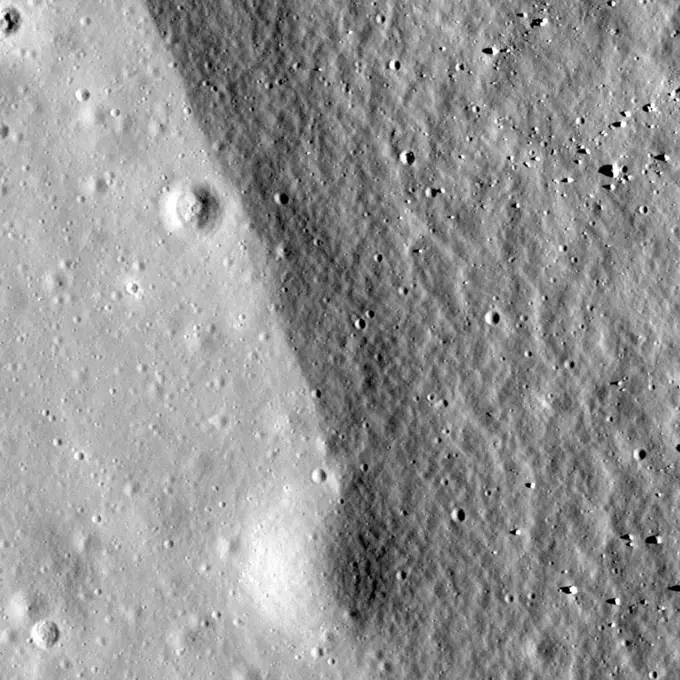
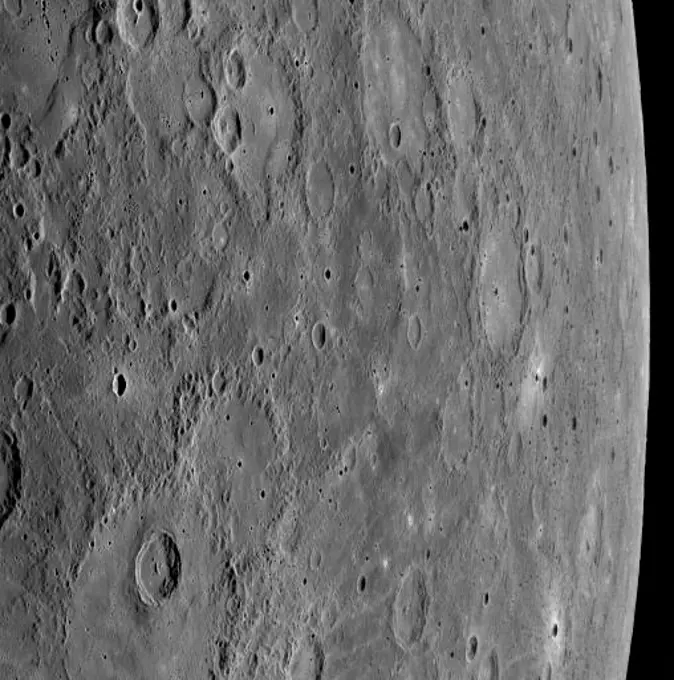
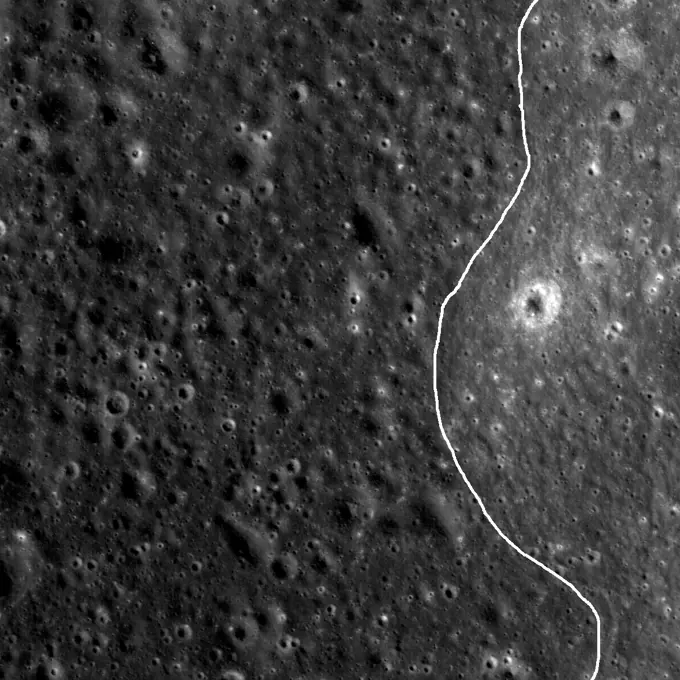
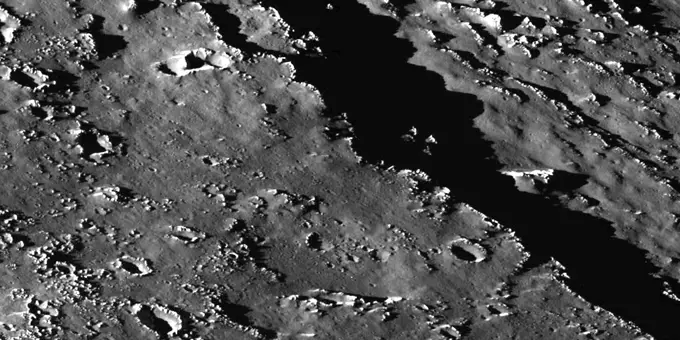
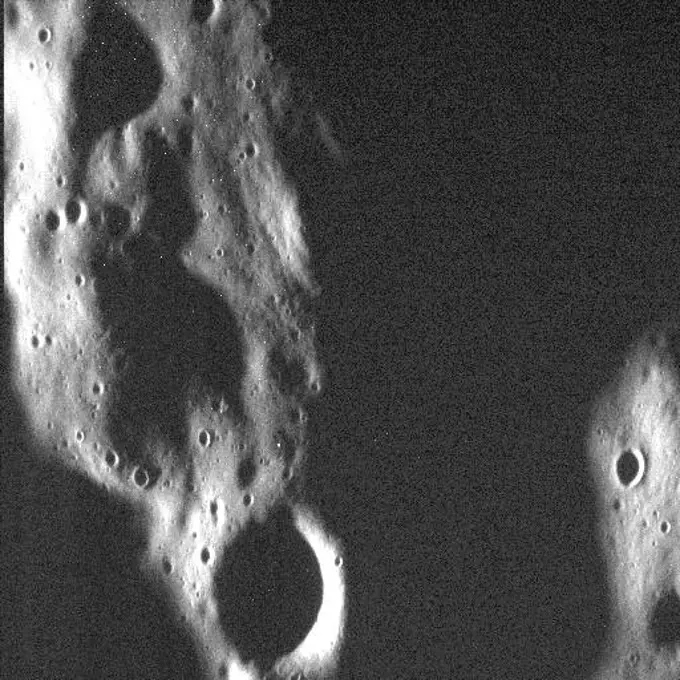
NASA's Lunar Reconnaissance Orbiter catches the edge of Mare Moscoviense.
1746-19670867
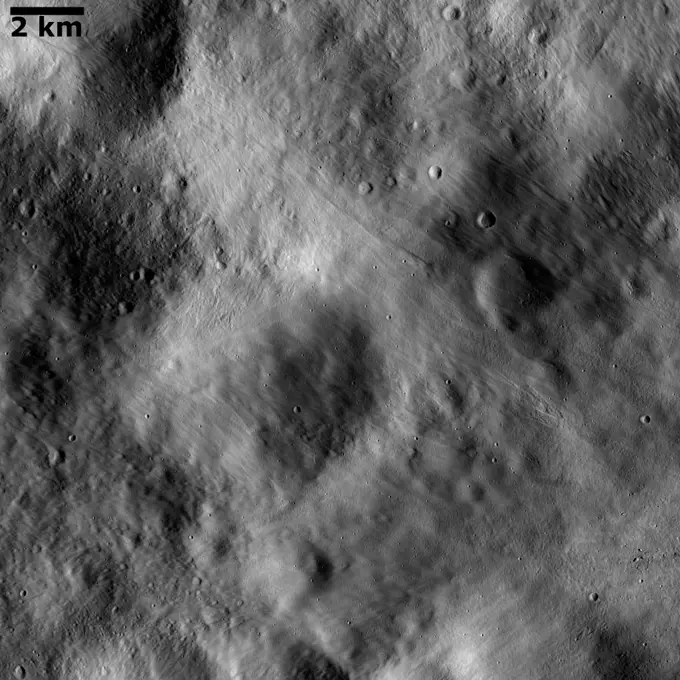
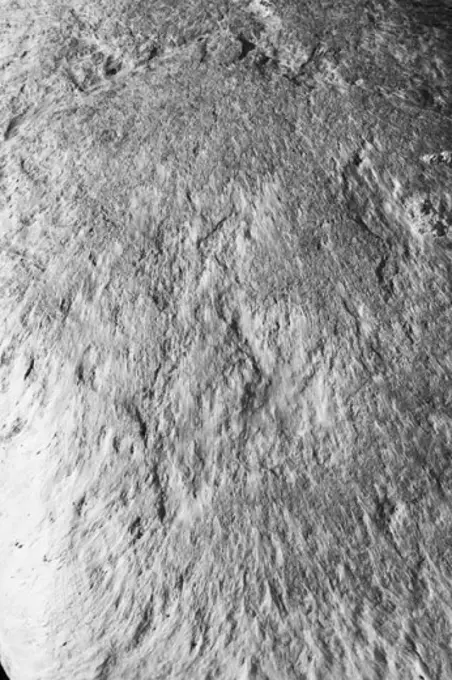
Image of the Vesta Ateroid. This Dawn framing camera (FC) image of Vesta shows linear grooves and ridges in Vesta's regolith. These linear features generally run diagonally across the image from the top left to the bottom right. They are less than 1 kilometer (0.6 mile) in width and some have lengths that extend across the entire image. This image is located in Vesta's Tuccia quadrangle, in Vesta's southern hemisphere. NASA's Dawn spacecraft obtained this image on April 8, 2012.
6145-45096656
This image, taken by NASA's Dawn spacecraft on June 24, 2015, shows Dantu crater on dwarf planet Ceres from an altitude of 2,700 miles (4,400 kilometers); Dantu crater as small patches of bright material sprinkled around it.
1746-19670913
Contact between Archimedes crater wall and floor.
6145-45123527
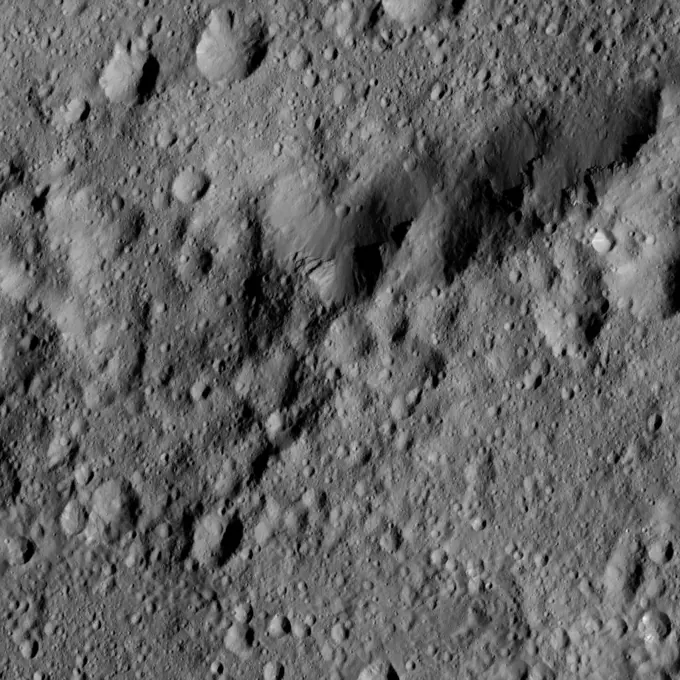
This view from NASA's Dawn spacecraft shows part of the southwestern rim of Yalode Crater on Ceres. Yalode is one of the largest impact basins on Ceres. A great deal of material has slumped down the walls of the crater. a phenomenon called mass wasting.
6145-45106289
This view from NASA's Dawn spacecraft shows a portion of Mondamin Crater, an impact feature 78 miles (126 kilometers) in diameter, in the southern hemisphere of Ceres.
6145-44880512
Maximum Thrust
6145-45112145
NASA's Dawn spacecraft took this moody scene on Ceres, located within Zadeni Crater, named for the ancient Georgian god of bountiful harvest. Dawn saw Zadeni at approximately 76 miles (120 kilometers) in diameter on June 15, 2016.
6145-44858010
A New View of Spitteler and Holberg
6145-44883128
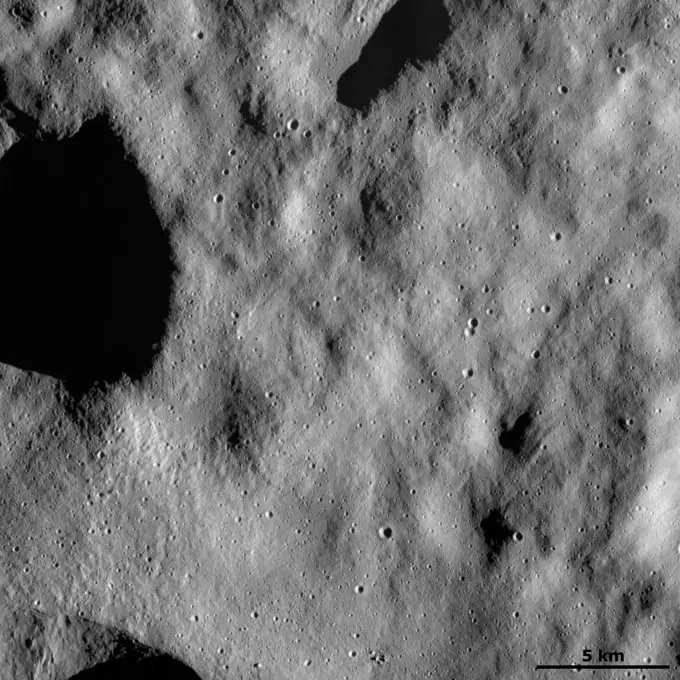
This image of asteroid Vesta from NASA's Dawn spacecraft shows a relatively smooth area of Vesta's surface. This region is smooth because it is mostly covered by fine-grained debris, known as regolith.
6145-45261233
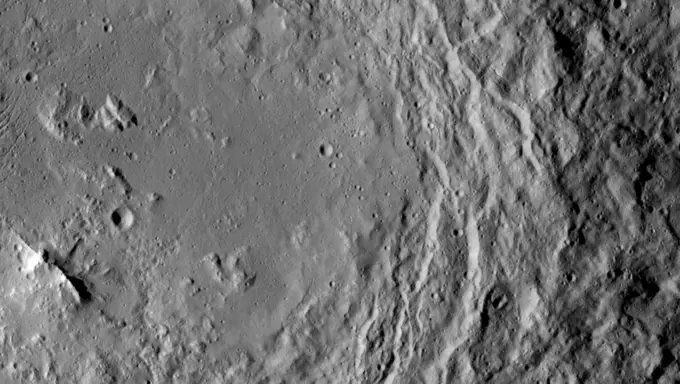
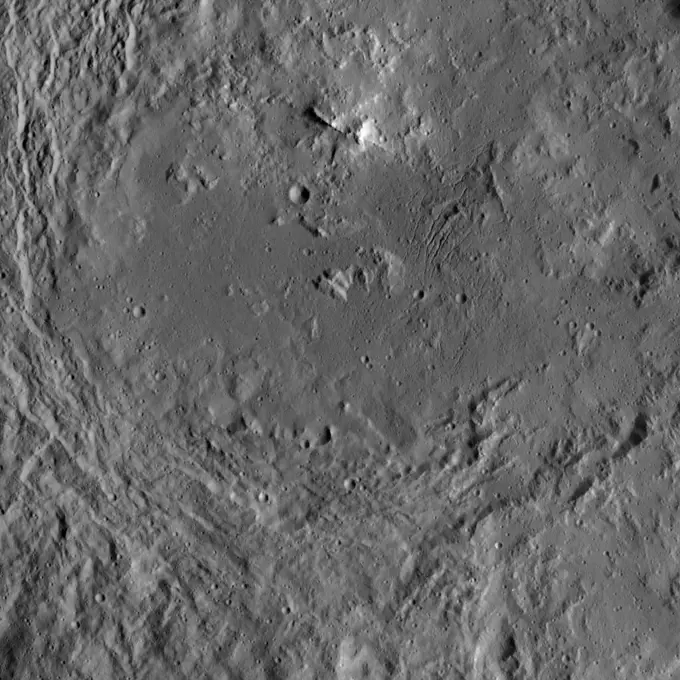
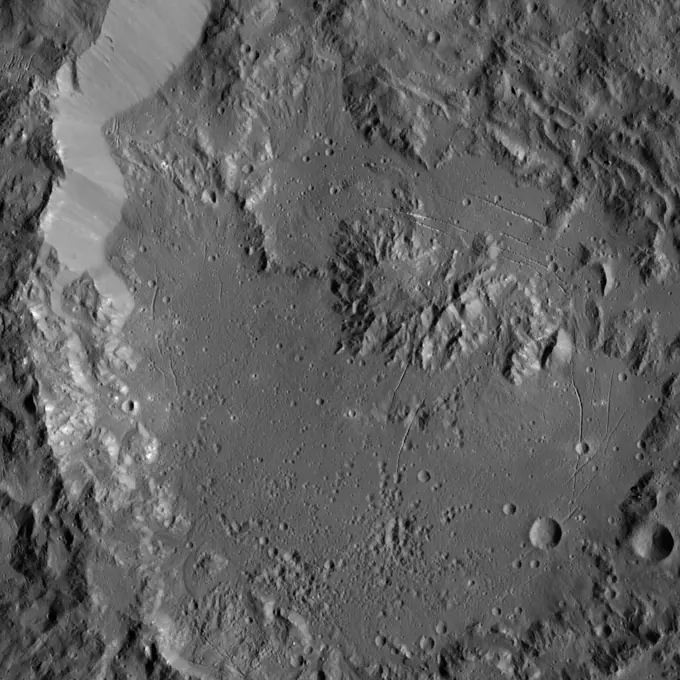
Yalode crater is so large -- at 162 miles, 260 kilometers in diameter -- that a variety of vantage points is necessary to understand its geological context. This view of the northern portion of Yalode is one of many images NASA's Dawn spacecraft has taken of this crater. The large impact that formed the crater likely involved a lot of heat, which explains the relatively smooth crater floor punctuated by smaller craters. A couple of larger craters in Yalode have polygonal shapes. This type of crater shape is frequently found on Ceres and may be indicative of extensive underground fractures. The larger crater to the right of center in this image is called Lono (12 miles, 20 kilometers in diameter) and the one below it is called Besua (11 miles, 17 kilometers). Some of the small craters are accompanied by ejecta blankets that are more reflective than their surroundings. The strange Nar Sulcus fractures can be seen in the bottom left corner of the picture. Linear features seen throughout t
6145-44702290
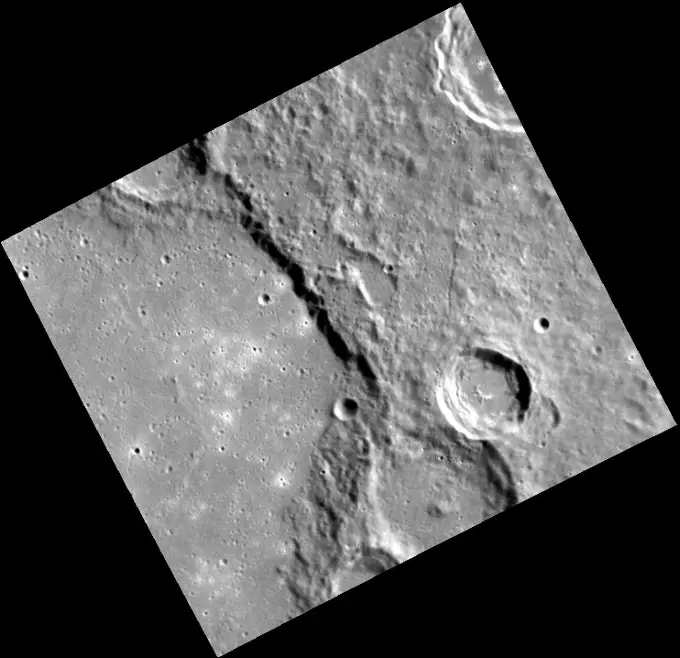
Discovering New Rupes on Mercury
6145-45011347
NASA's Dawn spacecraft obtained this image with its framing camera on Aug. 20, 2011. This image was taken through the camera's clear filter. The image has a resolution of about 260 meters per pixel.
6145-44977198
Boundary Lands
6145-44757825
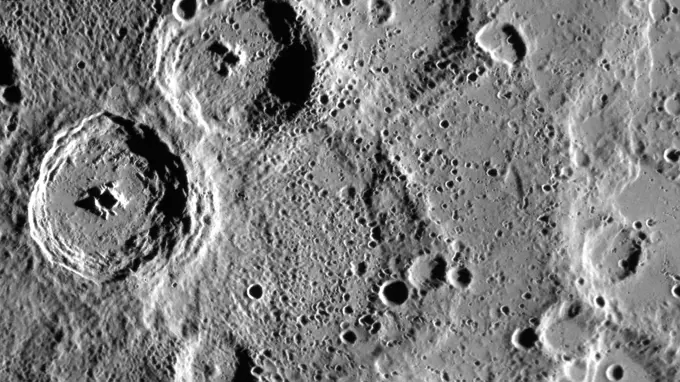
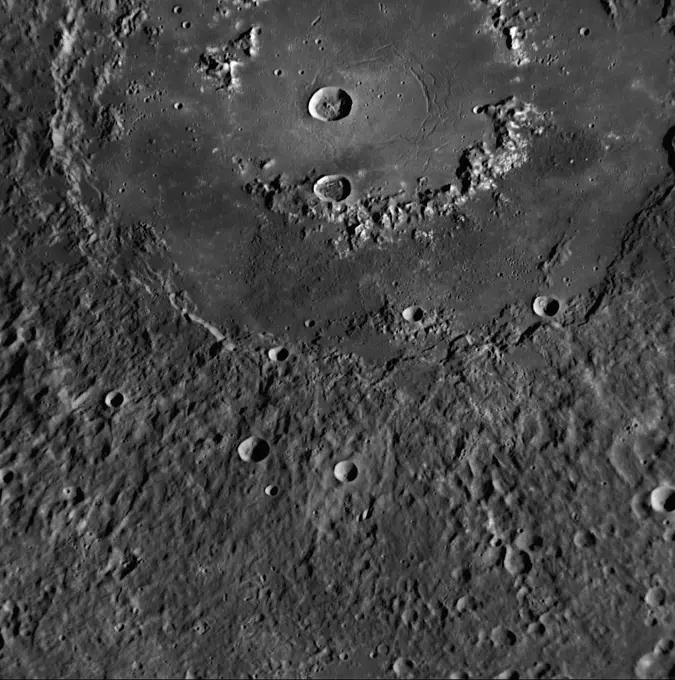
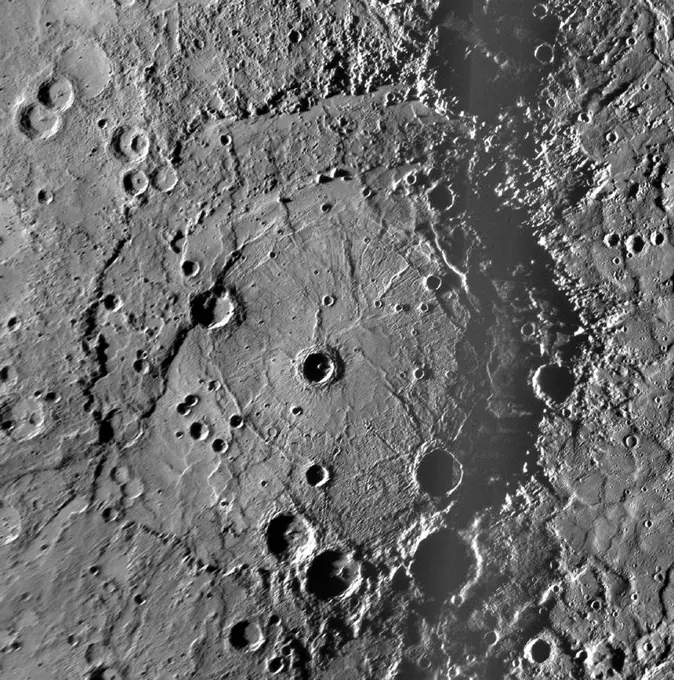
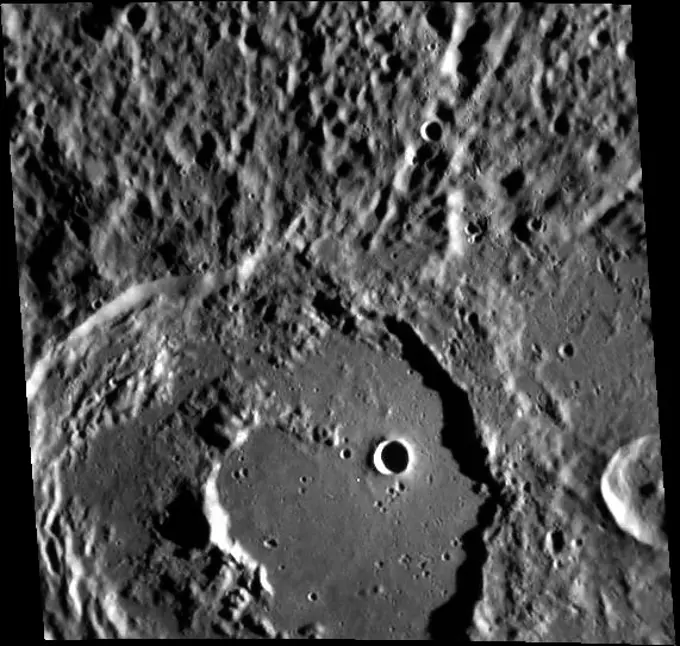
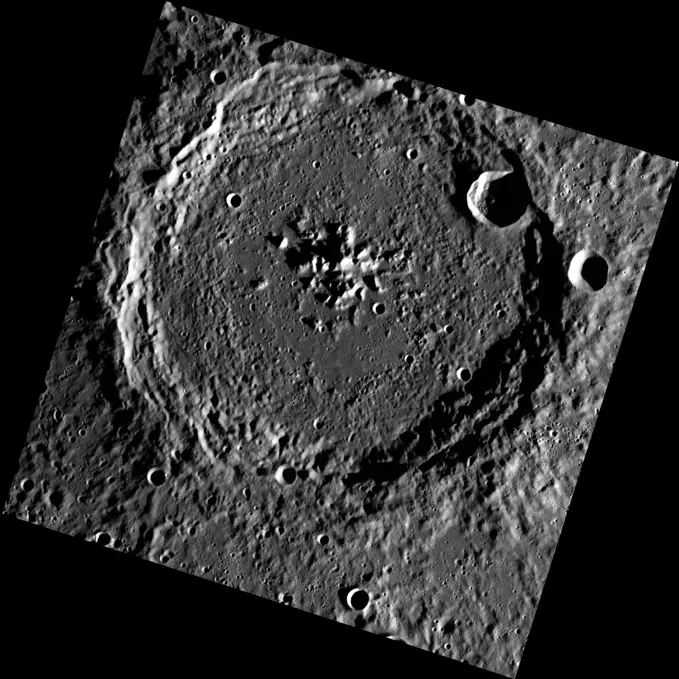
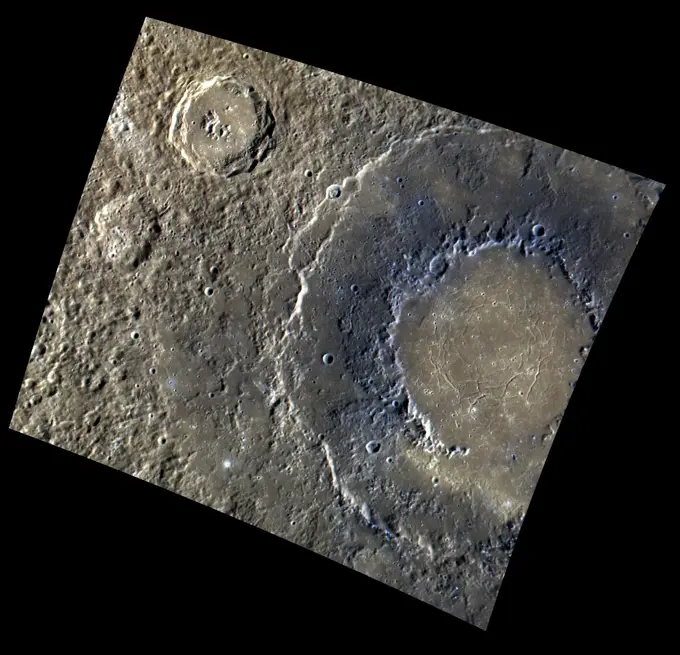
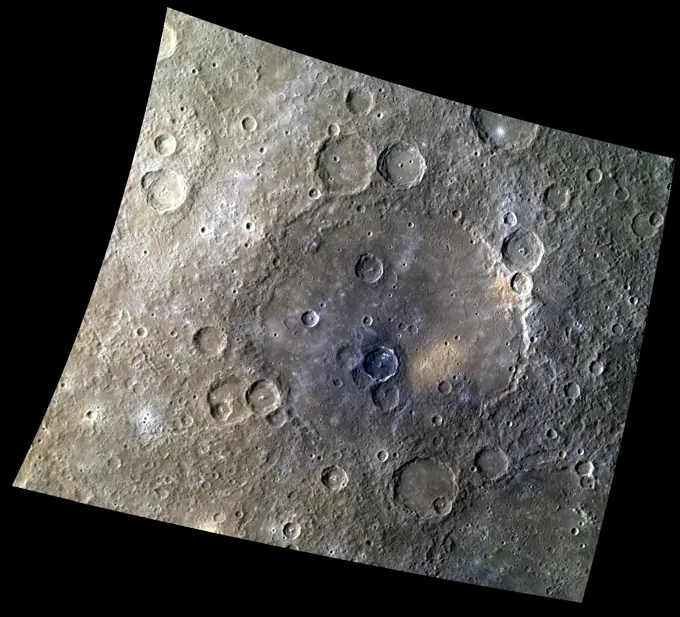
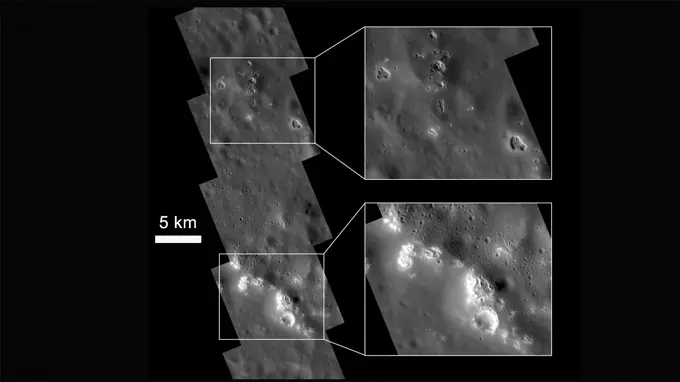
Raditladi basin, imaged during MESSENGER's first Mercury flyby and named in April 2008, is intriguing for several reasons.
6145-45122779
Part of Ezinu Crater on Ceres is seen at top left in this image from NASA's Dawn spacecraft taken on Oct. 20, 2016. The crater features a network of canyon-like features.
1746-19670926
Boundary of buried crater rim and mare basalt at Flamsteed P crater.
6145-45099347
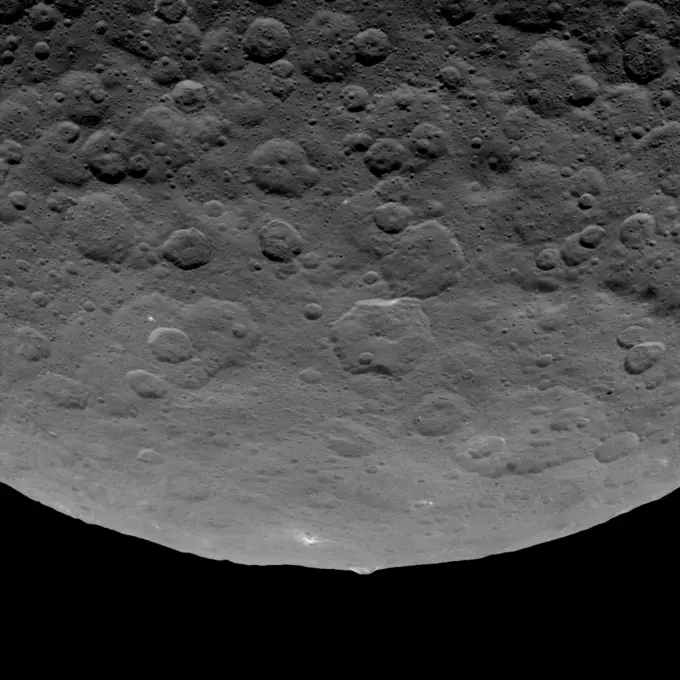
This image, taken by NASA's Dawn spacecraft, shows a portion of the southern hemisphere of dwarf planet Ceres from an altitude of 915 miles (1,470 kilometers). The image was taken on Sept. 21, 2015, and has a resolution of 450 feet (140 meters) per pixel.
6145-44899012
This image from NASA's Dawn spacecraft shows Arruntia crater, located in asteroid Vesta's Bellicia quadrangle, in Vesta's northern hemisphere.
6145-45088836
The Mighty Caloris
6145-45096940
This image of Ceres, taken by NASA's Dawn spacecraft, features a large, steep-sided mountain and several intriguing bright spots. The mountain's height is estimated to be about 4 miles (6 kilometers). It is the highest point seen on Ceres so far.
6145-58967348
Setting Eyes on Sōtatsu
6145-44761507
This NAC mosaic of the newly discovered Rembrandt impact basin was presented last week during a NASA media teleconference. The number per area and size distribution of impact craters superposed on Rembrandt's rim indicates that it is one of the younges
6145-44879170
Hokusai's Molten Past
6145-45263341
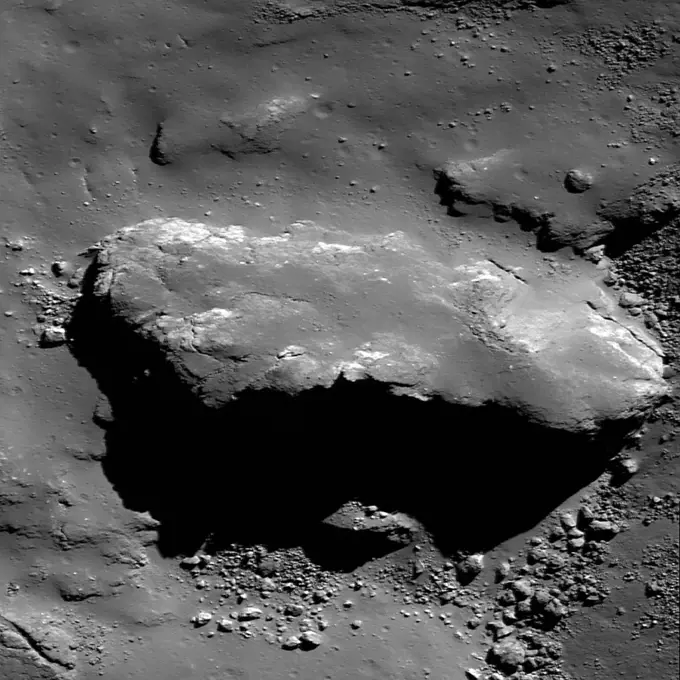
This image of a small boulder on Ceres was obtained by NASA's Dawn spacecraft on June 10, 2018 from an altitude of about 24 miles (38 kilometers).
1746-19670936
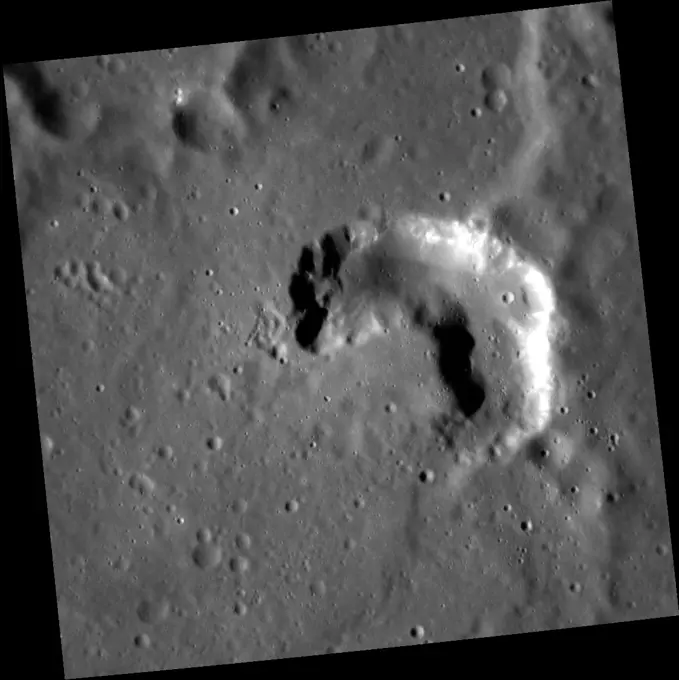
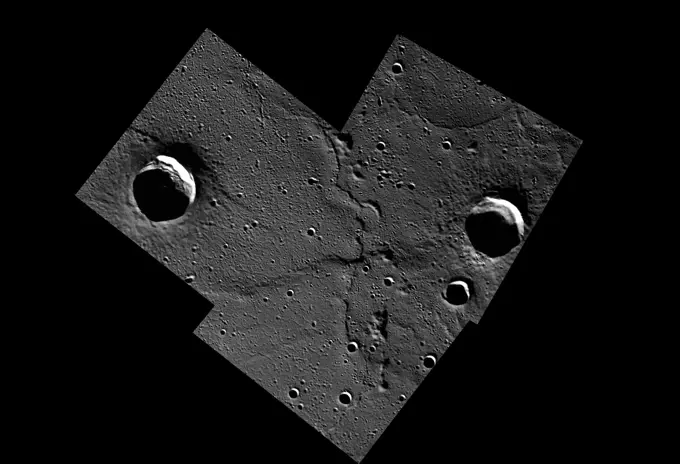
Along the embayed Paddington crater rim is a dome that may be an ancient volcano with a summit pit crater.
6145-45117282
NASA's Dawn took this image on June 17, 2016, of Tibong Crater (22 miles, 36 kilometers wide), at left, on Ceres.
6145-45100016
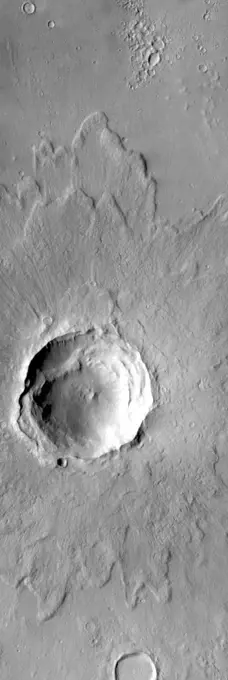
This view of Ceres from NASA's Dawn spacecraft shows a fresh impact crater with a flat floor. The crater is surrounded by smooth, flow-like ejecta that covers adjacent older impact craters. The crater is about 16 miles (26 kilometers) in diameter.
6145-45044640
This image from NASA's Dawn spacecraft shows a relatively smooth part of asteroid Vesta's surface. This smooth texture is probably due to the surface being covered in a layer of tiny dust particles.
6145-44891475
This image from NASA's Dawn spacecraft of asteroid Vesta shows chains of craters on an undulating surface probably formed of fine-grained debris, called regolith, which was ejected from large impact craters as they formed nearby.
6145-45124221
This view, taken on Oct. 22, 2016, from NASA's Dawn spacecraft shows the craters Kondos and Jarimba on Ceres. Jarimba is the largest crater, located at left. Above Jarimba, on the left-hand edge of the image, is Kondos.
6145-45116302
NASA's Dawn spacecraft captures part of the northern rim of Urvara Crater (101 miles, 163 kilometers wide). obtained on June 2, 2016, from its low-altitude mapping orbit, at a distance of about 240 miles (385 kilometers) above the surface.
6145-45069312
Tea Time with MESSENGER
6145-45097720
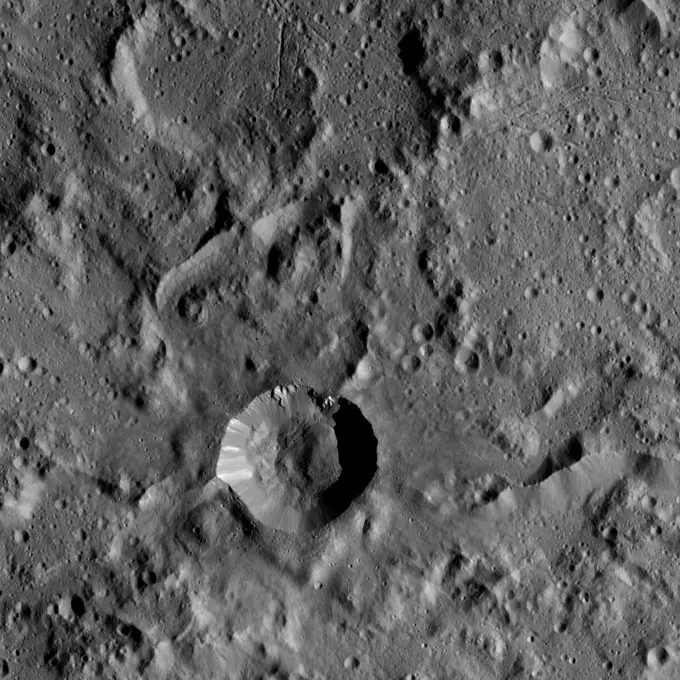
NASA's Dawn spacecraft took this image that shows a mountain ridge, near lower left, that lies in the center of Urvara crater on Ceres. Urvara is an Indian and Iranian deity of plants and fields. The crater's diameter is 101 miles (163 kilometers).
6145-45040966
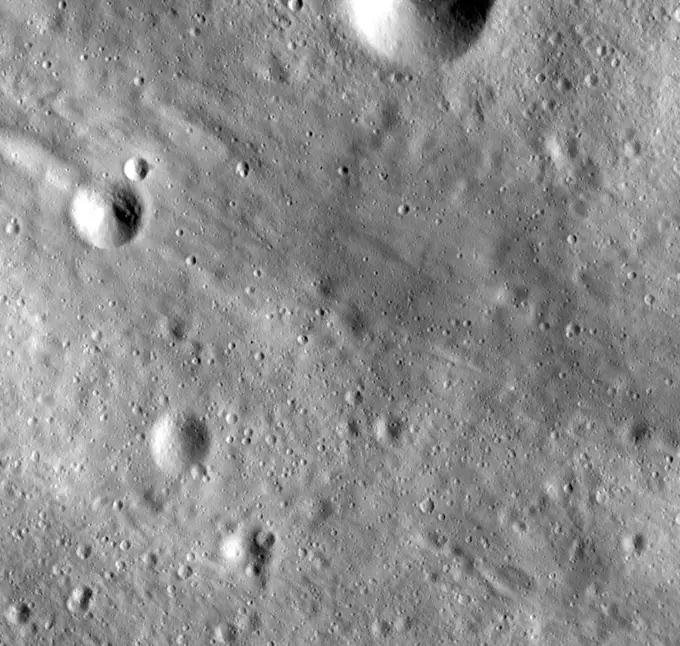
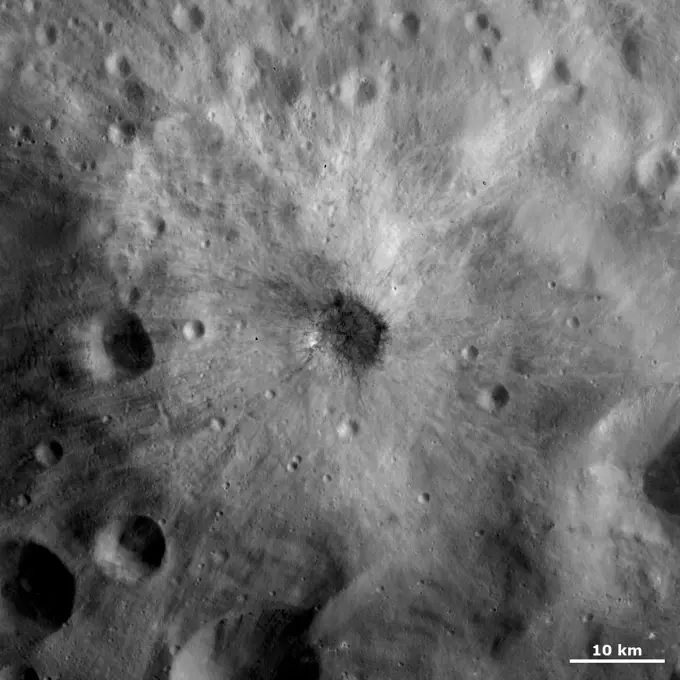
This image from NASA's Dawn spacecraft is centered on a small, young, fresh crater with bright and dark ejecta rays extending from it. The crater is located in Vesta's Tuccia quadrangle on asteroid Vesta.
6145-45118217
This image from NASA's Dawn spacecraft, taken on June 6, 2016, features bright material (at upper left) along the rim of the giant crater named Kerwan (174 miles, 280 kilometers wide) on Ceres.
6145-45099792
This image of Ceres, taken by NASA's Dawn spacecraft, shows three prominent craters located to the northeast of a terrace (the terrace feature being located at left in this image).
6145-45262502
This image was obtained by NASA's Dawn spacecraft on July 1, 2018 from an altitude of about 179 miles (288 kilometers). The center of this picture is located at about 67.3 degrees south latitude and 249.1 degrees east longitude.
6145-45100029
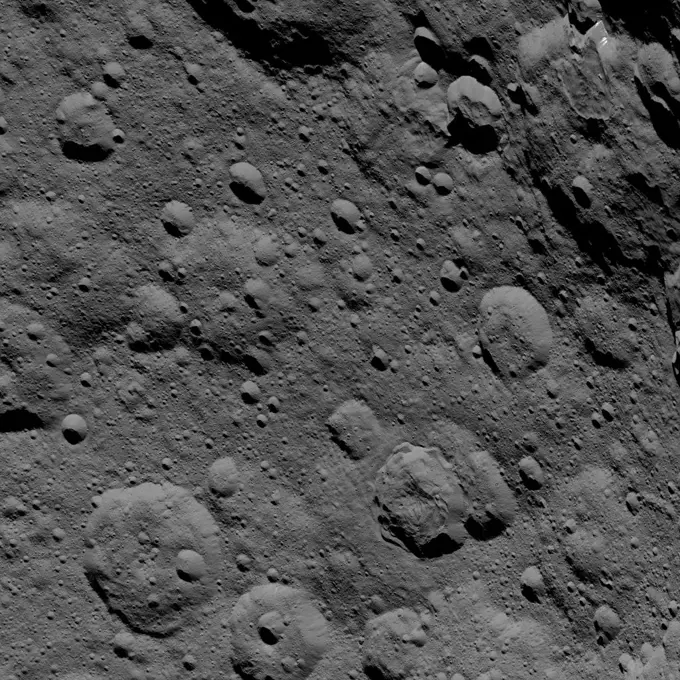
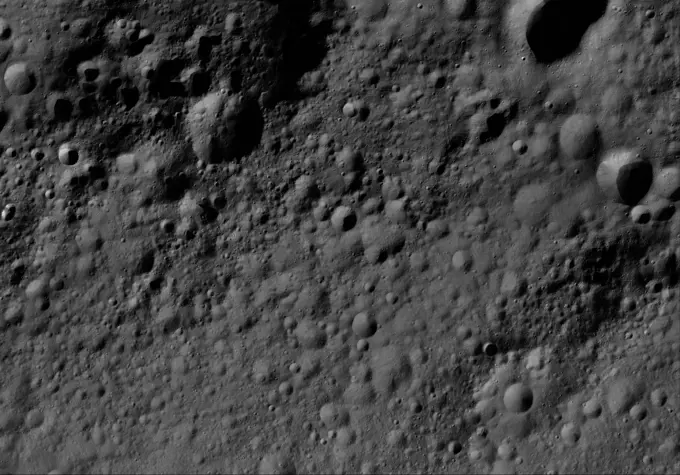
This image of Ceres from NASA's Dawn spacecraft shows hummocky terrain -- a surface covered in low, rounded hills -- with numerous impact craters of varying sizes.
6145-45110335
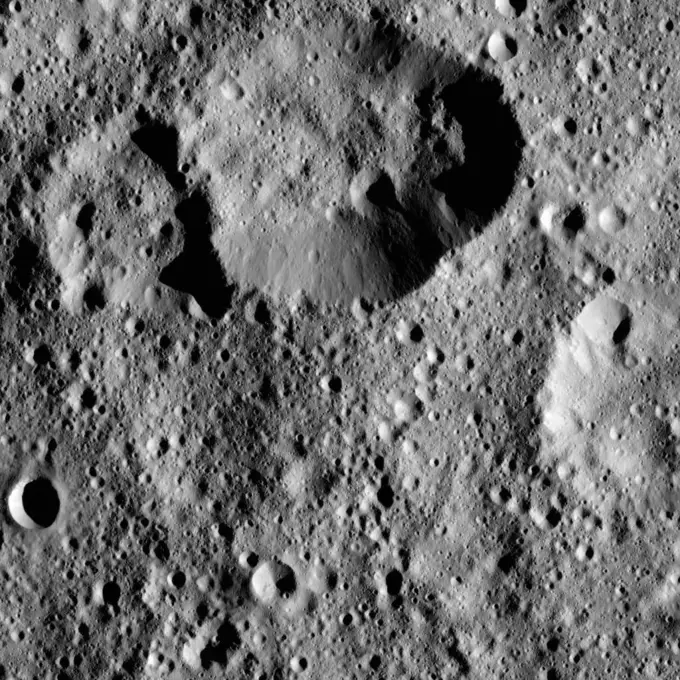
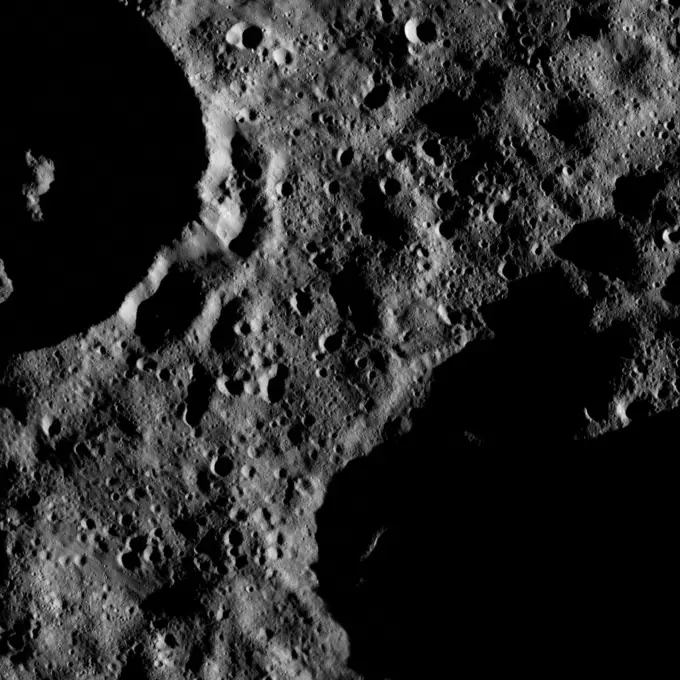
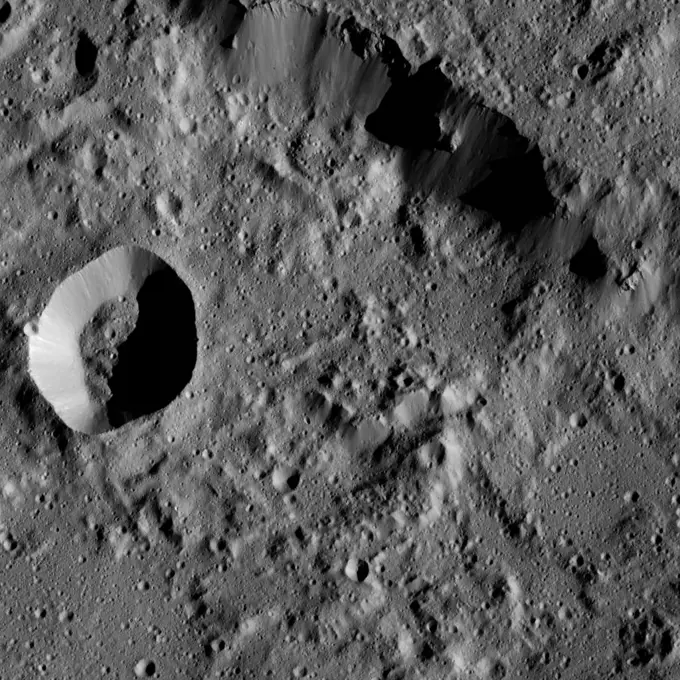
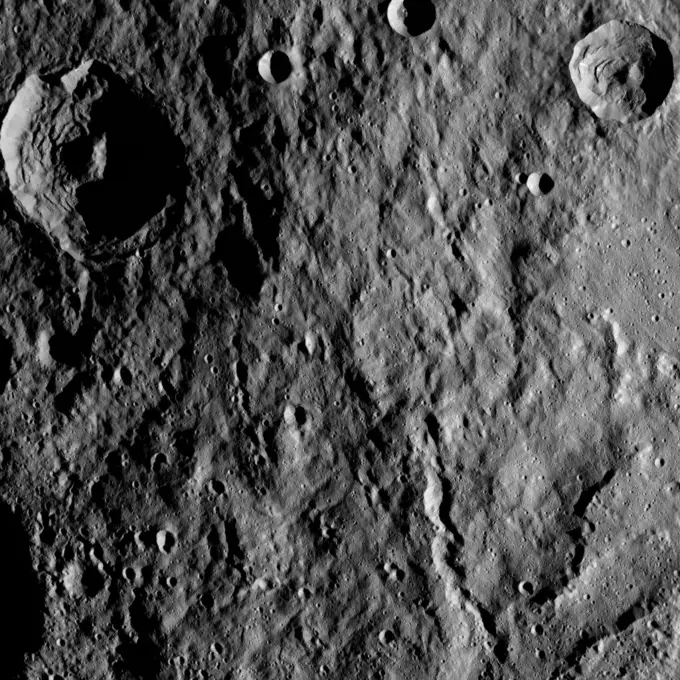
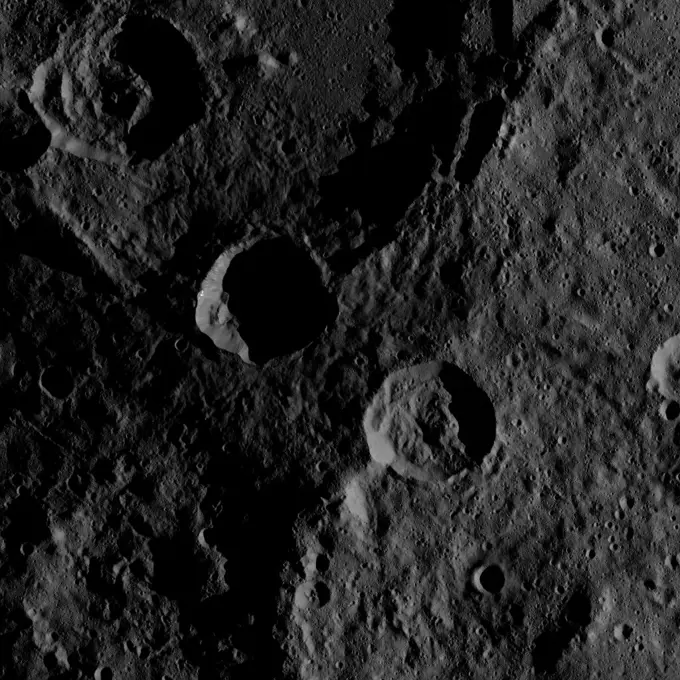
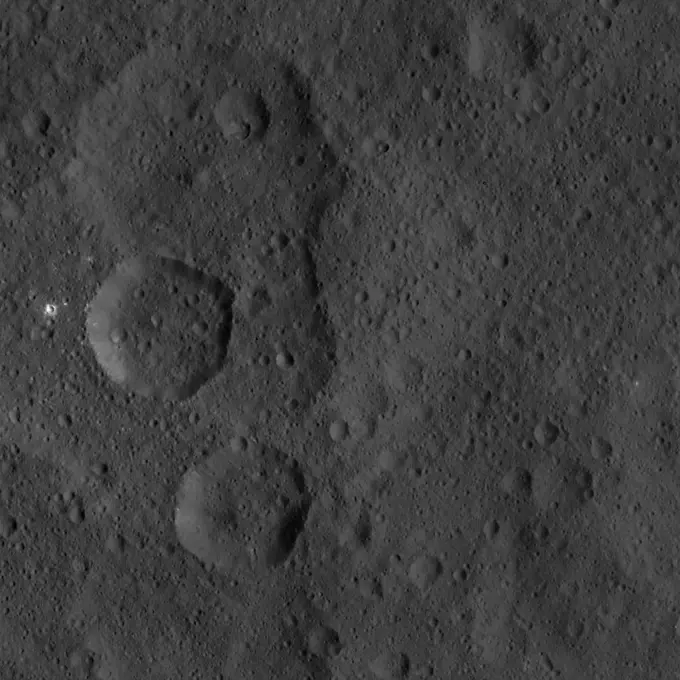
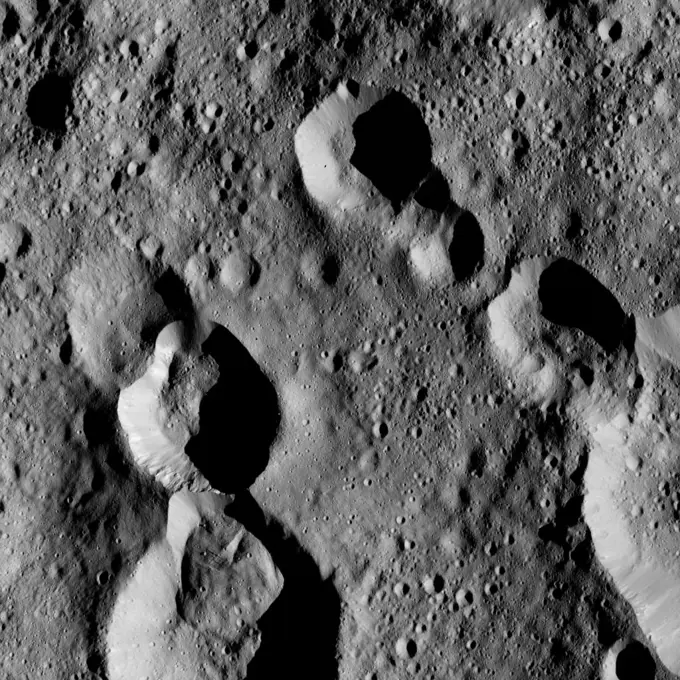
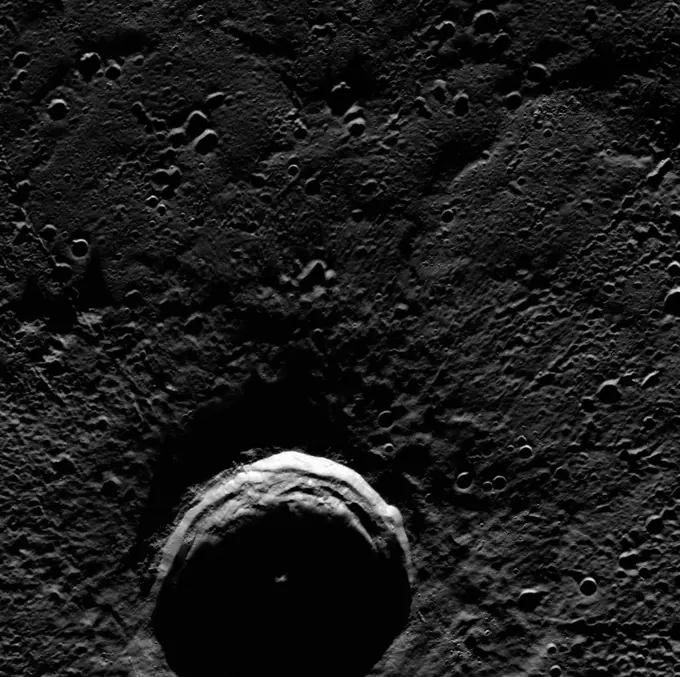
This image captured by NASA's Dawn spacecraft features the shadowy rim of an unnamed crater on Ceres. The crater on the left appears relatively old, as its flanks are rugged and the crater density inside it is more or less uniform.
6145-45107794
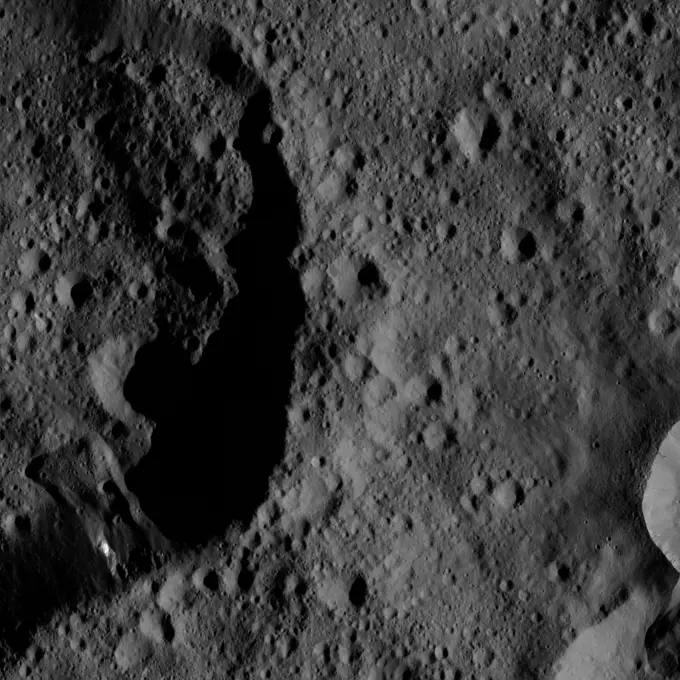
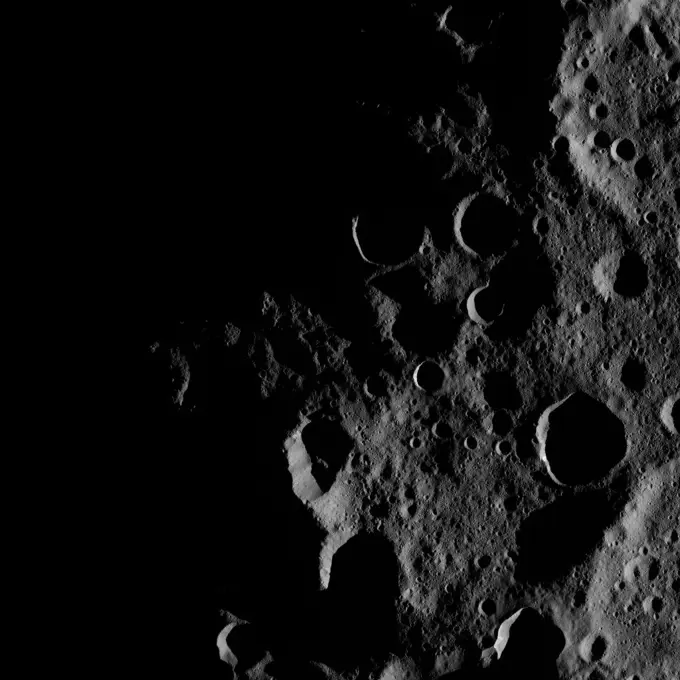
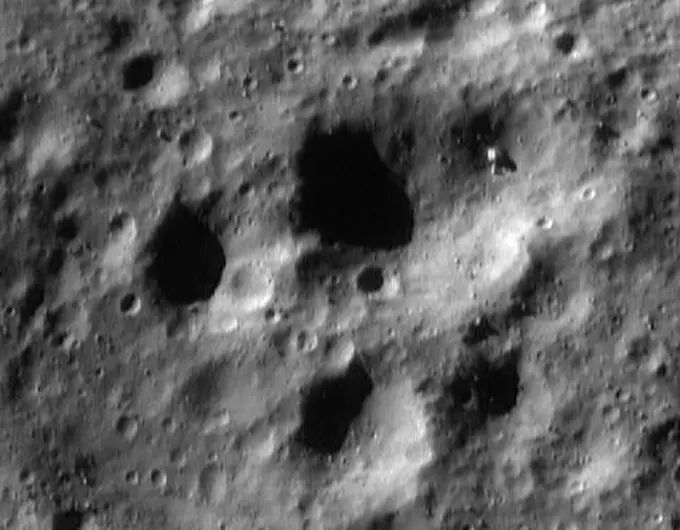
Shadows cast a dark mood on this scene from Ceres, near the dwarf planet's north pole in this image acquired by NASA's Dawn spacecraft.
6145-44786274
Young and Wrinkled
6145-44733509
Buon Giorno, Raphael!
6145-45097721
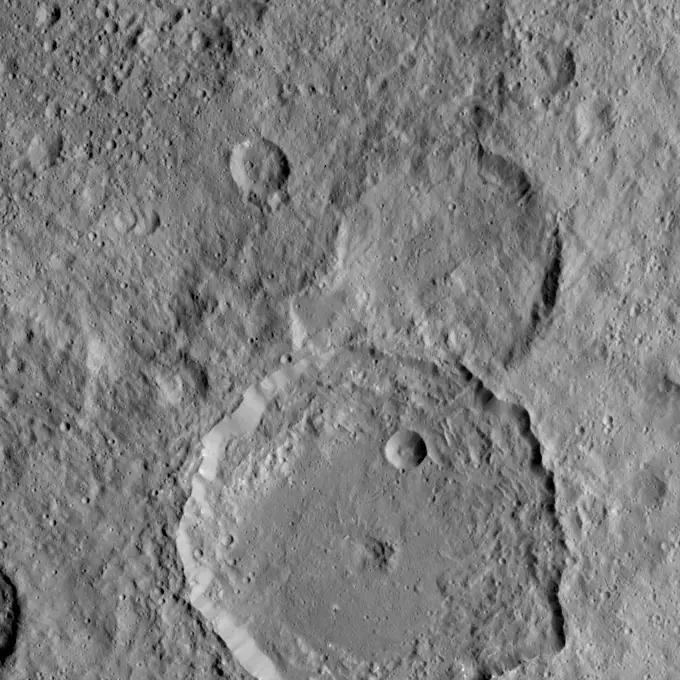
NASA's Dawn Spacecraft took this image of Gaue crater, the large crater on the bottom, on Ceres. Gaue is a Germanic goddess to whom offerings are made in harvesting rye. The resolution of the image is 450 feet (140 meters) per pixel.
6145-45092602
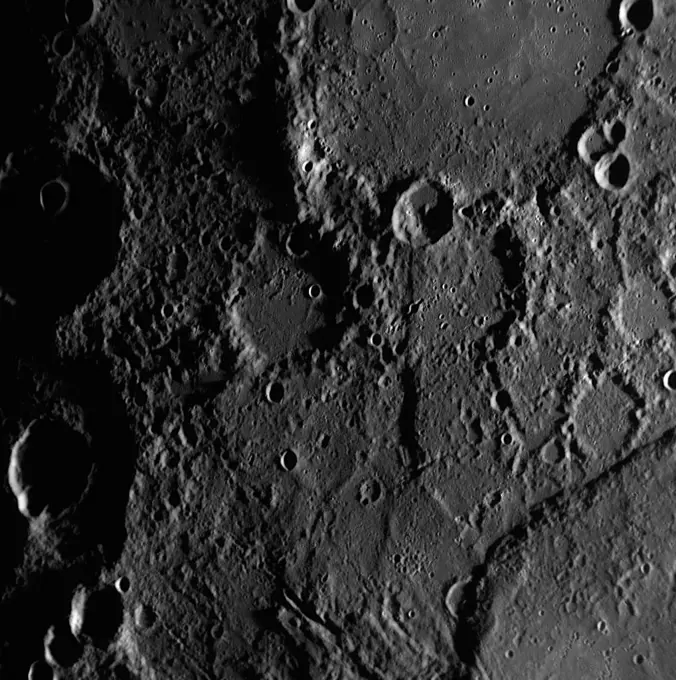
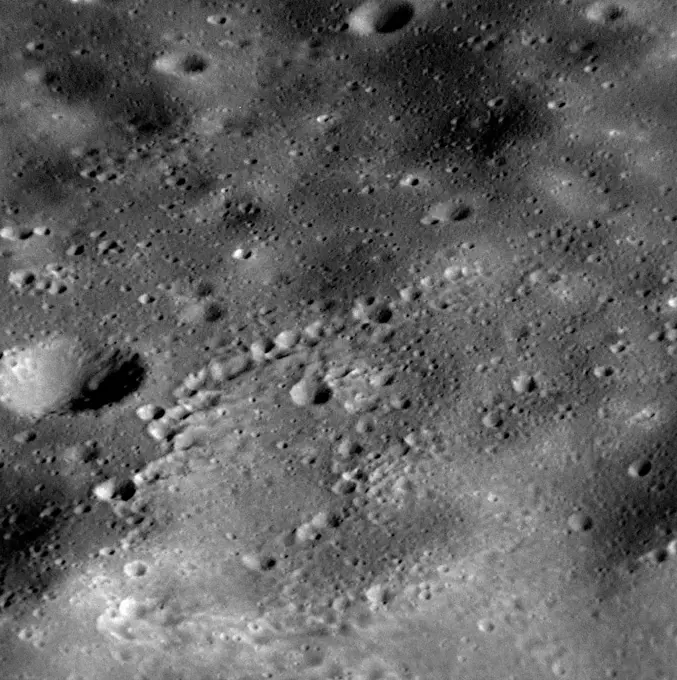
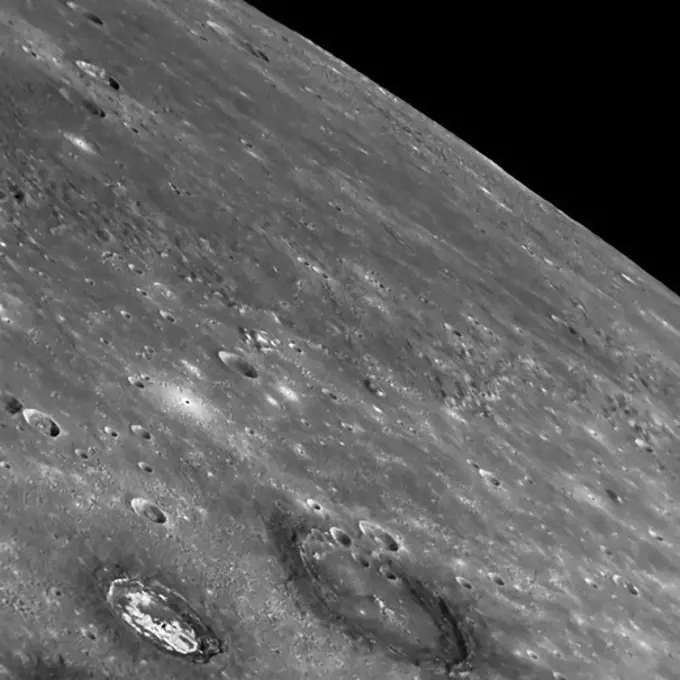
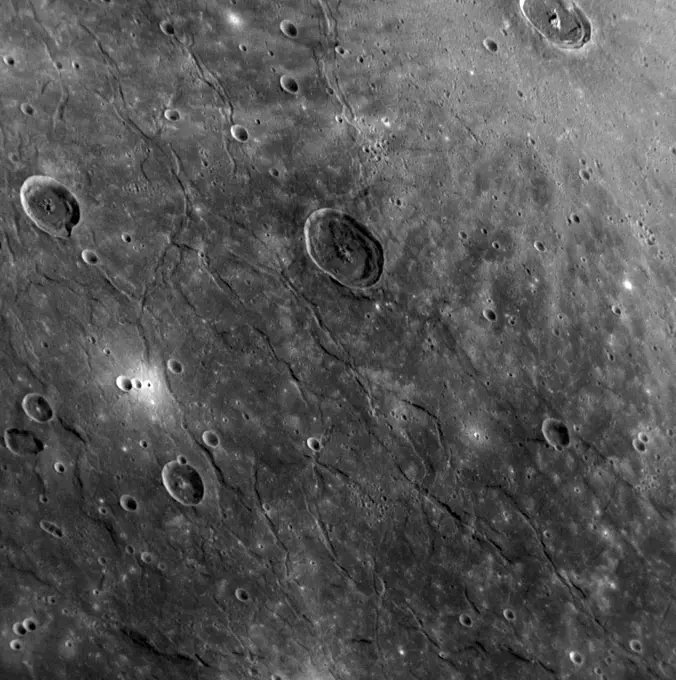
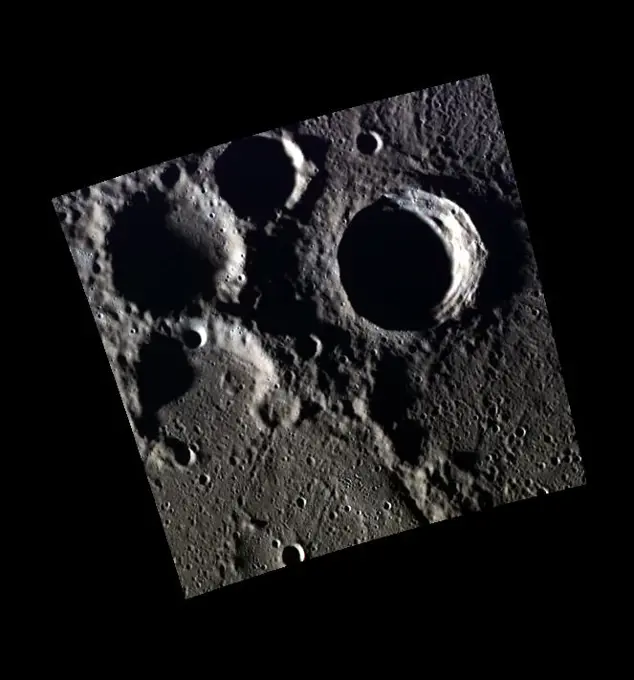
Though NASA's MESSENGER's days are numbered, the spacecraft will continue to acquire new data sets and transmit them back to Earth during its final days. Shown here is a high-resolution view snapped near Heemskerck Rupes.
6145-45113453
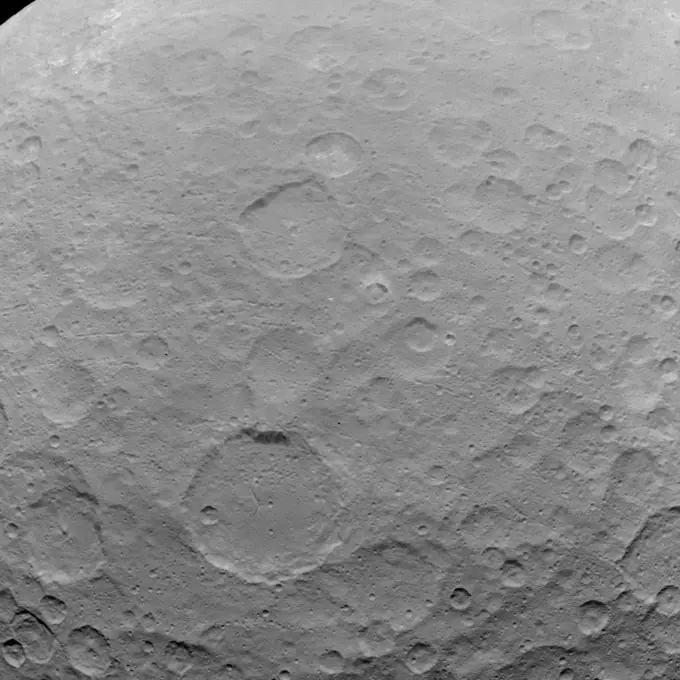
This view from NASA's Dawn spacecraft shows terrain on Ceres centered at approximately 37 degrees south latitude, 51 degrees east longitude.
6145-45082316
Between the Valleys of the Ancients
6145-44508147
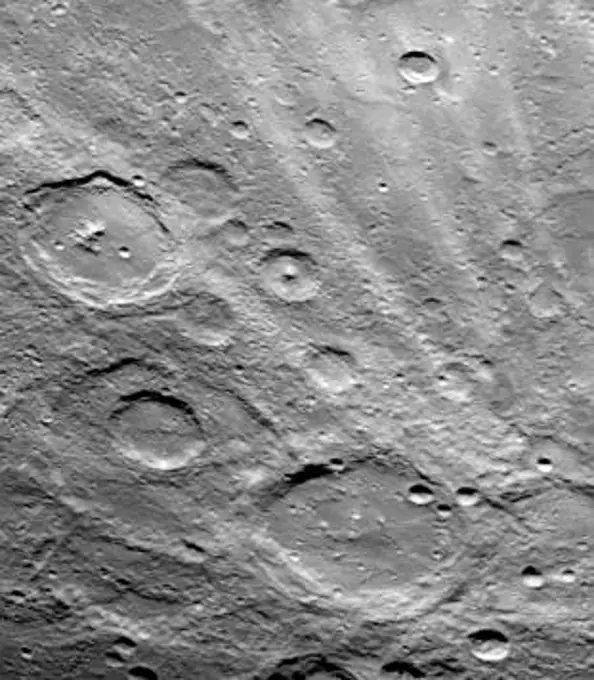
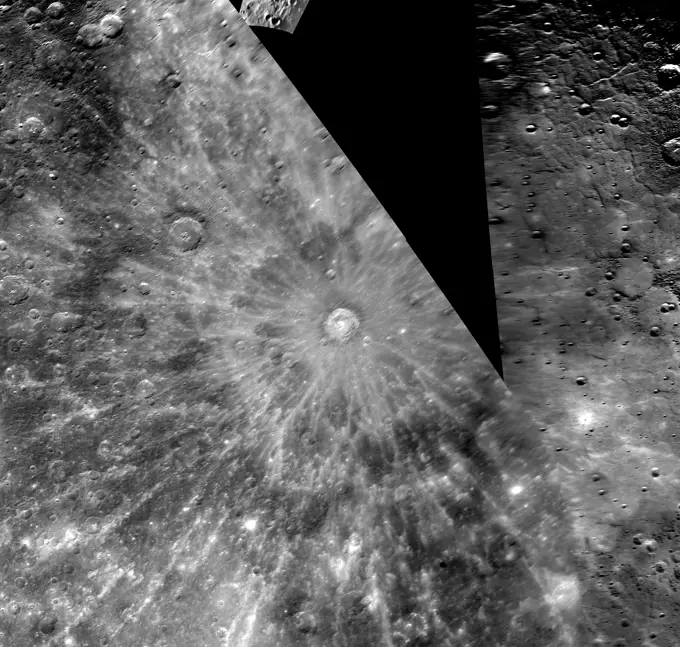
A field of bright rays, created by ejecta from a crater, radiating to the north (top) from off camera (lower right) is seen in this view of Mercury taken Sept. 21, 1974 by NASA's Mariner 10.
6145-45066962
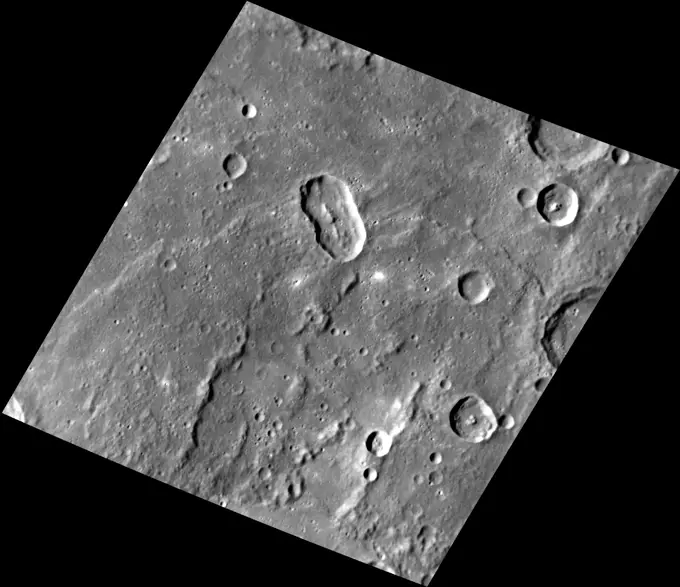
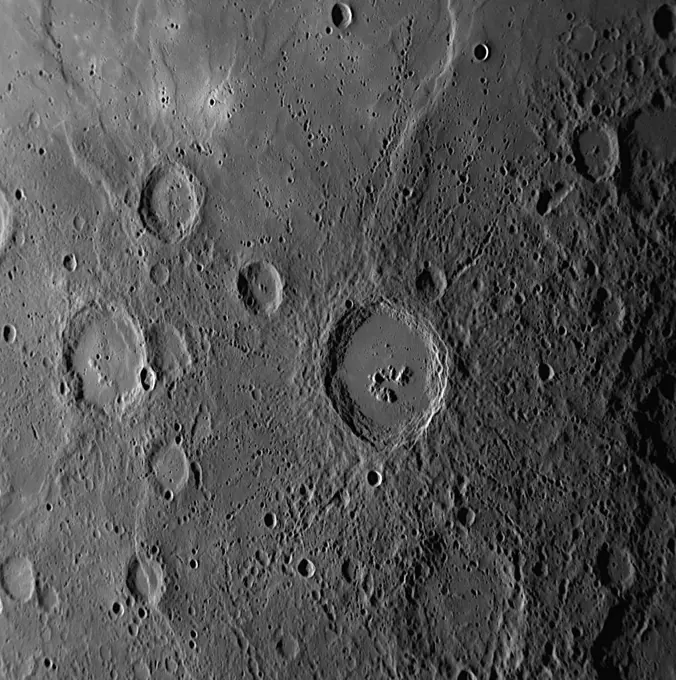
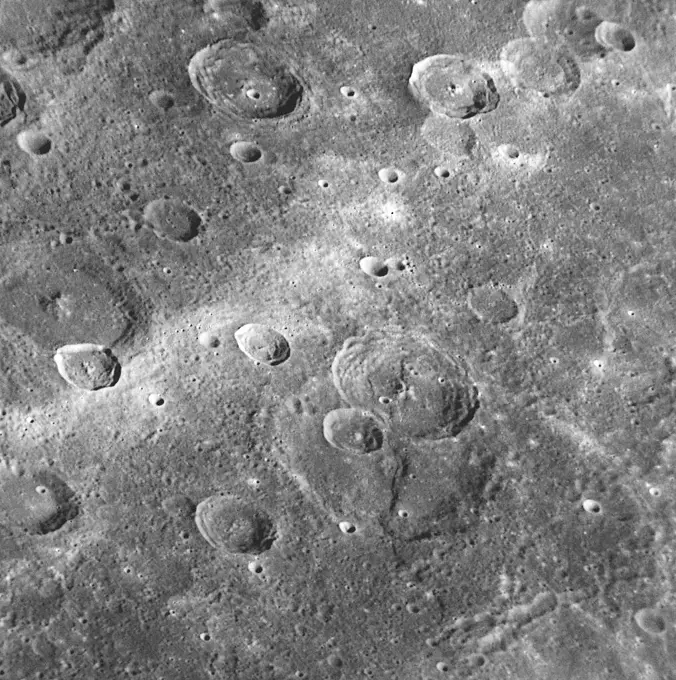
At an Angle. This image NASA's MESSENGER features an elongated impact crater north of Rembrandt impact basin. This crater was most likely formed by a oblique impact which created the crater's distinct elongated shape and central peak.
6145-58967333
Lifting the Veil of Anonymity
6145-45016179
The colorful rocks exposed in the central peak visible in this image from NASA's Mars Reconnaissance Orbiter probably reflect variations in mineral content that were caused by water activity early in Mars' history.
6145-45111883
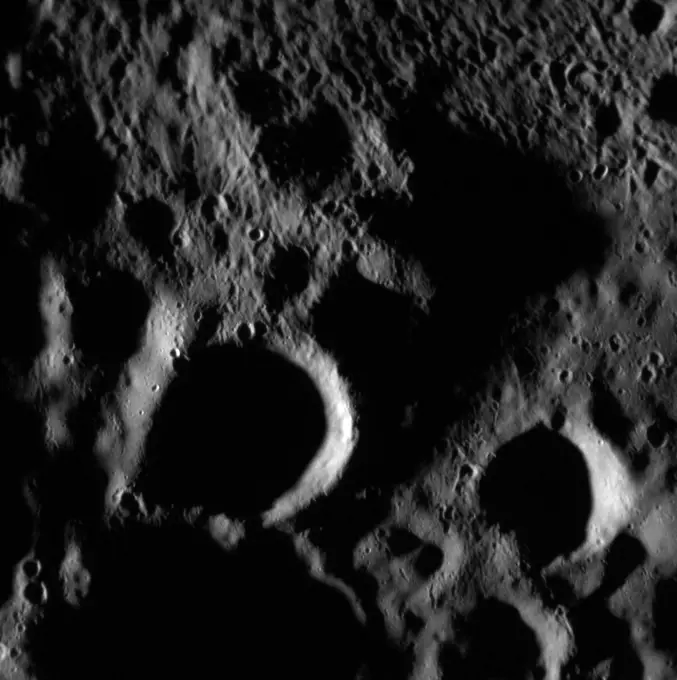
Two overlapping, unnamed craters with long shadows are seen high in the northern hemisphere of Ceres, captured by NASA's Dawn spacecraft on April 21, 2016.
6145-45099753
This image, taken by NASA's Dawn spacecraft, shows a portion of the northern hemisphere of dwarf planet Ceres from an altitude of 915 miles (1,470 kilometers). Featured here is Dantu crater, named for the Ghanan god associated with the planting of corn.
6145-45092825
This image, acquired yesterday, is one of NASA's MESSENGER's last. Today, April 30, 2015, the spacecraft will complete its highly successful orbital mission and impact the surface of Mercury.
6145-45103200
This view from NASA's Dawn spacecraft captured on Dec. 21, 2015 shows a portion of the northern hemisphere of Ceres. Bright material can be seen in the wall of the large crater at upper left.
6145-44918146
Torrent in Tolstoj
6145-44899539
This image from NASA's Dawn spacecraft shows Fabia crater, located in asteroid Vesta's Numisia quadrangle, in Vesta's northern hemisphere.
6145-45098459
This image, taken by NASA's Dawn spacecraft, shows the surface of dwarf planet Ceres from an altitude of 915 miles (1,470 kilometers). The image, with a resolution of 450 feet (140 meters) per pixel, was taken on August 26, 2015.
6145-45264336
This image of Urvara Crater was obtained by NASA's Dawn spacecraft on May 20, 2018 from an altitude of about 920 miles (1480 kilometers). The center of Urvara Crater is located at about 46 degrees south in latitude and 249 degrees east in longitude.
6145-45050503
The Witch and the Skeleton Spectre
6145-45122522
This southern hemisphere scene from dwarf planet Ceres encompasses parts of the craters Mondamin and Darzamat. Mondamin is large crater located in the top half of image, Darzamat is at bottom-right. NASA's Dawn spacecraft took this image on Oct. 19, 2016.
6145-45263050
This image of a small crater north of Ceres' Datan Crater was obtained by NASA's Dawn spacecraft on June 9, 2018 from an altitude of about 48 miles (77 kilometers).
6145-45104688
This image, taken by NASA's Dawn spacecraft, shows Ikapati Crater with its complex of central peaks on Ceres. Several groupings of roughly parallel fractures are present in smooth areas of the crater floor.
6145-45092554
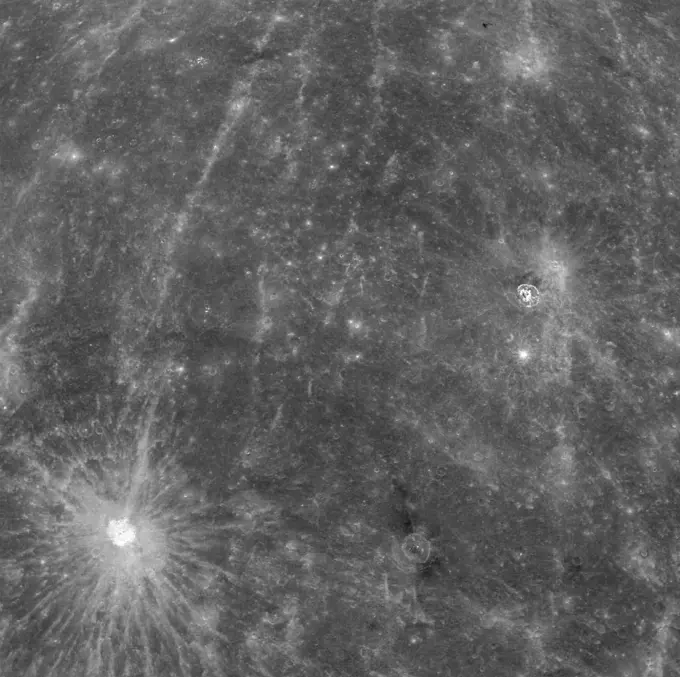
NASA's MESSENGER is again sending images back to Earth after the spacecraft emerged from superior solar conjunction, when communication is largely blocked by the Sun. These will be some of our last views of Mercury from MESSENGER.
6145-44909753
The Smoothness of Schubert
6145-44975581
This image of Domna AV-L-17, from the atlas of the giant asteroid Vesta, was created from images taken as NASA's Dawn mission flew around the object, also known as a protoplanet.
6145-44975664
his image of Claudia AV-L-23, from the atlas of the giant asteroid Vesta, was created from images taken as NASA's Dawn mission flew around the object, also known as a protoplanet.
6145-45101298
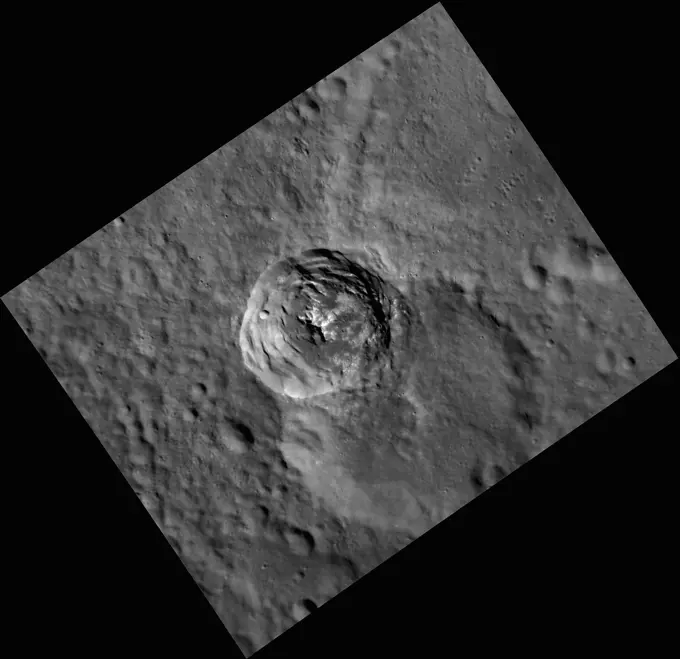
This view from NASA's Dawn spacecraft includes Haulani, a relatively fresh crater 19 miles (31 kilometers) in diameter. The interior of Haulani shows landslides from its crater rim, along with smooth material and a central ridge on its crater floor.
6145-44498005
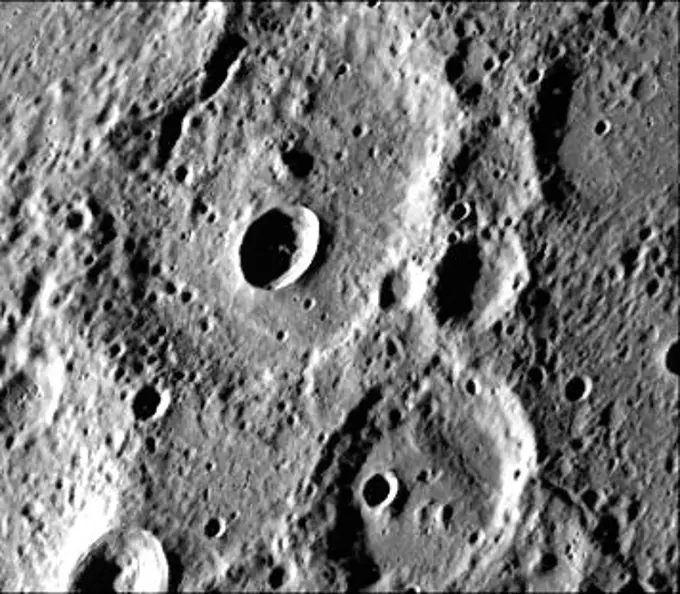
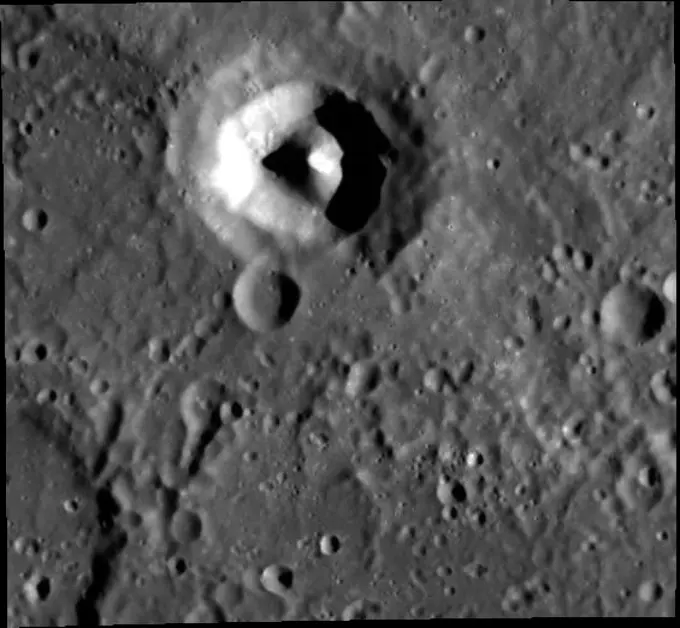
A fresh new crater in the center of an older crater basin is shown in this picture of the surface of Mercury taken March 29, 1974 by NASA's Mariner 10.
6145-45119250
This image from NASA's Dawn spacecraft shows the edge of Ezinu Crater on Ceres. Dawn took this image on June 10, 2016, from its low-altitude mapping orbit, at a distance of about 240 miles (385 kilometers) above the surface.
1746-19670860
Lichtenberg crater is of Eratosthenian age, located in western Oceanus Procellarum.
6145-44900608
A Diamond in the Rough
6145-45093900
This image of Ceres is part of a sequence taken by NASA's Dawn spacecraft on May 22, 2015, from a distance of 3,200 miles (5,100 kilometers) with a resolution of 1,600 feet (480 meters) per pixel.
6145-45264058
This image of a battered crater rim on Ceres was obtained by NASA's Dawn spacecraft on June 10, 2018 from an altitude of about 25 miles (40 kilometers).
6145-45110317
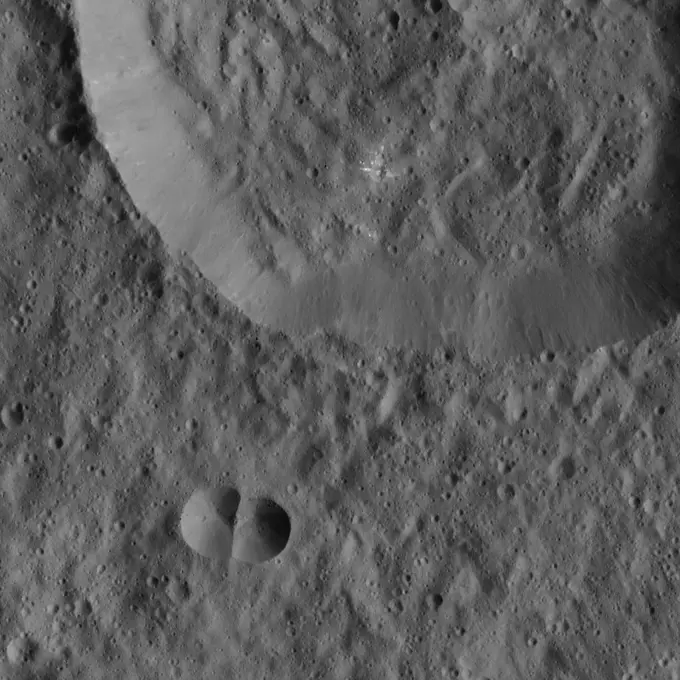
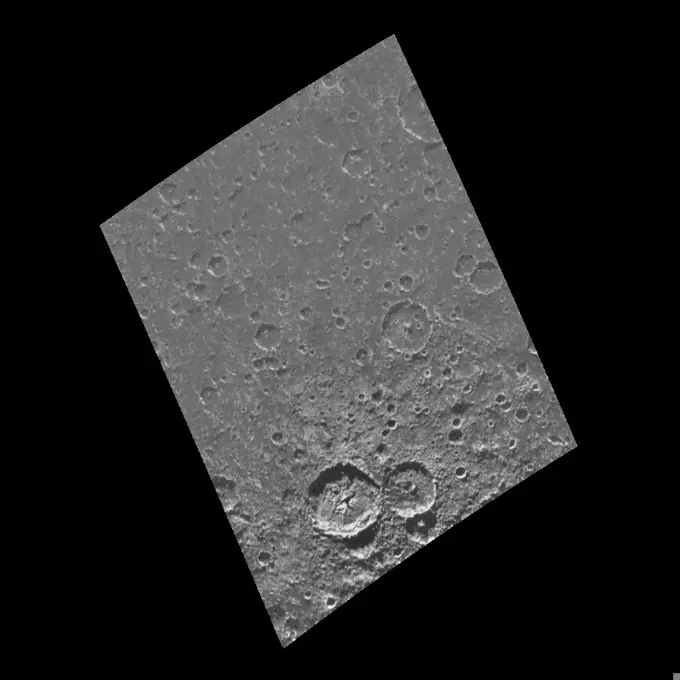
This image from NASA's Dawn spacecraft of Ceres shows a small, double-impact crater (at bottom) near a larger crater. The larger structure has a crater floor with roughly the same crater density.
6145-44791901
Looking in Detail at a Spectacular Double-Ring Basin
6145-44839291
Slope Failure near Aratus Crater
6145-58967407
NASA's Dawn spacecraft obtained this image of the giant asteroid Vesta with its framing camera on Aug. 14 2011. This image was taken through the camera's clear filter. The image has a resolution of about 260 meters per pixel.
6145-45099501
This image, taken by NASA's Dawn spacecraft, shows the surface of dwarf planet Ceres at mid-latitudes from an altitude of 915 miles (1,470 kilometers). The image was taken on Sept. 21, 2015, and has a resolution of 450 feet (140 meters) per pixel.
6145-45100293
The tall, cone-shaped mountain Ahuna Mons is seen in this image taken by NASA's Dawn spacecraft. Ahuna Mons taken on Oct. 14, 2015.
6145-44913757
A Brief History of Time
6145-44696368
Battered Dione
6145-44962819
I Just Can't Get Enough!
6145-44834812
Terraces in Eratosthenes Crater
6145-44975578
This image of Fabia AV-L-13, from the atlas of the giant asteroid Vesta, was created from images taken as NASA's Dawn mission flew around the object, also known as a protoplanet.
6145-45132210
Inamahari Crater on Ceres, the large well-defined crater at the center of this image from NASA's Dawn spacecraft, is one of the sites where scientists have discovered evidence for organic material.
6145-58967568
This image from NASA's Dawn spacecraft is dominated by a wide, young, fresh crater on asteroid Vesta. Surrounding this crater is its ejecta blanket, a covering of small particles that were thrown out during the impact that formed the crater.
6145-44884739
The High-Incidence Campaign
6145-44998607
Double Whammy
6145-44976270
Covered Catullus
6145-45119469
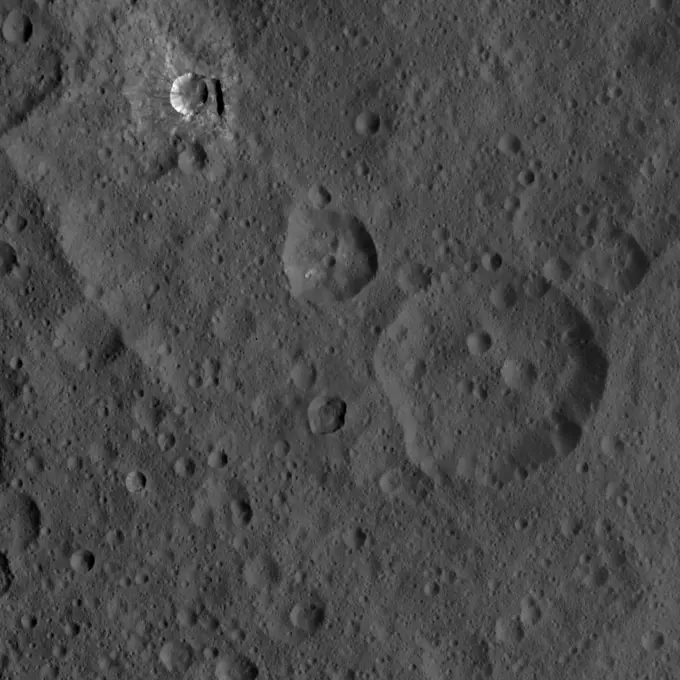
This image, taken on June 10, 2016 by NASA's Dawn spacecraft, shows cratered terrain on Ceres. Dawn took this image from its low-altitude mapping orbit, at a distance of about 240 miles (385 kilometers) above the surface.
6145-45063352
Unchained
6145-44823116
Orientale Basin
6145-44893063
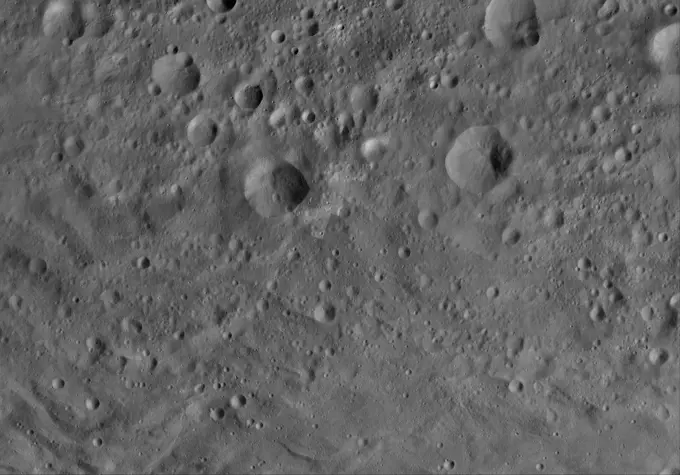
This image from NASA's Dawn spacecraft shows many craters of different sizes and states of preservation on asteroid Vesta's surface. In the top of the image there are four large, very degraded craters.
6145-44500898
Antoniadi Ridge, over 450 kilometers long, runs along the right side of this acquired image during NASA's Mariner 10's first encounter with Mercury after its launch in 1974.
6145-45262503
This image was obtained by NASA's Dawn spacecraft on July 3, 2018 from an altitude of about 28 miles (44 kilometers). The center of this picture is located at about 18.0 degrees north latitude and 238.0 degrees east longitude.
6145-44500894
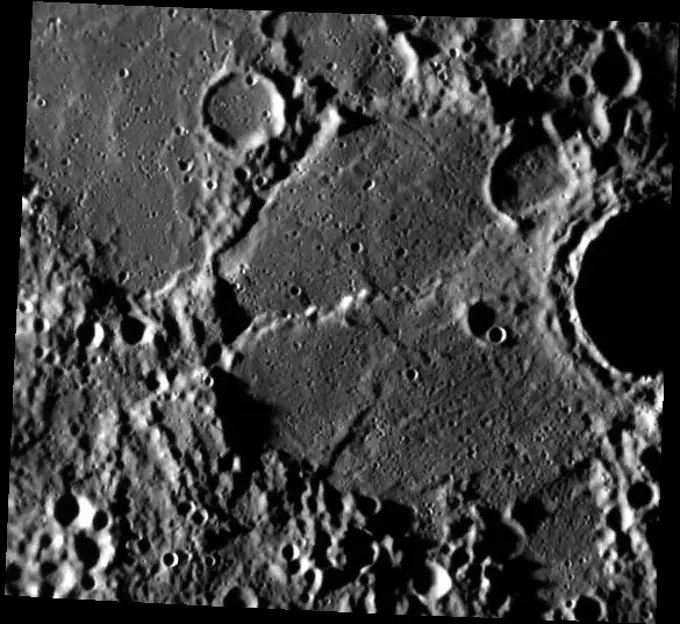
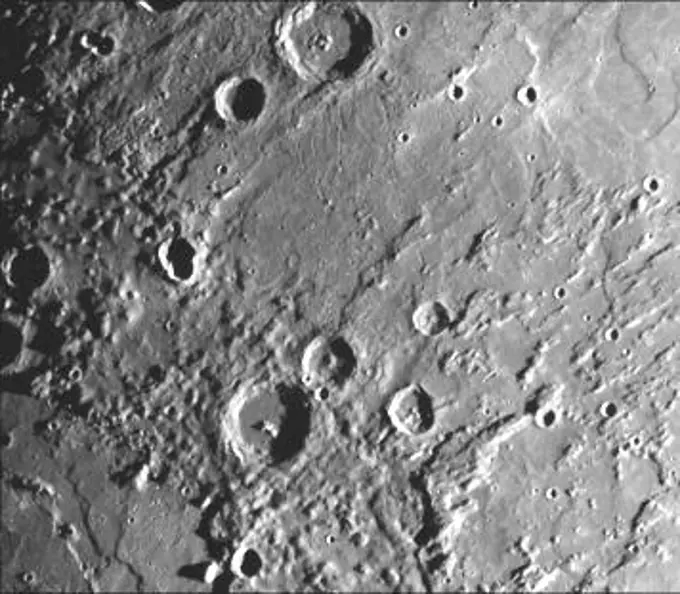
This image, from NASA's Mariner 10 spacecraft which launched in 1974, is located about 500 km east of the Caloris basin and shows hummocky plains interpreted as Caloris ejecta in the upper half of the picture and smooth plains in the lower half.
6145-44787470
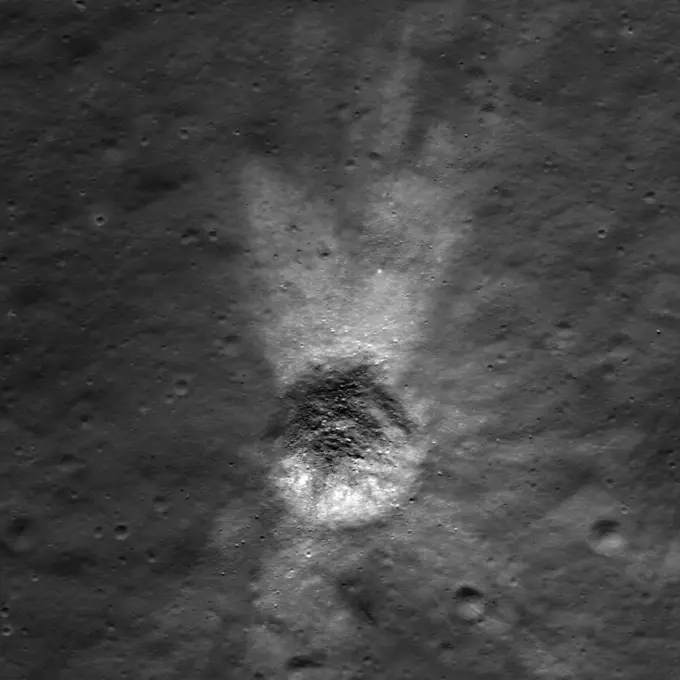
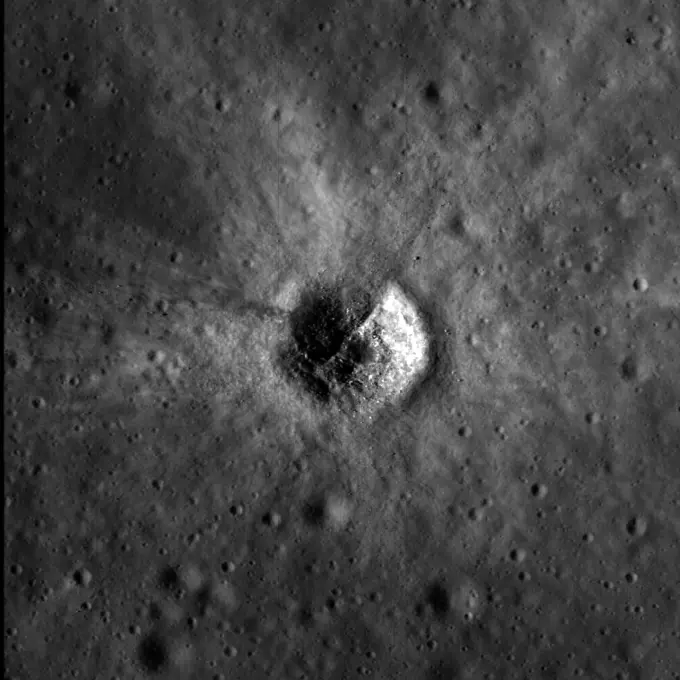
Distinctive asymmetrical ejecta surrounding a 140 meter diameter crater in the lunar highlands as seen by NASA's Lunar Reconnaissance Orbiter. Crater is located on the northeastern rim of the eroded (pre-Nectarian) crater Hommel.
6145-44975587
This image of Numisia AV-L-21, from the atlas of the giant asteroid Vesta, was created from images taken as NASA's Dawn mission flew around the object, also known as a protoplanet.
6145-45098712
This image, taken by NASA's Dawn spacecraft, shows the surface of dwarf planet Ceres from an altitude of 915 miles (1,470 kilometers). The image was taken on August 21, 2015, and has a resolution of 450 feet (140 meters) per pixel.
1746-19670912
Rima Calippus in northwest Mare Serenitatis.
6145-45126531
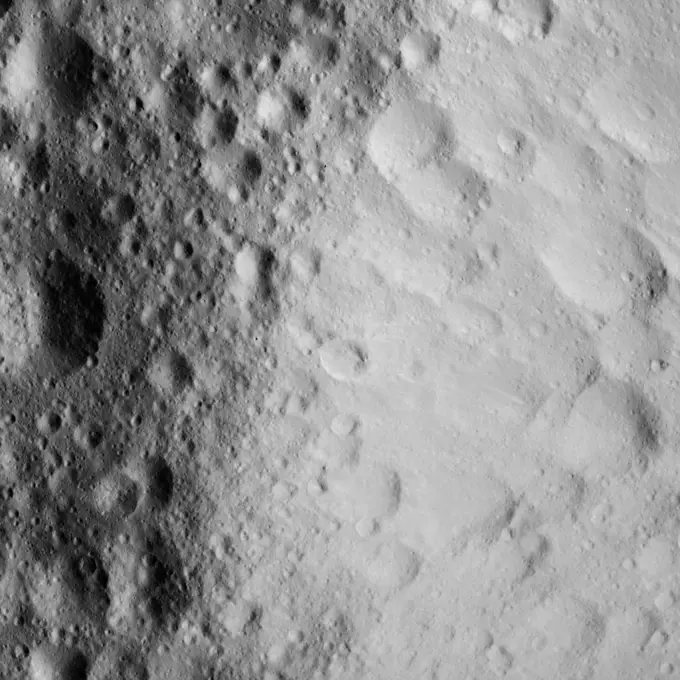
This image, taken by NASA's Dawn spacecraft on Oct. 17, 2016, captures the day-night boundary, or terminator, in the north polar region of Ceres. The north pole itself, which lies just slightly left of center in this view, is barely sunlit.
6145-44953892
A Closer Look at Glinka
6145-44826401
A Path not Taken
6145-44866554
A Wrinkle Ridge in Time
6145-44695398
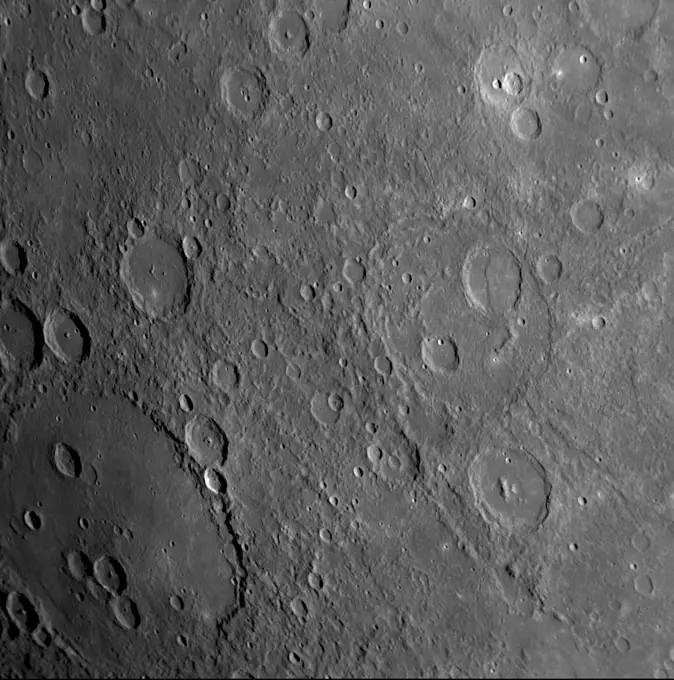
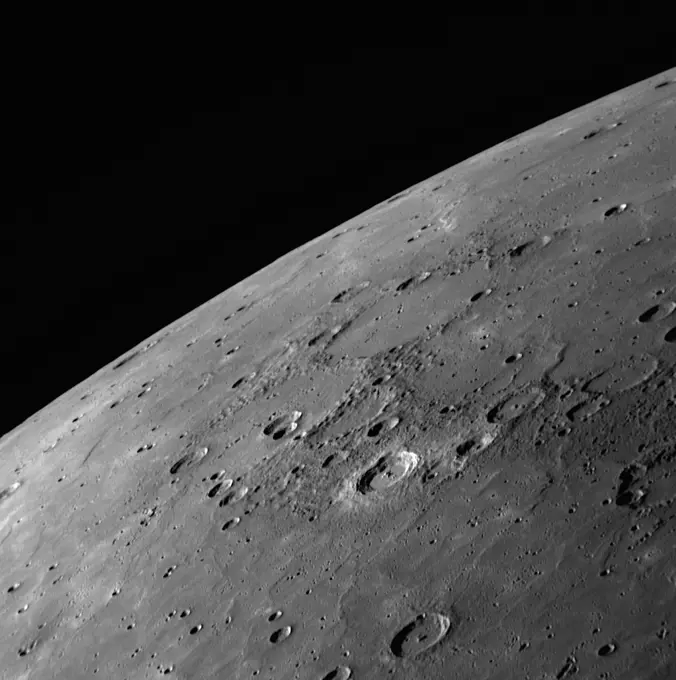
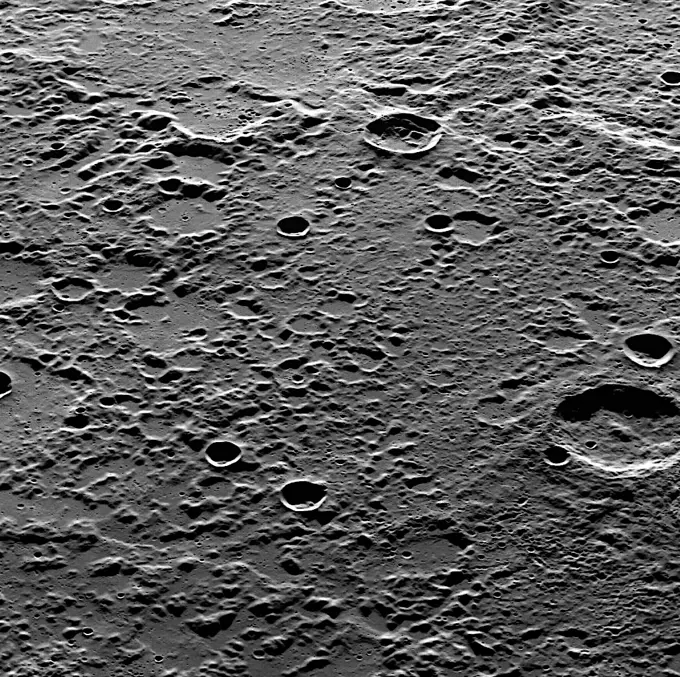
Just nine minutes after NASA's MESSENGER spacecraft passed 200 kilometers (124 miles) above the surface of Mercury, its closest distance to the planet during the January 14, 2008, flyby, the Wide Angle Camera (WAC) snapped this image.
6145-45070627
Side Hit
6145-45106273
This view from NASA's Dawn spacecraft shows a sinuous canyon in the southern hemisphere of Ceres, south of Yalode Crater.
6145-44909974
Eminent Eminescu
6145-44788578
Mercury's Geology: A Story with Many Chapters
6145-45098983
In the best-selling novel 'The Martian' and the movie based on it, stranded astronaut Mark Watney's adventures take him to the rim of Mawrth Crater. This image from NASA's Mars Reconnaissance Orbiter shows the nature of this terrain.
6145-45103427
This view from NASA's captured by NASA's Dawn spacecraft on Dec. 21,2015, shows the central complex of mountain peaks within Dantu Crater on Ceres. A patch of bright material is visible near lower left.
6145-45106019
NASA's Dawn spacecraft flys over dwarf planet Ceres which Dawn has been orbiting for mre than a year, providing us with fascinating views of an alien world.
6145-44881583
This image from NASA's Dawn spacecraft shows many large subdued craters that have smaller, younger craters on top of them on asteroid Vesta. There are two large subdued craters in the center of the image, which have very degraded and rounded rims.
6145-45112388
NASA's Dawn spacecraft took this image on Feb. 4, 2016, showing a double impact feature at high northern latitudes on Ceres, just south of the large crater named Ghanan.
6145-44500888
This crater illustrates the narrow hummocky rim facies, radial ridges, and surrounding extensive field of secondary craters. This image of Mercury was taken by NASA's Mariner 10.
6145-44887325
A Choreographer's Crater
6145-45097452
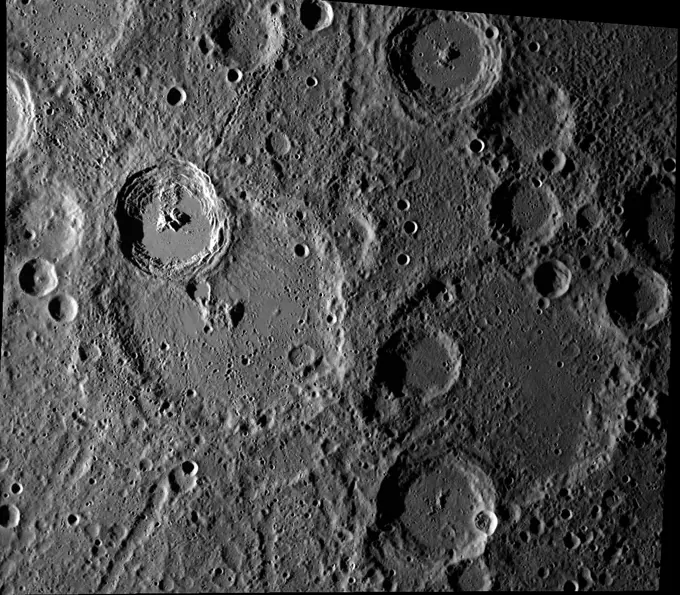
This image, taken June 6, 2015 by NASA's Dawn spacecraft, shows Haulani crater on Ceres from an altitude of 2,700 miles (4,400 kilometers) with a resolution of 1,400 feet (410 meters) per pixel. North on Ceres is toward upper right.
6145-44500887
This image, from NASA's Mariner 10 spacecraft which launched in 1974, shows a crater just north of the Caloris Planitia displays interior and central peaks rising up from a hilly floor.
6145-44500890
This image, from NASA's Mariner 10 spacecraft which launched in 1974, is of the northeastern quadrant of the Caloris basin and shows the smooth hills and domes between the inner and outer scarps and the well-developed radial system east of the outer scarp
6145-44864033
Belinskij and Craters of Darkness
6145-44506460
Over the Edge
6145-45261229
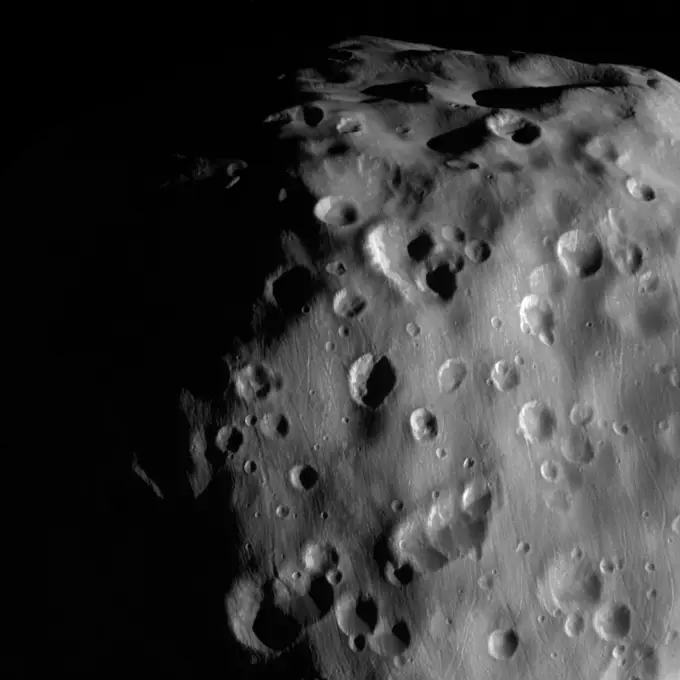
This zoomed-in view of Epimetheus, one of the highest resolution ever taken, shows a surface covered in craters, vivid reminders of the hazards of space. Epimetheus (70 miles or 113 kilometers across) is too small for its gravity to hold onto an atmosphere. It is also too small to be geologically active. There is therefore no way to erase the scars from meteor impacts, except for the generation of new impact craters on top of old ones. This view looks toward anti-Saturn side of Epimetheus. North on Epimetheus is up and rotated 32 degrees to the right. The image was taken with the Cassini spacecraft narrow-angle camera on Feb. 21, 2017 using a spectral filter which preferentially admits wavelengths of near-infrared light centered at 939 nanometers. The view was acquired at a distance of approximately 9,300 miles (15,000 kilometers) from Epimetheus and at a Sun-Epimetheus-spacecraft, or phase, angle of 71 degrees. Image scale is 290 feet (89 meters) per pixel.
6145-45104165
NASA's Dawn spacecraft captured this view of a region in the mid-southern latitudes of Ceres. The largest crater in the scene is Fluusa. Fluusa has a densely cratered floor and therefore is interpreted as an old impact feature.
6145-45111371
This view from NASA's Dawn spacecraft shows impact craters near Ceres' equator where material from the rim of one crater has apparently collapsed into its neighbor. A variety of large boulders are visible within the younger crater at top.
6145-44939028
Blue Serge
6145-45113720
NASA's Dawn spacecraft spied this relatively smooth area of Ceres' surface, which includes the feature named Dalien Tholus, a dome-shaped feature visible in top right quadrant of the image.
6145-44913982
Different Strokes
6145-44562034
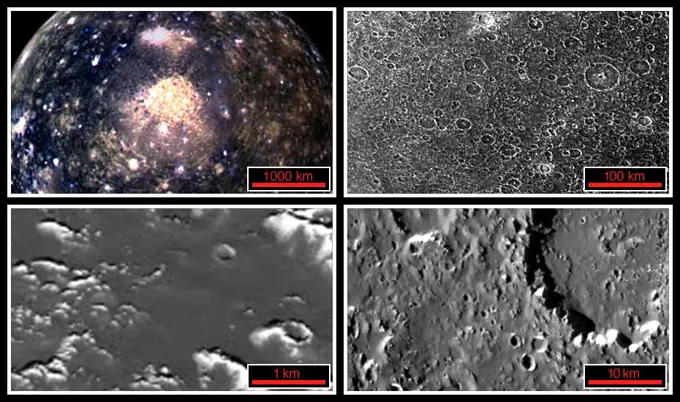
Craters Near the South Pole of Callisto
6145-44823650
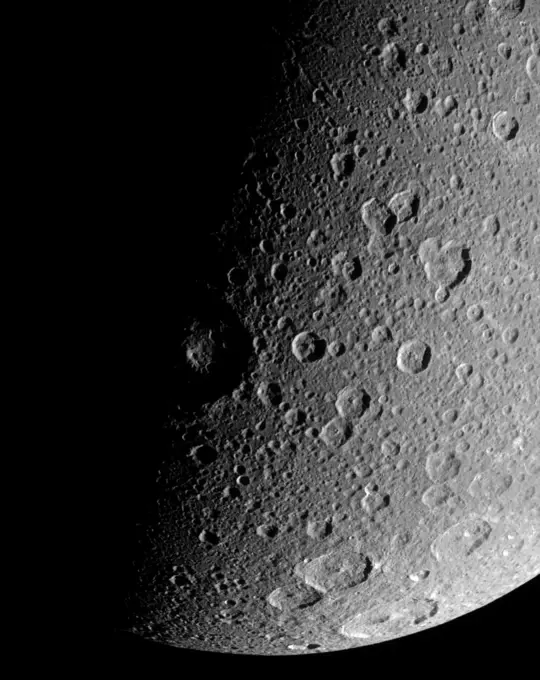
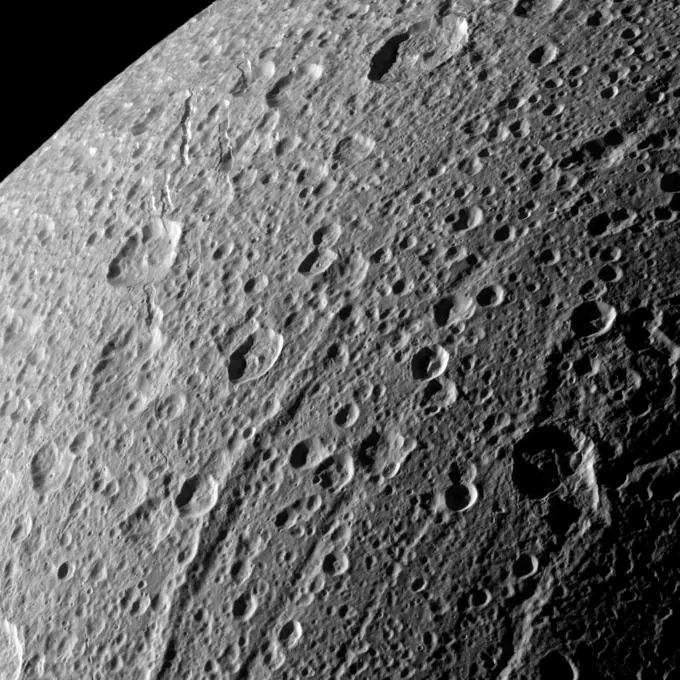
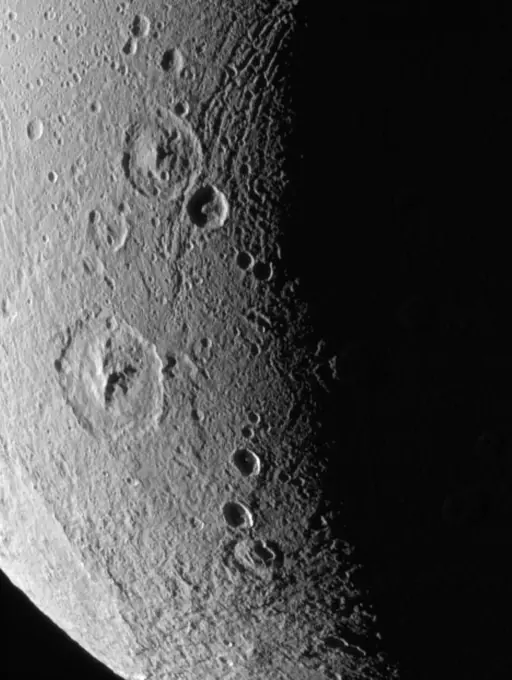
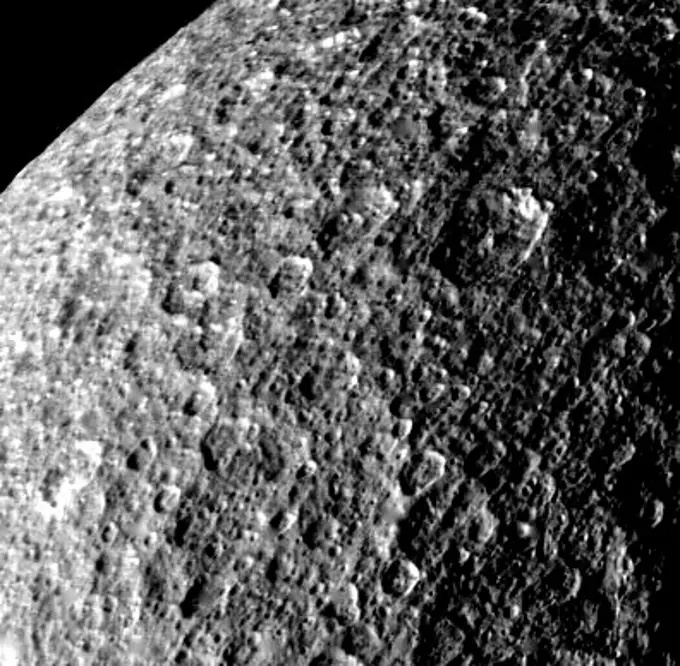
NASA's Cassini spacecraft swooped in for a close-up of the cratered, fractured surface of Saturn's moon Dione in this image taken during the spacecraft's Jan. 27, 2010, non-targeted flyby.
6145-45115469
This view from NASA's Dawn spacecraft shows cratered terrain at 59 degrees north latitude, 89 degrees east longitude on Ceres, just east of the large crater named Omonga.
6145-45114996
This view from NASA's Dawn spacecraft taken on May 29, 2016, shows terrain on Ceres centered at approximately 41 degrees north latitude, 308 degrees east longitude. Several features in this view display streaks and patches of bright material.
6145-45026190
Kalidasa in Detail
6145-45100529
This view shows the southwestern rim of 106-mile-wide (170-kilometer-wide) Urvara crater on Ceres.In the crater's center is a prominent double peak. NASA's Dawn spacecraft obtained the image on Oct. 15, 2015.
6145-45011143
NASA's Dawn spacecraft obtained this image with its framing camera on Aug. 26, 2011. The detail in this image shows impacts of all sizes, grooves, scarps and smooth areas.
6145-44991074
Imagine
6145-44561753
Medusae Fossae #2
6145-44974491
A Volcanic View
6145-44844180
Wrinkle Ridges in Aitken Crater
6145-45101528
This image of Ceres, taken by NASA's Dawn spacecraft, shows cratered terrain at high northern latitudes. Ghanan Crater is seen at upper-right. A distinctive flow feature extends into the crater from its northern rim.
6145-45017356
Contact High
6145-45055098
Up Close and Personal
6145-44745935
Five of Five: The Last Scene in a High-resolution Color Mosaic
6145-44865305
The Tolstoj Impact Basin
6145-45261995
This image from NASA's Dawn spacecraft highlights Axomama Crater, the small crater shown to the right of center. It is 3 miles (5 kilometers) in diameter and located just inside the western rim of Dantu Crater. Axomama is one of the newly named craters on Ceres. Its sharp edges indicate recent emplacement by a small impact. This picture also shows details on the floor of Dantu, which comprises most of the image. The many fractures and the central pit (see also PIA20303) are reminiscent of Occator Crater and could point to a similar formation history, involving activity driven by the presence of liquid water in the subsurface. Axomama is named after the Incan goddess of potato, or Potato-mother. NASA's Dawn spacecraft acquired this picture during its extended mission on July 24, 2016, from its low altitude mapping orbit at about 240 miles (385 kilometers) above the surface. The center coordinates of this image are 24 degrees north latitude, 131 degrees east longitude.
6145-44930313
M-E-R-C (See you real soon!) U-R-Y (Why Because we like you!)
6145-44808673
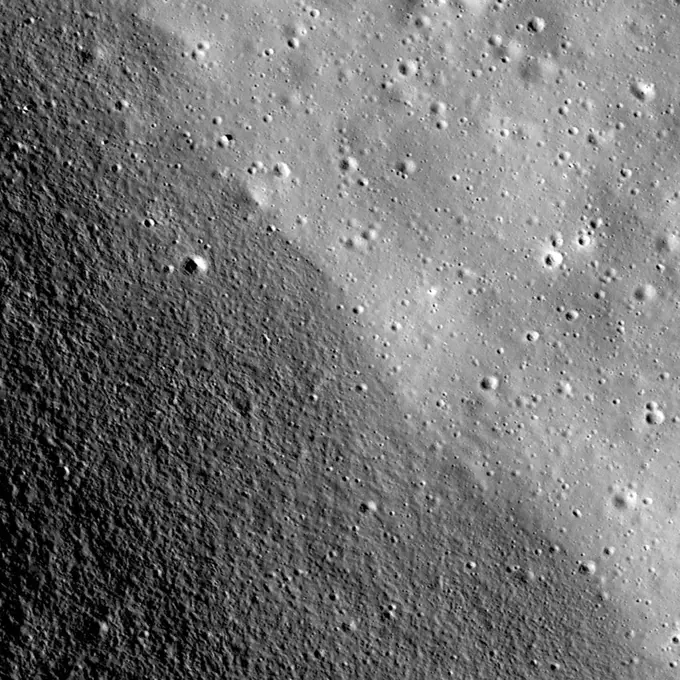
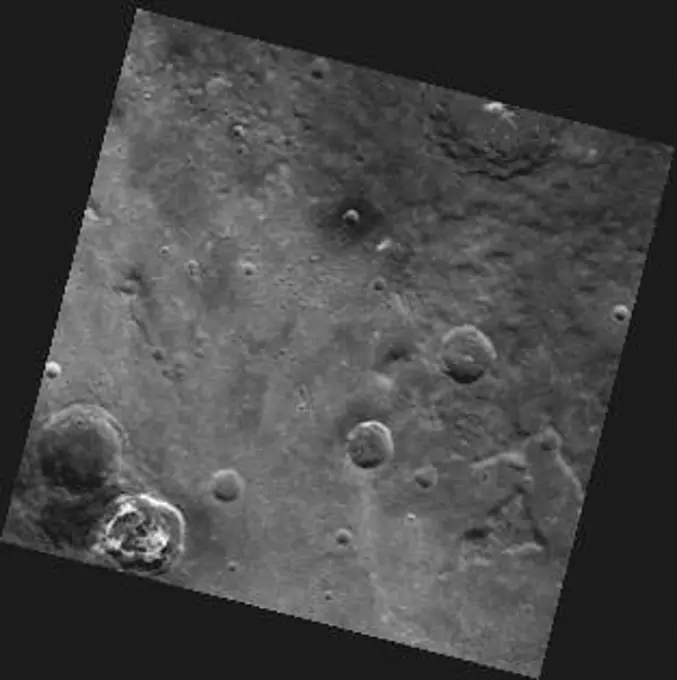
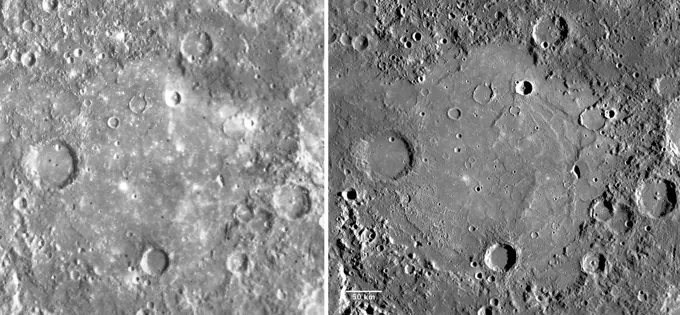
NASA's Lunar Reconnaissance Orbiter spied a very subtle mare-highlands boundary in Mare Moscoviense on the lunar farside, near the center of the Constellation Program region of interest.
6145-44896075
On Hole-y Ground
6145-45094126
This image of Ceres is part of a sequence taken by NASA's Dawn spacecraft on May 22, 2015, from a distance of 3,200 miles (5,100 kilometers) with a resolution of 1,600 feet (480 meters) per pixel.
4389-1075
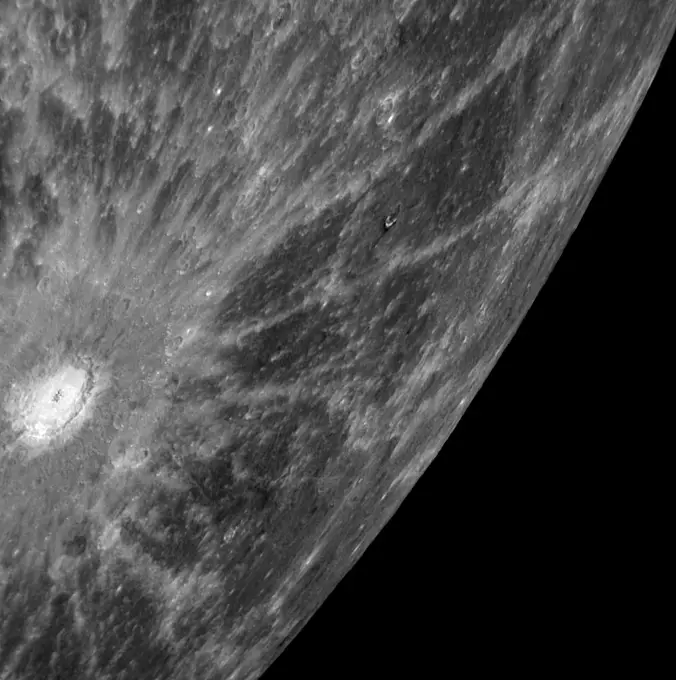
Caloris Basin as Seen by MESSENGER
6145-58967259
NASA's Dawn spacecraft obtained this image of a dark band on asteroid Vesta with its framing camera on August 19, 2011. The image has a resolution of about 260 meters per pixel.
6145-44822607
Window to the Farside Mantle
6145-45264114
This image from NASA's Dawn spacecraft showing the northern part of Hanami Planum on Ceres honors the Japanese cherry blossom festival, or Hanami, which is a long-standing Japanese tradition of welcoming spring. Hanami Planum is the third largest geological feature on Ceres, after Vendimia Planitia and the Samhain Catenae. It extends over 345 miles (555 kilometers). This image shows familiar features, such as Occator Crater, characterized both by bright material inside the crater and dark ejecta material outside. Several parallel linear features, called Junina Catenae, can be seen departing from Occator and extending toward the top of the image. These catenae are chains of small craters formed by the impact and scouring of material ejected when large craters are formed. Scientists were able to relate these crater chains to Urvara and Yalode. Even though these are located in the southern hemisphere, some of their ejecta could reach the northern hemisphere, thanks to Ceres' fast rotation
6145-44744115
A Rupes and a Ray
6145-44510664
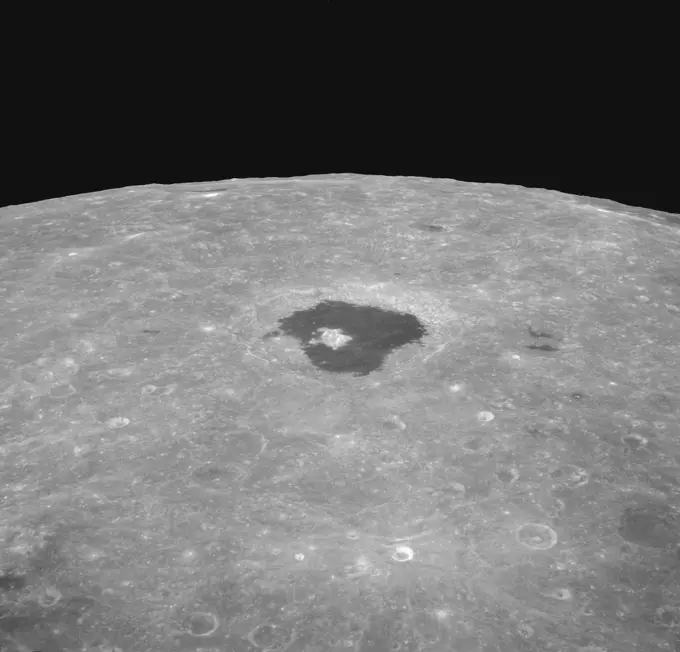
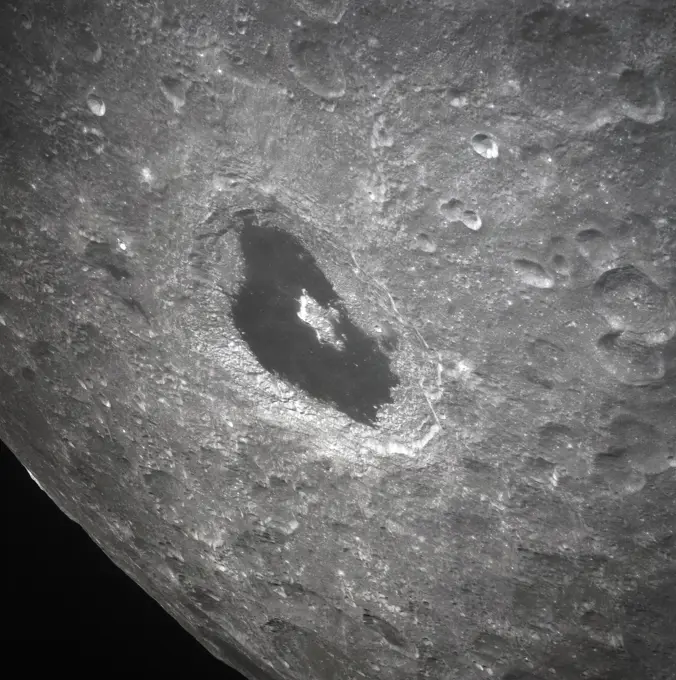
Apollo 8,Farside of Moon. Image taken on Revolution 4. Camera Tilt Mode: Vertical Stereo. Sun Angle: 13. Original Film Magazine was labeled D. Camera Data: 70mm Hasselblad. Lens: 80mm; F-Stop: F/2.8; Shutter Speed: 1/250 second. Film Type: Kodak SO-3400 Black and White,ASA 40. Flight Date: December 21-27,1968.
6145-44907371
That's A Stretch!
6145-45116776
NASA's Dawn spacecraft spied Achita Crater on Ceres in this view captured on June 3, 2016, at a distance of about 240 miles (385 kilometers) above the surface. Achita is named for a Nigerian god of agriculture and is 25 miles (40 kilometers) wide.
6145-45025868
This image from NASA's Dawn spacecraft is centered on the Sextilia crater in asteroid Vesta's southern hemisphere. Craters on Vesta are named after Vestal virgins, priestesses of the Roman goddess Vesta.
6145-44777201
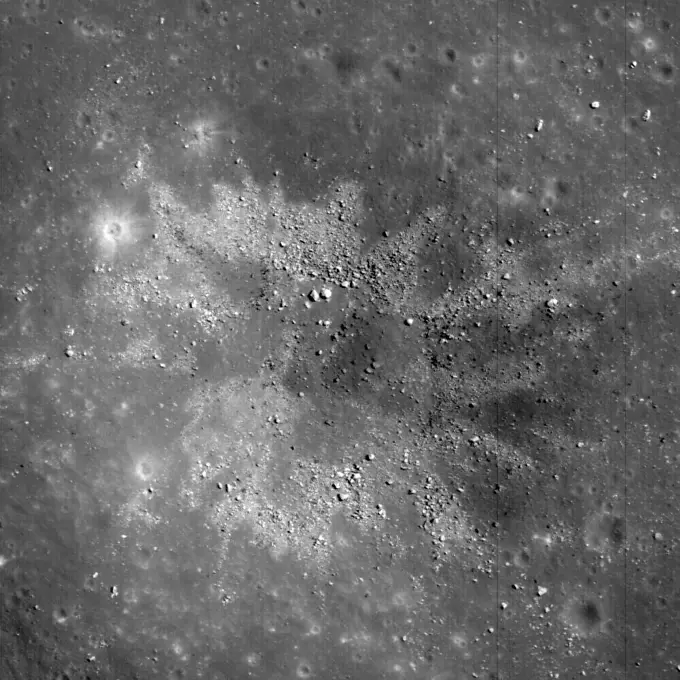
NASA's Lunar Reconnaissance Orbiter's sees bright crater rays and boulders.
6145-45263025
This image shows Haulani Crater and its bright ejecta near the limb of Ceres and Oxo Crater near the center of the image. The latter is easily recognizable by its bright wall that is enriched in ice and carbonate. The image is facing south, with Haulani Crater located near Ceres' equator at 5.8 degrees north latitude and 10.8 degrees east longitude and Oxo Crater located at 42.2 degrees north latitude and 359.6 degrees east longitude. The images used in this montage were obtained by NASA's Dawn spacecraft on September 1, 2018 from an altitude of about 2075 miles (3340 kilometers). NASA announced the conclusion of Dawn's mission operations was Oct. 31, 2018, when the spacecraft depleted its hydrazine. Haulani Crater is named after Hau-lani , the Hawaiian plant goddess. Oxo Crater is named after the God of agriculture in Afro-Brazilian beliefs of Yoruba derivation.
6145-44559173
Callisto Scarp Mosaic
6145-45112670
This view taken by NASA's Dawn spacecraft on June 17, 2016, features Liber Crater in Ceres' northern hemisphere, at right.
6145-45112171
The rim of the crater blocks sunlight coming from the right, creating a moody scene on Ceres. NASA's Dawn spacecraft took this image on June 16, 2016.
6145-44751249
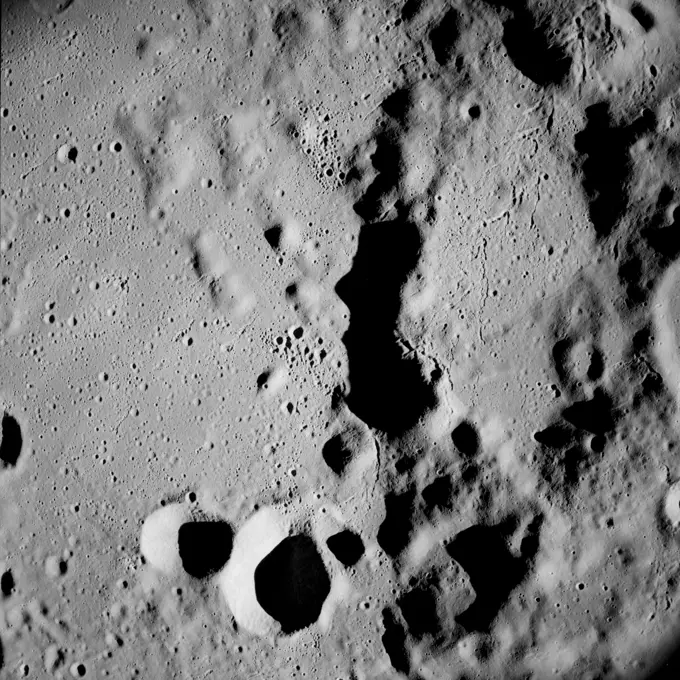
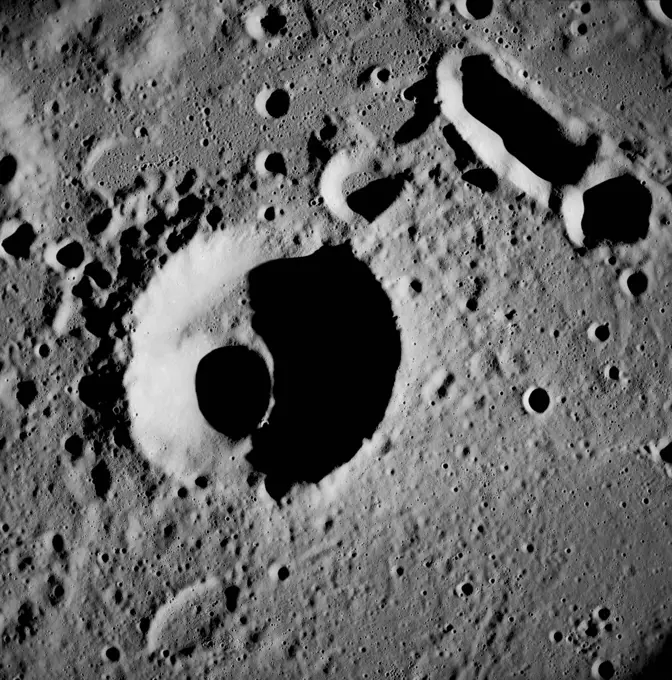
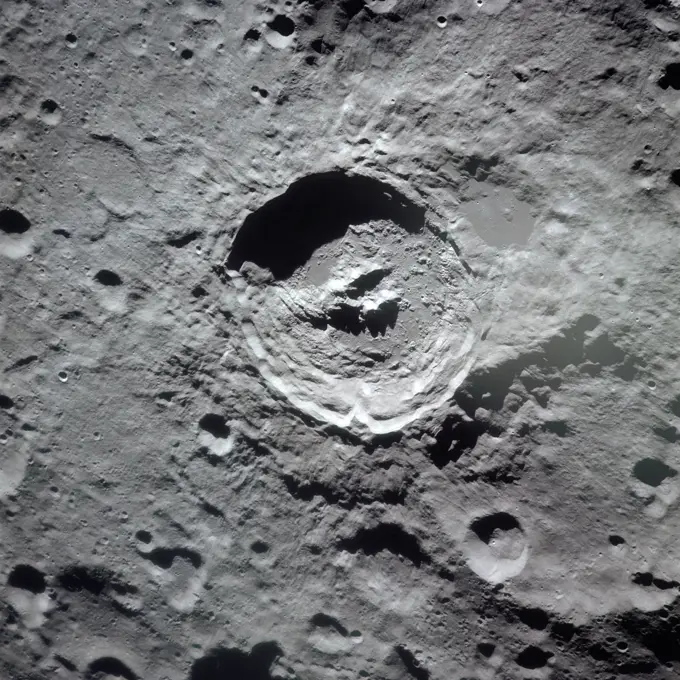
AS08-12-2052 (21-27 Dec. 1968) --- This near-vertical photograph from the Apollo 8 spacecraft covers an area of approximately 50 x 50 statute miles within a 250-statute-miles-in-diameter crater on the lunar farside. The center of this large crater is located at about 157 degrees west longitude and 4 degrees south latitude. The large crater in the center of the picture is about 20 statute miles in diameter.
6145-44859410
Meet Joe Green
6145-45121514
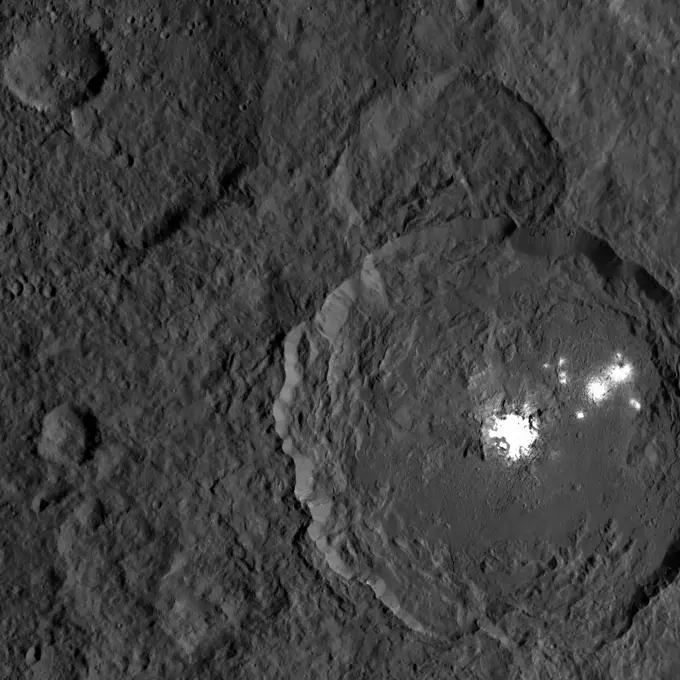
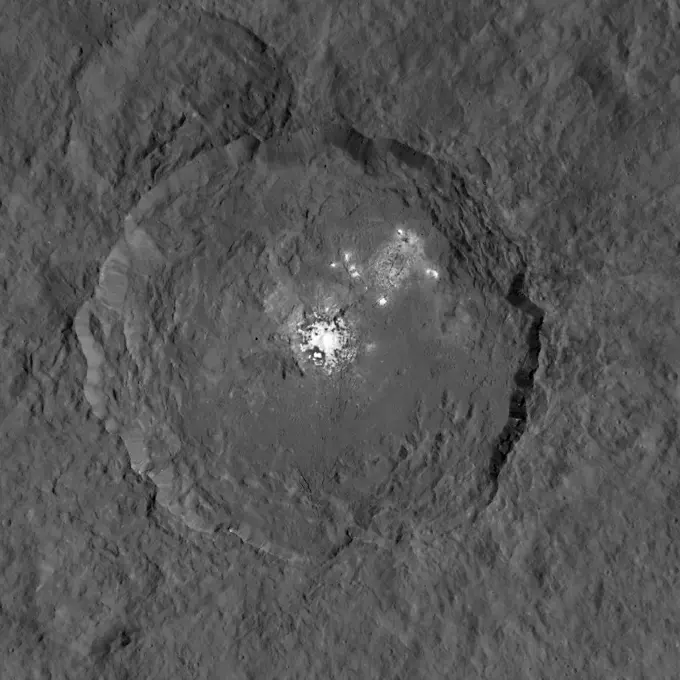
This image, taken on Oct. 18, 2016 from NASA's Dawn spacecraft shows Occator Crater on Ceres, with its signature bright areas. The central bright spot, which harbors the brightest material on Ceres, is believed by scientists to contain a variety of salts.
6145-44797643
Boulders perched atop a wrinkle ridge in Mare Imbrium west of the Montes Teneriffe can be seen in this image taken by NASA's Lunar Reconnaissance Orbiter.
6145-44508155
As NASA's Mariner 10 passed by Mercury on its second encounter with the planet on Sept. 21, 1974, this picture of a large circular (350 kilometer, 220 mile diameter) basin was obtained near the morning terminator.
6145-44565911
Anatomy of a Torn Comet
6145-44975575
This image of Eutropia AV-L-10, from the atlas of the giant asteroid Vesta, was created from images taken as NASA's Dawn mission flew around the object, also known as a protoplanet.
6145-44912617
Eternal Darkness of Petronius Crater
6145-44796625
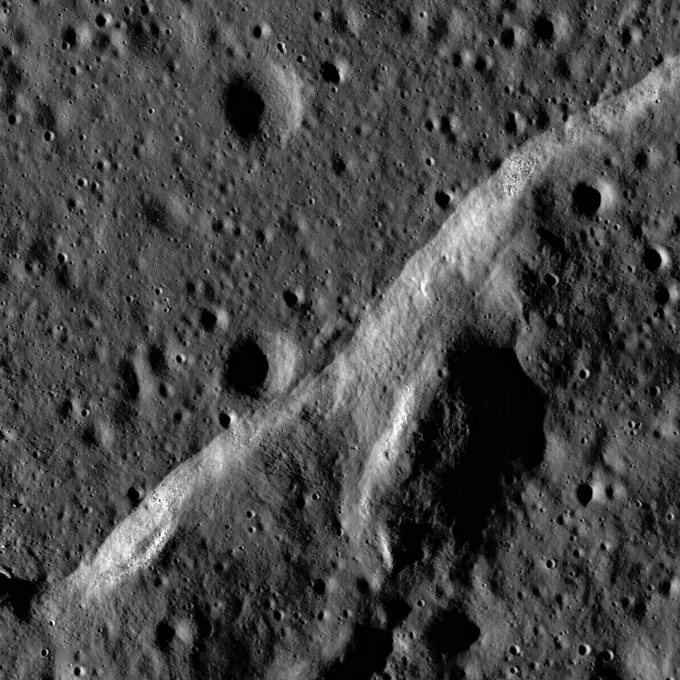
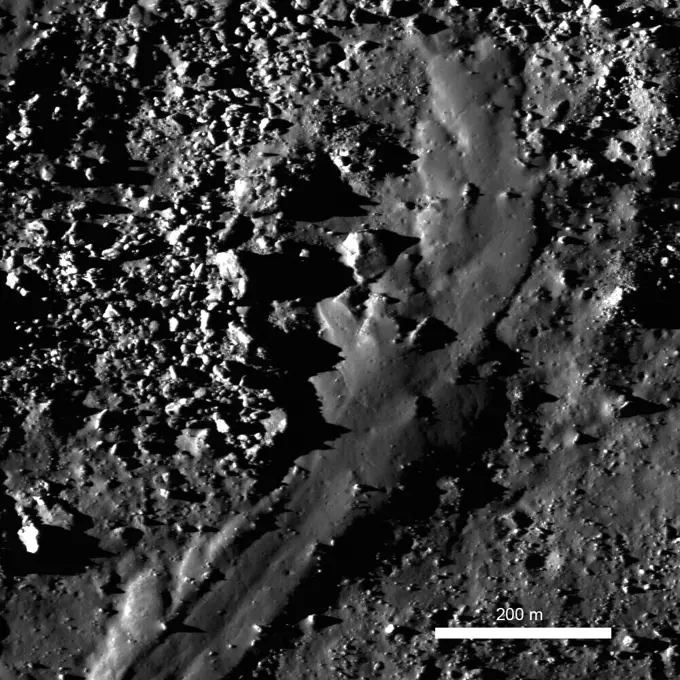
Graben are common extensional features on the Moon as well as the other terrestrial planets and icy satellites. This graben formed within a larger graben as captured by NASA's Lunar Reconnaissance Orbiter.
6145-44914359
This image from NASA's Dawn spacecraft features the distinctive crater Canuleia on the giant asteroid Vesta. Canuleia, about 6 miles (10 kilometers) in diameter, is distinguished by the rays of bright material that streak out from it.
6145-44976207
The One-Two Punch
6145-45261490
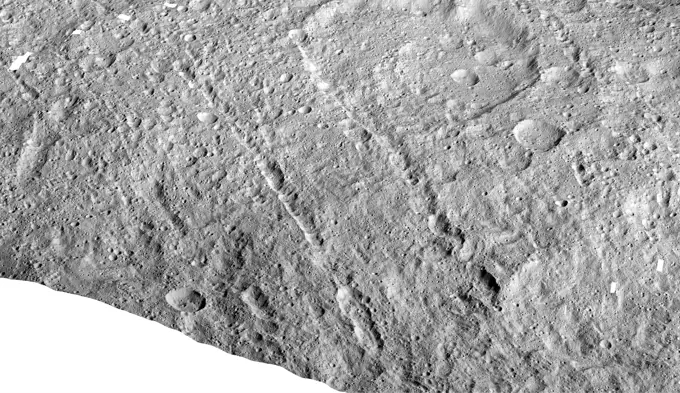
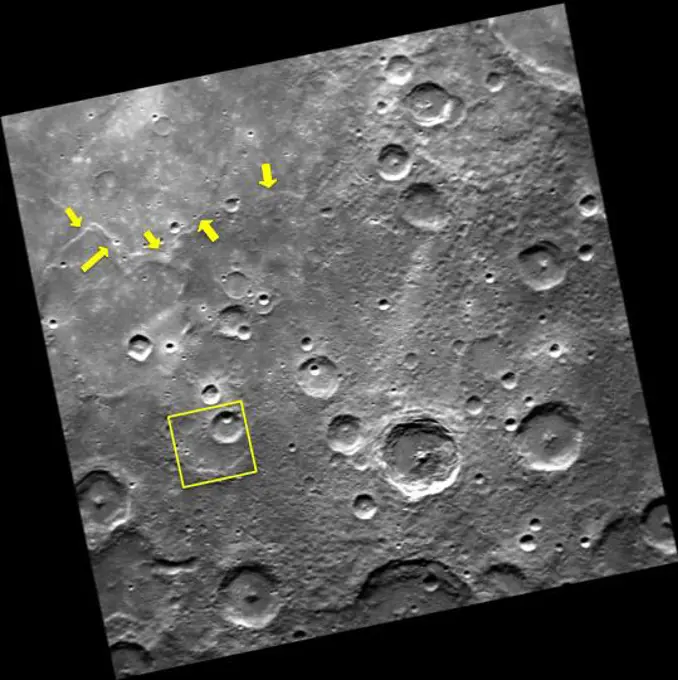
This image made with data from NASA's Dawn spacecraft shows pit chains on dwarf planet Ceres called Samhain Catenae. Scientists created this image by draping the grayscale mosaic of Ceres' surface onto the shape model of the dwarf planet. The arrows in the image point to a few of the pit chains investigated in a 2017 study in the journal Geophysical Research Letters.
6145-45092317
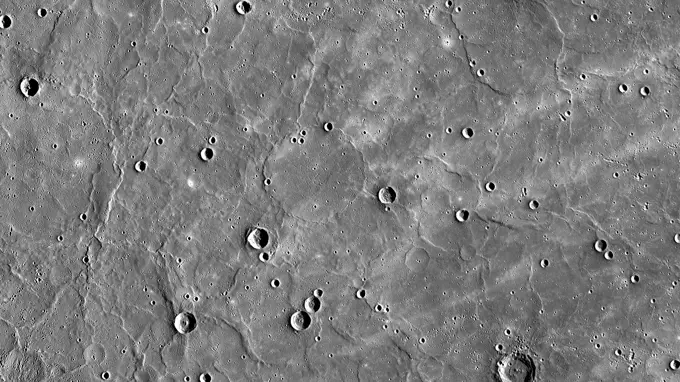
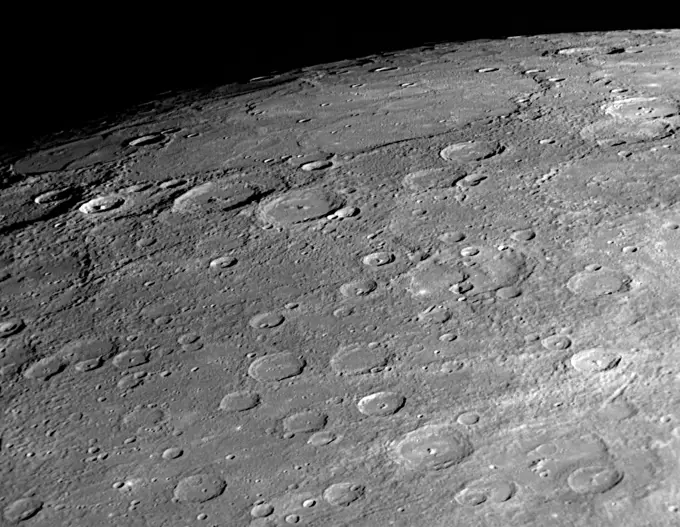
Mercury's northern region is dominated by expansive smooth plains, created by huge amounts of volcanic material flooding across Mercury's surface in the past, as seen by NASA's MESSENGER spacecraft.
6145-45043368
This image from NASA's Dawn spacecraft shows impact ejecta deposits dominating asteroid Vesta's landscape. This impact ejecta material was ejected from an impact crater located outside the imaged area.
6145-45094379
This image, taken by NASA's Dawn spacecraft on June 14, 2015, shows an intriguing mountain on dwarf planet Ceres protruding from a relatively smooth area.
6145-45097478
This image, taken by NASA's Dawn spacecraft, shows a portion of the southern hemisphere of dwarf planet Ceres from an altitude of 2,700 miles (4,400 kilometers).
6145-45070932
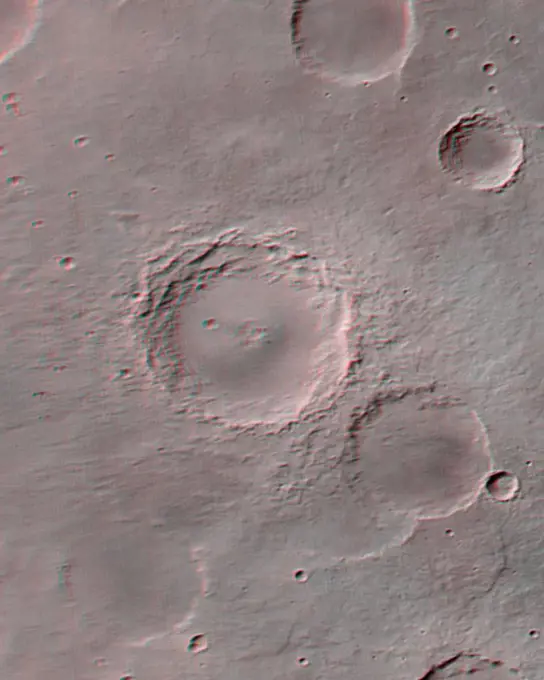
Catullus in 3-D
6145-45092827
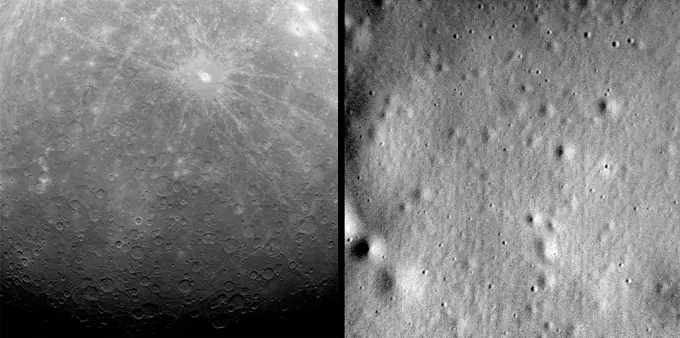
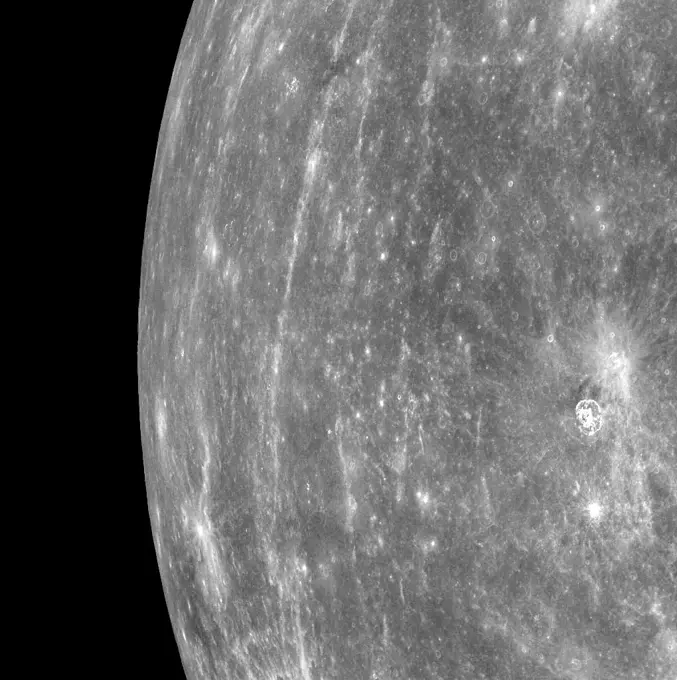
On March 18, 2011, NASA's MESSENGER made history by becoming the first spacecraft ever to orbit Mercury. Eleven days later, the spacecraft captured the first image ever obtained from Mercury orbit, shown here on the left.
6145-45099281
This image, taken by NASA's Dawn spacecraft, shows the surface of dwarf planet Ceres at mid-latitudes, from an altitude of 915 miles (1,470 kilometers). The image was taken on Sept. 21, 2015, and has a resolution of 450 feet (140 meters) per pixel.
6145-45108067
NASA's Dawn spacecraft shows Sekhet Crater on Ceres has prominent shadows accentuating its central peak and mounds of material that have slumped downward from its walls.
6145-44627471
Dust Devils Together
6145-44889653
This image from NASA's Dawn spacecraft of asteroid Vesta shows Sossia crater, which is the crater partially surrounded by dark material. Sossia crater has a reasonably fresh rim and patches of dark material cropping out around part of this rim.
6145-44853760
LROC PDS Release Number 5
6145-44506453
The View from Low Orbit
6145-44879737
Radar-bright Craters in Goethe
6145-44886057
This image from NASA's Dawn spacecraft of asteroid Vesta shows Aquilia crater located in Pinaria quadrangle, in Vesta's southern hemisphere. The especially degraded bottom rim was probably formed by debris slumping into the crater.
6145-45097468
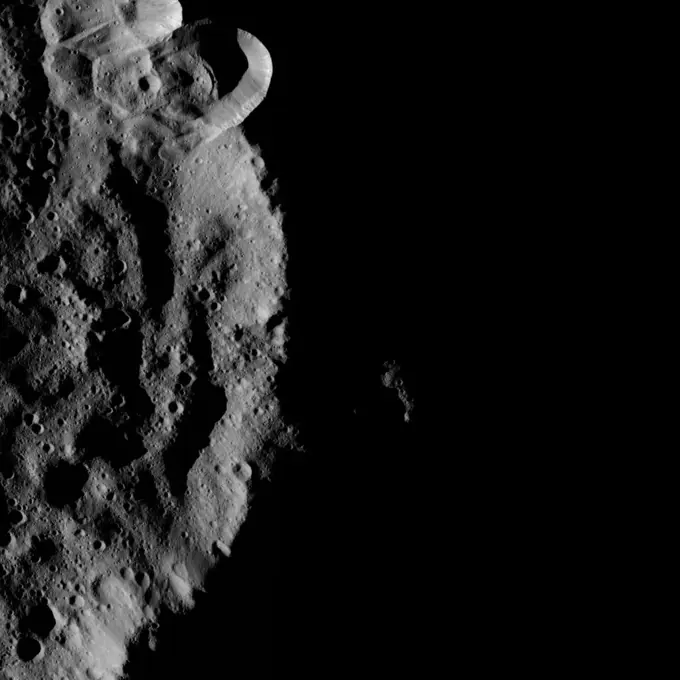
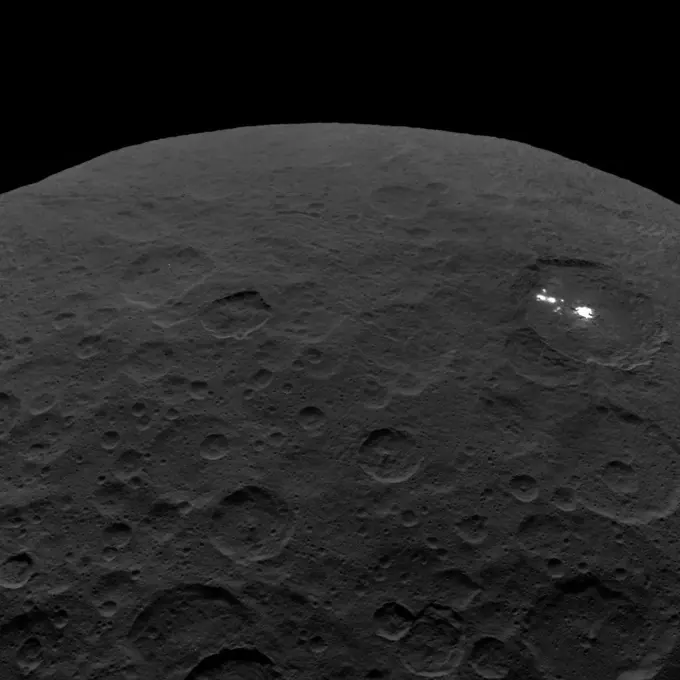
This image, taken on June 6, 2015 by NASA's Dawn spacecraft, shows Ceres from an altitude of 2,700 miles (4,400 kilometers). A mountain can be seen on the left. The western edge of Haulani crater can be seen on the upper right at the limb.
6145-45097711
This image, taken by NASA's Dawn spacecraft on June 6, 2015, features a tall mountain on Ceres that is 4 miles (6 kilometers) high -- among the tallest features seen on Ceres to date.
1746-19670849
A Constellation Program Region of Interest near the northeast edge of the unusually large melt pond adjacent to the lunar far side crater King.
6145-44967381
Three Craters in One
6145-44606208
Gusev Crater, here we come!
6145-45262805
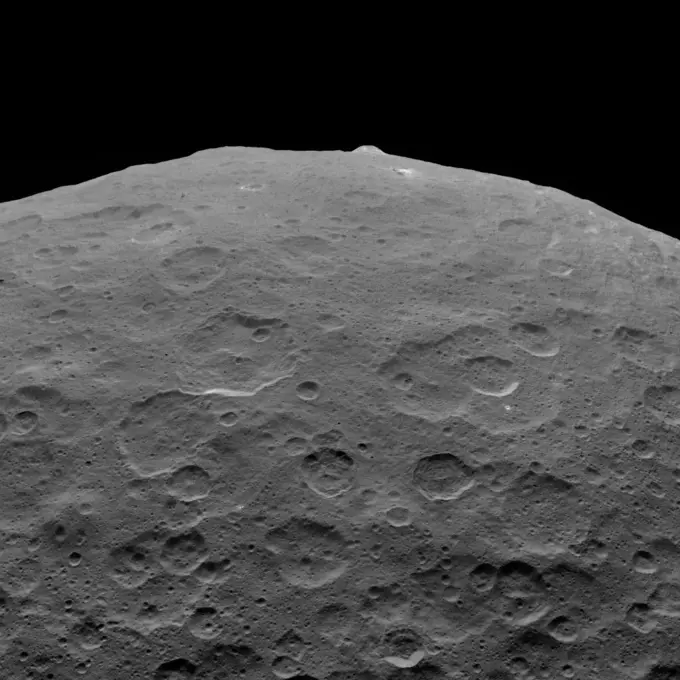
This photo of Ceres and one of its key landmarks, Ahuna Mons, was one of the last views Dawn transmitted before it depleted its remaining hydrazine and completed its mission. This view, which faces south, was captured on Sept. 1, 2018 at an altitude of 2,220 miles (3,570 kilometers) as the spacecraft was ascending in its elliptical orbit. At its lowest point, the orbit dipped down to only about 22 miles (35 kilometers), which allowed Dawn to acquire very high-resolution images in this final phase of its mission. Some of the close-up images of Ceres are shown here. Ahuna Mons is about 12 miles (20 kilometers) across and 2.5 miles (4 kilometers) high and displays sodium carbonate along its flanks. This is the most recent of a potential two dozen cryovolcanoes whose remnants are found across Ceres' surface.
1746-19671089
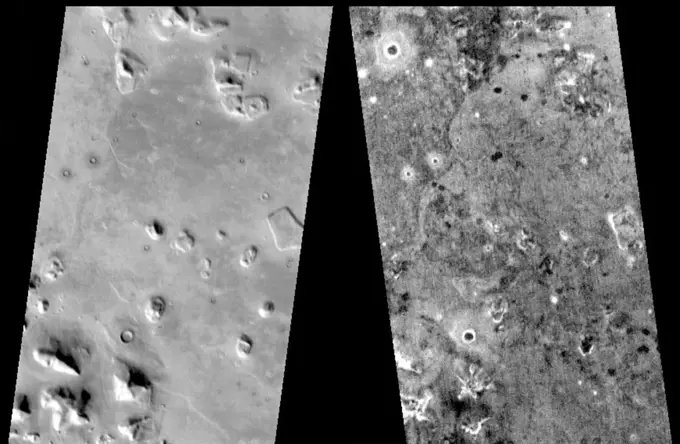
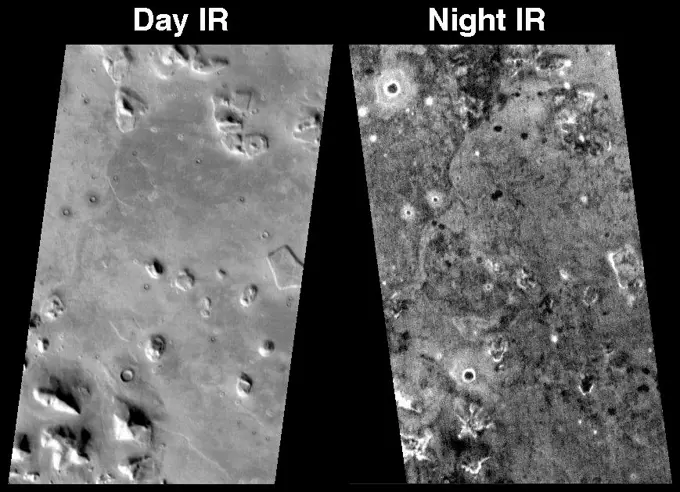
This pair of THEMIS infrared images shows the so-called 'face on Mars' landform viewed during both the day and night.
6145-45112420
This view taken by NASA's Dawn spacecraft on June 17, 2016 from Ceres' northern hemisphere shows parts of Datan Crater (at left) and Geshtin Crater (at right).
6145-44970413
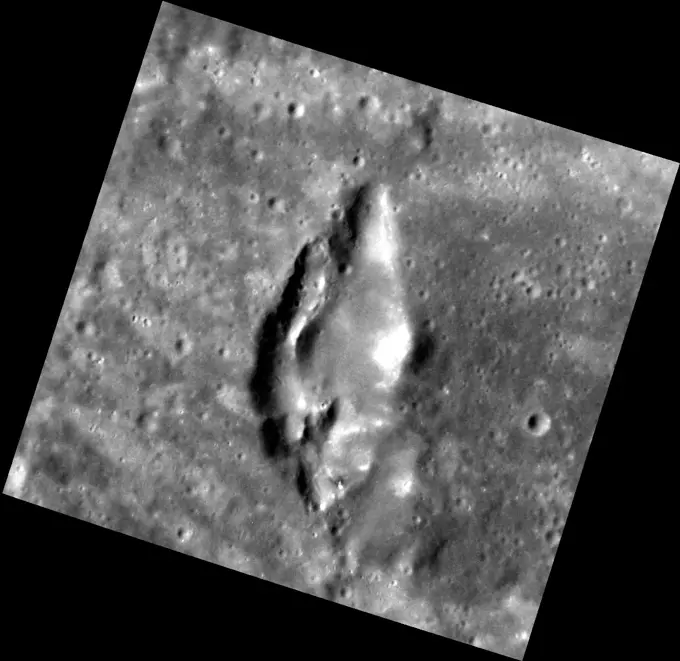
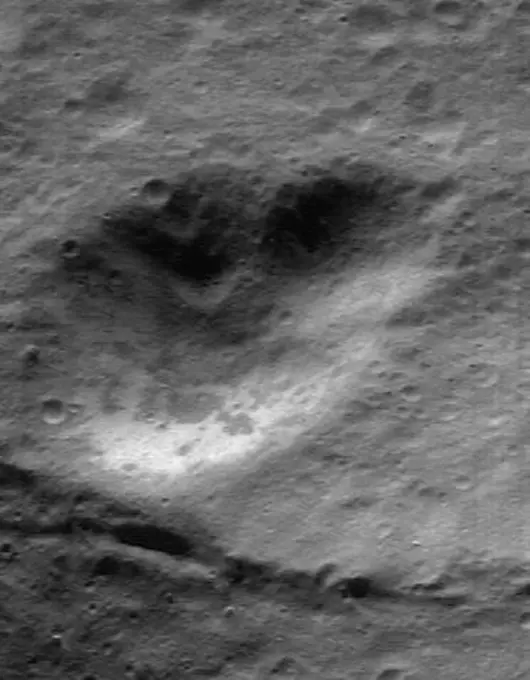
Tear-drop Volcano
6145-45097988
This image, made using images taken by NASA's Dawn spacecraft, shows Occator crater on Ceres, home to a collection of intriguing bright spots.
6145-44498010
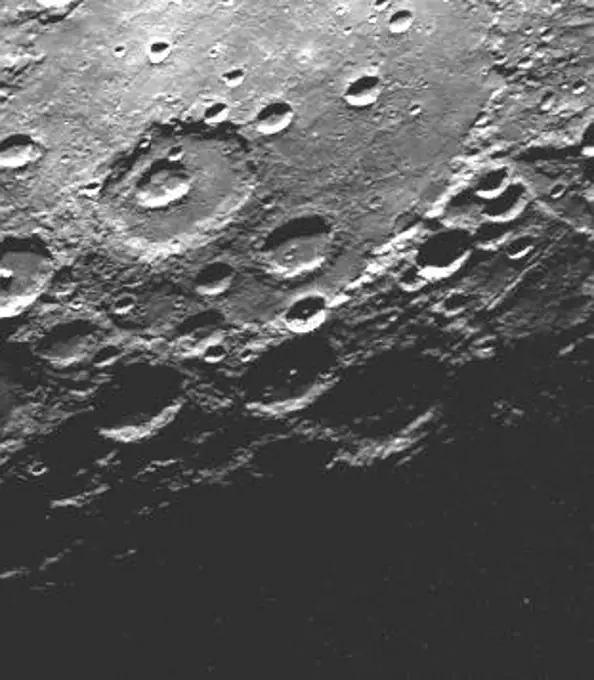
After passing Mercury the first time and making a trip around the Sun, NASA's Mariner 10 again flew by Mercury on Sept. 21, 1974. The south pole is located on the right hand edge of Chao Meng Fu crater that has only its rim sticking up into the light.
6145-45050519
Verlaine Shot Rimbaud
6145-44506428
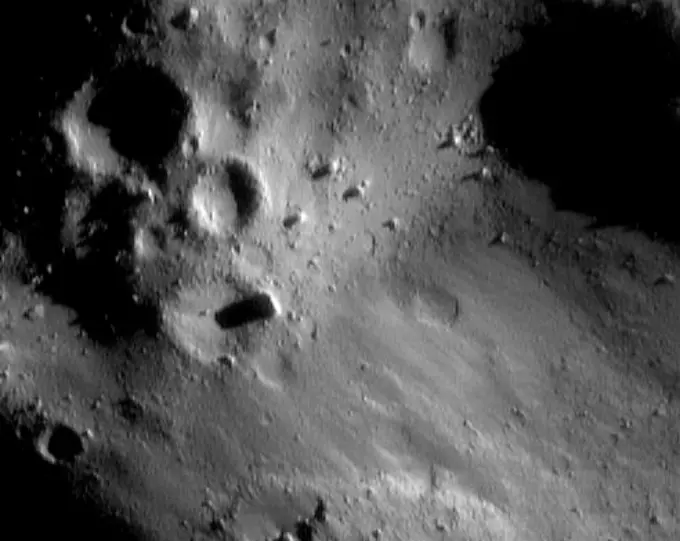
Interesting Structural Features on Eros
6145-44881549
Close-up of Craters Hosting Radar-bright Deposits
6145-44616575
A Buried Crater
6145-44730585
Looking Toward Mercury's North Pole
6145-45108076
In this image of Ceres from NASA's Dawn spacecraft, a younger, fresher crater lies to next to the older, larger crater named Messor. Messor, which is named for the Roman god of the harvesting and cutting of grain.
6145-45102468
This Cerean crater, which is covered in ridges and steep slopes, called scarps, was captured by NASA's Dawn spacecraft on Dec. 23, 2015. These features likely resulted when the crater partly collapsed during its formation.
6145-44707347
Voil! Mercury's Atget
6145-44818668
Hokusai Paints a Wave of Rays
6145-44641458
Dione: Magnified View
6145-45006381
Craters of the Ages
6145-44643576
Craters and Layers
6145-44885509
This image of asteroid Vesta from NASA's Dawn spacecraft shows many curved ridges that are typical of Vesta's southern hemisphere. This image is located in Vesta's Sextilia quadrangle, in Vesta's southern hemisphere.
6145-44506452
A Smorgasbord of Landforms
6145-44799254
Extensive Smooth Plains on Mercury
6145-44879720
NASA's Dawn spacecraft obtained this image of an unusual hill on asteroid Vesta with its framing camera on August 18, 2011. The image has a resolution of about 260 meters per pixel.
6145-44506448
Back in the Saddle Again
6145-44760979
At the center of this NAC image is the crater Navoi, named in November 2008 for the Uzbek poet Alisher Navoi (1441-1501).
1525R-62868
6145-44975722
This image of Rheasilvia AV-L-30, from the atlas of the giant asteroid Vesta, was created from images taken as NASA's Dawn mission flew around the object, also known as a protoplanet.
6145-44718538
Rupes, Rupes, Every Where
6145-44700978
Exploring the Evolution of the Caloris Basin
6145-44889601
This image from NASA's Dawn spacecraft of asteroid Vesta shows Serena crater, located in the Sextilia quadrangle, southern hemisphere. A mound of material is seen in the center of the crater and many small craters scattered over Serena crater.
6145-44505843
Rhea - Icy Cratered Surface
6145-45078558
A Face in the Dark...
6145-45093373
This image of Ceres is part of a sequence taken by NASA's Dawn spacecraft on May 16, 2015, from a distance of 4,500 miles (7,200 kilometers).
6145-44518751
Bright Crater Wall
6145-44802694
This image taken by NASA's Lunar Reconnaissance Orbiter shows the spectacularly preserved viscous flow on the NE rim of Byrgius A crater.
6145-44621183
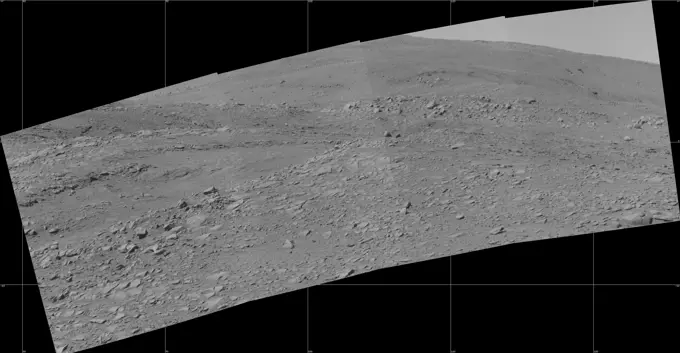
Interesting Features in Spirit's Uphill View
6145-45088380
Big Boulders
6145-45008111
(I Can't Get No) Saturation
6145-45094266
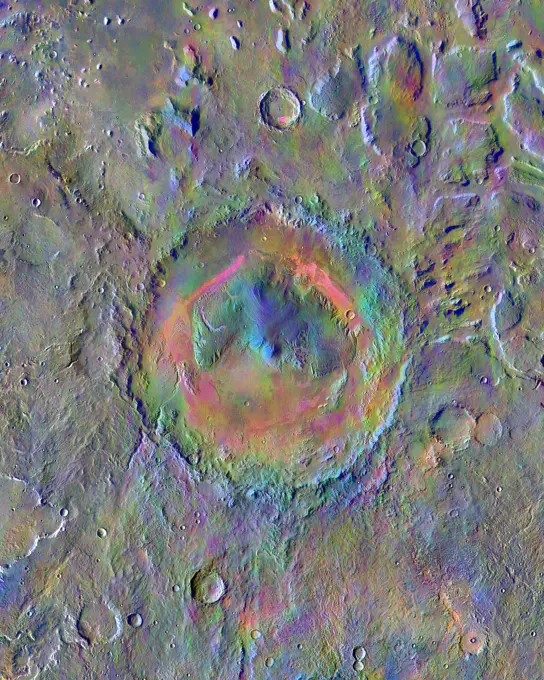
Gale Crater, home to NASA's Curiosity Mars rover, shows a new face in this mosaic image made using data from the Thermal Emission Imaging System (THEMIS) on NASA's Mars Odyssey orbiter.
1746-19670897
320 meter block of ejecta in Tycho crater covered by a veneer of impact melt.
6145-45018497
These images from NASA's Dawn spacecraft shows two different resolution views of the ejecta blanket of Vesta's 'snowman craters.' The snowman-like pattern of these craters is clearly seen in the center of the left hand image.
6145-44810480
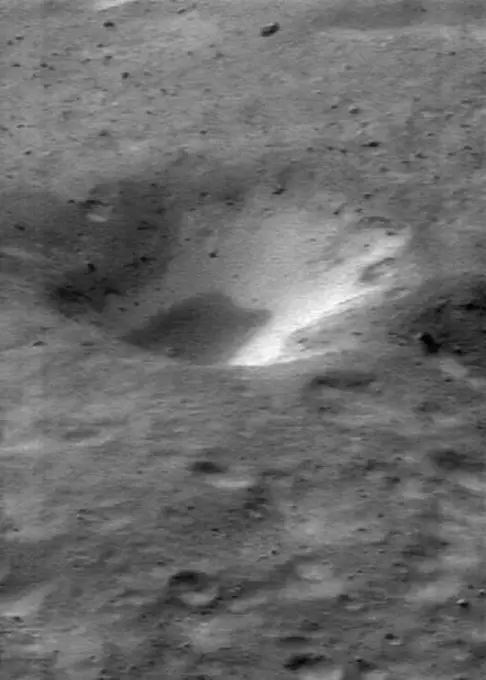
Materials excavated during formation of this ~450 m diameter impact crater have an unusual two-toned character, likely a reflection of heterogeneity in the target materials. This crater occurs in Balmer Basin. This image was taken by NASA's Lunar Reconnai
6145-45092325
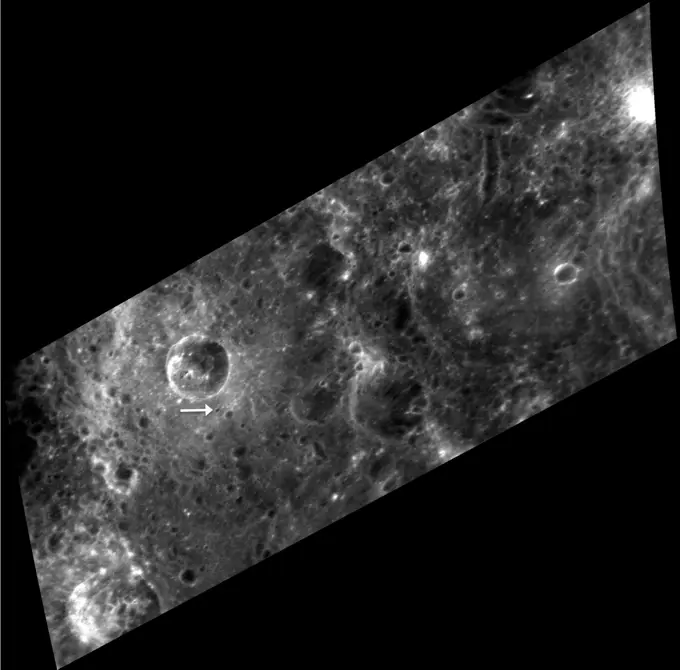
This mosaic of oblique images from NASA's MESSENGER spacecraft highlights the spectacular interior of Abedin crater. The crater floor is covered with once-molten rock melted by the impact event that formed Abedin.
6145-44939246
Love's Secret Domain
6145-45263120
This image was obtained by NASA's Dawn spacecraft on July 16, 2018 from an altitude of about 35 miles (56 kilometers). The center of this picture is located at about 36.5 degrees south latitude and 247.3 degrees east longitude.
6145-44892855
Rockin' Rachmaninoff
6145-44953889
It was a Dark and Stormy Night
1746-19671168
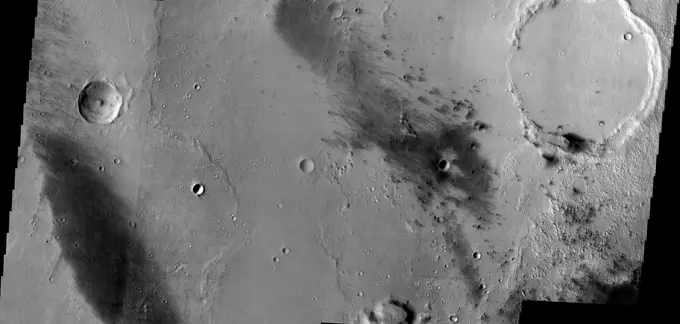
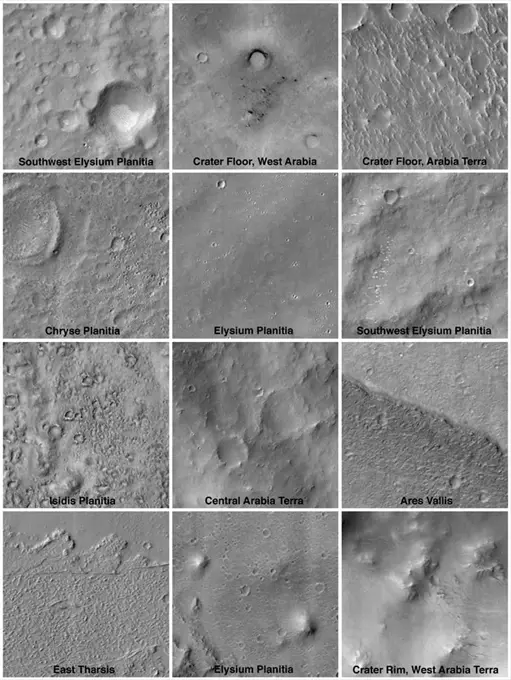
Today's VIS image contains a relatively young crater and its ejecta. Layering in the ejecta is visible and relates to the shock waves from the impact. This unnamed crater is located in Arabia Terra.
6145-44827567
Volcanoes in Lacus Mortis
6145-44897924
Craters Young and Old
6145-44899255
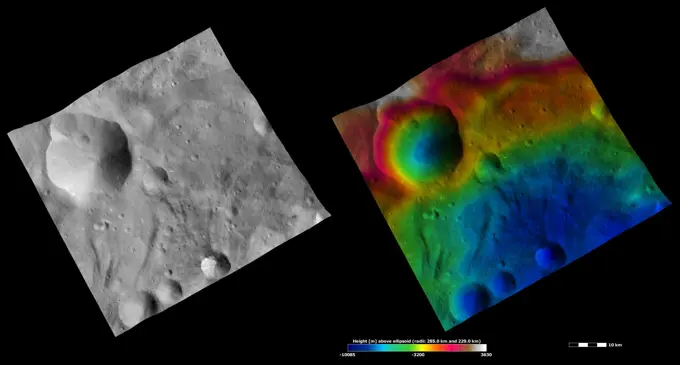
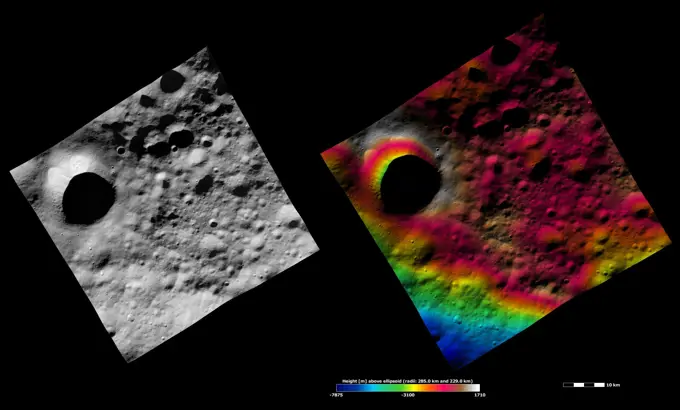
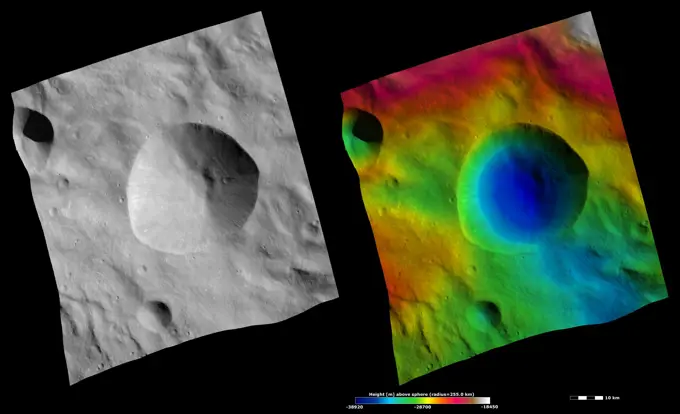
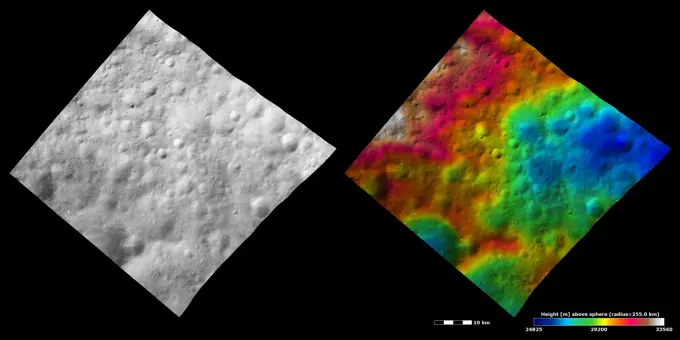
These apparent brightness and topography images from NASA's Dawn spacecraft are located in asteroid Vesta's Bellicia quadrangle, in Vesta's northern hemisphere.
6145-44916244
Raphael's Colorful Palette
6145-45261220
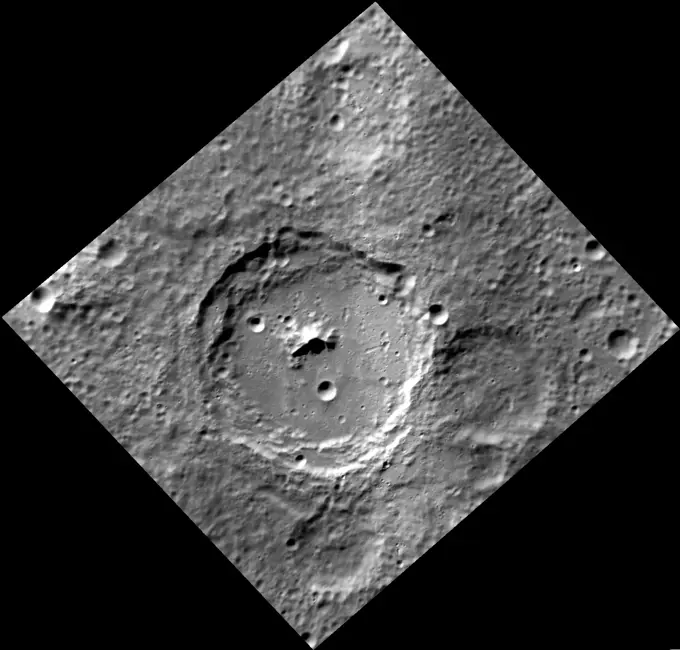
In this dramatic scene, an unnamed crater in Mercury's northern volcanic plains is bathed in darkness as the sun sits low on the horizon. Rising from the floor of the crater is its central peak, a small mountain resulting from the crater's formation. A central peak is a type of crater morphology that lies between "simple" and "peak ring" in the range of crater morphology on Mercury. This image was acquired as a high-resolution targeted observation. Targeted observations are images of a small area on Mercury's surface at resolutions much higher than the 200-meter/pixel morphology base map. It is not possible to cover all of Mercury's surface at this high resolution, but typically several areas of high scientific interest are imaged in this mode each week. The MESSENGER spacecraft is the first ever to orbit the planet Mercury, and the spacecraft's seven scientific instruments and radio science investigation are unraveling the history and evolution of the Solar System'
4389-2143
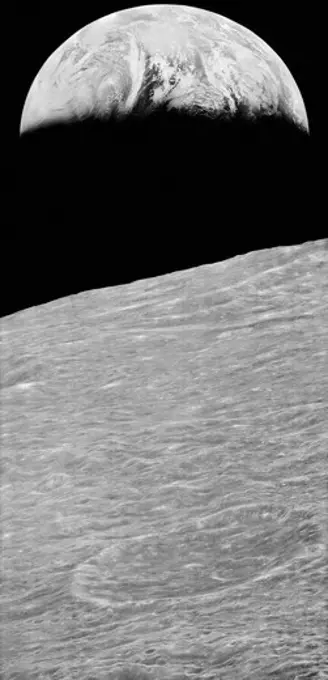
Earthrise by Lunar Orbiter
6145-44901400
On the Bright Side
6145-45042802
Say Aah!
6145-44896073
These images from NASA's Dawn spacecraft are located in asteroid Vesta's Lucaria Tholus quadrangle, in Vesta's northern hemisphere.
6145-44963676
Dark and Explosive
6145-45044177
A Tale of Two Basins
6145-45071720
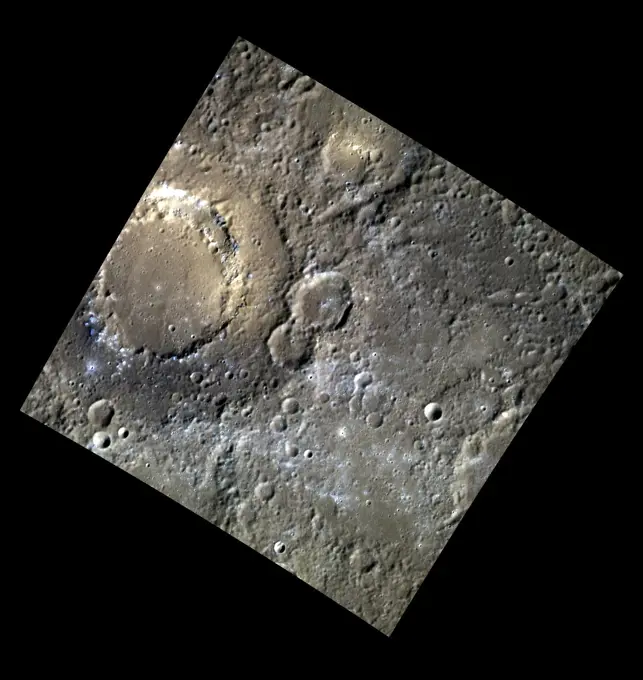
Crossing Paths. At the left edge of this color view is a relatively fresh crater as seen by NASA's MESSENGER spacecraft.
6145-44877252
Firdousi's Smooth Plains & Crater Chains
6145-44756807
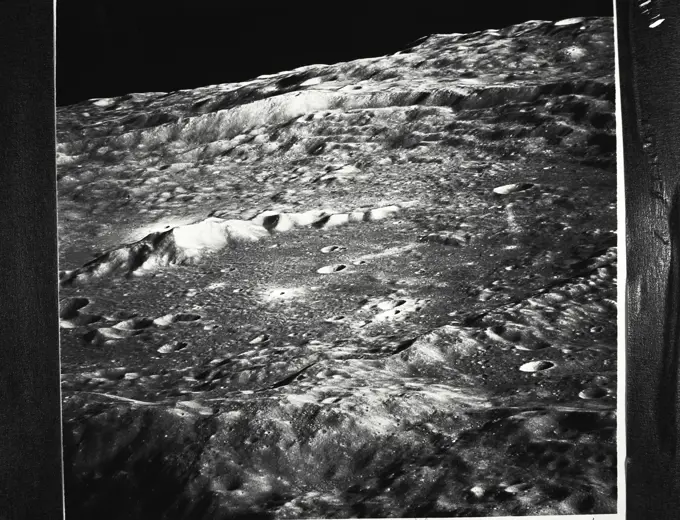
AS08-12-2196 (21-27 Dec. 1968) --- An oblique view from the Apollo 8 spacecraft looking eastward across the lunar surface from about 115 degrees east longitude to the horizon near 180 degrees east longitude. The crater Tsiolkovsky in the center of the picture is 150 kilometers wide and is located at 129 degrees east longitude and 21 degrees south latitude. While in lunar orbit, Apollo 8 moved toward the camera position over the terrain along the left (north) side of this photograph.
6145-45000776
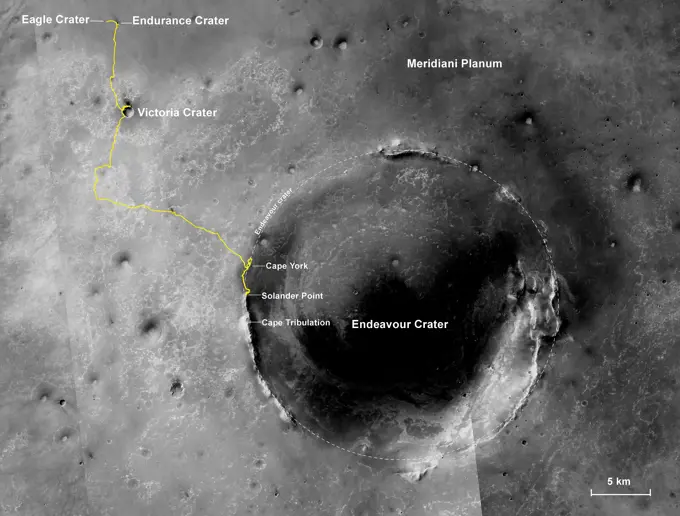
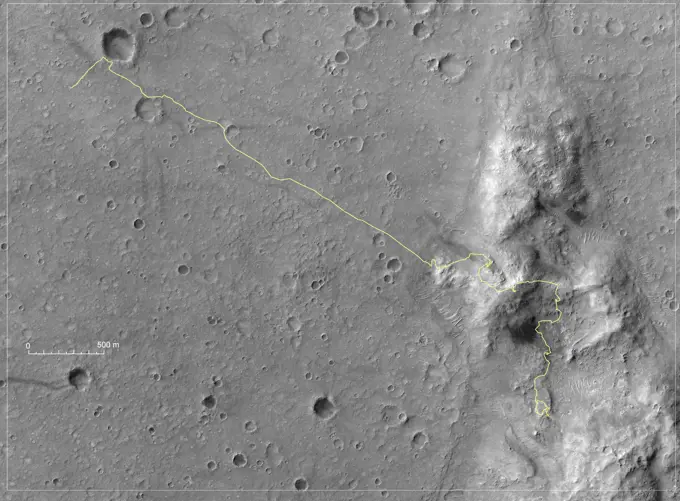
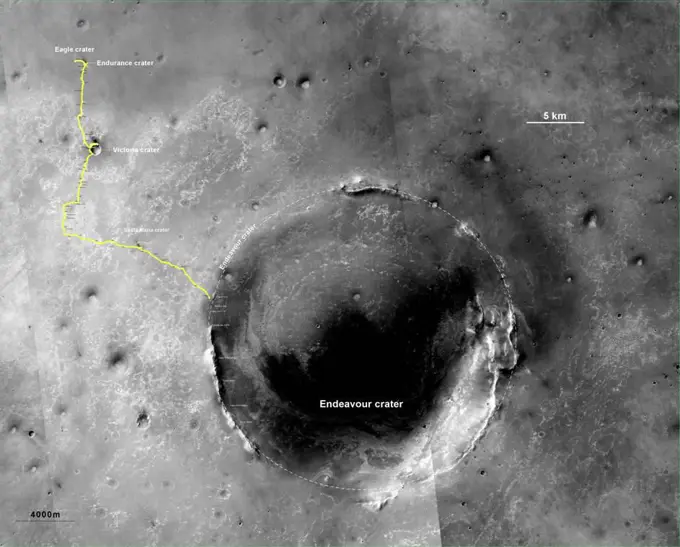
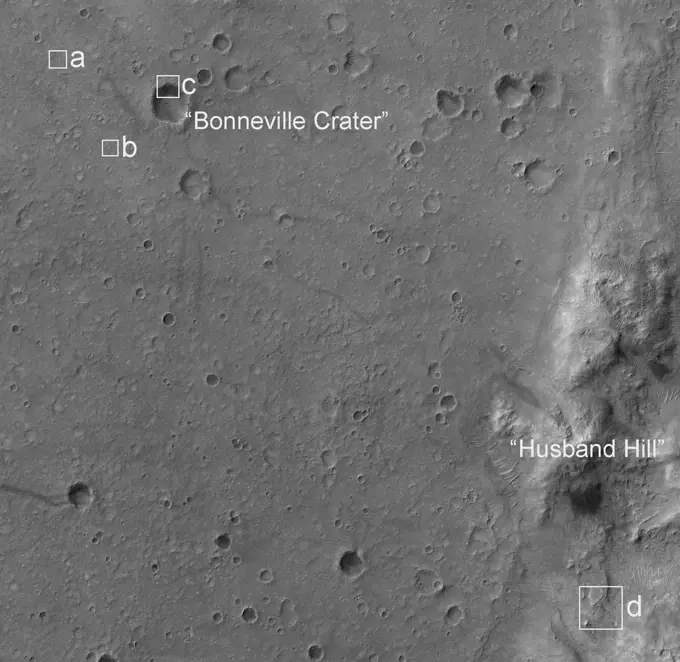
The gold line on this image shows NASA's Opportunity's route from the landing site, in upper left, to the area it is investigating on the western rim of Endeavour Crater as of the rover's 10th anniversary on Mars, in Earth years.
6145-45264351
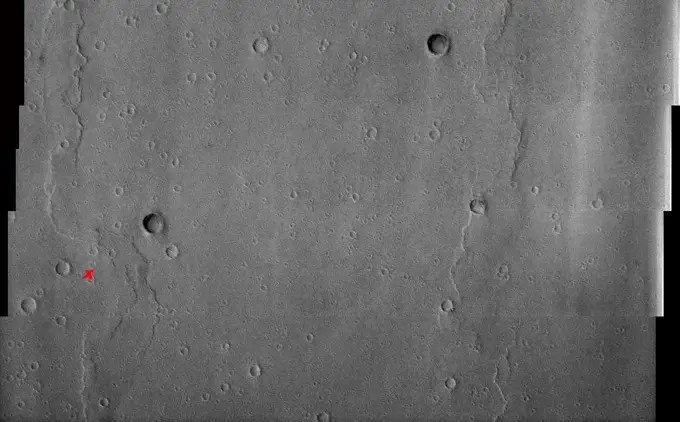
The red dot marks the final landing location of NASA's InSight lander in this annotated image of the surface of Mars, taken by the THEMIS camera on NASA's 2001 Mars Odyssey orbiter in 2015. A version with latitude and longitude is also available. The landing ellipse on this map covers an area within which the spacecraft had about a 99 percent chance of landing when targeted for the center of the ellipse. It is about 81 miles (130 kilometers) long, generally west to east, and about 17 miles (27 kilometers) wide. The base map is a mosaic of daytime thermal images from the Thermal Emission Imaging System (THEMIS) on NASA's Mars Odyssey orbiter. THEMIS was developed and is operated by Arizona State University, Tempe.
6145-44896030
These images from NASA's Dawn spacecraft are located in asteroid Vesta's Urbinia quadrangle, in Vesta's southern hemisphere. Urbinia crater is the large, irregularly shaped crater, Sossia the middle-sized crater.
6145-44717784
S71-44668 (31 July-2 Aug. 1971) --- An oblique view of the crater Humboldt, as photographed by the Fairchild metric camera in the Scientific Instrument Module (SIM) bay of the Apollo 15 Command and Service Modules (CSM) in lunar orbit. This view is looking southerly. Humboldt, which is 200 kilometers (124 statute miles) in diameter, is located at 81 degrees east longitude and 27 degrees south latitude. The three-inch mapping camera was one of eight lunar orbital science experiments located in the SIM bay.
6145-44809216
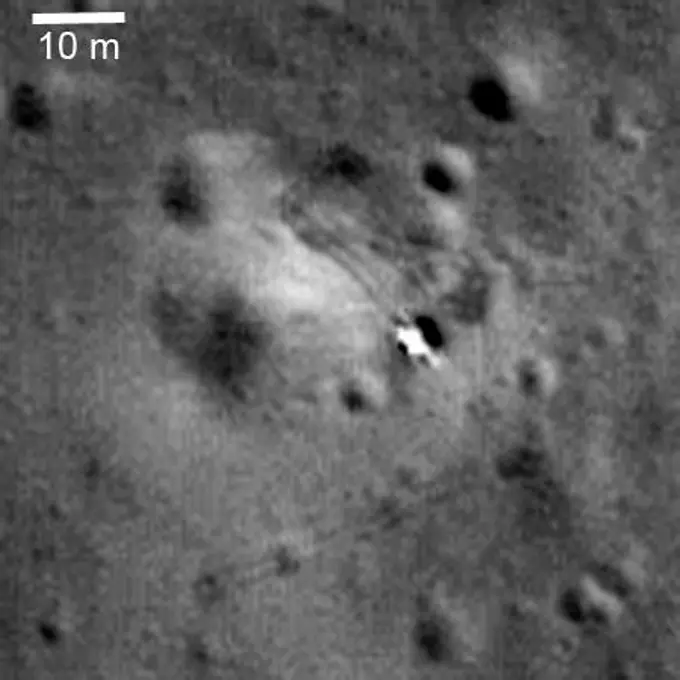
Luna 21 lander delivered the Lunokhod 2 rover to the floor of Le Monnier crater in January 1973. This image taken by NASA's Lunar Reconnaissance Orbiter also shows the rover's tracks.
6145-45077339
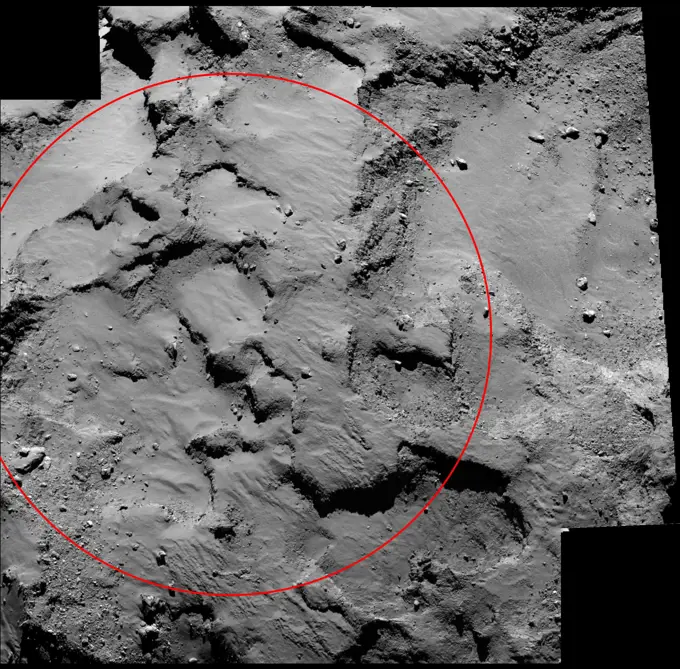
An annotated mosaic from the Rosetta spacecraft shows 'Site J,' the primary landing site on comet 67P/Churyumov-Gerasimenko for the mission's Philae lander.
6145-45025649
Twenty Something
6145-45263933
This photo of Ceres and the bright regions in Occator Crater was one of the last views NASA's Dawn spacecraft transmitted before it depleted its remaining hydrazine and completed its mission. This view, which faces south, was captured on Sept. 1, 2018 at an altitude of 2,340 miles (3,370 kilometers) as the spacecraft was ascending in its elliptical orbit. At its lowest point, the orbit dipped down to only about 22 miles (35 kilometers), which allowed Dawn to acquire very high-resolution images in this final phase of its mission. Some of the close-up images of Occator Crater are shown here. Occator Crater is 57 miles (92 kilometers) across and 2.5 miles (4 kilometers) deep and holds the brightest area on Ceres, Cerealia Facula in its center and Vinalia Faculae in its western side. This region has been the subject of intense interest since Dawn's approach to the dwarf planet in early 2015.
6145-58966353
Gazing Over a Cratered World
6145-44895527
These images from NASA's Dawn spacecraft are located in asteroid Vesta's Numisia quadrangle, a few degrees below Vesta's equator.
6145-44693349
Spirit's Traverse, Sols 1 to 1,386
6145-44579398
NASA's Viking 1 landing site is shown in this commemorative image from NASA's Mars Odyssey spacecraft to celebrate the July 20, 1969 and 1976 anniversaries of NASA's Apollo 11 and Viking 1 landings on the Moon and Mars, respectively.
6145-44608091
Shiny and New
1838-51330398
View of lunar farside showing crater Tsiolkovsky, as photographed by crew of Apollo 13 mission during their lunar pass, Johnson Space Center, NASA , April 14, 1970
6145-44730078
A Spectacular Rayed Crater
6145-44881046
These images are located in asteroid Vesta's Rheasilvia quadrangle, near Vesta's south pole. These images are centered on the large Tarpeia crater.
255-69336214
Vintage Photograph. Overall view of interior of a moon crater.
4409-17476321
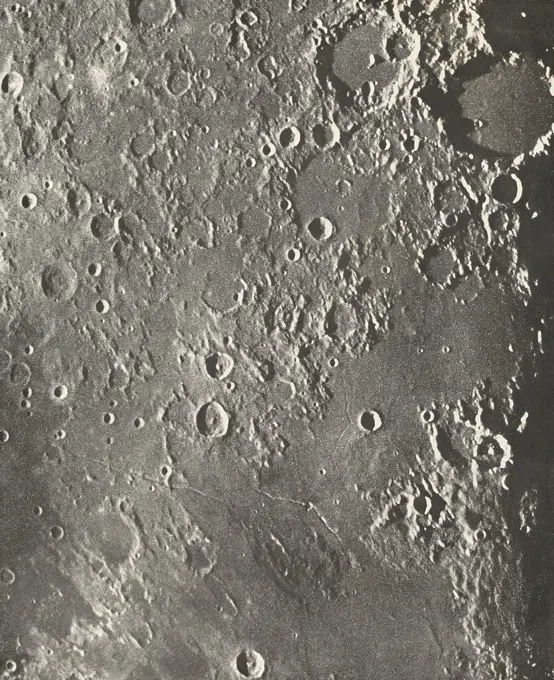
Photographie Lunaire Albategnius - Triesnecker - Manilius. Dated: 1903. Dimensions: image: 56.99 x 46.51 cm (22 7/16 x 18 5/16 in.) sheet: 73.66 x 59.69 cm (29 x 23 1/2 in.). Medium: photogravure. Museum: National Gallery of Art, Washington DC. Author: Loewy et Puiseux.
6145-45053330
Cuts Right Through
6145-44493542
The Geodesy Campaign
1746-19671072
Kasei Valles is one of the largest outflow channels on Mars. Kasei Valles stretches some 2,000 km across the face of Mars and empties into the Chryse basin. THEMIS.
6145-44510857
Mars Surfaces at 15.6N Latitude, March 1999
6145-44767391
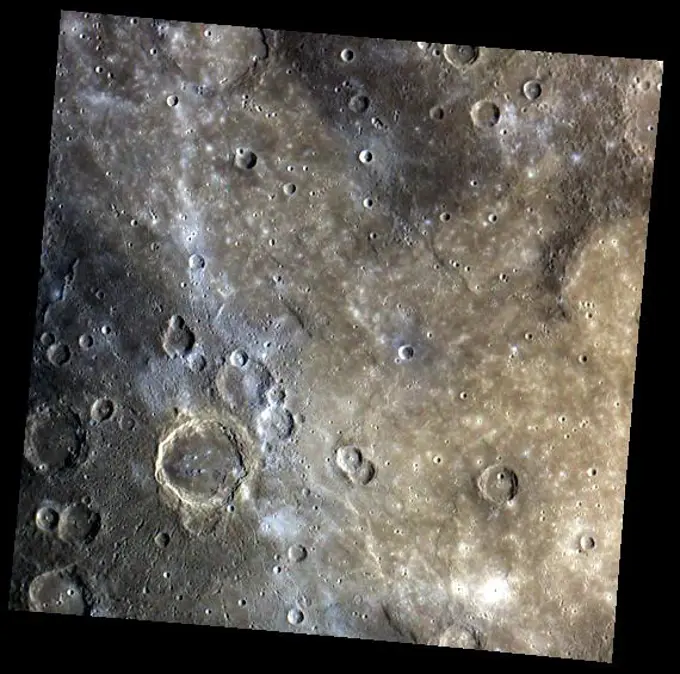
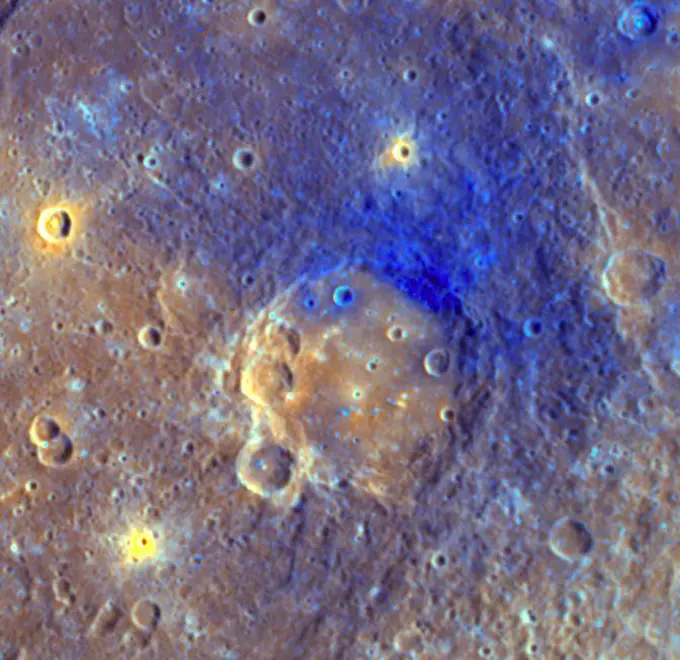
On Mercury, NASA's MESSENGER shows the smooth floor of Titian is a brighter orange color than the surrounding area, likely due to being filled with volcanic material. Ejecta from Titian appears blue.
6145-44976424
Clockwork Orange
6145-58967145
The yellow line on this map shows where NASA's Mars Rover Opportunity has driven from the place where it landed in January 2004, inside Eagle crater, at the upper left end of the track, to a point approaching the rim of Endeavour crater.
6145-44943789
This Image Is Cool!
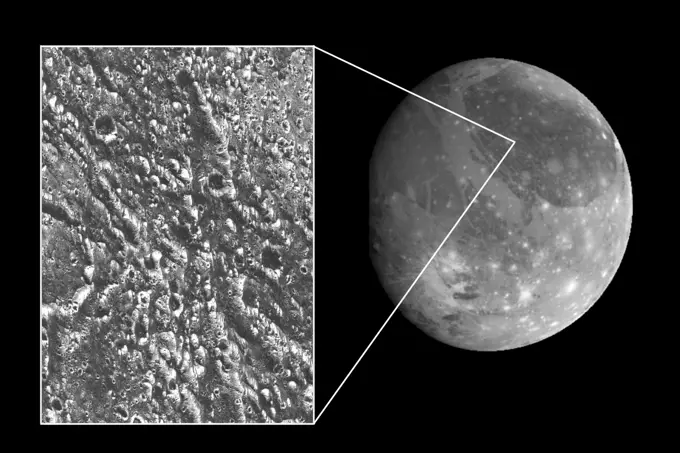
6145-44556508
Ganymede Galileo Regio High Resolution Mosaic Shown in Context
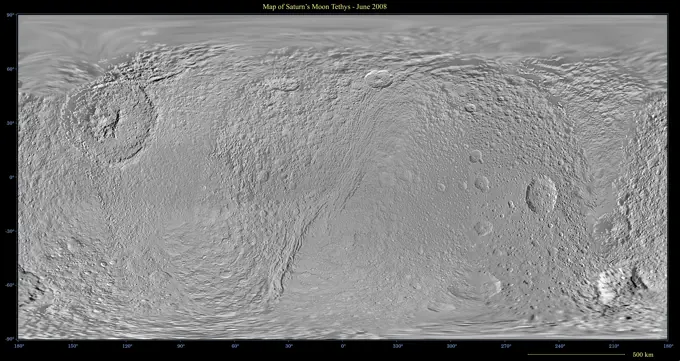
6145-44716013
Map of Tethys
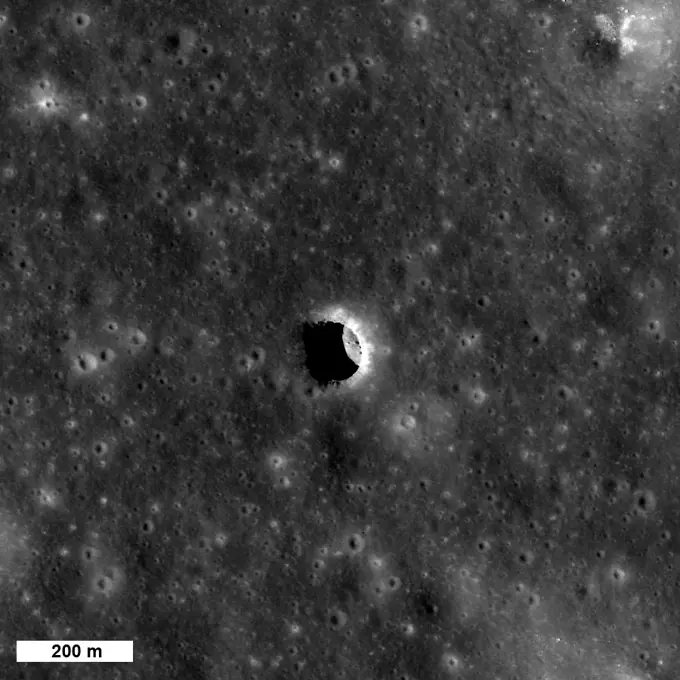
6145-44825201
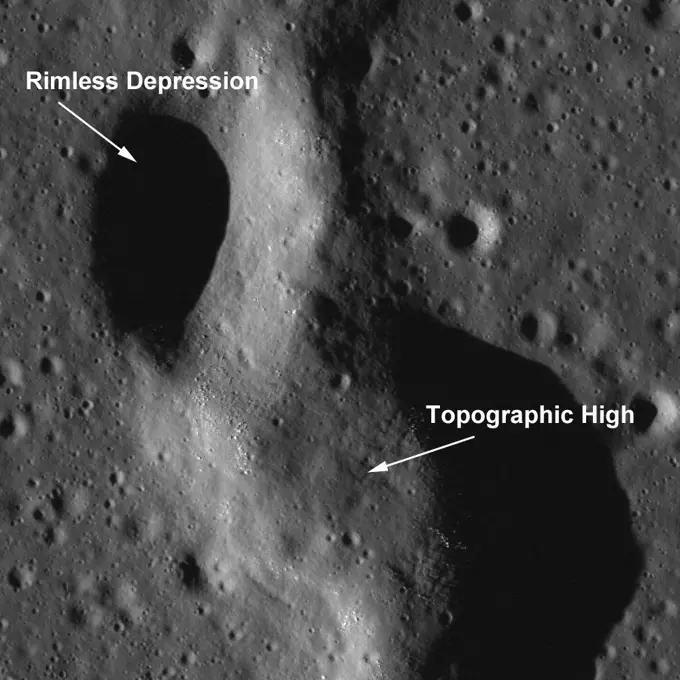
How Common are Mare Pit Craters
6145-44847068
Sinuous Chain of Depressions
6145-45297431
AS16-122-19580 (16-27 April 1972) --- This vertical view shows the King Crater on the lunar surface. It was exposed with color positive film in a hand-held 70mm camera onboard the Command and Service Modules during the Apollo 16 mission's 98th orbit of the moon. Center point coordinates are located at 5.4 degrees north latitude and 120.8 degrees east longitude.
6145-58966457
Etched Terrain
6145-44922147
They Call Me Muddy Waters
6145-44572286
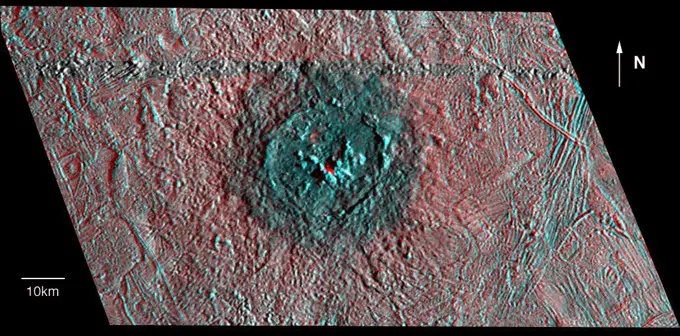
The anaglyph shows Pwyll crater on Jupiter's icy satellite Europa, captured by NASA's Galileo Orbiter. 3D glasses are necessary to identify surface detail.
6145-44903433
These images from NASA's Dawn spacecraft are located in asteroid Vesta's Urbinia quadrangle, in Vesta's southern hemisphere; many small boulders are visible on the right side of Sossia crater.
6145-45092313
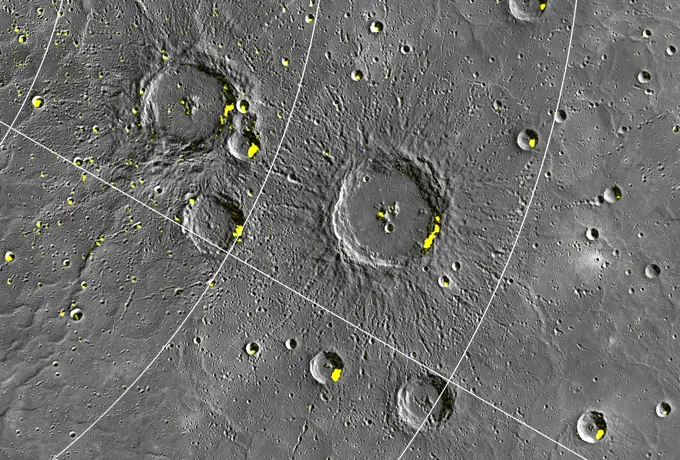
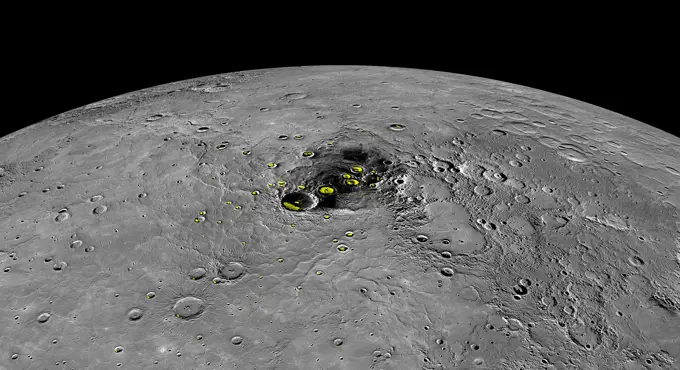
This orthographic projection view from NASA's MESSENGER spacecraft provides a look at Mercury's north polar region. The yellow regions in many of the craters mark locations that show evidence for water ice, as detected by Earth-based radar observations.
6145-44663077
Mars Exploration Rover Landing Site at Gusev Crater
6145-44938379
From Beyond
6145-44710522
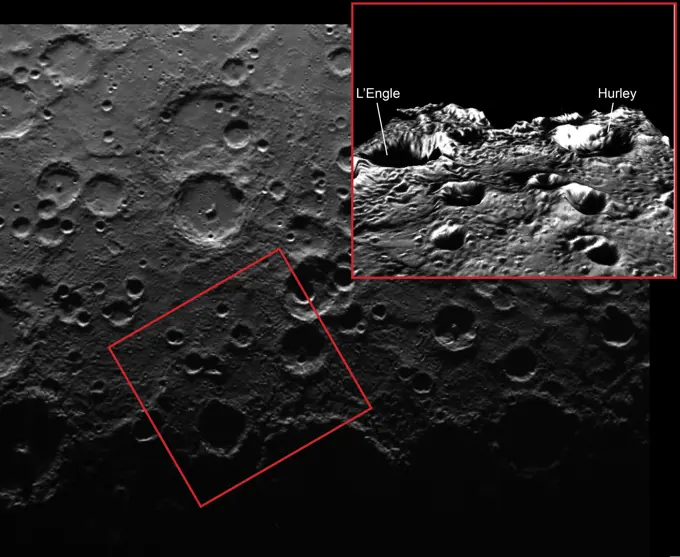
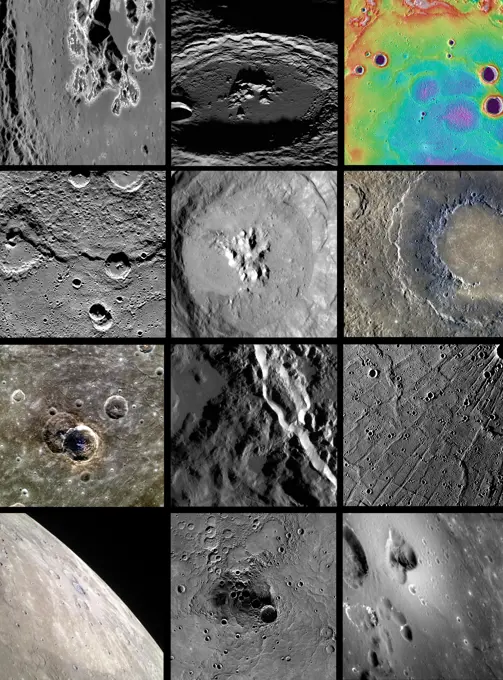
Mercury's Craters from a New Perspective
1746-19670898
Southern end of Aitken crater central peak complex.
6145-45028682
These images from NASA's Dawn spacecraft show an old, heavily cratered terrain around asteroid Vesta's equator.
6145-58963945
From Orbit, Looking toward Mercury's Horizon
6145-44857114
Bright Rays of Kuiper and Dark Material Near Hitomaro
6145-44665741
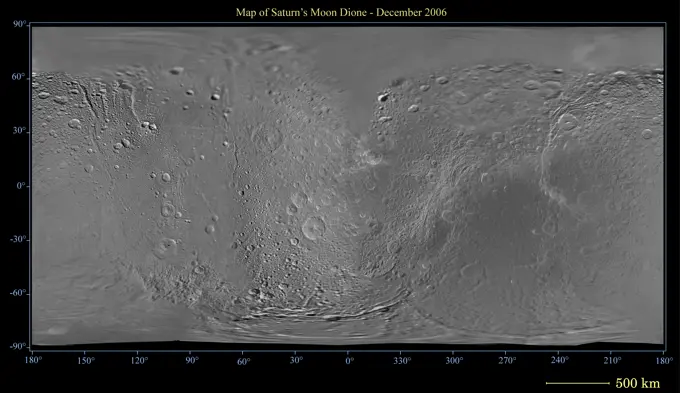
This global digital map of Saturn's moon Dione was created using data taken by the Cassini spacecraft, with gaps in coverage filled in by NASA's Voyager spacecraft data
6145-44869948
Taking the Measure of Impact Craters on Mercury
6145-44824413
Apollo 16, Footsteps Under High Sun
6145-44778504
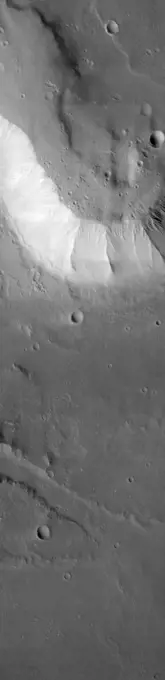
Several areas of dunes are located on the plains of Terra Cimmeria. The dunes appear bright in the daytime infrared due the warmer temperatures than the surrounding plains.
4239R-3172
Close-up detail view of the moon.
6145-44587887
This pair of infrared images from NASA's Mars Odyssey spacecraft shows the so-called 'face on Mars' landform viewed during both the day and night.
6145-44563847
View of Callisto at Increasing Resolutions
6145-44920539
2012 in MESSENGER Images
6145-44917648
Polar Topography