Fine ArtVintageFootageSubscriptionBoardsFree ResearchPricing
  • Fine Art
  • Vintage
  • Footage
  • Subscription
  • Boards
  • Free Research
  • Pricing

Laboratory Research Activities

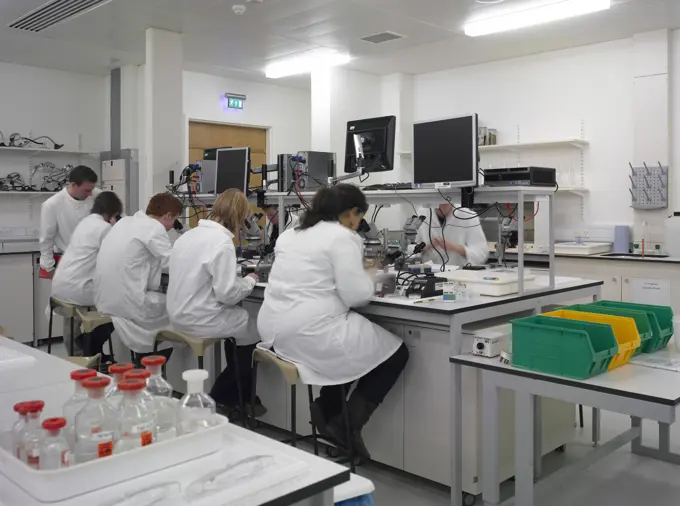
Scientists engaged in various research tasks in labs, including genetic engineering and molecular diagnostics, with equipment and samples visible.

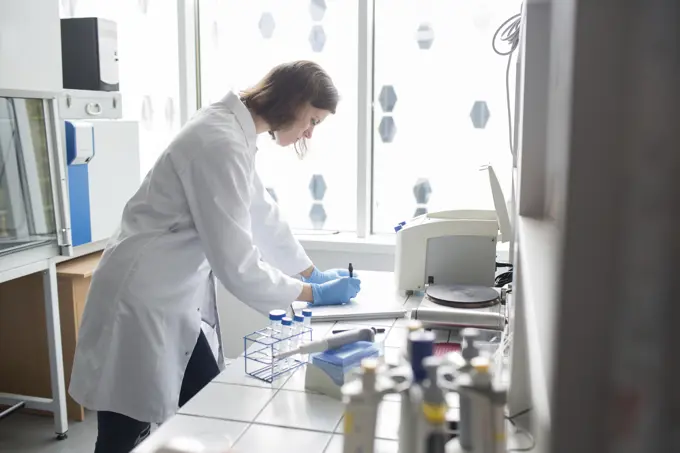
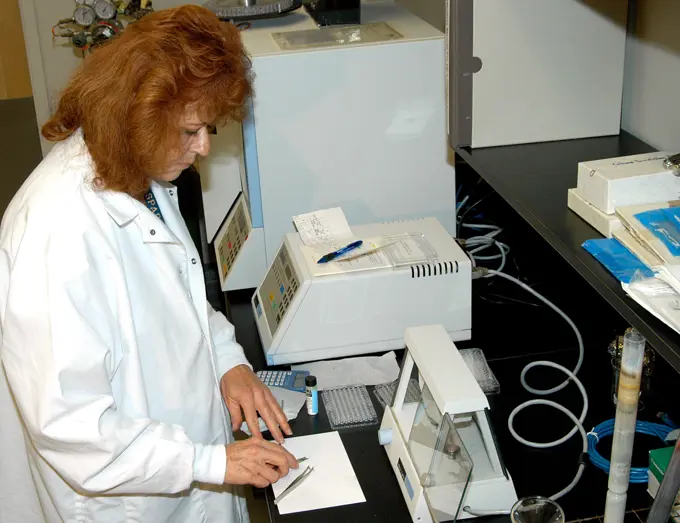
Side view of woman at table and taking notes in laboratory.
286 assets in this story
824-28704394
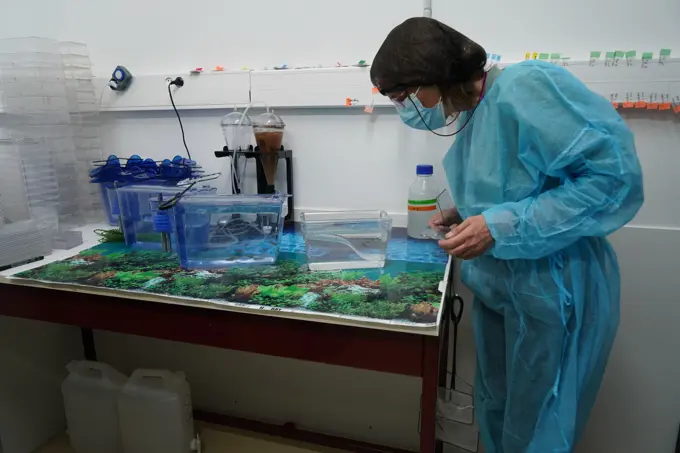
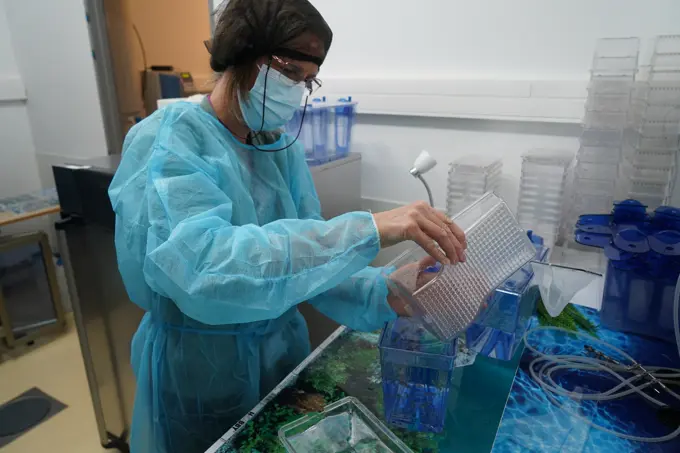
Study on opportunistic infections to the Burkholderia cepacia complex using Zebra Fish embryos.
1815R-13777278
Laboratory technician working in biology lab
1525-56801045
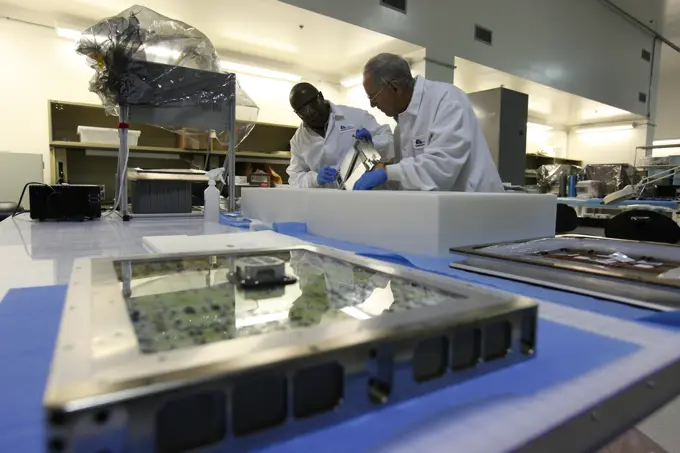
View at engineer in the laboratory examines ceramic tiles
1899-53512326
Study on opportunistic infections with Burkholderia cepacia complex using Zebra Fish embryos.
6145-45055104
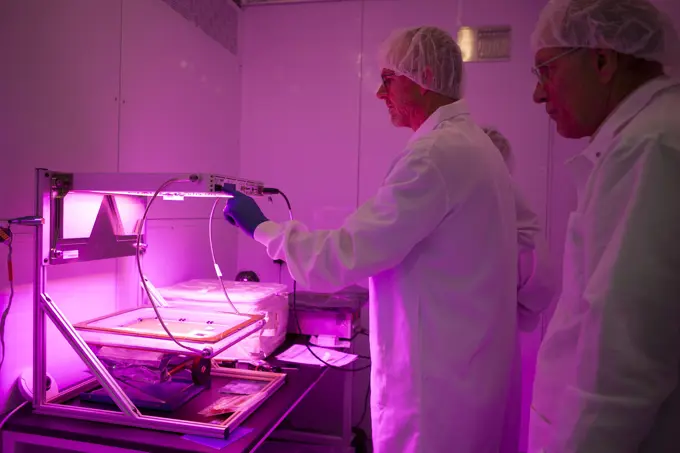
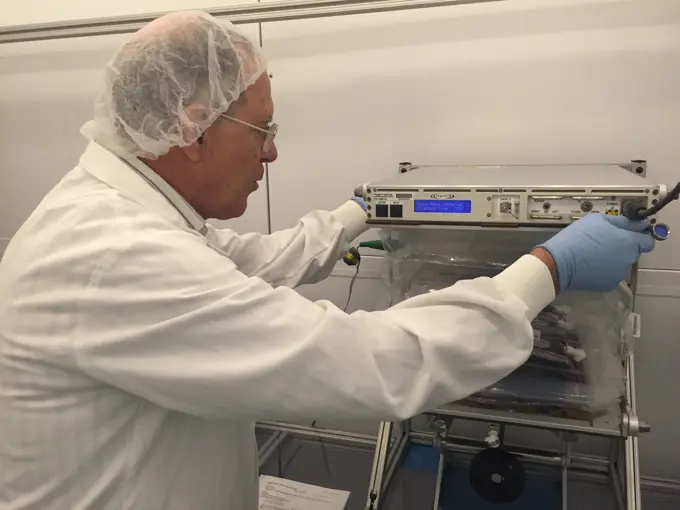
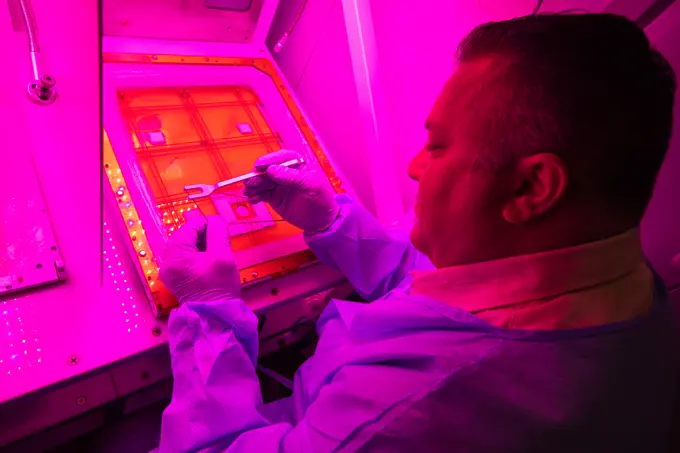
CAPE CANAVERAL, Fla. - Researchers activate the red, blue and green LED lights on the Veggie plant growth system inside a control chamber at the Space Station Processing Facility at NASA's Kennedy Space Center in Florida. From left, are Jim Smodell, a technician with SGT, and Chuck Spern, lead project engineer, with QinetiQ North America. The growth chamber will be used as a control unit and procedures will be followed identical to those being performed on Veggie and the Veg-01 experiment on the International Space Station by Expedition 39 flight engineer and NASA astronaut Steve Swanson.Veggie and Veg-01 were delivered to the space station aboard the SpaceX-3 mission. Veggie is the first fresh food production system delivered to the station. Six plant pillows, each containing outredgeous red romaine lettuce seeds and a root mat were inserted into Veggie. The plant chamber's red, blue and green LED lights were activated. The plant growth will be monitored for 28 days. At the end of t
5514-17821319
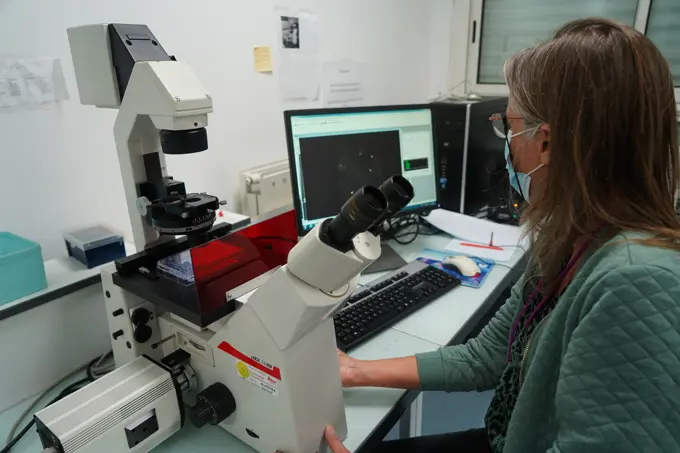
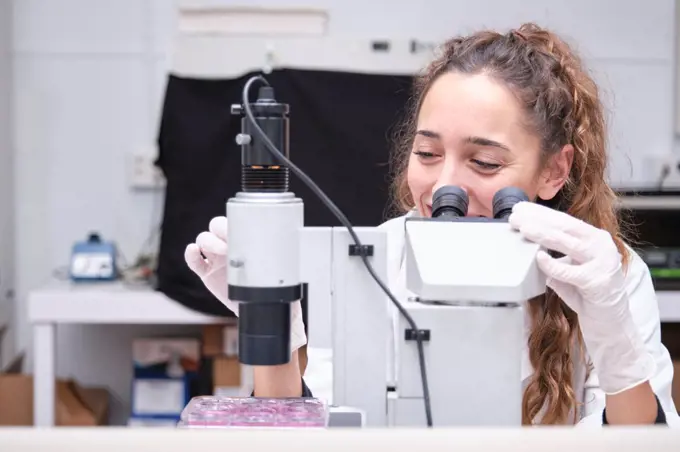
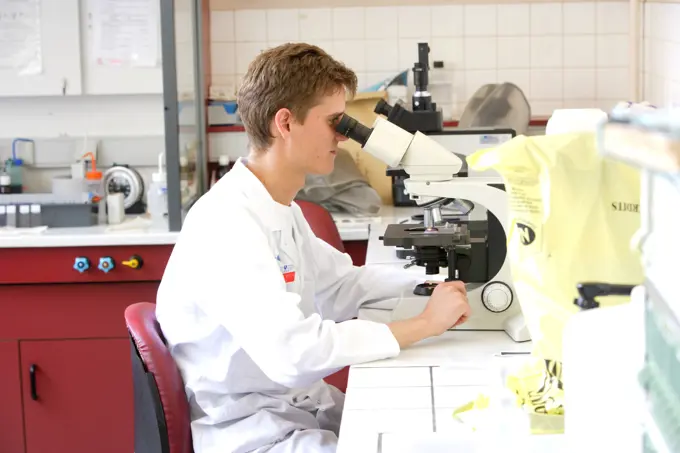
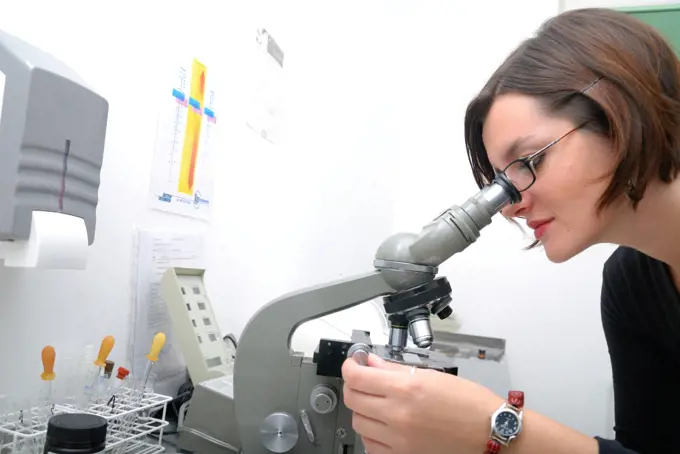
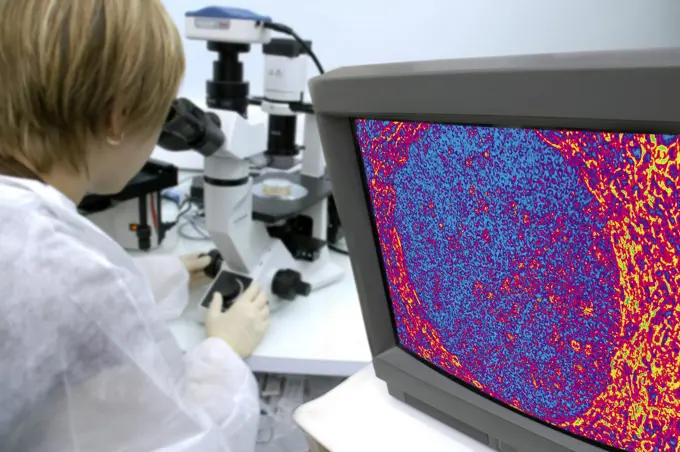
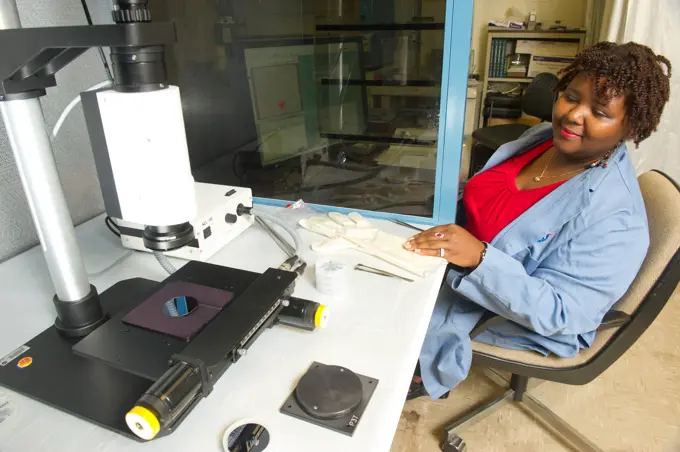
Young female scientist looking through a microscope in a laboratory. Laboratory research concept.
6145-44704188
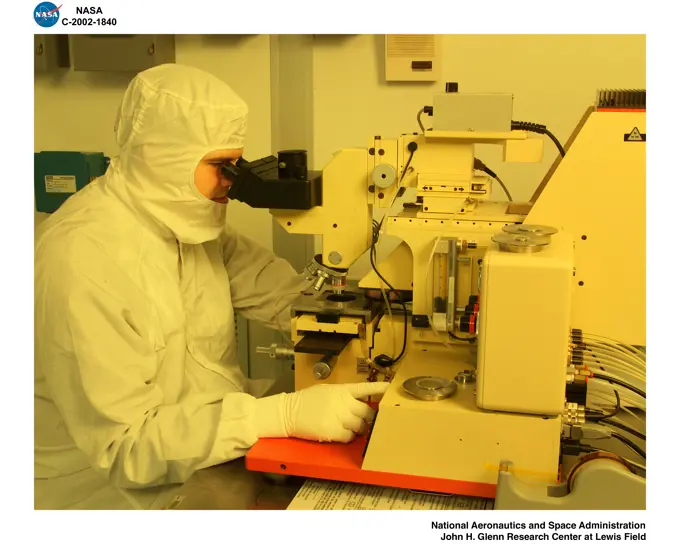
CLASS 100 CLEAN ROOM
4269-2869
A laboratory technician is examining a blood sample (blood smear) on a light microscope, to search for malaria parasite (plasmodium). Laboratory of Parasitology and Mycology, Department of Pr Dupouy-Camet, Cochin Hospital, Paris, France.
6145-45280968
Karl Hasenstein, the principal investigator for the Plant Habitat-02, or PH-02, plants radish seeds in seed carriers for the Addvanced Plant Habitat (APH) in the Space Life Sciences Lab at Kennedy Space Center on Sept. 23, 2020. The carriers will fly aboard Northrop Grummans 14th commercial resupply services mission to the International Space Station. The launch, aboard Northrop Grummans Cygnus spacecraft, is targeted for Sept. 29 from NASAs Wallops Flight Facility in Virginia. Astronauts will grow radish plants in the APH, NASAs largest and most advanced growth chamber on station.
6145-44606234
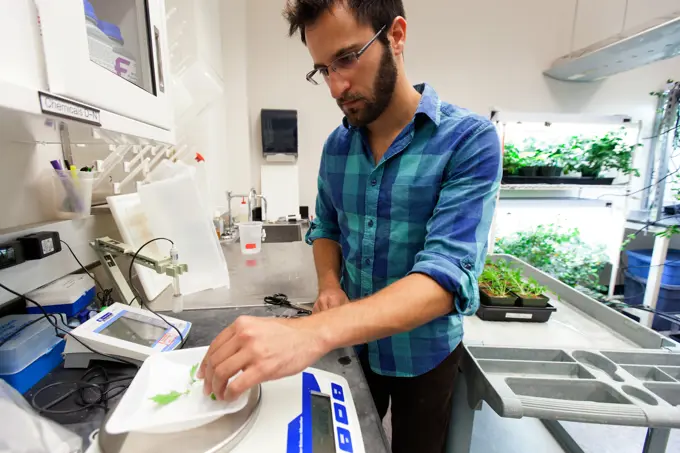
KENNEDY SPACE CENTER, FLA. -- In the Space Life Sciences (SLS) Lab, Jan Bauer, with Dynamac Corp., weighs samples of onion tissue for processing in the elemental analyzer behind it.  The equipment analyzes for carbon, hydrogen, nitrogen and sulfur. The 100,000 square-foot SLS houses labs for NASAs ongoing research efforts, microbiology/microbial ecology studies and analytical chemistry labs. Also calling the new lab home are facilities for space flight-experiment and flight-hardware development, new plant growth chambers, and an Orbiter Environment Simulator that will be used to conduct ground control experiments in simulated flight conditions for space flight experiments.  The SLS Lab, formerly known as the Space Experiment Research and Processing Laboratory or SERPL, provides space for NASAs Life Sciences Services contractor Dynamac Corporation, Bionetics Corporation, and researchers from the University of Florida. NASAs Office of Biological and Physical Research will use the faci
6145-52178907
020326-F-3838S-006. Subject Operation/Series: SOUTHERN WATCH 2002 Base: Prince Sultan Air Base Country: Saudi Arabia (SAU) Scene Major Command Shown: CENTAF
824-63223096
Zika Virus Research
6145-44595076
KENNEDY SPACE CENTER, FLA. -  From left, Barry Perlman, Pembroke Pines Charter Middle School in Florida, and Valerie Cassanto, Instrumentation Technology Associates, Inc., process one of the experiments carried on mission STS-107. Several experiments were found during the search for Columbia debris. Included in the Commercial ITA Biomedical Experiments payload on mission STS-107 are urokinase cancer research, microencapsulation of drugs, the Growth of Bacterial Biofilm on Surfaces during Spaceflight (GOBBSS), and tin crystal formation.  The latter was sponsored by the Pembroke Pines Charter Middle School.
6145-44830679
Interior view of the Space Station Processing Facility
6145-45225726
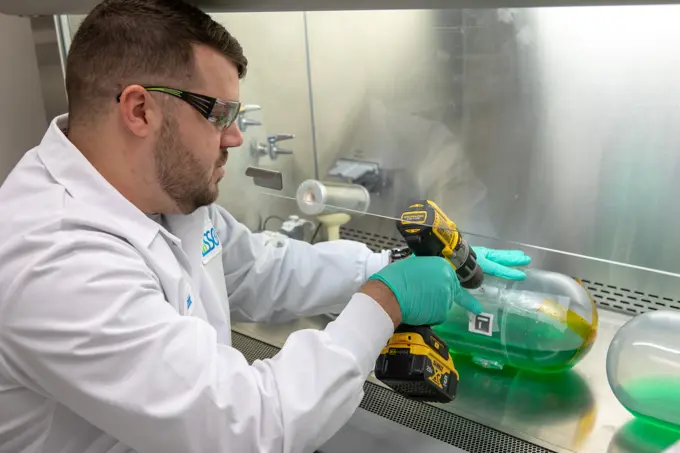
Kennedy Space Centers Brint Bauer drills into a water tank, filled with green dye, in the Florida spaceports Neil Armstrong Operations and Checkout Building on Nov. 13, 2019. Two tanks have recently returned to Kennedy after spending the last five years on the International Space Station for an experiment to study slosh, or the movement of water, in a zero-gravity environment to help engineers predict the movement of propellant in rocket tanks. With the slosh experiment now concluded, Kennedys Air and Water Revitalization lab is studying the water tanks to determine if there is, or was, any microbial growth within them. The results will help NASA determine whether clean water can be stored in space for long-duration missions, an essential component to keeping astronauts safe and healthy as the agency prepares for missions to the Moon and beyond to Mars.
1899-65662268
Medical Analysis Laboratory. Biomedical Analysis Technicians. Visual analysis and interpretation of blood samples under the microscope, platelet counting.
4128R-13192039
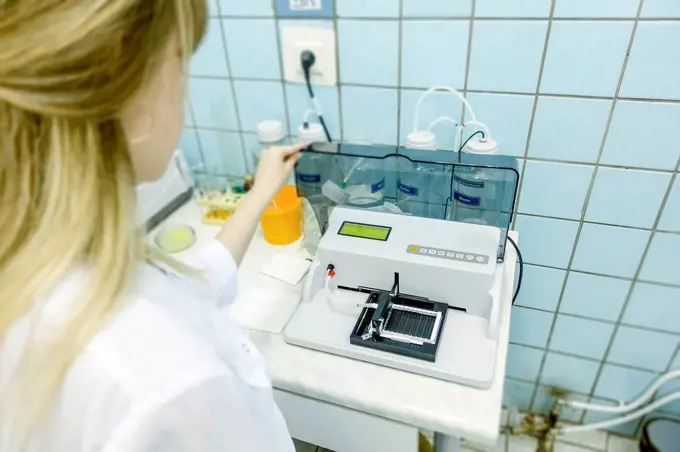
Microplate reader (microplate photometre) used to detect biological, chemical or physical events of samples.
6145-45094936
Astronaut Scott Kelly initiated VEG-01 B, the second crop of lettuce, on July, 8, 2015, and both Kelly and Astronaut Kjell Lindgren cared for the plants. The crop grew for 33 days. VEG-01 B included one set of six plant pillows planted with red romaine lettuce seeds. On Aug. 10, 2015, the crew harvested and consumed leaves from each plant. This was the first crop grown and consumed in NASA hardware. They harvested the rest of the plant tissue and froze it in the stations Minus Eighty-Degree Laboratory Freezer for ISS (MELFI) for return to Earth for further study including microbial analysis, antioxidant capacity, mineral analysis and anthocyanin concentration.
4379-1618
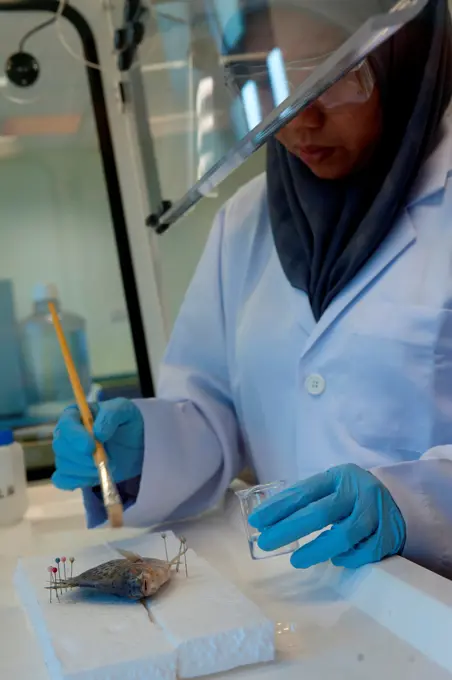
Scientist preparing Harlequin sweetlips to keep as specimen in a specimen room, Brunei
1899-53508399
Research on chronic bacterial infections within Inserm. PhD student working on brucellosis bacteria with the help of a flow cytometer.
6145-44662755
Stardust sample analysis @ UC Berkeley clean room with Dr Scott Sandford, NASA Ames Astrophysicist - mission aerogel samples provided to UC Berkeley for analysis by NASA are shown on computer screen during microscopic sampling
1848-55012090
Max Planck Institute of Molecular Cell Biology and Genetics
6145-45218244
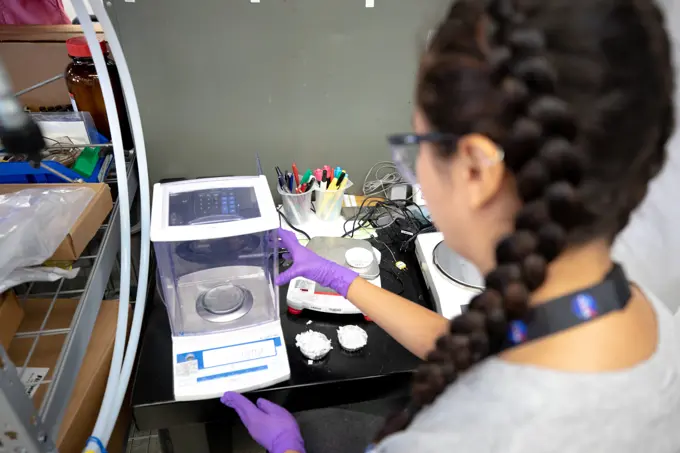
Isabella Aviles, an intern at NASAs Kennedy Space Center in Florida, weighs trash simulant - comprised of different types of material that have been cut into tiny pieces - that will be utilized for the agencys Orbital Syngas Commodity Augmentation Reactor, or OSCAR. OSCAR is an Early Career Initiative project at the Florida spaceport that studies technology to convert trash and human waste into useful gasses such as methane, hydrogen and carbon dioxide. By processing small pieces of trash in a high-temperature reactor, OSCAR is advancing new and innovative technology for managing waste in space. OSCAR would reduce the amount of space needed for waste storage within a spacecraft, turn some waste into gasses that have energy storage and life support applications, and ensure waste is no longer biologically active. A prototype has been developed, and a team of Kennedy employees are in the process of constructing a new rig for suborbital flight testing.
6145-45286438
Members of the cold stowage team unpack science experiments inside the Space Station Processing Facility at NASAs Kennedy Space Center in Florida on Jan. 14, 2021. The experiments returned to Earth on SpaceXs 21st commercial resupply services mission (CRS-21). Making its successful parachute-assisted splashdown west of Tampa off the Florida coast, at 8:26 p.m. EST on Jan. 13, the SpaceX cargo Dragon returned more than 4,400 pounds of scientific experiments and other cargo from the International Space Station. After splashdown, SpaceX loaded Dragon aboard their Go Navigator recovery ship and packed an Airbus H225 helicopter with the time-sensitive research cargo for delivery to Kennedy. The upgraded cargo Dragon capsule also boasts double the powered locker capacity to preserve science samples, allowing for a significant increase in the research that can be carried back to Earth.
1848-53585725
LSI Saxony
1525-25970677
engineer showing an information
6145-44885756
COTS-2, Cold Storage Nanorack Experiment Package for Dragon Capsule
1801-64347531
Life Sciences Building , Southampton, Nbbj Architects 2011 Research Lab, Southampton, United Kingdom, Architect Unknown
824-57659529
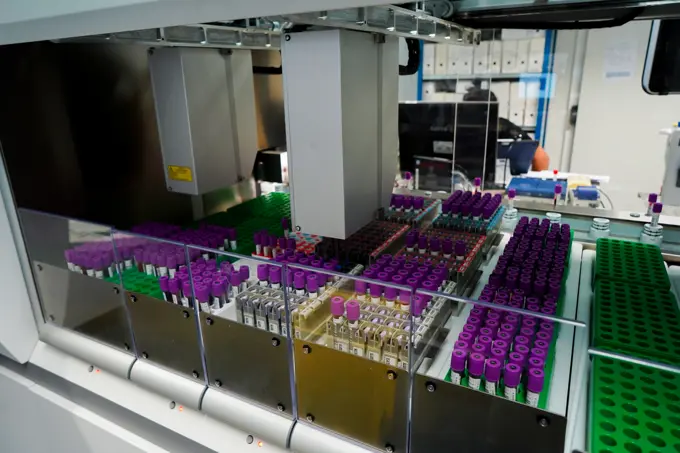
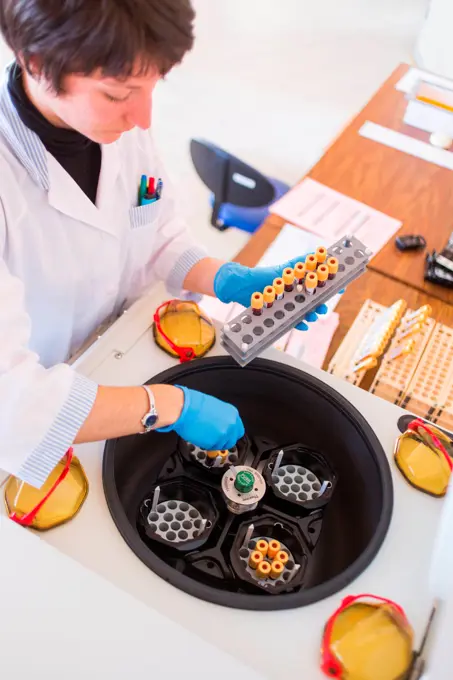
Technical platform of the Inovie 34 laboratory . Hematology tube sorter. NFS, blood count, VS, sedimentation rate, HBA1C, Glycated Hemoglobin.
1848-54541844
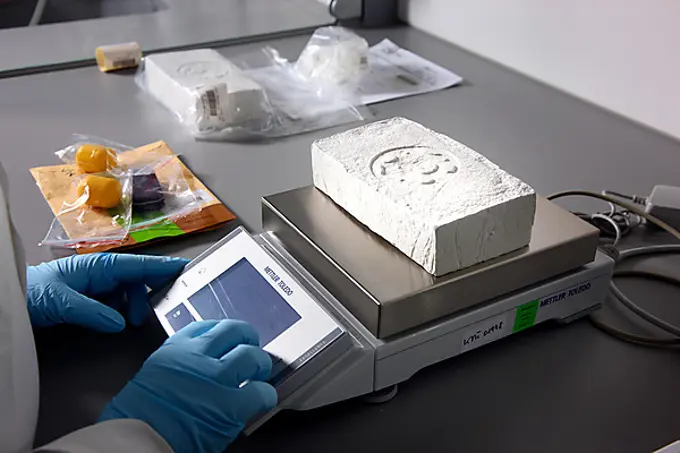
Kriminaltechnisches Institut, KTI, Forensic Science Institute, department of narcotics and toxicology, raw cocaine is weighted, police, Landeskriminalamt, LKA, State Criminal Police Office, North Rhine-Westphalia, Germany, Europe
824-28704845
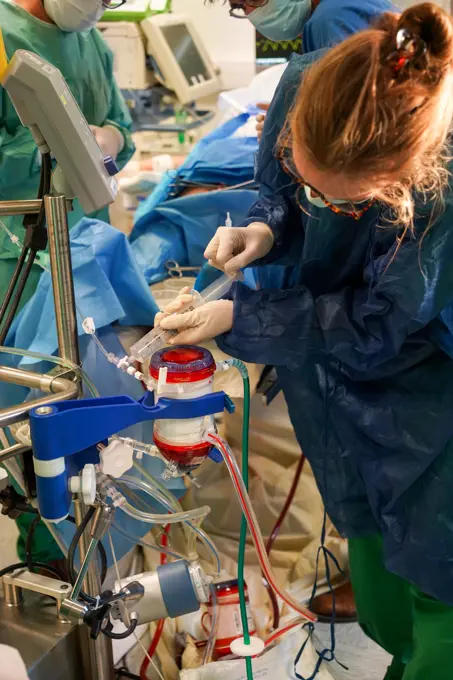
Training of medical interns in the ECMO technique, Extracorporeal Membrane Oxygenation.
6145-45060709
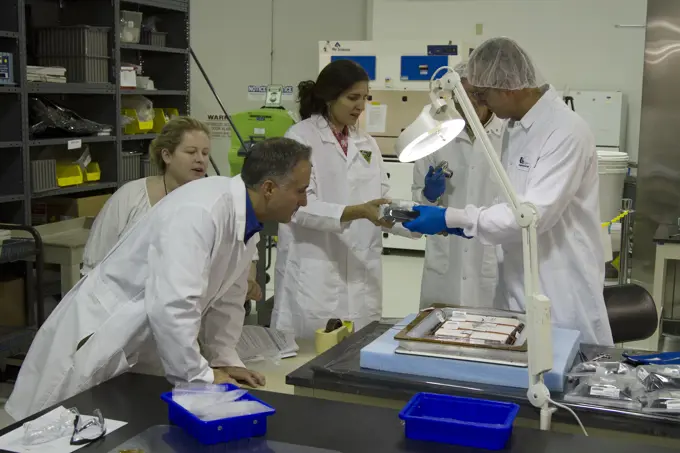
CAPE CANAVERAL, Fla. - At far right, Jim Smodell, a technician with SGT, shows a plant pillow from the Veggie plant growth system to Gioia Massa, NASA payload scientist for Veggie. Partially hidden behind Smodell is Chuck Spern, lead project engineer with QinetiQ North America on the Engineering Services Contract. At left is Trent Smith, NASA project manager in the ISS Ground Processing and Research Project Office, and Nicole Dufour, NASA Engineering and Technology Directorate. They are in the Payload Development Laboratory at the Space Station Processing Facility, or SSPF, at NASA's Kennedy Space Center in Florida. The plant pillows were removed from the Veggie plant growth system inside a control chamber at the SSPF. The growth chamber was used as a control unit for Veggie and procedures were followed identical to those being performed on Veggie and the Veg-01 experiment on the International Space Station.The chamber mimicked the temperature, relative humidity and carbon dioxide co
1525-21706571
young woman looking on microscope
6145-54250987
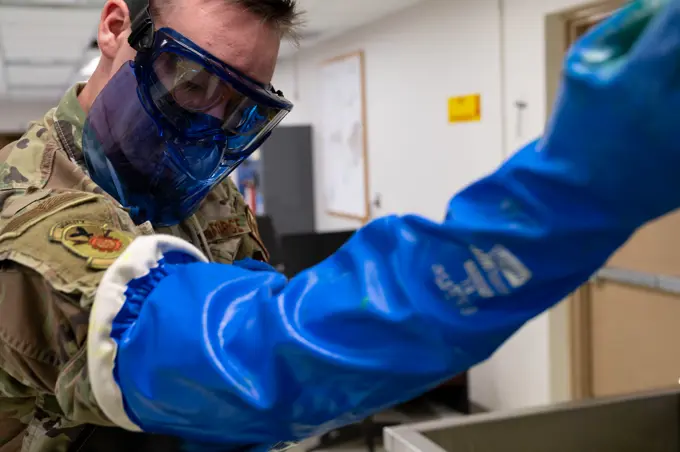
U.S. Air Force Staff Sgt. Zachary Thompson, 49th Equipment Maintenance Squadron nondestructive inspection craftsman, dons his personal protective equipment at Holloman Air Force Base, New Mexico, Oct. 12, 2022. PPE helps protect NDI technicians from fluids that may cause injuries or illnesses.
6145-54488348
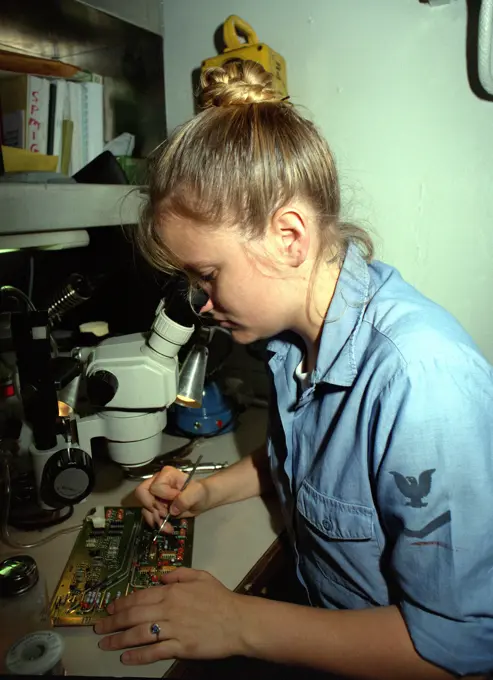
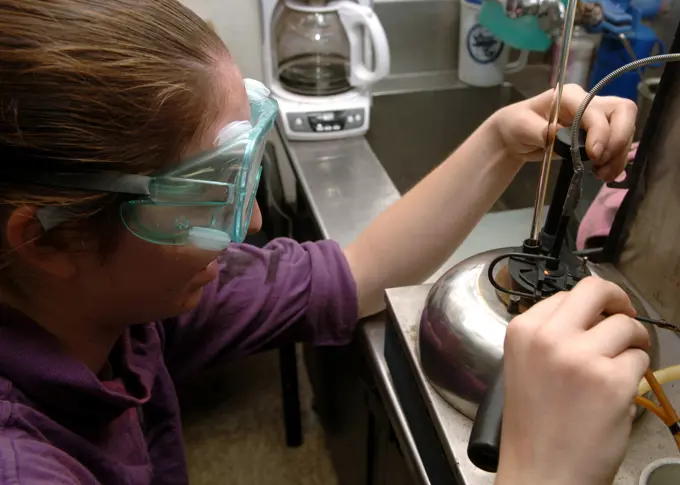
Electronic Technician Third Class (ET3) Karina A. Larson makes adjustments and repairs under a microscope to a circuit card on board the submarine tender USS HOLLAND (AS-32). Country: Pacific Ocean (POC)
1815-18831046
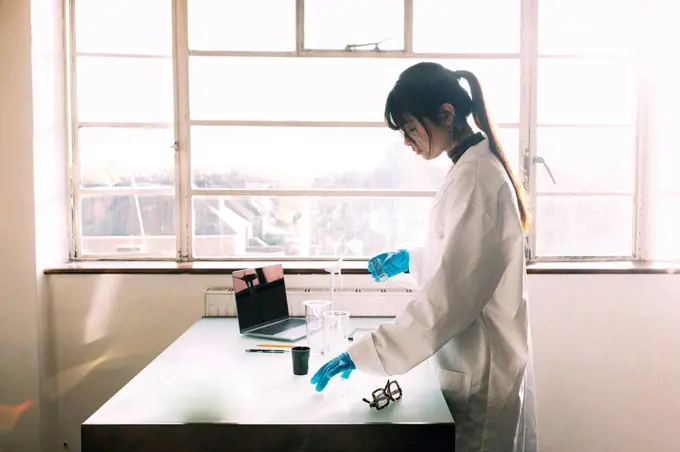
Young scientist working on table near window
6145-45283435
Elspeth Petersen, left, a chemical engineer and member of the Gaseous Lunar Oxygen from Regolith Electrolysis (GaLORE) project team, and Kevin Grossman, GaLORE principal investigator, inspect a reactor before a test to melt lunar regolith - dirt and dust on the Moon made from crushed rock - simulants inside a laboratory at Kennedys Neil Armstrong Operations and Checkout Building on Oct. 29, 2020. GaLORE was selected as an Early Career Initiative project by the agencys Space Technology Mission directorate, and the team was tasked with developing a device that could melt lunar regolith and turn it into oxygen. As NASA prepares to land the first woman and the next man on the Moon in 2024 as part of the Artemis program, technology such as this can assist with sustainable human lunar exploration and long-duration missions to Mars.
1899-83788
Vital cycle in laboratory.
6145-45269856
NASA Evolutionary Xenon Thruster - Commercial, NEXT-C Flight Power Processing Unit, PPU
4379-1612
Scientists analyzing the water samples taken at sea, Brunei
6145-44740940
Life Sciences Division (code SL) laboratories and personnel
824-63178727
Laboratory worker observing a virus under a microscope
824-28704370
Study on opportunistic infections with Burkholderia cepacia complex using Zebra Fish embryos
1927-1616
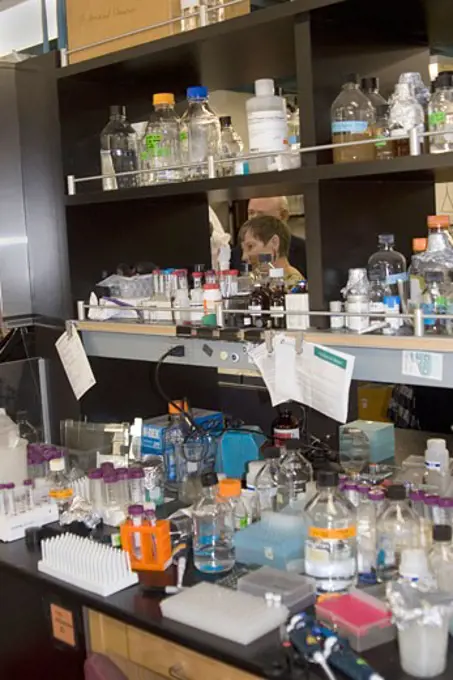
Work bench in Genics Lab California Institute of Technology Pasadena  California
6145-52244378
060725-N-0119G-045. Base: USS Enterprise (CVN 65)
6145-45299044
NASA scientist Trevor Graff peers at a calibration target, which will help fine-tune settings on the Scanning Habitable Environments with Raman & Luminescence for Organics and Chemicals (SHERLOC) instrument carried aboard NASA's Perseverance Mars rover. The calibration target is housed inside a special environmental chamber that was used to ship it from NASA's Johnson Space Center, Houston, to the agency's Jet Propulsion Laboratory in Southern California, where the target was added to the rover. There are 10 kinds of materials on SHERLOC's calibration target, including a fragment of a Martian meteorite and five of the first spacesuit materials sent to Mars. They'll be observed to see how they hold up in the intense radiation on the Martian surface.
824-63178724
Laboratory worker observing a stem cell under a microscope
6145-45126782
Charles Spern, at right, project manager on the Engineering Services Contract (ESC), and Glenn Washington, ESC quality assurance specialist, perform final inspections of the Veggie Series 1 plant experiment inside a laboratory in the Space Station Processing Facility at NASA's Kennedy Space Center in Florida. The Series 1 experiment is being readied for flight aboard Orbital ATK's Cygnus module on its seventh (OA-7) Commercial Resupply Services mission to the International Space Station. The Veggie system is on the space station.
1848-V61672951
6145-44886534
LAQUIETA HUEY WITH IMAGE ANALYSIS SYSTEM FOR AUTOMATED PARTICLE COUNTING.
6145-45127015
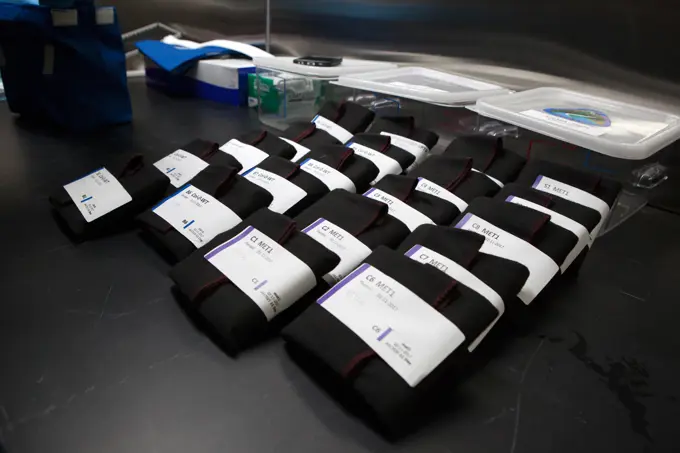
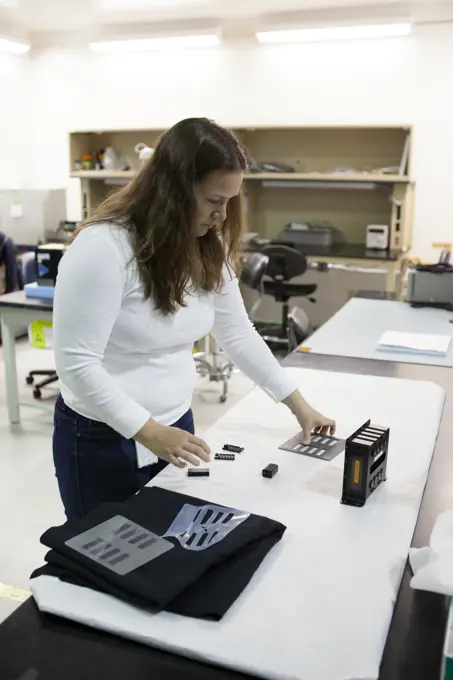
APEX-04, or Advanced Plant EXperiments-04, is being prepared in a cold room in the Kennedy Space Center Processing Facility for SpaceX-10. The petri plates are wrapped in black cloth and kept cold (+4 degrees Celsius) to prevent them from germinating prior to the experiment start on station. Dr. Anna Lisa Paul of the University of Florida is the principal investigator for APEX-04. Apex-04 is an experiment involving Arabidopsis in petri plates inside the Veggie facility aboard the International Space Station. Since Arabidopsis is the genetic model of the plant world, it is a perfect sample organism for performing genetic studies in spaceflight. The experiment is the result of a grant from NASAs Space Life and Physical Sciences division.
1815-15709346
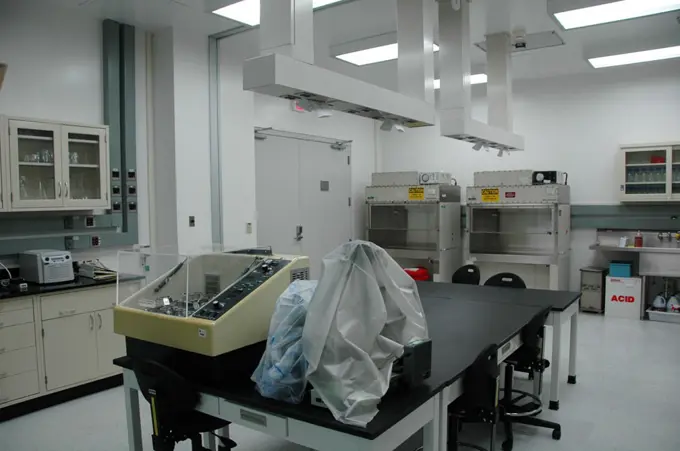
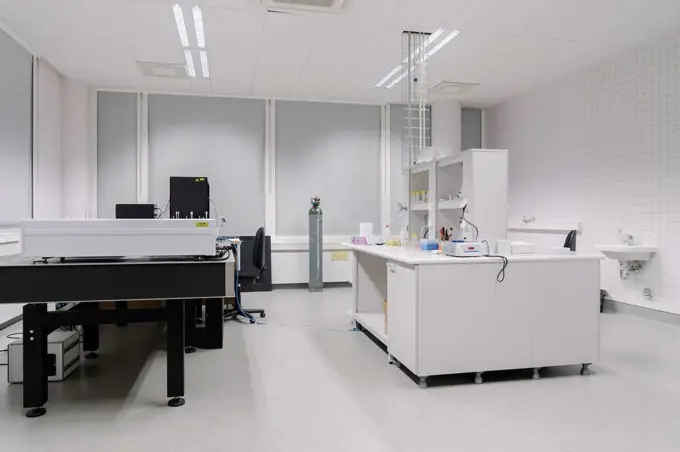
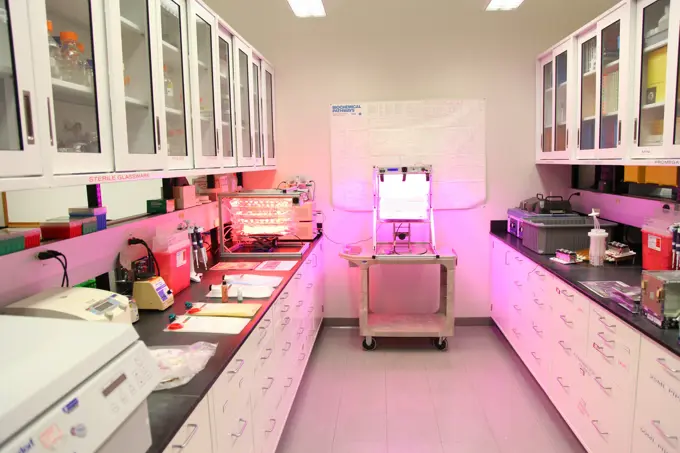
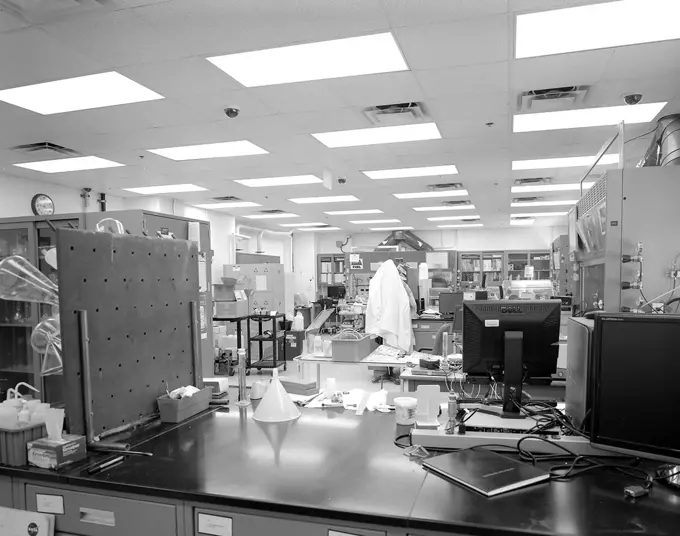
Interior of a laboratory
6145-44859911
Cape Canaveral, Fla. -- A research laboratory is prepared for students to perform hands-on activities in Kennedys Space Life Sciences Laboratory (SLSL).High-school students from two Orlando, Fla., schools travelled to NASAs Kennedy Space Center in Florida to participate in National Lab Day activities. During the event, about 80 students, toured various facilities and engaged in educational hands-on activities. National Lab Day is a partnership between federal agencies, foundations, professional societies and organizations devoted to promoting science, technology, engineering and math, or STEM, hands-on discovery-based laboratory experiences for students.
6145-44887090
Interior view of the Operations & Checkout Building
6145-51885979
U.S. Air Force Senior Airman Katelyn Theisen, 18th Medical Support Squadron section supervisor specimen collection from Detroit, Michigan was selected as the 18th Wings Airman of the Week at Kadena Air Base, Japan. The Airman of the Week program is an opportunity for outstanding Airmen to be recognized by KAB leadership as well as showcase these young leaders to their peers.
4269-37010
Laboratory, Blood samples.
6177-V53471953
6177-V63503696
6145-52049164
EPA Scientists at Work , Environmental Protection Agency
6145-45228488
Matthew English is the Exploration Research and Technology facility manager for the Space Station Processing Facility (SSPF) at NASAs Kennedy Space Center in Florida. Englishs responsibilities include ensuring that the International Space Station teams inside the SSPF have the facilities, tools and capabilities they need to support their launch customers, thus providing the support necessary to enable further research and design discoveries within NASA.
7046-70040126
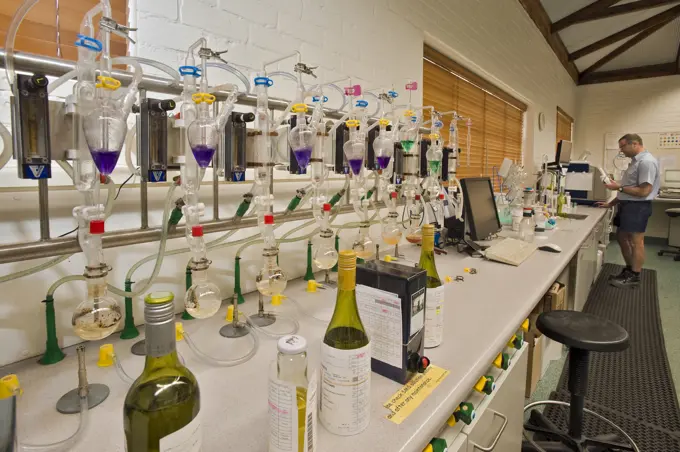
Australia, South Australia, Barossa Valley. Chemistry Lab at Yalumba Winery near Eden Valley.
1525-26796477
they are putting a sheet metal
1848-50829245
Evaluation of research results in the field of genetic engineering in the laboratories of the University of Duisburg-Essen
6145-45268908
On Jan. 21, 2020, inside the Space Station Processing Facility at NASAs Kennedy Space Center in Florida, intern Emily Kennebeck (left) and Jess Bunchek, a pseudonaut and associate scientist, prepare plant pillows for their upcoming flight to the International Space Station. The pillows, which are a common method used to grow plants in space, are being sent to the orbiting laboratory on Northrop Grummans 13th resupply services (NG-13) mission for a series of VEG-03 experiments that will study the growth of three types of leafy greens in a microgravity environment. Once the pillows are assembled and packaged for flight, they will be transported to the agencys Wallops Flight Facility in Virginia, where liftoff will occur. NG-13 is scheduled to launch on Feb. 9, 2020, at 5:39 p.m. EST.
6145-45108292
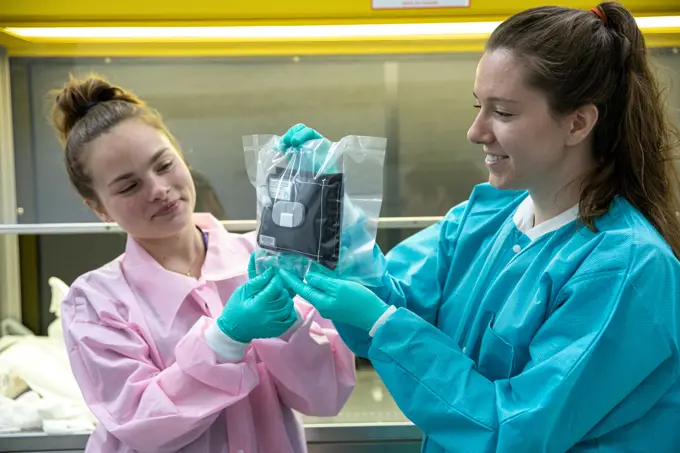
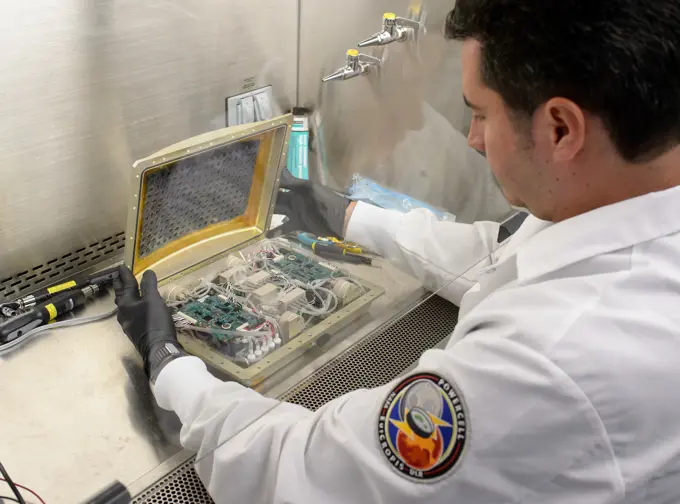
EuCROPIS EVT-2 Power Cell in N-239 Lab with Ivan Paulino-Lima
6145-45139214
In the Space Life Sciences Laboratory at NASA's Kennedy Space Center in Florida, student interns such as Alex Litvin are joining agency scientists, contributing in the area of plant growth research for food production in space. Litvin is pursuing doctorate in horticulture at Iowa State University. The agency attracts its future workforce through the NASA Internship, Fellowships and Scholarships, or NIFS, Program.
6145-44882320
Interior View of CIF
6145-44862224
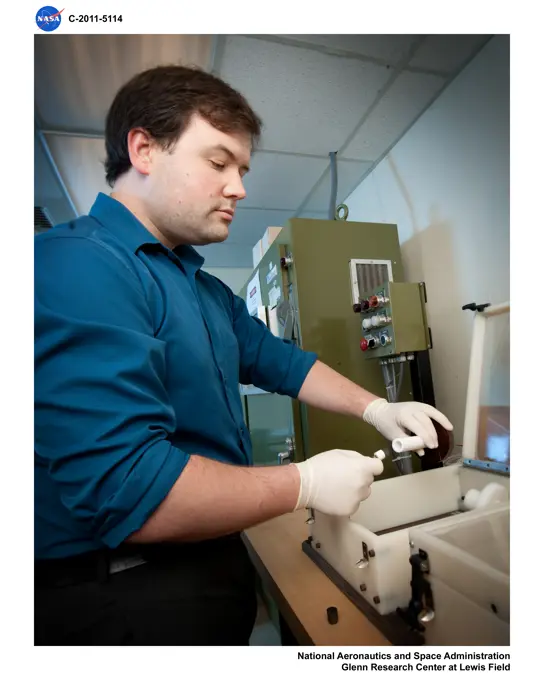
Advanced Stirling Converter
6145-45203436
Experiment chambers are in view in the Veggie Laboratory inside the Space Station Processing Facility (SSPF) at NASAs Kennedy Space Center in Florida, on May 16, 2019. The center is celebrating the SSPFs 25th anniversary. The facility was built to process elements for the International Space Station. Now it is providing support for current and future NASA and commercial provider programs, including Commercial Resupply Services, Artemis 1, sending the first woman and next man to the Moon, and deep space destinations including Mars.
4128-V58558511
1848-49441071
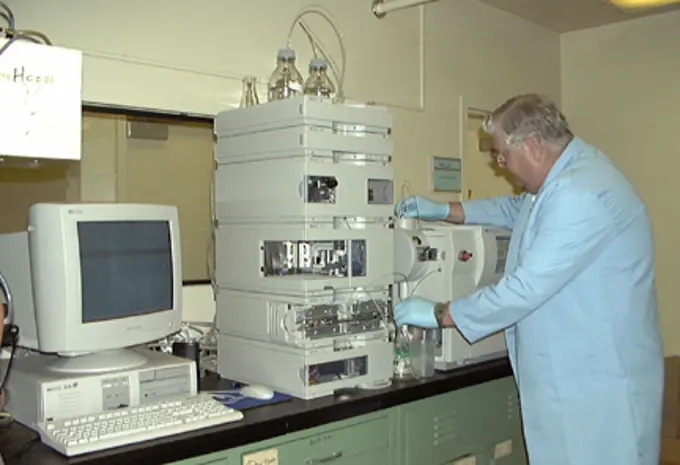
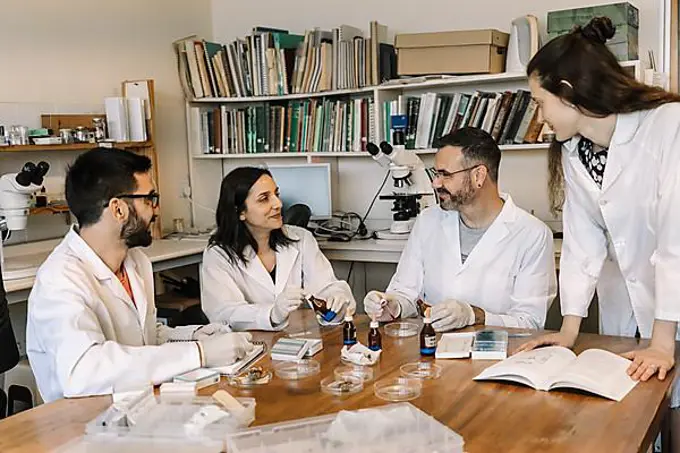
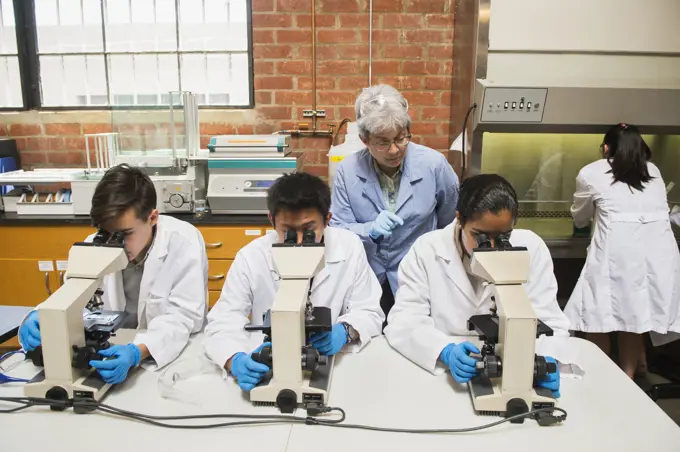
Biologists and scientists studying and researching in chemistry lab
5514-71369293
Scientist with the Yulex Corp., makes prototypes of rubber gloves to test different formulations of guayule latex
6145-45214241
Development of Lightweight, Electrically Conductive, Multi-functional Textiles and Composites
6145-45046933
CAPE CANAVERAL, Fla. - In the Space Station Processing Facility at NASA's Kennedy Space Center in Florida, Allison Caron, a QinetiQ mechanical engineer, checks out part of the Biotube experiment which will be launched to the International Space Station aboard a SpaceX Dragon spacecraft. Scheduled for launch on March 16 atop a Falcon 9 rocket, Dragon will be marking its fourth trip to the space station. The SpaceX-3 mission is the third of 12 flights contracted by NASA to resupply the orbiting laboratory.
6145-45223494
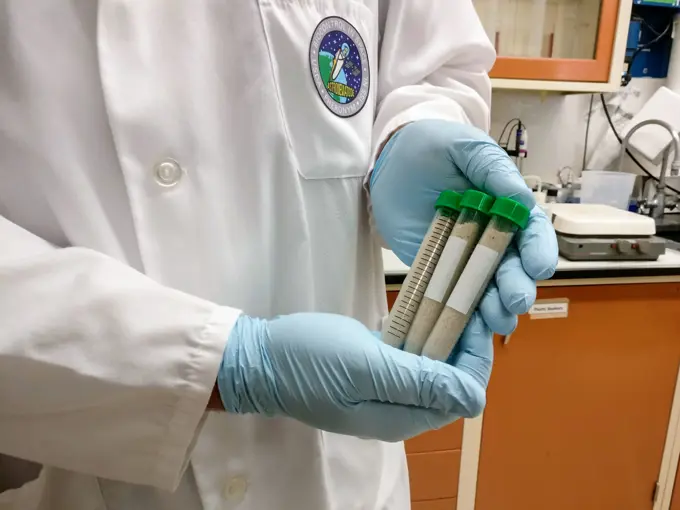
jsc2019e062136 (10/24/2019) --- Dr. Karl Shiller presents the loaded nematode tube samples. Microgravity Effect on Entomopathogenic Nematodes Ability to Find and Kill Insects (Module-85 Pheronym) tests the effects of microgravity on the movement and infection behavior of beneficial nematodes, which are used to control agricultural insect pests. The research looks at whether these nematodes can navigate through soil, infect insects and reproduce in space. It also looks at whether their symbiotic bacteria function normally in microgravity and has any effects on insect host physiology.Image Courtesy of: Fatma Kaplan (PI)
1589R-184578
Teacher and students working in science lab
4409-50061829
Madrid, 02/28/2020. Interview with Isabel Sola, director of the National Center for Biotechnology and coronavirus expert. Photo: Guillermo Navarro. ARCHDC.
824-63195666
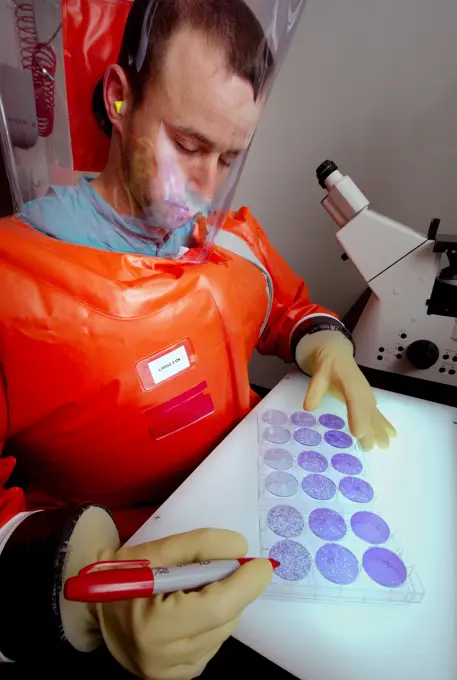
Depicted here in this 2007 photograph, was Centers for Disease Control microbiologist, and Special Pathogens Branch (SPB) staff member, Zachary Braden as he was in the process of counting viral plaques within fixed monolayers of cells, which had been set atop a light box . While inside the organization's Biosafety Level 4 (BSL-4) laboratory, this activity was taking place so that Mr. Braden would be able to titrate a viral stock. Zachary was outfitted in an orange air-tight, self-contained, positively-pressurized suit, which kept him free of possible contamination. The Special Pathogens Branch's (SPB) charter is the study of highly infectious viruses, many of them causing hemorrhagic manifestations in humans. Our daily work involves the investigation of viruses such as Ebola hemorrhagic fever, Marburg hemorrhagic fever, Lassa fever, Rift valley fever virus, Crimean-Congo hemorrhagic fever virus, arenaviruses and hantaviruses, and other recently identified and emerging viral diseases. A
1848-50829210
Scientist in the cold room at 4 degrees in the genetic engineering department in the faculty of biology at the University of Duisburg-Essen
6145-58971073
Kevin Grossman, left, principal investigator of the Gaseous Lunar Oxygen from Regolith Electrolysis (GaLORE) project, and Elspeth Petersen, a chemical engineer and member of the GaLORE team, check some of the projects hardware that will be used to melt lunar regolith - dirt and dust on the Moon made from crushed rock - simulants during a test inside a laboratory at Kennedys Neil Armstrong Operations and Checkout Building on Oct. 29, 2020. GaLORE was selected as an Early Career Initiative project by the agencys Space Technology Mission directorate, and the team was tasked with developing a device that could melt lunar regolith and turn it into oxygen. As NASA prepares to land the first woman and the next man on the Moon in 2024 as part of the Artemis program, technology such as this can assist with sustainable human lunar exploration and long-duration missions to Mars.
1848-54541773
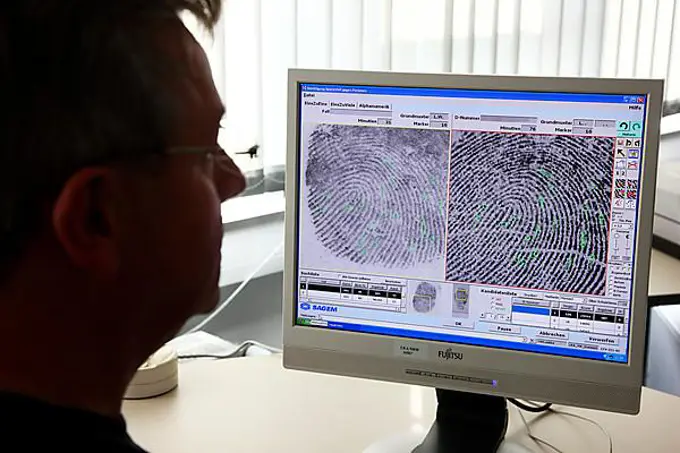
Kriminaltechnisches Institut, KTI, Forensic Science Institute, fingerprinting, analysis of fingerprinting traces, comparison to traces with the AFIS database at the Bundeskriminalamt, BKA, Federal Criminal Police Office, automated fingerprint ID system, Police, Landeskriminalamt, LKA, State Criminal Police Office, North Rhine-Westphalia, Germany, Europe
1899-61462215
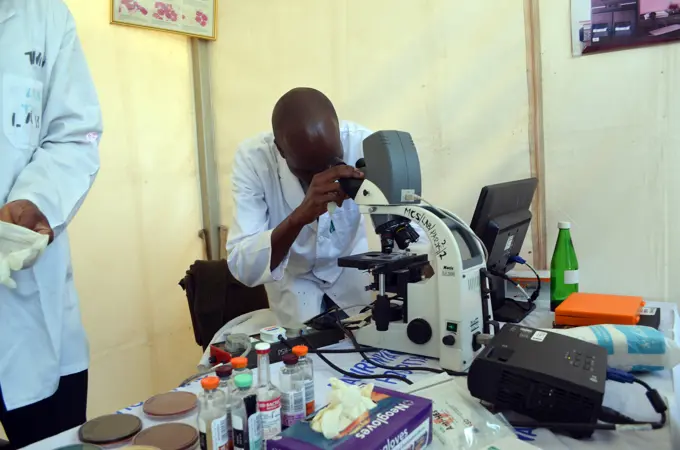
Noddy Nyengere a Scientist at Parirenyatwa Labs, examines samples under microscope at the open day held on the hospital grounds. Zimbabwe.
6145-45174614
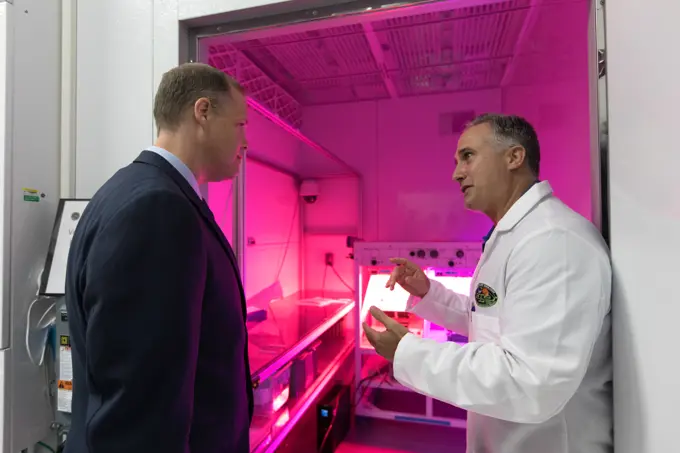
NASA Administrator Jim Bridenstine, at left, tours the Space Station Processing Facility at NASA's Kennedy Space Center in Florida, on Aug. 7, 2018. At right, Trent Smith, Veggie project manager, provides an update on the Veggie plant growth system on the International Space Station, and the control system in the laboratory. Bridenstine also received updates on research and technology accomplishments.
1848-V61674675
6145-44587187
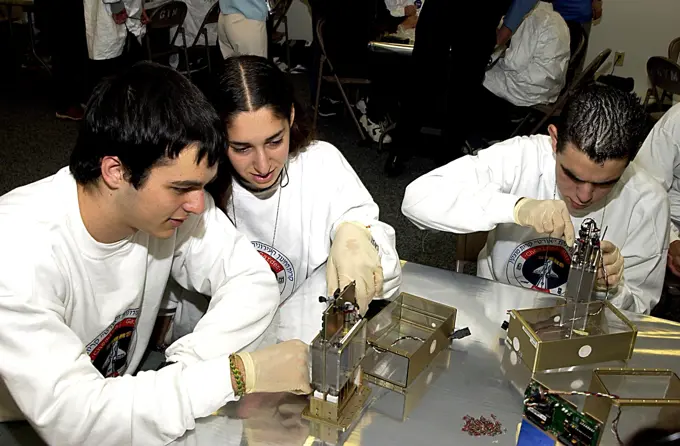
KENNEDY SPACE CENTER, FLA. - Students work on their experiments that will fly in SPACEHAB on Space Shuttle Columbia on mission STS-107. SPACEHAB's complement of commercial experiments includes six educational experiments designed and developed by students in six different countries under the auspices of Space Technology and Research Students (STARS), a global education program managed by SPACEHAB subsidiary Space Media. The countries represented are Australia, China, Israel, Japan, Liechtenstein and the United States. The student investigators who conceived these experiments will monitor their operations in space. The experiments will be housed in BioServe Space Technologies' Isothermal Containment Module (ICM --a small temperature-controlled facility that provides experiment support such as physical containment, lighting, and video imaging) and stowed in a middeck-size locker aboard the SPACEHAB Research Double Module.
6145-45224283
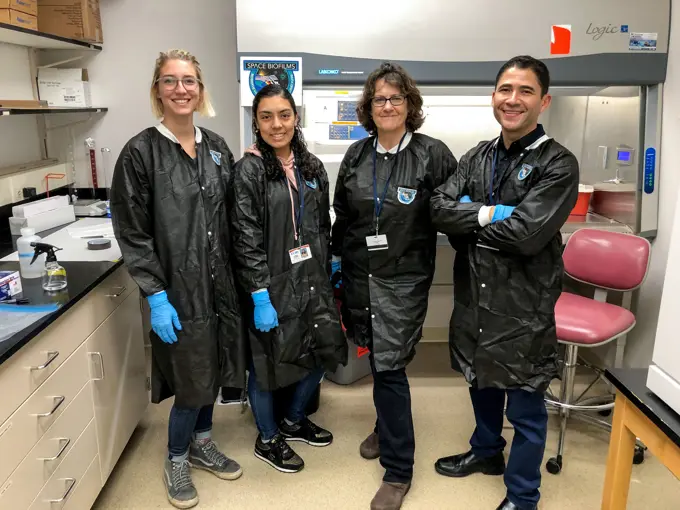
jsc2020e003402 (10/29/2019) --- The Space Bioflilms team, From left to right: University of Colorado, Boulders (CU) graduate students Rylee Schauer and Pamela Flores, Implementation Project Manager, BioServes Carla Hoehn, and the Principal Investigator, CUs Luis Zea, Ph.D. The Characterization of Biofilm Formation, Growth, and Gene Expression on Different Materials and Environmental Conditions in Microgravity (Space Biofilms) investigation characterizes the mass, thickness, structure, and associated gene expression of biofilms that form in space by analyzing different microbial species grown on different materials. Biofilm formation can cause equipment malfunction and human illnesses, and could be a serious problem on future long-term human space missions.
PREVIOUS
of 3
NEXT
2401 S. Ervay, Suite 206
Dallas, Texas 75215
United States
Browse
CategoriesGalleriesFree Research
For Creators
License Your ContentSuperStock For StudentsFrame of Mind BlogContributor PortalNew Image SpotlightLicense AI Imagery
Resources
About UsLicensingTerms & ConditionsAPI AccessPrivacyPricing
Contact
+1 866 236 0087help@superstock.com Contact form
©2026 SuperStock. All Rights Reserved. -B
This site is protected by reCAPTCHA and Google Privacy Policy and Terms of Service apply.