Exploration of Celestial Bodies

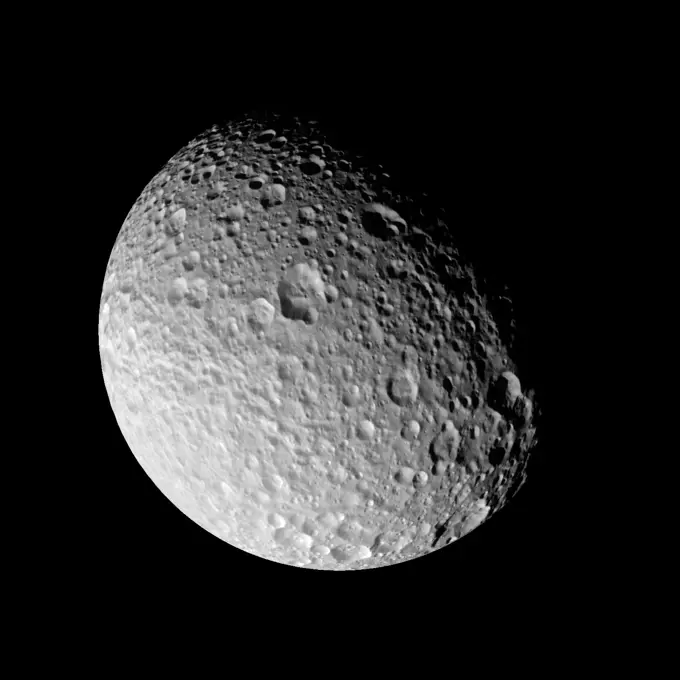
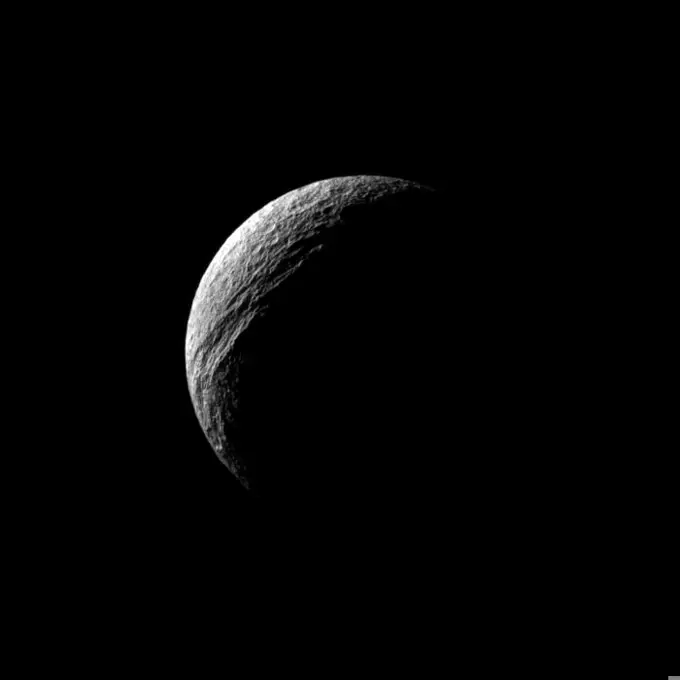
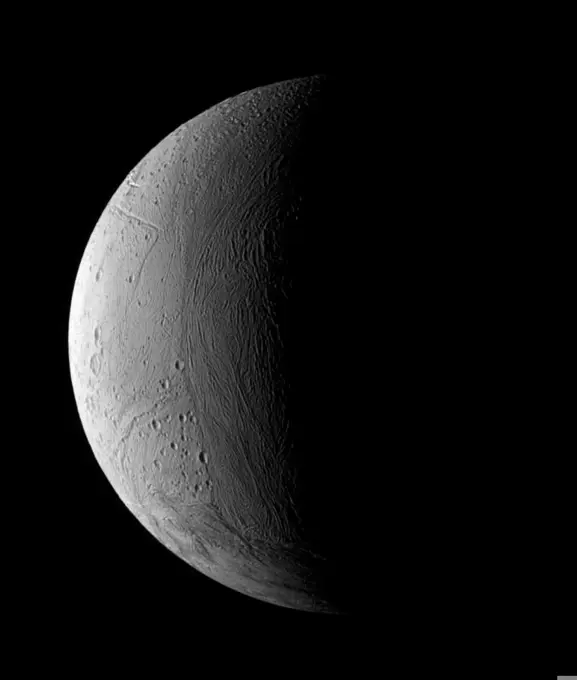
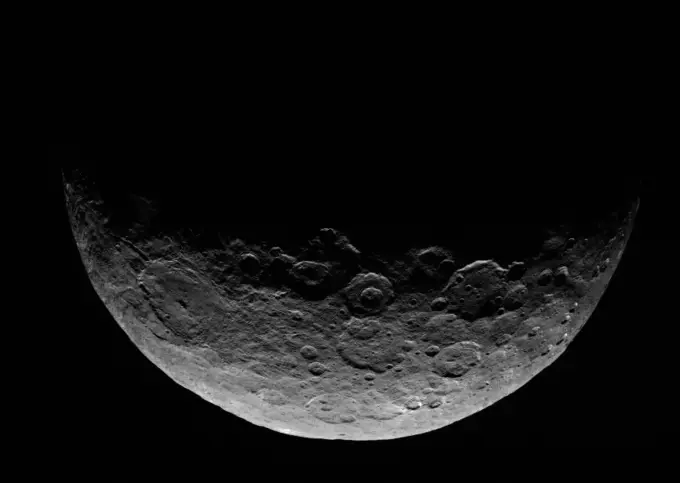
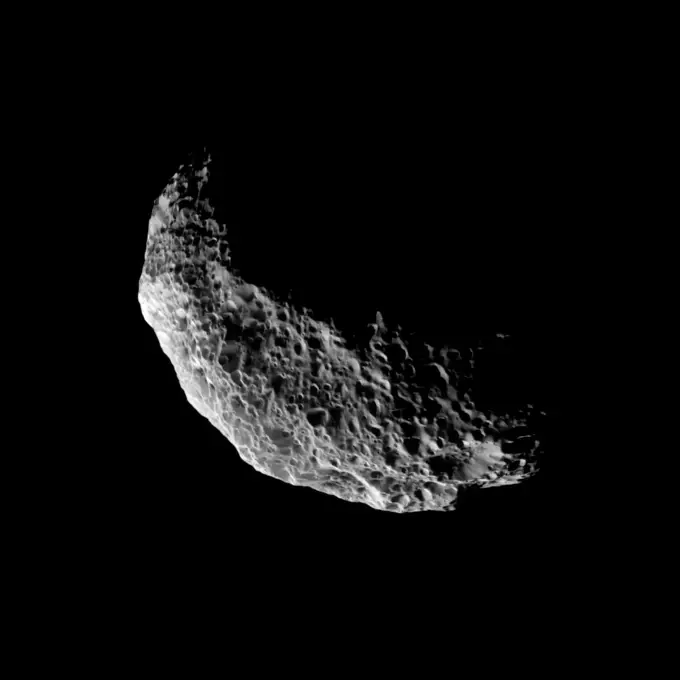
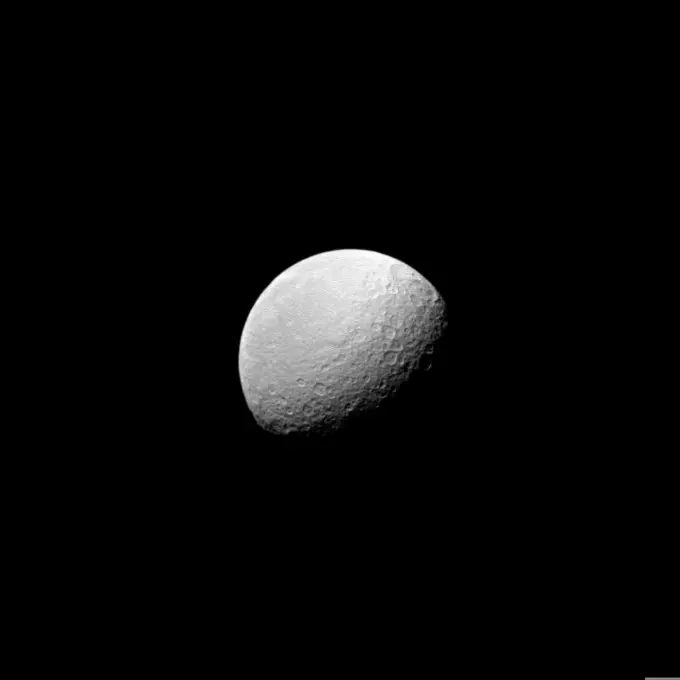
This cluster features detailed images of moons and asteroids showcasing craters, terrain features, and shadows, set against a dark backdrop.
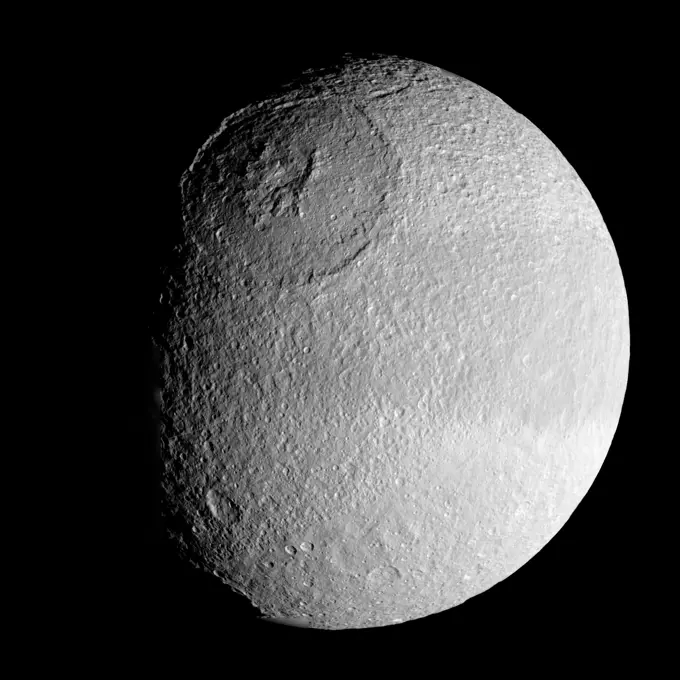
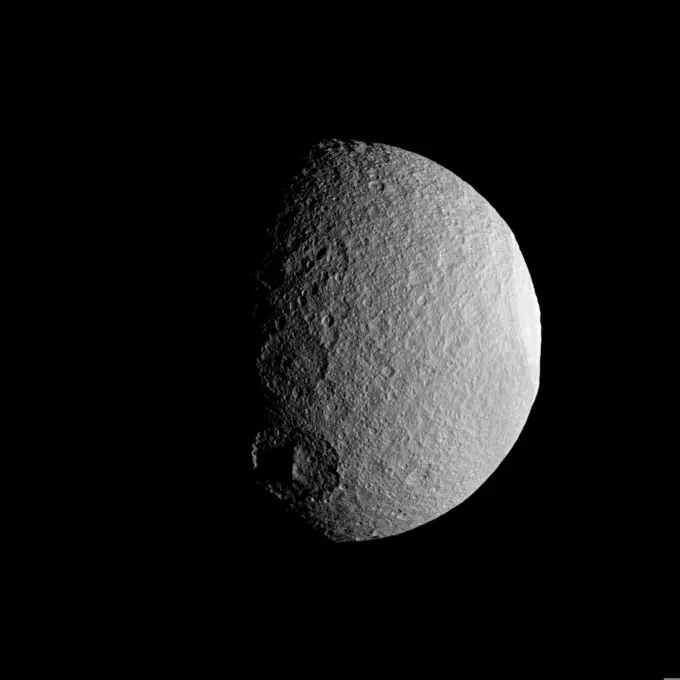
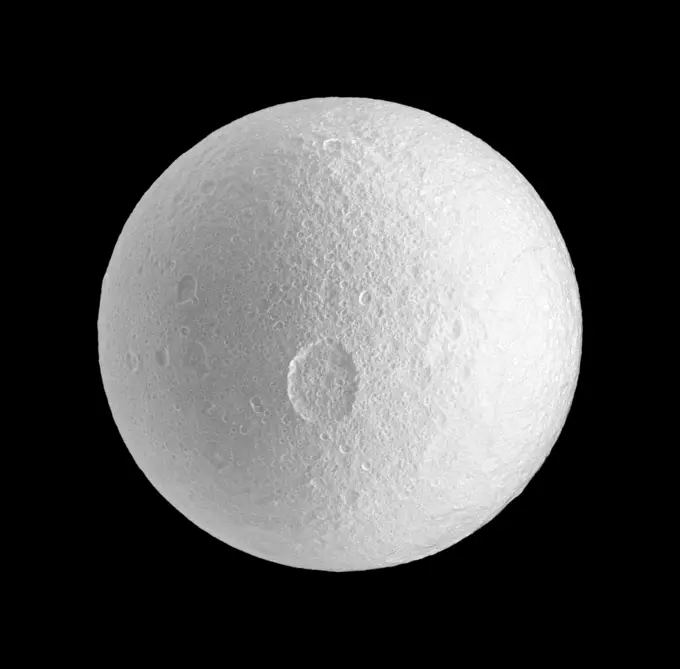
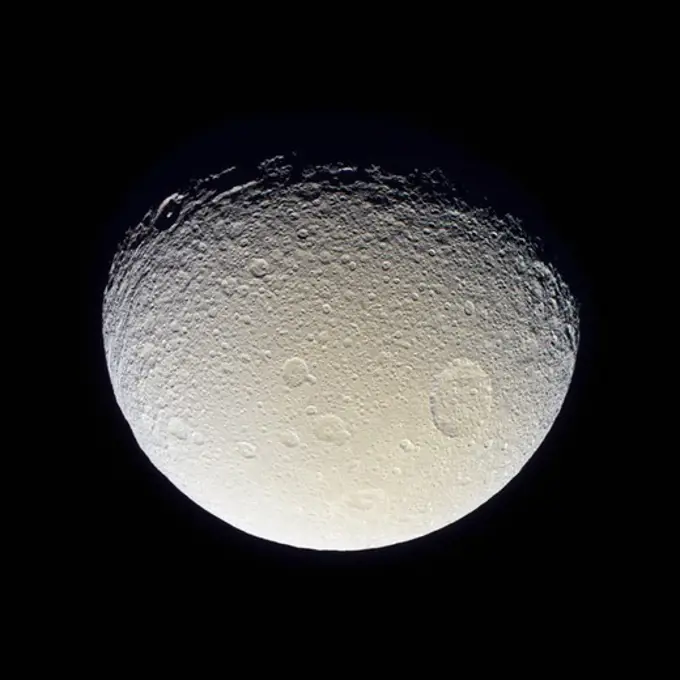
The Crown of Tethys
The Crown of Tethys

Assets in this Story

6145-44688315
The Crown of Tethys
6145-44631383
Great White Splat
6145-44904475
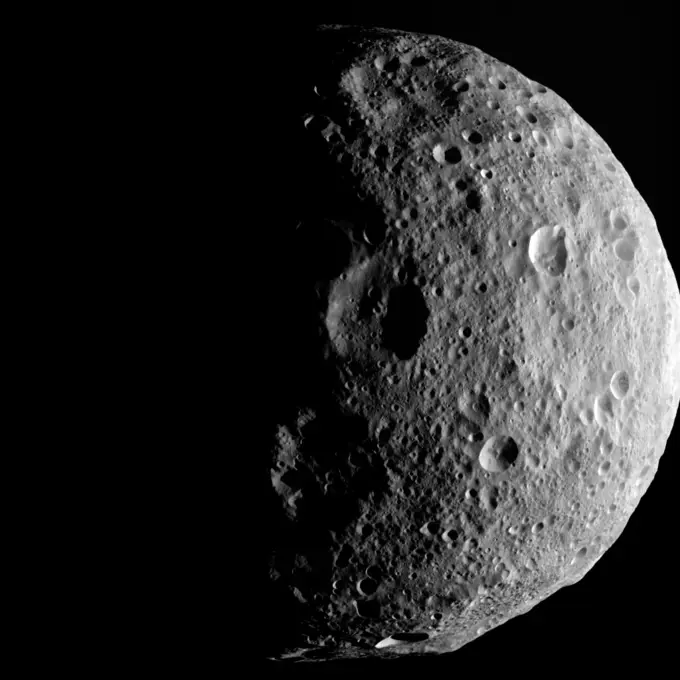
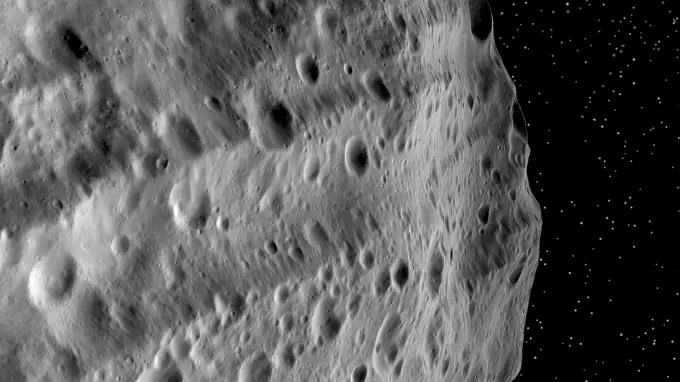
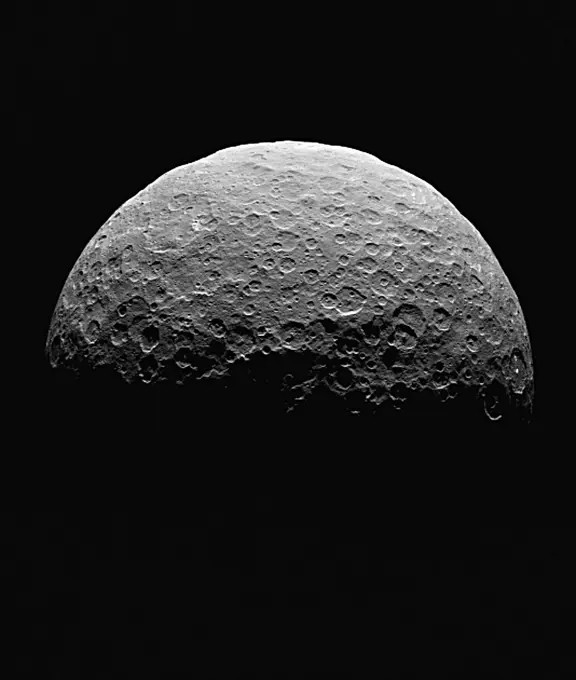
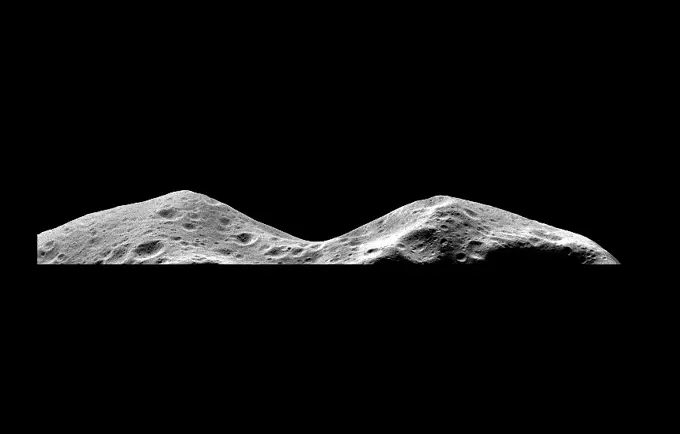
The shadowy outlines of the terrain in Vesta's northern region are visible in this image from NASA's Dawn spacecraft. The image comes from the last sequence of images Dawn obtained of the giant asteroid Vesta as it departed the giant asteroid.
6145-45128243
Occator Crater and Ahuna Mons appear together in this view obtained by NASA's Dawn spacecraft on Feb. 11, 2017. Ahuna Mons, on the limb at right, is a mountain 2.5 miles (4 kilometers) tall. Occator hosts the mysterious 'bright spots' called faculae.
6145-44669436
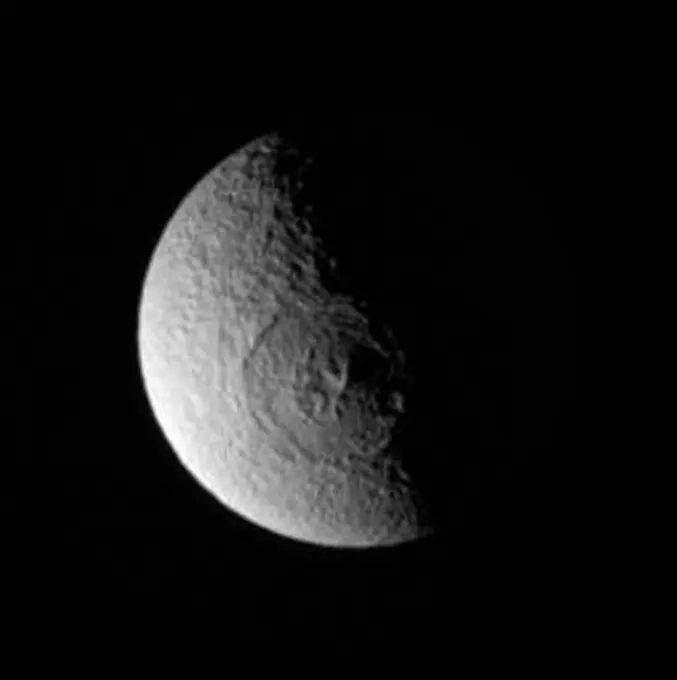
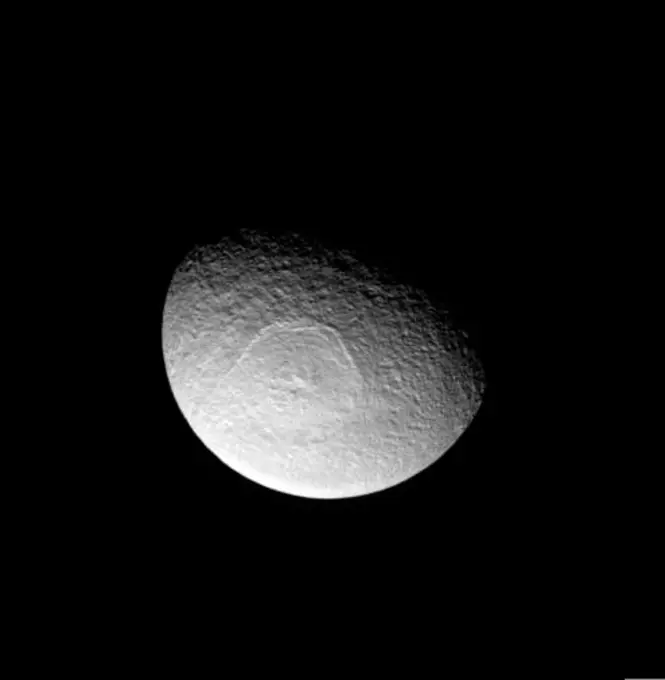
The Cassini spacecraft stares directly into the great Odysseus impact basin on Tethys. Peaks near the crater's center cast long shadows toward the east. The elevated eastern rim of the crater catches sunlight
6145-44634298
A World of Hurt
6145-45093873
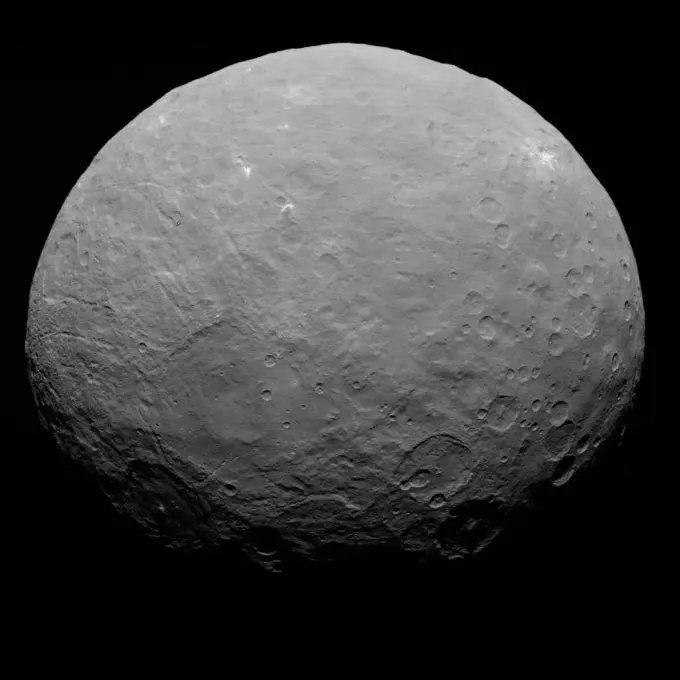
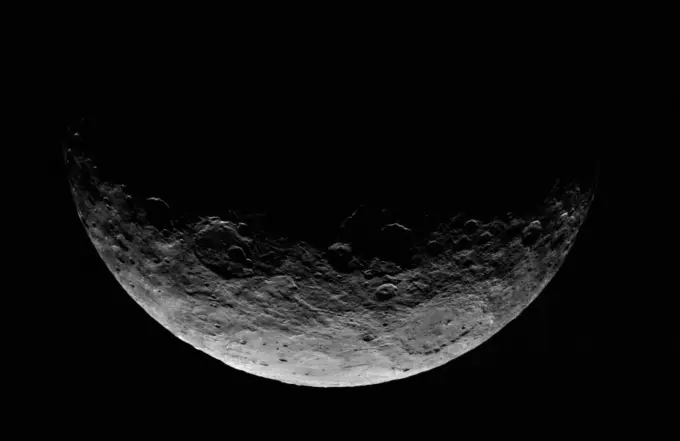
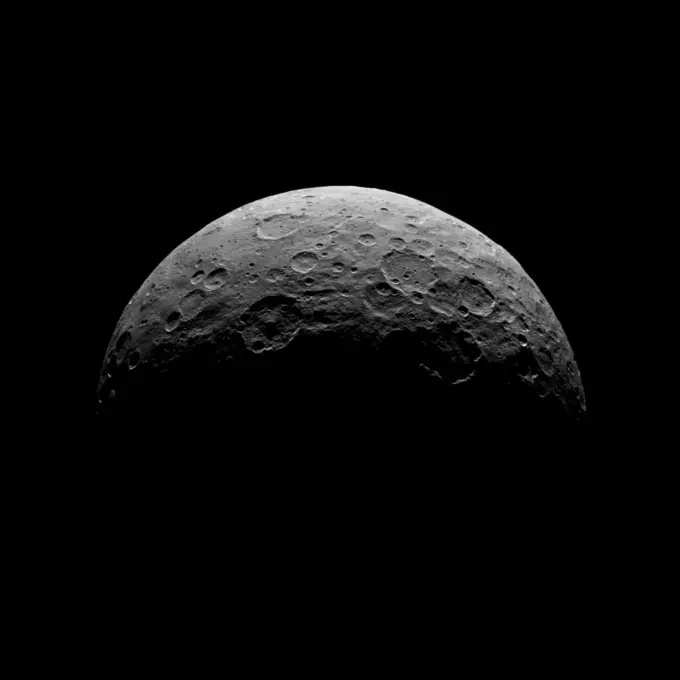
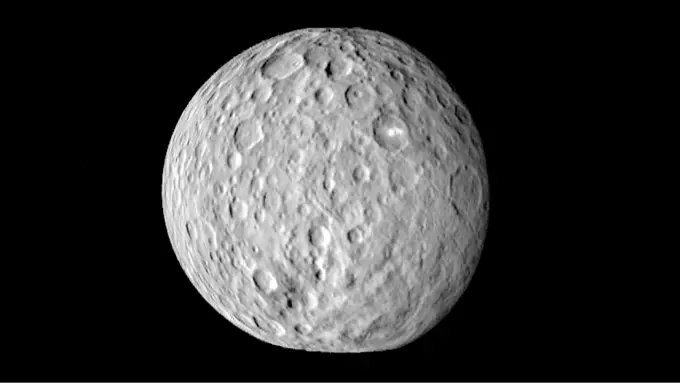
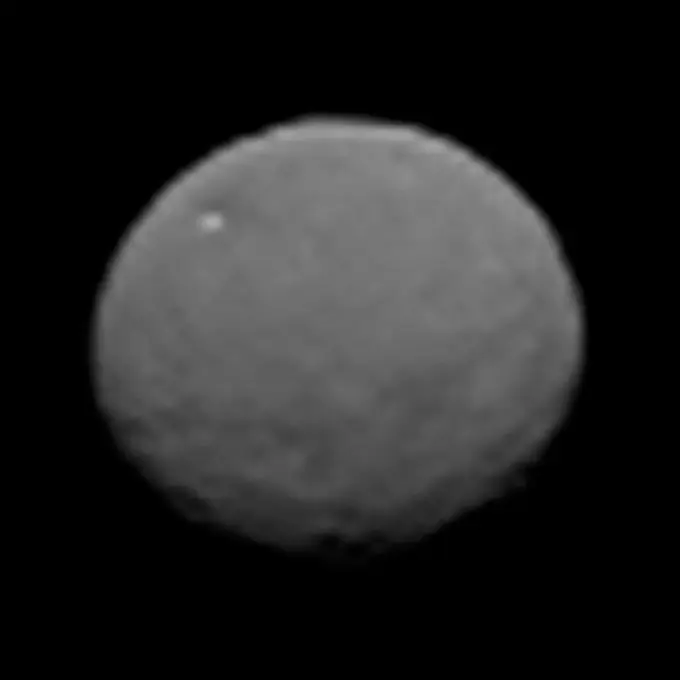
This image of Ceres is part of a sequence taken by NASA's Dawn spacecraft on May 7, 2015, from a distance of 8,400 miles (13,600 kilometers).
6145-44746539
Penelope on Tethys
6145-45093887
This image of Ceres is part of a sequence taken by NASA's Dawn spacecraft on May 7, 2015, from a distance of 8,400 miles (13,600 kilometers).
6145-45093027
This image of Ceres is part of a sequence taken by NASA's Dawn spacecraft April 24 to 26, 2015, from a distance of 8,500 miles (13,500 kilometers).
6145-44941200
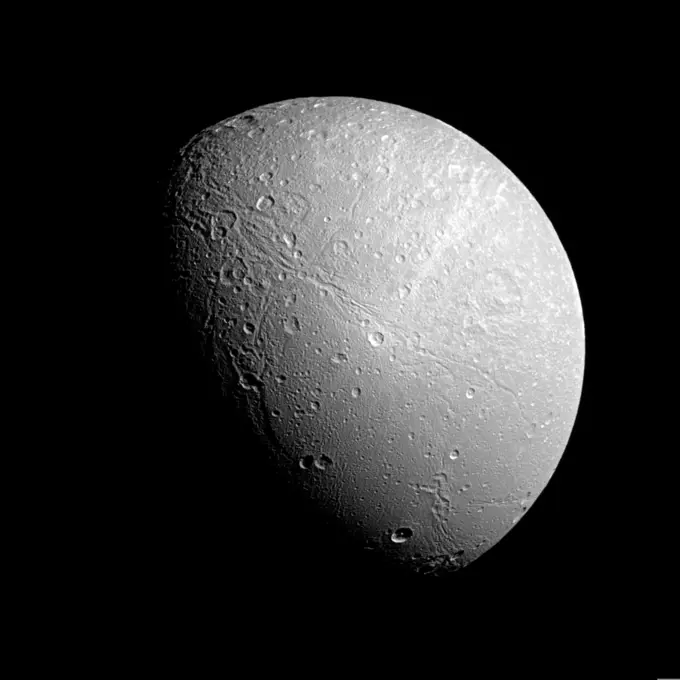
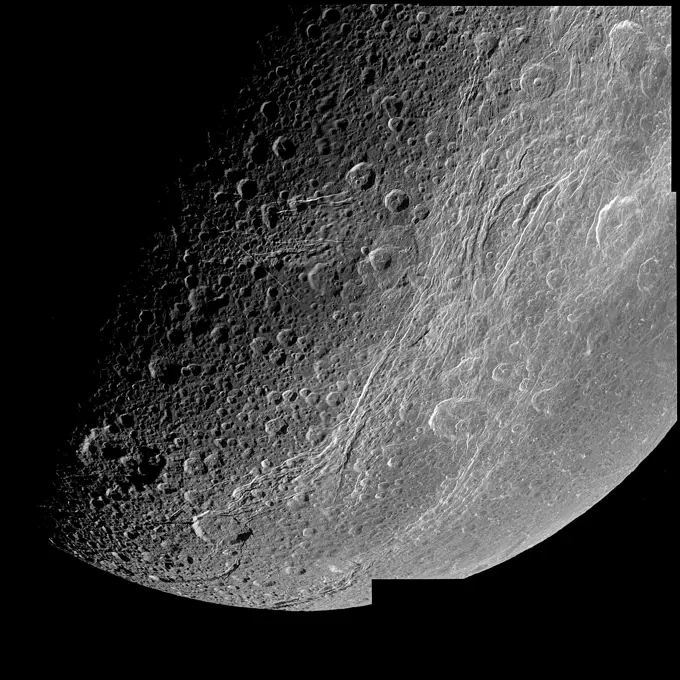
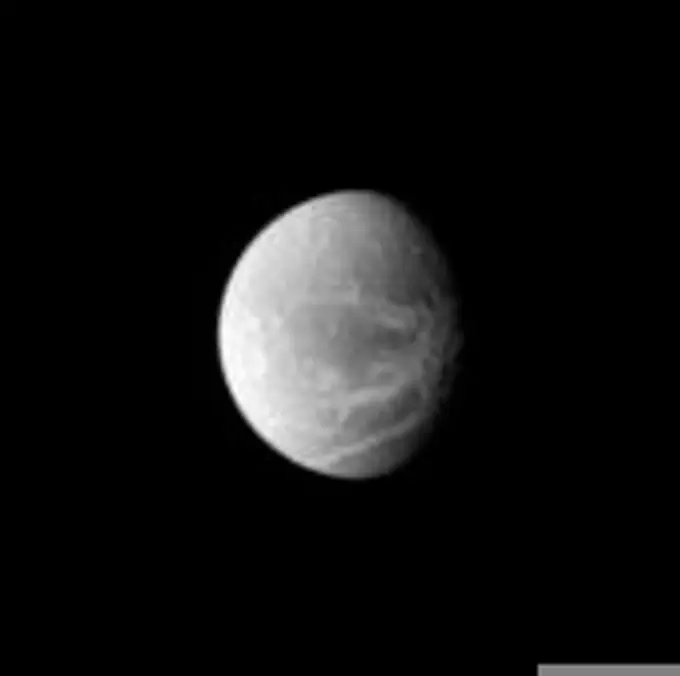
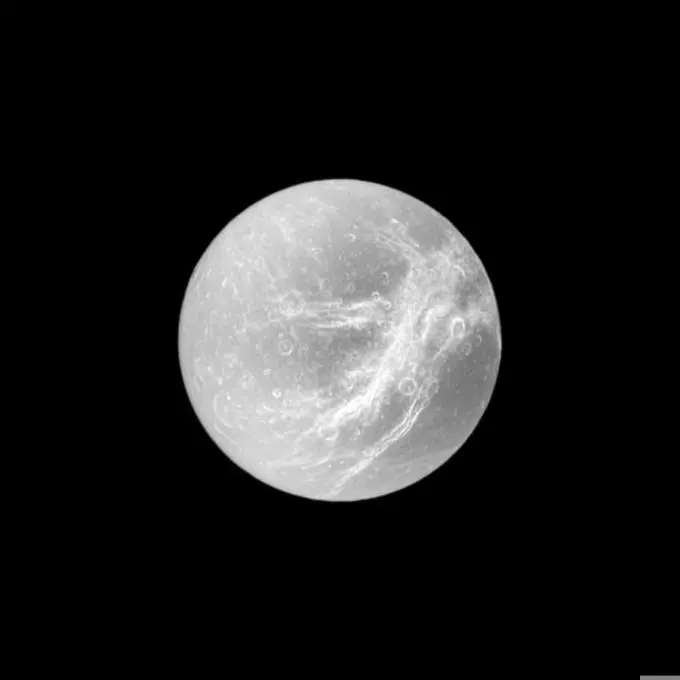
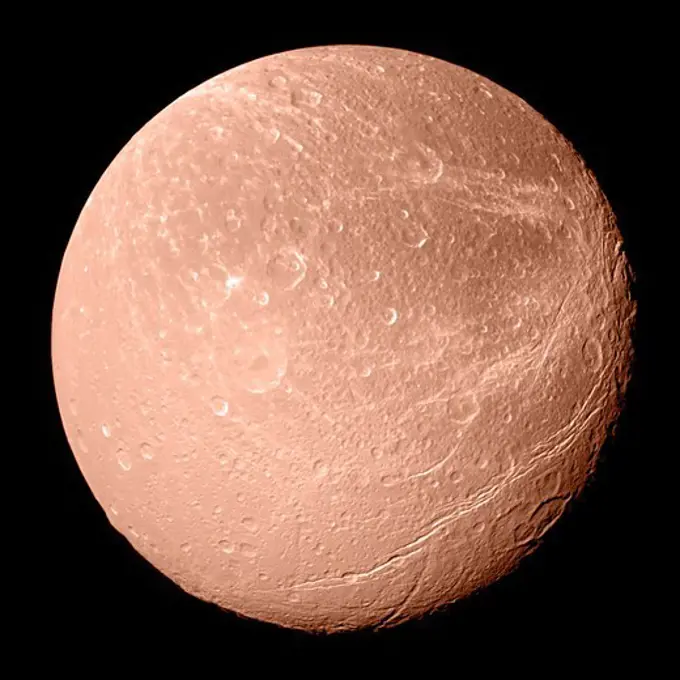
The famed wispy terrain on Saturn's moon Dione is front and center in this recent image captured by NASA's Cassini spacecraft. The 'wisps' are fresh fractures on the trailing hemisphere of the moon's icy surface.
6145-44703093
Dione: North Polar View
6145-45092843
This image of Ceres is part of a sequence taken by NASA's Dawn spacecraft April 24 to 26, 2015, from a distance of 8,500 miles (13,500 kilometers).
6145-58967340
NASA's Dawn spacecraft obtained this image of terrestrial mountains on asteroid Vesta with its framing camera on Aug. 26, 2011. The image has a resolution of about 260 meters per pixel.
6145-44626420
Highest Resolution View of Dione
6145-44873086
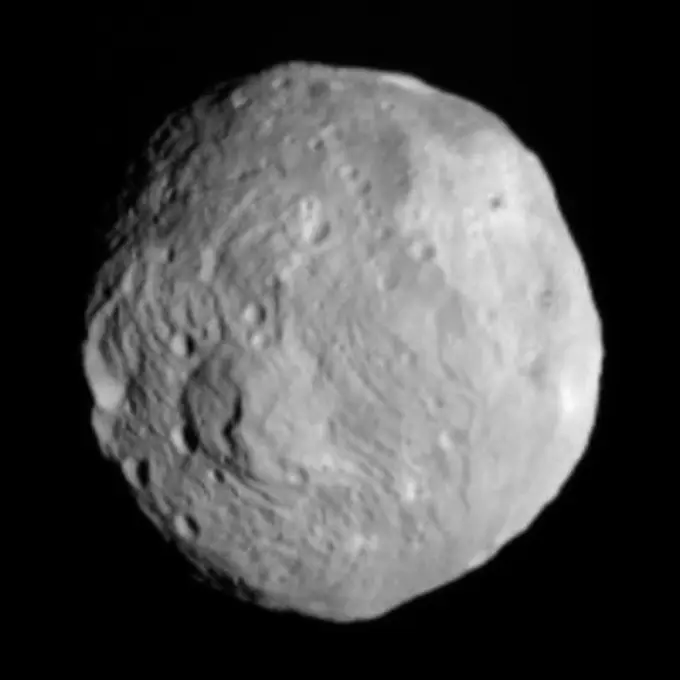
NASA's Dawn spacecraft obtained this image of the giant asteroid Vesta with its framing camera on July 9, 2011. Vesta is also considered a protoplanet because it is a large body that almost became a planet.
6145-45092848
This image of Ceres is part of a sequence taken by NASA's Dawn spacecraft April 24 to 26, 2015, from a distance of 8,500 miles (13,500 kilometers).
6145-44694337
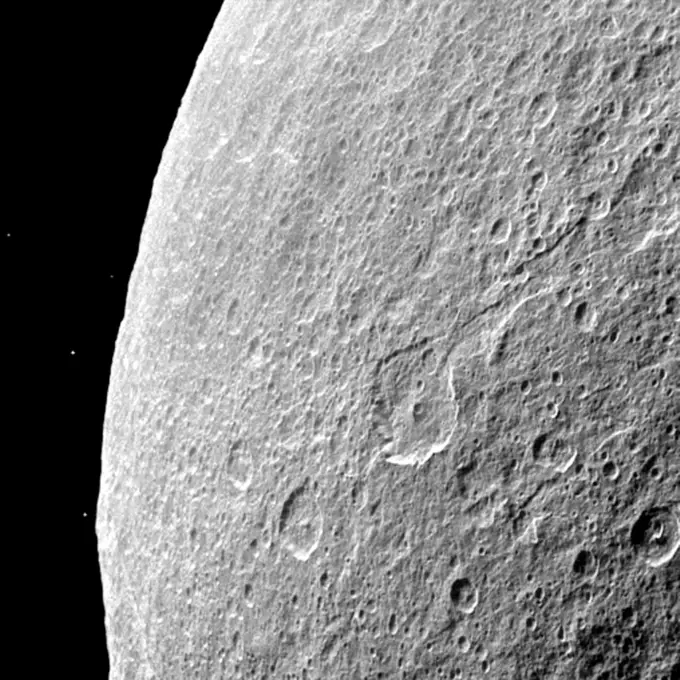
Rhea's Pitted Profile
6145-44748322
Dione's Icy Wisps
4389-222
Saturn's Moon Dione Seen by Cassini
6145-44691720
A Fresh Face
6145-44637163
Dione in Full View
6145-44659997
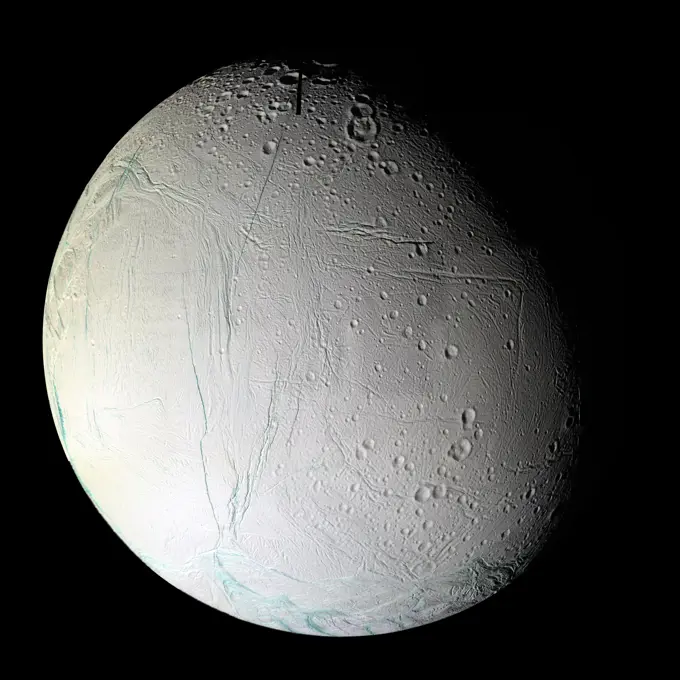
A world whose mysteries are just coming to light, Enceladus has enchanted scientists and non-scientists alike. With its potential for near-surface liquid water, the icy moon may be the latest addition to the list of possible abodes for life
6145-44632956
Diversity of Impacts
6145-44518741
Eros' Battered Surface
6145-44825973
Sunlight illuminates the deep cut of Ithaca Chasma on Saturn's moon Tethys. Ithaca Chasma runs roughly north-south for more than 1,000 kilometers (620 miles) on Tethys in this image captured by NASA's Cassini spacecraft.
6145-44641716
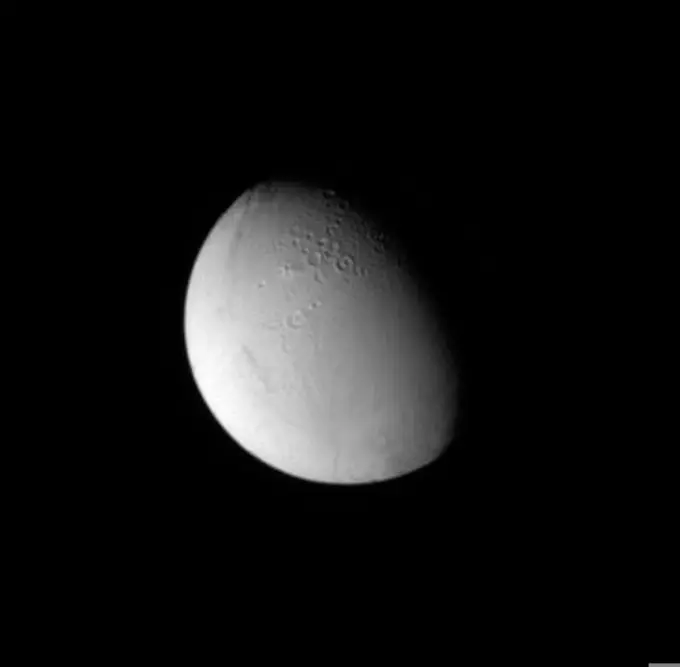
Youthful Enceladus
6145-45092612
This image of Ceres is part of a sequence taken by NASA's Dawn spacecraft April 24 to 26, 2015, from a distance of 8,500 miles (13,500 kilometers).
6145-45264869
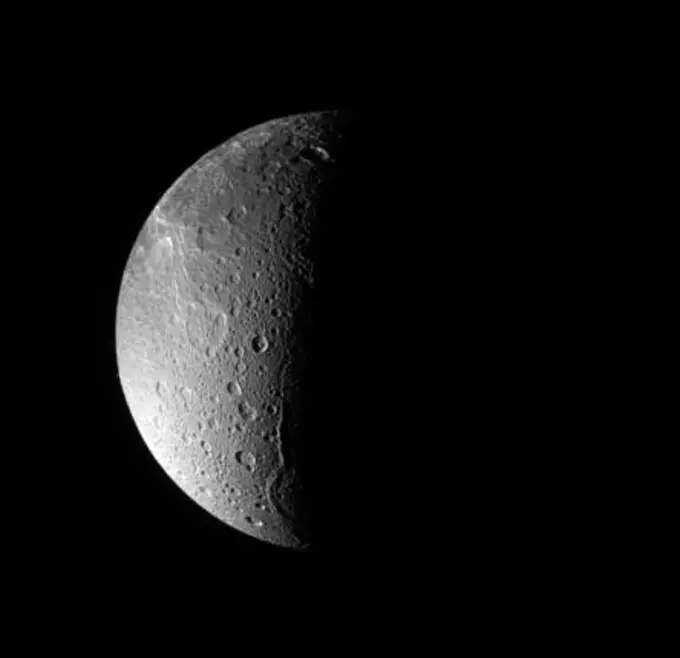
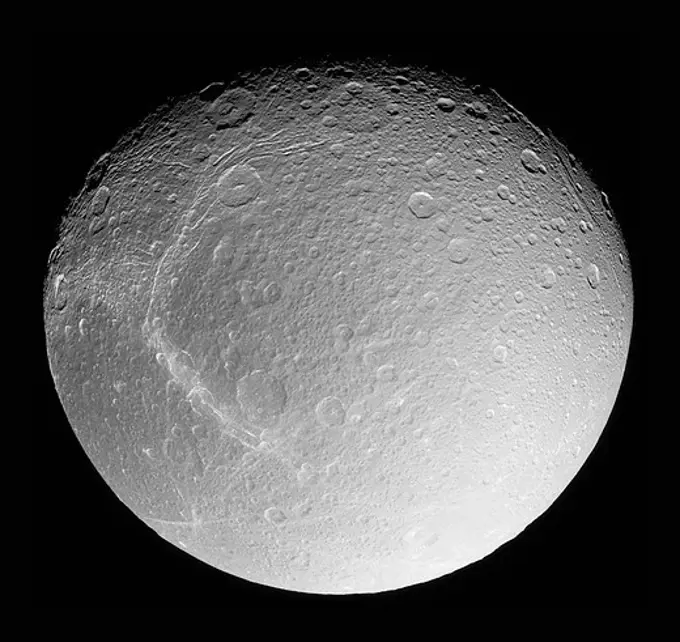
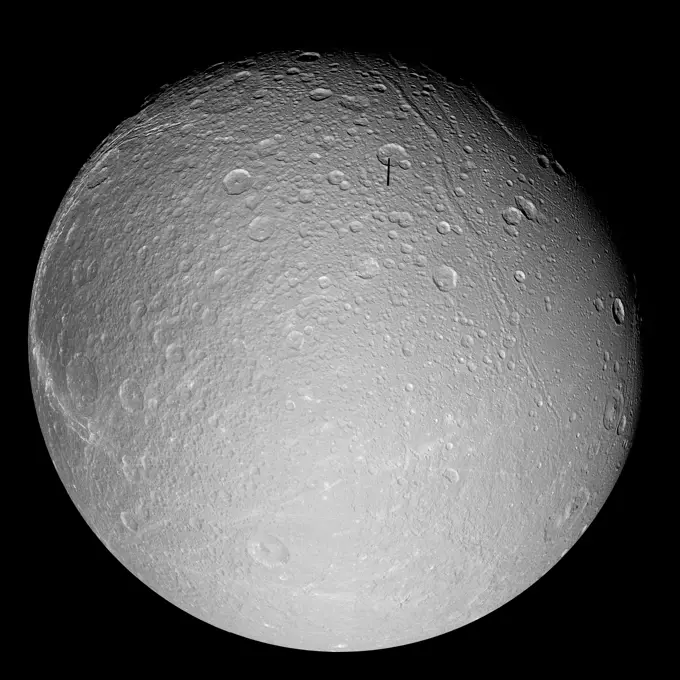
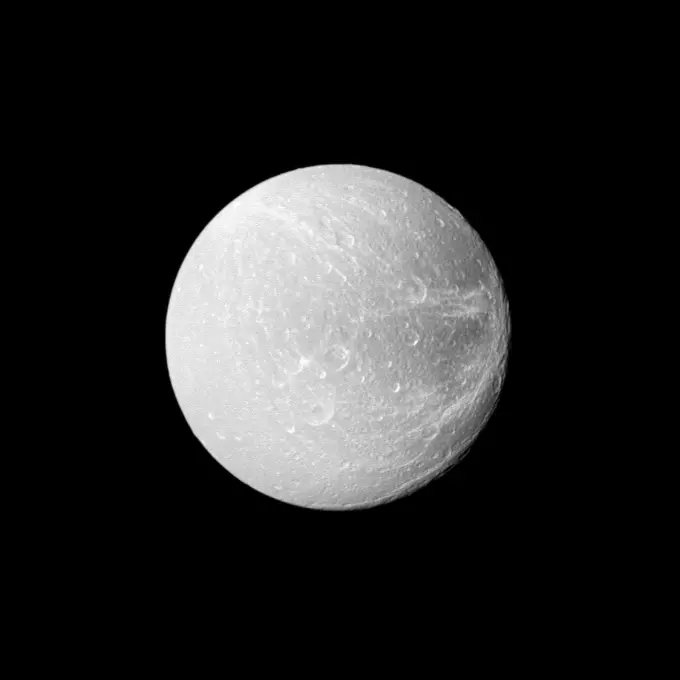
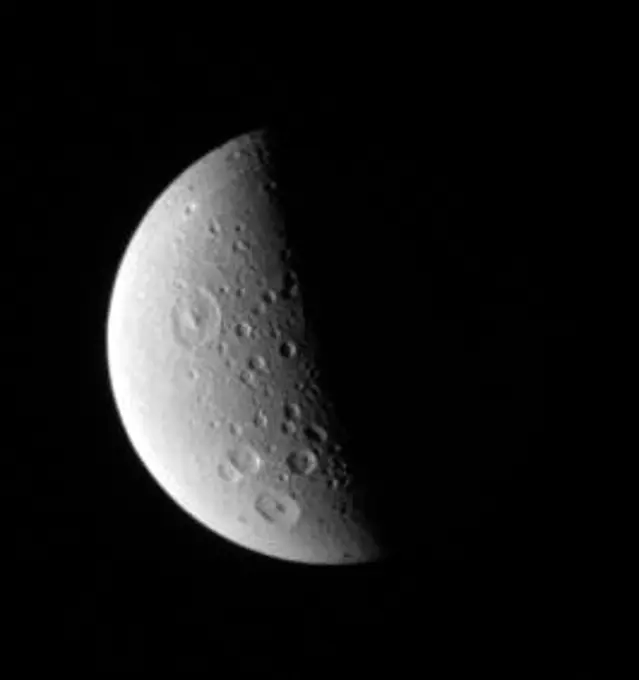
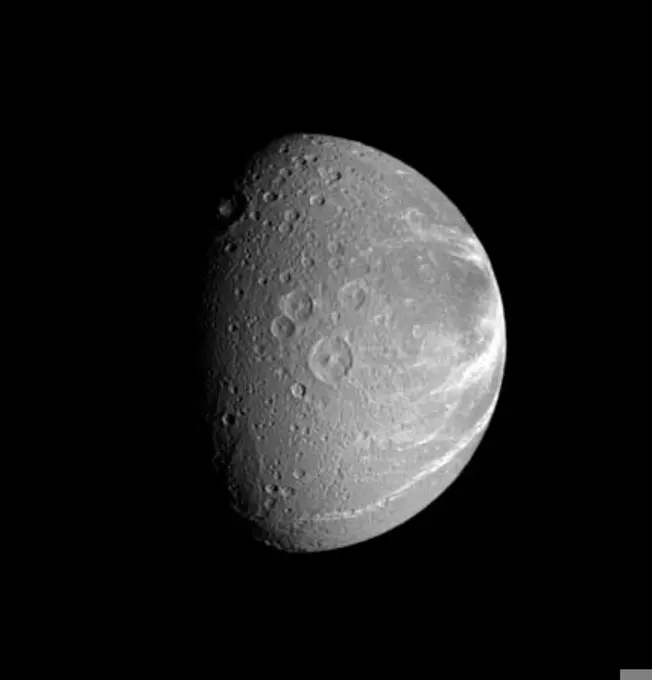
Cassini captured this striking view of Saturn's moon Dione on July 23, 2012. Dione is about 698 miles (1,123 kilometers) across. Its density suggests that about a third of the moon is made up of a dense core (probably silicate rock) with the remainder of its material being water ice. At Dione's average temperature of -304 degrees Fahrenheit (-186 degrees Celsius), ice is so hard it behaves like rock. The image was taken with Cassini's narrow-angle camera at a distance of approximately 260,000 miles (418,000 kilometers) from Dione, through a polarized filter and a spectral filter sensitive to green light. The Cassini spacecraft ended its mission on Sept. 15, 2017.
6145-44843132
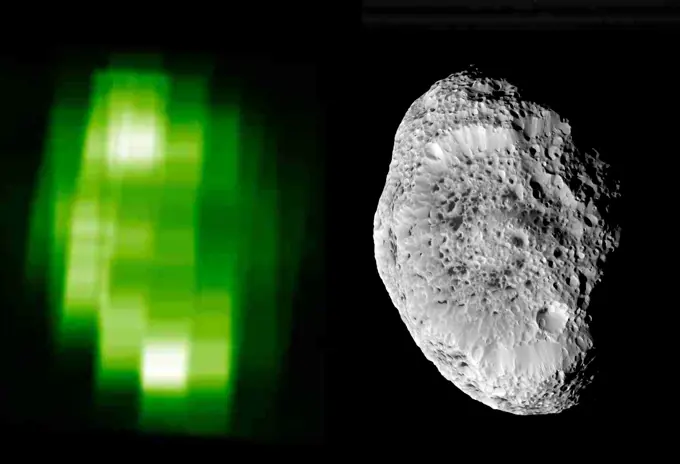
NASA's Cassini spacecraft captures a view of the southern latitudes of Saturn's tumbling moon Hyperion. Lit terrain seen here is mostly in the southern hemisphere of Hyperion. The south pole of the moon is near the bottom of the illuminated terrain.
6145-44828343
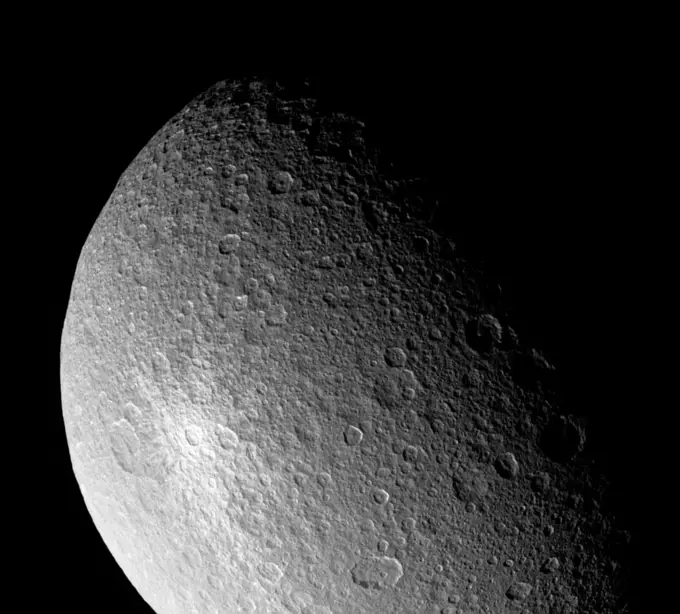
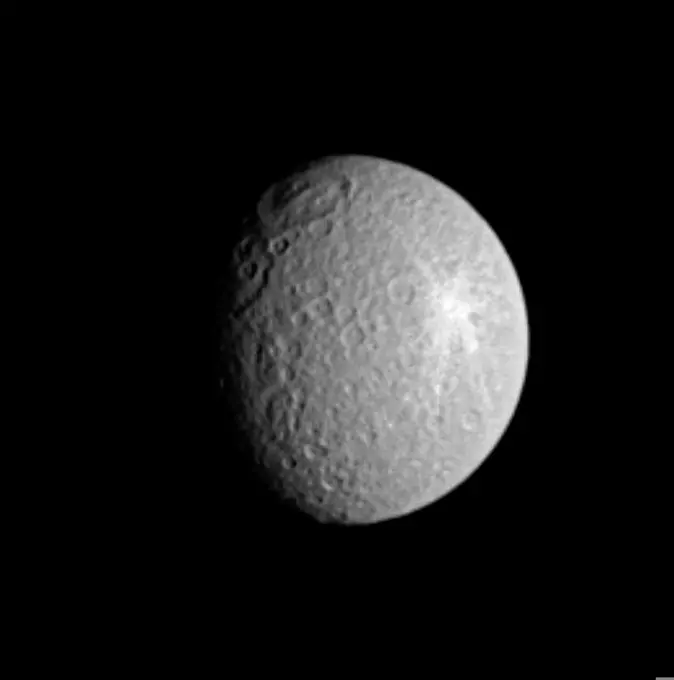
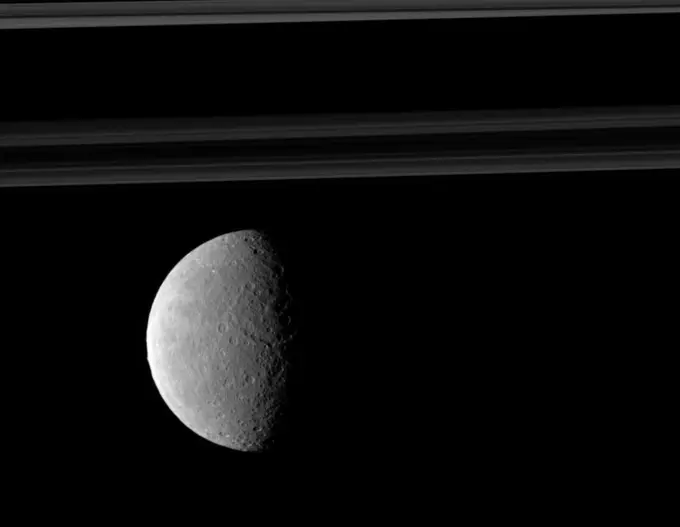
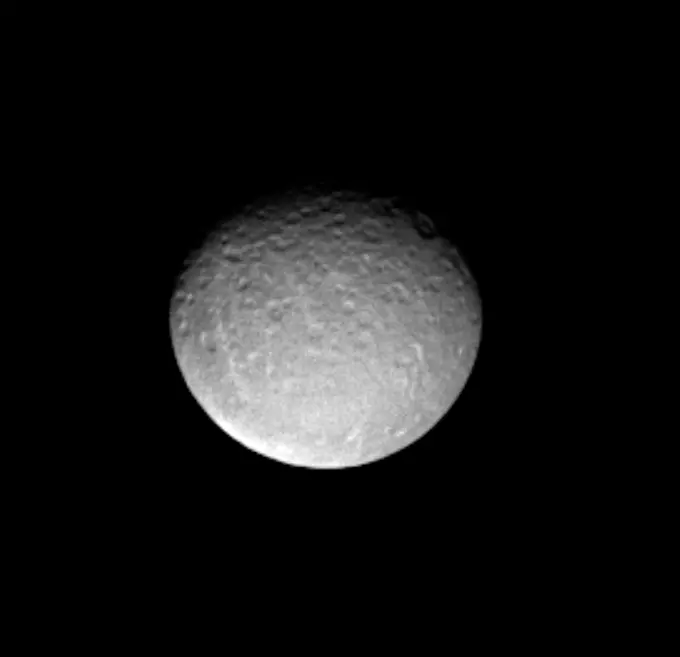
NASA's Cassini spacecraft looks to the cratered surface of Saturn's second largest moon, Rhea.
6145-45016767
This full view of the giant asteroid Vesta was taken by NASA's Dawn spacecraft, as part of a rotation characterization sequence on July 24, 2011, at a distance of 3,200 miles and shows impact craters of various sizes and grooves parallel to the equator.
4239-57494224
Lunar crescent
6145-44888360
This image from NASA's Dawn mission shows huge grooves on the giant asteroid Vesta that were the result of mega impacts at the south pole.
6145-44830969
Saturn's rings appear curved in this view from NASA's Cassini spacecraft, which also shows the moon Janus in the distance. Janus is at the bottom of the image and is farther from the spacecraft than the rings are.
6145-44506441
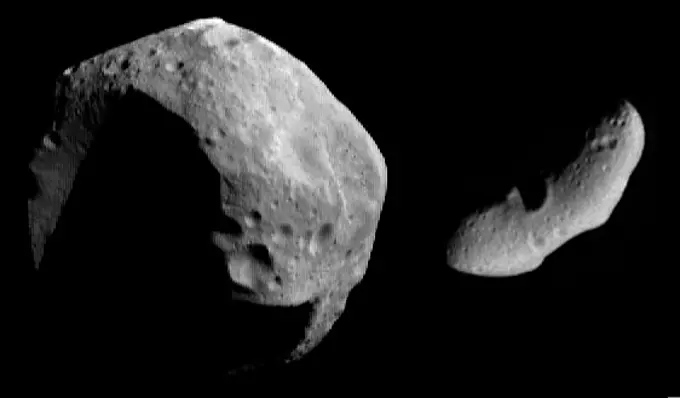
Two Very Different Asteroids
1746-19670802
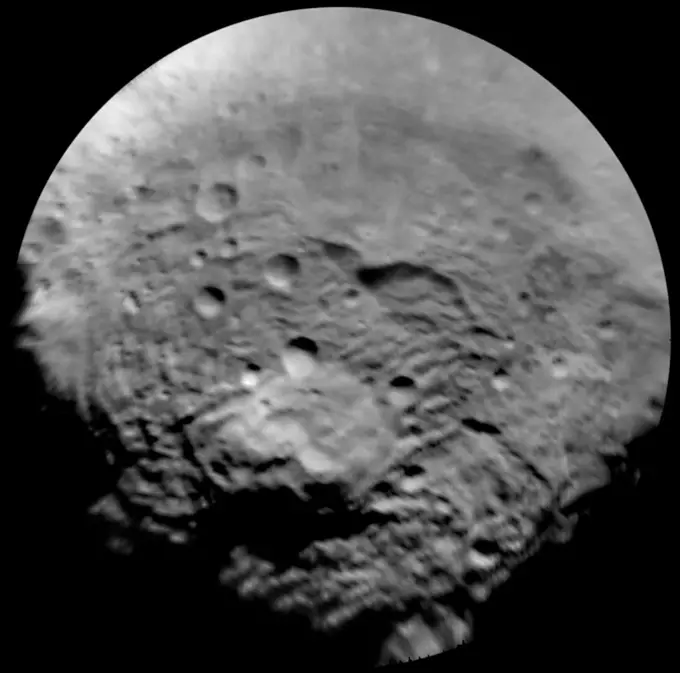
This image, taken by the framing camera instrument aboard NASA's Dawn spacecraft, shows the south polar region of this object, which has a diameter of 330 miles (530 kilometers). The image was taken through the clear filter on July 9, 2011, as part of a rotation characterization sequence, and it has a scale of about 2.2 miles (3.5 kilometers) per pixel. To enhance details, the resolution was enlarged to .6 miles (1 kilometer) per pixel. This region is characterized by rough topography, a large mountain, impact craters, grooves and steep scarps. The original image was map-projected, centered at 55 degrees southern latitude and 210 degrees eastern longitude.
6145-44853471
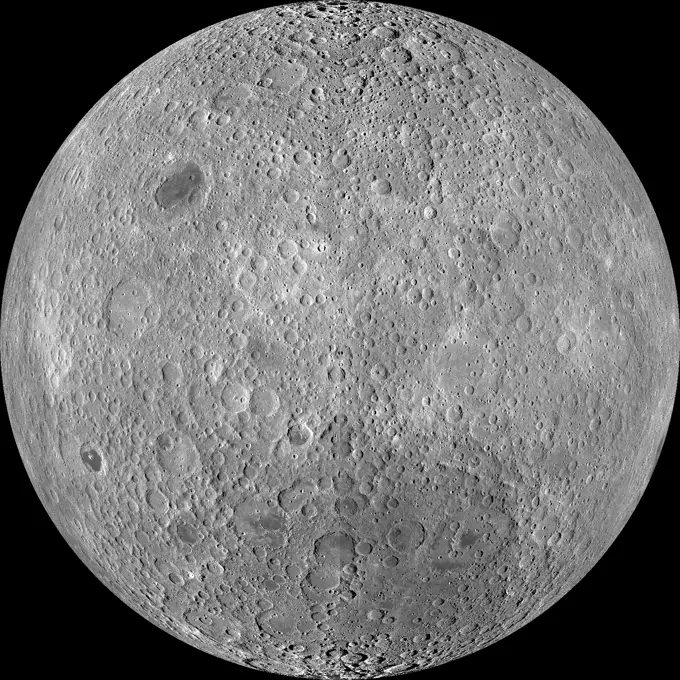
NASA image release March 11, 2011 Caption The lunar farside as never seen before! LROC WAC orthographic projection centered at 180° longitude, 0° latitude.
6145-44497233
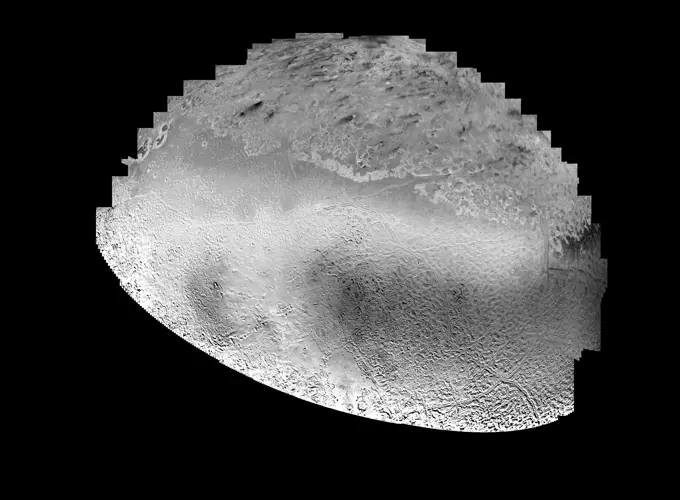
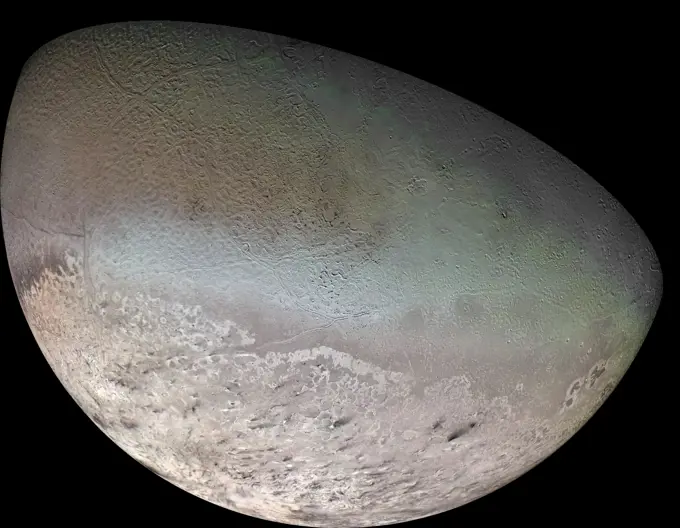
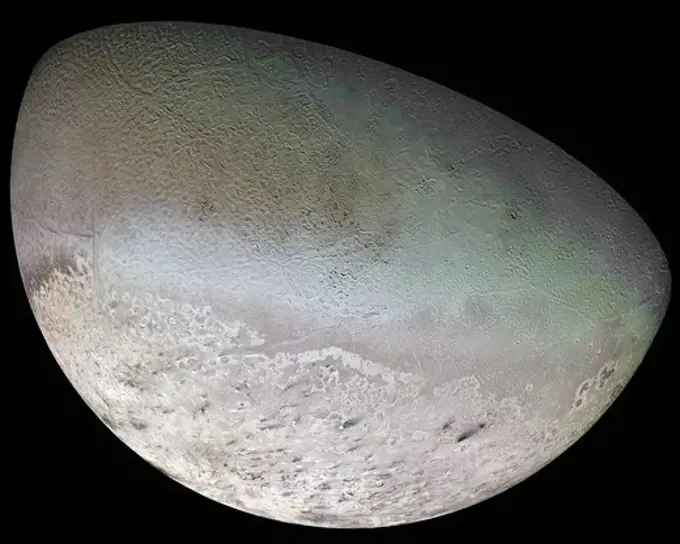
Mosaic of Triton constructed from 16 individual images. After globally minimizing the camera pointing errors, the frames we reprocessed by map projections, photometric function removal and placement in the mosaic.
6145-44824430
Wispy terrain stretches across the trailing hemisphere of Saturn's moon Dione on the right of this image taken by NASA's Cassini spacecraft during the spacecraft's flyby on April 7, 2010.
6145-44680758
Rhea in Saturnshine
6145-45092511
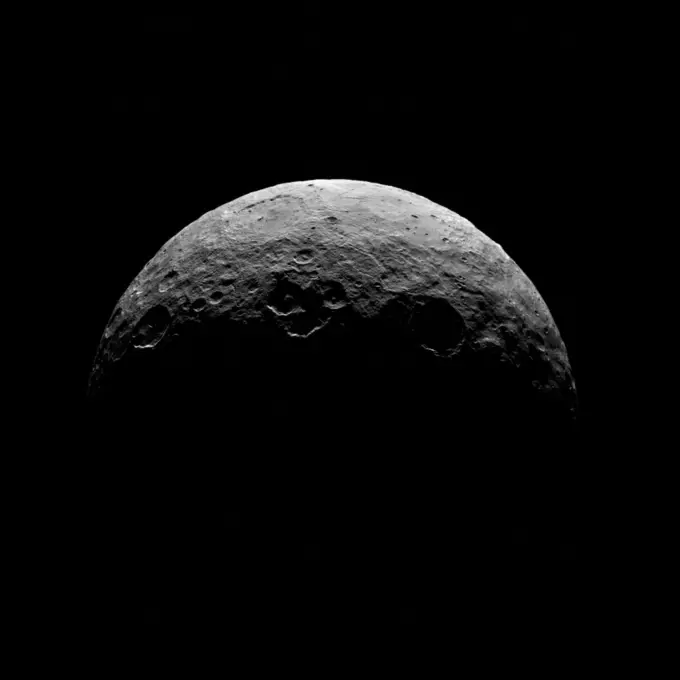
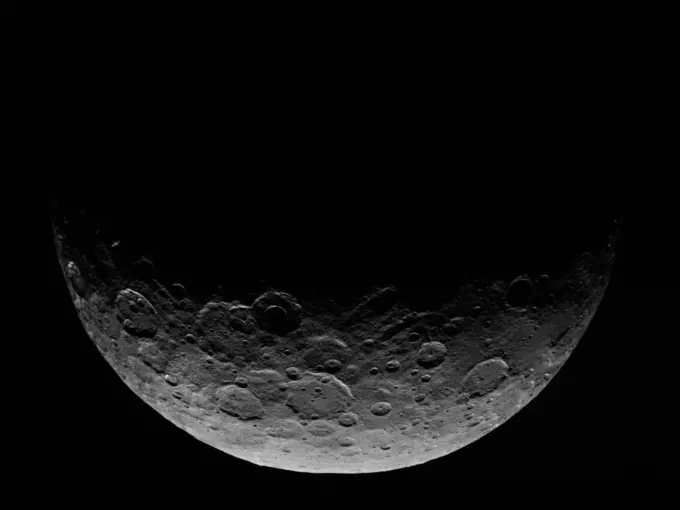
This frame from an animated sequence of images shows northern terrain on the sunlit side of dwarf planet Ceres as seen by NASA's Dawn spacecraft on April 14 and 15, 2015.
6145-44898482
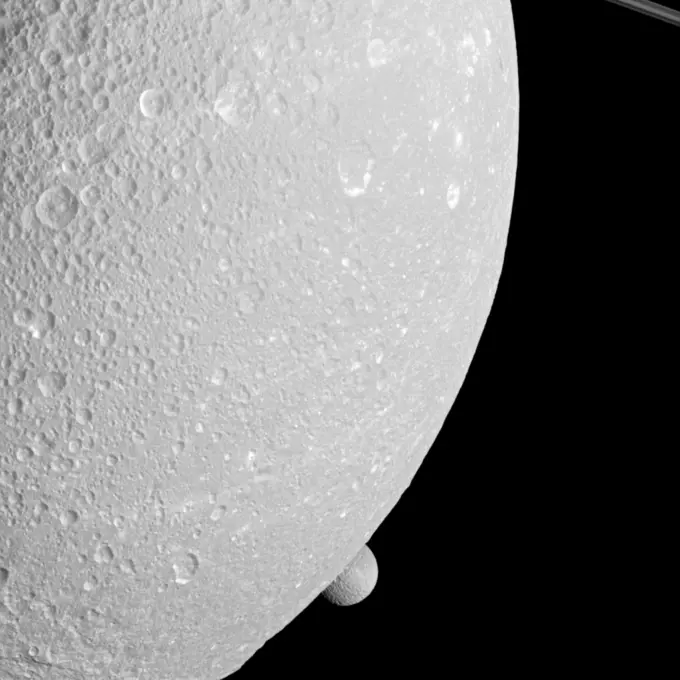
Saturn's moon Mimas peeps out from behind the larger moon Dione in this view from NASA's Cassini spacecraft.
6145-44978023
Looking Toward the Limb
6145-45092821
This image of Ceres is part of a sequence taken by NASA's Dawn spacecraft April 24 to 26, 2015, from a distance of 8,500 miles (13,500 kilometers).
6145-44761224
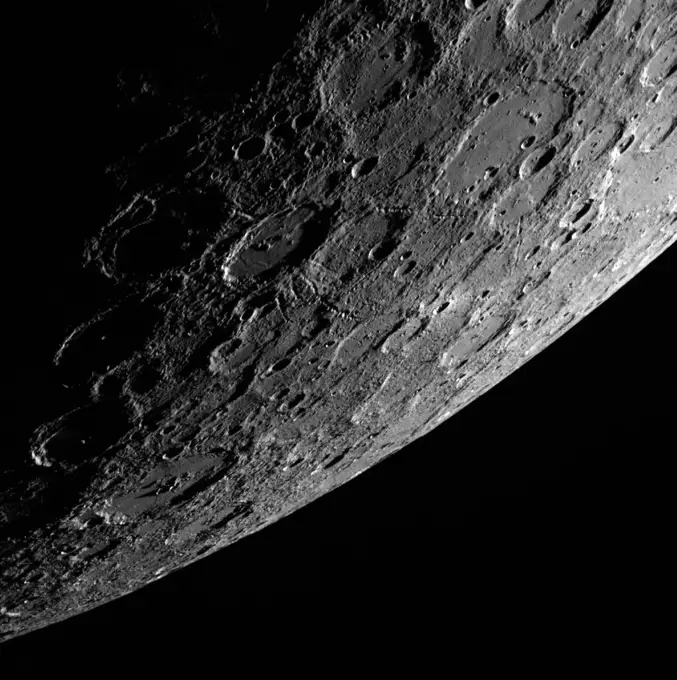
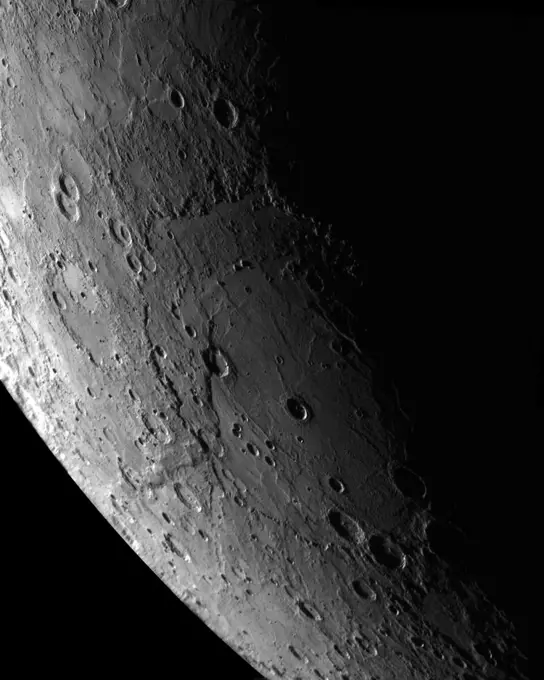
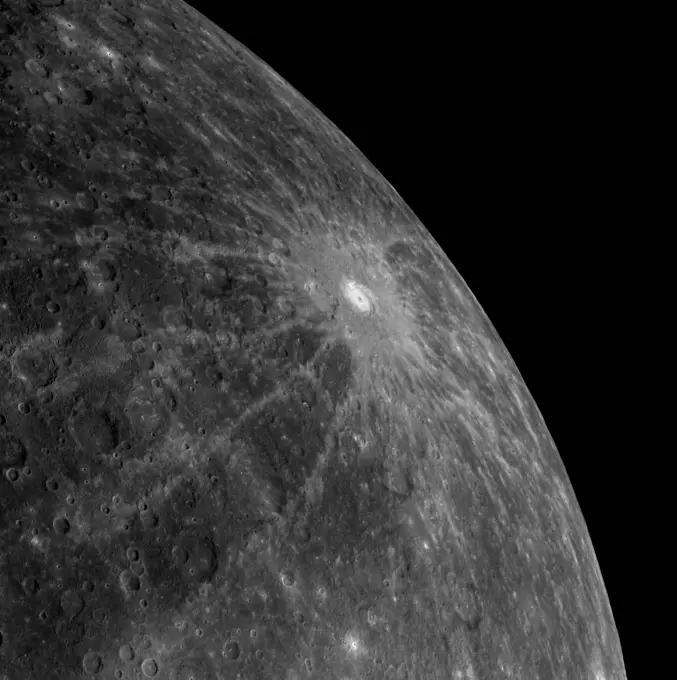
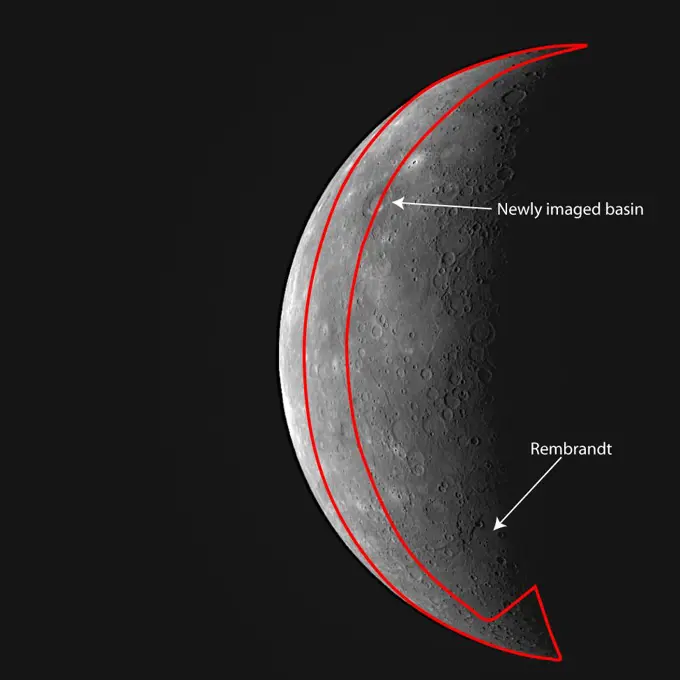
This mosaic was assembled using NAC images acquired as the MESSENGER spacecraft approached the planet during the mission's second Mercury flyby The Rembrandt impact basin is seen at the center of the mosaic.
6145-44662317
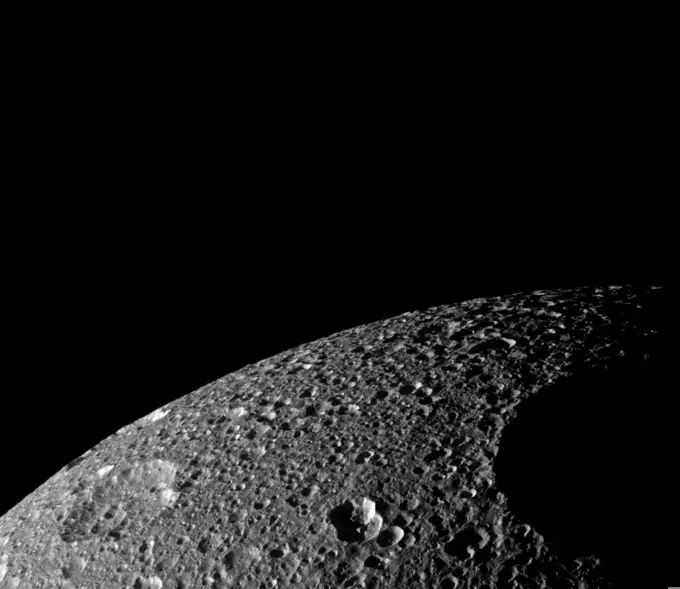
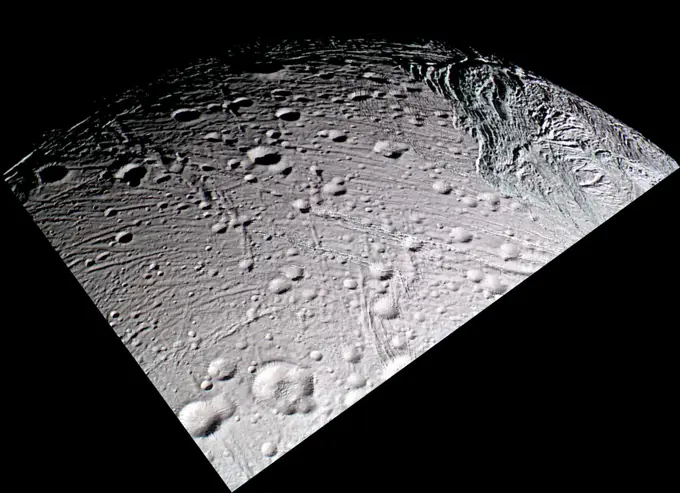
Craters of all sizes litter the landscape on Dione. The larger craters in this view display prominent central peak
6145-44678621
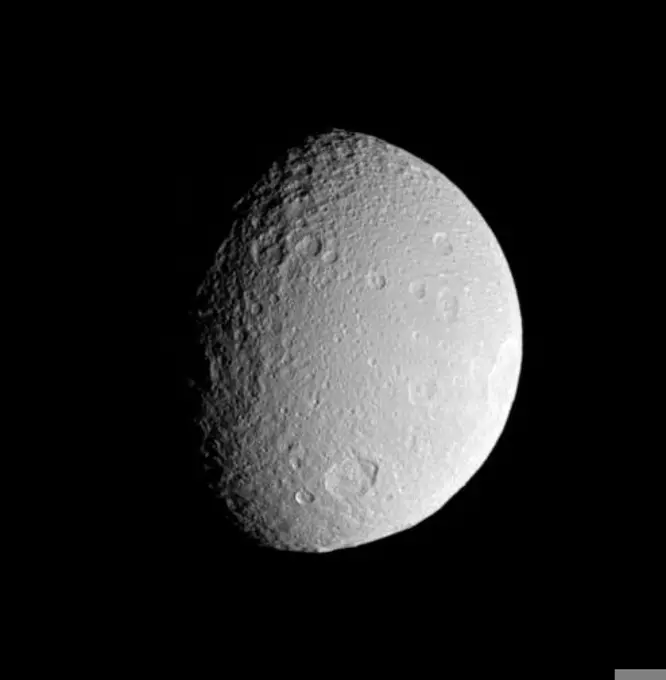
The Cassini spacecraft surveys the battered surface of icy Tethys. The great impact basin straddling the terminator is itself overprinted by many smaller impact sites
6145-58967530
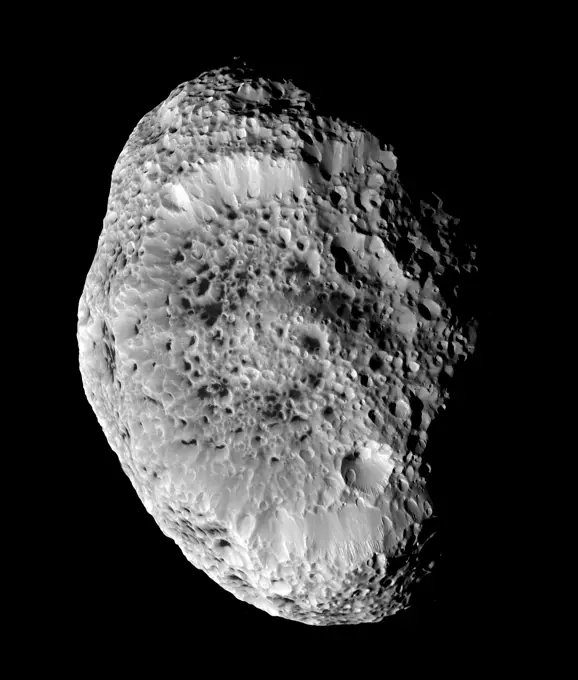
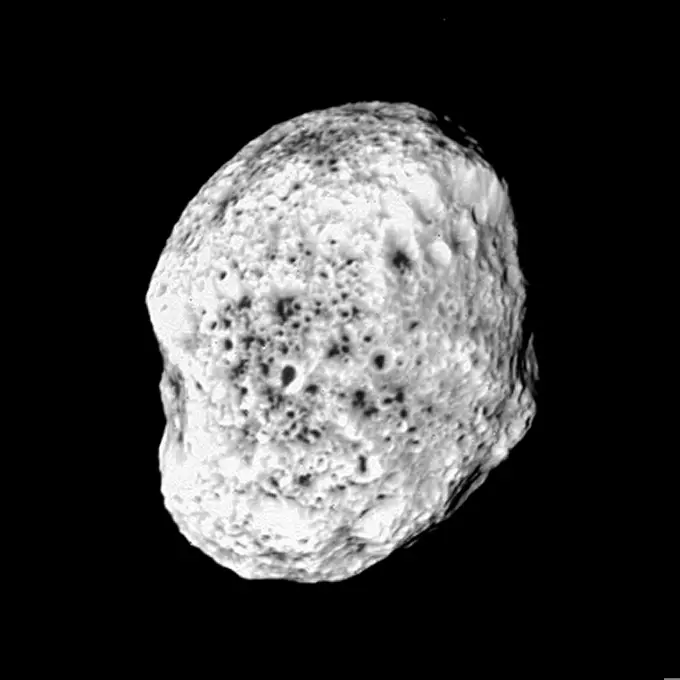
The sponge-like surface of Saturn's moon Hyperion is highlighted in this portrait from NASA's Cassini spacecraft, captured during the spacecraft's flyby on Sept. 16, 2011.
6145-44639092
Saturn's impact-pummeled moon Hyperion stares back at NASA's Cassini spacecraft in this six-image mosaic, taken during the spacecraft's close approach on Sept. 26, 2005.
6145-44847090
This image shows the location of the newly discovered planet-like object, dubbed Sedna, in relation to the rest of the solar system in 2004.
6145-58967262
NASA's Dawn spacecraft obtained this image of craters with bright features on asteroid Vesta with its framing camera on August 18, 2011. The image has a resolution of about 260 meters per pixel.
6145-44505086
Inside Eros' Giant Gouge
6145-44500099
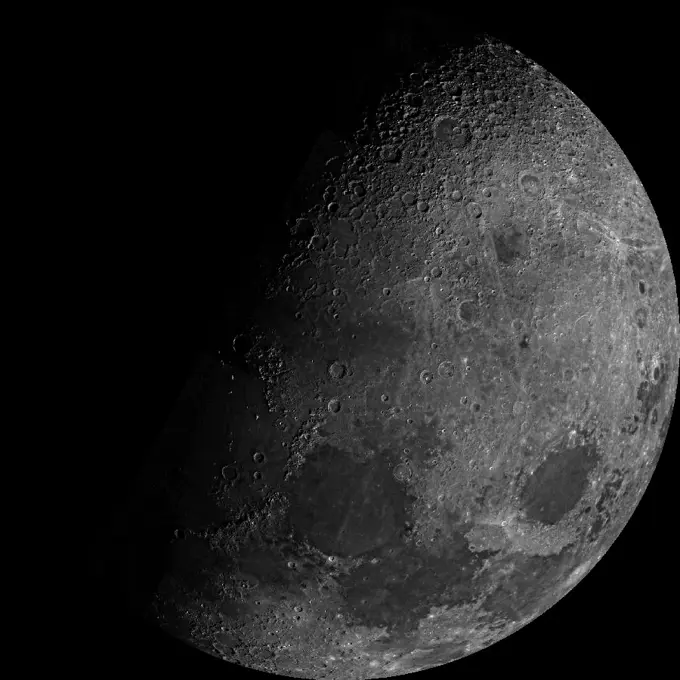
Moon's North Pole
6145-44660507
Bright fractures creep across the surface of icy Dione. This extensive canyon system is centered on a region of terrain that is significantly darker that the rest of the moon. Part of the darker terrain is visible at right
6145-44546642
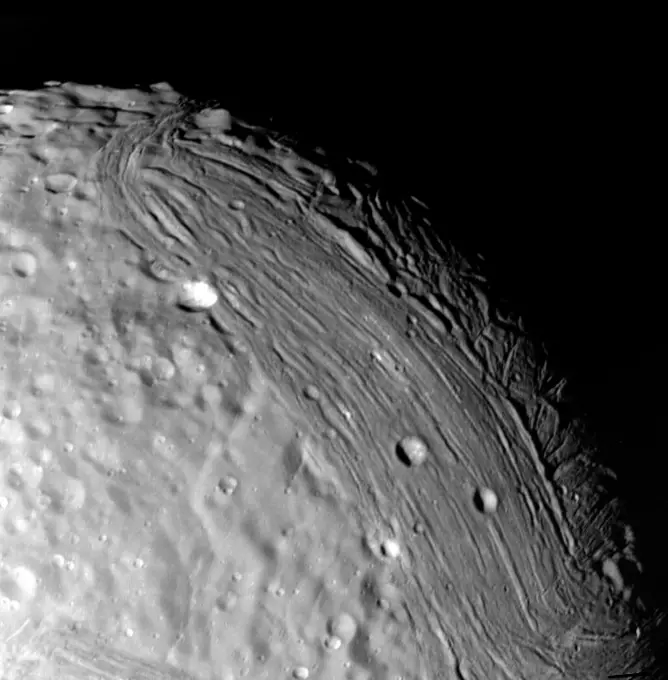
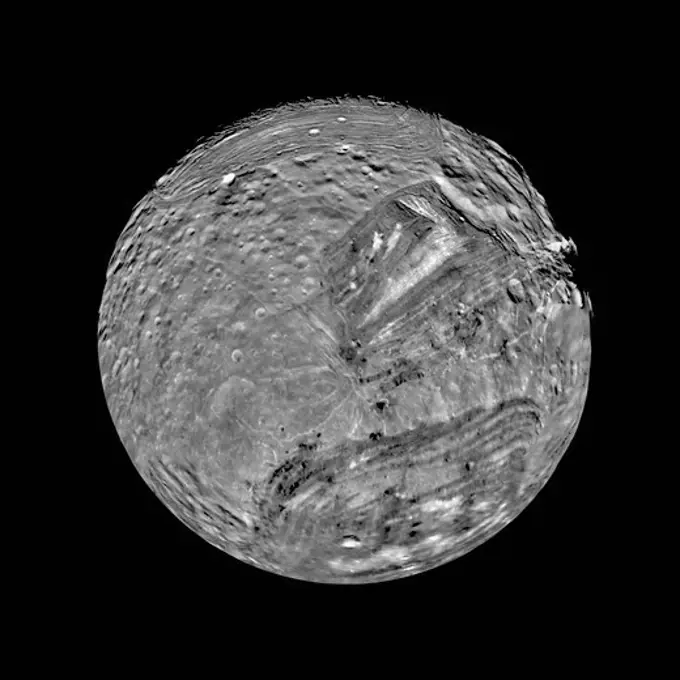
Miranda reveals a complex geologic history in this view, acquired by NASA's Voyager 2 on Jan. 24, 1986, around its close approach to the Uranian moon. At least three terrain types of different age and geologic style are evident.
4389-1024
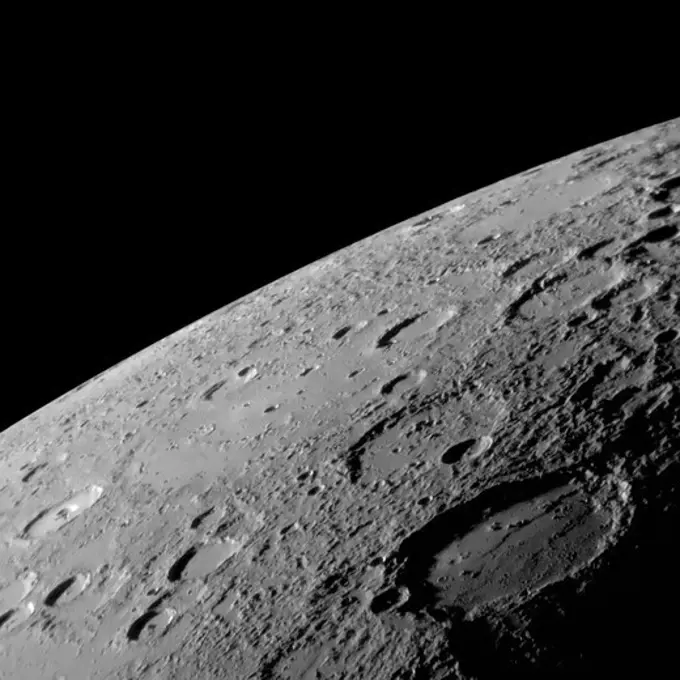
Craters and Horizon of Mercury
4389-1064
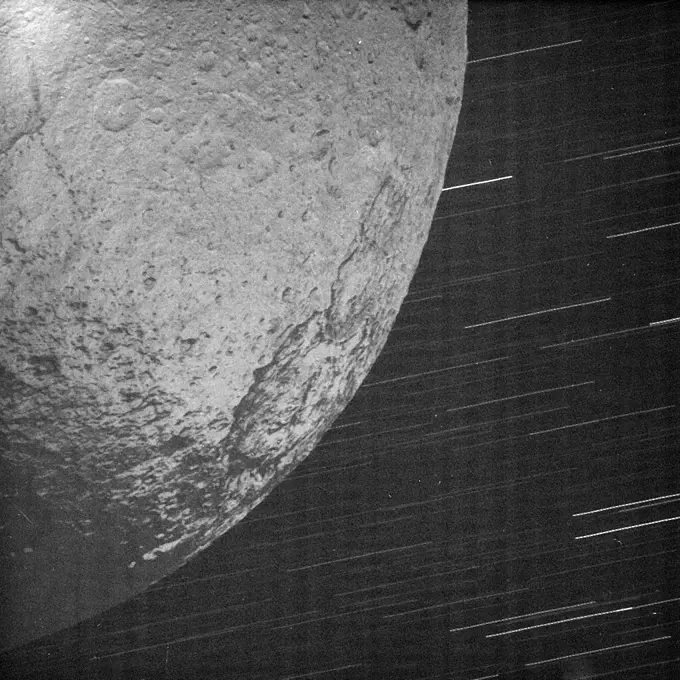
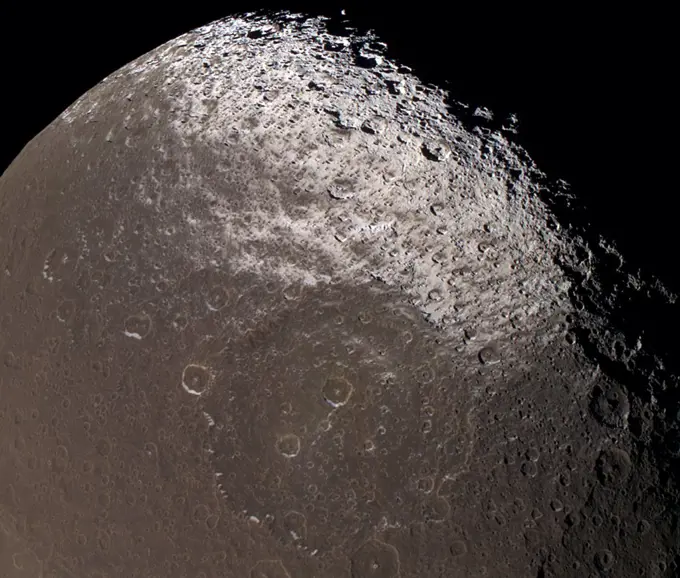
Iapetus Seen by Cassini
6145-44746496
Helene Attends Dione
1746-19670980
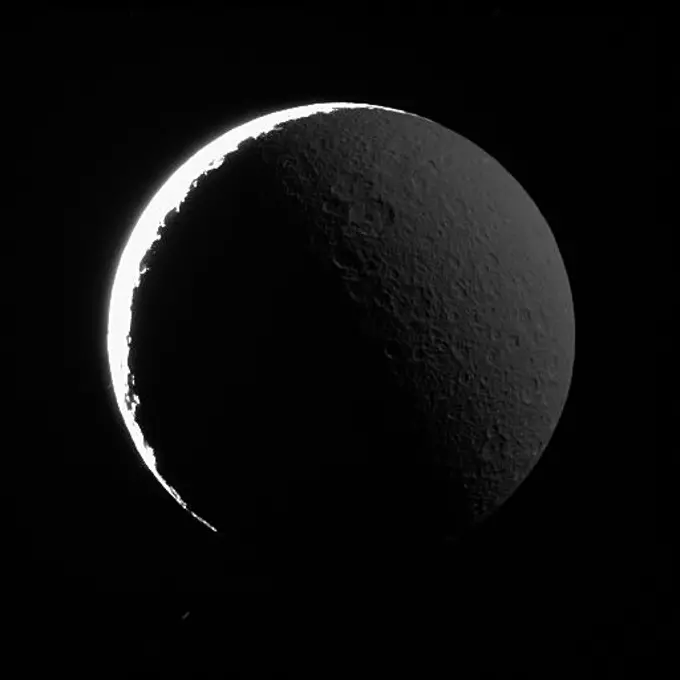
Southern terrain on Saturn's moon Rhea is dimly illuminated by Saturnshine in this Cassini spacecraft view of the dark side of the moon.
6145-44834809
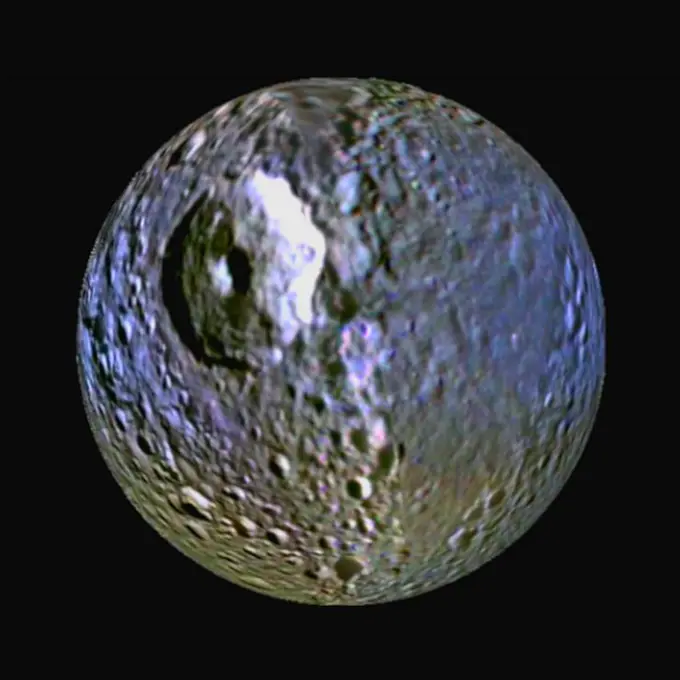
This enhanced-color view of Saturn's moon Mimas was made from images obtained by NASA's Cassini spacecraft. It highlights the bluish band around the icy moon's equator. The large round gouge on the surface is Herschel Crater.
6145-45089092
The surface of Ceres is covered with craters of many shapes and sizes, as seen in this frame from an animation of a map of the dwarf planet's surface as seen by NASA's Dawn spacecraft on Feb. 19, 2015.
6145-44839230
NASA's Cassini spacecraft looks across the surface of Saturn's moon Dione and details the 'wispy' terrain first chronicled by Voyager. This fractured terrain covers the trailing hemisphere of Dione.
4389-582
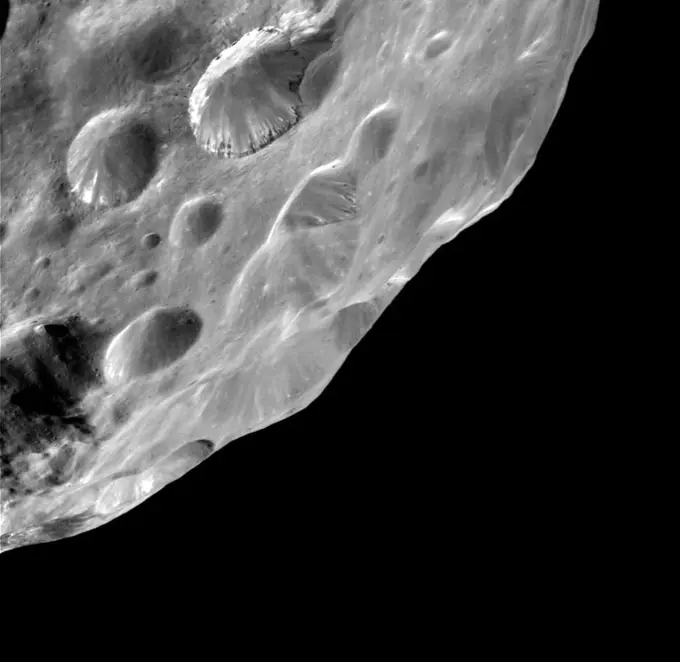
Possible Subsurface Ice on Phoebe
6145-44864817
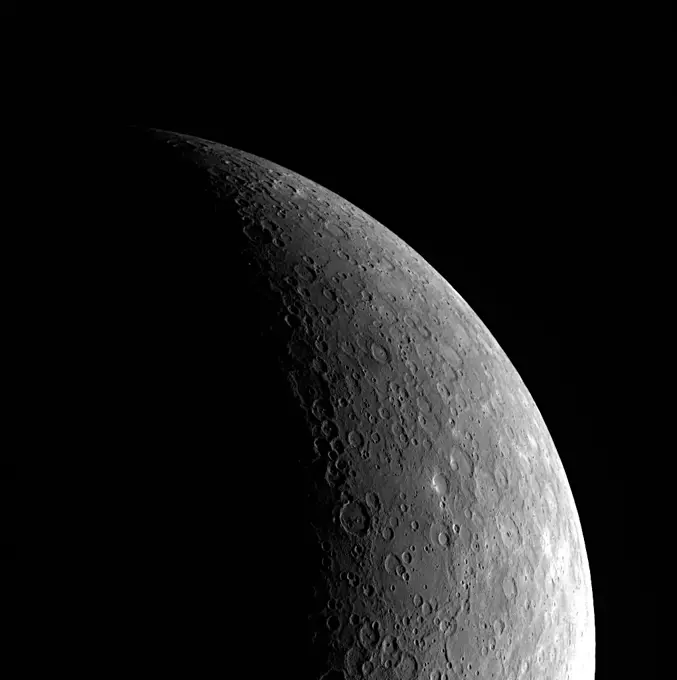
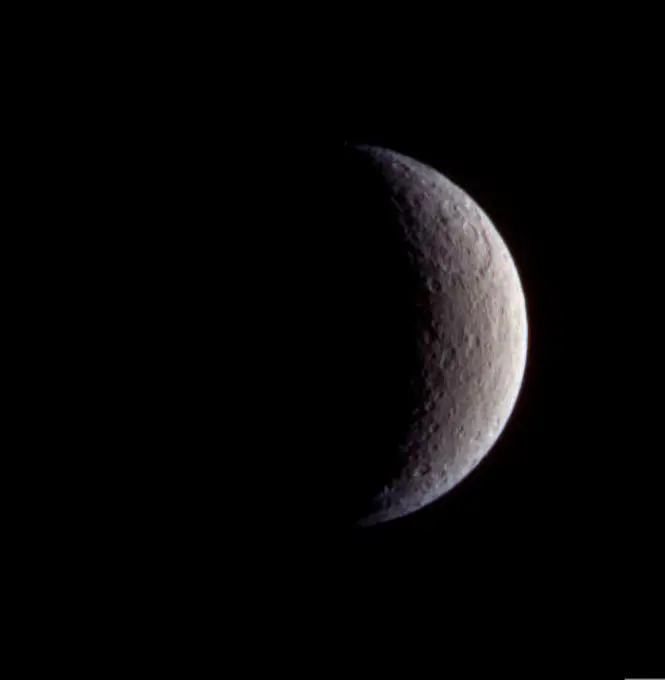
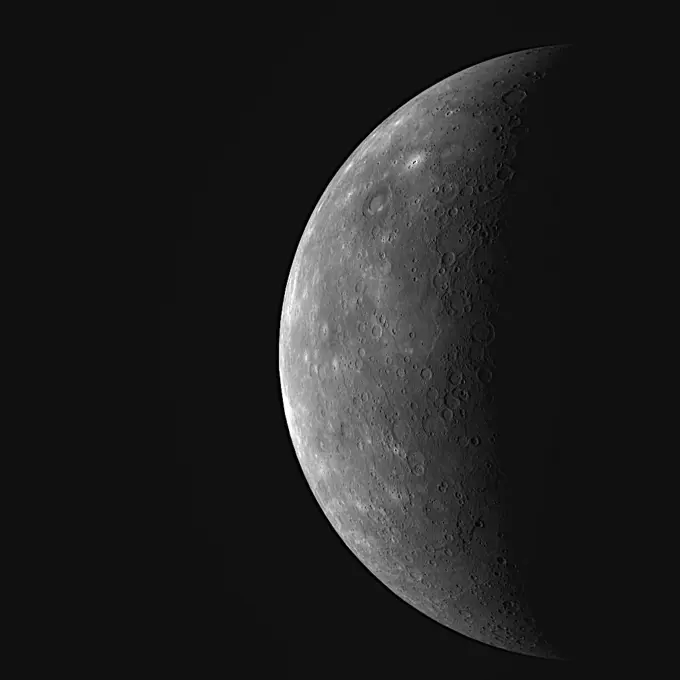
Crescent View of Mercury
6145-44891776
NASA's Cassini spacecraft takes a close look at a row of craters on Saturn's moon Tethys during the spacecraft's April 14, 2012, flyby of the moon. Three large craters are visible along the terminator between day and night on Tethys.
6145-44728488
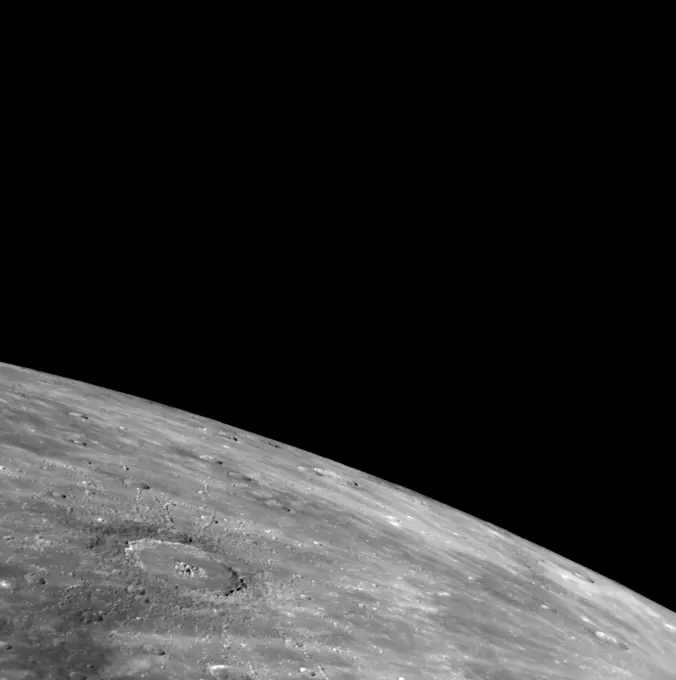
MESSENGER Looks out on a Limb
6145-44617073
Phoebe's Surprise
6145-44665752
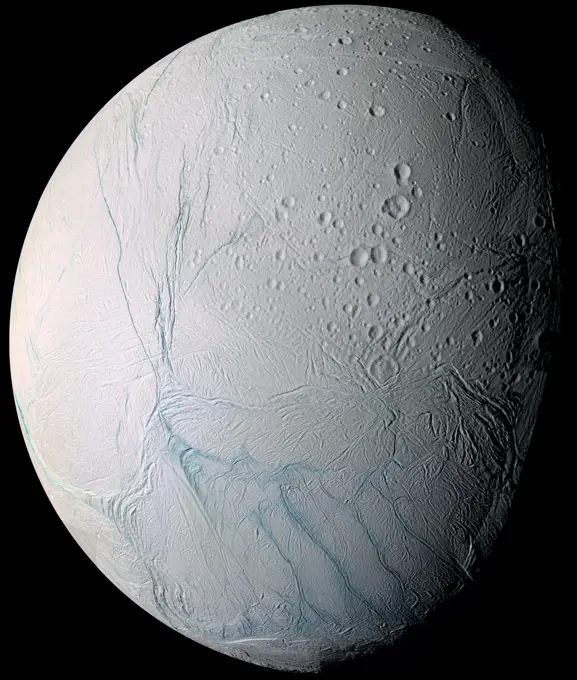
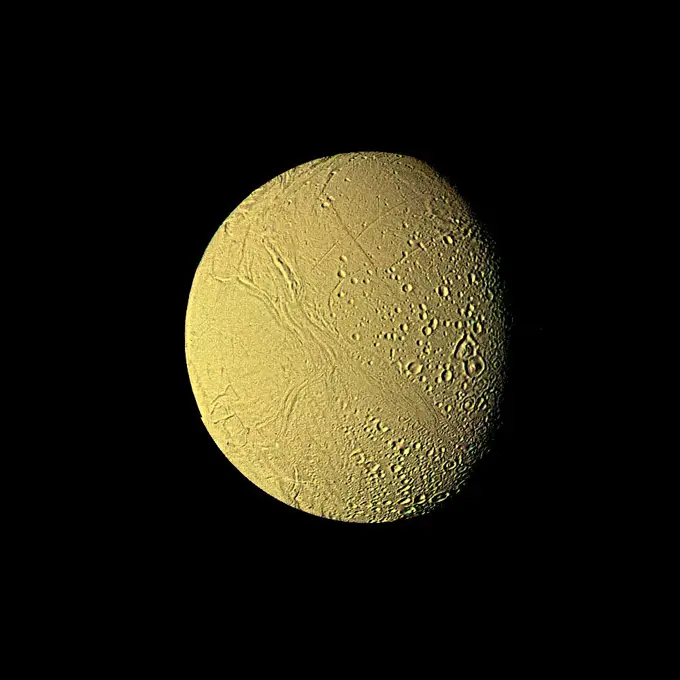
Numerous blue-green fractures can be seen in this false-color mosaic taken during Cassini's second close flyby of Enceladus, on March 9, 2005
6145-44561766
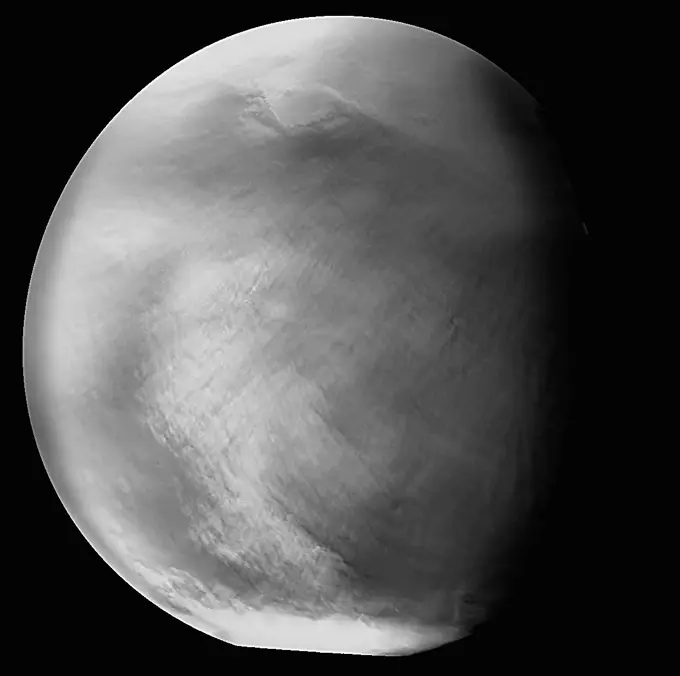
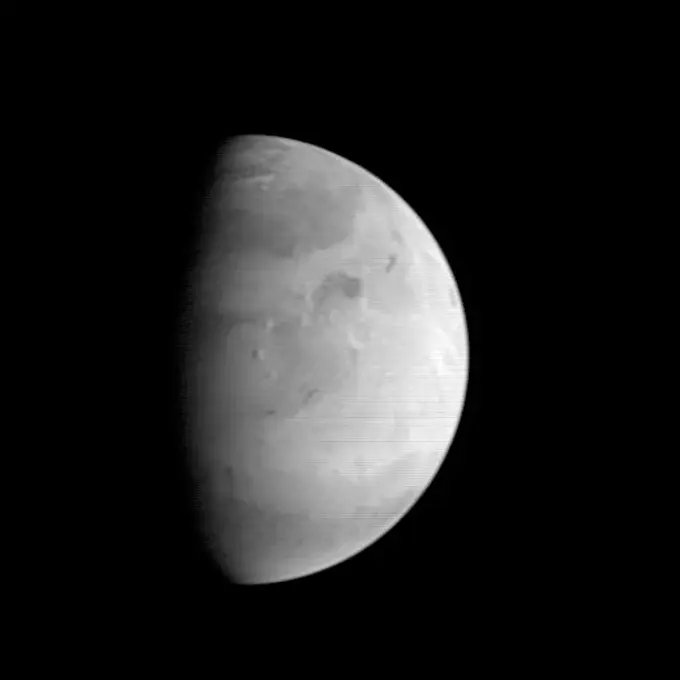
1997 Martian Dust Storm
4389-1988
Miranda
6145-44547140
Far Side of the Moon
6145-44798717
Rhea's trailing hemisphere shows off its wispy terrain on the left of this image taken by NASA's Cassini spacecraft which includes Saturn's rings in the distance.
6145-44629034
Old and New Again
6145-44831499
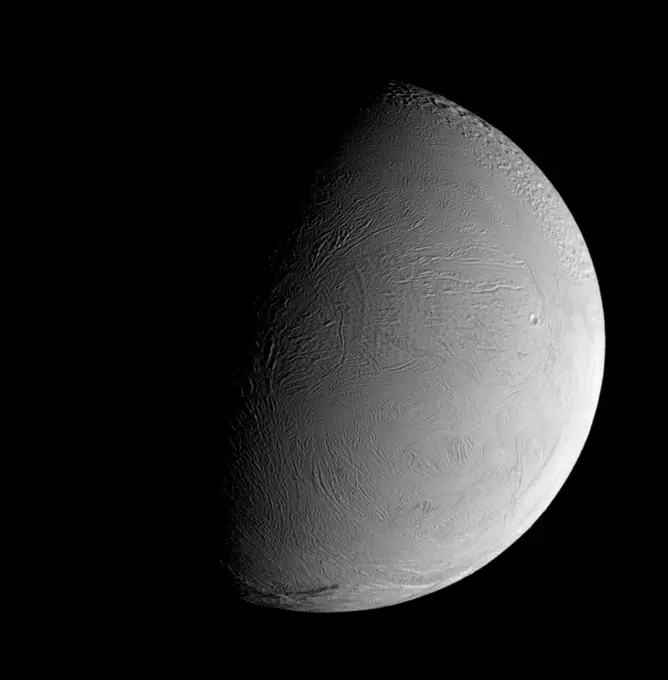
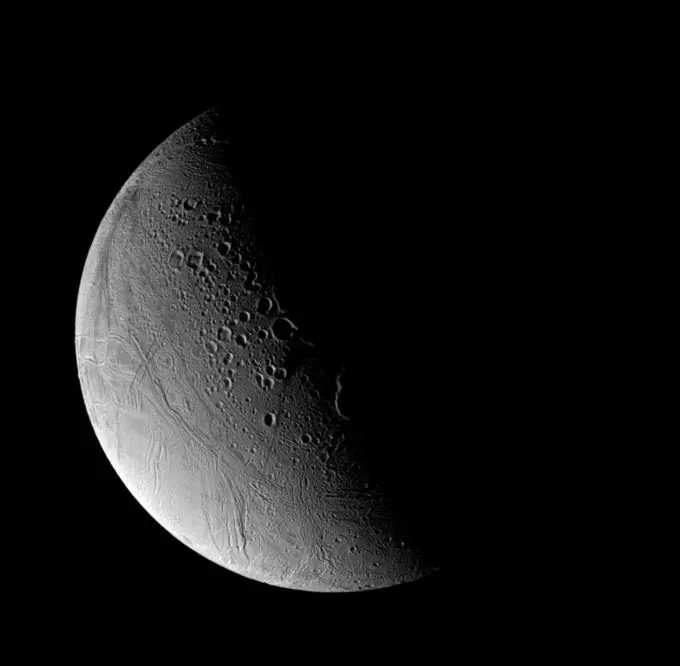
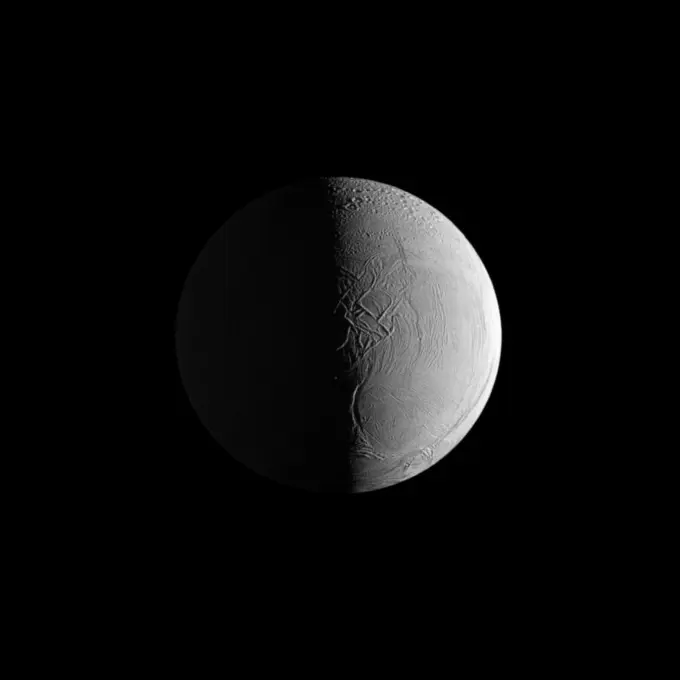
Two sources of light reveal the dramatic surface of Saturn's moon Enceladus in this NASA Cassini image in which geologic features give the appearance of the leathery skin of an elephant.
6145-44710829
Odysseus the Great
6145-44506434
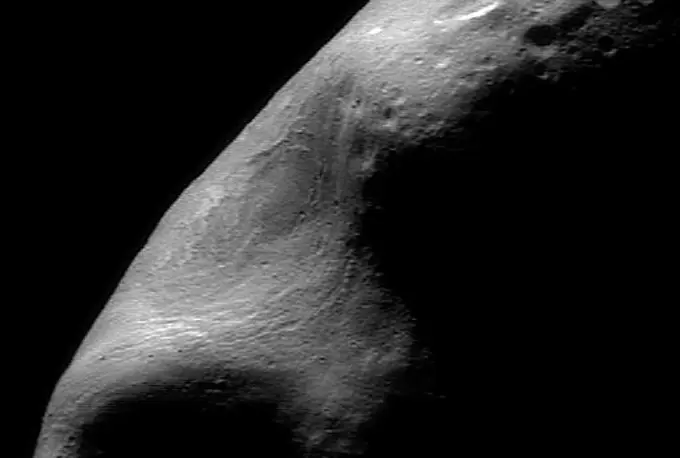
Glimpses into Eros' Shadows
6145-44498243
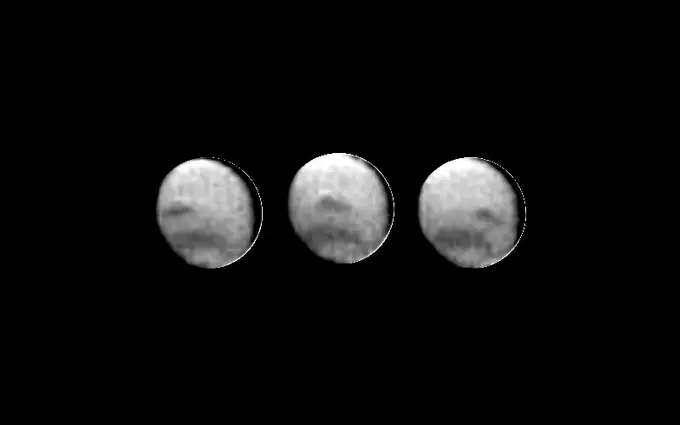
These three images of Neptune were acquired 90 minutes apart by NASA's Voyager 2 spacecraft on April 3, 1989, from a range of 208 million kilometers (129 million miles). Several atmospheric features (clouds) are visible.
6145-58970165
NASA's Cassini spacecraft spies the large Penelope crater on Saturn's moon Tethys.
6145-44518519
Eros' Angular Eastern End
6145-44546663
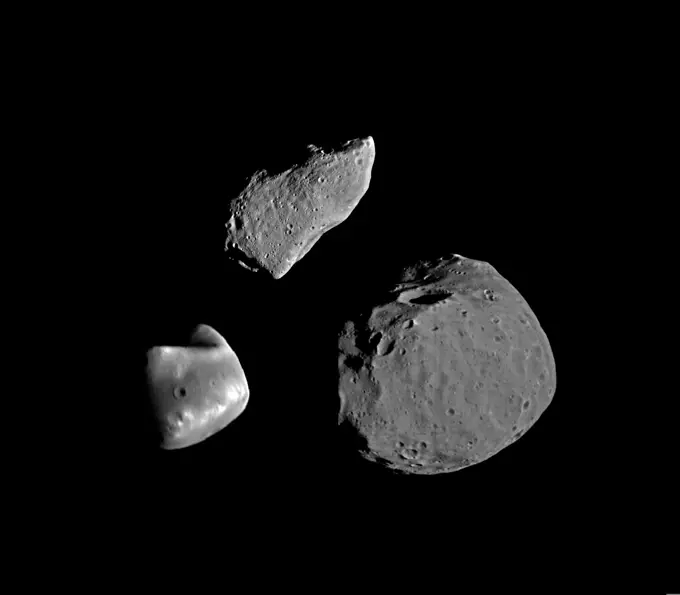
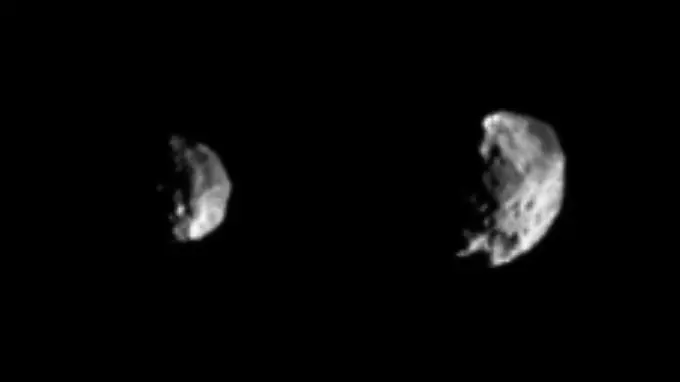
This montage shows asteroid 951 Gaspra (top) compared with Deimos (lower left) and Phobos (lower right), the moons of Mars.
6145-45100538
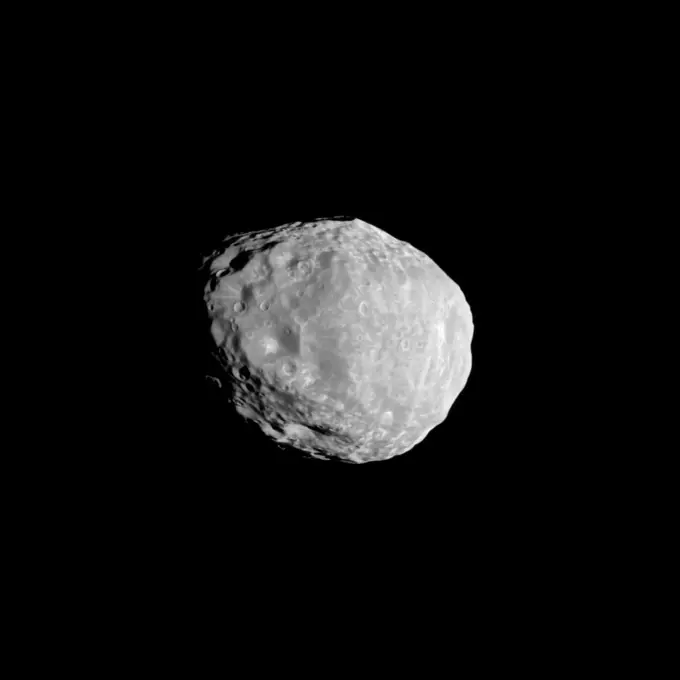
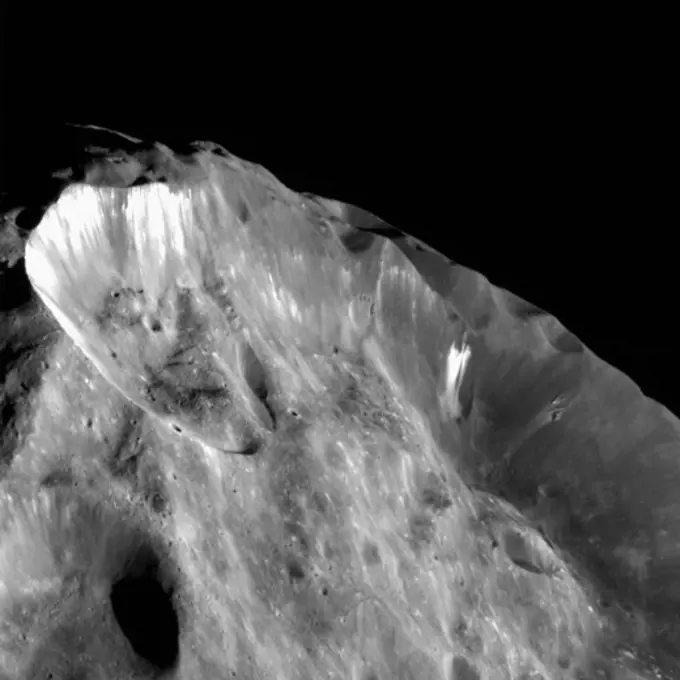
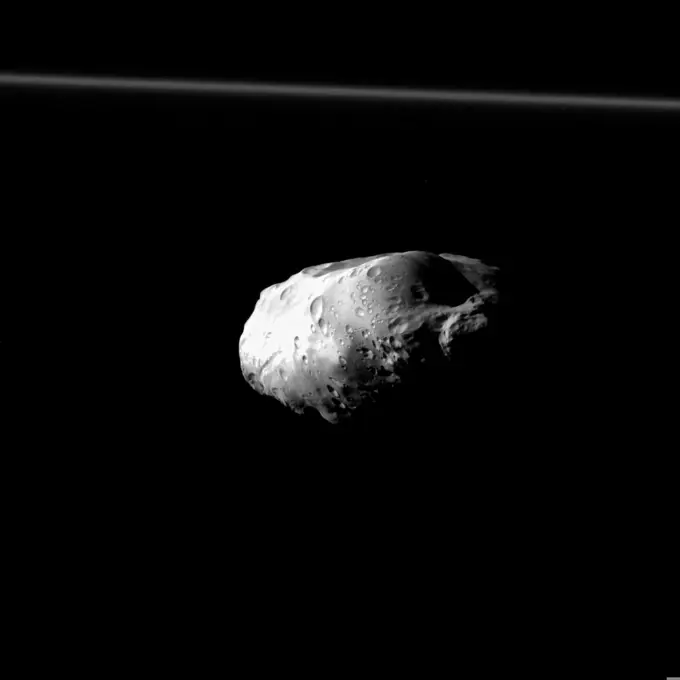
NASA's Cassini spacecraft spied details on the pockmarked surface of Saturn's moon Prometheus (86 kilometers, or 53 miles across) during a moderately close flyby on Dec. 6, 2015. This is one of Cassini's highest resolution views of Prometheus.
6145-44810273
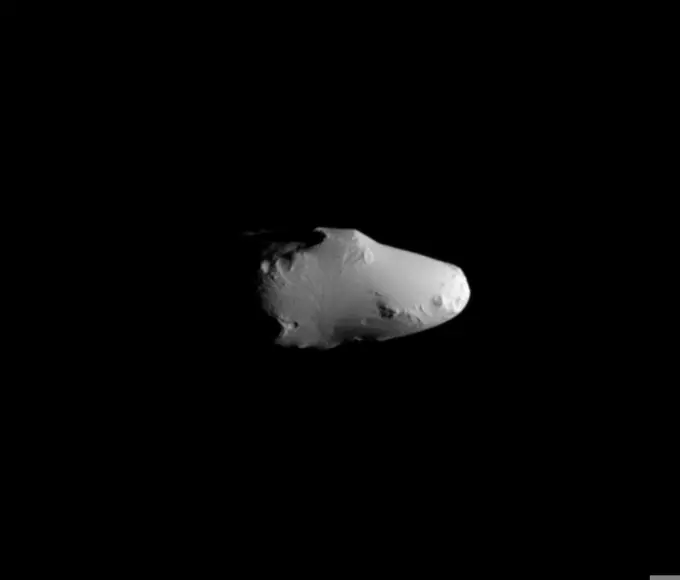
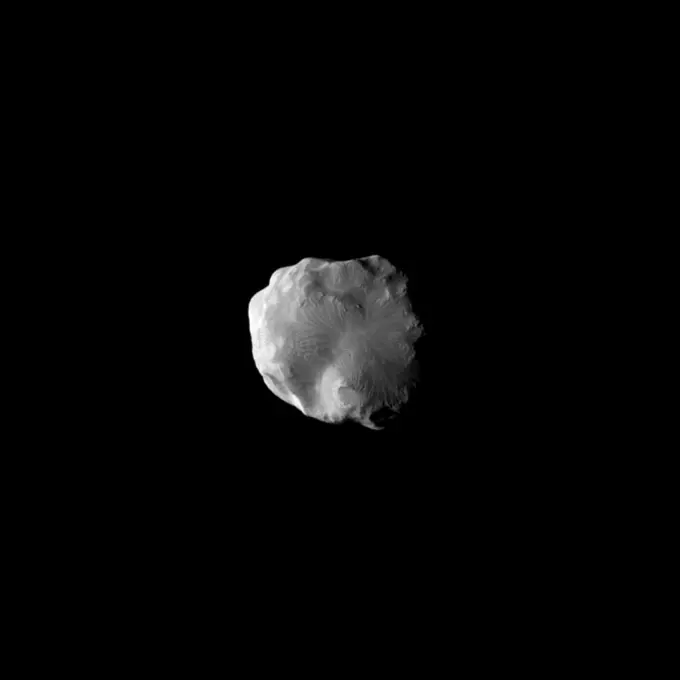
NASA's Cassini spacecraft's February 2010 encounter with Calypso yielded this incredibly detailed view of this Trojan moon. Irregularly shaped Calypso is one of two Trojan moons of the larger moon Tethys.
6145-44549716
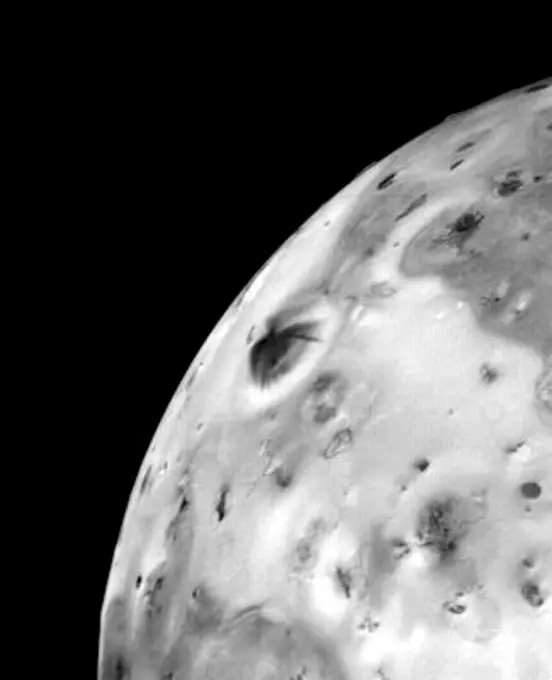
Io - Volcanic Eruption
1746-19670816
This montage shows the best views of Jupiter's four large and diverse 'Galilean' satellites as seen by the Long Range Reconnaissance Imager (LORRI)
6145-45234195
AS08-12-2209 (21-27 Dec. 1968) --- High altitude oblique view of the lunar surface, looking northeastward, as seen from the Apollo 8 spacecraft. The crater Joliot-Curie, about 175 kilometers in diameter and centered near 94 degrees east longitude and 27 degrees north latitude, is near the center of the left side of this photograph. The bright rayed crater near the horizon is probably located near 105 degrees east longitude and 45 degrees north latitude. Long, narrow rays that have been reported in the polar region of Earth facing hemisphere may radiate from this crater.
6145-44795891
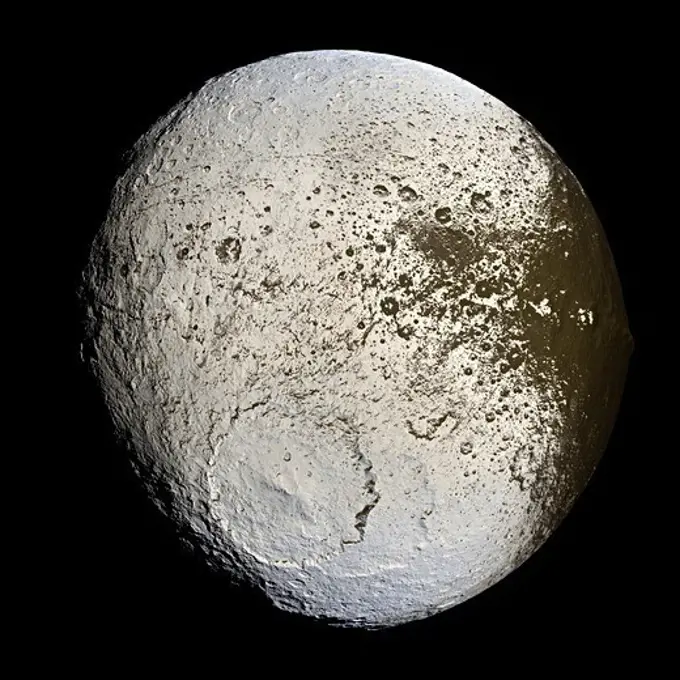
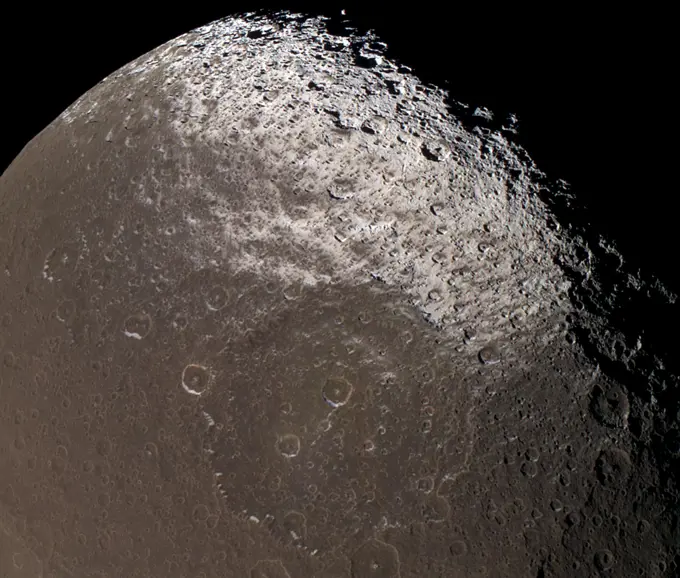
These two global images of Iapetus taken by NASA's Cassini's spacecraft show the extreme brightness dichotomy on the surface of this peculiar Saturnian moon.
6145-44629070
Color on Rhea
4389-256
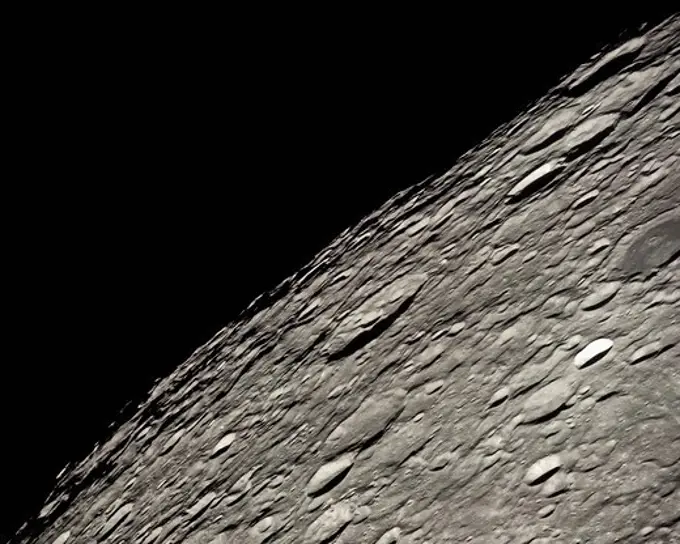
Apollo 13 - Innumerable Craters Scar the Surface of the Moon
6145-45019156
South Polar Close Up
6145-45031310
This still from a movie shows an image taken by NASA's Dawn spacecraft layered on a digital terrain model of an unusual hill containing a dark-rayed impact crater and nearby dark deposit on asteroid Vesta.
6145-44787564
Smooth and Rough Enceladus
6145-44616861
Countdown to Phoebe
6145-44785965
MESSENGER Sees the Previously Unseen!
4389-2249
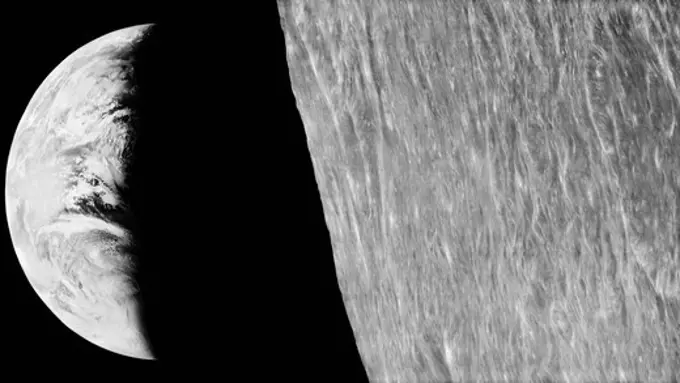
Earthrise by Lunar Orbiter
6145-44519767
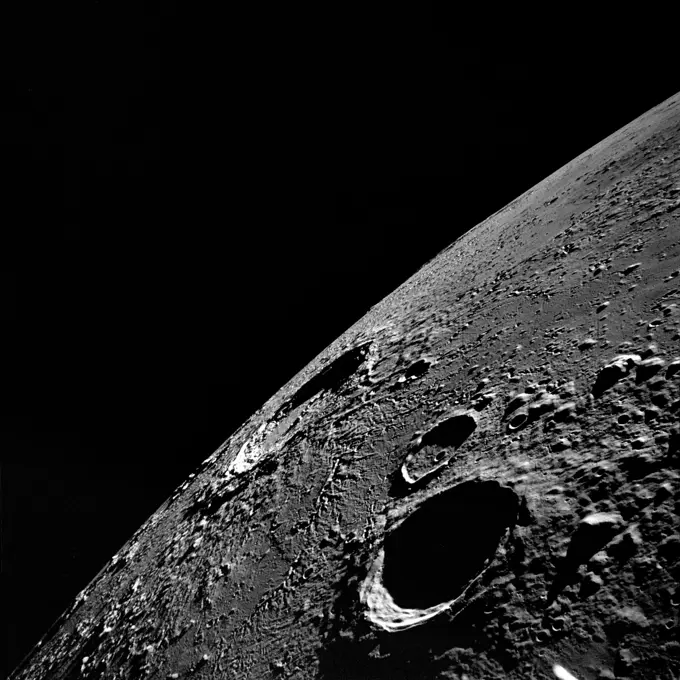
AS12-47-6876 (November 1969) --- An Apollo 12 high-oblique view of the lunar nearside looking northeast toward the crater Copernicus (in center near horizon), as photographed from lunar orbit. The shaded crater in the foreground is Reinhold. Reinhold B is the crater next to Reinhold which as the small crater in the center of it. Also, visible is the keyhole-shaped crater Fauth near the crater Copernicus.
6145-44500532
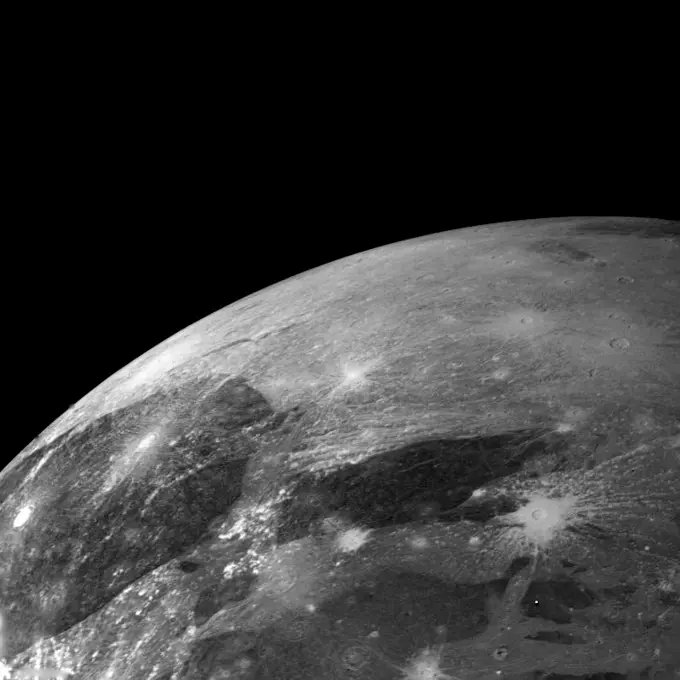
Ganymede - high resolution
6145-58968811
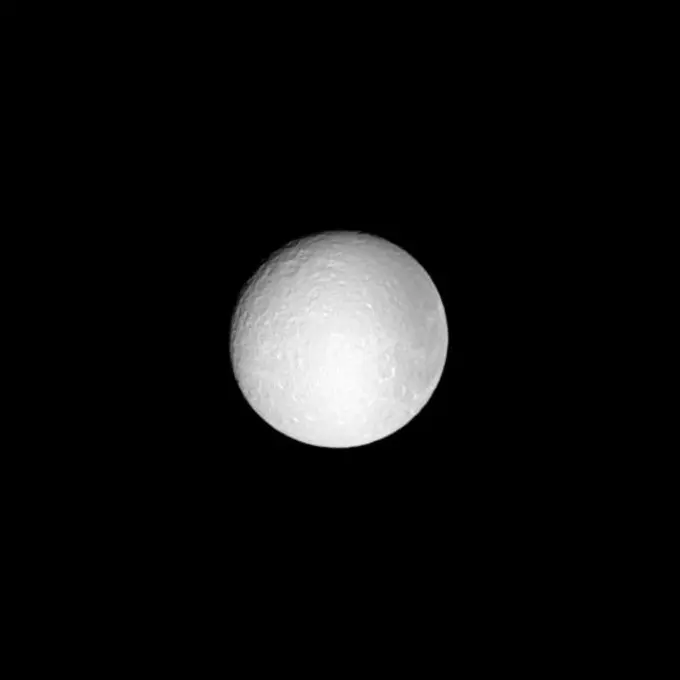
The battered features of the moon Rhea, seen at low phase, appear washed out by the sun.
4389-219
Natural Color Image of Icy Tethys Seen by Cassini
6145-45086991
This image, taken 147,000 miles (237,000 kilometers) from Ceres on January 25, 2015 by NASA's Dawn spacecraft, is part of a series of views representing the best look so far at the dwarf planet.
6145-44564607
This global color mosaic of Triton, taken in 1989 by NASA's Voyager 2 shows Triton, the largest satellite of Neptune. Triton has the coldest surface known anywhere in the solar system; it is so cold that most of Triton's nitrogen is condensed as frost.
6145-44833766
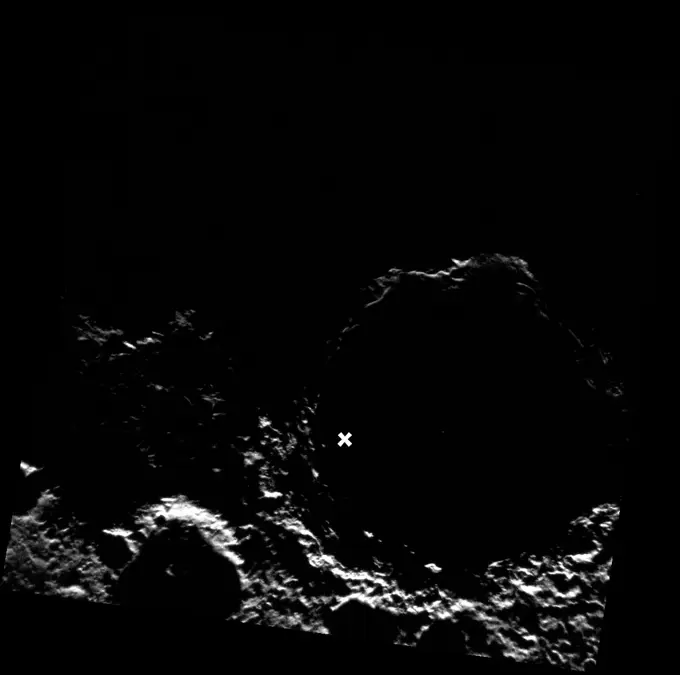
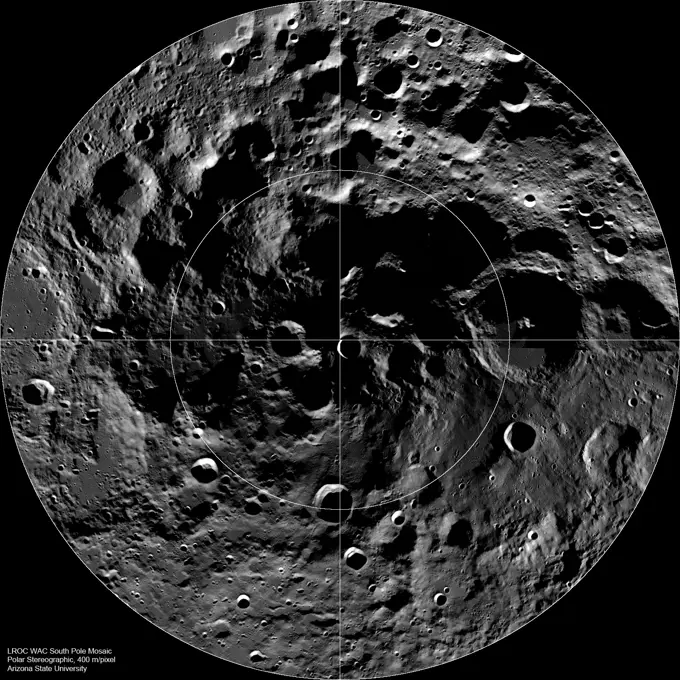
The Lunar South Pole
6145-44627207
Dark-stained Iapetus
6145-44778472
This impact crater in the high northern latitudes of Mercury was recently named for the Bangladeshi painter Zainul Abedin (1914-1976). Abedin exhibits a complex crater structure with a smooth floor, wall terraces, and a central peak complex.
6145-44846856
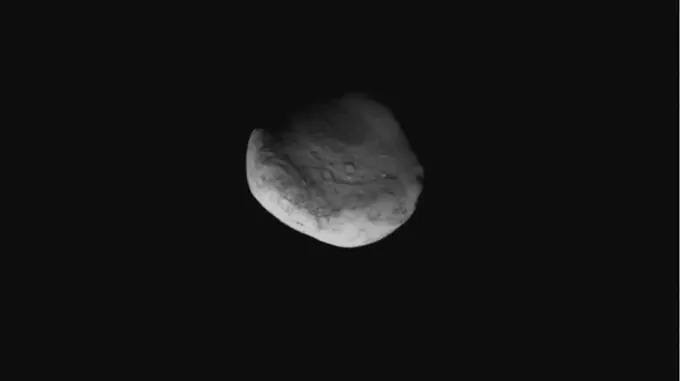
This image obtained by NASA's Stardust spacecraft shows a side of the nucleus of comet Tempel 1 that has never been seen before; three terraces of different elevations are visible, with dark, banded scarps, or slopes, separating them.
6145-44632975
Pop-Up Moon (non-stereo version)
4389-2542
Triton, Neptune's Largest Moon
6145-44497994
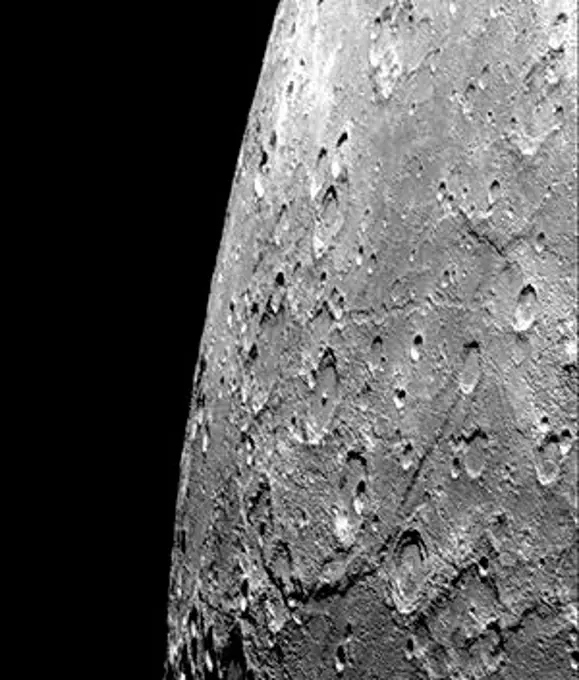
After passing Mercury the first time and making a trip around the Sun, NASA's Mariner 10 again flew by Mercury on Sept. 21, 1974. This encounter brought the spacecraft in front of Mercury in the southern hemisphere.
6145-44854739
NASA's Cassini spacecraft imaged the surface of Saturn's moon Helene as the it flew by the moon on Jan. 31, 2011. Helene is a 'Trojan' moon of Dione, named for the Trojan asteroids that orbit 60 degrees ahead of and behind Jupiter as it circles the Sun.
6145-45252846
This Cassini image shows predominantly the impact-scarred leading hemisphere of Saturn's icy moon Rhea (1,528 kilometers, or 949 miles across). The image was taken in visible light with the Cassini spacecraft narrow angle camera on Dec. 12, 2004, at a distance of 2 million kilometers (1.2 million miles) from Rhea and at a Sun-Rhea-spacecraft, or phase, angle of 30 degrees. The image scale is about 12 kilometers (7.5 miles) per pixel. The image has been magnified by a factor of two and contrast enhanced to aid visibility. http //photojournal.jpl.nasa.gov/catalog/PIA06564
6145-44682740
Bright lines creep across the face of Dione. The lines are systems of geologically fresh-looking canyons with bright, icy walls
6145-44627208
Iapetus by Saturn Shine
6145-44505857
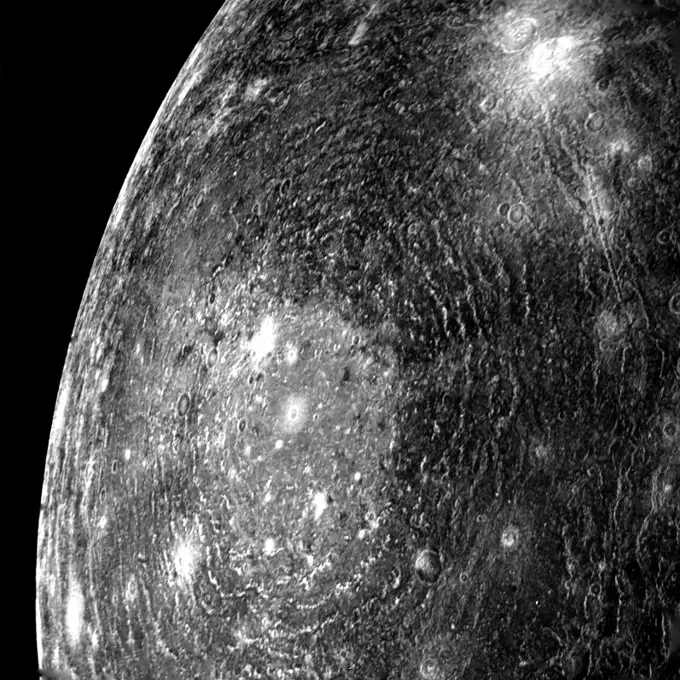
Callisto Basin
6145-44546640
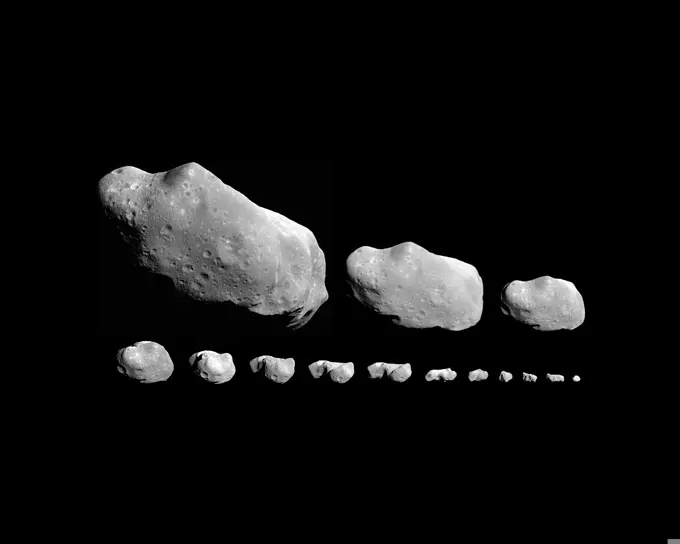
NASA's Galileo imaging system captured this picture of the limb of the asteroid 243 Ida about 46 seconds after its closest approach on August 28, 1993, from a range of only 2480 kilometers.
4239R-20480488
December 31, 2004 - Dark-stained Iapetus.  This near-true color view from Cassini reveals the colorful and intriguing surface of Saturn's moon Iapetus in unrivaled clarity.  The use of color on Iapetus is particularly helpful for discriminating between shadows (which appear black) and the intrinsically dark terrain (which appears brownish).  This image shows the northern part of the dark Cassini Regio and the transition zone to a brighter surface at high northern latitudes. Within the transition
6145-44804985
Appearing like the swirls of marble, the wispy terrain of Saturn's moon Dione is captured by NASA's Cassini spacecraft in a dramatic display of light and dark. These wispy features are a system of braided canyons with bright walls.
6145-58967408
Claire de Limb
4389-1074
Stressed Surface of Dione, From Cassini Probe
6145-44633254
Zooming In On Enceladus (Mosaic)
6145-44555778
MGS Approach Image - Elysium Region
6145-44679919
Hyperion's Icy Surface
6145-45062520
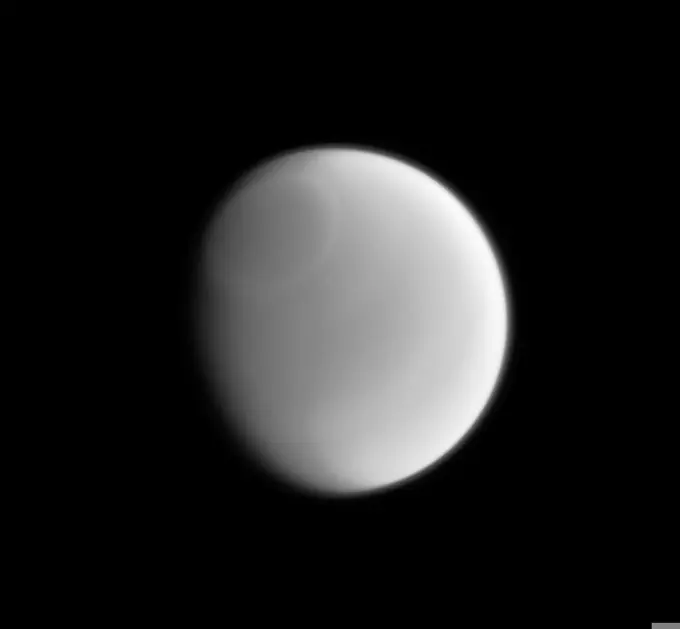
Only a sharp and careful eye can make out the subtle variations in Titan's clouds when viewed in visible light by NASA's Cassini spacecraft. This infrared image clearly reveals a band around the Titan's north pole.
6145-44546900
This montage of 14 images (the time order is right to left, bottom to top) shows asterpod Ida as it appeared in the field of view of NASA's Galileo's camera on August 28, 1993.
6145-44570978
The Saturnian Moon Enceladus
6145-45116546
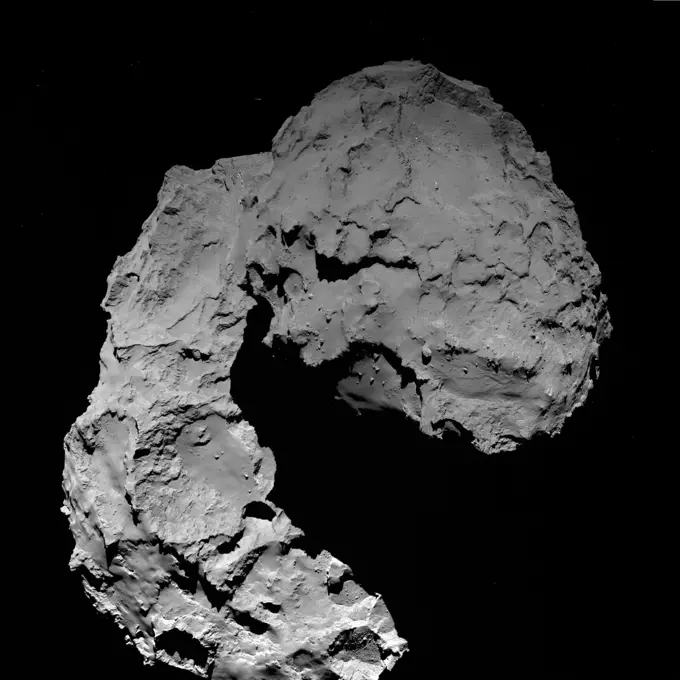
This view shows Comet 67P/Churyumov-Gerasimenko as seen by the OSIRIS wide-angle camera on ESA's Rosetta spacecraft on September 29, 2016, when Rosetta was at an altitude of 14 miles (23 kilometers).
4128-28575114
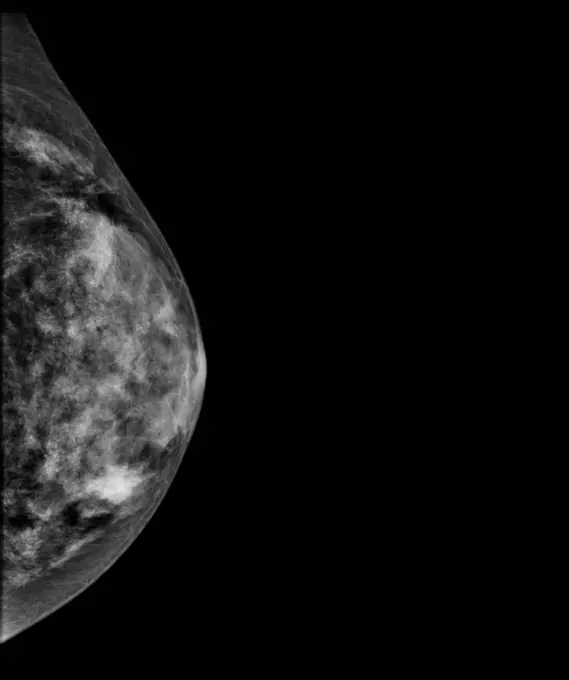
Normal mammogram
4389-1953
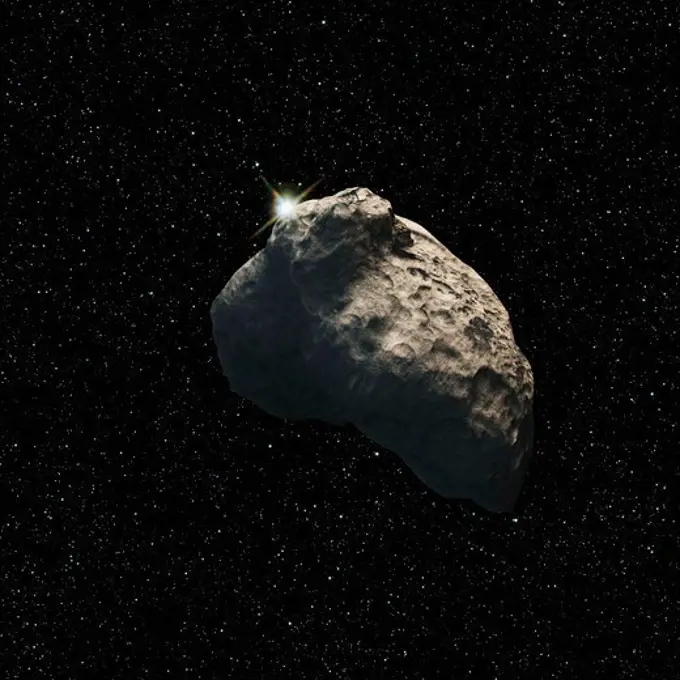
Small Kuiper Belt Object
6145-44807656
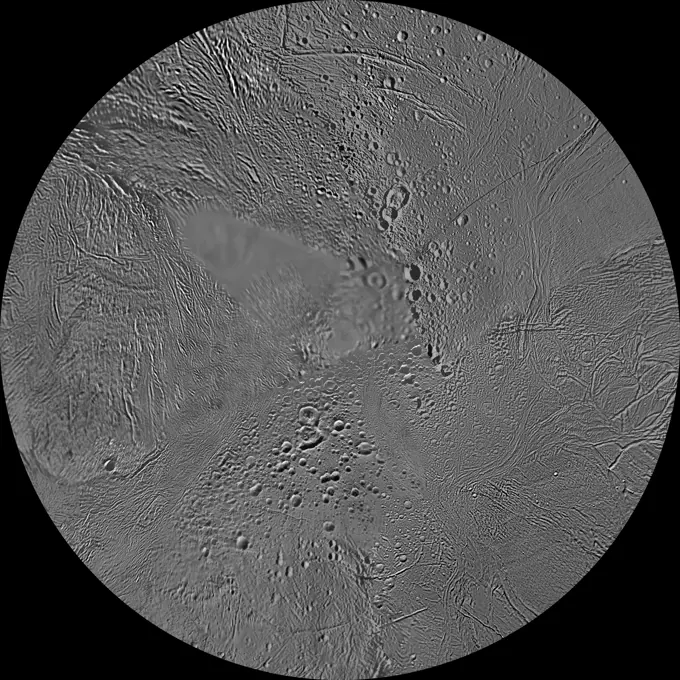
Enceladus Polar Maps - February 2010
6176-66903932
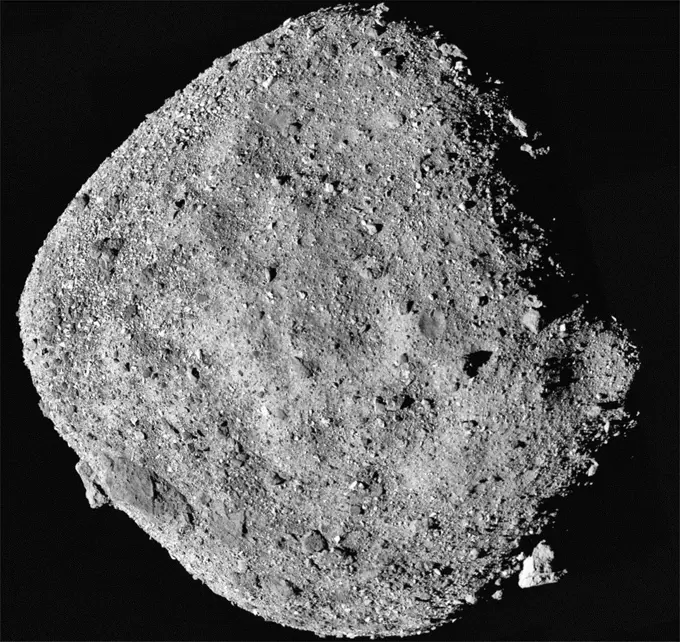
Mosaic image of asteroid Bennu
6145-44699382
Background Planet
6145-44867617
The Terminator is Here - in Color!
6145-58962272
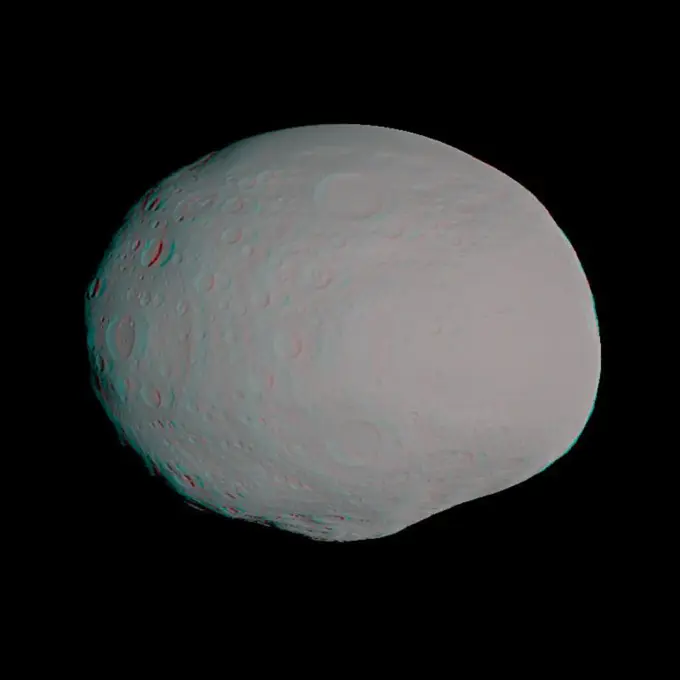
This anaglyph shows a 3-D model of the protoplanet Vesta, using scientists' best guess to date of what the surface of the protoplanet might look like. It was created as part of an exercise for NASA's Dawn mission. 3D glasses are necessary.
6145-45092613
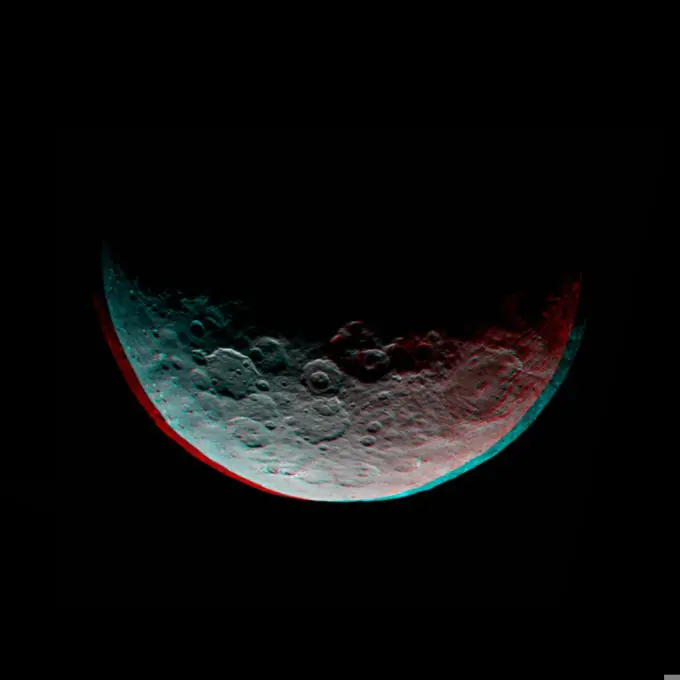
This anaglyph of Ceres is part of a sequence of images taken by NASA's Dawn spacecraft April 24 to 26, 2015, from a distance of 8,500 miles (13,500 kilometers). 3-D glasses are needed to view this image.
6145-45014375
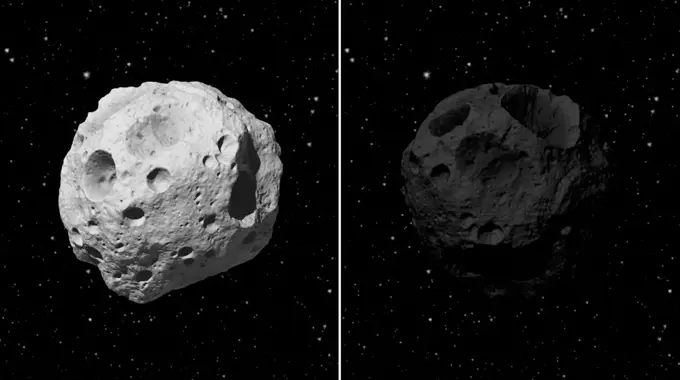
This frame from an animation illustrates the benefits of observing asteroids in infrared light. It begins by showing two artistic interpretations of asteroids up close.
6188-63385927
planet planet Copyright: xZoonar.com/angetax 5594317
6145-44953498
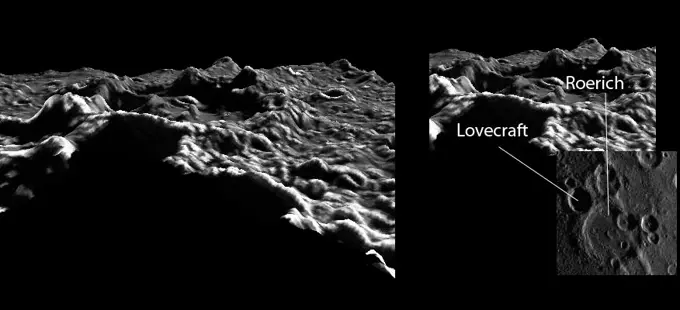
At the Mountains of Madness
6145-44546636
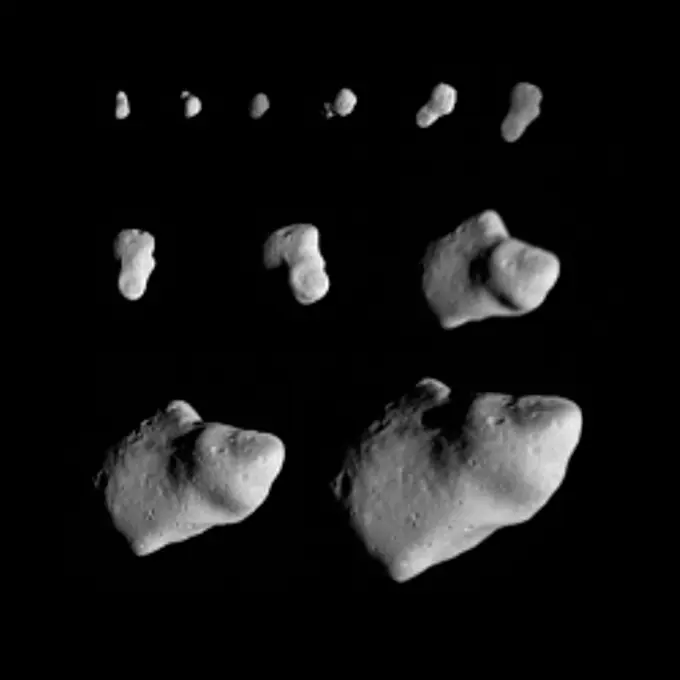
This montage of 11 images taken by NASA's Galileo spacecraft as it flew by the asteroid Gaspra on Oct. 1991, shows Gaspra growing progressively larger in the field of view of Galileo's solid-state imaging camera as the spacecraft approached the asteroid.
6145-44846855
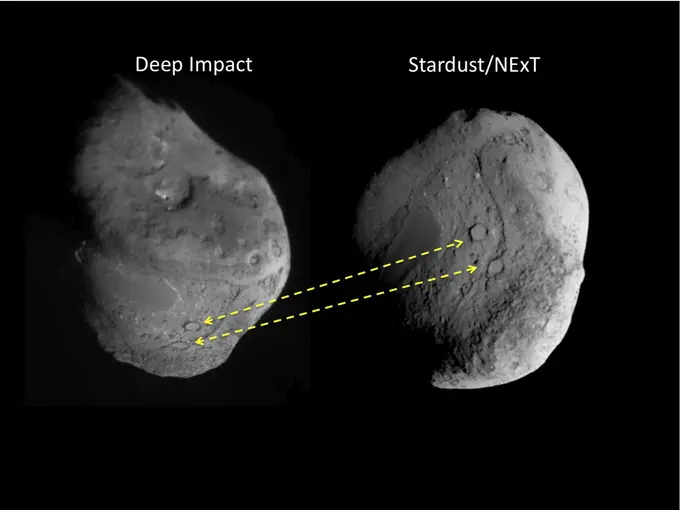
These two images show the different views of comet Tempel 1 seen by NASA's Deep Impact spacecraft (left) and NASA's Stardust spacecraft (right).
6145-44785968
Outlining MESSENGER's New Imaging Coverage
6145-44897660
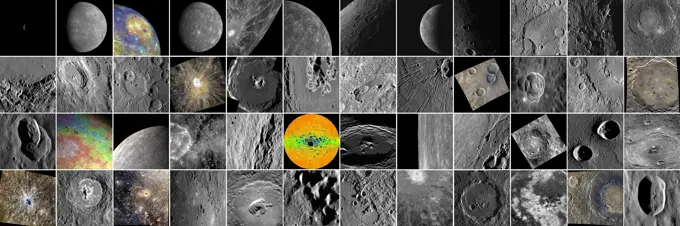
One Small Collection of Images, Many Giant Strides Forward for MESSENGER
6145-44745937
Departure Mosaics from the Second Mercury Flyby
6145-45257652
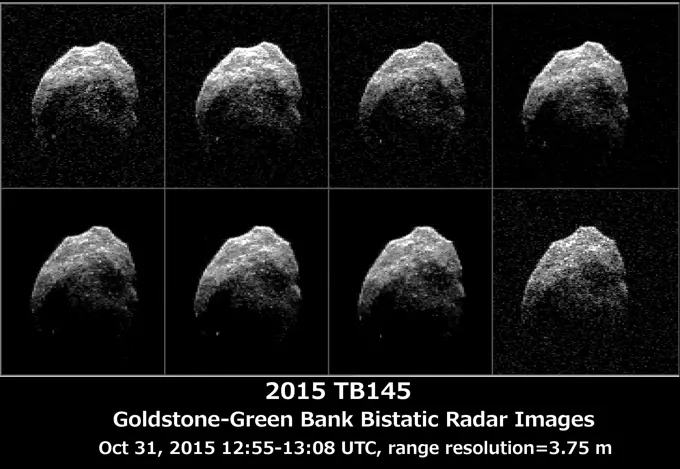
The 230-foot (70-meter) DSS-14 antenna at Goldstone, Ca. obtained these radar images of asteroid 2015 TB145 on Oct. 31, 2015.