Astronomical Phenomena

Images depicting cosmic events and celestial bodies, including asteroids and nebulae, with vibrant colors showcasing the universe's mystery and beauty.

Early on April 21, 2002, a large (X-1) flare and a partial halo coronal mass ejection (CME) exploded out from the Sun from near its west (right) limb. A pronounced proton storm of high-energy particles took place at about the same time as seen in the LASCO (Large Angle and Spectrometric Coronagraph) C3 image taken in visible light from the Solar and Heliospheric Observatory (SOHO). The accompanying coronal mass ejection can also be seen in the image.
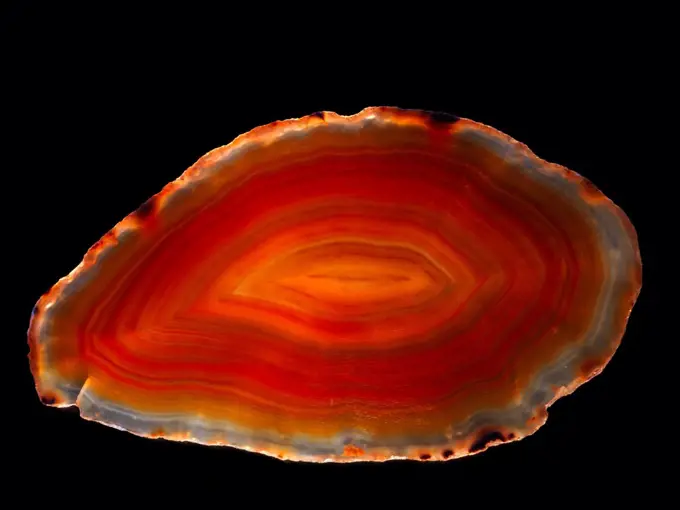
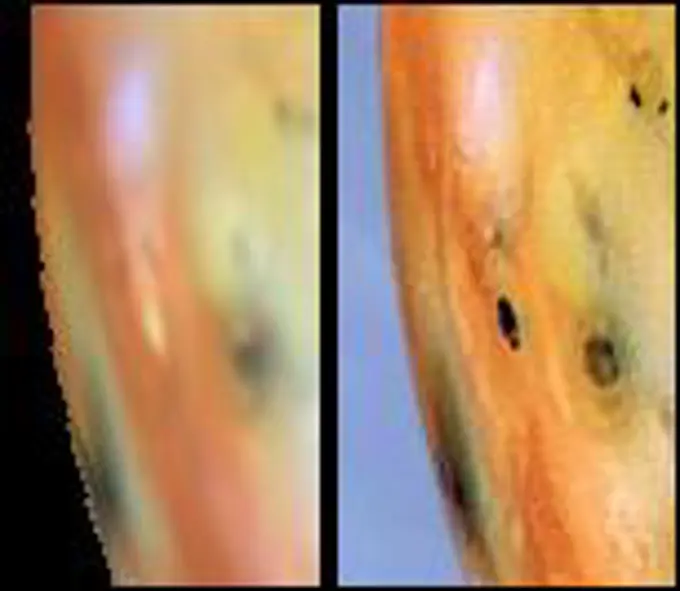
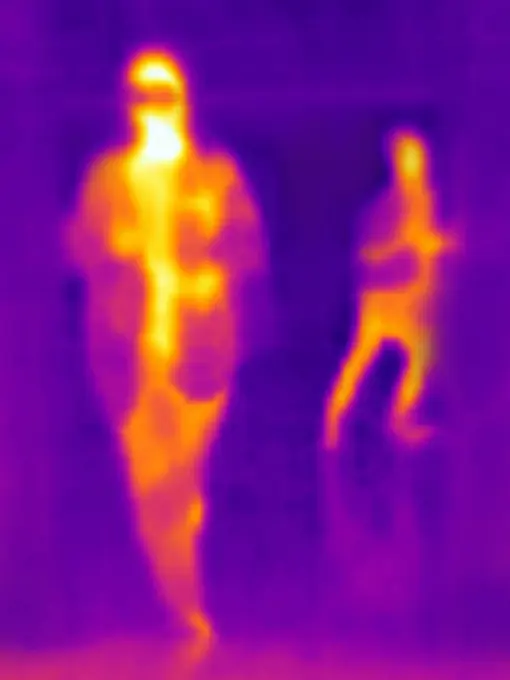
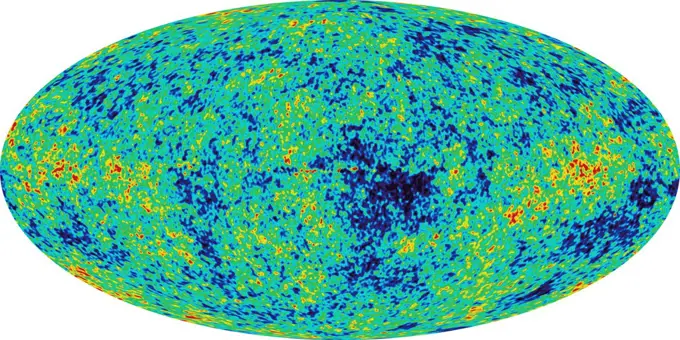
Stein_Sun Visualization of the complex magnetic field produced as magnetic flux rises toward the Sun¹s surface from the deep convection zone. The image shows a snapshot of how the magnetic field has evolved two days from the time uniform, untwisted, horizontal magnetic field started to be advected by inflows at the bottom (20 megameters deep). Axes are in megameters, and the color scale shows the log of the magnetic field strength.This transmission electron microscope image shows SARS-CoV-2 also known as 2019-nCoV, the virus that causes COVID-19. Virus particles emerge from the surface of a cell cultured in the laboratory. Spikes on the outer edge of virus particles give coronaviruses their name, shaped like a crown. Image captured and colorized at Rocky Mountain Laboratories in Hamilton, Montana. Credit: NIAIDThis map shows the temperatures for most of the surface of Ganymede made from data taken by on Jun. 26, 1996 as NASA's Galileo approached the sunlit side of the moon.Comet C/2013 UQ4 (Catalina) first looked like an asteroid when NASA's NEOWISE team first observed it on December 31, 2013. These exposures were taken that day, when the comet was at a distance of about 2.9 AU from the sun.Polished slab of Brazilian Agate.Like great friends, galaxies stick together. Astronomers using NASA's Spitzer Space Telescope have spotted a handful of great galactic pals bonding back when the universe was a mere 4.6 billion years old.Thermal image of mother cradling six month baby boyThis series of images obtained by NASA's Cassini spacecraft shows several views of the north polar cloud covering Saturn's moon Titan.This image is a blinking of two 14-minute exposures of NASA's Dawn spacecraft from 600,000 miles from Earth. Bill Dillon, a regular advanced user of Sierra Stars Observatory.This frame from an animated sequence combined 36 interpolated images of comet 67P/Churyumov-Gerasimenko, each separated by 20 minutes. This comet is the destination for the European Space Agency's Rosetta mission in 2014.Changes east of Pele between Galileo's First Two OrbitsThe image from thermal imager device. The image from thermal imager device. Human heat map. Blurred unrecognizable people. Copyright: xZoonar.com/MaximilianxBuzunx 20020949Atherosclerosis, illustration.Satellite image, UFO spaceship and overlay text at night with FBI investigation and alien evidence. Surveillance, photo and area 51 recording of flying saucer and survey for mystery object in skyThe Long Range Reconnaissance Imager on NASA New Horizons acquired images of the Pluto field three days apart in late September 2006, in order to see Pluto's motion against a dense background of stars.Two Ultraviolet Views of IapetusAnalyses of a new high-resolution map of microwave light emitted only 380,000 years after the Big Bang appear to define our universe more precisely than ever before. The eagerly awaited results announced last year from the orbiting Wilkinson Microwave Anisotropy Probe resolve several long-standing disagreements in cosmology rooted in less precise data. Specifically, present analyses of above WMAP all-sky image indicate that the universe is 13.7 billion years old (accurate to 1 percept), composed of 73 percept dark energy, 23 percept cold dark matter, and only 4 percept atoms, is currently expanding at the rate of 71 km/sec/Mpc (accurate to 5 percept), underwent episodes of rapid expansion called inflation, and will expand forever. Astronomers will likely research the foundations and implications of these results for years to come.