This animation shows a side-by-side comparison of CO2 ice at the north (left) and south (right) Martian poles over the course of a typical year (two Earth years). This simulation isn't based on photos; instead, the data used to create it came from two infrared instruments capable of studying the poles even when they're in complete darkness. As Mars enters fall and winter, reduced sunlight allows CO2 ice to grow, covering each pole. While ice at the north pole is fairly symmetrical, it's somewhat asymmetrical during its retreat from the south pole for reasons scientists still don't understand. Scientists are especially interested in studying how global dust events affect the growth and retreat of this polar ice. Mars' seasons are caused by a tilt in the planet, resulting in winter at one of the planet's poles while it's summer at the other. How do spacecraft observe the Martian surface in the polar night, when the Sun is below the horizon for weeks or even months, or in the spring, when
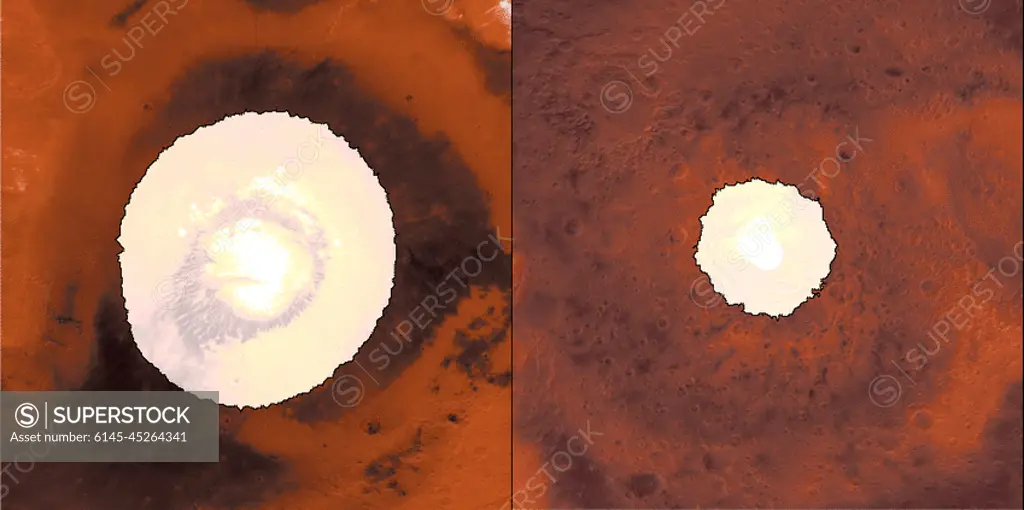
SuperStock offers millions of photos, videos, and stock assets to creatives around the world. This image of This animation shows a side-by-side comparison of CO2 ice at the north (left) and south (right) Martian poles over the course of a typical year (two Earth years). This simulation isn't based on photos; instead, the data used to create it came from two infrared instruments capable of studying the poles even when they're in complete darkness. As Mars enters fall and winter, reduced sunlight allows CO2 ice to grow, covering each pole. While ice at the north pole is fairly symmetrical, it's somewhat asymmetrical during its retreat from the south pole for reasons scientists still don't understand. Scientists are especially interested in studying how global dust events affect the growth and retreat of this polar ice. Mars' seasons are caused by a tilt in the planet, resulting in winter at one of the planet's poles while it's summer at the other. How do spacecraft observe the Martian surface in the polar night, when the Sun is below the horizon for weeks or even months, or in the spring, when by Piemags/PL Photography Limited is available for licensing today.
Visually Similar More from Mars Geological Features story



Looking for a license?
Click here, and we'll help you find it! Questions? Just ask!
Click here, and we'll help you find it! Questions? Just ask!
DETAILS
Image Number: 6145-45264341Royalty FreeCredit Line:Piemags/PL Photography Limited/SuperStockCollection:PL Photography Limited Story:Mars Geological FeaturesContributor:Piemags Model Release:NoProperty Release:NoResolution:849×423