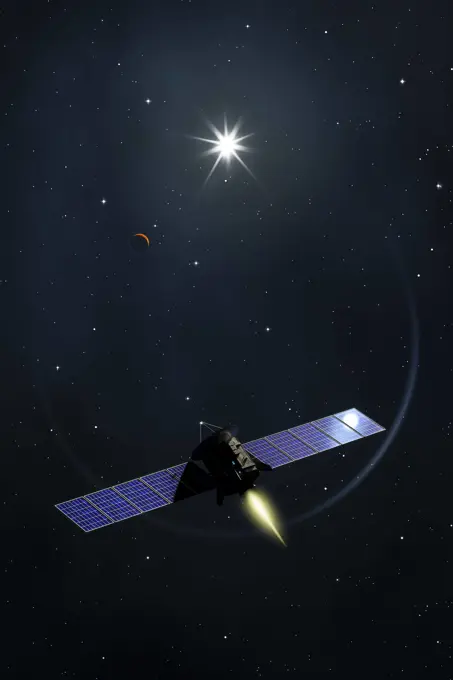
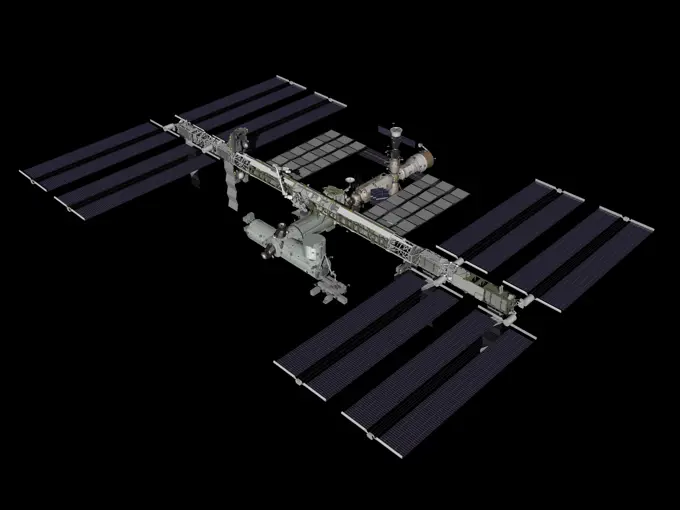
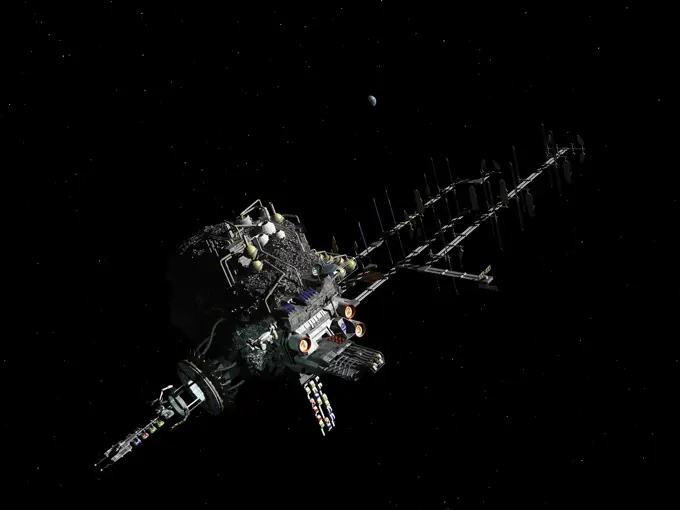
Satellites and Space Probes

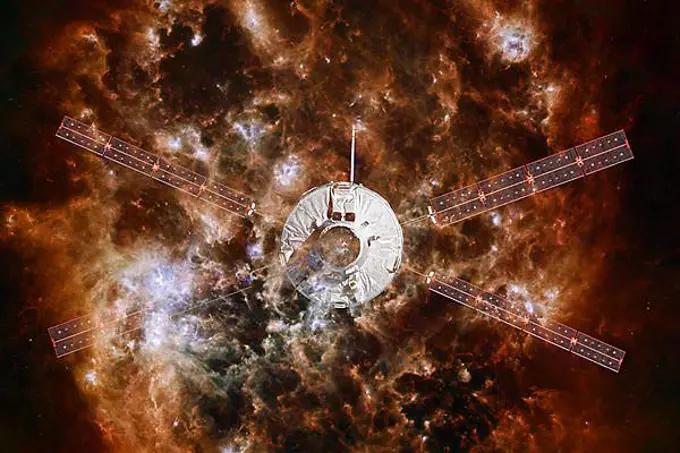
3D renderings of various satellites and space probes orbiting Earth, exhibiting advanced technology amidst the backdrop of space.
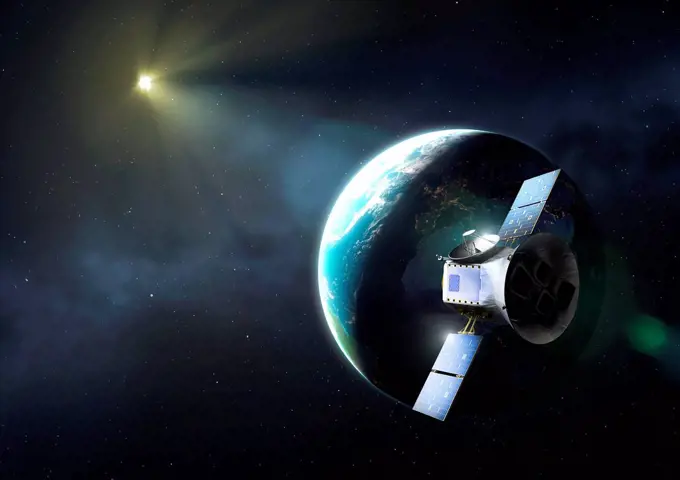
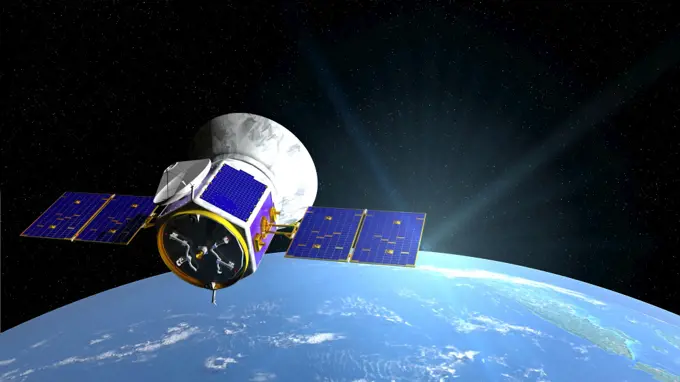
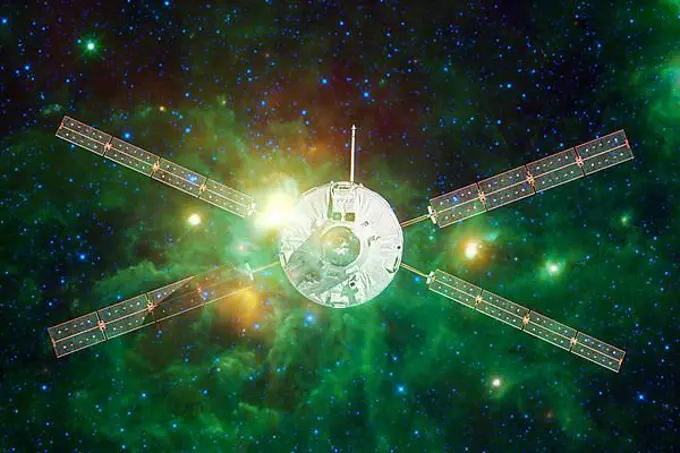
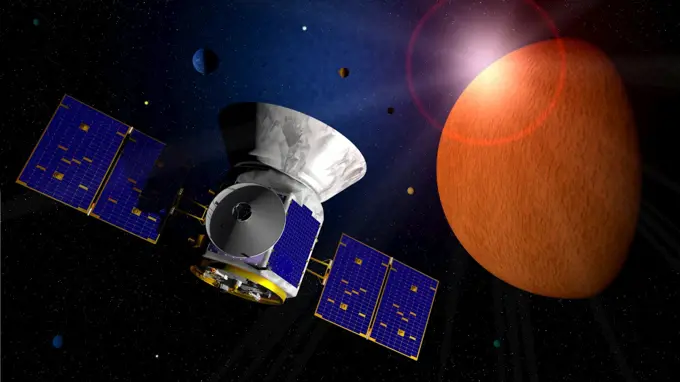
TESS Spacecraft, illustration

Assets in this Story

1525-24598294
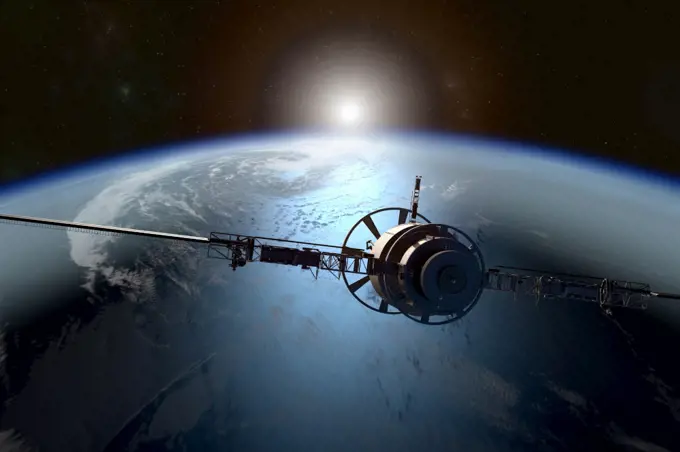
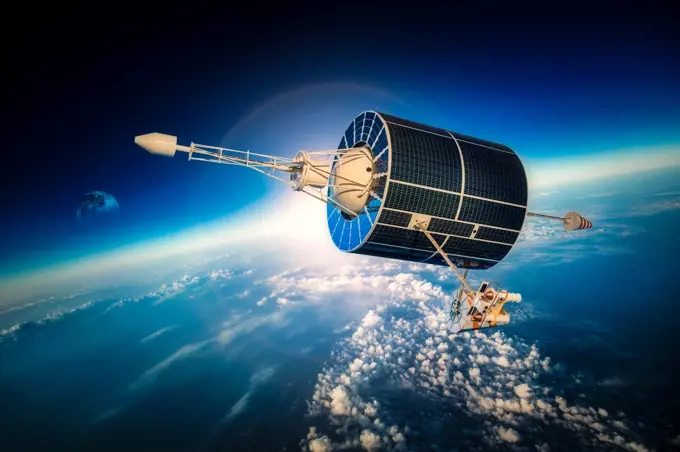
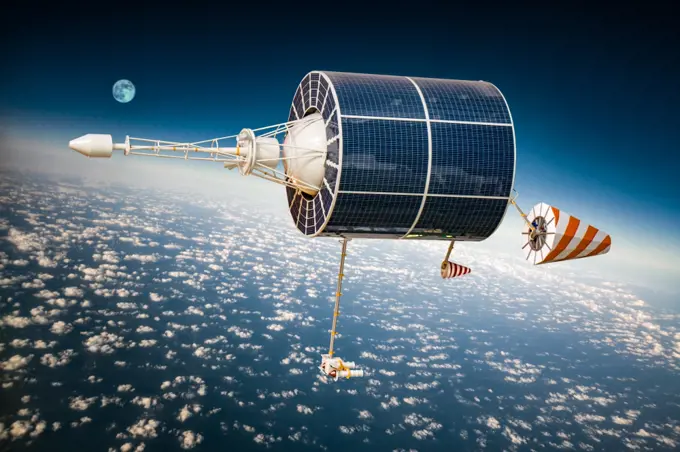
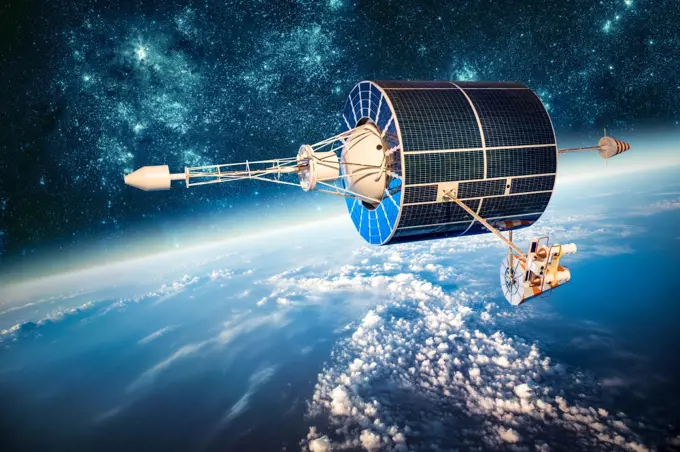
3D rendering of a satellite orbiting the earth
4239R-20482964
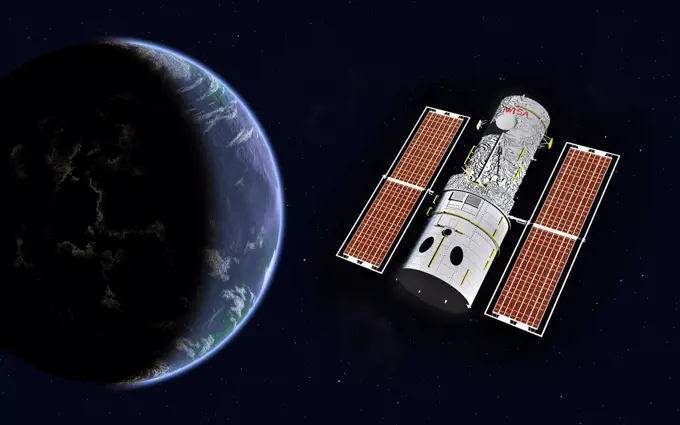
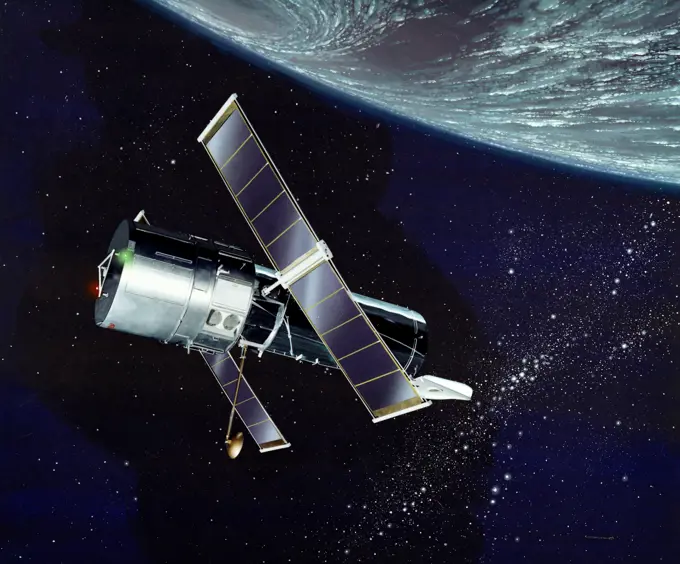
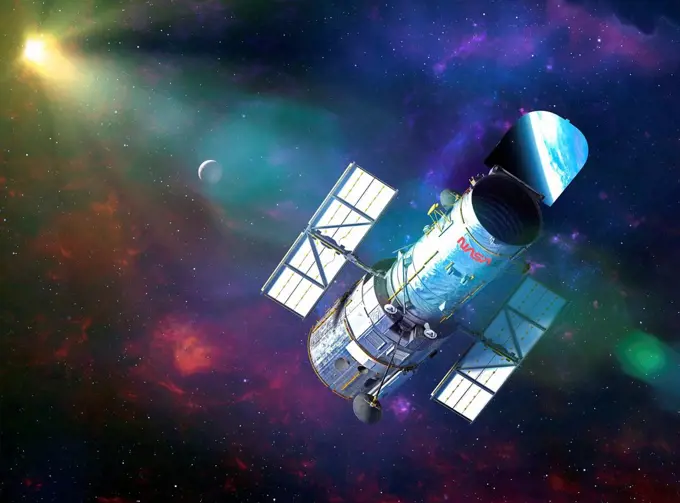
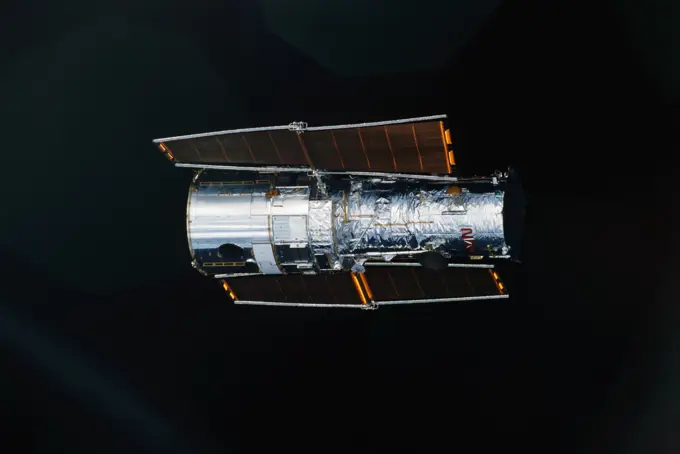
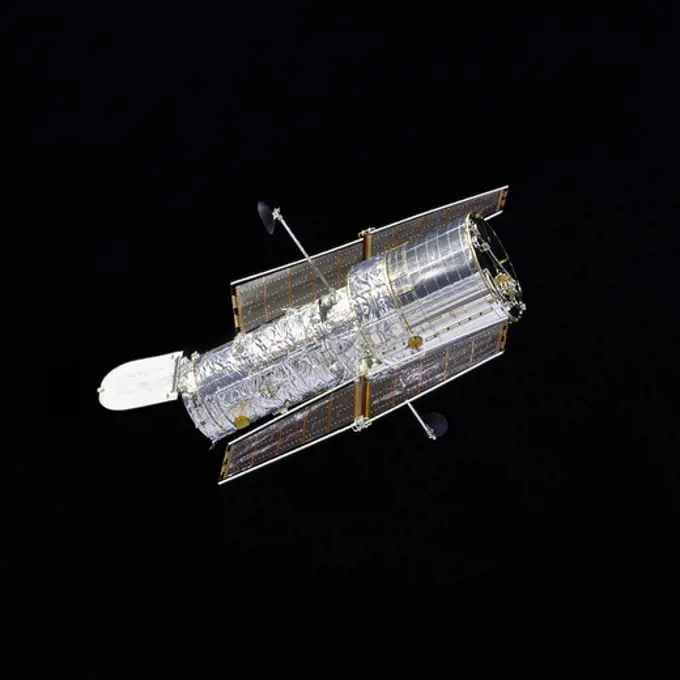
The Hubble Space Telescope in Earth orbit.
6188-68369782
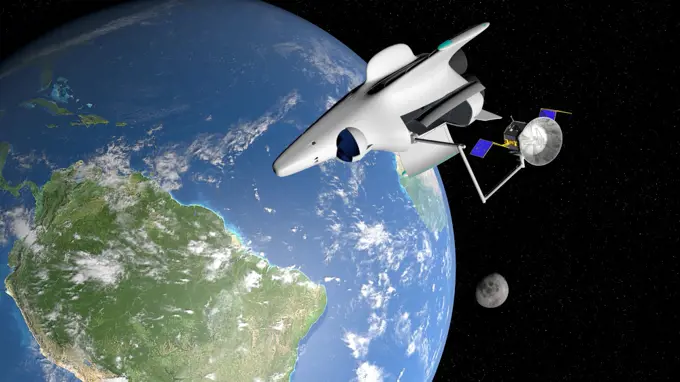
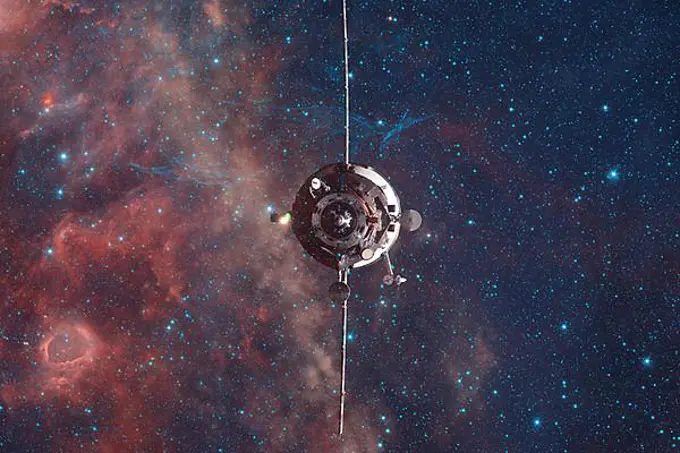
Raumschiff für Erdfernerkundungssysteme. Fotomontage Bild. Spaceship for Earth Remote Sensing Systems. Photomontage image. LicenseRF Copyright: xZoonar.com/DmitrixMarutax 23273682
4239-57495548
A space probe investigates a cloud covered planet in outer space.
6145-45241529
This illustration depicts a side view of the Hubble Space Telescope (HST). The HST is the product of a partnership between NASA, European Space Agency Contractors, and the international community of astronomers. It is named after Edwin P. Hubble, an American Astronomer who discovered the expanding nature of the universe and was the first to realize the true nature of galaxies. The purpose of the HST, the most complex and sensitive optical telescope ever made, is to study the cosmos from a low-Earth orbit. By placing the telescope in space, astronomers are able to collect data that is free of the Earth's atmosphere. The HST detects objects 25 times fainter than the dimmest objects seen from Earth and provides astronomers with an observable universe 250 times larger than visible from ground-based telescopes, perhaps as far away as 14 billion light-years. The HST views galaxies, stars, planets, comets, possibly other solar systems, and even unusual phenomena such as quasars, with 10 times
4239-57495632
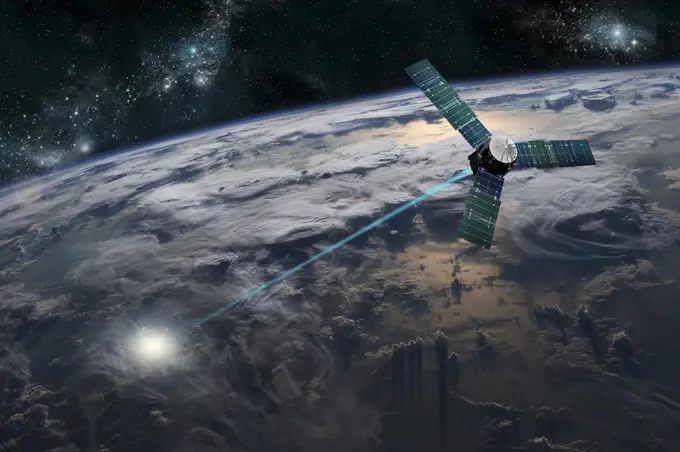
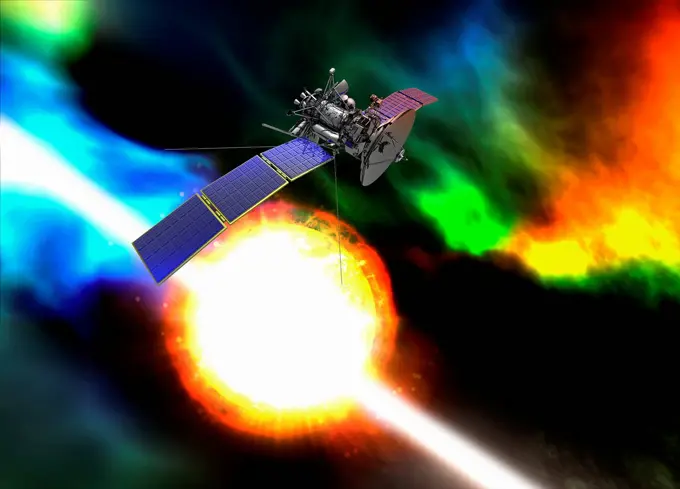
A satellite firing an energy weapon at a target on Earth.
4128R-15466832
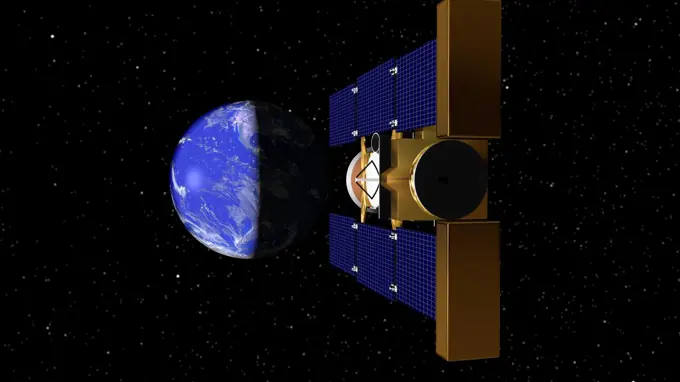
TESS Spacecraft, illustration
1525-28439187
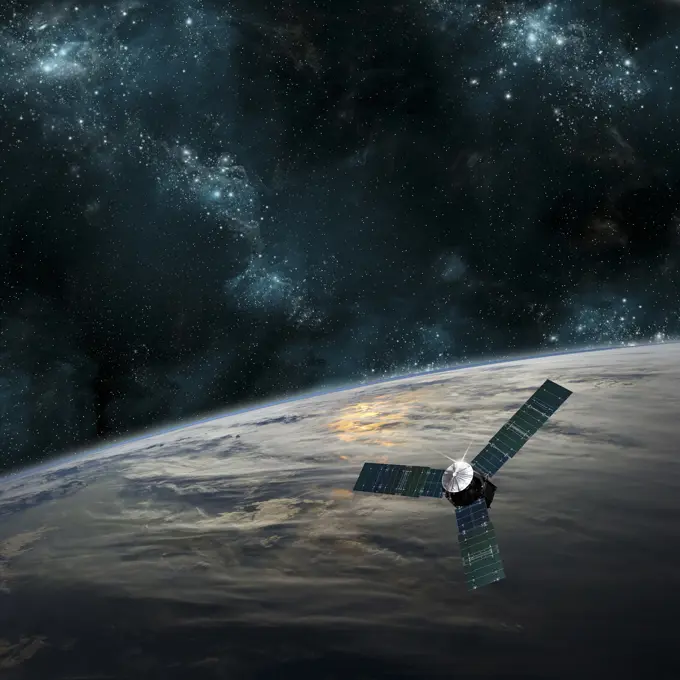
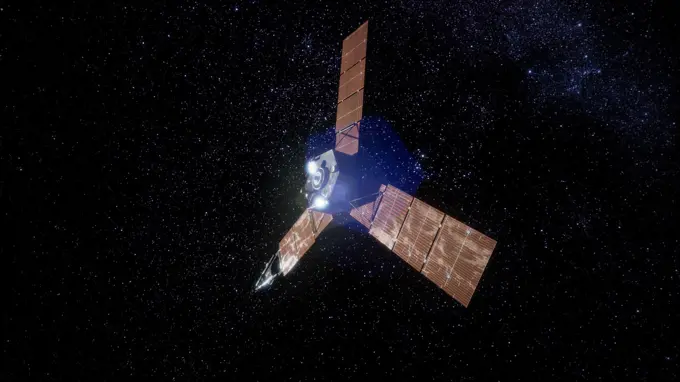
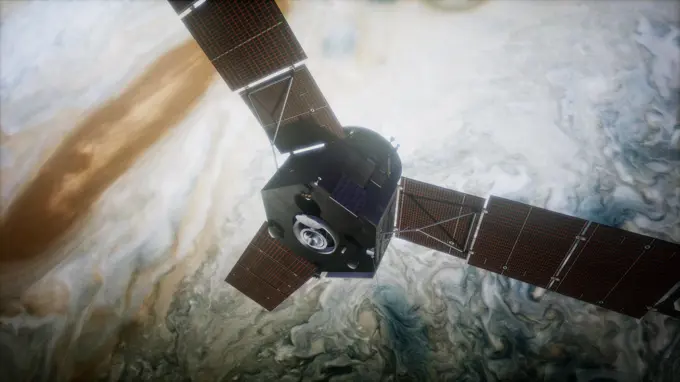
Juno sattelite orbiting Jupiter. Elements of this image furnished by NASA. Juno sattelite orbiting Jupiter
1525-21963543
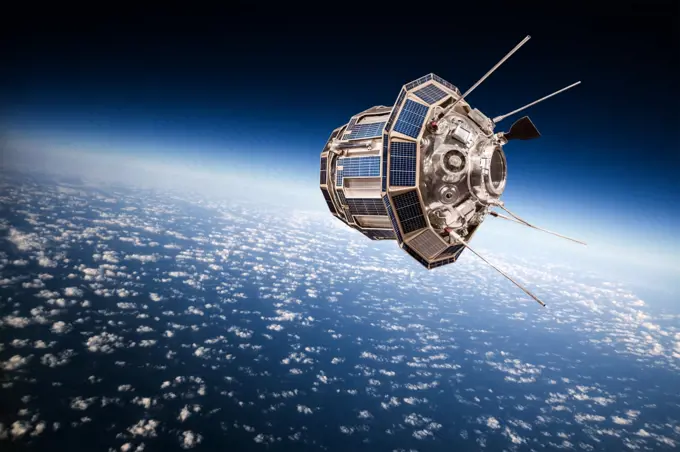
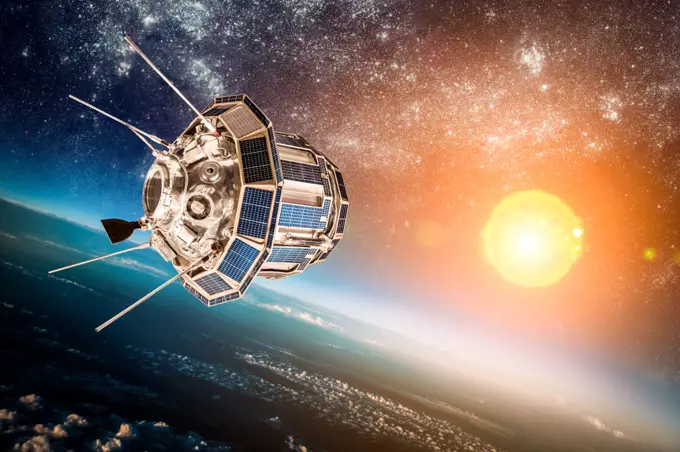
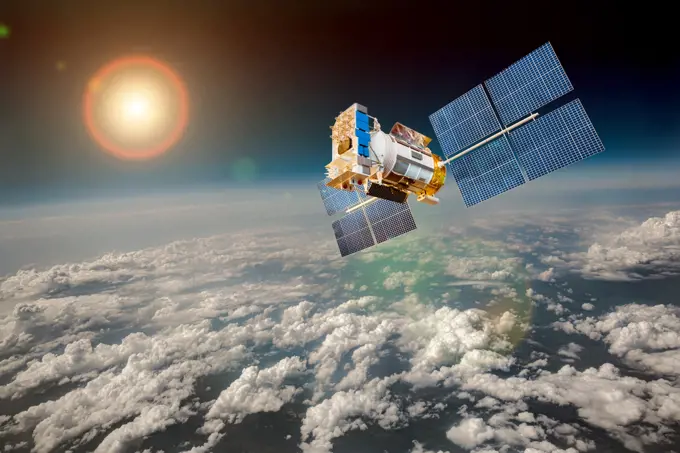
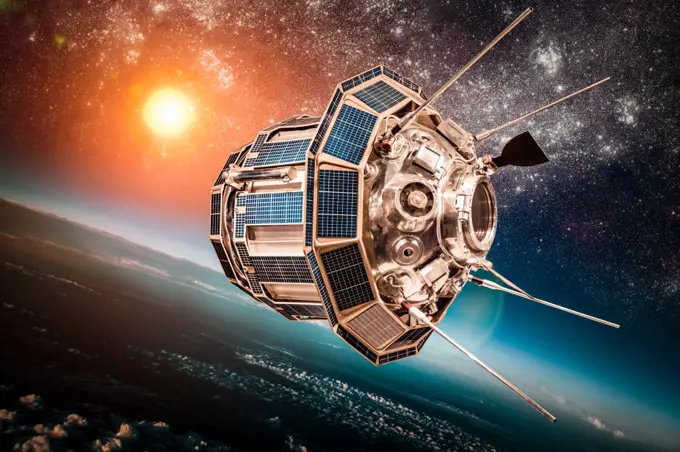
Space satellite orbiting the earth
6145-45257140
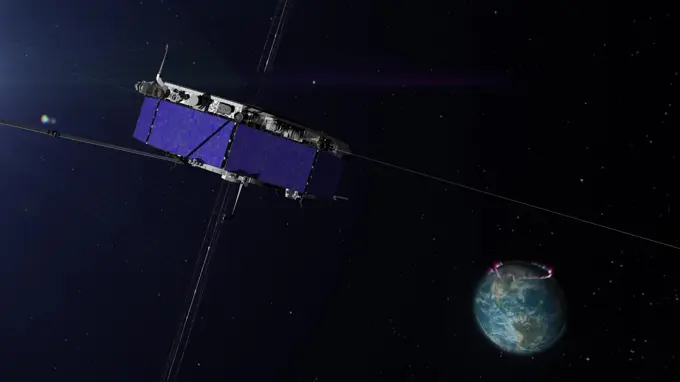
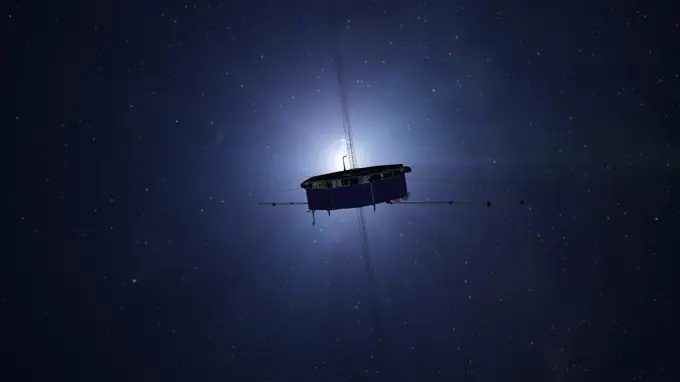
MMS Spacecraft Animation The Magnetospheric Multiscale (MMS) mission is a Solar Terrestrial Probes mission comprising four identically instrumented spacecraft that will use Earth's magnetosphere as a laboratory to study the microphysics of three fundamental plasma processes magnetic reconnection, energetic particle acceleration, and turbulence. These processes occur in all astrophysical plasma systems but can be studied in situ only in our solar system and most efficiently only in Earth's magnetosphere, where they control the dynamics of the geospace environment and play an important role in the processes known as "space weather." Learn more about MMS at a href= http //www.nasa.gov/mms rel= nofollow www.nasa.gov/mms /a Learn more about MMS at a href= http //www.nasa.gov/mms rel= nofollow www.nasa.gov/mms /a
4128-17856932
Artwork of the Transiting Exoplanet Survey Satellite (TESS). TESS was launched by NASA in April 2018, the successor to Kepler. It has a two-year missi...
6145-45134982
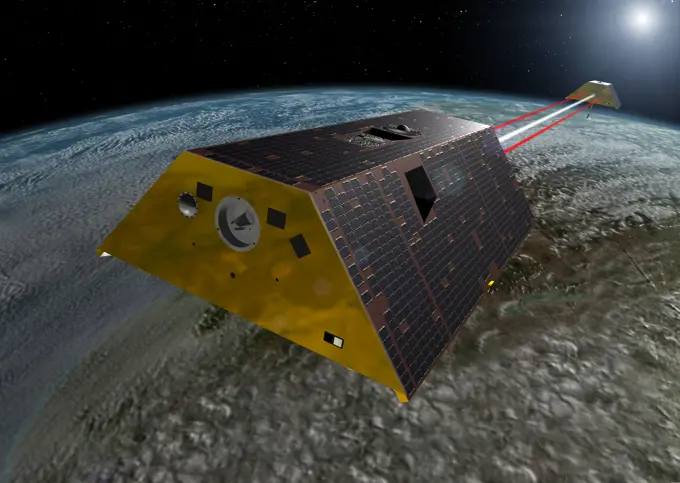
This artist's rendering shows the twin spacecraft of the Gravity Recovery and Climate Experiment Follow-On (GRACE-FO) mission, a partnership between NASA and the German Research Centre for Geosciences (GFZ).
1525-27319926
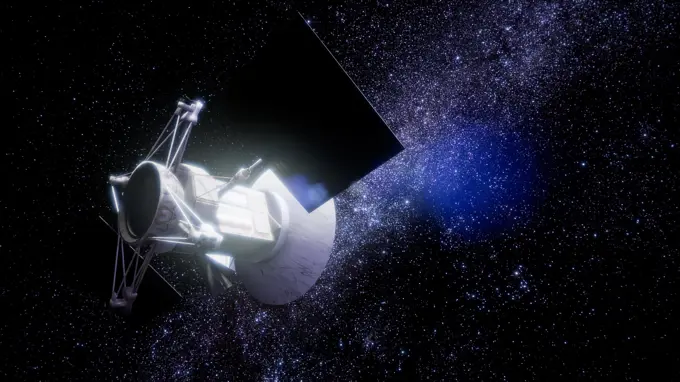
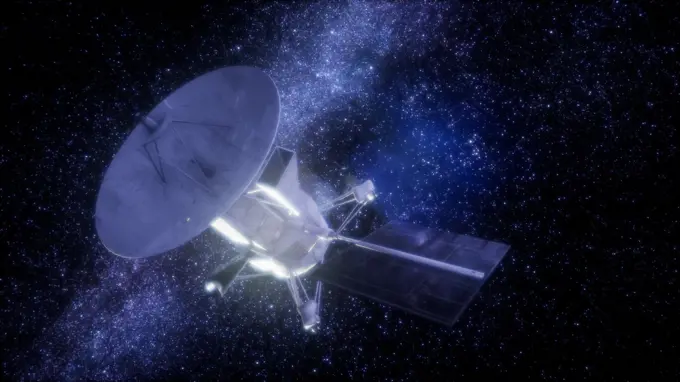
Transiting Exoplanet Survey Satellite TESS space telescope with stars in background. 3D illustration
1525-25932494
Space satellite orbiting the earth on a background star sun. Elements of this image furnished by NASA.
6188-58105911
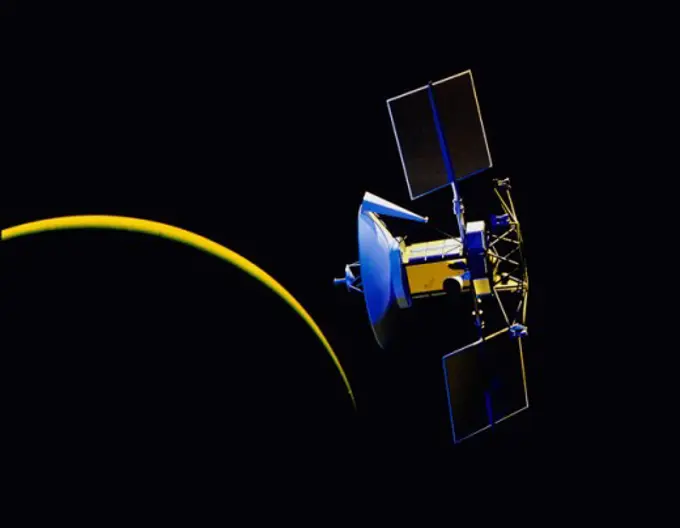
Magellan spacecraft approaching to Venus Magellan spacecraft approaching to Venus. Elements of this image furnished by NASA. Copyright: xZoonar.com/StanislavxRishnyakx 14993655
6145-44493301
. Artemis 1
6145-44830707
Concept drawing
5507-47424269
Spaceship above the light of the planet
6145-44545556
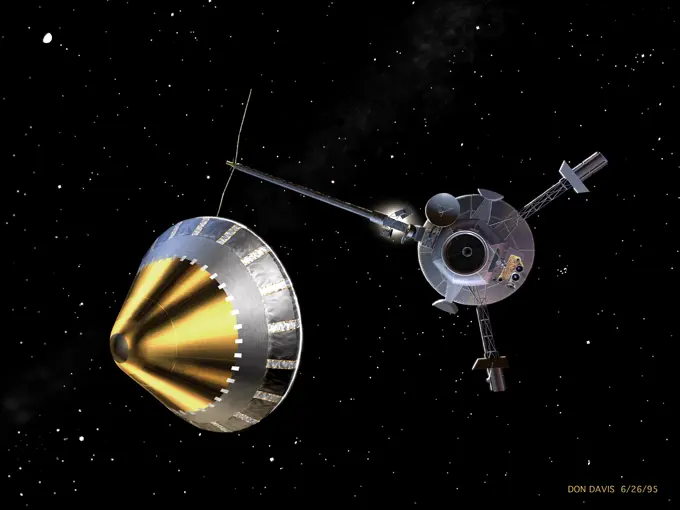
Pioneer Galileo separation (NASA artwork by Don Davis)
6145-44745701
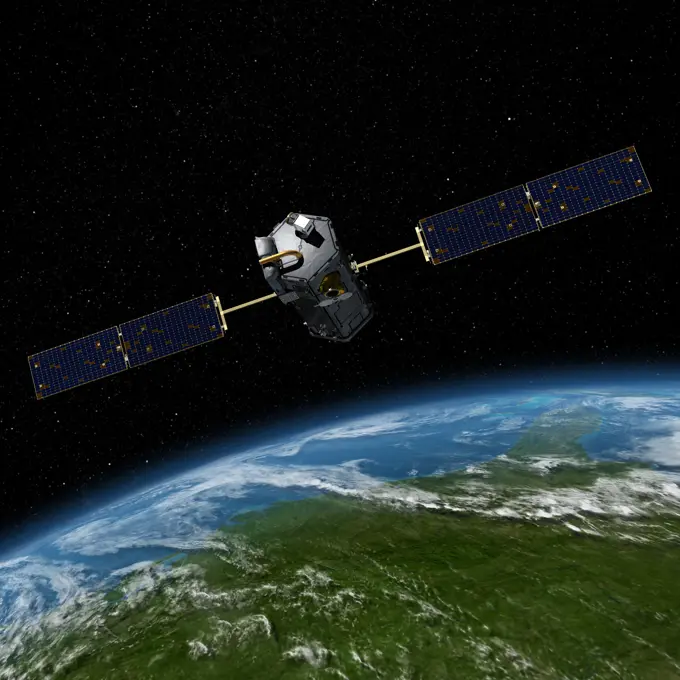
Artists concept of the Orbiting Carbon Observatory.
6188-58106529
Magellan spacecraft approaching to Venus Magellan spacecraft approaching to Venus. Elements of this image furnished by NASA. Copyright: xZoonar.com/StanislavxRishnyakx 15409280
4239R-20480102
Artist's concept of Space Interferometry Mission.
4128R-13271185
Voyager spacecraft, artwork. Two Voyager spacecraft (Voyager 1 and Voyager 2) were launched in 1977. This timing took advantage of a rare alignment of...
4239R-20480268
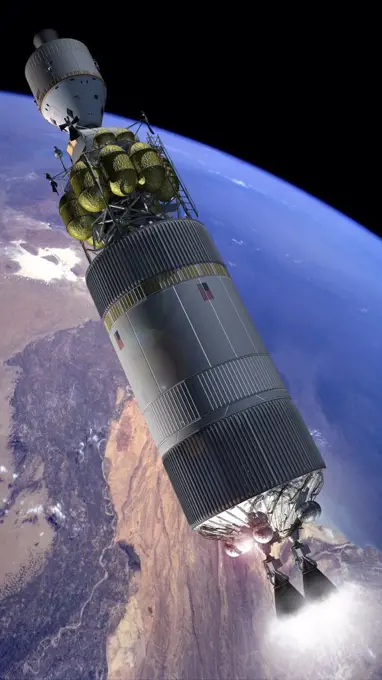
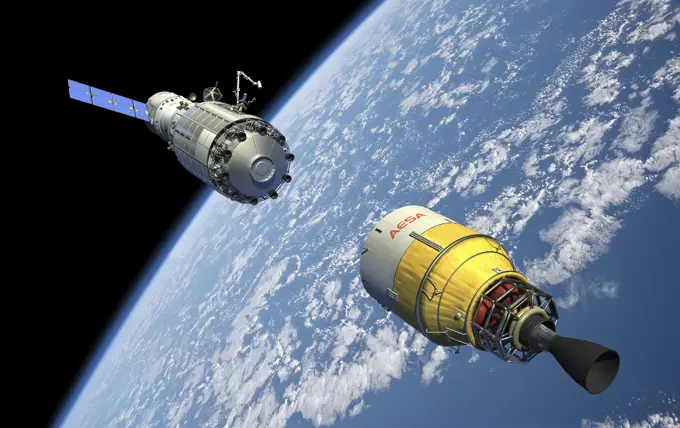
Artist's rendition of a new spaceship to the moon docks their capsule with the lander and departure stage and heads for the moon.
4239-57497757
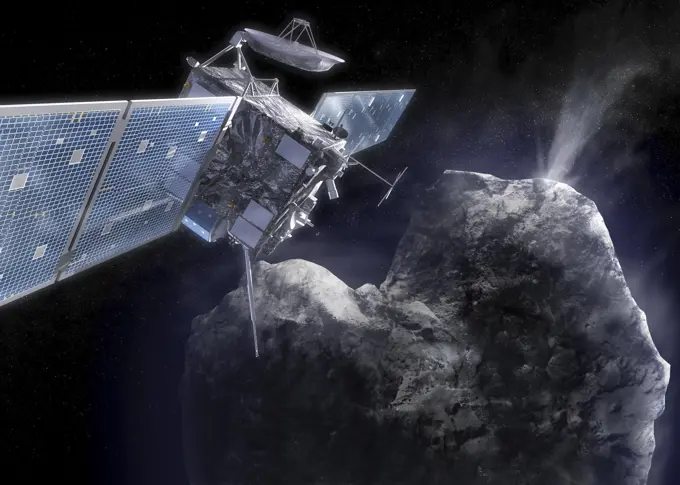
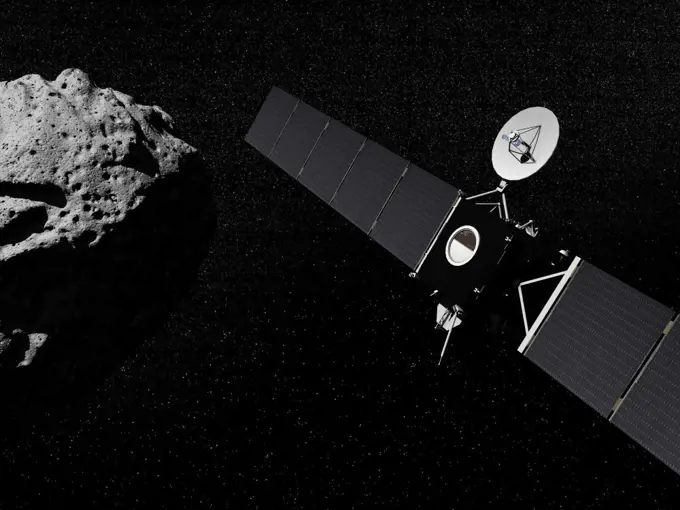
The Rosetta probe arrives at its destination and begins to explore a comet up close.
6145-44767869
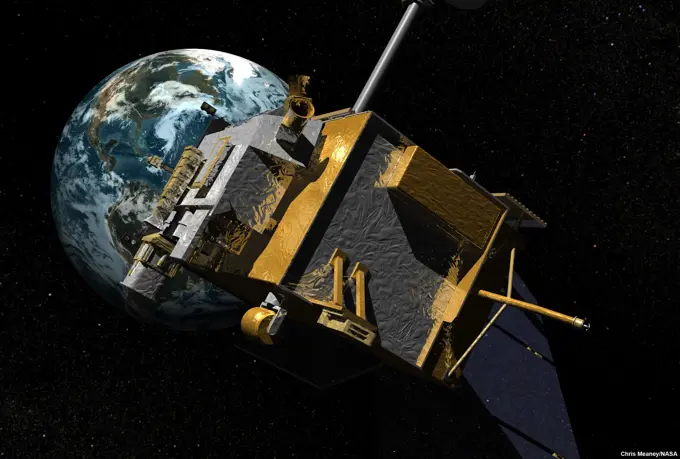
NASA is scheduled to launch the Lunar Reconnaissance Orbiter, an unmanned mission to comprehensively map the entire moon, on June 18, 2009.
6145-44801650
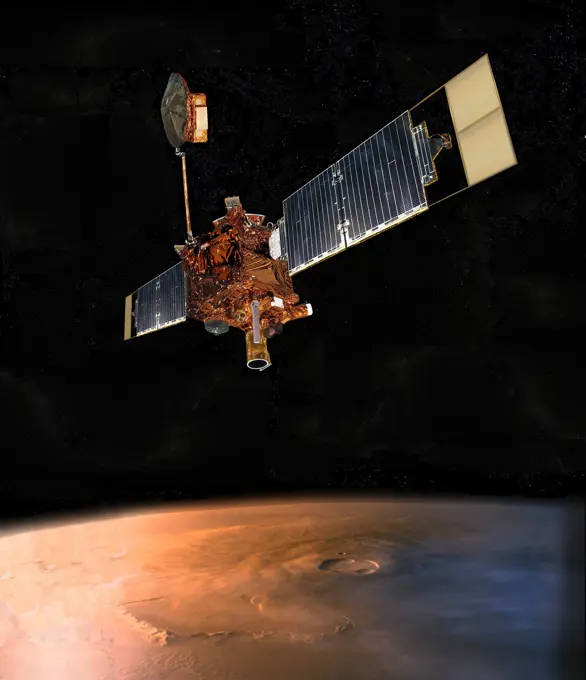
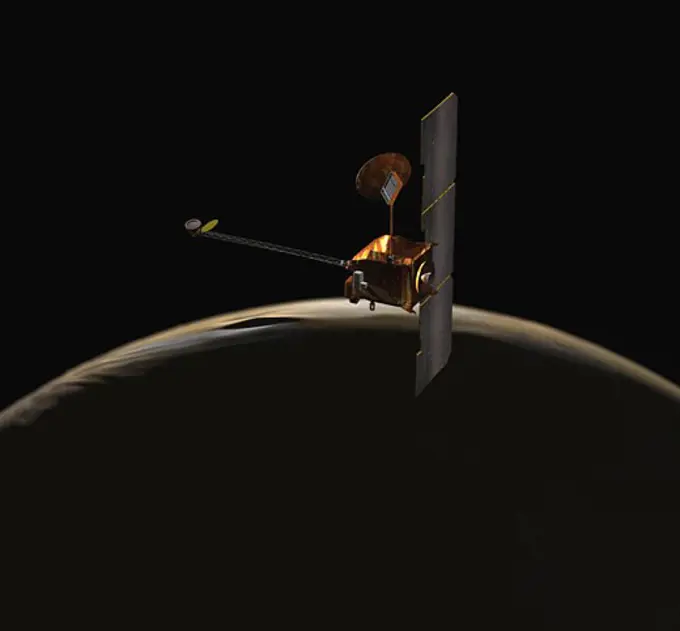
An artist's concept of NASA's Mars Global Surveyor (MGS) flying over Mars.
6145-44559668
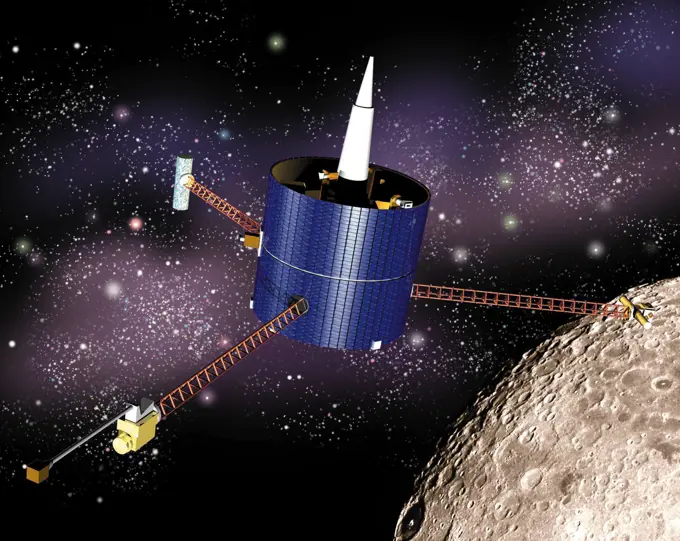
This artist's concept of the Lunar Prospector shows the spacecraft in lunar orbit. Instrument masts are fully deployed.
6145-45253098
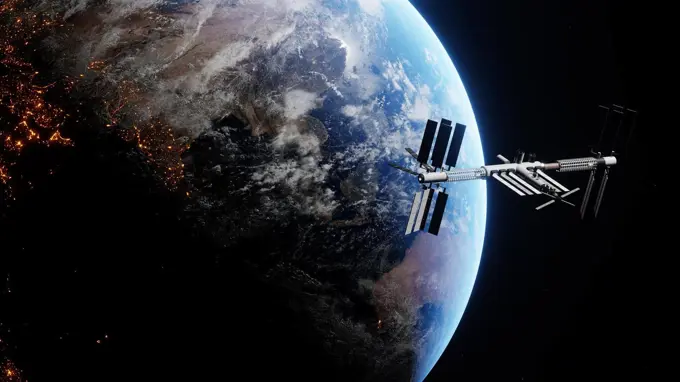
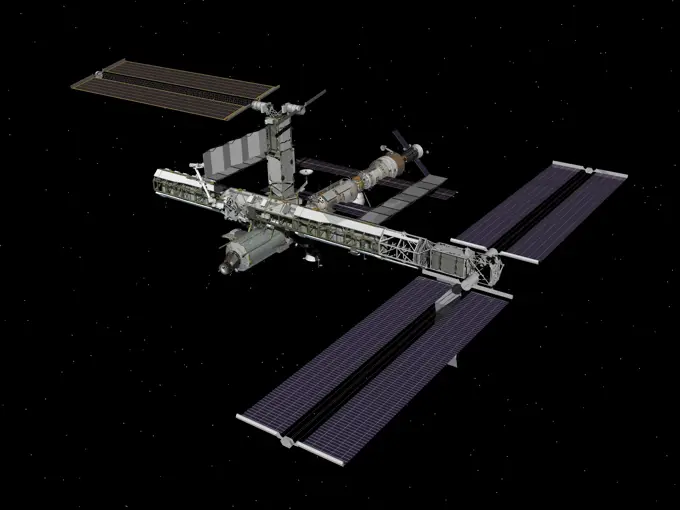
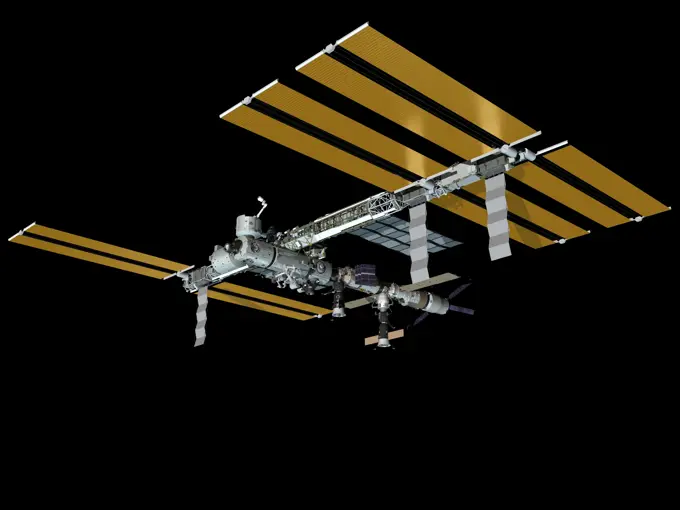
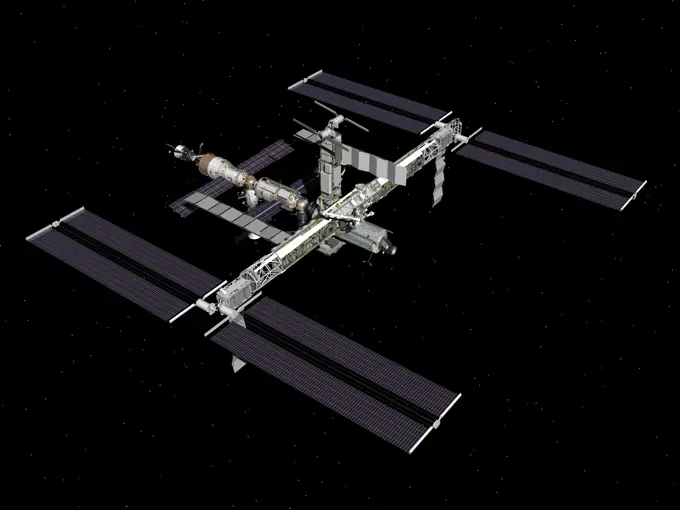
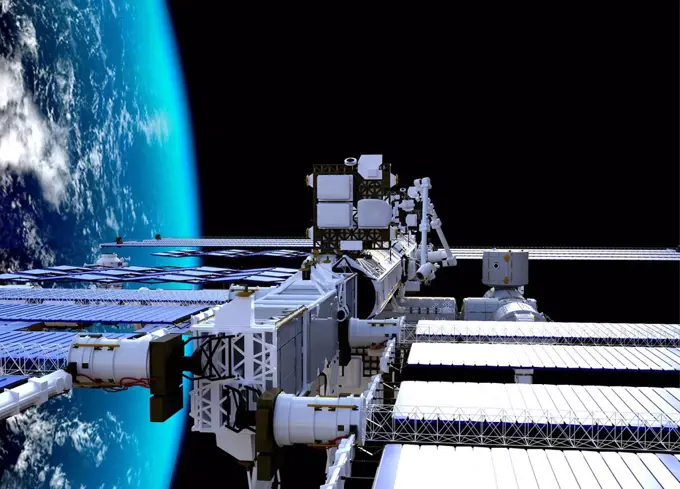
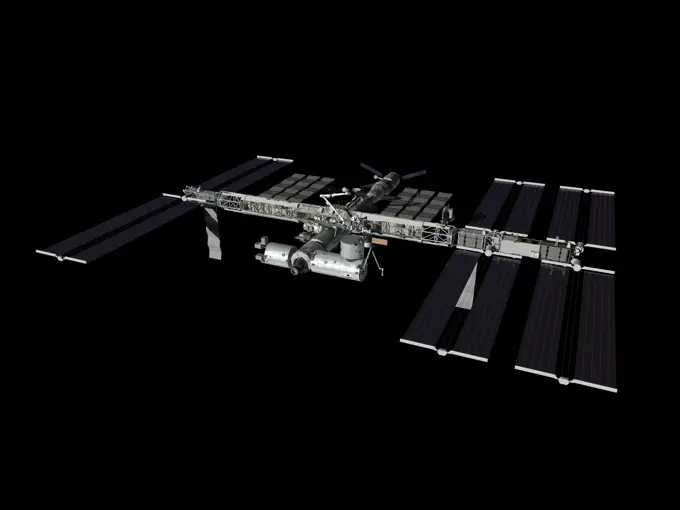
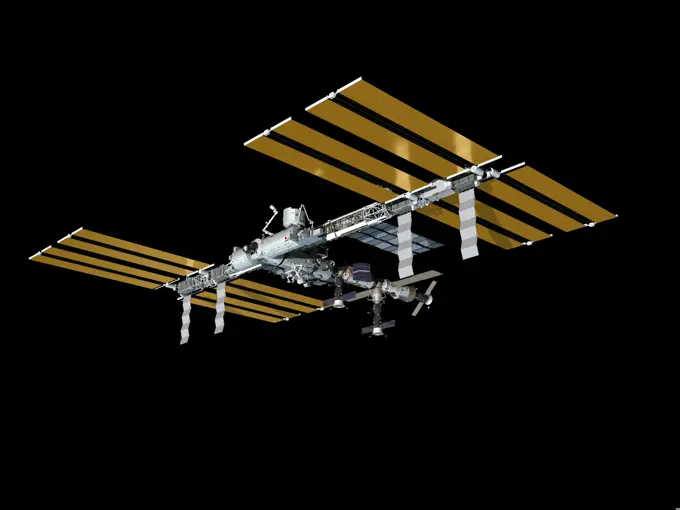
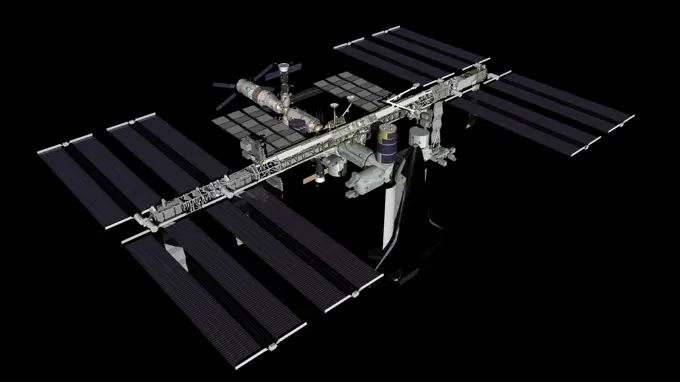
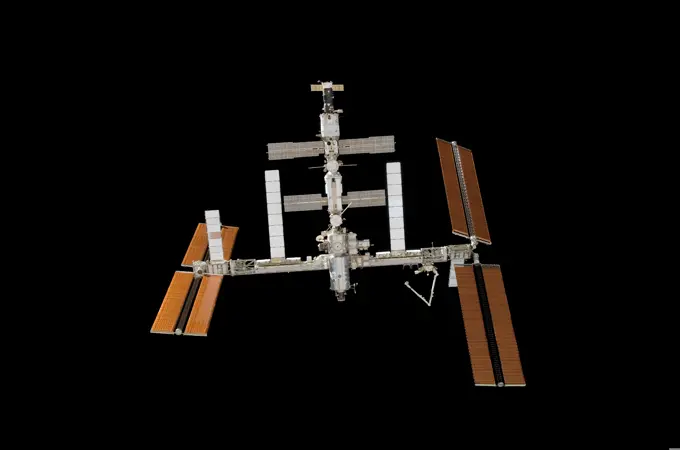
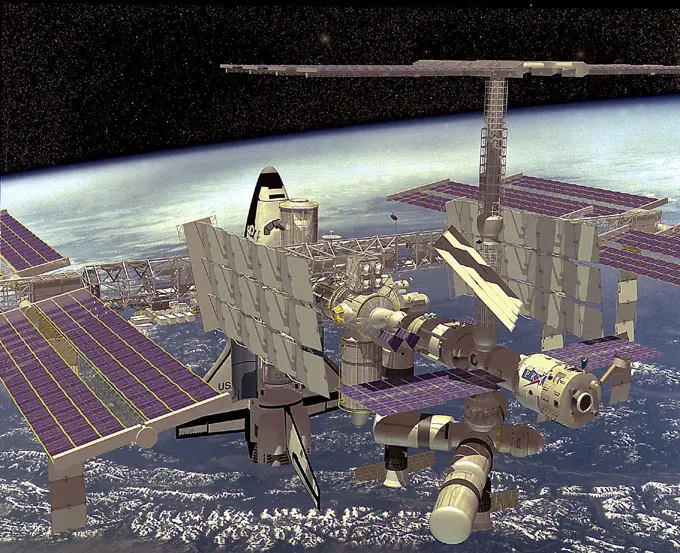
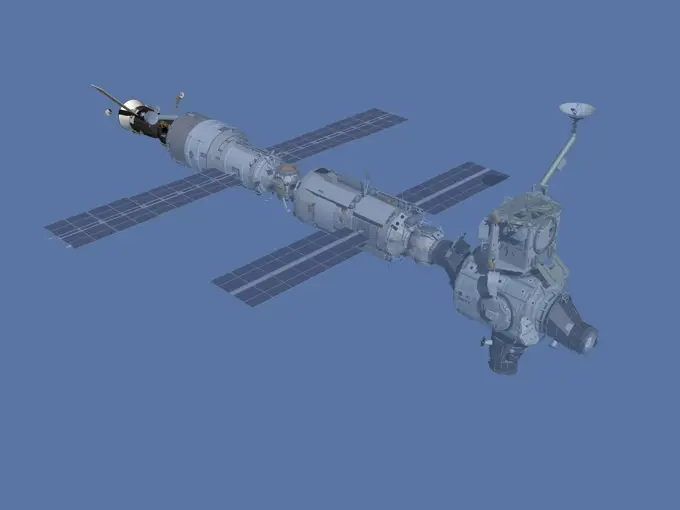
JSC2006-E-25653 (October 2006) --- Computer-generated scene showing a low-angle wide view (starboard-forward) of the International Space Station, after assembly work is completed.
6145-45250001
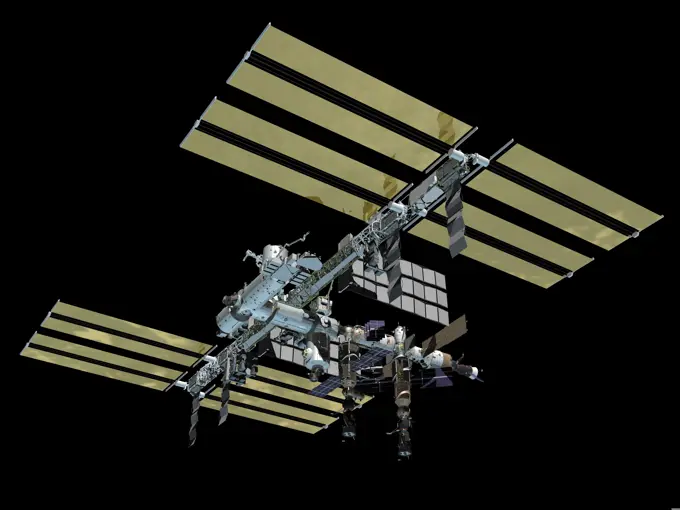
JSC2003-E-64498 (December 2003) - Post 10A underside/aft view of the International Space Station with Shuttle docked to Node 2.
6145-44595804
This image was used in a contest to rename the Space InfraRed Telescope Facility (SIRTF), now known as the Spitzer Space Telescope.
6145-54432885
AN artist's concept of the Space Test Program (STP) P-80-1 satellite with a Laser Communications Space Measurement Unit (LSMU) optical communications receiver. LSMU demonstrates space communications at optical frequencies. Base: Vandenberg Air Force Base State: California (CA) Country: United States Of America (USA)
6145-44720100
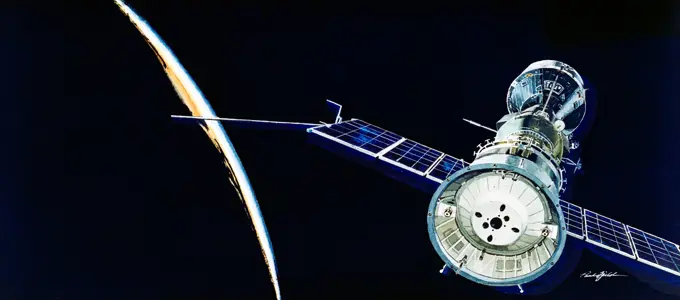
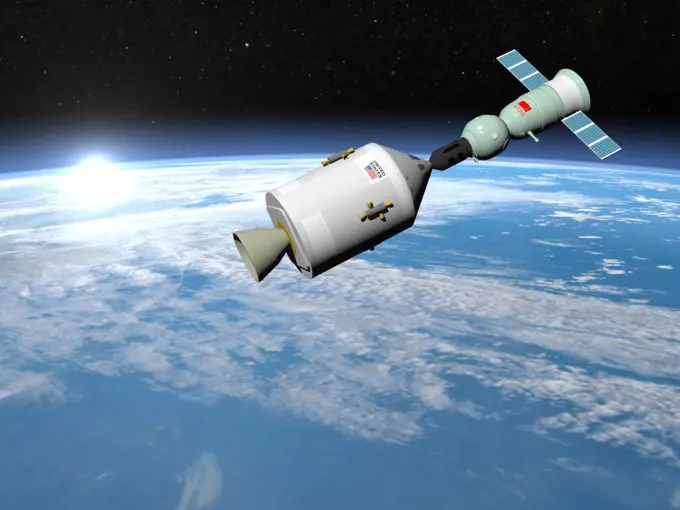
S75-27287 (May 1975) --- An artist s concept depicting an American Apollo spacecraft docked with a Soviet Soyuz spacecraft in Earth orbit. This view is looking toward the aft end of Soyuz, with the Apollo in the background. Two solar panels protrude out from the instrument assembly module of the Soyuz. The glow on Earth s horizon is seen on the left. During the joint U.S.-USSR Apollo-Soyuz Test Project mission, scheduled for July 1975, the American and Soviet crews will visit one another s spacecraft while the Soyuz and Apollo are docked for a maximum period of two days. This artwork is by Paul Fjeld.
6145-45244353
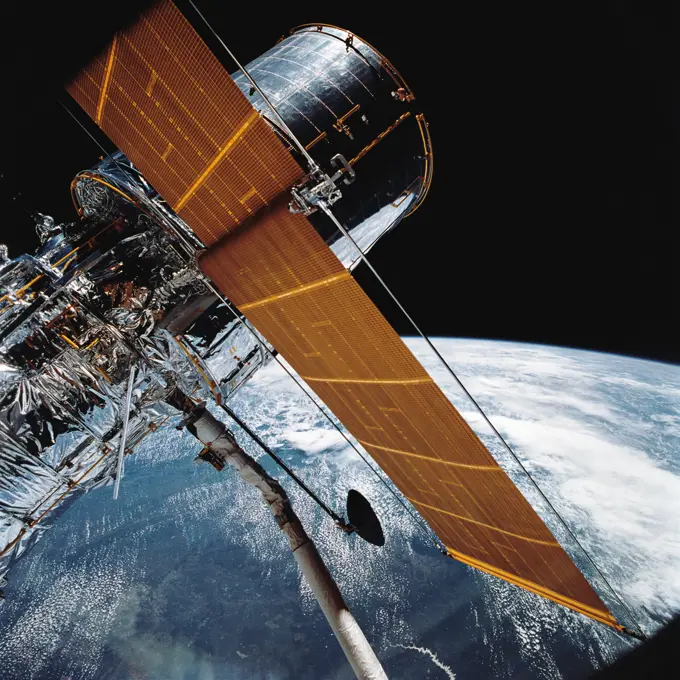
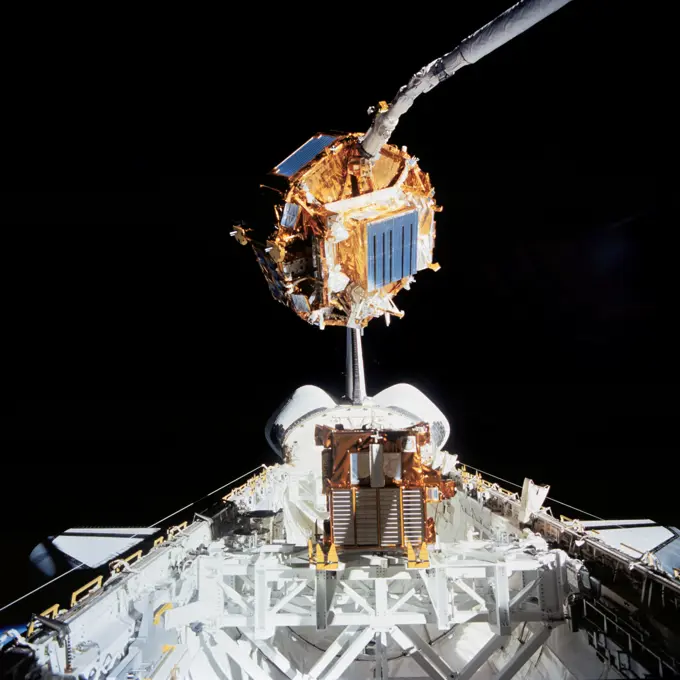
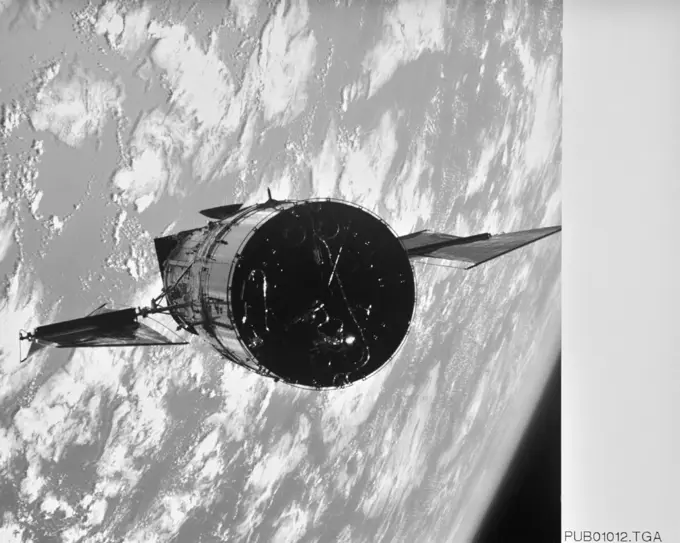
STS031-76-026 (25 April 1990) --- Most of the giant Hubble Space Telescope (HST) can be seen as it is suspended in space by Discovery's Remote Manipulator System (RMS) following the deployment of part of its solar panels and antennae. The photo was taken with a handheld Hasselblad camera. This was among the first photos NASA released on April 30, 1990, from the five-day STS 31 mission.
1525-20531156
Space satellite orbiting the earth. Elements of this image furnished by NASA.
6188-58106201
Parker Solar Probe approaching to Sun Parker Solar Probe approaching to sun. Copyright: xZoonar.com/StanislavxRishnyakx 15104171
4389-1428
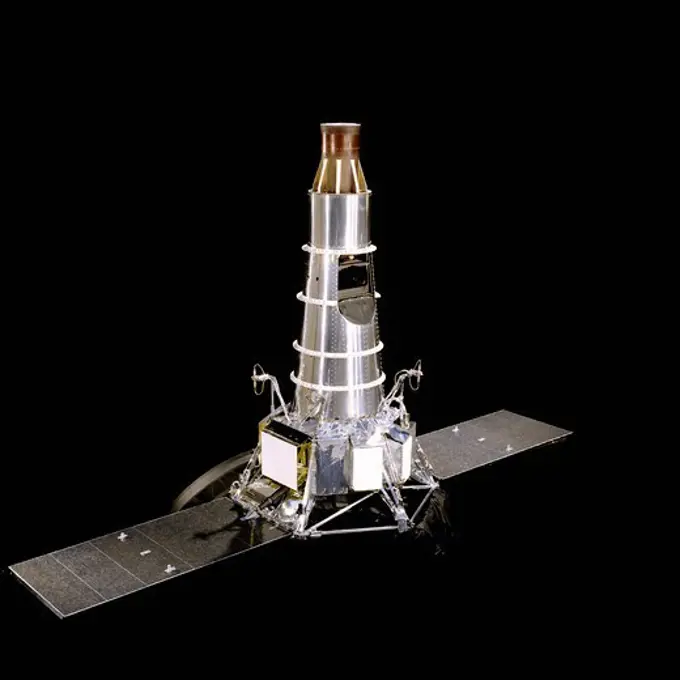
Ranger Space Probe
1574R-011294
Magellan Spacecraft
6145-45231109
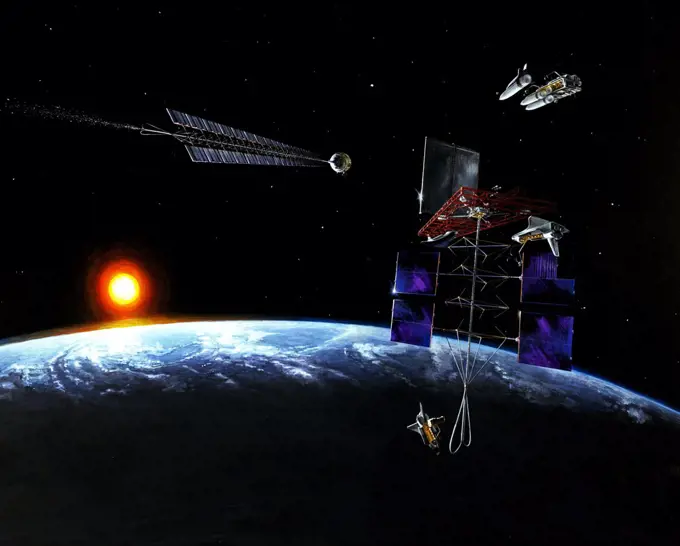
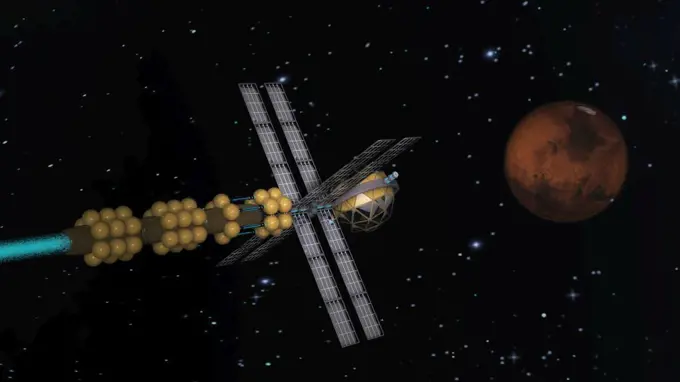
Concept of a vehicle journeys from Earth to Mars propelled by thrusters powered by electricity from photovoltaic cells on its large fan shaped sails
6145-58971837
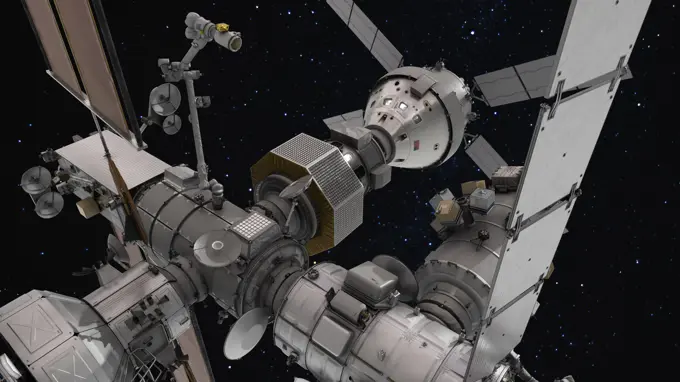
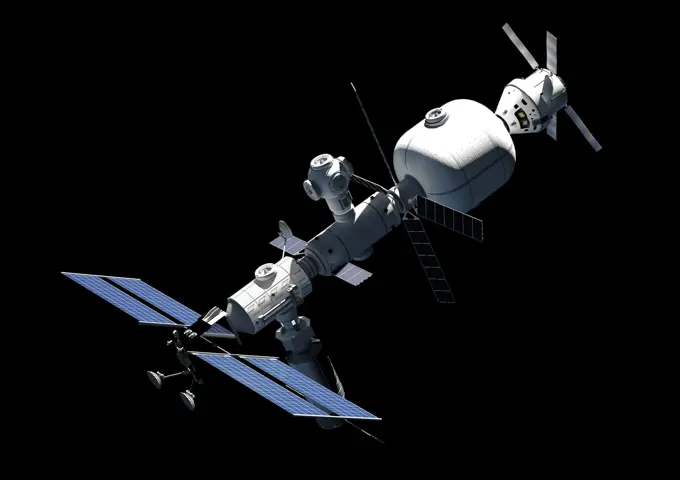
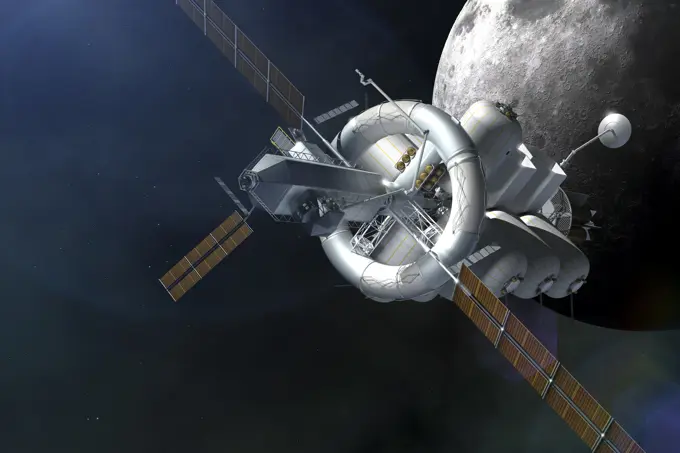
The Gateway space station will be humanity's first space station in lunar orbit as a vital component of the Artemis missions to return humans to the Moon for scientific discovery and chart a path for humans to Mars.
1525-20530902
Space satellite orbiting the earth on a background star sun. Elements of this image furnished by NASA.
4239-57493922
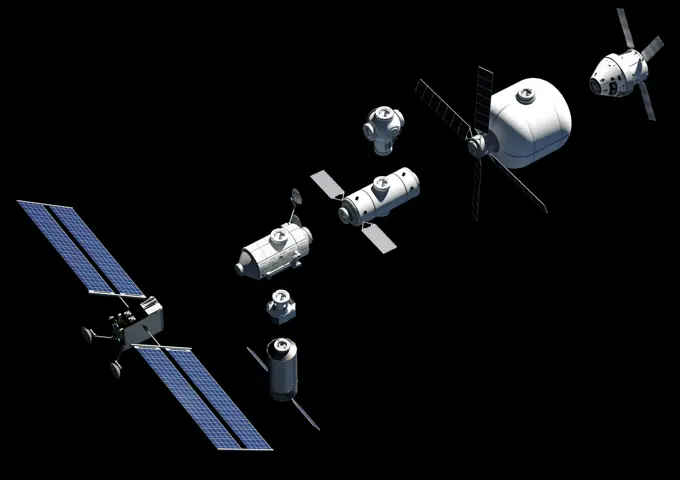
Lunar Gateway space station concept, exploded view.
1457R-928
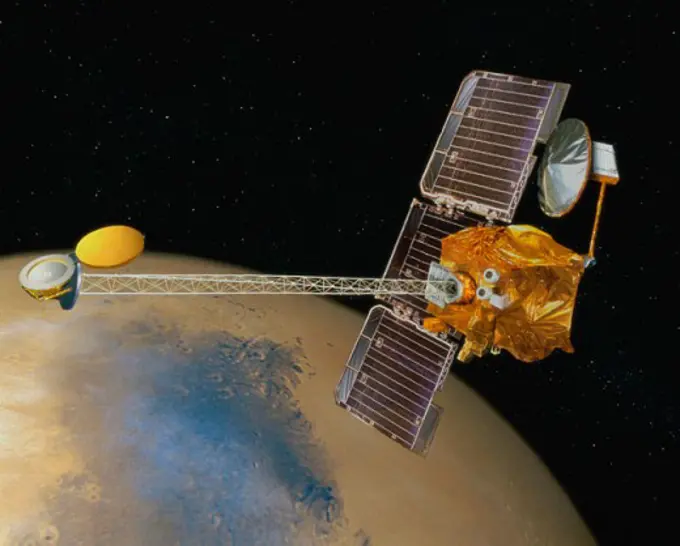
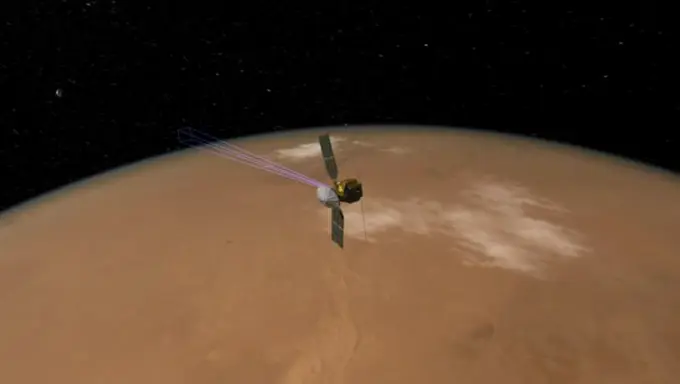
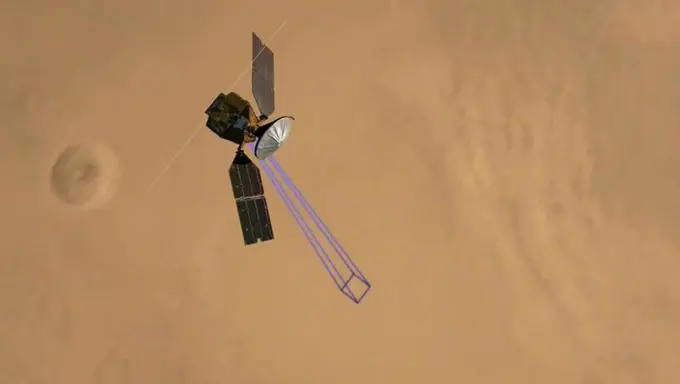
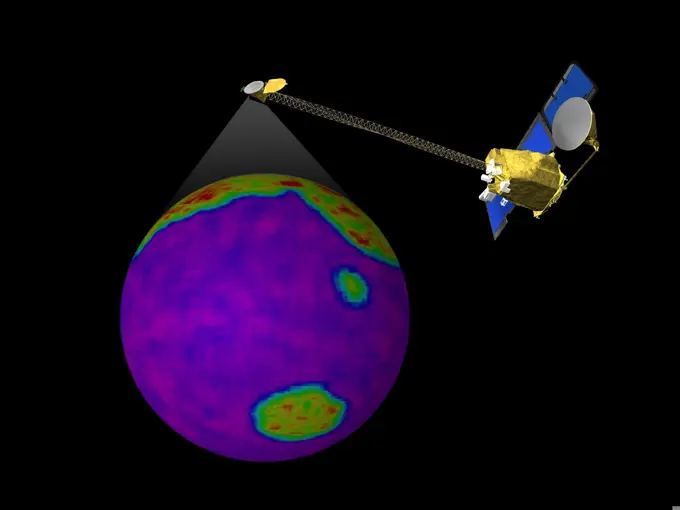
Satellite orbiting around Mars, Mars Odyssey Mission
1525-25932492
Space satellite orbiting the earth on a background star sun. Elements of this image furnished by NASA.
1848-53378642
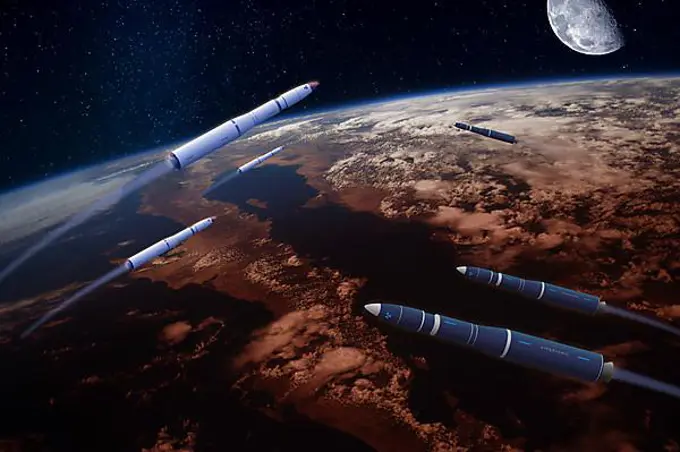
Hypersonic missiles or rockets over the apocalyptic Earth. Blue Moon in the sky. Elements of this image furnished by NASA
4239R-20480149
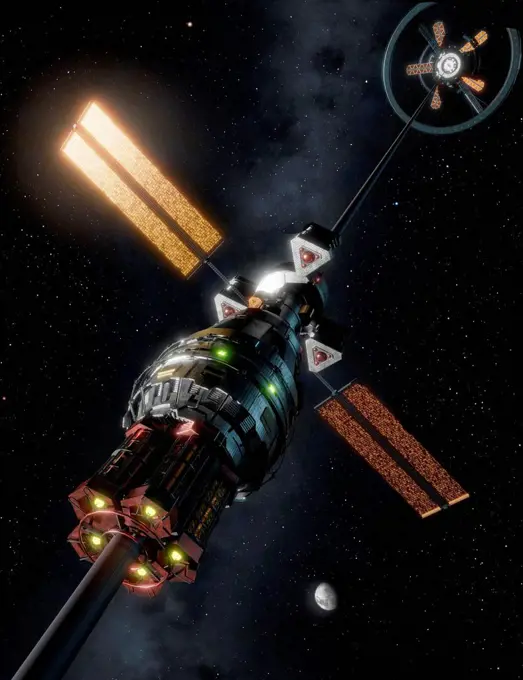
This painting shows the beginning of a mission to an Earth-approaching asteroid.  Asteroid-1 is the central long structure and the propulsion unit is the long tubular structure enveloped by stiffening yard arms and guy wires. Solar cells running the length of the propulsion system convert the sunlight into electricity which is used to power the propulsion system.
1746-111906701
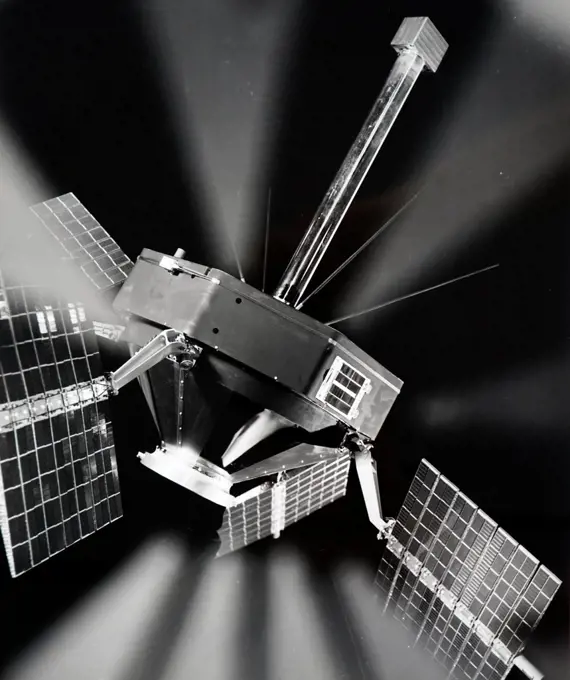
Artist's impression of the Payload S-3, Energetic Particles Satellite. Dated 20th century
1574R-015354
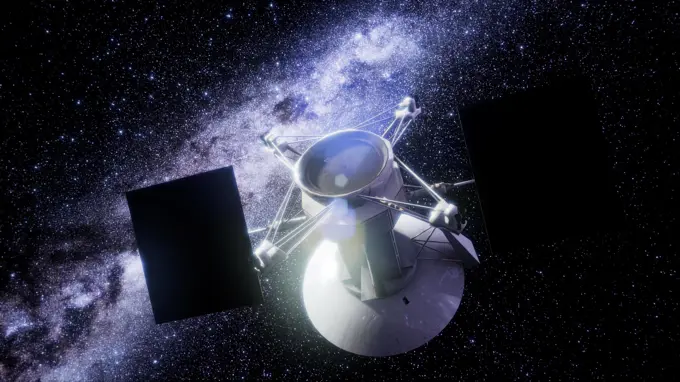
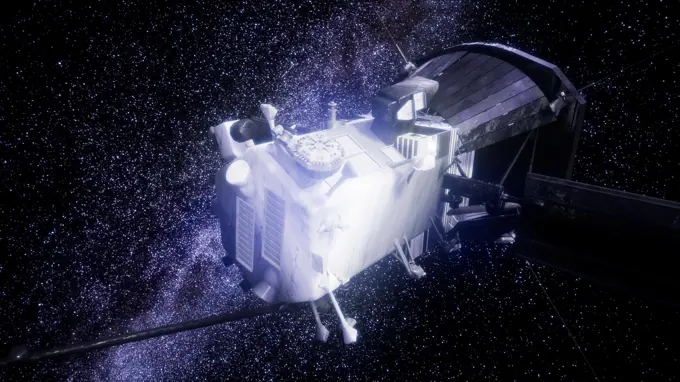
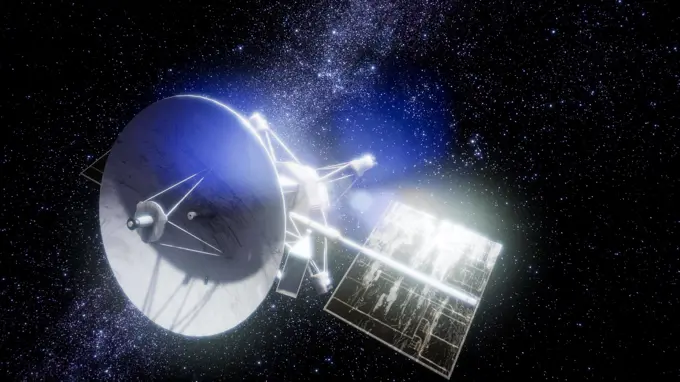
Satellite in space
4128R-12576185
New Horizons spacecraft at Pluto, artwork. New Horizons launched from Earth on 19 January 2006 and will arrive at Pluto in July 2015. It will spend 15...
6145-44872755
This image, created at the Jet Propulsion Laboratory (JPL), shows the Soil Moisture Active Passive (SMAP) mission, specifically depicting how the scanning antenna will fly in space and the swath coverage over the Earth.
1848-54917291
Spacecraft launch into space. Cosmos art. Elements of this image furnished by NASA
4239R-20480115
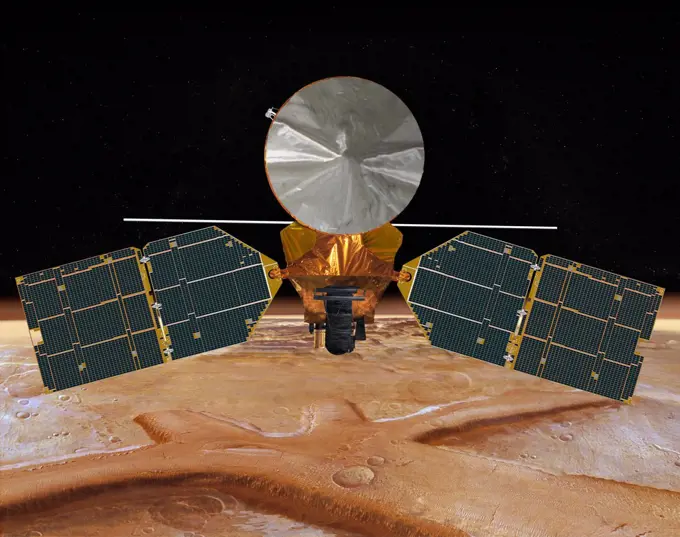
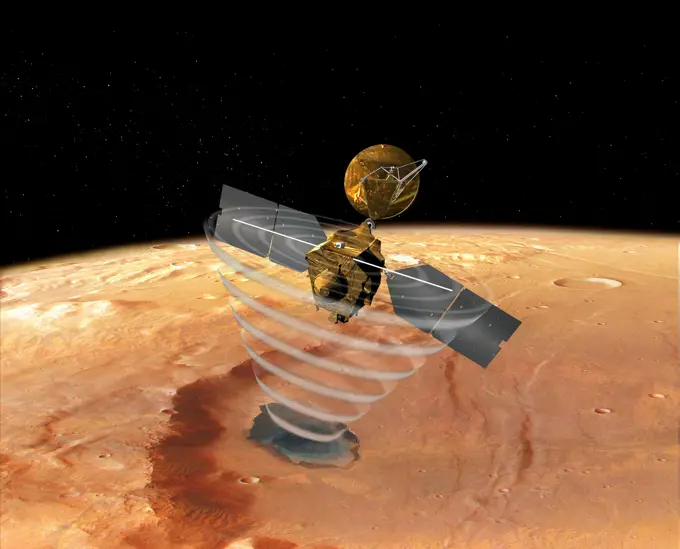
Artist's concept of the Mars Reconnaissance Orbiter, Front View
4239-57493921
Lunar Gateway space station concept, complete view.
6145-44534166
STS109-346-018 (3 March 2002) --- The Hubble Space Telescope (HST), with  its normal routine temporarily interrupted, gets closer and closer to its capture by the Space Shuttle Columbia prior to a week of servicing and upgrading bythe STS-109 astronaut crew.  The shuttle's Remote Manipulator System (RMS) robotic arm was used to snare thetelescope and latch it down into the cargo bay.
1525-28074886
Magellan spacecraft approaching to Venus
4239R-524
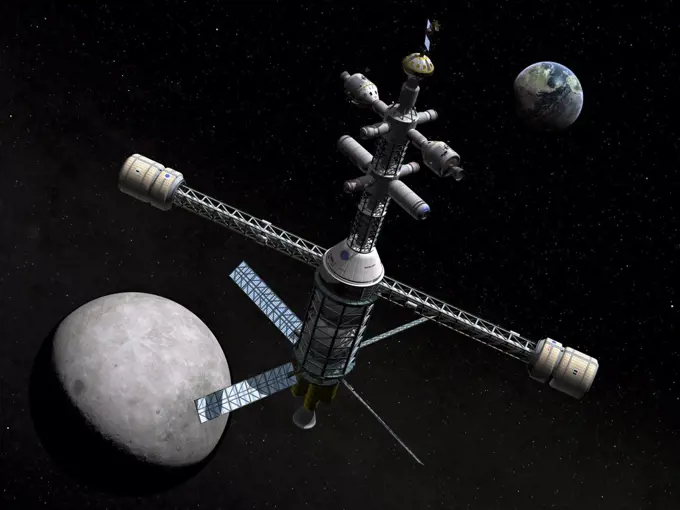
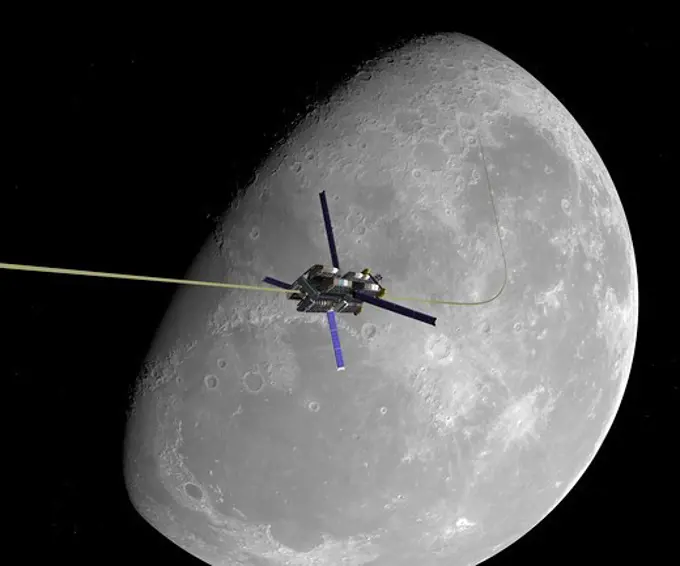
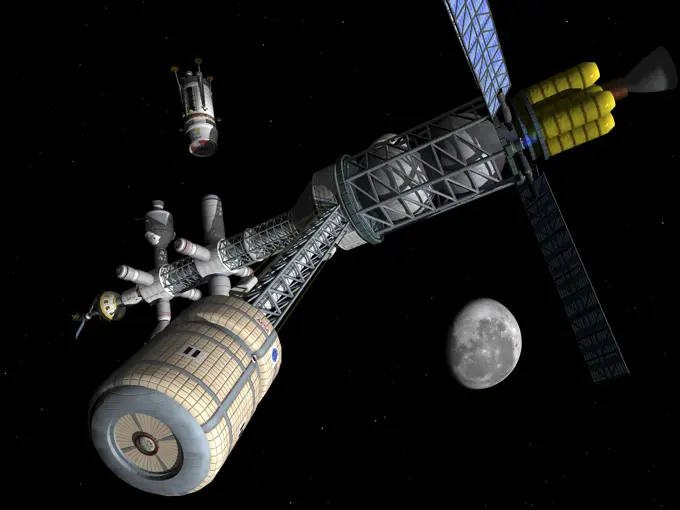
A lunar cycler has reached its furthest orbital point from the Earth, the apogee, and is rounding the far side of the Moon to begin its fall back toward Earth
6145-44765229
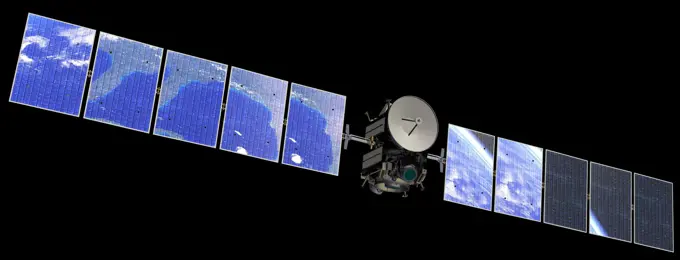
Artist's concept of Earth's reflection in Dawn spacecraft.
1574R-35294
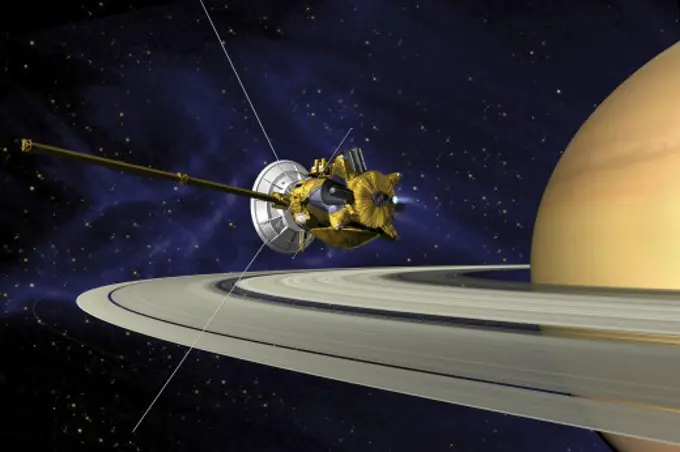
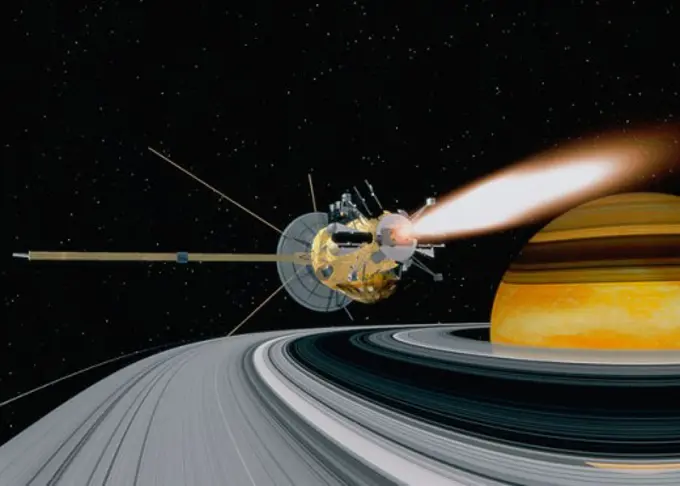
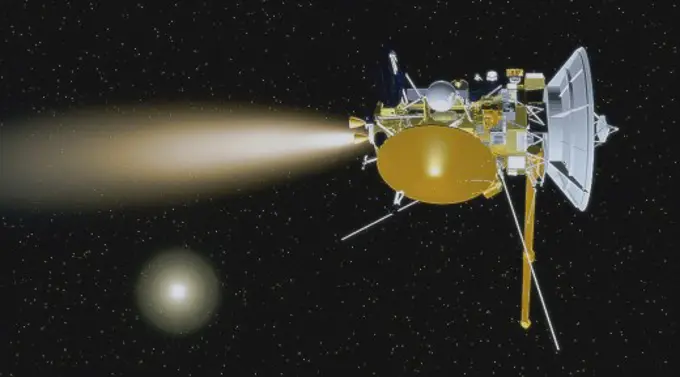
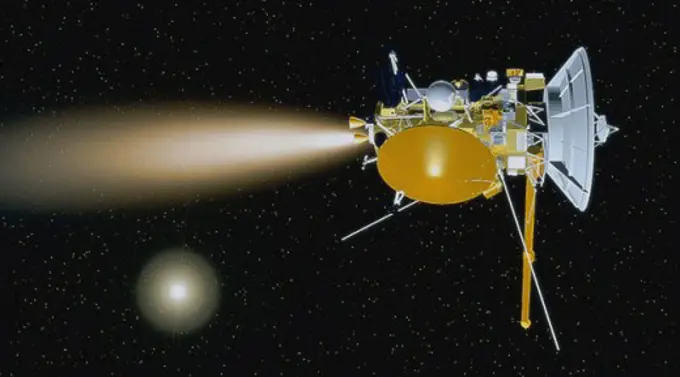
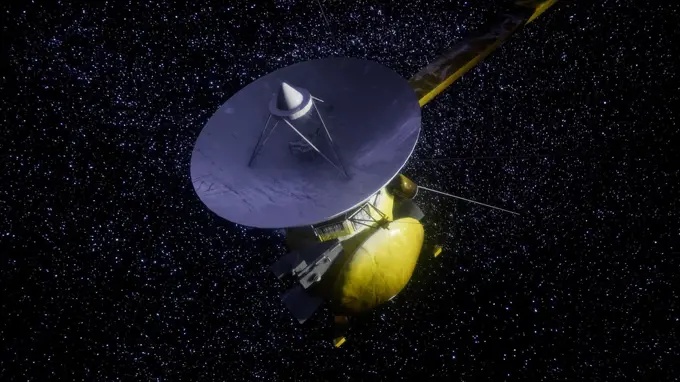
Artists concept of Cassini during the Saturn Orbit Insertion maneuver
1457R-927
Satellite orbiting around a planet
6188-58104676
Magellan spacecraft approaching to Venus Magellan spacecraft approaching to Venus. Elements of this image furnished by NASA. Copyright: xZoonar.com/StanislavxRishnyakx 14361595
1525-28359225
Space satellite orbiting the earth. Elements of this image furnished by NASA.
6145-44806875
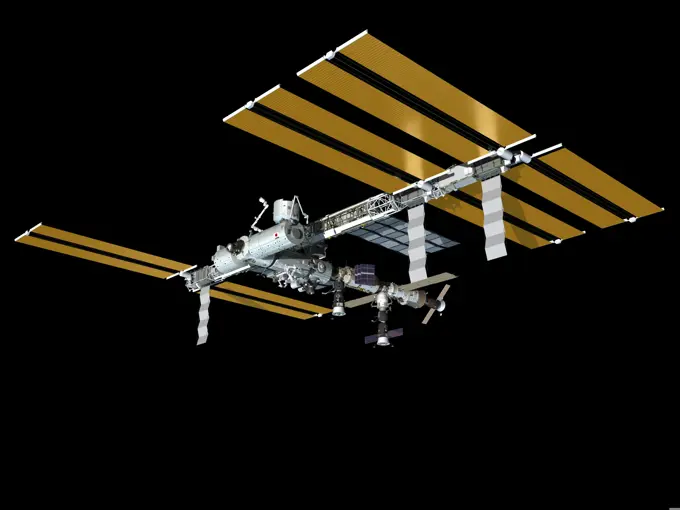
JSC2010-E-020633 (February 2010) --- Computer-generated artists rendering of the International Space Station as of Feb. 20, 2010, after the STS-130/20A installation of the Tranquility module, with its Cupola, to the Unity nodes port side. Soyuz 20 (TMA-16) is docked to the Poisk Mini-Research Module 2 (MRM2). Soyuz 21 (TMA-17) is linked to the Zarya nadir port. Progress 35 resupply vehicle remains docked to the Pirs Docking Compartment and Progress 36 is linked to the Zvezda Service Modules aft port.
4128R-15405714
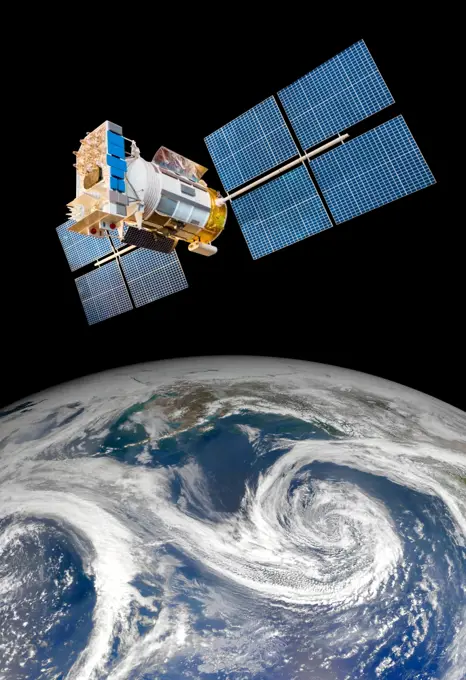
Communications satellite, illustration
6145-45253600
JSC2006-E-54696 (December 2006) --- Computer-generated artist's rendering of the International Space Station following scheduled activities of the STS-116/12A.1 mission. Space Shuttle Discovery departed from the station on Dec. 19, 2006. This angle shows the port side of the orbiting complex. The P5 Integrated Truss Segment is added and the P6 port solar array wing is retracted. Progress 23 resupply vehicle is docked to the Zvezda Service Module aft port. Soyuz 13 (TMA-9) is connected to the Zarya Module nadir port and Progress 22 resupply vehicle remains linked to the Pirs Docking Compartment.
6145-45253123
JSC2006-E-25654 (October 2006) --- Computer-generated scene showing a low-angle wide view (port-forward) of the International Space Station, after assembly work is completed.
6145-45124278
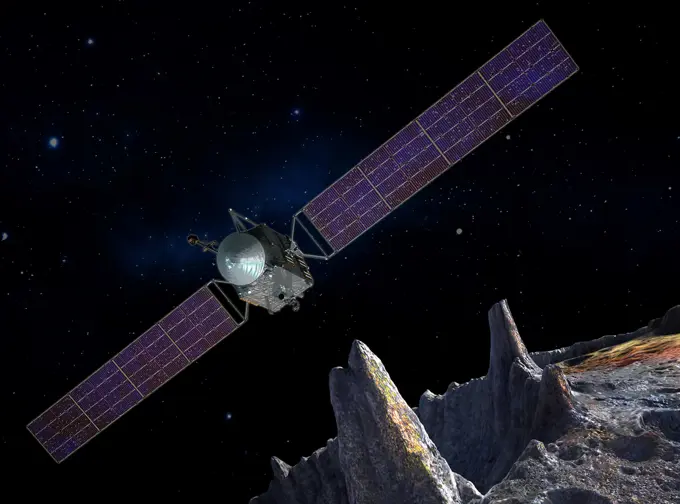
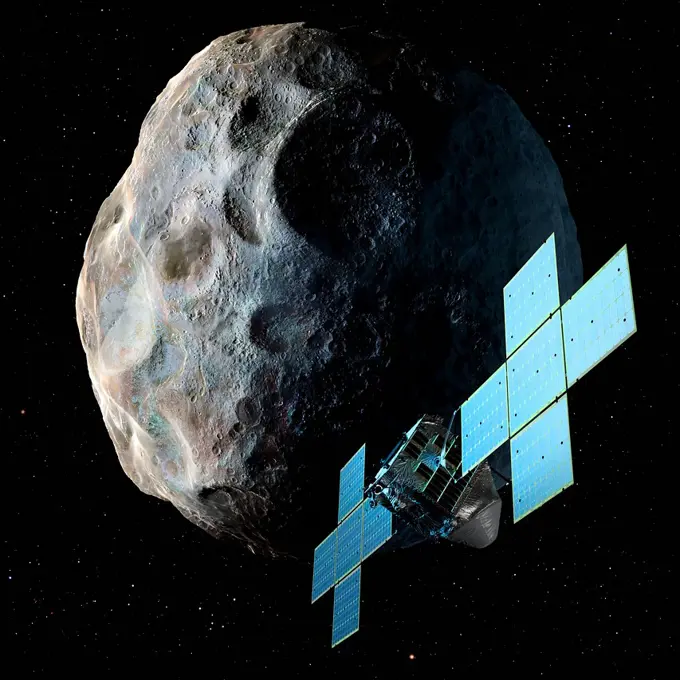
Artist's concept of the Psyche spacecraft, which will conduct a direct exploration of an asteroid thought to be a stripped planetary core.
6145-44857503
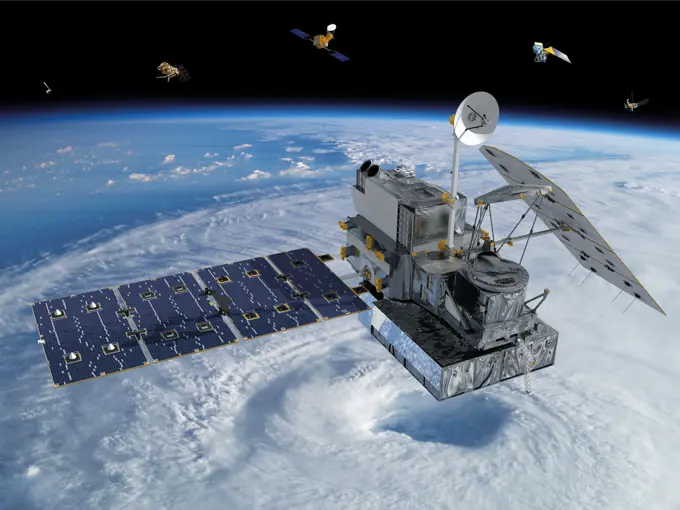
Visualization of the GPM Core Observatory satellite orbitting the planet earth.
6145-45263056
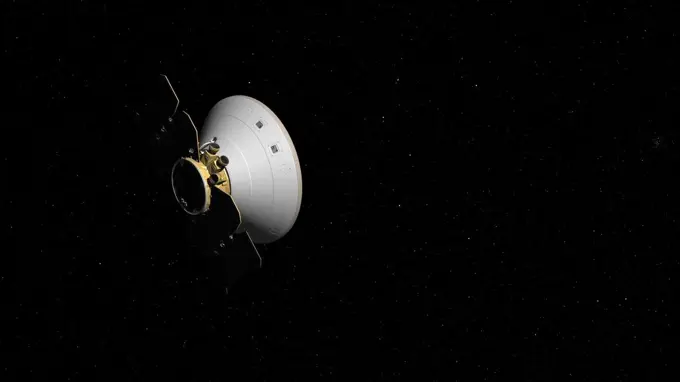
This artist's concept shows the InSight spacecraft, encapsulated in its aeroshell, as it cruises to Mars.
1574R-015353
Satellite in space
6145-45254688
JSC2008-E-032251 (April 2008) --- Computer-generated artist's rendering of the International Space Station as of April 10, 2008. Soyuz 16 (TMA-12) docks to the Pirs Docking Compartment, carrying the Expedition 17 crew and spaceflight participant. Soyuz 15 (TMA-11) is linked at the Zarya nadir port and the Jules Verne Automated Transfer Vehicle (ATV-1) remains docked to the Zvezda Service Module aft port.
4239-69155122
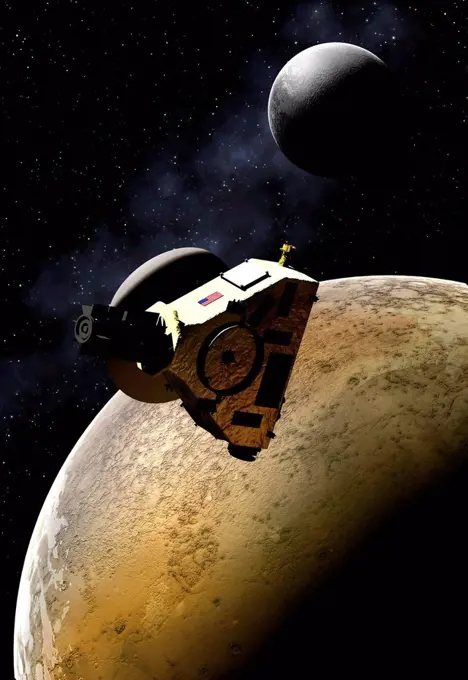
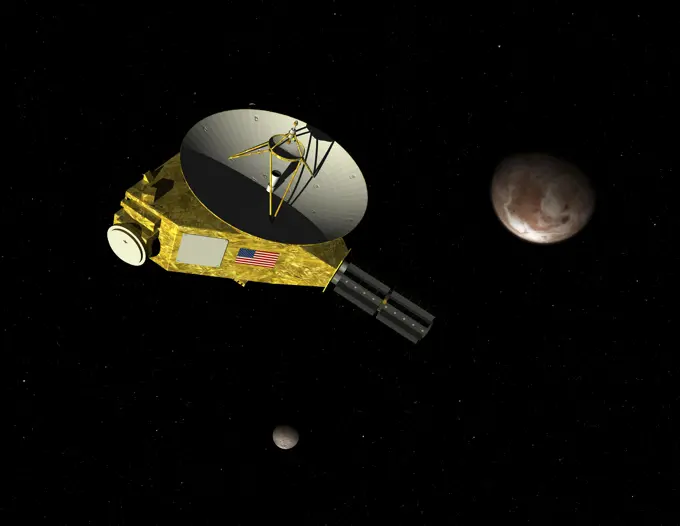
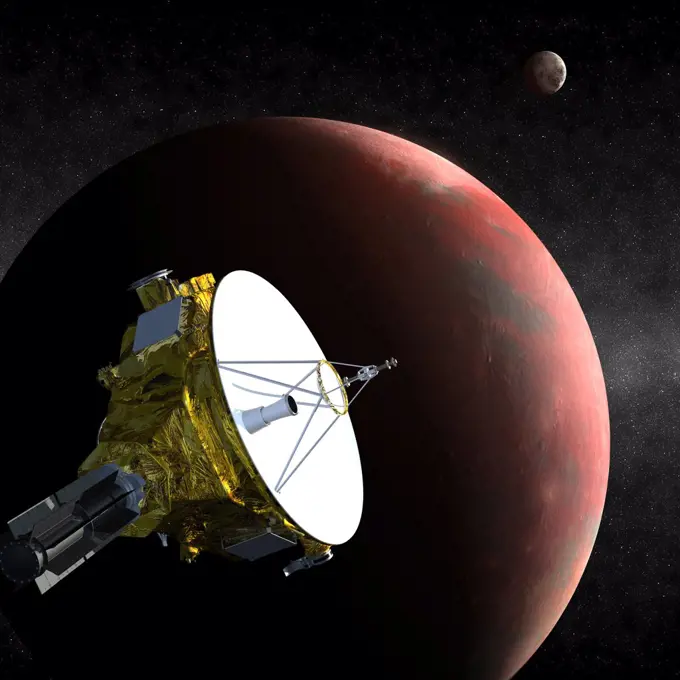
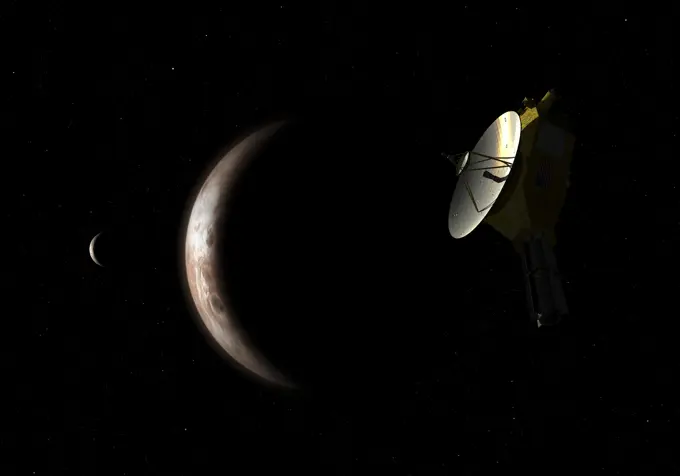
New Horizons spacecraft approaches dwarf planet Pluto and its moon Charon.
6145-45253842
JSC2007-E-29875 (June 2007) --- Computer-generated artist's rendering of the International Space Station following scheduled activities of the STS-117/13A mission. Space Shuttle Atlantis departed from the station on June 19, 2007. This angle shows the starboard side of the orbiting complex with the S3/S4 Integrated Truss Segment added; a new set of solar arrays deployed, and the P6 starboard array wing retracted. Progress 25 resupply vehicle remains docked to the Zvezda Service Module's aft port and Soyuz 14 (TMA-10) remains linked to the Zarya Module nadir port. Progress 24 resupply vehicle continues to be docked to Pirs Docking Compartment.
6145-44609544
This artist's concept of the proposed NASA Mars Sample Return mission shows rendezvous of the orbiting sample container with the Earth return vehicle.
1525-27274354
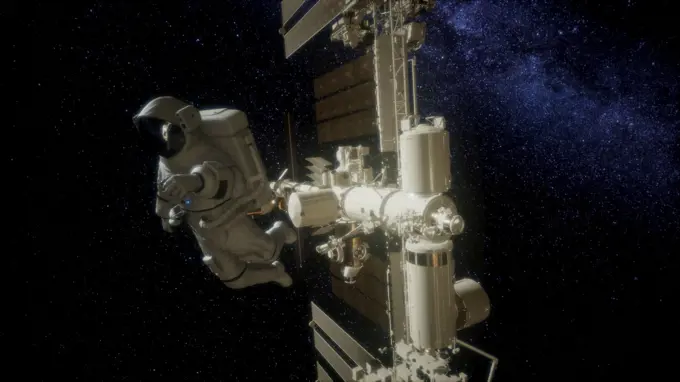
Astronaut outside the International Space Station on a spacewalk. Elements of this image furnished by NASA. Astronaut outside the International Space Station on a spacewalk
1525-27040225
Apollo-Soyuz test project with experimental joint flight of the Soviet spaceship Soyuz-19 and the American spaceship Apollo, elements of this image furnished by NASA - 3D render
6145-52961216
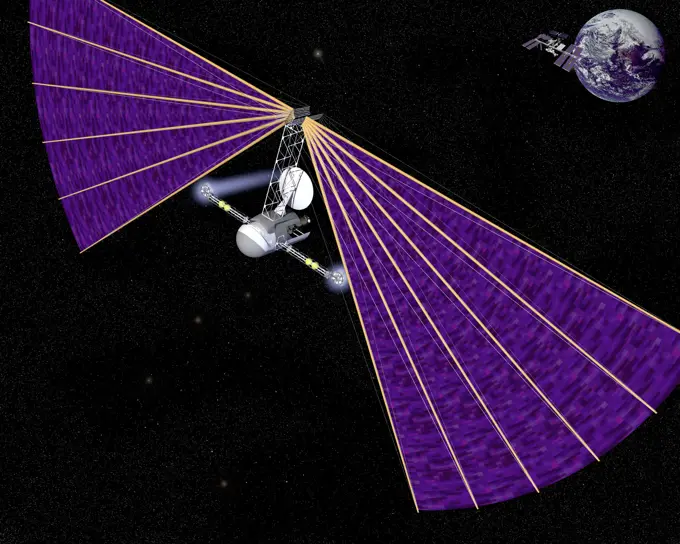
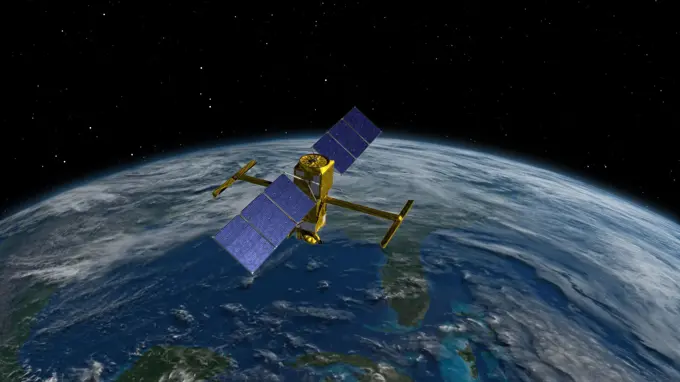
. SWOT Above Earth (Illustration). This illustration depicts the Surface Water and Ocean Topography (SWOT) satellite, a mission led by NASA and the French space agency Centre National d'Études Spatiales (CNES). The scientific heart of the SWOT satellite is the Ka-band Radar Interferometer (KaRIn) instrument, which will measure the height of water in Earth's lakes, rivers, reservoirs, and ocean. To do that, KaRIn will transmit radar pulses to Earth's surface and use two antennas - seen to the left and right of the spacecraft bus - to triangulate the return signals that bounce back. Mounted at the ends of a boom 33 feet (10 meters) long, the antennas will collect data over two swaths of Earth's surface at a time, each of them 30 miles (50 kilometers) wide and located on either side of the satellite. KaRIn will operate in two modes A lower-resolution mode over the ocean will involve significant onboard processing of the data to reduce the volume of information sent during downlinks to Ear
6145-44813086
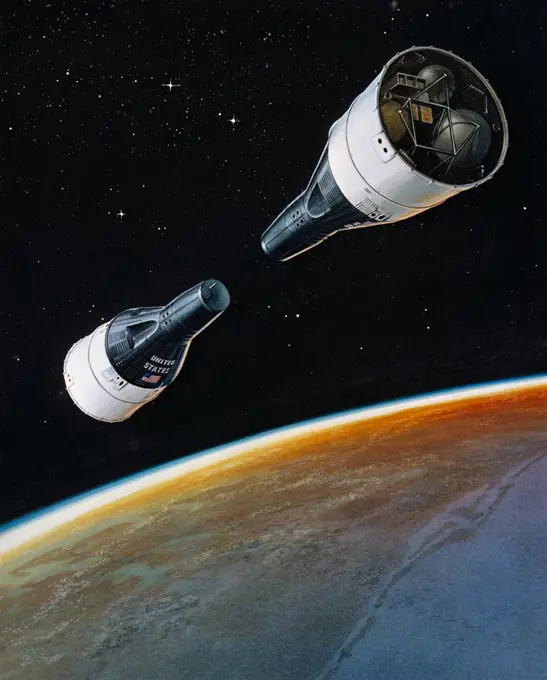
S65-59952 (1 Nov. 1965) --- Artist's concept depicting the approximate positions which the Gemini 6 and 7 spacecrafts will be oriented at the terminal phase of the proposed rendezvous mission.
6145-44631914
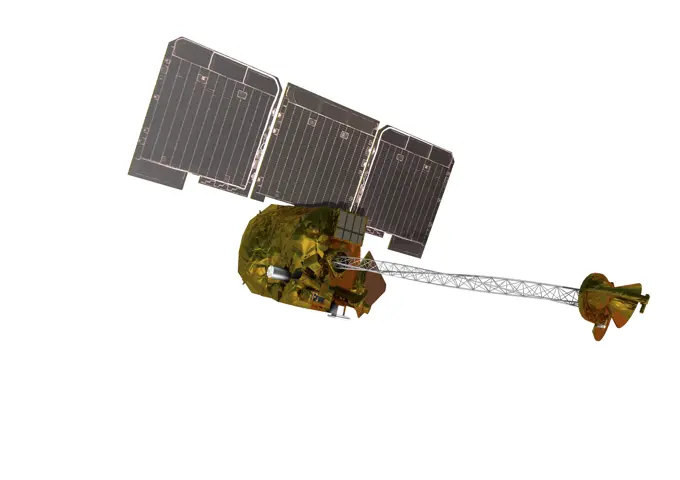
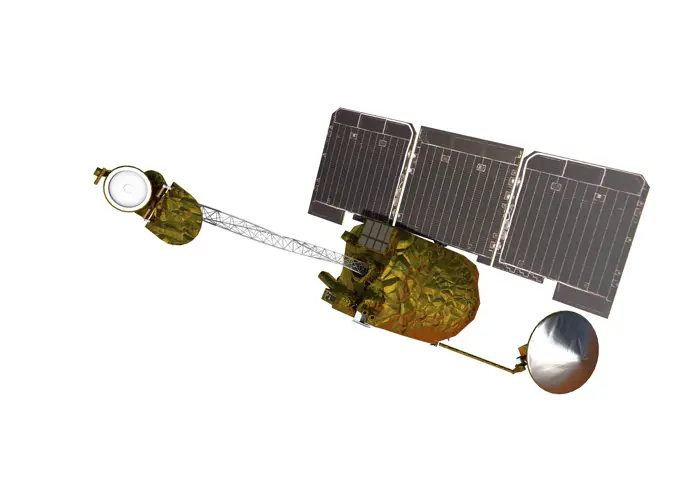
This image is an artist's concept of a view looking down on NASA's Mars Reconnaissance Orbiter.
4239-57493933
Mars Odyssey spacecraft, on white background.
4128-17340683
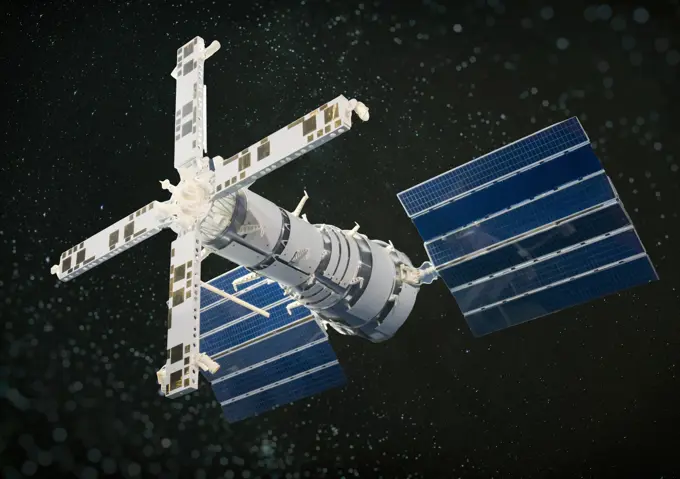
Space station, conceptual illustration
6145-45099488
Artists concept of NASA's Asteroid Redirect Robotic (ARM) Mission capturing an asteroid boulder before redirecting it to a astronaut-accessible orbit around Earth's moon.
6145-44890411
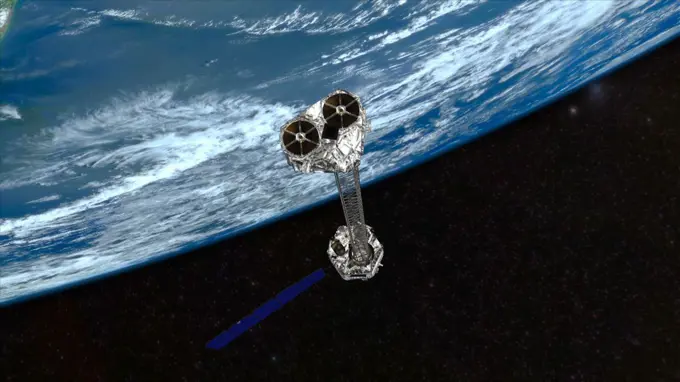
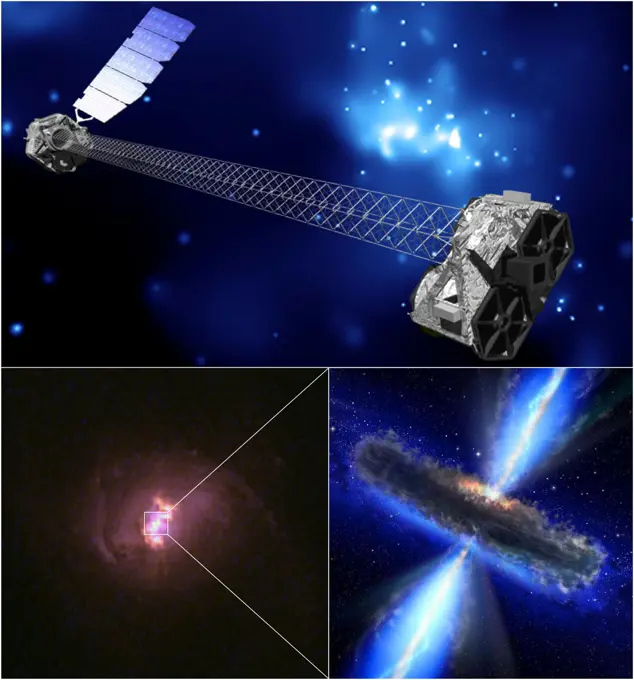
This artist's concept shows NASA's NuSTAR mission orbiting Earth. NuSTAR will hunt for hidden black holes and other exotic cosmic objects.
4239-69155111
An orbital maintenance platform approaches an orbiting booster in low Earth orbit.
6145-44546369
STS072-734-011 (11 Jan. 1996) --- The crewmembers captured this 35mm view of the Japanese Space Flyer Unit (SFU) during its berthing with the Remote Manipulator System (RMS). Yet to be deployed is the Office of Aeronautics and Space Technology (OAST) Flyer satellite, seen at bottom center.
1457R-925
Satellite in space
1525-20530959
Space satellite orbiting the earth on a background star sun. Elements of this image furnished by NASA.
4128-30419163
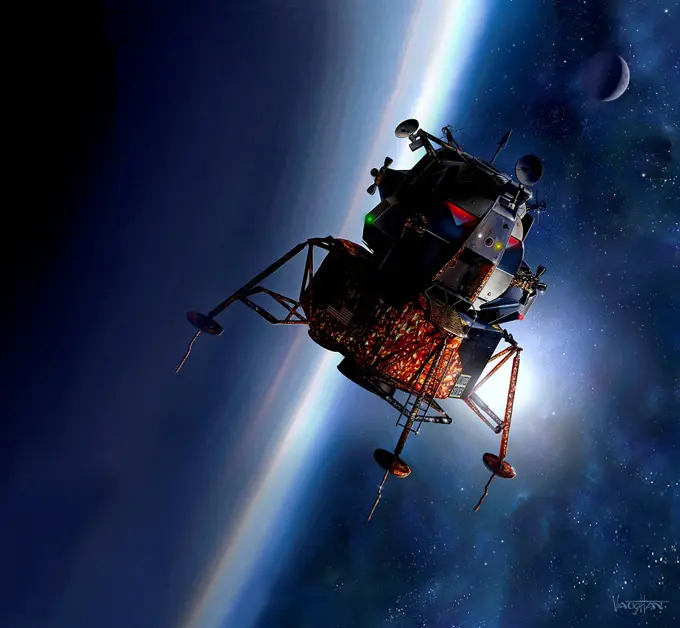
Apollo 9 Lunar Module test, illustration
6145-44638163
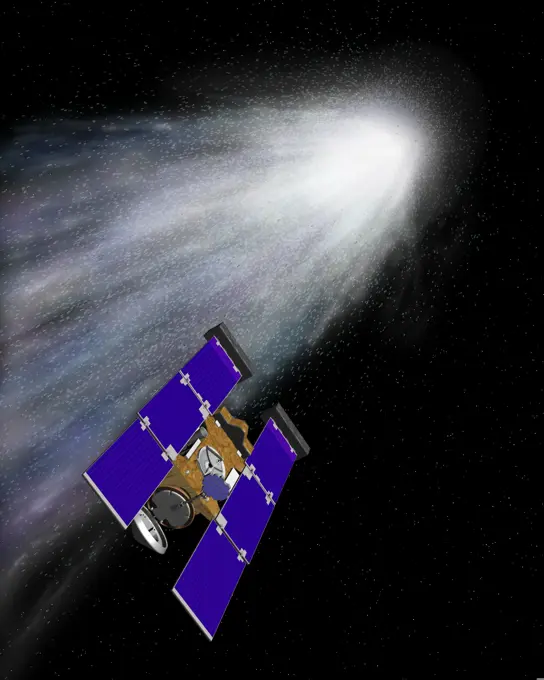
Artist's rendering of NASAs Stardust returning to Earth. Stardust is the first U.S. space mission dedicated to the exploration of a comet, and the first robotic mission designed to return extraterrestrial material from outside the orbit of the Moon.
6145-52110767
An artist's concept of the Fleet Satellite Communication System Satellite in space. Base: Vandenberg Air Force Base State: California (CA) Country: United States Of America (USA)
1457-1147
NASA's 2001 Mars Odyssey spacecraft arrived at Mars
6188-58105013
International Space Station in outer space over the planet Earth International Space Station in outer space over the planet Earth. Elements of this image furnished by NASA. Copyright: xZoonar.com/StanislavxRishnyakx 14479865
6145-45263023
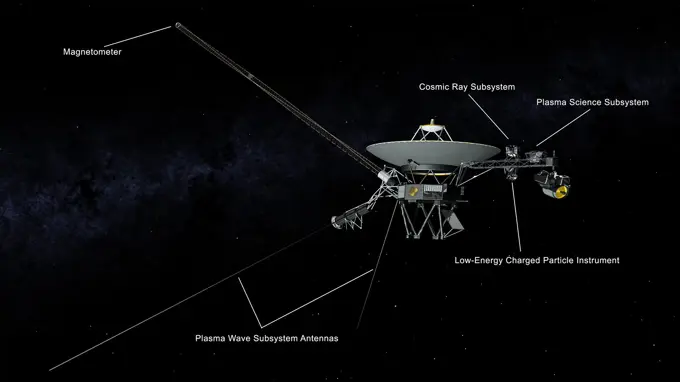
This illustration of NASA's Voyager 2 spacecraft shows the location of the onboard science instruments that are still operating the magnetometer, the cosmic ray subsystem, the plasma science experiment, the low-energy charged particle instrument and the antennas used by the plasma wave subsystem.
1525-27319944
Shenzhou manned space vessel in the direction of coupling to the TIANHE core module in TIANGONG 3 - Chinese space station on black space with stars background. 3D Illustration. Shenzhou manned space vessel in the direction of coupling to the TIANGONG 3 - Chinese space station on black space with stars background. 3D Illustration
1525-27458917
Magellan spacecraft approaching to Venus. Elements of this image furnished by NASA.. Magellan spacecraft approaching to Venus
6145-58969511
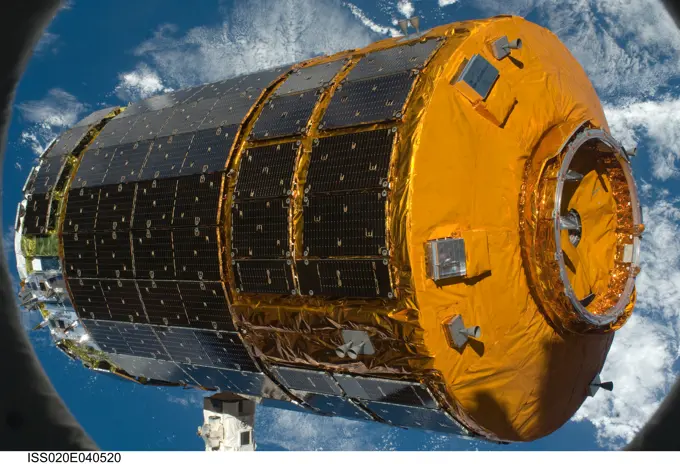
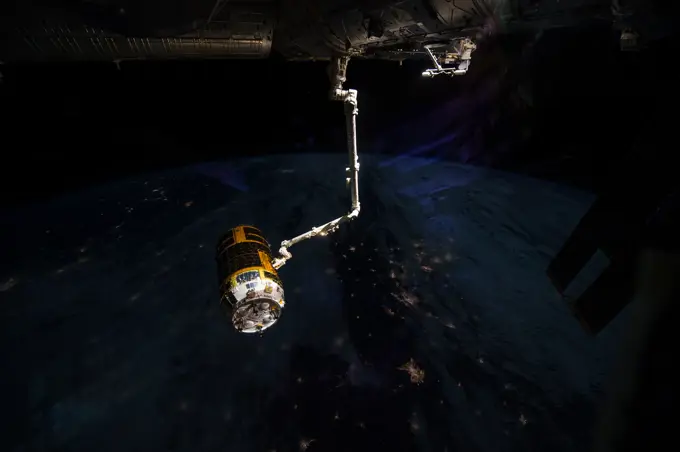
ISS020-E-040520 (17 Sept. 2009) --- A close-up view of the unpiloted Japanese H-II Transfer Vehicle (HTV) in the grasp of the International Space Stations robotic Canadarm2. NASA astronaut Nicole Stott, Canadian Space Agency astronaut Robert Thirsk and European Space Agency astronaut Frank De Winne, all Expedition 20 flight engineers, used the stations robotic arm to grab the cargo craft and attach it to the Earth-facing port of the Harmony node. The attachment was completed at 5:26 (CDT) on Sept. 17, 2009.
6145-44729259
JSC2008-E-122555 (October 2008) --- Computer-generated artist's rendering of the International Space Station as of Oct. 14, 2008. Soyuz 17 (TMA-13) docks to the Zarya nadir port carrying the Expedition 18 crew and spaceflight participant. Soyuz 16 (TMA-12) is linked to the Pirs Docking Compartment and Progress 30 resupply vehicle remains docked to the Zvezda Service Module aft port.
4409-18723772
MOONFALL (2022), directed by ROLAND EMMERICH.
4239-57493932
Mars Odyssey spacecraft, on white background.
6145-44846057
JSC2011-E-016181 (February 2011) --- Computer-generated artists rendering of the International Space Station as of Feb. 18, 2011. The Japanese Kounotori2 H-II Transfer Vehicle (HTV2) relocates to the Harmony nodes zenith port in preparation for the arrival of STS-133. Progress 41 resupply vehicle is docked to the Pirs Docking Compartment. Soyuz 25 (TMA-20) is docked to the Rassvet Mini-Research Module 1 (MRM1). Progress 39 resupply vehicle remains docked to the Zvezda Service Modules aft port and Soyuz 24 (TMA-01M) is linked to the Poisk Mini-Research Module 2 (MRM2).
4239-69155139
Soyuz deep space explorer docked begins to leave Earth orbit.
6145-50613953
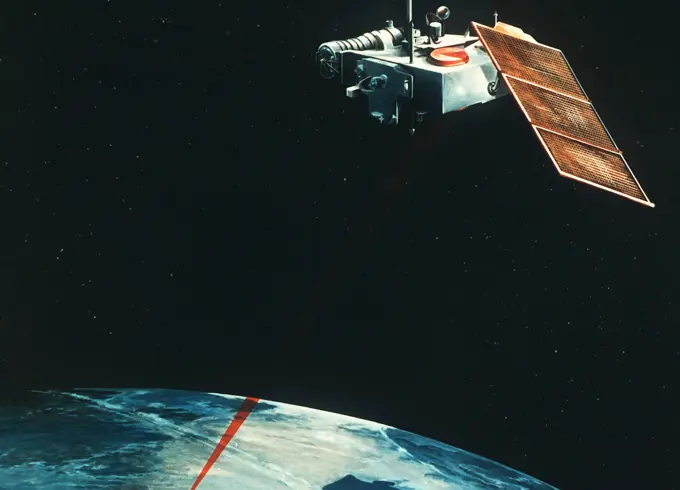
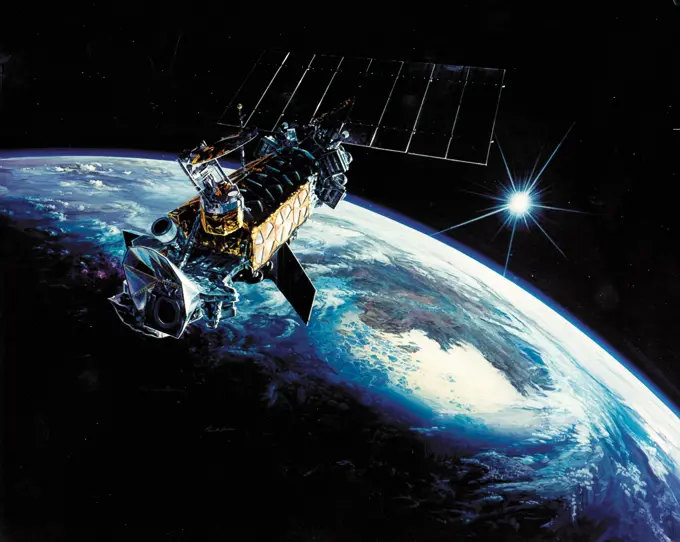
Defense Meteorological Satellite Program Primary function: Collect terrestrial, space en- vironment and Earth surface data. Dimensions: Approximately 14 ft. long. Weight: 2,545 lbs., includ- ing 592-pound sensor payload. Power: 10 panels, generating 2,000 watts of power. Orbit: Approximately 525 miles.
6145-44943145
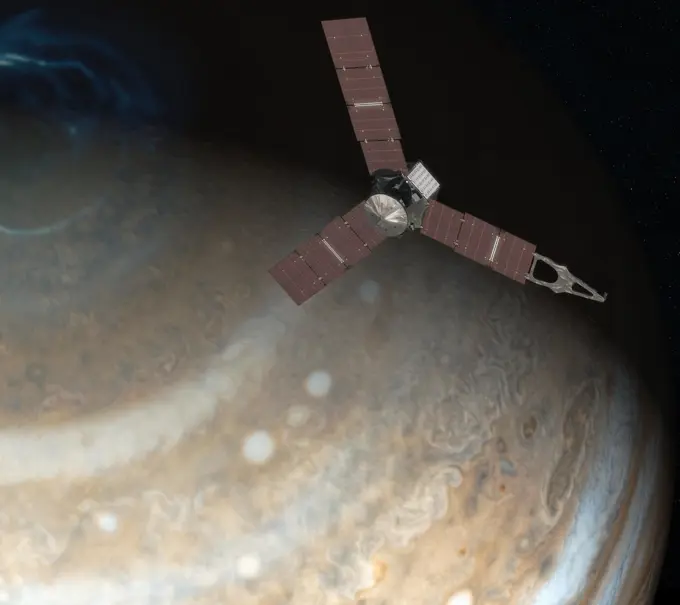
This artist's rendering shows NASA's Juno spacecraft above the north pole of Jupiter.
6145-44956483
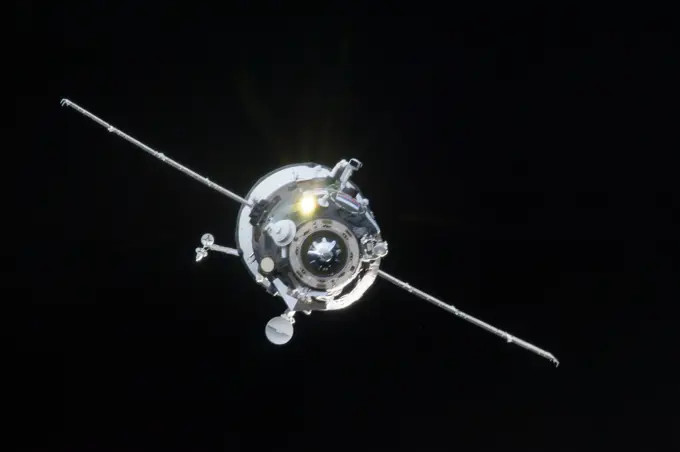
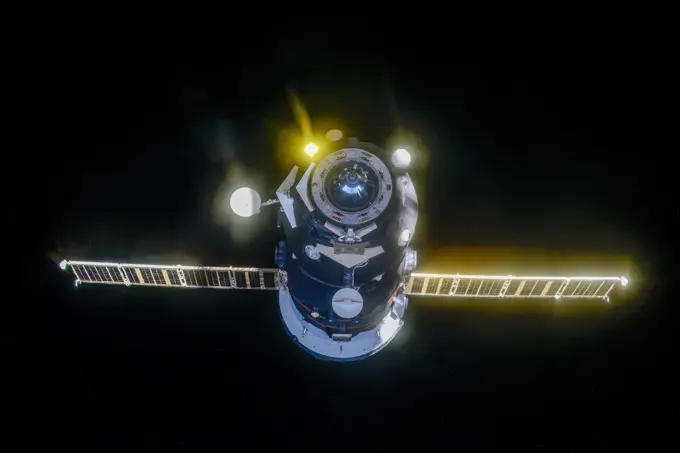
ISS035-E-029910 (26 April 2013) --- Surrounded by the blackness of space, the Russian Progress 51 cargo craft approaches the Zvezda service module (out of frame) of the International Space Station on April 26, 2013. The unmanned cargo vehicle minutes later successfully docked with the orbital outpost.
6145-44693588
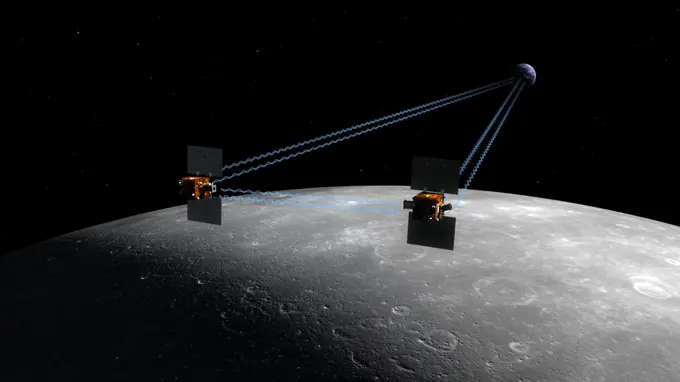
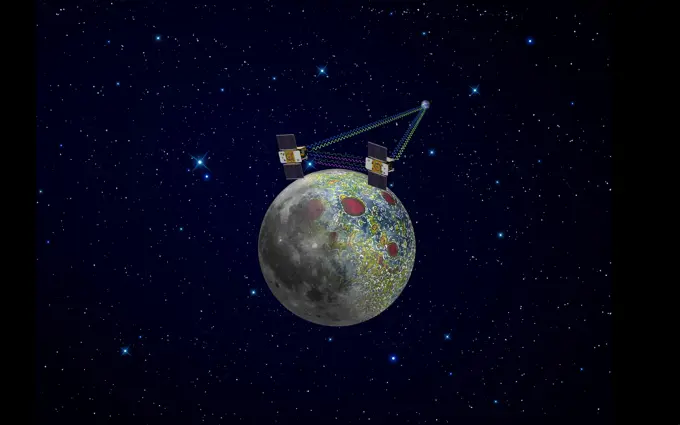
The Gravity Recovery and Interior Laboratory, or GRAIL, mission will fly twin spacecraft in tandem orbits around the moon to measure its gravity field in unprecedented detail. GRAIL is a part of NASA's Discovery Program.
6145-44816775
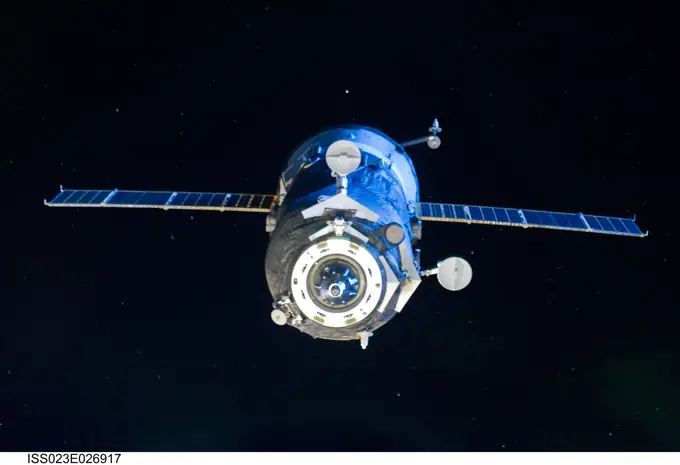
ISS023-E-026917 (22 April 2010) --- The unpiloted ISS Progress 35 supply vehicle departs from the International Space Station's Pirs Docking Compartment on April 22, 2010. Filled with trash and discarded items, the Progress will be used for scientific experiments until it is deorbited and burned up in Earth's atmosphere. Its departure clears the way for the ISS Progress 37 cargo ship that is scheduled to launch to the station April 28.
6188-58104722
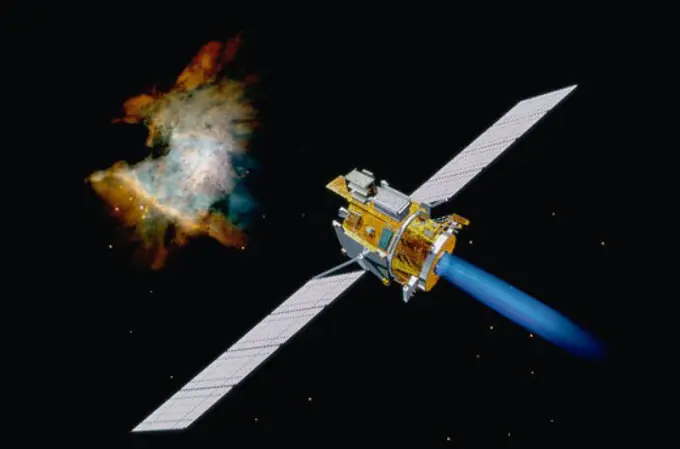
the space probe Deep Impact mission the space probe Deep Impact mission. Elements of this image furnished by NASA Copyright: xZoonar.com/StanislavxRishnyakx 14361651
4239R-3401
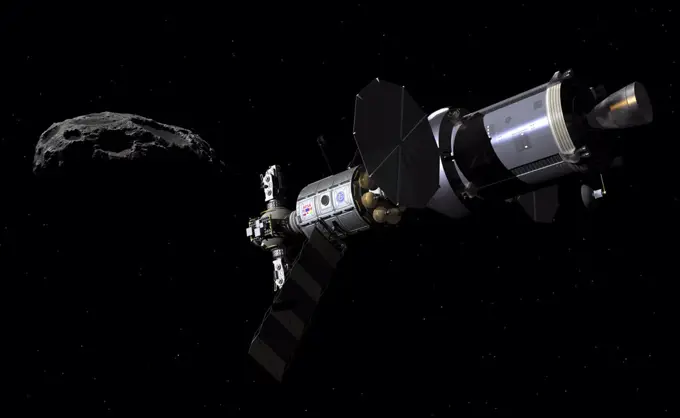
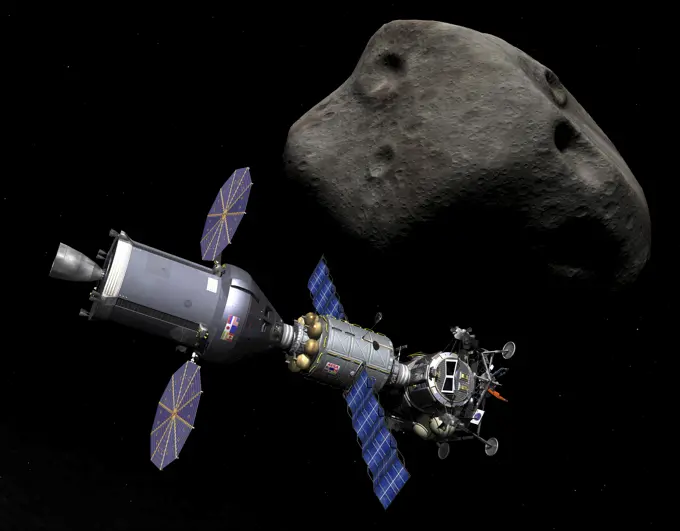
A Deep Space Vehicle (DSV) with an Extended Stay Module (ESM) and Manned Maneuvering Vehicles (MMVs) approaches a small asteroid.
6145-45299292
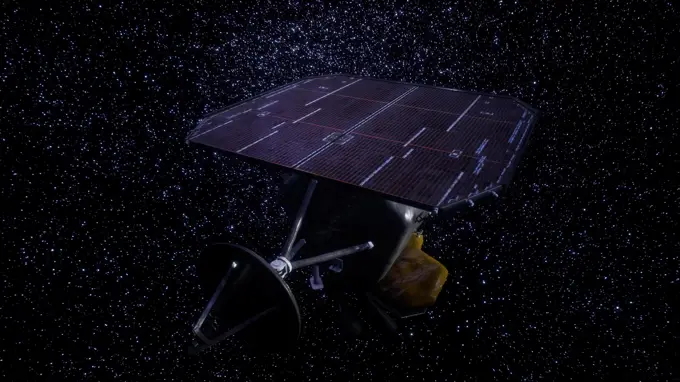
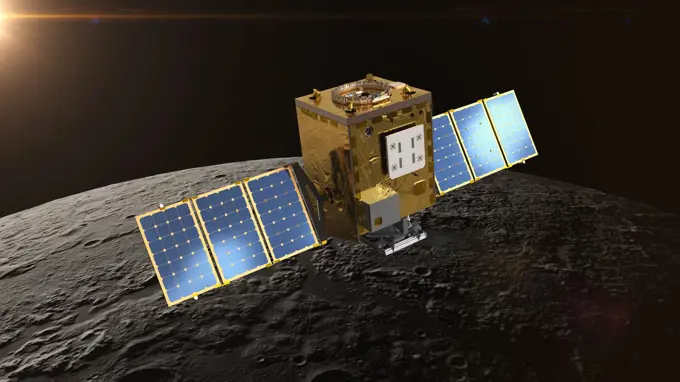
Peering into the Moon's permanently shadowed regions, Lunar Trailblazer will detect signatures of water ice in reflected light, and it will pinpoint the locations of micro-cold traps less than a football field in size. The small satellite will collect measurements at multiple times of day over sunlit regions, helping scientists understand if the water signature on the illuminated surface changes as the lunar surface temperature changes by hundreds of degrees over the course of a lunar day. The goal is to produce high-resolution maps to locate water ice in support of NASA's Artemis Program, which aims to establish a sustainable human presence on the Moon and prepare for future missions to Mars.
4239-69155116
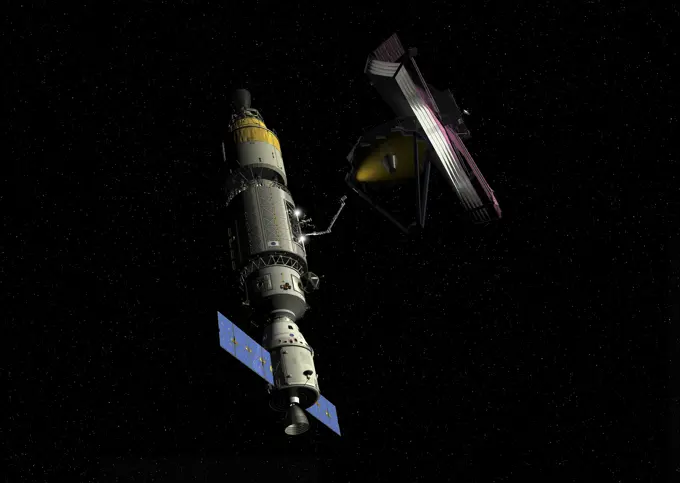
Orbital maintenance platform rendezvous with the James Webb Space Telescope.
6188-58104718
Global Surveyor orbiting Mars planet Global Surveyor orbiting Mars planet. This image elements furnished by NASA Copyright: xZoonar.com/StanislavxRishnyakx 14361646
6188-63307598
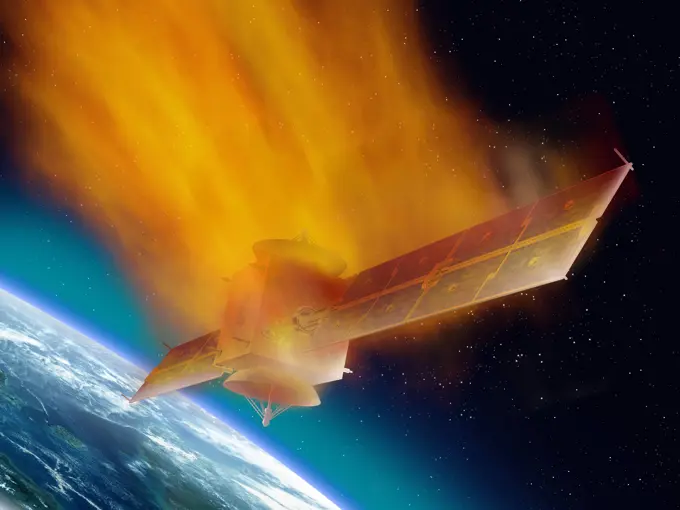
Satellite Reentry Satellite hurtling through space burning up as it enters the atmosphere Copyright: xZoonar.com/PaulxFleetx 3961463
6145-44764168
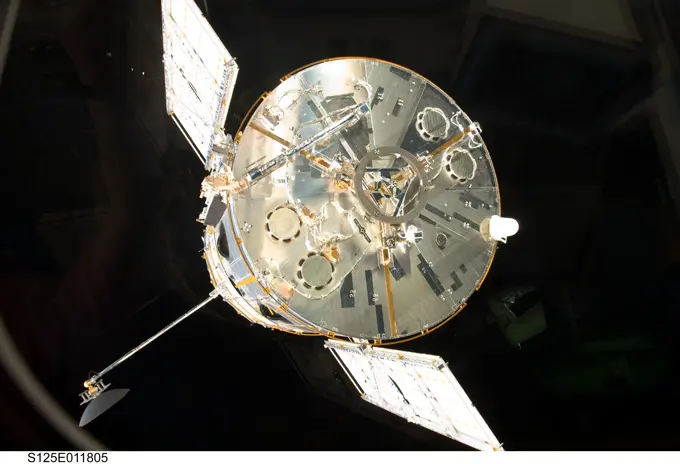
S125-E-011805 (19 May 2009) ---  An STS-125  crew member aboard the Space Shuttle Atlantis captured this still image of the Hubble Space Telescope as the two spacecraft begin their relative separation on May 19, after having been linked together for the better part of a week. During the week five spacewalks were performed to complete the final servicing mission for the orbital observatory.
4389-2557
Syncom, the First Geosynchronous Satellite
6145-45253125
JSC2006-E-38949 (August 2006) --- Computer generated graphic of the International Space Station configuration after STS-115/12A with the addition of the P3/P4 integrated truss segments.
6145-45299297
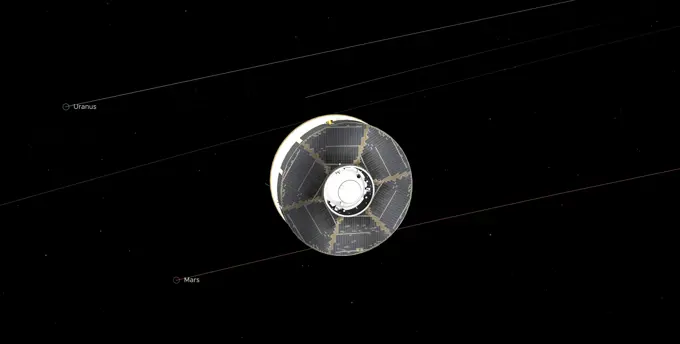
This illustration of the Mars 2020 spacecraft (the solar-panel-covered cruise stage most visible here along with a portion of the white back shell) in interplanetary space was generated using imagery from NASA's Eyes on the Solar System. The image is from the mission's midway point between Earth and Mars  146.3 million miles (235.4 million kilometers) away from each. In straight-line distance, Earth is 26.6 million miles (42.7 million kilometers) behind Perseverance, and Mars is 17.9 million miles (28.8 million kilometers) in front. Visible in the graphic are the solar panels on the cruise stage surrounding the top of the aeroshell.
6145-44544305
Artist's conception of the Clementine spacecraft, a joint mission of the U.S. Strategic Defense Initiative Organization and NASA..
1525-27319945
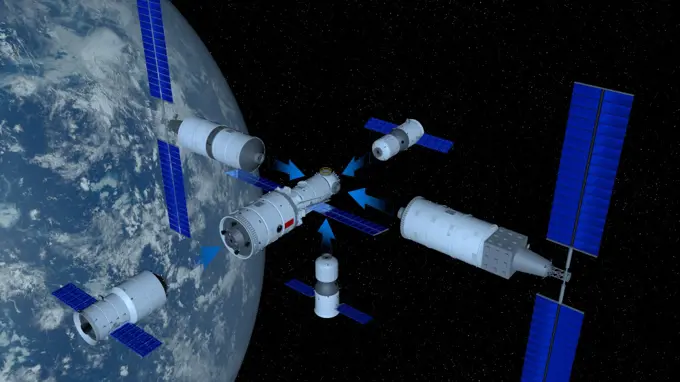
The illustration shows the modules of the TIANGONG 3 - Chinese space station with blue arrows pointing the direction of coupling to the TIANHE core module with the planet Earth behind on black space with stars background. 3D Illustration. TIANGONG 3 - Chinese space station modules with blue arrows pointing the direction of coupling to the TIANHE core module with the planet Earth behind on black space with stars background. 3D Illustration
4128-28968404
Psyche asteroid mission, illustration
1525-20626018
Space satellite orbiting the earth. Elements of this image furnished by NASA.
6145-45251821
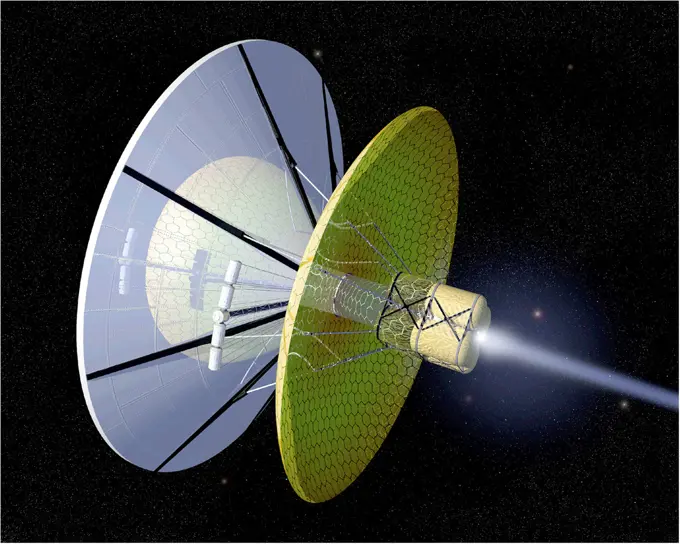
The Boussard Interstellar Ramjet engine concept uses interstellar hydrogen scooped up from its environment as the spacecraft passes by to provide propellant mass. The hydrogen is then ionized and then collected by an electromagentic field. In this image, an onboard laser is uded to heat the plasma, and the laser or electron beam is used to trigger fusion pulses thereby creating propulsion.
1525-25167328
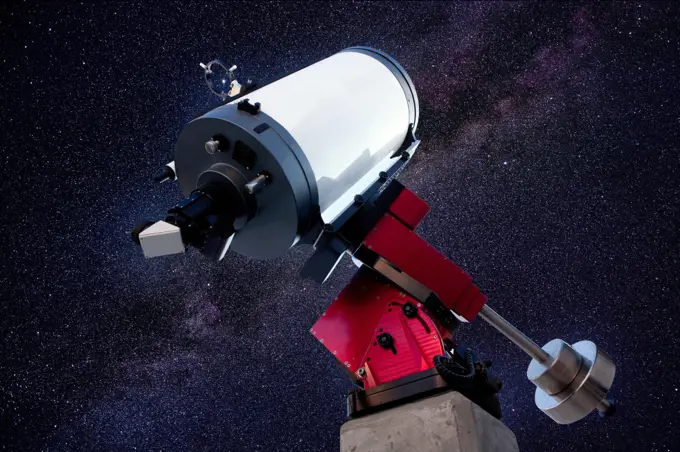
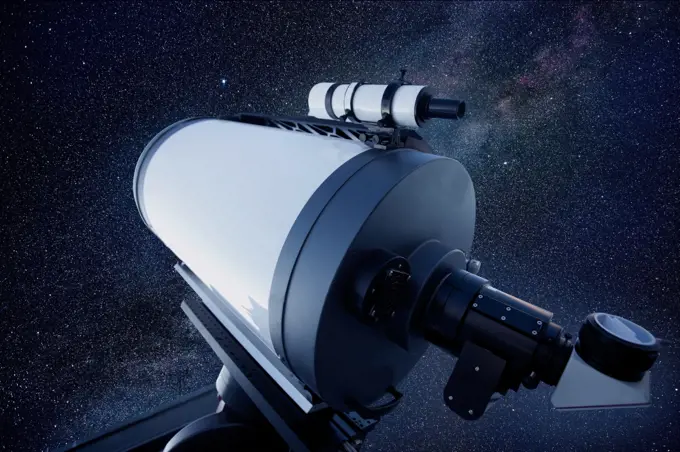
astronomical observatory telescope stars night sky
6145-45231859
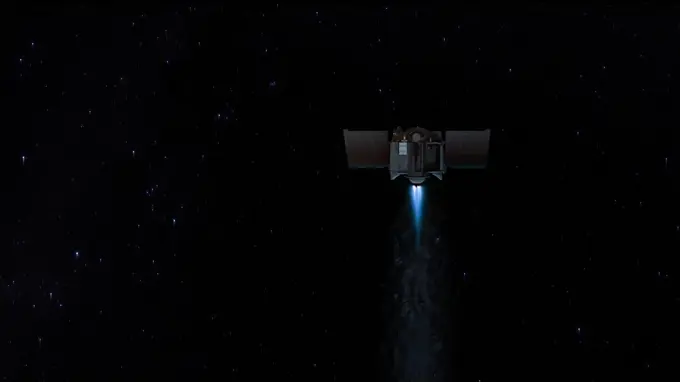
. OSIRIS-REx Executes First Deep Space Maneuver
1525-27319921
Transiting Exoplanet Survey Satellite TESS space telescope traveling through space in search of exo planets. 3D illustration
6145-44965460
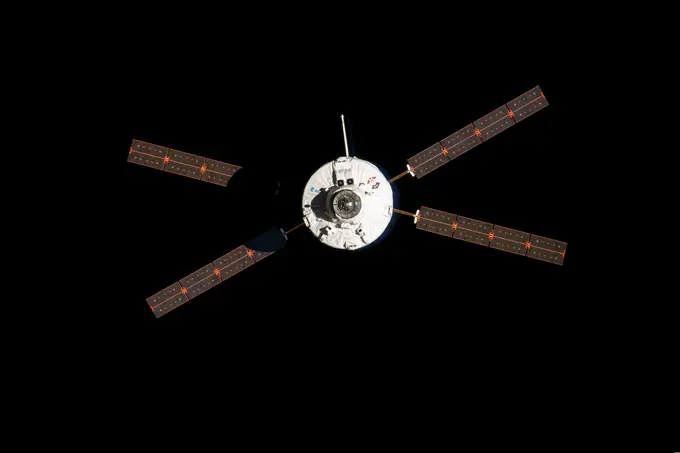
ISS036-E-007852 (15 June 2013) --- Surrounded by the blackness of space, the European Space Agency's Automated Transfer Vehicle-4 (ATV-4) Albert Einstein” approaches the International Space Station.  The spacecraft went on to successfully dock to the orbital outpost at 2:07 GMT, June 15, 2013, following a ten-day period of free-flight.
4128R-15024
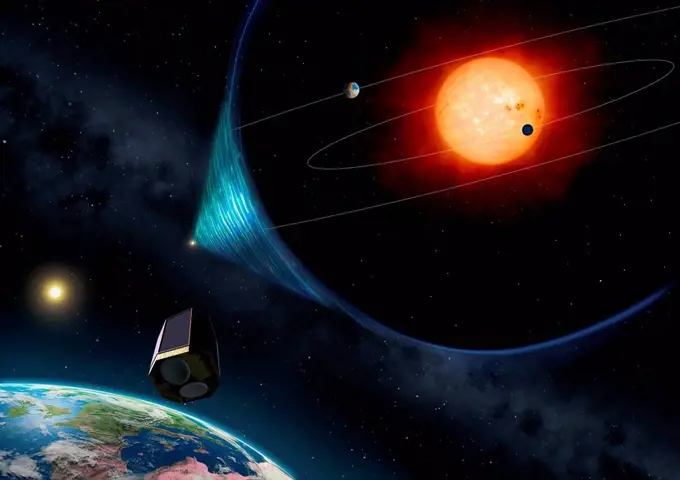
Computer artwork of the proposed European Space Agency ESA mission called PLATO. PLATO will be a wide_field mission comprised of lots of small telesco...
4239R-9157
Apollo astronauts coming into contact with an alien UFO while on the surface of the moon.
1525-20530880
Space satellite orbiting the earth on a background star sun. Elements of this image furnished by NASA.
4128-17340534
Space probe, illustration
4239R-20480107
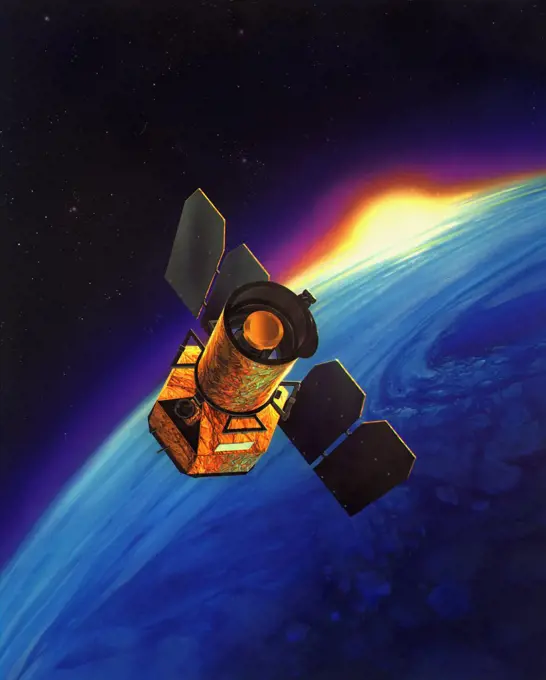
Artist's concept of Galaxy Evolution Explorer.
1525-27319918
Fantasy space shuttle placing in the orbit of planet Earth a communications satellite with the moon and the sun in the background. 3D illustration
1525-20530060
Space satellite orbiting the earth. Elements of this image furnished by NASA.
6145-44868663
Using a precision formation-flying technique, the twin GRAIL spacecraft maps the moon's gravity field, as depicted in this artist's rendering.
1525-27040152
Rosetta probe in the universe next to an asteroid - Elements of this image furnished by NASA. Rosetta probe and asteroid- 3D render
6145-44946182
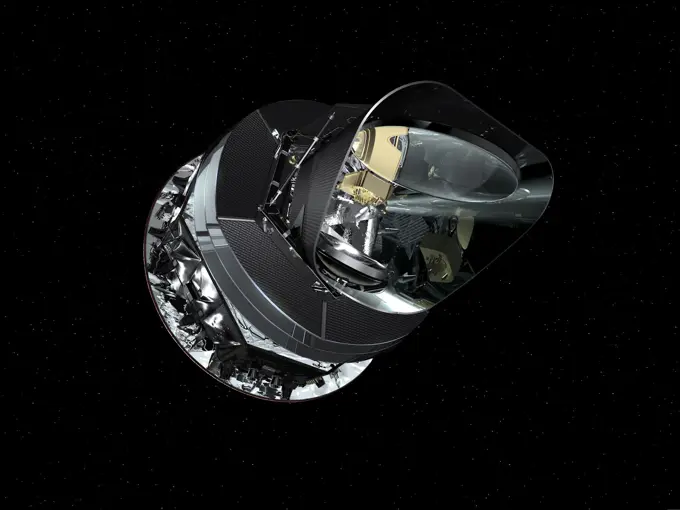
Tones represents sound waves that traveled through the early universe, and were later 'heard' by ESA's Planck space telescope. The primordial sound waves have been translated into frequencies we can hear.
4389-1269
Using Gravitational Microlensing to Detect Dark Body
6145-45254666
JSC2008-E-038662 (June 2008) --- Computer-generated artist's rendering of the International Space Station after flight STS-124/1J in June 2008. Kibo Japanese Experiment Module Pressurized Module (JEM-PM) and Japanese Remote Manipulator System (JEM-RMS) are installed. The Japanese Logistics Module - Pressurized Section (JLP), which was installed in a temporary location on the Harmony node during STS-123, is moved onto the JEM Pressurized Module. The STS-124 mission is the second of three flights that will launch components to complete the Kibo laboratory.
6145-44973424
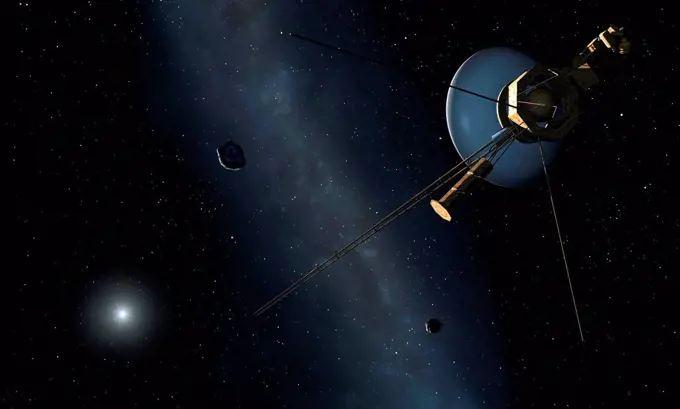
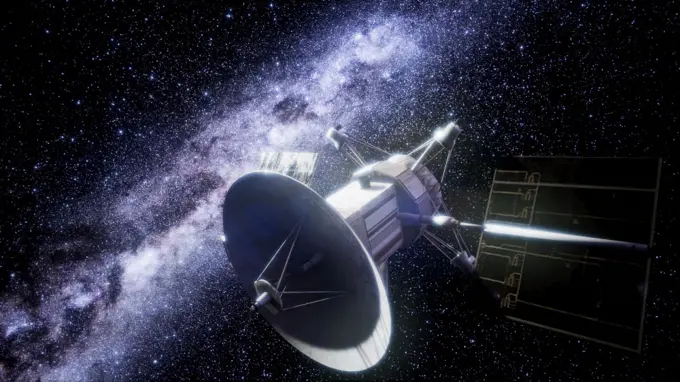
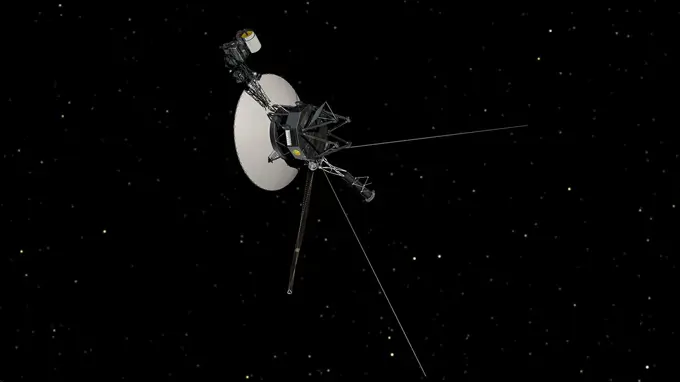
This artist's concept shows NASA's Voyager spacecraft against a backdrop of stars.
6145-45098736
The unberthed Kounotori H-II Transfer Vehicle 5 (HTV-5) is grappled by the Canadarm2 Space Station Remote Manipulator System (SSRMS) prior to its release for reentry. This image is part of a time lapse sequence (iss045e125963 through iss045e126960) taken at a rate of 12 frames per minute. Image was released by astronaut on social media.
4239R-20480468
Artist's concept of the New Horizons spacecraft as it approaches Pluto and its largest moon, Charon, in July 2015. The craft's miniature cameras, radio science experiment, ultraviolet and infrared spectrometers and space plasma experiments will characterize the global geology and geomorphology of Pluto and Charon, map their surface compositions and temperatures, and examine Pluto's atmosphere in detail. The spacecraft's most prominent design feature is a nearly 7-foot (2.1-meter) dish antenna, t
4128-38524521
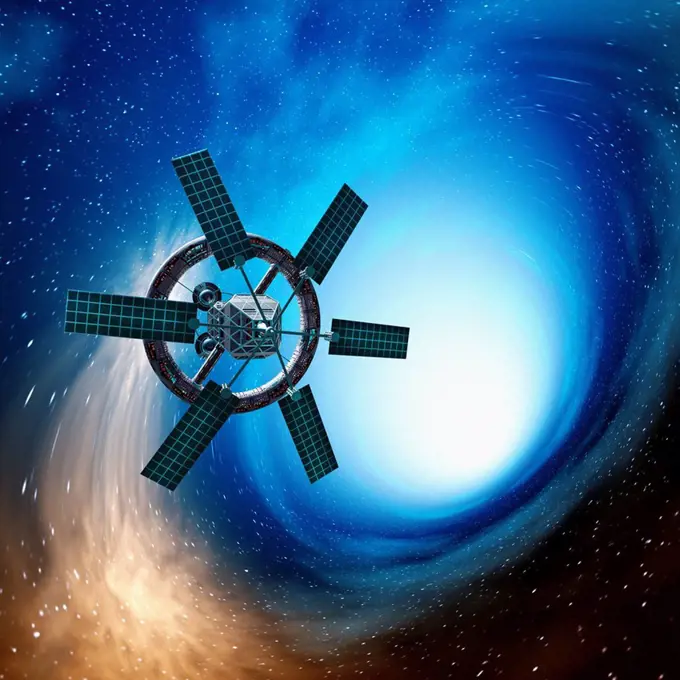
Space exploration, conceptual illustration
6145-52960834
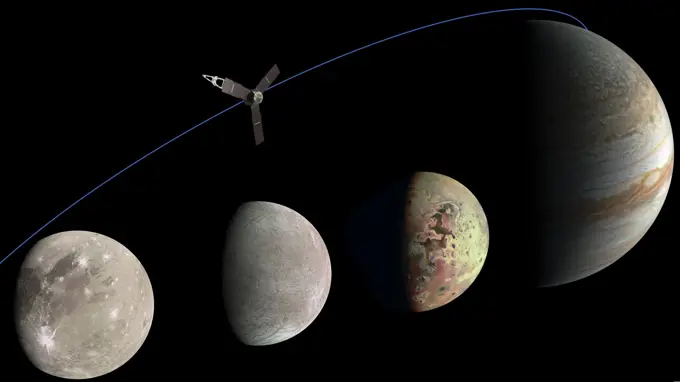
. Jovian Family Portrait. This photo illustration of Jupiter and the three Jovian moons NASA's Juno mission has flown past was generated from data collected by the spacecraft's JunoCam imager. Ganymede, the moon furthest to the left, was imaged by JunoCam as it flew past on June 8, 2021. Citizen scientist Kevin M. Gill created this image using data from JunoCam. The moon second from the left is Europa, which Juno imaged on Sept. 29, 2022. Citizen scientist Kevin M. Gill created this image using data from JunoCam. The image of Io was captured during a flyby of the moon on May 16, 2023. Citizen scientist Thomas Thomopoulos created this image using data from JunoCam. The image of Jupiter was captured on Dec. 15, 2022. Citizen scientist Kevin M. Gill created this image using data from JunoCam.
1848-53793605
Spacecraft launch into space. Cosmos art. Elements of this image furnished by NASA
4239R-20483159
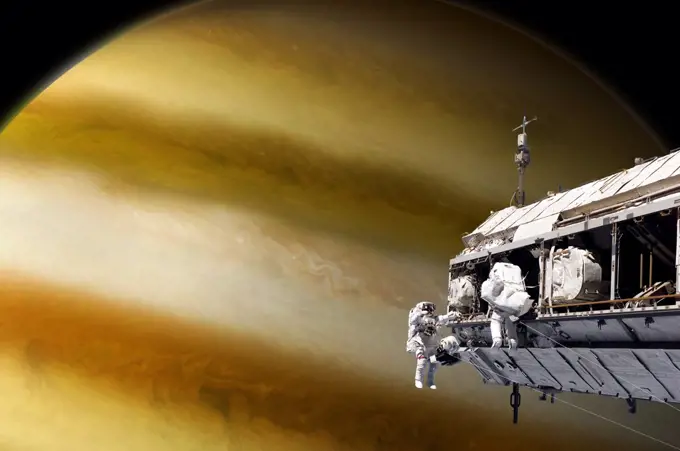
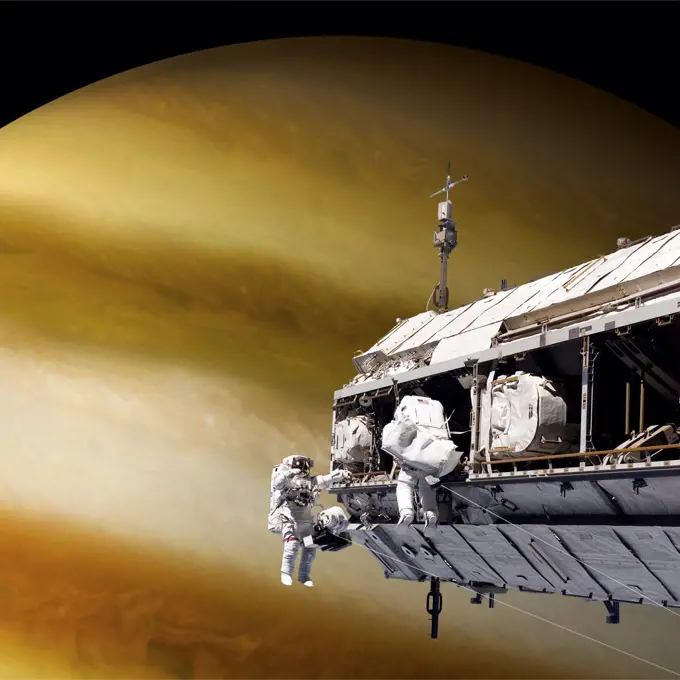
An artist's depiction of a team of astronauts performing work on a space station while orbiting a large alien planet.
1746-21121944
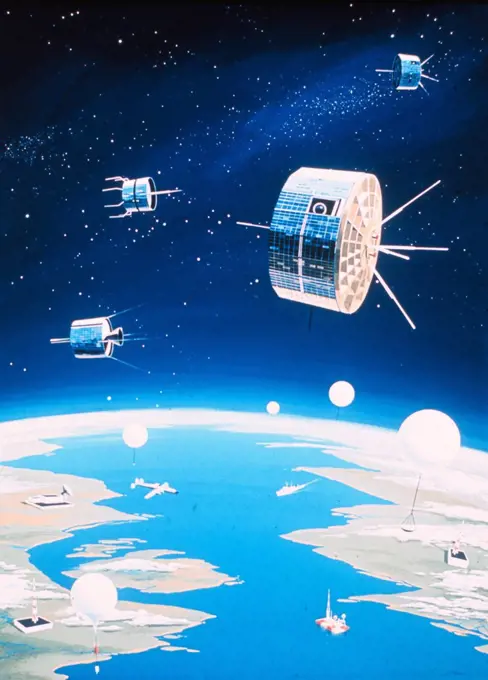
An artist's conception of a fully integrated environmental monitoring system including satellites, balloons, ships, aircraft, buoys, and data reception and processing facilities.
4239-57493879
Artist's concept of the Nautilus X spacecraft leaving lunar orbit.
1525-24490761
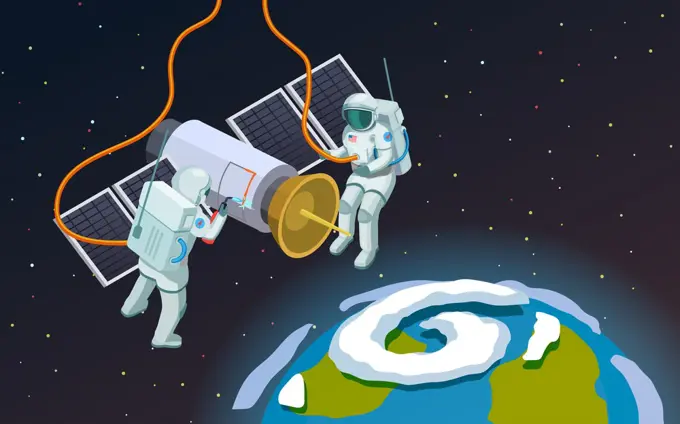
Astronauts in open space isometric composition with cartoon style terrestrial sphere and two spacemen in  armour vector illustration. Outer Space Astronauts Composition
6145-45084599
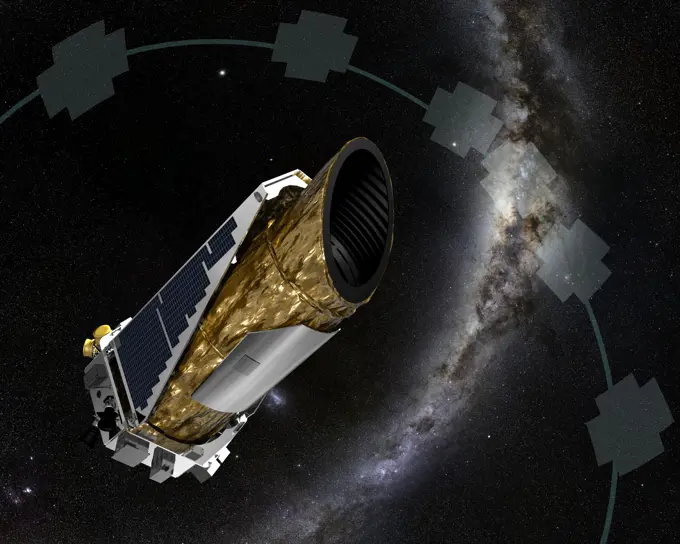
This artist concept shows NASA's planet-hunting Kepler spacecraft operating in a new mission profile called K2. Using publicly available data, astronomers have confirmed K2's first exoplanet discovery proving Kepler can still find planets.
4128-18680620
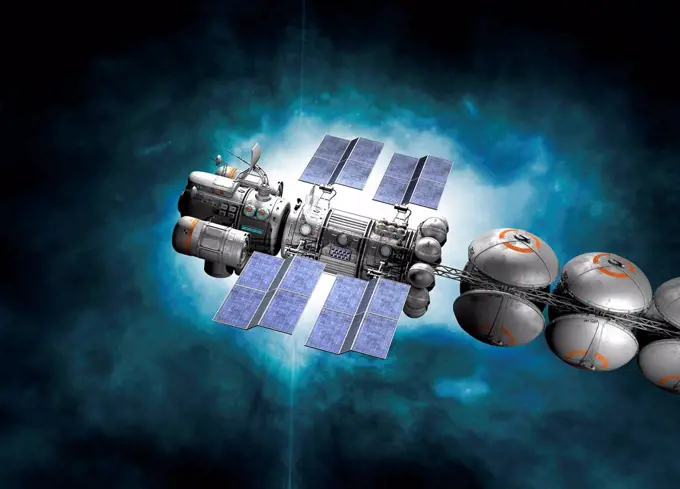
Artwork of a space hotel
6145-58969705
JWST in space near Earth. James Webb telescope far galaxies and planets explore. Sci-fi space collage. Astronomy science.
6145-44496960
99-E-10020 (23 July 1999) --- The Chandra X-Ray observatory and its upper stage were captured during separation from the Space Shuttle Columbia with the STS-93 HDTV Camcorder inside the crew cabin.
6145-58970169
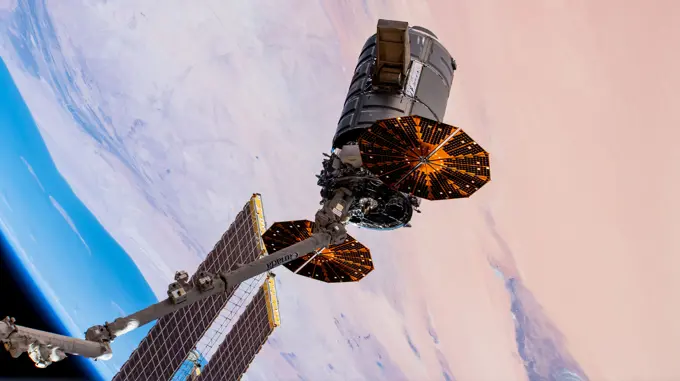
iss061e150137 (Jan. 31, 2020) --- The Cygnus space freighter from Northrop Grumman is pictured in the grips of the Canadarm2 robotic arm before its release as the International Space Station orbited above west Africa. Cygnus had completed an 88-day stay attached to the Unity module after delivering nearly 8,200 pounds of research and supplies to the space station on Nov. 4, 2019.
1848-53789134
Spacecraft launch into space. Cosmos art. Elements of this image furnished by NASA
4128-20043222
Artwork of a space elevator
6145-44962841
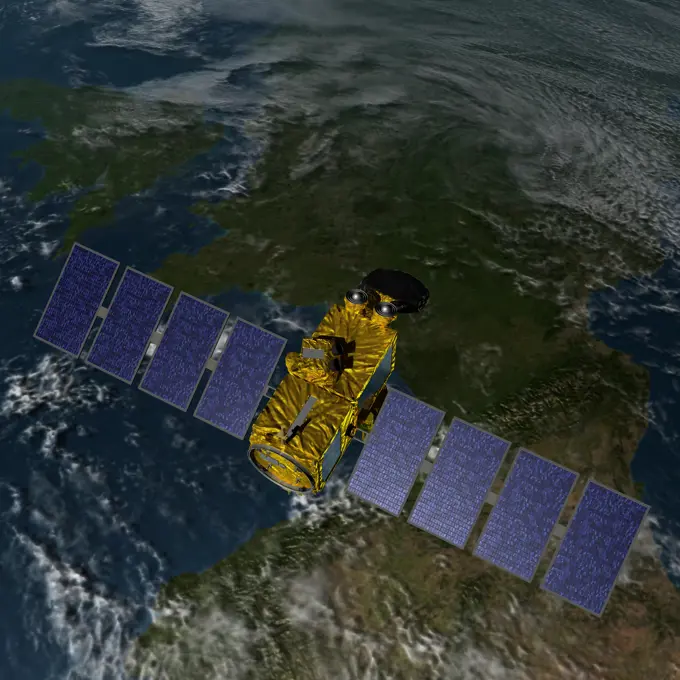
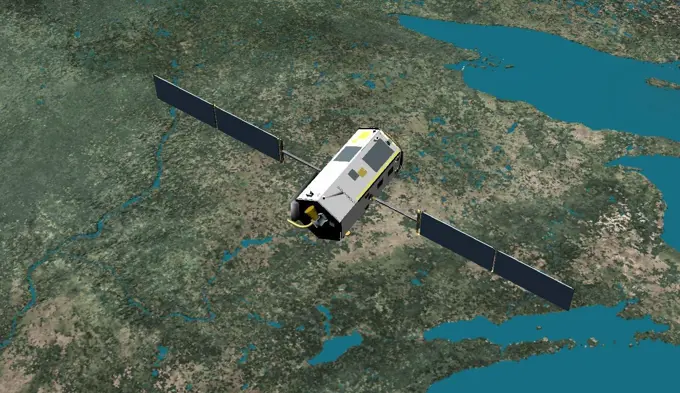
Artist's concept of U.S.-European Jason-3 Ocean Altimetry Satellite over France.
6145-44686273
Artist concept of NASA's Nuclear Spectroscopic Telescope Array, managed by JPL. It will expand our understanding of the origins and destinies of stars and galaxies.
6145-45108032
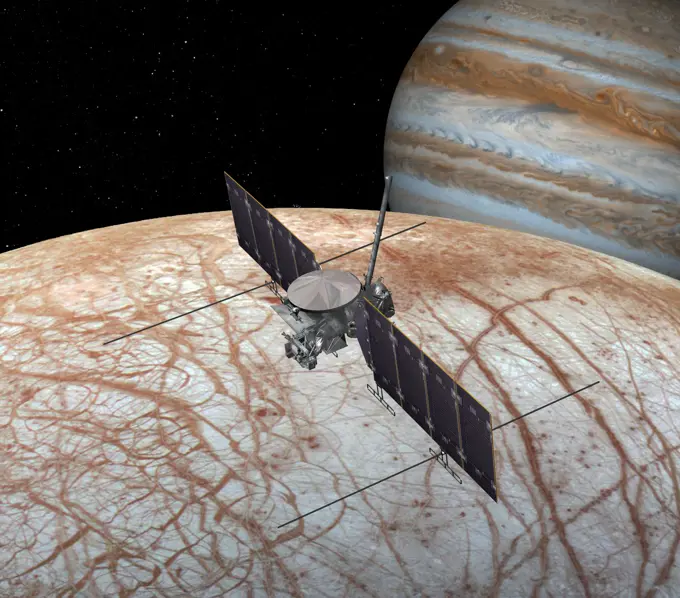
This artist's rendering shows NASA's Europa mission spacecraft, which is being developed for a launch sometime in the 2020s.
6145-58966181
S134-E-007756 (20 May 2011) --- Intersecting the thin line of Earths atmosphere, International Space Station solar array wings are featured in this image photographed by an STS-134 crew member while space shuttle Endeavour remains docked with the station.
4128-28968405
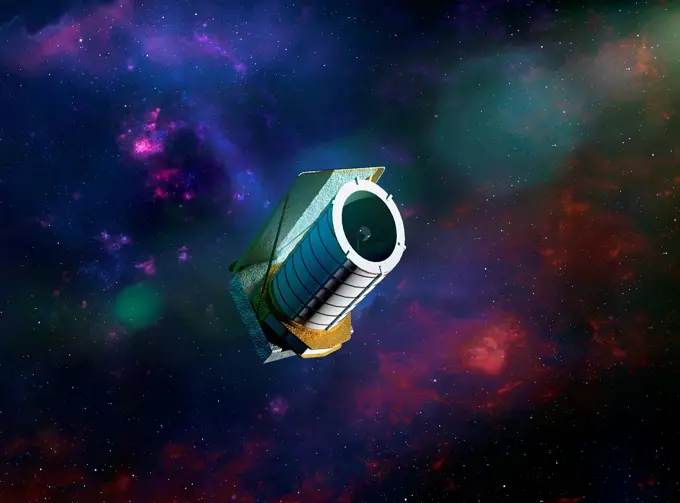
Euclid space telescope, illustration
6145-45197591
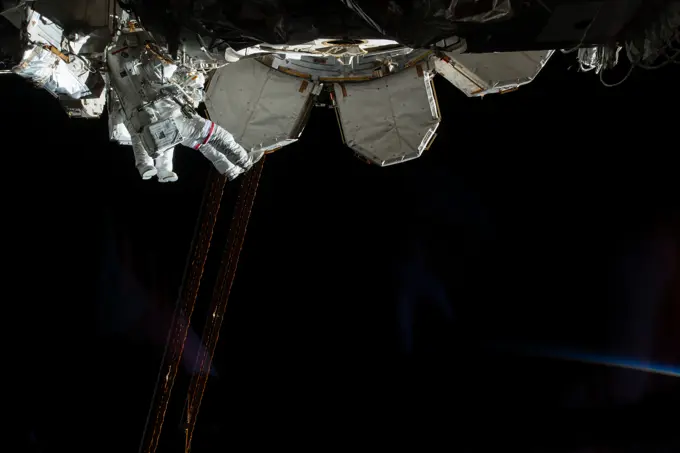
iss059e016966 (April 8, 2019) --- Expedition 59 Flight Engineers Anne McClain of NASA (red stripes) and David Saint-Jacques of the Canadian Space Agency are seen while working outside the International Space Station. In a six and a half hour spacewalk, McClain and Saint-Jacques successfully established a redundant path of power to the Canadian-built robotic arm, known as Canadarm2, and installed cables to provide for more expansive wireless communications coverage outside the orbital complex, as well as for enhanced hardwired computer network capability. The duo also relocated an adapter plate from the first spacewalk in preparation for future battery upgrade operations.
4239R-20483160
An artist's depiction of a team of astronauts performing work on a space station while orbiting a large alien planet.
6145-45094435
A montage of images showing an artist's concept of NuSTAR (top); a color image of one of the galaxies targeted by NuSTAR (lower left); and artist's concept of a hidden black hole.
6145-45234168
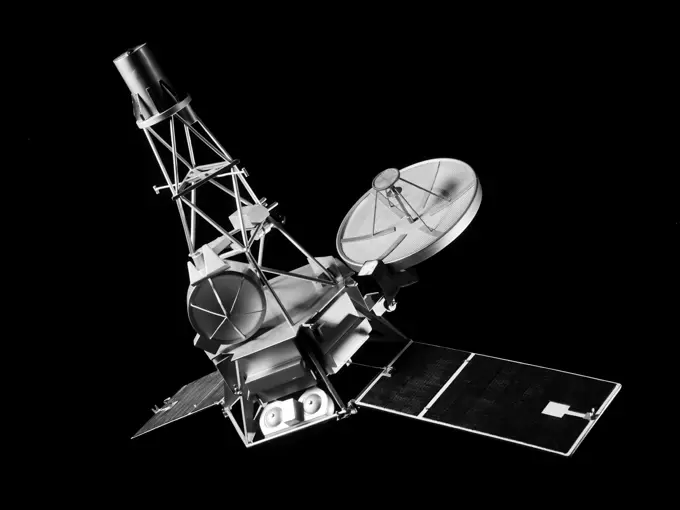
A model of the Mariner-C spacecraft at the National Aeronautics and Space Administration
6145-44788526
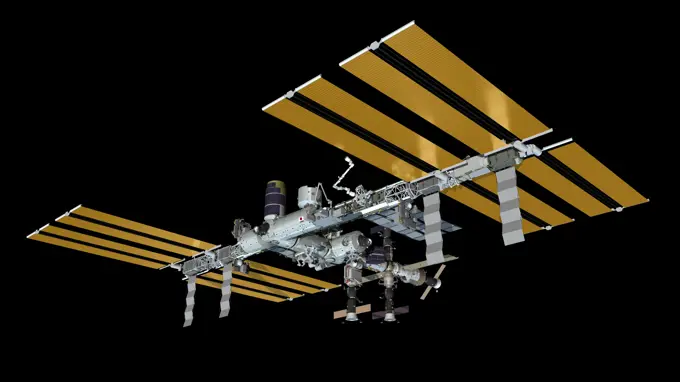
JSC2009-E-223488 (October 2009) --- Computer-generated artists rendering of the International Space Station as of Oct. 30, 2009. Japanese H-II Transfer Vehicle (HTV) is unberthed from the Harmony nodes nadir port. Soyuz 19 (TMA-15) remains docked to the Zarya nadir port and Soyuz 20 (TMA-16) remains linked to the Zvezda Service Modules aft port.
6145-45262784
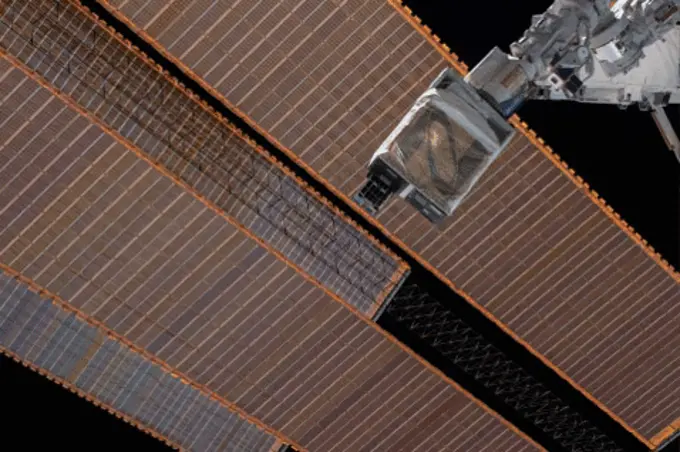
RainCube was deployed into low-Earth orbit from the International Space Station in July, 2018, where it has been measuring rain and snowfall from space. The size of the tiny weather satellite can be seen in comparison to the Space Station. RainCube is a prototype for a possible fleet of small satellites that could one day help monitor severe storms, lead to improving the accuracy of weather forecasts and track climate change over time. A closer look at these images reveals there are two CubeSats very close together -- RainCube is the bottom CubeSat closer to Earth, while the one above it is HaloSat, used to map the distribution of hot gas in the Milky Way.
4239-69155107
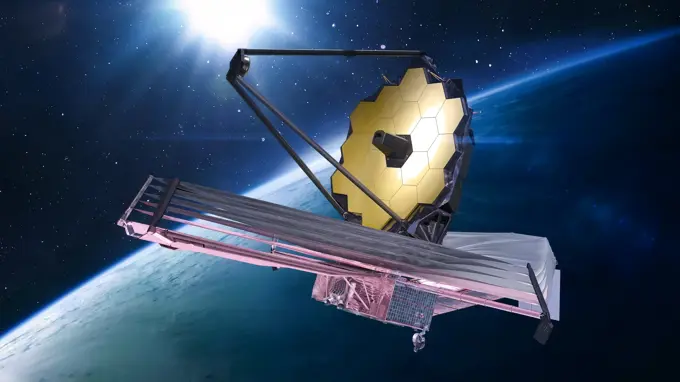
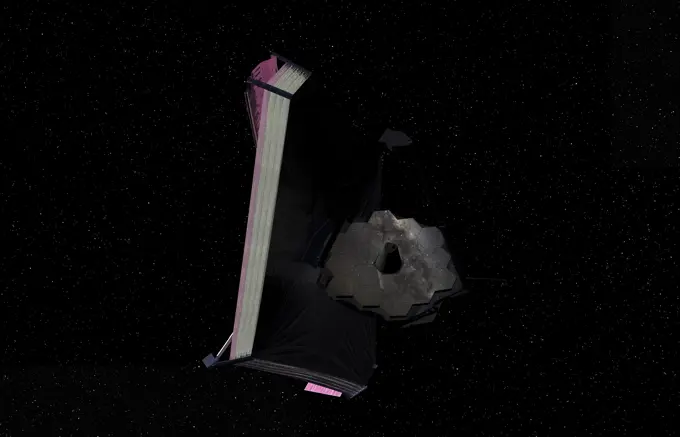
Artist's concept of the James Webb Space Telescope.
1525-28074874
Satellite Cassini is approaching Saturn. Cassini Huygens is an unmanned spacecraft sent to the planet Saturn. Satellite Cassini is approaching Saturn
6145-44591541
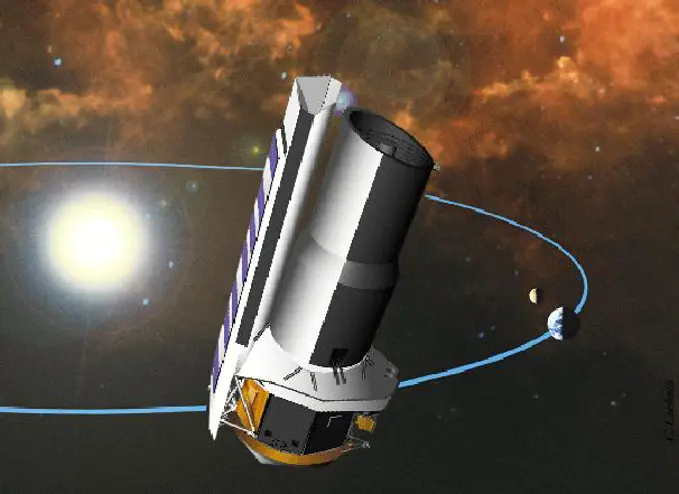
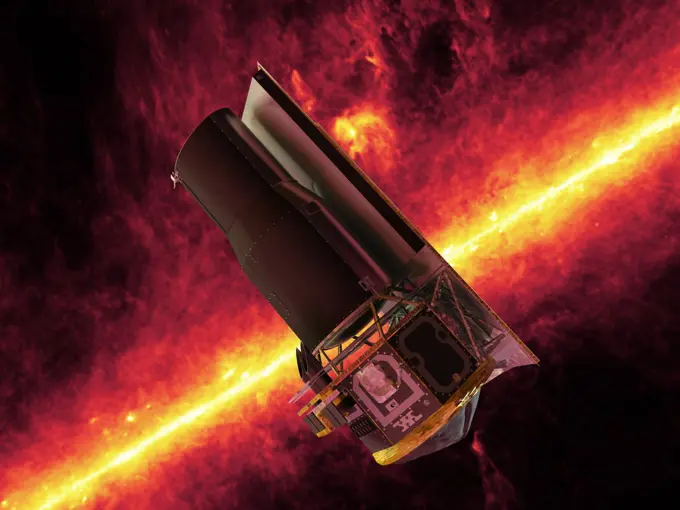
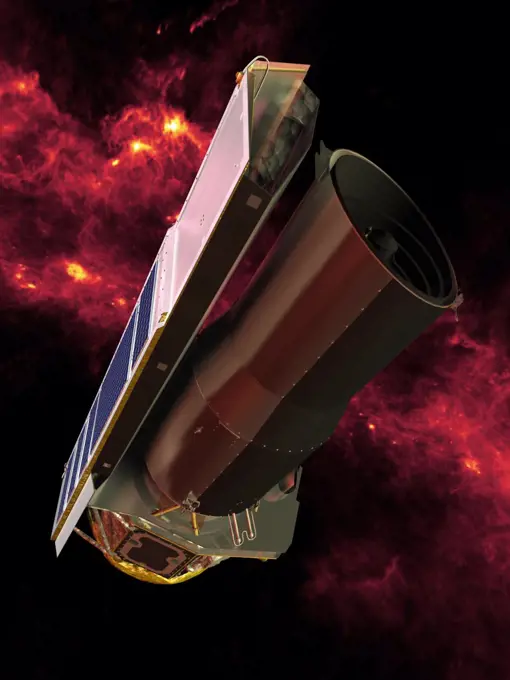
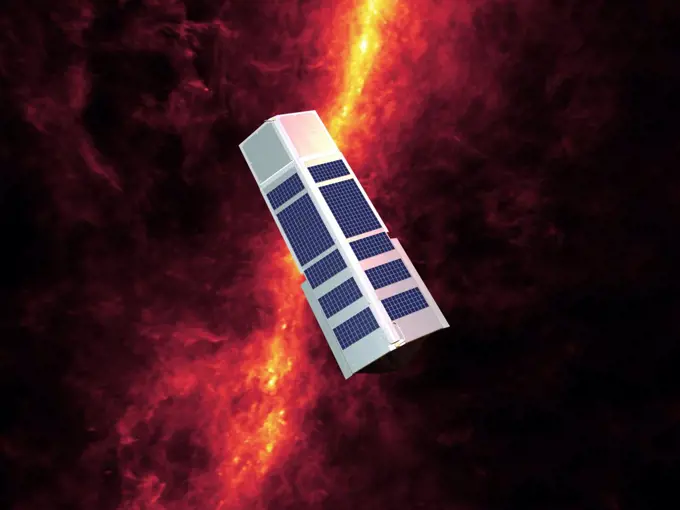
NASA's Spitzer Space Telescope whizzes in front of a brilliant, infrared view of the Milky Way galaxy's plane in this artistic depiction.
1525-25147406
astronomical observatory telescope stars night sky
1525-27010599
Digital Illustration of a Mars Flight
6145-44544081
S61-E-008 (4 Dec 1993) --- This view of the Earth-orbiting Hubble Space Telescope (HST) was photographed with an Electronic Still Camera (ESC), and down linked to ground controllers soon afterward.  This view was taken during rendezvous operations.  Endeavour's crew captured the HST on December 4, 1993 in order to service the telescope.  Over a period of five days, four of the crew members will work in alternating pairs outside Endeavour's shirt sleeve environment.  Electronic still photography is a relatively new technology which provides the means for a handheld camera to electronically capture and digitize an image with resolution approaching film quality.  The electronic still camera has flown as an experiment on several other shuttle missions.
6145-52096489
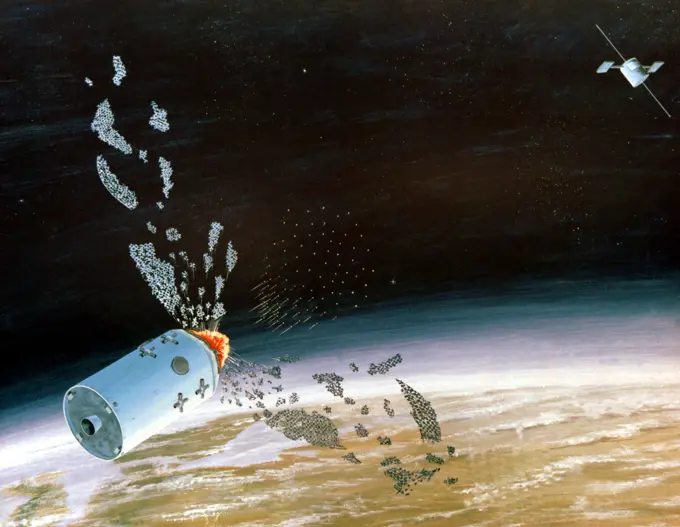
Artist concept an anti-satellite (ASAT) weapon. Country: Unknown
6145-44547907
STS077-711-039 (21 May 1996) --- The Spartan 207 free flyer is held in a hover mode above its berth (out of frame) in the Space Shuttle Endeavours cargo bay in the grasp of the Remote Manipulator System (RMS).  The satellite is backdropped over the coast of Saudi Arabia, about 200 miles south of Jiddah near Al Qunfudhah.  The free-flyer was re-captured by the six crew members on May 21, 1996.  The Endeavour crew spent a portion of the flight time in various activities involving the Spartan 207 and the related Inflatable Antenna Experiment (IAE).  The Spartan project is managed by NASAs Goddard Space Flight Center for NASAs Office of Space Science, Washington, D.C.
227-708
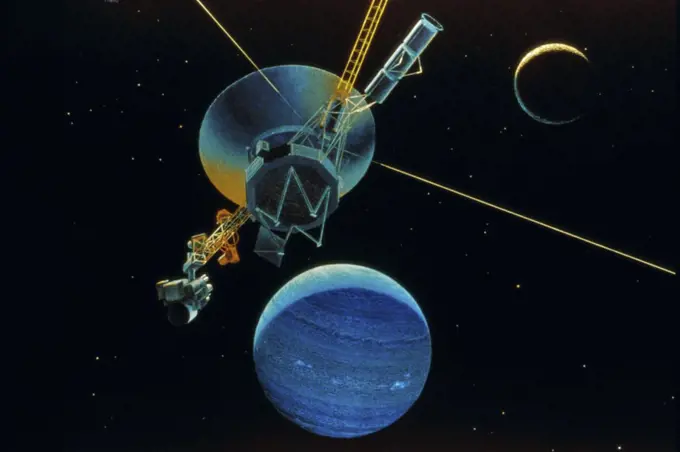
Voyager 2Neptune & Triton8/24/89 Rendering
4239-57493908
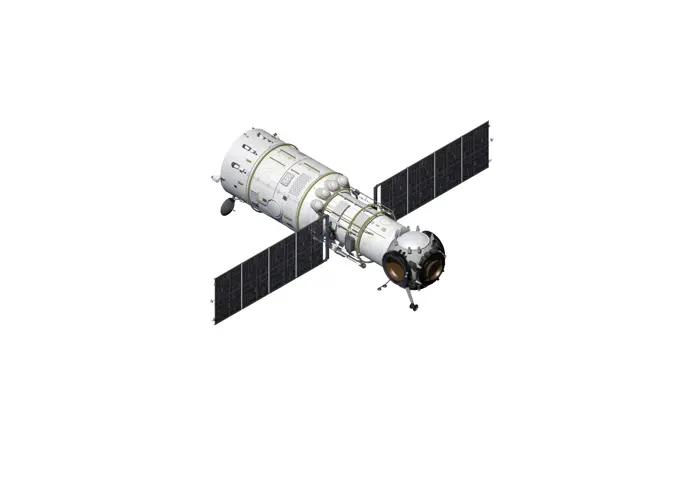
Chinese Space Station Tiangong 2022, Tianhe Core Module.
6145-44965463
ISS036-E-007854 (15 June 2013) --- Surrounded by the darkness of space, the European Space Agency's Automated Transfer Vehicle-4 (ATV-4) Albert Einstein” approaches the International Space Station.  The spacecraft went on to successfully dock to the orbital outpost at 2:07 GMT, June 15, 2013, following a ten-day period of free-flight.
6145-58958467
JSC2011-E-016371 (March 2011) --- Computer-generated artists rendering of the International Space Station as of March 2011, during which space shuttle Discovery (STS-133/ULF5) delivers the ExPRESS Logistics Carrier 4 (ELC4) and Permanent Multi-Purpose Module (PMM). European Space Agency's Johannes Kepler Automated Transfer Vehicle-2 (ATV2) is docked to the Zvezda Service Modules aft port. The Japanese Kounotori2 H-II Transfer Vehicle (HTV2) is linked to the Harmony nodes zenith port.
6145-44596648
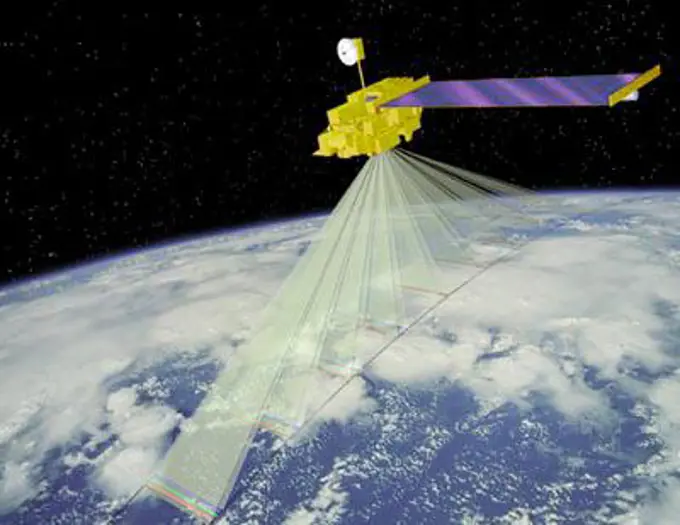
This artist concept is of NASA's MISR spacecraft which views the sunlit Earth simultaneously at nine widely spaced angles.
6145-44706003
This image shows how NASA's Mars Reconnaissance Orbiter was able to snap a picture of NASA's Phoenix Mars Lander as it parachuted down to the surface of Mars.
6145-45254400
S118-E-06075 (10 Aug. 2007) --- A crewmember on the Space Shuttle Endeavour took this picture as the spacecraft approached the International Space Station, surrounded by the blackness of space and getting closer by the second.
6145-44714873
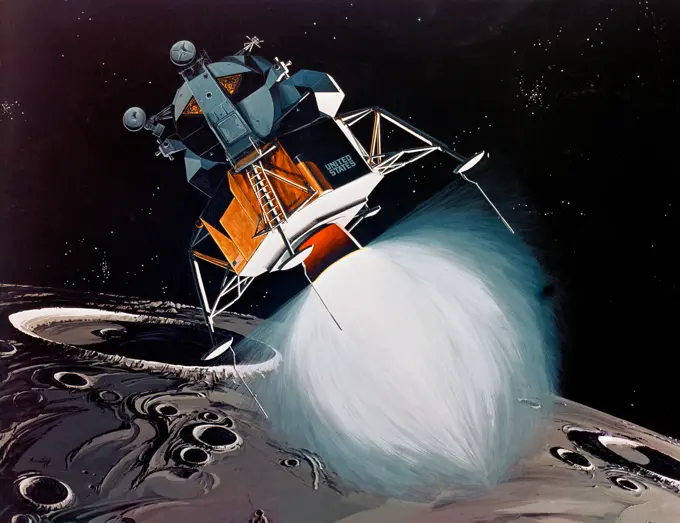
S69-33765 (12 May 1969) --- Artist's concept depicting the firing of the Apollo 10 Lunar Module descent engine for 42 seconds to propel Snoopy back into a higher lunar orbit for rendezvous and docking with the Command and Service Modules. Earlier, the LM descent engine will be fired for 27 seconds to take astronauts Thomas P. Stafford, Apollo 10 commander; and Eugene A. Cernan, lunar module pilot, to within 10 miles of the moon's surface. Astronauts John W. Young, command module pilot, will remain in the Command Module, Charlie Brown, in lunar orbit. Developed by TRW's Systems Group at Redondo Beach, California, under Grumman subcontract, the throttleable descent engine will be used to soft land the LM on the lunar surface during Apollo 11 and subsequent Apollo missions.
1525-27320050
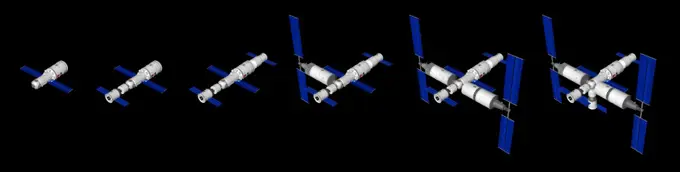
Sequence of assembly of the TIANGONG 3 - Chinese Space Station with TIANHE core module, Shenzhou manned space vessels and automated Tianzhou resupply vehicle on black background. 3D Illustration. Sequence of assembly of the TIANGONG 3 - Chinese Space Station with TIANHE core module on black background. 3D Illustration
6177-V53550356
4239-69155123
New Horizons spacecraft approaches dwarf planet Pluto and its moon Charon.
4389-1863
Centaur Rocket and LCROSS
6145-45258484
MMS Spacecraft Animation The Magnetospheric Multiscale (MMS) mission is a Solar Terrestrial Probes mission comprising four identically instrumented spacecraft that will use Earth's magnetosphere as a laboratory to study the microphysics of three fundamental plasma processes magnetic reconnection, energetic particle acceleration, and turbulence. These processes occur in all astrophysical plasma systems but can be studied in situ only in our solar system and most efficiently only in Earth's magnetosphere, where they control the dynamics of the geospace environment and play an important role in the processes known as "space weather." Learn more about MMS at a href= http //www.nasa.gov/mms rel= nofollow www.nasa.gov/mms /a Learn more about MMS at a href= http //www.nasa.gov/mms rel= nofollow www.nasa.gov/mms /a
6145-44606730
Birds Eye" View of Egress" -title=""Birds
6145-45227761
iss061e061561 (Nov. 29, 2019) --- Russia's Progress 73 (73P) cargo craft is pictured departing the International Space Station after undocking from the Pirs docking compartment. Loaded with trash, the 73P was deorbited a few hours later and burned up safely over the Pacific Ocean.
4239-69155133
An Asteroid Lander is docked to a Deep Space Vehicle.
6188-65602450
mission to mars 3d rendering of a mission to mars Copyright: xZoonar.com/magannx 9771686
4128R-15221078
Space shuttle, illustration
6145-44799272
JSC2010-E-008593 (January 2010) --- Computer-generated artists rendering of the International Space Station as of Jan. 23, 2010. Pressurized Mating Adapter 3 (PMA-3) is relocated from the Unity node port to the Harmony node zenith port to allow for the arrival of the Tranquility module (Node 3). Soyuz 20 (TMA-16) is docked to the Poisk Mini-Research Module 2 (MRM2). Soyuz 21 (TMA-17) is linked to the Zarya nadir port and Progress 35 resupply vehicle remains docked to the Pirs Docking Compartment.
6145-52086600
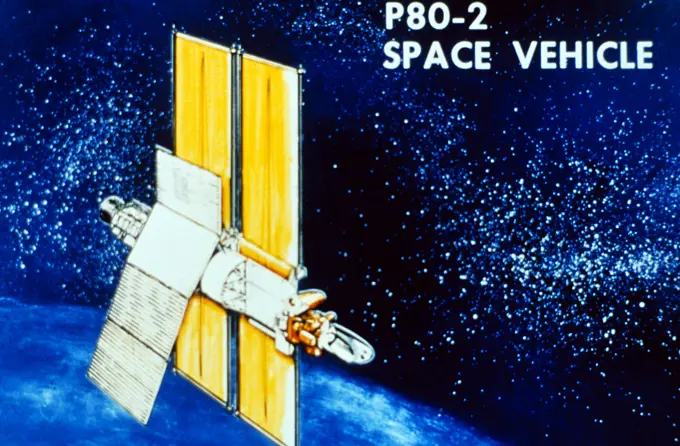
Artist's concept of a P80-2 space vehicle in orbit. Country: Unknown
4239-69155127
Asteroid mining outpost.
4239R-6011
A manned lunar space elevator ascends from the surface of the moon.
4239R-263
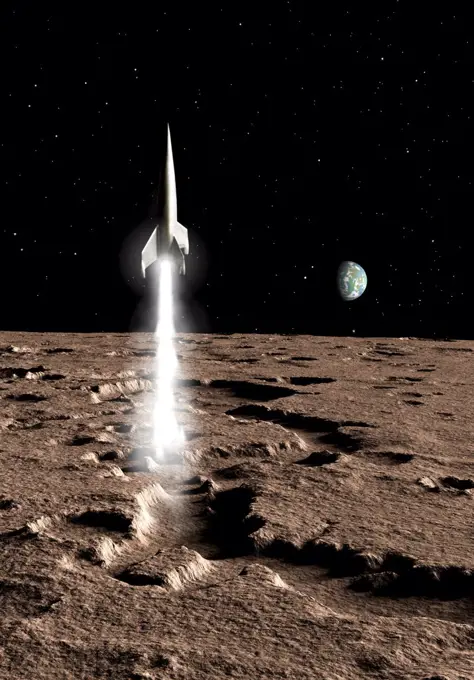
A fanciful 1950's view of a stream-lined finned spaceship beginning the landing phase (tail-first) on to the lunar surface
6145-44471704
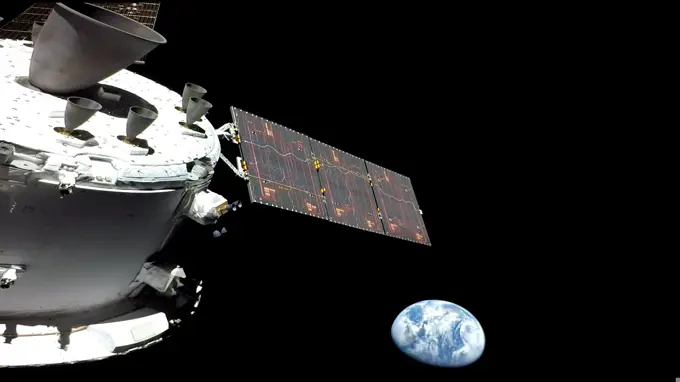
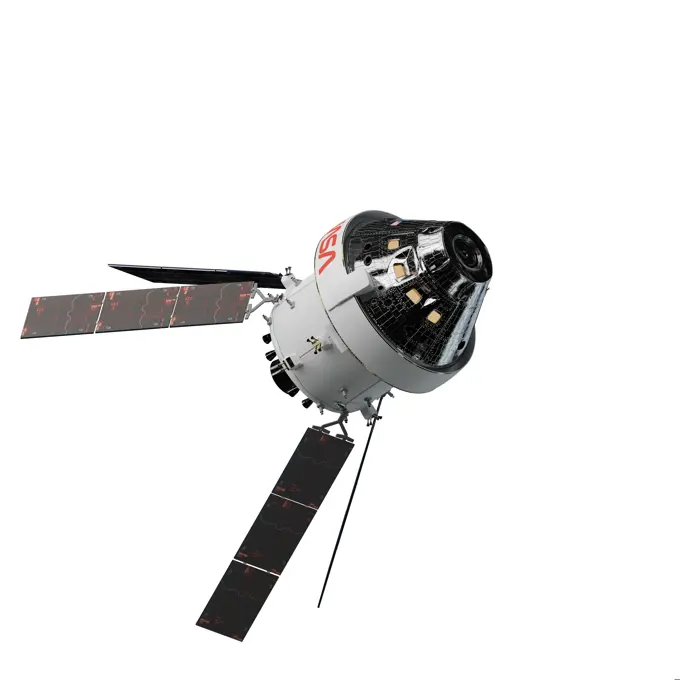
Artist's rendering of the Orion Artemis I spacecraft.
4128-28970735
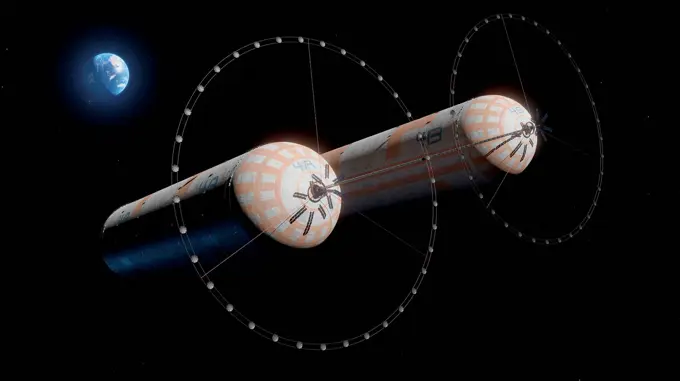
Artwork of an O'Neill Cylinder
4128-28970723
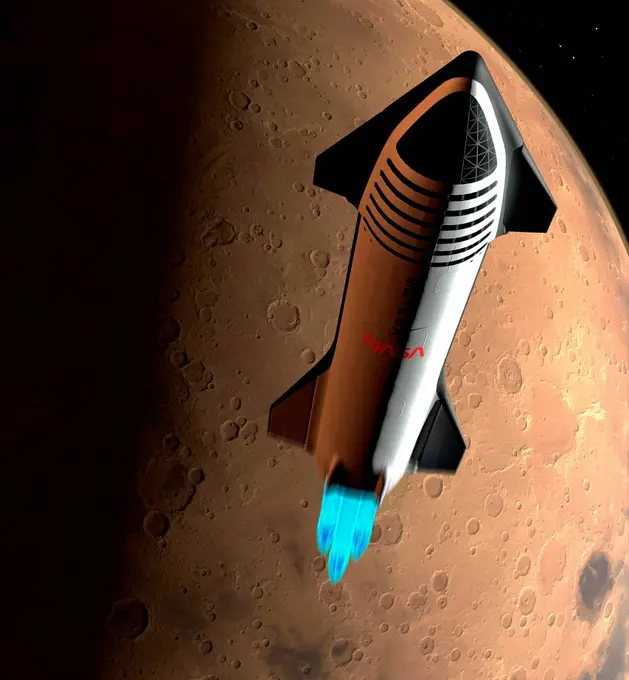
Artwork of Starship Above Mars
6145-44706227
NASA's Mars Reconnaissance Orbiter using the High Resolution Imaging Science Experiment (HiRISE) camera to take a picture of the Phoenix lander roughly 22 hours after landing.
4239-69155136
Lunar cycler centrifuge
4239R-20480332
Spitzer seen against the infrared sky. The band of light is the glowing dust emission from the Milky Way galaxy seen at 100 microns (as seen by the IRAS/COBE missions).  The cloud complexes around Orion and the disk of the Milky Way are seen behind the observatory.
4239R-539
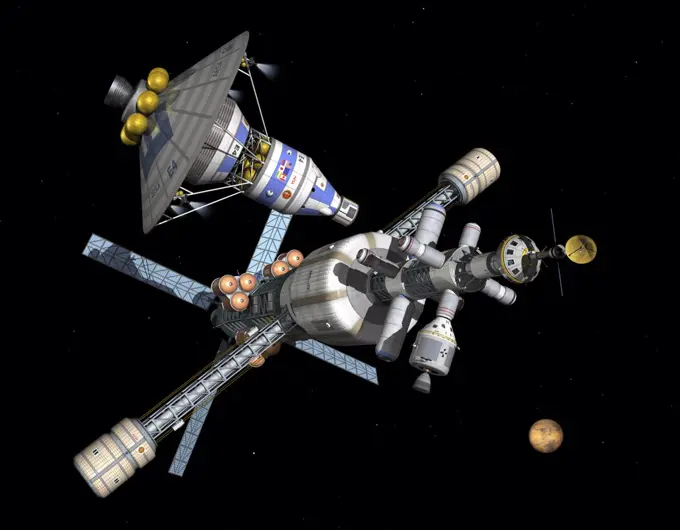
A manned Mars lander/return vehicle, upper left, disembarks from a Mars cycler for the surface of Mars
4389-1055
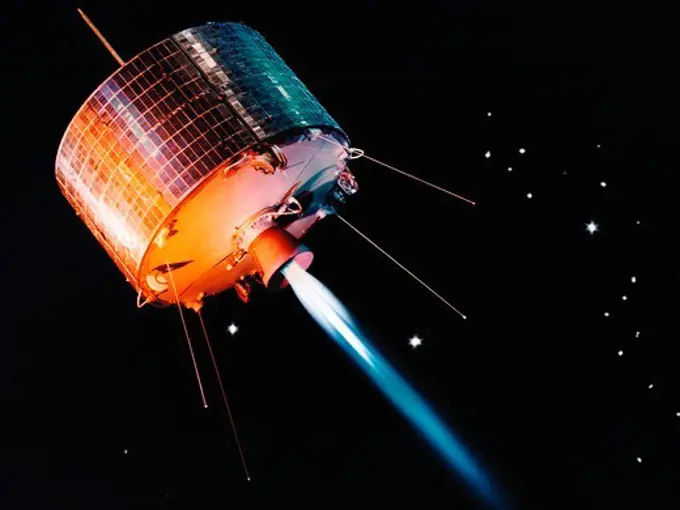
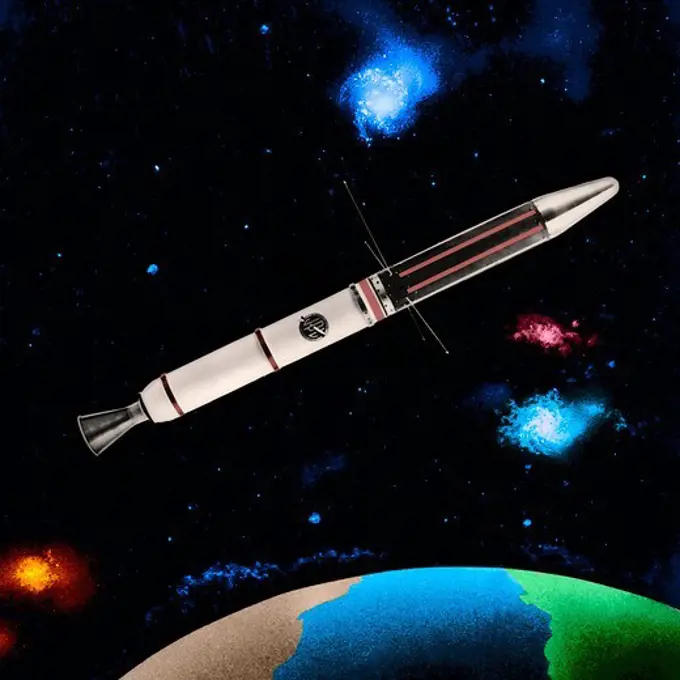
Explorer 1, America's First Satellite
6145-44521602
This image is a single frame from a computer animation, which begins with a global view of the planet Mars compiled with images from NASA's Mars Odyssey spacecraft.
6188-58104324
Juno sattelite orbiting Jupiter Juno sattelite orbiting Jupiter Copyright: xZoonar.com/StanislavxRishnyakx 14171479
6145-45242316
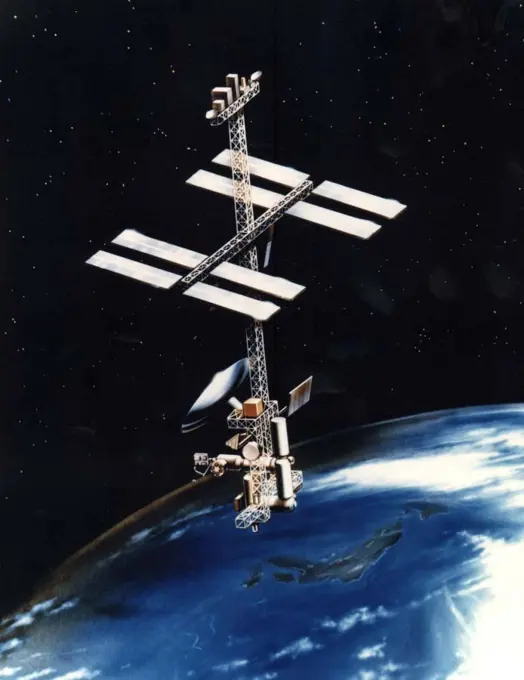
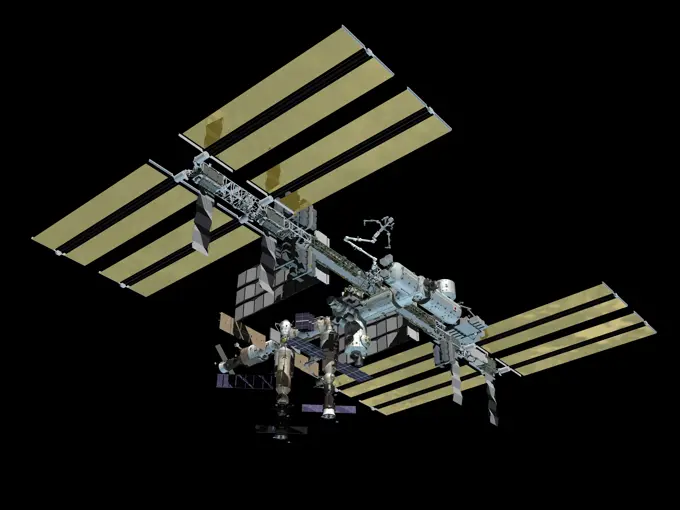
Artist's concept for Phase III of the International Space Station (ISS) as shown here in its completed and fully operational state with elements from the United States, Europe, Canada, Japan, and Russia. Sixteen countries are cooperating to provide a multidisciplinary laboratory, technology test bed, and observatory that will provide an unprecedented undertaking in scientific, technological, and international experimentation.
4128R-31400
Space tourism, computer artwork.
6145-44752833
This artist's concept shows NASA's Kepler spacecraft.
6145-44638165
Artist's rendering of NASA's Stardust spacecraft. The spacecraft was launched on February 7, 1999, from Cape Canaveral Air Station, Florida, aboard a Delta II rocket.
6145-44806880
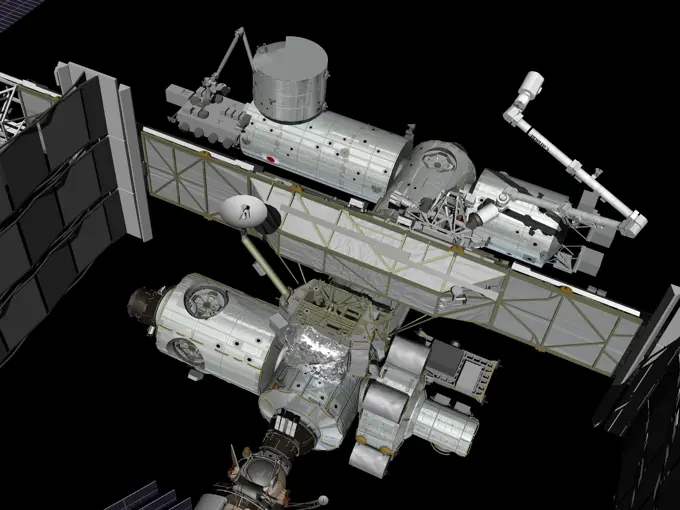
JSC2010-E-036838 (February 2010) --- A computer-generated artists rendering of the International Space Station as of February 2010 features a close-up top view of the ISS after the STS-130/20A installation of the Tranquility module, with its Cupola, to the Unity nodes port side.
6145-58971803
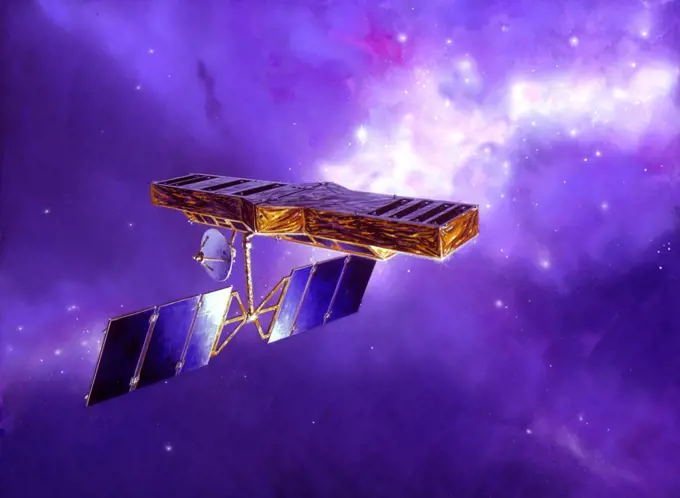
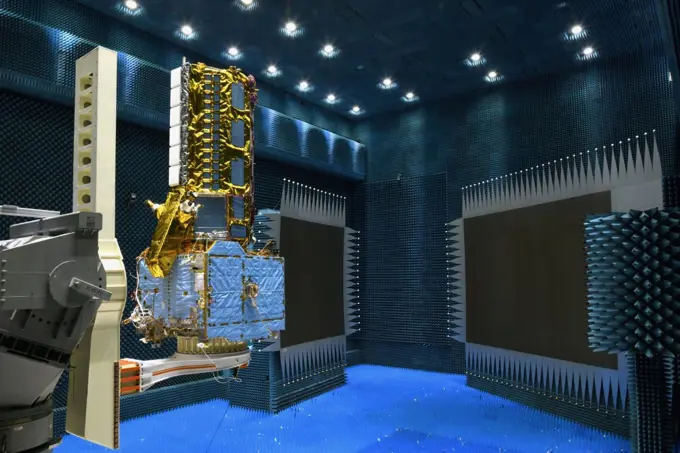
The NISAR satellite, partially covered in gold-hued thermal blanketing, is seen at the Indian Space Research Organisation's compact antenna test facility in Bengaluru, India, in September 2023. Short for NASA-ISRO Synthetic Aperture Radar, NISAR completed 20 days of testing in the chamber, where engineers found that the radio signals from the two radar systems' antennas passed requirements. The blue foam spikes lining the walls, floor, and ceiling prevent radio waves from bouncing around the room and interfering with measurement. The test was followed by a 21-day trial in a thermal vacuum chamber that showed the spacecraft can function in the extreme temperatures and the vacuum of space. After further tests, the satellite will be transported about 220 miles (350 kilometers) eastward to Satish Dhawan Space Centre, where it will be inserted into its launch faring, mounted atop ISRO's Geosynchronous Satellite Launch Vehicle Mark II rocket, and sent into low-Earth orbit. NISAR is the first
6145-44828820
STS061-73-040 (4 Dec 1993) --- Backdropped against the blackness of space, the Hubble Space Telescope (HST) nears the Space Shuttle Endeavour. With the aid of the Remote Manipulator System (RMS), the STS-61 crew members later grappled the spacecraft and berthed it in the cargo bay for five-days of servicing chores by four space walkers.
6145-44517644
STS98-E-5032 (9 February 2001) --- International Space Station (ISS) is backdropped against the blackness of space as Space Shuttle Atlantis approaches.  The scene was recorded with a digital still camera by one of the STS-98 astronauts aboard the shuttle.
4389-2333
Hubble Space Telescope
6145-44728727
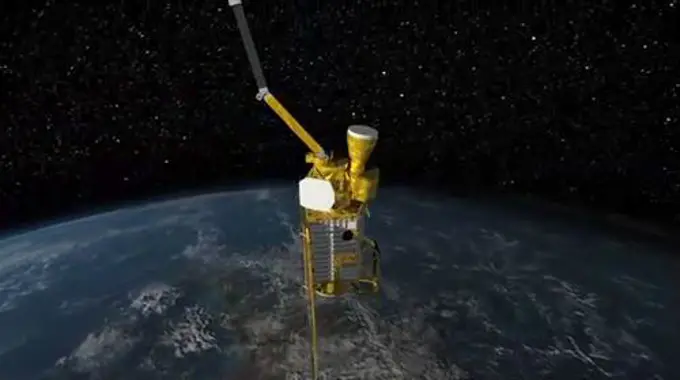
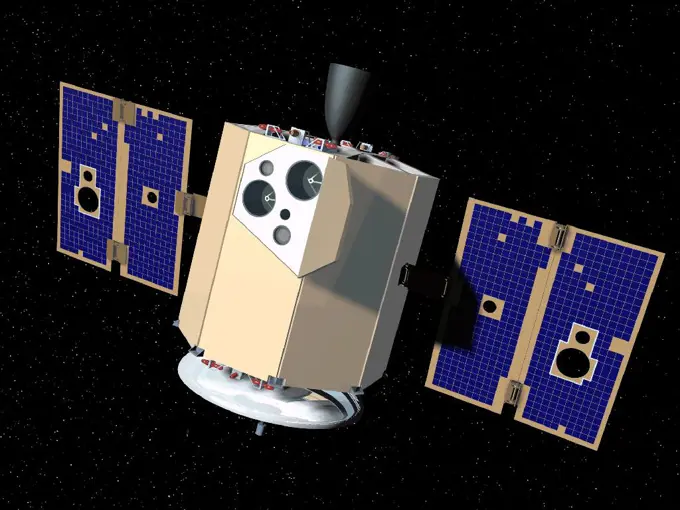
This image is an artist's concept of the Orbiting Carbon Observatory (OCO).
6145-45247668
JSC2006-E-43483 (October 2000) --- Computer-generated artist's rendering of the International Space Station after flight 2R/1S. Expedition One, the first crew to live and work aboard the station arrived in a Soyuz spacecraft.
6145-45253126
JSC2006-E-43506 (October 2006) --- Computer-generated artist's rendering of the International Space Station after flight 1J. Kibo Japanese Experiment Module Pressurized Module (JEM-PM) and Japanese Remote Manipulator System (JEM-RMS) are installed. JEM Pressurized Section is moved from Node 2 onto the JEM Pressurized Module.
4239R-20480334
Spitzer seen against the infrared sky. The band of light is the glowing dust emission from the Milky Way galaxy seen at 100 microns (as seen by the IRAS/COBE missions).  The Spitzer solar panels also double as a solar shield that always faces the sun, protecting the cold observatory from the sun's heat.
6145-45239017
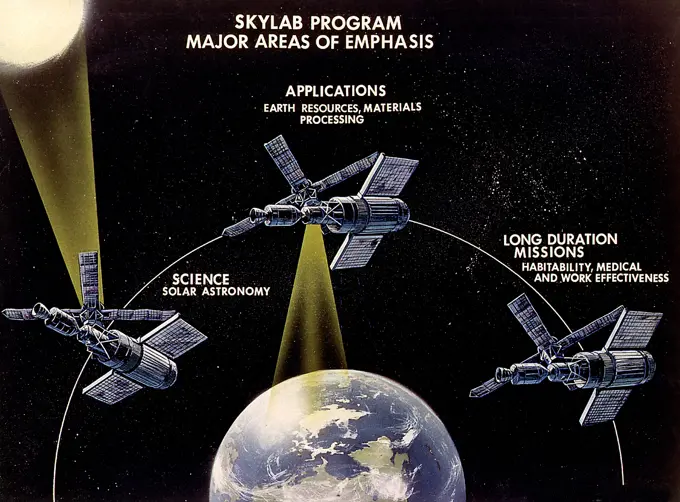
This image illustrates major areas of emphasis of the Skylab Program. In an early effort to extend the use of Apollo for further applications, NASA established the Apollo Applications Program (AAP) in August of 1965. The AAP was to include long duration Earth orbital missions during which astronauts would carry out scientific, technological, and engineering experiments in space by utilizing modified Saturn launch vehicles and the Apollo spacecraft. Established in 1970, the Skylab Program was the forerurner of the AAP. The goals of the Skylab were to enrich our scientific knowledge of the Earth, the Sun, the stars, and cosmic space; to study the effects of weightlessness on living organisms, including man; to study the effects of the processing and manufacturing of materials utilizing the absence of gravity; and to conduct Earth resource observations. The Skylab also conducted 19 selected experiments submitted by high school students. Skylab's 3 different 3-man crews spent up to 84 days
1525-22683013
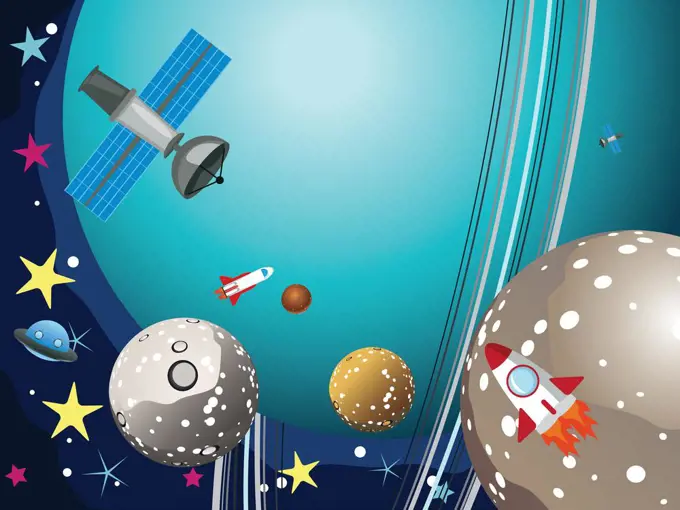
Uranus Planet in the Space. Cartoon planet Uranus in the space with stars and shuttles.
4128R-11288293
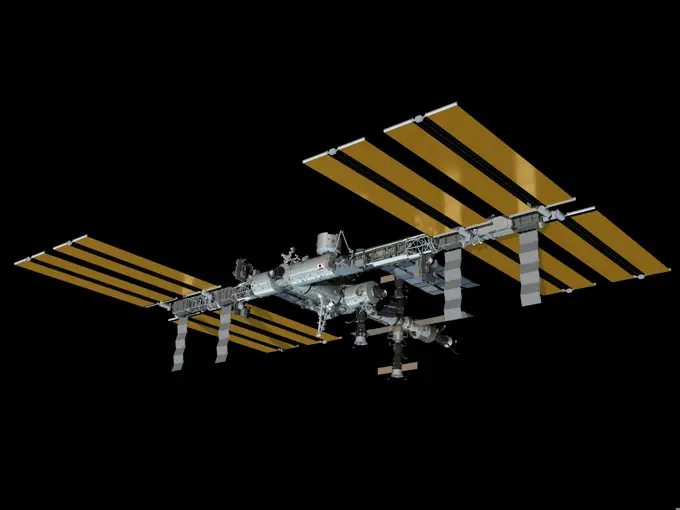
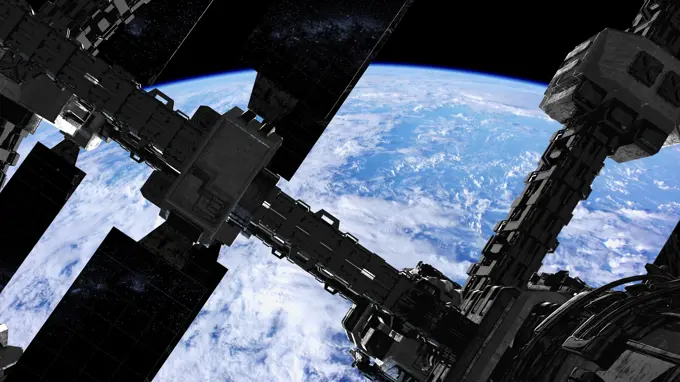
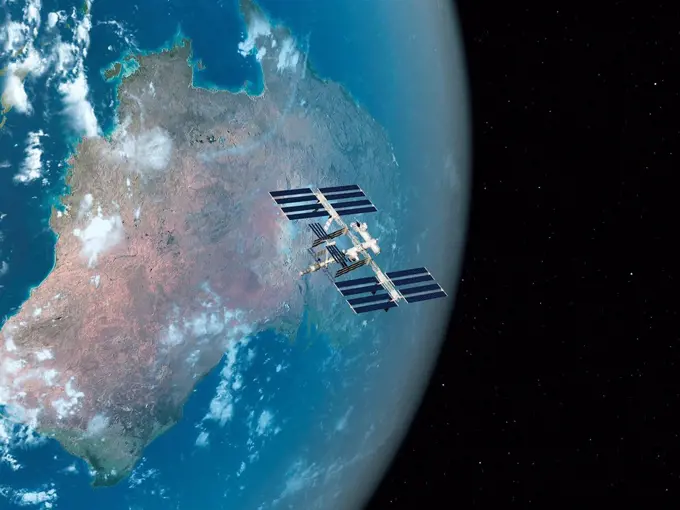
International Space Station (ISS), computer artwork.
6145-44825995
CAPE CANAVERAL, Fla. -- This orbiter tribute of space shuttle Endeavour, or OV-105, hangs in Firing Room 4 of the Launch Control Center at NASA's Kennedy Space Center in Florida. It features Endeavour soaring into orbit above the sailing vessel HMS Endeavour for which it was named. The Cupola, delivered to the International Space Station by Endeavour on STS-130, frames various images that represent the processing and execution of the Space Shuttle Program. Clockwise from top, are the first-ever use of a drag chute during the STS-49 landing, rollout to a launch pad, a ferry flight return to Kennedy, rolling into an orbiter processing facility, docking to the International Space Station, and lifting operations before being mated to an external fuel tank and solid rocket boosters in the Vehicle Assembly Building. The background image was captured by the Hubble Space Telescope and signifies the first shuttle servicing mission, which was performed by Endeavour's STS-61 crew. Crew-designed p
4404-1681
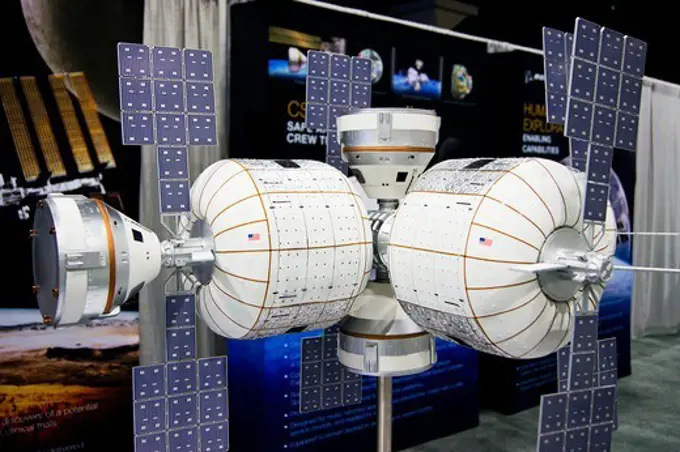
USA, California, Los Angeles, Bigelow space station model
6145-45235913
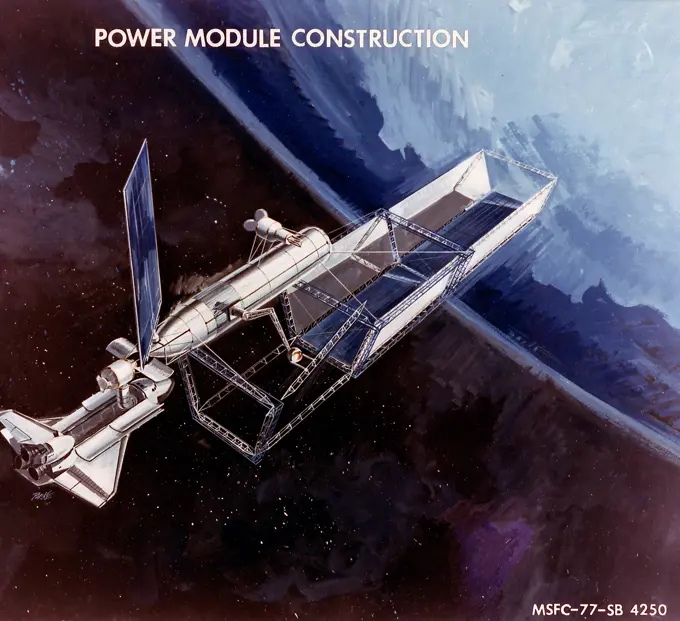
The Marshall Space Flight Center (MSFC) and the Johnson Space Center (JSC) were each awarded 16-month contracts in April 1976 for the Space Station Systems Analysis Study (SSSAS). Grumman Aerospace Corporation was MSFC's contractor and McDornell Douglas Aerospace Company was JSC's contractor. The goal of this study was to formulate plans for a permanent operational base and laboratory facility in Earth orbit in addition to developing a space construction base design for implementing the program. An expended Space Shuttle external tank was to be the central core platform of the base, and additional pressurized modules could be added to provide laboratory facilities. This artist's concept depicts a space construction base design for implementing the SSSAS.
6145-54684048
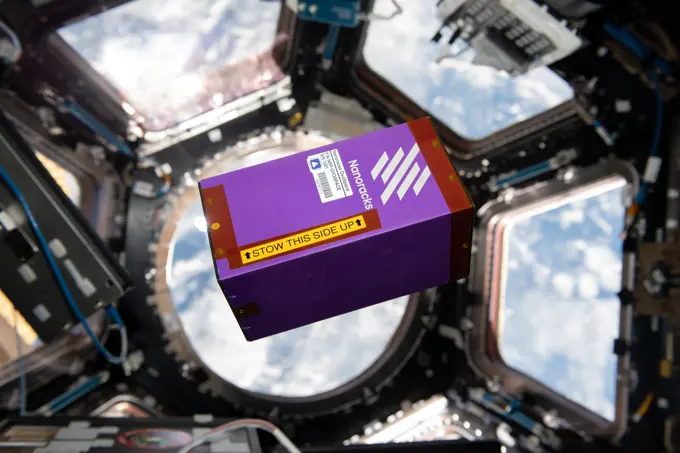
Nanoracks Module in the Cupola. iss068e022275 (11/14/2022) ---  A view of the OVOSPACE payload in the cupola module aboard the international Space Station (ISS). The Modulation of Granulosa and Theca Cells Activity in Microgravity: Consequences for Human Health and Reproduction (OVOSPACE) investigation studies how the microgravity environment can impair ovary function and the physiological development of living beings.
6145-44710828
Apollo CM, Transfer to Lunar Module (LM). MSC, HOUSTON, TX CN/BW 12/01/1966 - 06/01/1966
6145-45233897
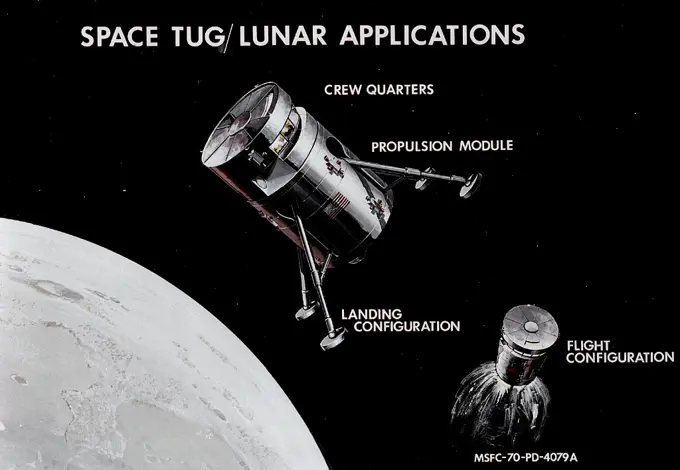
Managed by Marshall Space Flight Center, the Space Tug concept was intended to be a reusable multipurpose space vehicle designed to transport payloads to different orbital inclinations. Utilizing mission-specific combinations of its three primary modules (crew, propulsion, and cargo) and a variety of supplementary kits, the Space Tug was capable of numerous space applications. This 1970 artist's concept illustrates a Space Tug with an attached landing configuration kit as it prepares for a lunar application. The Space Tug program was cancelled and did not become a reality.
1525-20791333
Space satellite coloring book. Space station. Vector illustration.

1525-24718011
Planet colonization compositions with astronaut base module solar green house and space rover isolated flat vector illustration
6145-44752834
This artist's concept shows NASA's Kepler spacecraft.