Historical Weaponry

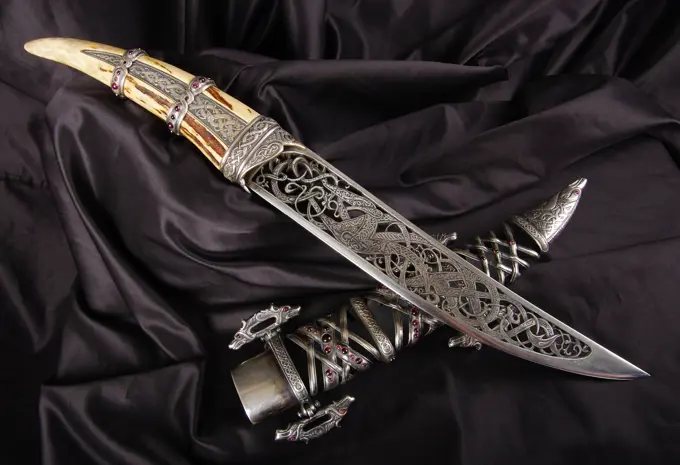
Diverse collection of ornate daggers and swords from various cultures, including Persian and Indian influences, showcasing intricate designs and historical significance.

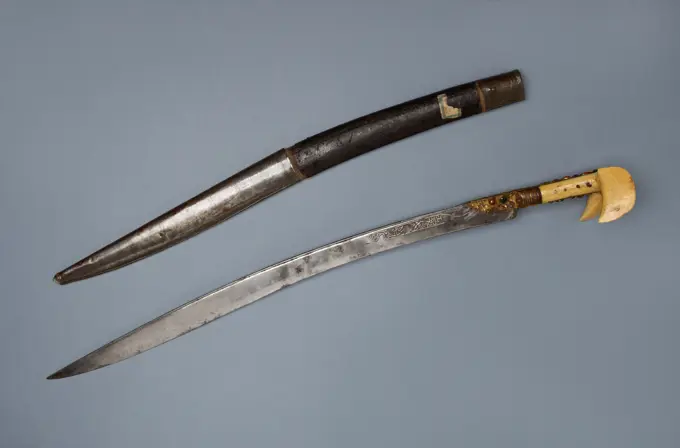
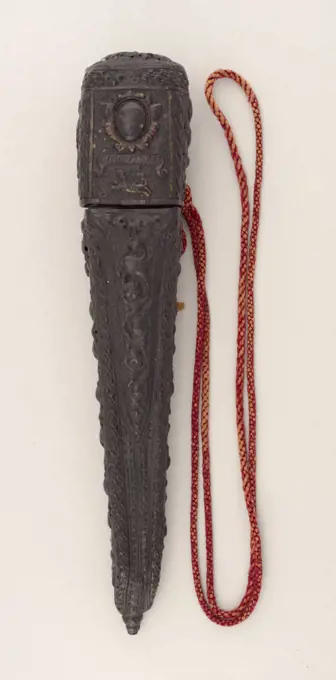
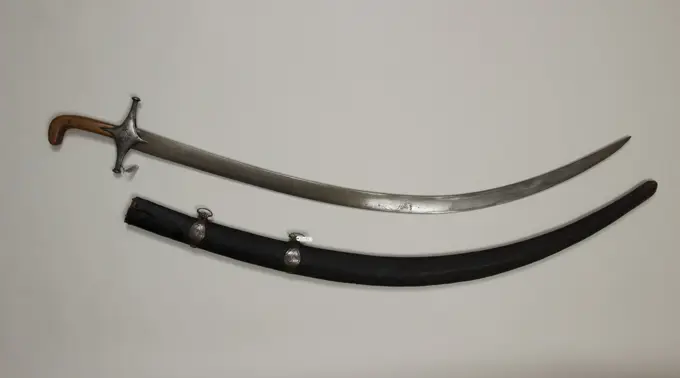
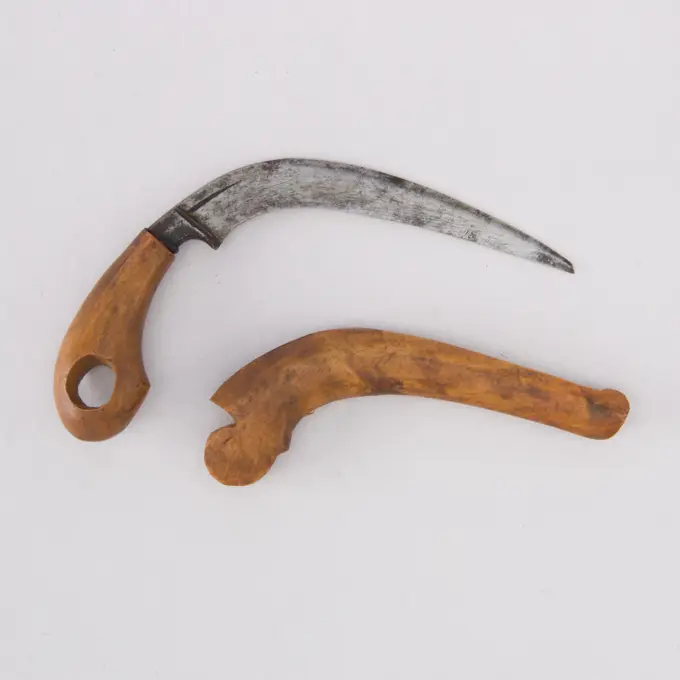
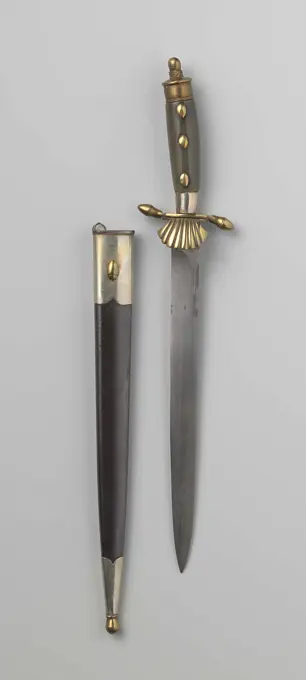
Dolk Aceh War, Anonymous, 1916 dagger Dagger with sheath. The sheath is made of black leather and has a steel word juice with a round carrier button. At the bottom of the dagger steel batter with a copper button. The dagger has a steel one -cut blade that ends in a somewhat curved point. The hilt has a downwarmed shell -shaped pare heart. The handle is made of wood in which three oval -shaped copper nails are stuck. The handcap is made of copper. Indonesia word of cracker, batter, blade: steel (alloy). Parear heart, handwood: copper (metal). Handle: Wood (Plant Material)   Aceh
Dolk Aceh War, Anonymous, 1916 dagger Dagger with sheath. The sheath is made of black leather and has a steel word juice with a round carrier button. At the bottom of the dagger steel batter with a copper button. The dagger has a steel one -cut blade that ends in a somewhat curved point. The hilt has a downwarmed shell -shaped pare heart. The handle is made of wood in which three oval -shaped copper nails are stuck. The handcap is made of copper. Indonesia word of cracker, batter, blade: steel (alloy). Parear heart, handwood: copper (metal). Handle: Wood (Plant Material) Aceh

Assets in this Story

4409-17420158
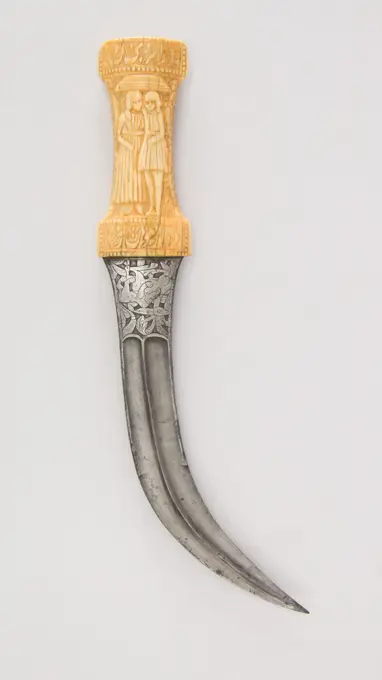
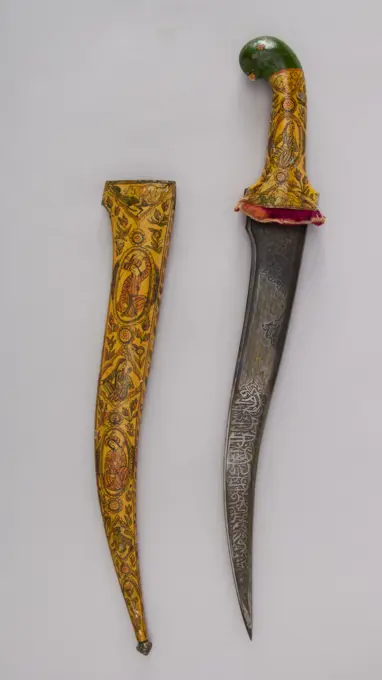
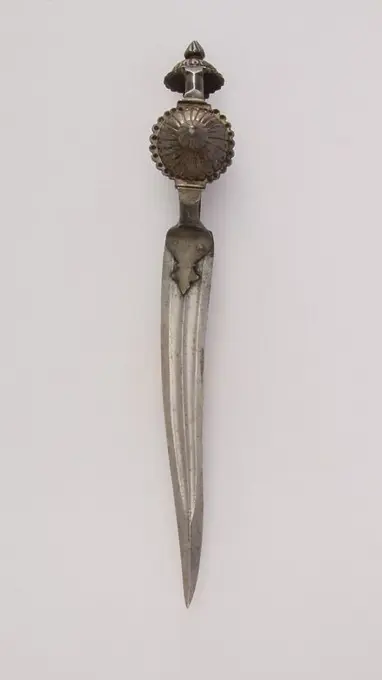
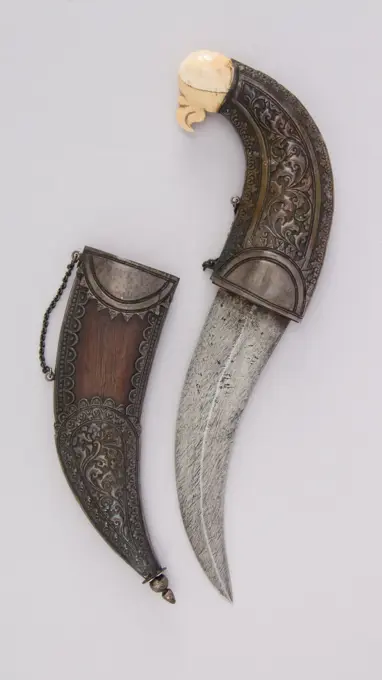
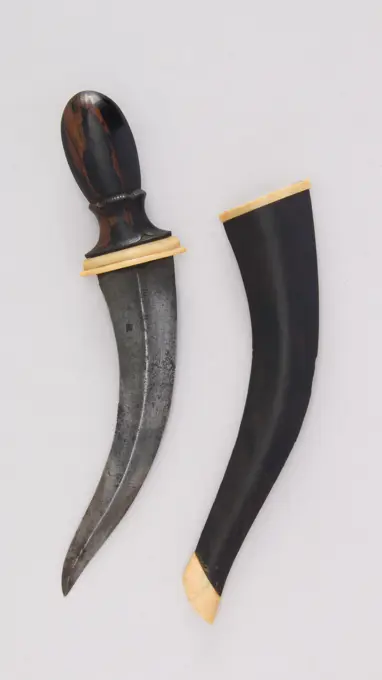
Dagger (Jambiya). Culture: Persian, Qajar. Dimensions: H. 15 3/8 in. (39.1 cm); H. of blade 10 1/2 in. (26.7 cm); W. 5/16 in. (0.8 cm); D. 1 3/16 in. (3 cm); Wt. 11.4 oz. (323.2 g). Date: 19th century. Museum: Metropolitan Museum of Art, New York, USA.
6145-29116686
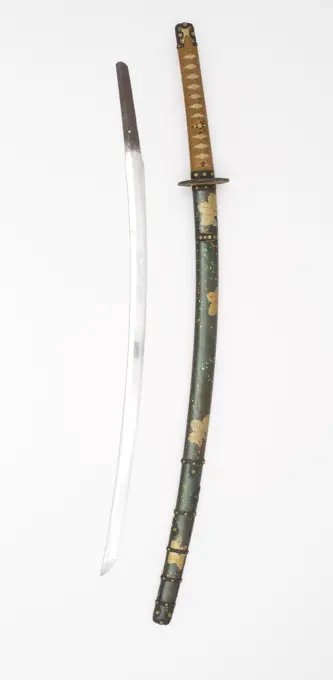
Long Sword Blade and Mountings from Daisho Pair of Swords. Yokoyama Sukenaga (Japan, Kyoto, active 1830-1851). Japan, 18th-19th century. Arms and Armor; swords. Steel, copper, gold foil, lacquer on wood, shakudo, and silk
6145-30189510
Ballock Dagger 1600-1640 Scotland. Ivy root, iron, and copper .
6145-29754329
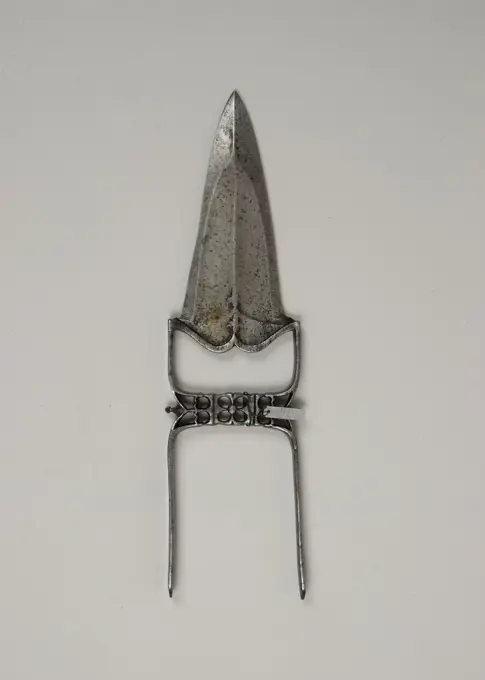
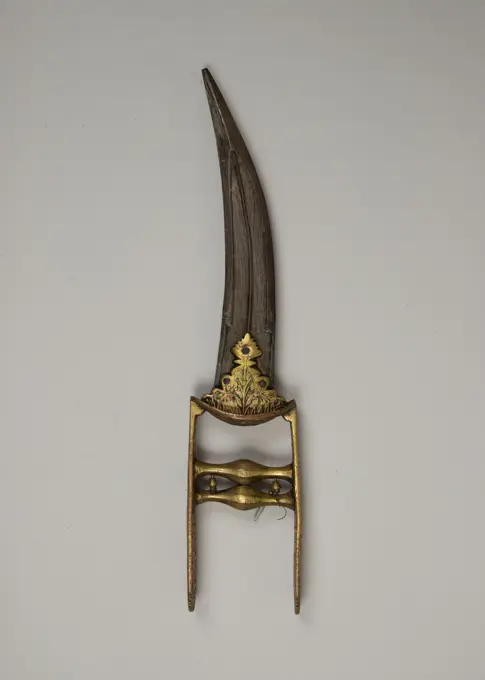
Dagger (Katar) 17th-18th century Indian. Dagger (Katar). Indian. 17th-18th century. Steel. Daggers
6145-54680221
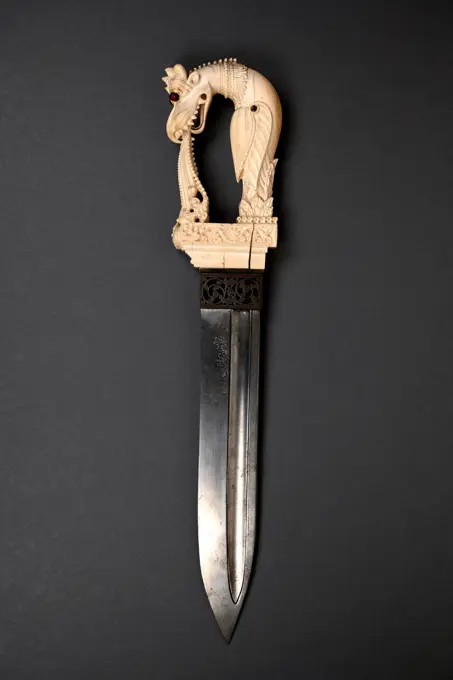
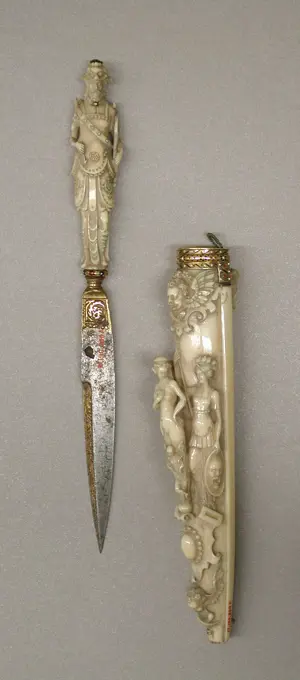
Dagger with Yali Hilt 1800-1850 This opulent carved and jeweled dagger consists of an ivory carved hilt mounted on a straight, broad metal blade. The hilt takes the form of a mythical yali or vyala (leogryph or sometimes part lion, part elephant, part horse) which was an auspicious symbol in southern Indian architecture. The high quality, style of carving, inlaid jewels and opulent details of thIs dagger reveal that it is a royal object made for courtly or ceremonial use. Its inscriptions show evidence of having been in the armory of Maharaja Krishnaraja Wadiyar III (1794-1868) of Mysore and then entering British ownership. View more. Dagger with Yali Hilt. 1800-1850. Hilt: Ivory; carved and inlaid with glass, ruby, spinel, and emeraldBlade: Steel. Attributed to Southern India, Mysore or wider Madurai region. Arms and Armor
6145-29174012
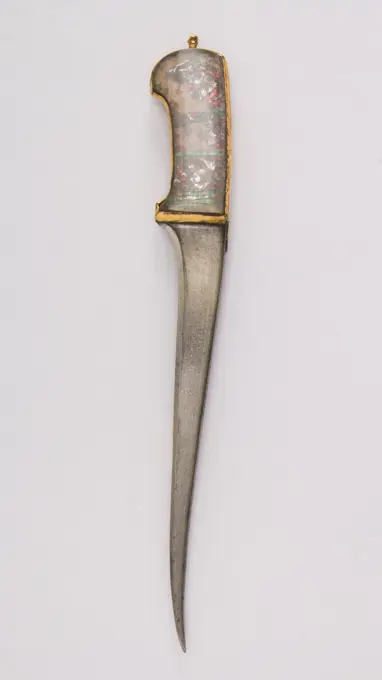
Dagger (Pesh-kabz) 18th-19th century Indian. Dagger (Pesh-kabz) 31439
6145-30189644
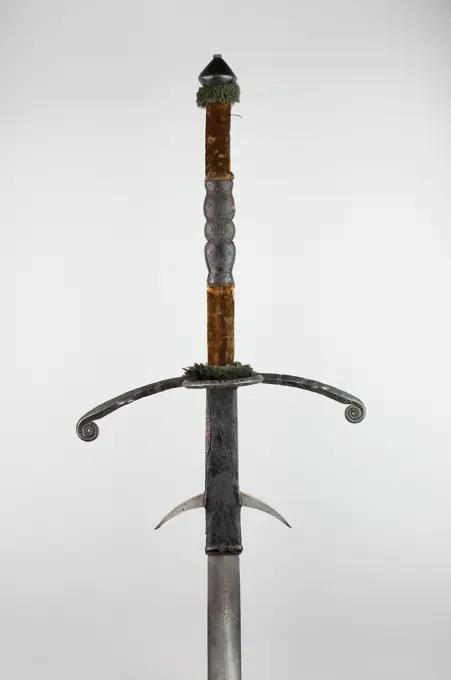
Two-Handed Sword with Scabbard Made 1580-1600 Germany. Steel, iron, wood, silk velvet textile, wood fiber, and leather .
6145-59502417
Dolk Aceh War, Anonymous, 1916 dagger Dagger with sheath. The sheath is made of black leather and has a steel word juice with a round carrier button. At the bottom of the dagger steel batter with a copper button. The dagger has a steel one -cut blade that ends in a somewhat curved point. The hilt has a downwarmed shell -shaped pare heart. The handle is made of wood in which three oval -shaped copper nails are stuck. The handcap is made of copper. Indonesia word of cracker, batter, blade: steel (alloy). Parear heart, handwood: copper (metal). Handle: Wood (Plant Material)   Aceh
4409-17431915
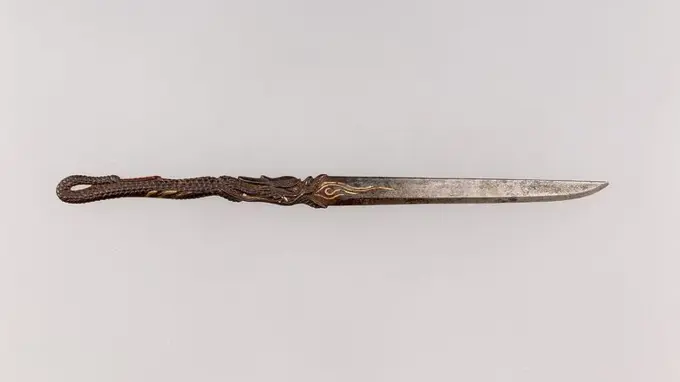
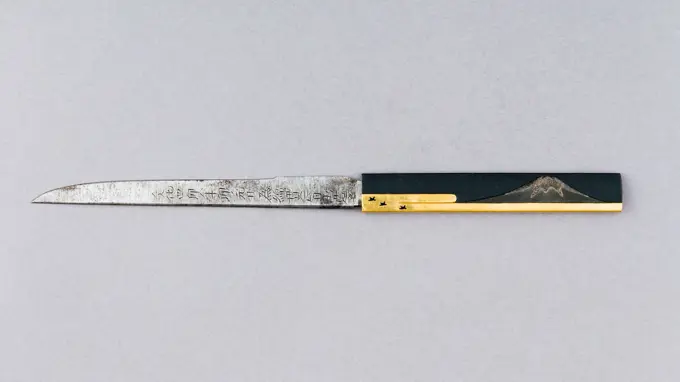
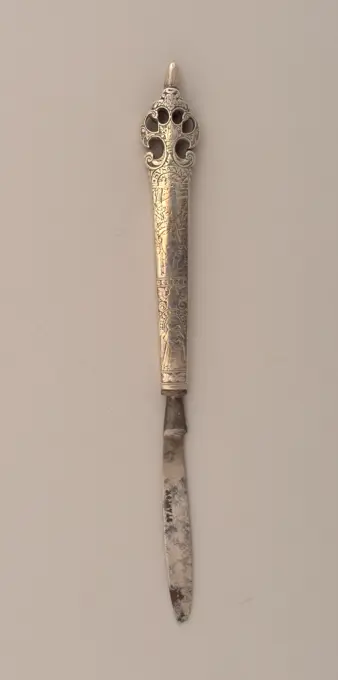
Knife Handle (Kozuka) with Blade. Culture: Japanese. Dimensions: L. including blade 8 1/8 in. (20.6 cm); L. excluding blade 4 in. (10.2 cm); W. 1/2 in. (1.3 cm); thickness 3/16 in. (0.5 cm); Wt. 1 oz. (28.3 g). Date: 16th century. Museum: Metropolitan Museum of Art, New York, USA.
6145-50490242
Sheath
4409-17371635
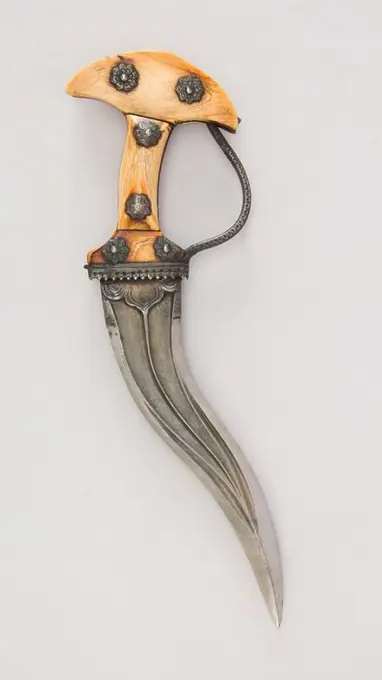
Dagger (Khanjarli). Culture: Indian. Dimensions: H. 12 9/16 in. (31.9 cm); H. of blade 8 1/4 in. (21 cm); W. 3 15/16 in. (10 cm); Wt. 15.7 oz. (445.1 g). Date: 17th-18th century. Museum: Metropolitan Museum of Art, New York, USA.
7155-70378405
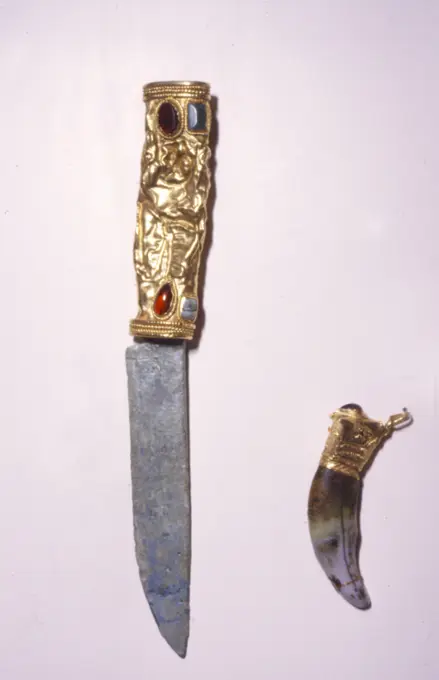
Roman Period dagger with gold handle. Romano-German.
6145-50487469
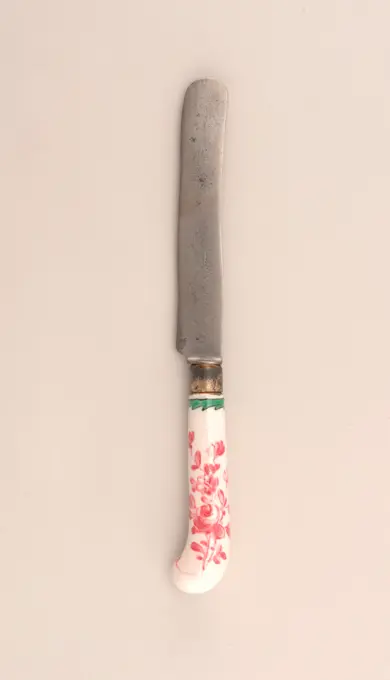
Knife (France); earthenware, silver, steel; L x W x D: 25 x 2.1 x 1.6 cm (9 13/16 x 13/16 x 5/8 in.); 1943-37-1
6145-29180544
Dagger (Katar) 18th century Indian. Dagger (Katar) 31524
6145-29224747
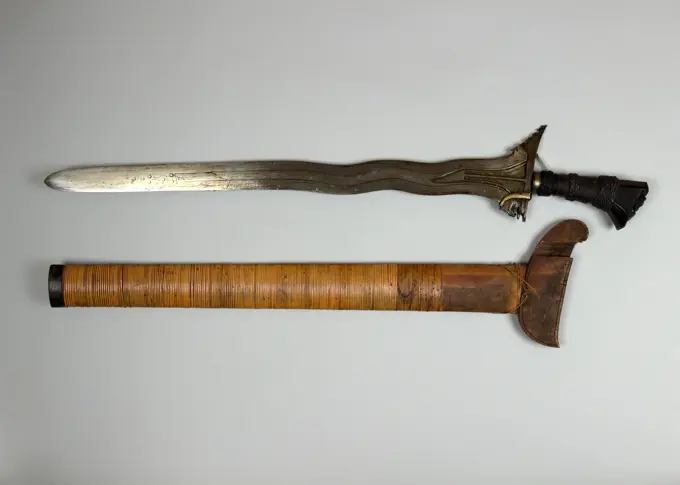
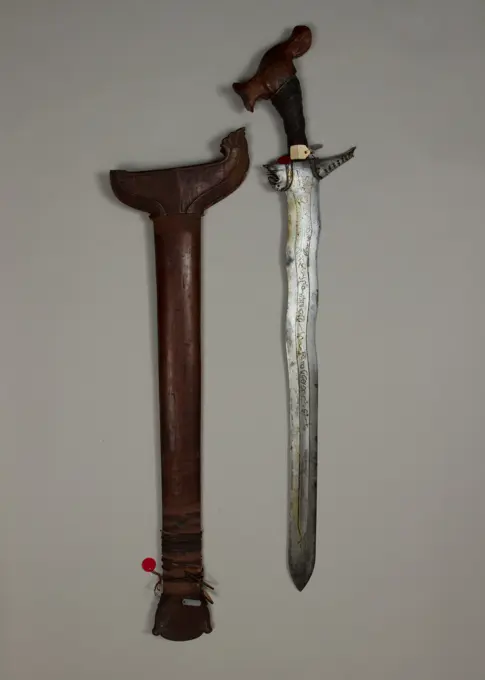
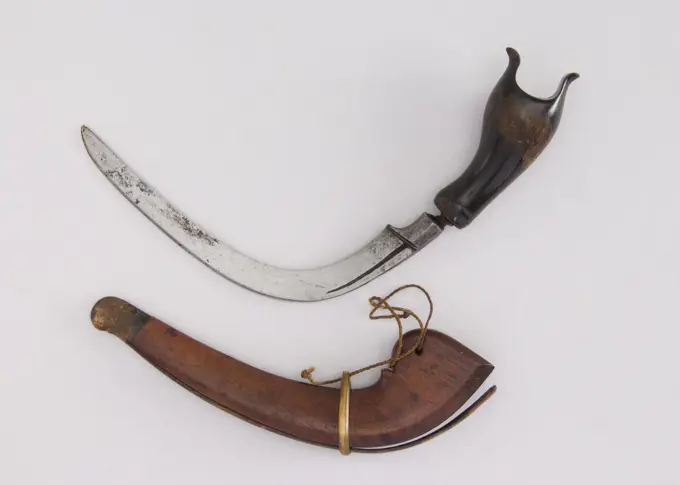
Kris with Sheath 18th-19th century Philippine, Mindanao. Kris with Sheath. Philippine, Mindanao. 18th-19th century. Steel, wood, horn, cane, cord. Krisses
6145-29802078
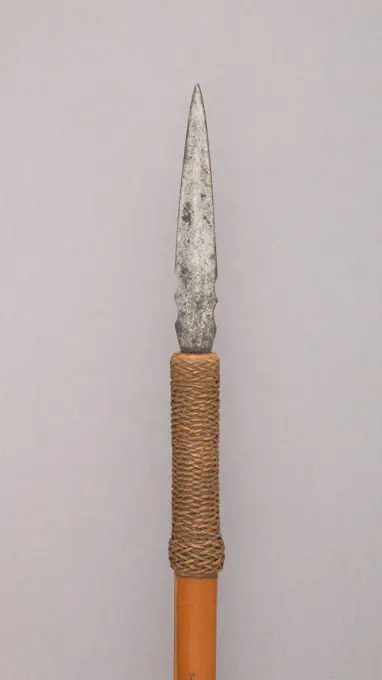
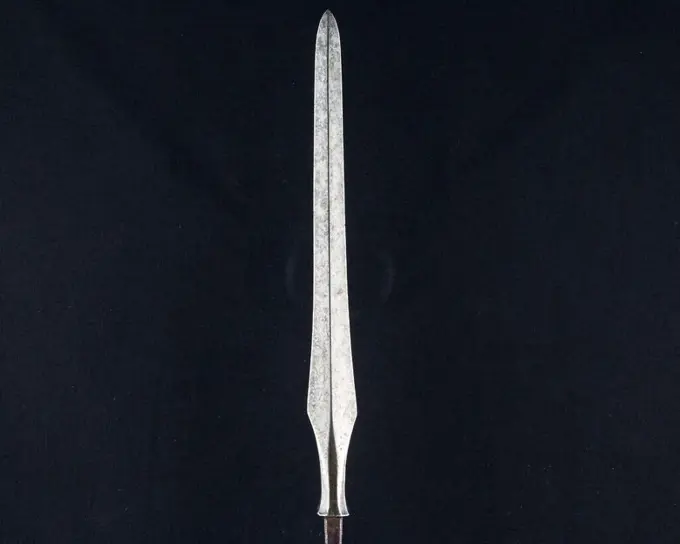
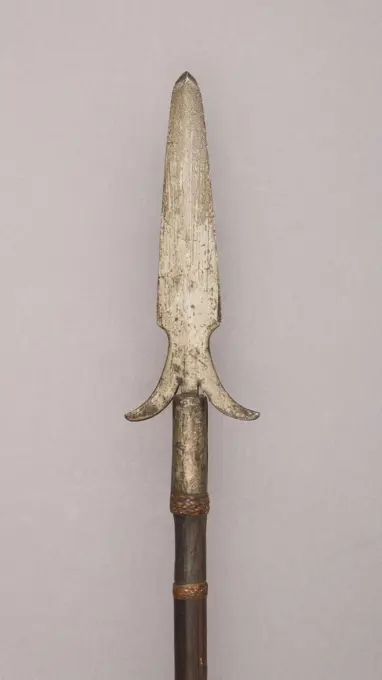
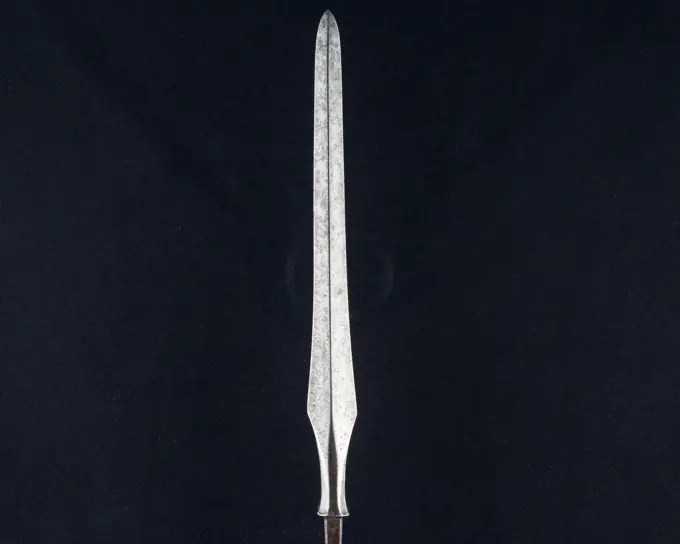
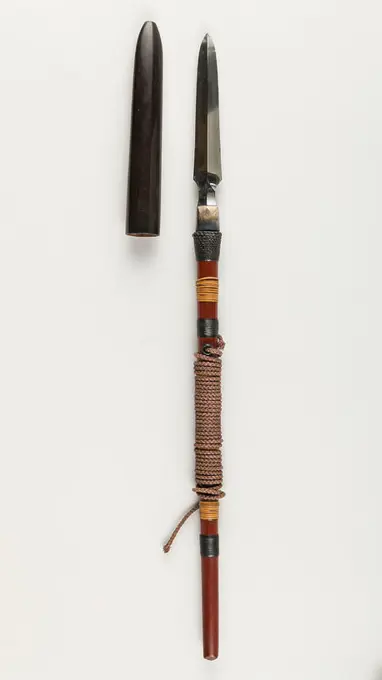
Spear 19th century Taiwanese. Spear. Taiwanese. 19th century. Steel, wood (bamboo). Shafted Weapons
6145-50491741
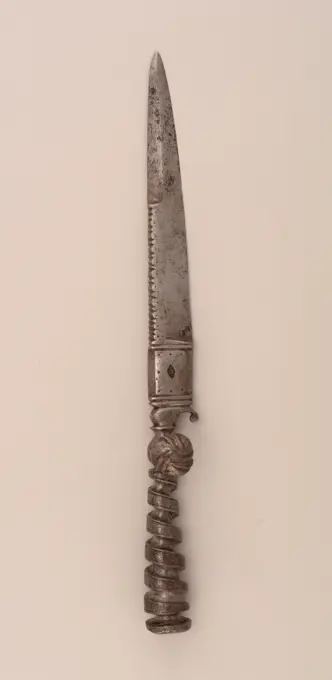
Knife (possibly Spain); steel; L x W: 26.5 x 3.8 cm (10 7/16 x 1 1/2 in.); The Robert L. Metzenberg Collection, gift of Eleanor L. Metzenberg; 1985-103-15
6145-29733347
Dagger (Jambiya) 19th century Persian, Qajar. Dagger (Jambiya). Persian, Qajar. 19th century. Steel, ivory (walrus). Daggers
4409-17415076
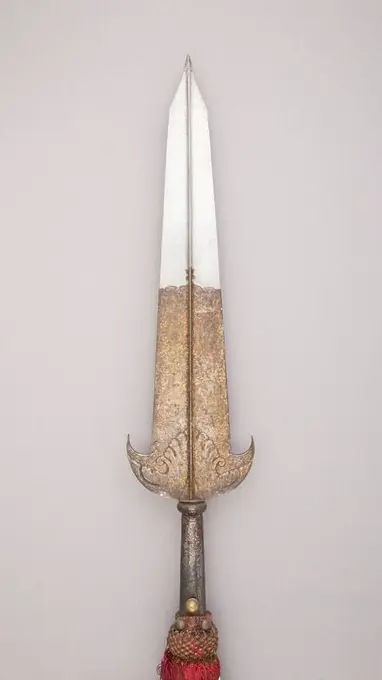
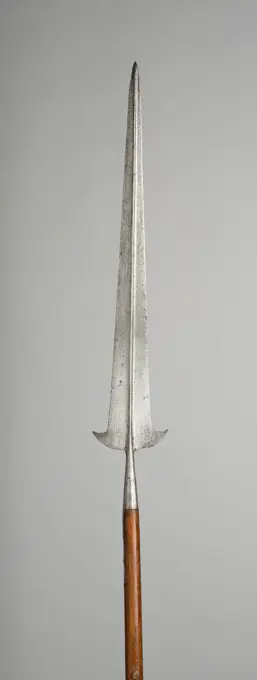
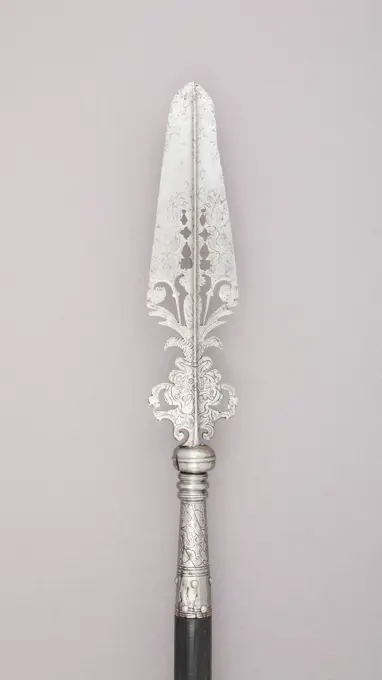
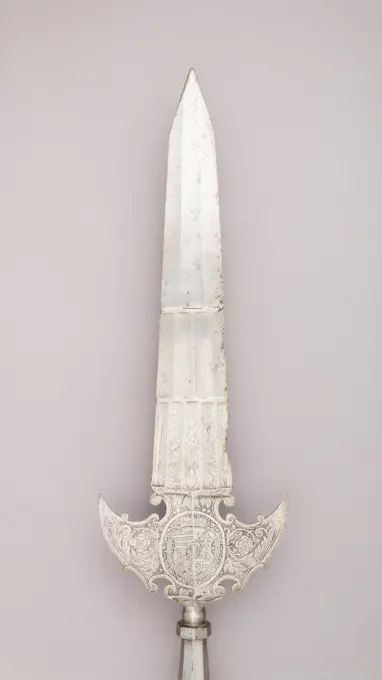
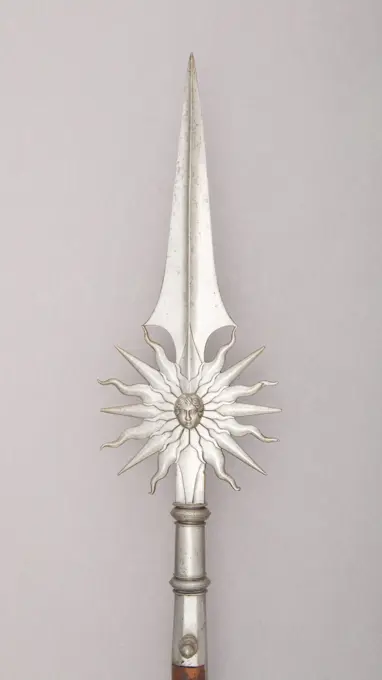
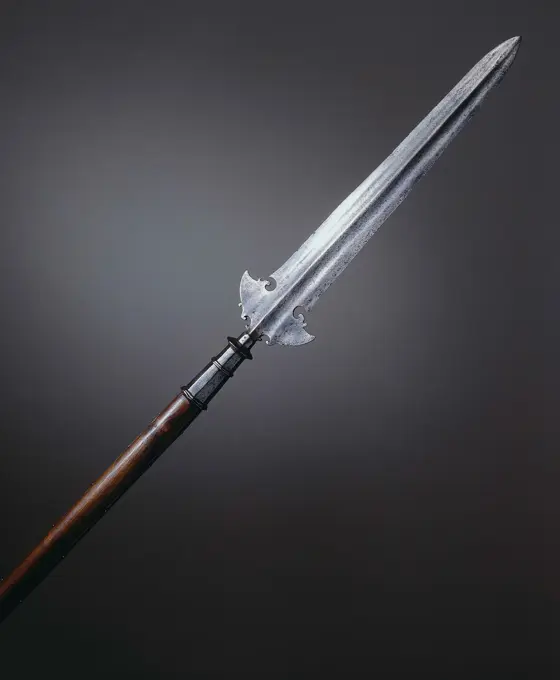
Partisan. Culture: French, Paris. Dimensions: L. 9 ft. (274.2 cm); L. of head 27 3/4 in. (70.5 cm); W. 6 3/8 in. (16.2 cm); Wt. 6 lbs. 14 oz. (3188.5 g). Date: ca. 1600. Museum: Metropolitan Museum of Art, New York, USA.
6145-45371007
Two handed sword of Krakow executioners
4409-17373329
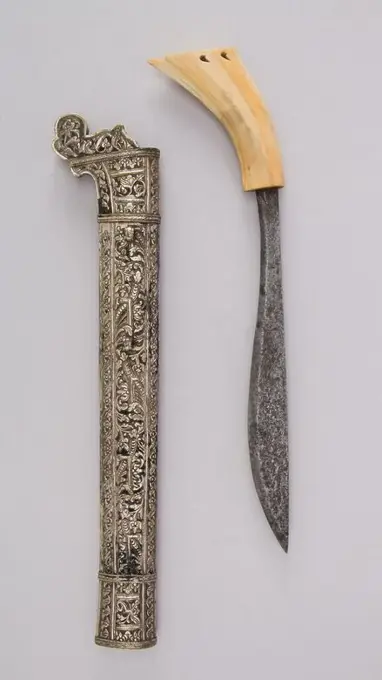
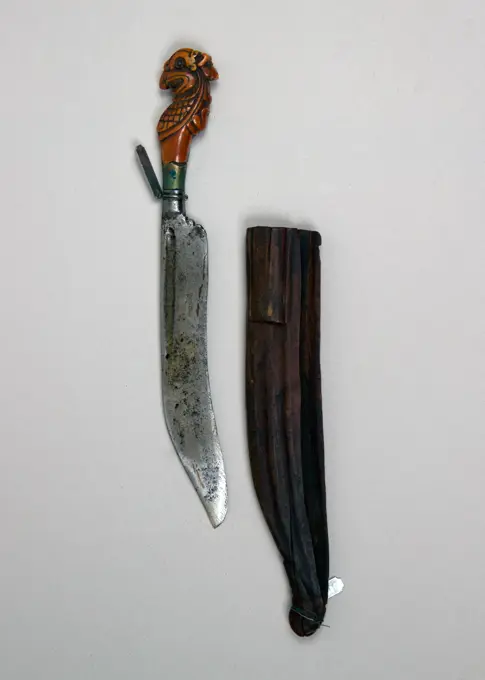
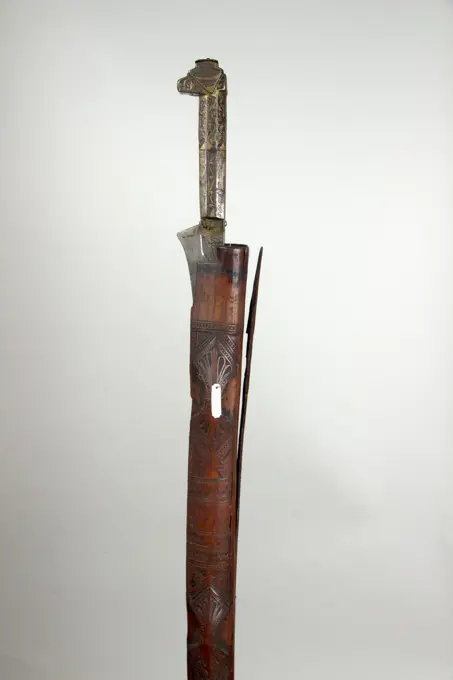
Dagger (Golok or Pedang) with Sheath. Culture: Sumatran. Dimensions: H. with sheath 18 5/16 in. (46.5 cm); H. without sheath 14 5/8 in. (37.1 cm); W. 3 1/2 in. (8.9 cm); Wt. 7.8 oz. (221.1 g); Wt. of sheath 10.2 oz. (289.2 g). Date: 16th-19th century. Museum: Metropolitan Museum of Art, New York, USA.
4409-17406521
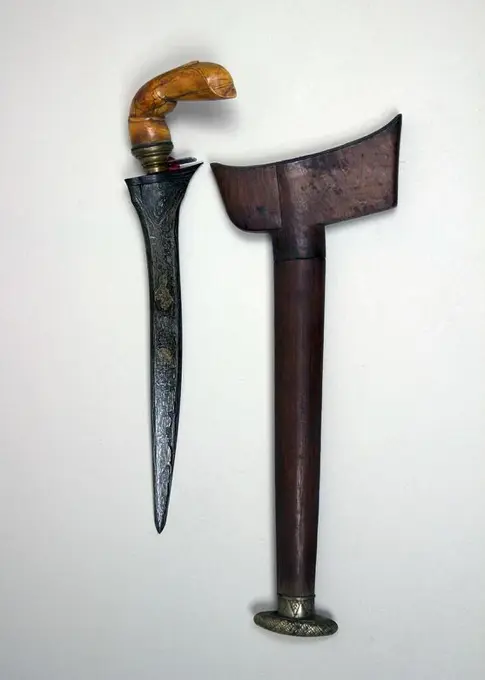
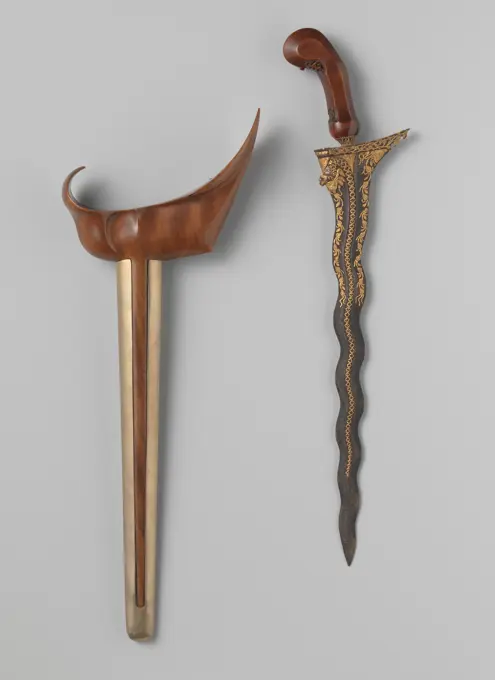
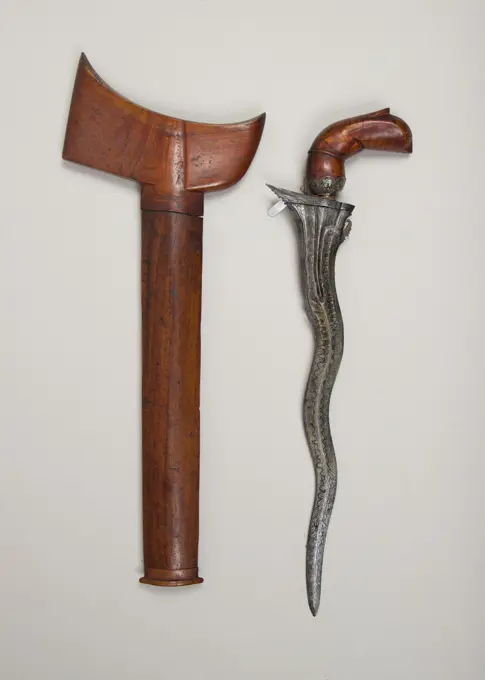
Kris with Sheath. Culture: Indonesian, Sumbawa Island. Dimensions: L. with sheath 16 7/8 in. (42.9 cm); L. without sheath 13 1/8 in. (33.3 cm); L. of blade 11 in. (27.9 cm); W. 5 1/8 in. (13 cm); Wt. 11.9 oz. (337.4 g); Wt. of sheath 5.1 oz. (144.6 g). Date: 18th-19th century. Museum: Metropolitan Museum of Art, New York, USA.
6145-30193457
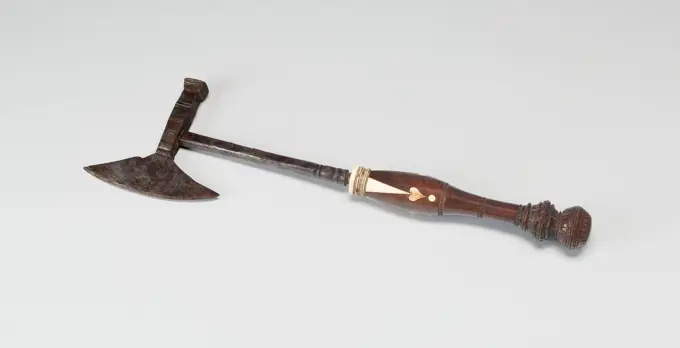
Shingling Hammer 1600-1699 Italy. Iron, wood, and ivory .
4409-17500507
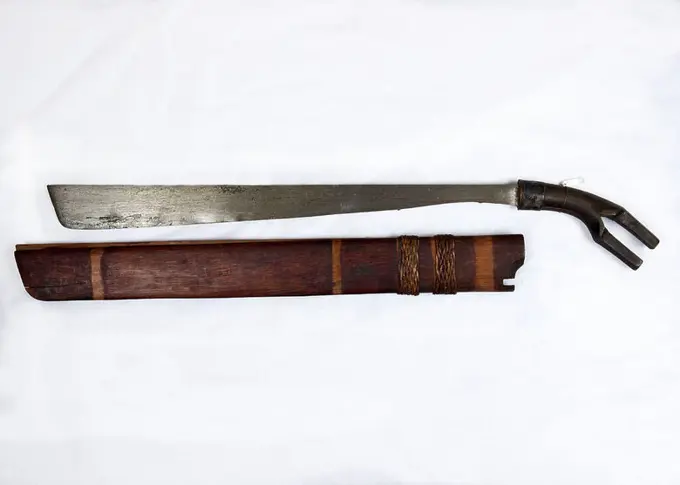
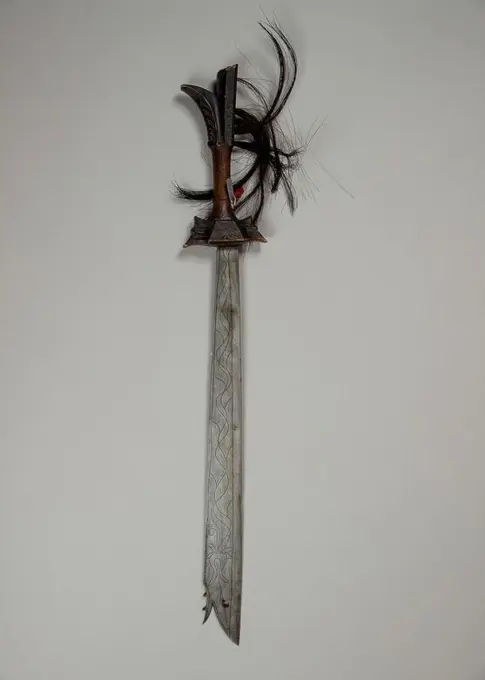
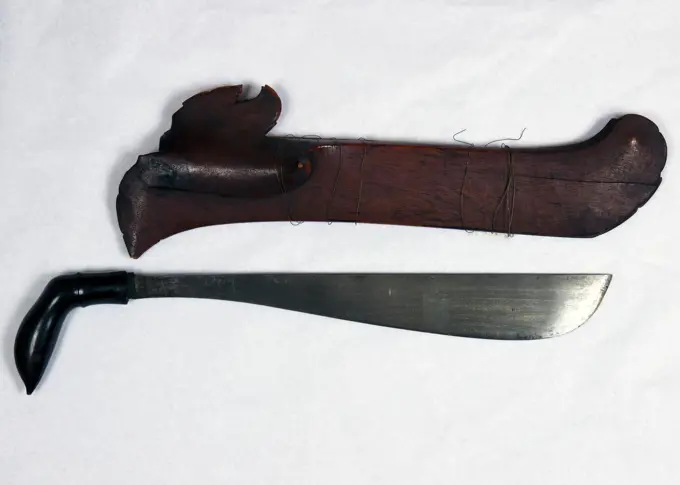
Sword (Klewang) with Scabbard. Culture: Indonesian, Sulawesi. Dimensions: L. with scabbard 27 1/8 in. (68.9 cm); L. without scabbard 25 3/4 in. (65.4 cm); L. of blade 20 in. (50.8 cm); W. 4 in. (10.2 cm); Wt. 1 lb. 8.8 oz. (703.1 ); Wt. of scabbard 7.5 oz. (212.6 g). Date: 18th-19th century. Museum: Metropolitan Museum of Art, New York, USA.
6145-45352978
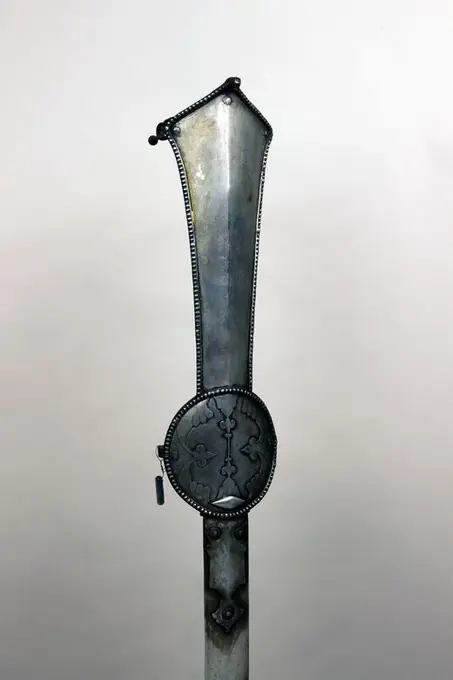
Dagger with a sheath
6145-30175027
Partisan Made 1520-1540 France. Steel and wood .
6145-46667766
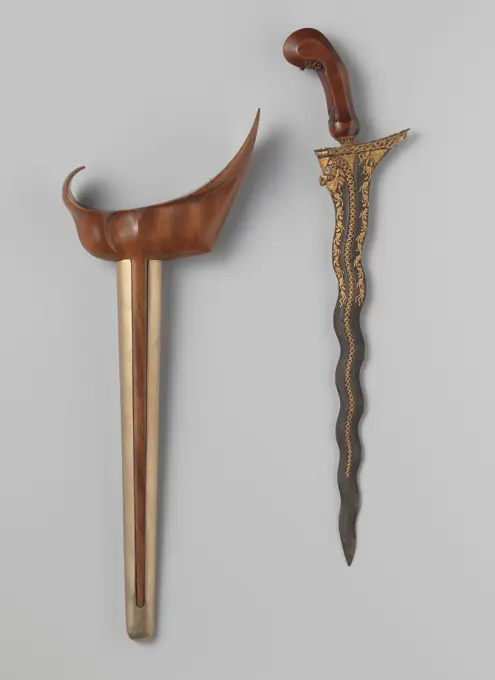
Javanese Kris. Kris, blade in Pamor technique with Gourdincrustatie, consisting of scaly naga that follows the golf movement of blade. Ganja feeding of flower and leaf motifs.
6145-45306832
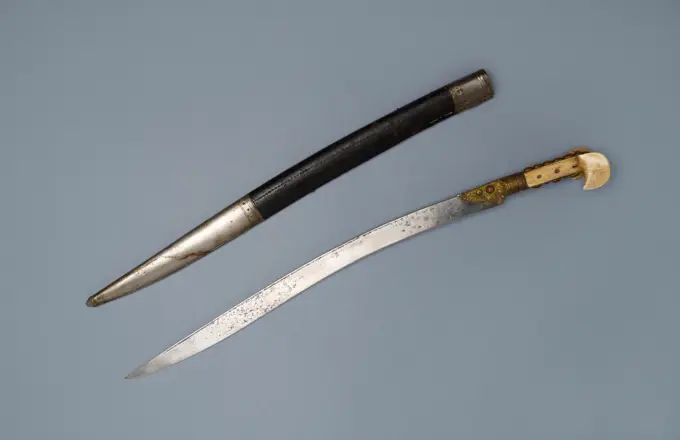
Jatagan with the vagina
6145-29174018
Knife with Sheath Hilt, 18th century; blade, 19th century Hilt, Indian, Mughal; blade, Turkish. Knife with Sheath 31441
6145-58826252
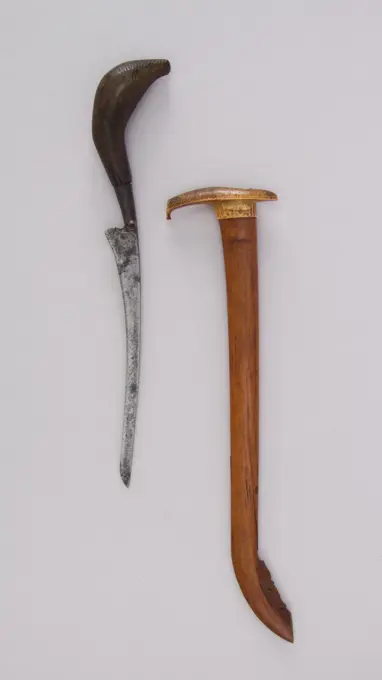
Javanese Kris, Anonymous, 1800 - 1900 Kris, blade in pamor technology with gold incusation, consisting of scaly Naga that follows the wave movement of blade. Ganja for the seeking of flower and leaf motifs. Java iron (metal). nickel (metal). gold (metal) Kris, blade in pamor technology with gold incusation, consisting of scaly Naga that follows the wave movement of blade. Ganja for the seeking of flower and leaf motifs. Java iron (metal). nickel (metal). gold (metal)
6145-58854821
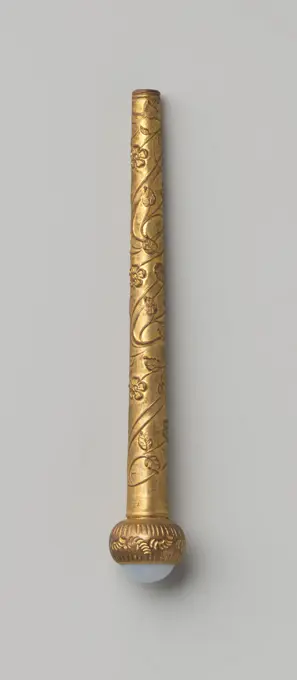
Konian handle and round button of driven copper, for an umbrella or umbrella; with moonstone, Gustav Schnitzler, c. 1910 - c. 1920 Konisch handle and round button of driven copper, for an umbrella or umbrella. The button consists of a moonstone -contained moonstone. Nijmegen whole: copper (metal). Button: Moonstone Konisch handle and round button of driven copper, for an umbrella or umbrella. The button consists of a moonstone -contained moonstone. Nijmegen whole: copper (metal). Button: Moonstone
6145-29180150
Partisan ca. 1700 Italian. Partisan 26705
6145-50488434
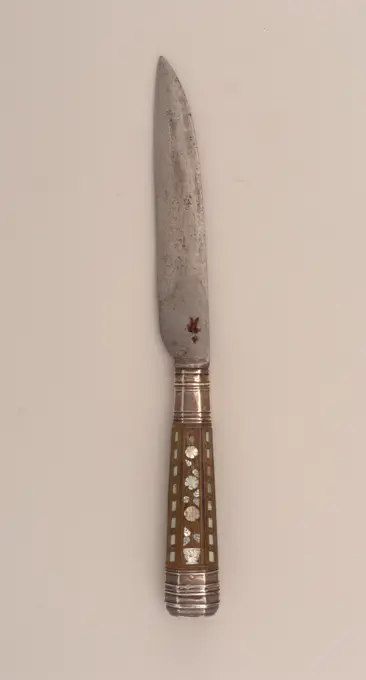
Knife; steel, silver, wood, mother-of-pearl, brass; L x W: 24.5 x 2.5 cm (9 5/8 x 1 in.); The Robert L. Metzenberg Collection, gift of Eleanor L. Metzenberg; 1985-103-108
6145-29188326
Kris with Sheath 18th-19th century Philippine, Moro. Kris with Sheath. Philippine, Moro. 18th-19th century. Steel, wood, cane (rattan). Krisses
4409-17501681
Arrowhead (Yanone). Culture: Japanese. Dimensions: L. 13 3/4 in. (34.9 cm); L. of head 7 5/8 in. (19.4 cm); W. 3/4 in. (1.9 cm); Wt. 3.1 oz. (87.9 g). Date: 18th century. Museum: Metropolitan Museum of Art, New York, USA.
6145-29062771
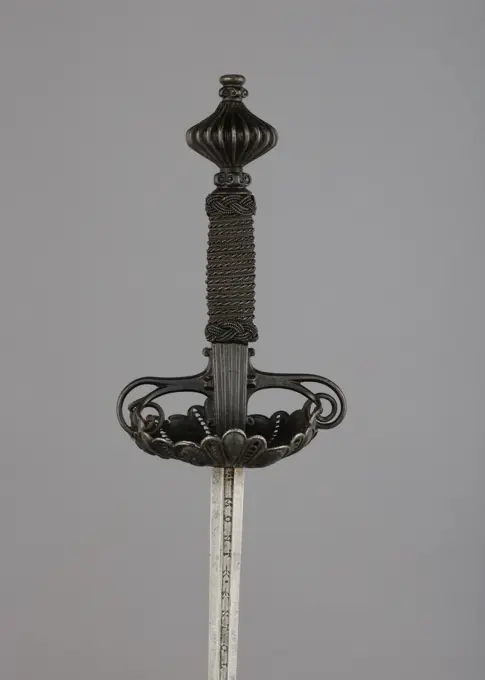
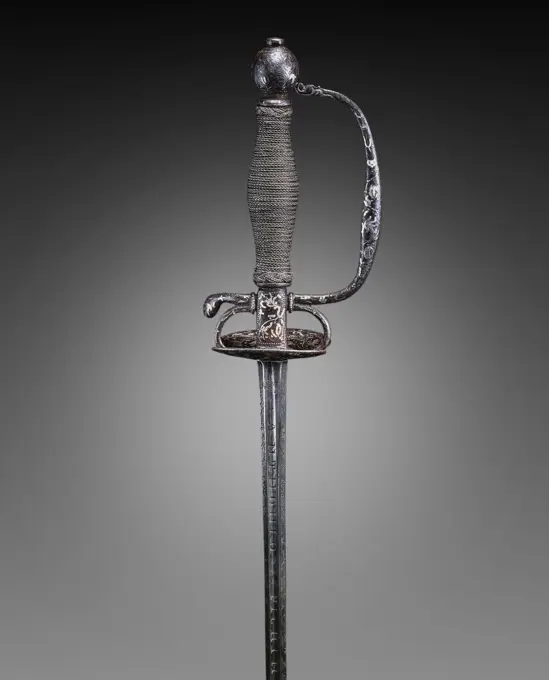
Small Sword for a Boy, c. 1650-1680. Italy, 17th century. Steel, wood; hilt with inlaid floral designs in silver; overall: 78.1 cm (30 3/4 in.); blade: 63.2 cm (24 7/8 in.); guard: 5.2 cm (2 1/16 in.).
6145-45470036
Misericorde
6145-29173069
Knife (Bade-bade) with Sheath 16th-19th century Sumatran, possibly Acheen. Knife (Bade-bade) with Sheath 31684
6145-29814626
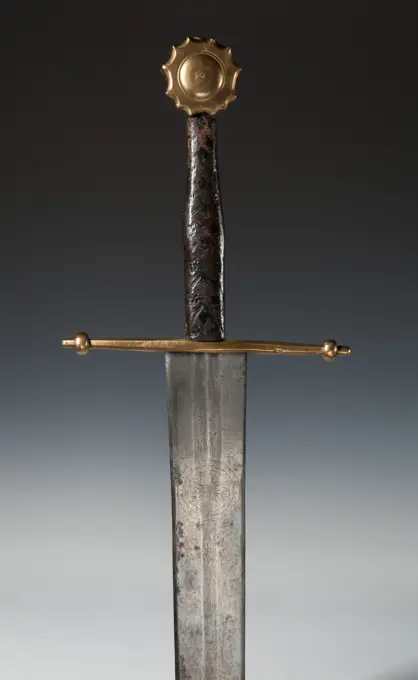
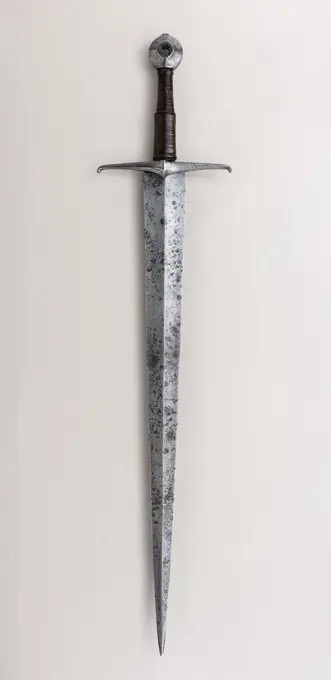
Sword 1375-1450 Western European. Sword. Western European. 1375-1450. Steel, iron, wood. Swords
6145-30111190
Dolk Atjeh-oorlog.Dagger with sheath. The sheath is made of black leather and has a steel mouth funnel to which a round bearing button is. At the bottom of the dagger steel fittings with a copper button. The dagger has a steel quoted blade that ends in a somewhat curved point. The hilt has a precise shell-shaped pearer heart. The handle is made of wood where three oval-shaped copper nails are stuck. The handle cap is from buyer.
6145-46677237
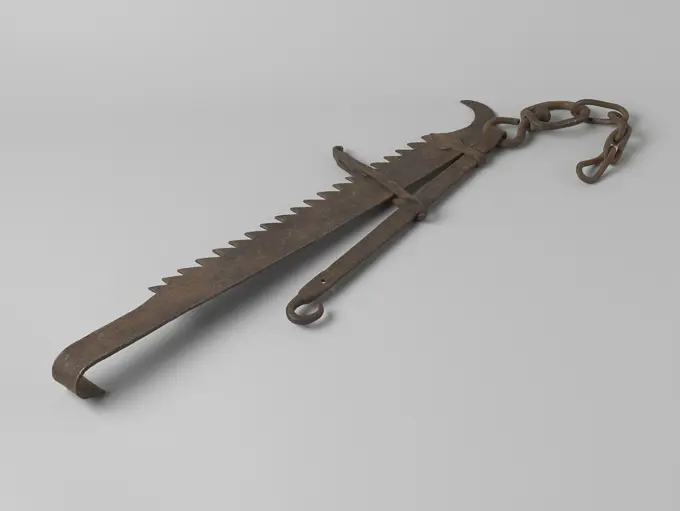
Boiler link. .
4409-17437926
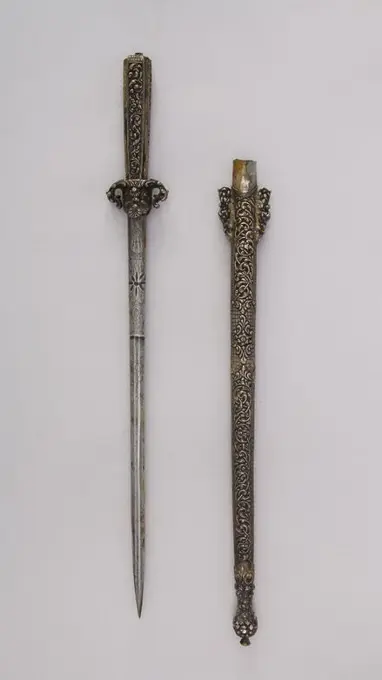
Dagger with Sheath. Culture: Persian. Dimensions: L. with sheath 18 1/16 in. (45.9 cm); L. without sheath 16 13/16 in. (42.7 cm); L. of blade 12 1/4 in. (31.1 cm); W. 1 7/8 in. (4.8 cm); D. 13/16 in. (2.1 cm); Wt. 7.8 oz. (221.1 g); Wt. of sheath 7.8 oz. (221.1 g). Date: 19th century. Museum: Metropolitan Museum of Art, New York, USA.
4409-17408037
Sword (Campilan). Culture: Indonesian, Sulaweis Utara (North Celebes). Dimensions: L. 26 3/4 in. (67.9 cm); L. of blade 18 3/4 in. (47.6 cm); W. including hair 6 in. (15.2 cm); W. excluding hair 3 7/8 in. (9.8 cm); Wt. 14.2 oz. (402.6 g). Date: 18th-19th century. Museum: Metropolitan Museum of Art, New York, USA.
6145-29180942
Spear (Kay-Yan) 18th-19th century Philippine, Igorot. Spear (Kay-Yan) 30659
6145-45471280
Kanjar with a scabbard
6145-50497774
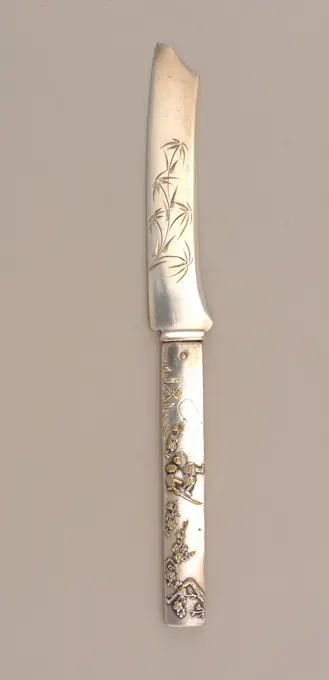
Knife (USA); Made by Gorham Manufacturing Company (United States); silver; L x W x D: 19.8 x 2.1 x 0.7 cm (7 13/16 x 13/16 x 1/4 in.)
6145-29172953
Dagger with Sheath 19th century Persian, Qajar. Dagger with Sheath 32253
6145-29192005
Knife Handle (Kozuka) with Blade ca. 1615-1868 Japanese A kozuka is a handle of a by-knife that is part of a sword mounting. It is kept in a slot on the reverse of a katana scabbard, often with a matching kōgai (hairdressing tool).. Knife Handle (Kozuka) with Blade 34625
6145-29793138
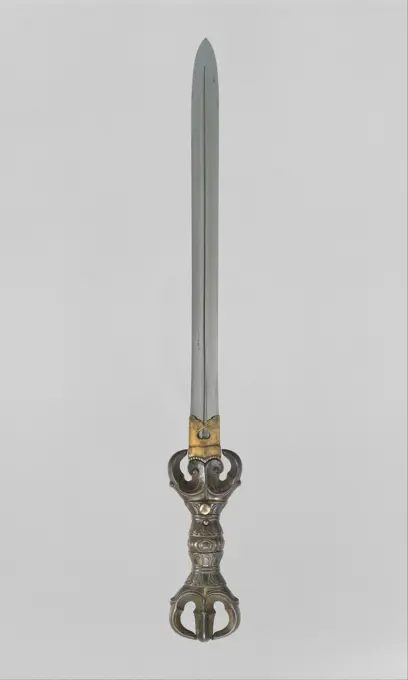
Blade and Mounting for a Double-Edged Dagger (Ken) blade, late 12th-early 13th century; mounting, 14th century Japanese The symbolic significance of the triple-pronged vajra, as well as its shape, made it an appropriate choice for use as the hilt of a sacred sword (ken), as demonstrated by this extremely rare example of an Esoteric Buddhist ritual object in the form of a ken. The blade dates from the late Heian or early Kamakura period (late twelfth to early thirteenth century), and the gilt-copper vajra hilt was probably made in the early Nambokuch period (mid-fourteenth century). In Buddhist iconography the sword represents the defense of religious doctrine and the defeat of falsehood and evil. It is an emblem of intelligence and, by extension, of the victory of spiritual knowledge, which opens the path to enlightenment. Combined with a vajra hilt it signifies the sword of wisdom (e-ken), one of the major attributes of Fud My-, also referred to as the Great Immovable One. Fud wa
4409-17520046
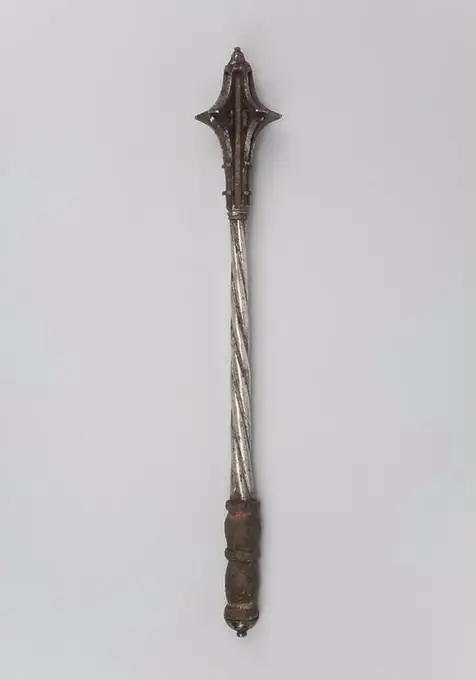
Mace. German. Date: 1475-1525. Dimensions: L. 49.2 cm (19 3/8 in.) Wt. 1 lb. 12 oz. Steeel, iron, wood, and fish skin. Origin: Germany. Museum: The Chicago Art Institute, Chicago, USA.
6145-45367864
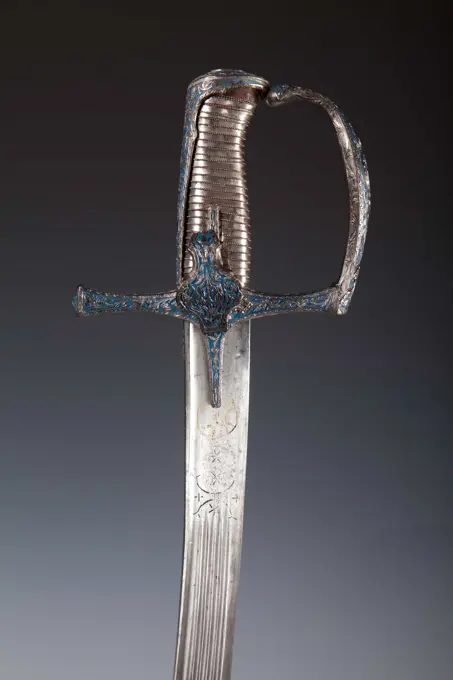
Hussar's sabre with the blade co called Batorówka, owned by General Jan Skrzynecki, with scabbard and belt hanger
6145-29182250
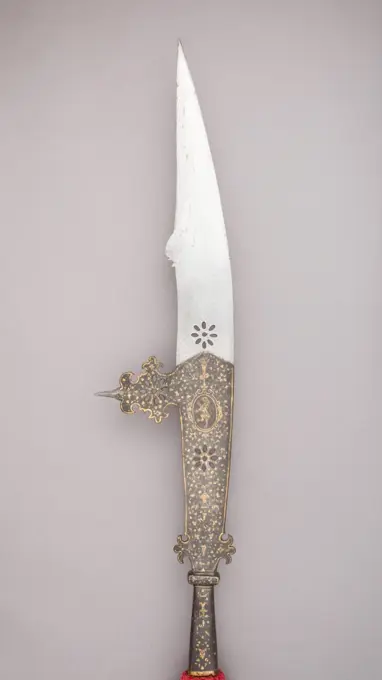
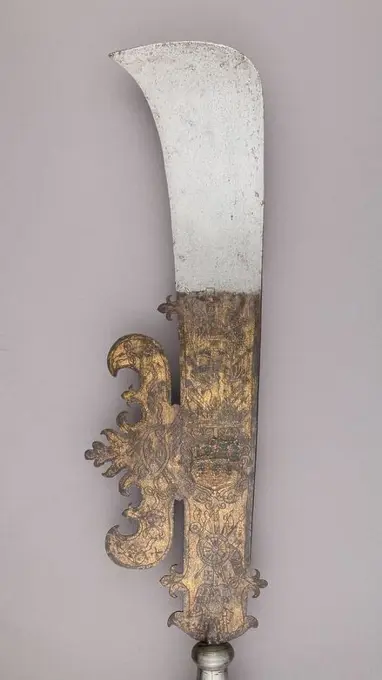
Glaive of the Bodyguard of the Tiepolo Family ca. 1600 Italian. Glaive of the Bodyguard of the Tiepolo Family 26694
6145-29154828
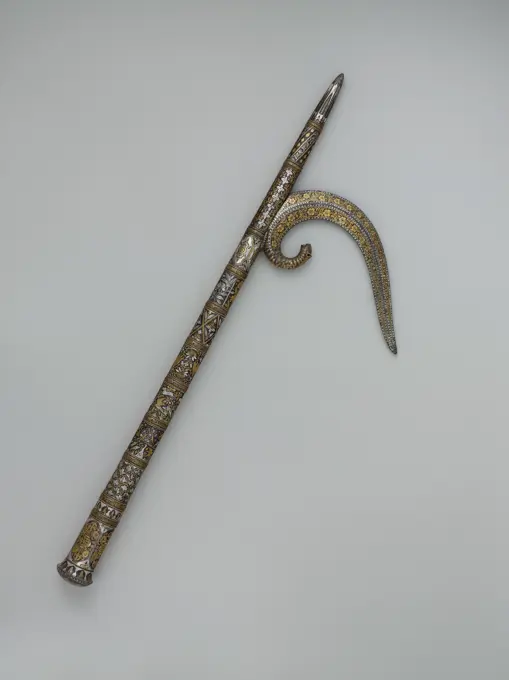
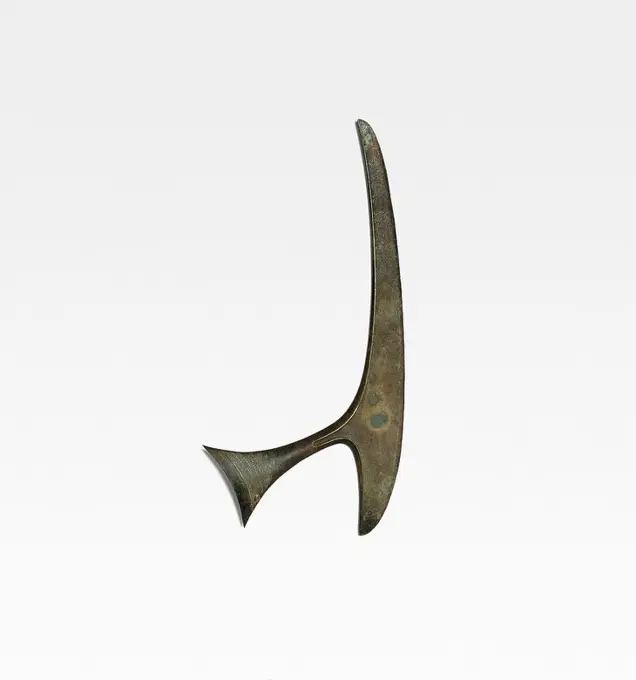
Elephant Goad late 17th-early 18th century The shaft and hooklike blade of this ceremonial implement are beautifully decorated in an onlay technique ("false damascening"). The decoration of the shaft, in particular, combines Mughal and Deccani taste in the two landscape scenes and in the late Mughal floral patterns, so the goad probably dates from the period when the Deccan was part of the Mughal empire. One side of the hook has a Persian inscription, "With all his heart, Farijdar Khan became the slave of 'Ali," indicating a Shiite owner.. Elephant Goad. late 17th-early 18th century. Steel or iron, inlaid with gold and silver. Attributed to India, Deccan. Metal
6145-29183150
Knife (Phia Kaetta) with Sheath 18th-19th century Sri Lankan. Knife (Phia Kaetta) with Sheath 31549
4409-17501912
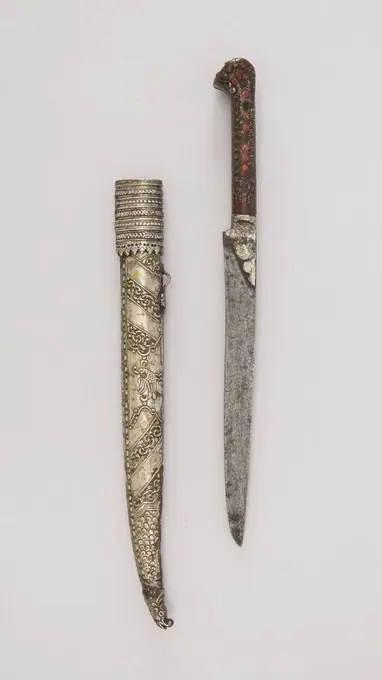
Knife with Sheath. Culture: Turkish. Dimensions: H. with sheath 15 3/4 in. (40 cm); H. without sheath 12 1/2 in. (31.8 cm); W. 1 1/16 in. (2.7 cm); Wt. 5.4 oz. (153.1 g); Wt. of sheath 5.6 oz. (158.8 g). Date: 19th century. Museum: Metropolitan Museum of Art, New York, USA.
4409-17429324
Dagger (Bichuwa). Culture: Indian, South Indian. Dimensions: H. 14 3/8 in. (36.5 cm); H. of blade 9 1/2 in. (24.1 cm); W. 2 1/8 in. (5.4 cm); Wt. 12.5 oz. (354.4 g). Date: 18th century. Museum: Metropolitan Museum of Art, New York, USA.
4409-17404131
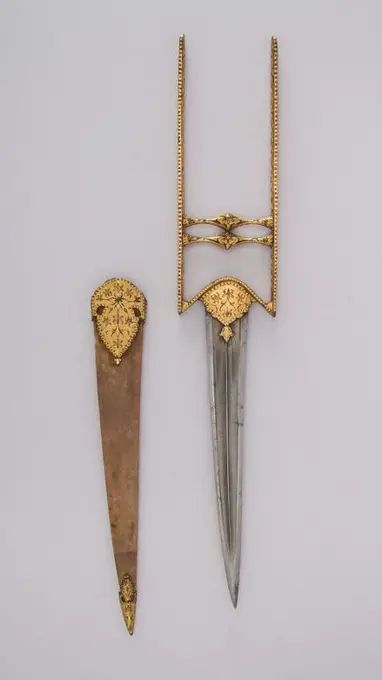
Dagger (Katar) with Sheath. Culture: Indian, Mughal. Dimensions: H. with sheath 20 5/16 in. (51.6 cm); H. without sheath 19 1/8 in. (48.6 cm); W. 3 1/4 in. (8.3 cm); Wt. 14 oz. (396.9 g); Wt. of sheath 2 oz. (56.7 g). Date: 17th-18th century. Museum: Metropolitan Museum of Art, New York, USA.
6145-50488478
Knife (The Netherlands or Flanders); silver, steel; L x W: 13.9 x 1.6 cm (5 1/2 x 5/8 in.); The Robert L. Metzenberg Collection, gift of Eleanor L. Metzenberg; 1985-103-76
6145-29182255
Partisan ca. 1630 German. Partisan 26717
6145-29068521
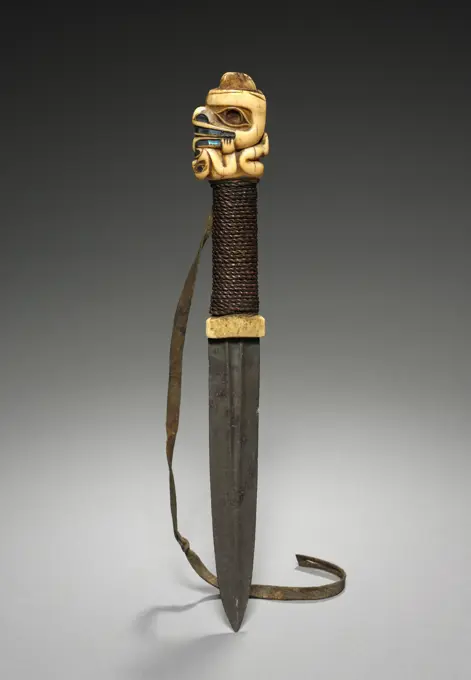
Fighting Knife, late 1800s-early 1900s. Northwest Coast, Tlingit, 19th century. Steel, leather, cord, and walrus ivory inlaid with abalone shell; overall: 3.8 x 4.8 cm (1 1/2 x 1 7/8 in.); blade: 19.1 cm (7 1/2 in.).
6145-54681808
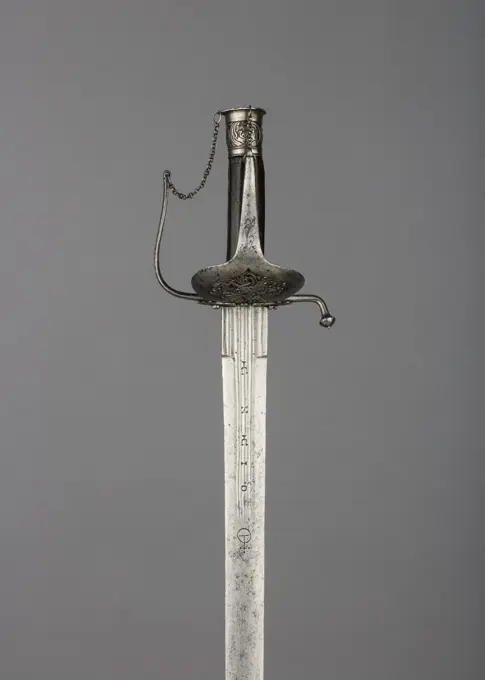
Small Sword possibly Italian or Spanish; blade, possibly German, Solingen ca. 1700 View more. Small Sword. possibly Italian or Spanish; blade, possibly German, Solingen. ca. 1700. Steel, wood, leather. possibly Solingen. Swords
6145-52954168
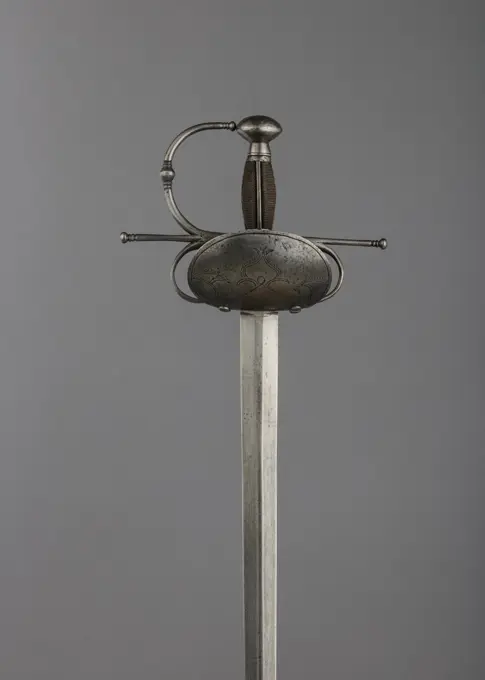
Rapier Spanish late 17th century The rapier was the principal civilian sidearm throughout the sixteenth and seventeenth centuries. Designed for cut-and-thrust fencing of progressively complex techniques, the rapier is characterized by a double-edged blade with an acute point and an elaborate guard for the hand. The guards, usually of iron or steel, were subject to a variety of embellishment. They were engraved, chiseled, gilded, damascened, and encrusted in gold and silver in keeping with fashionable styles. Unless otherwise noted, the materials, attributions, and dating given here refer to the hilts. Rapier blades, invariably of steel, bear a variety of makers marks denoting their origin in the two principal centers of blademaking, Toledo in Spain and Solingen in Germany. View more. Rapier. Spanish. late 17th century. Steel, copper wire. Swords
6145-29707284
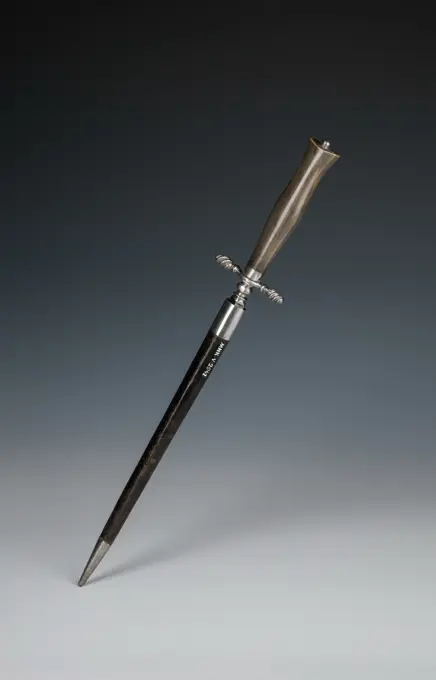
Whet-steel 18th century possibly Swiss. Whet-steel. possibly Swiss. 18th century. Steel, horn, silver. Metalwork-Steel
6145-30139819
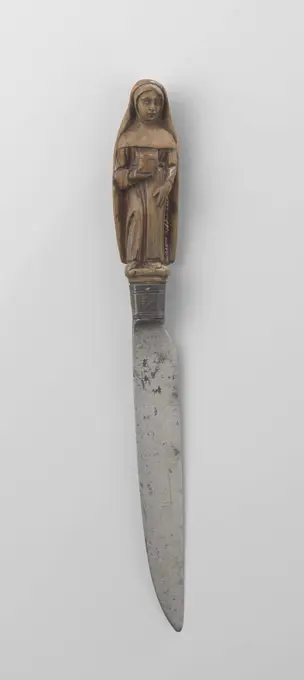
The nun bears a pot in her right hand
4443-19543064
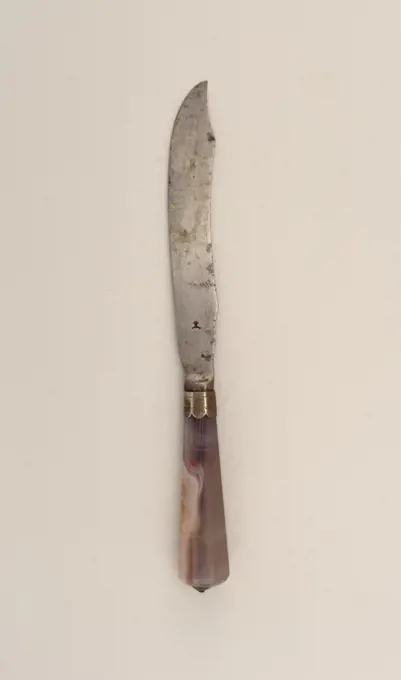
Knife, agate, silver, steel, Sabre-shaped blade with curved upper edge. Plain bolster, silver engraved ferrule with scalloped border. Flaring, faceted agate handle, silver conical mount on top., possibly Scotland, n.d., cutlery, Decorative Arts, Knife
6145-30087112
Four knives and a fork belonging to Emperor Charles V.Charles V acquired this portable cutlery set in Italy. The two large knives bear his arms and the chain of the Order of the Golden Fleece. Above this is the emperors crown and below it the Burgundian cross of Saint Andrew with the mythical pillars of Hercules (signifying the end of the world). They are all symbols of the emperors power.
6145-45306830
Jatagan with the vagina
6145-29115411
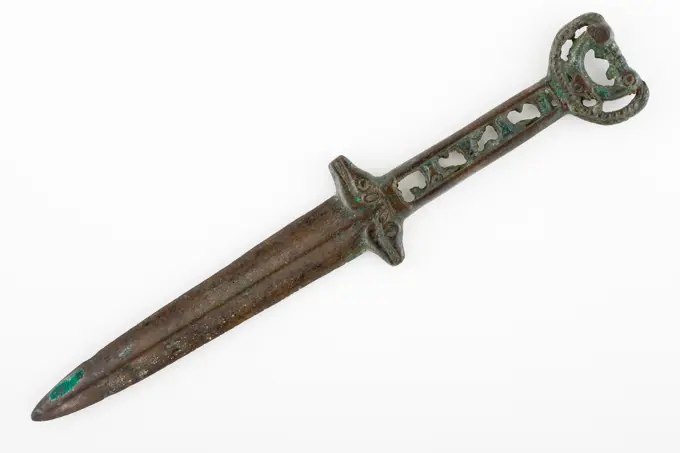
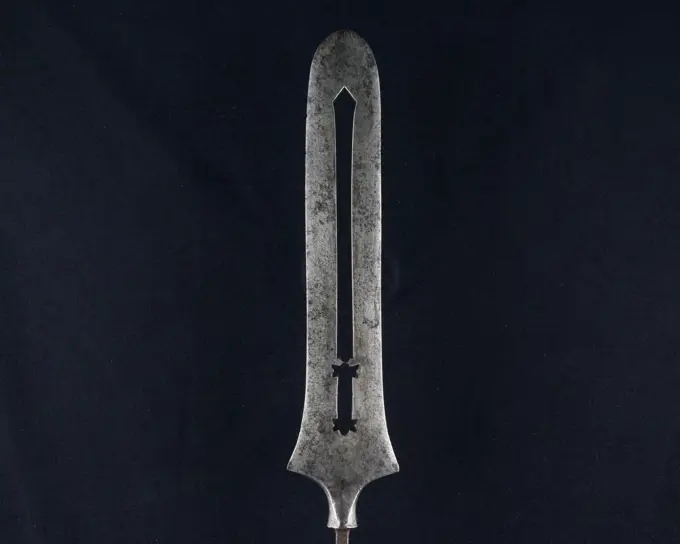
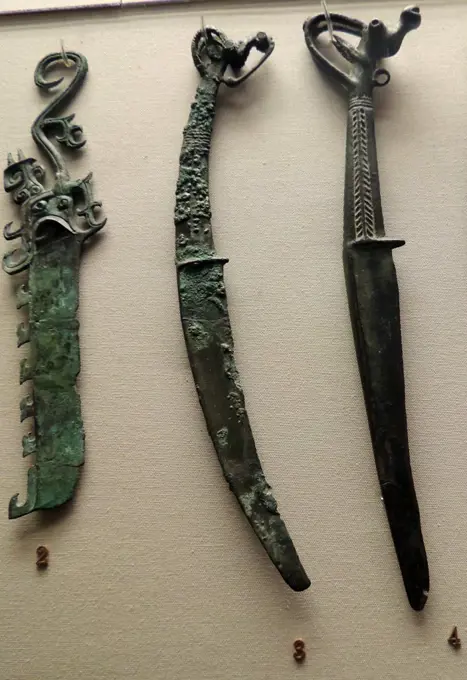
Dagger. Western Inner Mongolia or Northern China, 5th century B.C.. Arms and Armor; daggers. Bronze
6145-29831124
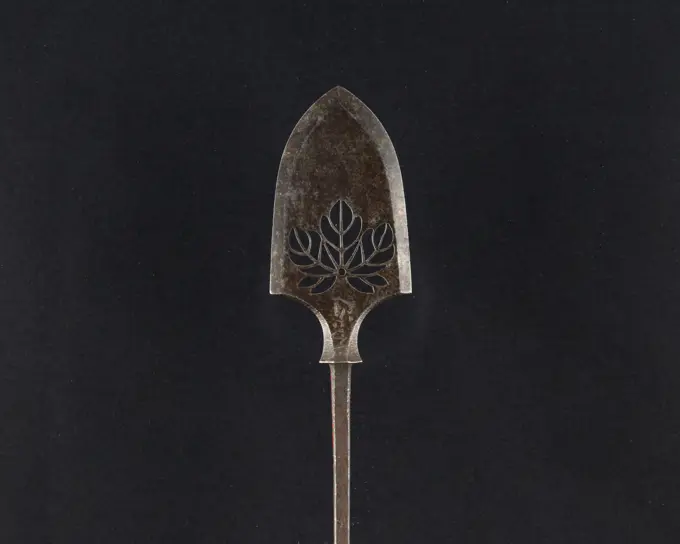
Arrowhead (Yanone) 18th century Japanese Although today Japanese warriors are renowned most for their swordsmanship, archery, especially from horseback, has been an essential part of samurai warfare and culture for centuries. Arrows were fitted with heads of varying shape according to their intended use in war, the hunt, or target practice. Arrowheads made for use on the battlefield incorporated different designs intended for specialized purposes such as the piercing of armor or to cause maximum damage to horses and unarmored personnel.Large arrowheads, pierced and elaborately chiseled with landscapes, birds, flowers, dragons, and Buddhist divinities, were created to be admired for the beauty of their metalwork and design rather than for use in archery. Such highly elaborate examples may have been made for presentation or as a votive offerings to a shrine.. Arrowhead (Yanone). Japanese. 18th century. Steel. Archery Equipment-Arrowheads
6145-29718496
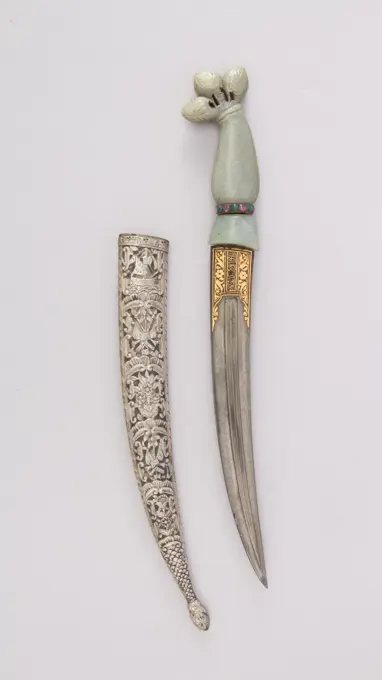
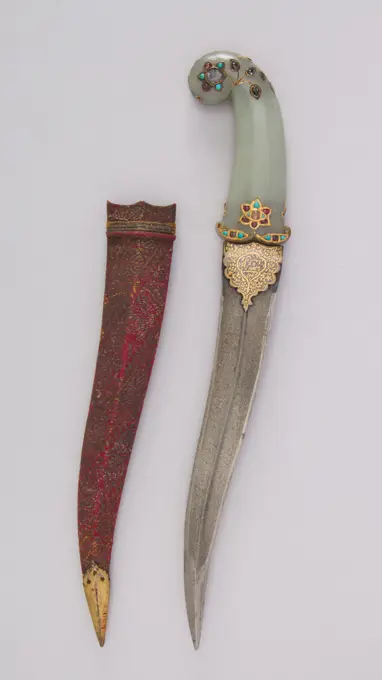
Dagger (Khanjar) with Sheath 18th-19th century Indian, Mughal or Deccan. Dagger (Khanjar) with Sheath. Indian, Mughal or Deccan. 18th-19th century. Steel, jade, gold, turquoise, crystal, garnet, ruby, gemstone silk, silver, copper. Daggers
1525-24474202
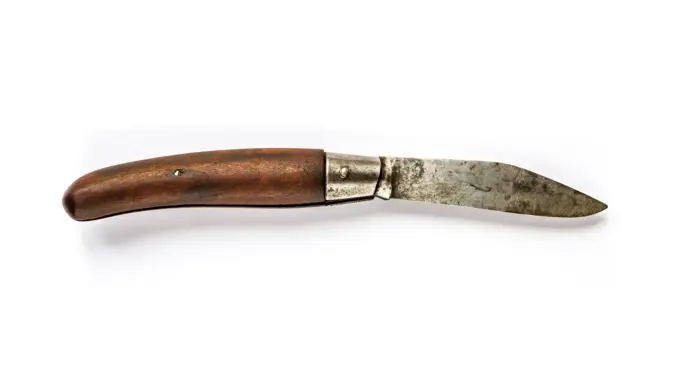
Traditional wooden pocket knife isolated on a white background. Traditional wooden pocket knife isolated on white background
6145-29062608
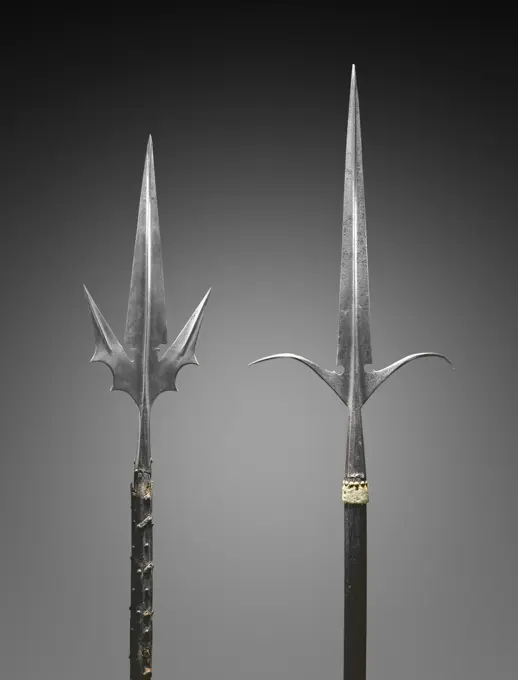
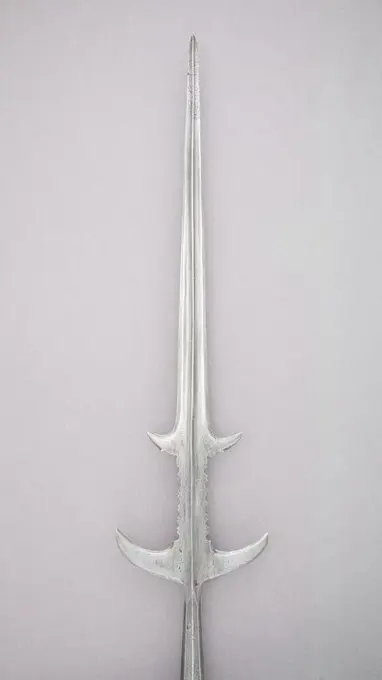
Corsèque (Chauve-Souris), c. 1530. North Italy, 16th century. Steel; round wood haft with leather straps; overall: 183.5 cm (72 1/4 in.); blade: 22.2 cm (8 3/4 in.). The corsèque is a pole arm with a symmetrical three-pronged head consisting of a central double-edged blade and two sharp, upturned wings. The side blades served several functions: as guard to protect the soldier's hand when a thrust was delivered with the central blade; as a hook for unseating a mounted opponent; and to trip the opponent's horse. The corsèque was used mostly in Italy and France from the 1400s to the early 1600s.
6145-29203269
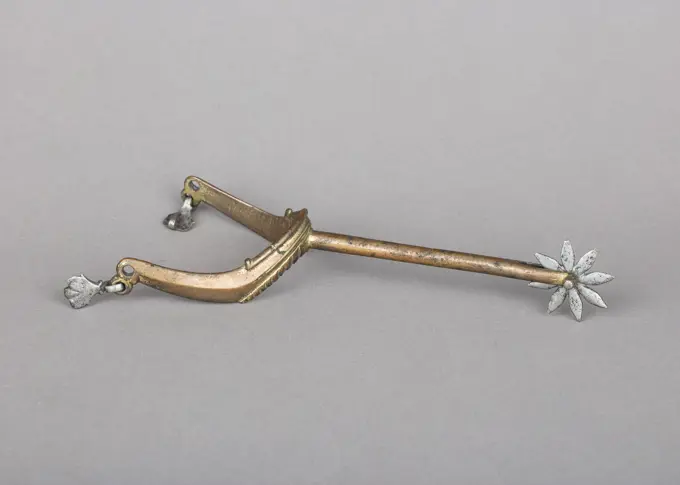
Rowel Spur in the Style of the 15th Century 15th and 19th century German This spur, made in the 19th century, reproduces a 15th-century spur, reusing authentic medieval rowel and hooks.. Rowel Spur in the Style of the 15th Century. German. 15th and 19th century. Copper alloy, gold, iron. Equestrian Equipment-Spurs
6145-29707292
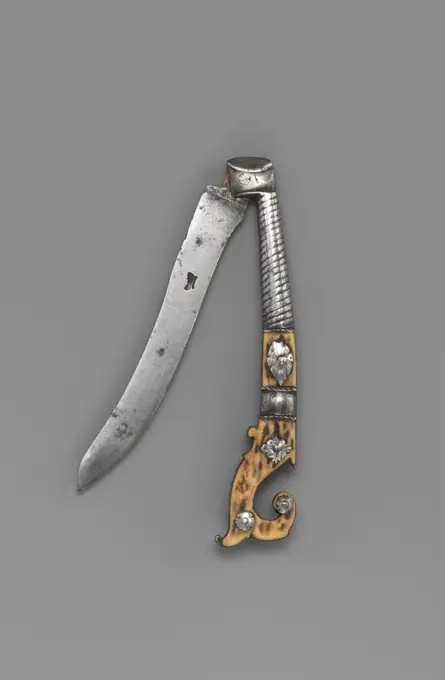
Folding table knife late 18th century Southern German or Swiss. Folding table knife. Southern German or Swiss. late 18th century. Steel, buckshorn, silver. Metalwork-Steel
6145-29218027
Arrowhead (Yanone) 18th century Japanese Although today Japanese warriors are renowned most for their swordsmanship, archery, especially from horseback, has been an essential part of samurai warfare and culture for centuries. Arrows were fitted with heads of varying shape according to their intended use in war, the hunt, or target practice. Arrowheads made for use on the battlefield incorporated different designs intended for specialized purposes such as the piercing of armor or to cause maximum damage to horses and unarmored personnel.Large arrowheads, pierced and elaborately chiseled with landscapes, birds, flowers, dragons, and Buddhist divinities, were created to be admired for the beauty of their metalwork and design rather than for use in archery. Such highly elaborate examples may have been made for presentation or as a votive offerings to a shrine.. Arrowhead (Yanone). Japanese. 18th century. Steel. Archery Equipment-Arrowheads
6145-52955456
Rapier hilt, probably Dutch; blade, Spanish, Toledo ca. 1630 The rapier was the principal civilian sidearm throughout the sixteenth and seventeenth centuries. Designed for cut-and-thrust fencing of progressively complex techniques, the rapier is characterized by a double-edged blade with an acute point and an elaborate guard for the hand. The guards, usually of iron or steel, were subject to a variety of embellishment. They were engraved, chiseled, gilded, damascened, and encrusted in gold and silver in keeping with fashionable styles. Unless otherwise noted, the materials, attributions, and dating given here refer to the hilts. Rapier blades, invariably of steel, bear a variety of makers marks denoting their origin in the two principal centers of blademaking, Toledo in Spain and Solingen in Germany. View more. Rapier. hilt, probably Dutch; blade, Spanish, Toledo. ca. 1630. Steel, iron, wood. Toledo. Swords
6145-59500552
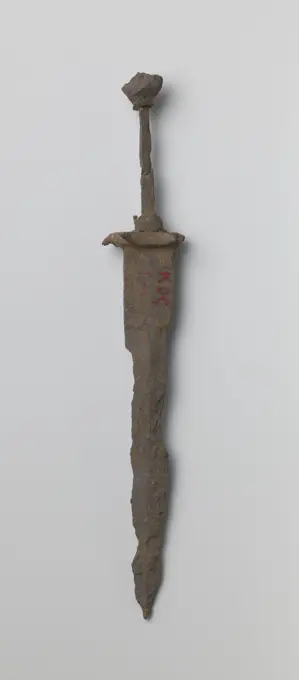
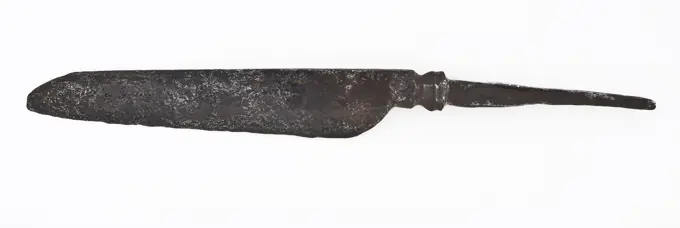
Dolk, anonymous, c. 1300 - c. 1800 dagger Iron dagger without hilt. Found in the IJ at the works for Central Station. Netherlands (possibly) iron (metal)   Central Station (Amsterdam)
6145-50488011
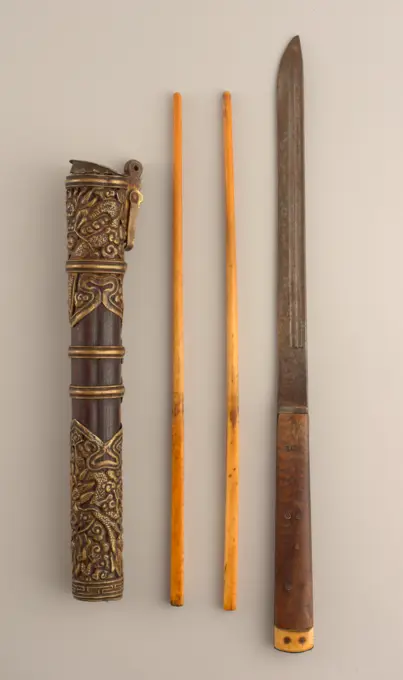
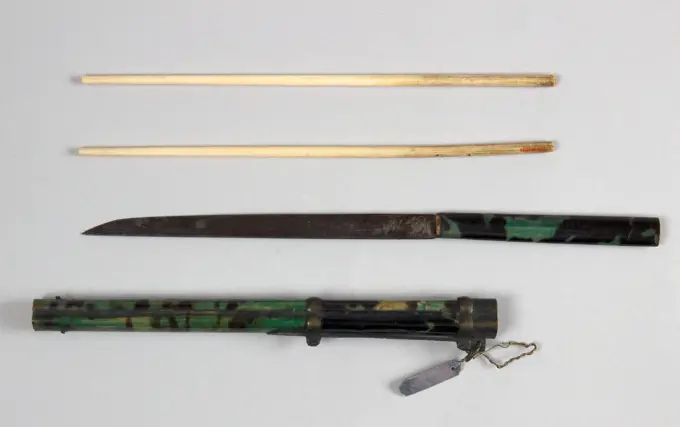
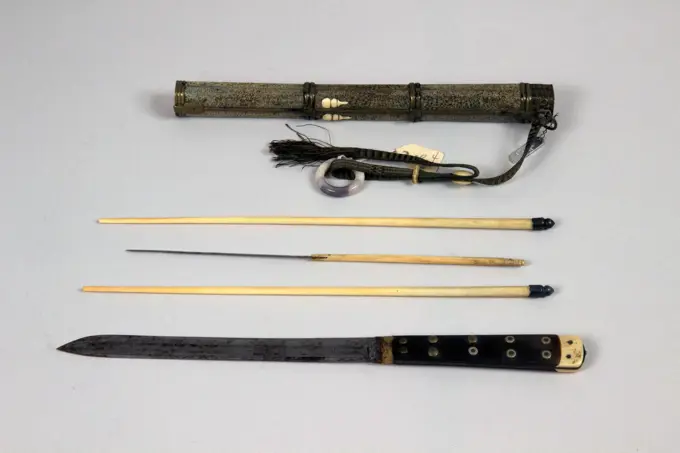
Chopsticks, Knife And Case (Japan); wood, bamboo, brass, ivory; a: L:23.4 x W:5 x H: 5 b. L:23.4 x W:5 x H: 5 c: L: 27.5 x W:2 x H: 1.2 d: L: 20.2 x W: 4 x H: 2.5
6145-29180529
Kris with Sheath 18th-19th century Indonesian, Sumbawa. Kris with Sheath 31391
6145-29180781
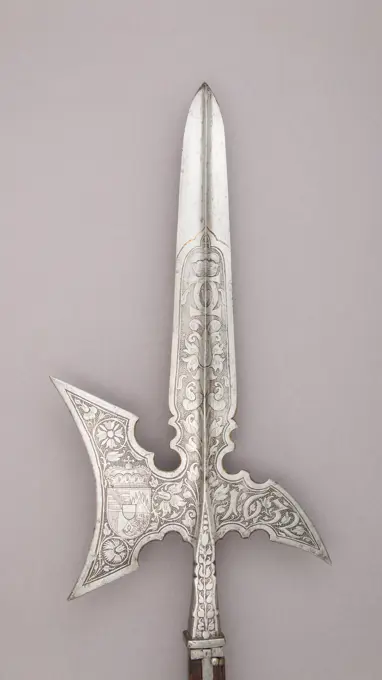
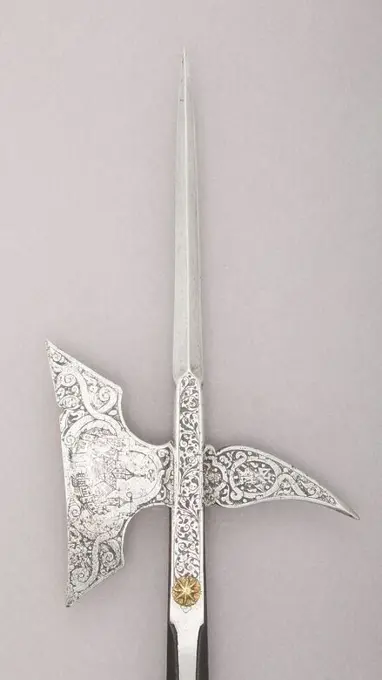
Halberd with the Arms of Liechtenstein Family dated 1632 Austrian. Halberd with the Arms of Liechtenstein Family 27641
4409-17425050
Gauntlet Sword (Pata). Culture: Indian, South Indian. Dimensions: L. 51 1/8 in. (129.9 cm); W. 4 13/16 in. (12.2 cm); D. 3 1/2 in. (8.9 cm); Wt. 2 lb. 10.6 oz. (1207.7 g). Date: 18th century. Museum: Metropolitan Museum of Art, New York, USA.
1525-26768053
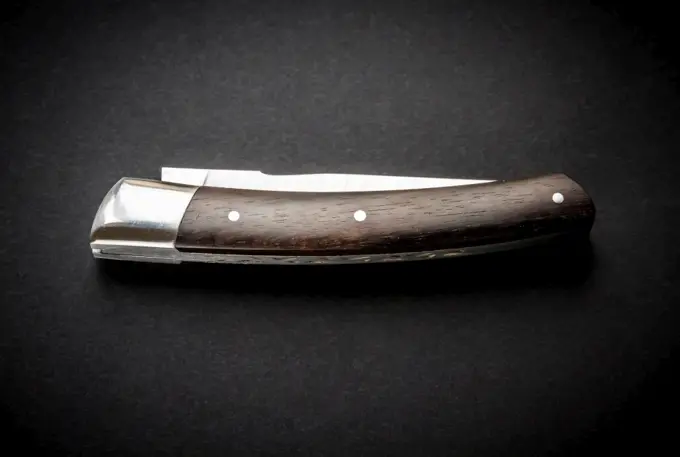
Traditional wooden pocket knife on a black background. Traditional wooden pocket knife on black background
4409-17437337
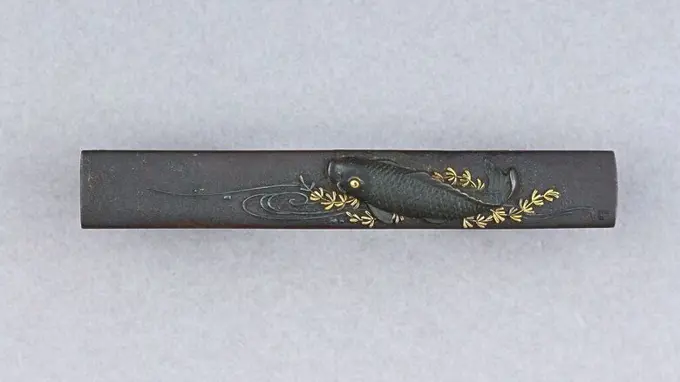
Knife Handle (Kozuka). Culture: Japanese. Dimensions: L. 3 13/16 in. (9.7 cm); W. 9/16 in. (1.4 cm); thickness 3/16 in. (0.5 cm); Wt. 0.6 oz. (17 g). Date: ca. 1615-1868. Museum: Metropolitan Museum of Art, New York, USA.
4443-21938900
Blade with angel, separation between here has slightly profiled band, blade knife cutlery soil find iron metal, Straight cut and back two marks on blade archeology Rotterdam City Triangle Groenendaal underground pit archaeological find in the soil Rotterdam underground pit Groenendaal 1977.
6145-58873123
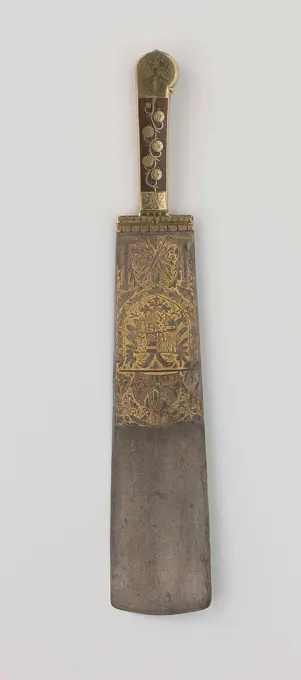
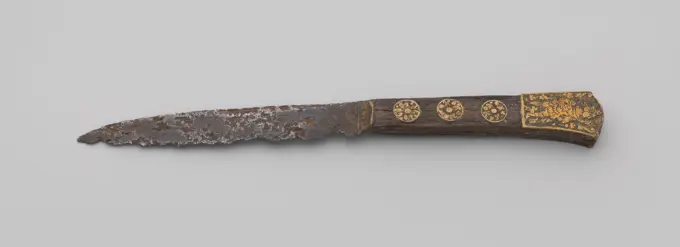
Knife with wooden handle decorated with engraved copper, anonymous, 1500 - 1600 Blade of iron. The wooden handle is decorated with three round copper plates with a rosette on either side. The copper crowning shows a harnessed man on one side with a star -shaped scepter in one hand and a staff in the other. The other side shows an almost completely naked woman with flowers. Southern Netherlands heft: wood (plant material). heft: copper (metal). lemmet: iron (metal) engraving Blade of iron. The wooden handle is decorated with three round copper plates with a rosette on either side. The copper crowning shows a harnessed man on one side with a star -shaped scepter in one hand and a staff in the other. The other side shows an almost completely naked woman with flowers. Southern Netherlands heft: wood (plant material). heft: copper (metal). lemmet: iron (metal) engraving
4443-19551307
Case for Traveling Cutlery, Leather, wood, wool, brass, Box for three implements, follows the shape of a spoon. Lid attached to bottom with two small hinges on back small hooks and rings on front side. Top of lid stamped leather with gold; an urn with flowers in the centre, a laurel wreath and chains on each side, flowers, grapes and pears along the sides. Inside of box covered with green wool fabric., Germany, second half 18th century, cutlery, Decorative Arts, Case for Traveling Cutlery
6189-53753096
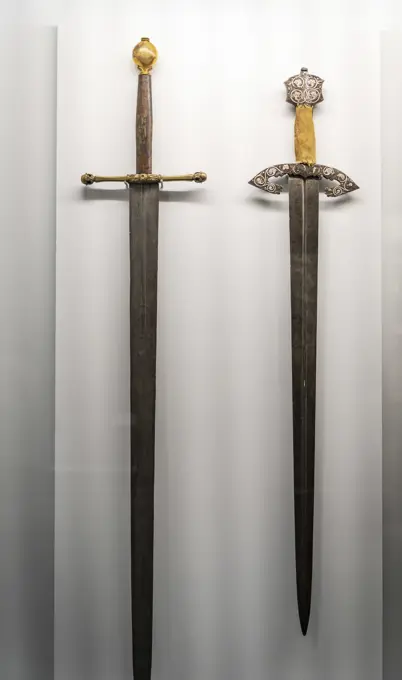
sword and ceremonial greatsword, 15th century, Álava Armory Museum, Vitoria, Basque Country, Spain
6145-30190090
Hunting Trousse (Waidpraxe) with the Coat of Arms and Initials of Christian II, Elector of Saxony Made 1604-1614 Germany. Steel, iron, silver, gilding, staghorn, wood, and leather . Joachim Puttlost
6145-29876348
American 20th Century, Dirk, 1935 1942 Dirk
6145-29173041
Dagger (Jambiya) with Sheath 19th century Indian. Dagger (Jambiya) with Sheath 31839
6145-29796102
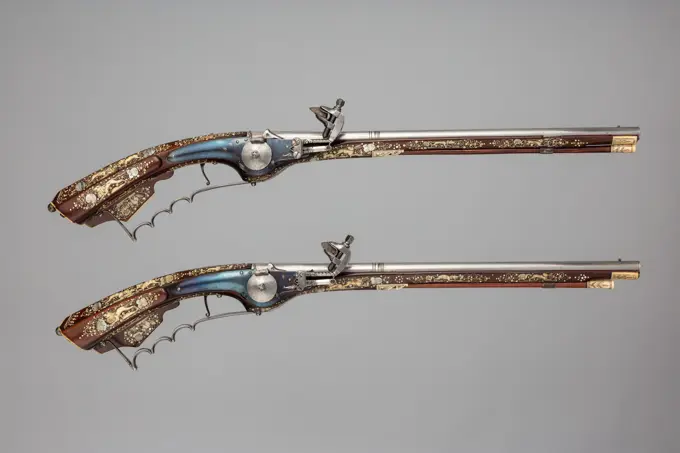
Pair of Wheellock Pistols or Carbines ca. 1650 Silesian, probably Teschen This pair of wheellocks may be classified as either pistols or carbines. The stocks are inlaid with engraved staghorn and mother-of-pearl, the decoration featuring scrollwork populated with animals including lions, rabbits, bears, and hunting dogs. On the cheek an angel plays a lute above a griffin. The pair's convex lock plates are blued with external wheels and button pancover releases.. Pair of Wheellock Pistols or Carbines. Silesian, probably Teschen. ca. 1650. Steel, mother-of-pearl, staghorn, wood (cherry or fruitwood). Firearms-Pistols-Wheellock
6145-46638394
. It consists of an accumulation of fighting and each other biting animals.
6145-45355042
Persian top
4409-17398483
Partisan. Culture: Italian. Dimensions: L. 98 in. (248.9 cm); L. of head 30 in. (76.2 cm); W. 7 in. (17.8 cm); Wt. 5 lbs. 7.1 oz. (2469.2 g). Date: 1500-1550. Museum: Metropolitan Museum of Art, New York, USA.
4443-19553364
Knife, agate, silver, steel, Sabre-shaped blade with curved upper edge. Plain bolster, silver engraved ferrule with scalloped border. Flaring, faceted agate handle, silver conical mount on top., possibly Scotland, n.d., cutlery, Decorative Arts, Knife
6145-29179290
Partisan ca. 1700 French. Partisan 25850
6145-29062514
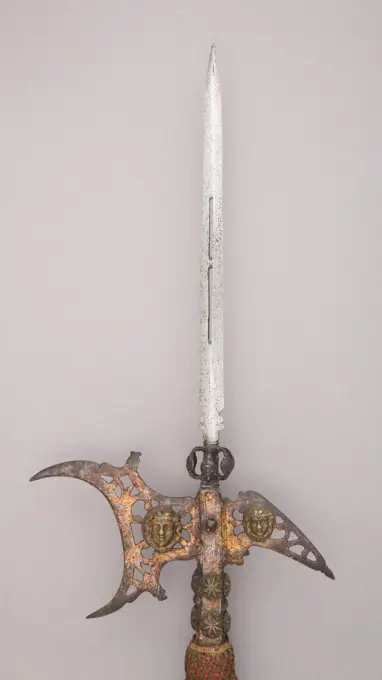
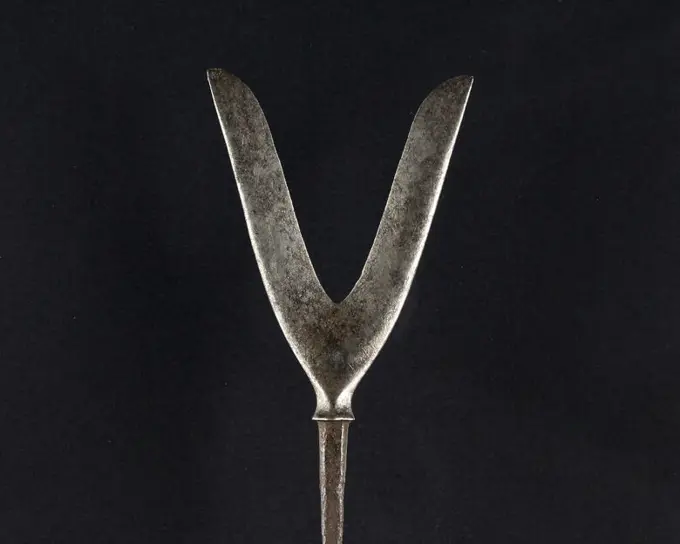
Halberd, c. 1600-25. France, early 17th century. Steel, pierced; appliqué masks in brass; octagonal wood haft with studs and leather straps; overall: 239 cm (94 1/8 in.); blade: 48 cm (18 7/8 in.). The halberd was a staff weapon favored by European infantries (foot soldiers) of the 1400s and 1500s for its versatility and deadly effect. The word halberd comes from the German words Halm (staff) and Barte (axe). The halberd is, in fact, an axe that served multiple functions: the axe blade was used for hacking, the spike for thrusting, and the beak for piercing plate armor or for pulling a knight from his saddle. The halberd was used by shock troops (those who lead an attack) and by Swiss and German mercenaries. After about 1550, the halberd gradually became less functional. Its large blade provided space for coats of arms and insignia. By the late 1500s, the parade halberd had become a ceremonial weapon for palace guards.
6145-29062619
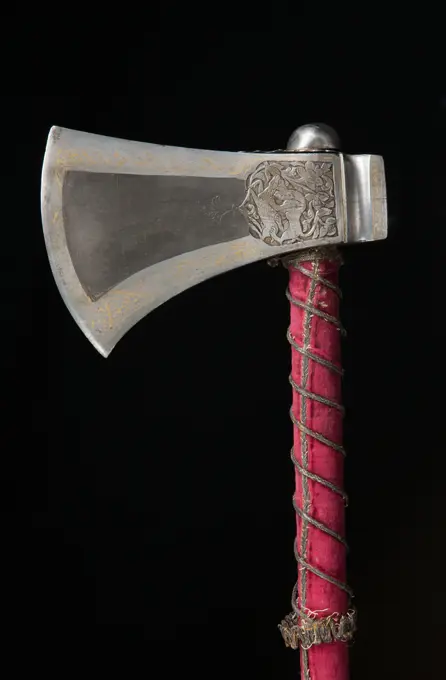
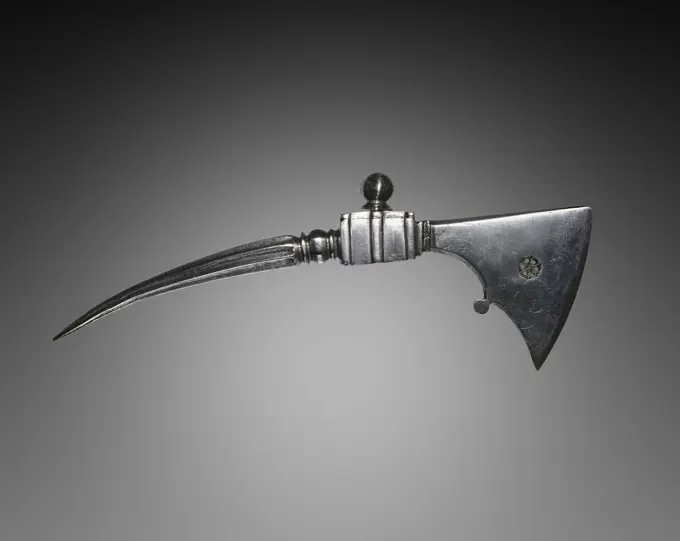
Battle Axe, late 1500s. Italy, late 16th Century. Steel, inset with copper rosette; blade: 8.3 cm (3 1/4 in.); head: 27.3 cm (10 3/4 in.).
1848-57205441
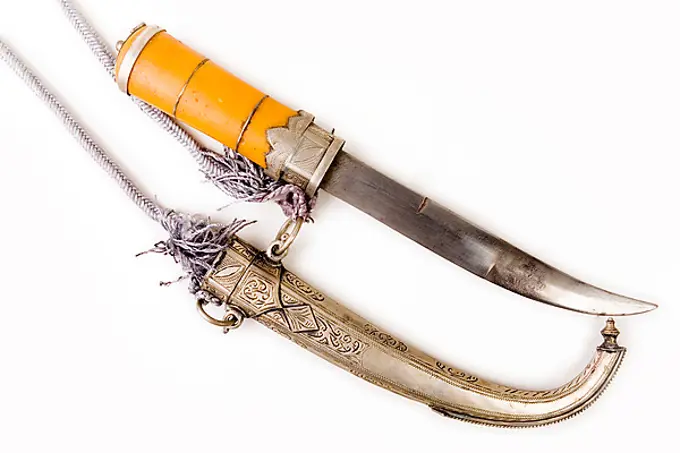
Morocco dagger, 19. jahrhundert
1525-20512362
Axe isolated on the white background
4409-17417087
Hand Spear (Nage-yari) or Javelin (Te-yari) with Sheath. Culture: Japanese. Dimensions: L. (of blade excluding habaki) 4 23/32 in. (12.0 cm)L. overall excluding sheath 17 3/4 in. (45.1 cm). Date: 17th century. Museum: Metropolitan Museum of Art, New York, USA.
6145-29754002
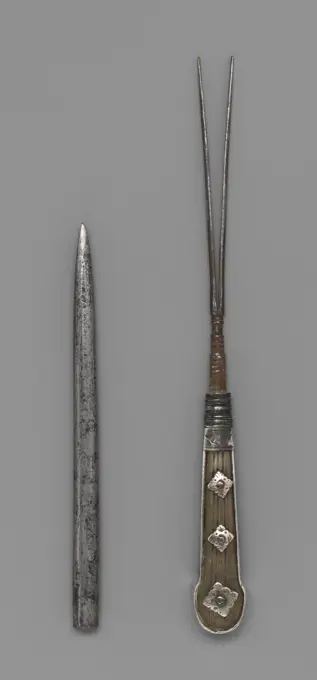
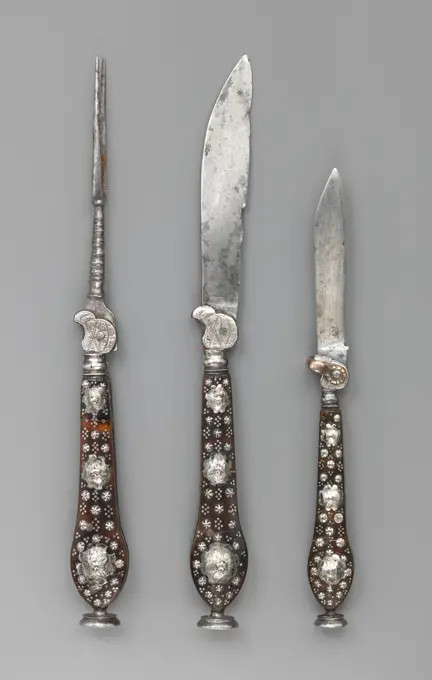
Knife, fork, and pen knife 17th century German, Saxony. Knife, fork, and pen knife. German, Saxony. 17th century. Steel, tortoiseshell (or horn), silver. Metalwork-Steel
6145-29173688
Knife (Korambi) with Sheath 18th-19th century Indonesian, Sulawesi. Knife (Korambi) with Sheath 31659
463-282097
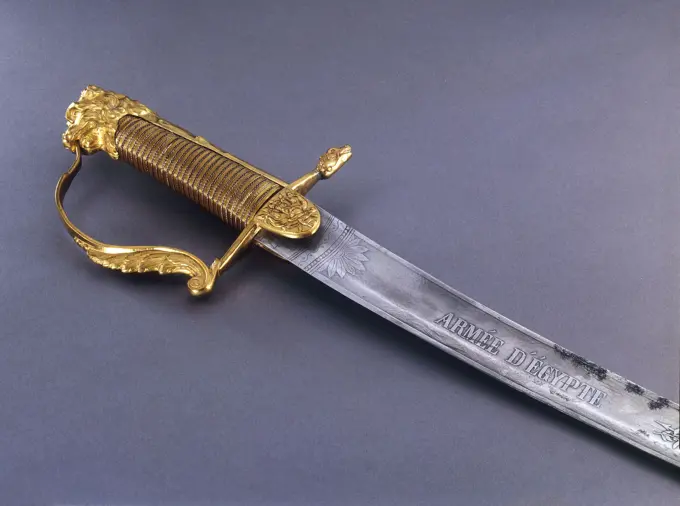
Sabre of General Napoleon Bonaparte ,C18
6145-29180381
Halberd ca. 1575 Italian. Halberd 26779
6145-29770562
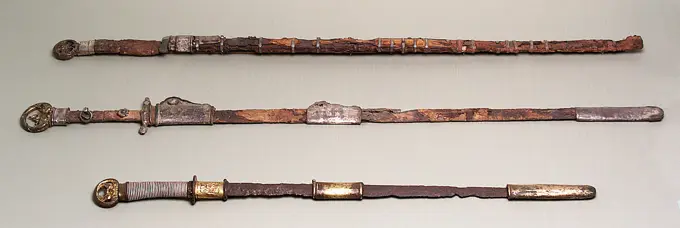
Sword with Scabbard Mounts 6th century Japanese Ancient Japanese swords and swords imported from Asian mainland in ancient times are classified on the basis of the interpretation of their pommels, here interpreted in the form of an archaic lion (shishikami or shikami) whose upper jaw forms the lower edge of the pommel which borders to the hilt. Most such hilts were excavated in eastern Japan, primarily in Shizuoka and Gunma Prefectures, and the fact that no such specimen have yet been discovered in western Japan and Korea suggests that we are facing here an indigenous and rather local pommel interpretation.. Sword with Scabbard Mounts 23352
6145-45557584
Przeszo Przyszoci unknown
6145-54680951
Cup-Hilted Rapier blade, German, Solingen; hilt, Spanish 17th century The rapier was the principal civilian sidearm throughout the sixteenth and seventeenth centuries. Designed for cut-and-thrust fencing of progressively complex techniques, the rapier is characterized by a double-edged blade with an acute point and an elaborate guard for the hand. The guards, usually of iron or steel, were subject to a variety of embellishment. They were engraved, chiseled, gilded, damascened, and encrusted in gold and silver in keeping with fashionable styles. Unless otherwise noted, the materials, attributions, and dating given here refer to the hilts. Rapier blades, invariably of steel, bear a variety of makers marks denoting their origin in the two principal centers of blademaking, Toledo in Spain and Solingen in Germany. View more. Cup-Hilted Rapier. blade, German, Solingen; hilt, Spanish. 17th century. Steel, wood, iron wire. Swords
4409-17408538
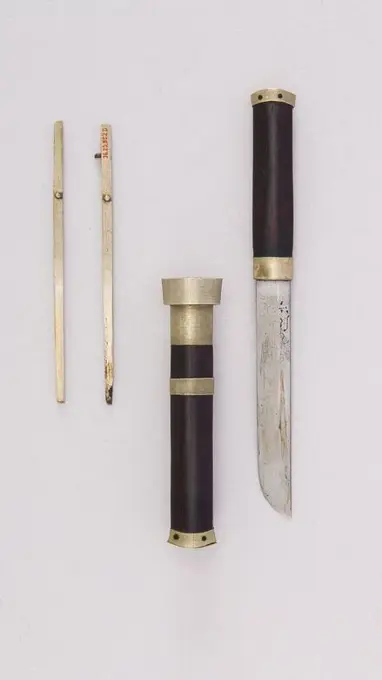
Knife with Sheath and Chopsticks. Culture: Korean. Dimensions: Knife (a); L. with sheath 5 5/8 in. (14.3 cm); L. without sheath 5 1/2 in. (14 cm); W. 9/16 in. (1.4 cm); Wt. 0.7 oz. (19.8 g); sheath (b); Wt. 0.9 oz. (25.5 g); chopsticks (c, d); L. 3 5/8 in. (9.2 cm); W. 1/8 in. (0.3 cm); Wt. 0.2 oz. (5.7 g). Date: 19th century. Museum: Metropolitan Museum of Art, New York, USA.
6145-29219295
Arrowhead (Yanone) dated 17th century Japanese Although today Japanese warriors are renowned most for their swordsmanship, archery, especially from horseback, has been an essential part of samurai warfare and culture for centuries. Arrows were fitted with heads of varying shape according to their intended use in war, the hunt, or target practice. Arrowheads made for use on the battlefield incorporated different designs intended for specialized purposes such as the piercing of armor or to cause maximum damage to horses and unarmored personnel.Large arrowheads, pierced and elaborately chiseled with landscapes, birds, flowers, dragons, and Buddhist divinities, were created to be admired for the beauty of their metalwork and design rather than for use in archery. Such highly elaborate examples may have been made for presentation or as a votive offerings to a shrine.. Arrowhead (Yanone). Japanese. dated 17th century. Steel. Kyoto. Archery Equipment-Arrowheads
6145-29218002
Arrowhead (Yanone) 18th century Japanese Although today Japanese warriors are renowned most for their swordsmanship, archery, especially from horseback, has been an essential part of samurai warfare and culture for centuries. Arrows were fitted with heads of varying shape according to their intended use in war, the hunt, or target practice. Arrowheads made for use on the battlefield incorporated different designs intended for specialized purposes such as the piercing of armor or to cause maximum damage to horses and unarmored personnel.Large arrowheads, pierced and elaborately chiseled with landscapes, birds, flowers, dragons, and Buddhist divinities, were created to be admired for the beauty of their metalwork and design rather than for use in archery. Such highly elaborate examples may have been made for presentation or as a votive offerings to a shrine.. Arrowhead (Yanone). Japanese. 18th century. Steel. Archery Equipment-Arrowheads
4409-17378857
Halberd. Culture: Italian. Dimensions: L. 98 in. (248.9 cm); L. of head 15 1/8 in. (38.4 cm); W. 8 5/8 in. (22 cm); Wt. 3 lbs. 12 oz. (1701 g). Date: ca. 1580. Museum: Metropolitan Museum of Art, New York, USA.
4443-28726952
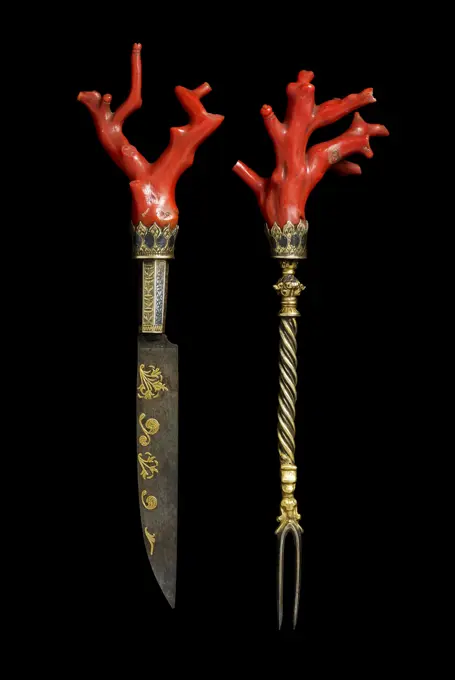
Fork, from a two-piece cutlery set, late 16th century, 8 x 2 1/2 x 1 1/4 in. (20.32 x 6.35 x 3.18 cm), Coral, brass, niello, silver, iron, gold, Italy, 16th century
4409-17408367
Fauchard. Culture: Italian, Venice. Dimensions: L. 9 ft. 6 1/4 in. (290.2 cm); L. of head 38 in. (96.5 cm); W. 10 in. (25.4 cm); Wt. 13 lbs. 7.5 oz. (6109.3 g). Date: early 17th century. Museum: Metropolitan Museum of Art, New York, USA.
6145-29080772
Dagger and Scabbard, 1800s. Metal; overall: 42.5 cm (16 3/4 in.); hilt: 6.4 cm (2 1/2 in.); scabbard: 31.2 cm (12 5/16 in.).
6145-29139829
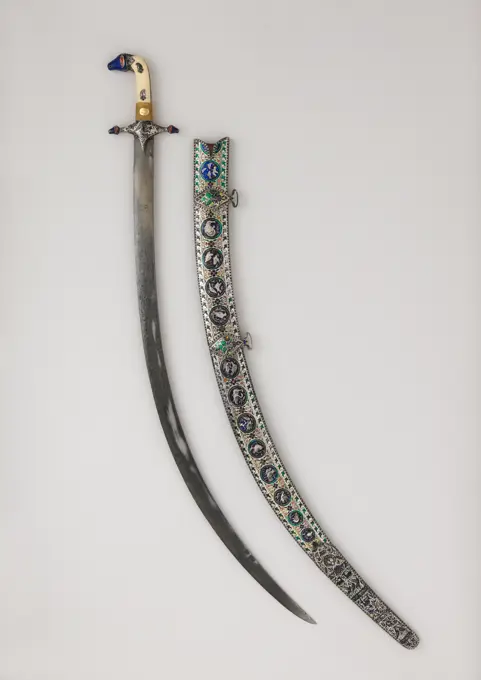
Saber (Shamshir) with Scabbard hilt and scabbard, dated 1819; blade, 18th century probably Indian; hilt and scabbard, Indian, probably Lucknow The grip bears a gold plaque indicating that this saber was presented in 1819 to Captain Hugh Caldwell of the Bengal Army by his commander. The saber is mounted in engraved and enameled silver typical of Lucknow, where a distinctive school of enameled metalwork flourished starting in the late eighteenth century. The colorful zoomorphic decoration includes a pommel and tips of the guard formed as rams heads.. Saber (Shamshir) with Scabbard 31128
4443-19544780
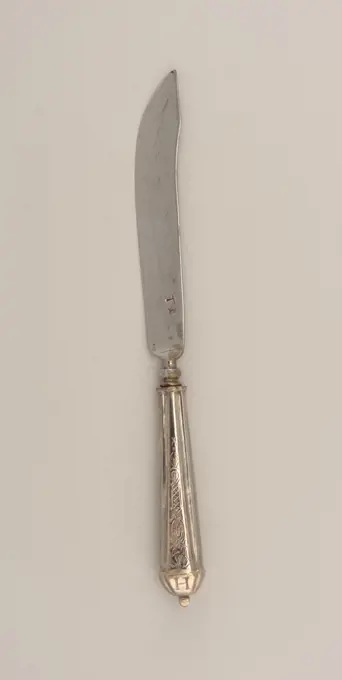
Dinner Knife, silver, steel, Saber-shaped blade with concave bolster. Tapered silver handle with segmented panels to form rectangular profile. Front and back panels chased with decorative pattern fluted end with raised knop. Handle engraved at end with 'A' (converse) and 'H' (reverse)., possibly Germany, ca. 1730-40, cutlery, Decorative Arts, knife, knife
6145-29224216
Sword (Flyssa) with Scabbard 18th-19th century Algerian, Kabyle. Sword (Flyssa) with Scabbard. Algerian, Kabyle. 18th-19th century. Steel, brass, wood, iron. Swords
6145-29224728
Knife (Parang) with Sheath 18th-19th century Malayan. Knife (Parang) with Sheath. Malayan. 18th-19th century. Horn, wood. Knives
4409-17361345
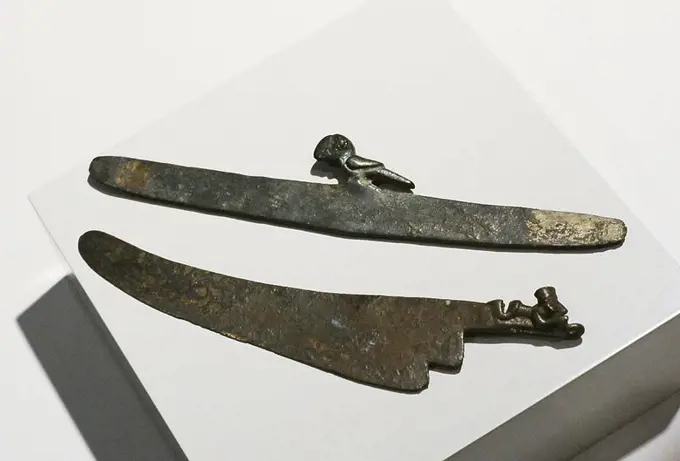
Cuchillo ceremonial decorado con figura humana. Bronce. Perú. Cuchillo ceremonial decorado con figura de pájaro. Plata Baja. Cultura Chimú, Período Intermedio Tardío (1100-1400 d. C.). Perú. Museo de América. Madrid. España.
6145-29173687
Dagger (Jambiya) with Sheath 18th-19th century Bornean. Dagger (Jambiya) with Sheath 31658
6145-29245598
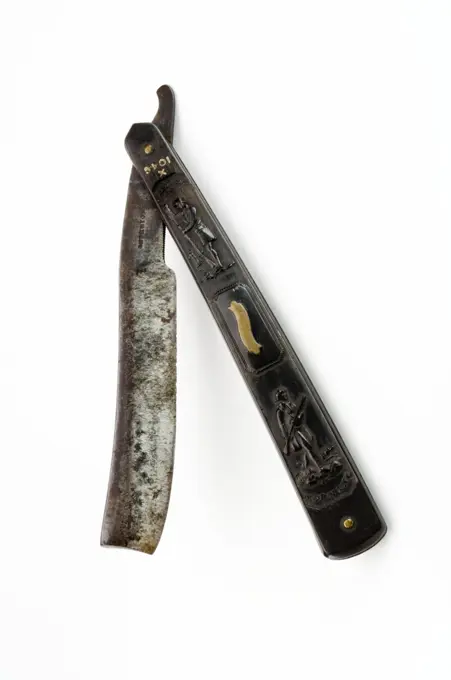
Lord Nelson's razor, made of horn and steel.
6145-29060932
Arrow Head, 1600s. Japan, Edo period (1615-1868). Iron; overall: 28.6 cm (11 1/4 in.).
6145-45779323
Partican. Partican with serrated wings. Ring ornament. Round stick with two springs (33.5 cm). NOTE on the shaft. Condition good.
7125-70422809
Topkapi Museum pieces. Istanbul. Turkey.
4409-121033
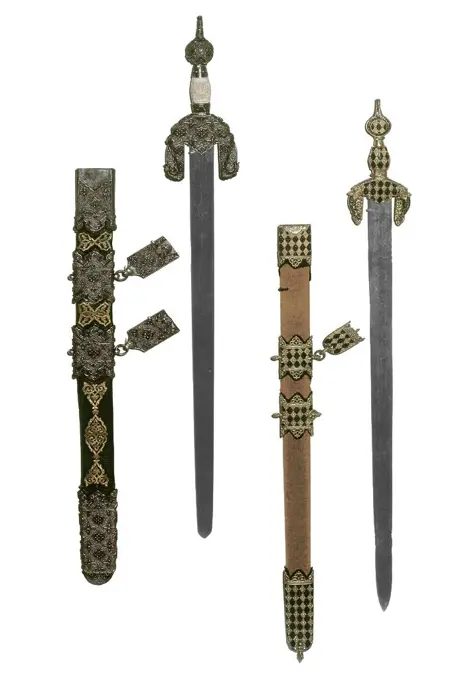
ESPADA Y VAINA DE BOABDIL O MUHAMMAD V (1459/1528) - ULTIMO REY MORO DE GRANADA. Location: ALCAZAR / MUSEO DEL EJERCITO-COLECCIÓN. Toledo. SPAIN.
1788-20319
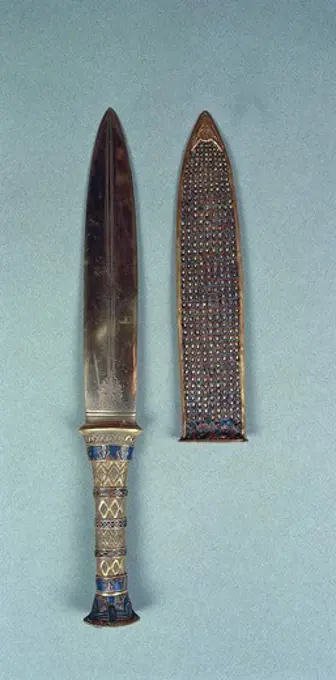
Dagger of the king containing semi-precious stones, with fox's head on top, from Treasure of Tutankhamen
6145-29195349
Knife with Sheath early 19th century French, Dieppe. Knife with Sheath. French, Dieppe. early 19th century. Steel, ivory, diamond, ruby, enamel, gold. Dieppe. Knives
6145-29829540
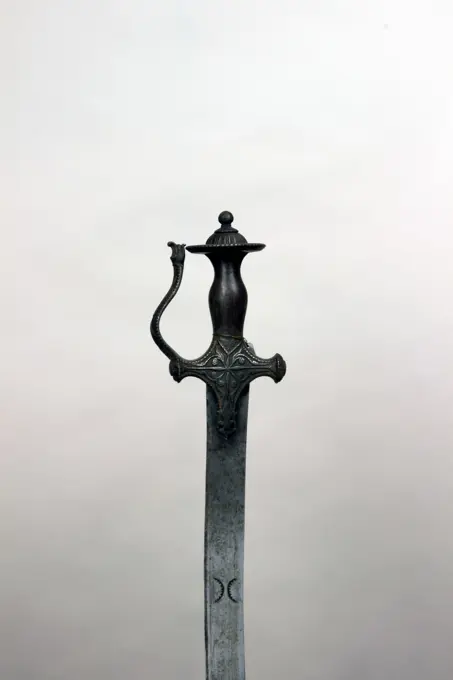
Sword (Talwar) 18th-19th century Indian. Sword (Talwar). Indian. 18th-19th century. Steel, silver. Swords
4409-17419274
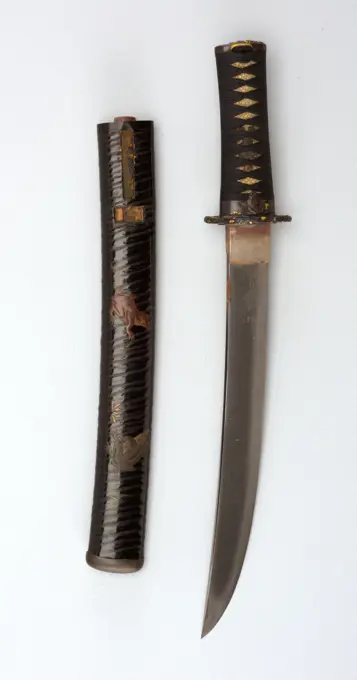
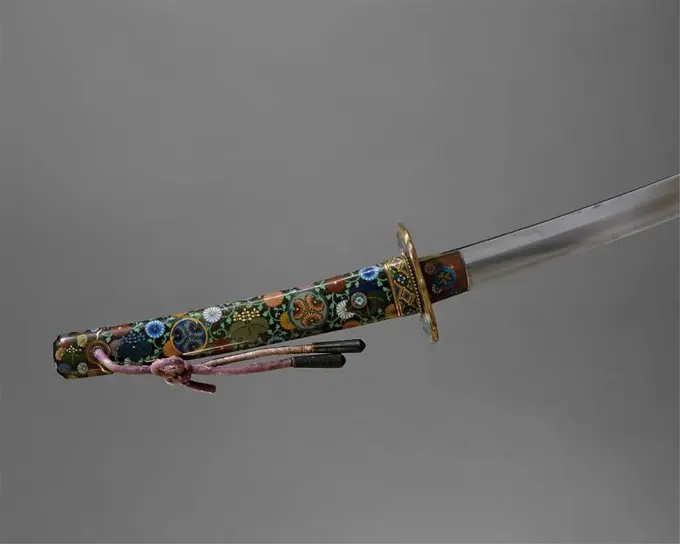
Blade and Mounting for a Sword (Katana). Culture: Japanese. Dimensions: L. 43 1/4 in. (109.8 cm); L. of blade 35 15/16 in. (91.2 cm); L. of cutting edge 27 1/2 in. (69.9 cm); D. of curvature 5/8 in. (1.65 cm). Date: blade, 16th century; mounting, mid-late 19th century. Museum: Metropolitan Museum of Art, New York, USA.
1848-53377849
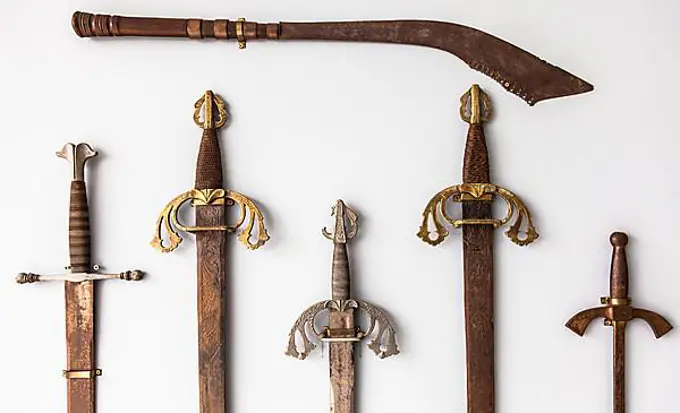
Spanish sword collection detail, sigle XVI
6145-29744932
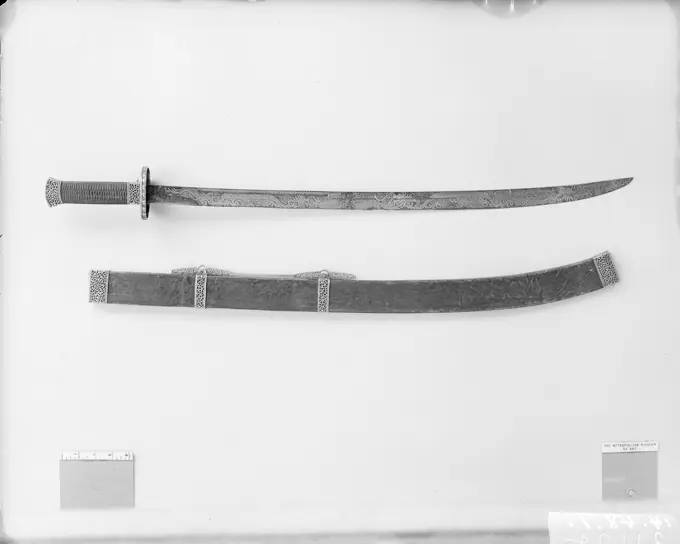
Saber (Peidao) with Scabbard late 18th-19th century Chinese. Saber (Peidao) with Scabbard 35726
6145-29758748
Sword (Shamshir) with Scabbard 19th century Persian. Sword (Shamshir) with Scabbard. Persian. 19th century. Swords
7003-69661515
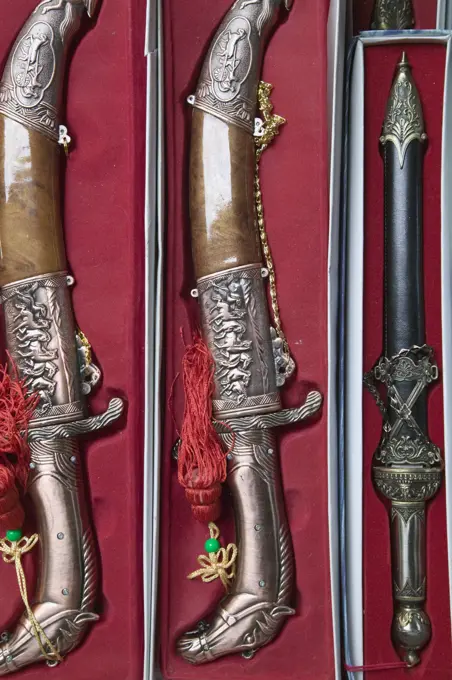
Bosnia-Hercegovina - Mostar. Old Town Mostar Market- Souvenir Ottoman Era Swords
6145-50491744
Knife (France); steel, tin-glazed earthenware (faience), brass; L x W: 20.3 x 1.8 cm (8 x 11/16 in.); The Robert L. Metzenberg Collection, gift of Eleanor L. Metzenberg; 1985-103-184
6145-29155959
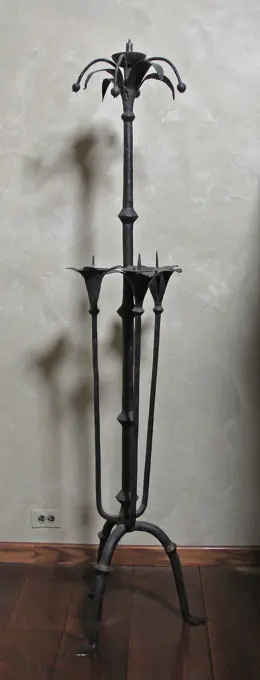
One of a Pair of Candelabra 15th century French or Spanish. One of a Pair of Candelabra. French or Spanish. 15th century. Iron. Metalwork-Iron
6145-29223766
Knife with Sheath and Chopsticks (Trousse) 18th-19th century Chinese. Knife with Sheath and Chopsticks (Trousse). Chinese. 18th-19th century. Steel, wood, brass, ivory. Knives
1746-19692010
Bronze knives with various heads. Shang Dynasty 11th-12th century.
6188-63306937
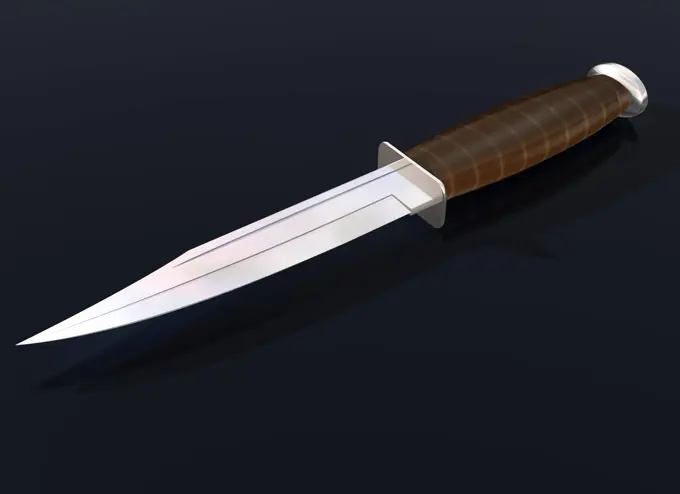
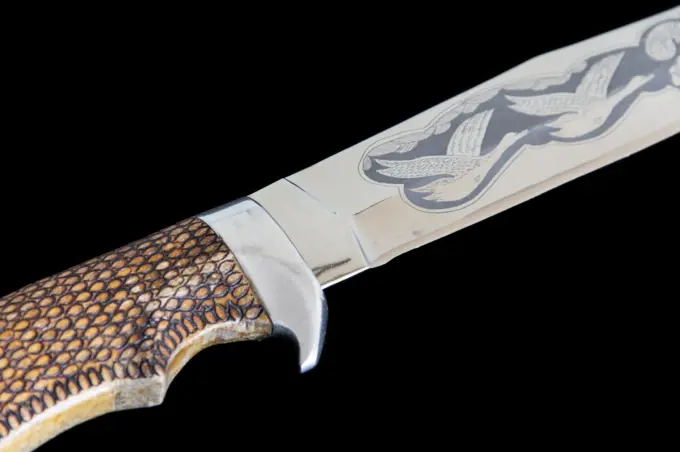
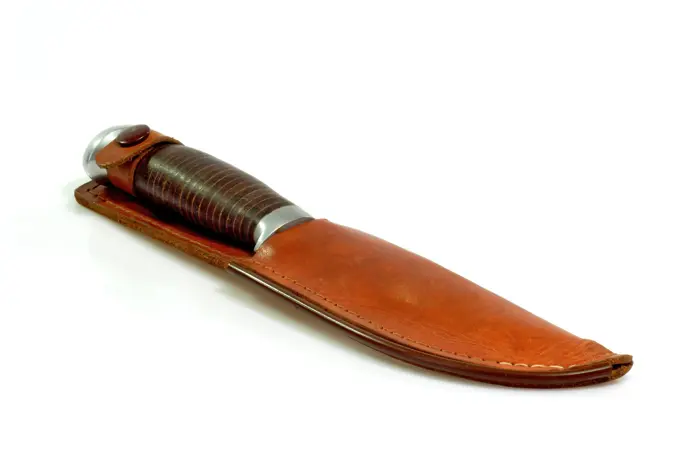
Hunting knife Illustration of a shiny new hunting knife Copyright: xZoonar.com/PaulxFleetx 812289
1848-54972488
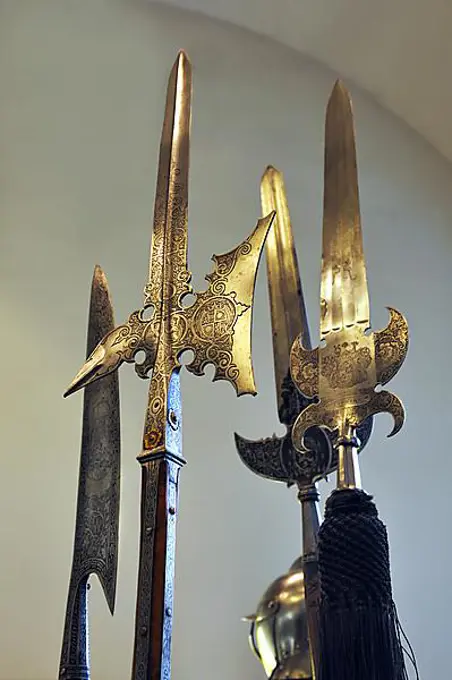
Halberds, 16th Century, Bavarian National Museum, Prinzregentenstrasse 3, Munich, Bavaria, Germany, Europe
1525-22114780
Photo of cold weapon on black background
6188-63948041
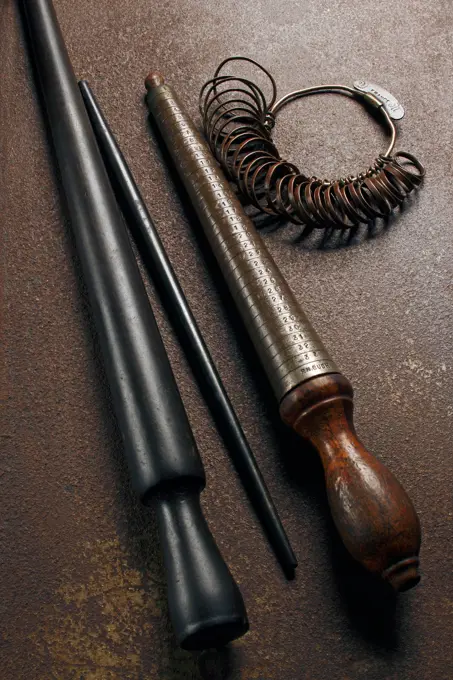
Old tools, goldsmith s handmaid tools Copyright: xAnilxDave/DinodiaxPhotox
1525-22400744
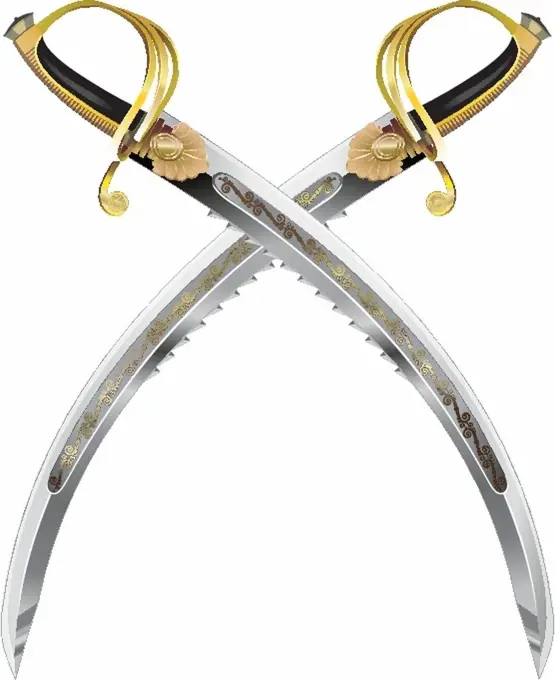
Two crossbones pirate swords
6145-46812798
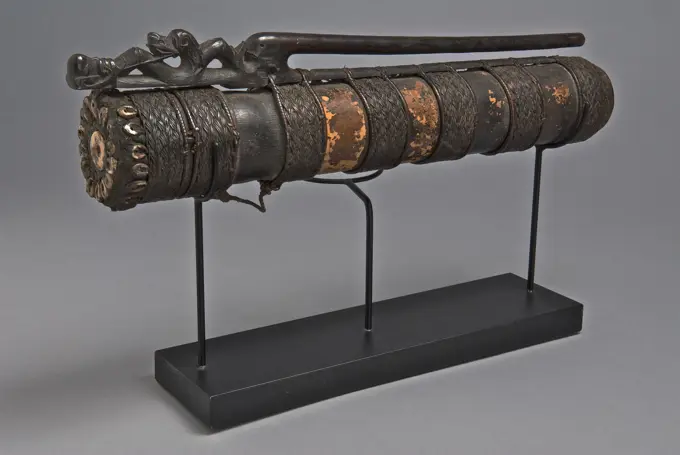
Poison DartQuiver
6145-29173675
Knife (Korambi) with Sheath 18th-19th century Indonesian, Sulawesi. Knife (Korambi) with Sheath 31647
6188-63325116
Isolated Eastern Curved Dagger Or Sword An Isolated Middle-Eastern Curved Dagger Or Knife Or Weapon Copyright: xZoonar.com/RoyxHendersonx 22266337
4409-17437476
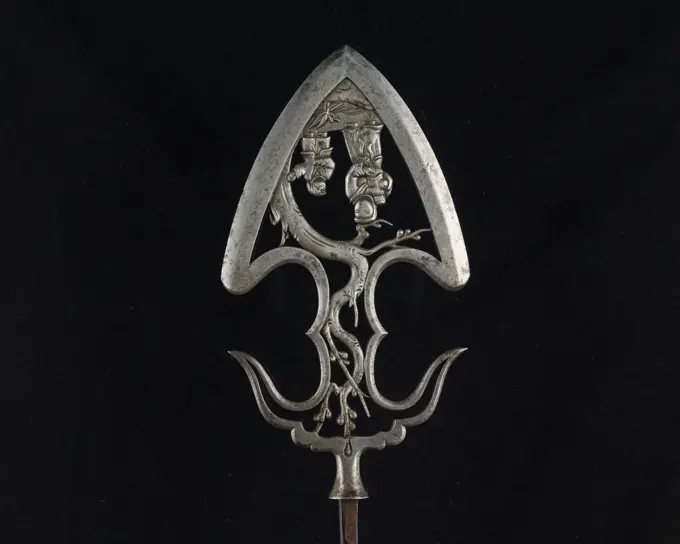
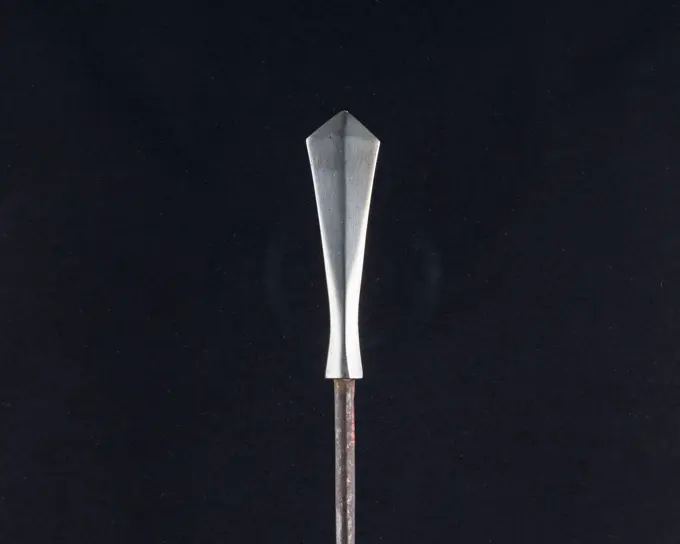
Arrowhead (Yanone). Culture: Japanese. Dimensions: L.17 in. (43.2 cm); L. of head 7 7/8 in. (20 cm); W. 1 in. (2.5 cm); Wt. 3.4 oz. (96.4 g). Date: 18th century. Museum: Metropolitan Museum of Art, New York, USA.
6188-65130880
Jagdmesser Table Top Copyright: xZoonar.com/Teamarbeitx 109664
4409-17415704
Arrowhead (Yanone). Culture: Japanese. Dimensions: L. 9 in. (22.9 cm); L. of head 3 1/4 in. (8.3 cm); W. 2 1/2 in. (6.4 cm); Wt. 1.7 oz. (48.2 g). Date: 18th century. Museum: Metropolitan Museum of Art, New York, USA.
6145-59503112
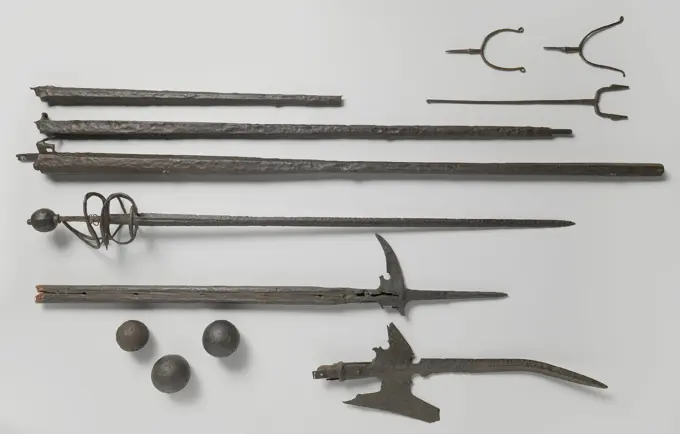
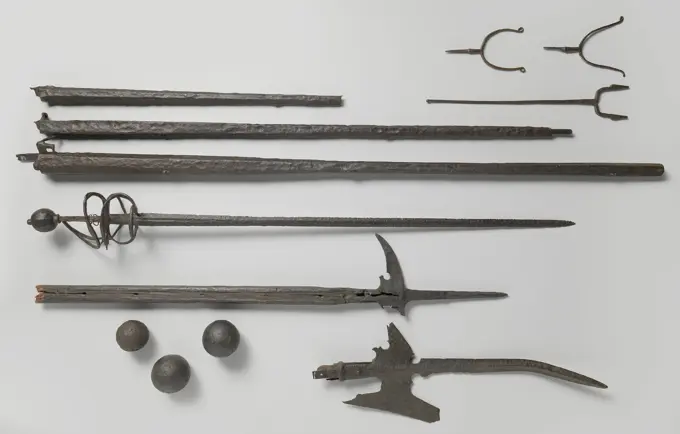
Hellebaard with fragment from Stok, Anonymous, c. 1590 - c. 1596 Halberd Hellebaard with fragment from Stok.  wood (plant material). iron (metal) cutting / forging  Nova Zembla. Saving Huys
6145-59503124
Cannonball with barely visible casting seam, anonymous, c. 1590 - c. 1596 bullet (ammunition) Cannonball for cannon of 3 lb. The casting seam is hardly visible.  iron (metal) casting  Nova Zembla. Saving Huys
7155-70380767
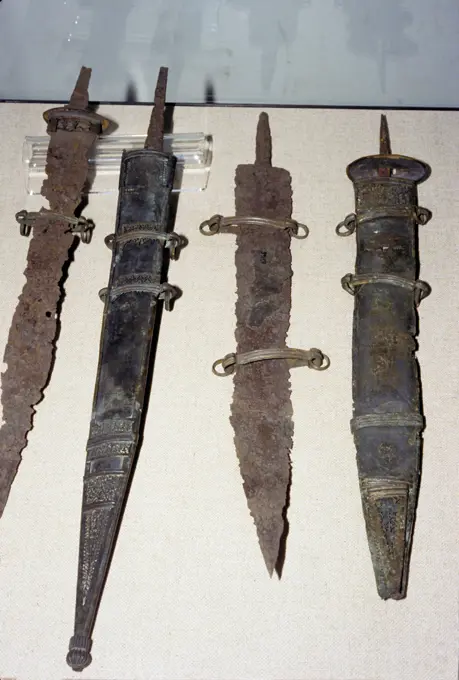
Roman swords, 1st cent.
1525-24474179
Knife as a cold piercing and cutting weapon for a self-defense
1525-20378366
knife on a white background
6188-63814962
Smart dagger Smart dagger of the medieval soldier. It was used for hunting Copyright: xZoonar.com/VALERY-SIBRIKOVx 20043163
6188-63816098
dagger Smart dagger of the medieval soldier. It was used for hunting Copyright: xZoonar.com/ValeryxxSibrikovx 2421231
6145-29119836
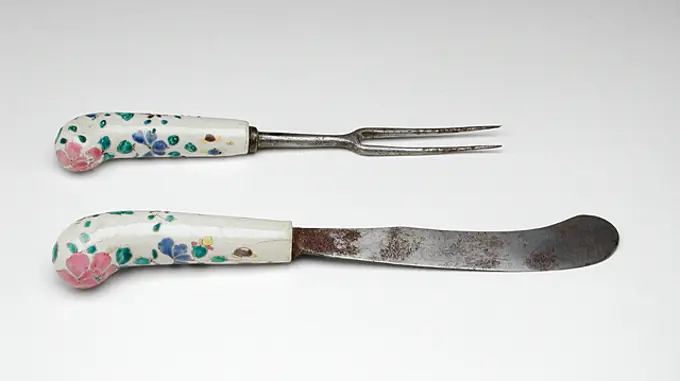
Knife and Fork. England, Staffordshire, circa 1750. Furnishings; Serviceware. Salt-glazed stoneware
6145-29752388
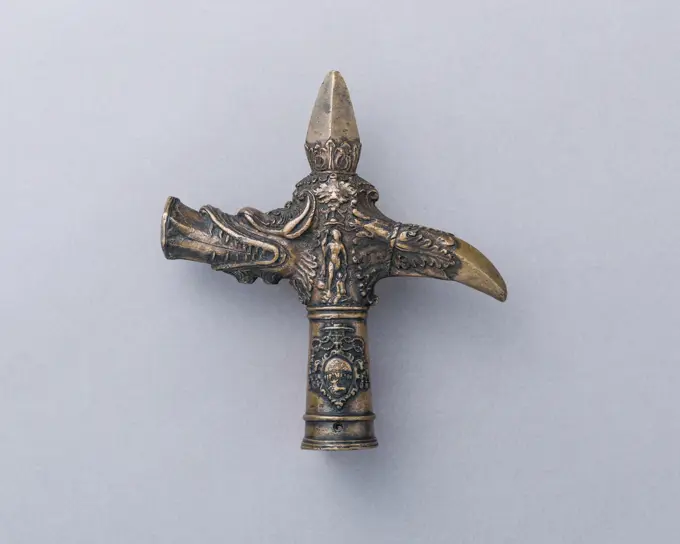
Head of a Ceremonial War Hammer ca. 1550 or later probably Italian Although complete with a hammer and beak on the sides and a short spike on the top like many steel war hammers, this cast bronze example was designed to be used in a civic or religious ceremony as a symbol of authority, not as a weapon.. Head of a Ceremonial War Hammer. probably Italian. ca. 1550 or later. Bronze. Shafted Weapons
6145-29174089
Knife with Sheath, Chopsticks, Pickle Spear and Toothpicks 18th-19th century Chinese. Knife with Sheath, Chopsticks, Pickle Spear and Toothpicks 31577
6145-43620756
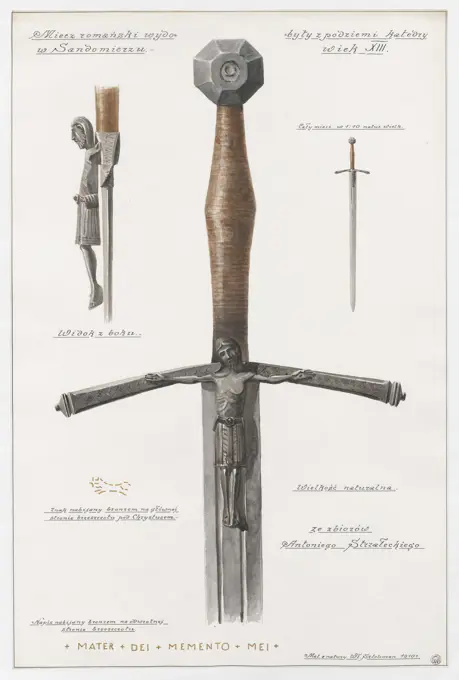
Romanesque sword discovered among the foundations of the cathedral of Sandomierz, from the collection of Antoni Strzałecki ; drawing for the publication: Dominika Jeżewskiego Skarbiec Zabytków Polskich znajdujących się w prywatnych zbiorach Warszawy, malo. Sztolcman, Władysław Roman (1873-1950), painter
4409-17351558
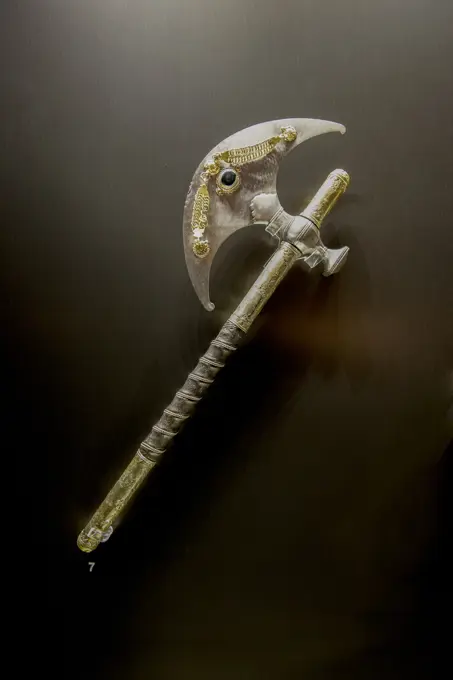
Crescent-Shaped Ax Head (Chandrasa). Culture: Indonesia. Dimensions: Approx. L. 24 in. (61 cm). Date: ca. 500 B.C.-A.D. 300.The flamboyant curved blade and asymmetrically placed splayed socket of this piece are typical of works from Java and Sulewasi, produced in full size and as miniatures, and used as funerary gifts and for ceremony and display. Axes are often carried by the feathered warriors depicted on drums and situlae from the Dongson culture of Vietnam, and late Dongson ax heads with pediform or boat-like shaped are other thought to have provided prototypes for the exaggerated examples produced in Indonesia. Museum: Metropolitan Museum of Art, New York, USA.
4409-17376344
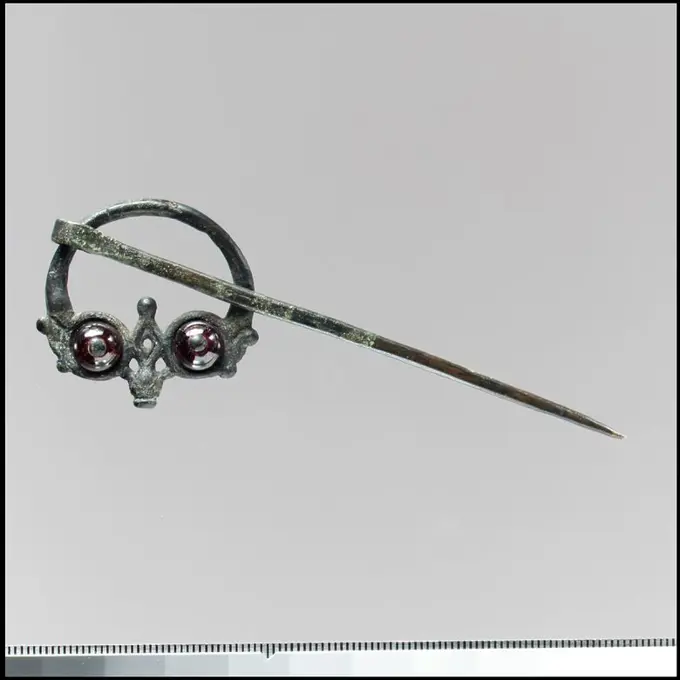
Penannular Brooch. Culture: Irish. Dimensions: Overall: 1 7/16 x 8 11/16 x 1/4 in. (3.6 x 22 x 0.6 cm). Date: 9th century. Museum: Metropolitan Museum of Art, New York, USA.
1746-21129576
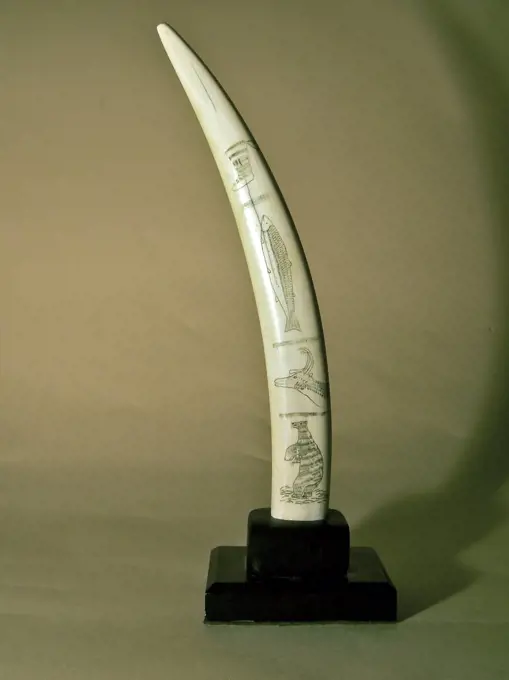
Early eskimo scrimshaw on a walrus tusk. The scrimshander has depicted a polar bear, a reindeer, a fish, a snowboot, an eskimo wearing skins, a hooded eskimo and a seabird.
6145-29218525
Arrowhead (Yanone) 18th century Japanese Although today Japanese warriors are renowned most for their swordsmanship, archery, especially from horseback, has been an essential part of samurai warfare and culture for centuries. Arrows were fitted with heads of varying shape according to their intended use in war, the hunt, or target practice. Arrowheads made for use on the battlefield incorporated different designs intended for specialized purposes such as the piercing of armor or to cause maximum damage to horses and unarmored personnel.Large arrowheads, pierced and elaborately chiseled with landscapes, birds, flowers, dragons, and Buddhist divinities, were created to be admired for the beauty of their metalwork and design rather than for use in archery. Such highly elaborate examples may have been made for presentation or as a votive offerings to a shrine.. Arrowhead (Yanone). Japanese. 18th century. Steel. Archery Equipment-Arrowheads
1848-64103260
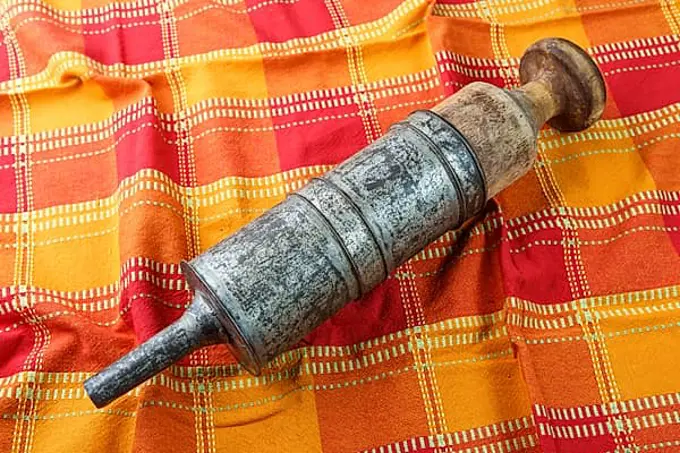
Old kitchen tools for the production of meat products, filling sausages
1525-21714770
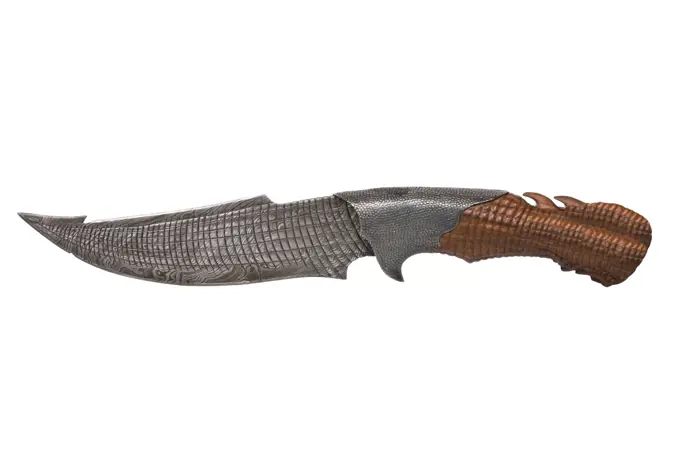
Beautiful hunting knife on a white background
7062-70071703
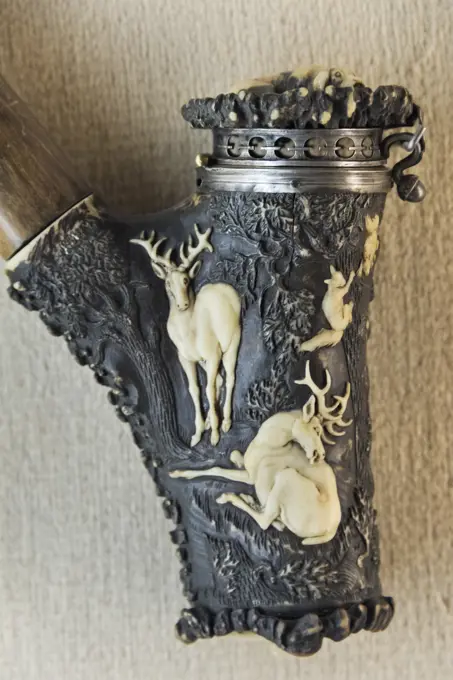
Carved ivory pipe in Trakai Island Castle, Lithuania
4409-17582069
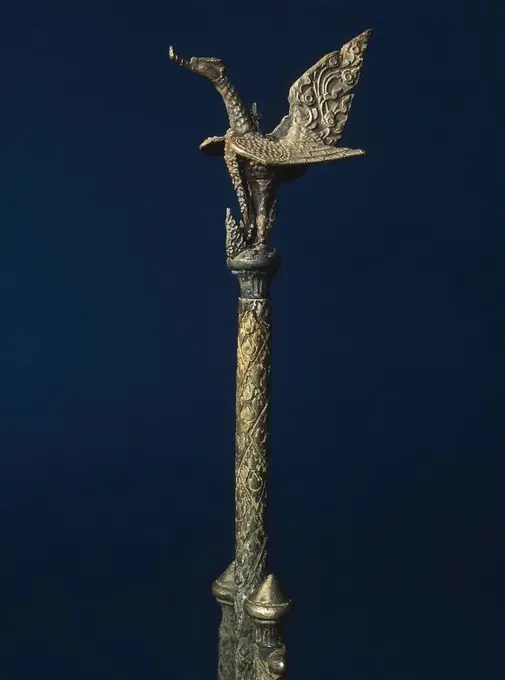
'Khamsa Bird (Khong)'. Siam (now Thailand), 19th century. Dimensions: h. 29,5 cm. Museum: State Hermitage, St. Petersburg.
4332-2015
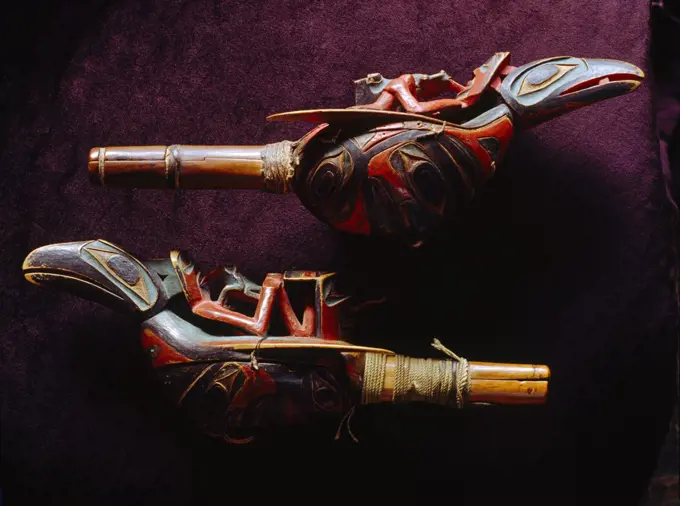
Pair of Tlingit Raven rattles in the museum collection of Sitka National Historical Park, Sitka, Alaska.
6188-63288182
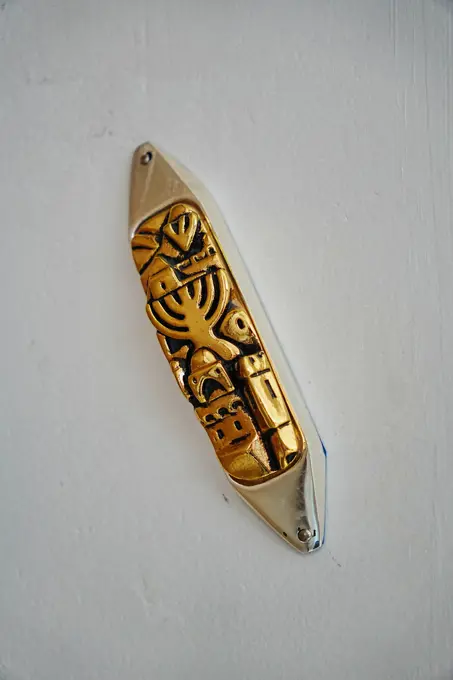
Mesusa Aktive Synagoge Bochum Mesusa Aktive Synagoge Bochum Copyright: xZoonar.com/HGVorndranx 22246353
4179-16268
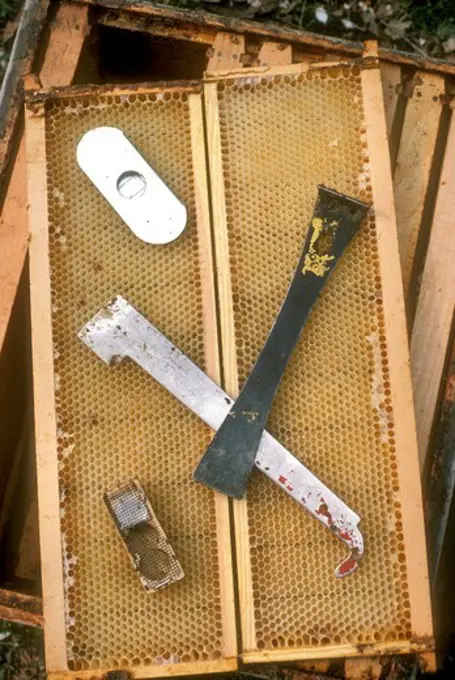
Beekeeping Tools Gillette, New Jersey
1525-19883490
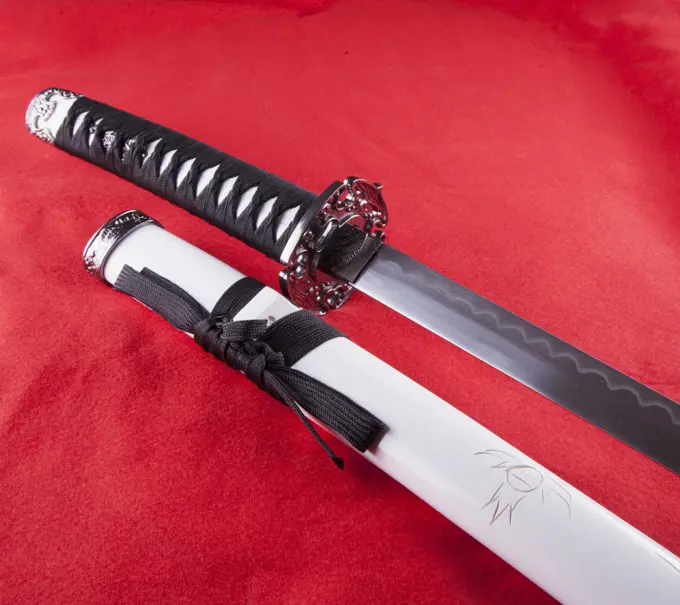
Katana with white custody over red background, horizontal image
1746-28998646
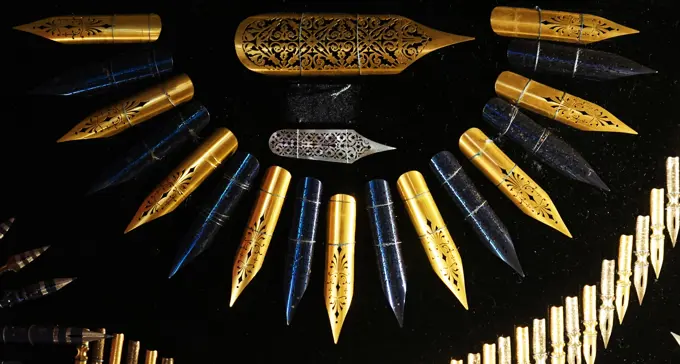
Pen nibs manufactured in Birmingham England circa 1880