Historical Textiles

Vintage textile fragments and pieces displaying intricate patterns and designs from different centuries.

Piece 17th century Italian. Piece 224512
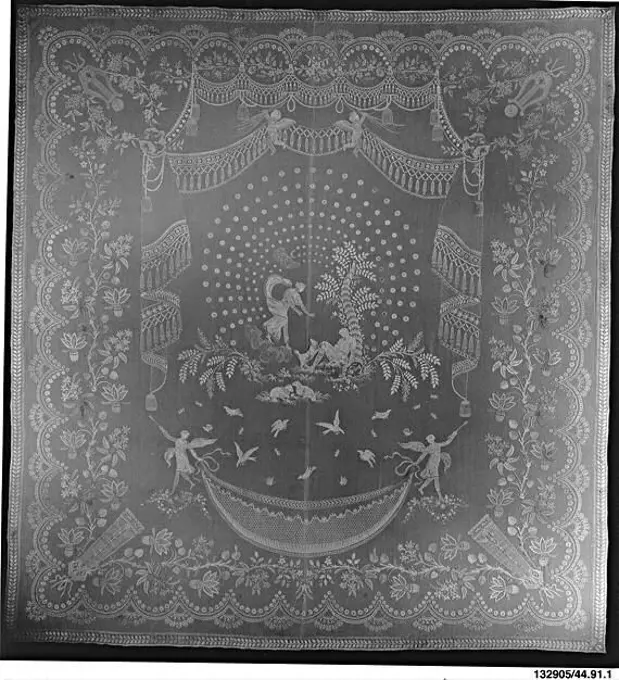
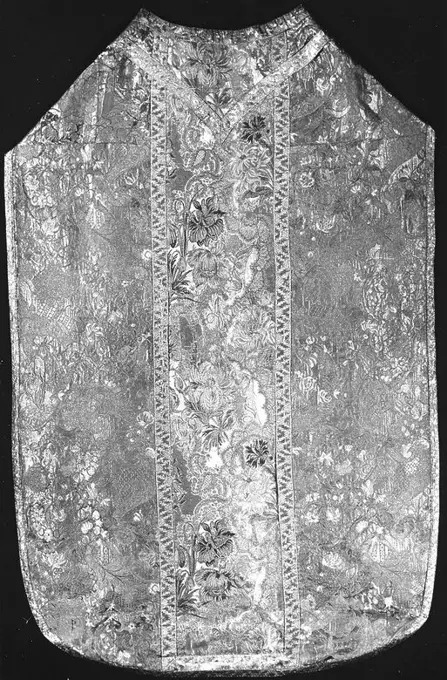
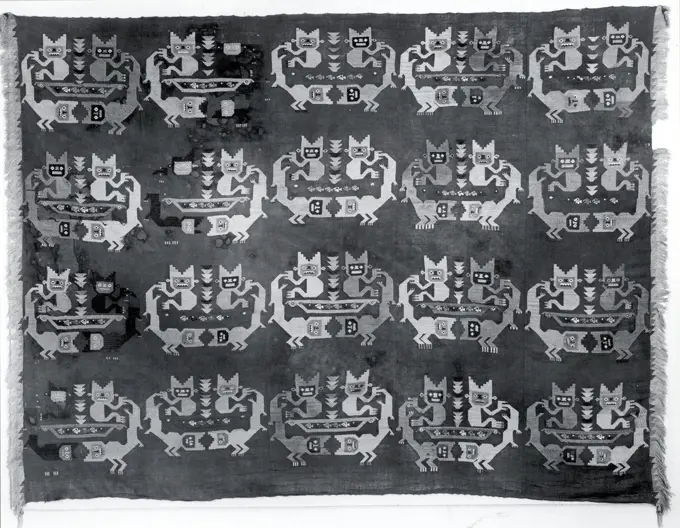
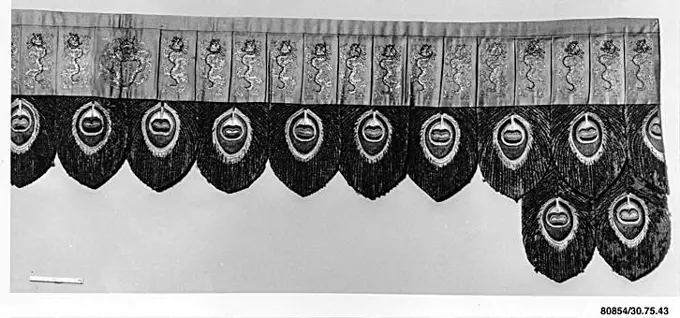
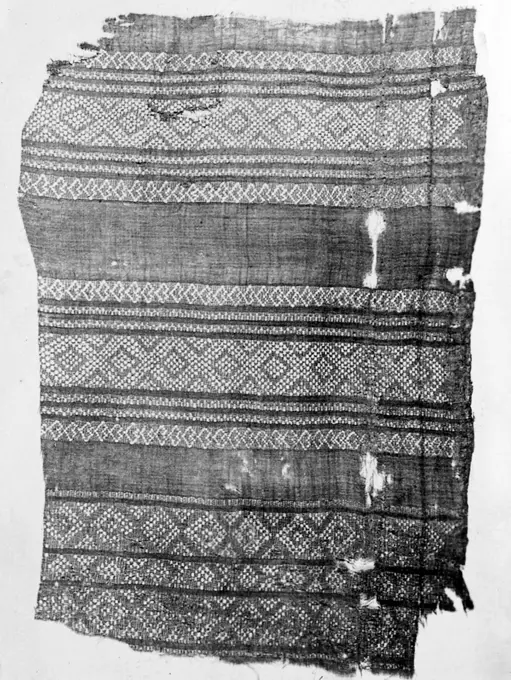
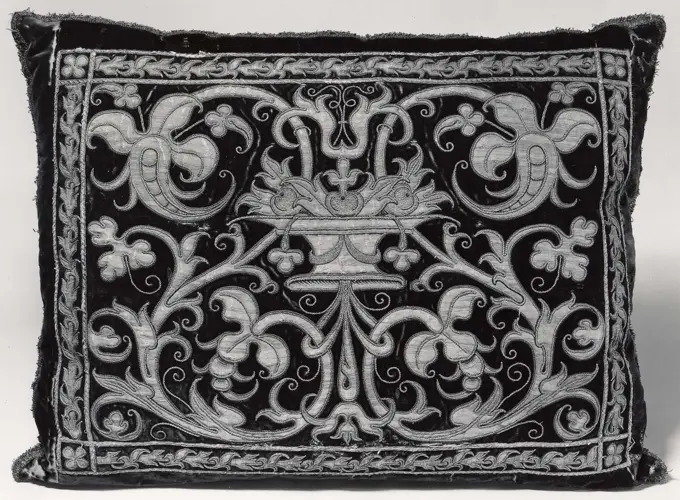
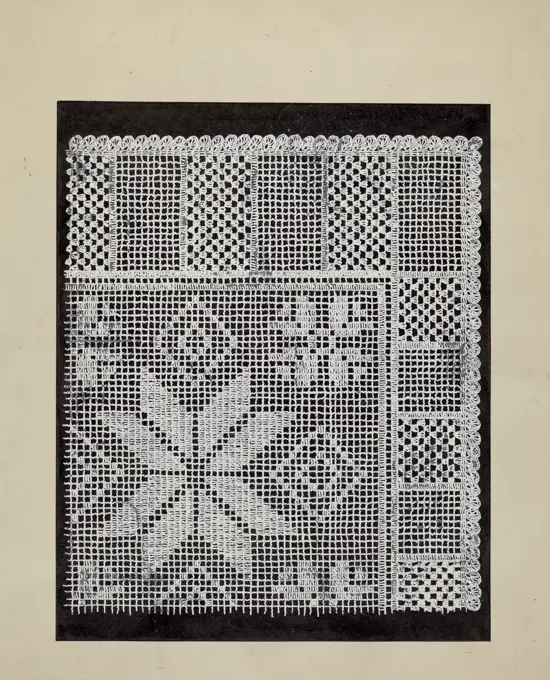
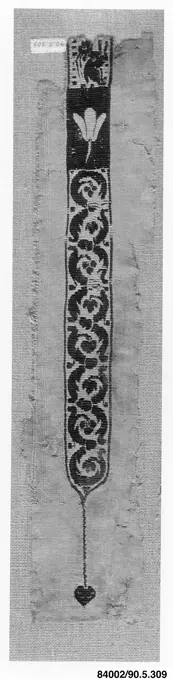
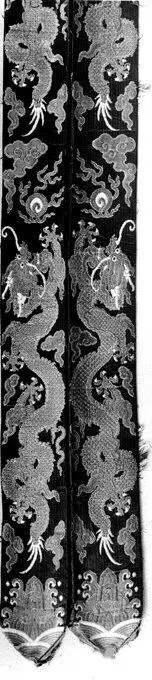
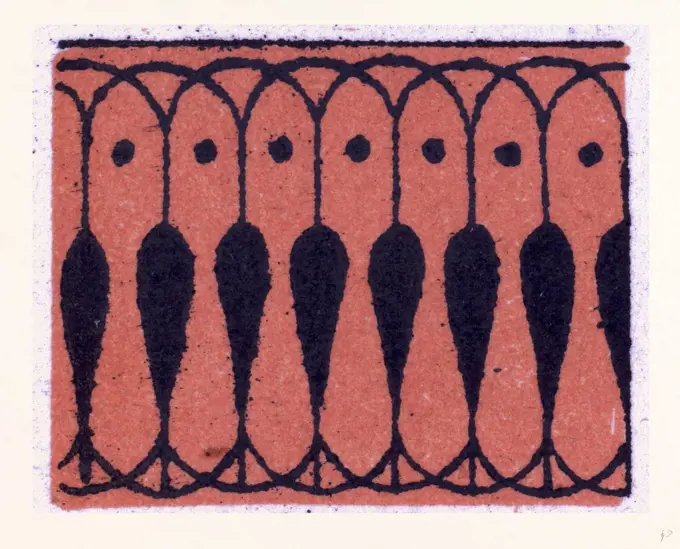
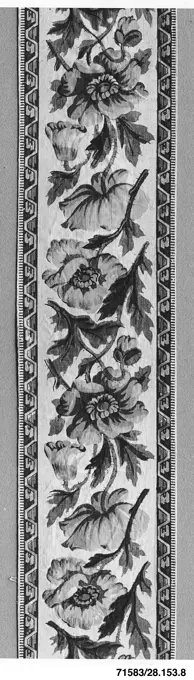
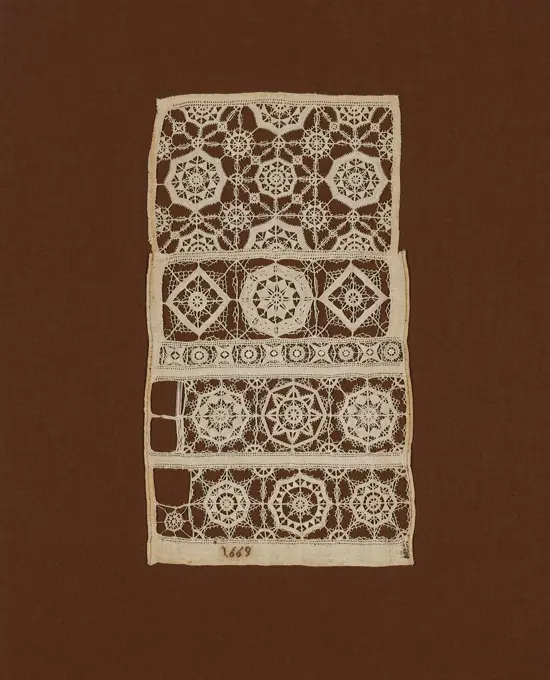
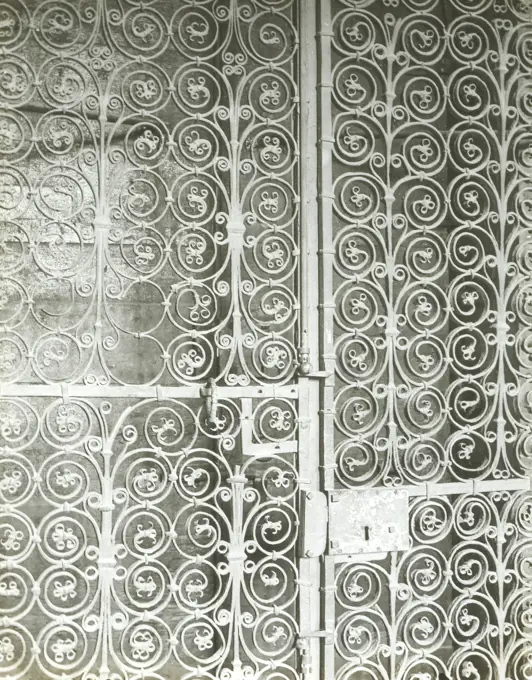
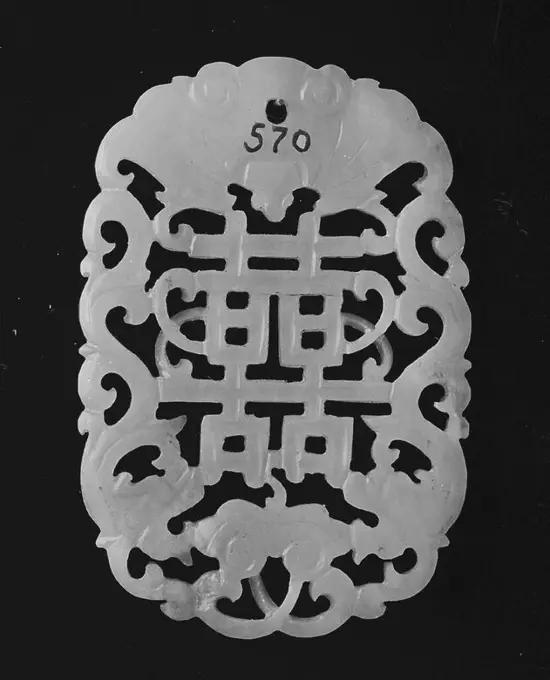
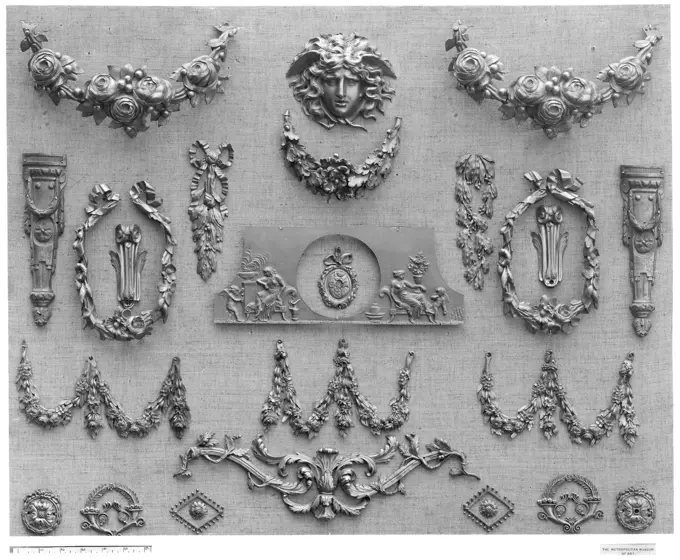
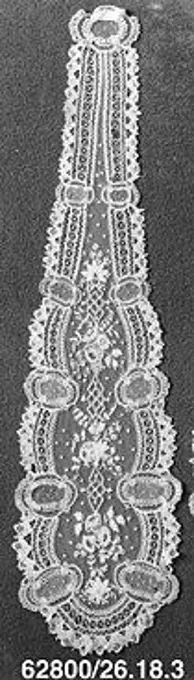
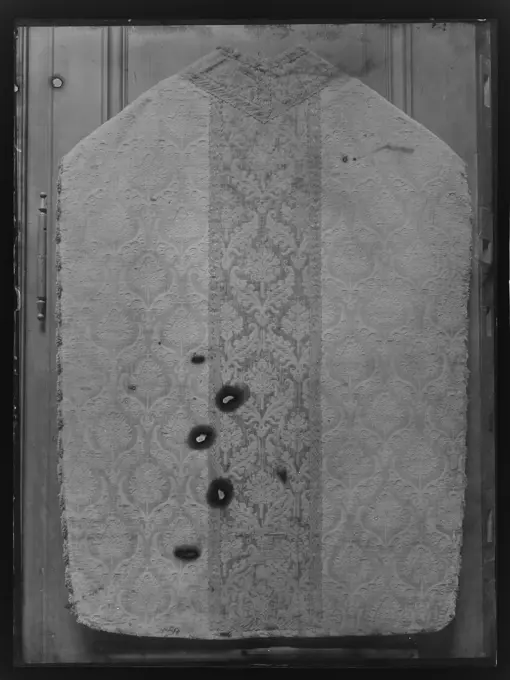
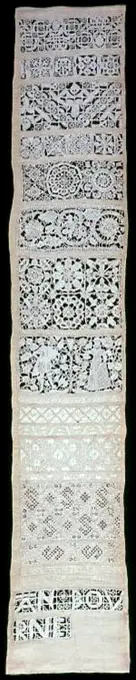
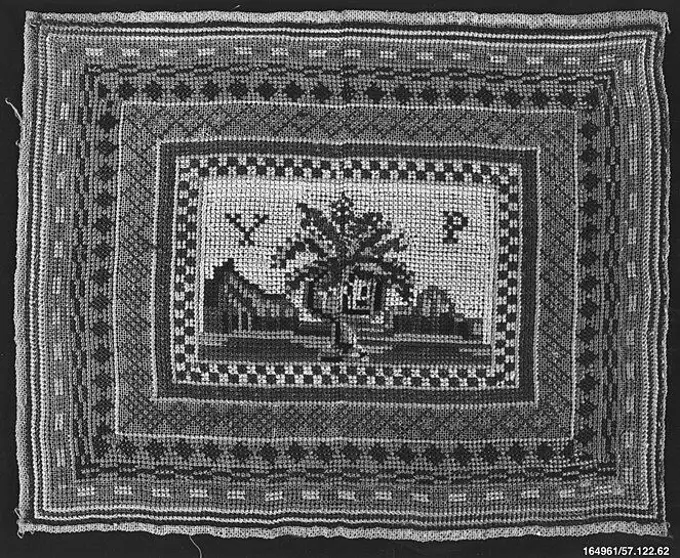
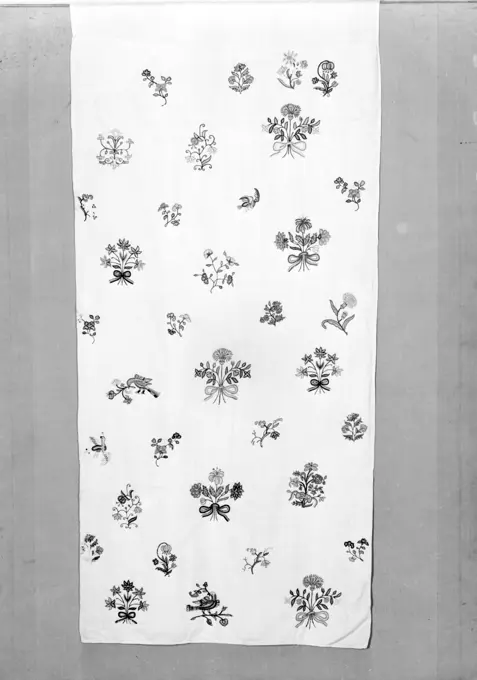
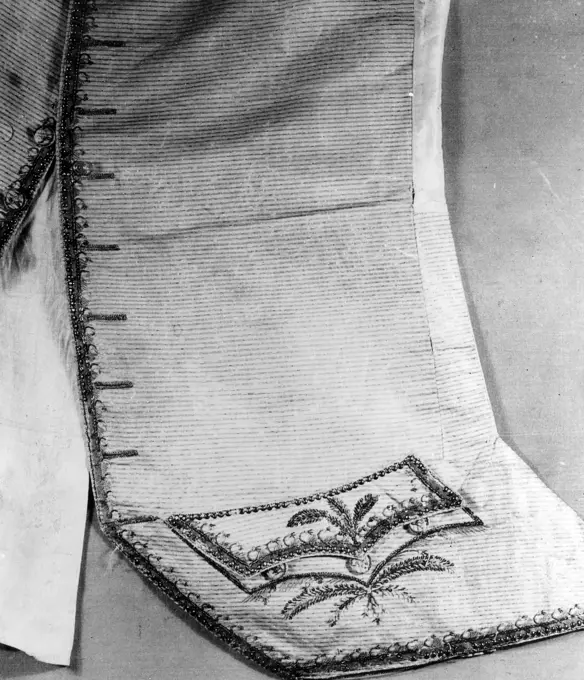
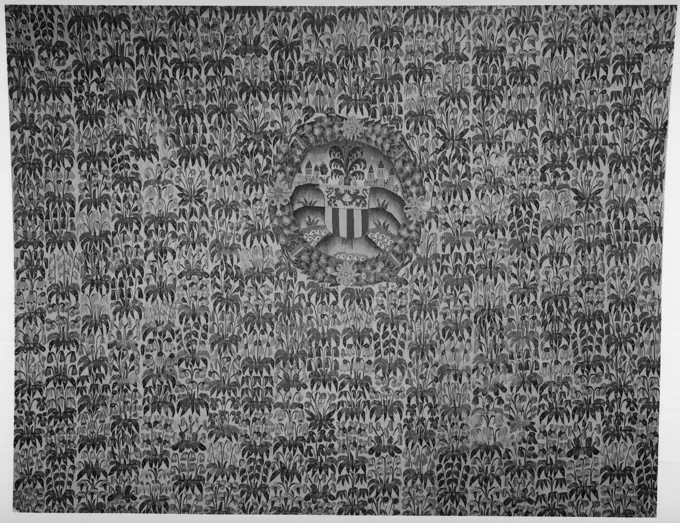
Flounce Belgian, Brussels second half 19th centuryPiece ca. 1735 Italian or British. Piece 219633Piece 1625-50 Italian. Piece 223518Piece 1760-70 French. Piece 220244Piece 17th century Italian. Piece 224549Shoulder Band Fragment 4th-5th century. Shoulder Band Fragment 445940. Linen, bobbin straight lace of a type known as Valenciennes with a five hole mesh ground .Sampler 1811 Dutch. Sampler 228057Piece French 19th centuryPiece early 19th century French. Piece 224101Length 20th century China. Length 70086Band Fragment. Dimensions: H. 5 1/4 in. (13.3 cm)W. 2 1/4 in. (5.7 cm). Date: 3rd-4th century. Museum: Metropolitan Museum of Art, New York, USA.Black bobbin tie with rosette flower and medallions, anonymous, c. 1800 - c. 1849  Black bobbin bow tie: Chantilly side. Elongated rectangular model, with thickened and rounded ends. Symmetrical pattern with a flower branch in the middle with a large rosette flower with four smaller rosette flowers around it. Left and right of this two oval medallions with a flower branch with two over -cut rosette flowers. Along the edges, two symmetrically hanging acanthus leaves between which half a rosette flower and a decorative band. The pattern at the ends of the tie consists of a palmet formed by elongated leaves with a console with tulip bouquet above it. The motifs are connected by a Maas soil. The motifs are made in netslag and one type of decorative land has been used, thicker contour threads run around the motifs. France . bobbin laceTextile Fragment 3rd-4th century. Textile Fragment 444069Sleeve Band 19th century China. Sleeve Band 68627Sample ca. 1840 French, Mulhausen. Sample 220009Strip 16th-17th century Italian. Strip 217921Piece 18th century French. Piece 220546Coverlet 1805-15 Belgian, Brussels. Coverlet. Belgian, Brussels. 1805-15. Bobbin lace, Brussels bobbin lace. Textiles-LacesFragment. Dimensions: 4 in. high 4.00 in. wide (10.16 cm high 10.16 cm wide). Date: 3rd-4th century. Museum: Metropolitan Museum of Art, New York, USA.Square 19th century. Square 445651Chasuble. France. Date: 1701-1750. Dimensions: 116.8 × 77.4 cm (46 × 30 1/2 in.). Silk and gilt-metal-strip wrapped silk, warp-float faced satin weave with twill interlacings of secondary binding warps and supplementary brocading and self-patterning ground wefts; orphrey: warp-float faced satin weave with twill interlacings of secondary binding warps and supplementary brocading and self-patterning complementary ground wefts and areas self-patterned by plain interlacing; edges: float weave with complementary wefts and inner warps. Origin: France. Museum: The Chicago Art Institute, Chicago, USA.Wall Hanging 12th-14th century Chimú. Wall Hanging. Chimú. 12th-14th century. Camelid hair, cotton. Peru. Textiles-WovenValance 18th century China. Valance 68537Collar and vestee. Culture: French. Dimensions: Stand up collar: L. 14 x W. 1 1/4 inches (35.6 x 3.2 cm);Vestee: L. 8 x W. 10 inches (20.3 x 25.4 cm). Date: late 17th century.The Metropolitan Museum's great lace collection was started when the Museum became the first among American museums to organize a permanent collection of lace with the acceptance of the McCallum Collection in 1879 and the bequests of Mrs. John Jacob Astor, Mrs. Robert L. Stuart, Mrs. Augustus Cleveland, and Mrs. A. W. Winters shortly thereafter. In 1893 a loan collection of antique laces shown at the World's Columbian Exposition in Chicago was assembled by a committee of New York women headed by Catharine Augusta Newbold. About 1900 Miss Newbold arranged and labeled an exhibition of laces and linenworks lent to the Metropolitan Museum by Mrs. James Boorman Johnstone and the Misses Johnstone. "Her scholarly knowledge of lace technique enabled the Museum for the first time to offer a comprehensive display of lace Fragment Made 1401-1500 Egypt. Linen, plain weave; embroidered . IslamicApparel made into cushion 17th century Spanish This apparel and another in the Lehman Collection (1975.1.1896), which were made into cushions, originally formed part of the front and back of a dalmatic (a liturgical vestment). They are of dark red silk cut velvet edged with fringe and decorated with appliquéd needlework in a design of scrolling leaves and flowers surrounding a centered basket filled with leaves and circular elements. The composition is framed by a narrow border, a straight branch-and-leaf motif outlined with cording, with a four-leaf clover in each corner.. Apparel made into cushion 461405Fragment (Border) Morocco. Silk embroidery on plain, cream-colored cotton cloth rather coarse. Stitch long armed cross-stitch, Holbein stitch, herringbone stitch, cross on one side, square on the other side .Gift Cloth (Fukusa) 19th century Japan. Gift Cloth (Fukusa) 67921Textile Fragment 5th century. Textile Fragment 443947Piece 18th century French. Piece 224080Embroidered sample for a mans suit or waistcoat ca. 1785-1815 French. Embroidered sample for a mans suit or waistcoat 223129Handkerchief Made 1825-1875 India. Cotton, plain weave; embroidered .Piece 1760-70 French. Piece 220417American 20th Century, Lace Hardanger, 1935 1942 Lace HardangerCuff 19th century China. Cuff 70475Piece 18th-19th century Japan. Piece 67760Priest's Robe (Shichij) Japan. Priest's Robe (Shichij). Japan. Silk. Momoyama period (1573-1615). Textiles-CostumesFragment of a Tunic 3rd-4th century. Fragment of a Tunic 443795Fragment (Germany); linenBonnet Veil (France); silkHanging Strip from Temple 19th century China. Hanging Strip from Temple 68535Greek Ornament and Etruscan OrnamentRoundel 4th-5th century. Roundel 445911Rank Badge with Wild Goose late 18th-early 19th century China. Rank Badge with Wild Goose 68871Border 1840-50 British. Border 222204Border early 17th century Italian, Venice Punto in arialiterally, "stitches in the air"is one of the earliest styles of needle lace, which is itself developed from cutwork of primarily geometric design. When lacemakers transitioned to using a foundation of threads laid out according to a pattern drawn on parchment, they were able to incorporate more fluid lines and curves into their designs.. Border 221428Piece ca. 1750 French. Piece 223253Flounce Made 1725-1775 Hungary. Linen, bobbin part lace .Bliżej Kultury unknownRibbon early 19th century German. Ribbon 215688Fragment of a Sampler Made 1669 England. Linen, plain weave; cut work with needle lace inserts; cut and drawn thread work embroidered in buttonhole, double hem, hem, and overcast stitches; date embroidered with cotton in cross stitches, Reticella pattern .Hebrew ritual lace (part of a set). Culture: Italian, Burano. Dimensions: Diameter: 8 1/2 inches (21.6 cm). Date: early 18th century. Museum: Metropolitan Museum of Art, New York, USA.Two Kosode Fragments second half of the 17th century Japan Careful examination of the textile's undecorated portions reveals scattered slightly darker areas shaped like palm leaves that were protected from fading. It is possible that the areas were once covered with adhesive and metallic leaf, which have since washed off, leaving only ghostlike shadows. Metallic leaf was often featured in kosode of the early seventeenth century, and this fragment may serve as a reminder that the sparkle of gold and silver leaf did not suddenly disappear from kosode design in the mid-seventeenth century.. Two Kosode Fragments 61785Stem in a vase, 1500 - 1530 print Plat decoration with a stem, which is in a vase in the middle with smaller stems and that stands upright upright. At about three -quarters of the flat decoration, one of the side shoots forms a volute to the left. One of 6 magazines. Germany (possibly) paper engravingTunic, Medium: linen and cotton Technique: tapestry weave (), Poncho with neck opening, tapestry weave, with embroidered areas. Red and green in dark tones. Allover geometric pattern, highly stylized forms., Peru, 900-1200, woven textiles, TunicTile Dutch 1610-35Panel. France. Date: 1701-1722. Dimensions: 198.5 × 152.9 cm (78 1/8 × 60 1/4 in.)Repeat: 46.7 × 24.8-25.6 cm (18 3/8 × appro×. 10 in.). Silk and gilt-metal-strip-wrapped silk, 4:1 satin weave with supplementary brocading wefts bound in twill interlacings and self-patterned by reversing of faces. Origin: France. Museum: The Chicago Art Institute, Chicago, USA.Border 16th century Italian. Border. Italian. 16th century. Silk on linen. Textiles-EmbroideredPiece late 18th century French, possibly Lyons. Piece 226511Sleeve Band 19th century China. Sleeve Band 68673Wincester. Nave: Details Iron Grille; Frederick H. Evans (British, 1853 - 1943); 1900; Lantern slide; 6.2 x 4.8 cm (2 7,16 x 1 15,16 in.)Pair of cuffs 16th century Spanish. Pair of cuffs 230788Fragment. Dimensions: 3 3/4 in. high 3 9/16 in. wide (9.5 cm high 9 cm wide). Date: 4th-5th century. Museum: Metropolitan Museum of Art, New York, USA.blackboard used for advertisement advertisingSampler 19th century German. Sampler. German. 19th century. Cotton and linen thread on linen. Textiles-EmbroideredSutra Cover with Peaches and Auspicious Symbols 16th-early 17th century China. Sutra Cover with Peaches and Auspicious Symbols 39928Square, Medium: linen Technique: grid of withdrawn element and needle lace with edging of different needle lace called hedebo (see notes), Central square of withdrawn element with a geometric pattern of squares. Corners of the square more heavily worked to create a diamond shape within the square. Border consists of a series of circles that form quatrefoils., Denmark, late 19th century, lace, SquareTable carpet or hanging 1751 German. Table carpet or hanging 217400Textile Fragment 18th century. Textile Fragment 450677Piece. Culture: German or Italian. Dimensions: L. 17 1/4 x W. 6 inches (43.8 x 15.2 cm). Date: 16th-17th century. Museum: Metropolitan Museum of Art, New York, USA.Drapery-type cantonnière. unknown c. 1780-1800 Tapestry Dimensions: H 12'6" x W 7'8" Tapestry Materials/Techniques: unknown Culture: French Weaving Center: Beauvais Ownership History: French & Co. transferred to SS 56149 SS 56474. French & Co. received from Mrs. Robert Lothe, received 8/18/1955; returned 3/14/1958 SS 56149. Garlands, scrolls, baskets of flowers & urns Seamed at both ends, 1/6 way up. French & Co. stock sheet in archive, 56149-x French & Co. stock sheet in archive, 56474-x Related Works: Panels in set: GCPA 0241132, 0241134Table cover. Culture: Italian. Dimensions: L. 55 x W. 38 inches (139.7 x 96.5 cm). Date: late 16th-early 17th century. Museum: Metropolitan Museum of Art, New York, USA.Textile Swatches Onondaga Silk Company, Inc. (1925-1981). Textile Swatches, 1948-1959. 72 silk; 28 metal, a-h: 11 x 3 1/2 in. (27.9 x 8.9 cm).    1948-1959Pendant. Culture: China. Dimensions: H. 2 3/16 in. (5.6 cm); W. 1 7/16 in. (3.7 cm); D. 3/16 in. (0.5 cm). Museum: Metropolitan Museum of Art, New York, USA.Fan Holder 18th-19th century China. Fan Holder 68842Fragment. Date: 3rd-4th century. Museum: Metropolitan Museum of Art, New York, USA.Chair Strip 19th century() China. Chair Strip 69048Roundel 3rd-4th century. Roundel 445781Pair of flowers French 18th century View more. Pair of flowers. French. 18th century. Gilt bronze. Metalwork-Gilt BronzePiece 18th century German. Piece 216729Bellpull mid-19th century Italian, Venice. Bellpull 221774Sampler (Mexico); cottonFragment. Dimensions: 7 1/8 in. high 11/16 in. wide (18.1 cm high 1.7 cm wide). Date: 5th-6th century. Museum: Metropolitan Museum of Art, New York, USA.Lappets (one of two) first half 19th century Belgian, Brussels. Lappets (one of two) 221699Bliżej Kultury unknownBliżej Kultury unknownBliżej Kultury unknownLength late 19th-early 20th century China. Length 70084Fragment 18th century Spanish. Fragment 219640Embroidered whitework coverlet 1810-15 Ann (Nancy) Elliott Grigg This whitework coverlet is made of three panels of woven cotton fabric that have been seamed together. It is embroidered with heavy white cotton thread in a variety of stitches and includes areas of drawnwork. The piece is decorated with a central basket with a flowering tree and birds, which is surrounded by a ribbon border and a wide outer border of vines and flowers. The fringe is a recent reproduction of the original.. Embroidered whitework coverlet 13629Rank Badge with Manchurian Goose 19th century China. Rank Badge with Manchurian Goose 68925Sampler Made 1625-1650 England. Linen, plain weave; bands of cut and drawn thread work in double faggot, double hem, interlocking lace, overcast, Roumanian, and needle lace filling stitches; bands of needle lace worked on a cut and drawn thread ground; and bands embroidered in double faggot, double hem, double running, eyelet, satin and stem stitches . Ann BournPiece Japan 18th-19th century View more. Piece. Japan. 18th-19th century. Silk. Textiles-WovenSampler 19th century Spanish. Sampler 227992Hangings ca. 1775 American. Hangings. American. ca. 1775. Linen embroidered with wool. .Fragment of a Shoulder Band 3rd-4th century. Fragment of a Shoulder Band 443880Fragment. Dimensions: 19 in. high 2.50 in. wide (48.26 cm high 6.35 cm wide). Date: 4th-5th century. Museum: Metropolitan Museum of Art, New York, USA.Millefleurs ground with armorial medallion in center. unknown c. 1525 Tapestry Dimensions: H 7'2" x W 9' Tapestry Materials/Techniques: unknown Culture: Southern Netherlands Weaving Center: unknown Ownership History: French & Co. purchased from Miss Ann Morgan 5/2/1947 SS 45306. French & Co., "Transferred from screen no, 45306"; sold to Mrs. John de Menil 5/12/1960. SS 45335.