Elegant Tea Bowls

Artisan stoneware tea bowls with varied glazes and elegant designs, emphasizing craftsmanship from different cultures and historical periods.
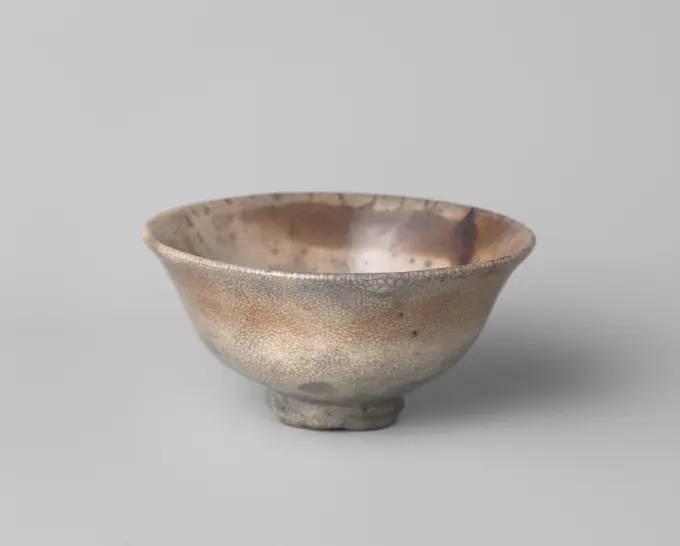
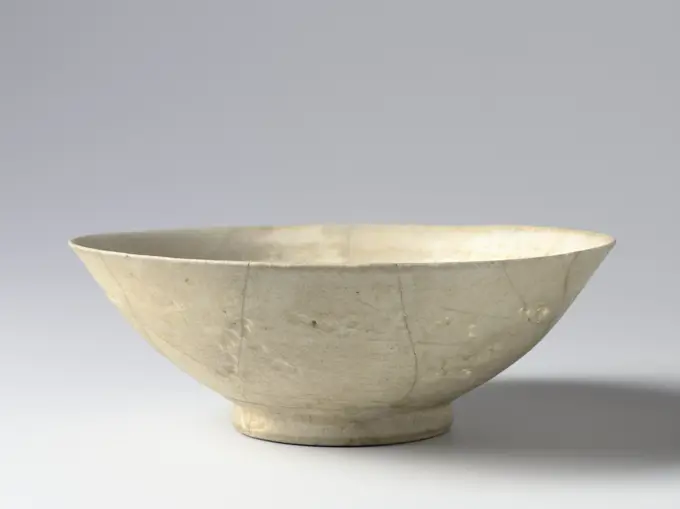
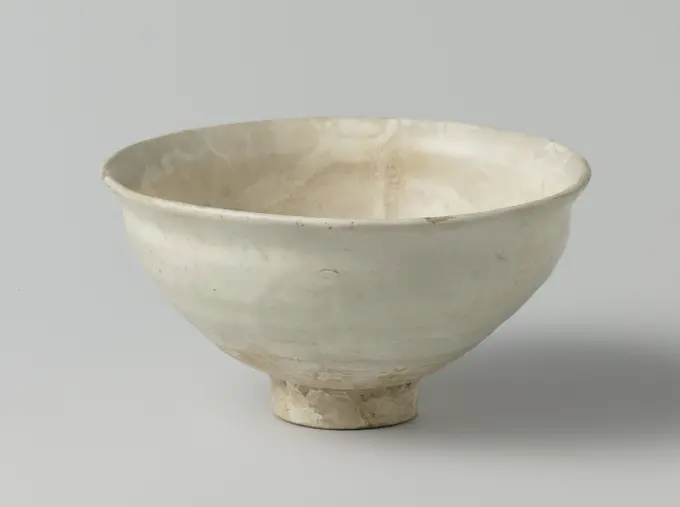
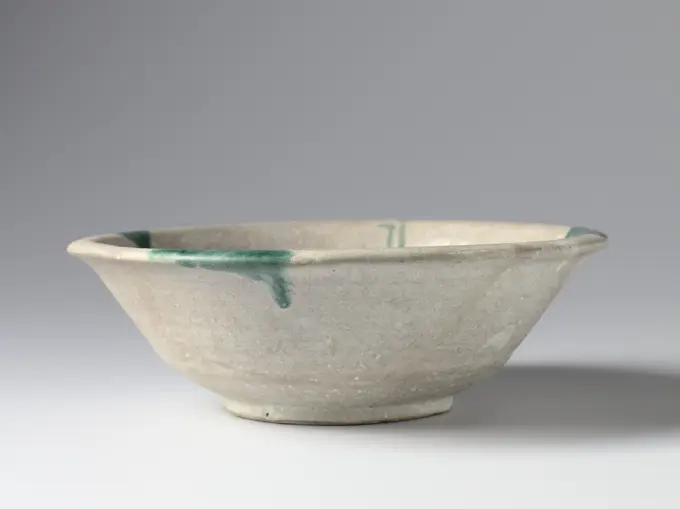
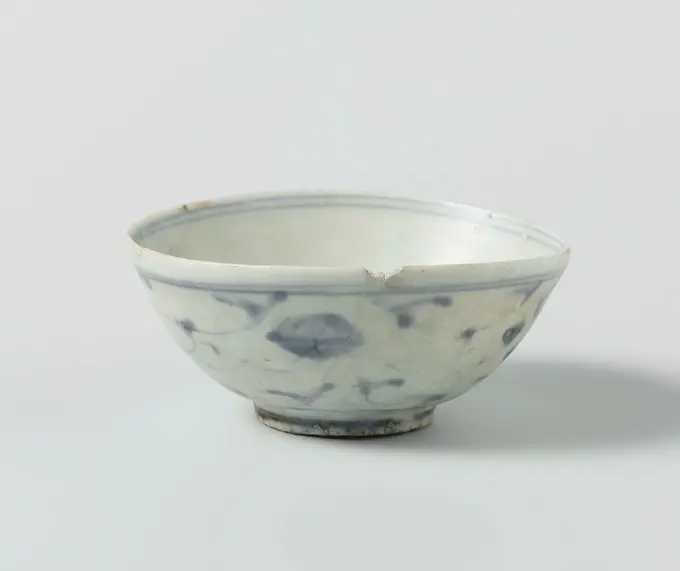
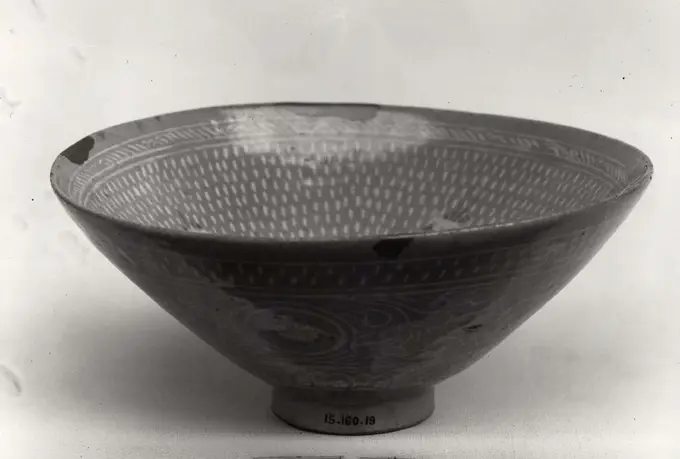
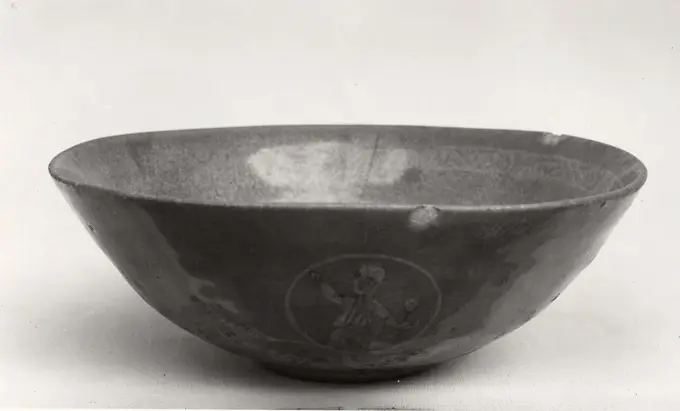
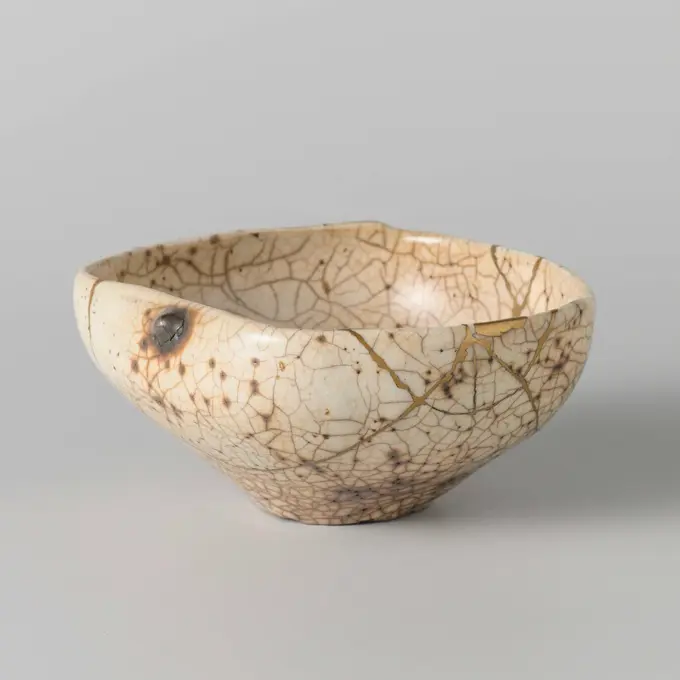
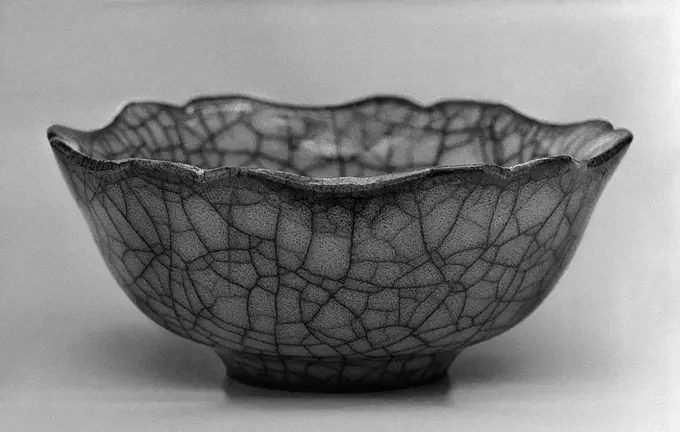
Bowl with a greyish brown spotted cream glaze, anonymous, c. 1600 - c. 1699 Come from stoneware, covered with a cracked cream -colored glaze with gray -brown spots. Five prenes on the bottom. Korea stoneware. glaze vitrification Come from stoneware, covered with a cracked cream -colored glaze with gray -brown spots. Five prenes on the bottom. Korea stoneware. glaze vitrification

Assets in this Story

6145-46649479
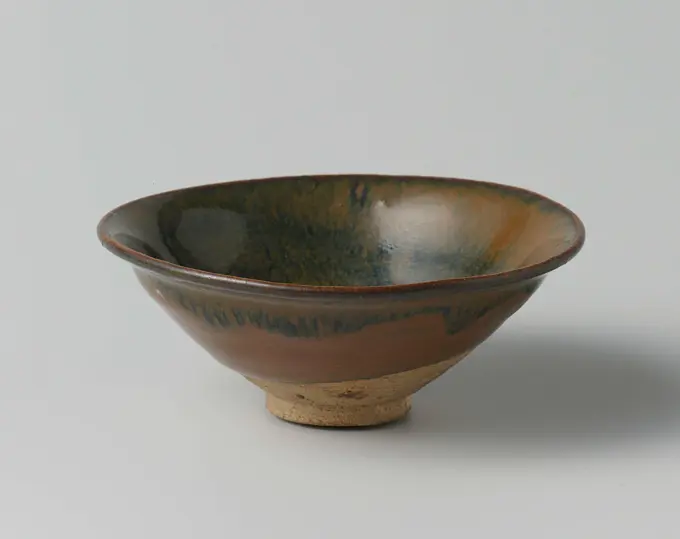
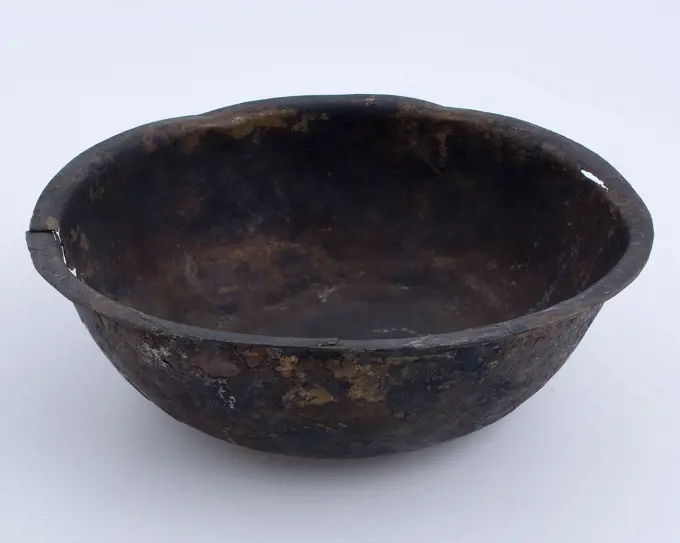
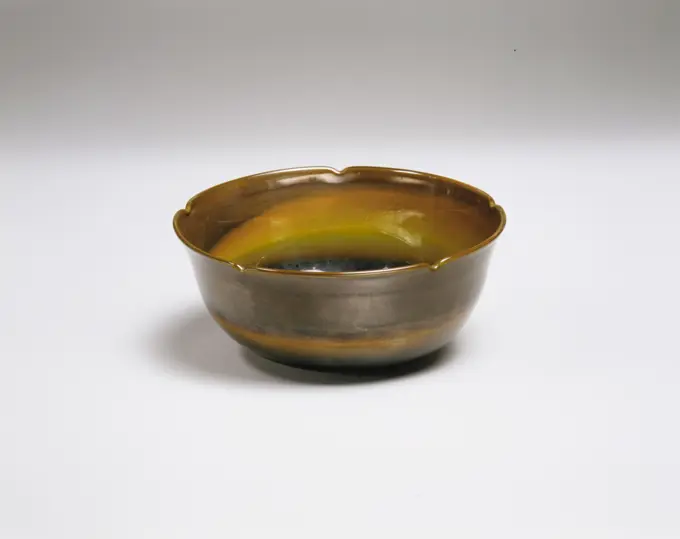
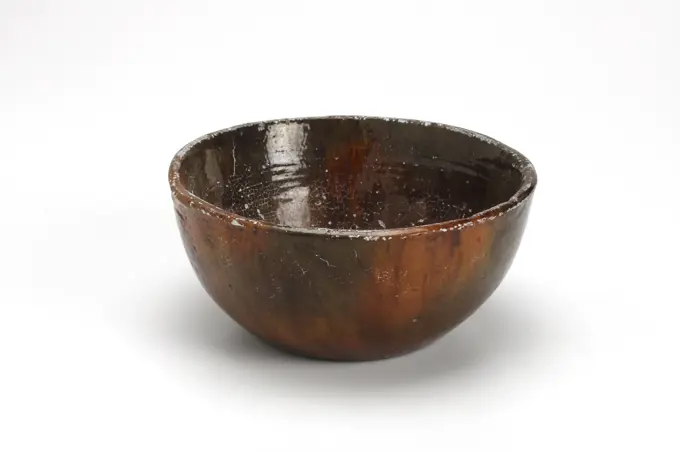
. Tea bowl of stoneware, partly covered with a brown glaze with dark blue spots. The lower half of the bowl is unglazed.
6145-58826508
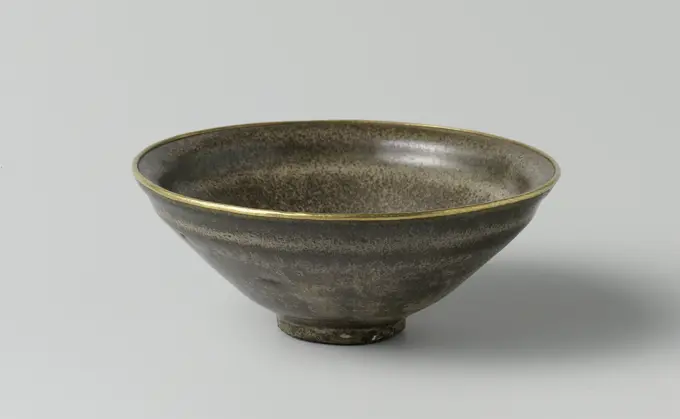
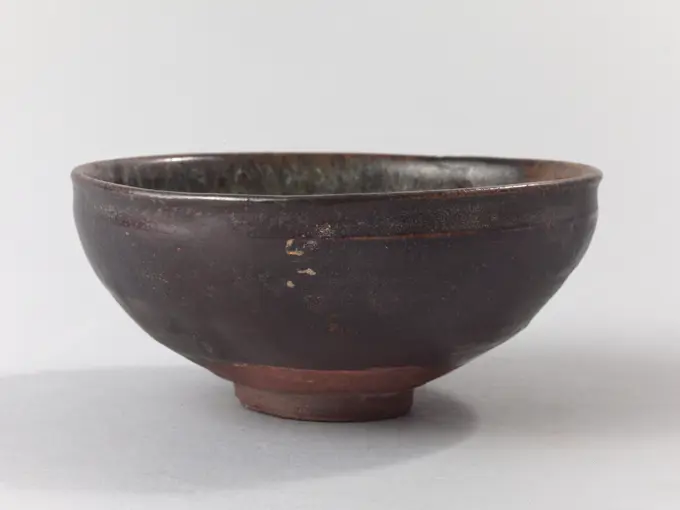
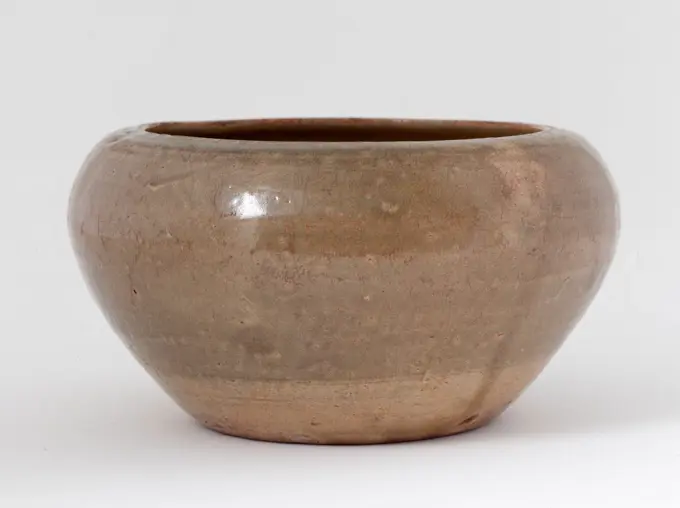
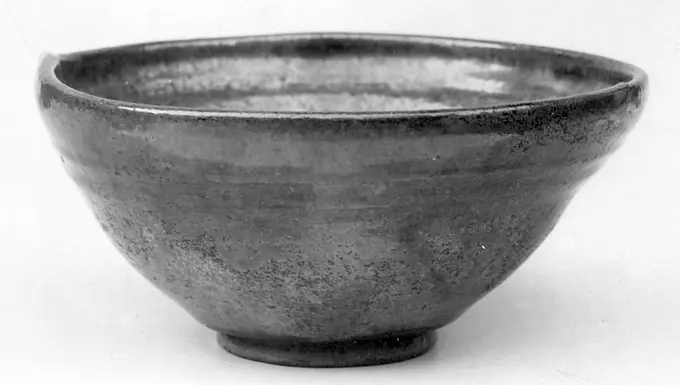
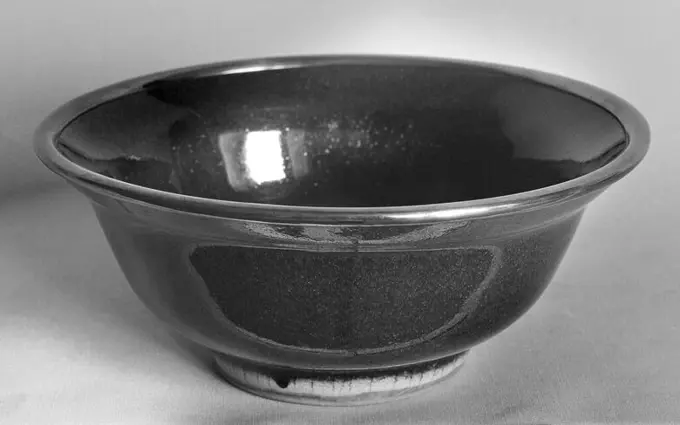
Tea bowl with a grey brown glaze, anonymous, c. 960 - c. 1279 Teaom of stoneware, partially covered with a gray -brown glaze. The center is raised and the edge is contained in a gold -colored metal strap. The underside of the bowl is unglazed. Old label on the bottom with 'W020'. Jian. China stoneware. glaze. rand: gold (metal) vitrification Teaom of stoneware, partially covered with a gray -brown glaze. The center is raised and the edge is contained in a gold -colored metal strap. The underside of the bowl is unglazed. Old label on the bottom with 'W020'. Jian. China stoneware. glaze. rand: gold (metal) vitrification
6145-58872025
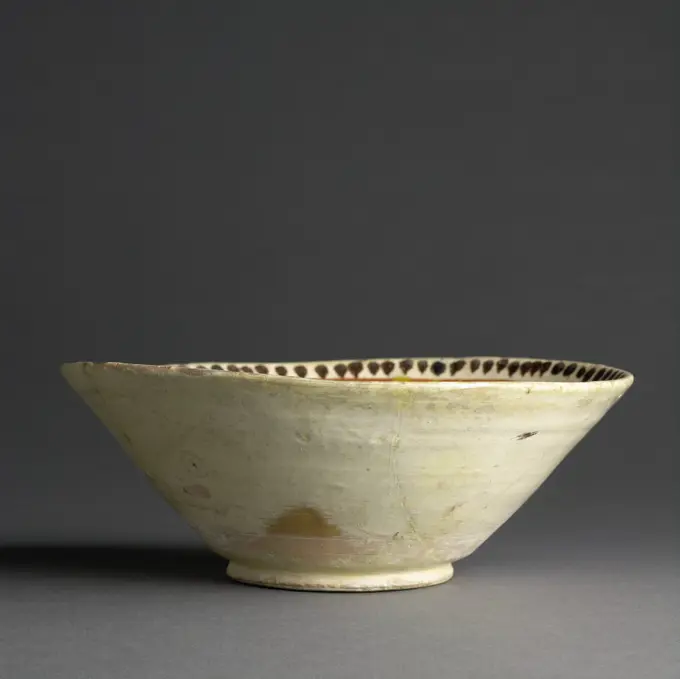
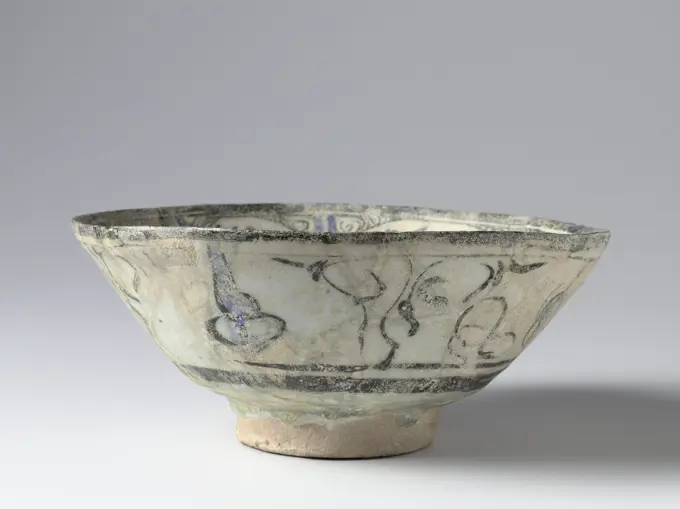
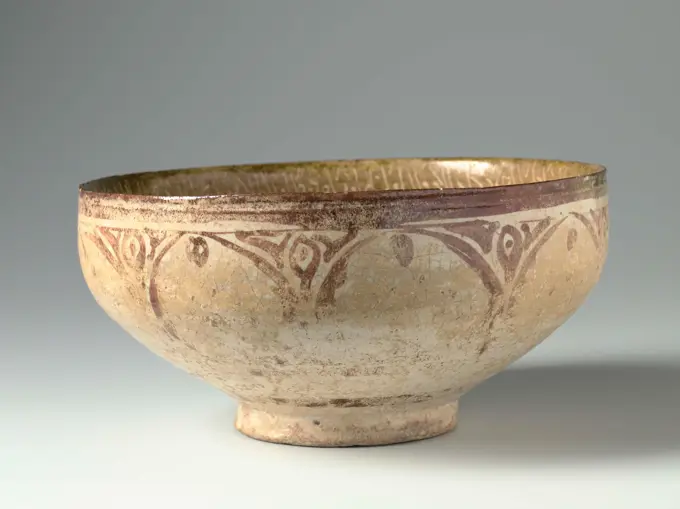
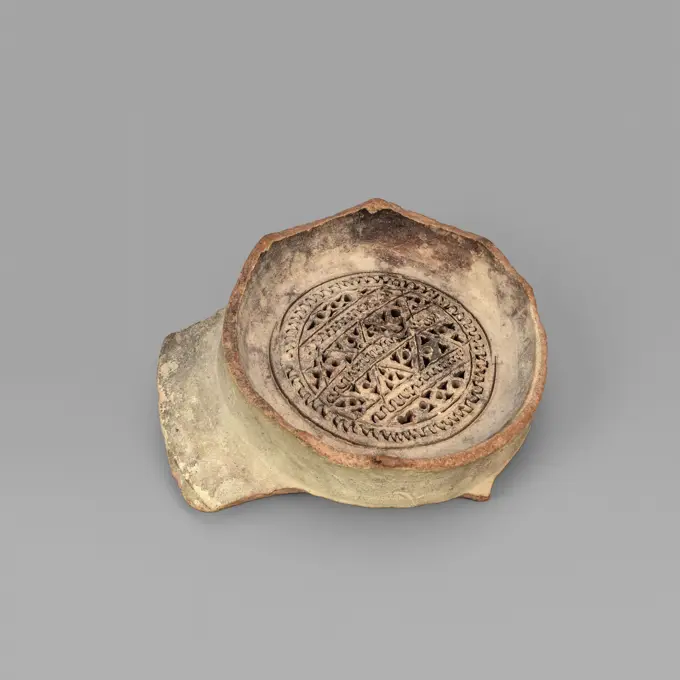
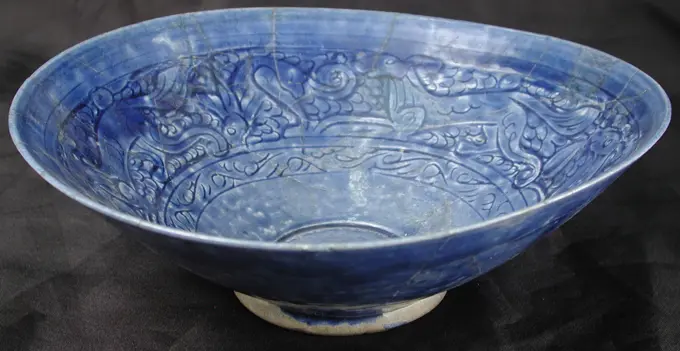
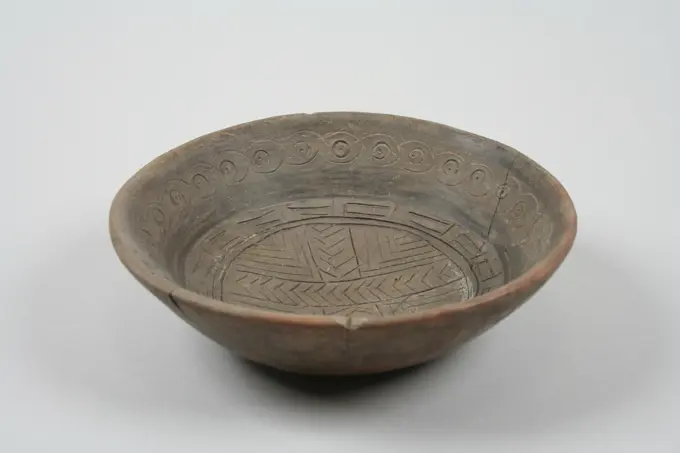
Bowl with incised floral scrolls, anonymous, c. 1100 - c. 1199 Come from quarter-fritgoed, decorated with frightened flowers and curls and porters about which transparent albumlaze. Iran earthenware. glaze engraving / perforating / vitrification Come from quarter-fritgoed, decorated with frightened flowers and curls and porters about which transparent albumlaze. Iran earthenware. glaze engraving / perforating / vitrification
4409-17378040
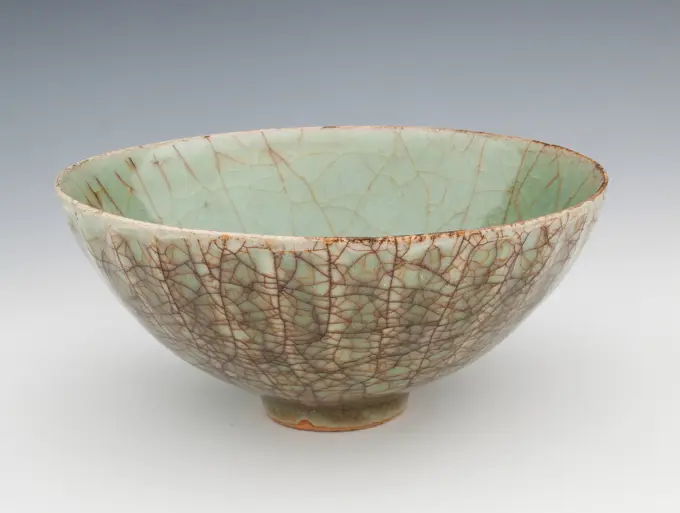
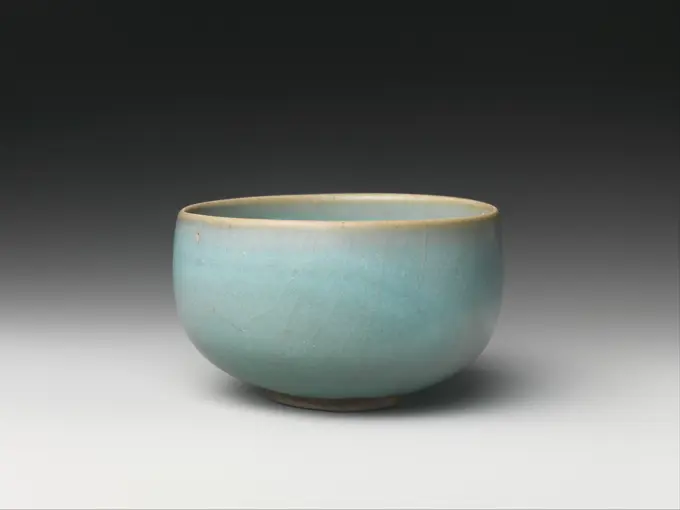
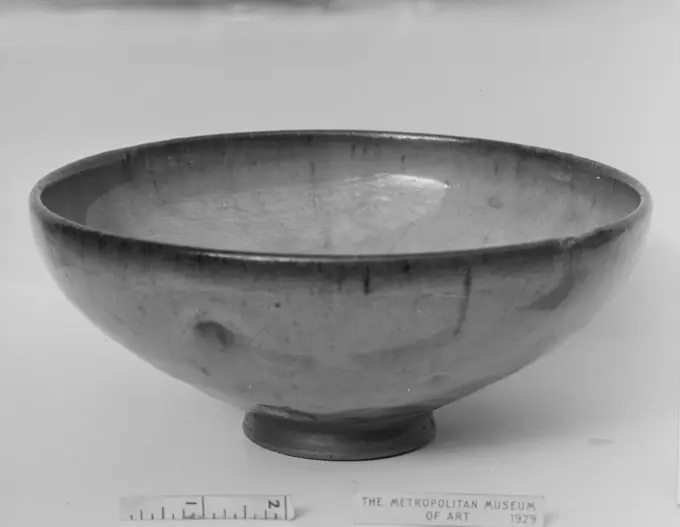
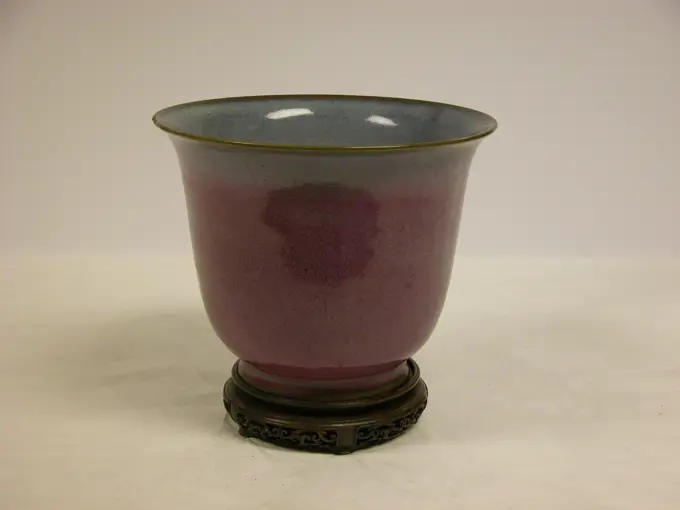
Deep bowl, Jun ware. Artist: Chinese , Jin/Yuan Dynasty. Culture: Chinese. Dimensions: Diameter: 8 5/8 in. (22cm.). Date: 13th-14th century. Museum: Metropolitan Museum of Art, New York, USA.
6145-59033237
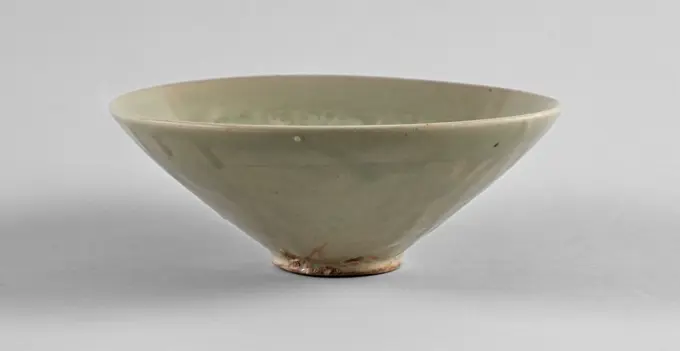
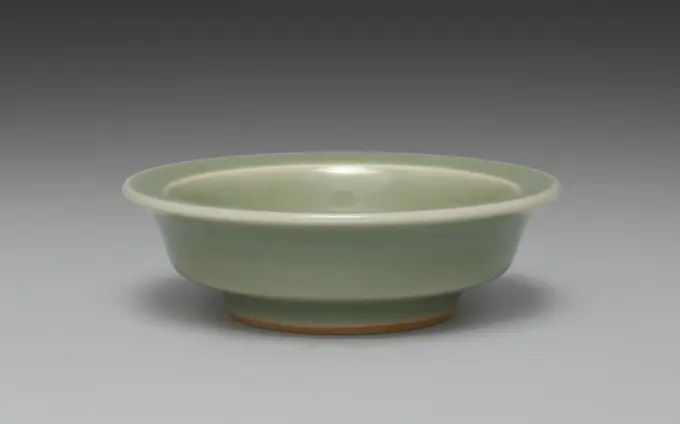
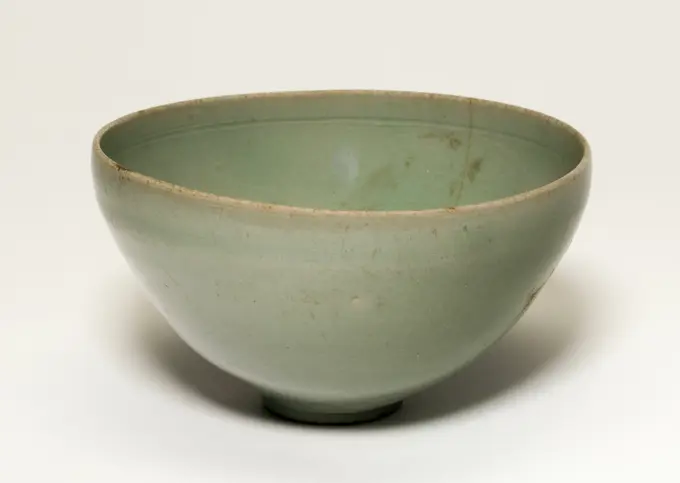
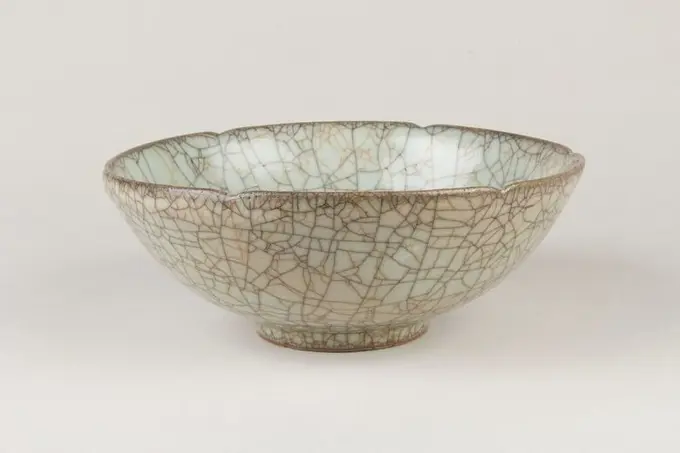
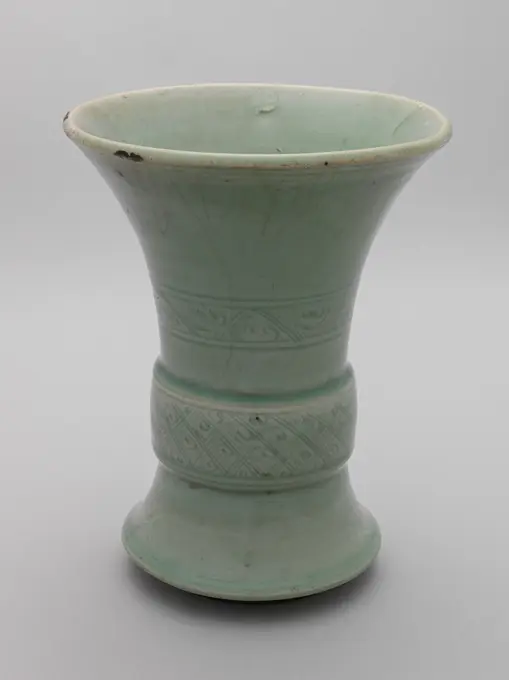
Bol (usual name), 1115. Céladon covered sandstone. Cernuschi Museum, Asia Museum of Asia in the city of Paris.
6145-58826628
Bowl with a greyish brown spotted cream glaze, anonymous, c. 1600 - c. 1699 Come from stoneware, covered with a cracked cream -colored glaze with gray -brown spots. Five prenes on the bottom. Korea stoneware. glaze vitrification Come from stoneware, covered with a cracked cream -colored glaze with gray -brown spots. Five prenes on the bottom. Korea stoneware. glaze vitrification
4409-17547216
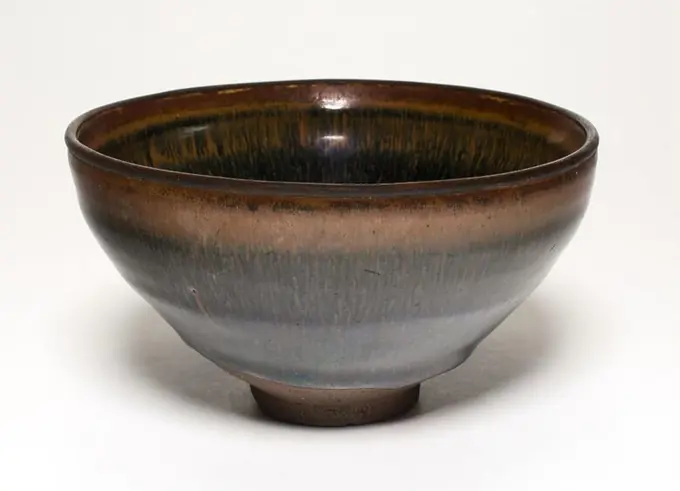
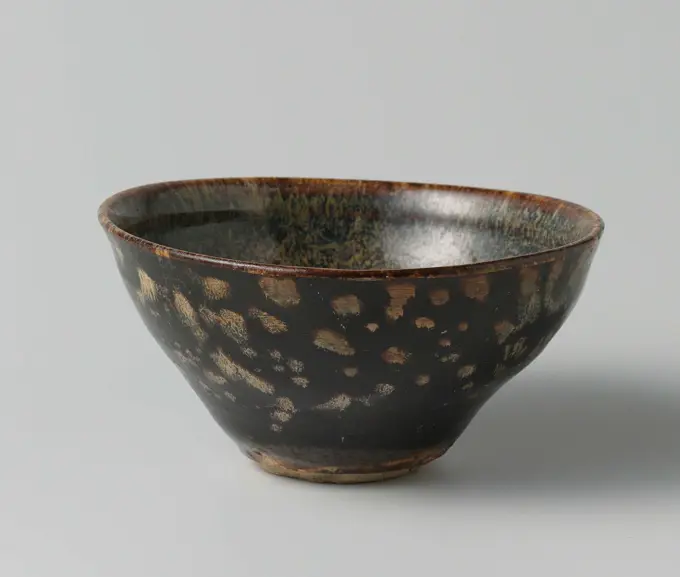
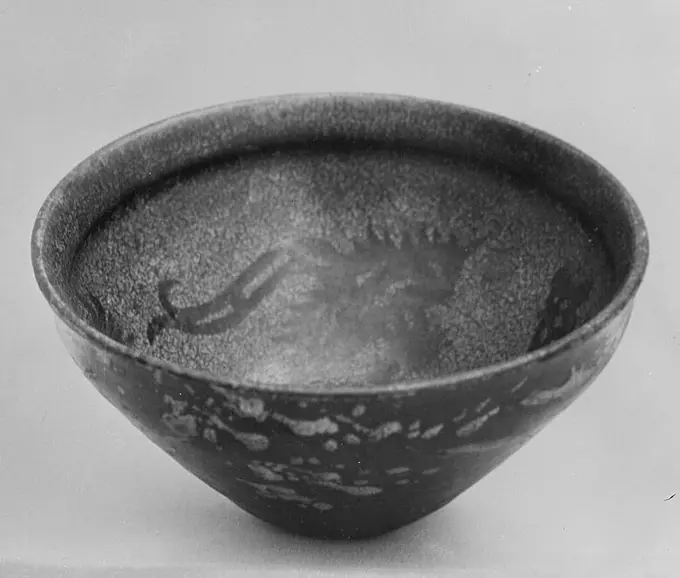
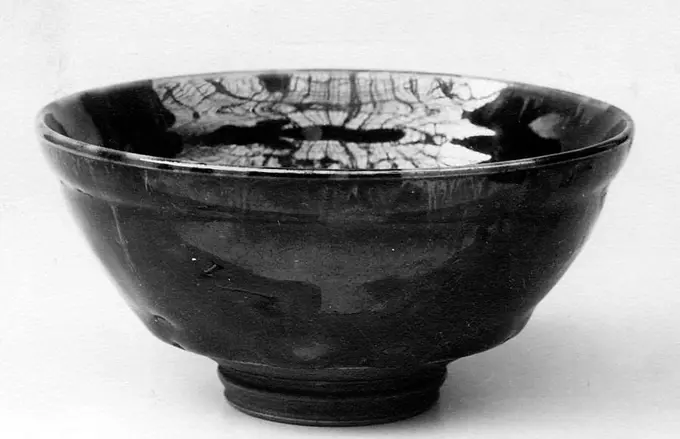
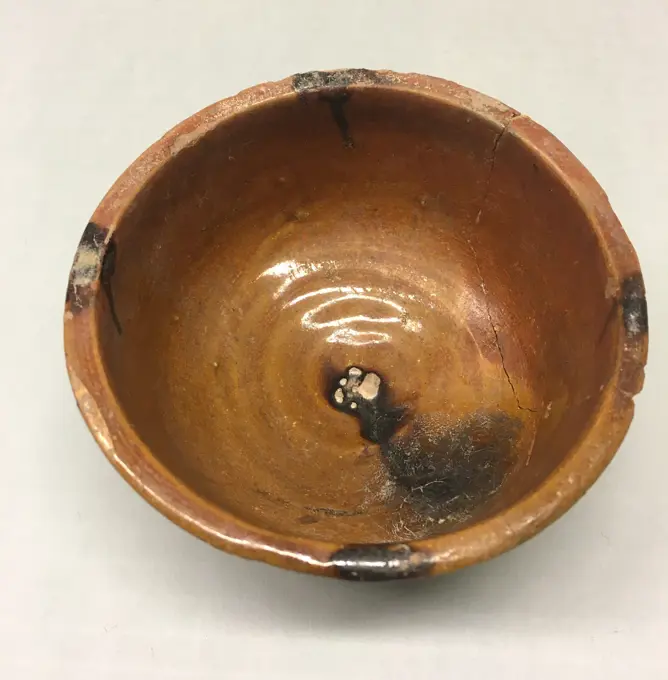
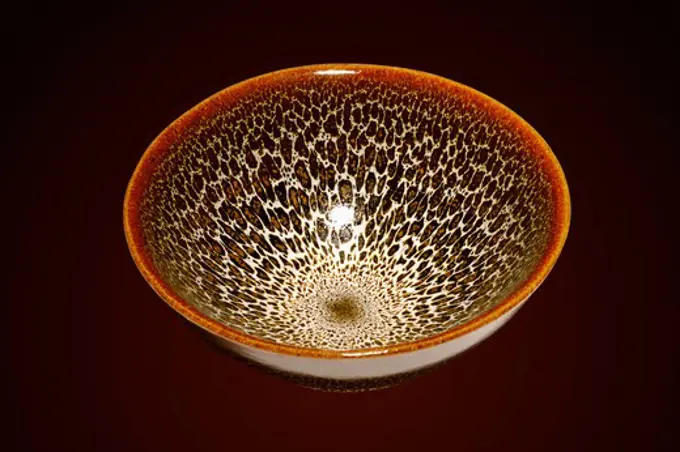
Tea Bowl. China. Date: 960 AD-1279. Dimensions: H. 6.8 cm (2 11/16 in.); diam. 12.1 cm (4 3/4 in.). Jian ware; stoneware with dark brown "hare's fur" glaze. Origin: China. Museum: The Chicago Art Institute, Chicago, USA.
6145-58863085
Bowl with vertical lines, anonymous, c. 1100 - c. 1199 Come from Kwartsfritgoed with a transparent alternator. On the inner wall a bond with entered  Vertical lines. Iran earthenware. glaze engraving / vitrification Come from Kwartsfritgoed with a transparent alternator. On the inner wall a bond with entered  Vertical lines. Iran earthenware. glaze engraving / vitrification
6145-58826584
Bowl on a high footring with a white slip decoration, anonymous, c. 1127 - c. 1279 Come from stoneware on a high and narrow foot ring and a bell -shaped wall, partially covered with a white sludge. The underside and foot ring are unglazed. A crack in the wall. Cizhou (Juluxian). China stoneware. glaze vitrification Come from stoneware on a high and narrow foot ring and a bell -shaped wall, partially covered with a white sludge. The underside and foot ring are unglazed. A crack in the wall. Cizhou (Juluxian). China stoneware. glaze vitrification
6145-58826610
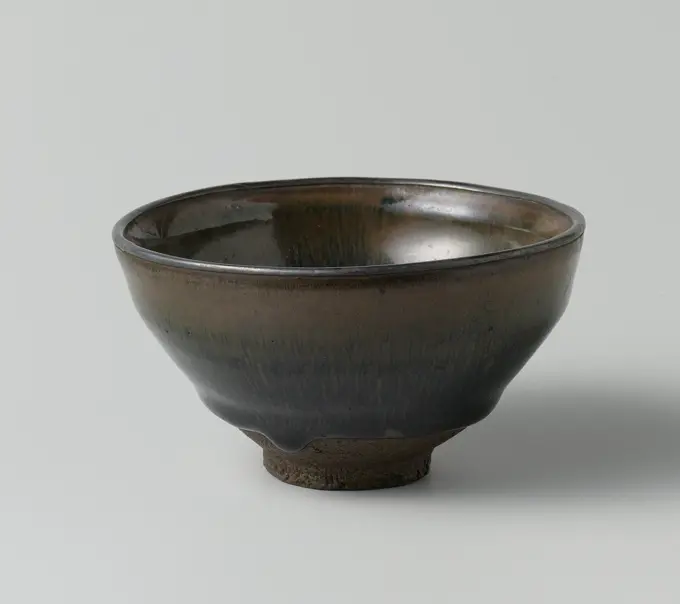
Teabowl with a 'hare's fur' glaze, anonymous, c. 1127 - c. 1279 Theekom van Steengoed, partially covered with a black glaze with golden brown stripes (hare sheet). The lower half of the bowl is unglazed. The edge is caught in a metal band. Jian. Fujian stoneware. glaze. metal vitrification Theekom van Steengoed, partially covered with a black glaze with golden brown stripes (hare sheet). The lower half of the bowl is unglazed. The edge is caught in a metal band. Jian. Fujian stoneware. glaze. metal vitrification
4409-17430358
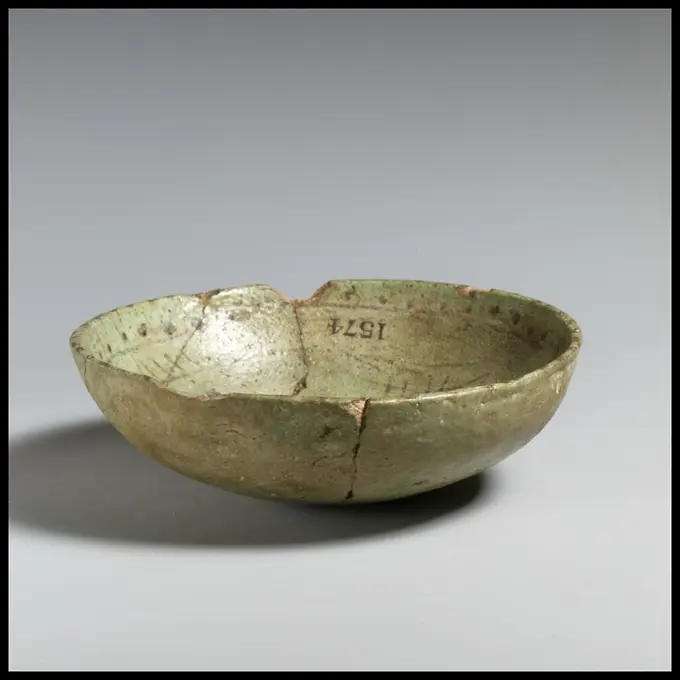
Bowl. Culture: China. Dimensions: H. 2 1/4 in. (5.7 cm); Diam. 5 in. (12.7 cm). Museum: Metropolitan Museum of Art, New York, USA.
6145-58860738
Bowl with (pseudo-)inscription and green spots, anonymous, c. 800 - c. 899 Come of earthenware decorated with (pseudo-) script and three spots in green on Engobe of white tinglaze, covered with a transparent lead glaze. Nishapur earthenware. glaze painting / vitrification Come of earthenware decorated with (pseudo-) script and three spots in green on Engobe of white tinglaze, covered with a transparent lead glaze. Nishapur earthenware. glaze painting / vitrification
6145-58997547
Bowl. "Hare fur" covered sandstone. Paris, Cernuschi museum. 78845-7 Asian art, table art, bowl, old ceramic, container, dishes
4409-17280764
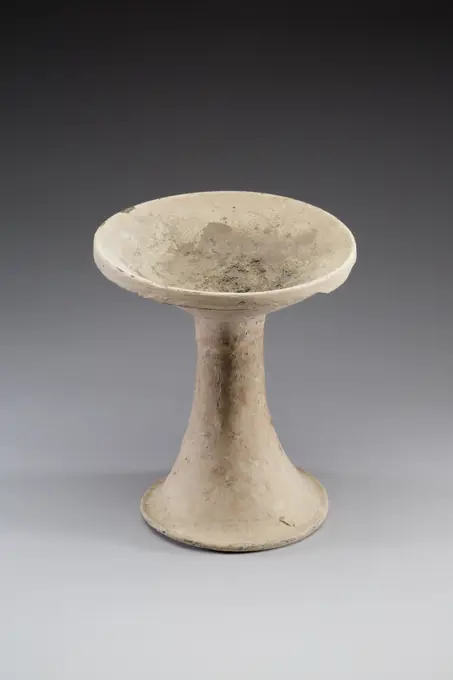
COPA CON PIE ACAMPANADA DE LA EDAD DE HIERRO. Location: MUSEO PIGORINI. Rome. ITALIA.
6145-29767946
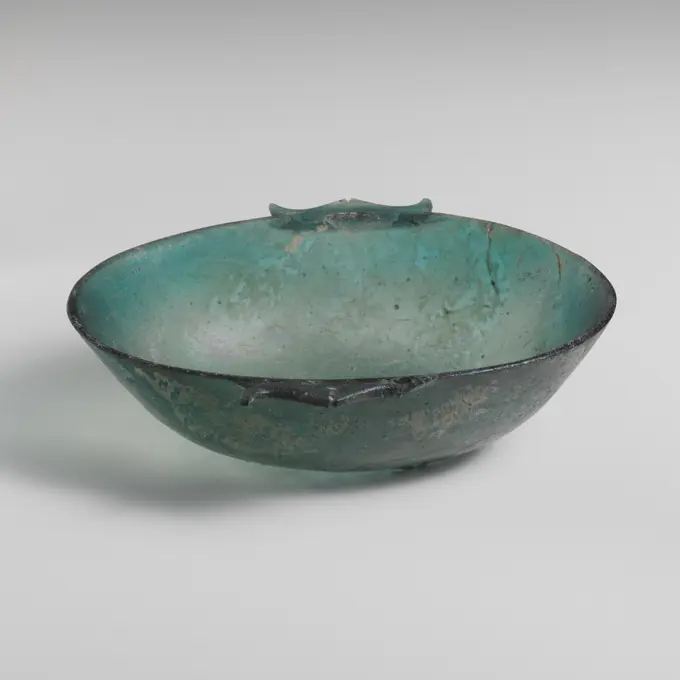
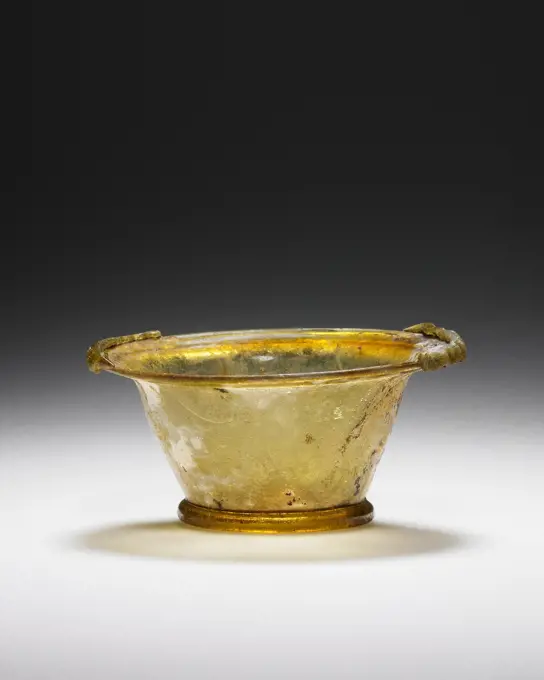
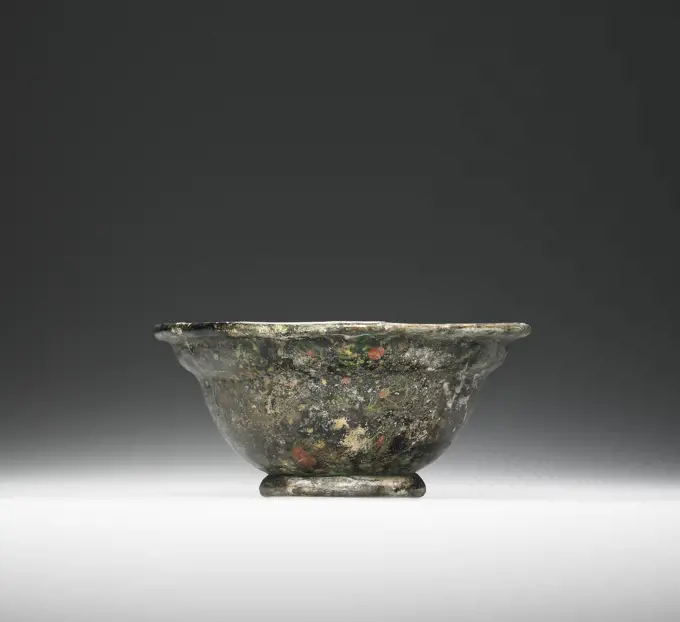
Glass oval bowl first half of 1st century A.D. Roman Translucent turquoise blue green.Plain rim with ground upper edge; convex curving side, tapering downwards to flat oval bottom; two integral horizontal handles at rim on either long side, carved out in the shape of stylized palmettes with outward curving ends and a central projecting bud with incised groove on upper surface.Cracked on bottom and lower side with one patch of fill; many pinprick bubbles; dulling, pitting, and iridescent weathering.The unusual shape and color of this bowl suggest that it is the product of the early Roman glass industry in Italy. Since it is said to have been found near Nazareth in Roman Palestine, it can be seen as a rare example of a glass export from Italy to the eastern provinces of the Empire.. Glass oval bowl. Roman. first half of 1st century A.D.. Glass; cast and cut. Early Imperial, Julio-Claudian. Glass
4409-17407749
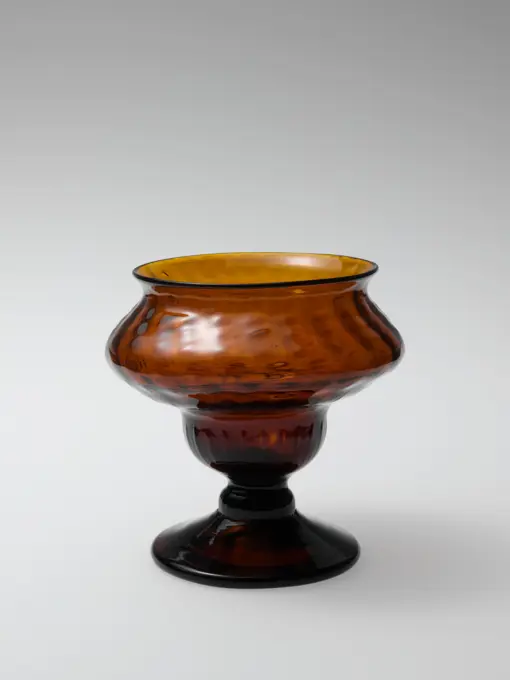
Saltcellar. Culture: possibly British. Dimensions: Height: 1 1/2 in. (3.8 cm);Diam. of rim: 2 5/8 in. (6.7 cm);Diam. of base: 2 1/4 in. (5.7 cm). Date: 18th century. Museum: Metropolitan Museum of Art, New York, USA.
6145-58826490
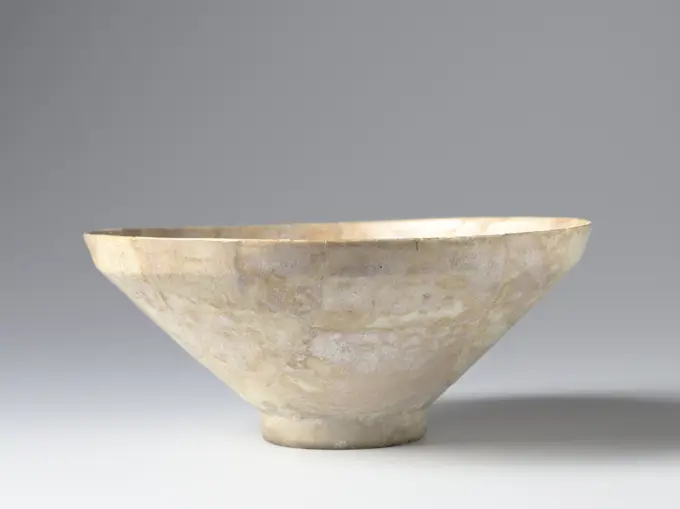
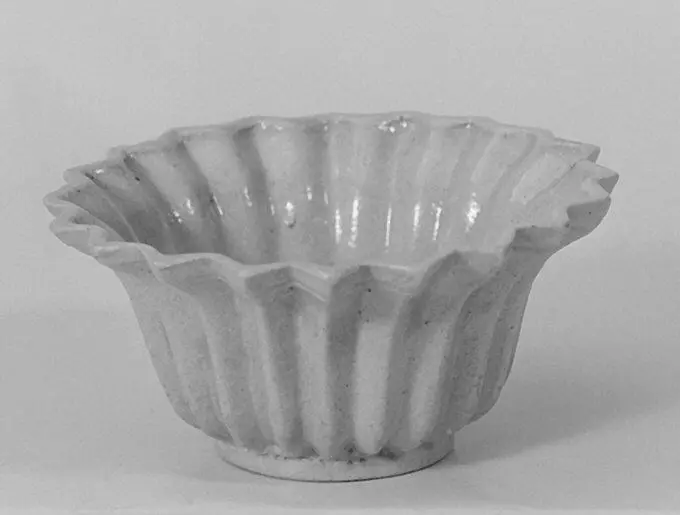
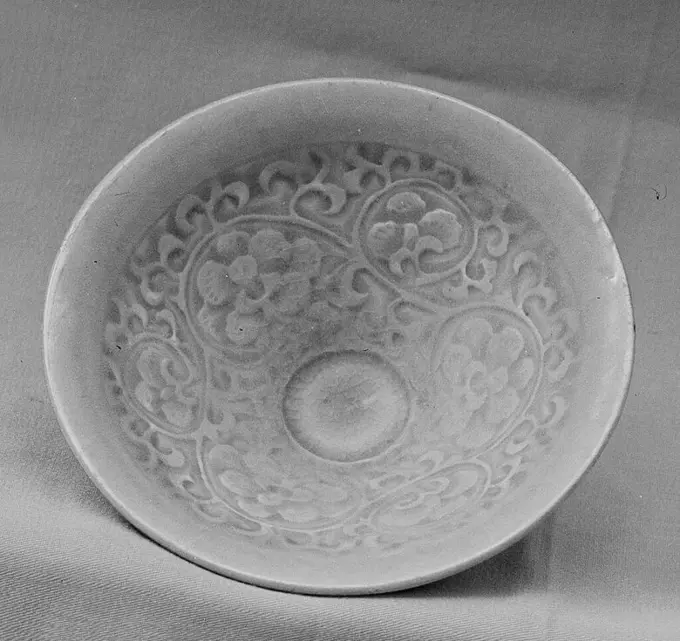
Conical bowl with three incised medallions, anonymous, c. 960 - c. 1279 Conical bowl of stoneware with a scalloped edge, covered with a transparent enamel with a light blue tint. On the inner wall three times an Ingrift Medallon with a decoration. Two cracks in the edge. Qingbai. China stoneware. glaze engraving / vitrification Conical bowl of stoneware with a scalloped edge, covered with a transparent enamel with a light blue tint. On the inner wall three times an Ingrift Medallon with a decoration. Two cracks in the edge. Qingbai. China stoneware. glaze engraving / vitrification
6145-59033281
1100. Céladon coverage sandstones. Cernuschi Museum, Asia Museum of Asia in the city of Paris.
4409-17412646
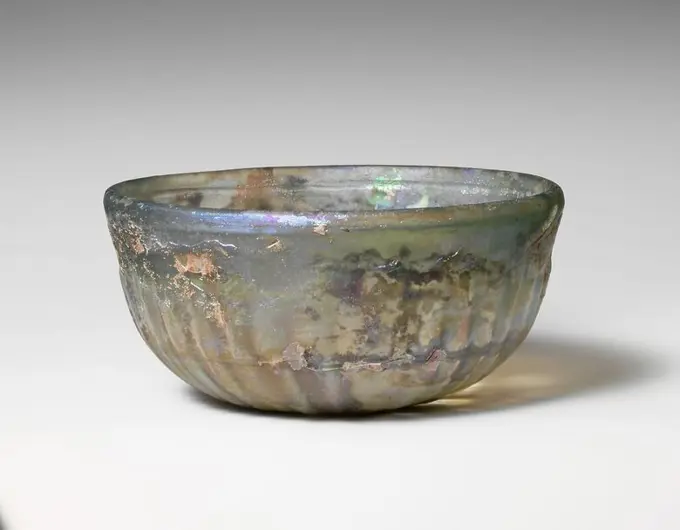
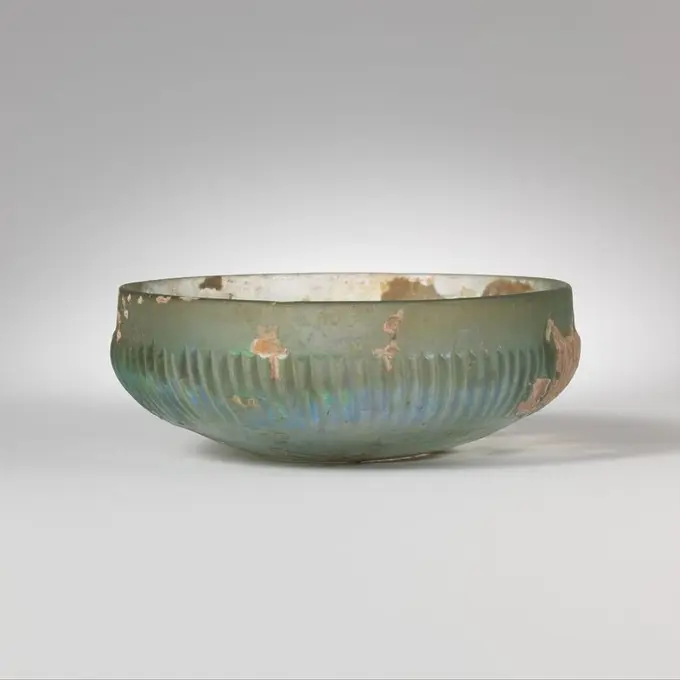
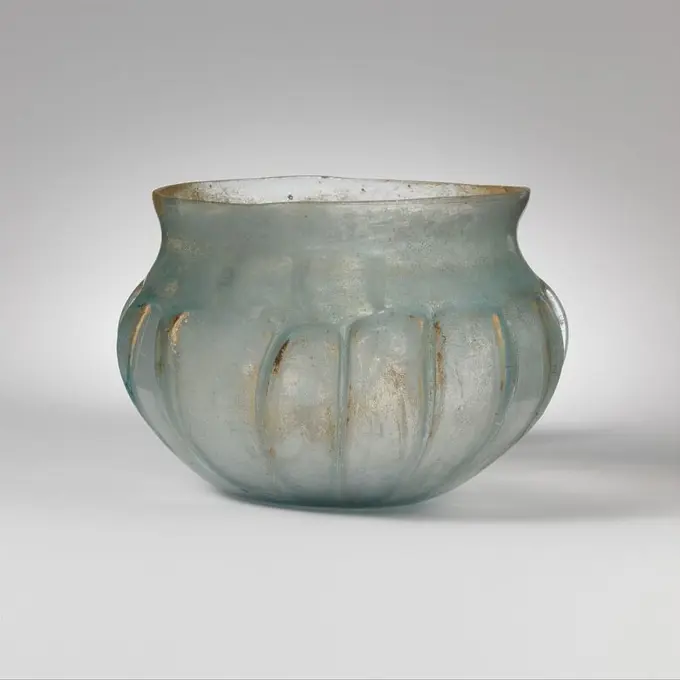
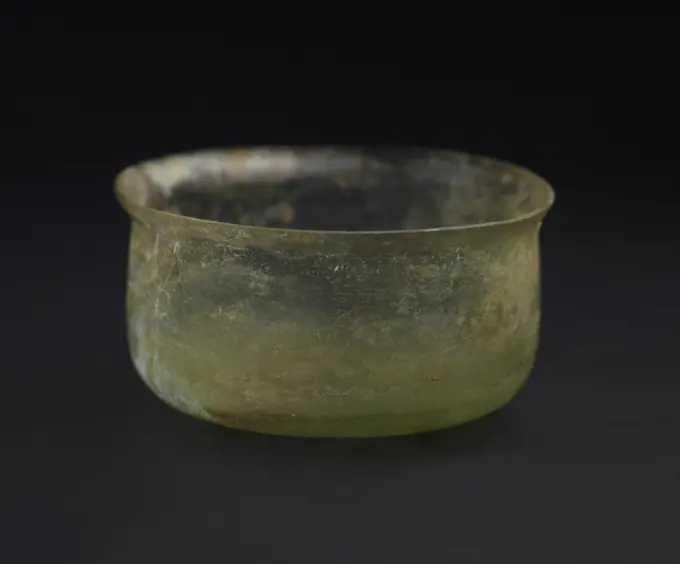
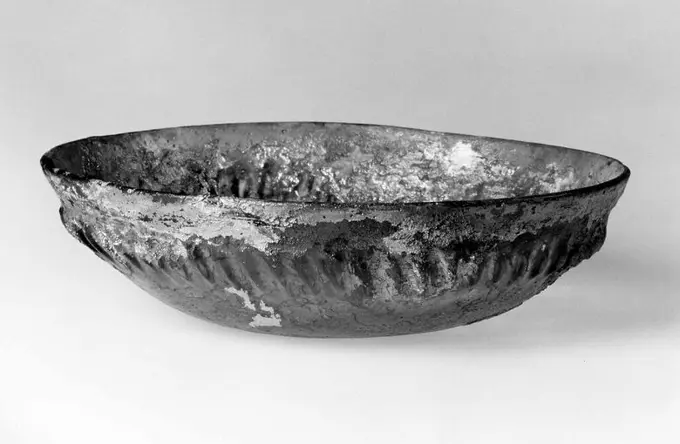
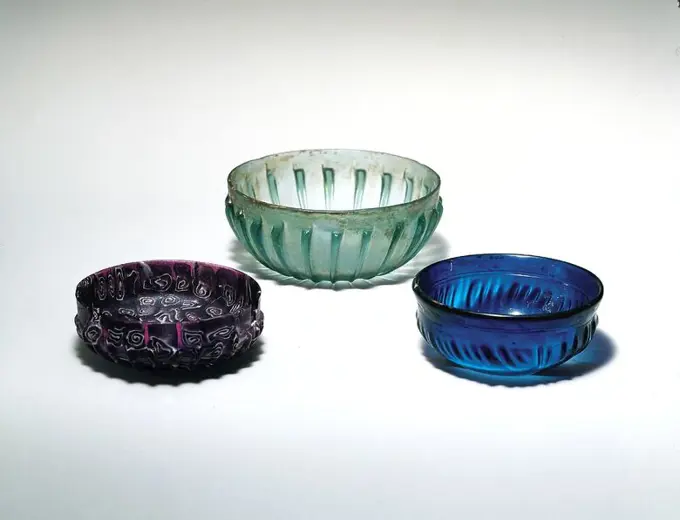
Glass ribbed bowl. Culture: Roman. Dimensions: H.: 2 1/8 x 4 5/8 in. (5.4 x 11.7 cm). Date: late 1st century B.C.-early 1st century A.D..Translucent pale blue green.Vertical rounded rim; deep sides with plain band around top, curving in to slightly concave bottom.On interior, one wide horizontal groove below rim, and two narrow, close-set grooves cut in a band around lower body; on exterior, thirty-eight shallow and slightly slanting ribs, tapering downwards and extending to edge of bottom.Intact, but some internal cracks; pinprick bubbles; dulling, deep pitting, and iridescence, with patches of thick creamy weathering.Rotary grinding marks on interior and on plain band around top of sides. Museum: Metropolitan Museum of Art, New York, USA.
6145-46649476
. Tea bowl of stoneware, partly covered with a black-brown glaze with stains crème colored on the outside (tortoiseshell). A saved flower on the bottom; The inner wall with twice a saved Feng Huang and twice a butterfly. The wall has been broken. Jizhou.
6145-29833360
Bowl 4th-7th century Coptic. Bowl 478856
6145-46626759
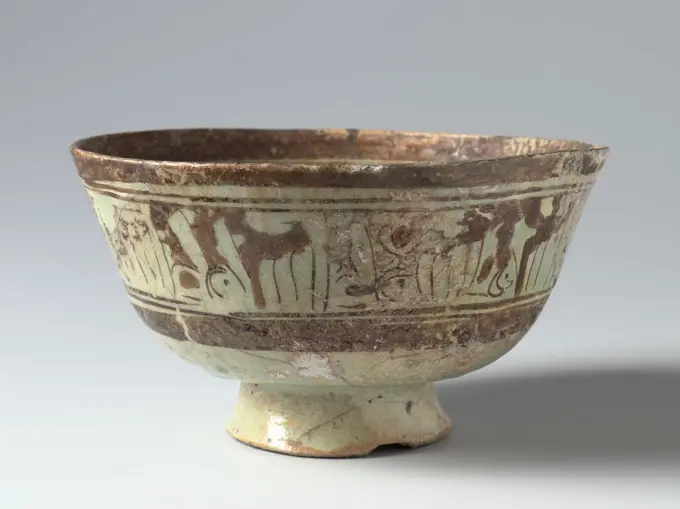
. Quartz frying goods bowl decorated with a inscription and tires with floral drinks in chocolate brown luster on substrate of transparent alkali-lead glaze.
6145-29711164
Bowl 4th-7th century Coptic. Bowl 478486
6145-29771534
Bowl 4th-7th century Coptic. Bowl 478821
4409-17374107
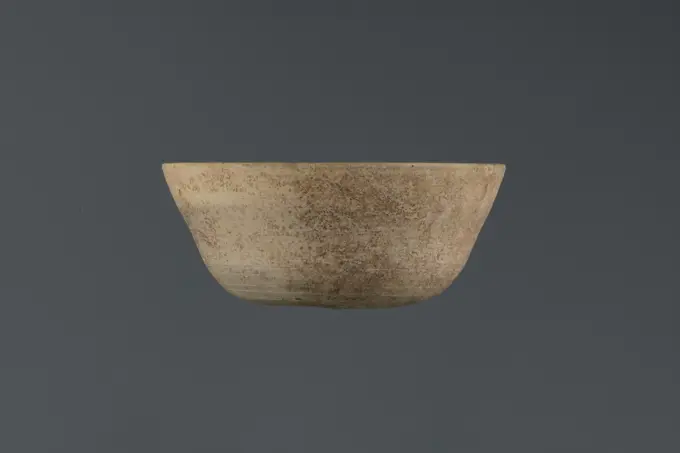
Bowl. Culture: Coptic. Dimensions: Overall: 1 5/8 x 4 1/4 in. (4.2 x 10.8 cm). Date: 4th-7th century. Museum: Metropolitan Museum of Art, New York, USA.
6145-46648907
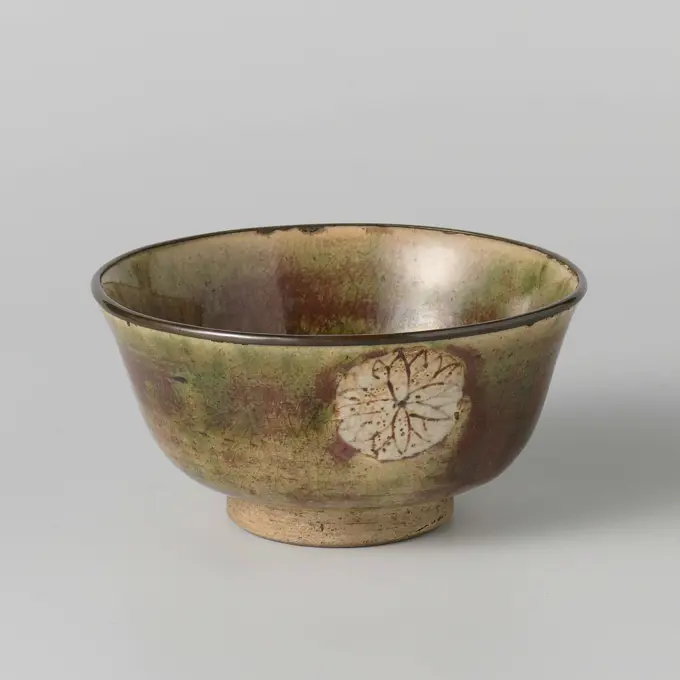
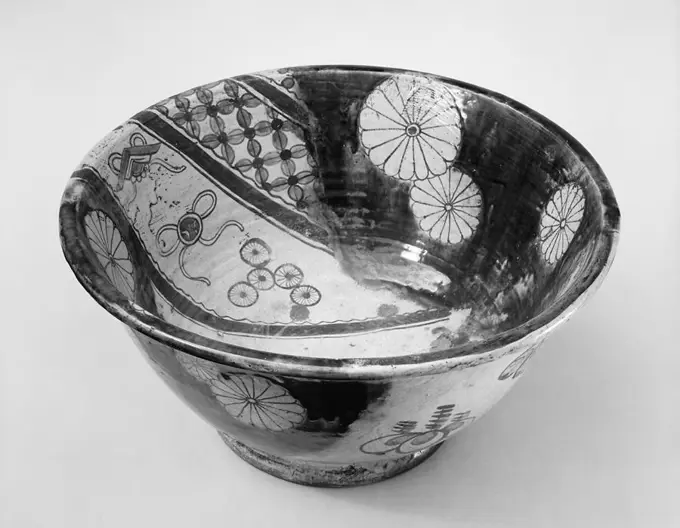
. Tea bowl of stoneware, covered with a red-green (imitation peach bloom) Glaze. A saved and painted chrysanthemum on the wall. The edge is caught in an iron band. The underside of the bowl is unglazed. Kyoyaki.
6145-58856505
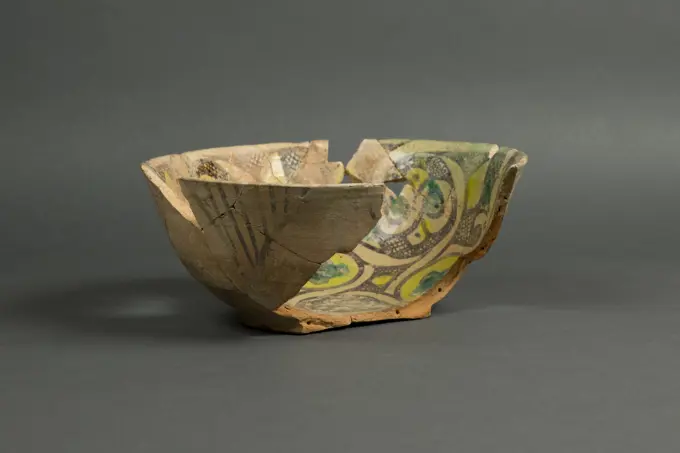
Bowl with stylized floral scrolls in green and yellow, anonymous, c. 900 - c. 999 Come of earthenware decorated with stylized flower vines in green, yellow and manganese -black sludge on Engobe from white sludge. Nishapur earthenware. lead glaze painting / vitrification Come of earthenware decorated with stylized flower vines in green, yellow and manganese -black sludge on Engobe from white sludge. Nishapur earthenware. lead glaze painting / vitrification
6145-29066090
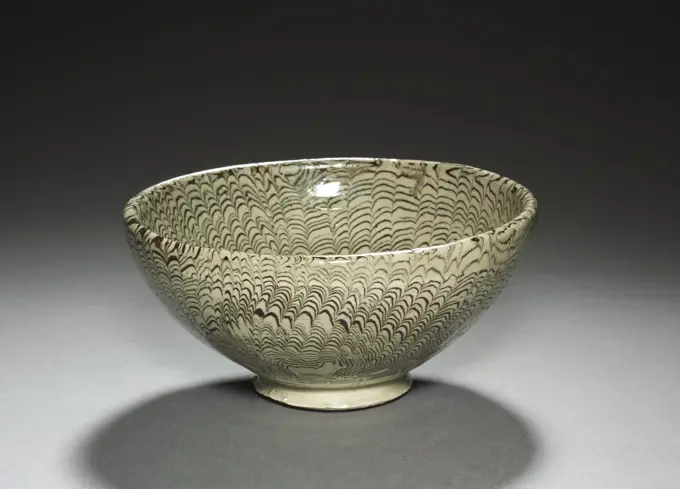
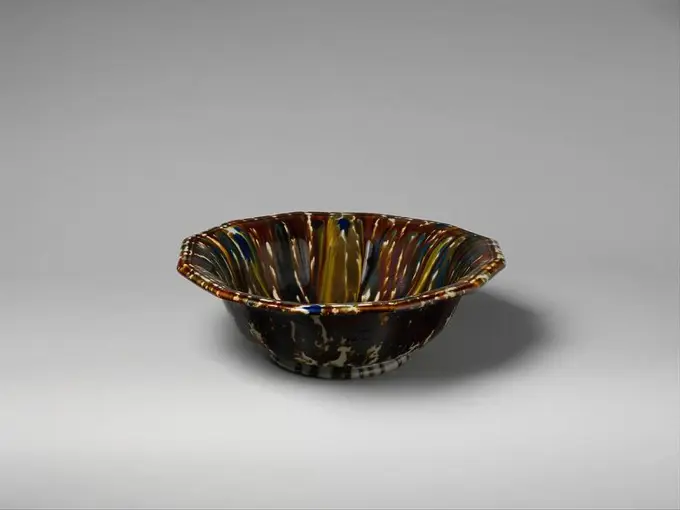
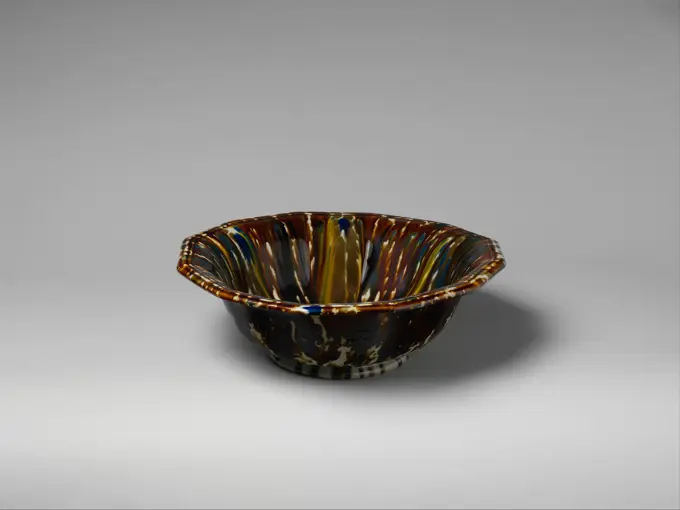
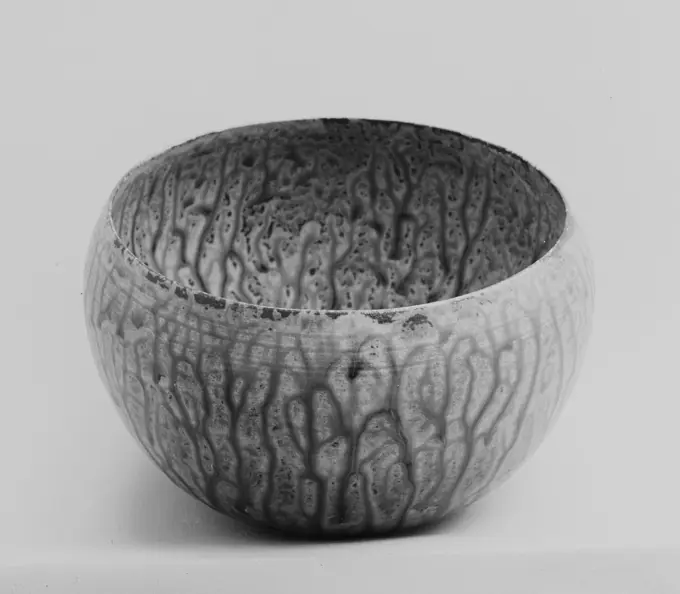
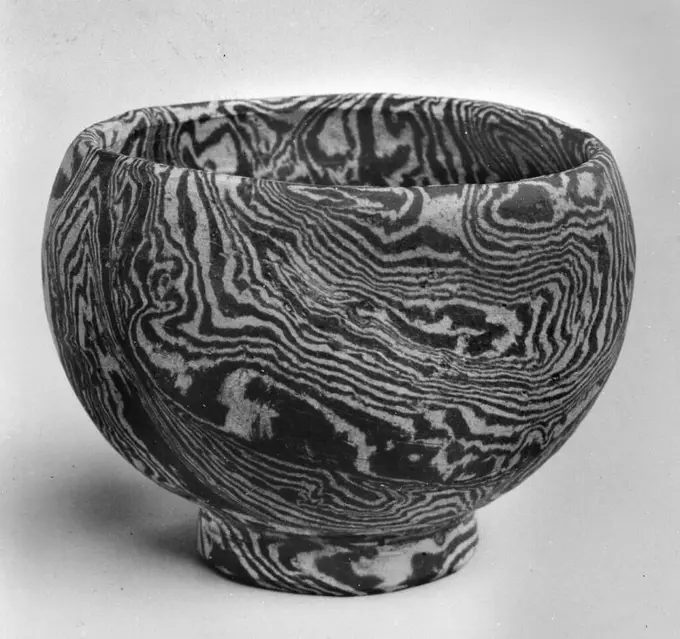
Marbled Bowl, 1100s. China, possibly Henan province, Xinwu, Dangyangyu, Northern Song dynasty (960-1127). Glazed stoneware; diameter: 7 x 13.3 cm (2 3/4 x 5 1/4 in.).
6145-30357046
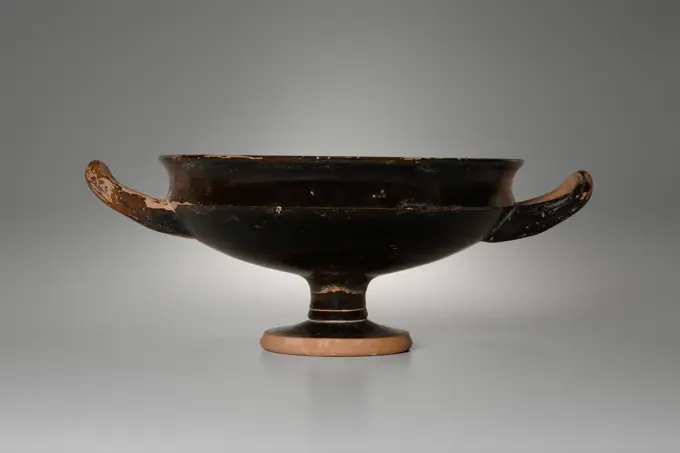
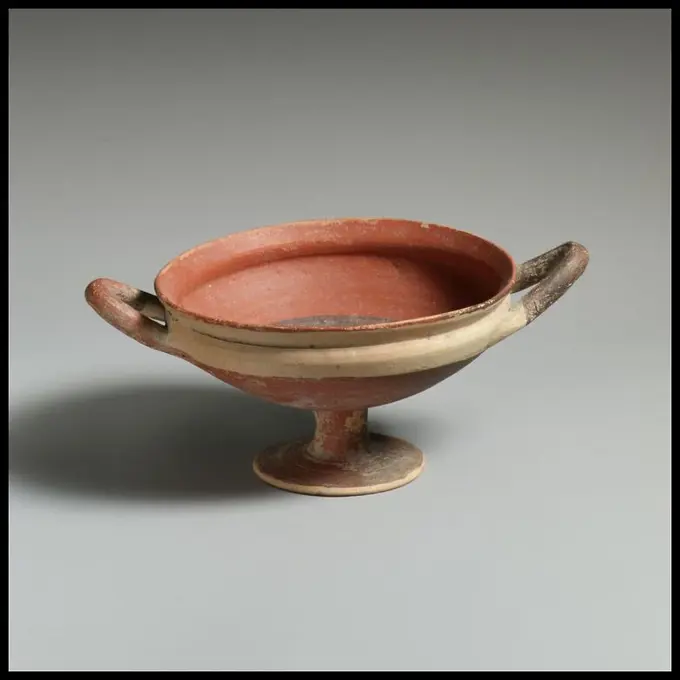
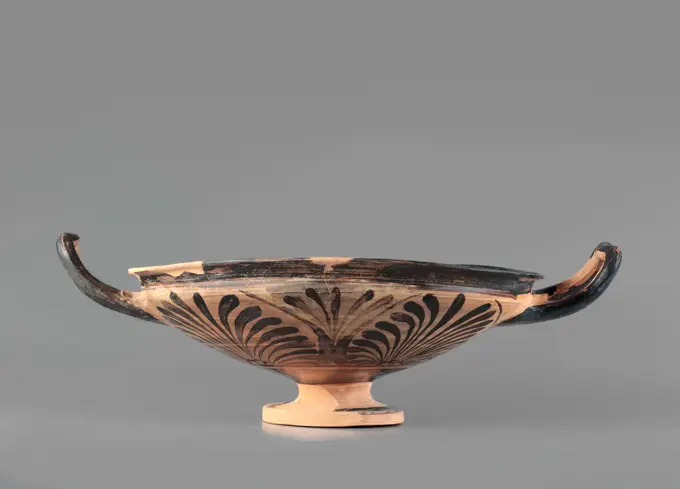
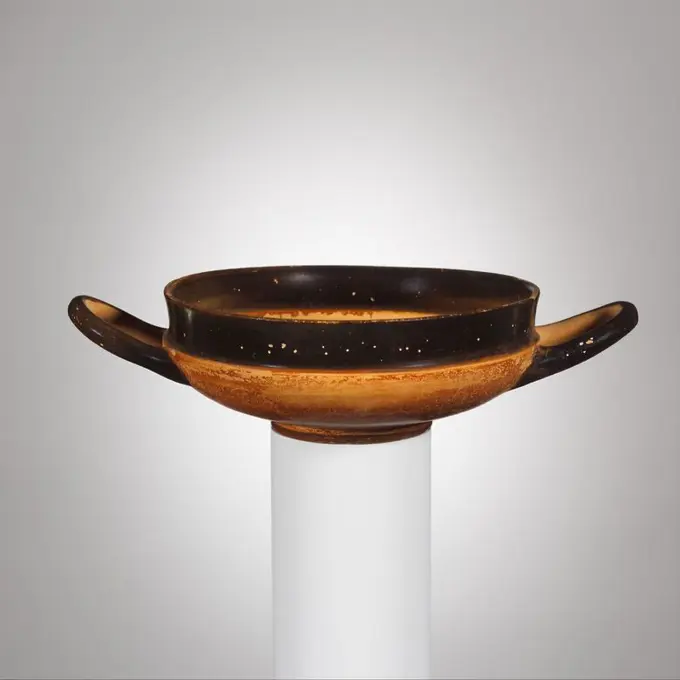
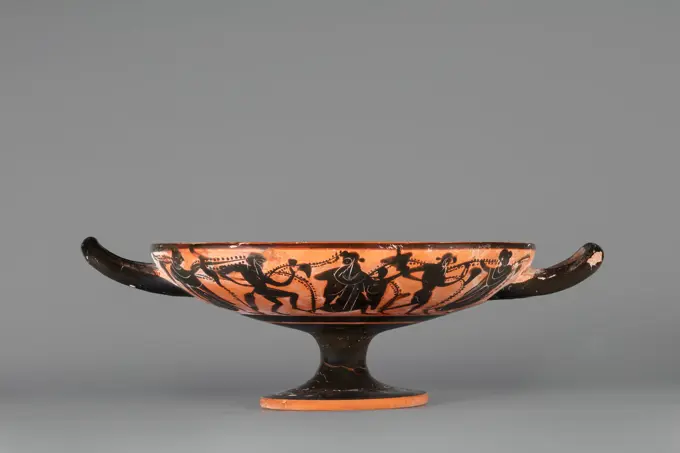
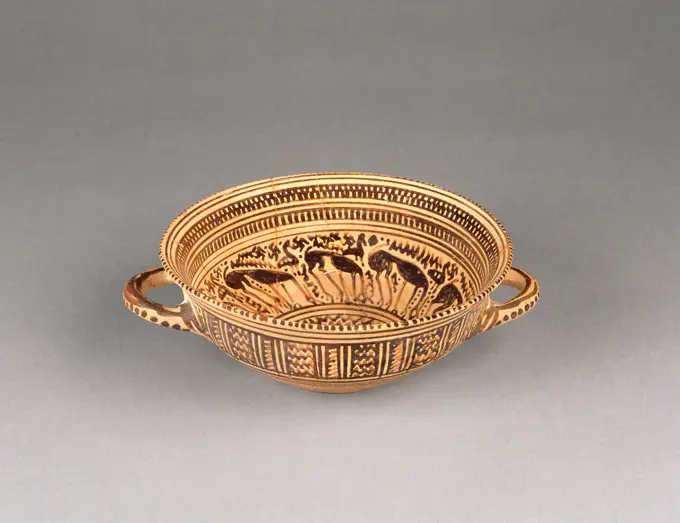
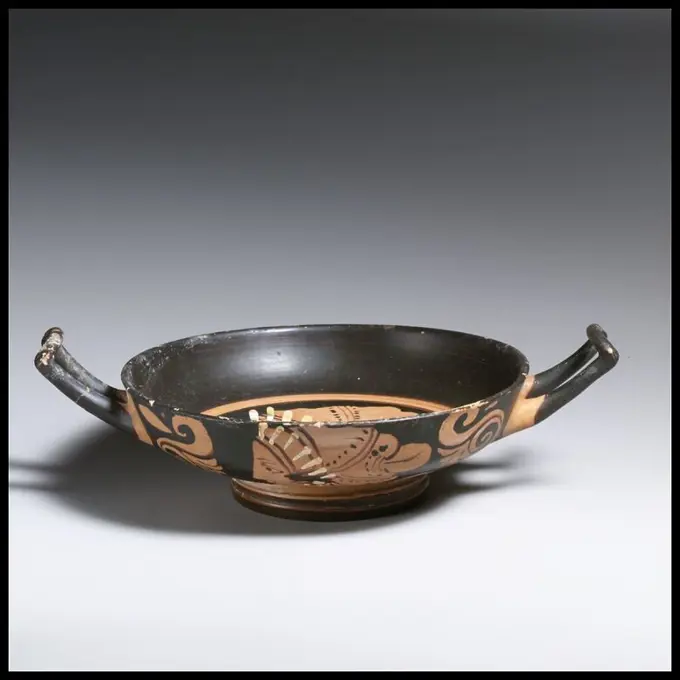
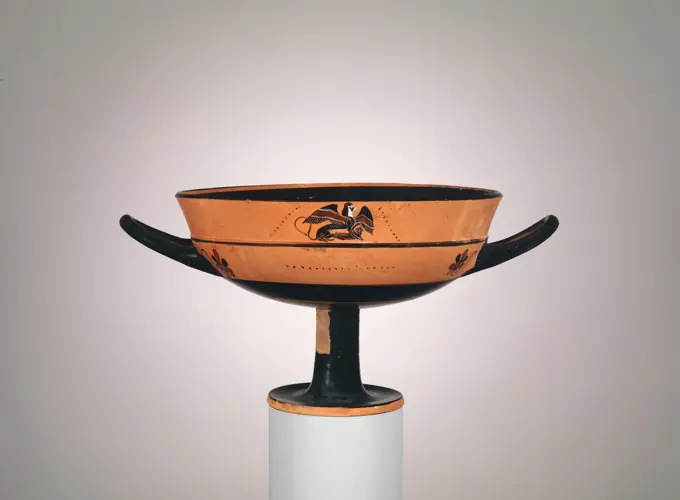
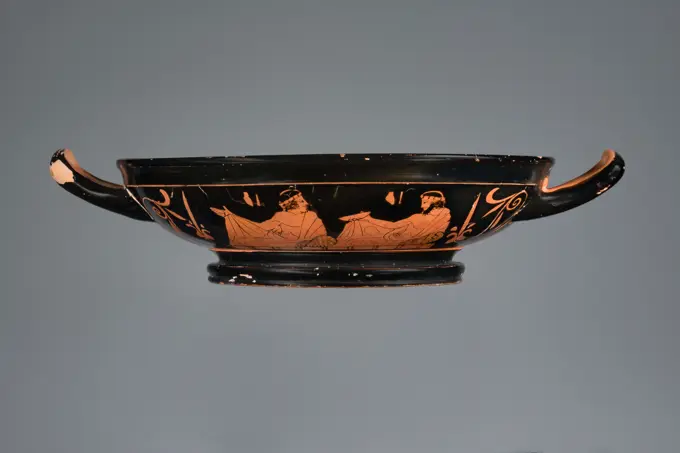
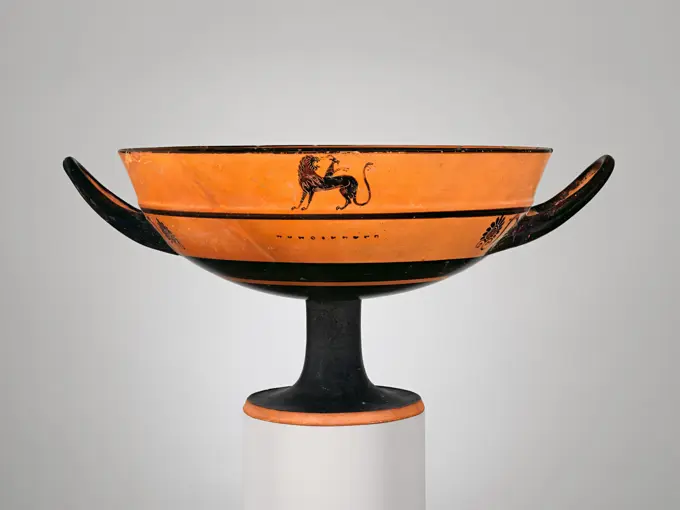
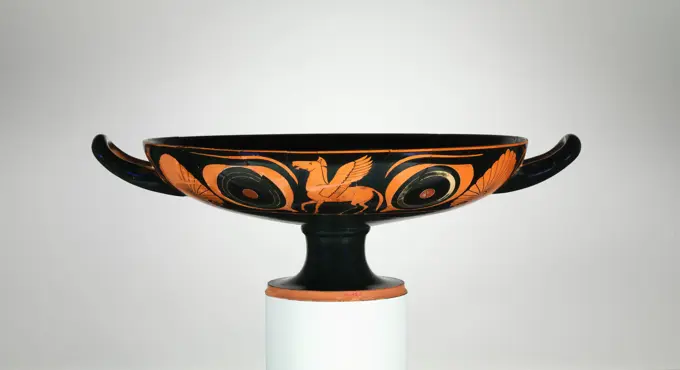
Kylix. Artist: Painter of the Yale Cup, Greek, Attic, ca. 460-450 B.C.
4443-28745768
Bowl, 1st century BCE - 1st century CE, 3 1/2 x 7 5/16 x 7 3/16 in. (8.89 x 18.57 x 18.26 cm), Glazed ceramic, 1st century BCE - 1st century CE
4409-17354363
Glass bowl. Culture: Roman. Dimensions: H.: 2 1/4 in. (5.7 cm)Diam.: 4 1/4 x 2 7/16 in. (10.8 x 6.2 cm). Date: 2nd-3rd century A.D..Translucent pale blue greenRounded, thickened, vertical rim with slight indent below; vertical sides, then curving in to applied, solid base ring; almost flat bottom with pontil scar, uneven on interior with circular ridge caused by base ring and central, thickened boss.Complete, but one long crack from rim down side; many bubbles; pitting, iridescence, and weathering, with enamel-like brownish surface to interior. Museum: Metropolitan Museum of Art, New York, USA.
6145-29232974
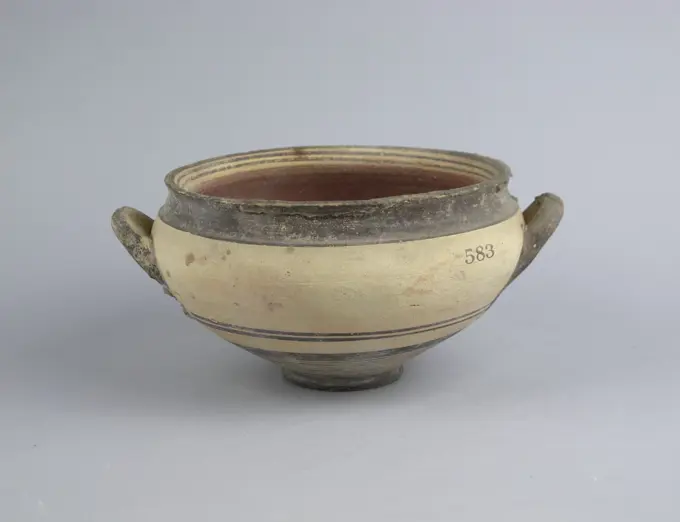
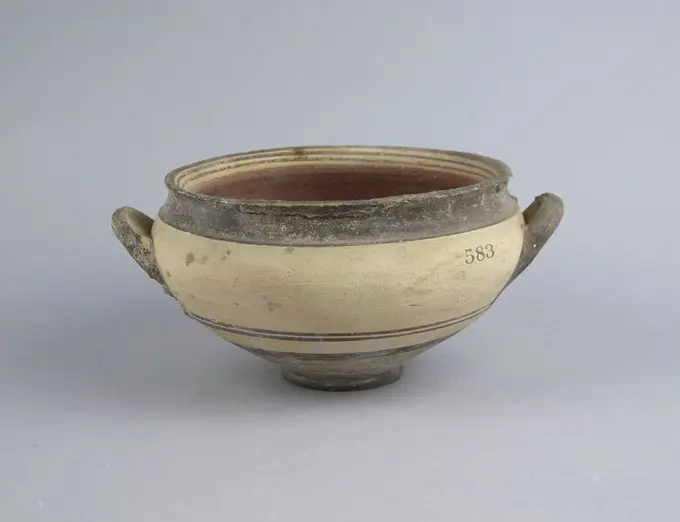
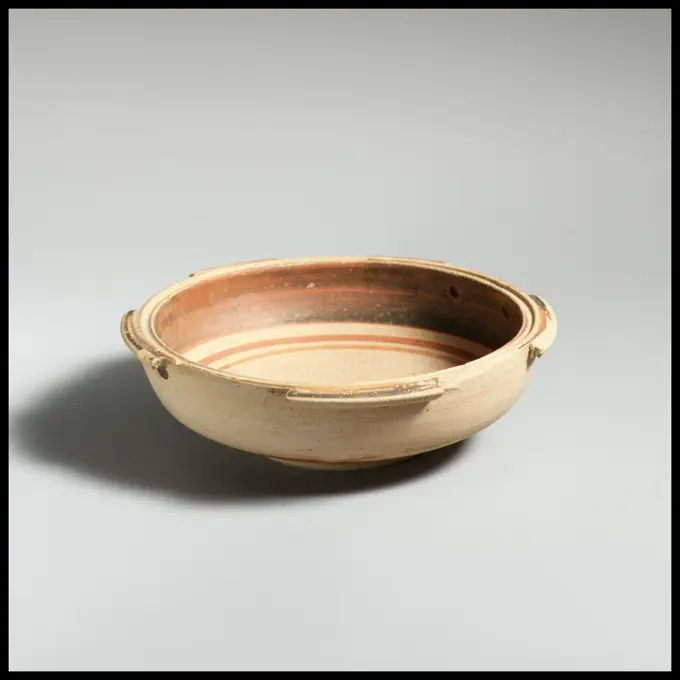
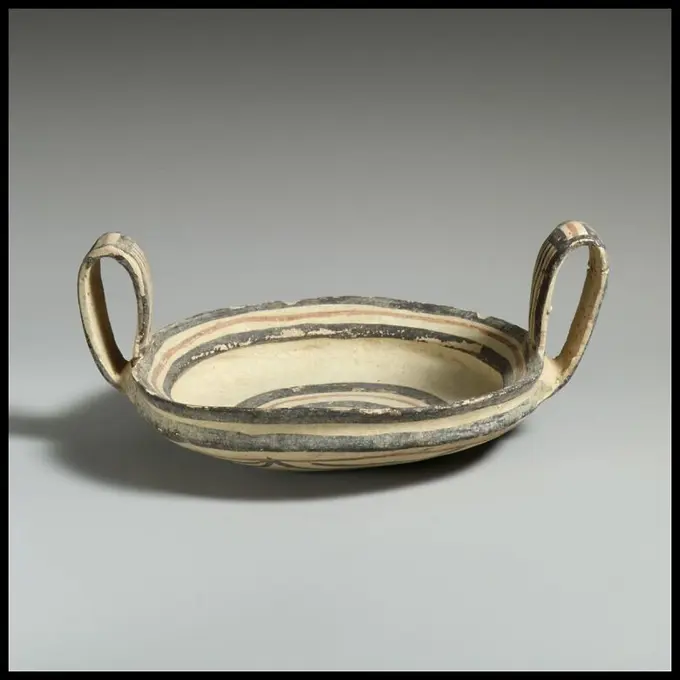
Bowl 850-750 B.C. Cypriot Deep bowl with two handles and bands in black and red.. Bowl. Cypriot. 850-750 B.C.. Terracotta. Cypro-Geometric III . Vases
6145-58860598
Bowl with Calligraphy, anonymous, c. 900 - c. 999 Come of earthenware decorated with red, manganese -brown, white and black sludge on Engobe from white sludge. The inner wall contains a difficult to read inscription in monumental chatter. Probably there is (repeated) 'Allah' or 'Al Yumn', which means 'happiness'. Nishapur earthenware. glaze painting / vitrification Come of earthenware decorated with red, manganese -brown, white and black sludge on Engobe from white sludge. The inner wall contains a difficult to read inscription in monumental chatter. Probably there is (repeated) 'Allah' or 'Al Yumn', which means 'happiness'. Nishapur earthenware. glaze painting / vitrification
4443-21907759
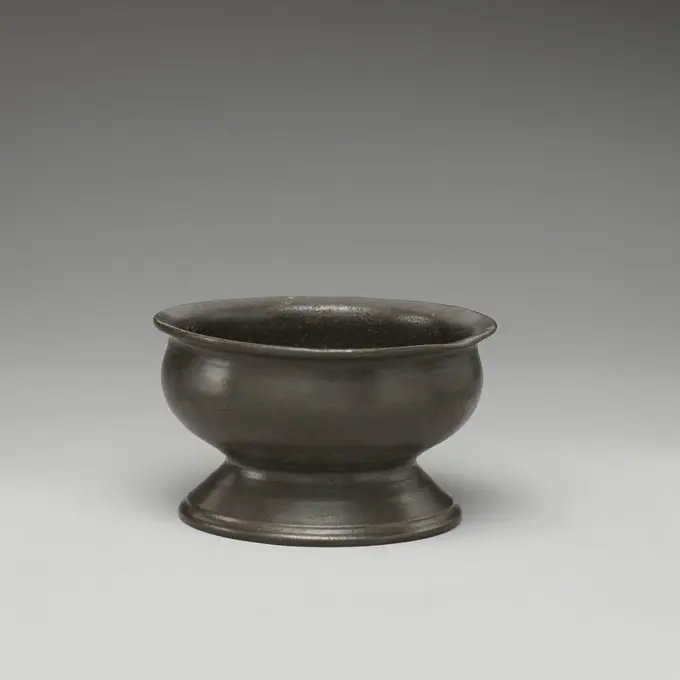
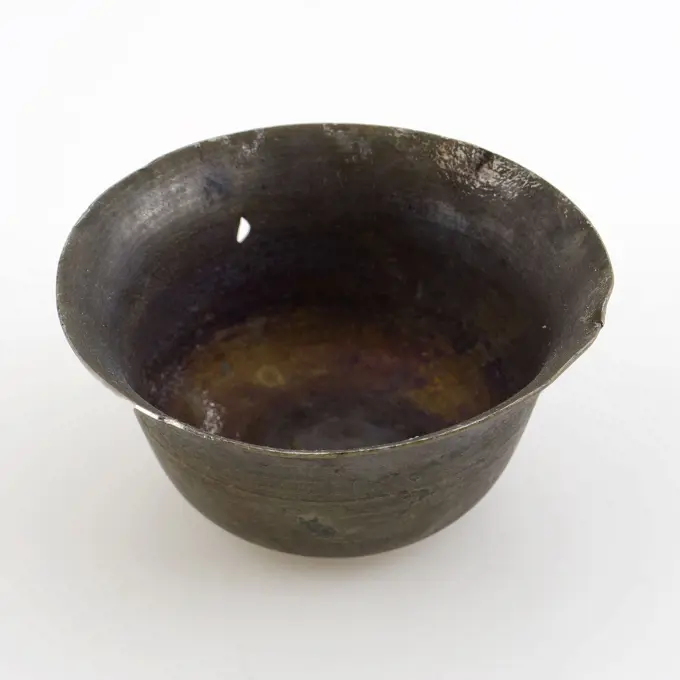
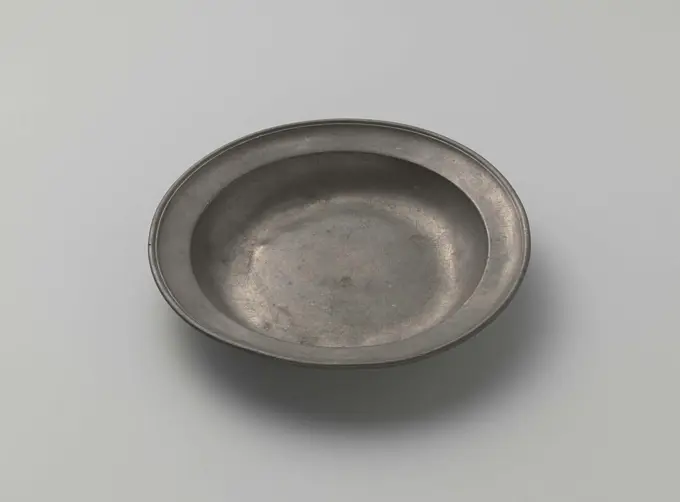
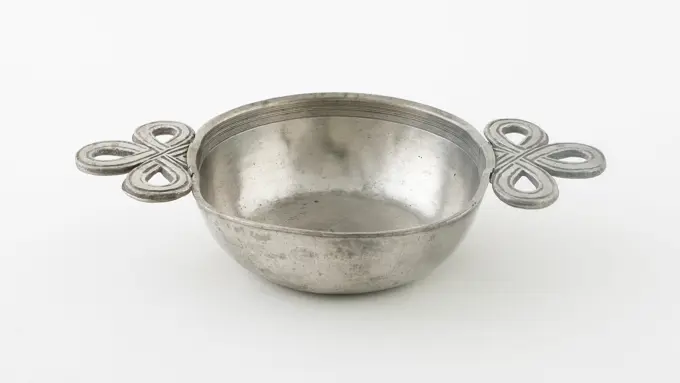
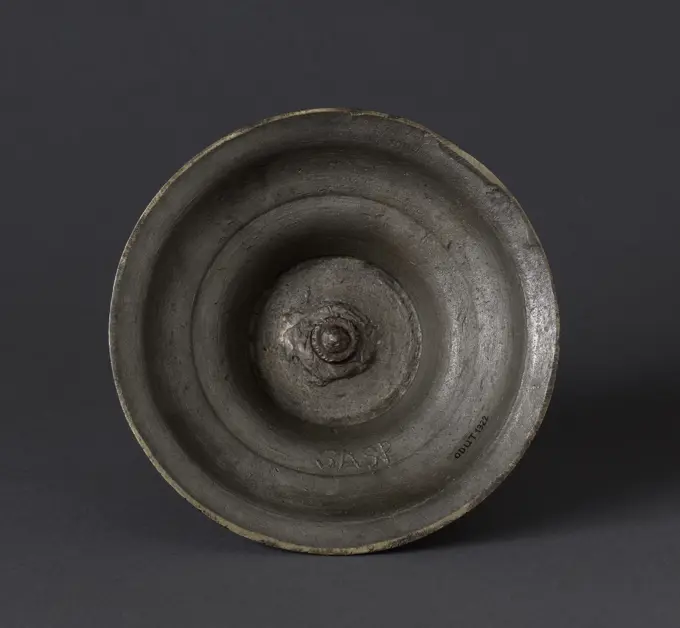
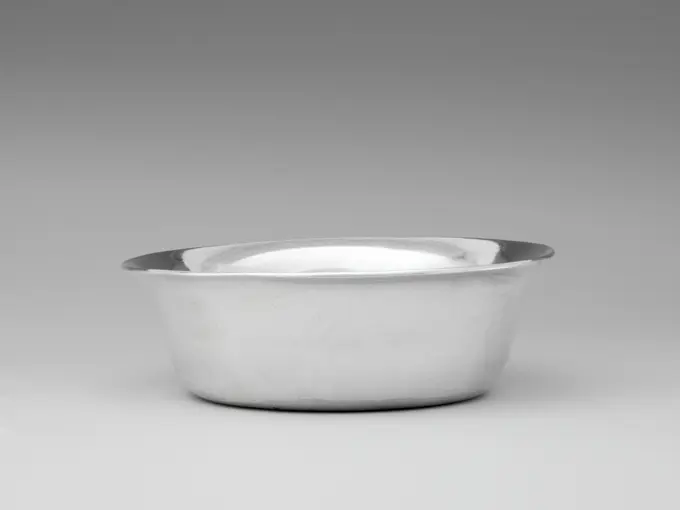
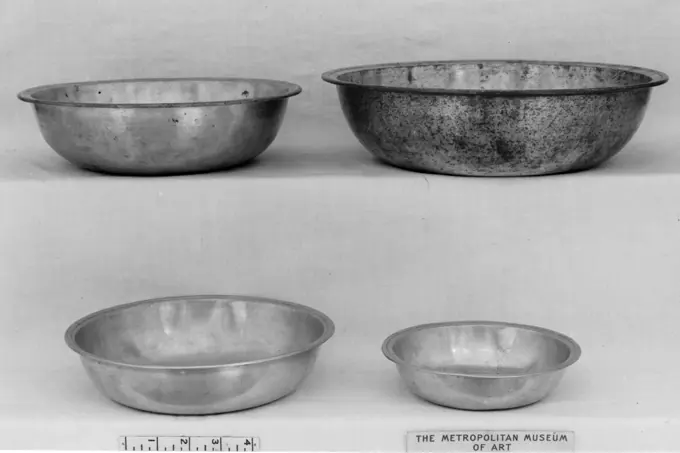
Small tin bowl or bowl, bowl bowl cup holder soil find tin metal, cast pewter bowl on stand ring. Protruding upper edge Unmarked archeology Rotterdam Soil discovery Rotterdam.
4443-22017746
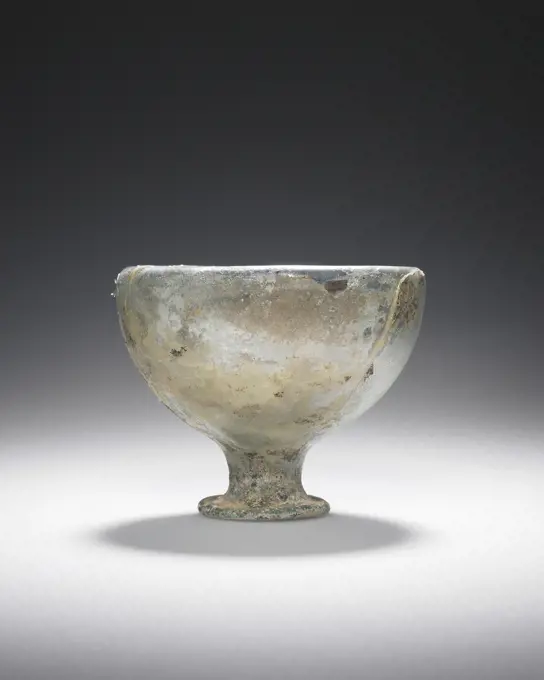
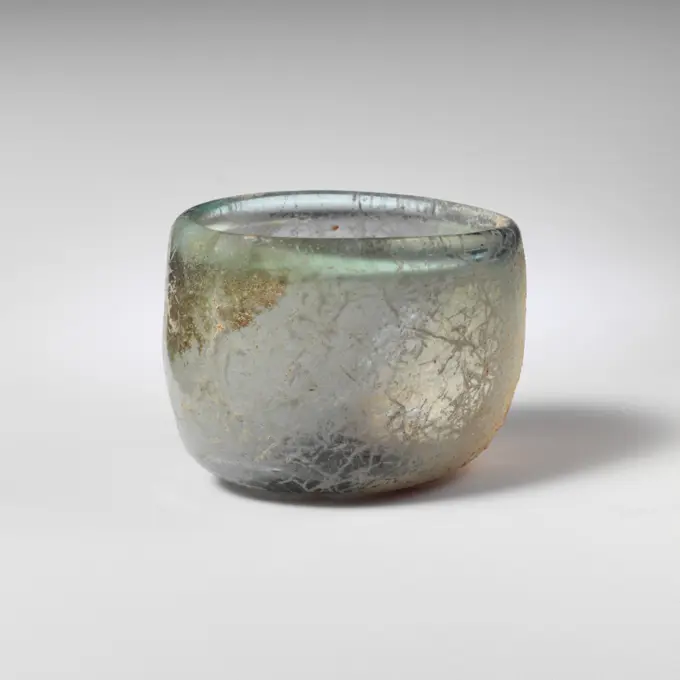
Cup; Eastern Mediterranean; 2nd - 3rd century; Glass; 4 x 8.5 cm (1 9,16 x 3 3,8 in.)
6145-30190029
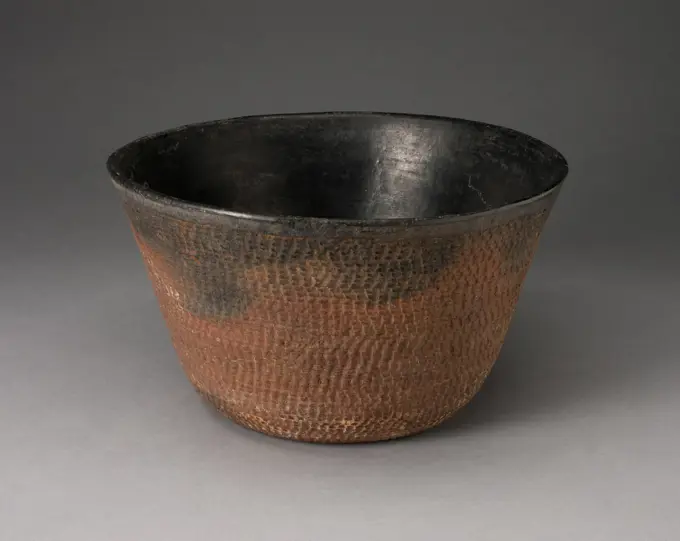
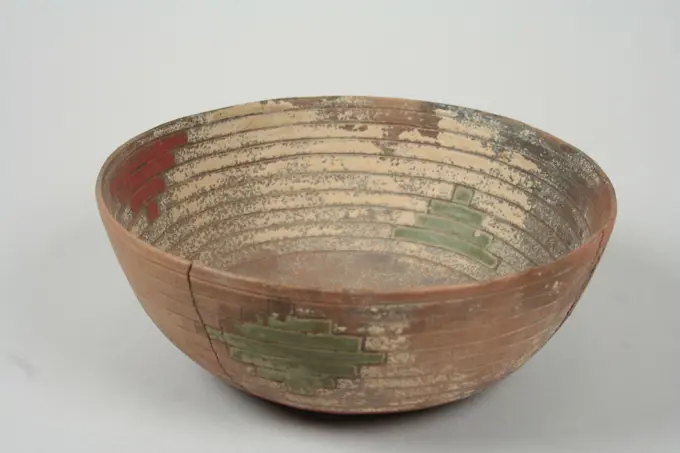
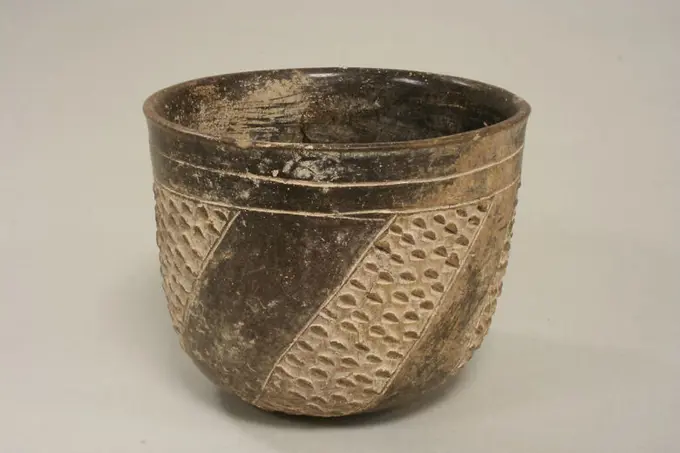
Bowl with Textured Surface Decoration 850 CE-1050 New Mexico. Ceramic and pigment . Ancestral Pueblo (Anasazi)
6145-59034172
Dish (usual name). Celadon coverage sandstone. Cernuschi Museum, Asia Museum of Asia in the city of Paris.
6145-29093675
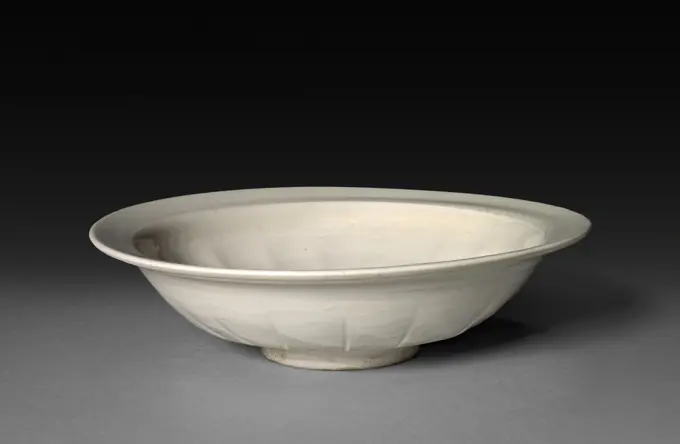
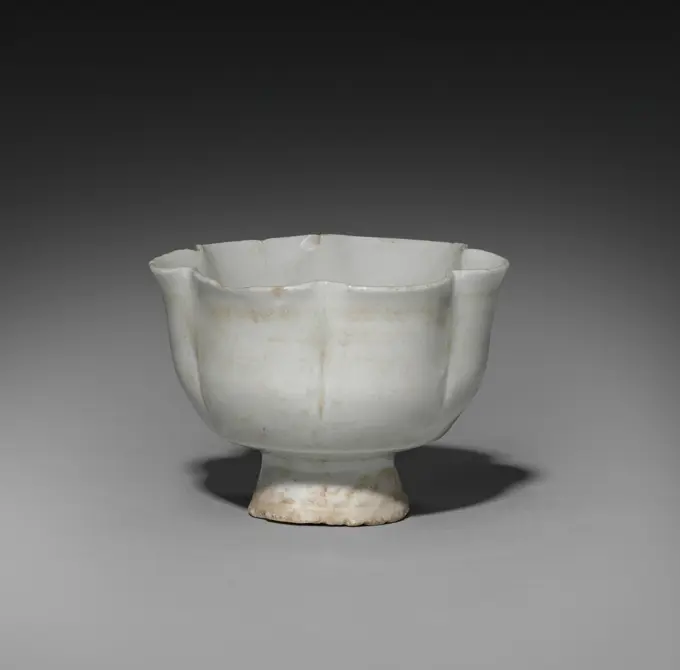
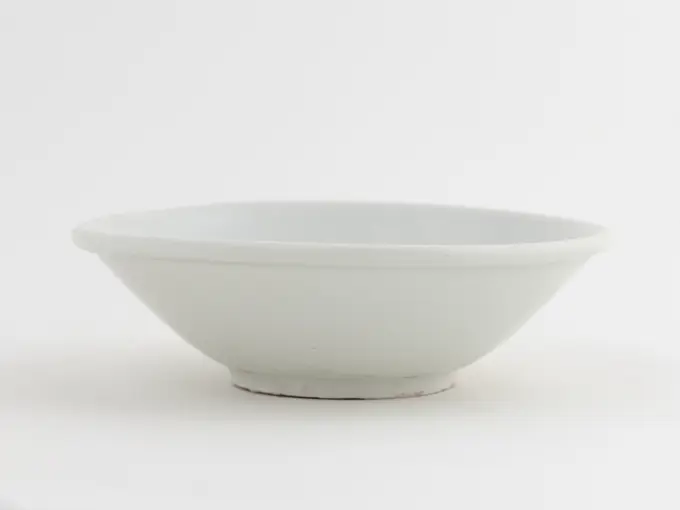
Circular Dish, 12th Century. China, possibly Liao Kingdom, Northern Song dynasty (960-1127). White porcelain; diameter: 13.2 cm (5 3/16 in.).
6145-29752014
Painted Bowl 6th-4th century B.C. Paracas. Painted Bowl 310224
6145-45356643
Tea bowl unknown
6145-58930808
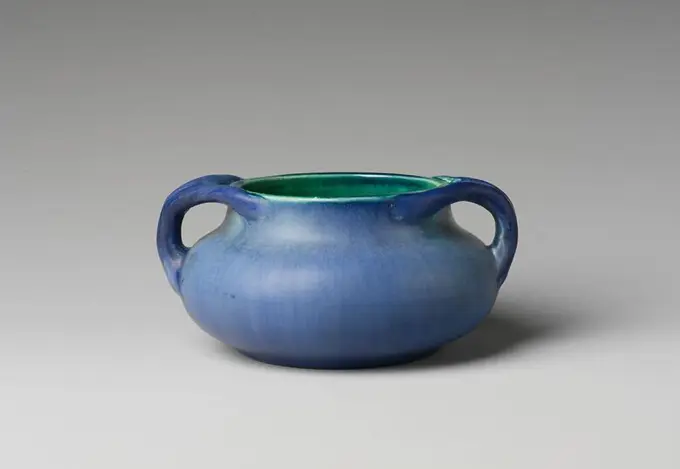
Bowl - Brantford Pottery  , William Erastus Welding, 1872-1894  Brantford Pottery  , William Erastus Welding, 1872-1894
6145-45401219
Vase Bbnowski, Wacaw (1865 1945)
6145-29230335
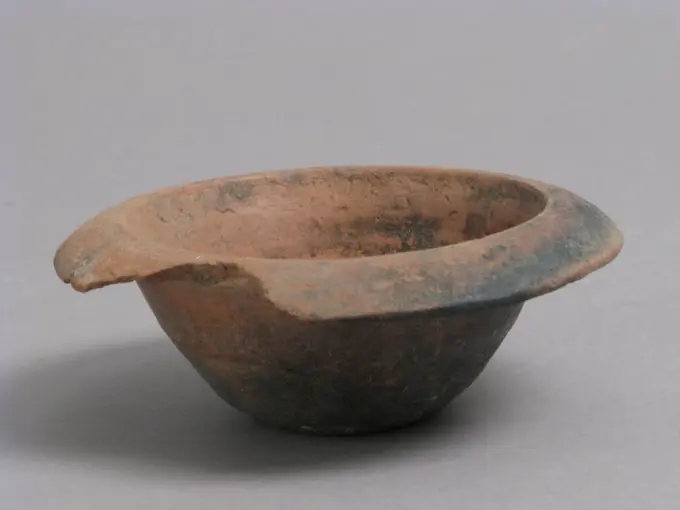
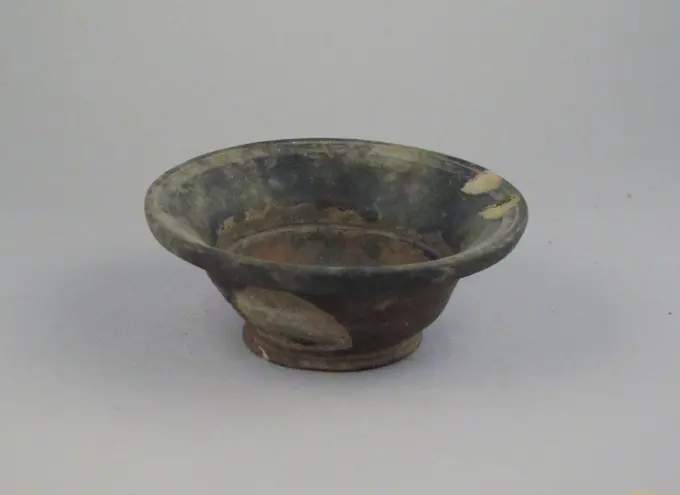
Bowl Roman Blackish dish with flaring sides.. Bowl. Roman. Terracotta. Vases
4409-17422331
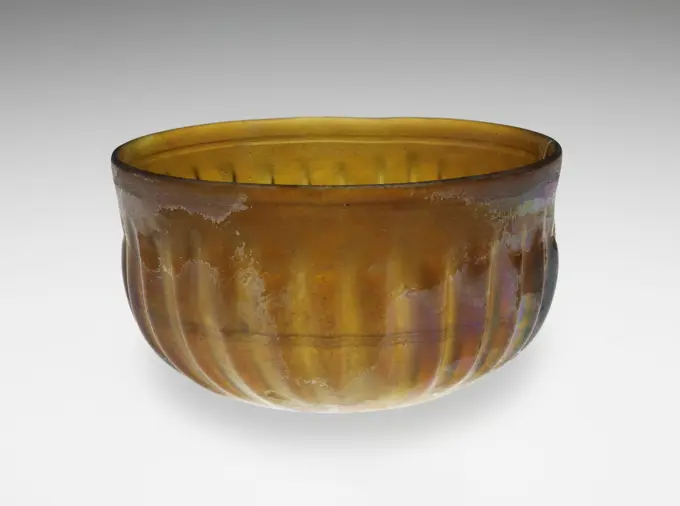
Glass ribbed bowl. Culture: Roman. Dimensions: 1 7/16 × 4 1/4 in. (3.7 × 10.8 cm)Diam. of rim: 4 1/8 in. (10.5 cm). Date: 1st century A.D..Translucent pale blue green.Vertical rim with rounded top edge; plain, almost vertical band around top of sides, then bulging outward before curving in sharply to flat bottom.On interior, three concentric grooves around outer edge of bottom and small, broader circle at center; on exterior, eighty-five vertical ribs of slightly varying length and width, with tops ground off, arranged around bulging middle section of body.Intact; a few pinprick bubbles; deep pitting, dulling, and brilliant iridescence with patches of thick creamy weathering.Rotary grinding marks on plain band around top of sides.Greenish ribbed bowl. Museum: Metropolitan Museum of Art, New York, USA.
4409-17552494
Conical Bowl. China. Date: 1100-1127. Dimensions: H. 3.7 cm (1 7/16 in.); diam. 12.9 cm (5 1/16 in.). Northern black ware, Cizhou type; stoneware with reddish-brown glaze. Origin: China. Museum: The Chicago Art Institute, Chicago, USA.
6145-30178213
Bowl 50 BCE-50 CE Syria. Initially affordable only among the wealthy, glass was used in ancient Rome as containers for oils, perfume, and tablewares. The variety of glass-making techniques reveals the changing tastes and fashions over the centuries. During the 1st century A.D., cast glass was a novel form that was a luxury for the Roman household, but by the end of the century, the innovation of blown glass allowed for less labor-intensive and less expensive production, which meant people of lesser means could afford it. Blown glass became so popular it nearly supplanted ceramic and even bronze wares in the home.Ribbed bowls were a luxury ware and a recent development of Hellenized glass workshops in the Eastern Mediterranean that flourished, producing for a new Roman market after Romeís expansion.. Glass, cast (sagged ) . Ancient Roman
6145-29726770
Bowl Cypriot. Bowl 244484
4409-17499428
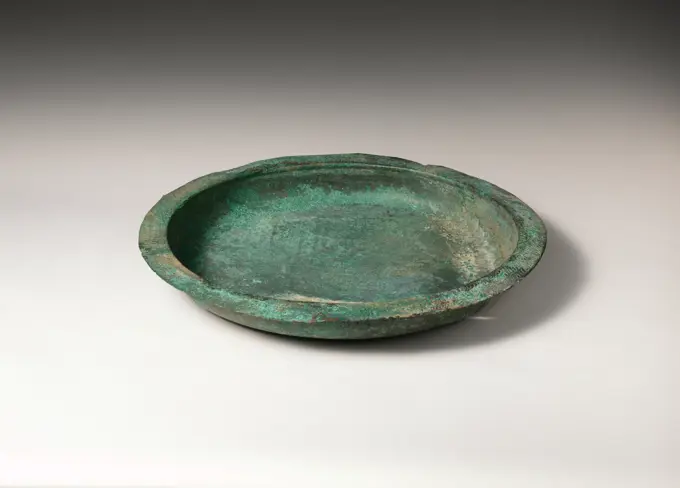
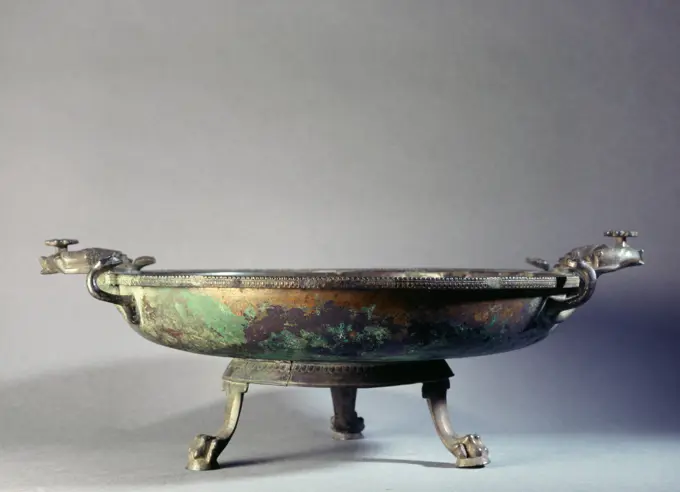
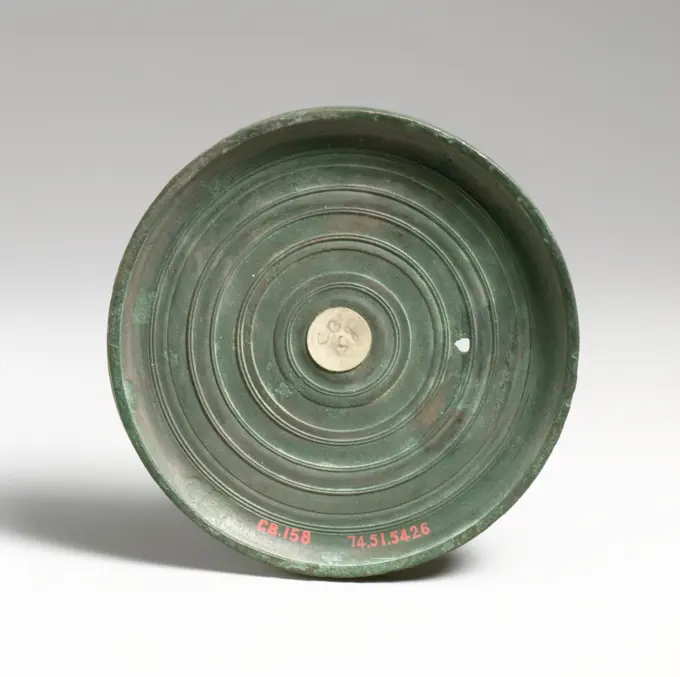
Bronze patera (shallow bowl). Culture: Etruscan. Dimensions: H. 2 3/4 in. (7 cm); diameter 14 in. (35.6 cm). Date: late 4th century B.C..Shallow dish with a wide horizontal lip. "Suthina" in Etruscan letters is inscribed on the patera. Museum: Metropolitan Museum of Art, New York, USA.
6145-29063900
Covered Bowl with Painted Decoration, 1400s. Siam, Sawankhalok ware, 15th century. Stoneware; overall: 10.8 cm (4 1/4 in.).
4409-17402668
Kylix. Culture: Italic-Native, South Italian (Daunian). Dimensions: H. 8.00 cm. Diameter 12.29 cm.. Date: 5th century B.C.. Museum: Metropolitan Museum of Art, New York, USA.
6145-29725757
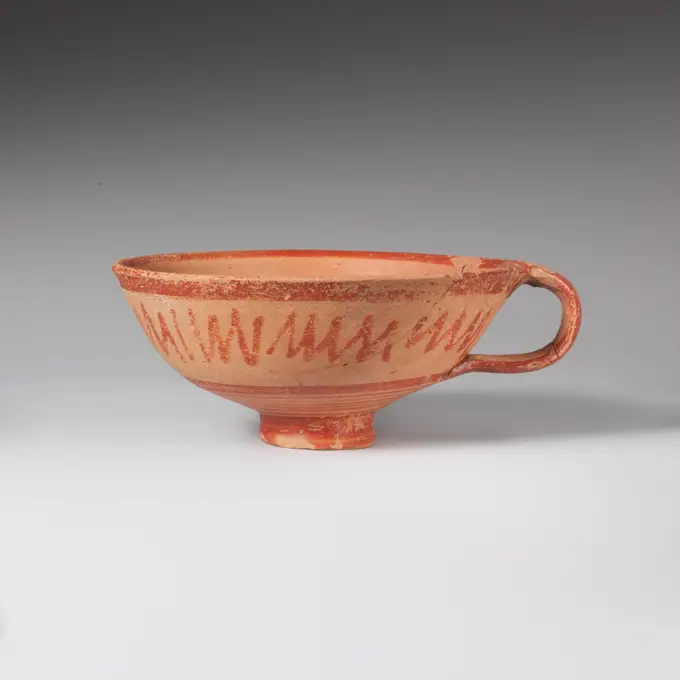
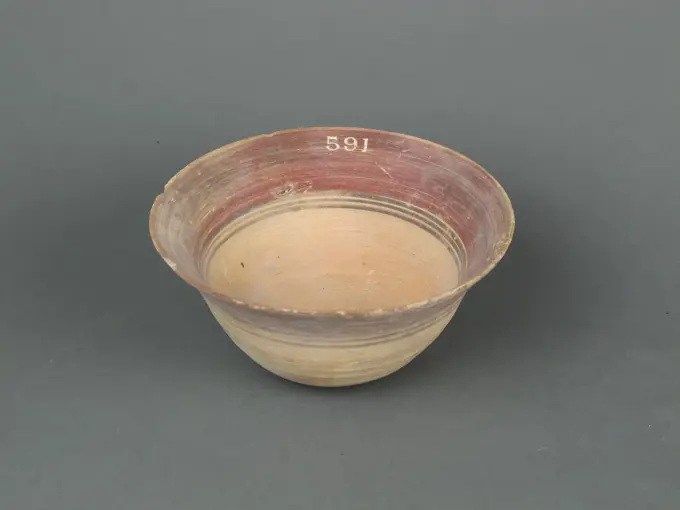
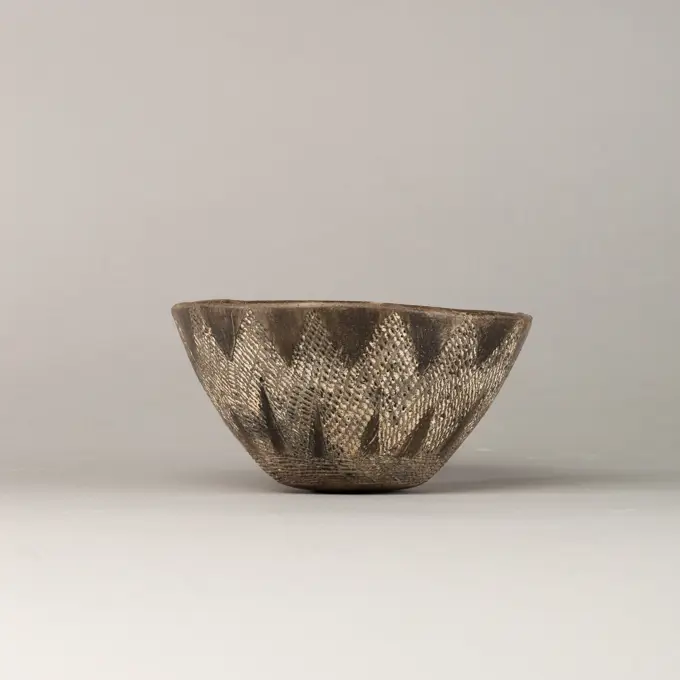
Terracotta shallow bowl ca. 2900-2300 B.C. Minoan The rolled rim is decorated with zigzag lines.. Terracotta shallow bowl. Minoan. ca. 2900-2300 B.C.. Terracotta; Dark-on-light ware. Early Minoan II. Vases
4409-17553358
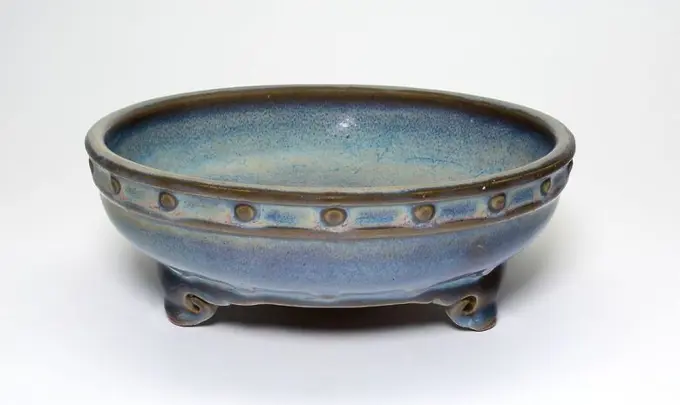
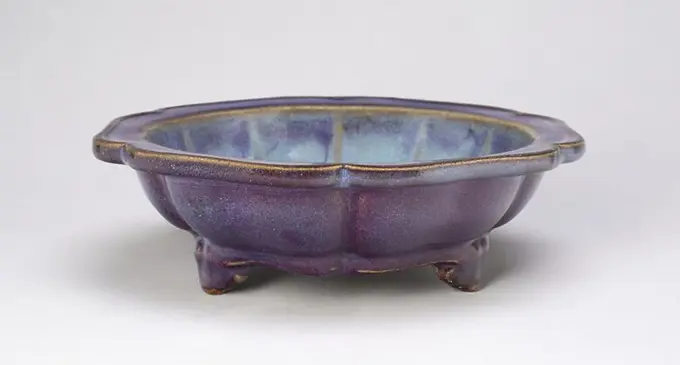
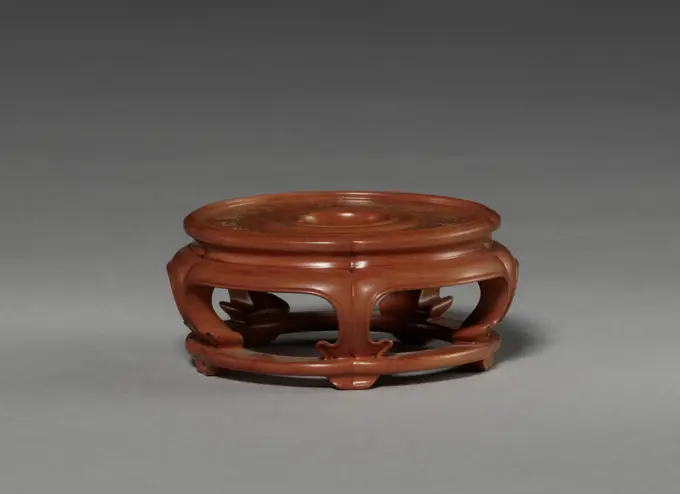
Circular Flowerpot Stand with Three Cloud-Shaped Feet. China. Date: 1115-1234. Dimensions: H. 7.3 cm (2 7/8 in.); diam. 20.0 cm (7 7/8 in.). Jun ware; stoneware with purplish blue glaze. Origin: China. Museum: The Chicago Art Institute, Chicago, USA.
6145-59042237
Cup ". GRS covered ivory. Paris, Muse Cernuschi. Coupe Asian art, extreme-East art, Vietnamese art, ceramic, cut, gres, dishes
6145-52527039
Saucer, c. 1893-1914. Seifū Yohei III (Japanese, 1851-1914). One from a set of ten dishes; porcelain with green glaze; overall: 2.5 x 8 cm (1 x 3 1/8 in.).
4409-17500315
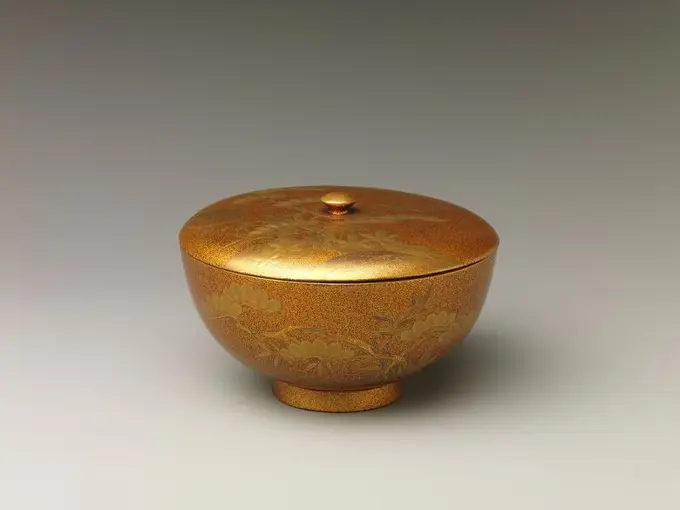
Covered Bowl with Design of Pine, Bamboo, and Cherry Blossom. Culture: Japan. Dimensions: H. 3 3/8 in. (8.6 cm); W. 5 5/8 in. (14.3 cm). Date: 19th century.This covered bowl, part of a wedding trousseau, comprised of thirty-one pieces, represents late Edo-period maki-e (decoration in gold and/or silver sprinkled powder) art at its finest. The Shimazu family, lords of Satsuma in Kyushu, ordered this traditional trousseau most likely for Taka-hime, who was married to Matsudaira Sadakazu, lord of Kuwana (Ise Province), around 1830.The items of the wedding set are decorated with various auspicious motifs. The evergreen pine represents longevity and also symbolizes renewal. The fast-growing, springy, but at the same time very strong and enduring bamboo also stands for longevity and represents endurance and strength. The plum blossoms are the first flowers of spring, representing the renewal of nature. The combination of the "Three Friends of Winter"--originating from China--is associated
6145-58863036
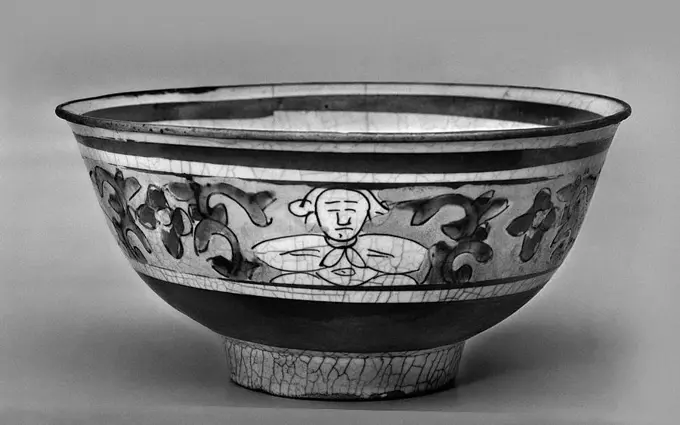
Bowl with two seated figures surrounded by a broad border with scrolls, anonymous, c. 1275 - c. 1324 Come from quartz-fritry goods painted in sludge, blue and green with two sitting figures surrounded by a wide band with tifles under a colorless laze. is the earthenware. glaze. cobalt (mineral) painting / vitrification Come from quartz-fritry goods painted in sludge, blue and green with two sitting figures surrounded by a wide band with tifles under a colorless laze. is the earthenware. glaze. cobalt (mineral) painting / vitrification
6145-29160767
Bronze patera (salver) ca. 550 B.C. Etruscan Shallow flat dish with a wide horizontal lip.. Bronze patera (salver) 247025
6145-30188410
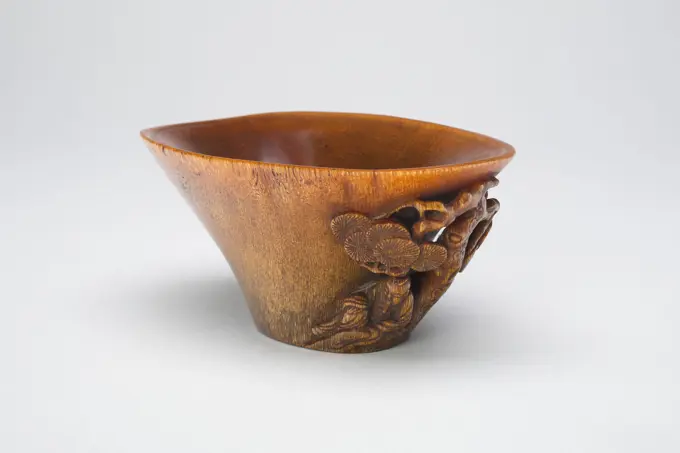
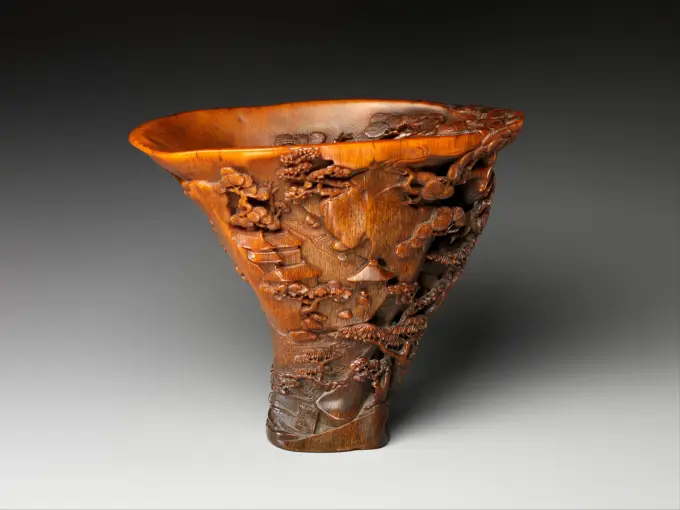
Cup with Handle in the Form of a Scholar Seated Beneath a Pine Tree Made 1600-1799 China. Rhinoceros horn .
6145-29729129
Bowl China. Bowl 46019
6145-29064349
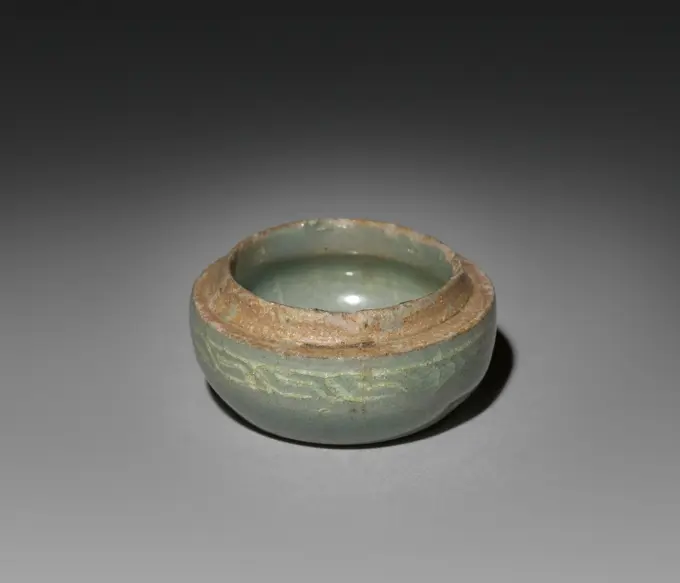
Box and Cover, 918-1392. Korea, Goryeo period (918-1392). Celadon; diameter: 3.7 cm (1 7/16 in.); overall: 1.2 cm (1/2 in.). Celadons, spoons, seals, and bronze mirrors were the most common burial objects in tombs during the Goryeo period (918-1392). Once used to contain color powder, rouge and eyebrow gel for makeup, this small container was one of the standard goods that furnished elites' tombs. Goryeo-period women and men used the grain powder of rice or millet for whitening their skin, safflower extract for rouge, and plant ash or soot for eyebrow gel. Yet, natural-looking make-up seems to have been the most favorable one in Korea according to the travelogue by Xu Jing (1091-1153), the Chinese diplomat who visited Korea in 1123.
4409-17503985
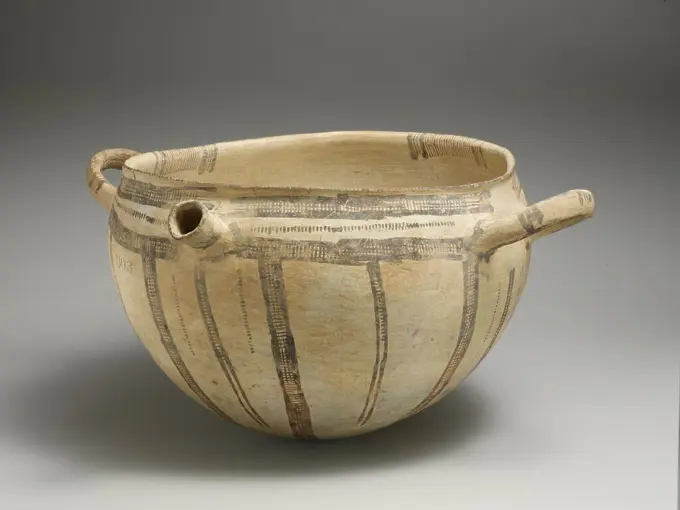
Terracotta two-handled bowl with spout. Culture: Cypriot. Dimensions: H. 8 in. (20.3 cm); diameter 11 in. (28 cm). Date: ca. 1600-1150 B.C..Lateral handles and tubular spout, lattice ornament. Museum: Metropolitan Museum of Art, New York, USA.
4443-19568464
Maker: Unknown, Bowl with PinchedSides, Ceramic, 16.51 × 16.51 cm (6 1/2 × 6 1/2in.), Made in Mexico, Mexico,Olmec, Early FormativePeriod, Containers -Ceramics
6145-29064375
Cup and Stand, 918-1392. Korea, Goryeo period (918-1392). Pottery; diameter of top: 13.1 cm (5 3/16 in.); overall: 6.4 cm (2 1/2 in.).
4409-17349938
Basin. Culture: American. Dimensions: H. 4 3/8 in. (11.1 cm); Diam. 13 in. (33 cm). Maker: Lyman, Fenton & Co. (1849-52). Date: ca. 1849-58. Museum: Metropolitan Museum of Art, New York, USA.
6145-30177964
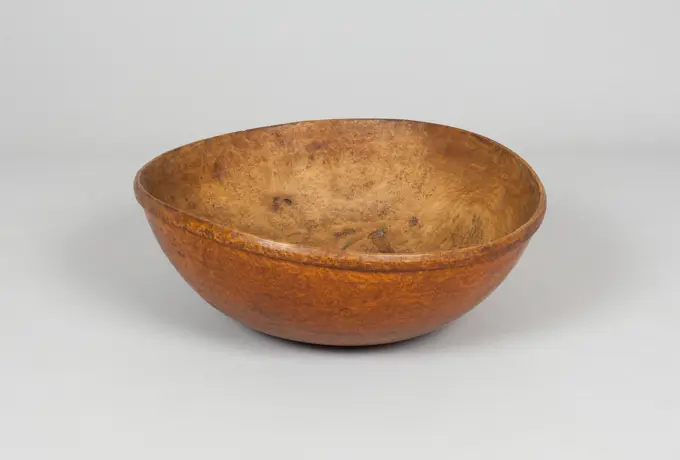
Bowl c 1800-1860 New England. Maple . Artist unknown
6145-29135544
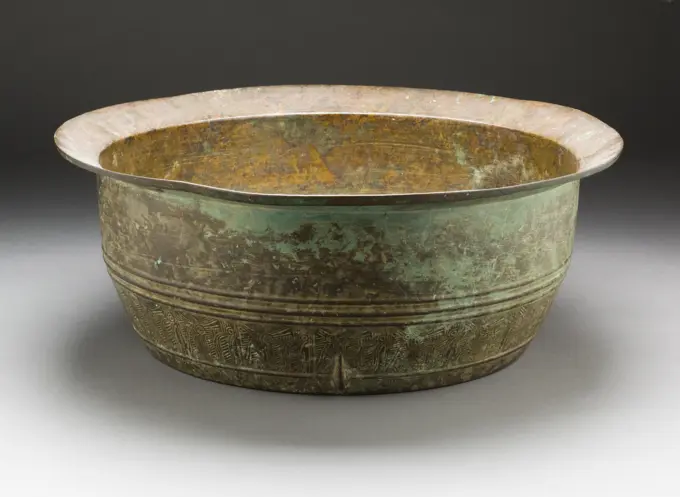
Basin. Vietnam, Dongson Culture, circa 1st-2nd century A.D.. Tools and Equipment; basins. Copper alloy
4443-22017805
Cup; Roman Empire; 4th - 5th century; Glass; 5.4 x 7 cm (2 1,8 x 2 3,4 in.)
4409-17434636
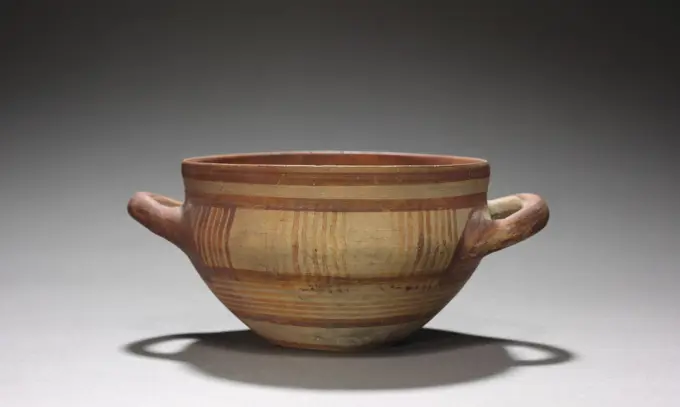
Bowl. Culture: Cypriot. Dimensions: 3 9/16in. (9.1cm)Other (mouth): 5 7/8in. (14.9cm). Date: 850-750 B.C..Deep bowl with two handles and bands in black and red. Museum: Metropolitan Museum of Art, New York, USA.
6145-59017311
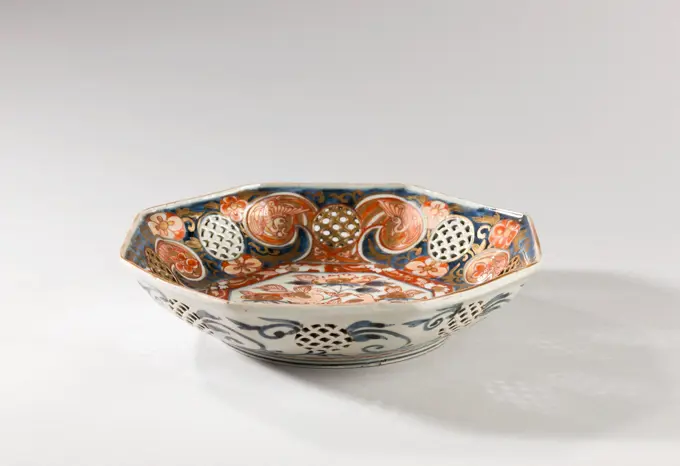
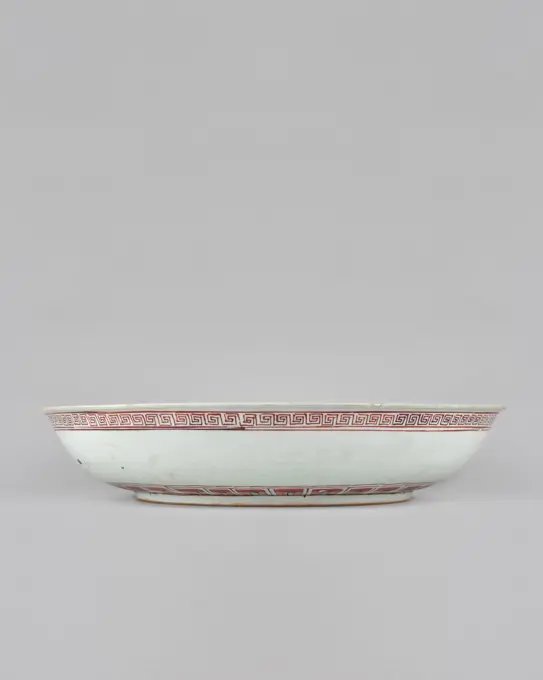
Anonymous. Imari decor hollow plate. Porcelain. 18th century. Museum of Fine Arts of the City of Paris, Petit Palais. 112502-27
6145-29076379
Bowl, c. 750-600 BC. Cyprus, Cypro-Archaic I. White painted ware; overall: 6.2 cm (2 7/16 in.); diameter of base: 5 cm (1 15/16 in.); diameter of rim: 10.3 cm (4 1/16 in.).
6145-29740938
Painted Bowl 2nd-6th century Michoacán. Painted Bowl 310534
6145-29229721
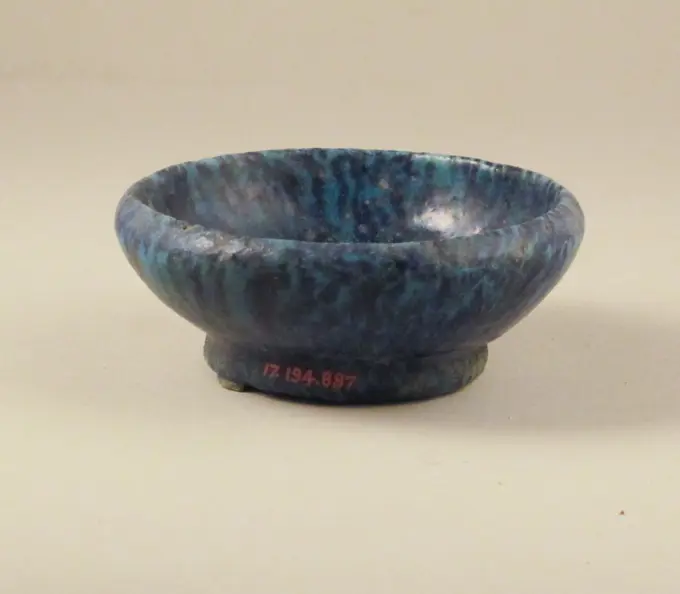
Saucer Roman Pale blue glazed saucer with close darker blue veining.. Saucer. Roman. Terracotta; glazed ware. Vases
6145-43633055
Kyliks czarnofigurowy. unknown, author
4409-17547286
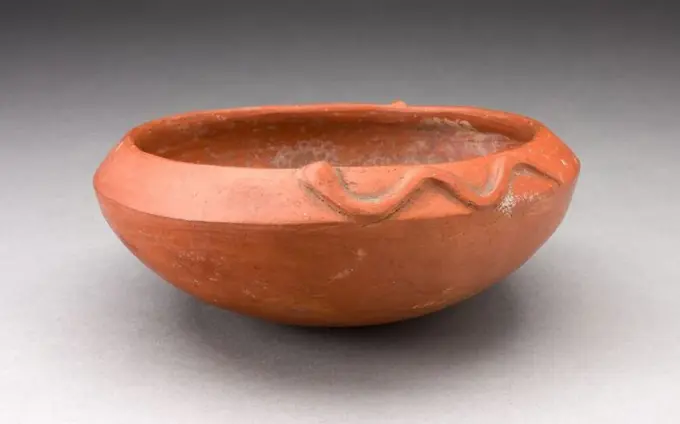
Redware Bowl with Molded Snake-like Form on Rim. Inca; South coast or southern highlands, Peru. Date: 1450-1532. Dimensions: . Ceramic. Origin: Peru, southern. Museum: The Chicago Art Institute, Chicago, USA.
6145-29805850
Jar ca. 9th century B.C. Iran. Jar. Iran. ca. 9th century B.C.. Ceramic. Iron Age II, Hasanlu Period IV. Iran, Hasanlu
4443-21922966
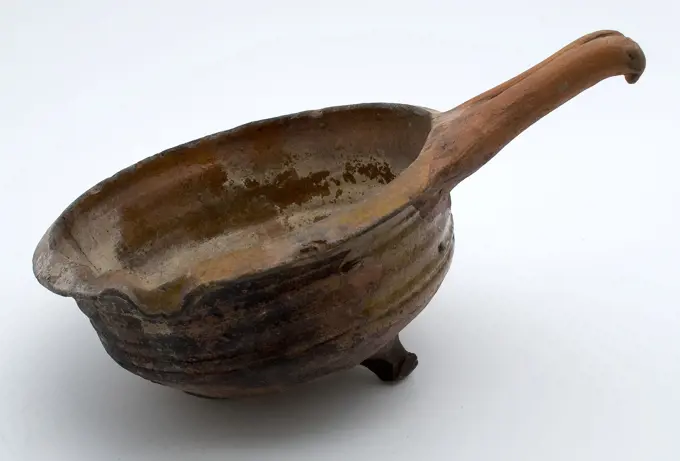
Large bowl of red earthenware on stand fins, two sausage ears, pouring lip, internally glazed, bowl milk tableware holder earthenware pottery earthenware glaze lead glaze, hand-turned glazed fried Large bowl with wide shank. Red shard internally covered with lead glaze Round bottom Three fins, two of which are filled with gypsum Collared upper edge with double groove Two horizontal wrestling ears attached at the top edge slightly upwards. Very thick glaze layer with drops along the top edge archeology inn The Heart Geervliet Bernisse indigenous pottery cooking kitchen food preparation mixing cream milk dairy Soil discovery: Geervliet Dorpsplein 1 demolition Trouw put 5 city inn 't Hart 1985.
4409-17419633
Bowl. Culture: Coptic. Dimensions: Overall: 2 3/4 x 7 in. (7 x 17.8 cm). Date: 4th-7th century. Museum: Metropolitan Museum of Art, New York, USA.
6145-30155806
Bowl 1765-1775 Burslem. Stoneware (redware) . Wedgwood Manufactory (Manufacturer)
4409-17398878
Bowl. Culture: Aztec. Dimensions: H. 1 1/4 x Diam. 2 7/8 in. (3.3 x 7.4 cm). Date: 15th-early 16th century. Museum: Metropolitan Museum of Art, New York, USA.
4409-17560701
Pan. Mantua Glass Works; Manutua, Ohio, 1821-1829. Date: 1820-1830. Dimensions: H. 12.7 cm (5 in.). Blown glass. Origin: Mantua. Museum: The Chicago Art Institute, Chicago, USA.
6145-29115261
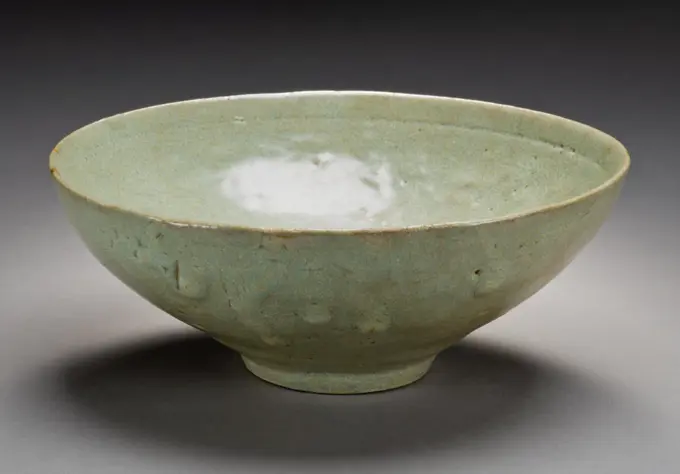
Bowl. Korea, Goryeo dynasty (918-1392), 12th century. Furnishings; Serviceware. Wheel-thrown stoneware with green glaze
6145-30161236
Pan c 1824-1832 Ohio. Blown glass . Artist unknown
6145-29792600
Cup from a torch-holder Cypriot. Cup from a torch-holder. Cypriot. Bronze. Bronzes
6145-59111869
Dish;  early xxw (1915-00-00-1930-00-00);
6145-45363682
Glazed bowl with krakelra unknown
6145-30148398
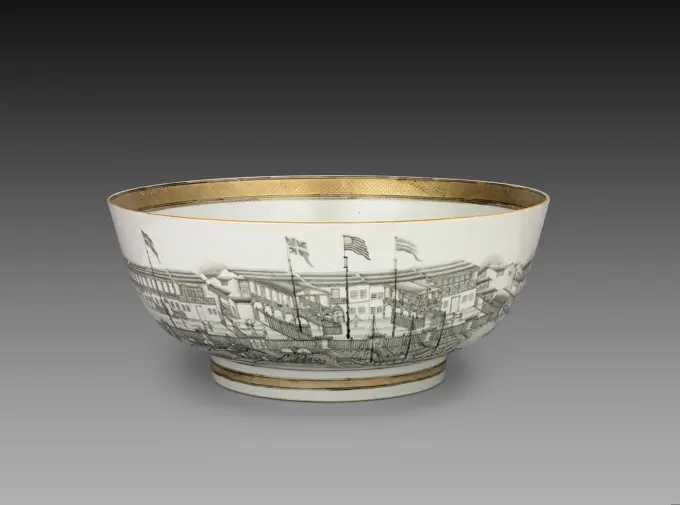
Punch Bowl c 1789 China. Chinese officials limited all international trading to the city of Canton, and segregated the fan kwae (foreign devils) into a 15-acre area outside of the city wall. Decorated in grisaille, or monochrome, the exterior of this punch bowl shows the 13 trade buildings, known as hongs (foreign factories), that lined this restricted area. Each building was associated with a particular country, and they doubled as counting houses and living quarters, where agents resided during the fall trading season. In this view of the hongs, the American factory lies between those of the United Kingdom and the Netherlands, suggesting that this was an early rendering, made before the United States permanently established its factory next to Swedenís.. Porcelain . Chinese export porcelain
6145-29803981
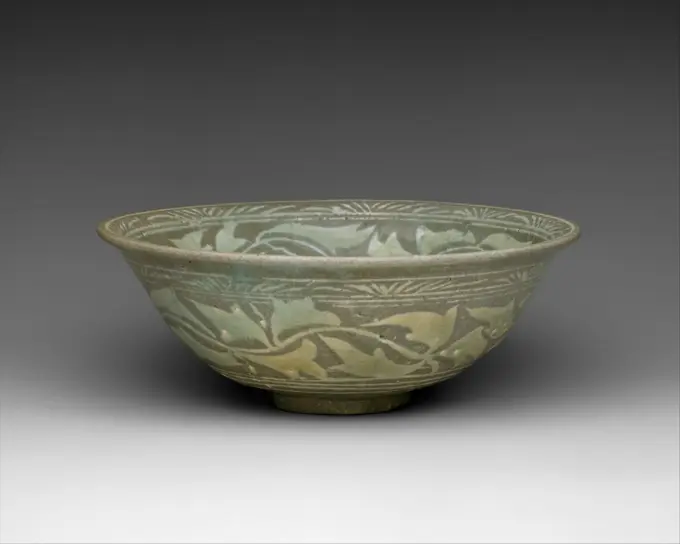
Bowl decorated with peony leaves and chrysanthemum 15th century Korea This bowls decoration highlights the peony plants leaves; the blossom is absent.. Bowl decorated with peony leaves and chrysanthemum 64881
6145-30171970
Bowl with Phoenix 1000-1035 Korea. Celadon-glazed stoneware with underglaze incised decoration .
6145-45871878
Come from v.o.c.-ship the 'white lion'. Come from v.o.c.-ship the 'white lion', 100%% present.
6145-48530303
Miseczka. nieznany warsztat północno mezopotamski (ca 2600-ca 2350 a.C.), workshop
6145-29824786
Bowl 13th century Korea. Bowl 57416
4409-17379788
Bowl. Culture: Coptic. Dimensions: Overall: 1 9/16 x 4 3/16 in. (4 x 10.6 cm). Date: 4th-7th century. Museum: Metropolitan Museum of Art, New York, USA.
4409-17422438
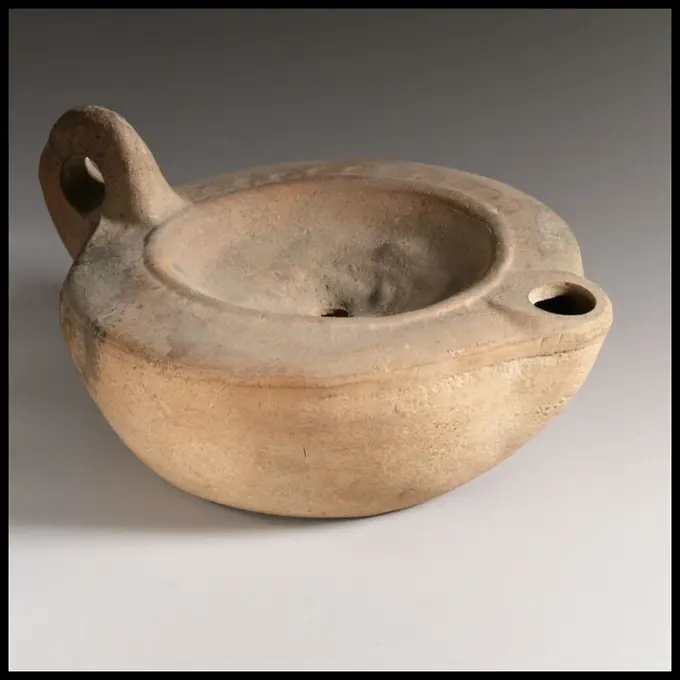
Lamp. Culture: Roman. Dimensions: Length: 5 3/16 in. (13.2 cm)Height: 2 5/8 in. (6.7 cm). Date: 2nd century A.D.. Museum: Metropolitan Museum of Art, New York, USA.
4443-21936456
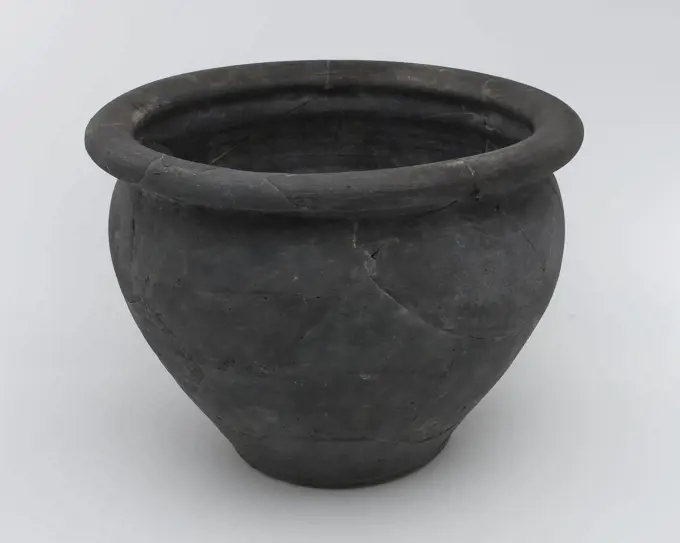
Black storage jar on standing surface, folded upper edge above constriction, storage jar pot holder soil find ceramic earthenware, hand-turned baked Black pot on stand. Stock pot with wide neck opening. Necking under the outstanding top edge Rounded and rounded top edge. waised black earthenware archeology Poortugaal Albrandswaard indigenous pottery import save store basement stock Grondvondst Poortugaal.
4409-17391386
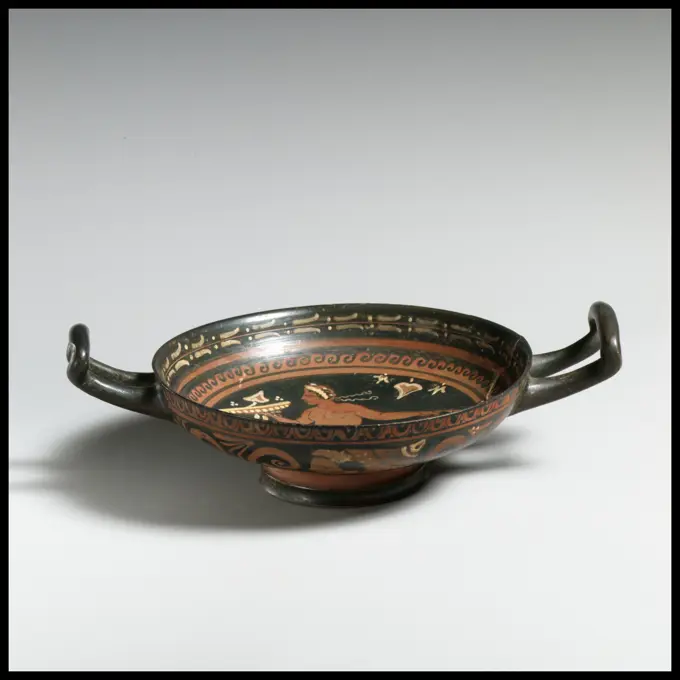
Terracotta stemless kylix (drinking cup). Culture: Greek, Attic. Dimensions: H. 2 1/16 in. (5.3 cm); diameter 5 1/8 in. (13 cm). Date: ca. 500-475 B.C..Reddish clay with a black band around the rim. Museum: Metropolitan Museum of Art, New York, USA.
6145-29808758
Bowl late 17th-early 18th century China. Bowl 42277
6145-59003972
BO" bowl. Celadon coverage sandstone. China, Tang dynasty (618-907). Paris, Cernuschi museum. Chinese art, BO Bol, Chinese Ceramic, container, Tang dynasty, gres, container, terracotta
4443-28734894
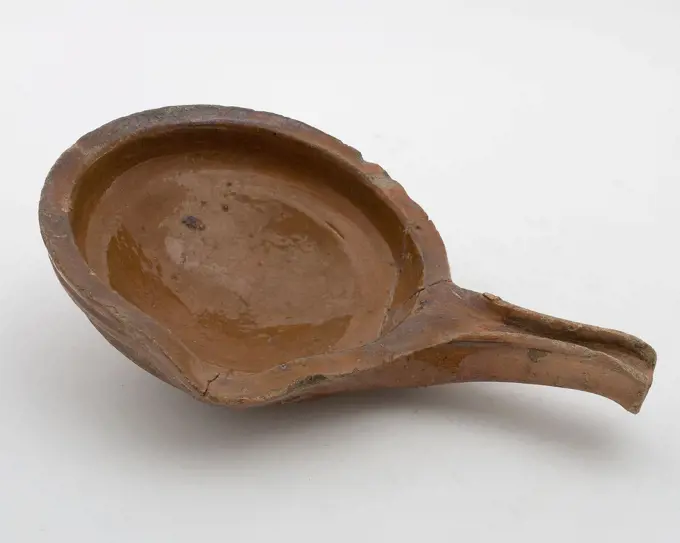
Ladle, 1st century, 5 1/2 x 2 5/8 in. (13.97 x 6.7 cm), Earthenware, glaze, China, 1st century
6145-45408859
CDK unknown
6145-29089895
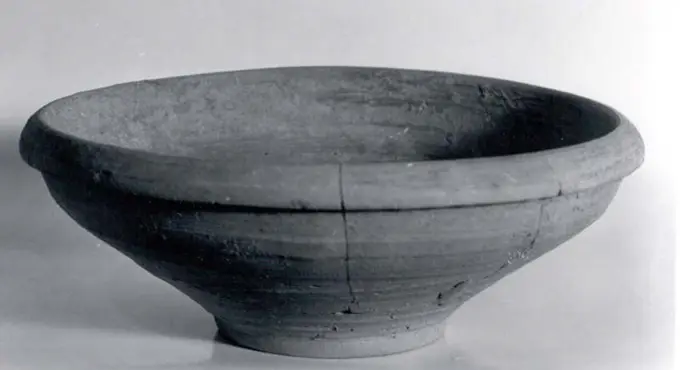
Black-Topped Bowl, 4000-3000 BC. Egypt, Predynastic Period, Early Naqada II. Nile silt; diameter: 14.6 cm (5 3/4 in.); diameter of mouth: 11.5 cm (4 1/2 in.); overall: 7.6 cm (3 in.).
6145-46842546
Dish with TwoFish
6145-29121414
Bowl. Thailand, Sawankhalok, circa 1425. Furnishings; Serviceware. Stoneware with celadon glaze
6145-59004100
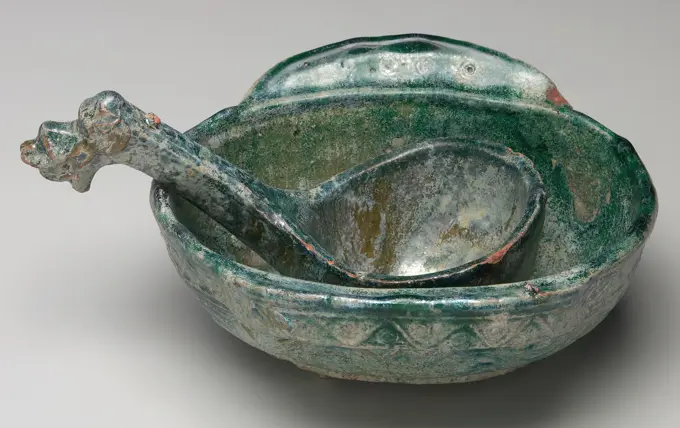
Container to steam ". Terracotta with green lead glaze. Han dynasty (206 BC-220 AD). Paris, Cernuschi museum. Chinese art, table art, cook, steam cooking, han dynasty, han time, container, terracotta
6145-29232319
Torch-holder 6th-4th century B.C. Cypriot Without decoration.. Torch-holder. Cypriot. 6th-4th century B.C.. Terracotta. Vases
6145-58930754
Bowl - Portneuf pottery
6145-29138672
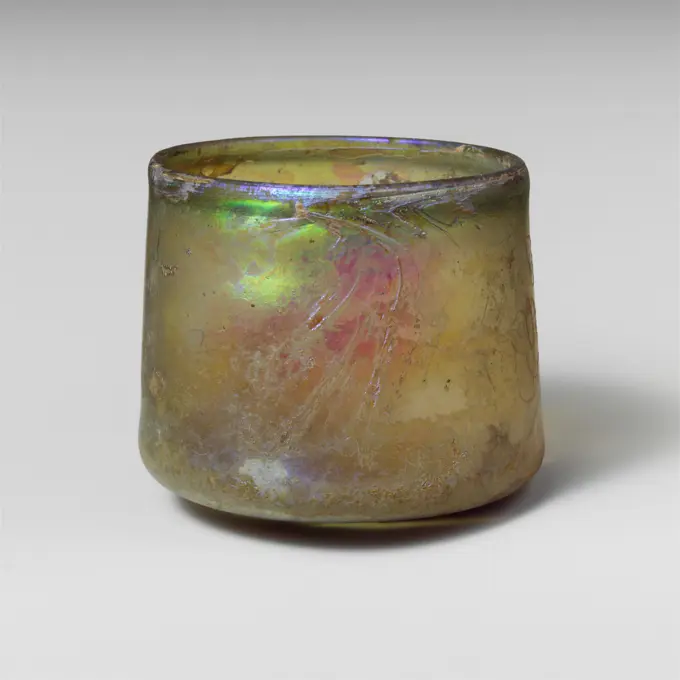
Glass cup 2nd-3rd century A.D. Roman Colorless with blue green tinge.Rounded and thickened vertical rim; sides slighty tapering downward, then with a horizontal bulge (41 mm below rim), and then tapering at more acute angle to concave bottom.Intact; some pinprick bubbles and blowing striations; dulling and iridescent weathering, with patches of creamy weathering and accretion on interior.. Glass cup 239809
4443-22017220
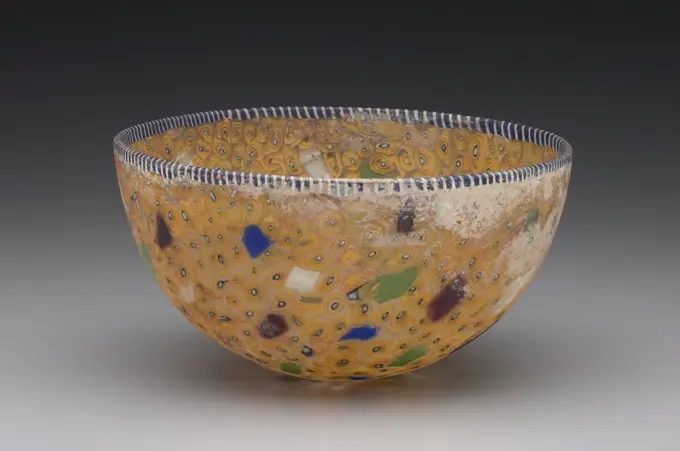
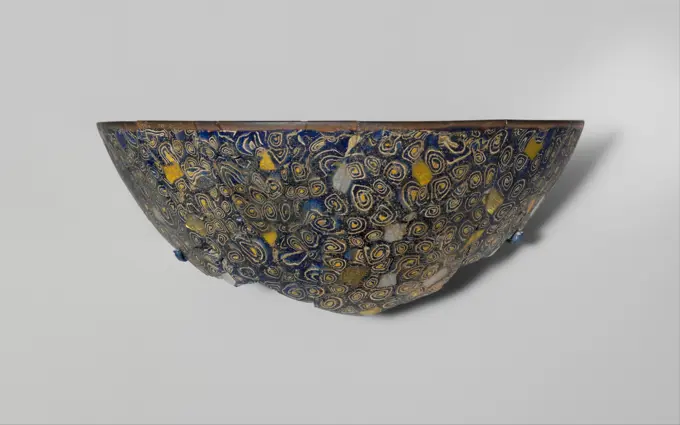
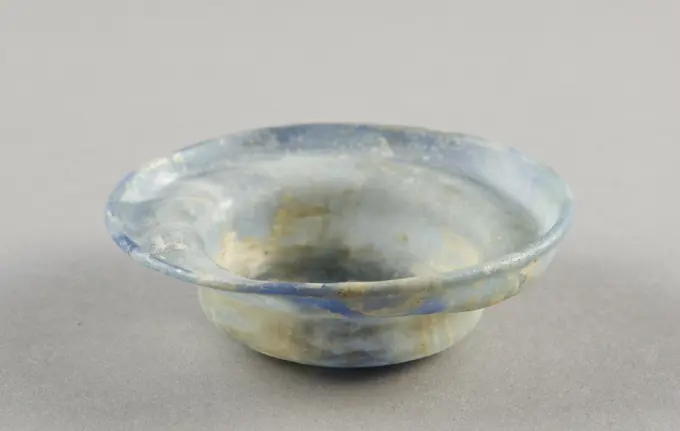
Mosiac Bowl; Eastern Mediterranean; end of 1st century B.C. - 1st century A.D; Glass; 4 x 9 cm (1 9,16 x 3 9,16 in.)
6145-29777753
Basin ca. 1849-58 Lyman, Fenton & Co.. Basin 346
6145-58930761
Bowl -
6145-29093030
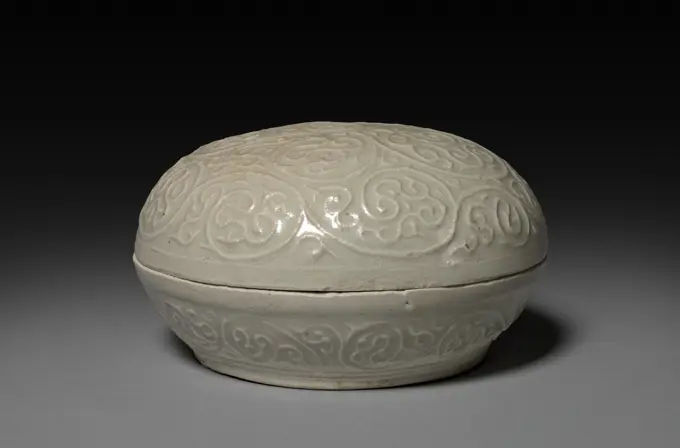
Round Covered Box with Floral Scrolls in Relief: Qingbai type Ware, 1300s. China, Fujian province, Anxi xian, Yuan dynasty (1271-1368). Glazed porcelain with slip decoration; overall: 8.6 x 15.5 cm (3 3/8 x 6 1/8 in.).
6145-46632274
. Bowl of quartz frying with high stand ring, painted in luster with palmets on the outside and on the inside medallions with birds inside hexagons and two tires with arabic script. Old label on the bottom with 'Collection A. Vecht'.
6145-48883424
Mold-blown cup. Possibly from the Workshop of Ennion (Greek , active about 1 - 50)
6145-29779705
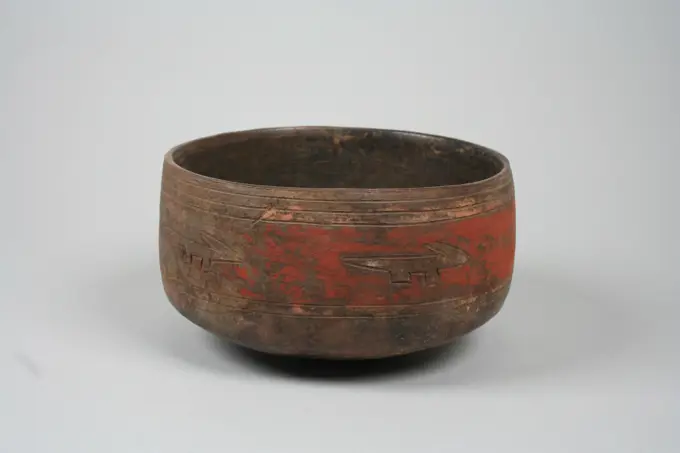
Bowl with Feline Design 7th-4th century B.C. Paracas. Bowl with Feline Design 308442
4409-17552978
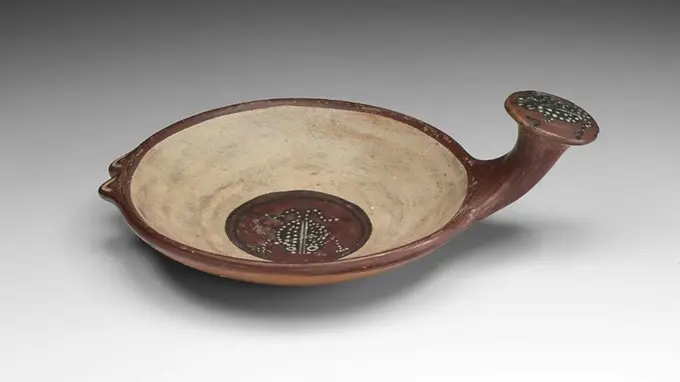
Miniature Tray Depicting a Frog. Inca; South coast or southern highlands, Peru. Date: 1450-1532. Dimensions: 6.5 × 19.2 cm (2 9/16 × 7 9/16 in.). Ceramic and pigment. Origin: Southern Highlands. Museum: The Chicago Art Institute, Chicago, USA.
6145-29149476
Salt 1815-35 American. Salt. American. 1815-35. Blown-molded glass. Probably made in Zanesville, Ohio, United States
6145-46666035
Rinse bowl of red hard-baked pottery, children's toys .. half ball-shaped rinsing bowl of red hard-baked pottery. The bowl has a stand ring. The bowl is embossed with garlands with garlands of leaves and fruits. The flushing bowl belongs to a miniature tea service (BK-15429-A to BK-15429-D).
4443-28729147
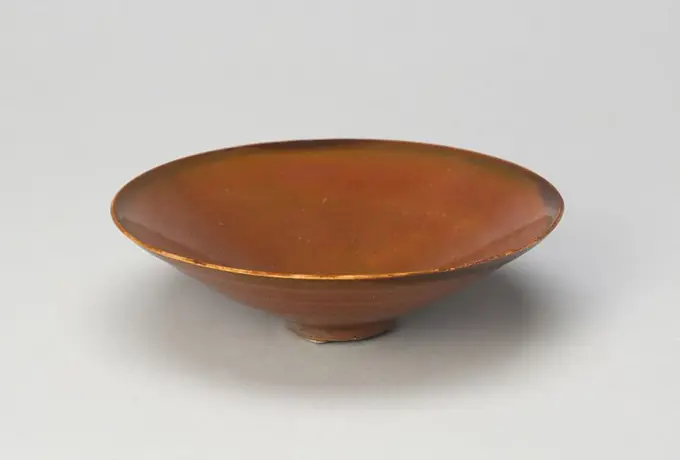
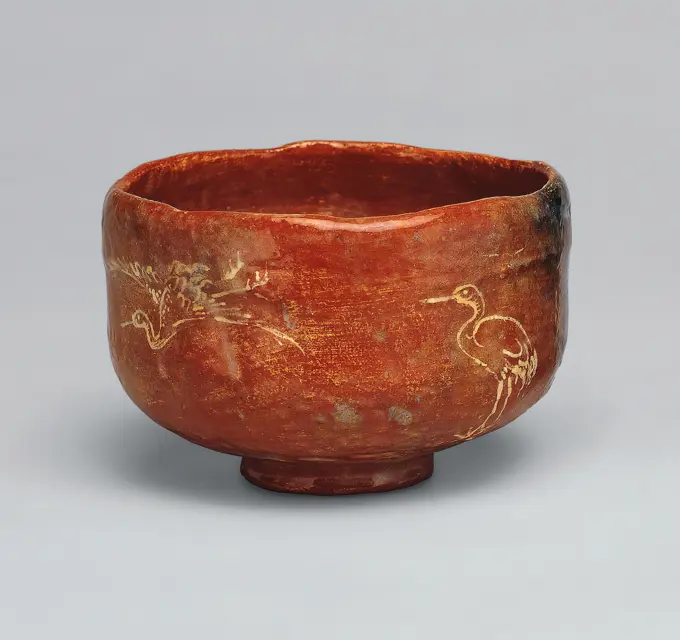
Tea bowl with cranes, late 18th - early 19th century, Raku Ryōnyū, Japanese, 1756 - 1834, 3 5/8 × 4 3/4 × 4 3/4 in. (9.21 × 12.07 × 12.07 cm), Raku ware; stoneware with red glaze, Japan, 18th-19th century,  Raku ware
6145-29826045
Bowl 18th century Japan. Bowl 63704
6145-29067203
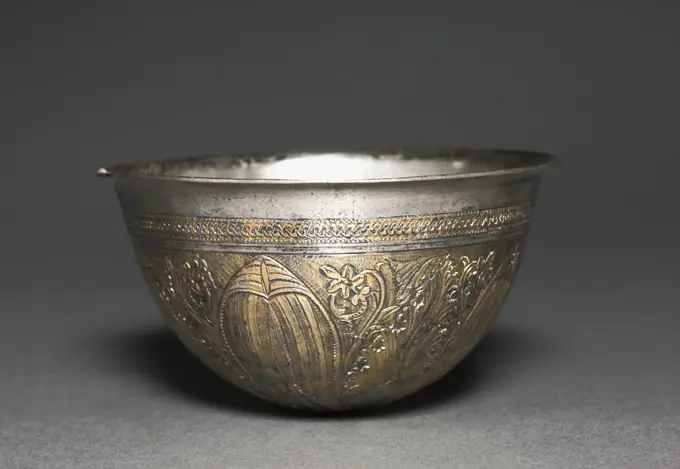
Bowl, 2nd-1st Century BC. Greece, late Hellenistic period. Silver gilt; diameter: 13.7 cm (5 3/8 in.); overall: 7.5 cm (2 15/16 in.).
6145-29194977
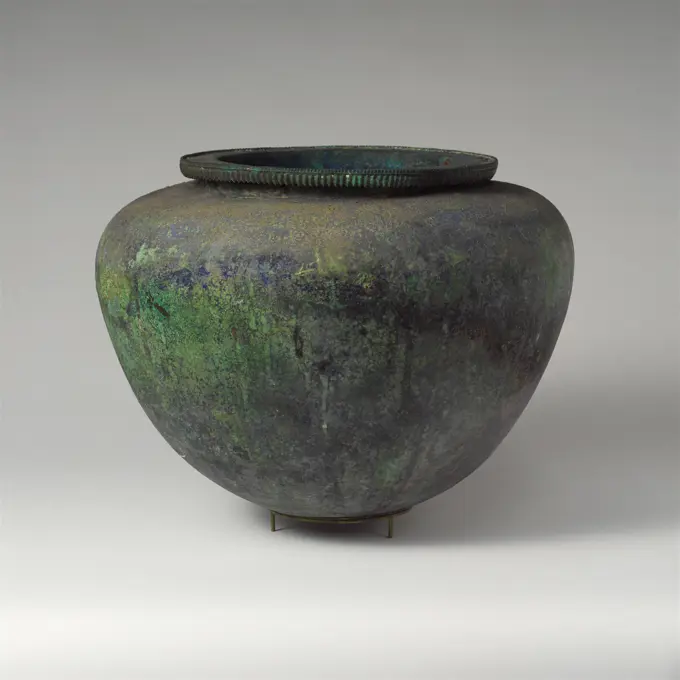
Bronze cauldron 5th century B.C. Greek, South Italian, Campanian Such vases, which originally would have been supported on a stand and often had a lid, served numerous purposes. They frequently appear in representations of symposia (drinking parties). They also had a funerary function, which was probably the ultimate use of this example.. Bronze cauldron 251368 Greek, South Italian, Campanian, Bronze cauldron, 5th century B.C., Bronze, 10 7/8in. (27.6cm) Other (diameter of shoulder): 14 1/4in. (36.2cm) Other (diameter of rim): 9 7/16in. (24cm). The Metropolitan Museum of Art, New York. Rogers Fund, 1923 (23.160.24)
6145-46443305
Round plate. Round plate of tin. The thin edge has turned.
6145-29765150
Bowl mid-12th century Korea. Bowl 57415
6145-29728560
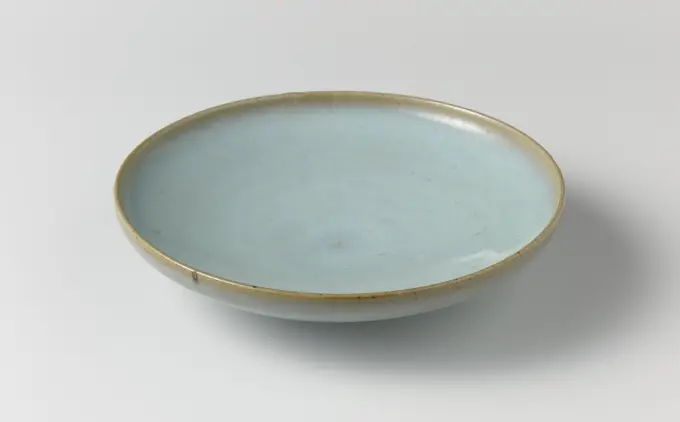
Bowl first half of the 12th century China Kilns producing Jun ware, which were based in north China, are listed among the kilns that made wares for the court during the Northern Song dynasty (960-1127). The light blue color of the glaze on this elegant bowl typifies some of the finest Jun wares produced during this period.. Bowl. China. first half of the 12th century. Stoneware with blue glaze (Jun ware). Northern Song dynasty (960-1127). Ceramics
6145-29718524
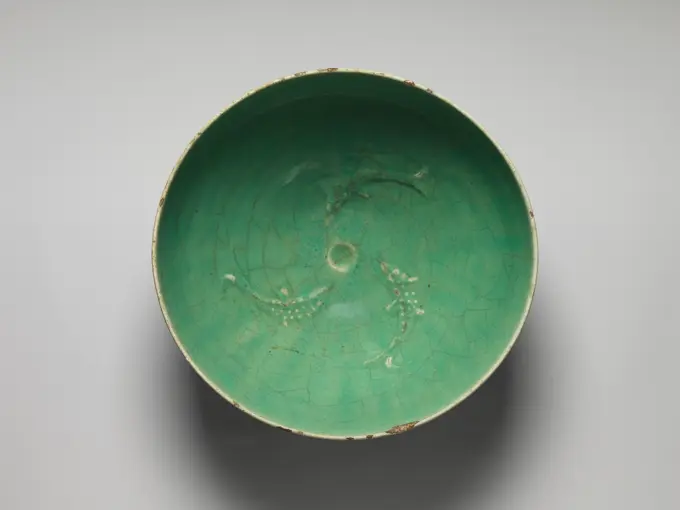
Bowl with Fish Motifs first half 14th century Ilkhanid-period potters in Iran imitated the range of green glazes of imported Chinese celadon wares, though they did not always succeed in duplicating their colors. This bowl is one of the more accomplished attempts. Its color, shape and decoration of three playful fish relate closely to wares produced in the kilns of Longquan, China during the Song period (960-1279).. Bowl with Fish Motifs. first half 14th century. Stonepaste; molded and glazed. Attributed to Iran. Ceramics
1788-23076
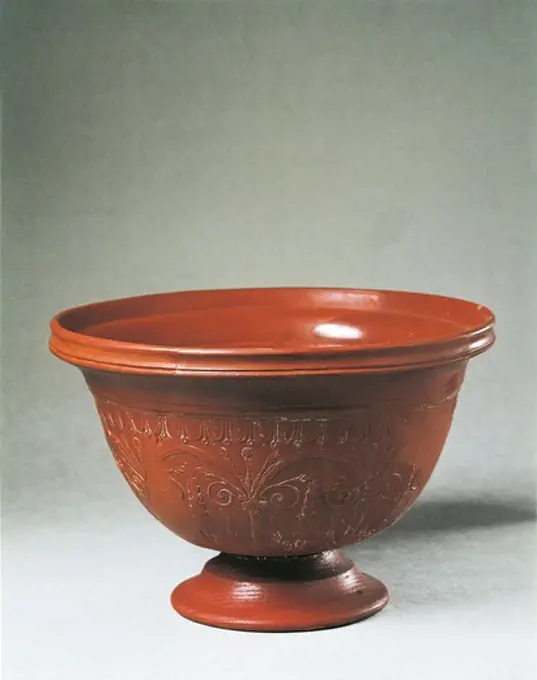
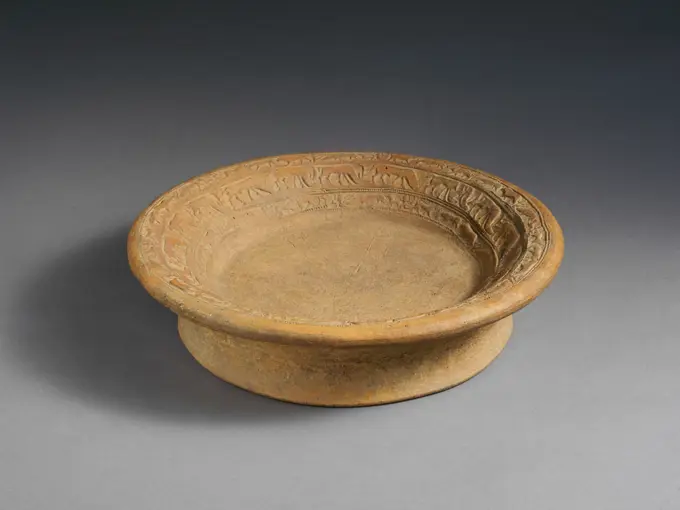
Terracotta samian ware (glossy red pottery)
6145-29210448
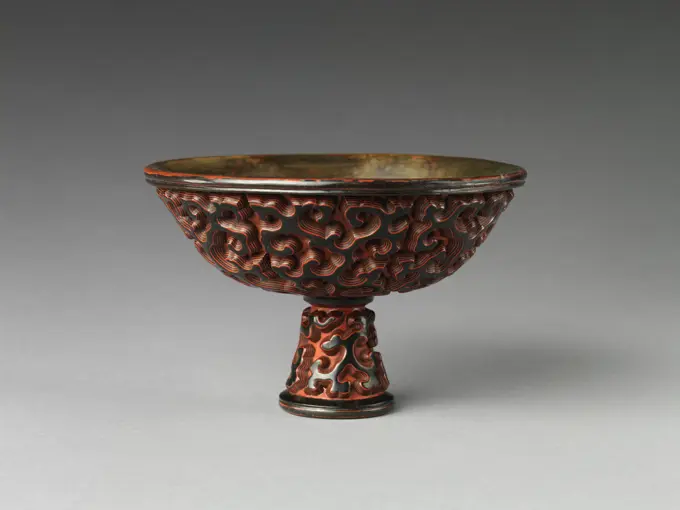
Stem cup with stylized clouds 14th century China. Stem cup with stylized clouds. China. 14th century. Carved black and red lacquer (tixi). Yuan dynasty (1271-1368). Lacquer
6145-29066930
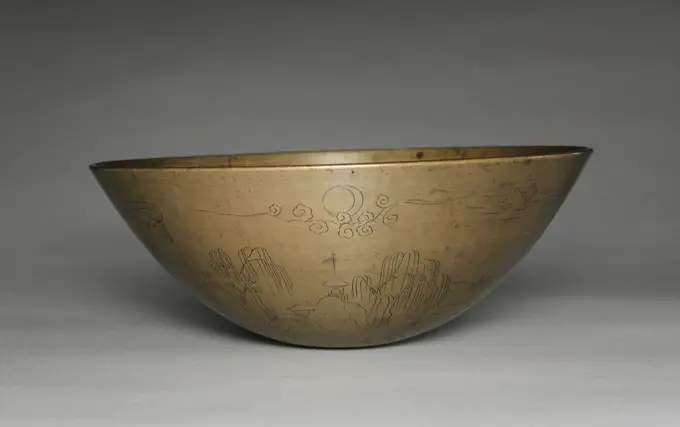
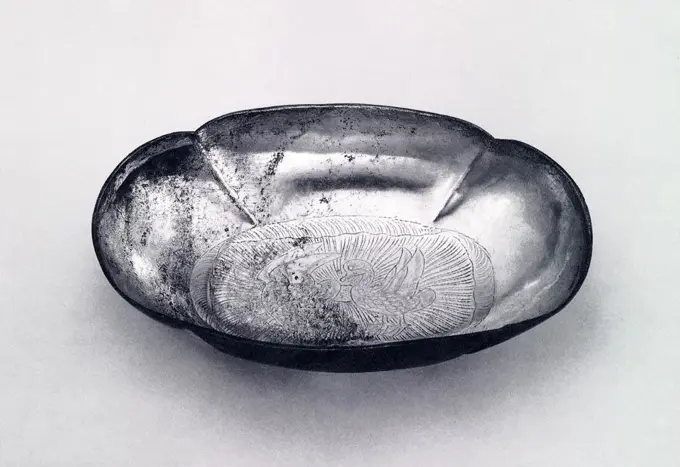
Alms Bowl with Celestial Design, 1900s. Korea, late Unified Silla period (668-935) or early Goryeo Period (918-1392). Bronze with incised decoration;
6145-58826503
Saucer-dish with a lavender blue glaze, anonymous, anonymous, c. 1100 - c. 1124 Scale of stoneware, covered with a light blue, slightly crawling glaze. To the edge the color changes to a yellow -brown tint. The foot ring is unglazed. Jun. China stoneware. glaze vitrification Scale of stoneware, covered with a light blue, slightly crawling glaze. To the edge the color changes to a yellow -brown tint. The foot ring is unglazed. Jun. China stoneware. glaze vitrification
6145-46648672
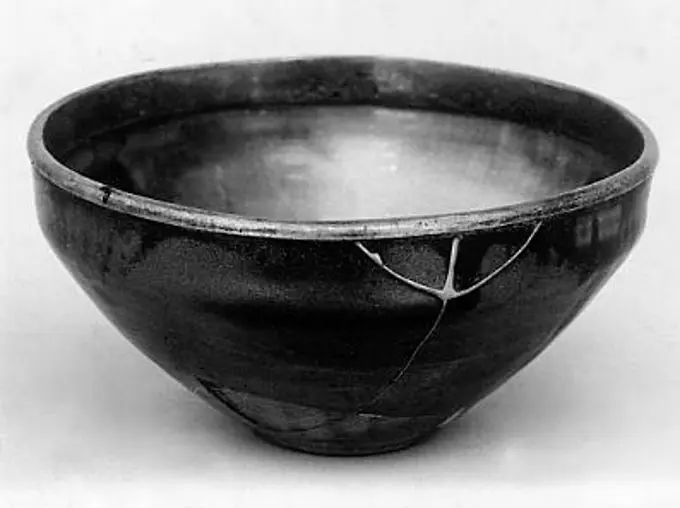
. Tea bowl of stoneware, covered with a crackled, creamy glaze. The bowl has been broken and repaired with gold lacquer. Old label on the bottom with 'W682'. Kyoyaki.
6145-29824915
Lotus cup 19th century China. Lotus cup 47898
6145-29089886
Floral-shaped Cup Stand with Inlaid Chrysanthemum Design, 1100s. Korea, Goryeo period (918-1392). Inlaid and glazed porcelain; overall: 6.1 cm (2 3/8 in.). As early as the seventh century, the practice of drinking tea and wine became an important part of elite culture in Korea. Elites of the Goryeo period commissioned a variety of types of utensils and vessels including this delicate-looking cup stand, not only to make their drinking experience more exciting, but also to show their refined taste.
6145-29126484
Footed Dish. Egypt or Syria-Palestine, 3rd-4th century. Furnishings; Serviceware. Clear glass with yellow tint
6145-29741152
Bowl China. Bowl 52672
6145-58825375
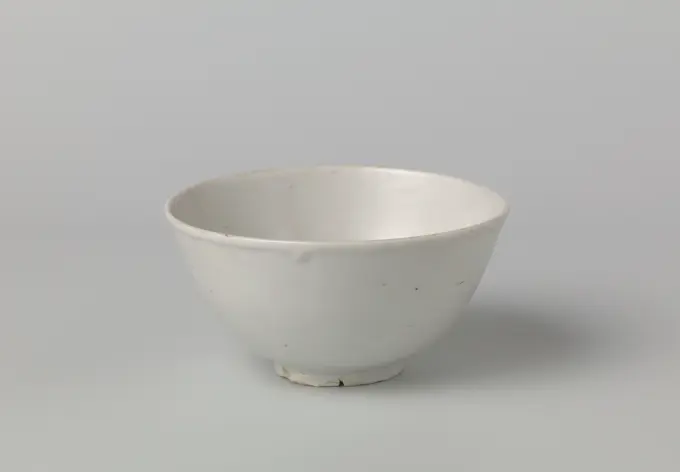
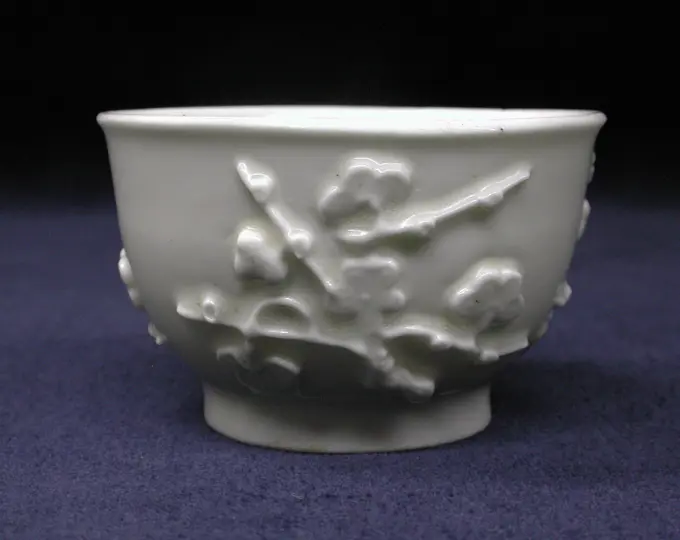
Bowl with a white glaze, anonymous, c. 1600 - c. 1699 Come from porcelain, covered with a white glaze. White porcelain, monochromes. South China porcelain. glaze vitrification Come from porcelain, covered with a white glaze. White porcelain, monochromes. South China porcelain. glaze vitrification
6145-43632790
Kyliks czarnofigurowy z przedstawieniem orszaku dionizyjskiego. nieznany warsztat attycki, workshop
6145-29149602
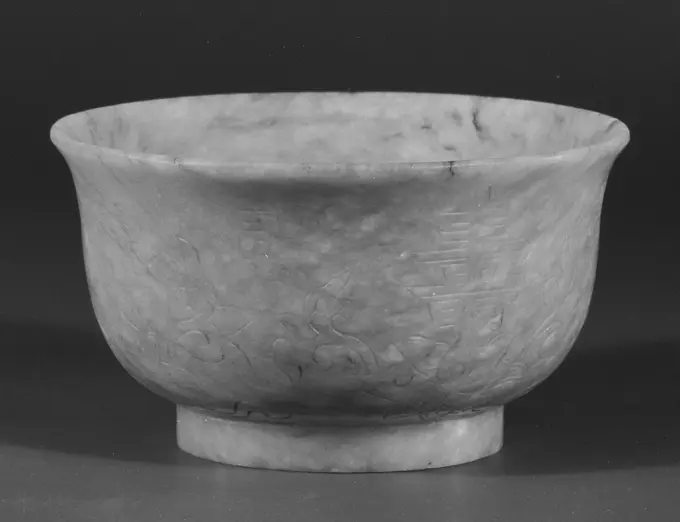
Cup 18th century China. Cup. China. 18th century. Jade. Jade
6145-29721486
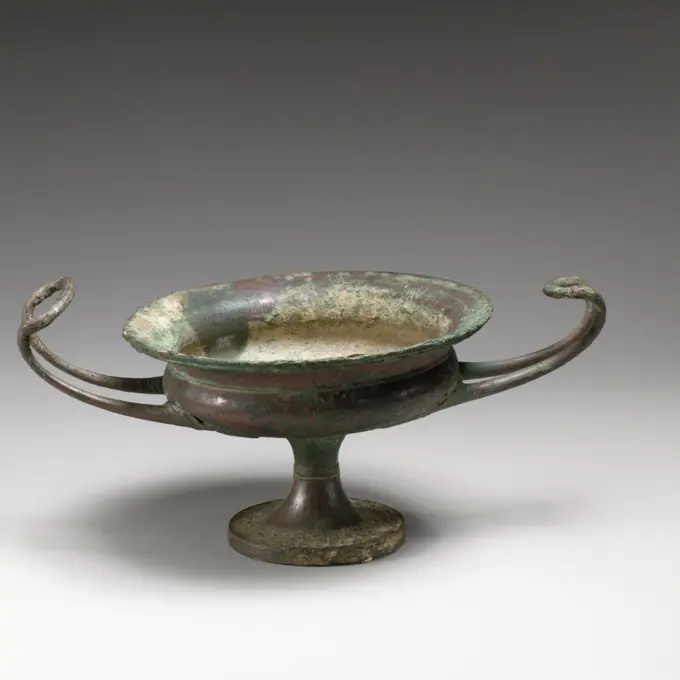
Bronze kylix (drinking cup) late 4th century B.C. Greek This bronze kylix follows in shape and proportions the same fashion also encountered in silver cups and black-glaze terracotta kylikes made under the influence of metal vases. The type was very popular and has been found in many areas of the Hellenistic world.. Bronze kylix (drinking cup) 248006
6145-29225803
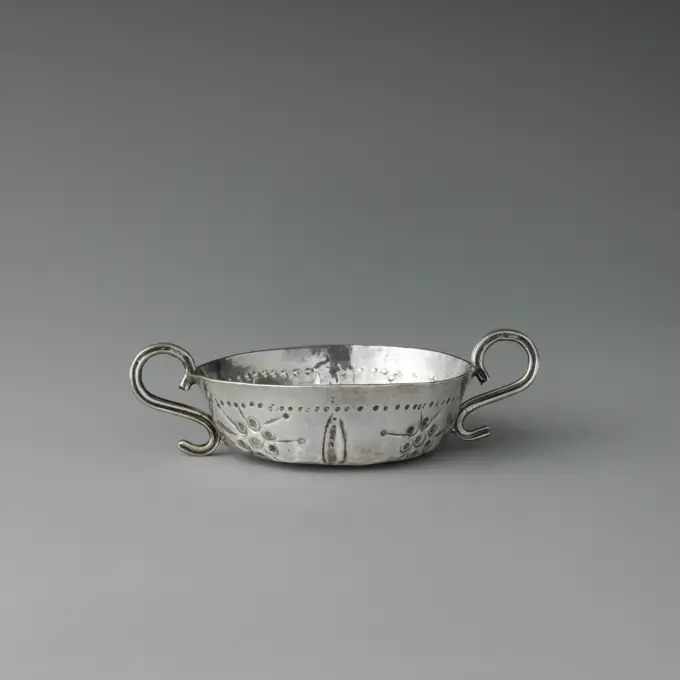
Miniature wine taster or mustard dish 17th century C S British. Miniature wine taster or mustard dish. British. 17th century. Silver. Metalwork-Silver
6145-29765858
Bowl ca. 550-450 B.C. Italic-Native, South Italian (Daunian). Bowl 255186 Italic-Native, South Italian (Daunian), Bowl, ca. 550450 B.C., Terracotta, H. 4.39 cm. Diameter 14.81 cm.. The Metropolitan Museum of Art, New York. Rogers Fund, 1965 (65.11.5)
4443-21940677
Pottery saucepan, red shard with sparing lead glaze, pouring lip, on three legs, saucepan pan crockery holder kitchenware soil discovery ceramics earthenware glaze lead glaze, hand turned fried glazed Pottery saucepan red shard with sparing lead glaze pouring lip three legs carbon footprints archeology indigenous pottery food prepare cooking eat cuisine
4409-17544388
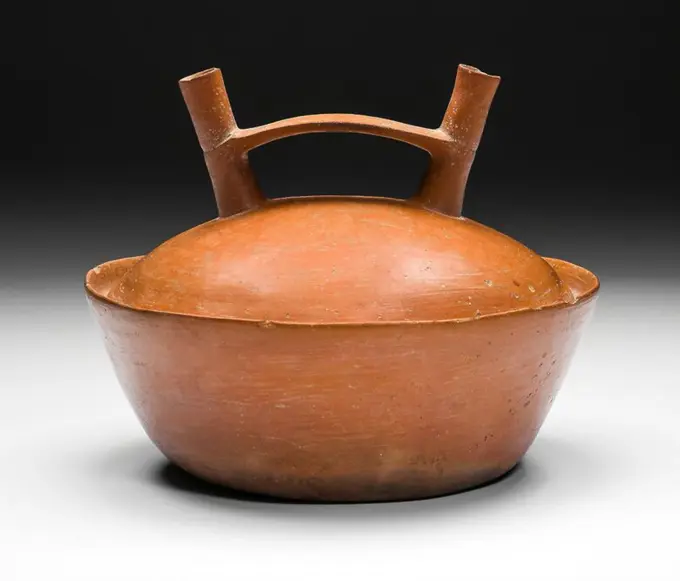
Double-Spouted Orangeware Bottle. Paracas; Possibly Cerro Blanco, Ocucaje area, Ica Valley, south coast, Peru. Date: 650 BC-150 BC. Dimensions: 15.4 × 19.5 cm (6 1/16 × 7 11/16 in.). Ceramic. Origin: Cerro Blanco. Museum: The Chicago Art Institute, Chicago, USA.
6145-46803297
Bowl
4409-17355525
Bowl. Culture: China. Dimensions: H. 2 7/8 in. (7.3 cm); Diam. 7 1/2 in. (19.1 cm); Diam. of rim 7 1/2 in. (19.1 cm); Diam. of foot 2 3/4 in. (7 cm). Museum: Metropolitan Museum of Art, New York, USA.
4409-17552094
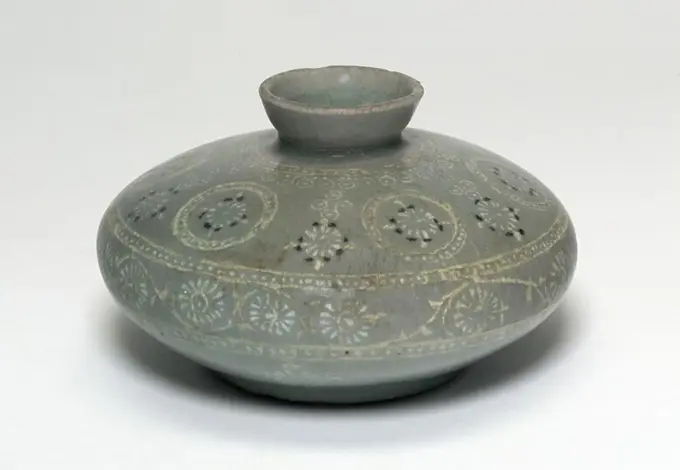
Oil Bottle with Chrysanthemum Flower Heads. Korea. Date: 1265-1299. Dimensions: H. 4.6 cm (1 13/16 in.); diam. 7.8 cm (3 1/16 in.). Celadon-glazed stoneware with underglaze inlaid decoration of black and white clays. Origin: Korea. Museum: The Chicago Art Institute, Chicago, USA.
4409-17419065
Bowl. Culture: China. Dimensions: H. 2 3/8 in. (6 cm); Diam. 4 3/4 in. (12.1 cm). Date: ca. 13th-14th century. Museum: Metropolitan Museum of Art, New York, USA.
6145-30167054
Tripod Incense Burner (Censer) 1100-1234 China. Jun ware; stoneware .
4409-17352673
Glass ribbed bowl. Culture: Roman. Dimensions: H.: 3 in. (7.6 cm)Diam.: 4 3/8 in. (11.1 cm). Date: mid-1st century A.D..Translucent light blue green.Knocked-off, uneven, ground rim; concave neck; globular body curving in to thick, flat bottom.Side tooled into fifteen irregular, vertical ribs, with arched projections around shoulder above tops.Intact; pinprick bubbles; dulling, patches of brownish weathering, and faint iridescence.Greenish ribbed bowl. Museum: Metropolitan Museum of Art, New York, USA.
4443-21937912
Small bronze shell on standing surface with outstanding, flat upper edge, bowl bowl soil found bronze metal, casted bronze bronze stand. Flat and outstanding top edge. Oblique curved side walls. Partly covered with green copper oxide archeology Valckensteyn Poortugaal Albrandswaard serving serve storage Soil discovery: castle Valckensteyn in Poortugaal the convenience of the donjon now Albrandswaard 1961-1962.
6145-59040817
Vase (usual name). Sandstone, celadon, incised decor. Cernuschi Museum, Asia Museum of Asia in the city of Paris.
6145-29151822
Black-topped red ware bowl ca. 3850-2960 B.C. Predynastic Period. Black-topped red ware bowl. ca. 3850-2960 B.C.. Pottery. Predynastic Period. From Egypt, Southern Upper Egypt, Hierakonpolis (Nekhen), MMA excavations
6145-29831783
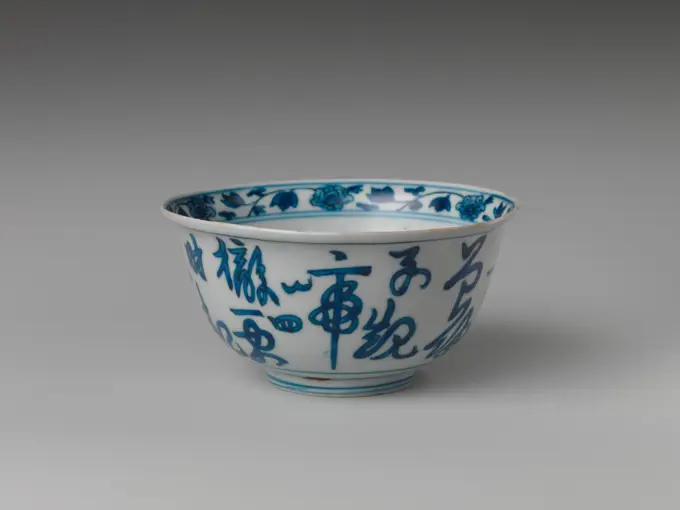
Bowl with inscription late 16th century China Porcelain produced during the short reign of the Longqing emperor is rare. The elegantly written inscription quotes from the Song of the Lady with the Silk Worms, a poem by the famed Xie Fangde (1226-1289), and reads in part: Not only does the moon shine through the willows before the storied house but pretty girls continue to dance and sing ...take heed lest the silkworms have not enough leaves.”. Bowl with inscription. China. late 16th century. Porcelain painted in underglaze cobalt blue (Jingdezhen ware). Ming dynasty (1368-1644), Longqing mark and period (1567-72). Ceramics
6145-29746286
Terracotta brazier ca. 600-530 B.C. Etruscan One of the braziers (96.18.96, ca. 600 B.C.) is decorated with two different cylinder stamps, one showing a standard animal procession, the other depicting a boar hunt that is known only from five examples excavated at San Giovenale. The other brazier (19.192.53, ca. 550 B.C.) is stamped with a scene of a man and two dogs chasing a hare into a net held by a second man. Such friezes were popular on Protocorinthian vases and Etruscan Pontic ware. The fragment (23.160.94, ca. 540-530 B.C.) depicts pairs of lions attacking a bull and a doe, a subject that was adapted by the Etruscans from Near Eastern and Greek prototypes and that also appears on the Monteleone Chariot (03.23.1), which is on view in this gallery.. Terracotta brazier 246610
6145-45570735
Bowl
6145-59013969
Anonymous. "Podaniptere" (tripod basin). Metal, bronze. -550/500 BC .. Museum of Fine Arts in the city of Paris, Petit Palais. 99935-3 Antiquity, bronze, ieme half of the life VI 6th 6th 6 century before av. JC, metal, ancient
4443-21936461
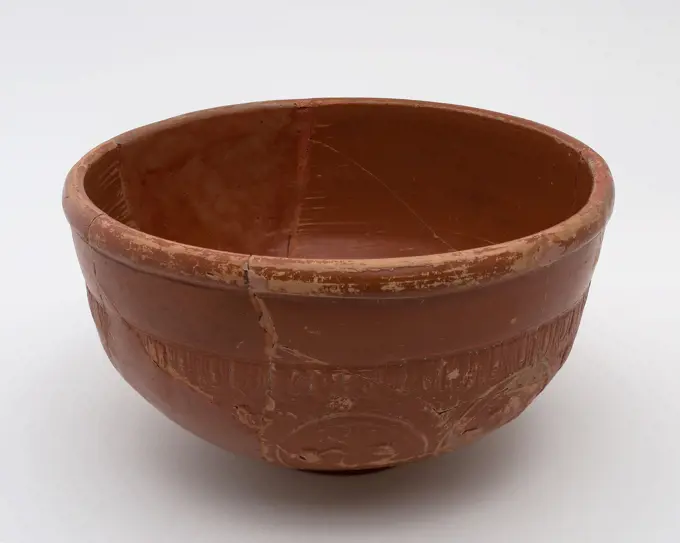
Deep roman bowl on stand ring, terra sigillata, embossed with niches and medallions, bowl bowl tableware holder soil find ceramic pottery clay engobe, made into shape deep bowl of red pottery on stand ring. Roman. Terra sigillata Semi-circular bottom and straight sidewall. Embossed on the outside with broad frieze in which nissenband heart motifs and round medallions In the medallions mythical fangs with red tails orange shard archeology Poortugaal Albrandswaard indigenous pottery terra sigillata import serve serve mythology archaeological find in the soil Poortugaal.
6145-29140440
Bowl 1893-96 Designed by Louis Comfort Tiffany American. Bowl. American. 1893-96. Favrile glass. Made in New York, United States
6145-29176880
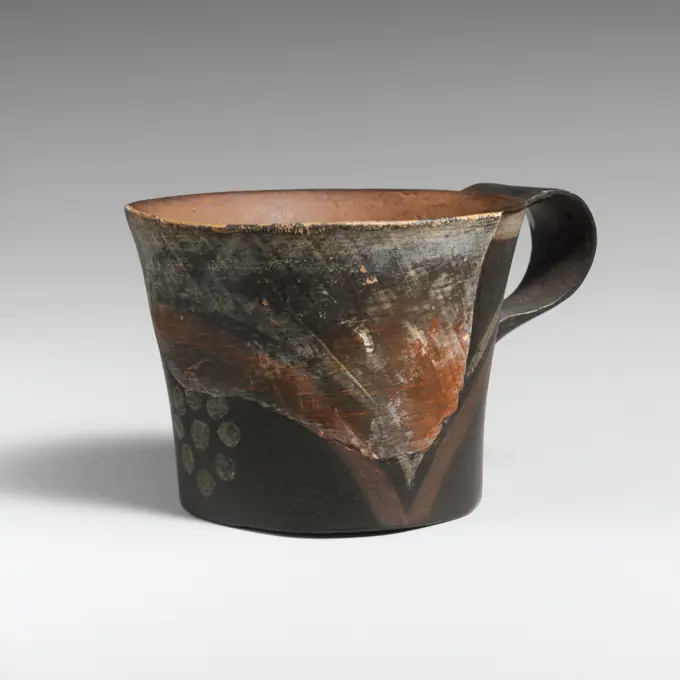
Terracotta cup with one handle ca. 1600-1050 B.C. Mycenaean One-handled.. Terracotta cup with one handle. Mycenaean. ca. 1600-1050 B.C.. Terracotta. Late Bronze Age. Vases
6145-59069659
Sitko - a fragment of the neck jug for water;  XI-XII century (1001-00-00-1200-00-00);Arabian (culture), ceramics, gift (provenance), art of Islam
4409-17519776
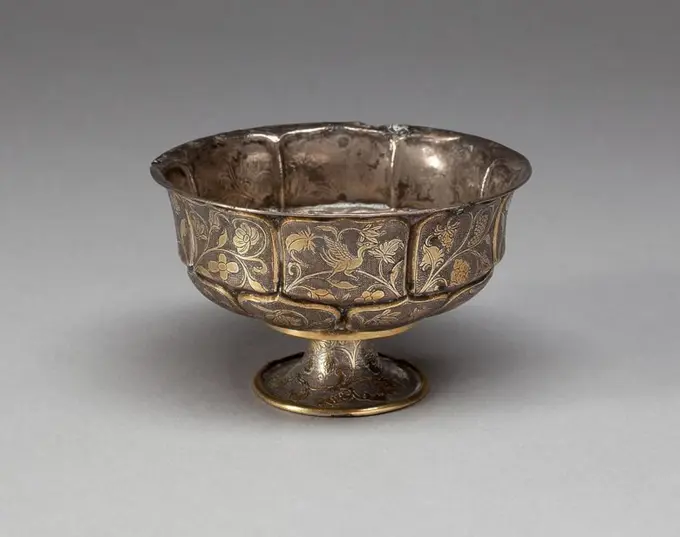
Stem Cup. China. Date: 618 AD-906 AD. Dimensions: H. 4.8 × diam. 7.8 cm; (3.1 × 1.9 in.). Silver with parcel gilt decoration. Origin: China. Museum: The Chicago Art Institute, Chicago, USA.
6145-29239859
Bowl 600-480 B.C. Cypriot Deep cup of thin ware with broad red band on edge of lip, black bands below.. Bowl. Cypriot. 600-480 B.C.. Terracotta. Cypro-Archaic II. Vases
6145-48882857
Late Geometric Cup. Unknown
4443-28734633
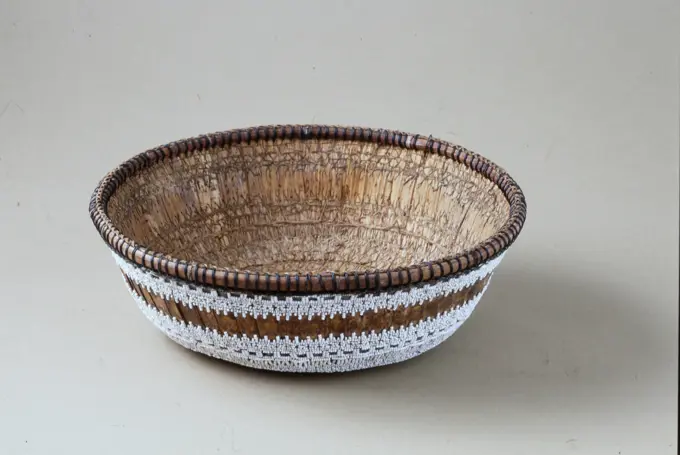
Temple Basket, 20th century, 3 1/2 x 10 1/4 x 10 1/4 in. (8.9 x 26.04 x 26.04 cm), Fiber, beads, Indonesia, 20th century
6145-58930672
Bowl - Portneuf pottery
4443-21919887
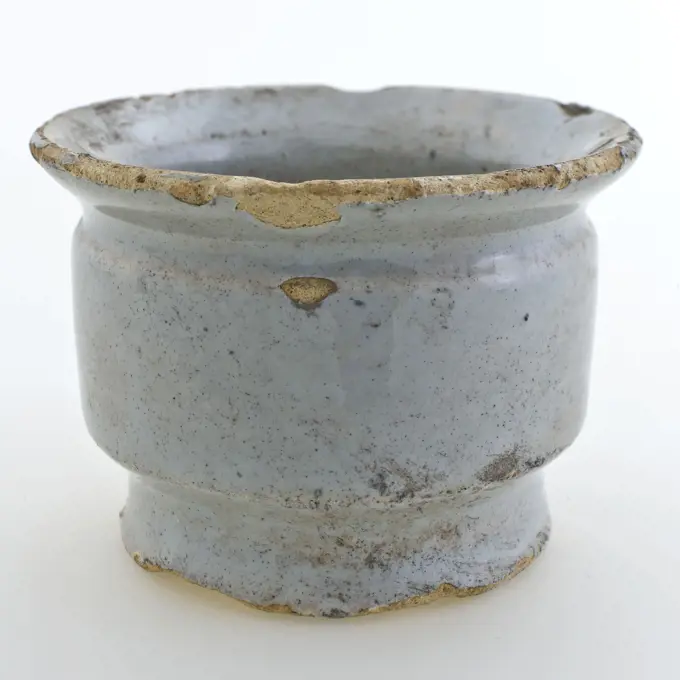
Pottery ointment jar, mortar model, white glazed, ointment jar pot holder soil find ceramic earthenware glaze tin glaze, delfts white hand turned glazed baked Pottery ointment jar mortar model wide low form with two smooth nips along the outside of the kettle Slanted outwards outstanding edge. White glazed with light blue tint. Stand surface with deducting traces archeology health care indigenous pottery pharmacy packing medicine drug sell craft store
6145-29751152
Bowl 12th-13th century. Bowl. 12th-13th century. Earthenware; glazed. Made in Iran. Ceramics
6145-29152010
Bowl China. Bowl. China. Earthenware (soft Jun type). Yuan dynasty (1271-1368). Ceramics
4443-21926799
Earthenware comes on three stand fins with necking under the outer edge, bowl bowl crockery holder soil find ceramic earthenware glaze lead glaze, hand-turned glazed fried Bowl or bowl red earthenware internal glazed thickened and slightly outgoing edge with below it necking along the outside three pinched stand lobes Deep and hemisphere model archeology Capelle aan den IJssel House in Capelle castle native pottery crockery kitchenware tableware cooking kitchen food preparation Soil discovery: house in Capelle Capelle aan den IJssel.
6145-29761008
Brazier from the Burial of Amenhotep ca. 1479-1458 B.C. New Kingdom In the small tomb of a boy named Amenhotep (36.3.153), a group of jars (36.3.161, 36.3.162, 36.3.164) and this small brazier were found on either side of the coffin. The gray ashy material inside the bowl of the brazier are the remains of incense or a burnt offering that was probably made during the burial ceremony as seen in a detail from one of the Museum's facsimiles (see photo above and 30.4.56).. Brazier from the Burial of Amenhotep. ca. 1479-1458 B.C.. pottery. New Kingdom. From Egypt, Upper Egypt, Thebes, Sheikh Abd el-Qurna, below the Tomb of Senenmut (TT 71), burial of Amenhotep, Brazier F, MMA excavations, 1935-36. Dynasty 18
6145-46855023
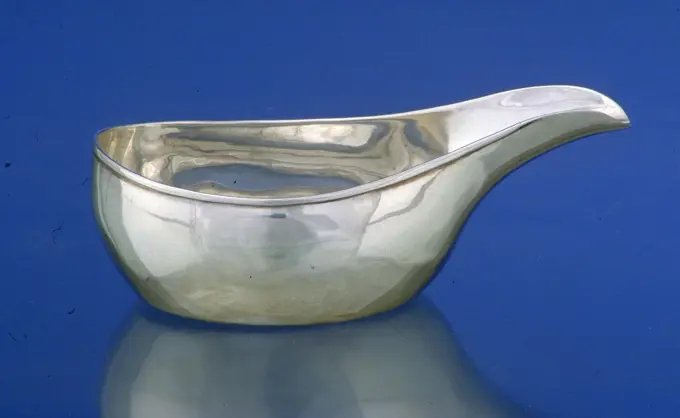
Pap-boat.   Maker: William Thomson, American, 1777-1833
6145-58930755
Bowl -
6145-29130066
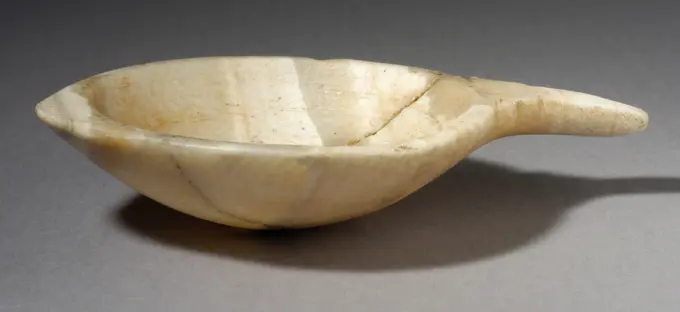
Open Spouted Bowl or Dish. Egypt, early Dynastic (circa 3050 - 2687 BCE). Furnishings; Serviceware. Calcite
6145-29152815
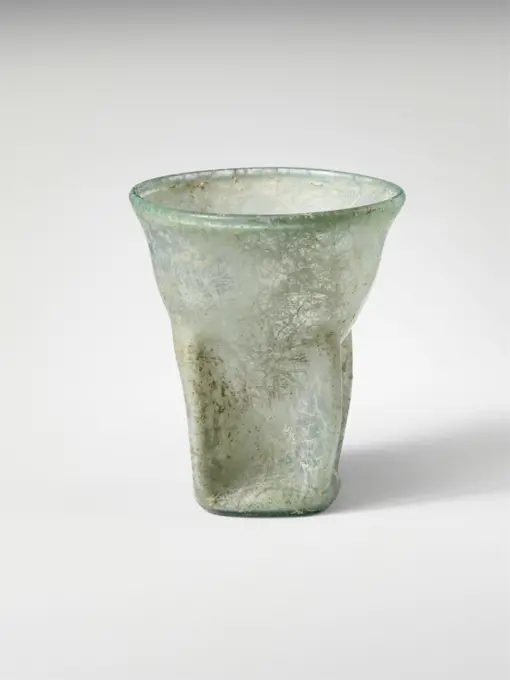
Glass beaker 3rd-4th century A.D. Roman Translucent blue green.Thickened rim, with slightly inverted, rounded lip; side tapering downwards on upper body, and then shaped into a rough square with hollow projecting corners; roughly square, concave bottom.On lower body, four deep indents, forming a star-like shape to interior.Intact; few bubbles; soil encrustation and root marks covering most of surfaces.. Glass beaker 245355
4409-17435279
Terracotta stemless kylix (drinking cup). Culture: Greek, South Italian, Campanian. Dimensions: H. with handles 3 1/4 in. (8.3 cm); width 11 in. (28 cm); diameter 8 1/16 in. (20.4 cm). Date: ca. 330-300 B.C..Interior, head of a woman wearing a diadem and a saccos. Exterior, A and B, head of a woman. Museum: Metropolitan Museum of Art, New York, USA.
4409-17429518
Bowl. Culture: American. Dimensions: 2 1/4 x 4 3/4 in. (5.7 x 12.1 cm). Maker: William P. Jervis (American (born England), Stoke-on-Trent 1851-1925 Sparta, New Jersey); Jervis Pottery (1908-12). Date: 1908-12. Museum: Metropolitan Museum of Art, New York, USA.
4443-28741680
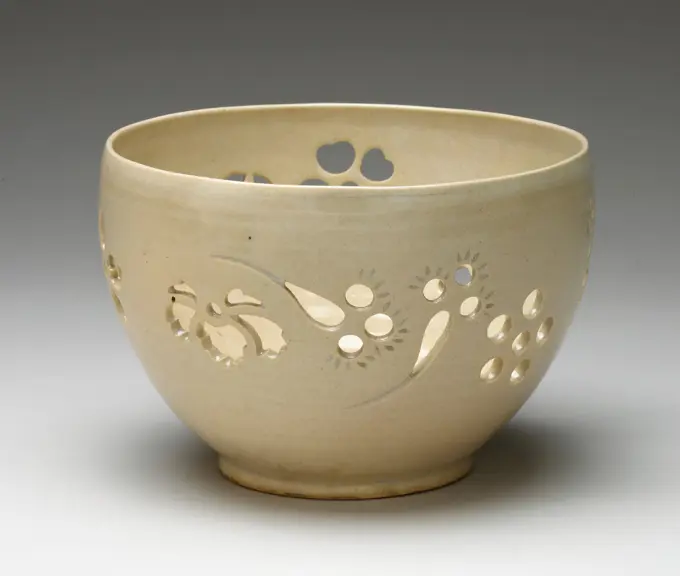
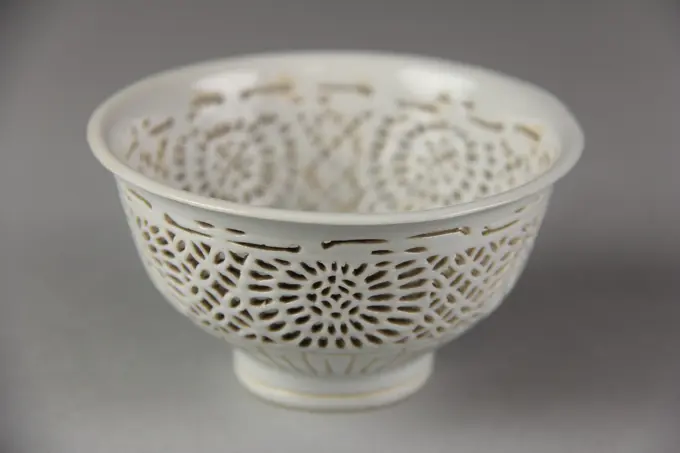
Bowl with Reticulated Designs, 18th century, Unknown Japanese, 5 5/16 x 7 7/16 x 7 7/16 in. (13.49 x 18.89 x 18.89 cm), Kyōyaki ware, Ko-Kiyomizu type; glazed stoneware, Japan, 18th century, Ceramics with reticulated (cut-out) designs were first produced in Japan in the early 17th century, probably by émigré potters from Korea where this decorative technique had a long history. The famous Kyoto potter Nonomura Ninsei also used the technique in the mid-17th century, thus popularizing it among artisans within Japan's cultural capital. The floral and vegetable motifs seen here are known as mon-chirashi, or 'scattered crests,' referring to the stylized family crests that became popular among all levels of society during Japan's Edo period (1615-1868).
6145-58873400
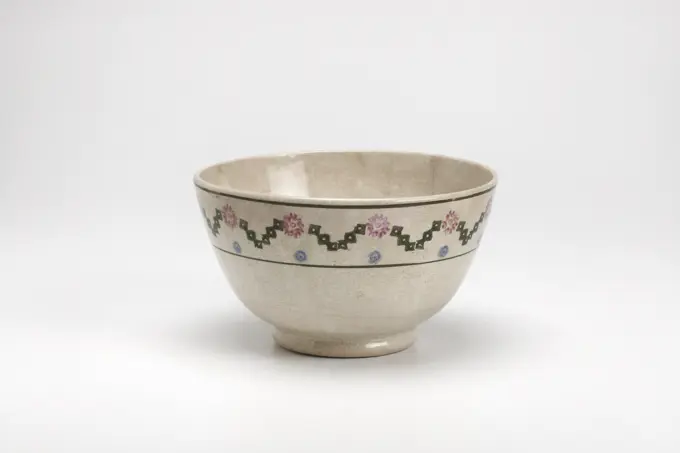
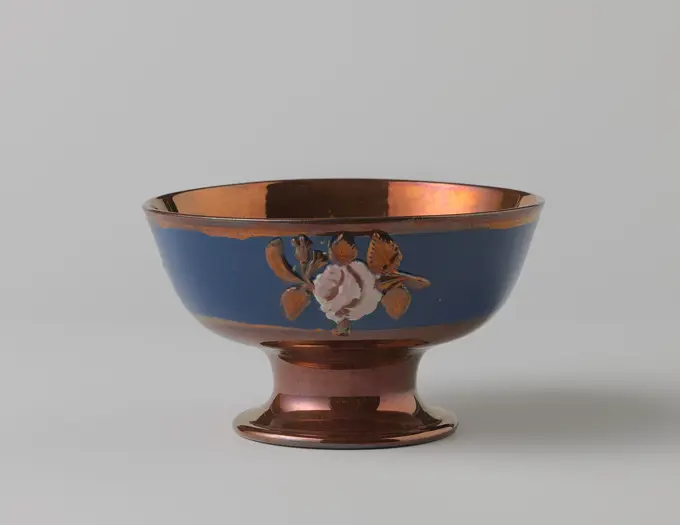
Come from hard baked earthenware (New Castle), Anonymous, c. 1820 - c. 1860 Half -ball -shaped bowl of hard baked pottery. The bowl is on a concave of cylindrical tribe and has a round foot. The bowl is covered with Goudluster, which saves a blue border with three red roses in relief. Newcastle upon Tyne (possibly) earthenware Half -ball -shaped bowl of hard baked pottery. The bowl is on a concave of cylindrical tribe and has a round foot. The bowl is covered with Goudluster, which saves a blue border with three red roses in relief. Newcastle upon Tyne (possibly) earthenware
6145-46833891
TeaBowl
6145-30084457
Oval bowl.The desire to make earthenware objects with a black ground was probably prompted by the popularity of Asian lacquerware. But black enamel was very difficult to apply, so black-glazed Delft earthenware is extremely rare.
6145-29163127
Bowl with floral pattern 18th century China. Bowl with floral pattern. China. 18th century. Poecelain with reticulated decoration (Jingdezhen ware). Qing dynasty (1644-1911). Ceramics
6145-29736154
Cup with figures in a landscape 18th century China The gateway at the base of the cup is most likely part of a private estate or large garden set in a remote but beautiful location. The branches and needles of one of the pine trees carved along the side and in the interior attest to the skill of the anonymous artist who made this object.. Cup with figures in a landscape. China. 18th century. Rhinoceros horn. Qing dynasty (1644-1911). Horn
6145-29766038
Mirror Greek, Cypriot. Mirror 244305
4409-17383277
Beaker (Krautstrunk). Culture: German or Netherlandish. Dimensions: 2 1/8 × 3 1/4 in. (5.4 × 8.3 cm). Date: 1480-1510.In this beaker, the Krautstrunk ("cabbage stalk") decoration has been truncated, contracting the prunts to a single row. Museum: Metropolitan Museum of Art, New York, USA.
4443-21907150
Earthenware saucepan with stem and pouring lip, saucepan casserole tableware container kitchenware earth discovery ceramics earthenware glaze lead glaze, hand turned hand shaped glazed baked saucepan on lens base Red shard. Upright sidewall with pouring lip and scalloped handle as handle Internal glazed archeology Rotterdam Kralingen Muted Slaak underground pit indigenous pottery baking kitchen cooking food preparation nutrition Soil discovery Muted Slaak.
6145-29717327
Undecorated painted bowl with straight sides 6th-3rd century B.C. () Paracas. Undecorated painted bowl with straight sides 308343
6145-58860456
Tea head, part of a tea set, Petrus Regout & Co., 1934 Tea head of earthenware, part of a tea set. Brown distance on the outside, with red buttons, spouts, ears and edges. Marked with sphinx stamp; Petrus Regout & Co Maastricht in a lying rectangle; Made in Holland. Maastricht earthenware Tea head of earthenware, part of a tea set. Brown distance on the outside, with red buttons, spouts, ears and edges. Marked with sphinx stamp; Petrus Regout & Co Maastricht in a lying rectangle; Made in Holland. Maastricht earthenware
6145-48510609
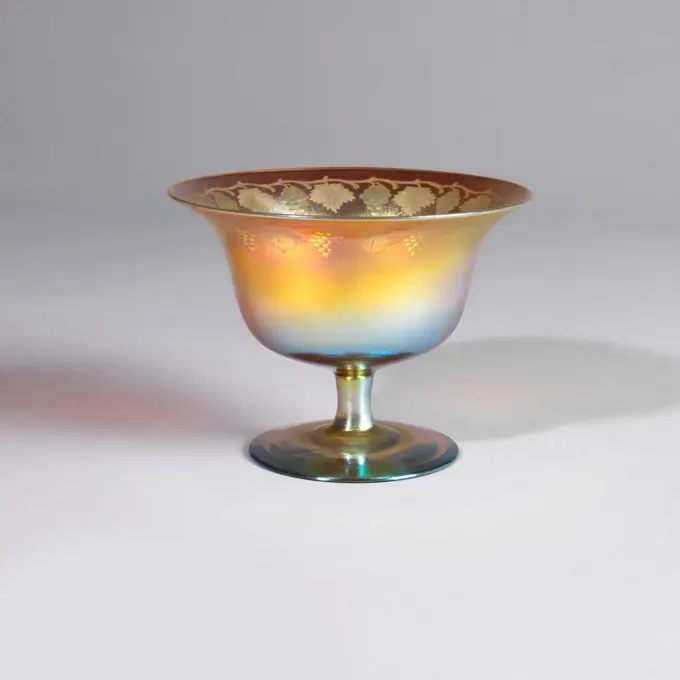
Stemmed Sherbet Dish (USA); Designed by Louis Comfort Tiffany (American, 1848-1933); favrile glass
6145-29832036
Bowl 12th-9th century B.C. Olmec. Bowl 310447
6145-29820865
Teabowl ca. 1800 Japan. Teabowl 63183
6145-52953293
Bowl Early Dynastic Period ca. 3100-2900 B.C.
6145-59066190
GUI censer; Hu, Wenming (Fl. CA 1583-1614); XVII century (1701-00-00-1800-00-00);Paderewski, Ignacy Jan (1860-1941), Paderewski, Ignacy Jan (1860-1941)-collection, qing (style), Chinese (culture), gift (provenance), Chinese art
4409-17394083
Bowl. Culture: Veracruz (). Dimensions: Height: 4 3/4in. (12.1cm)Diameter: 6 1/8in. (15.5cm). Date: 9th-2nd century B.C. (). Museum: Metropolitan Museum of Art, New York, USA.
6145-29768664
Gold-glass mosaic bowl fragment early 2nd century B.C. Greek Colorless, colorless with purple tinge, translucent cobalt blue, opaque white, opaque yellow, and gold leaf.Hemispherical bowl fragment with flaring rim with rounded edge; convex curving side.Composite mosaic pattern formed from polygonal sections of a single composite cane in a blue ground with a white spiral and central dot in yellow; interspersed with this cane are numerous irregular segments, one in solid white, the second in solid yellow, and the thrid in gold leaf snadwiched in colorless glass; a purplish coloress cane is attached as a rim.Broken and repaired from twenty-two fragments, with several small holes in side; dulling, pitting, and faint iridescent weathering.. Gold-glass mosaic bowl fragment 249509
6145-45321623
Czarka  cobalt decoration made of stylized flagellas and flowers unknown
6145-29733738
Drinking Bowl 15th century British. Drinking Bowl. British. 15th century. Mazer wood with silver and engraved silver mounts. Metalwork-Silver
6145-29153095
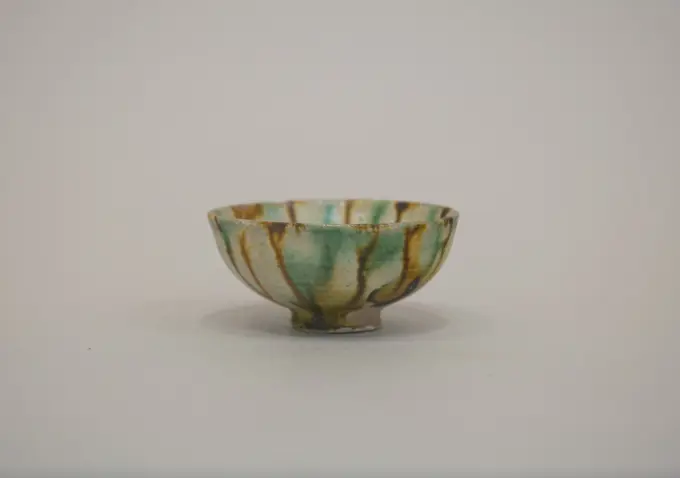
Miniature bowl 8th century China. Miniature bowl. China. 8th century. Earthenware with polychrome glaze (Sancai ware). Tang dynasty (618-907). Ceramics
6145-29773185
Teabowl ca. 1850 Japan. Teabowl 63160
6145-58993184
Cup ". Ceramic. China, Dynasty of Song. Paris, Cernuschi Museum. 72685-50 Chinese, white, ceramic art, cup, Song dynasty
6145-29226981
Torch-holder 6th-4th century B.C. Cypriot Shaped like large candlestick standing in wide saucer. Without decoration.. Torch-holder. Cypriot. 6th-4th century B.C.. Terracotta. Vases
6145-29708434
Bowl 7th-4th century B.C. Paracas. Bowl 308432
4409-17371375
Ribbed bowl. Culture: Roman. Dimensions: H. 3.9 cm; diam. 15.5 cm. Date: 1st century. Museum: Metropolitan Museum of Art, New York, USA.
6145-29160671
Terracotta Little Master cup ca. 565-550 B.C. Greek, Attic, black-figure, 03.24.31: exterior, obverse and reverse, sphinx standing over a nude manThe larger cup demonstrates the basic decorative format of this popular shape. Here, the inscriptions are meaningless strings of letters framing the figural composition, but on other examples, they accurately record the artist's name, label characters depicted, or offer greetings. Little Master cups can be dated more precisely than most Etruscan vases and so are important indicators of the date of this tomb.. Terracotta Little Master cup 247100
6145-29706414
Glass cup 1st-2nd century A.D. Roman Translucent pale blue.Flaring rim, with uneven, cracked-off edge; side expands downwards, then slants inwards; slightly concave bottom.One horizontal wheel-abraded line immediately below rim, with more bands on body above point of greatest diameter.Intact, except for weathered chip in rim; many pinprick bubbles and blowing striations; deep pitting and weathering, with areas of soil encrustation, dulling, thick creamy weathering, and brilliant iridescence.. Glass cup. Roman. 1st-2nd century A.D.. Glass; blown and cut. Early to Mid Imperial. Glass
4409-17520257
Lobed Basin for Flowerpot. China. Date: 1400-1499. Dimensions: H. 6.1 cm (2 3/8 in.); diam. 19.2 cm (7 9/16 in.). Jun ware; stoneware with opaque pale-blue and reddish-purple glaze. Origin: China. Museum: The Chicago Art Institute, Chicago, USA.
6145-29722645
Incised Painted Bowl 5th-2nd century B.C. Paracas. Incised Painted Bowl 308661
6145-29826034
Bowl ca. late 8th-7th century B.C. Israelite. Bowl 323165
6145-52526185
Cup, c. 1915-40. Seifū Yohei IV (Japanese, 1872-1951). Porcelain; overall: 6.5 x 9 cm (2 9/16 x 3 9/16 in.).
6145-59040273
Unknown (n. - d.), Green family dish (main title). Ceramics, porcelain, high fire enamels. Petit Palais, Museum of Fine Arts of the City of Paris.
4443-21960872
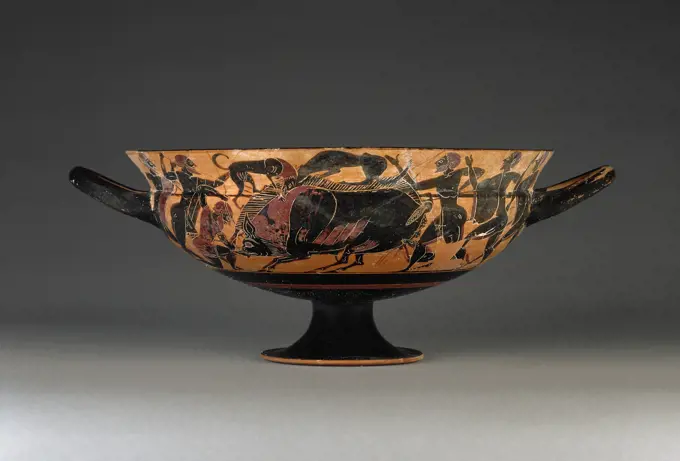
Wine Cup with a Boar Hunt; Painter of Boston C.A; Athens, Greece; about 560 B.C; Terracotta; 12.9 × 33.8 × 26.2 cm (5 1,16 × 13 5,16 × 10 5,16 in.)
4443-28736240
Ink Stone, 618-906, 1 1/8 x 2 13/16 x 3 7/8in. (2.9 x 7.1 x 9.8cm), Tuan stone, China, 7th-10th century, This elegantly fashioned, early ink stone is carved in the form of a winnowing basket, a favored shape during Tang. The artisan has cleverly carved the light-grained stone to reveal a dark striation in the center of the well which simulates puddled ink. The small scale and fine condition suggest that this was an object made exclusively for burial.
6145-30179133
Cup 1 CE-100 CE Syria. Glass, blown technique . Ancient Roman
6145-48839360
Bowl. Unknown
6145-29158028
Bird Feeder 14th-15th century French. Bird Feeder. French. 14th-15th century. Lead. Metalwork-Lead
6145-46807325
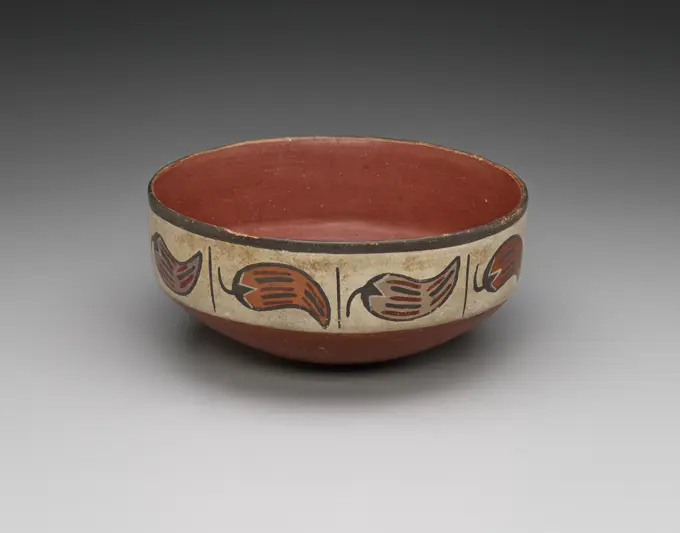
Bowl with ChiliPeppers.  Artist: Unknown
6145-29138772
Glass bowl 2nd-3rd century A.D. Roman Miniature bowl or jarTranslucent blue green.Rounded and thickened rim with inner lip; convex sides to cylindrical body; flat bottom with small, central kick and traces of large pontil scar.Intact; few bubbles; pitting, dulling, and iridescent weathering.. Glass bowl 239820
4409-17399463
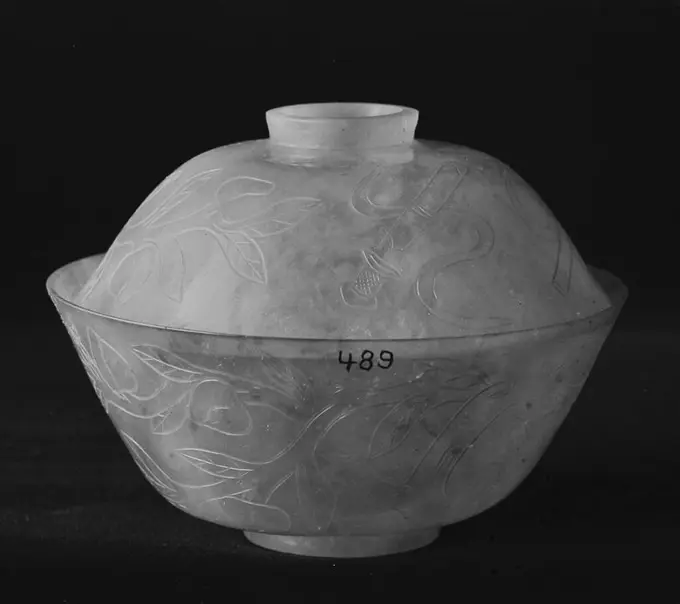
Cup with cover. Culture: China. Dimensions: H. 3 1/16 in. (7.7 cm); W. 4 1/8 in. (10.4 cm). Museum: Metropolitan Museum of Art, New York, USA.
6145-29159034
Black Incised Ware Bowl ca. 3850-2960 B.C. Predynastic Period. Black Incised Ware Bowl. ca. 3850-2960 B.C.. Pottery. Predynastic Period. From Egypt
4409-17416710
Faience bowl. Culture: Cypriot. Dimensions: H. 1 9/16 in. (4 cm)diameter 5 1/2 in. (14 cm). Date: ca. 1200 B.C..The figure of the woman in the interior of the cup is depicted in an Egyptian style. Museum: Metropolitan Museum of Art, New York, USA.
6145-29143930
Bowl 17th century () Japan. Bowl. Japan. 17th century (). Clay covered with glaze (Shidoro style). Edo period (1615-1868). Ceramics
6145-29801707
Terracotta straight-sided cup ca. 1800-1700 B.C. Minoan Decorated with a rosette and bands in white and orange.. Terracotta straight-sided cup. Minoan. ca. 1800-1700 B.C.. Terracotta; Kamares ware. Middle Minoan IIB-IIIA. Vases
6145-29815090
Teabowl 19th century Japan. Teabowl. Japan. 19th century. Clay covered with glaze and overglaze; metal ring around the lip. Edo (1615-1868) or Meiji period (1868-1912). Ceramics
6145-50489083
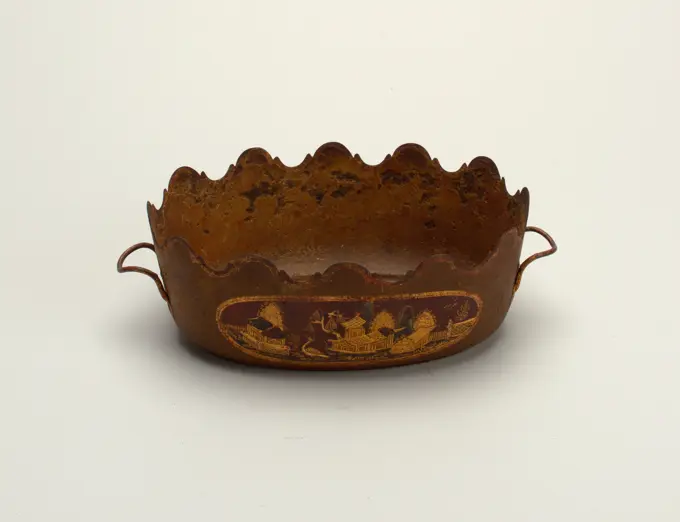
Jardiniere (England); enameled tôle
6145-29826700
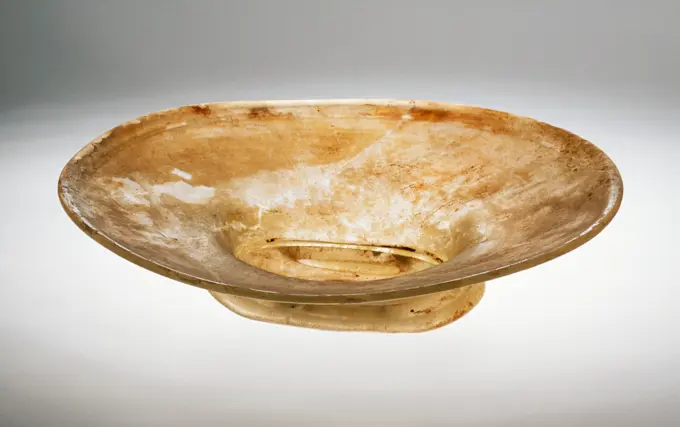
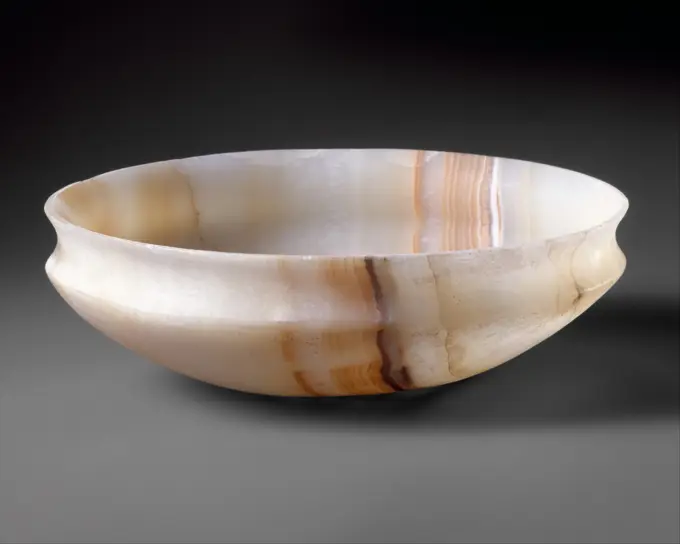
Shallow bowl with a recurved rim ca. 2500-2400 B.C. Old Kingdom This round-bottomed vessel with flaring recurved rim belongs to the type called Meidum bowls. It is made from veined Egyptian alabaster with a band of irregularly spaced streaks of reddish brown that vary in intensity.. Shallow bowl with a recurved rim 543887
6145-58851521
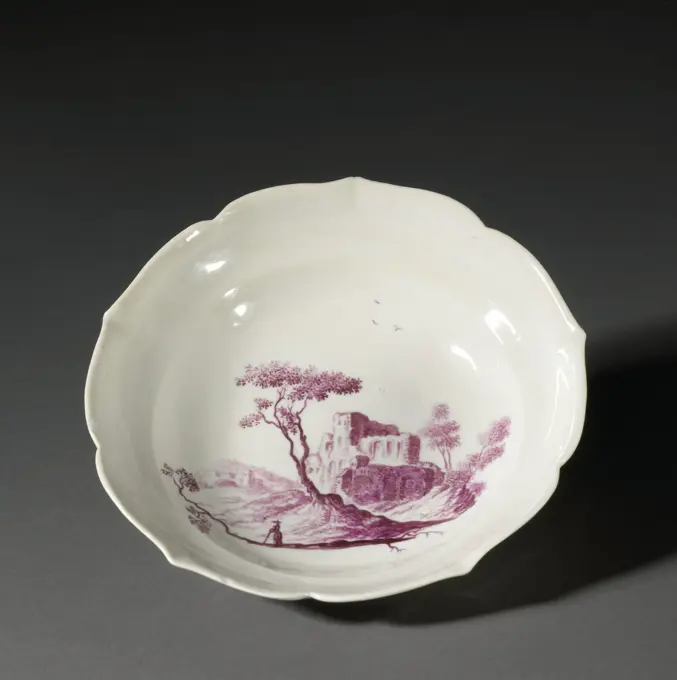
Scale with scalloped edge, painted on the flat in purple with a landscape with ruins., Weesper porcelain factory, c. 1759 - c. 1771 Scale with scalloped edge and on the flat purple painted with a landscape with ruins. Marked with two crossed swords and three bulbs in under -glaze blue and Ingangrift II. Weesp porcelain Scale with scalloped edge and on the flat purple painted with a landscape with ruins. Marked with two crossed swords and three bulbs in under -glaze blue and Ingangrift II. Weesp porcelain
4443-21926471
Earthenware baking pan with handle, internally glazed, casserole casserole dishes holder kitchen utensils earthenware ceramics earthenware glaze lead glaze, twisted glazed fried flat pan red earthenware thickened round rim pouring clip inside glazed flat handle with thickened edge rotations. Baking pan rather high side wall archeology Capelle aan den IJssel House in Capelle castle crockery tableware cooking baking frying food preparation Soil discovery: canal south side house in Capelle ± 1395 - ± 1500 Capelle aan den IJssel 1963.
6145-29062451
Covered Jar (stand), 1573-1620. China, Jiangxi province, Jingdezhen kilns, Ming dynasty (1368-1644), Wanli reign (1573-1620).
6145-58860459
Tea head, part of a tea set, Petrus Regout & Co., 1934 Tea head of earthenware, part of a tea set. Brown distance on the outside, with red buttons, spouts, ears and edges. Marked with sphinx stamp; Petrus Regout & Co Maastricht in a lying rectangle; Made in Holland. Maastricht earthenware Tea head of earthenware, part of a tea set. Brown distance on the outside, with red buttons, spouts, ears and edges. Marked with sphinx stamp; Petrus Regout & Co Maastricht in a lying rectangle; Made in Holland. Maastricht earthenware
6145-46807327
Flaringbowl.  Artist: Unknown
6145-29761438
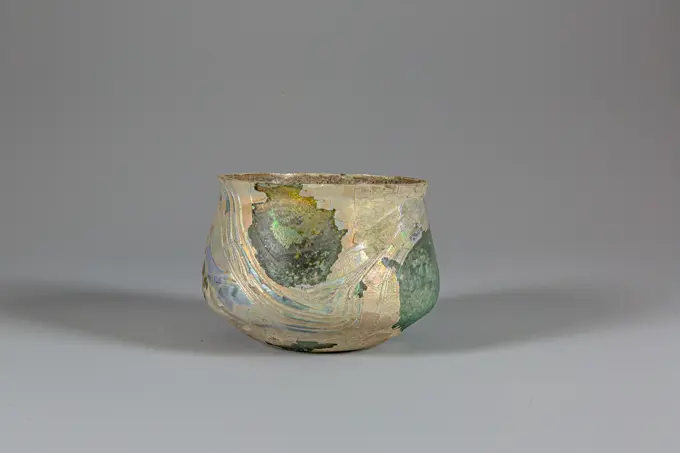
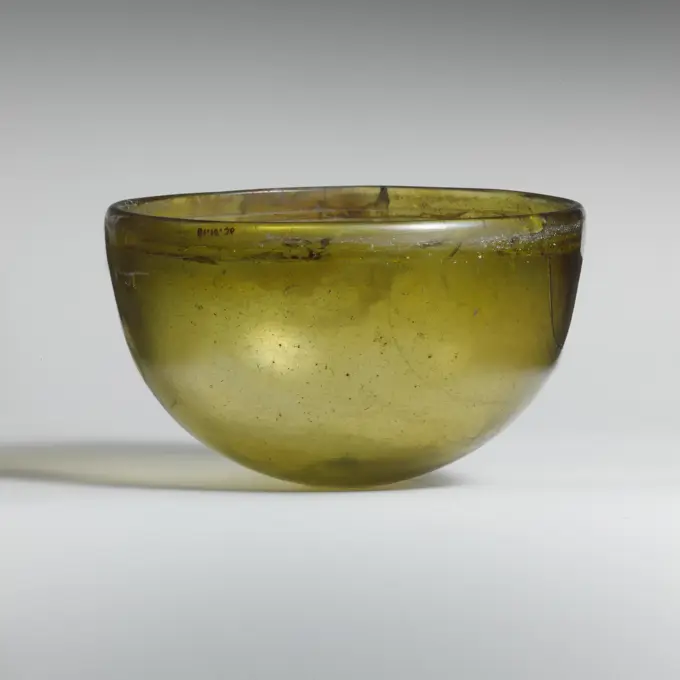
Glass hemispherical bowl mid-2nd-early 1st century B.C. Greek, Eastern Mediterranean Translucent yellow green.Rounded, slightly inverted rim; hemispherical body with convex curving side; convex bottom.On interior, two narrow horizontal grooves cut in a band below rim; on exterior, a single lightly abraded small circular groove around bottom.Complete, but large crack in one side and strain cracks around most of body below rim; some pinprick bubbles; isolated patches of pitting and iridescent weathering on exterior.Rotary grinding marks on interior.Yellow glass bowl with two cut bands round the rim.. Glass hemispherical bowl. Greek, Eastern Mediterranean. mid-2nd-early 1st century B.C.. Glass; cast and cut. Late Hellenistic. Glass
6145-30154331
. Pewter .
6145-29819127
Bowl early 19th century Japan. Bowl 62007
4409-17428413
Bowl. Culture: China. Dimensions: H. 3 in. (7.6 cm); Diam. 7 in. (17.8 cm). Museum: Metropolitan Museum of Art, New York, USA.
4409-17405263
Bowl. Culture: Italic-Native, South Italian (Daunian). Dimensions: H. w/ handles 8.51 cm. Diameter 16.51 cm.. Date: ca. 550-450 B.C.. Museum: Metropolitan Museum of Art, New York, USA.
4409-17381467
Cup. Culture: China. Dimensions: H. 1 1/2 in. (3.8 cm); W. 2 5/8 in. (6.7 cm). Date: 18th century. Museum: Metropolitan Museum of Art, New York, USA.
4443-21911779
Bottom of small pot on stand lobes, red pottery, pot holder soil find ceramic earthenware clay engobe glaze lead glaze, hand turned hand shaped glazed baked Fragment of small pot on three stand fins Probably decorated in sludge technology spatter white engobe on the side. Very coarse formed on the inside and not finished. The correct function of this pot (or jug) is unknown Red pottery on the top partly covered with lead glaze archeology Rotterdam City Triangle Groenendaal underground pit pottery store food preparation prepare underground pit Groenendaal from cesspool Rotterdam.
6145-29125641
Tray on a High Foot with Birds, Flowers, and Grapevines. Ryukyu Islands, about 1700-1800. Furnishings; Serviceware. Red and black lacquer on wood core with painted decoration
6145-29092910
Pair of Bowls with Xiwangmu and Attendants, 1662-1722. China, Jiangxi province, Jingdezhen, Qing dynasty (1644-1911), Kangxi reign (1662-1722), but Chenghua mark (1465-87). Porcelain with famille verte overglaze enamel decoration; diameter: 14.3 cm (5 5/8 in.); overall: 17.8 cm (7 in.); vessel: 14.4 cm (5 11/16 in.). Xiwangmu is the name for the Queen Mother of the West, an ancient Chinese goddess.
6145-45321127
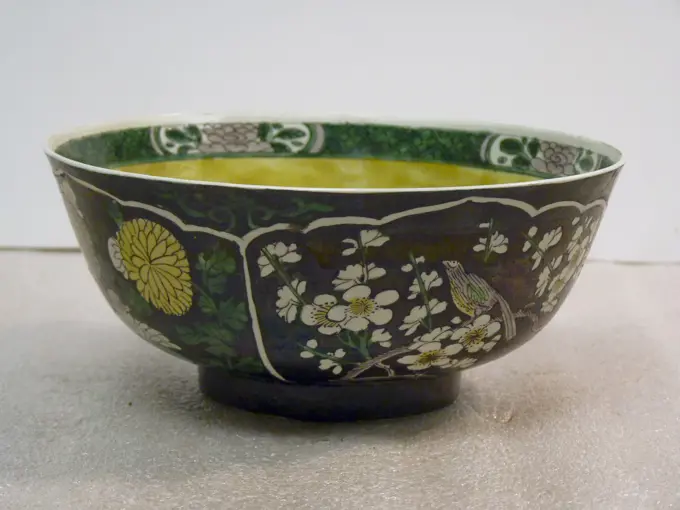
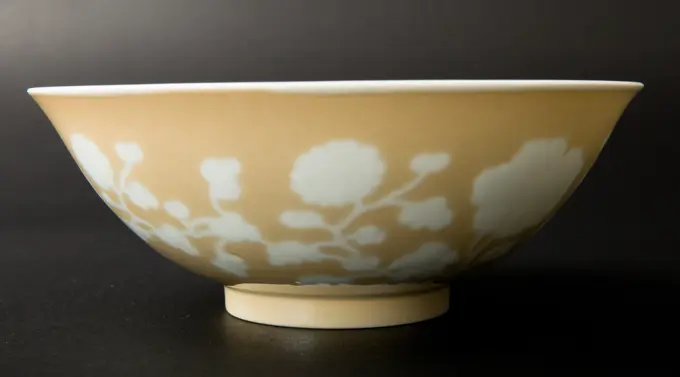
Bowl  white chrysanthemums on a pale yellow background unknown
6145-30177458
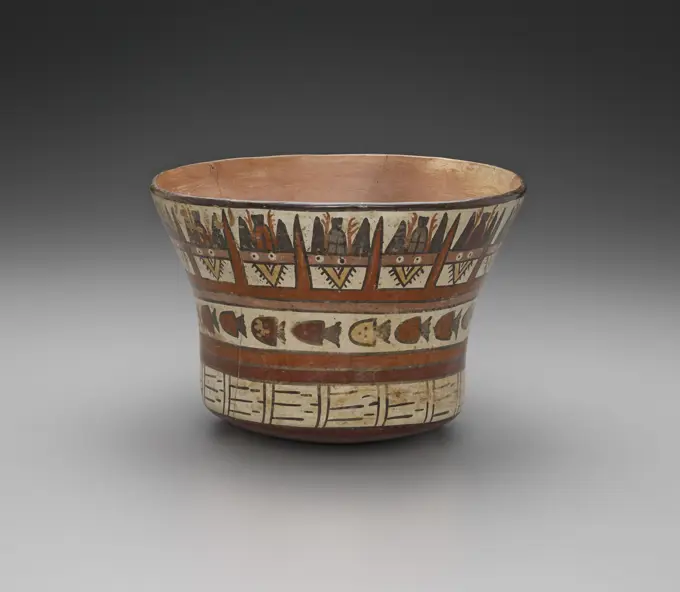
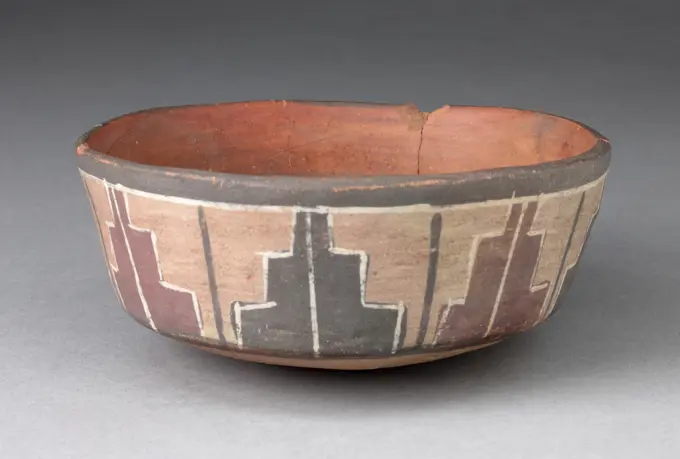
Bowl with Repeated Stepped Motif 180 BCE-500 CE Peru. Ceramic and pigment . Nazca
4409-17416635
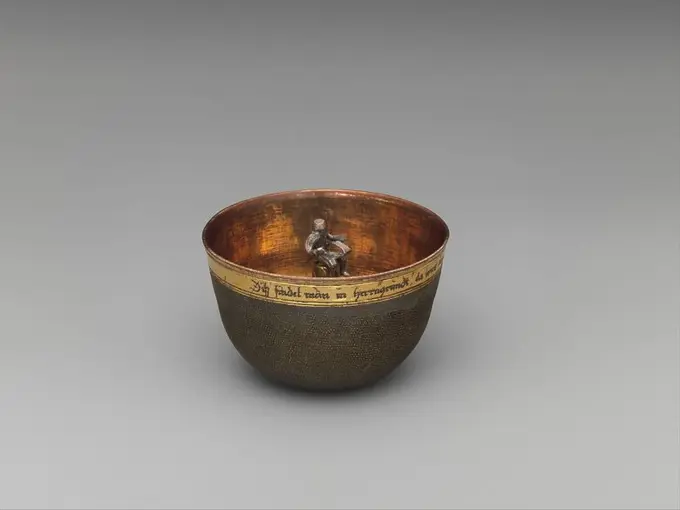
Beaker. Culture: Hungarian, Úrvölogy (formerly Herrengrund). Dimensions: Overall: 1 15/16 x 3 1/8 x 3 1/8 in. (5 x 8 x 8 cm). Date: early 18th century.This beaker, and a similar one in the museum's collection, 2010.110.66, is in tumbler form with a gilded lip above punched snakeskin decoration. Each show a silver figure of a miner seated on a column rising from the center of the bowl. The figures are made of silver that can be polished. When the bowl was filled with wine the tiny statuette's image would be reflected on the surface of the "golden" beverage, the color of which was intensified by the gilded interior. Copper vessels in this form were popular souvenirs from Herrengrund, at that time in Northern Hungary, now in present-day Slovakia, extolling the seemingly magical qualities of the water in the region, which has unusually high concentrations of copper sulphate. Iron scraps left in pools of water did not actually transform into copper, but collected on their surface considera
6145-58846097
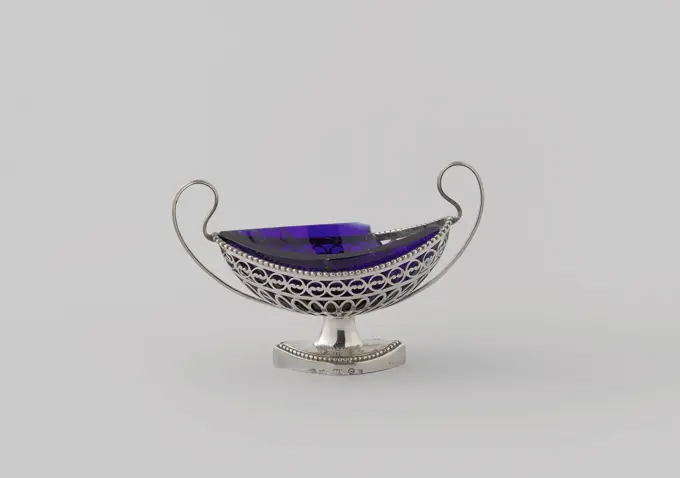
Zoutvat, Spitsovaal, with openwork wall and pearl lists, Christiaan Mensink, 1803 The striker ovale, curved vessels, who have slightly raised walls on the sides, rest on a striker ovale, also rising on the sides, upwards strongly rejuvenating foot on a straight -walled base. The body is opened with cracks and circles built from two C-volutes. Pearl lists run around the foot and along the top of the body. The highly rising, curved ears are grooved on the outside. Inner trays fit in the vessels, those of blue glass. Amsterdam silver (metal). glass The striker ovale, curved vessels, who have slightly raised walls on the sides, rest on a striker ovale, also rising on the sides, upwards strongly rejuvenating foot on a straight -walled base. The body is opened with cracks and circles built from two C-volutes. Pearl lists run around the foot and along the top of the body. The highly rising, curved ears are grooved on the outside. Inner trays fit in the vessels, those of blue glass. Amsterdam
6145-29141883
Slop Bowl 1848-56 Attributed to Charles Cartlidge and Company. Slop Bowl. American. 1848-56. Porcelain. Made in Brooklyn, New York, New York, United States
6145-59114994
Czarka; Sumner, William I (Fl. 1773-Ca 1807); 1804/05 (1804-00-00-1805-00-00);
6145-29719689
Terracotta stemless kylix (drinking cup) ca. 340-320 B.C. Close in style to the Amphorae Painter Interior, seated nude youth holding a phiale and a wreath.Exterior, obverse and reverse, head of a woman.. Terracotta stemless kylix (drinking cup) 254605 : Close in style to the Amphorae Painter, Terracotta stemless kylix (drinking cup), ca. 340320 B.C., Terracotta, H. 1 3/4 in. (4.5 cm); diameter 5 1/4 in. (13.3 cm). The Metropolitan Museum of Art, New York. Gift of Mrs. Frank S. Williams, 1948 (48.118)
1525-22748599
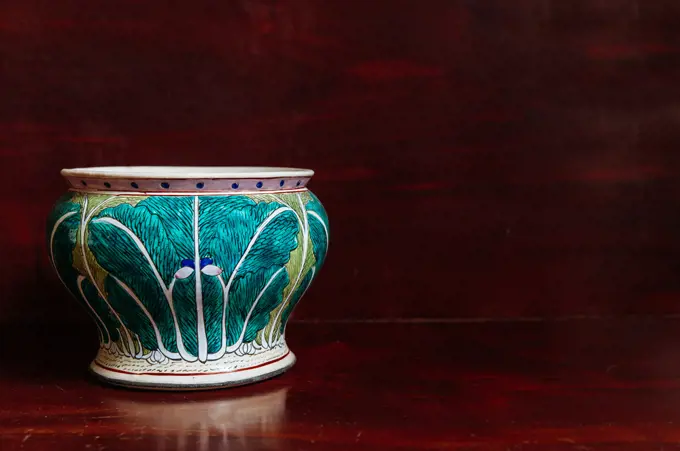
Colourful cabbage pattern painted China ware, Old vintage Chinese porcelain vase
6145-45779079
Cup with image from Van Speijk. One of two virtually identical cups of pressure pottery, printed on the inside and outside in black; Soil inside: bust of a man (J.C.J. van Speijk), inner edge four weapons (from Utrecht, Friesland, Gelderland and the generalism) between the explosion ship in kind of cartouche; On the outside Diem, this time weapons from Zeeland, Holland, Overijssel and Groningen. The prints are not entirely right. NOTE: See NG-1069-B.
6145-58852045
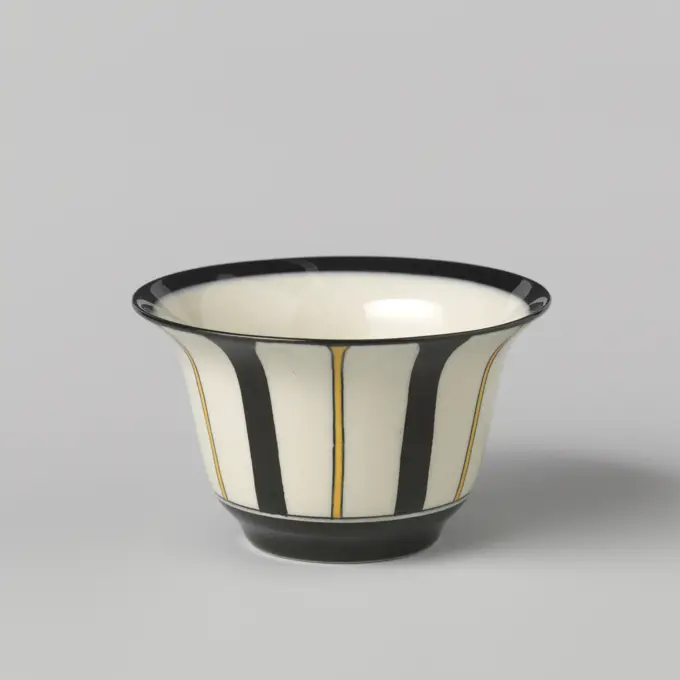
Head with line decor in yellow and black on Crème Fond, N.V. Plateelbakkerij Ram, c. 1925 Head of pottery with line decor in yellow and black on cream fond. The mouth and foot edge are black. Marked with circular stamp in black: Colenbrander "Ram" Arnhem-Holland around a Ramskop, 110. Arnhem earthenware Head of pottery with line decor in yellow and black on cream fond. The mouth and foot edge are black. Marked with circular stamp in black: Colenbrander "Ram" Arnhem-Holland around a Ramskop, 110. Arnhem earthenware
6145-30162071
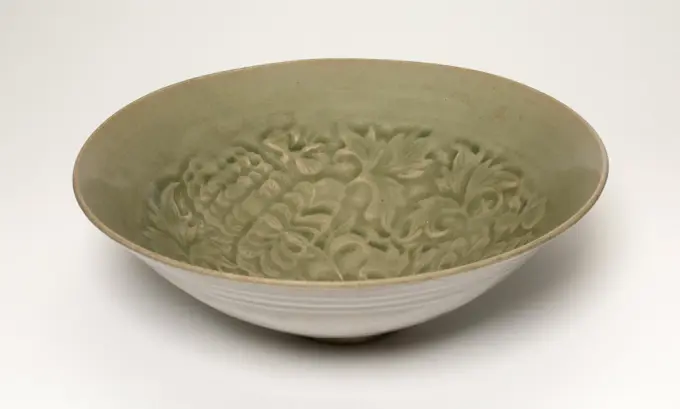
Bowl with Peonies 960 CE-1279 China. Celadon-glazed stoneware with underglaze molded decoration .
6145-29146535
Glass beaker 2nd-3rd century A.D. Roman Uncertain, probably colorless with pale blue green tinge.Thickened, rounded, vertical rim with slight inner lip; straight sides expanding downwards, then turned in at sharp angle to uneven bottom with shallow kick at center.Intact; pinprick bubbles and blowing striations; dulling, pitting, and brilliant iridescence, with whitish weathering on bottom of interior.. Glass beaker 244610
6145-29139206
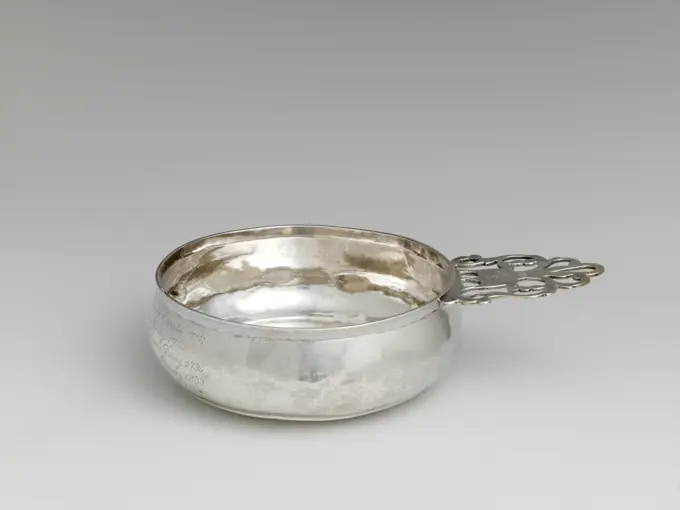
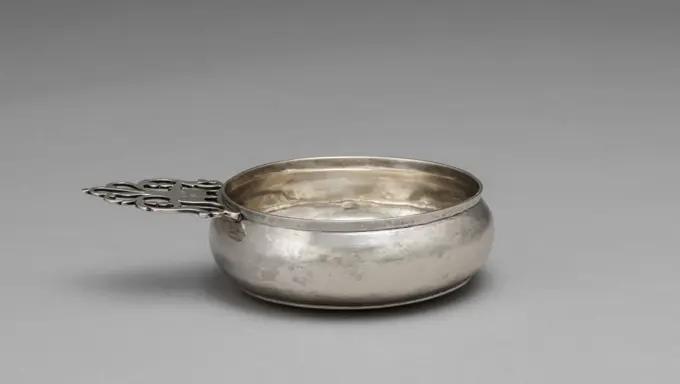
Porringer 1700-1730 Samuel Vernon. Porringer 6725
6145-29800061
Bowl (one of a pair) China. Bowl (one of a pair). China. Painted enamel. Qing dynasty (1644-1911), Qianlong period (1736-95). Enamels
4443-28742730
Fingerbowl, from a set of 12, c. 1929-1930, 1 5/8 x 4 9/16 x 4 9/16 in. (4.1 x 11.6 x 11.6 cm), Silver, Mexico, 20th century
6145-29783979
Dish China. Dish 48119
6145-54680103
Bowl late 8th-first half 9th century View more. Bowl. late 8th-first half 9th century. Earthenware; polychrome decoration under transparent greenish glaze (buff ware). Excavated in Iran, Nishapur. Ceramics
6145-29801462
Teabowl and saucer ca. 1710-20 Saint-Cloud factory The gift of the Hans Syz Collection in 1995 endowed the Museum with nearly three hundred examples of European and Asian ceramics meticulously acquired by Swiss-born collector Dr. Syz (1894-1991) to chart the migration of models and patterns from East to West. Documenting a continuous process of influence and adaptation, these pieces provide a discriminating review of the nuances of stylistic change resulting from three centuries of trade.. Teabowl and saucer 208404
6145-29740589
Bowl 14th century. Bowl 446896
6212-62160844
Vintage mid century brass enameled middle eastern vase
6145-29747276
Jelly mold ca. 1750 British, Staffordshire. Jelly mold. British, Staffordshire. ca. 1750. Salt-glazed stoneware. Ceramics-Pottery
1788-28217
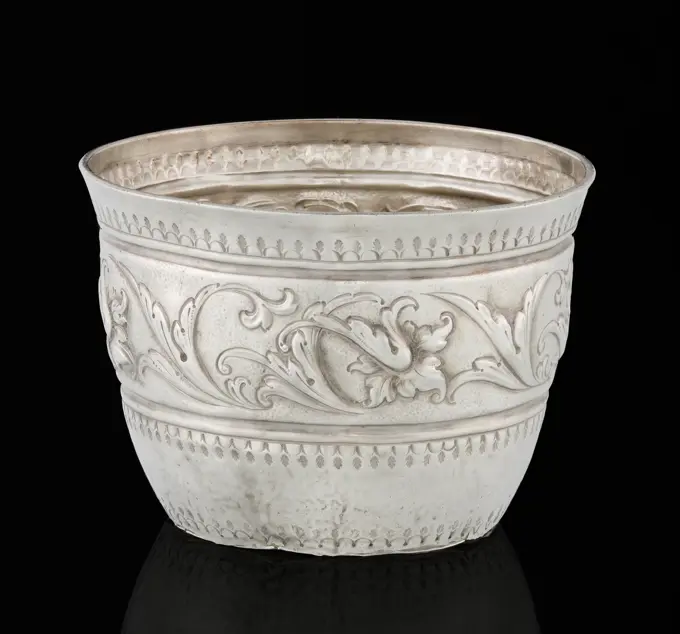
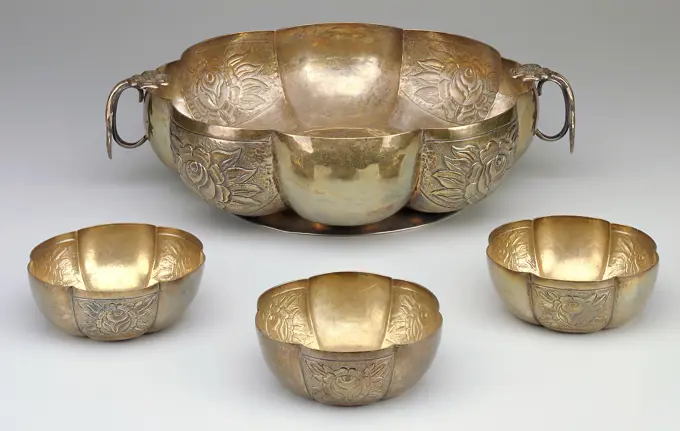
Silversmith's art, Italy, 17th century. Corinzio Colleoni (1579-1656), gilded silver basin, Rome, 1618-1623.
6145-29806804
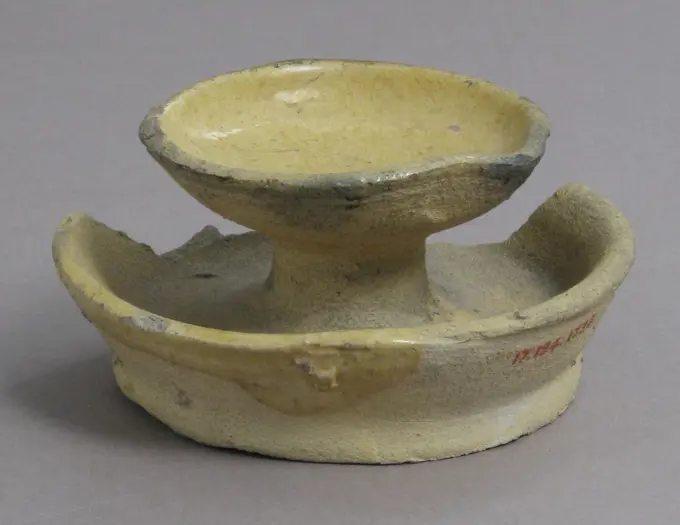
Lamp, Oil 1st-3rd century Roman. Lamp, Oil 465832 Roman, Lamp, Oil, 1st3rd century, Earthenware, glazed, Overall: 1 13/16 x 3 9/16 x 3 3/8 in. (4.6 x 9.1 x 8.5 cm). The Metropolitan Museum of Art, New York. Gift of J. Pierpont Morgan, 1917 (17.194.1736)
6145-59022000
Gaspare Macri. Candlestick (detail of the back of the base with the signature). Bronze, 16th century. Museum of Fine Arts of the City of Paris, Petit Palais. 35945-14 BRONZE, CHANDELIER, ENVERS, SIGNATURE, base
6145-29148571
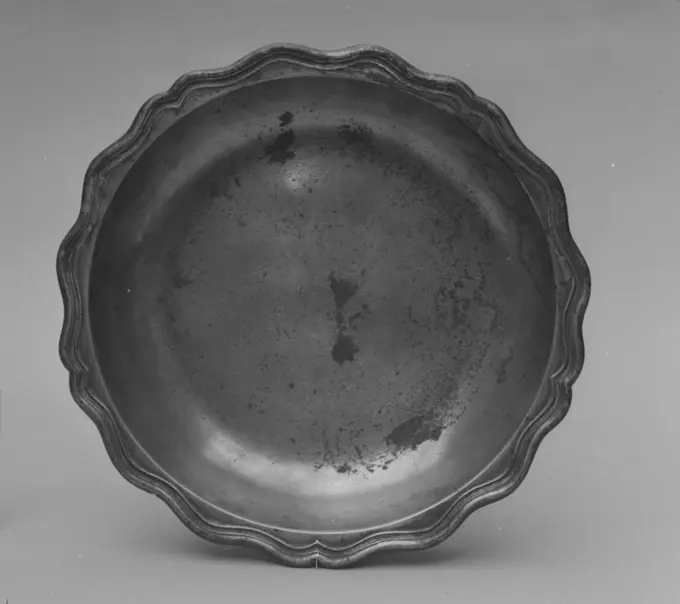
Dish 18th century Jean-Jacques Bruckner. Dish. Jean-Jacques Bruckner (German, 1712-1795, master 1738). German, Mulhausen. 18th century. Pewter. Metalwork-Pewter
6145-45893417
Box and cup. Silverware from the late Tang period is one of the most refined productions of Chinese applied art. The craftsmanshipis unparalleled: every dot was individually punched into the surface. Here, flower sprays and animal motifs have been executed with minute attention to detail and elegantly distributed over the surface.
6145-29094351
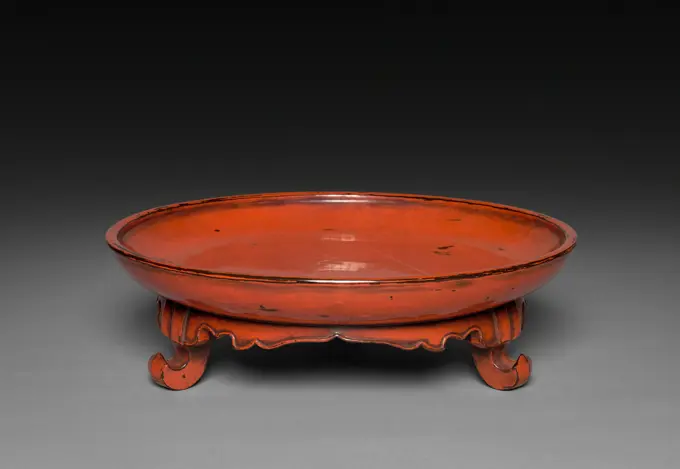
Tray, 1392-1573. Japan, Muromachi period (1392-1573). Negoro lacquer on wood; diameter: 39.4 cm (15 1/2 in.); overall: 11.5 cm (4 1/2 in.). Negoro is a lacquer technique (named after the Negoro temple in Japan) in which several layers of red lacquer are applied over a black lacquer undercoating. Through years of handling, a natural surface of red and black random patterns results.
6145-29118666
Wide Bowl. Egypt (), Roman Period (30 BCE - 395 CE) or later. Furnishings; Serviceware. Bronze
6145-46446225
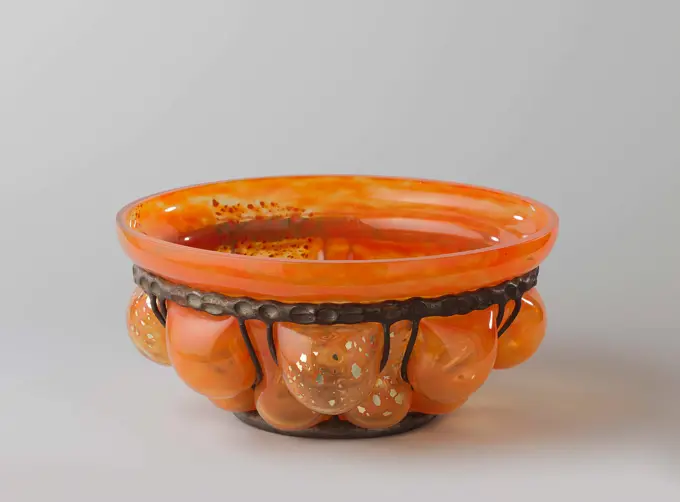
Bowl of orange glass is blown out in a bowl of wrought iron. Flat bottom. Low foot. The kick-shaped body of orange glass is blown out in a bowl of wrought iron. Curved edge, sharpened at the top. With the orange glass mass, pieces of gold leaf are blown up in some places. On the bottom the signature L. Majorelle, Daum, Nancy, France and the Lorraine Cross.
4443-28737778
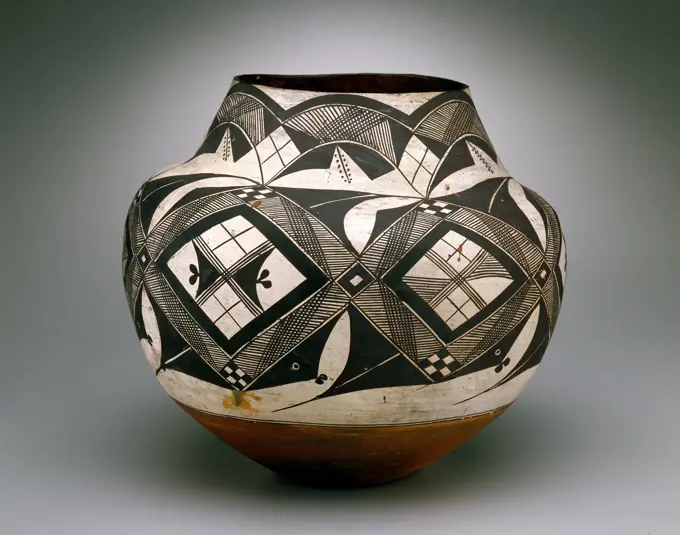
Pot (Olla), c. 1860, 12 x 13 3/8 x 7 1/4 in. (30.48 x 33.97 x 18.42 cm), Clay, pigments, United States, 19th-20th century
6145-29152788
Dish 1800-1830 Lewis Fourniquet. Dish 3293
4409-17392213
Cup. Culture: China. Dimensions: H. 2 1/2 in. (6.4 cm); W. 3 1/4 in. (8.3 cm). Museum: Metropolitan Museum of Art, New York, USA.
4409-17411883
Bowl with Feline Design. Culture: Paracas. Dimensions: Overall: 1 1/2 in. (3.81 cm)Other: 5 7/8 in. (14.91 cm). Date: 7th-4th century B.C.. Museum: Metropolitan Museum of Art, New York, USA.
6145-29818829
Basin first half 14th century The shape of this basin, both in metal and glass, was popular in the Ayyubid and Mamluk periods. From its elegant profile and inscribed titles it is evident that it was made for an important commander of the Mamluk army.. Basin 444587
6188-63964314
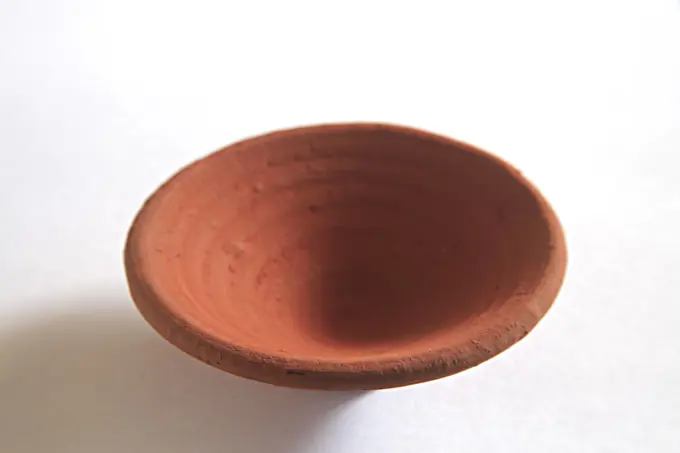
Concept, kasora clay bowl cup of baked on white background India Copyright: xNirmalaxMishra/DinodiaxPhotox
6145-29758799
Bowl 9th-10th century. Bowl. 9th-10th century. Earthenware; red slip, brown glaze. Excavated in Iran, Nishapur. Ceramics
6145-30172256
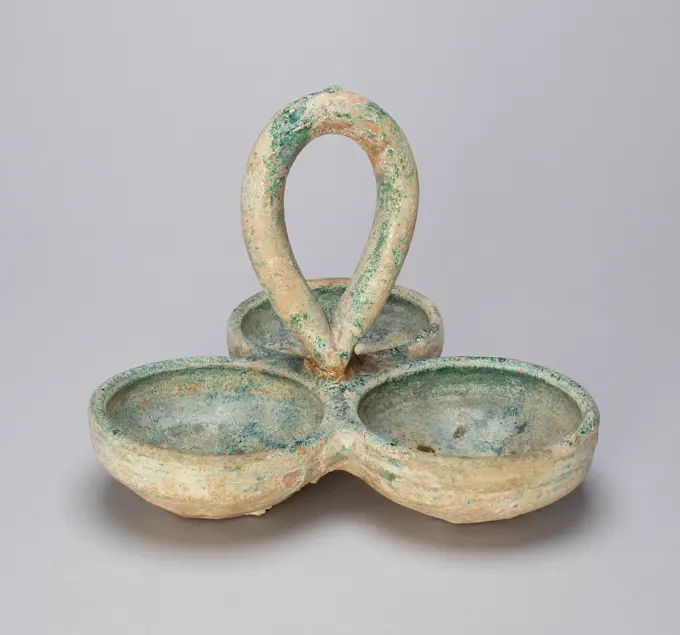
Three-Cupped Dish with Loop Handle 25 CE-99 CE China. Earthenware with lead green glaze .
6145-43511939
Bowl (China); glass
4443-21940713
Pottery saucepan, toy, red shard, inside covered with lead glaze, shank, stem, saucepan pan tableware holder kitchenware toy relaxant soil find model ceramics pottery glaze lead glaze, hand turned fried glazed Pottery saucepan (toy model) red shard inside covered with lead glaze pouring stick steal archeology native pottery food prepare cooking play kitchen child
6145-29718971
Wine cup with two ducks 8th-9th century China West Asian depictions of two birds facing one another may have helped to inspire the representation of the two mandarin ducks in the interior of this cup. In Chinese culture the ducks are a longstanding symbol for marital happiness.. Wine cup with two ducks 44635
1525-27675306
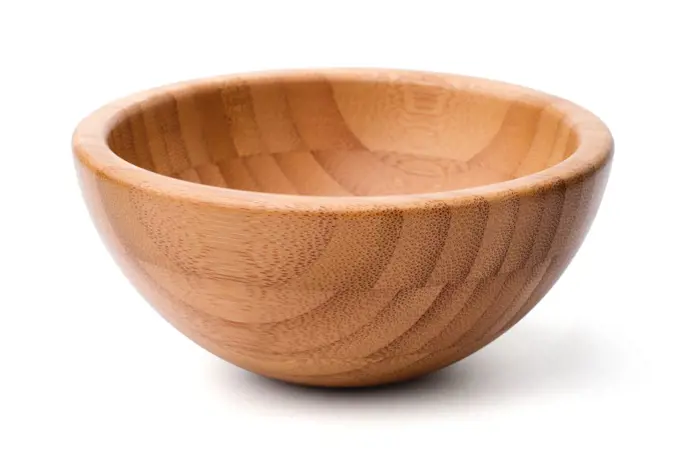
Kitchen utensils: single empty wooden bowl, isolated on white background. Single empty wooden bowl
6145-52526706
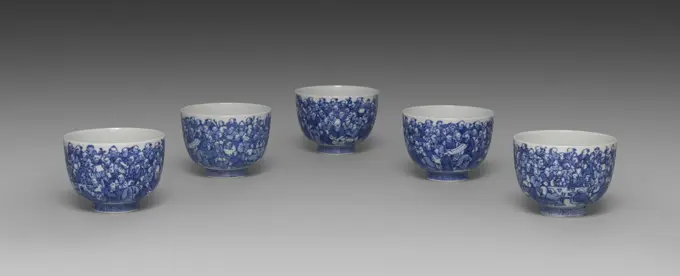
Teacups with a Hundred Sages, c. 1893-1914. Seifū Yohei III (Japanese, 1851-1914). Set of five teacups; porcelain with underglaze blue; height (each): 6.5 cm (2 9/16 in.); diameter (each): 9 cm (3 9/16 in.).
6145-59505030
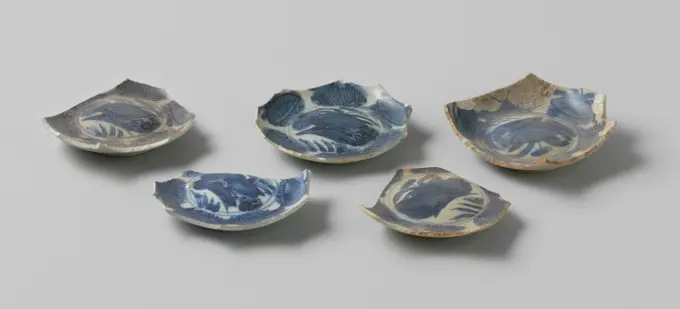
Fragments of dishes from V.O.C. ship De 'Witte Leeuw', Before 1613  Fragments of dishes from V.O.C. ship the 'Witte Leeuw'. Soil clips. Jingdezhen porcelain   Sint-Helena
6145-29060520
Porringer, 1725-1730. William Jones (American, 1694-1730). Silver; overall: 5.1 x 19.4 cm (2 x 7 5/8 in.); without handle: 13.7 cm (5 3/8 in.).
6145-46073544
Dish with scalloped edge and with olives and almonds tiled. Round, white dish with olives and almonds of multicolored painted faience. The dish has a scalloped edge and mounted almonds and olives on the dish, four of which are missing.
6145-29153012
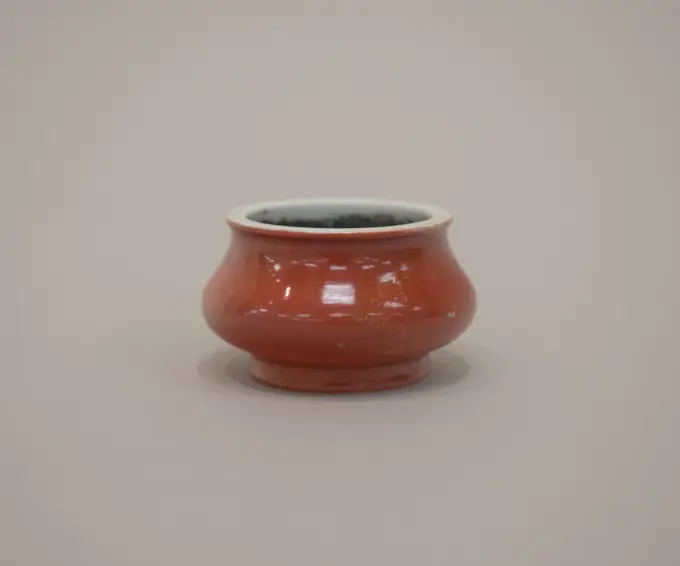
Minature incense burner late 18th century China. Minature incense burner. China. late 18th century. Porcelain with coral red glaze (Jingdezhen ware). Qing dynasty (1644-1911), Qianlong period (1736-95). Ceramics
6145-58860476
Sugar Pot, part of a tea set, Petrus Regout & Co., 1934 Sugar bowl of earthenware, part of a tea set. Brown distance on the outside, with red buttons, spouts, ears and edges. Marked with sphinx stamp; Petrus Regout & Co Maastricht in a lying rectangle; Made in Holland. Maastricht earthenware Sugar bowl of earthenware, part of a tea set. Brown distance on the outside, with red buttons, spouts, ears and edges. Marked with sphinx stamp; Petrus Regout & Co Maastricht in a lying rectangle; Made in Holland. Maastricht earthenware
1010-117
Wooden bowls, Northern Canadian Eskimo, Eskimo art
4443-28743146
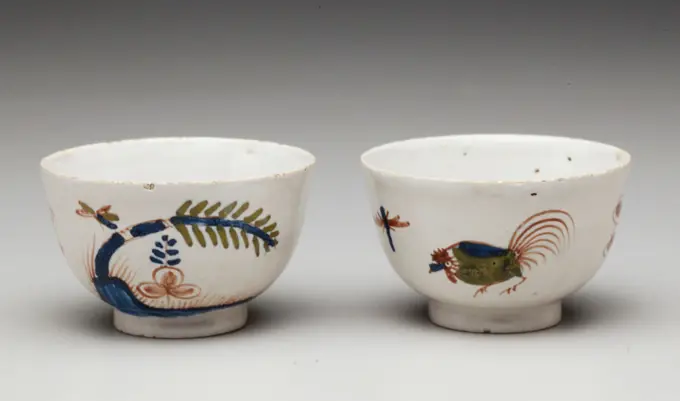
Tea Bowl, one of a pair, 1730-1740, 1 13/16 x 2 15/16 in. (4.6 x 7.46 cm), Ceramic, delftware, England, 18th century
6145-48530250
Kyliks czerwonofigurowy. Malarz Londyn E 122 (ca 430 a.C), author
6145-29825850
Bowl late 18th-19th century China. Bowl 46184
6145-29755250
Flower Pot 15th century China. Flower Pot. China. 15th century. Stoneware with blue glaze ( "numbered Jun" ware). Ming dynasty (1368-1644). Ceramics
6145-29199851
Terracotta kylix: lip-cup (drinking cup) ca. 550-540 B.C. Greek, Attic Exterior, obverse and reverse, chimaera; below, meaningless inscriptionThe chimaera combines the body of a lion, the forepart of a goat, and the tail of a snake. It belongs to the menagerie of mythological creatures introduced from the East during the late eighth and seventh centuries B.C. Accomplished though the painter of this cup was, he was probably illiterateas were most peoplebecause the "inscription" here consists of letters conveying no meaning.. Terracotta kylix: lip-cup (drinking cup). Greek, Attic. ca. 550-540 B.C.. Terracotta; black-figure. Archaic. Vases
4409-17551969
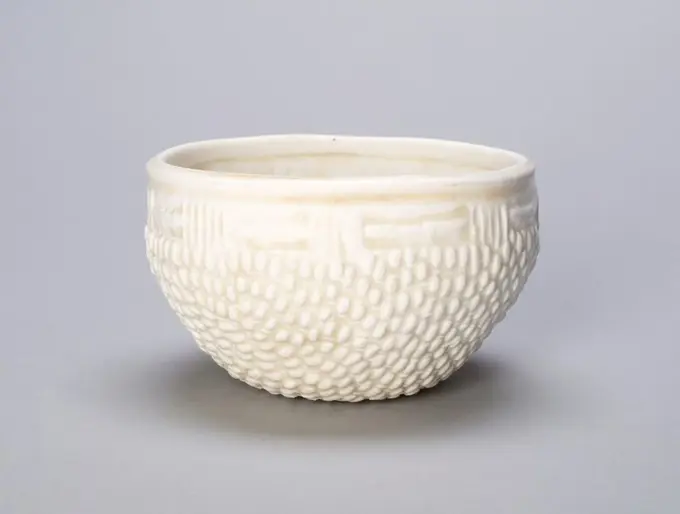
"Basketweave" Bowl. China. Date: 1000-1099. Dimensions: H. 5.4 cm (2 1/8 in.); diam. 9 cm (3 9/16 in.). Ding-type ware; porcelain with underglaze molded decoration. Origin: China. Museum: The Chicago Art Institute, Chicago, USA.
6145-58829432
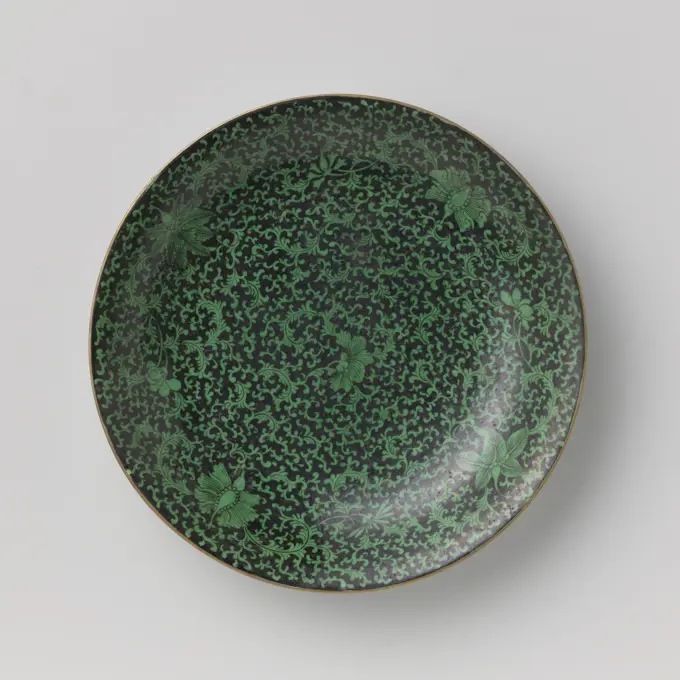
Saucer-dish with flower scrolls on a black ground, anonymous, c. 1800 - c. 1899 Porcelain bowl with round wall, painted in under -glaze blue, on the biscuit black and green and red on the glaze. The front of the dish is completely covered with a black glaze with green flower vines in reserve; The back with three bamboo branches. Marked on the underside with the six-character brand in the seal of Keizer Qianlong. Email sur biscuit with family noire colors. China porcelain. glaze. cobalt (mineral) painting / vitrification Porcelain bowl with round wall, painted in under -glaze blue, on the biscuit black and green and red on the glaze. The front of the dish is completely covered with a black glaze with green flower vines in reserve; The back with three bamboo branches. Marked on the underside with the six-character brand in the seal of Keizer Qianlong. Email sur biscuit with family noire colors. China porcelain. glaze. cobalt (mineral) painting / vitrification
4409-17521365
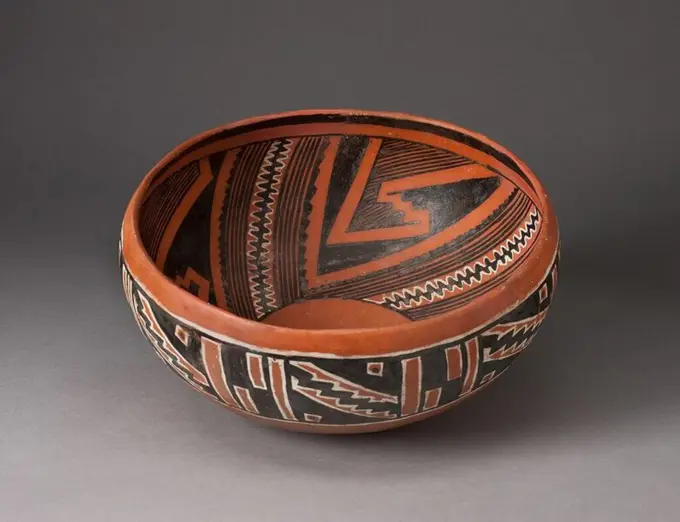
Bowl with Geometric Black-and-White Motifs on Interior and Exterior Survace. Cibola, Four Mile Polychrome or Pinedale Polychrome; Cibola region, east-central Arizona, United States. Date: 1300-1400. Dimensions: Diam. 23.5 cm (9 1/4 in.). Ceramic and pigment. Origin: Arizona. Museum: The Chicago Art Institute, Chicago, USA.
4409-17398108
Bowl. Culture: China. Dimensions: Diam. 4.5 in. (11.4 cm). Date: 11th-12th century. Museum: Metropolitan Museum of Art, New York, USA.
4409-17432852
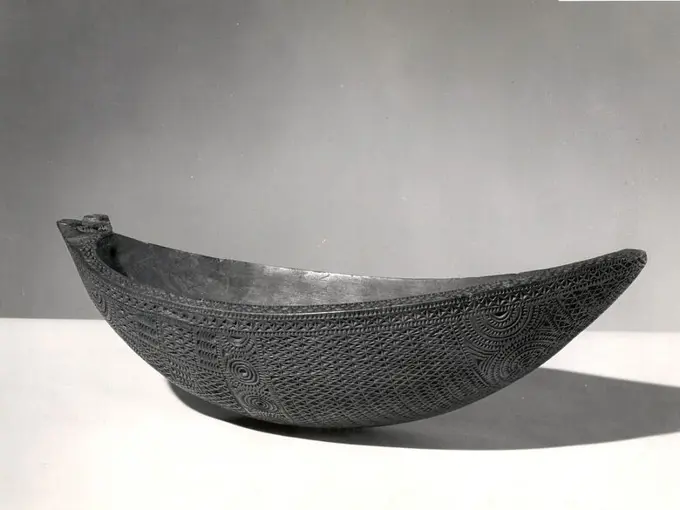
Bowl. Culture: Austral Islanders. Dimensions: H. 4 5/16 x W. 6 1/2 x D. 13 1/8 in. (10.9 x 16.5 x 33.3 cm). Date: ca. 1820-40. Museum: Metropolitan Museum of Art, New York, USA.
1525-21625509
empty Wild Chinese Jujube Date Wood bowl isolated on white background
6145-29843308
Agnes Karlin, Bowl, 1935 1942 Bowl
6145-43631749
Miseczka. unknown, author
4409-17375790
Bowl. Culture: Japan. Dimensions: H. 2 in. (5.1 cm); Diam. 3 1/2 in. (8.9 cm). Date: 1800. Museum: Metropolitan Museum of Art, New York, USA.
6145-58935415
Nappy -
6176-67067821
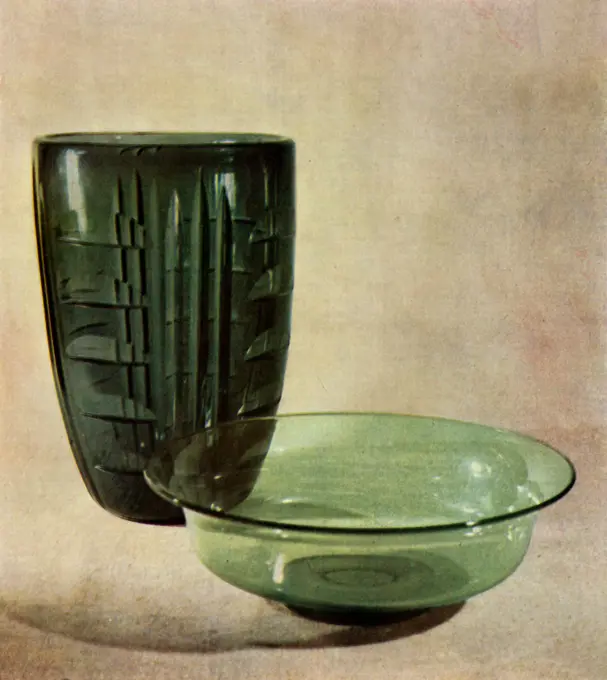
Glass vase and bowl designed by Keith Murray, c1946. Murray worked as a ceramics, glass and metalware designer for Wedgwood in the Staffordshire Potteries area of England, in the 1930s and 1940s. He is considered one of the most influential designers of the Art deco style. From "English Glass', by W. B. Honey. Collins, London, 1946
6145-29150340
Cup early 18th century China. Cup. China. early 18th century. Porcelain painted in underglaze blue. Qing dynasty (1644-1911), Kangxi period (1662-1722). Ceramics
6145-29155535
Oval Dish China. Oval Dish 43758
4409-17354878
Cup. Culture: Japan. Dimensions: H. 2 1/2 in. (6.4 cm); Diam. 4 3/4 in. (12.1 cm). Date: 1700. Museum: Metropolitan Museum of Art, New York, USA.
6145-29064318
Bowl with Stand (stand), 100-400. Syria, Roman, 2nd-3rd Century. Glass;
1850-46847
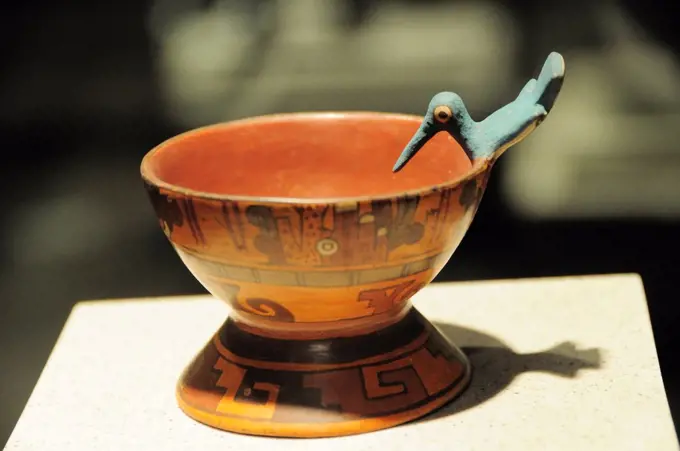
Mexico, Federal District, Mexico City, Museo Nacional de Antropologia Painted hummingbird goblet 800-1521 AD.
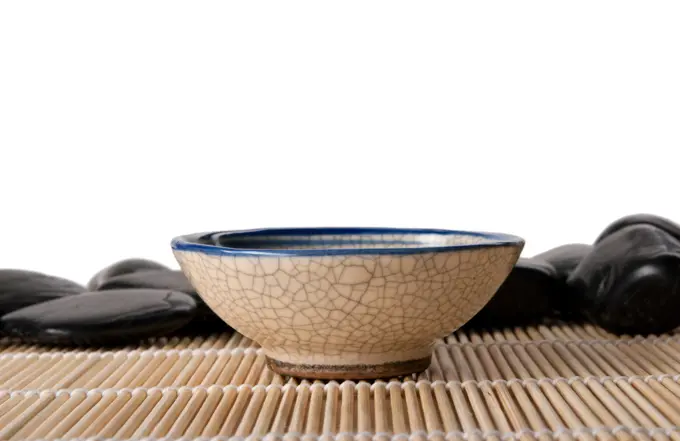
6188-63326343
Cup for tea and some stones lie on mat Cup for tea and some stones lie on mat ,model released, Symbolfoto Copyright: xZoonar.com/AndreyxZametalovx 7528031 ,model released, Symbolfoto ,property released
6145-29239862
Bowl Cypriot Broad bands and concentric circles in center.. Bowl. Cypriot. Terracotta. Iron Age. Vases
4409-17400433
Cup. Culture: China. Dimensions: H. 1 in. (2.5 cm); Diam. 1 5/8 in. (4.1 cm). Date: late 17th-early 18th century. Museum: Metropolitan Museum of Art, New York, USA.
4409-17393064
Glass ribbed bowl. Culture: Roman. Dimensions: H. 2 13/16 in. (7.1 cm); diameter 6 5/8 in. (16.8 cm). Date: 1st half of 1st century A.D..Translucent pale blue green.Uneven vertical rim with rounded top edge and vertical plain band below; deep convex side curving in to slightly concave bottom.On interior, a broad band of fine abraded lines on lower part of side; on exterior, twenty-two long, slender ribs, some vertical, others slightly slanting, with flattened and tooled tops, tapering downwards and extending onto bottom.Intact; many pinprick bubbles; on interior, patches of creamy brown weathering, and faint iridescence on exterior.Vertical tooling indents to one side of tops of some ribs.These examples of a very common and widespread type of early Roman cast tableware represent the three main varieties--mosaic, deep monochrome, and naturally-colored translucent glass.Gift of J. Pierpont Morgan, 1917 (17.194.561). Museum: Metropolitan Museum of Art, New York, USA.
6145-29162414
Terracotta kylix (drinking cup) ca. 520 B.C. Attributed to Psiax Interior (black-figure), two birds and snakeExterior (red-figure), obverse, between eyes, Pegasos; reverse, between eyes, nose and the name PsiaxSeveral works by Psiax have inscriptions, and at least two identify him as painter. This is one of two cups on which hisname appears without a verb. Bilingual vases are particularly interesting because they juxtapose the old, black-figure, and the new, red-figure manner of decoration on the same piece.. Terracotta kylix (drinking cup) 248908
1746-19676487
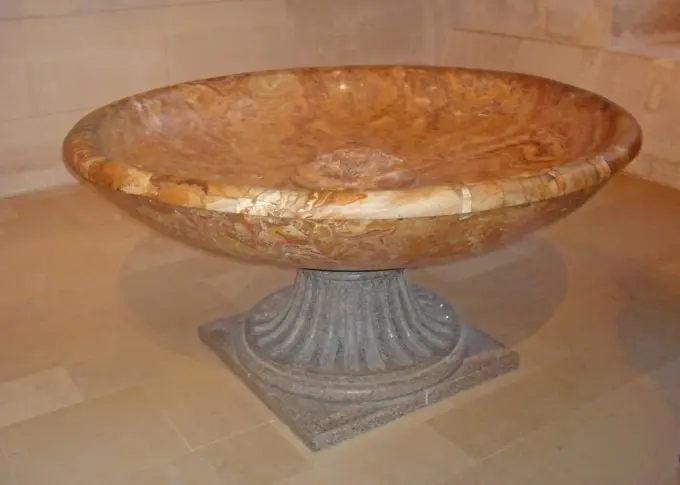
Basin 11th Century A.D.
6145-29136585
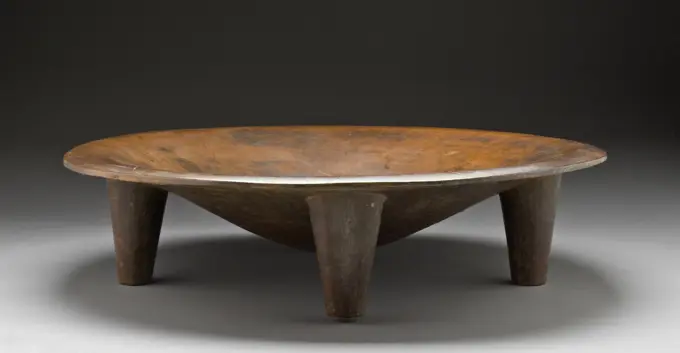
Kava Bowl
1397R-70376
Close-up of a decorative pottery bowl in unique pattern
6145-29751023
Bowl 18th century British or Scottish. Bowl. British or Scottish. 18th century. Pewter. Metalwork-Pewter