Decorative Vases Collection

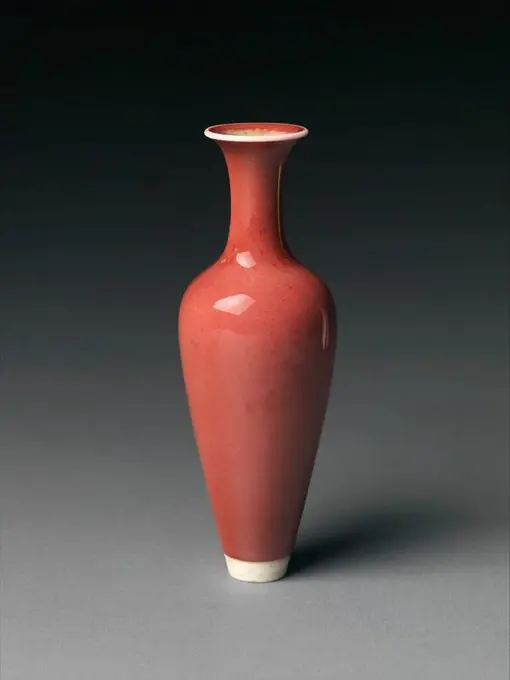
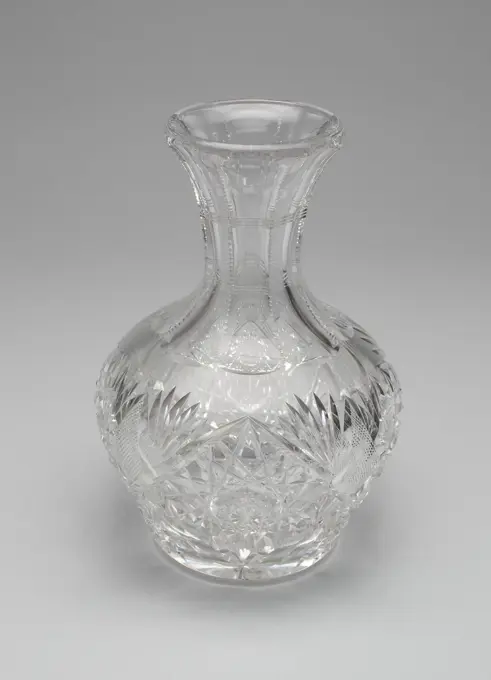
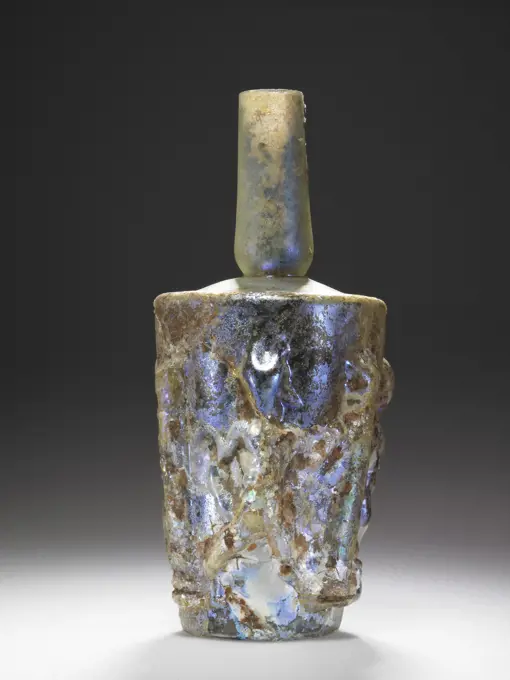
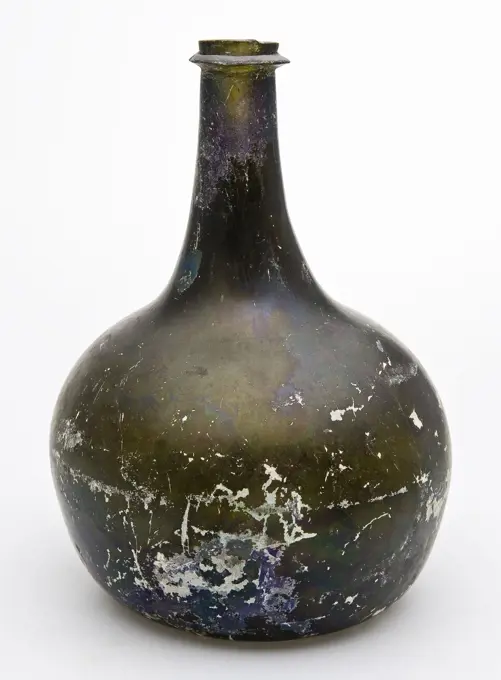
An assortment of unique decorative vases featuring various shapes, colors, and glazes, each embodying artistic craftsmanship and historical significance.

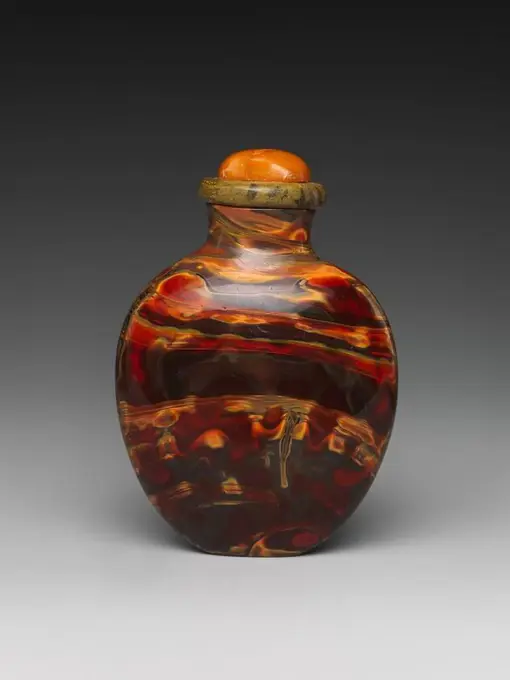
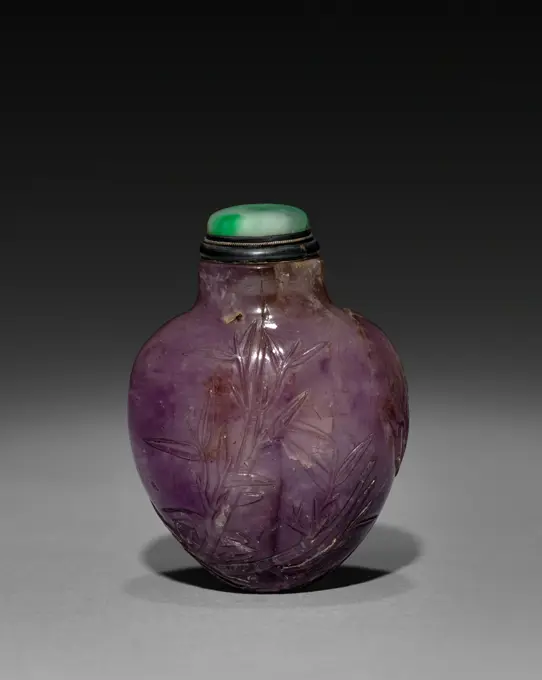
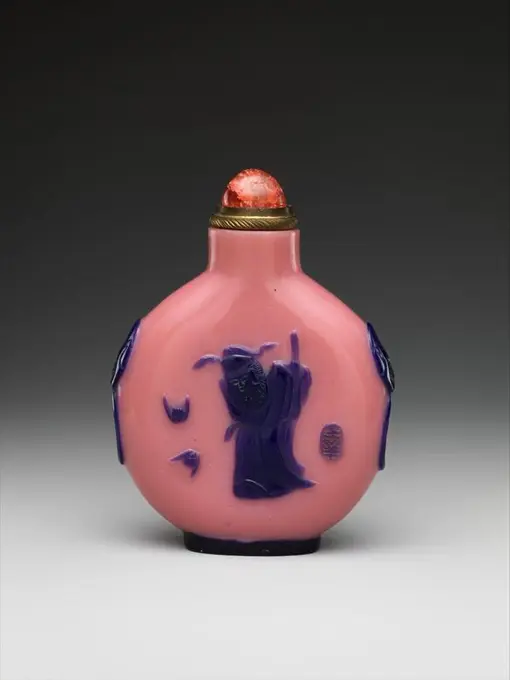
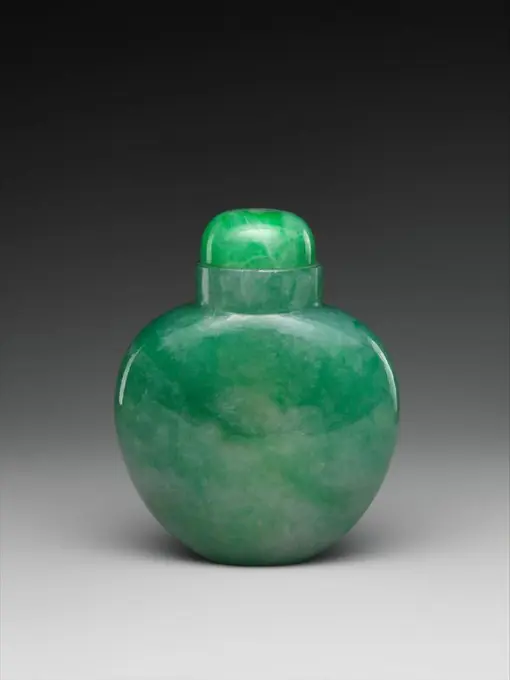
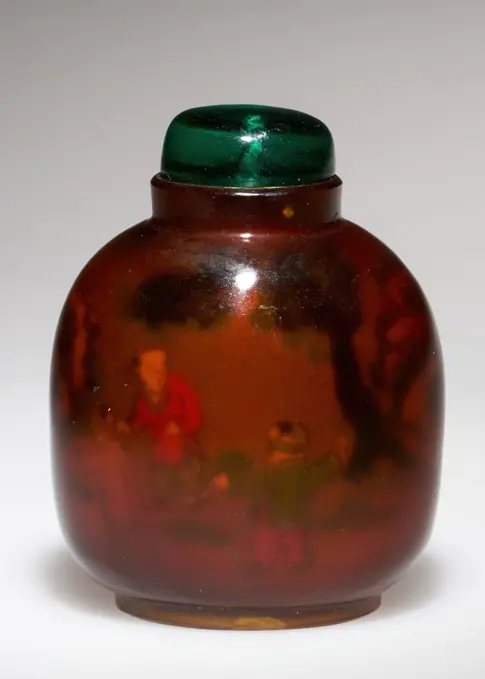
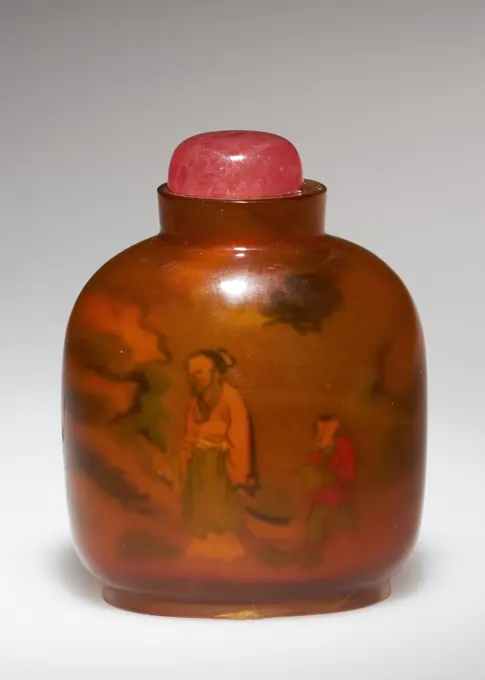
Snuff Bottle, 19th century, 4 x 1 3/8in. (10.2 x 3.5cm), Ivory, China, 19th century

Assets in this Story

6145-45434328
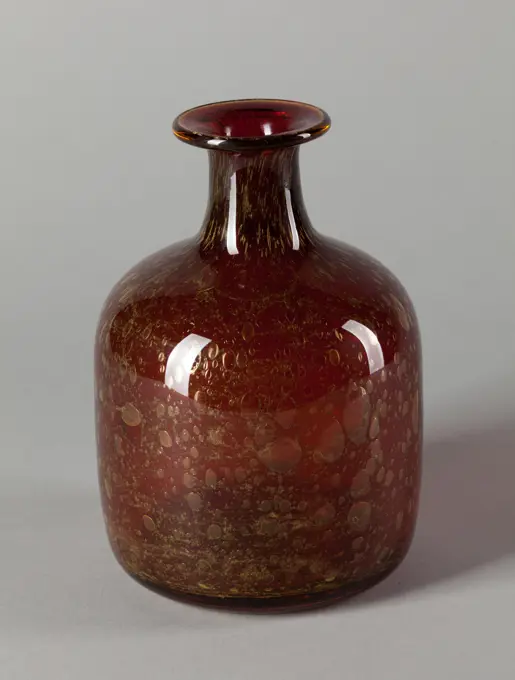
Vase Zbigniew Horbowy, Huta Gospodarcza Szczytna
6145-46244762
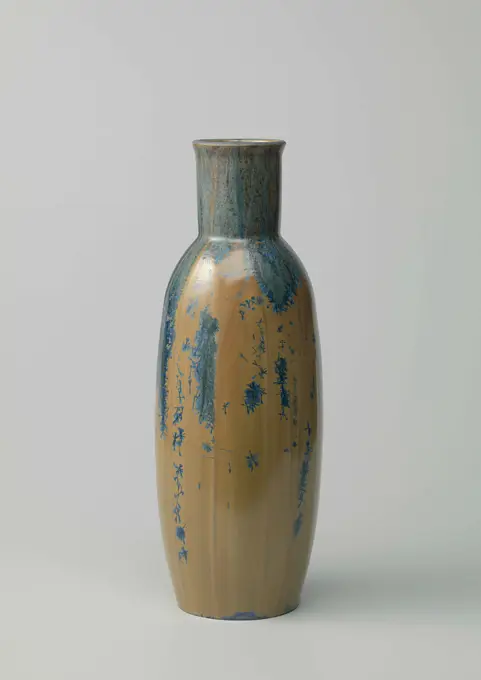
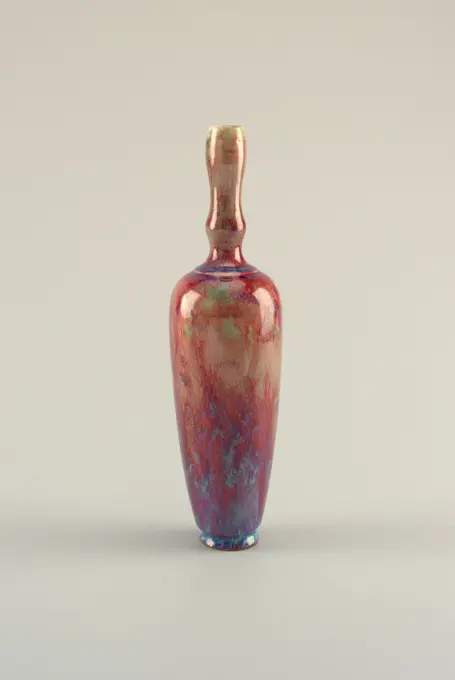
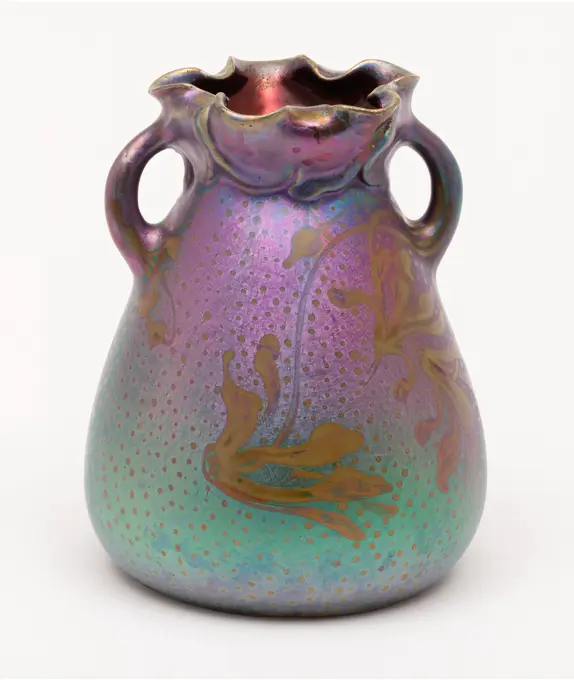
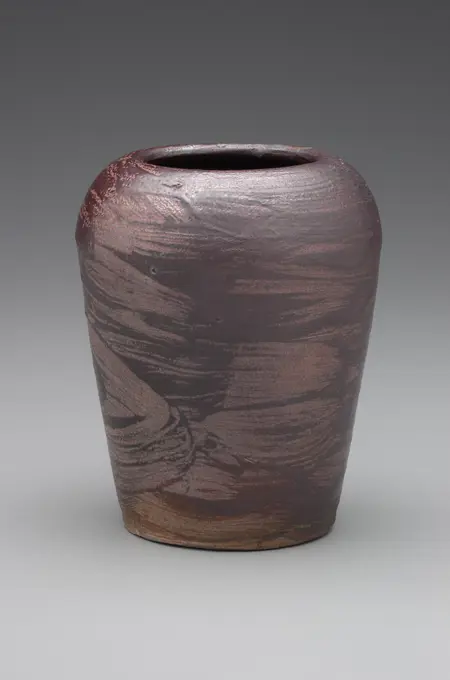
Vase with blue crystal glaze on light brown fond. Vase of stoneware, decorated with blue crystal glaze on a light brown fond. Slim, slightly curved cylindrical shape with steeped cylindrical neck. Marked with: Inserted 1008 DALPAYRAT and 31 in red.
4409-17391045
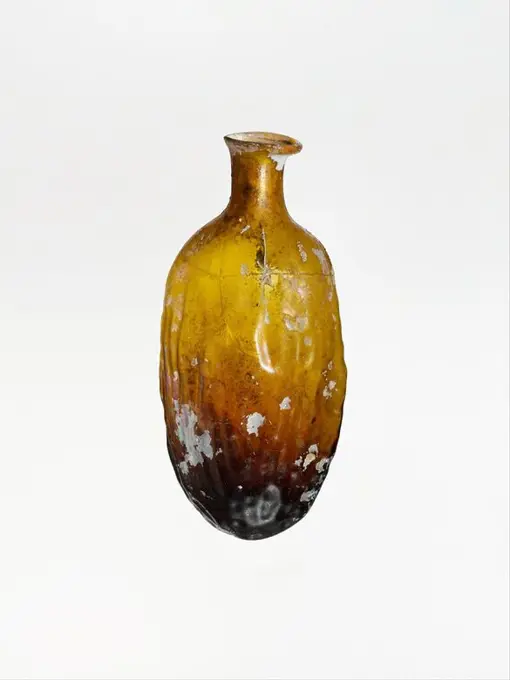
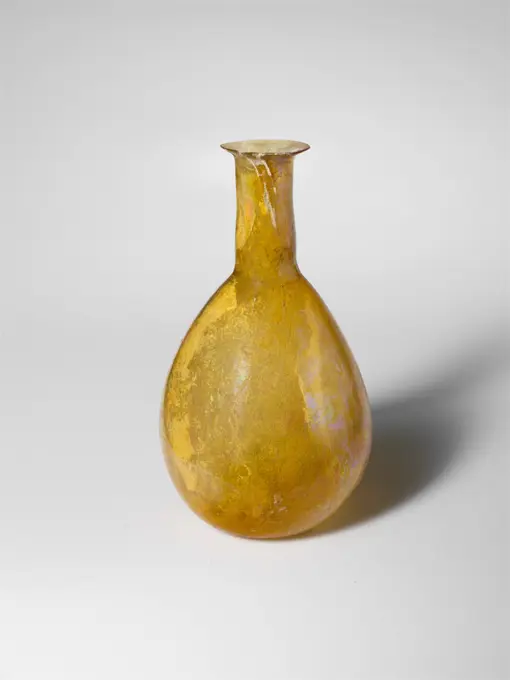
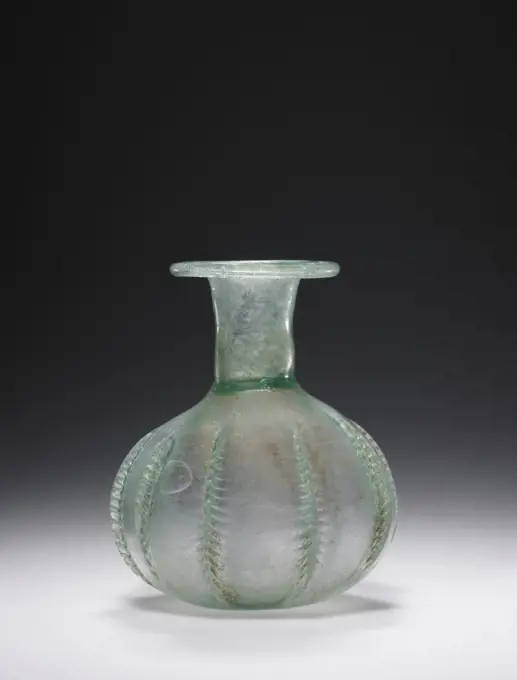
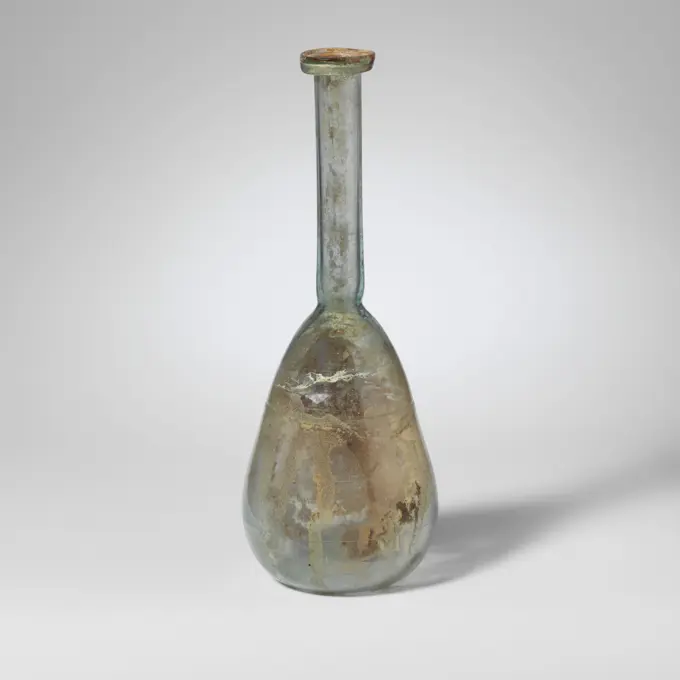
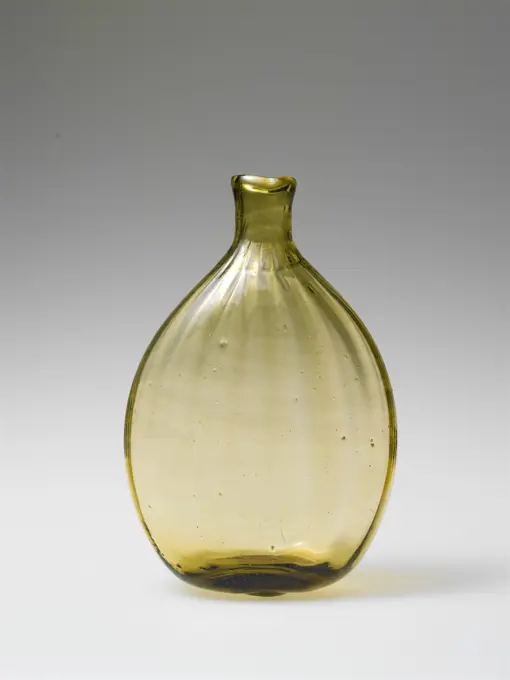
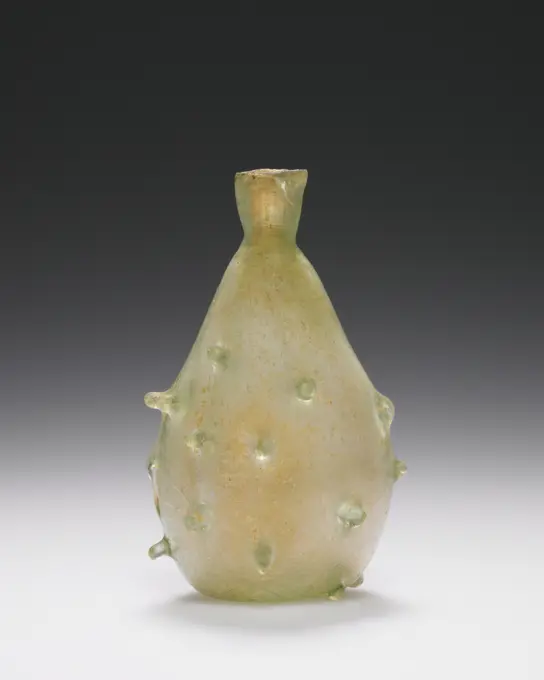
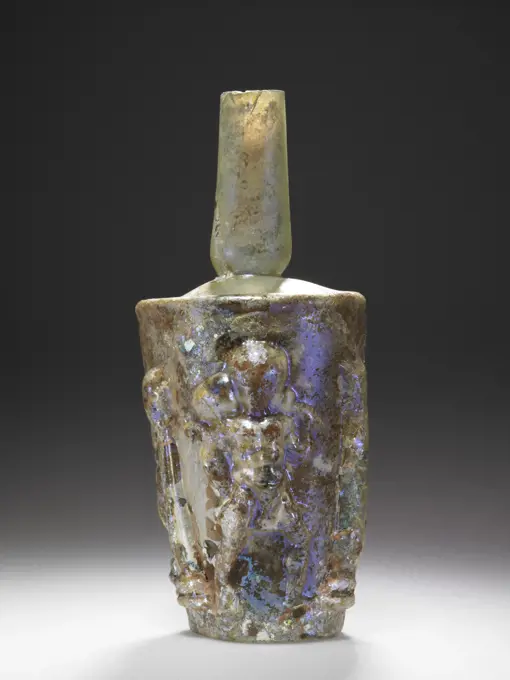
Glass bottle shaped like a date. Culture: Roman. Dimensions: H.: 3 1/2 x 1 3/4 x 1 1/4 x 11/16 in. (8.9 x 4.4 x 3.2 x 1.7 cm). Date: mid-1st-early 2nd century A.D..Translucent yellowish brown, appearing darker around bottom.Uneve, everted rim folded round and flattened into mouth; cylindrical neck with concave sides; elongated body, lentoid in cross section; round, thick-walled bottom. One continuous mold seam around body.Body molded into the shape of a wrinckled date, with pattern of long wavy ridges and hollows.Broken and repaired around upper body, with hole on one sdie; dulling, pitting, patches of whitish weathering, and iridescence. Museum: Metropolitan Museum of Art, New York, USA.
6145-46634682
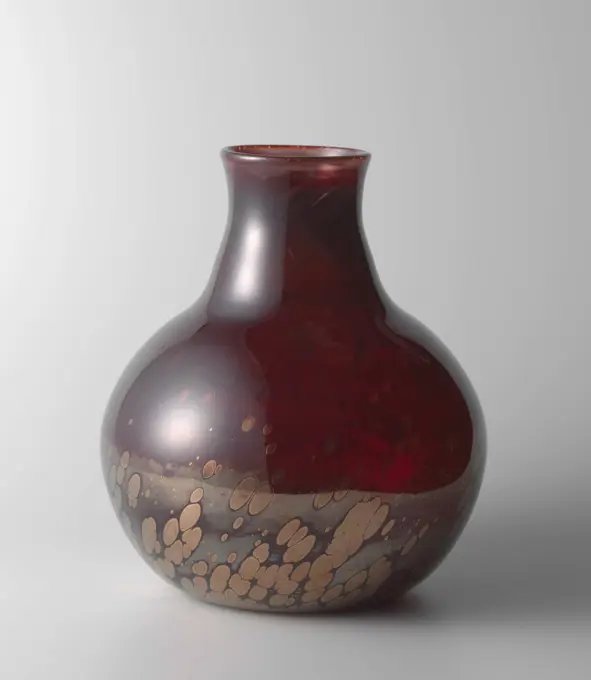
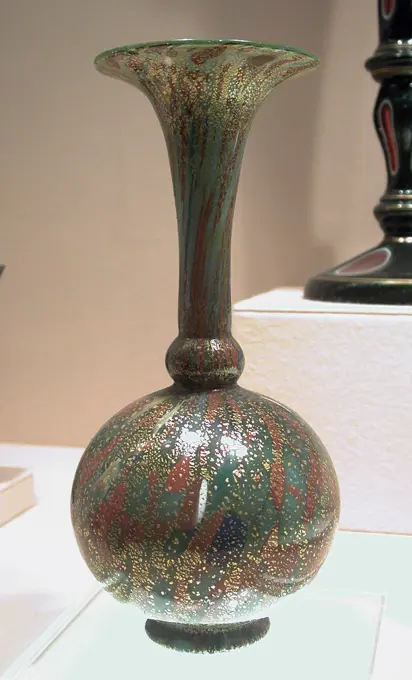
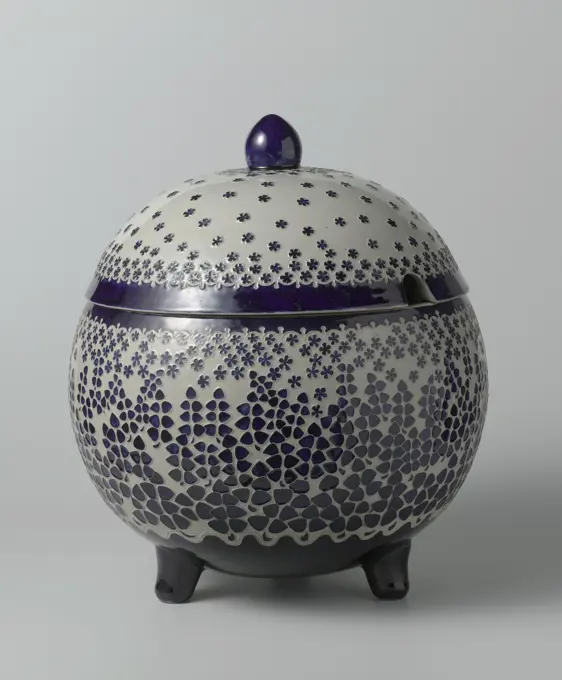
. Light inserted soil. Spherical body overtorning in a short neck, free-legged and formed. Ossebloedrode Überfang, broken open in a reducing fire. The underside of the body irradiated. A strong gold gloss in the broken parts. Signature with the Diamant Leerdam Unica C.J. Lanoooy E54.
6145-29062123
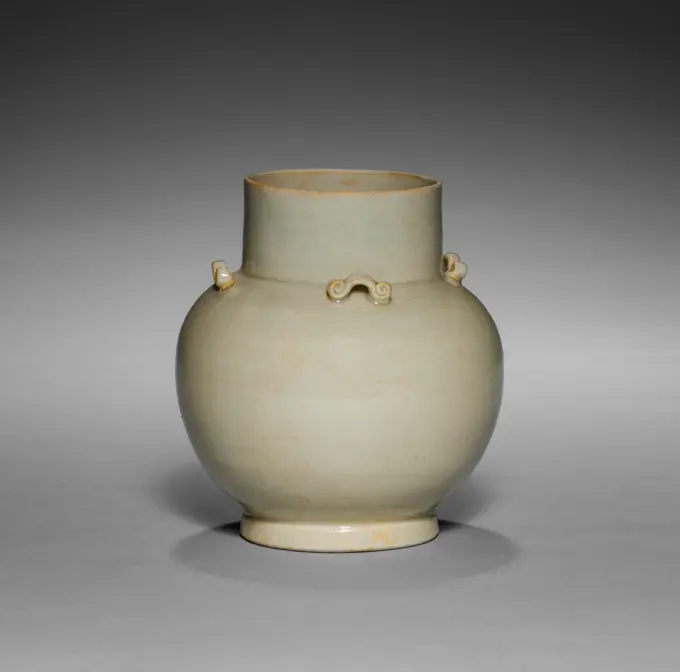
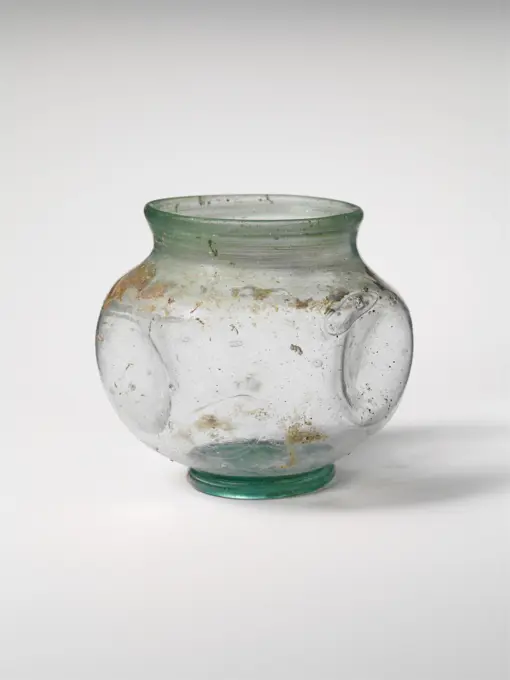
Jar with four lug handles, 960-1279. China, Southern Song dynasty (1127-1279). Stoneware with bluish-green glaze, Qingbai-type ware; overall: 15 x 13 cm (5 7/8 x 5 1/8 in.).
4443-28742997
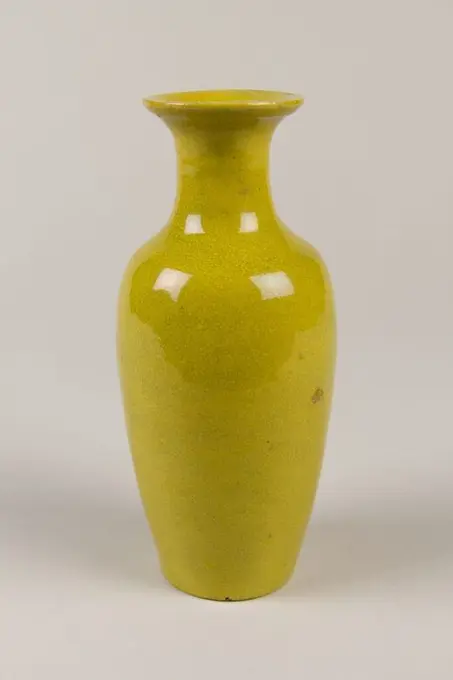
Bottle, 1662-1722, H.6-1/2 in., Porcelain with apple green glaze, China, 17th-18th century
6145-29722441
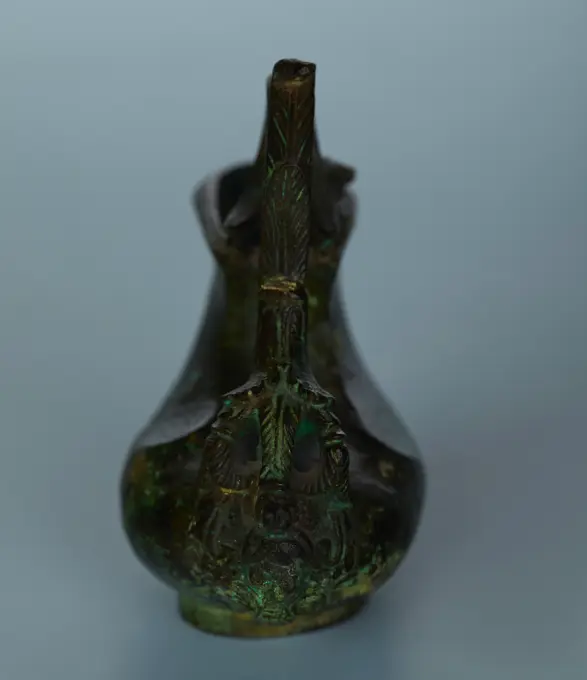
Ewer 1800-1810 Chinese. Ewer. Chinese. 1800-1810. Porcelain. Made in China
6145-51840922
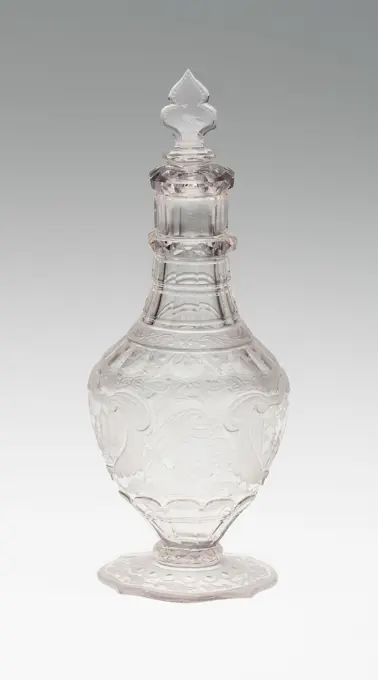
Probably Mount Vernon Glass Works, Decanter, c. 1820-44, aquamarine glass.
6145-29819051
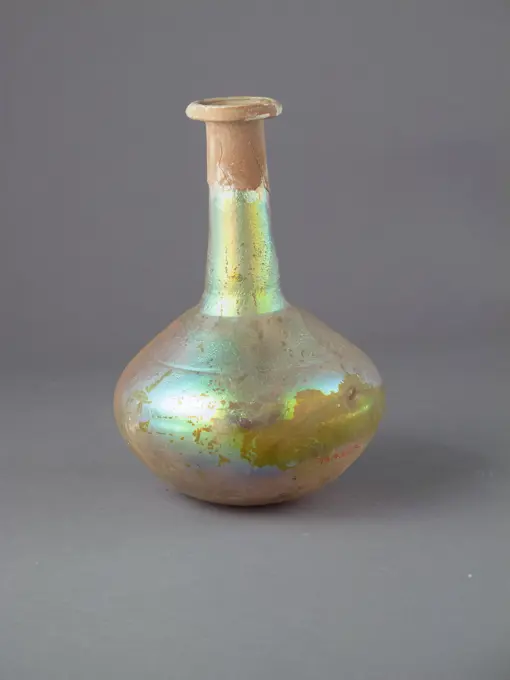
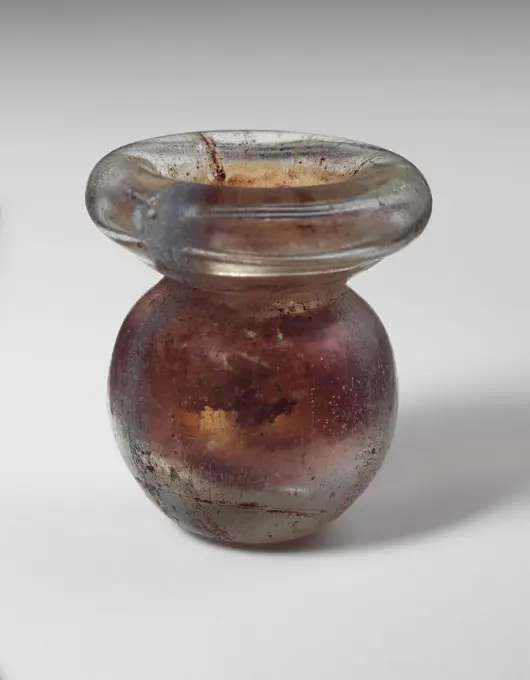
Glass perfume bottle 1st century A.D. Roman Translucent yellow.Very fine, outsplayed rim; cylindrical neck, with horizontal tooled indent around base; piriform body; slightly concave bottom.Intact, except for small chip in rim; pinprick bubbles; slight pitting, faint weathering, and iridescence on exterior, whitish weathering on interior.. Glass perfume bottle 245426
4443-28730727
Snuff Bottle, 19th century, 4 x 1 3/8in. (10.2 x 3.5cm), Ivory, China, 19th century
4409-17412086
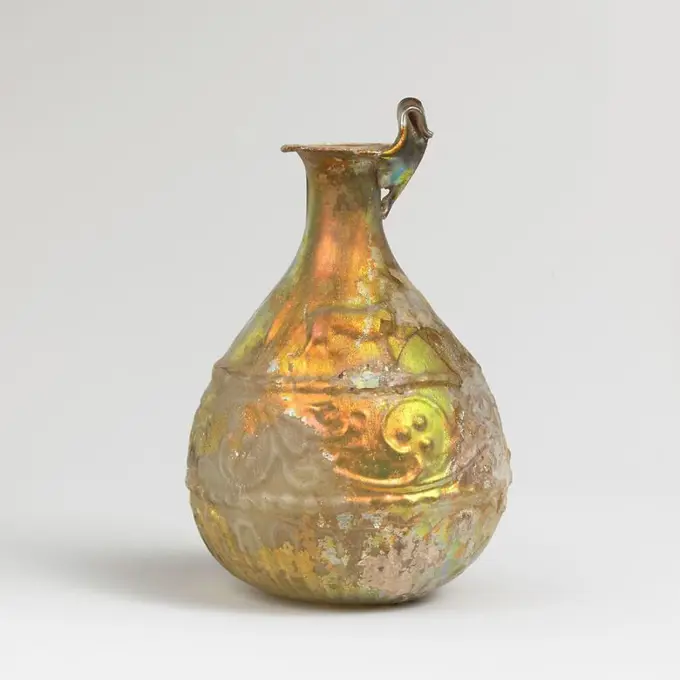
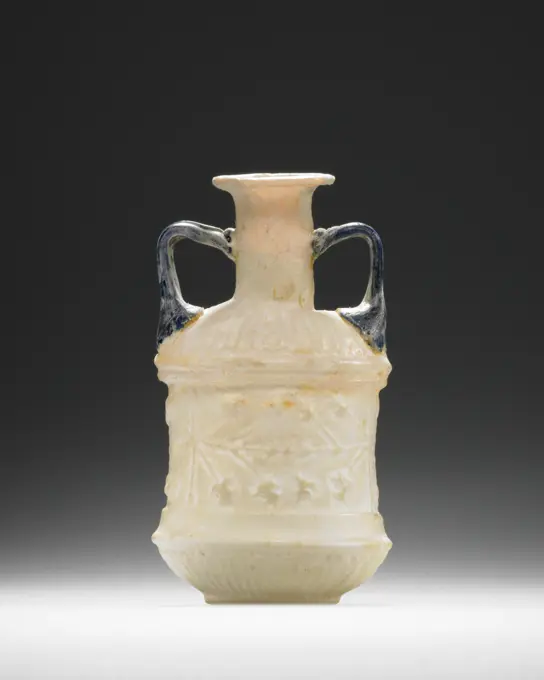
Glass hunt-and-scroll bottle. Culture: Roman. Dimensions: Height: 3 7/8 × 2 7/16 × 7/8 in. (9.8 × 6.2 × 2.2 cm). Date: 1st century A.D..Probably colorless; handle of uncertain color.Everted fine rim, folded over and in; short cylindrical neck, splayed at base and merging with piriform body; flat bottom; handle trailed over rim and top of neck and drawn downwards; continuous mold seam runs from neck, down side, and across bottom, with two distinct vertical creases in relief on neck.On body, decoration in relief in three registers, separated by two horizontal rows of knobs: at top, large dog (or lion) with long tail, facing right, crouching on forepaws on one side of mold and a deer standing facing right with head erect on the other side, flanked by a slender tree to left and an indistinct object to right; center, two wavy tendril scrolls with berries divided by a vertical palmettes across mold seam on one side; bottom, twenty-one upturned flutes, two of which overlap at junction of m
6145-29236677
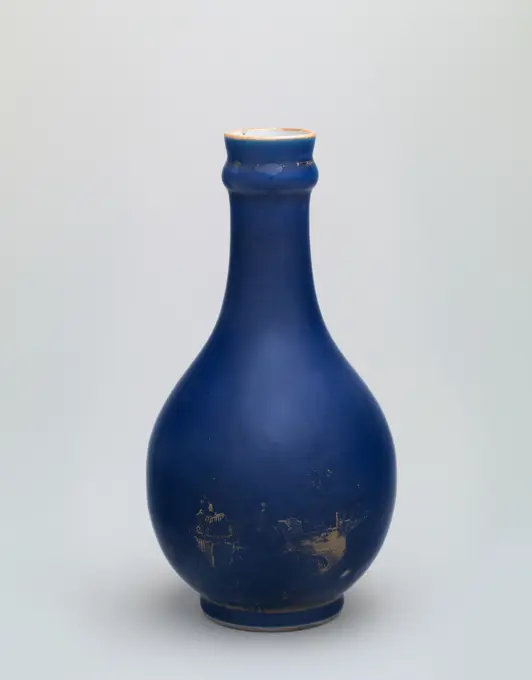
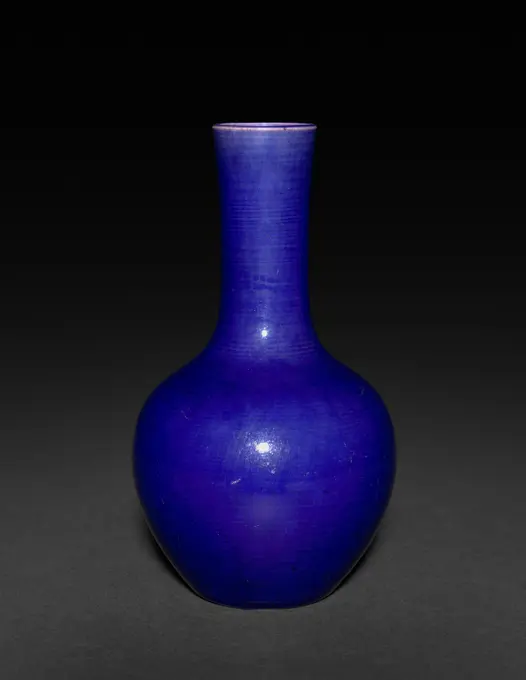
Vase 18th century China. Vase. China. 18th century. Porcelain with blue glaze (Jingdezhen ware). Qing dynasty (1644-1911). Ceramics
6145-29149281
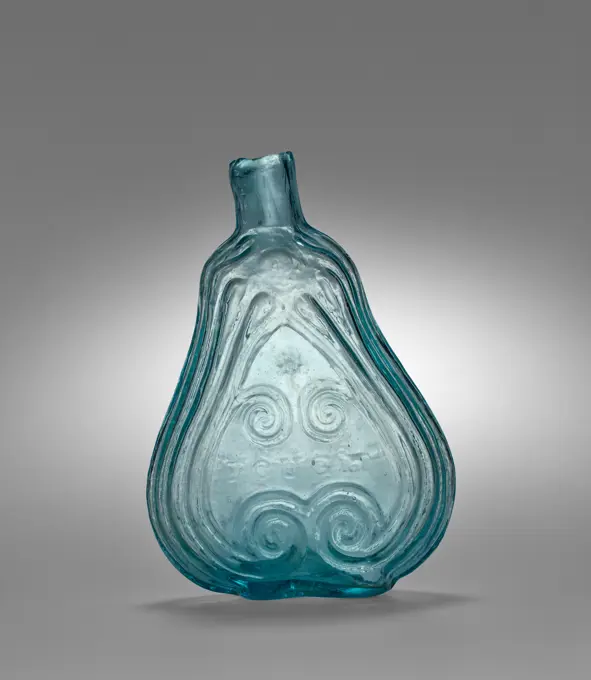
Pocket bottle 1815-40 American. Pocket bottle. American. 1815-40. Blown, pattern-molded glass. Possibly made in Pennsylvania, United States; Probably made in Ohio, United States
6145-45967838
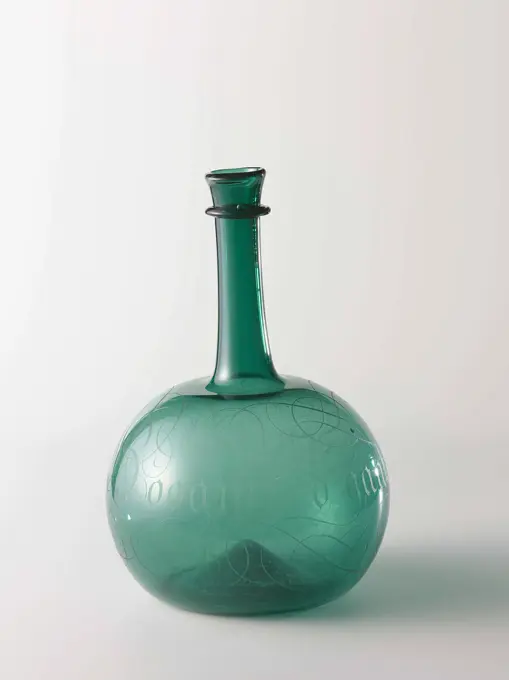
Bottle with the inscription: pride is before the fall. Inserted soul. Bol-shaped body, long slim neck with imposed ring around the neck. On body interrupted inscription: "Pride goes before the fall." Under the word drop signed it's Petit write Mr. A Leyden 1683 '.
6145-46445469
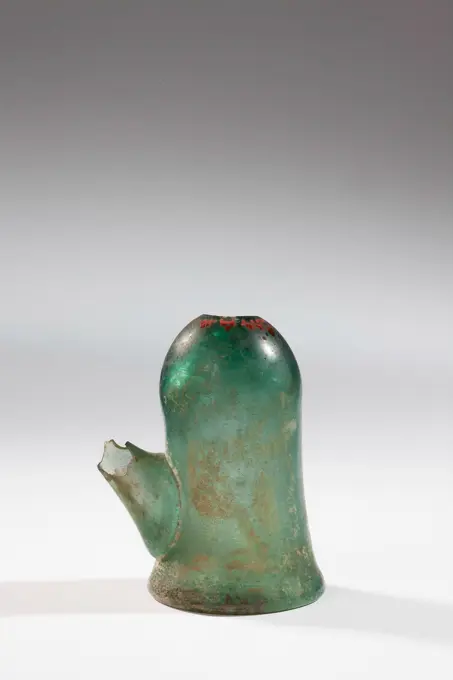
Vase with gusted green glass splinters and golden irisering. Flat soil, curved body, at four places at the top. Gusted green glass splinters; Gold colored irisering.
4409-17504133
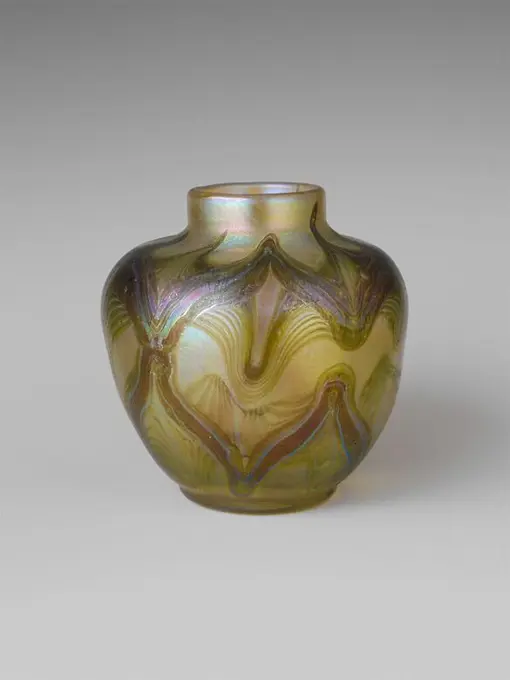
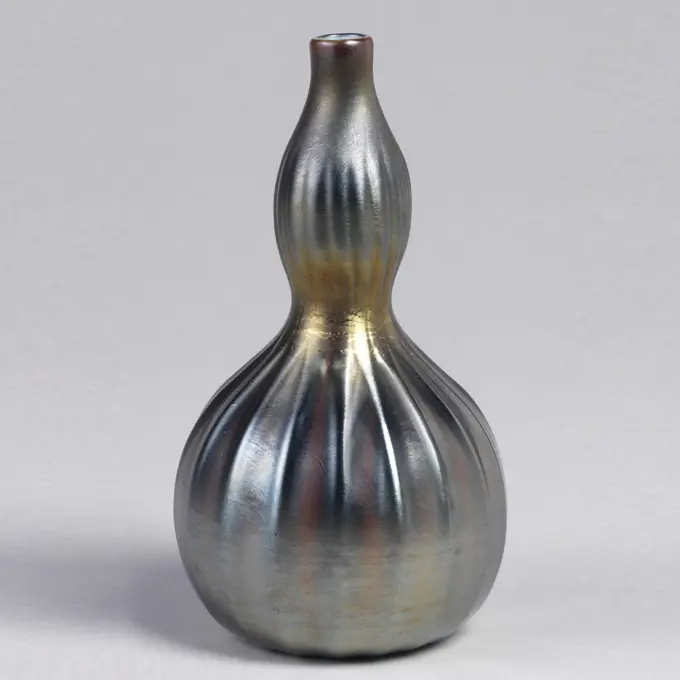
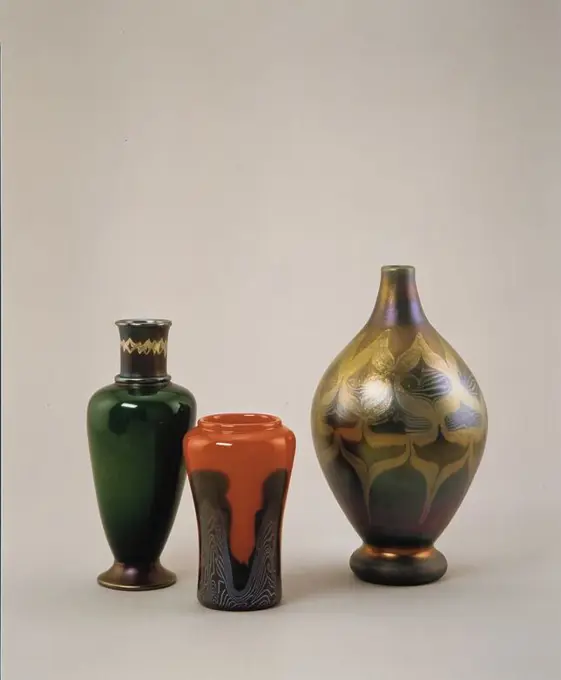
Vase. Culture: American. Designer: Designed by Louis Comfort Tiffany (American, New York 1848-1933 New York). Dimensions: H. 4 in. (10.2 cm). Maker: Tiffany Glass and Decorating Company (American, 1892-1902). Date: ca. 1895. Museum: Metropolitan Museum of Art, New York, USA.
4443-19525213
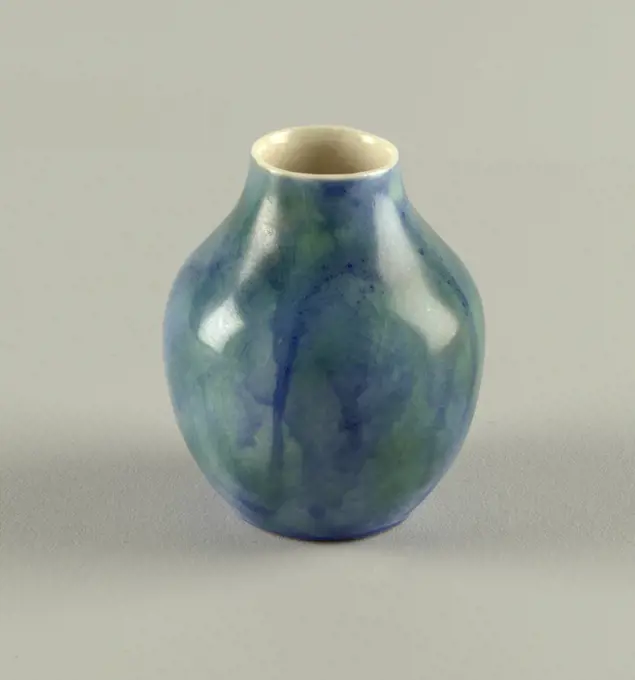
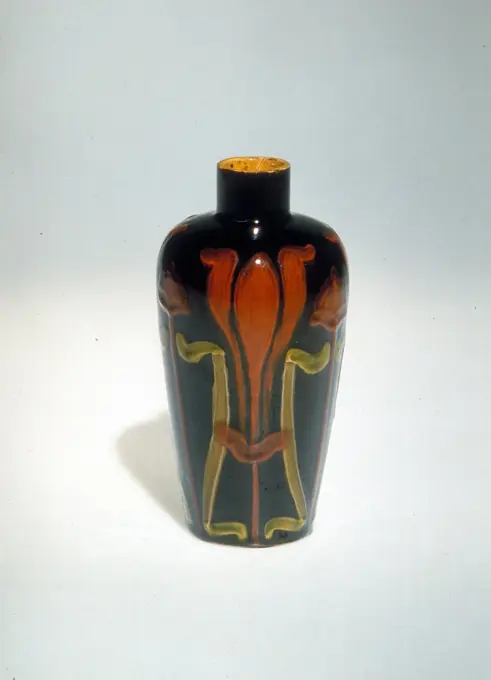
Vase, Porcelain, Molded porcelain body decorated underglaze with mottled blue and green. Clear, semi-matte glaze., Cincinnati, Ohio, USA, ca. 1903, ceramics, Decorative Arts, Vase
4443-21941169
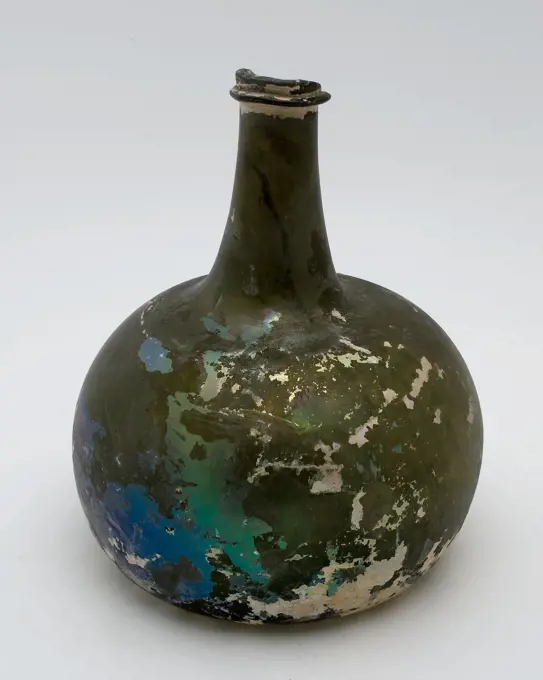
Bulbous bottle, belly bottle bottle holder soil find glass, free blown and shaped glass application Bulky bottle in clear green glass. Pontil mark under wide, raised bottom Body with convex wall to convex shoulders and rejuvenated short (dm 4.5 - 2.5 cm) neck with imposed circumferential sharp glass thread (chip 2.0 cm) and dilated lip about half is missing archeology packaging
6145-29754406
Bottle 6th-7th century. Bottle 453504
6145-29222993
Glass perfume bottle 1st century A.D. Roman Uncertain color, possibly colorless.Rim folded out, down, round, and up, forming narrow irregular collar around mouth; cylindrical neck expanding downward with slight tooling indent just above base; bi-conical body with rounded side at point of greatest diameter; small flat bottom.Horizontal line at junction of neck and body; another cut line around upper half of body.Complete but two cracks around side of body; many pinprick bubbles; pitting, thick creamy brown weathering, and brilliant iridescence.. Glass perfume bottle. Roman. 1st century A.D.. Glass; blown and cut. Early Imperial. Glass
4409-17410905
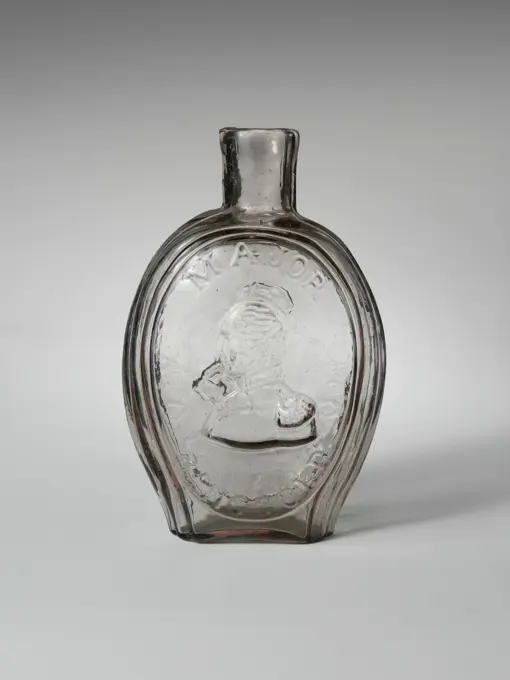
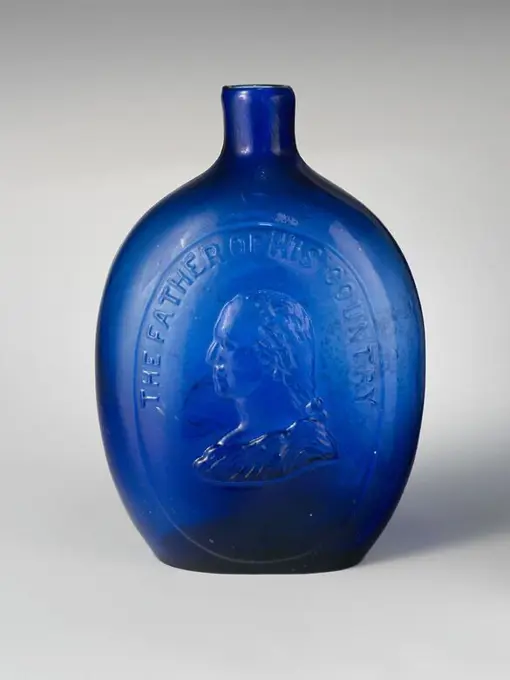
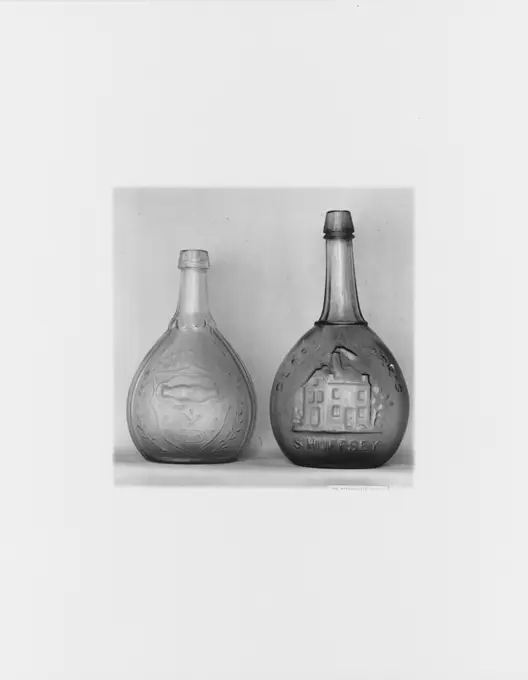
Figured flask. Culture: American. Dimensions: H. 6 1/2 in. (16.5 cm). Maker: Keene Glass Works (1815-41). Date: 1830-40. Museum: Metropolitan Museum of Art, New York, USA.
6145-29076891
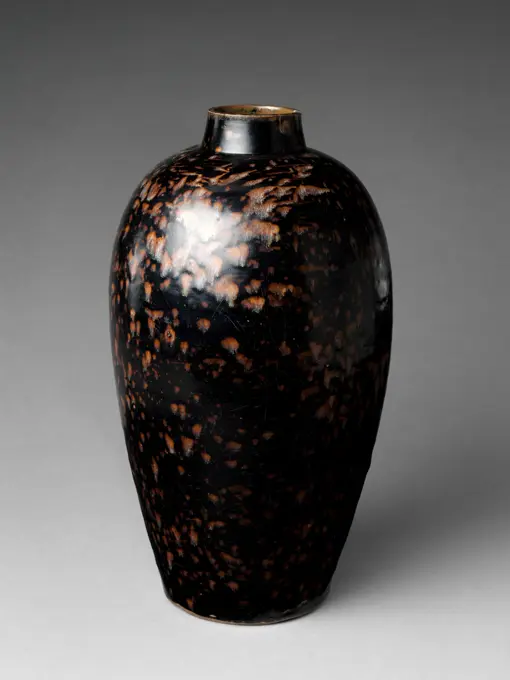
Bottle Vase: Black Ware, 1200s-1300s. Northern China, Jin dynasty (1115-1234) - Yuan dynasty (1271-1368). Glazed stoneware with underglaze slip coating and iron oxide decoration; diameter: 17.4 cm (6 7/8 in.); overall: 27.3 cm (10 3/4 in.).
6145-59011985
Georges Despret (1862-1952). Vase. Glass, glass paste. XIXth-XXth century. Museum of Fine Arts of the City of Paris, Petit Palais. 19th XIXth XIX 19th 19th 19th century, XXth XXth XX 20th 20th 20th century
6145-29163232
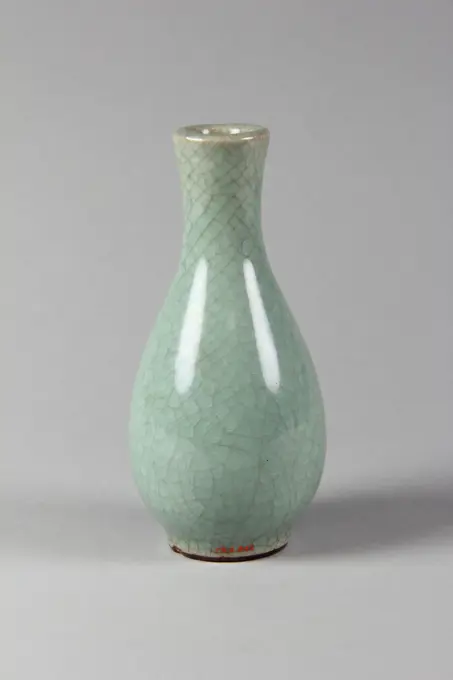
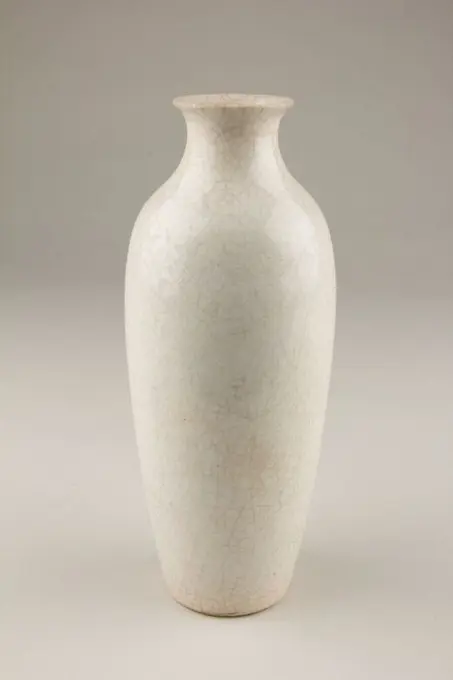
Vase first half of the 19th century China. Vase. China. first half of the 19th century. Porcelain with crackled celadon glaze. Qing dynasty (1644-1911). Ceramics
4409-17552631
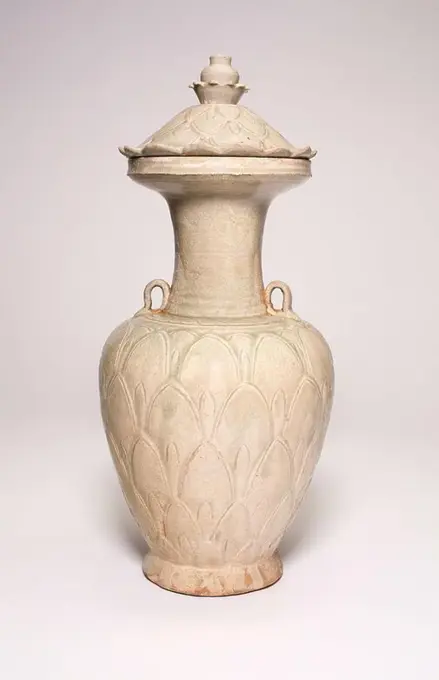
Covered Vase with Lotus Petals Decoration. China. Date: 950 AD-1050. Dimensions: H. 33.7 cm (13 1/4 in.); diam. 15.0 cm (5 15/16 in.). Yue ware; stoneware with grayish green glaze and underglaze incised decoration. Origin: China. Museum: The Chicago Art Institute, Chicago, USA.
4443-22016512
Sprinkler Flask; Eastern Mediterranean; 3rd-4th century A.D; Glass; 9.5 × 7.5 cm (3 3,4 × 2 15,16 in.)
4409-17353941
Vase. Culture: China. Dimensions: H. 7 3/8 in. (18.7 cm). Date: first half of the 19th century. Museum: Metropolitan Museum of Art, New York, USA.
6145-51840203
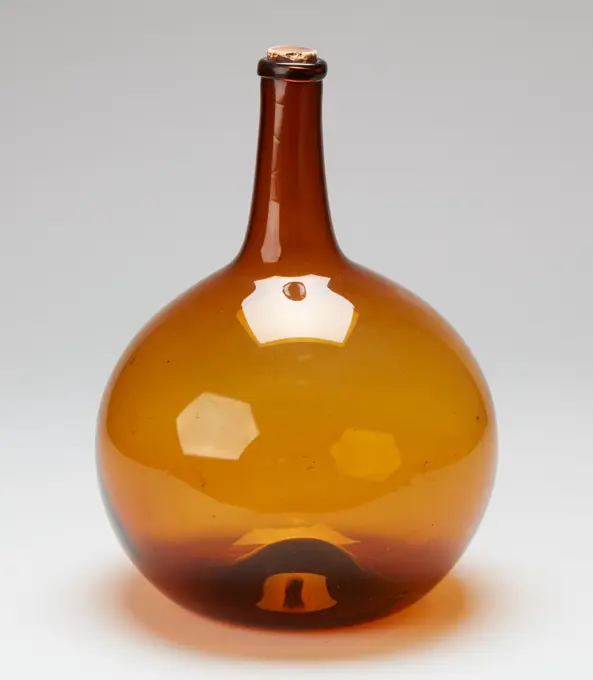
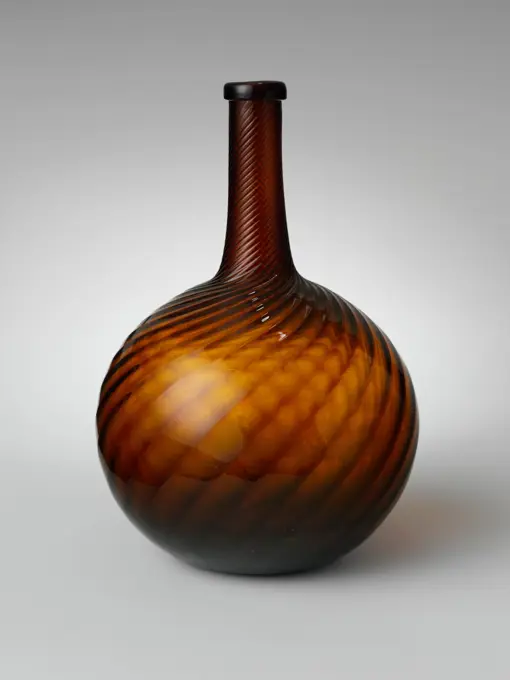
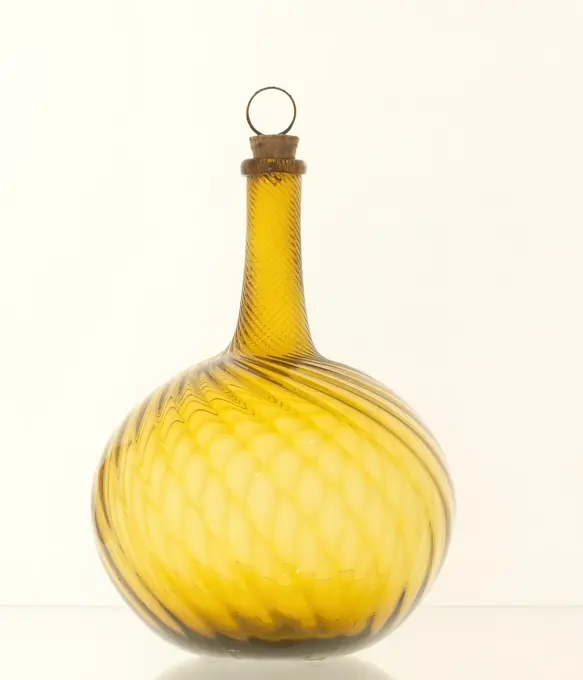
Maker Unknown, Bottle, c. 1820-50, amber glass.
4443-28734197
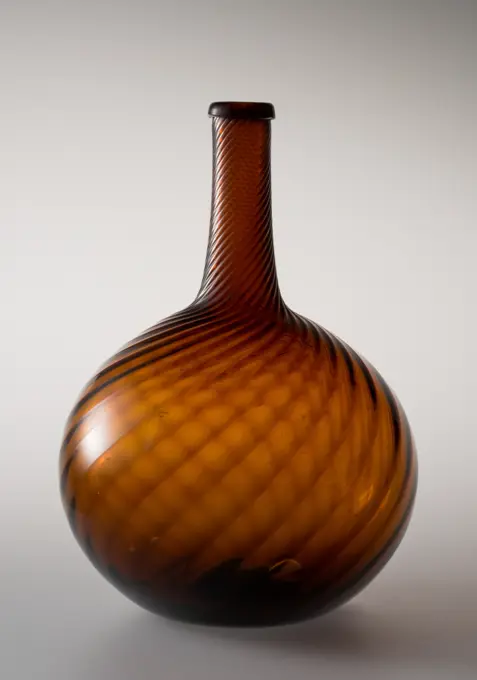
Globular Bottle, 19th century, Zanesville Glass Manufacturing Company, (Zanesville, Ohio), 12 1/4 x 9 1/8 x 9 1/8 in. (31.1 x 23.18 x 23.18 cm), Glass, United States, 19th century
6145-29239771
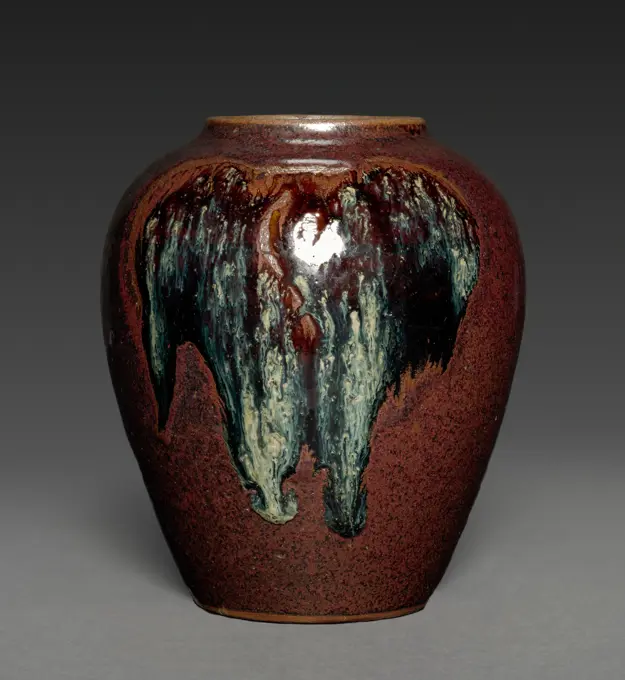
Bottle in Meiping Shape with Tortoiseshell” Glaze 14th century China One of many glaze effects re-created in Japan and in the West, tortoiseshell” decoration is created by applying an iron-rich slip to a ceramic body and then covering the slip with an iron-rich glaze. During firing, the glaze melts and separates and the iron bubbles to the surface to create the dramatic design.. Bottle in Meiping Shape with Tortoiseshell” Glaze. China. 14th century. Stoneware with iron glaze (Jizhou ware). Yuan dynasty (1271-1368). Ceramics
4409-17545641
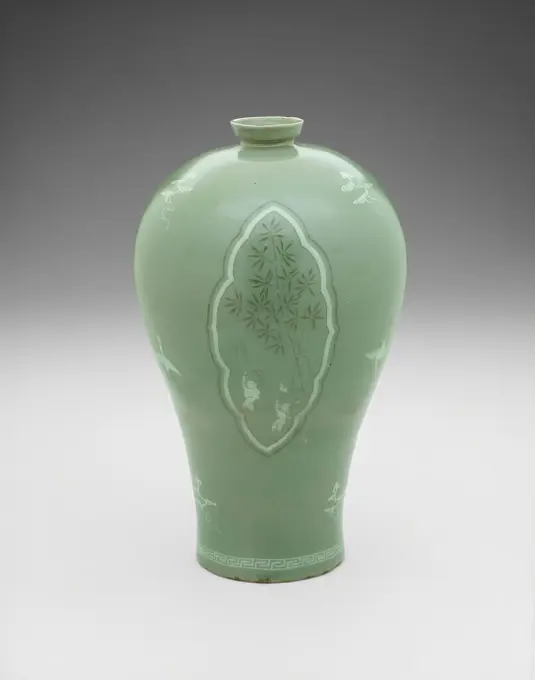
Vase (Maebyong) with Clouds, Flying Cranes, and Children amid Willows. Korea. Date: 1175-1199. Dimensions: 33.5 cm (13 1/8 in.). Celadon-glazed stoneware with underglaze inlaid decoration of black and white clays. Origin: Korea. Museum: The Chicago Art Institute, USA.
6145-59036483
Anonymous (n. - d.), Vase (main title). Porcelain, cracked celadon, metal frame. Petit Palais, Museum of Fine Arts of the City of Paris.
4409-17520548
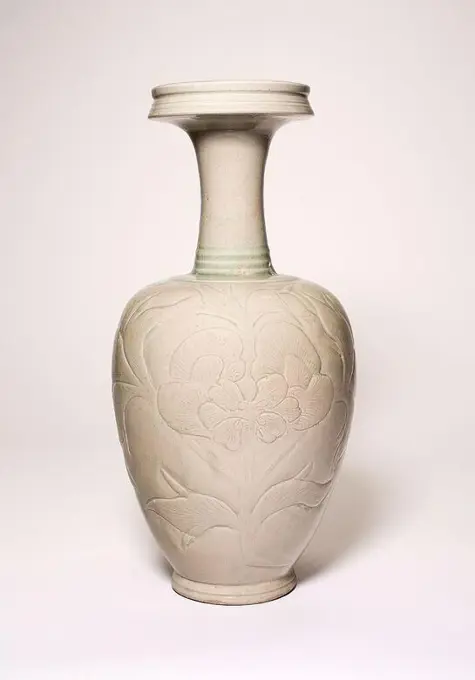
Vase with Cup-Shaped Mouth and Peony Flowers. China. Date: 960 AD-1050. Dimensions: H. 35.7 cm (14 1/16 in.); diam. 17.7 cm (7 in.). Longquan ware; stoneware with underglaze carved and incised decoration. Origin: China. Museum: The Chicago Art Institute, Chicago, USA.
6145-29092613
Bottle-Shaped Vase, 1736-95. China, Qing Dynasty (1644-1911), Qianlong reign (1736-95). Porcelain; overall: 14.5 cm (5 11/16 in.).
6145-29136642
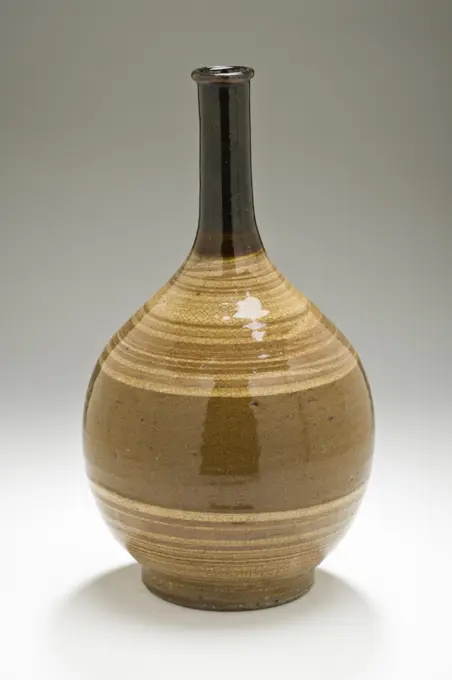
Sake Bottle with Stripe Design. Japan, Edo period (1615-1868), first half, 18th century. Ceramics. Hizen ware, Takeo style; stoneware with iron glaze, white slip and clear glaze
6145-51385341
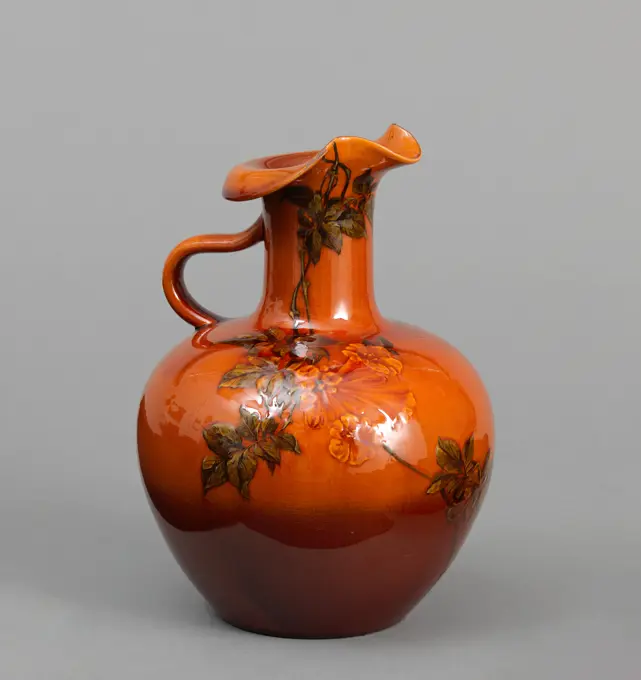
Ewer (USA); Manufactured by Rookwood Pottery (United States); Decorated by Albert R. Valentien (American, 1862-1925) (American, 1862 - 1925); glazed earthenware
6145-58875922
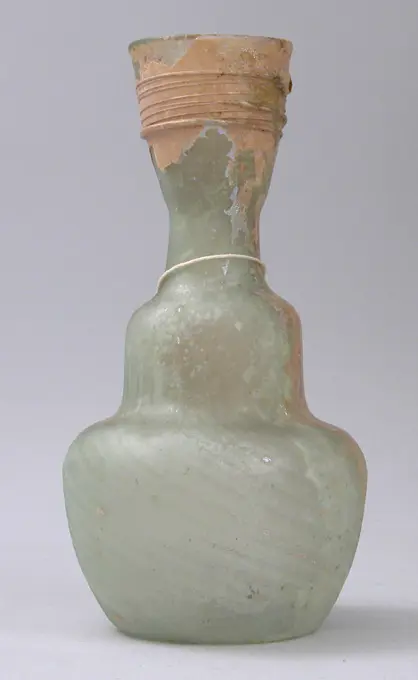
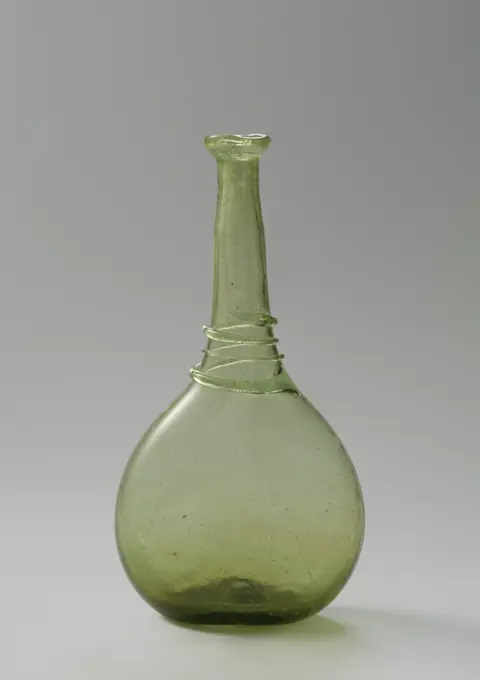
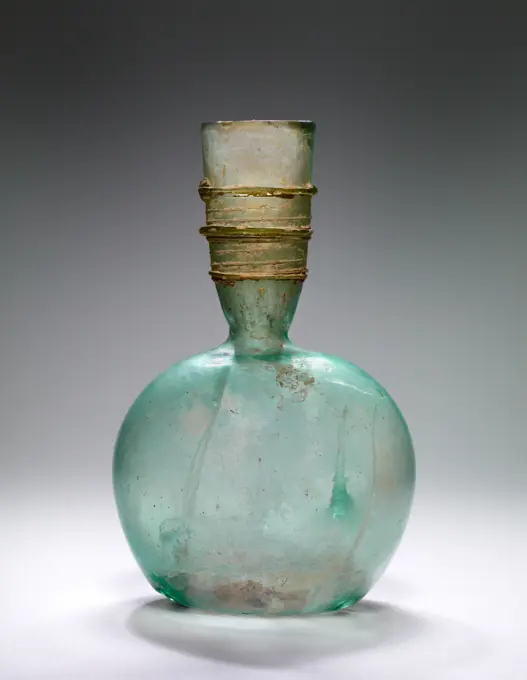
Bottle with flattened, spherical body, anonymous, c. 1700 - c. 1900 Soul inserted. Silent -flattened, spherical body, transfer to high, slightly tuning neck with a protruding mouth. A glass wire is wounded around the transition from the body to the neck. Persia glass glassblowing Soul inserted. Silent -flattened, spherical body, transfer to high, slightly tuning neck with a protruding mouth. A glass wire is wounded around the transition from the body to the neck. Persia glass glassblowing
6145-30356752
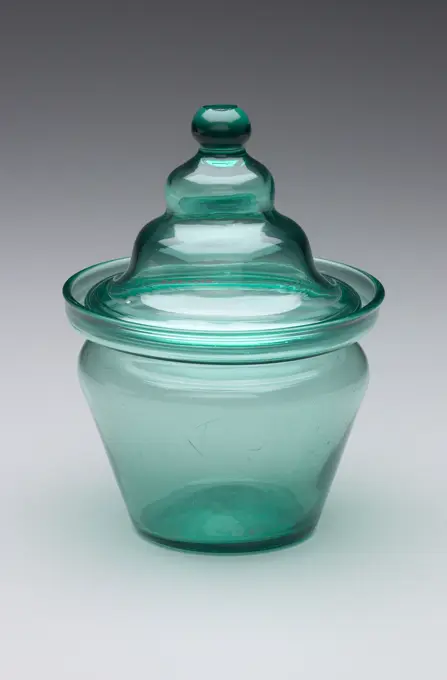
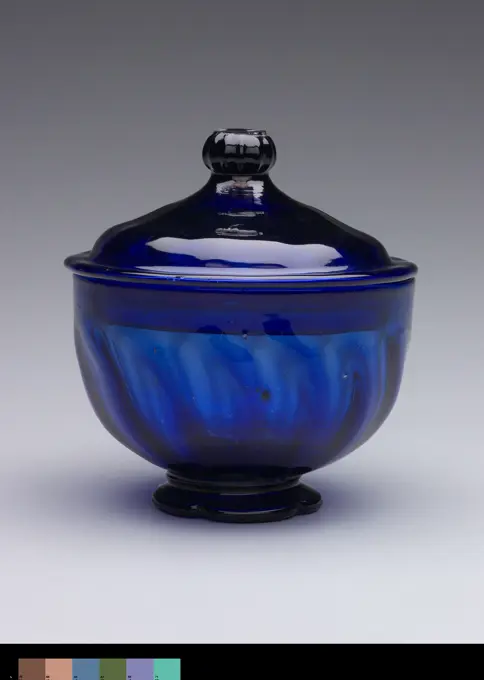
Covered SugarBowl
6145-29197370
Glass bottle 1st-early 2nd century A.D. Roman Translucent pale blue green.Collared rim, with vertical, rounded lip; slender, cylindrical neck, tooled in around base; piriform body; concave bottom.Wheel-abraded decoration on body in horizontal bands; single fine line at top, then band of two fine lines flanking a broader groove, two more fine lines, and a single fine line at point of greatest diameter.Broken and repaired around body with two small holes in side; some elongated, large, and pinprick bubbles; patches of enamel-like weathering and iridescence.. Glass bottle 239656
4409-17385061
Vase. Culture: China. Dimensions: H. 7 5/8 in. (19.4 cm). Museum: Metropolitan Museum of Art, New York, USA.
4443-28731799
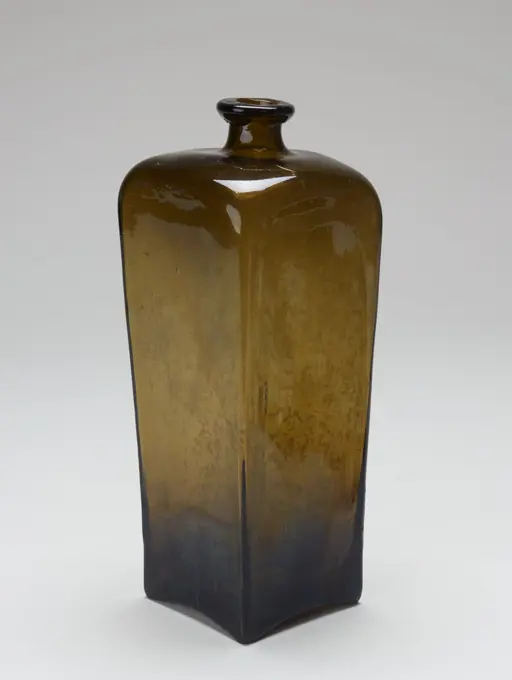
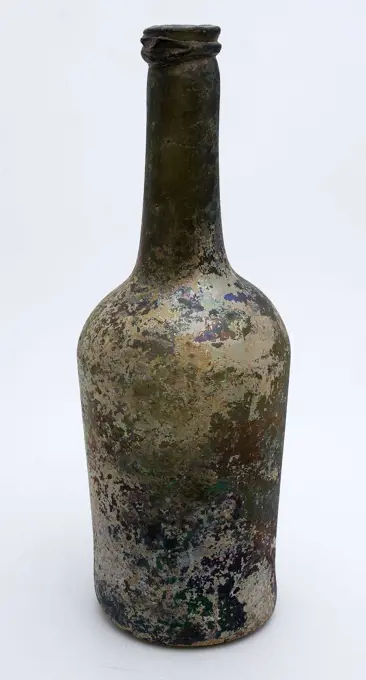
Schnapps Bottle, 18th century, 10 x 3 3/4 x 3 3/4in. (25.4 x 9.5 x 9.5cm), Glass, Netherlands, 18th century
4409-17502936
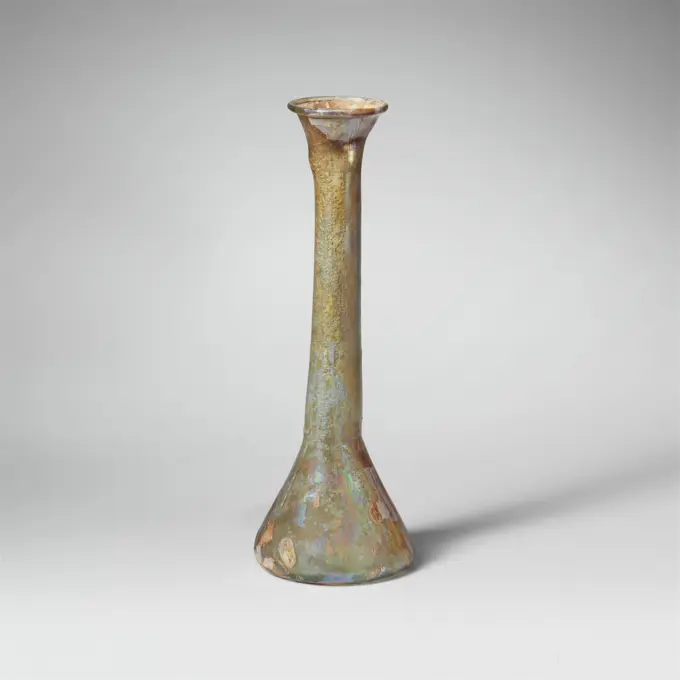
Glass perfume bottle. Culture: Roman. Dimensions: Overall: 6 5/8in. (16.9cm)Diam.: 2 7/8 x 1 1/4 in. (7.3 x 3.2 cm). Date: 2nd-3rd century A.D..Candlestick unguentarium.Colorless with pale greenish tinge and purple streaks.Rim folded out, over and in; flaring mouth; cylindrical neck, expanding downwards, with indent around base; undulating bulbous body, expanding downwards; convexbottom.Intact; pinprick, elongated, and some larger bubbles; black impurities in rim; faint iridescence on exterior; small patches of soil encrustation and thin whitish weathering on interior. Museum: Metropolitan Museum of Art, New York, USA.
4409-17378636
Snuff Bottle. Culture: China. Dimensions: H. 2 5/8 in. (6.7 cm). Date: late 18th century. Museum: Metropolitan Museum of Art, New York, USA.
4409-17520121
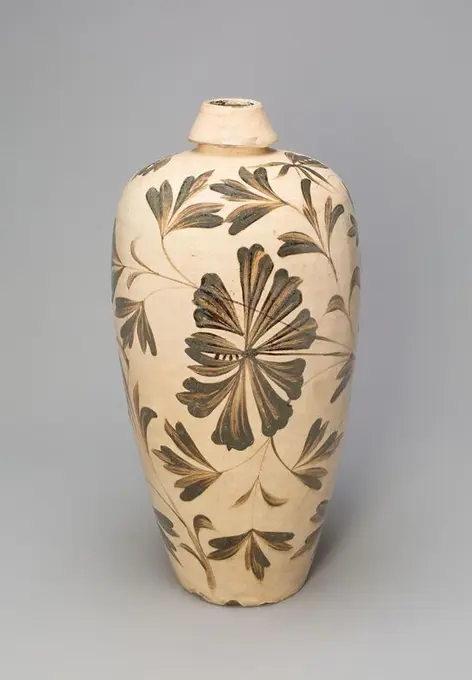
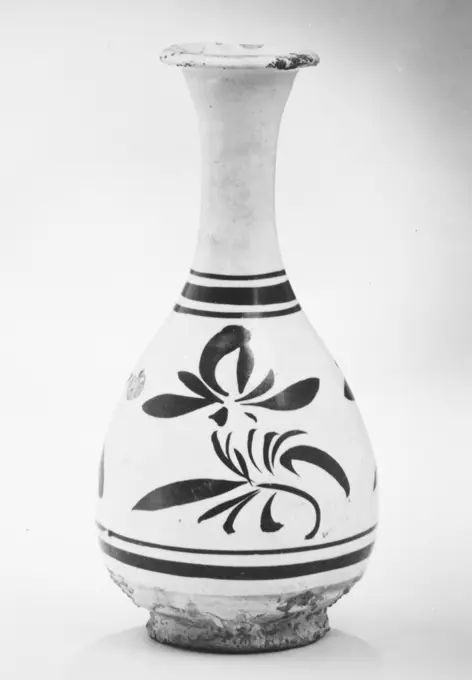
Elongated Bottle Vase (Meiping) with Peony Sprays. China. Date: 1115-1234. Dimensions: H. 27.8 cm (14 7/8 in); diam. 18.7 cm (7 3/8 in). Cizhou ware; stoneware, slip-coated with overglaze painted decoration in iron brown. Origin: China. Museum: The Chicago Art Institute, Chicago, USA.
6145-29817824
Bottle 1820-40 American. Bottle 603
6145-29721441
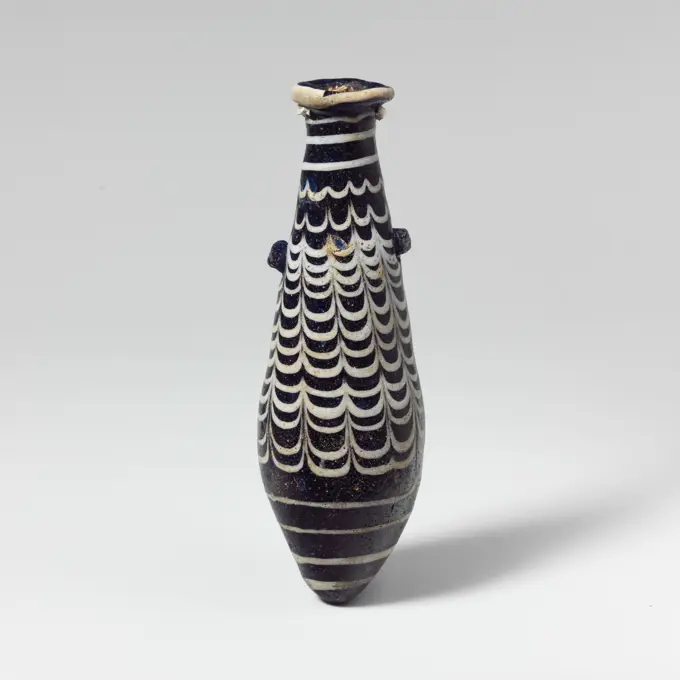
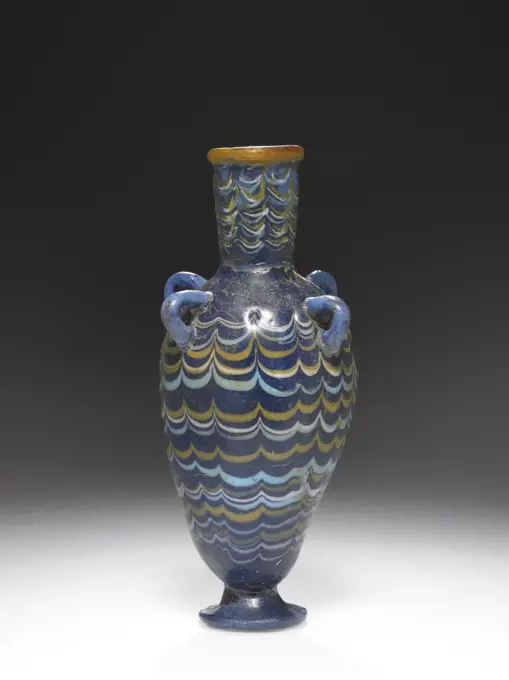
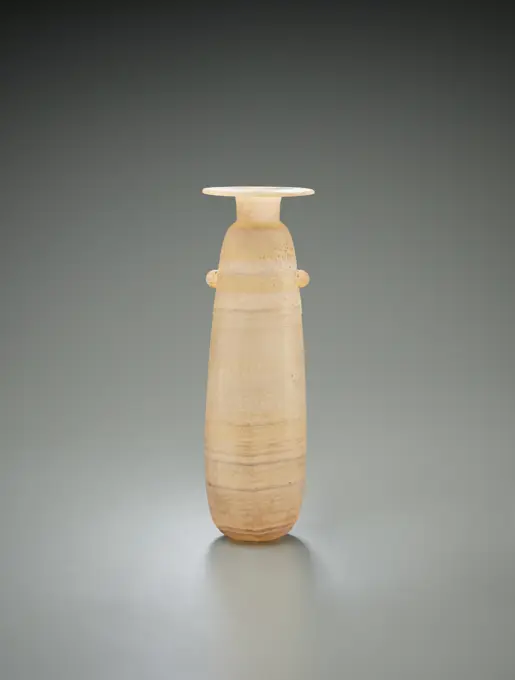
Glass alabastron (perfume bottle) 2nd-mid 1st century B.C. Greek, Eastern Mediterranean Translucent cobalt blue, with handles in same color; trails in opaque white.Rim-disk with thick rounded edge, uneven with radiating tooling marks on upper surface and projecting jagged inner edge to mouth; straight-sided fusiform body expanding downward, then tapering in to pointed bottom; two horizontal lug handles applied over trail at top of body, one slightly higher than the other.Thick trail applied around rim; another trail attached at bottom, drawn up in a spiral to point of carination, tooled into a festoon pattern on side with twelve upward strokes, and wound round again in spiral ending on rim.Intact; some dulling, a few deep pitting holes, and faint iridescence.. Glass alabastron (perfume bottle) 245461
6145-46636791
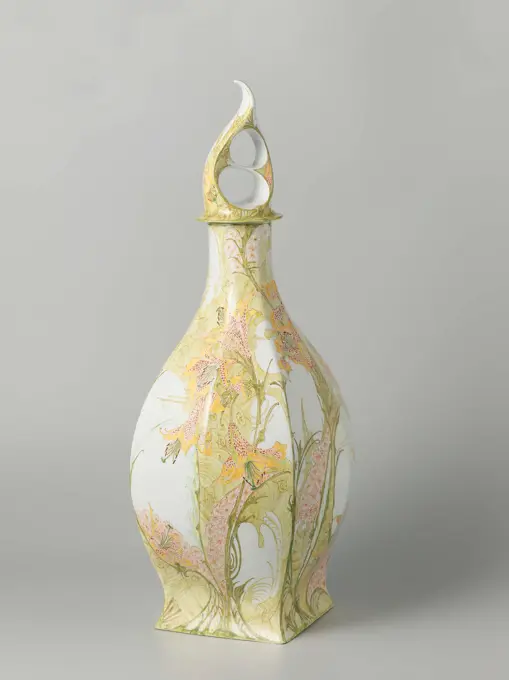
. Lid belonging to a porcelain vase (A). The lid is asymmetrical and has two openings above each other. The multicolored painting, in green, yellow and red, consists of lilies, which cover a large part of the vase into an ornamental ranking.
6145-44311874
Extended ball vase. .
6145-29715794
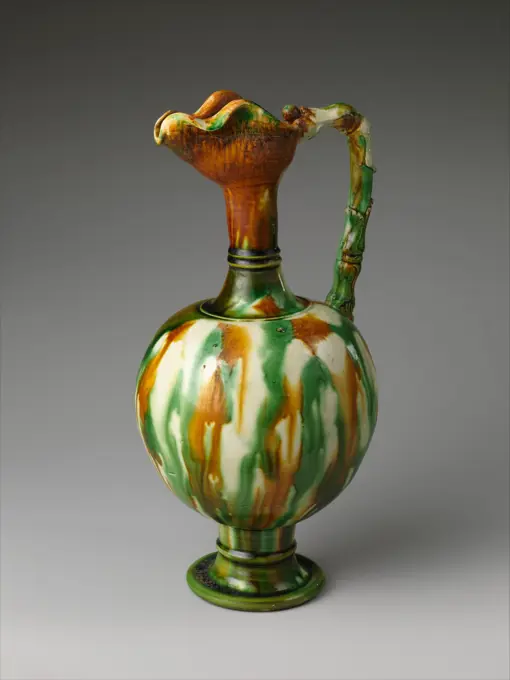
Amphora late 7th century China Brilliantly colored lead glazes in shades of green, amber, and white, which are known as three-color, or sancai, glazes, were widely used in funerary goods in the late seventh and the first half of the eighth century. The shape of this ewer derives from the metalwork of the ancient Iranian world and illustrates the impact of trade along the famed Silk Road.. Amphora. China. late 7th century. Earthenware with three-color (sancai) glaze. Tang dynasty (618-907). Ceramics
6145-29145010
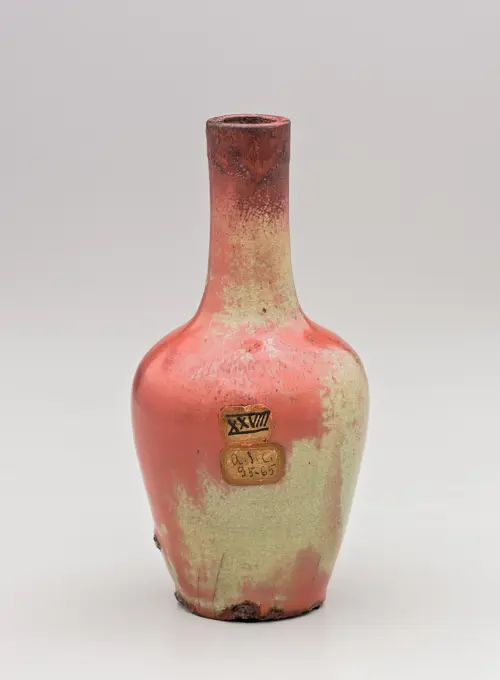
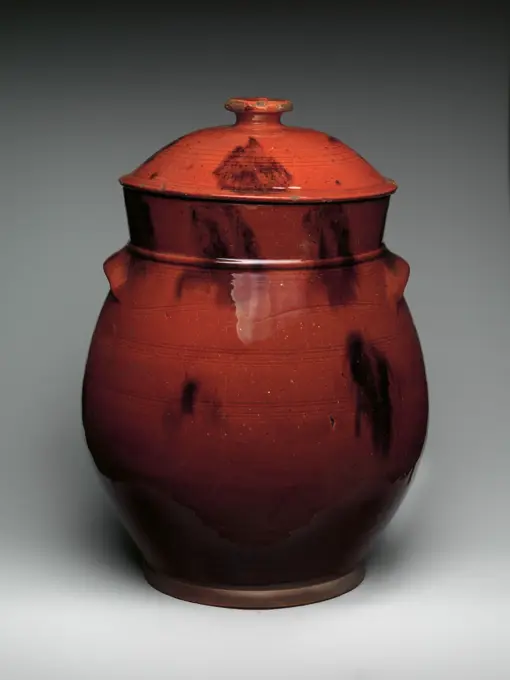
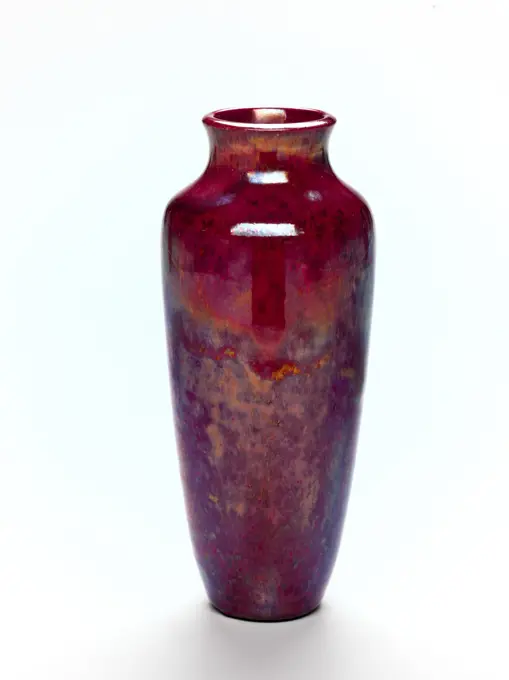
Vase ca. 1885-89 Chelsea Keramic Art Works Steeped in ceramics from birth, Hugh C. Robertson pursued his craft with fierce devotion and a passion for experimentation. From a family of trained English ceramists, he honed his skills in New Jersey before settling in Massachusetts as one of the founders of Chelsea Keramic Art Works and later, Dedham Pottery. Robertsons lifelong explorations in glazes, particularly their color and texture, make him one of the key figures of American art pottery at the turn of the twentieth century. During the 1880s Robertson increasingly turned his attention to developing new glaze formulas and clay bodies. In the middle of the decade he became obsessed with the highly coveted yet elusive sang-de-boeuf, or oxblood, glaze, a quest that became the hallmark of his later career. This richly colored blood-red glaze is traditionally created from a copper-based formula and fired in a kiln, which when wet straw and other materials are introduced, deprives the atmo
6145-29706993
Bottle 17th-18th century. Bottle. 17th-18th century. Earthenware; glazed. Attributed to Iran. Ceramics
6145-46629616
. Polf bottle with screw closure. Four passes engraved on the body, interspersed with sunflowers. The glasses () DOP is missing.
6145-50495308
Vase, ca. 1885-89; Made by Ernest Chaplet (French, 1935 - 1909); porcelain
6145-48510289
Vase (USA); Produced by Tiffany Glass and Decorating Company; Design Director: Louis Comfort Tiffany (American, 1848-1933); mold-blown favrile glass
4409-17371329
Vase. Culture: China. Dimensions: H. 5 3/4 in. (14.6 cm). Date: late 18th-first half of the 19th century. Museum: Metropolitan Museum of Art, New York, USA.
4409-20926837
Chinese grey and white vase with vegetal and bamboo pattern Hung-wu period (1368-98). Ming. Museum: NATIONAL PALACE MUSEUM, TAIPEI, Taiwan.
6145-29161567
Covered Jar 1800-1830 American. Covered Jar 2399
6145-29152662
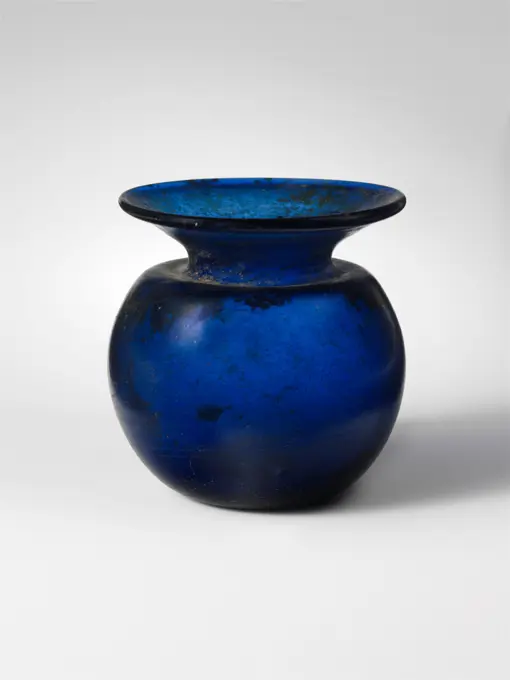
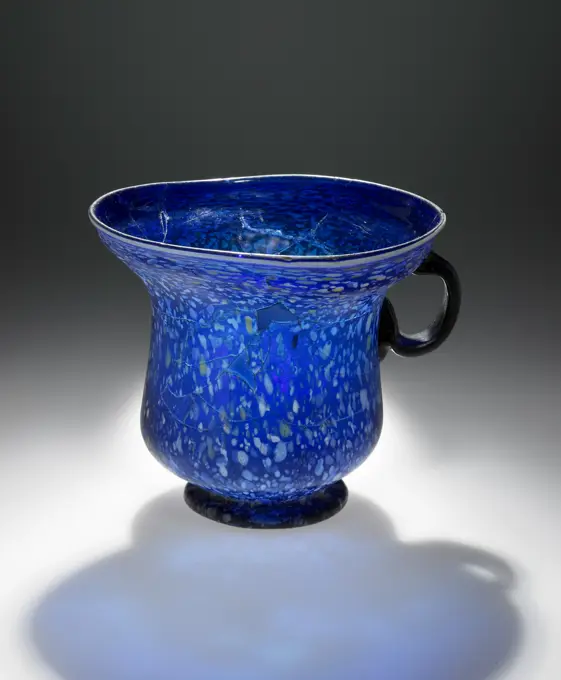
Glass jar ca. 3rd-4th century A.D. Roman Translucent cobalt blue.Rounded, slightly thickened rim; broad, flaring mouth; very short, concave neck; narrow, pushed-in shoulder; bulbous body; kick in bottom with central pontil scar.Intact, but one small area of cracking in side; bubbles, blowing striations, and a few glassy inclusions; pitting, dulling, and iridescence, with some patches of limy brown weathering.. Glass jar 245274
6145-29094420
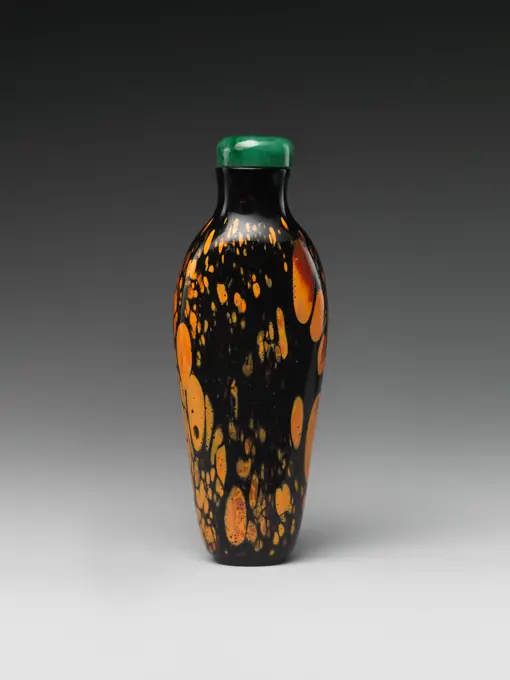
Snuff Bottle, 1644-1911. China, Qing dynasty (1644-1911). Glass; overall: 6.4 cm (2 1/2 in.).
6145-59004206
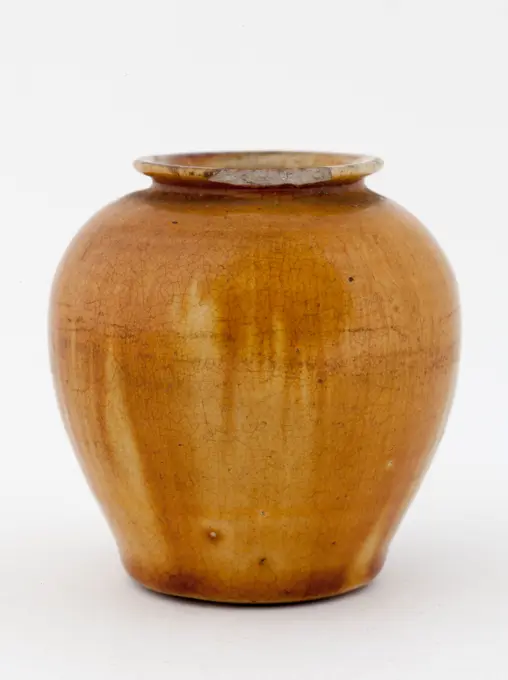
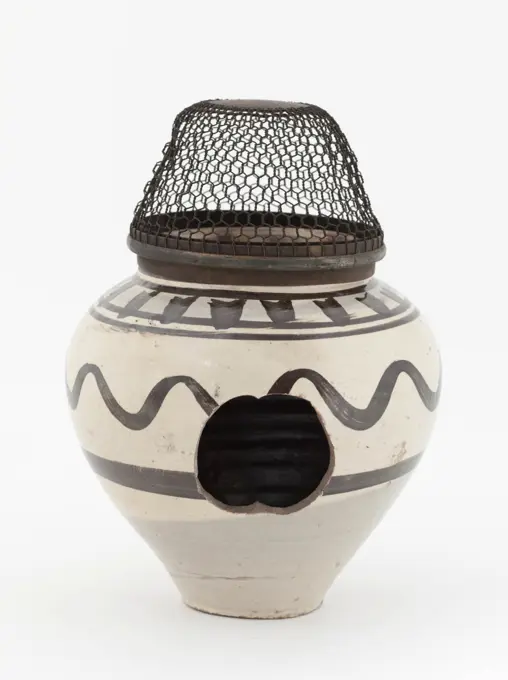
Jar ". Terracotta with amber glaze. China, Tang dynasty (618-907). Paris, Cernuschi museum. Chinese art, Chinese ceramic, container, tang dynasty, oval form, jar, container, terracotta
6145-30154012
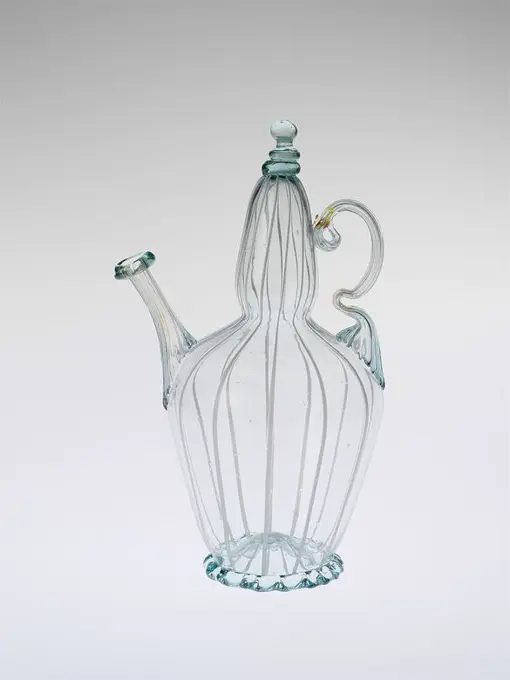
Cruet 1745-1755 Silesia. Glass .
4409-17437426
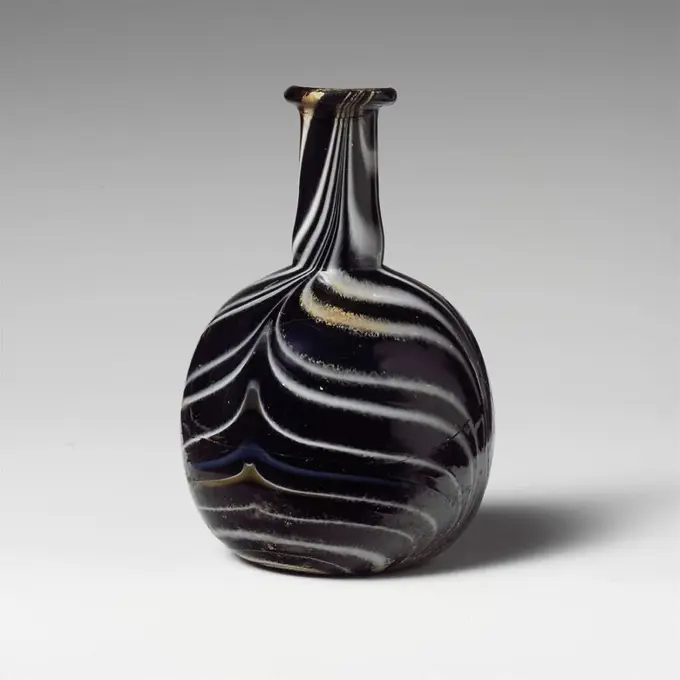
Glass mosaic perfume bottle. Culture: Roman. Dimensions: Diam.: 4 in. (10.2 cm). Date: 1st half of 1st century A.D..Translucent deep cobalt blue, with translucent honey brown, opaque white, opaque light blue, and opaque yellow trails.Everted, rounded rim; cylindrical neck, expanding slightly downward, with fine indent around base; globular body; concave bottom.Striped mosaic pattern of applied trails wound round on a blue ground and then tooled in four strokes, alternating upward and downward, into a broad feather pattern.Broken and repaired, with one large chip in rim, and one hole and some small cracks in body; some large bubbles; faint iridescence and small patches of creamy white weathering. Museum: Metropolitan Museum of Art, New York, USA.
4443-22016517
Amphoriskos; Egypt; about 1403 - 1347 B.C; Glass; 9.5 cm (3 3,4 in.)
6145-45517078
Przeszłość Przyszłości unknown
6145-59086183
Dish;  New PA
6145-29167369
Vase with Incised Design and Salamander Handles in Kochi Style first half of the 19th century Eiraku Hozen. Vase with Incised Design and Salamander Handles in Kochi Style 48577
6145-43660977
Vial. unknown, craftsman
6145-30168357
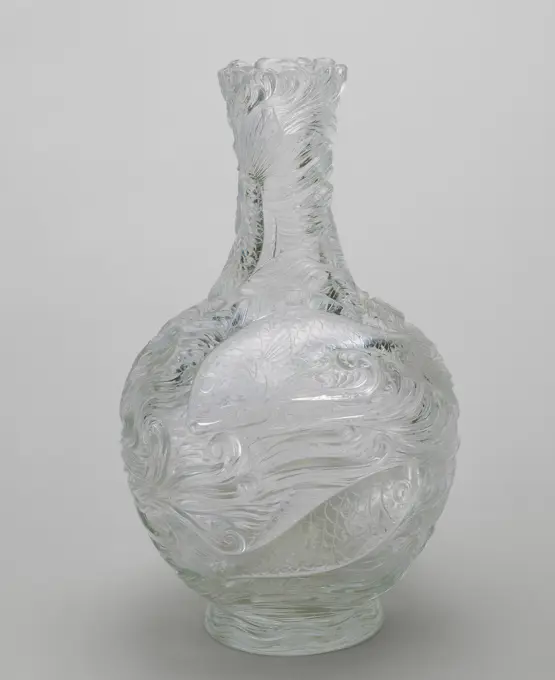
Rock Crystal Vase 1889 Stourbridge. Glass . Thomas Webb & Sons
6145-58874626
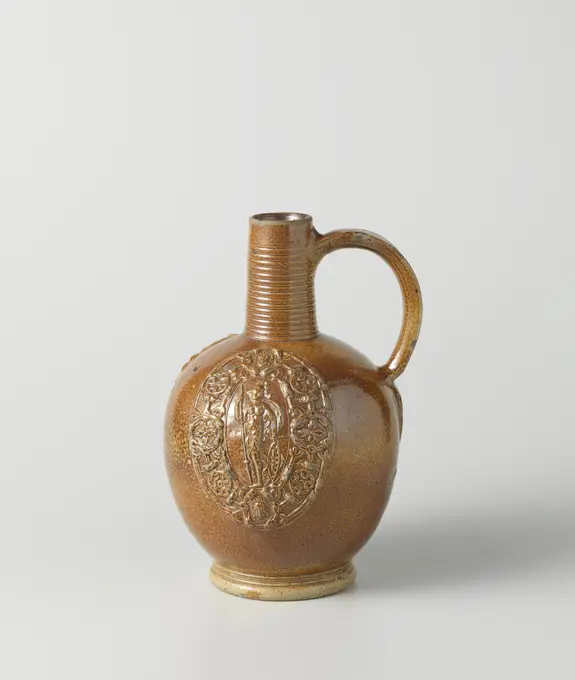
Jug with Minerva and ribbed neck, Baldem Mennicken (attributed to workshop of), c. 1550 - c. 1599 Jug of stoneware on stand ring with a spherical body and long, ribbed neck. The C-shaped ear is attached to the neck and shoulder. Profiles closely. Covered with a brown Engobe. On the abdomen twice a rich -decorated medallion with masks. In it a representation of Minerva. Raeren. Rae stoneware. glaze. engobe vitrification Jug of stoneware on stand ring with a spherical body and long, ribbed neck. The C-shaped ear is attached to the neck and shoulder. Profiles closely. Covered with a brown Engobe. On the abdomen twice a rich -decorated medallion with masks. In it a representation of Minerva. Raeren. Rae stoneware. glaze. engobe vitrification
6145-44312951
Amphorous vase with three handles. .
6145-48832973
Flask. Unknown
4409-17431251
Bottle. Culture: American. Dimensions: H. 7 3/8 in. (18.7 cm). Date: 1820-40. Museum: Metropolitan Museum of Art, New York, USA.
6145-58866772
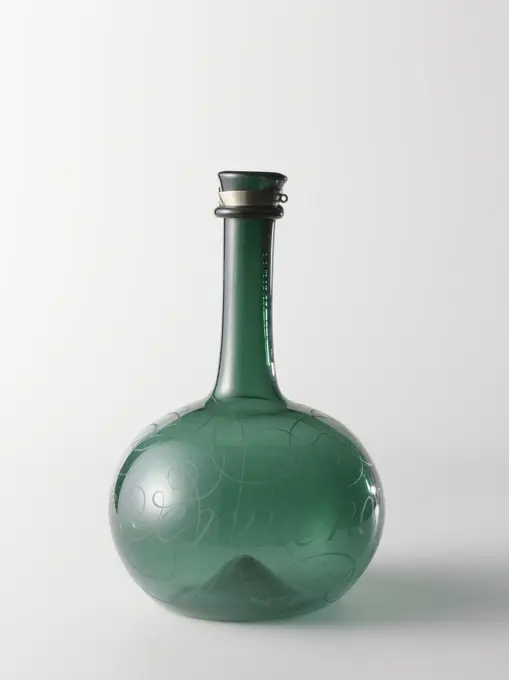
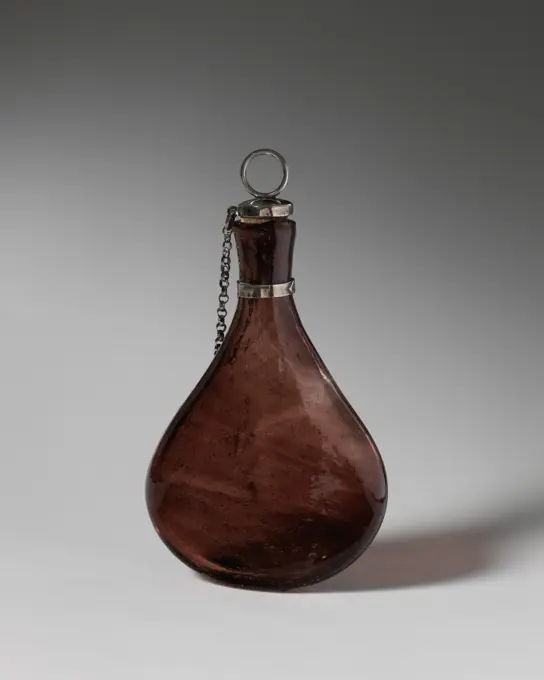
Bottle with the inscription: Mixghd you joy with Zorge, c. 1690 - c. 1700 Soul inserted. Spherical body, long slender neck with imposed ring and silver strap around the neck. On body calligraphy inscription: "Mixghd you joy with Zorge". glassblower: Low CountriesNorthern Netherlands ice cream. neckline: silver (metal) glassblowing Soul inserted. Spherical body, long slender neck with imposed ring and silver strap around the neck. On body calligraphy inscription: "Mixghd you joy with Zorge". glassblower: Low CountriesNorthern Netherlands ice cream. neckline: silver (metal) glassblowing
4443-28730863
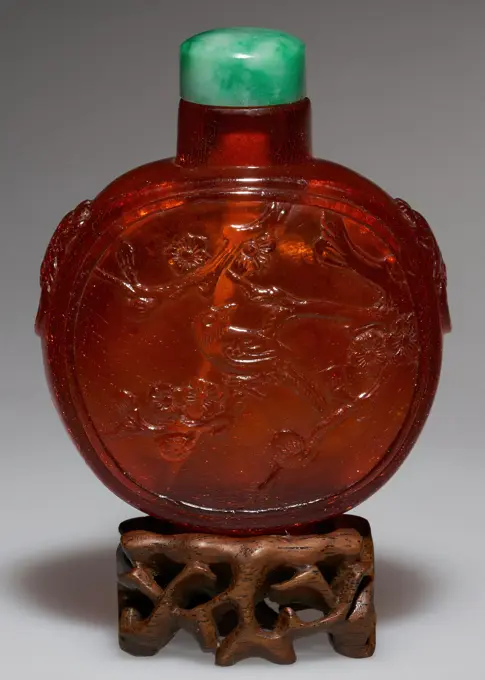
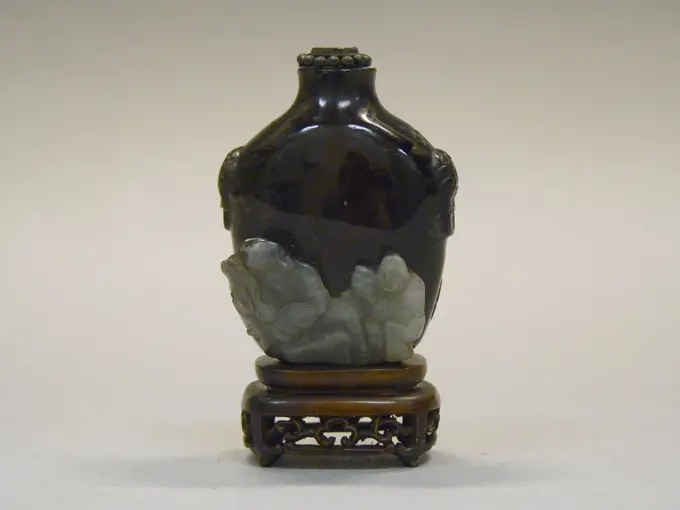
Snuff Bottle, 17th-19th century, 2 5/8 x 2in. (6.7 x 5.1cm), Amber, jade, China, 17th-19th century
4443-28730658
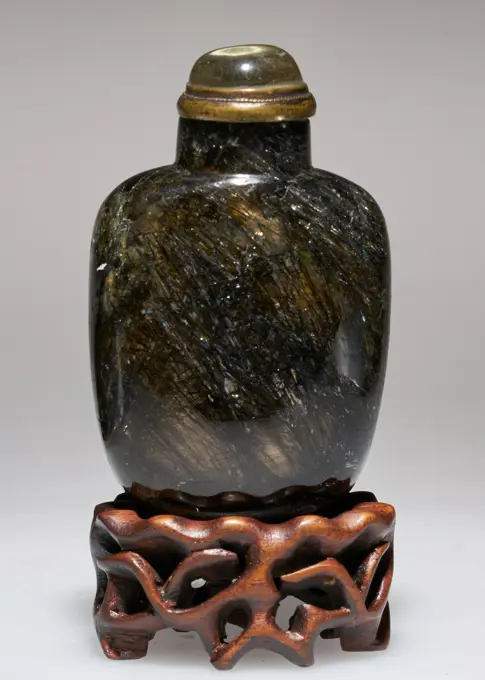
Snuff Bottle, 1850-1900, 2 1/2 x 1 1/2in. (6.4 x 3.8cm), Rutiled crystal, glass, China
4409-17432317
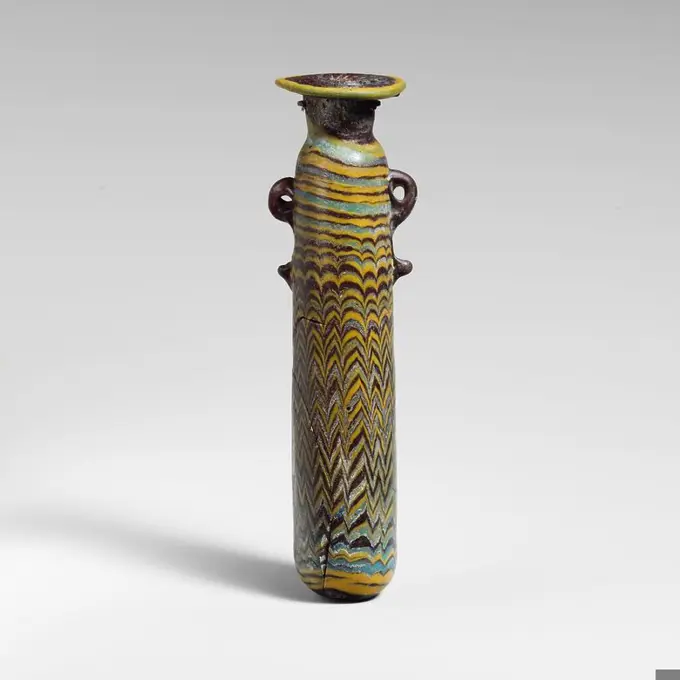
Glass alabastron (perfume bottle). Culture: Greek, Eastern Mediterranean. Dimensions: H. 5 1/2 in (14 cm); Diameter: 2 5/8 in (6.7 cm). Date: 5th century B.C..Opaque dark red brown, with handles in same color; trails in opaque yellow and opaque turquoise blue.Broad slightly uneven horizontal rim-disk; cylindrical neck; rounded shoulder; straight-sided cylindrical body with slight upward taper; convex bottom; two vertical ring handles with knobbed tails, applied over trail decoration.Intermingled yellow and turquoise blue trails attached at edge of rim-disk; a yellow trail applied to bottom of neck and a turquoise blue trail applied to top of body and overlaid on the yellow; both wound in a spiral around top of body, then tooled first into an inverted festoon and lower down into a close-set zigzag pattern; the yellow trail continuing in a spiral around bottom.Broken and repaired, with several holes and chips in body; dulling, pitting, and faint iridescent weathering.During the fift
6145-45419616
Vase Radi, Lorenzo (1803 1874)
4409-17418786
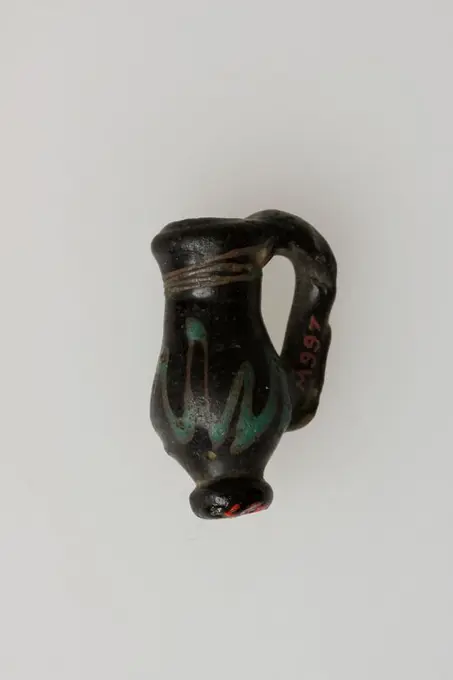
Pendant, vase. Culture: Egyptian possibly. Dimensions: 7/8 × 9/16 × 3/8 in. (2.2 × 1.4 × 1 cm). Date: 4th-5th century. Museum: Metropolitan Museum of Art, New York, USA.
6145-46649199
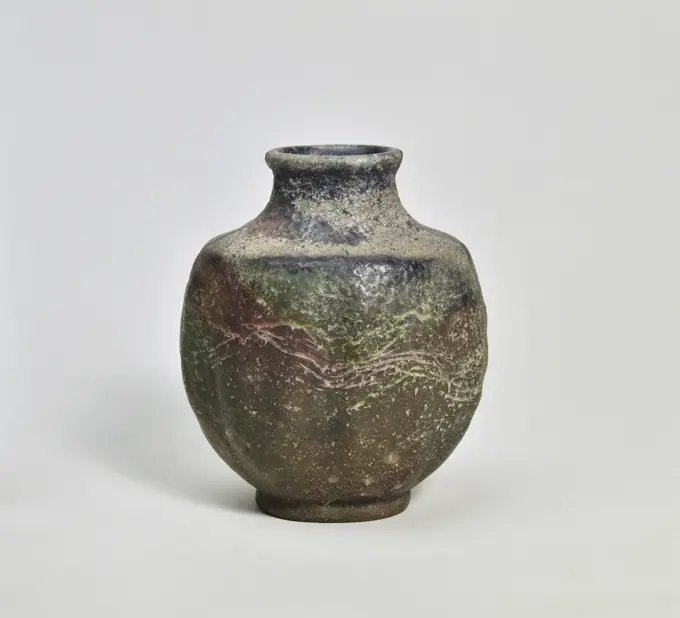
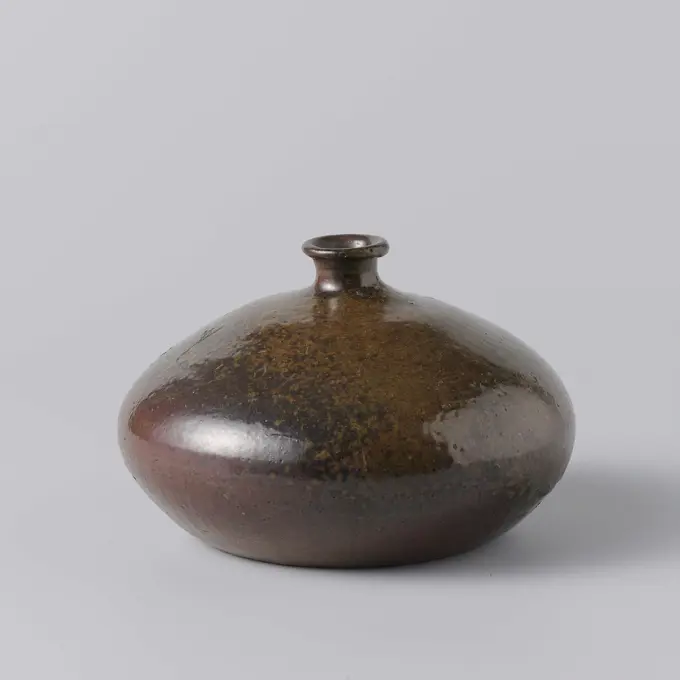
. Bottle-shaped vase of stoneware with a printed spherical body and a narrow, slightly spreading neck, covered with a green-brown glaze. An old label with 'W567' on the underside. Marked on the bottom with a manufacturing mark (Yahita). BIZEN.
6145-29150042
Pocket bottle 1815-45 American. Pocket bottle 6611
6145-29146994
Glass perfume bottle 2nd-3rd century A.D. Roman Small candlestick unguentarium.Translucent pale blue green.Rim folded out, over and in; flaring mouth; slender, and slightly concave cylindrical neck, with irregular bulges from tooling around top and horizontal indents around base; conical body; pushed-in bottom, with traces of circular pontil mark.Intact; many pinprick bubbles and blowing striations; deep pitting, dulling, and brilliant iridescence with small patches of thick creamy brown, enamel-like weathering.. Glass perfume bottle 244630
4409-17551519
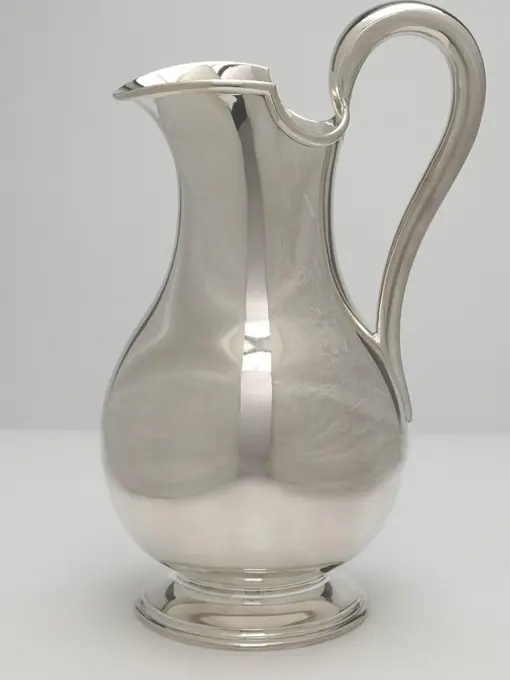
Pitcher. R. & W. Wilson; American, 1825-1883; Philadelphia, Pennsylvania. Date: 1825-1846. Dimensions: 36.8 × 14.6 cm (14 1/2 × 5 3/4 in.). Silver. Origin: United States. Museum: The Chicago Art Institute, Chicago, USA.
6145-29077099
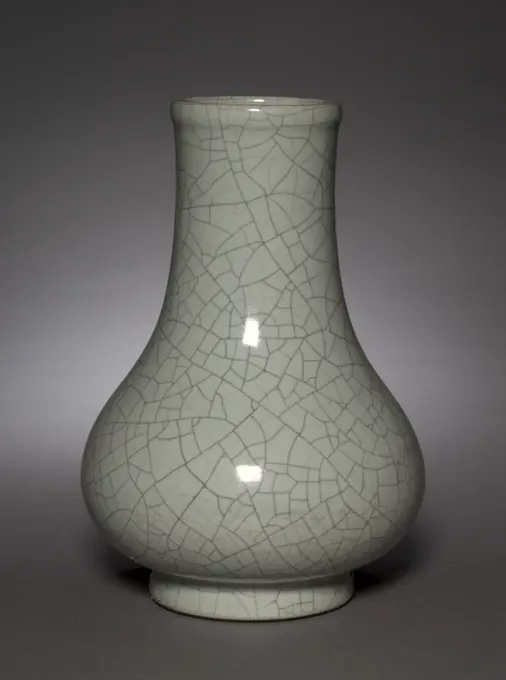
Vase, 1723-35. China, Jiangxi province, Jingdezhen kilns, Qing dynasty (1644-1911), Yongzheng mark and reign (1723-35). Porcelain with a crackled Guan-type glaze; overall: 33.7 cm (13 1/4 in.).
6145-29750356
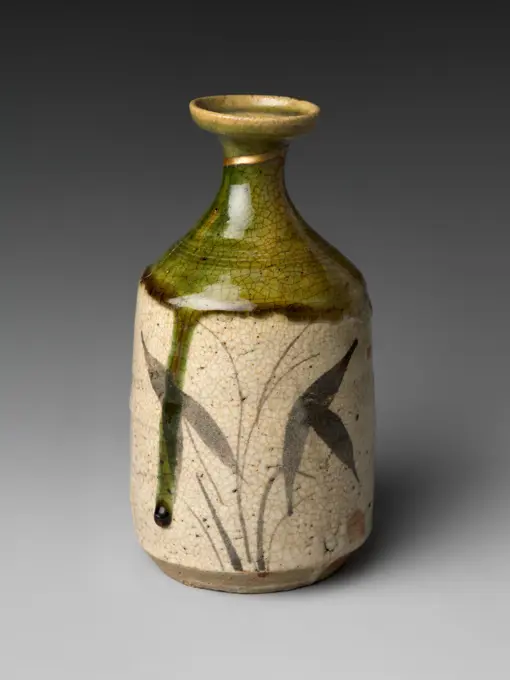
Sake Bottle with Decoration of Three-Leaf Arrowhead early 17th century Japan The upper section of this sake bottle is completely coated with copper green glaze, while the design of water plants (omodaka) and reeds is painted in iron washes. The most characteristic feature of the Oribe style seen on this bottle is the thick single drip of glaze, with a rounded drop at the end that boldly flows down the body of the vessel.. Sake Bottle with Decoration of Three-Leaf Arrowhead. Japan. early 17th century. Stoneware with underglaze iron, copper-green glaze, and incised decoration (Mino ware, Oribe type). Momoyama period (1573-1615). Ceramics
6145-50500703
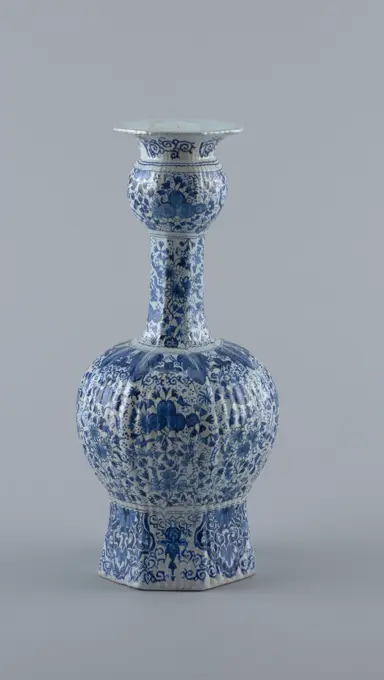
Vase (Netherlands); tin-glazed earthenware; 42 x 19 x 19 cm (16 9/16 x 7 1/2 x 7 1/2 in.); Bequest of Walter Phelps Warren; 1986-61-35
6145-46636773
. Flat ground, in the middle concave soil, vaulted body with a strong cutting upper, short neck with tapered mouth. A setting of gusted, silvery combed wires and a silver colored irisering. Marked on the bottom, in Radgravure Loetz Austria.
6145-59042546
Jean Carriès (1855-1894). "Cabossé pot". Enameled sandstone. Museum of Fine Arts of the City of Paris, Petit Palais. 24205-9 Cabosse, ceramic, gres emaille, pot
6145-51842699
Maker Unknown, Bottle, c. 1790-1830, olive-green glass.
6145-50502570
Vase Vase; Manufactured by Tiffany and Co. (United States); Design Director: Louis Comfort Tiffany (American, 1848-1933); USA; bronze electroplated semi-porcelain, glass
6145-29795675
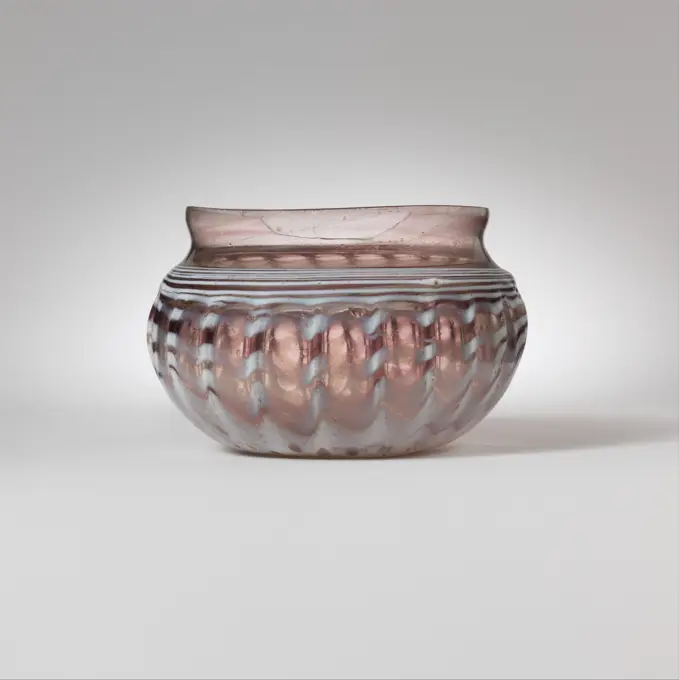
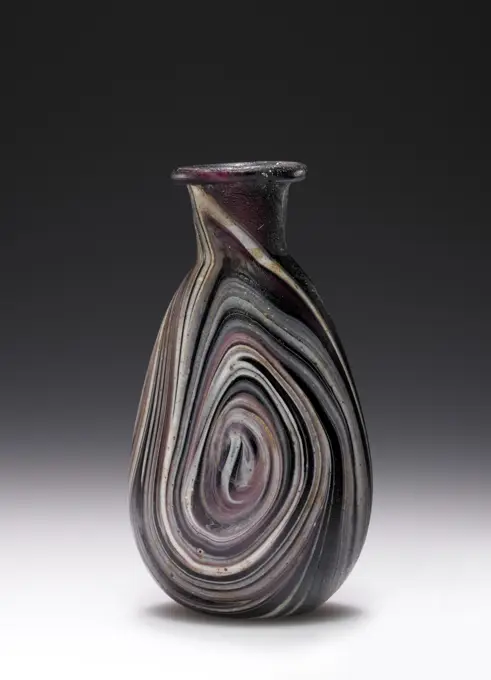
Glass ribbed bowl 1st-3rd quarter of 1st century A.D. Roman Translucent pale streaky purple; trail in opaque white.Knocked-off, uneven rim; short concave neck; squat globular body curving in to flat, thick bottom.Trail wound spirally around body, with large circular patch on bottom, ending in a fine trail on shoulder; side tooled into twenty-three irregular, vertical ribs.Intact, except for large chip in rim; some bubbles and a few gritty inclusions; dulling, faint iridescence and weathering, and pitting of broad trail around lower body.Reddish amethyst bowl with white wavy lines and bottom.. Glass ribbed bowl 249519
6145-29793825
Bottle 18th century Japan. Bottle. Japan. 18th century. White porcelain decorated with blue under the glaze (Arita ware). Edo period (1615-1868). Ceramics
6145-29128147
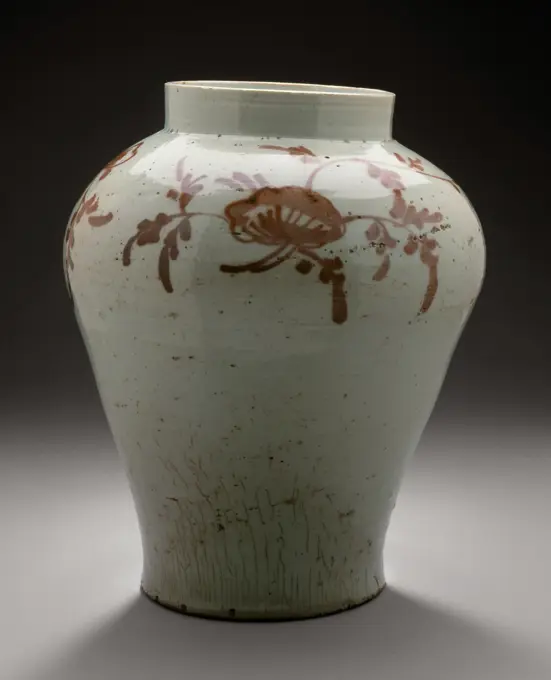
Jar with Underglaze Copper Floral Scroll Design. Korea, Korean, Joseon (1392-1910), 18th century. Furnishings; Serviceware. Wheel-thrown porcelain with red painted decoration under clear glaze
6145-29146491
Vase ca. 1885-89 Chelsea Keramic Art Works Steeped in ceramics from birth, Hugh C. Robertson pursued his craft with fierce devotion and a passion for experimentation. From a family of trained English ceramists, he honed his skills in New Jersey before settling in Massachusetts as one of the founders of Chelsea Keramic Art Works and later, Dedham Pottery. Robertsons lifelong explorations in glazes, particularly their color and texture, make him one of the key figures of American art pottery at the turn of the twentieth century.During the 1880s Robertson increasingly turned his attention to developing new glaze formulas and clay bodies. In the middle of the decade he became obsessed with the highly coveted yet elusive sang-de-boeuf, or oxblood, glaze, a quest that became the hallmark of his later career. This richly colored blood-red glaze is traditionally created from a copper-based formula and fired in a kiln, which when wet straw and other materials are introduced, deprives the atmos
4409-17372007
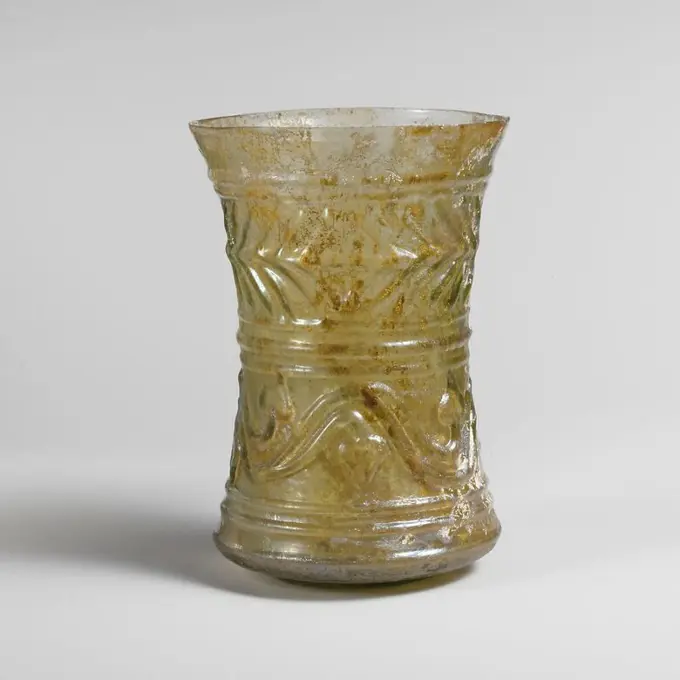
Glass beaker. Culture: Roman. Dimensions: H.: 3 13/16 in. (9.7 cm)Diam.: 2 11/16 in. (6.8 cm). Date: 1st century A.D..Translucent light green.Unworked, knocked-off rim; cylindrical body with deep concave sides; slight convex bottom. Two vertical mold seams run down sides, with a separate shallow disk-shaped base section. On body, two friezes, bordered above and below by two horizontal ridges and divided by a band of three horizontal ridges; in upper frieze, wreath pattern in four sections with sprays facing in alternating directions; on lower frieze, continuous ivy tendril with leaves on long stems above and below wavy stem; on bottom, rounded broad base ring with inner ring surrounding a double-set small ring at center forming overlapping figure-of-eight.Intact; pinprick bubbles; pitting, patches of whitish weathering, and iridescence. Museum: Metropolitan Museum of Art, New York, USA.
6145-58876711
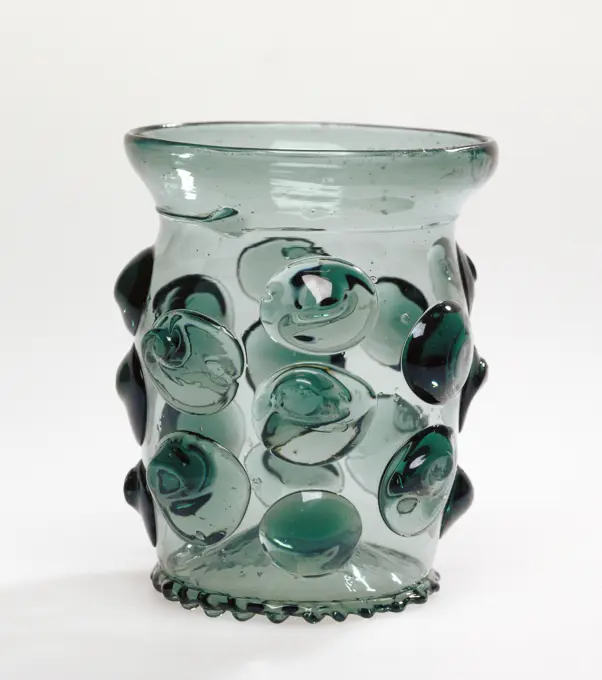
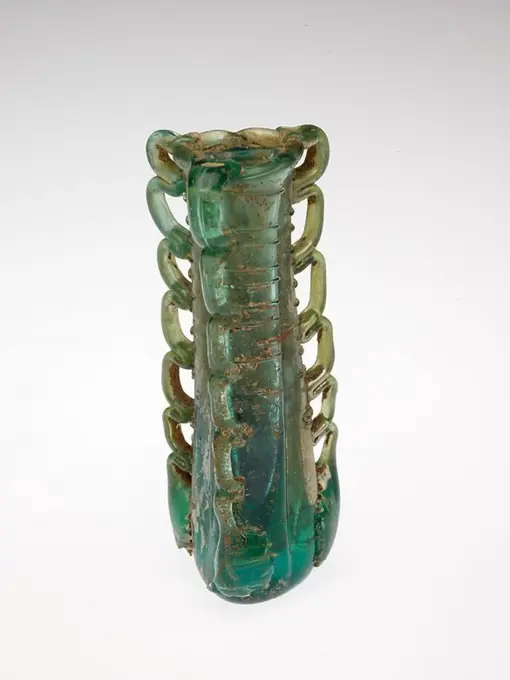
Beaker with five rows of loop-shaped prunts, anonymous, c. 1550 - c. 1600 Cup with inserted soil. Smooth stand ring. Ton -shaped body, for three -quarters set with five rows of studs, pulled out and bent into loops, under a smooth thread. Germany glass glassblowing Cup with inserted soil. Smooth stand ring. Ton -shaped body, for three -quarters set with five rows of studs, pulled out and bent into loops, under a smooth thread. Germany glass glassblowing
6145-29077312
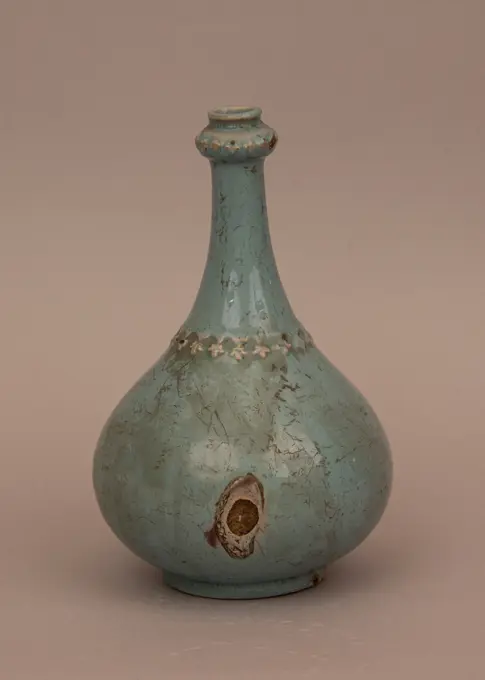
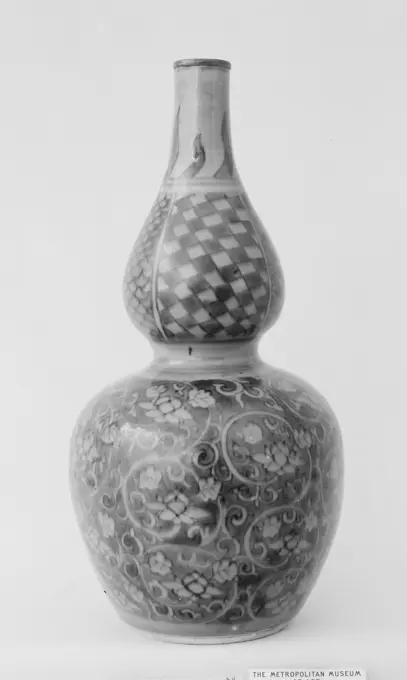
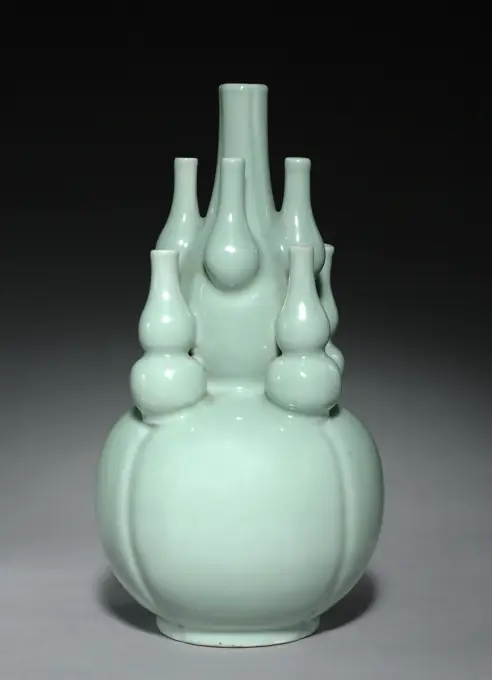
Double-gourd Shaped Bottle, 1736-1795. China, Qing dynasty (1644-1911), Qianlong mark and reign (1736-1795). Porcelain with celadon glaze; overall: 22.6 cm (8 7/8 in.).
6145-59121130
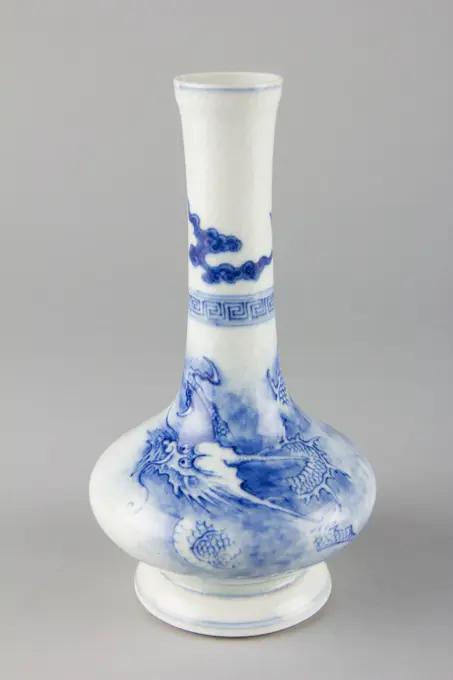
Troll vase;  XVII/18th century (1691-00-00-1710-00-00);Paderewski, Ignacy Jan (1860-1941), Paderewski, Ignacy Jan (1860-1941)-collection, qing (style), ceramics, Chinese (culture), gift (provenance), dragons (iconogr.), Chinese art
6145-59069793
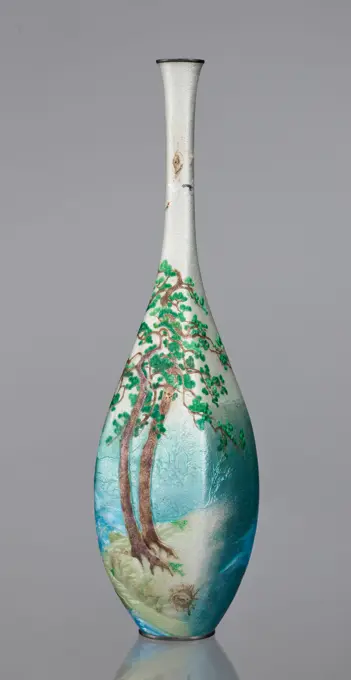
Vase; Kawaguchi, Bunzemon (1860-Post 1910); End of the 19th century (1891-00-00-1900-00-00);Block, Julius Henry (1858-1934) - collection, gift (provenance), Japanese (culture), pine, Japanese art, vases, cranes (iconogr.)
6145-29082375
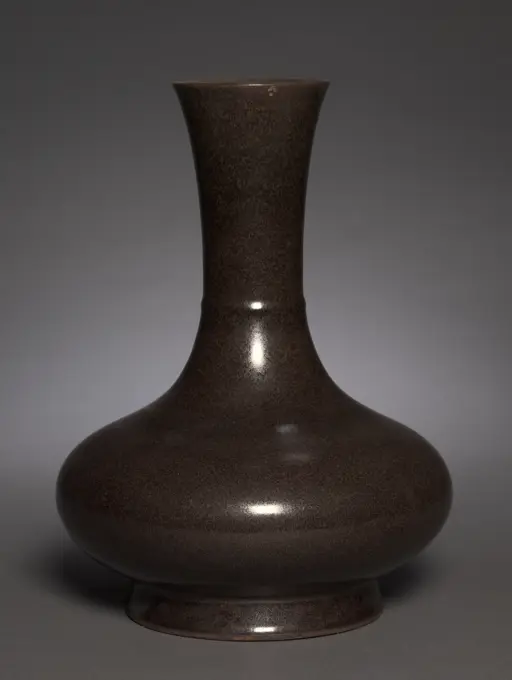
Vase, 1736-1795. China, Qing dynasty (1644-1911), Qianlong reign (1736-1795). Porcelain with dark brown glaze; overall: 31.8 cm (12 1/2 in.).
4409-17421535
Vase. Culture: China. Dimensions: H. 6 1/8 in. (15.6 cm). Date: 1678-88.As had been the case earlier in Europe, when American collectors such as Altman began to collect Chinese porcelains, they often commissioned elegant mounts to hold and display these precious pieces. Museum: Metropolitan Museum of Art, New York, USA.
6145-30177978
Carafe c 1902 United States. Glass . Artist unknown
4443-22016506
Flask; Eastern Mediterranean; late 1st century; Glass; 19.5 cm (7 11,16 in.)
4443-21941111
Belly bottle, belly bottle bottle holder soil find glass, free blown and shaped glass application Circular bottle in clear dark green glass. Pontil mark under wide raised bottom Body with outward facing wall to convex shoulders and long rejuvenated neck with imposed circumferential sharp glass wire (chip) and flattened lip (chip) archeology packaging transporting
6145-44290814
Amphoriskos. Unknown
4443-21941567
Cylindrical bottle, bottle holder bottomfound glass, in blown glass application Cylindrical bottle in clear green glass. Pontil mark under slightly raised bottom Slightly widened cylindrical body to convex shoulders and slightly rejuvenated neck with imposed all-round smooth glass thread and dilated and flattened lip archeology packaging
4409-17401114
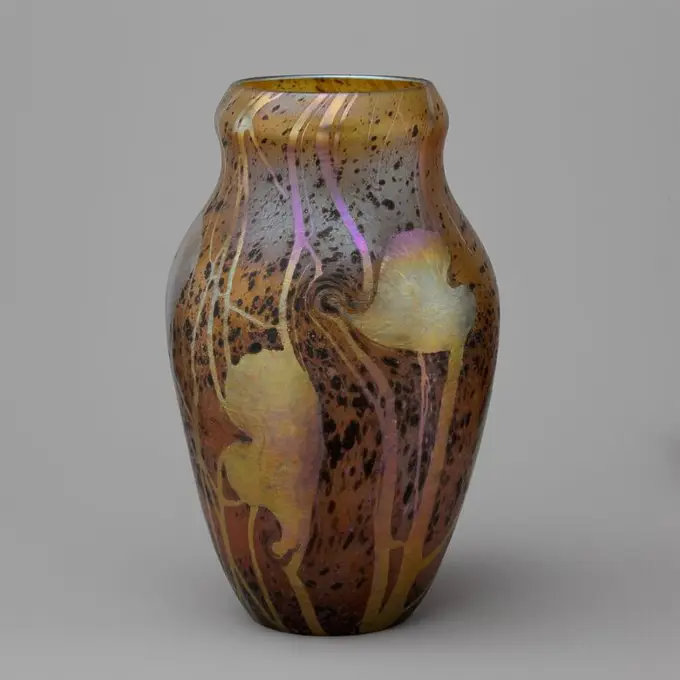
Vase. Culture: American. Designer: Designed by Louis Comfort Tiffany (American, New York 1848-1933 New York). Dimensions: 9 5/8 x 5 1/2 in. (24.4 x 14 cm). Maker: Tiffany Glass and Decorating Company (American, 1892-1902). Date: ca. 1895. Museum: Metropolitan Museum of Art, New York, USA.
4409-17418060
Snuff bottle imitating realgar. Culture: China. Dimensions: H. 2 1/4 in. (5.7 cm). Date: 19th century. Museum: Metropolitan Museum of Art, New York, USA.
6145-44293699
Flask. Unknown
4409-17421201
Jar. Culture: China. Dimensions: H. 8 1/2 in. (21.6 cm). Date: 19th century. Museum: Metropolitan Museum of Art, New York, USA.
6145-46838911
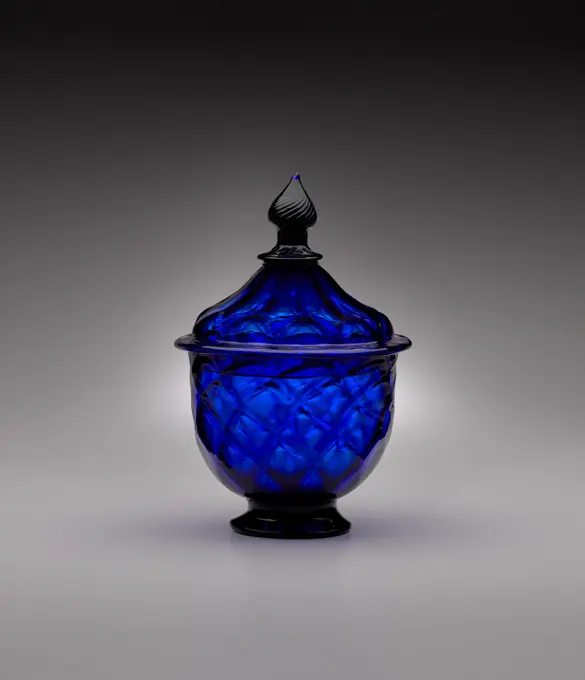
Covered SugarBowl. Maker, attributed to: Henry William Stiegel, American, 1729-1785
6145-46434265
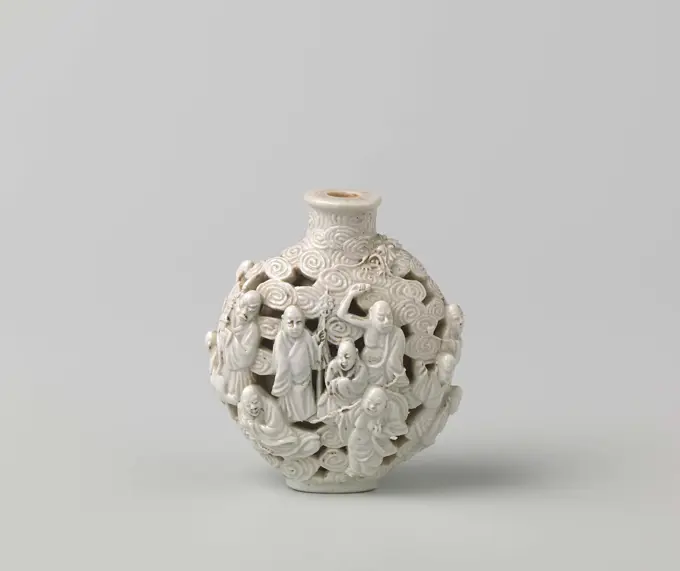
Snuff Bottle With Monks On a Ground Of Pierced Clouds. Small porcelain snuff bottle with a double wall, covered with a translucent white glaze. The outer wall of the vial with a group of monnches against a land of openworked clouds. Monochromes, white porcelain.
6145-48869188
Prunted Beaker (Krautstrunk). Unknown
6145-45543523
Askos
6145-30357096
Covered SugarBowl
6145-44292493
Flask. Unknown
6145-48512163
Vase (USA); Designed by Jacques Sicard (French, 1865-1923); Manufactured by Weller Pottery; molded, glazed, and lustered earthenware
6145-46830988
Scroll Flask Commemorating ZacharyTaylor. Honorand: Zachary Taylor, American, 1784-1850
4443-22016505
Flask; Eastern Mediterranean; about A.D. 75; Glass; 19.8 × 8.8 cm (7 13,16 × 3 7,16 in.)
6145-46633079
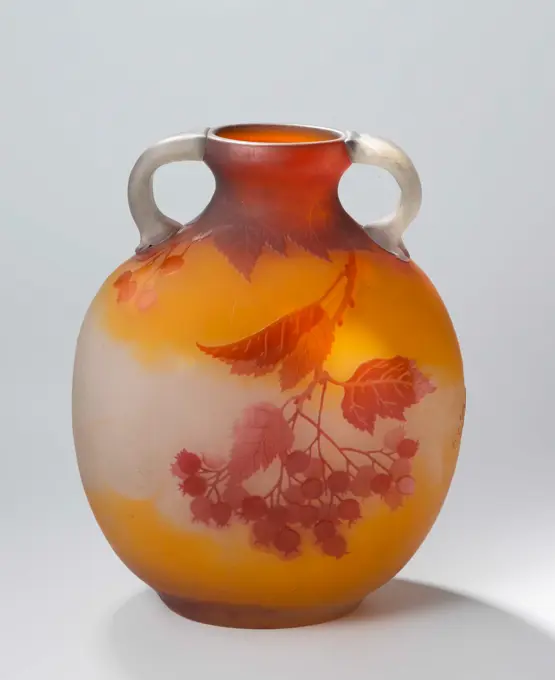
. Concave, cut bottom, flattened spherical body of colorless glass, flared in a long neck. Double überfang in orange and red on a yellow and colorless surface. Decor of ahornts with berries, partially etched. On the body the signature gallé with a *.
4409-17428510
Vase. Culture: American. Designer: Designed by Louis Comfort Tiffany (American, New York 1848-1933 New York). Dimensions: H. 8 7/16 in. (21.5 cm). Maker: Tiffany Glass and Decorating Company (American, 1892-1902). Date: ca. 1899. Museum: Metropolitan Museum of Art, New York, USA.
6145-29070240
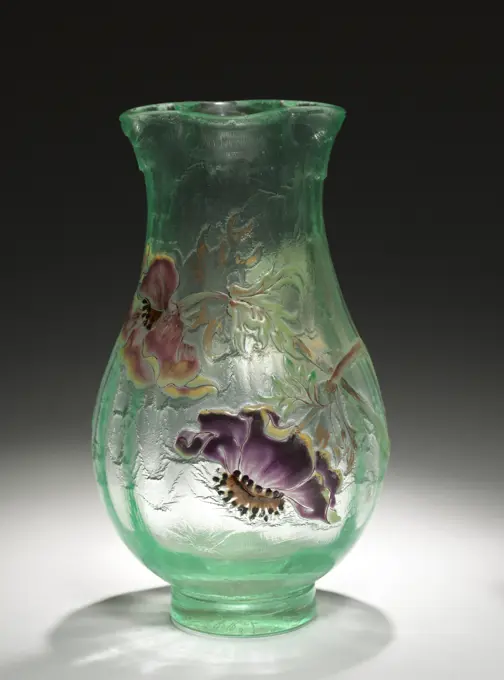
Vase, c. 1900. Emile Gallé (French, 1846-1904). Enameled glass; diameter: 13.5 cm (5 5/16 in.); overall: 23.4 cm (9 3/16 in.).
6145-29141691
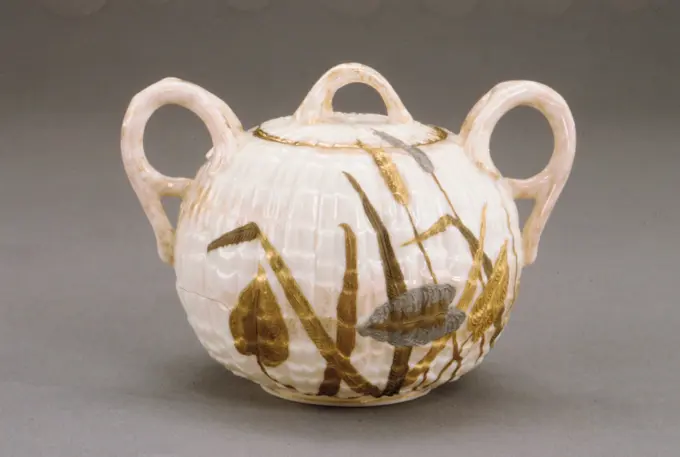
Covered Sugar Bowl 1876-83 Ott and Brewer. Covered Sugar Bowl. American. 1876-83. Porcelain. Made in Trenton, New Jersey, United States
4443-28730639
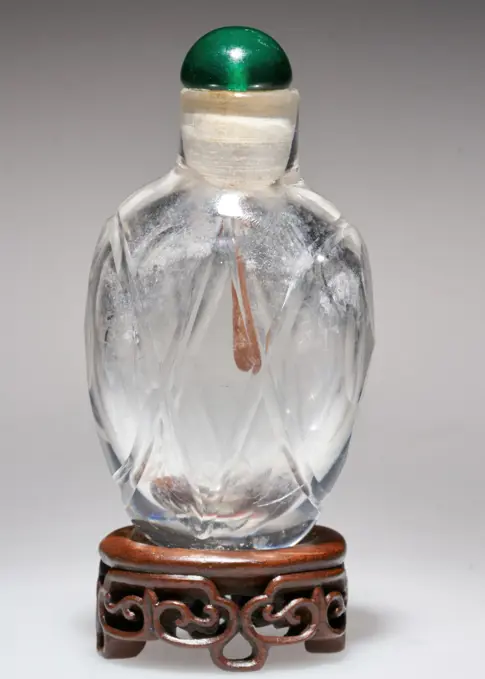
Snuff Bottle, 3 5/8 x 2in. (9.2 x 5.1cm), Crystal, China
4409-17504111
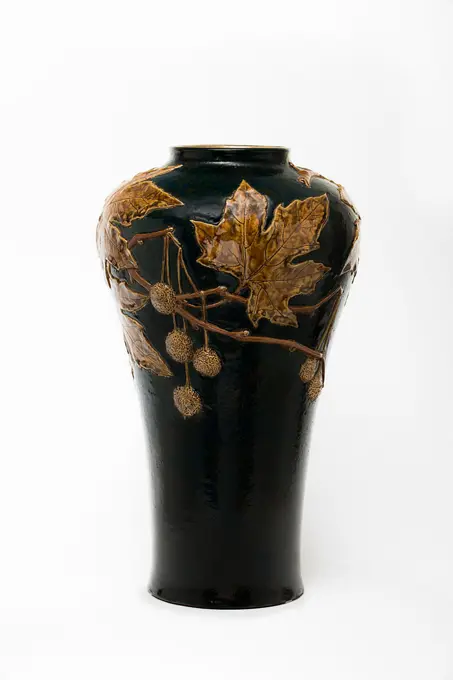
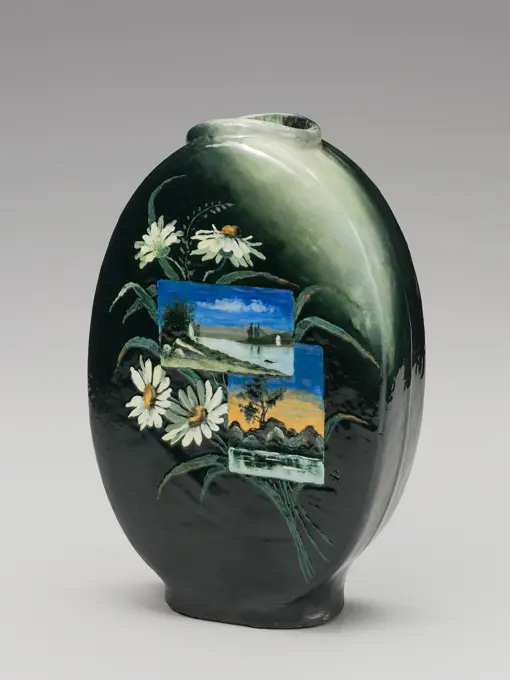
Vase. Culture: American. Dimensions: H. 11 in. (27.9 cm); Diam. 11 in. (27.9 cm). Maker: John Bennett (1840-1907). Date: 1882.Like Daniel Cottier, John Bennett was instrumental in bringing Aesthetic taste from Great Britain to America. At Doulton, Bennett developed a distinctive technique of underglaze decoration, which was on view at the Philadelphia Centennial Exhibition of 1876. Shortly thereafter he established himself in New York City. His style and choice of subject matter--flowers and fruits stylized into flat, two-dimensional patterns--had much in common with that of British reform designers such as William Morris (1834-1896). This vase of cream-colored earthenware features underglaze decoration of pink and white dogwood blossoms and branches on a yellow background. An unusual feature in Bennett's work, the mottled background is further ornamented with a stylized sprig design of the same hue, yet in a different tone, reminiscent of wallpaper designs of the Aesthetic Movement.
6145-59052834
Canteen;  1. W. 20th century (1900-00-00-1925-00-00);Szczygielski Robert, Dar
4409-17354607
Snuff bottle with demon queller Zhong Kui. Culture: China. Dimensions: H. 2 7/8 in. (7.3 cm). Museum: Metropolitan Museum of Art, New York, USA.
6145-29157157
Cream Jug 1780-1820 American or British. Cream Jug 2601
6145-29152830
Glass jar 2nd-3rd century A.D. Roman Translucent blue green.Outsplayed, rounded, and thickened rim; short, concave neck; squat, bulbous body; tubular base ring; flat bottom with central kick and pontil scar.On body, six deep, circular indents.Intact; many pinprick and large bubbles, with some glassy inclusions; patches of encrusted weathering, especially on interior below neck.. Glass jar 245360
6145-29755418
Bottle second half 17th century. Bottle 448429
6145-59004145
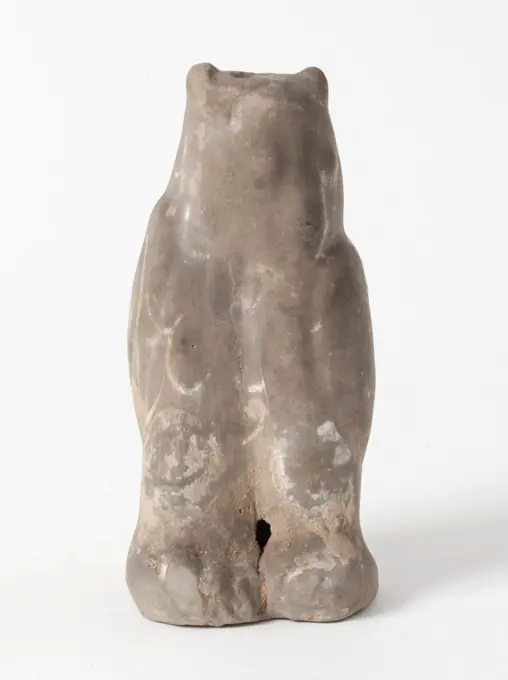
Mingqi: Hibou ". Terre Cuite, traces the polychrnomy. Dynasty Han (220 AP. J.-C.). JUSTY CUSTE Chinese art, Han dynasty, Han time, owl, mingqi, Chinese object, funeral substitute, terracotta, animal
6145-58828426
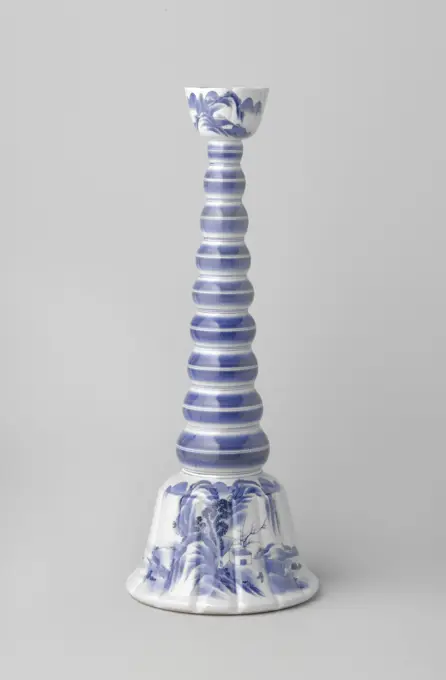
Candlestick with a conical bulb stem and candleholder and base with a water landscape, anonymous, c. 1775 - c. 1799 Porcelain candlestick with conical steel with nine ring -shaped thickening, bell -shaped base with a ribbed wall and a head -shaped candle holder with a ribbed wall and lobed edge. Painted in underlaze blue. The ring -shaped nodules with blue tires. The foot and head with a continuous river landscape with pavilions, trees, rocks and boats on the water. At the top of the foot, a fled circle on which the upper part of the candlestick is placed. The stem has been broken. Blue White. Japan porcelain. glaze. cobalt (mineral) painting / vitrification Porcelain candlestick with conical steel with nine ring -shaped thickening, bell -shaped base with a ribbed wall and a head -shaped candle holder with a ribbed wall and lobed edge. Painted in underlaze blue. The ring -shaped nodules with blue tires. The foot and head with a continuous river landscape with pavilions, trees, rocks an
6145-29814126
Jug ca. 1879-89 Christopher Dresser This jug and another of the same model manufactured by Ault Pottery (2016.178.5) represent a single Christopher Dresser model produced by two different factories at different dates. When Linthorpe closed in 1889, its molds were acquired by Ault Pottery. In 1893, Dresser signed a contract with Ault to produce new designs; the contract also stated that going forward, each piece should be marked with his facsimile signature.. Jug. British. ca. 1879-89. Glazed earthenware. Ceramics-Pottery
6145-30178187
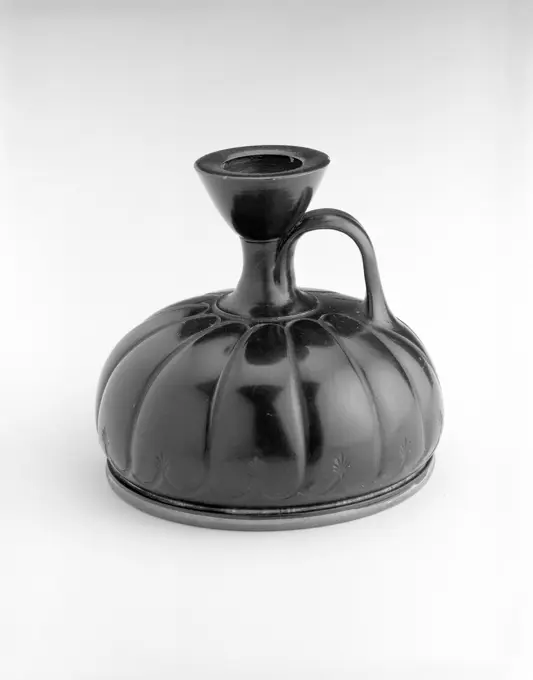
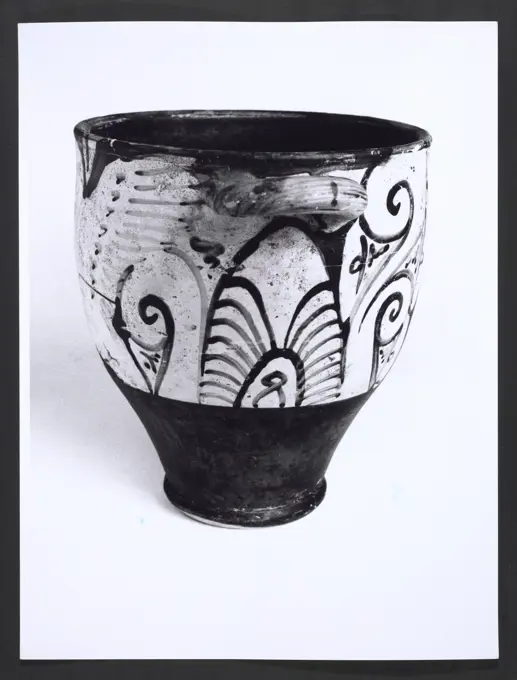
Squat Lekythos (Oil Jar) 430 BCE-410 BCE Greece. During the course of the 5th and 4th centuries B.C., black vessels (commonly called black-glaze vessels) were made with increasing frequency in both Greece and South Italy. Many of them replicate the shape of metal vessels. Others have detailing that is molded or incised. Although black-glazed wares can be rather coarse, this example is quite fine. Regardless, they would have been less expensive than vessels decorated in other contemporary techniques, for example, in red-figure.. terracotta, black-glaze technique with impressed decoration . Ancient Greek
4409-17377794
Cruet. Culture: Spanish, Catalonia. Dimensions: Height: 9 1/8 in. (23.2 cm). Date: 17th century. Museum: Metropolitan Museum of Art, New York, USA.
6188-54909899
Khokhloma colorfull russian khokhloma isolated on a white background Copyright: xZoonar.com/VladxPodkhlebnikx 479613
6145-29812911
Snuff Bottle with Stopper China. Snuff Bottle with Stopper 41411
6145-29127740
Bowl or Lamp. East Mediterranean, 4th -5th century. Furnishings; Serviceware. Mold-blown glass
6145-43660985
Alembic - distillation vessel. unknown, craftsman
6145-29164232
Snuff Bottle late 18th-early 19th century China. Snuff Bottle 41227
6145-44310006
Vase with platform decor. Acquired by the artist at the World's Fair 1900
4409-17546558
Kohl Container. Byzantine; Eastern Mediterranean. Date: 401 AD-600 AD. Dimensions: 12.3 × 5.5 × 4.5 cm (4 7/8 × 2 1/8 × 1 3/4 in.). Glass, blown technique. Origin: Levant. Museum: The Chicago Art Institute, Chicago, USA.
6145-46635691
. Vase, cup-shaped, with decor "hollow" in black and yellow. Signature with factory stamp in circle shape, 124 / AP / "hollow" (in black)
6145-29836893
Vase 19th century Italian The shape is ultimately derived from Near-Eastern glass and metal bottles.. Vase 186165
4409-17350585
Snuff Bottle. Culture: China. Dimensions: H. 2 7/16 in. (6.2 cm). Date: 19th century. Museum: Metropolitan Museum of Art, New York, USA.
6145-46830980
Jenny LindFlask. Maker, attributed to: McCarty & Torreyson, American, active 19th century  Subject: Johanna Maria Lind, Swedish, 1820-1887
6145-29712702
Bell Beaker 6th-7th century Frankish. Bell Beaker 465685 Frankish, Bell Beaker, 6th7th century, Glass, Overall: 4 5/16 x 2 3/8 in. (11 x 6.1 cm). The Metropolitan Museum of Art, New York. Gift of J. Pierpont Morgan, 1917 (17.193.347)
4443-28734192
Globular Bottle, 19th century, Zanesville Glass Manufacturing Company, (Zanesville, Ohio), 8 1/4in. (21cm), Glass, United States, 19th century
6145-43633963
Vase. unknown, craftsman
6145-29120002
Tankard. Switzerland, 17th-18th century. Furnishings; Serviceware. Earthenware, faience
6145-29090269
Inverted Pear-Shaped Jar, 1800s. Japan, Edo period (1615-1868). Pottery; overall: 9.6 cm (3 3/4 in.).
6145-48830737
One-handled Cup. Unknown
6145-29744521
Snuff Bottle China. Snuff Bottle 41545
6145-59059423
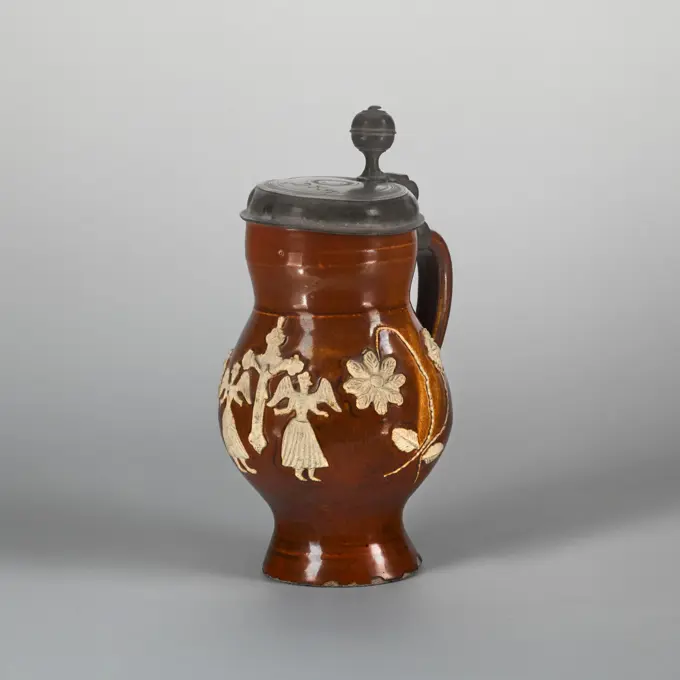
Zinc jug lid; Boles 4. W. 18th century; around 1789 (1780-00-00-1800-00-00);Bolesławiec Kamionka, Crucifixion, New Testament, Angels, decoration with overlays
6145-59181368
Lazio Viterbo Viterbo Museo Civico93. Hutzel, Max 1960-1990 Views of paintings (Middle Ages through 18th c.), frescoes, a tabernacle, coffin, sculpture reliefs, portal fragments, busts, sculpture, tapestry found in the Pinacoteca, Second floor gallery and Second floor cloister sequences. Antiquities: Many views of Etruscan and Roman fragments, sculpture, sarcophagi, pottery, masks, jewelry and other objects found in the Storeroom sequence (inventory numbers on back of prints), and the Cloister, Second floor Cloister, Valle Giulia, Sala Romana and Sala Etrusca sequences. General Notes: There are eight separate numerical sequences for this location. The cloister as an architectural structure, rather than museum site, is documented in the record and file for S. Maria della Verita, Cloister, all views of which are stored in Medieval core collection. Five views from the Museo Civico Second floor cloister sequence are stored in Medieval. German-born photographer and scholar Max Hutzel (1911-
6145-45907777
Tea Caddy. Meissen porcelain manufactory Meissen, c. 1715 stoneware
6145-29163109
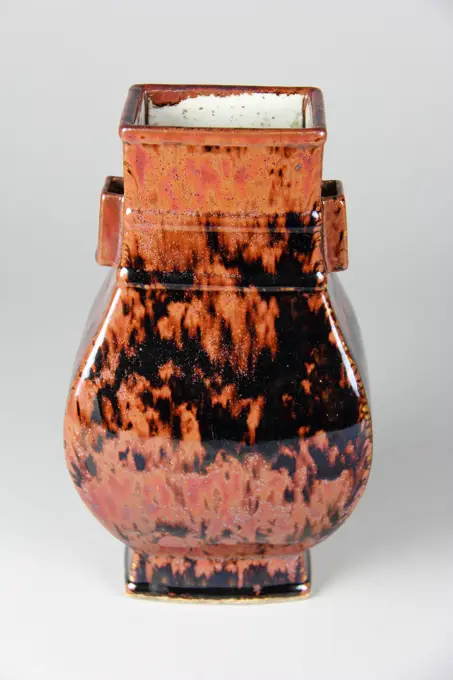
Vase late 18th-first half of the 19th century China. Vase. China. late 18th-first half of the 19th century. Porcelain with mottled brown glaze. Qing dynasty (1644-1911). Ceramics
6145-29721875
Ewer probably 18th-19th century. Ewer 443128
6145-58876718
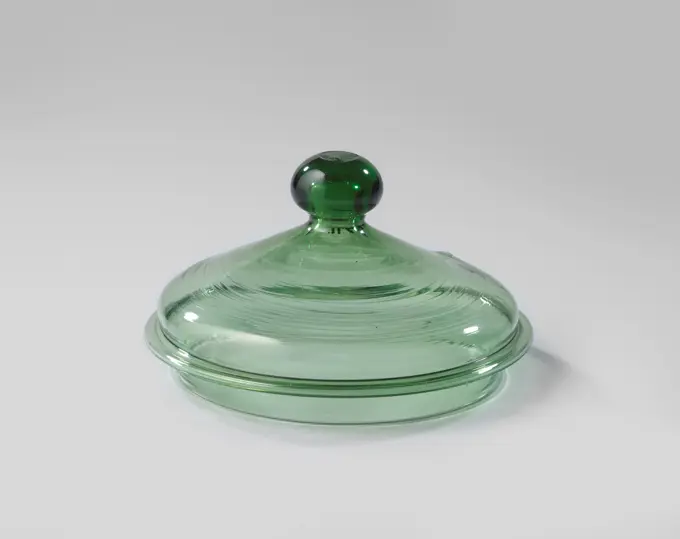
Green glass lid with button, anonymous, c. 1400 - c. 1950 Green glass lid with button.  glass Green glass lid with button.  glass
6145-29157221
Flask ca. 1846 Attributed to Baltimore Glass Works. Flask 3718
6145-29825794
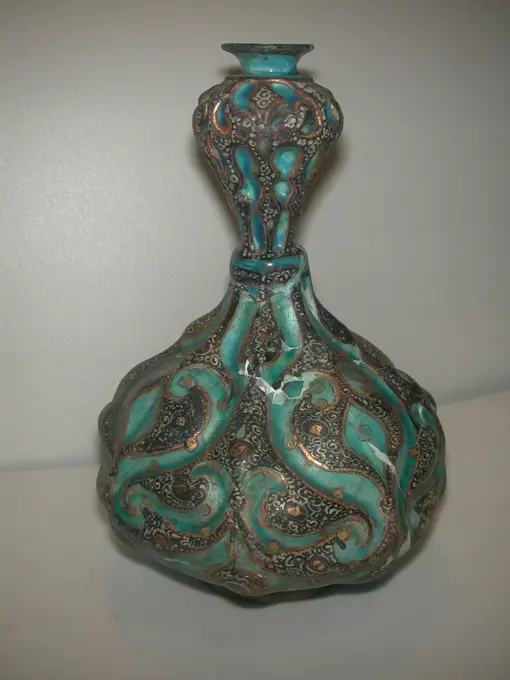
Bottle 13th century. Bottle. 13th century. Stonepaste; overglaze painted and leaf gilded (lajvardina). Attributed to Iran. Ceramics
6145-30394938
Vase.  Maker: North State Pottery, American, 1924-1959
4409-17499414
Glass miniature jar. Culture: Roman. Dimensions: 15/16 × 13/16 in. (2.4 × 2.1 cm)Diam. of rim: 13/16 in. (2.1 cm). Date: 2nd-4th century A.D..Colorless with blue green tingeLarge tubular rim folded out, up and in; short neck, tooled in at base; globular body; thick bottom, with small flattened pad at center.Intact; many pinprick bubbles; slight dullign on exterior; soli enctrustation and iridescent weathering on interior. Museum: Metropolitan Museum of Art, New York, USA.
4409-17520505
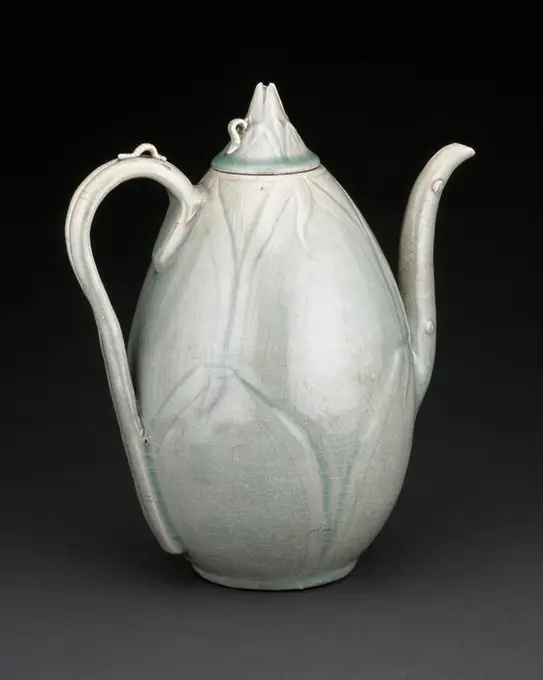
Ewer Formed as Sprouting Bamboo. Korea. Date: 1101-1200. Dimensions: H. 28.3 cm (11 1/8 in.). Stoneware with celadon glaze and underglaze incised and carved decoration. Origin: Korea. Museum: The Chicago Art Institute, Chicago, USA.
6145-29154583
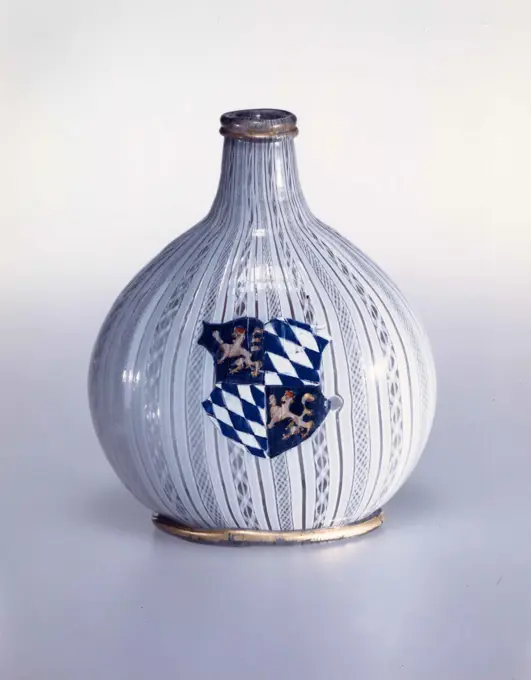
Armorial flask mid-16th century Venetian or façon de Venise, possibly Saxony. Armorial flask. Venetian or façon de Venise, possibly Saxony. mid-16th century. Colorless (slightly gray) and opaque white nonlead glass. Blown, "vetro a retorti", enameled, gilt.. Glass
6145-44280242
Flask. Unknown
4409-17373420
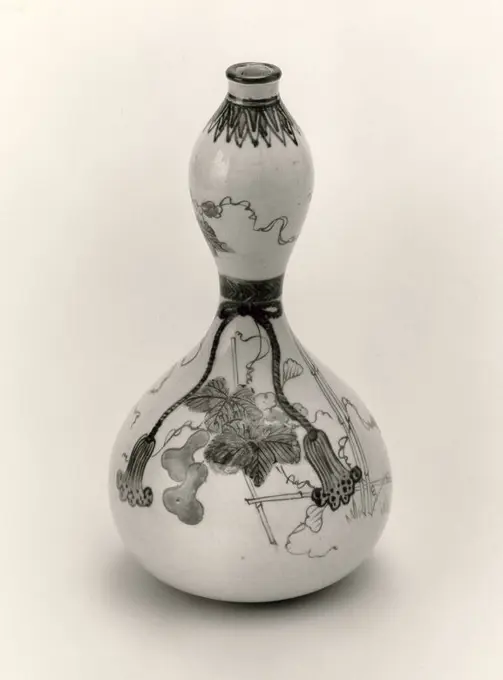
Sake Bottle in the Shape of a Gourd. Culture: Japan. Dimensions: H. 9 in. (22.9 cm); Diam. 5 in. (12.7 cm); Diam. of rim 7/8 in. (2.2 cm). Date: late 17th century. Museum: Metropolitan Museum of Art, New York, USA.
6145-29163581
Vase 12th-13th century China. Vase 50568
6145-48868536
Dark Blue Marbled Flask (). Unknown
6145-58863759
Punchkom, Richard Riemerschmid, c. 1915 Spherical punch bowl on three legs. Designer: Munichhöhr-Grenzhausen stoneware vitrification Spherical punch bowl on three legs. Designer: Munichhöhr-Grenzhausen stoneware vitrification
6145-29209775
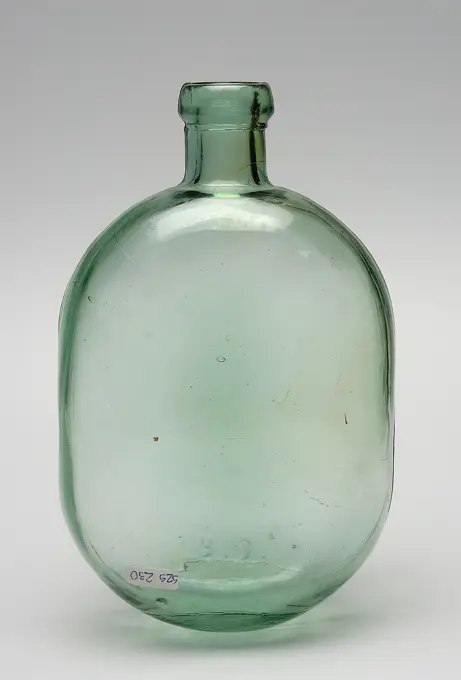
Bottle 18th century British, possibly Bristol. Bottle. British, possibly Bristol. 18th century. Glass. Glass
4409-17552261
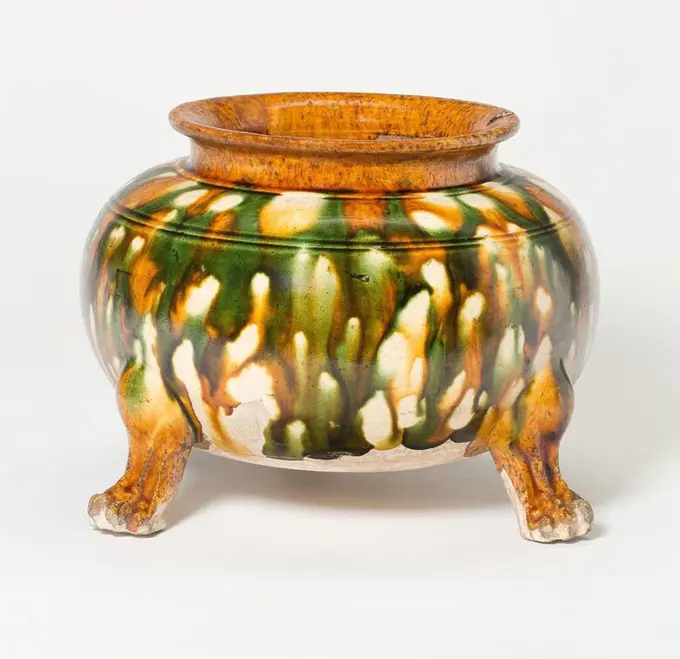
Tripod Jar. China. Date: 700 AD-750 AD. Dimensions: H. 14.0 cm (5 1/2 in.); diam. 18.7 cm (7 3/8 in.). Earthenware with three-color (sancai) lead glazes. Origin: China. Museum: The Chicago Art Institute, Chicago, USA.
6145-29209855
Flask late 18th-early 19th century British, probably Nailsea. Flask. British, probably Nailsea. late 18th-early 19th century. Glass. Glass
6145-29165053
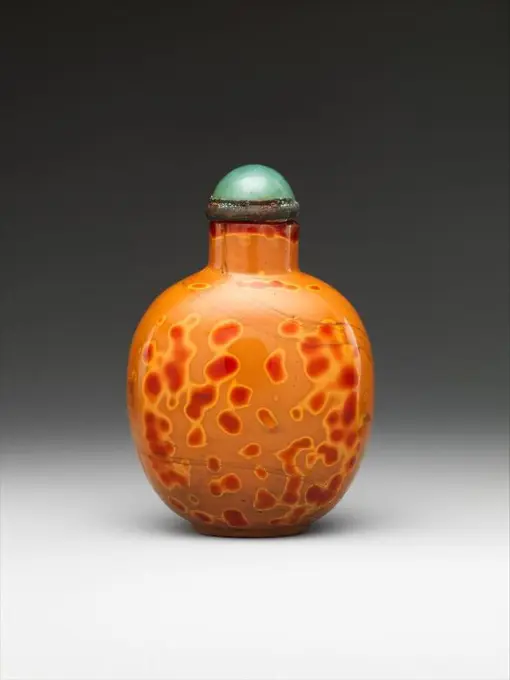
Snuff Bottle with Mottled Surface late 18th-early 19th century China. Snuff Bottle with Mottled Surface 41520
6145-30174002
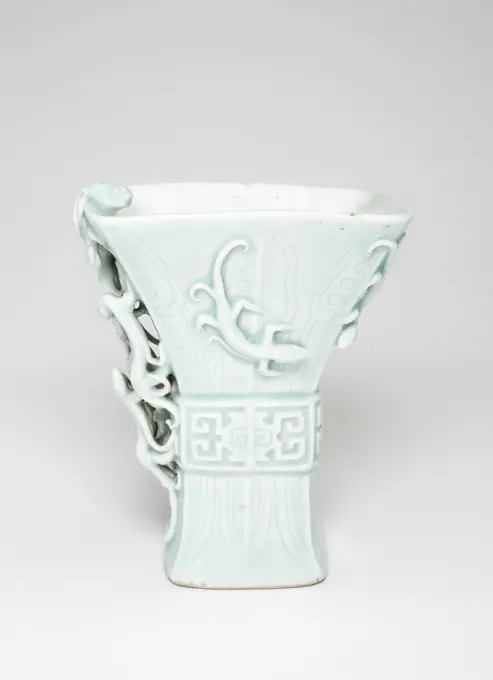
Cup in the Shape of an Archaic Bronze Vessel with Lizards 1700-1899 China. Celadon-glazed porcelain with underglaze molded and incised decoration .
1848-50227276
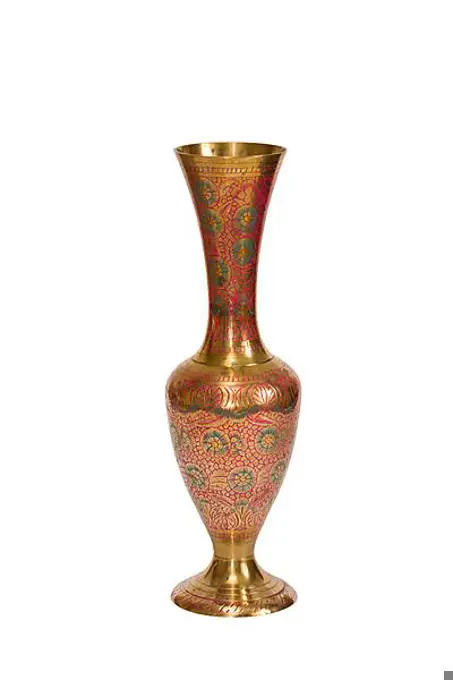
Stamped brass vase isolated on white background
6145-29124854
Pitcher. United States, Pennsylvania, Pittsburgh, 1820-1840. Furnishings; Serviceware. Blown glass
4409-17397908
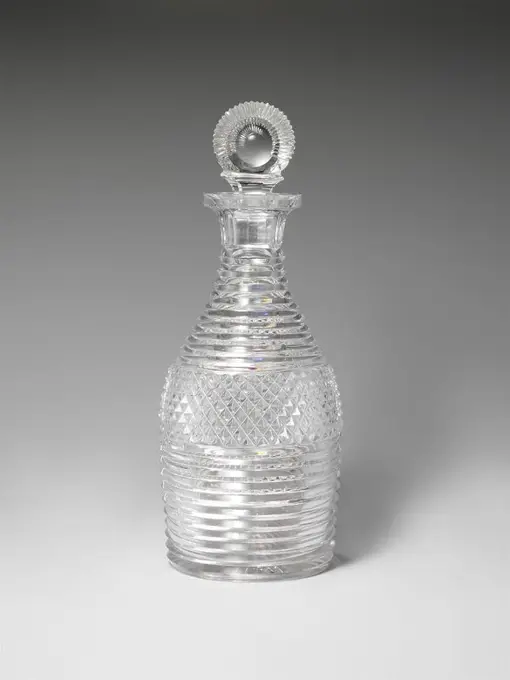
Decanter with stopper. Culture: American. Dimensions: 11 1/2 x 4 5/8 in. (29.2 x 11.7 cm). Maker: Pellatt & Green. Date: 1818.William Bayard (1761-1826) commissioned this table service (2008.594.1-.53) in 1818 for his daughter Harriet (1799-1875) and her husband Stephen Van Rensselaer IV (1789-1868) from Pellatt & Green, London's premier glasshouse. The fine lead glass and deep Regency cutting would have created a brilliant sparkle in their candlelit dining room, in Albany, New York. The set originally included dozens of drinking glasses, for claret, ale, and champagne, as well as decanters, wine coolers, tumblers, and finger glasses, all "elegantly cut in diamonds & Rings" according to the surviving bill of sale (2008.594.54a,b). In addition to its elegance and quality, the service is extremely rare in it's documentation to the specific American family who owned it and to the English glasshouse that made it. Museum: Metropolitan Museum of Art, New York, USA.
6145-46859774
Alabastron
1397R-70365
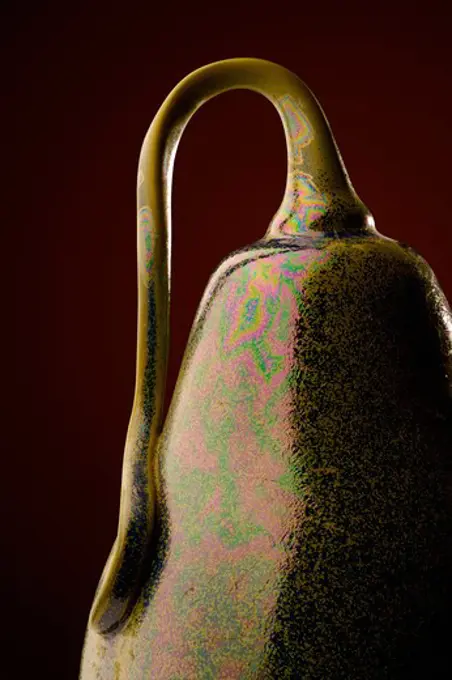
Close-up of a decorative pottery vase in unique form
6145-29166931
Vase with dragon late 18th century China. Vase with dragon 50899
6145-29162416
Water jar ca. 1624-1643 Japan. Water jar 50334
6145-29781078
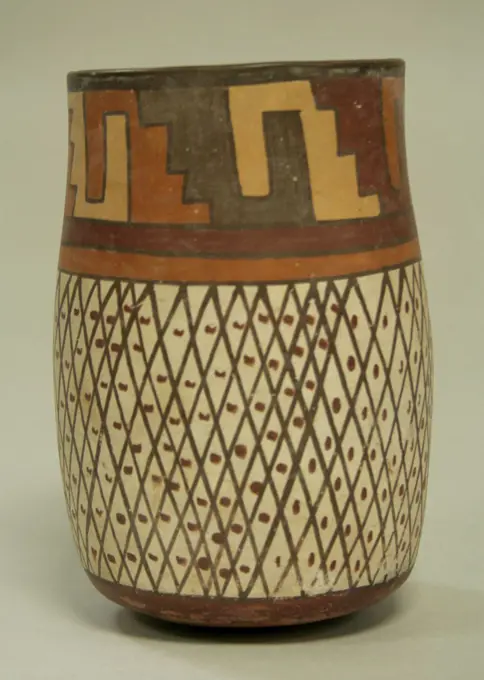
Tall Jar with Crosshatch Designs 1st-6th century Nasca. Tall Jar with Crosshatch Designs 309757
6145-58855394
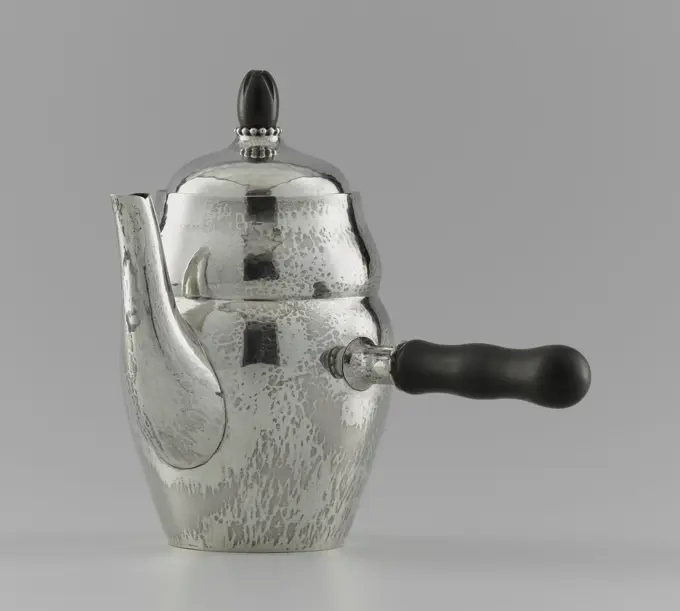
Silver coffee pot with ebony handle, Georg Jensen, 1918 Coffee pot of silver with Ebben handle. The body consists of a ball-walled part above which a lower part with S-shaped curved wall. The straight wooden handle is at right angles to the wall, connected by a silver attachment, which is decorated with an edge of oval at the impetus of the wooden section. The spout is bent. The vaulted lid is crowned by a wooden button in the shape of a stylized flower bud, around which a pearl edge. The surface of the pot is processed with a stelhamer to achieve a 'hammer-stroke' effect. Brands on the bottom bottom: Georg Jensen in lying oval; Copenhagen in lying oval; G1. 830s among each other in standing oval; 1918 in rectangle; 1; reinorn in italics V (foreign works, 1906-1953); reinorn Z II. Copenhagen (city) silver (metal). ebony (wood) Coffee pot of silver with Ebben handle. The body consists of a ball-walled part above which a lower part with S-shaped curved wall. The straight wooden handle is
4443-28730691
Snuff Bottle, 17th-19th century, 2 1/2 x 2in. (6.4 x 5.1cm), Glass, China, 17th-19th century
6145-59004059
Jar and lid ". Terracotta coated with slip -in -brown cream under transparent cover. Paris, Cernuschi museum. Chinese art, Chinese ceramic, lid, creed cream, mesh, jar, terracotta, hole
4286-29507
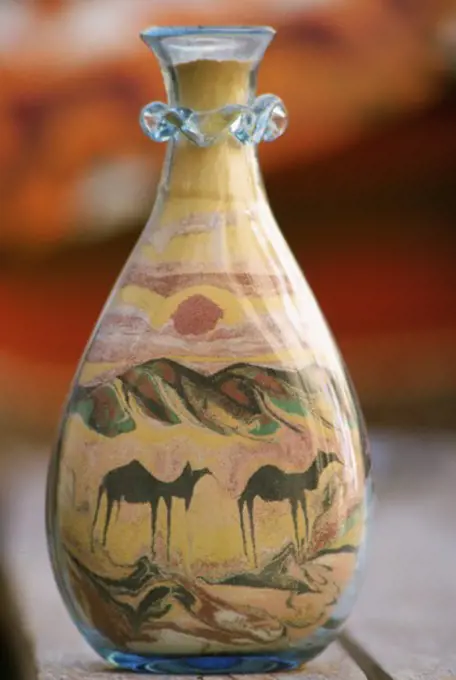
Colored sand bottle, Jerash, Jordan
6145-29139357
Vase ca. 1880-82 T. J. Wheatley & Company. Vase. American. ca. 1880-82. Earthenware. Made in Cincinnati, Ohio, United States
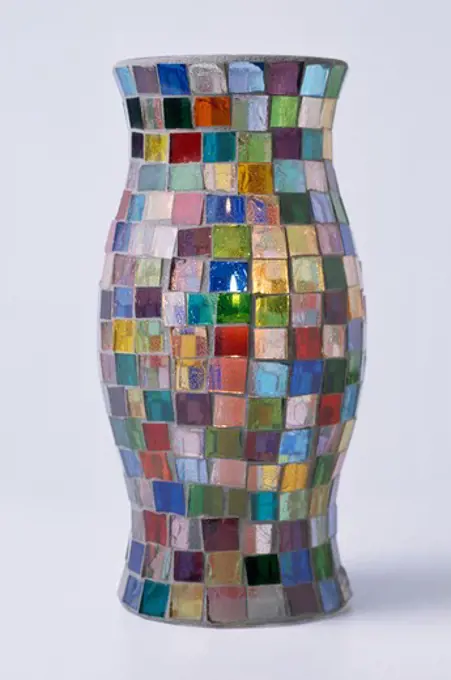
4291-3115
Close-up of mosaic glass lantern
6145-51842704
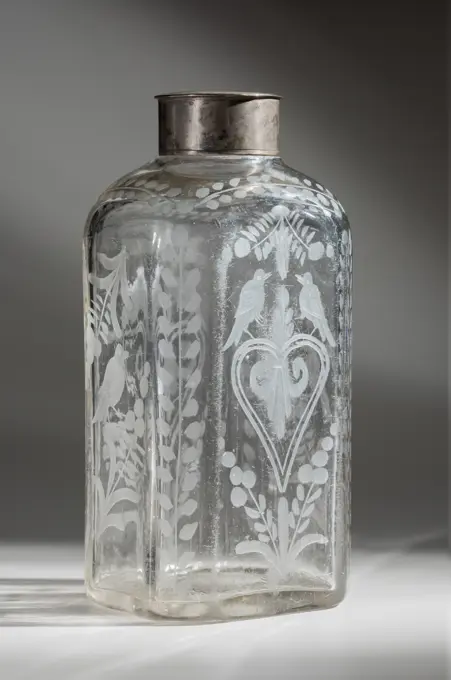
Maker Unknown, Bottle, Mid- to late 19th century, colorless glass, silver.
6145-46831769
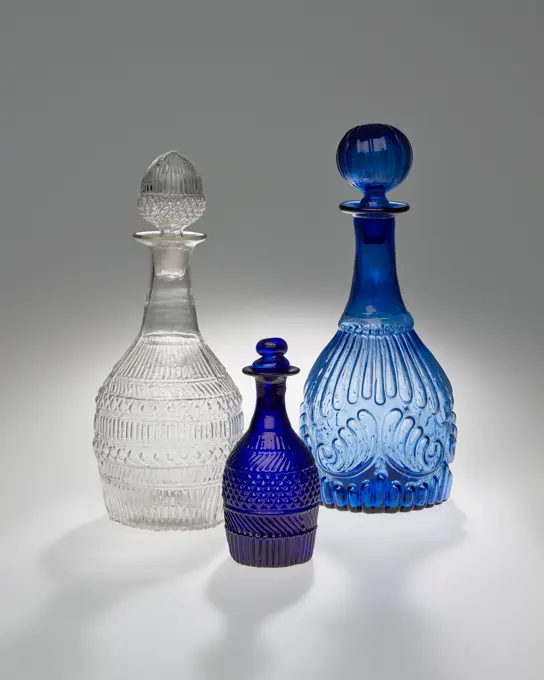
Decanter. Maker, probably by: Boston and Sandwich Glass Works, American, 1826-88
4409-17384030
Vase. Culture: American. Dimensions: H. 9 1/4 in. (23.5 cm). Date: after 1885. Museum: Metropolitan Museum of Art, New York, USA.
4443-21936945
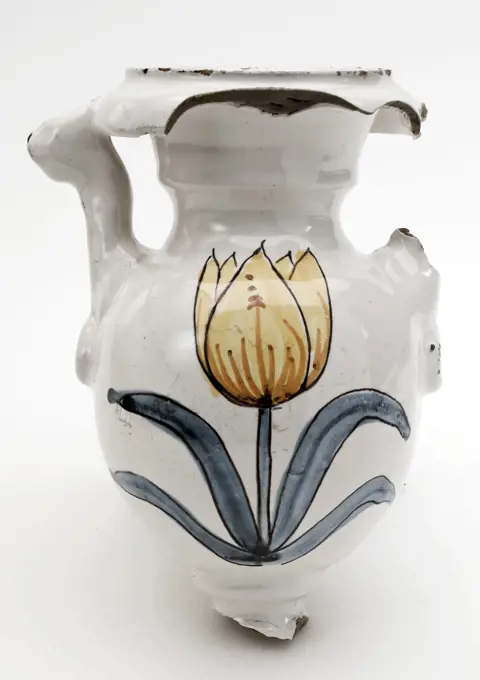
Majolica vase, classic in form, with polychrome tulip as representation, vase crockery holder soil find ceramic earthenware glaze tin glaze lead glaze, hand-turned baked 2x majolica Majolica vase with polychrome tulip as show Classical shape around oval body top edge with lip two ears in animal form and high stand Tulp is shown with purple drawing blue leaves and yellow calyx with orange stripes archeology Rotterdam Heliport terrain indigenous pottery show flower table room classic Soil discovery: Heliport terrain Rotterdam June 1978.
6145-58845878
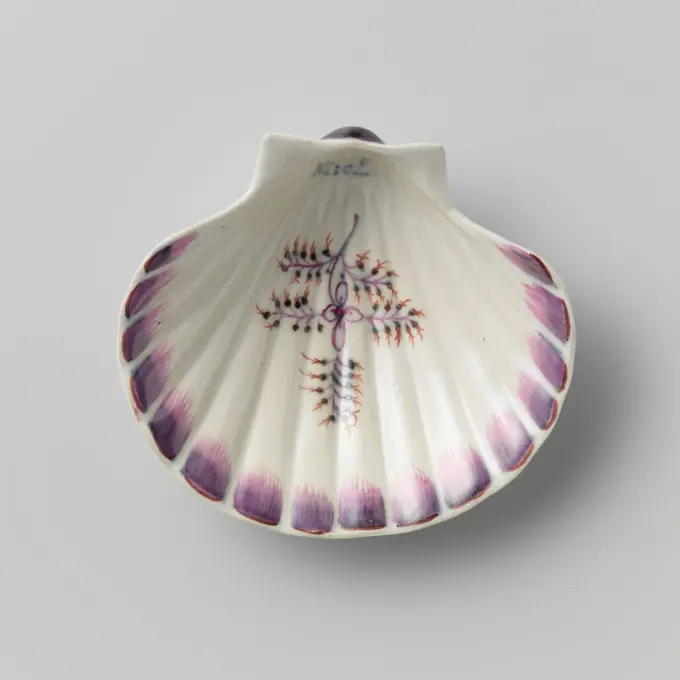
Oyster shell, painted with a flower branch, manufacture Oud-Loosdrecht, c. 1778 - c. 1782 Oyster shell of porcelain, painted in underly glaze blue, purple and red with a branch with flowers. The ends of the ribs on both sides decorated with accents in underly glaze blue and purple, also at the front with a closing stripe in red. Loosdrecht porcelain Oyster shell of porcelain, painted in underly glaze blue, purple and red with a branch with flowers. The ends of the ribs on both sides decorated with accents in underly glaze blue and purple, also at the front with a closing stripe in red. Loosdrecht porcelain
4443-22016484
Alabastron; Eastern Mediterranean; late 1st century B.C. - early 1st century A.D; Glass; 13.4 cm (5 1,4 in.)
1746-19699514
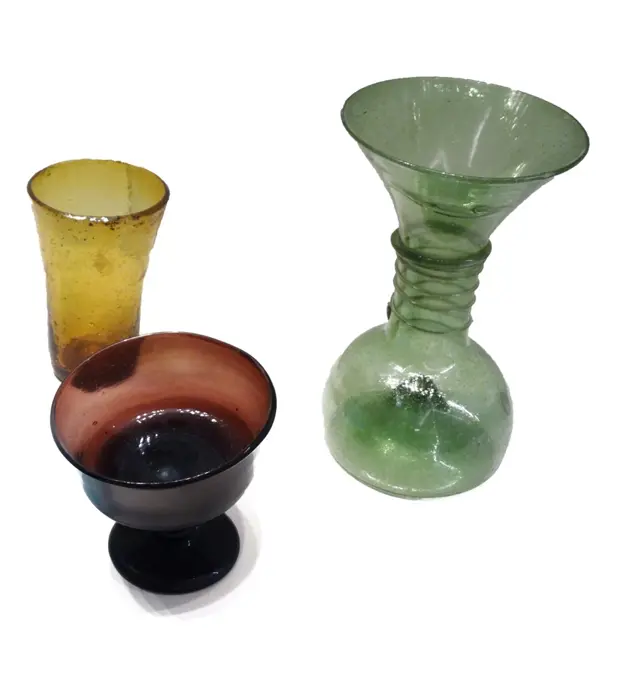
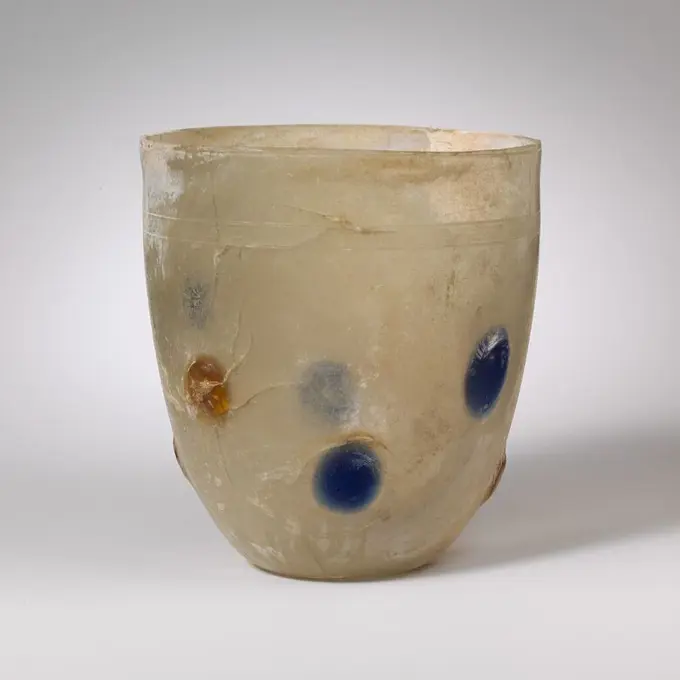
A selection of bowls, beakers and a bottle. Found in the Hebron area, 20th century.
4409-17351920
Glass beaker. Culture: Roman, Rhenish. Dimensions: H.: 4 13/16 in. (12.3 cm)Diam.: 4 3/8 in. (11.1 cm). Date: 4th century A.D..Colorless; translucent cobalt blue and honey yellow blobs.Uneven vertical rim, cracked off and ground, slightly outsplayed; tall, convex side to body, tapering downwards; concave bottom.Immediately below rim, a single wheel-cut horizontal line; below, a band comprising two wheel-cut horizontal lines with wheel-abraded lines between them; around middle and lower part of side a band of applied blobs, comprising two irregular horizontal lines of four alternating sets of two blobs of the same color.Complete, but many internal cracks; a few pinprick and larger bubbles; dulling, faint iridescence, limy encrustation, and weathering. Museum: Metropolitan Museum of Art, New York, USA.
1788-16449
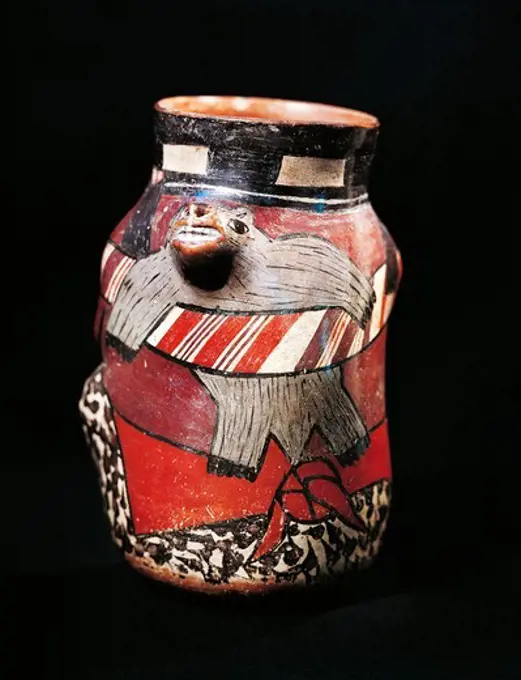
Vase depicting hunter carrying captured animal in shawl (back), Peru, Nazca culture, Pre-Inca civilization
6145-45334842
A bottle of three parts
6145-30176436
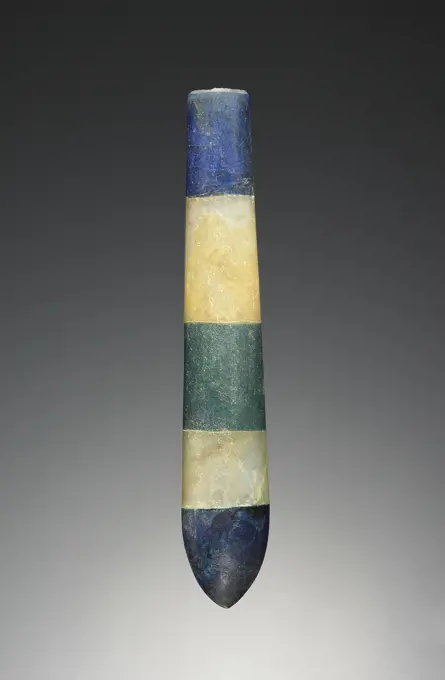
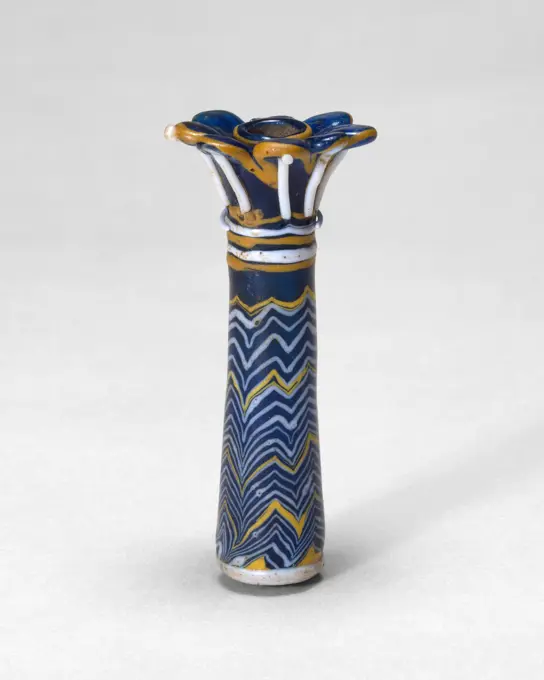
Container for Kohl in the Shape of a Palm Column 1352 BCE-1213 BCE Egypt. Glassworking in Egypt appeared suddenly as a fully developed industry under the pharaohs of the Eighteenth Dynasty (1550ñ1295 BCE) and was probably imported from the older glass centers of the Eastern Mediterranean. During this time glass production was restricted to a handful of workshops producing vessels and objects intended only for the pharaoh and his court. In addition to small glass objects such as beads, amulets, and inlays, the new industry produced a wide variety of glass vessels for unguents, incense, and cosmetics. Particularly popular were vessels like this example made to contain kohl, a black pigment used by both men and women to outline their eyes. The kohl was applied with a thin rod, and the containers were sealed with stoppers made of linen and wax. The shape of this object recalls a palm column, a traditional element of Egyptian architecture. The bright, opaque colors of these early core-forme
4409-17482402
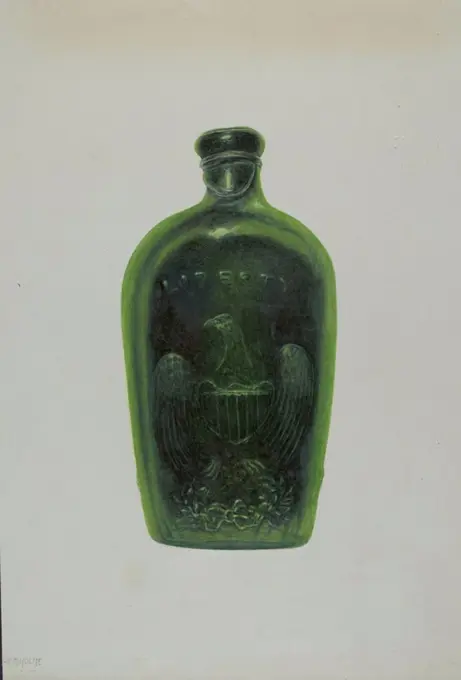
"Liberty" Bottle. Dated: 1935/1942. Dimensions: overall: 35.5 x 24.2 cm (14 x 9 1/2 in.). Medium: watercolor, graphite, and pen and ink on paper. Museum: National Gallery of Art, Washington DC. Author: Maud M. Holme.
4443-28730662
Snuff Bottle, 17th-19th century, 2 1/2 x 2in. (6.4 x 5.1cm), Glass, China, 17th-19th century
4409-17422085
Flask. Culture: American. Dimensions: H. 8 1/8 in. (20.6 cm). Maker: Dyottville Glass Works (1833-1923). Date: ca. 1847-48. Museum: Metropolitan Museum of Art, New York, USA.
6145-29131033
Flask. Christopher Dresser (Scotland, 1834-1904)Linthorpe Pottery (England, 1879-1889). England, circa 1880. Tools and Equipment; flasks. Glazed earthenware
6145-58852302
Vase painted with branches with lilacs and a spider in his web, N.V. Haagsche Plateel Factory Rozenburg, 1902 Vase of porcelain with two ears and a spherical body. The long slender neck broadens upwards. The ears are flattened and run between the shoulder and the top of the neck. Painted on both sides with branches with lilacs in purple, green and brown, and with a spider in his web in brown tones and gray -green. The Hague porcelain Vase of porcelain with two ears and a spherical body. The long slender neck broadens upwards. The ears are flattened and run between the shoulder and the top of the neck. Painted on both sides with branches with lilacs in purple, green and brown, and with a spider in his web in brown tones and gray -green. The Hague porcelain
6145-29091943
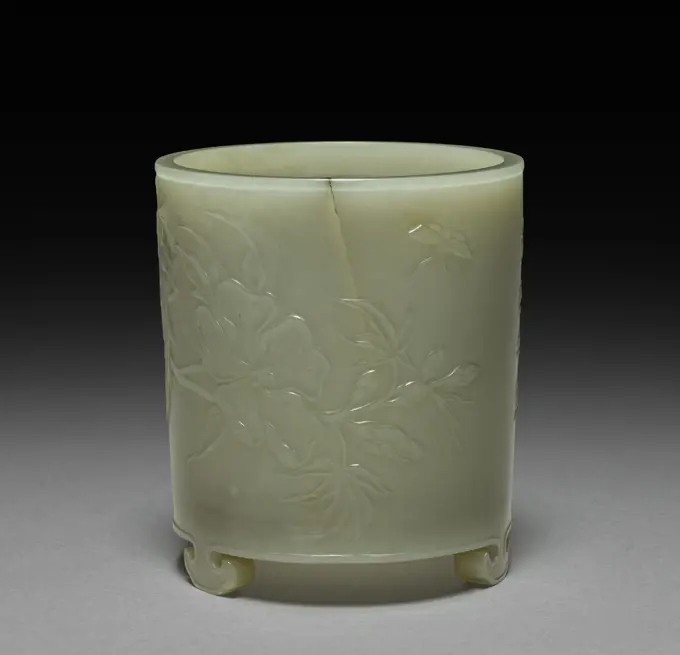
Cylindrical Container with Mallows and Inscription in Relief, 1736-95. China, Qing dynasty (1644-1911), Qianlong reign (1736-95). White jade; diameter: 5.3 cm (2 1/16 in.); overall: 6.1 cm (2 3/8 in.).
6145-46852890
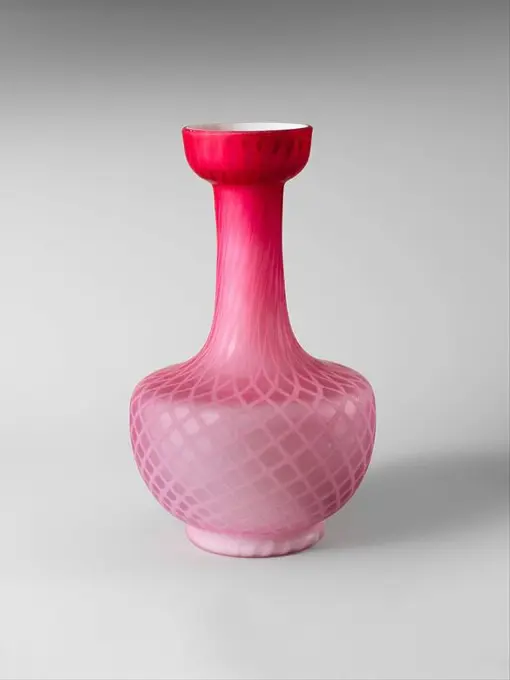
Vase.  Manufacturer: Wardle and Company, Limited, British
4409-17354670
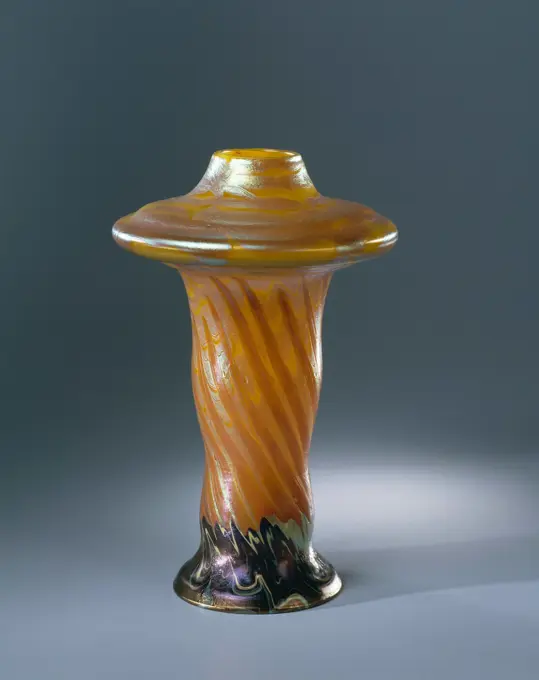
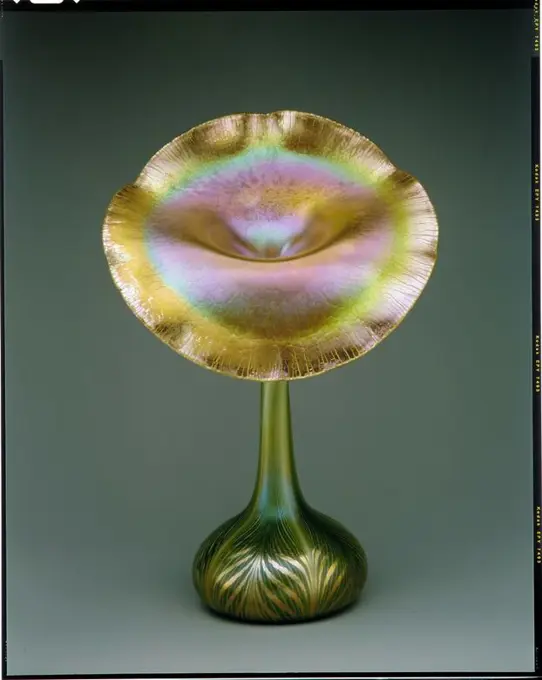
Jack-in-the-Pulpit Vase. Culture: American. Dimensions: 12 x 8 in. (30.5 x 20.3 cm). Manufacturer: Quezal Art Glass and Decorating Company (1901-ca. 1924). Date: ca. 1900-1920.Two former employees of Louis Comfort Tiffany's glassworks, Martin Bach and Thomas Johnson, founded the Quezal firm and named it after the brightly feathered Central American quetzal bird. Using the same method of manufacture practiced at the Tiffany factory, the company made artistic ware with pulled and applied decoration of lustrous iridescence. The Jack-in-the-Pulpit form of this vase is considered to be one of the few art forms in America that can be convincingly associated with Art Nouveau, and the most important form made by Quezal. Museum: Metropolitan Museum of Art, New York, USA.
4443-21937374
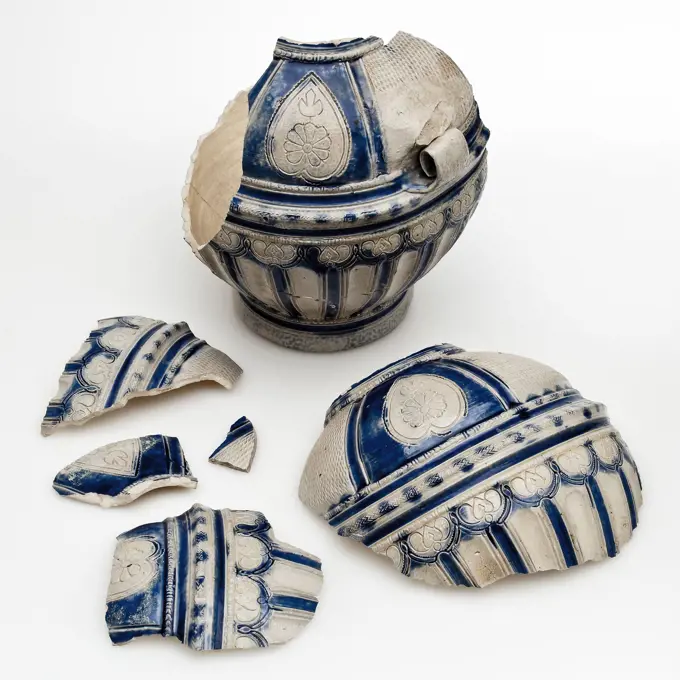
Westerwald jug with lobes, fries and fields carved, blue and gray glazed, jug crockery holder fragment soil find ceramic stoneware glaze salt glaze, hand turned stamped grooved cobalt oxide glazed baked Jar stoneware gray with blue ornament geometric figures hearts flowers kerbschnitt. Egg-shaped model on stand foot. Profile rings around foot and neck. Bottom half decorated with upright lobes frieze with ridge and herringbone pattern in the middle of the stomach On the shoulder fields with cherry and heart shapes in which rosette archeology Valckensteyn Poortugaal Albrandswaard donate indigenous earthenware drink beverage kitchen import Soil discovery: castle Valckensteyn in Poortugaal now Albrandswaard 1961 - 1962 .
4409-17269982
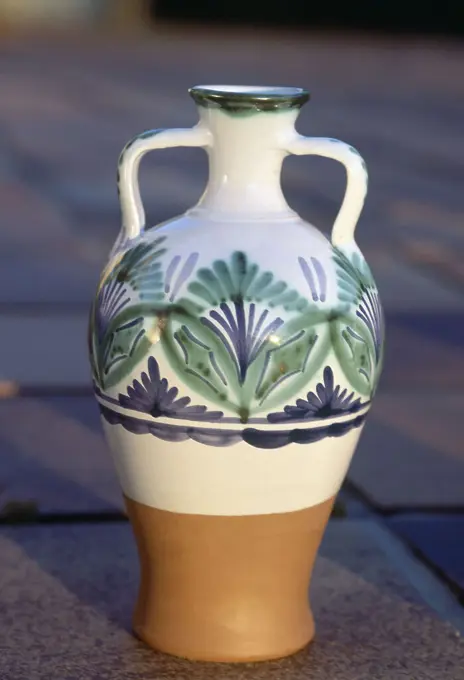
CANTARO CON VIDRIADO PARCIAL Y DECORACION FLORAL-S XX CERAMICA POPULAR. Location: ALFARERIA. TORO. Zamora. SPAIN.
4409-17290246
Anonymous / "Tibor", Towards 1890, Ceramics, Pickman and Co. Factory (Seville).
6145-29753255
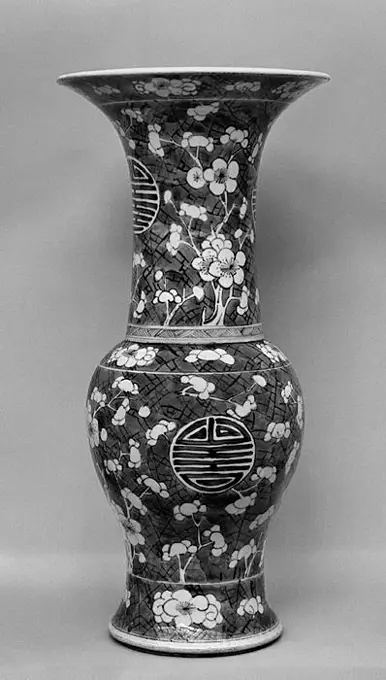
Vase with plum blossoms (one of a pair) late 17th-early 18th century China. Vase with plum blossoms (one of a pair) 48622
6145-45400972
Vase  Potpourri Telechany
1788-19652
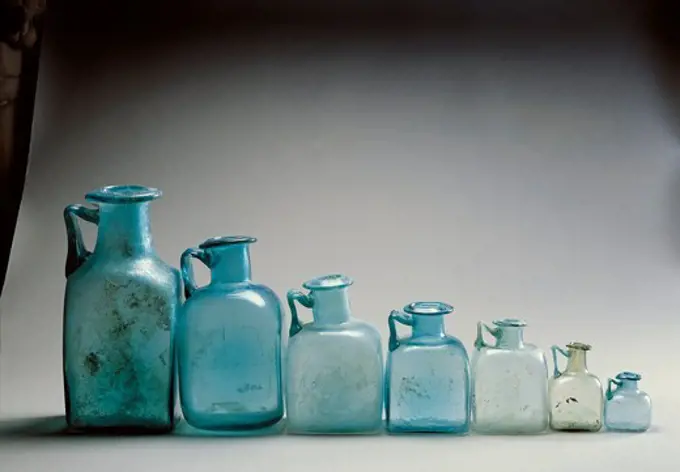
Seven blue glass bottles, used as measures of capacity, from Pompei
5507-65186201
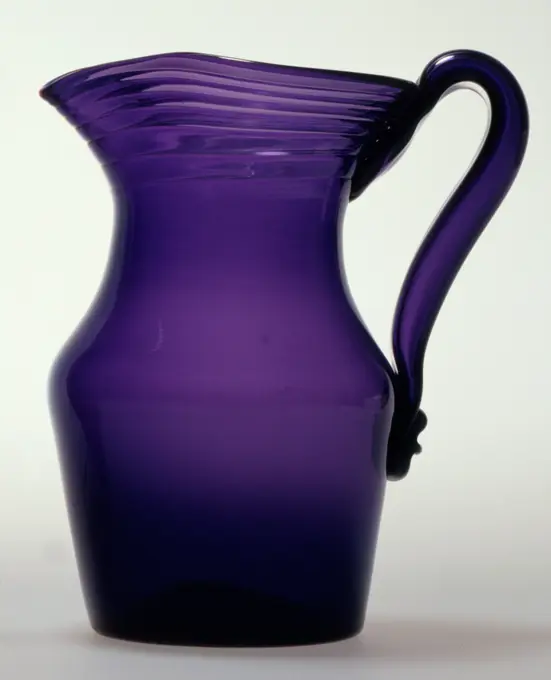
This ceramic pitcher features a ribbed design and a beautifully crafted handle. Its elegant form and classic finish make it a perfect addition to any table setting or home decor, reflecting both functionality and artistic beauty.
4409-18623221
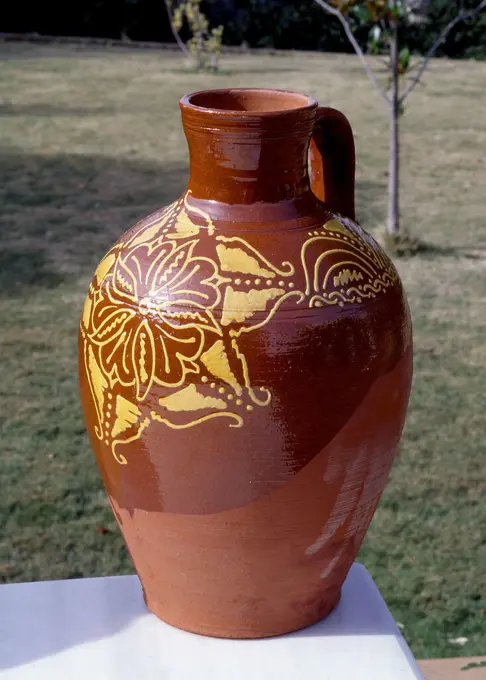
CANTARILLO ESMALTADO CON DECORACION VEGETAL-S XX ARTE POPULAR. Location: ALFARERIA. LA RAMBLA. CORDOBA. SPAIN.
6145-29765133
Quart Bottle 1865-70 A. R. Samuels. Quart Bottle 6823
4409-17560738
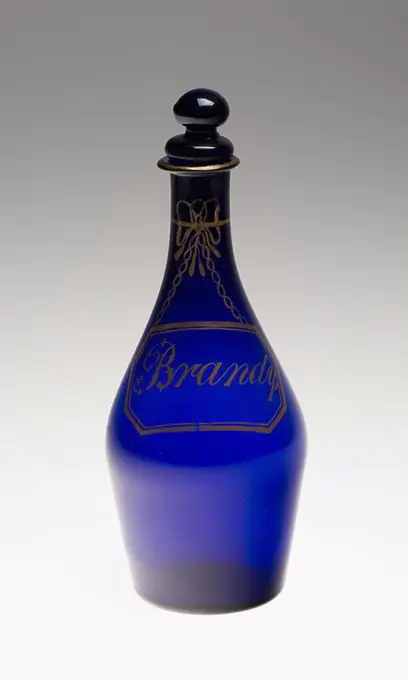
Brandy Decanter. England, Bristol; Gilding possibly by Isaac Jacobs. Date: 1801-1811. Dimensions: 18.7 cm (7 3/8 in.). Glass with gilding. Origin: England. Museum: The Chicago Art Institute, Chicago, USA.
5507-39804412
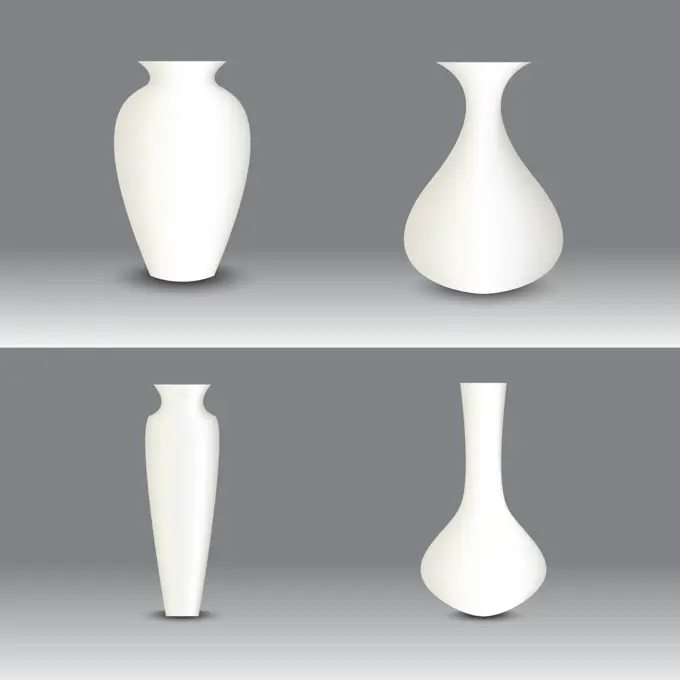
White vase set, vector object
6188-55646913
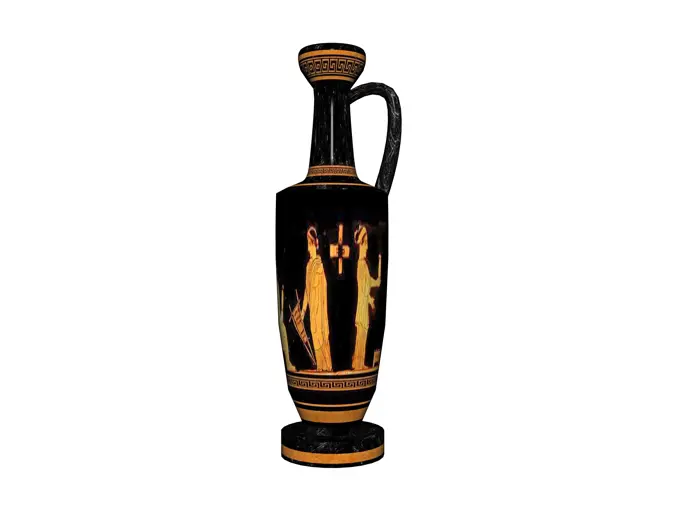
Greek painted vase Greek painted vase copyright: xzoonar.com/DR.XNORBERBERTXLANGEX 14254974
6145-29144161
Vase ca. 1880-82 T. J. Wheatley & Company. Vase. American. ca. 1880-82. Earthenware. Made in Cincinnati, Ohio, United States
6188-63863863
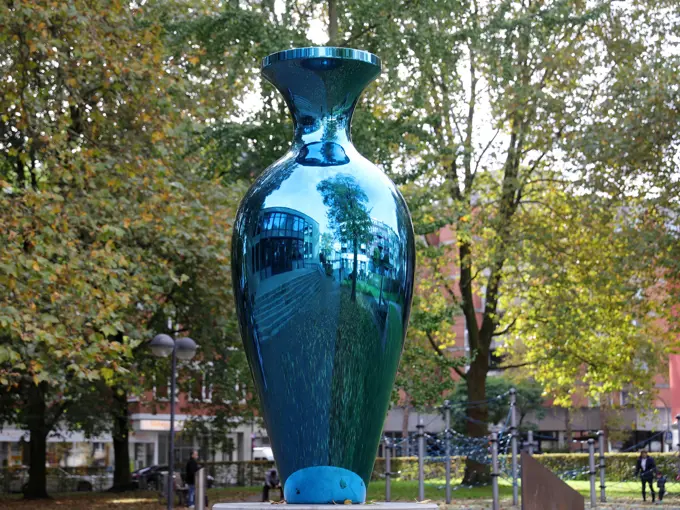
20 10 2024, Germany, NRW, Art and Culture, Over the Park at the Baukunstarchive NRW in Dortmund, Reflection, Mirror Vase, Germany
1525-56829443
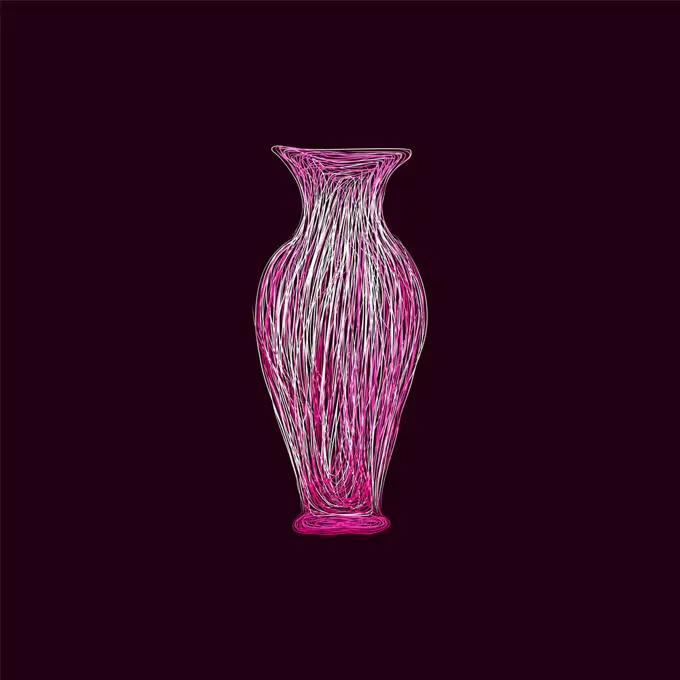
Vase flower artwork style creative design Vector Image