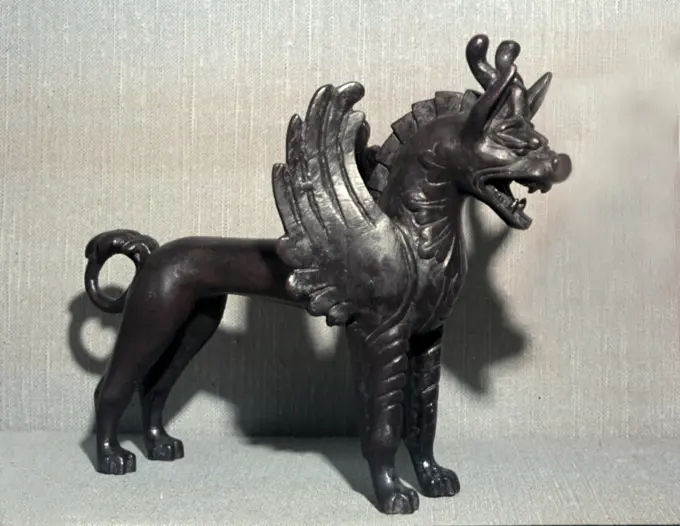
Ancient Figurines and Artifacts

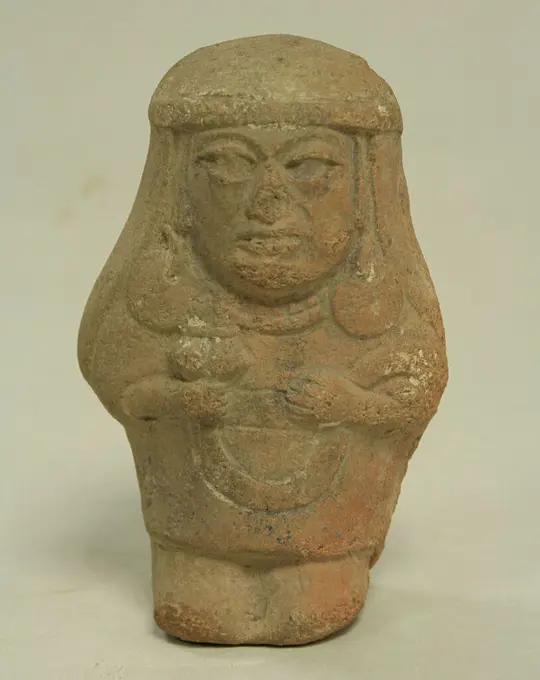
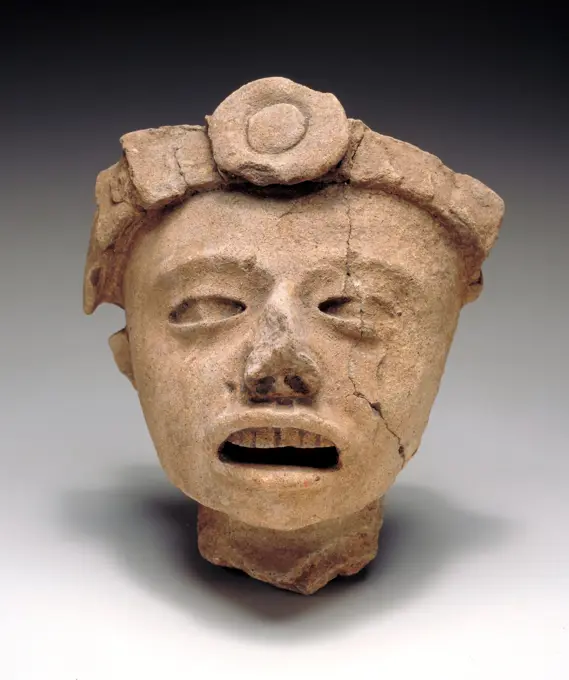
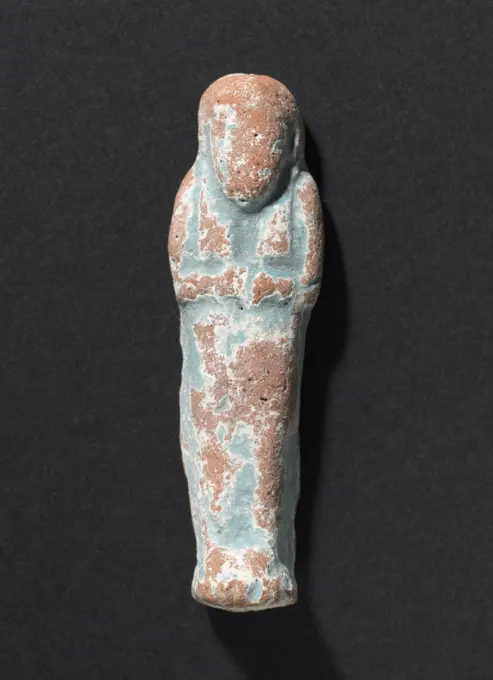
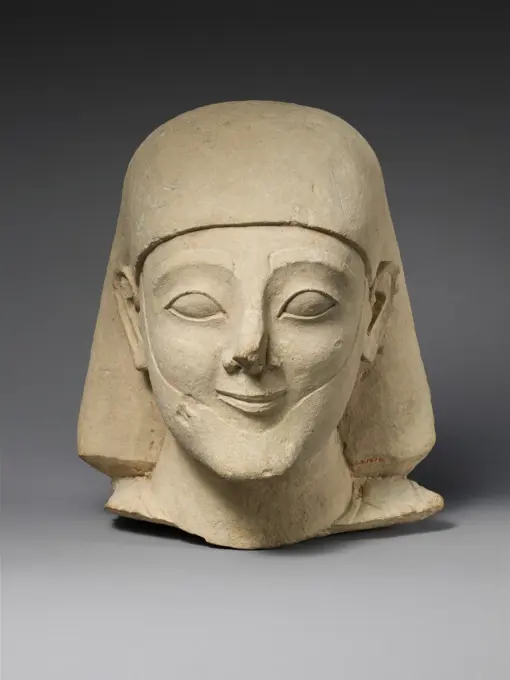
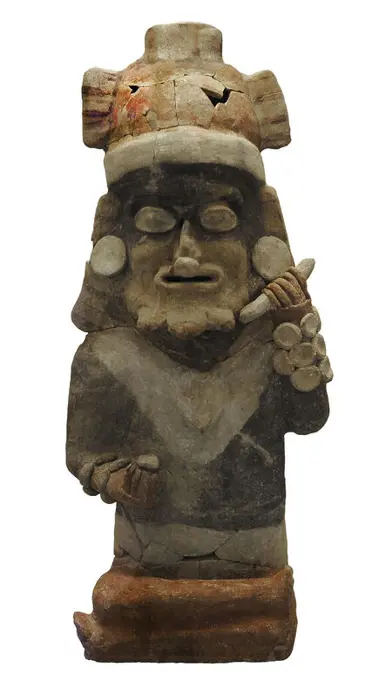
Artifacts including ancient figurines from different cultures, showcasing craftsmanship in pottery, with varied representations of human forms.
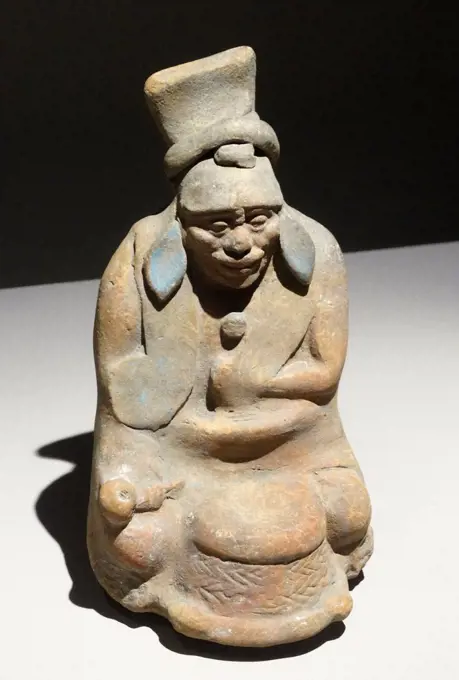
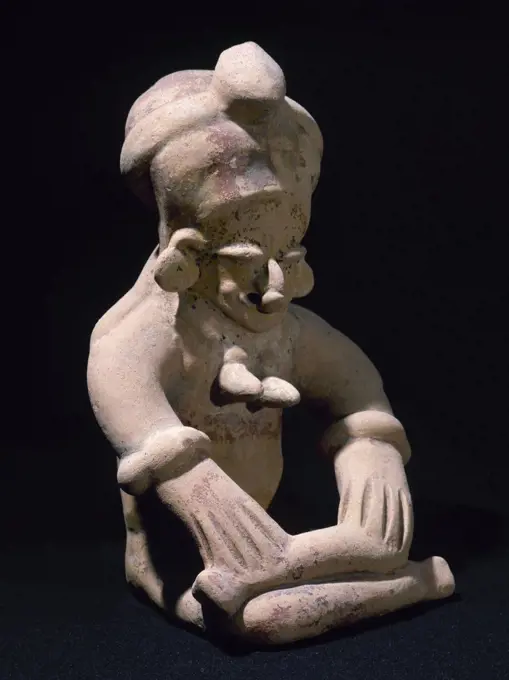
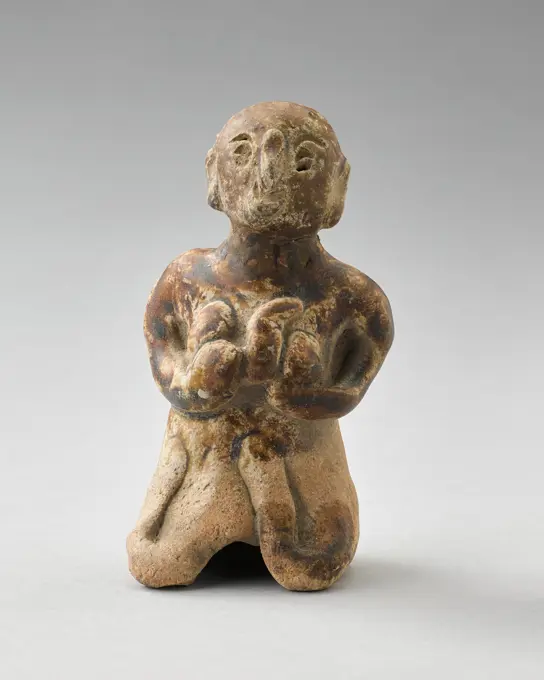
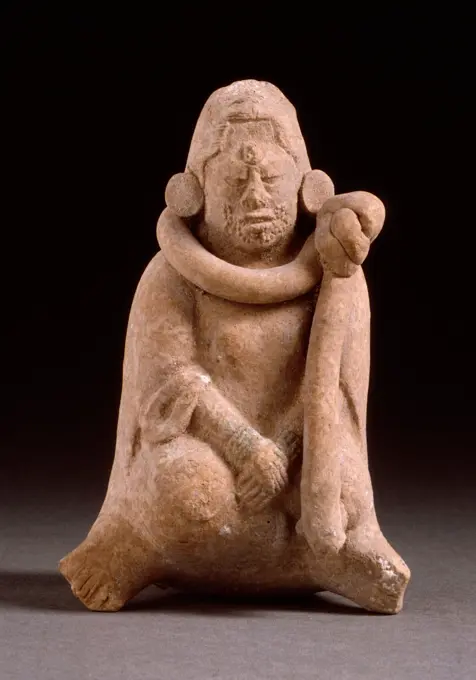
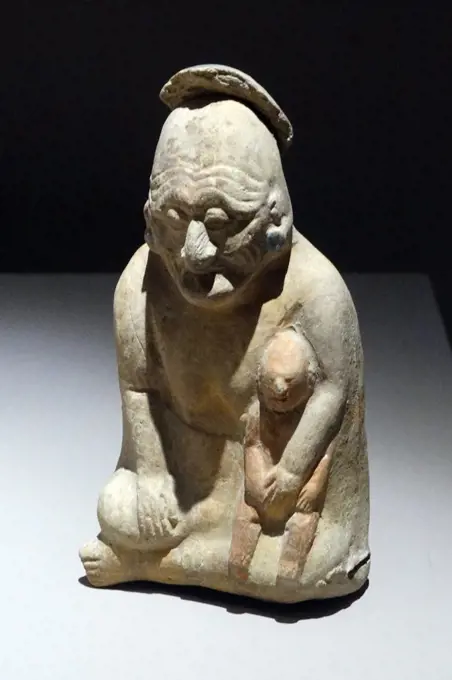
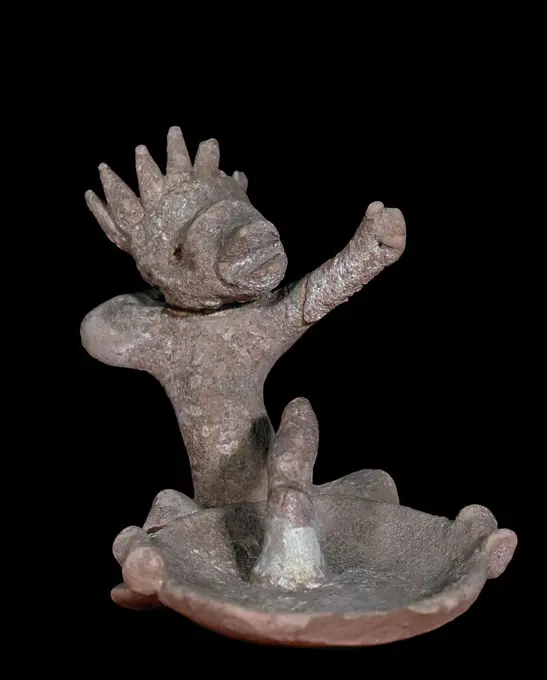
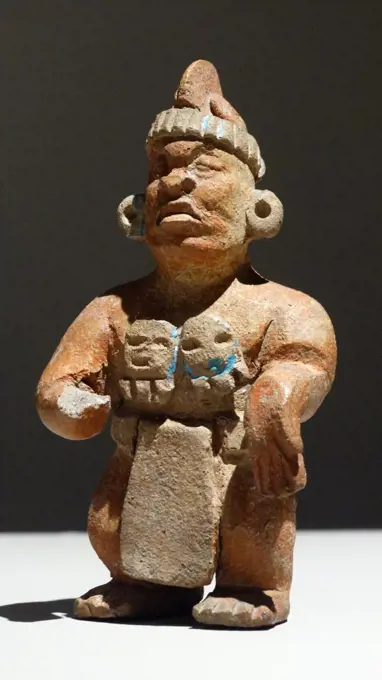
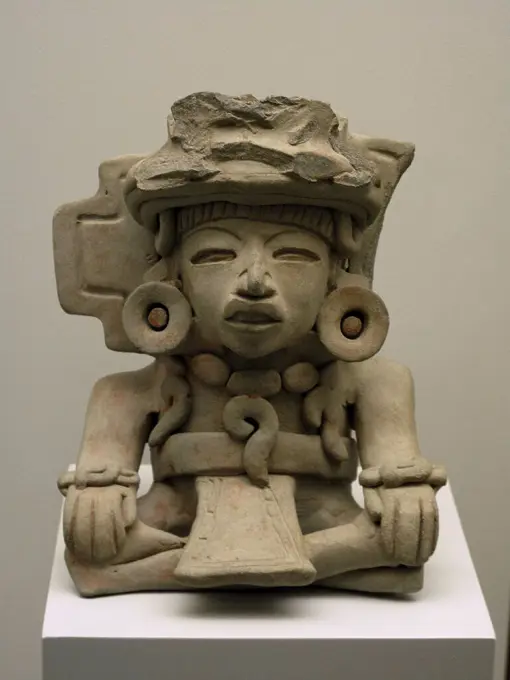
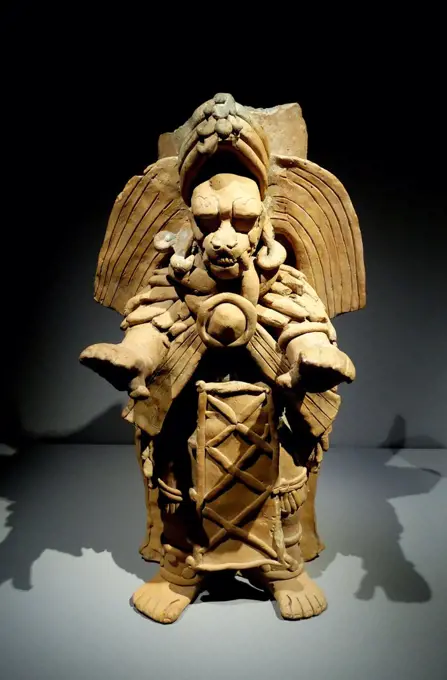
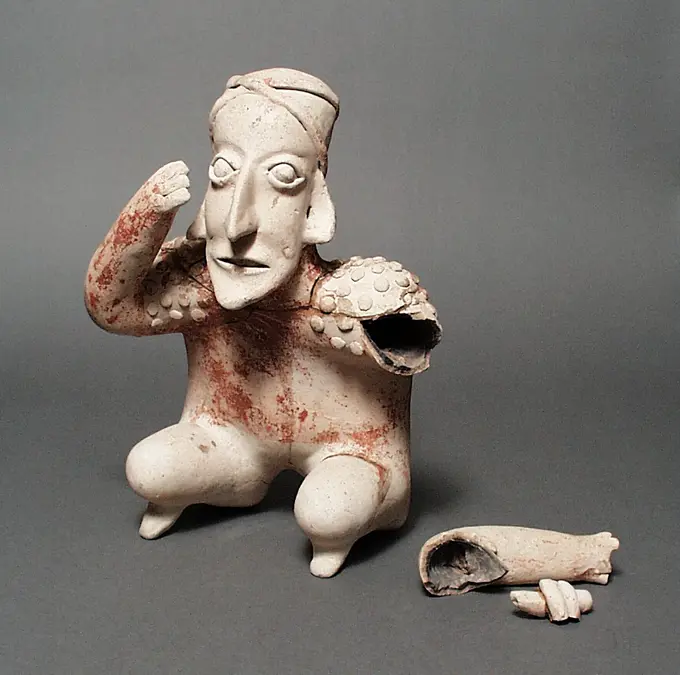
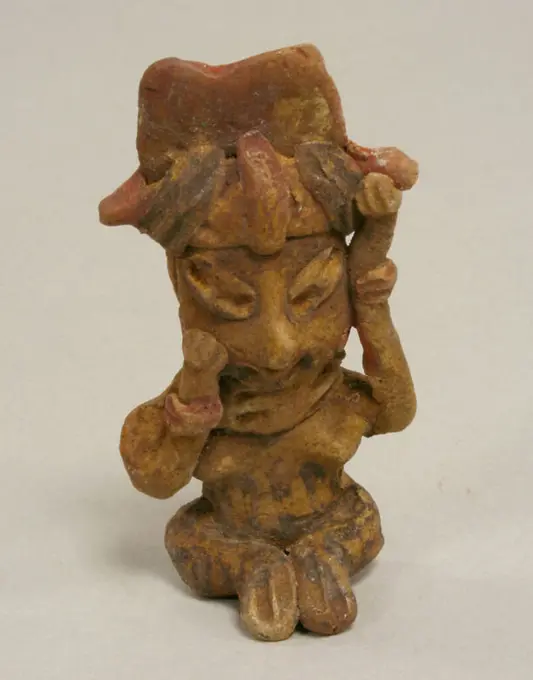
Mayan ceramic figurine of an old man playing a tambourine. From Jaina, Campeche, Mexico 600-900 AD

Assets in this Story

6145-46811619
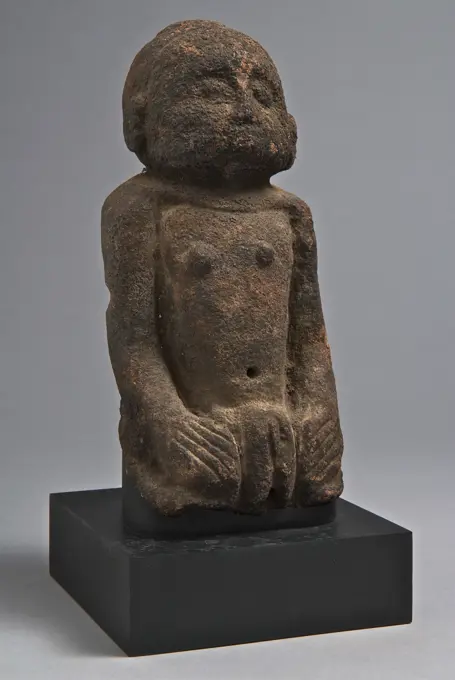
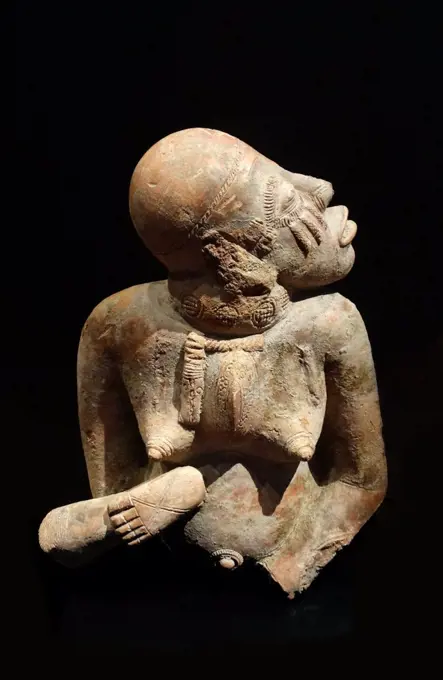
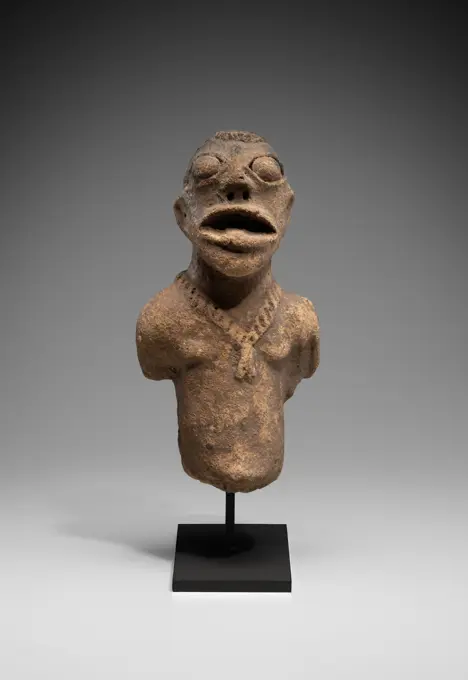
AncestorFigure
6145-30177825
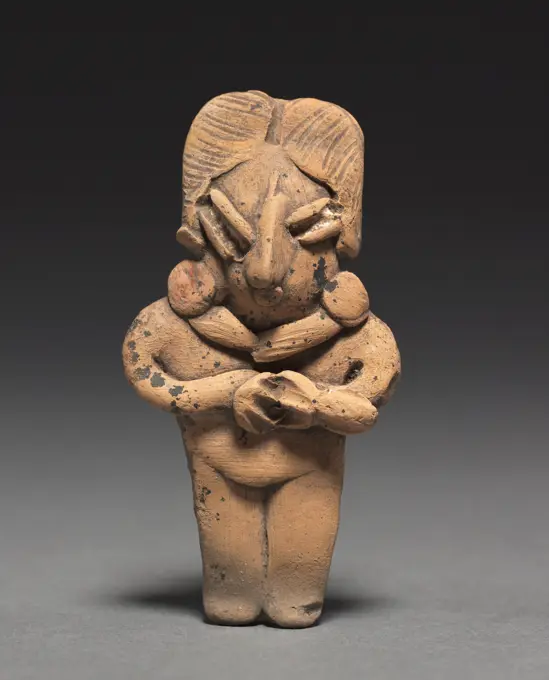
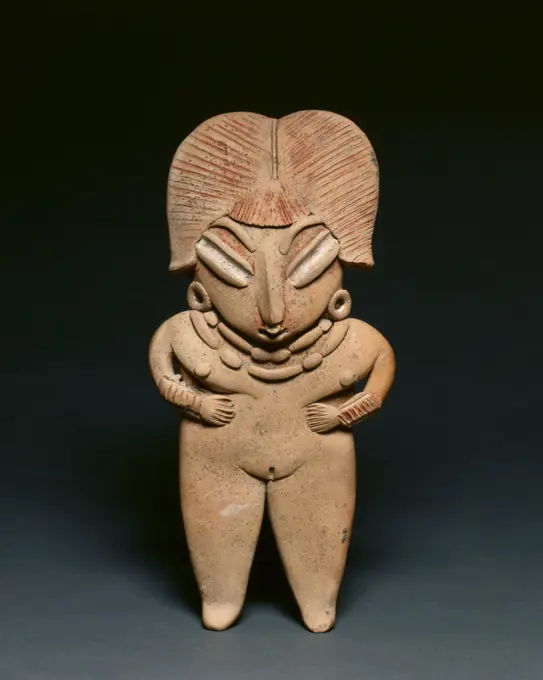
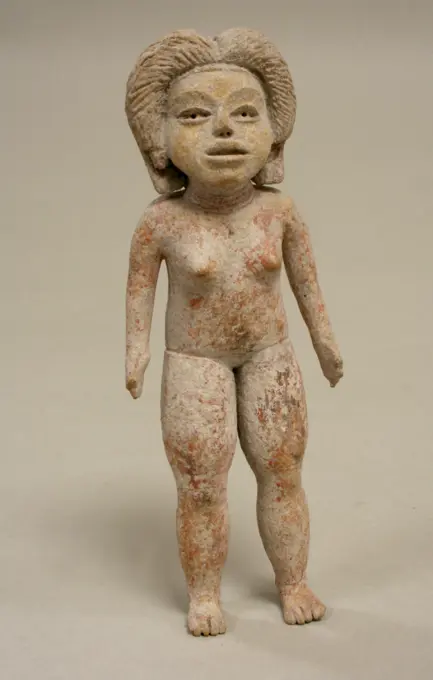
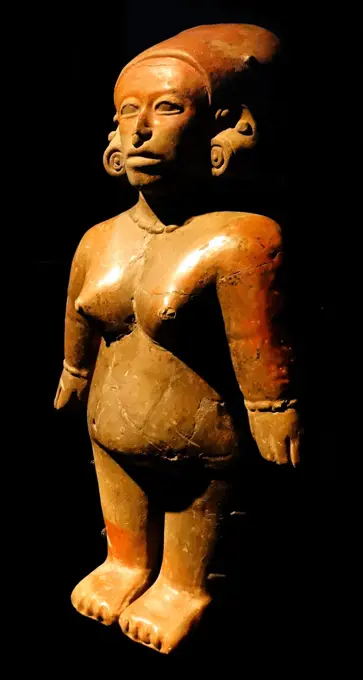
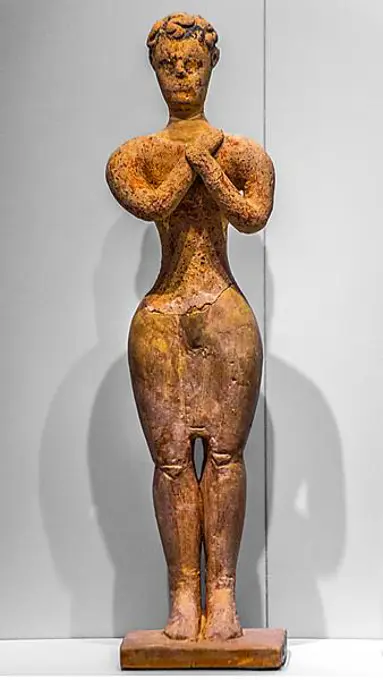
Female Figurine 500 BCE-300 BCE Guanajuato state. Ceramic and pigment . Chupícuaro
6145-29068069
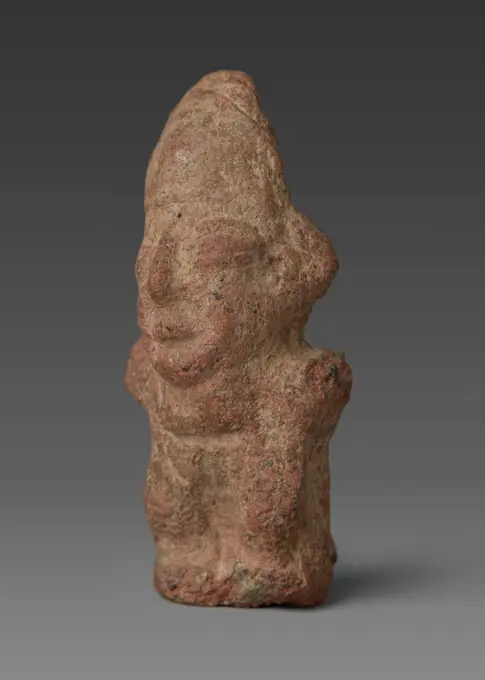
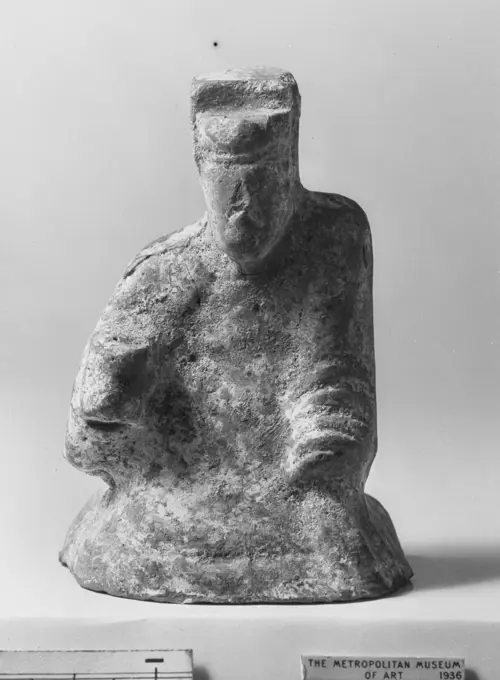
Male Figurine, 400-100 BC. Mexico, Guanajuato, Chupícuaro. Pottery with traces of white and red pigment; overall: 9.2 x 4.8 x 1.9 cm (3 5/8 x 1 7/8 x 3/4 in.).
6145-29121107
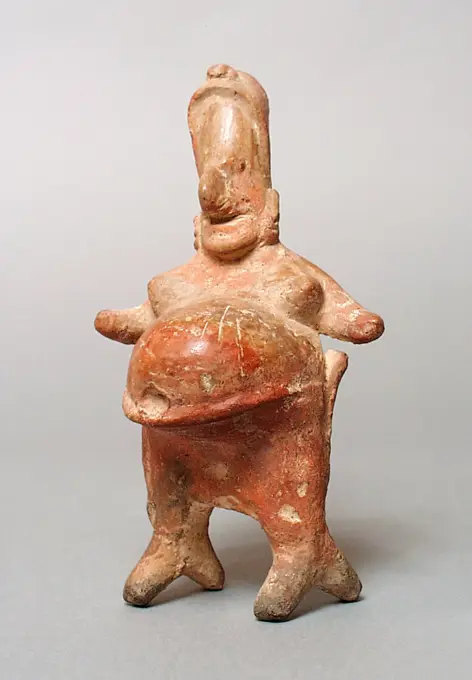
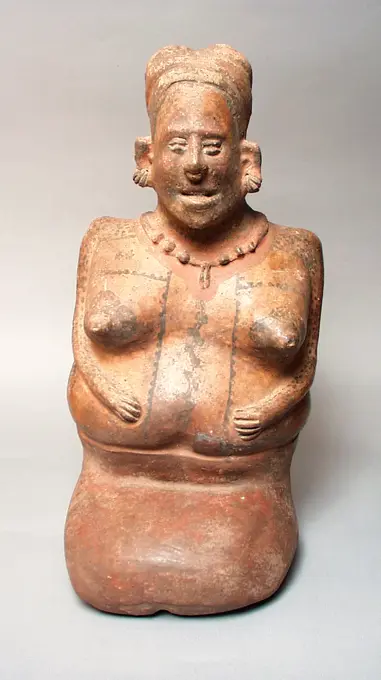
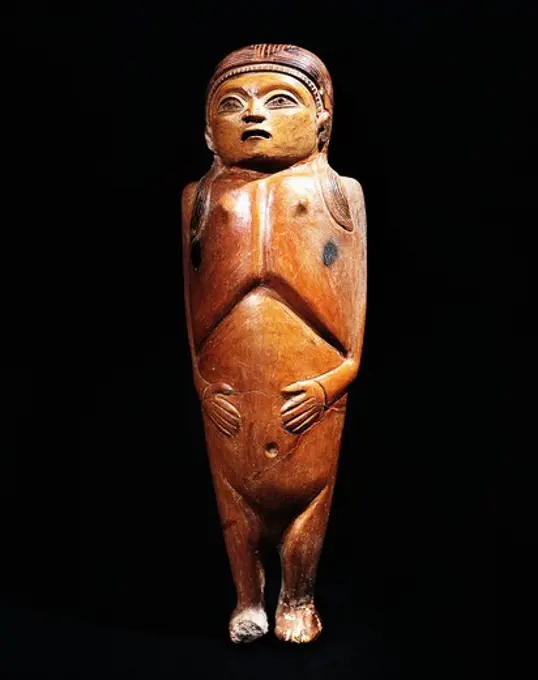
Pregnant Female Figure
4409-17423760
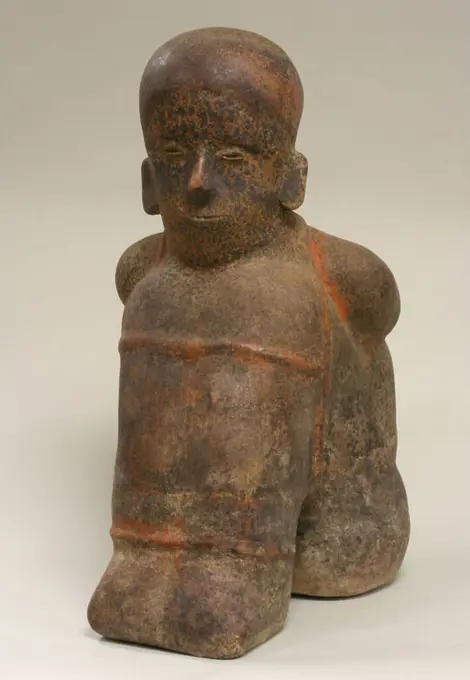
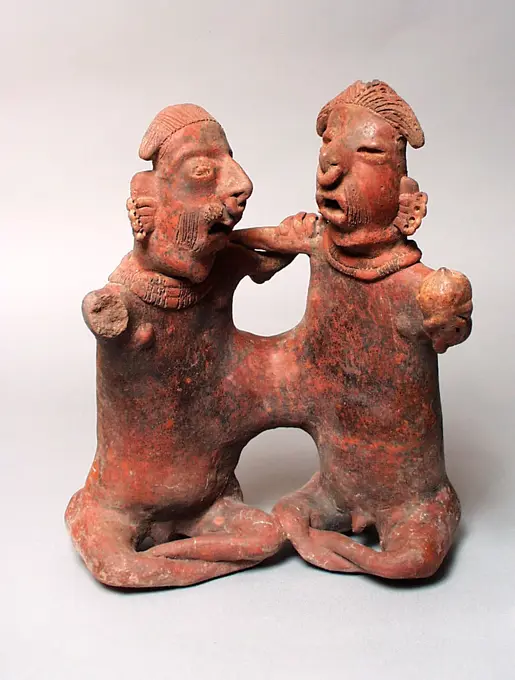
Prisoner Vessel. Culture: Colima. Dimensions: H x W x D: 21 x 10 5/8 x 16 1/8in. (53.3 x 27 x 40.9cm). Date: 2nd century B.C.-A.D. 3rd century. Museum: Metropolitan Museum of Art, New York, USA.
4409-17242397
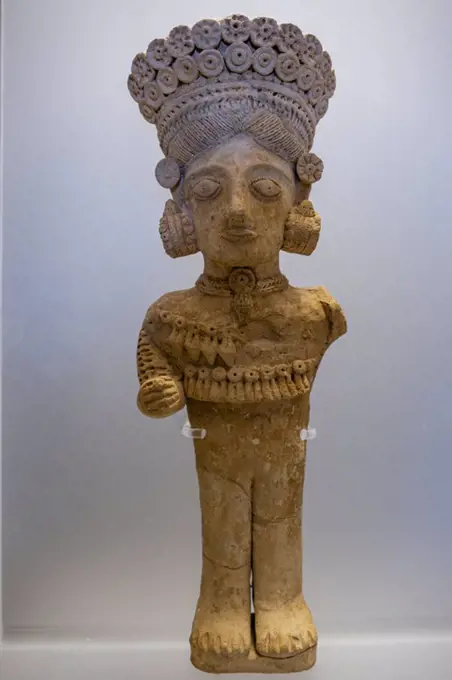
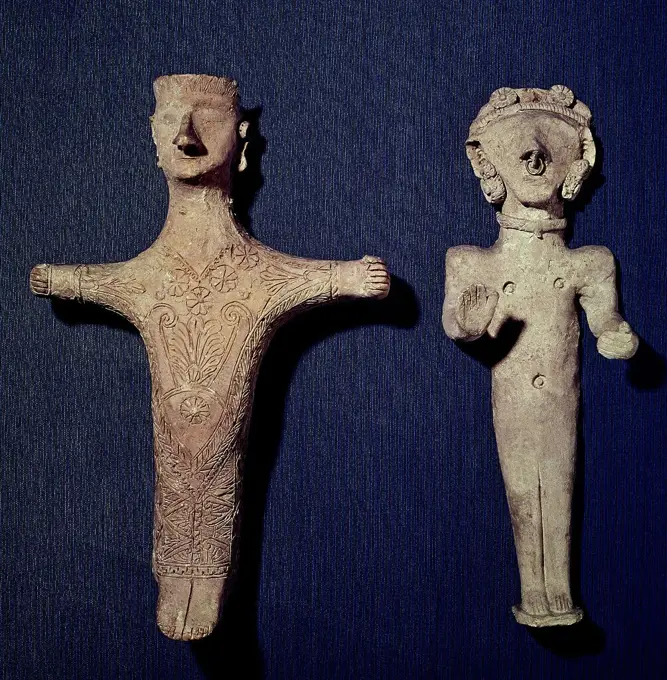
female statuette, from Ibiza, clay, 4th cent. BCE, Madrid museo arqueologico nacional, The Coliseum , Rome, Lazio, Italy ,.
6145-29130197
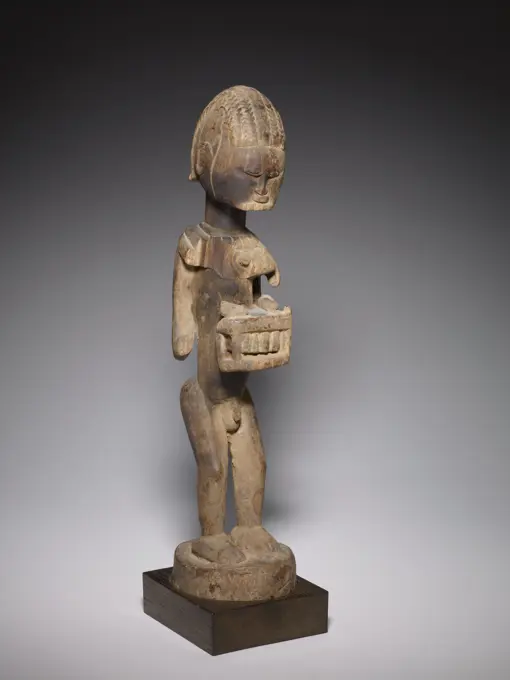
Female Figure Carrying a Basket. Egypt, 1st century BCE - 2nd century CE. Sculpture. Terracotta
1746-21109101
Mayan ceramic figurine of an old man playing a tambourine. From Jaina, Campeche, Mexico 600-900 AD
1899-17317393
Bahia Culture (Mahia, Ecuador). 300 BC-500 AD. Figure sitting cross-legged. 24 x 15 cm. From Ecuador. Period of Regional Development. Private collection.
4409-17351058
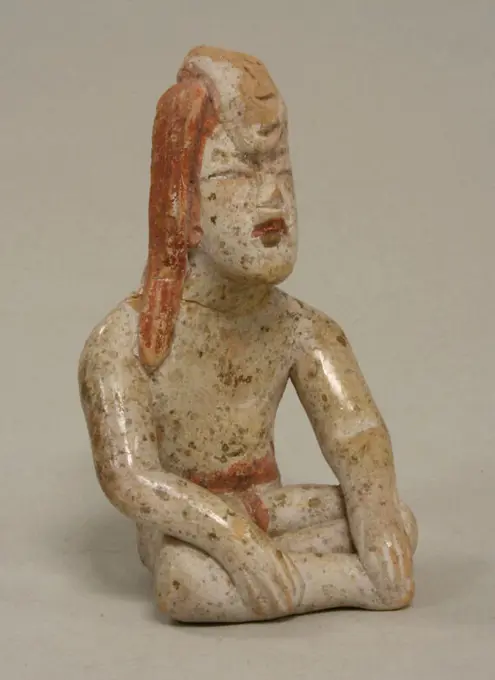
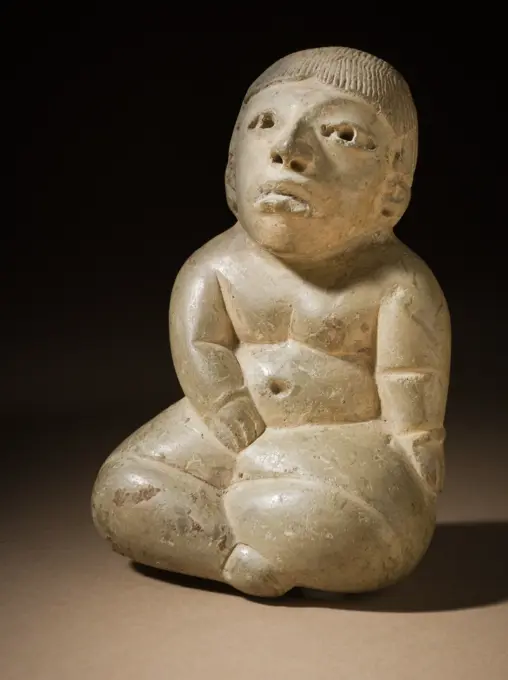
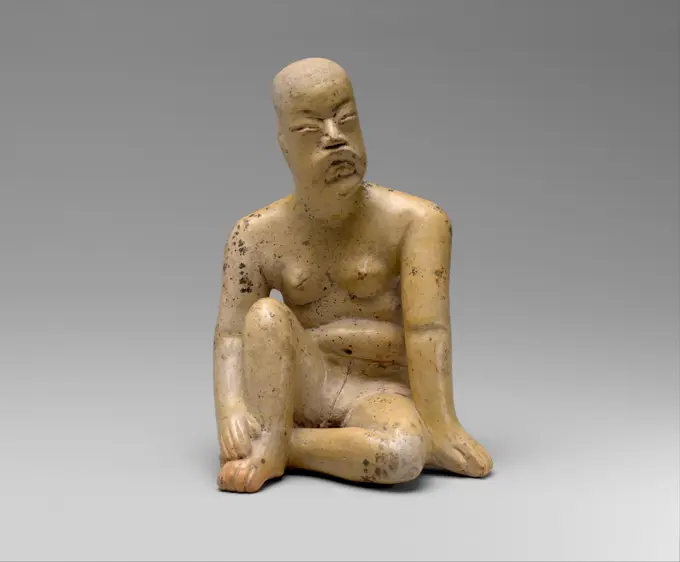
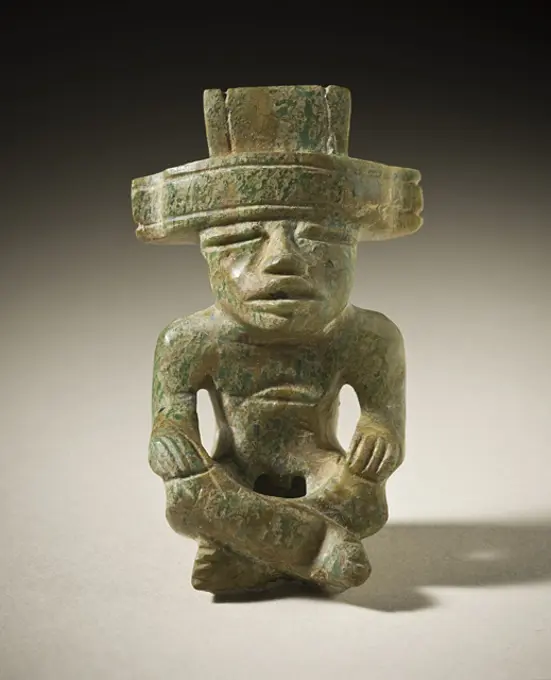
Seated Figure. Culture: Olmec. Dimensions: Height 3-9/16 in. (9.2 cm). Date: 12th-9th century B.C.. Museum: Metropolitan Museum of Art, New York, USA.
6145-29067670
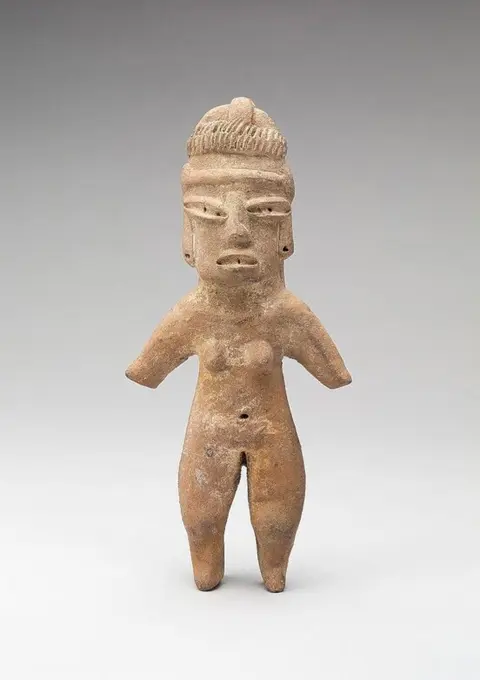
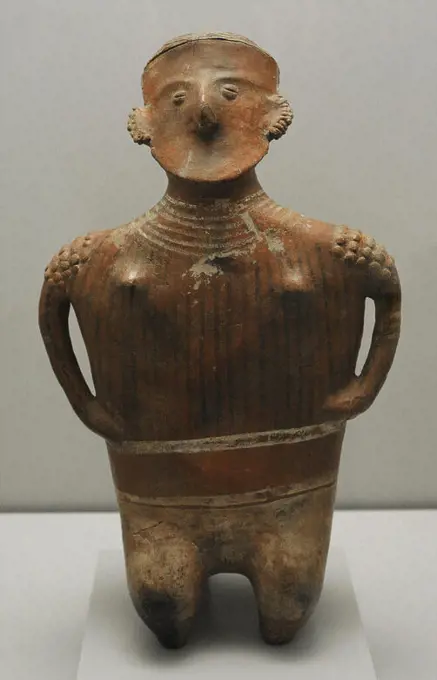
Female Figurine, c. 400-100 BC. Mexico, Guanajuato or Michoacán, Chupícuaro. Ceramic, pigment; overall: 22.5 x 10.5 cm (8 7/8 x 4 1/8 in.).
6145-29712487
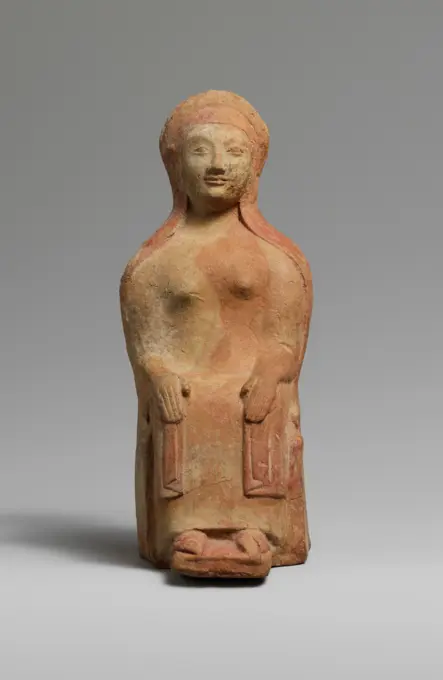
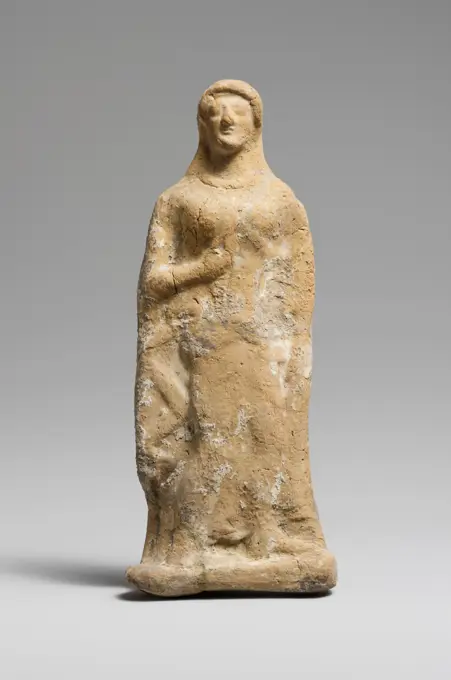
Terracotta statuette of a seated woman early 5th century B.C. Greek, Rhodian The figure represents a well-established type in both the small-scale terracottas and large stone sculpture of Eastern Greece. Her seated pose and the garment covering the back of her head and body suggest that she may be a goddess.. Terracotta statuette of a seated woman. Greek, Rhodian. early 5th century B.C.. Terracotta. Late Archaic. Terracottas
6145-29119192
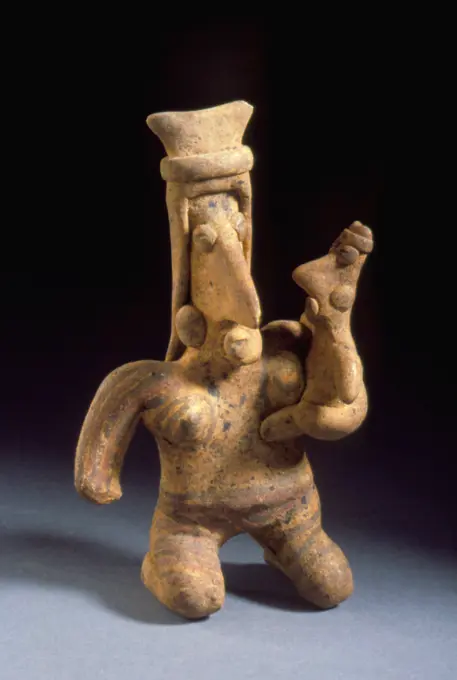
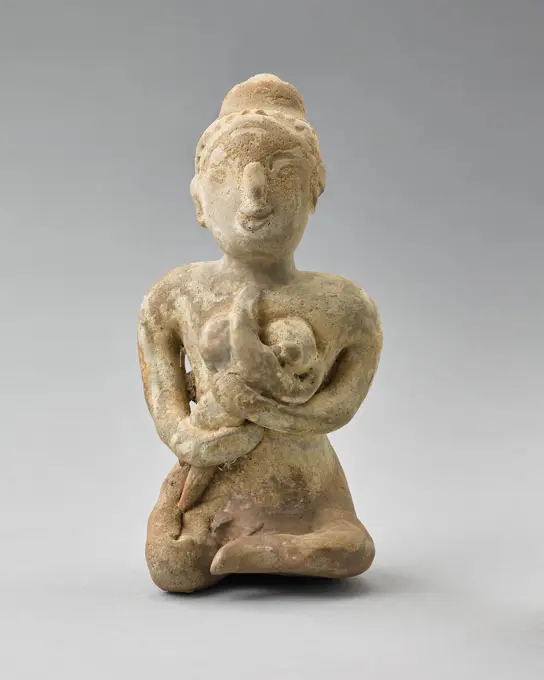
Female Figure and Child. Mexico, Jalisco, 200 BCE-500 CE. Ceramics. Slip-painted ceramic
6145-29130247
Funerary Sculpture of a Kneeling Entertainer
6145-29121337
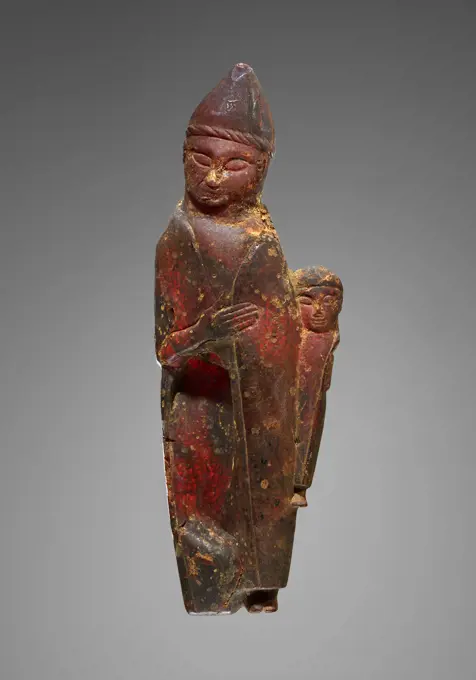
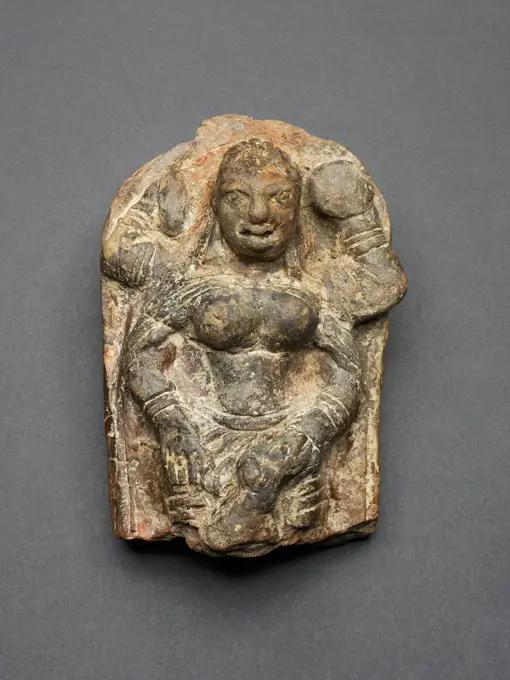
Kubera, the God of Riches. India, Uttar Pradesh, 5th century. Sculpture. Reddish brown terracotta with traces of black and white paint
6145-46871843
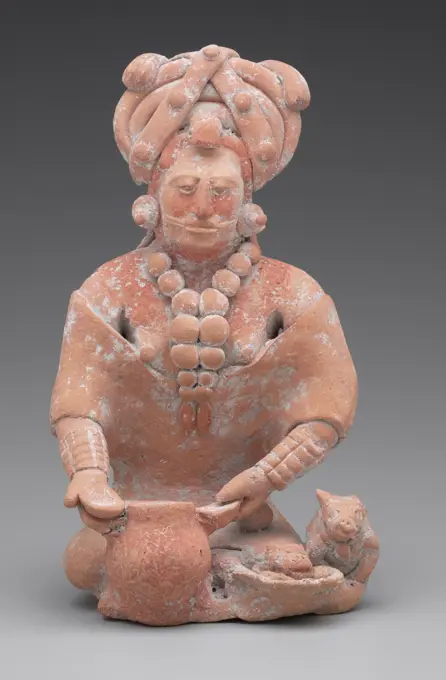
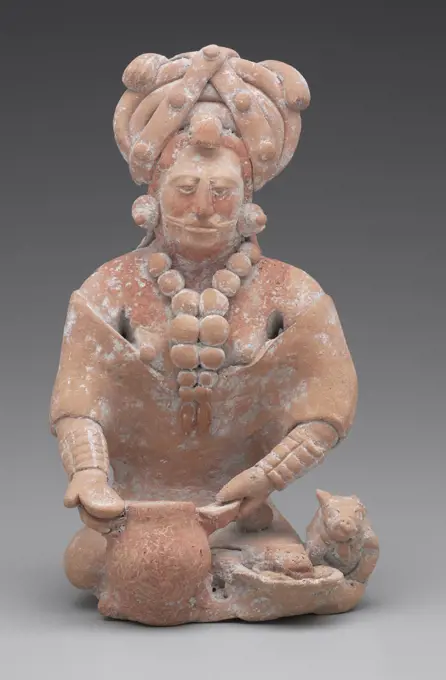
Seated Female Figure with Cooking Utensils and aDog.   Maker: Unknown
1788-22390
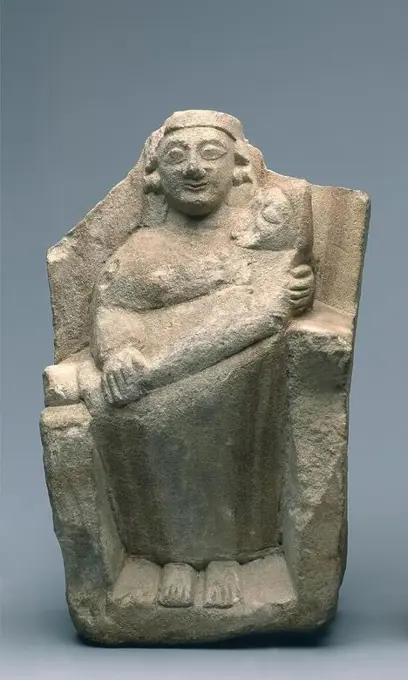
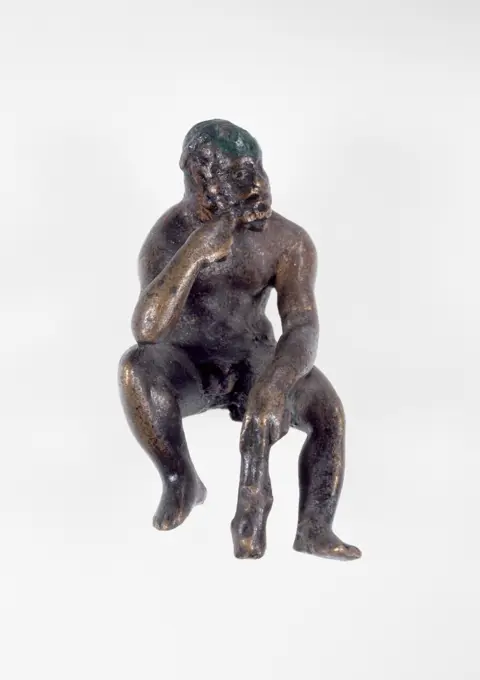
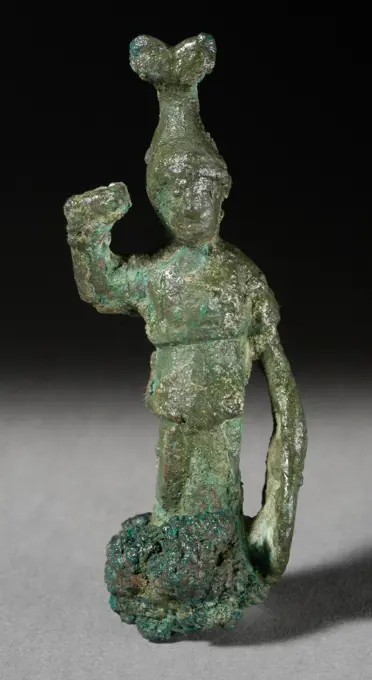
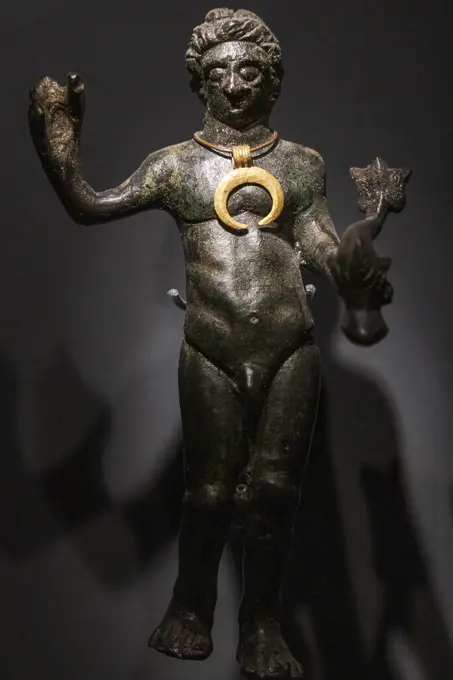
Lebanon, Sidon, Statuette representing a divinity from the holy place of Sidon, bronze
6145-30161849
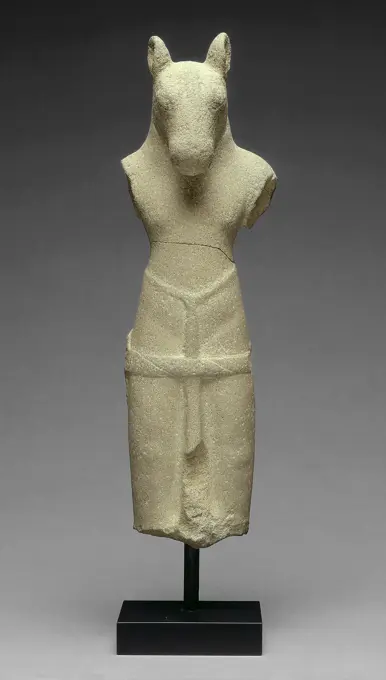
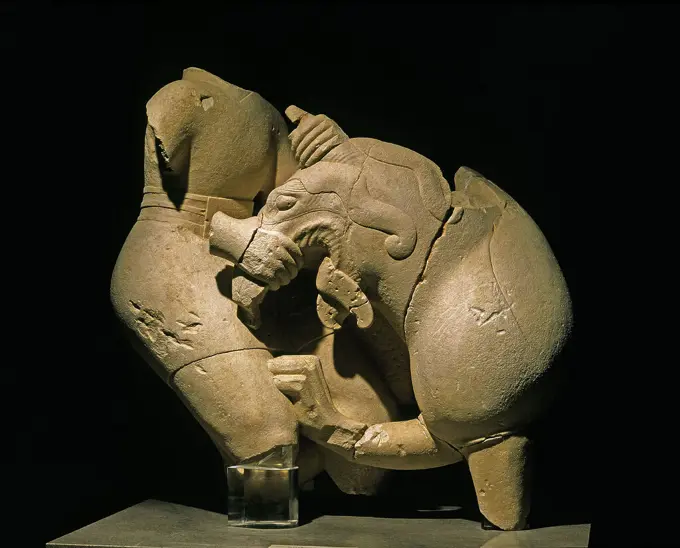
Horse-Headed Incarnation of God Vishnu (Hayagriva) 601 CE-800 CE Cambodia. Sandstone .
6145-29124791
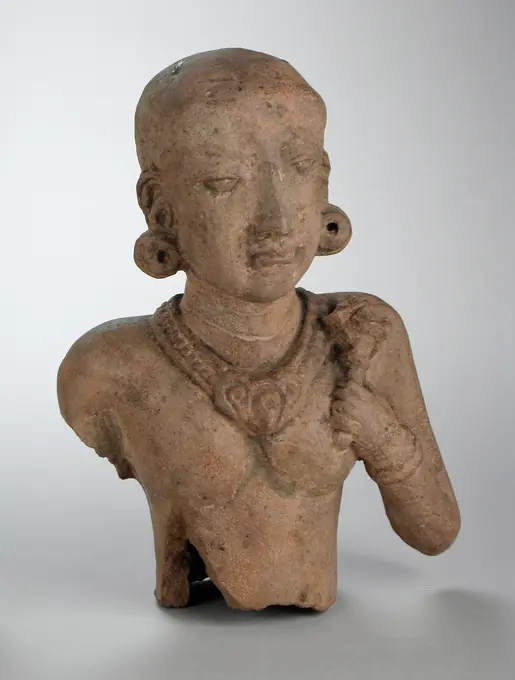
Female Bust. Indonesia, Eastern Java, 12th century. Sculpture. Terracotta
6145-29135754
Seated Figure. Honduras, Ulúa Valley, Playa de los Muertos, 900-600 BCE. Ceramics. Compacted clay
4409-17379678
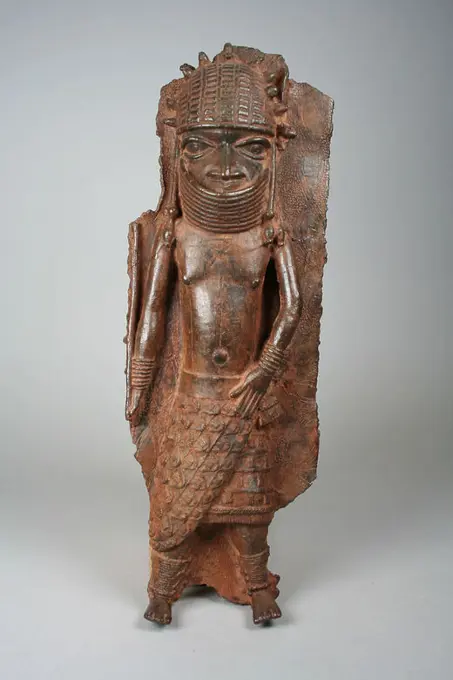
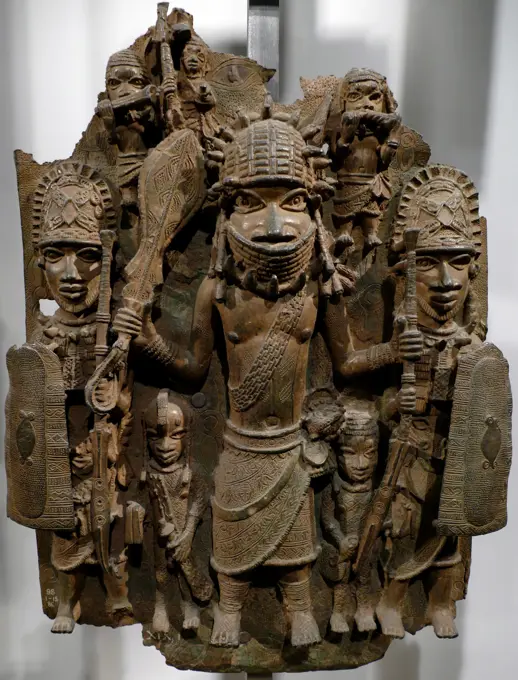
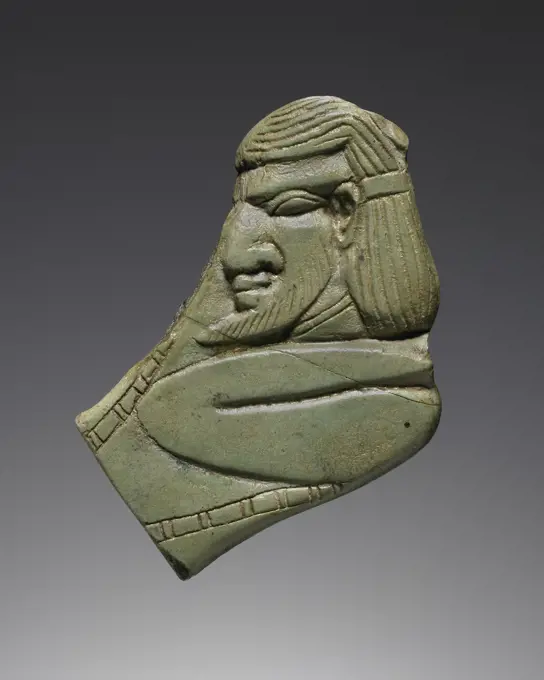
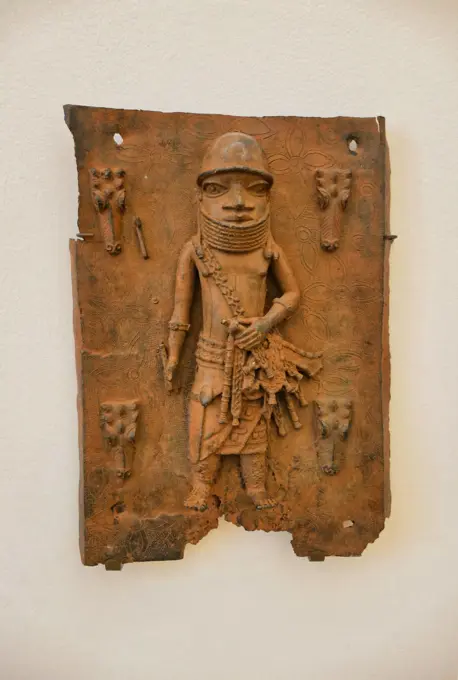
Plaque Fragment: Warrior Chief. Culture: Edo peoples. Dimensions: H. 17 3/4 x W. 6 1/4 in. (45.1 x 15.9 cm). Date: 16th-17th century. Museum: Metropolitan Museum of Art, New York, USA.
6145-29163328
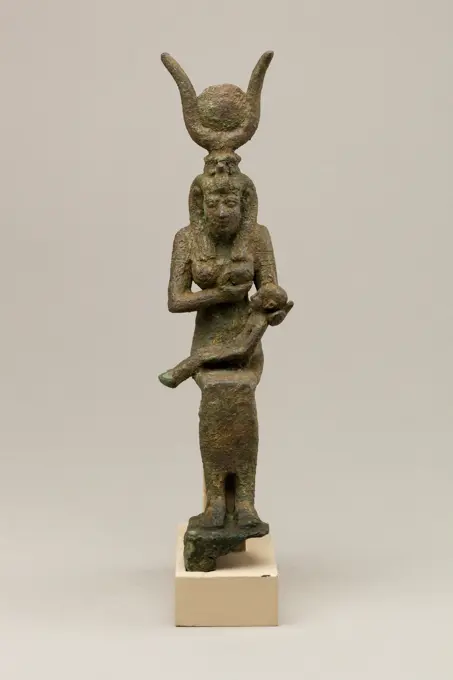
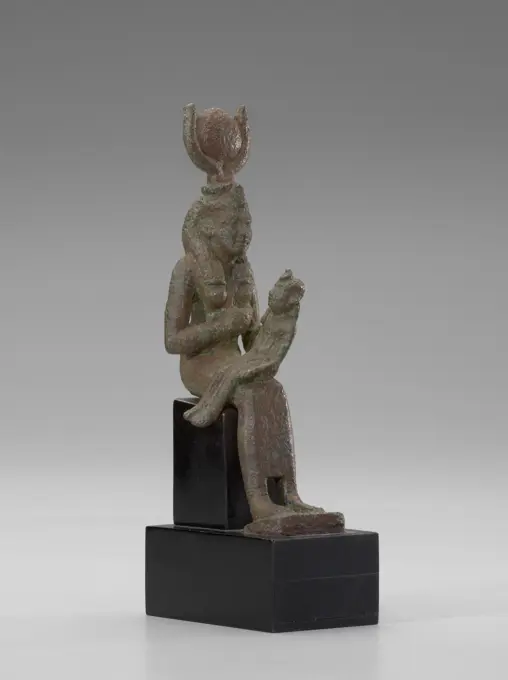
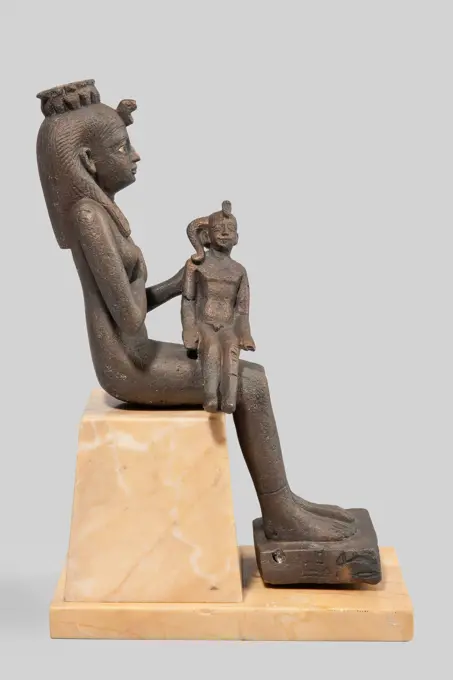
Isis and Horus 664-30 B.C. Late Period-Ptolemaic Period Isis name is first attested in the fifth dynasty in the Pyramid texts. She was the wife of Osiris and the mother of Horus, and thus was symbolically mother to the pharaoh. In the Late Period, the popularity of this important goddess dramatically increased. She is nearly always depicted in anthropomorphic form, standing or seated on a throne. This statuette shows the goddess in her most beloved pose, nursing her son Horus (known also as the lactans pose). Other goddesses sometimes nurse Horus or other child gods, but Isis is preeminent among them in this role. She wears the horned crown that by the Late Period she had adopted from the goddess Hathor, and armlets on her upper arms. Faint markings on Horuss chest suggest that he wore an amulet, a common feature for child gods.The abundance of statuettes in this particular pose demonstrate some of the qualities for which Isis was most valued in the first millennium BC: her role as a
4409-17499415
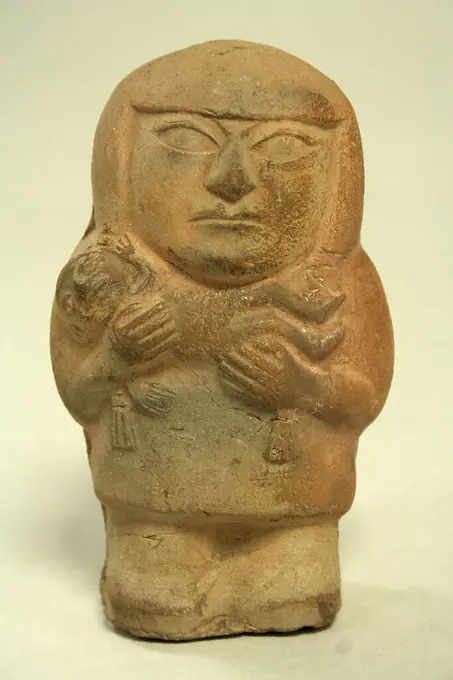
Figure of Mother Holding Child. Culture: Moche. Dimensions: Overall: 5 1/2 in. (13.97 cm). Date: 3rd-5th century. Museum: Metropolitan Museum of Art, New York, USA.
1788-41938
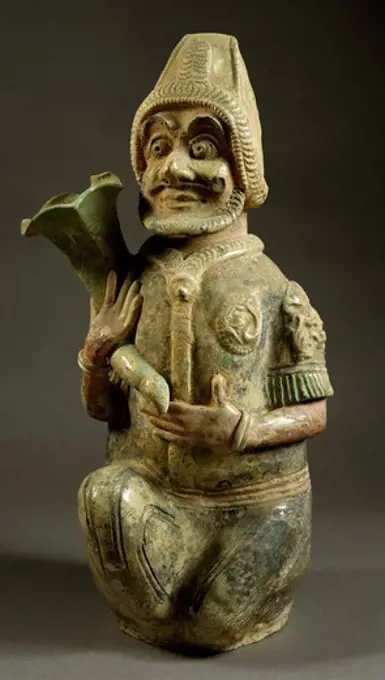
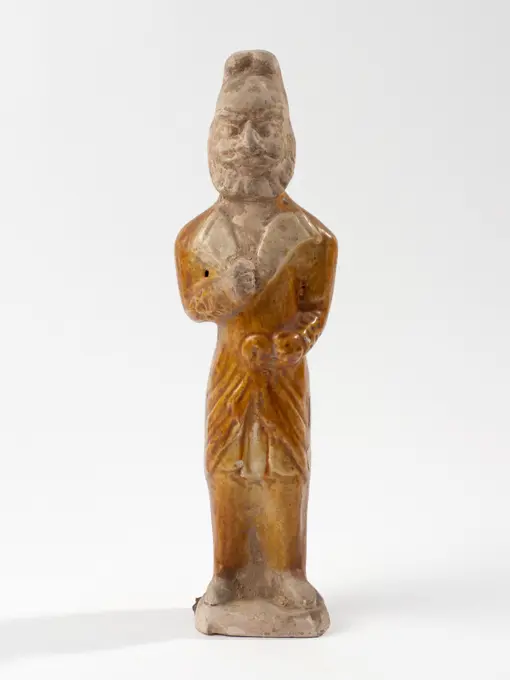
Barbarian bearer of offerings, glazed terracotta statue, China. Chinese Civilisation, Tang Dynasty, 7th century.
4409-17434368
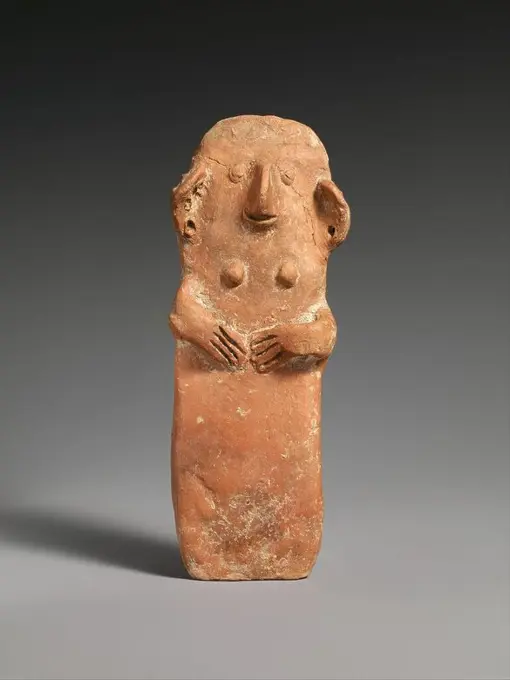
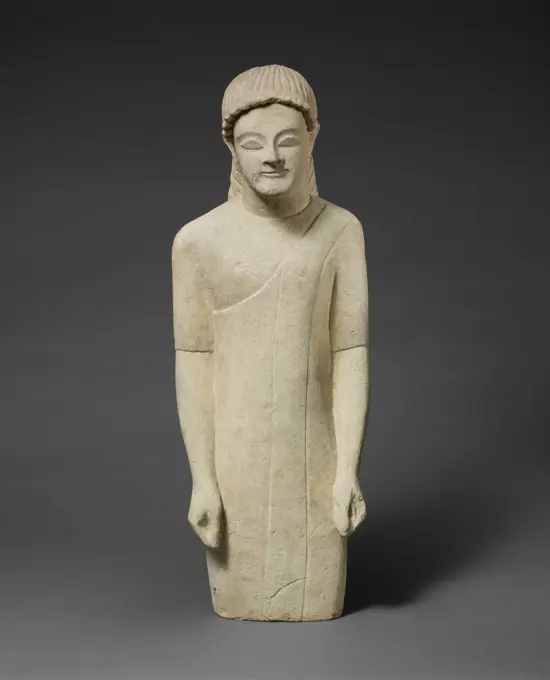
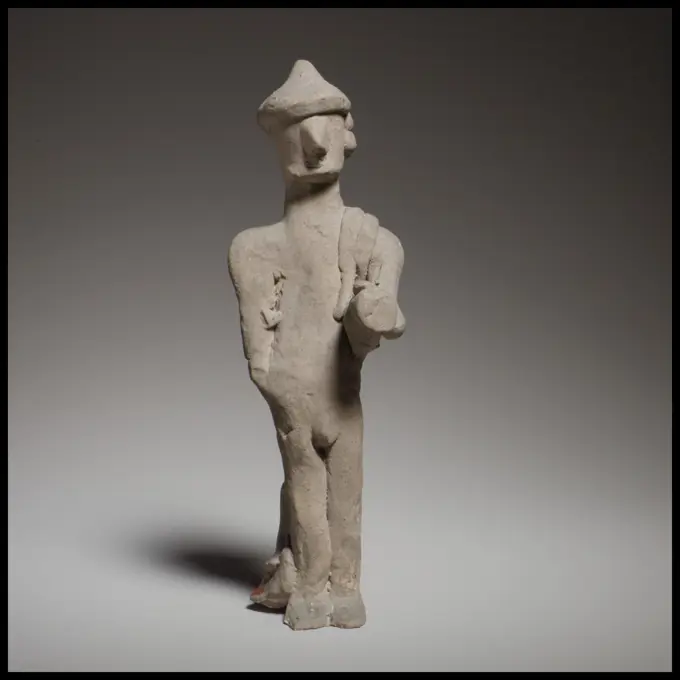
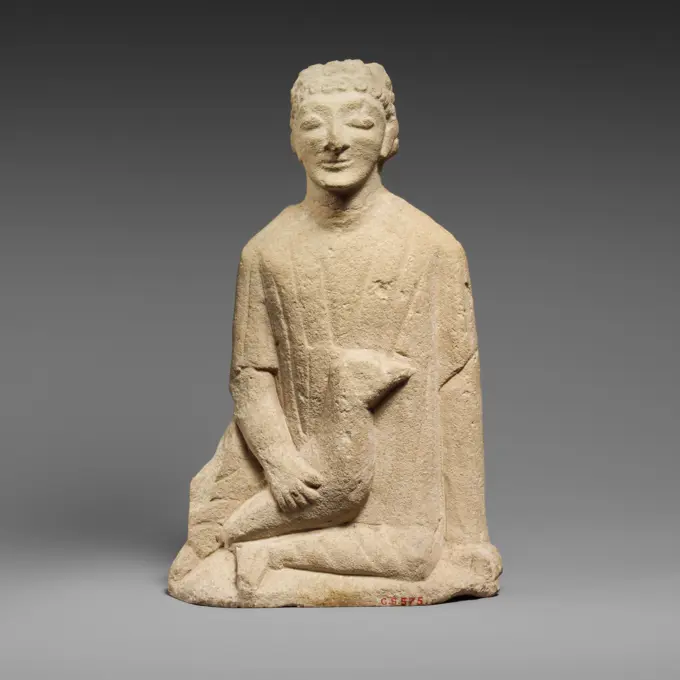
Terracotta plank-shaped figurine. Culture: Cypriot. Dimensions: H. 6 15/16 in. (17.6 cm). Date: ca. 1900-1800 B.C..A straight sided slab with rounded ends and details in low relief.A turban, now detached, was probably worn on the head, leaving a different coloration on the surface. Museum: Metropolitan Museum of Art, New York, USA.
4409-17546009
Wrestler. Japan. Date: 300 AD-522 AD. Dimensions: 63.4 × 38.4 × 22 cm (25 × 15 1/8 × 8 5/8 in.). Earthenware. Origin: Japan. Museum: The Chicago Art Institute, Chicago, USA.
6145-29799171
Seated Figure 12th-9th century B.C. Olmec The figure, modeled of solid clay, is shown sitting in a comfortably relaxed posture, left leg tucked under right. Most of the surface of the figure is covered with a cream-color slip; only the top of the head and the waist area are left unpolished probably indicating cap and garment worn by the figure.The right arm and hand are extended, resting on the right foot. The left arm rests on the ground next to the left thigh. Four grooves on the feet and hands indicate toes and fingers. The narrow, elongated, artificially deformed head has long ear flanges and tilts slightly to the left; the facial features with almond-shaped, puffy eyes, thick upper lip and half-open mouth with down-turned corners are typical of Olmec supernaturals. The eyebrows are drawn in a faint black; traces of red and white pigment remain in the eyes.This figure is a fine example of type of small three-dimensional solid clay figures found at such sites as Las Bocas, Tlatilco,
4443-28733041
Female Figure, 400-799, 9 1/4 x 3 3/4 in. (23.5 x 9.53 cm), Earthenware, Mexico, 5th-8th century
6145-29069882
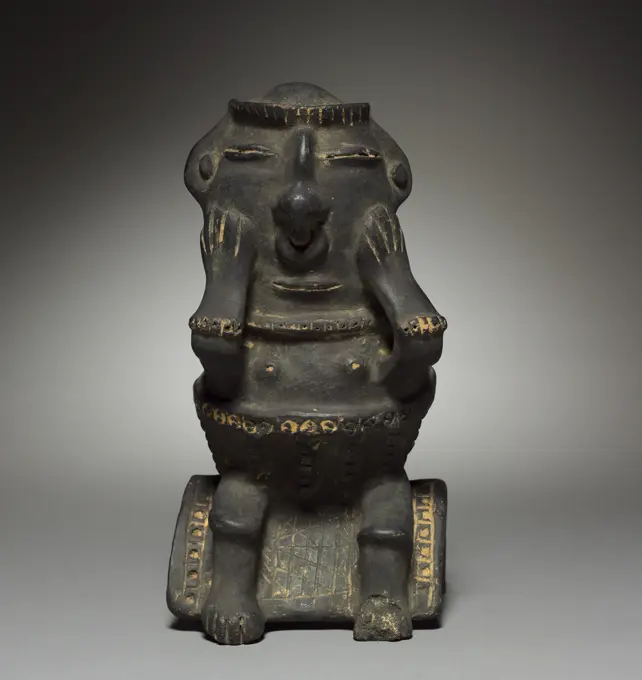
Seated Figure, before 1921. Colombia, Pre-Columbian. Earthenware; overall: 27.5 x 14 cm (10 13/16 x 5 1/2 in.).
6145-48966546
Idol
4443-28727240
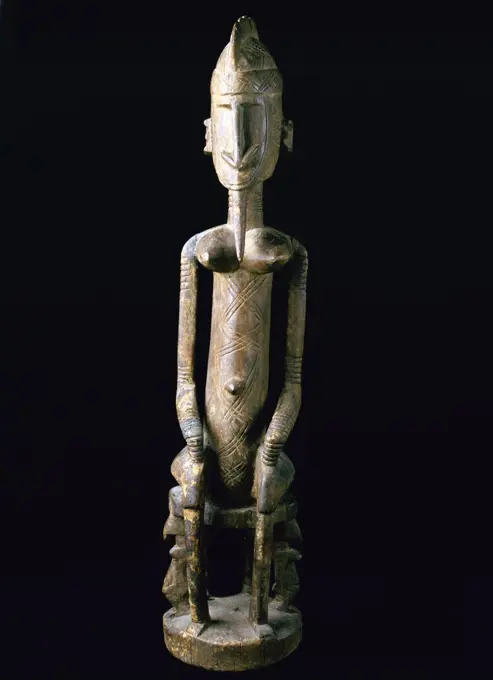
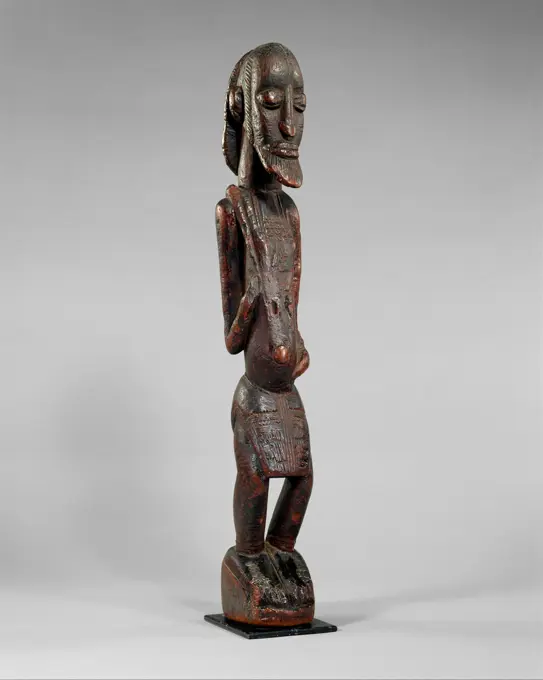
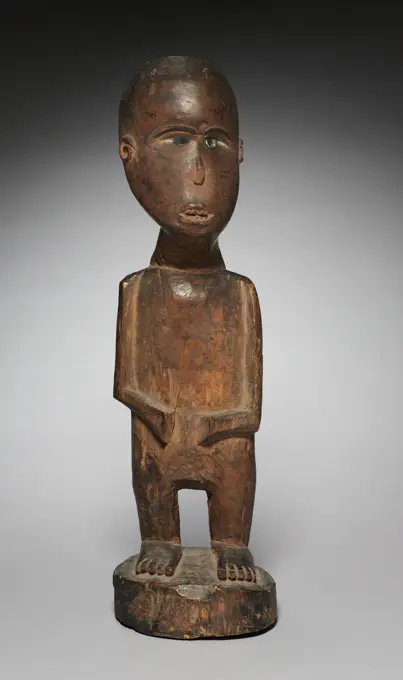
Male figure, 17th-18th century, 19 3/4 x 5 1/4 x 4 3/4 in. (50.17 x 13.34 x 12.07 cm), Wood, Mali, 17th-18th century, This musician has been playing his xylophone for more than 250 years. Among the oldest woodcarvings in these galleries, it was created by the Dogon people from Mali, who have a very old art tradition. Its dry surface and lack of a thick crust of offerings suggest that it was not used as an altarpiece, as many Dogon figures are. Instead, it was probably made as a reference to migrations long ago, when the ancestors of the Dogon left the Mali Empire around the 14th century.
6145-29191557
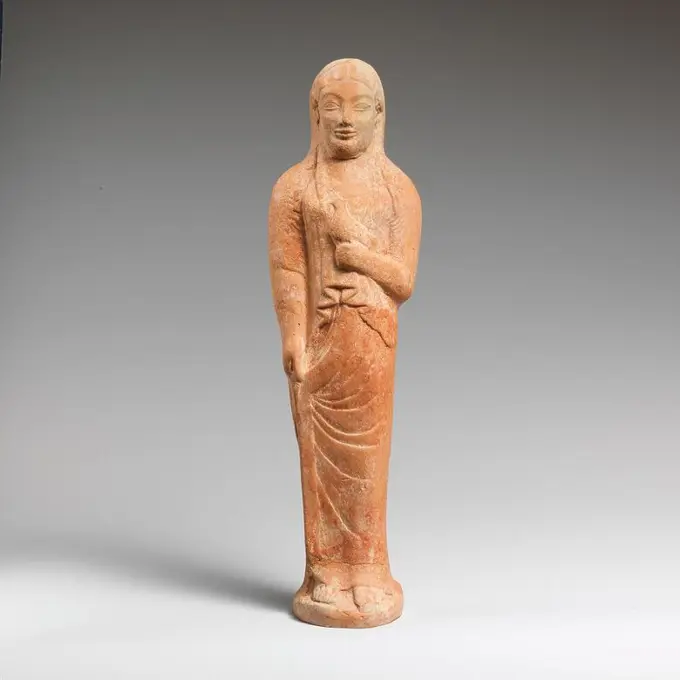
Terracotta statuette of a woman mid-5th century B.C. Greek, Attic The woman appears to be walking and, possibly, holding a flower.. Terracotta statuette of a woman 255027 Greek, Attic, Terracotta statuette of a woman, mid-5th century B.C., Terracotta, H.: 6 13/16 in. (17.3 cm). The Metropolitan Museum of Art, New York. Gift of Ernest Brummer, 1959 (59.48.7)
6145-29795514
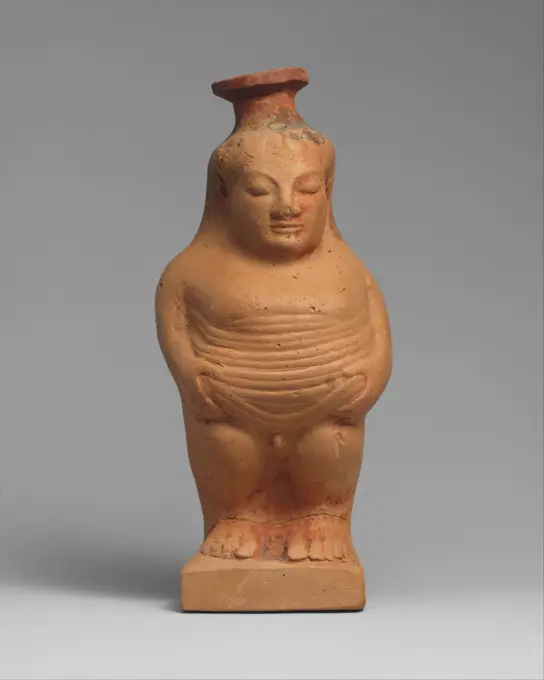
Terracotta aryballos (perfume vase) in the form of a boy ca. 540-530 B.C. East Greek Vase in the form of a fat boy with his eyes shut, hands holding his belly.. Terracotta aryballos (perfume vase) in the form of a boy. East Greek. ca. 540-530 B.C.. Terracotta. Archaic. Vases
6145-46811220
Ancestor Figure (AnaDeo)
6145-29185103
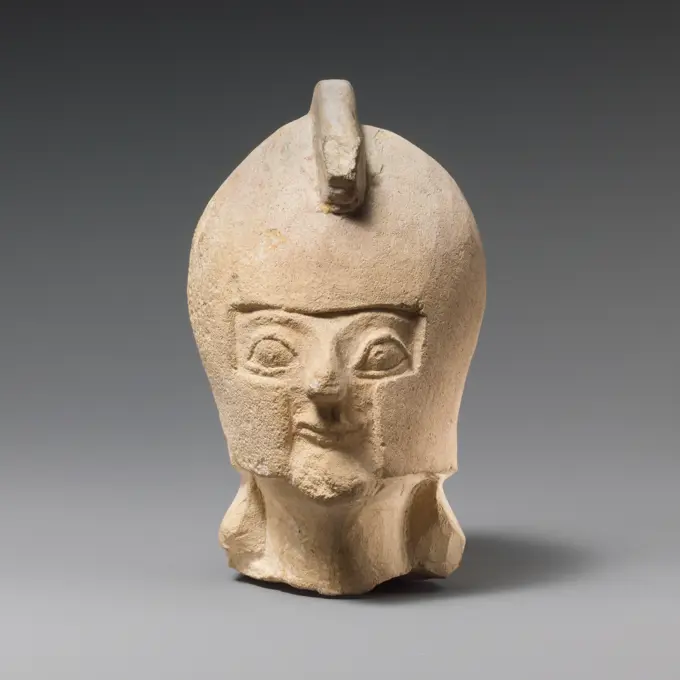
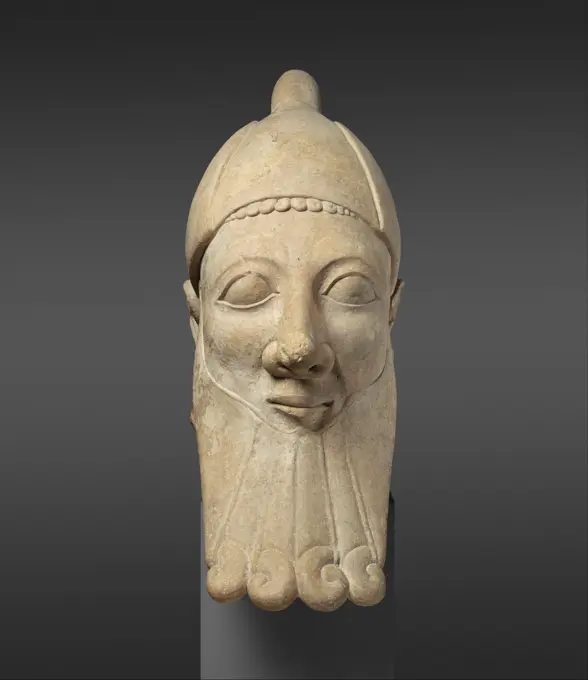
Limestone head of a warrior wearing a crested helmet 5th century B.C. Cypriot Warrior wearing a crested helmet.A helmet of Chalcidian type with a crest covers the small head, which has a smiling face, pointed nose, very large eyes with thick eyelids, and smooth hair under the helmet.. Limestone head of a warrior wearing a crested helmet. Cypriot. 5th century B.C.. Limestone. Classical. Stone Sculpture
6145-29066133
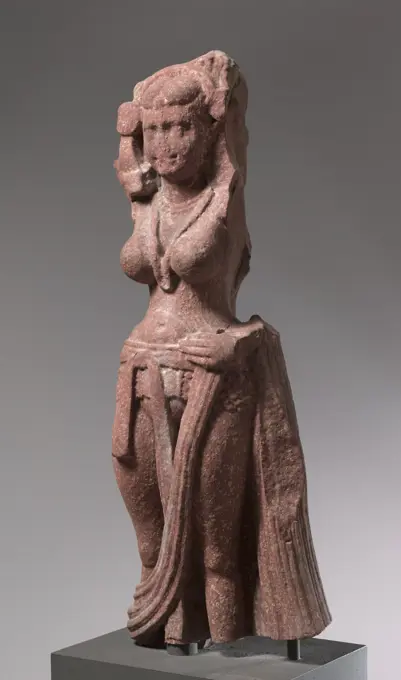
Nature Divinity (Yakshi), c. AD 75. India, Mathura, Kshatrapa period (c. 20 BC-AD 114). Mottled red sandstone; overall: 127.6 x 49 x 25.4 cm (50 1/4 x 19 5/16 x 10 in.).
4409-17388811
Magical figure of captive. Dimensions: H. 11.4 × W. 7.3 × D. 5.2 cm (4 1/2 × 2 7/8 × 2 1/16 in.). Dynasty: Dynasty 12-13. Date: ca. 1981-1650 B.C.. Museum: Metropolitan Museum of Art, New York, USA.
6145-30367783
Statue of Isis andHorus
6145-59035266
Statuette (usual name), 1400. Covered sandstone. Cernuschi Museum, Asia Museum of Asia in the city of Paris.
4443-21958756
Pendant: Female Holding a Child (Kourotrophos); Italy; 600 - 550 B.C; Amber; 130 × 45 × 18 mm, 55.2 g (5 1,8 × 1 3,4 × 11,16 in., 0.1217 lb.);
6145-29834179
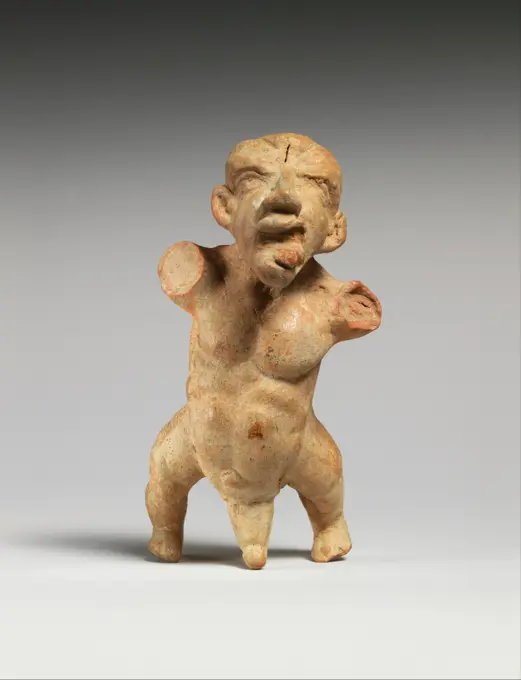
Terracotta statuette of a dwarf 2nd century B.C. Greek Figure of a grotesque with fragmentary arms outstretched.. Terracotta statuette of a dwarf 257558
6145-29092168
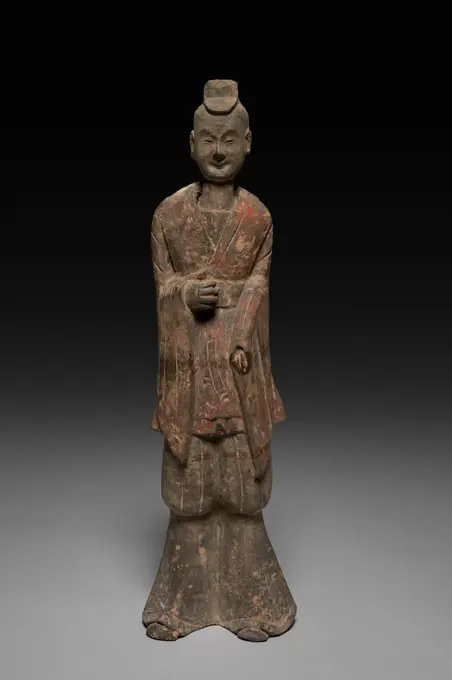
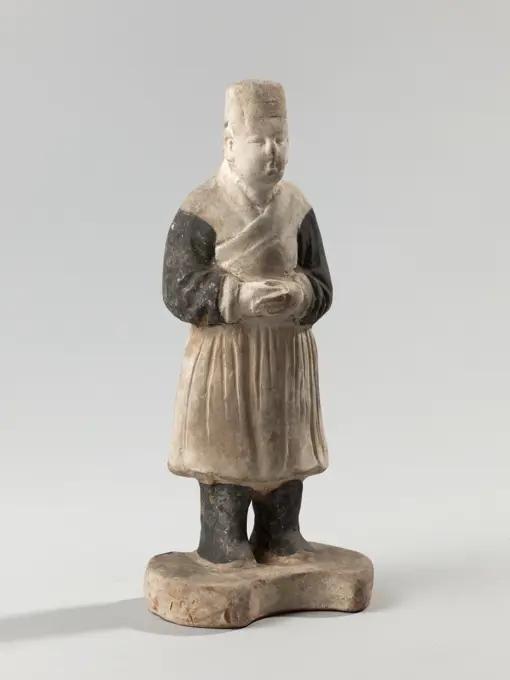
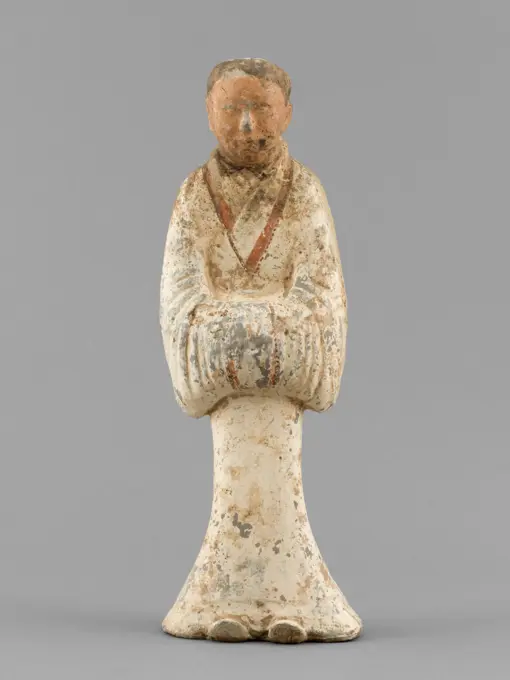
Court Official (Tomb Figure), 1st quarter of 6th Century. China, Six Dynasties period (317-581), Northern Wei dynasty (386-534). Gray earthenware with traces of polychrome; overall: 36 cm (14 3/16 in.).
4409-17426361
Standing Ceramic Figure. Culture: Moche. Dimensions: H x W: 4 5/8 x 2 3/4in. (11.7 x 7cm). Date: 3rd-5th century. Museum: Metropolitan Museum of Art, New York, USA.
6145-29069192
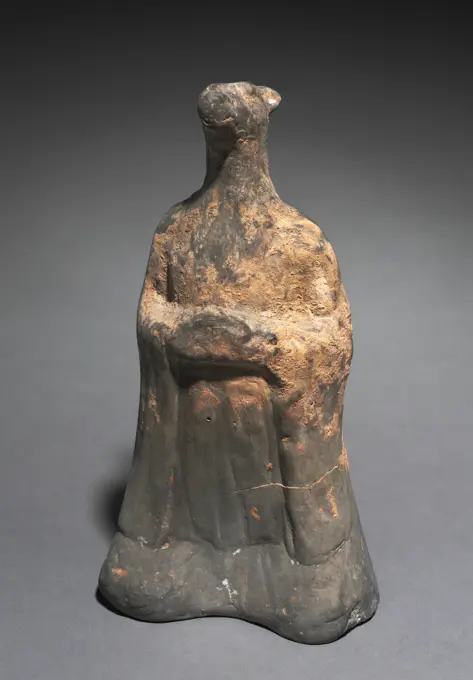
Mortuary Figure of the Zodiac Sign: Horse (Libra), 500s. China, Northern Wei dynasty (386-534). Gray earthenware with traces of slip; overall: 22.6 cm (8 7/8 in.).
4409-17519394
Female Figure. Tlatilco, Preclassic period; Valley of Mexico, Mexico. Date: 500 BC-300 BC. Dimensions: H. 16.8 cm (6 5/8 in.). Ceramic and pigment. Origin: Mexico. Museum: The Chicago Art Institute, Chicago, USA.
6145-59035318
Statuette (usual name), 1400. Covered sandstone. Cernuschi Museum, Asia Museum of Asia in the city of Paris.
4409-17232632
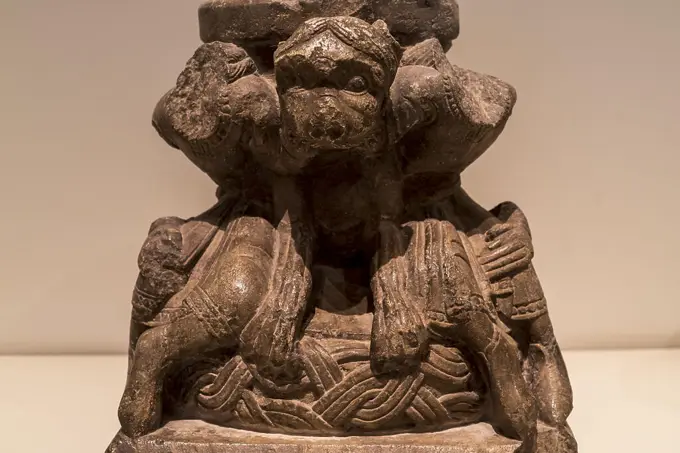
Romanesque art in the National Art Museum of Catalonia,Barcrelona,bases of the Ripoll baldachin (XII century AC).Santa Maria in Ripoll monastery.
6145-29129846
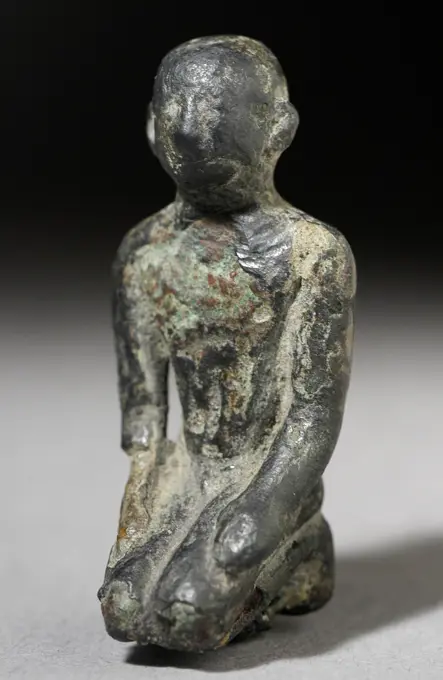
Figurine of a Human Worshipping. probably Late Period (664 - 332 BCE). Sculpture. Bronze
4443-19559566
Maker: Unknown, Seated Female Figure with Cooking Utensils and aDog, A.D.600-900, Ceramic with pigment, 19.1 cm (7 1/2in.), A seated noble Maya woman prepares tamales, or steamed maize cakes, while an eager little dog sits at her side. She wears a huipil, or upper body garment, that exposes her breasts, and her hair is bound into a turban similar to those worn by Maya women in Guatemalatoday. , Made in Mexico, Mexico, probably Campeche, Jaina Island,Maya, Late ClassicPeriod, Sculpture
1788-40851
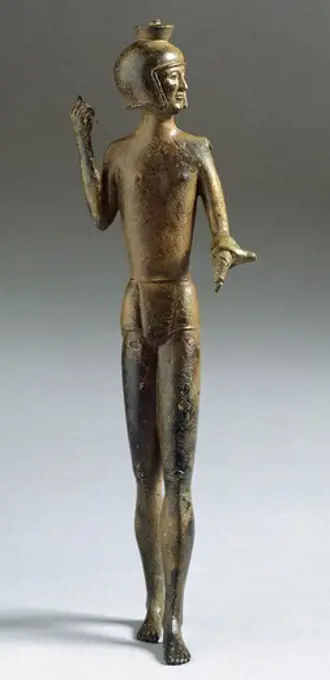
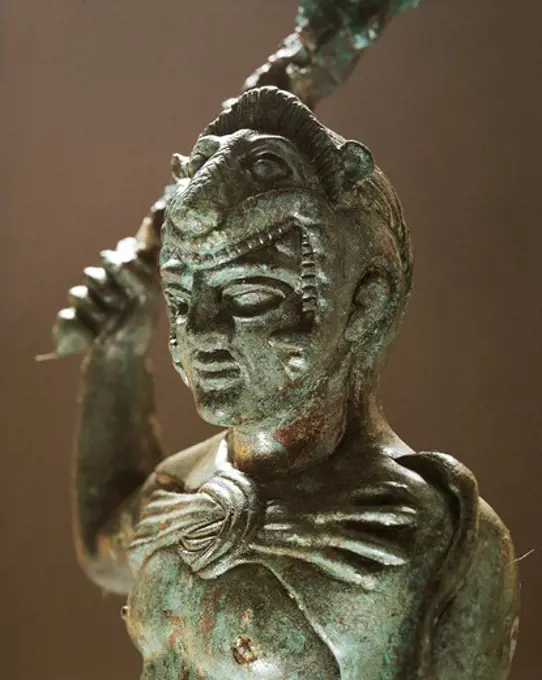
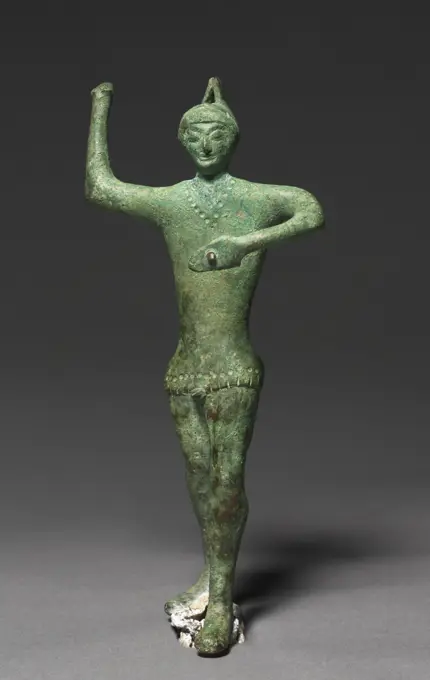
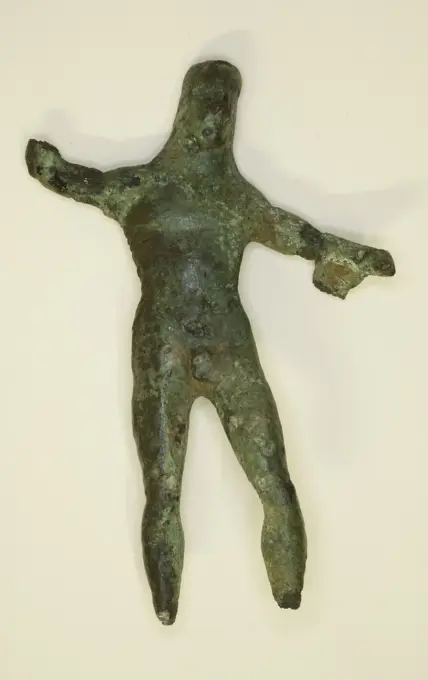
Warrior in bronze, from Brolio (Tuscany). Etruscan civilization, ca 550 BC.
4409-17582353
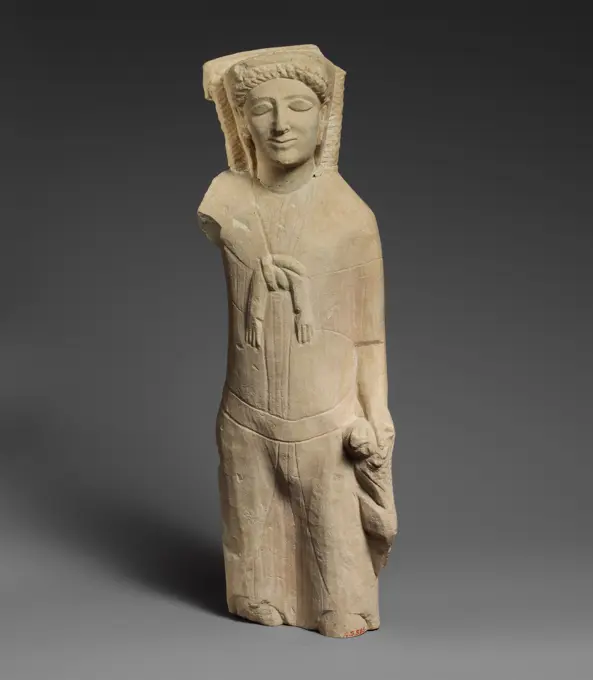
'Woman with a Flower'. Cyprus, Last third of the 6th - early 5th century BC. Dimensions: h. 21 cm. Museum: State Hermitage, St. Petersburg.
4409-17349534
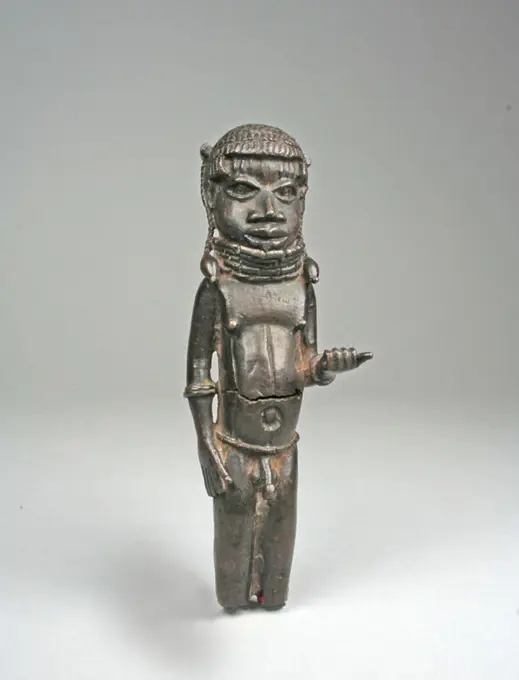
Figure: Male Attendant. Culture: Edo peoples. Dimensions: H x W: 7 x 2in. (17.8 x 5.1cm). Date: 18th century. Museum: Metropolitan Museum of Art, New York, USA.
1746-21107453
Sandstone statuette of the female figure from Mali, West Africa. Dated 280 AD.
6145-29719180
Female Figure 500 B.C.-A.D. 250 Xochipala. Female Figure. Xochipala. 500 B.C.-A.D. 250. Ceramic. Mexico, Mesoamerica, Guerrero. Ceramics-Sculpture
6145-58993262
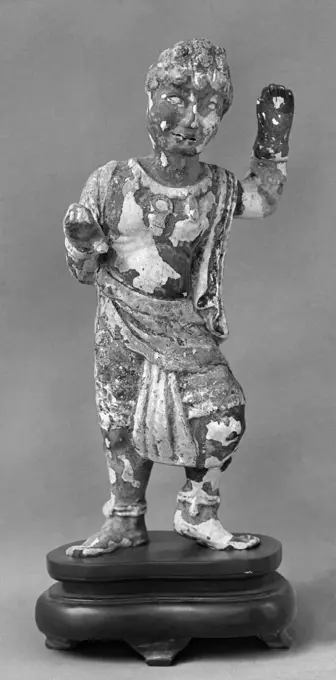
Mingqi Barbare ". Terracotta. China, Tang dynasty. Paris, Cernuschi museum. 74944-18 Tang dynasty, barbaric mingqi, character, terracotta
6145-29126223
Standing Female Figure
6145-29744435
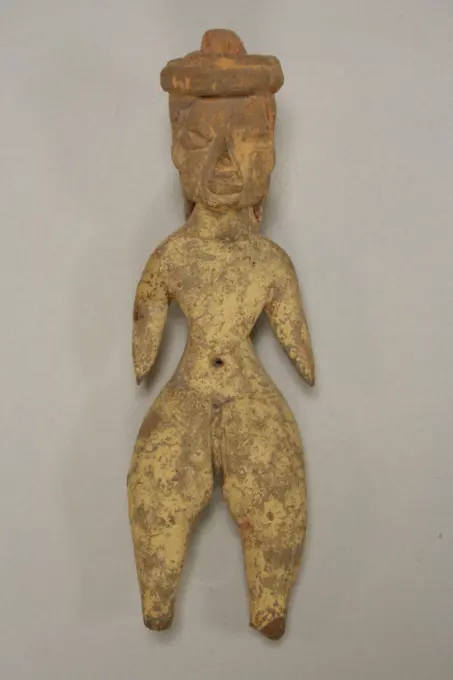
Female Figure 10th century B.C. Tlatilco This solid, hand-modeled ceramic figurine is nude except for a headband that continues around to the back of the head. It has long, loose hair indicated down the back to waist level, with breasts and buttocks only faintly indicated. The clay is yellow-tan in color and painted red. Sculpted some three millennia ago in the Valley of Mexico, this figurine belongs to a group of ceramic effigies known collectively as the Tlatilco "pretty ladies." Depicting females with large heads, small waists, and prominent hips, these handheld sculptures present a fairly standardized body type and are typically fired to red, buff, or brown tones. As the popular embodiments of an ideal feminine form, the Tlatilco "pretty ladies" are part of a centuries-long tradition in which eccentricities and religious imagery predominate. Featuring hunchbacks, dwarfs, contorted acrobats, two-headed women, and conjoined twins, the corpus of Tlatilco figurines encompasses the full
6145-29133404
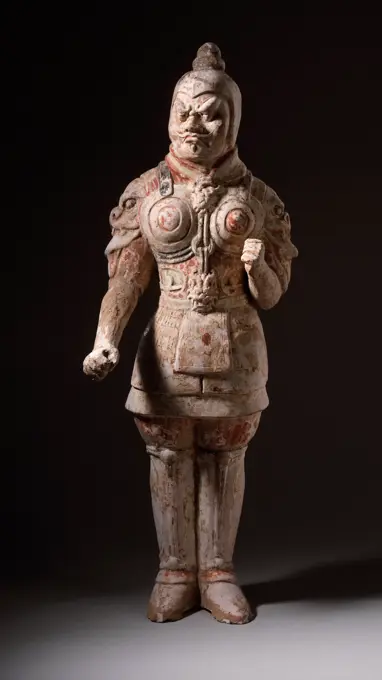
Funerary Sculpture of a Pair of Soldiers
6145-29164403
Figure of Entertainer China. Figure of Entertainer 62950
6145-29771279
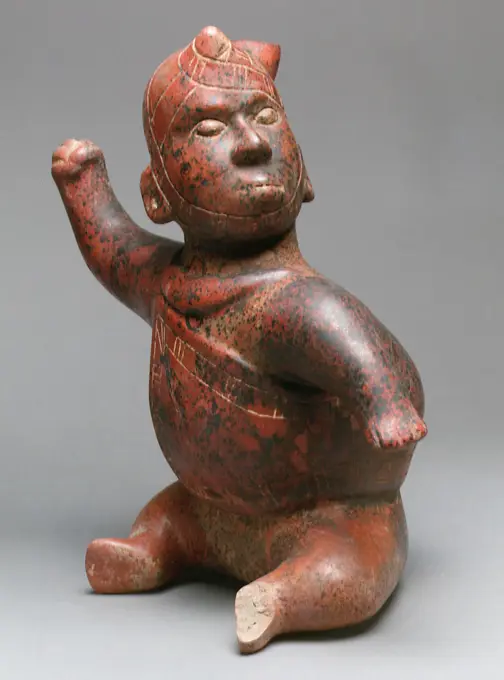
Horned Figure, Shaman () 2nd century B.C.-A.D. 3rd century Colima The sculpture of Colima is as stytistically distinctive as that of the neighboring regions of Jalisco and Nayarit. Round, smooth forms with little variation in the warm red-brown surface color characterize Colima work. The wide array of postures and expressions often make the sculptures particularly pleasing to modern tastes. Seated male figures that have a horn strapped to their heads, as here, were a favored depiction. The strapped horn has recently been interpreted as a stylized conch shell, meaningful because of its relation to rulership. The horned figures, however, have also been interpreted as warriors or shamans (ritual specialists). Conjecture might suggest that the figure, with its twisting, dramatic pose, pugnacious expression, and upraised right hand clenched in a fist, was protecting the tomb into which it had been placed as a guardian.. Horned Figure, Shaman () 312688
6145-29144674
Limestone statuette of Herakles holding a lion late 5th or early 4th century B.C. Cypriot Figure with small lion climbing up left thigh.. Limestone statuette of Herakles holding a lion 242210
6145-29126343
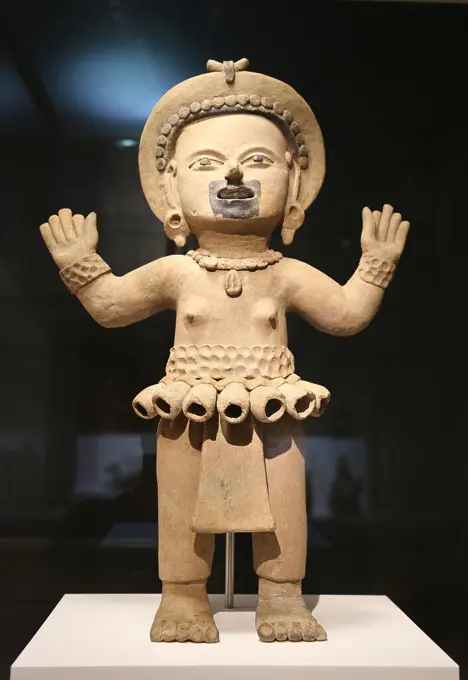
Female Figure Whistle. Mexico, Campeche, Jaina, Maya, 600-900 CE. Ceramics. Buff-slipped ceramic
4409-17385634
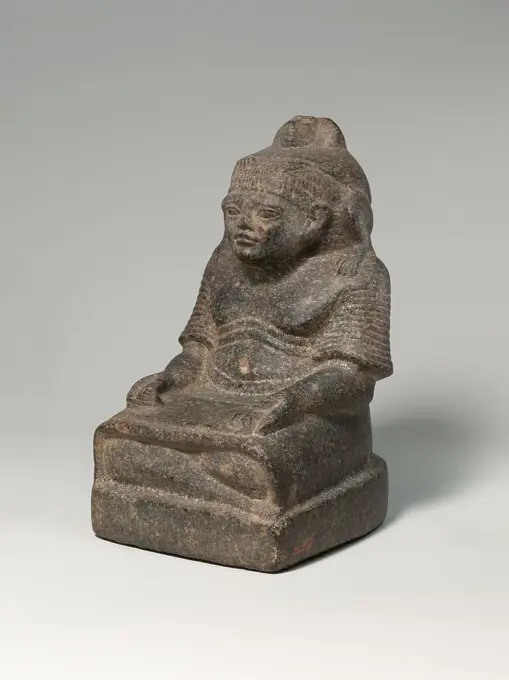
Statue of a scribe with a baboon. Dimensions: H. 22 cm (8 11/16 in). Dynasty: Dynasty 19-20. Date: ca. 1295-1070 B.C..This small figure of a scribe may lack the sculptural quality of the Museum's statue of Haremhab 23.10.1, but it does also emphasize the close relation of the depicted official with the god Thoth, deity of all things scribal. While the god features in the Haremhab statue prominently in the inscriptions, Thoth is here shown as a baboon who sits on the scribe's back. The most important example of this motif is the statue representing the 20th dynasty High Priest of Amun Ramessesnakht in the Egyptian Museum, Cairo (CG 41262), found in the "Cachette" of the temple of Karnak. Museum: Metropolitan Museum of Art, New York, USA.
888-8016
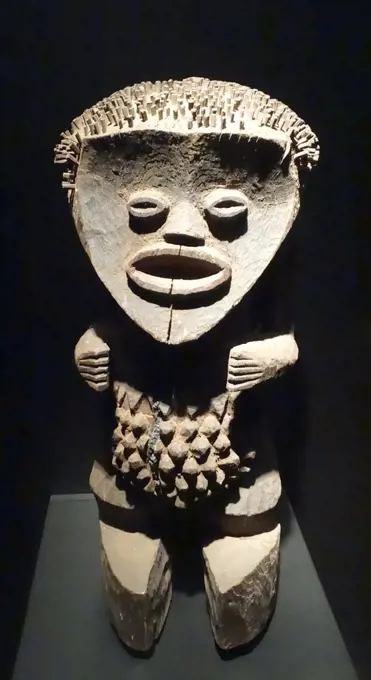
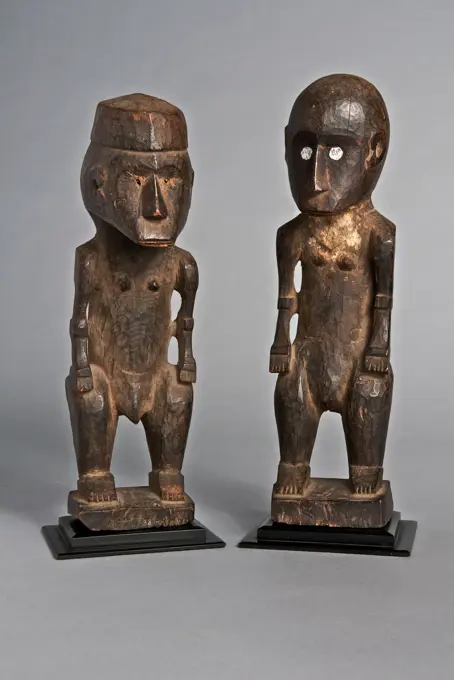
Wooden carving,  Dogon style,  USA,  Florida,  Jacksonville,  The Museum of Contemporary Art,  African Art Collection
6145-48529907
Izyda z Horusem. unknown, author
6145-46813553
Funerary Effigy (TauTau)
6145-29136676
Seated Male Figure
6145-29740514
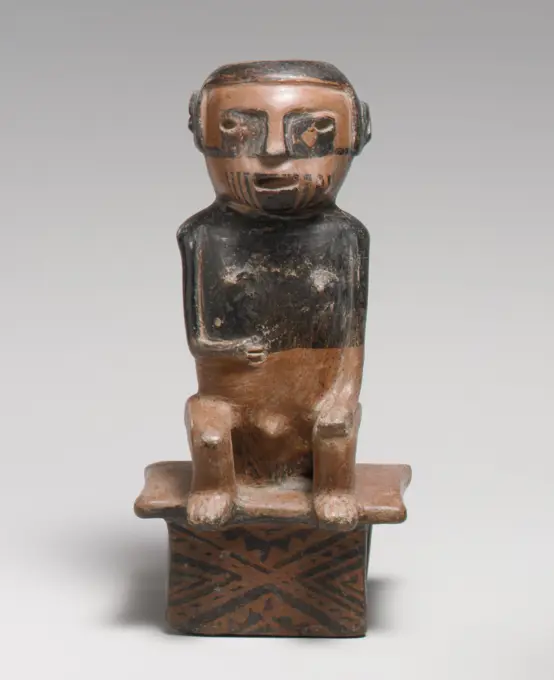
Coca Chewer on Bench 9th-15th century Capulí Hand modeled and hollow, Capulí style figures are found on both sides of the Colombia/Ecuador border. A common depiction is a male seated on a bench. A wad of coca leaves makes a conspicuous budge in his cheek. The figure's upper torso and hair are resist decorated in black on light brown, and black designs embellish the face and bench. The surface is well polished.Coca-chewing figures on stools are generally interpreted as shamans. The significance of coca-chewing in ancient Andean cultures is difficult to assess today. Archaeological depictions in artworks, however, and early Spanish accounts indicate that coca was widely used in the highlands of South America for thousands of years. In late pre-conquest Inka times coca use is said to have been reserved for the male nobility, religious ceremonies, and divination.. Coca Chewer on Bench. Capulí. 9th-15th century. Ceramic. Ecuador. Ceramics-Sculpture
4409-17370756
Terracotta statuette of a woman holding a bird. Culture: East Greek. Dimensions: H. with plinth 9 7/16 in. (24 cm). Date: mid-6th century B.C..Statuette of a woman holding a dove. Museum: Metropolitan Museum of Art, New York, USA.
6145-29726640
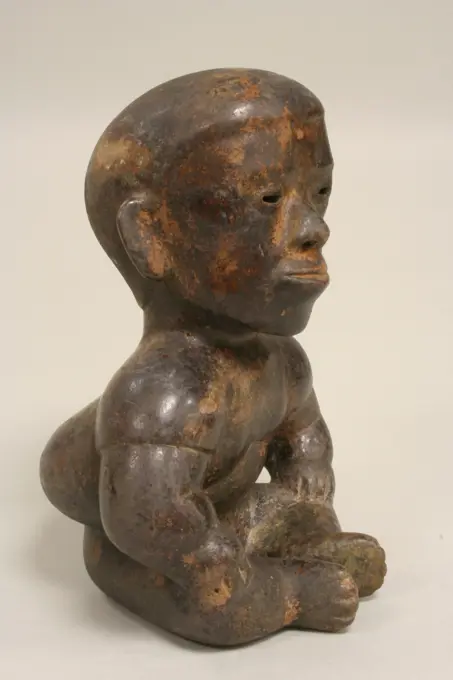
Seated Hunchback 2nd century B.C.-A.D. 3rd century Colima. Seated Hunchback 310479
4443-28740602
Double Masked Figure, 20th century, 23 x 9 5/8 x 12 9/16 in. (58.42 x 24.45 x 31.91 cm), Wood, metal, Côte d'Ivoire, 20th century
6145-29149500
Limestone statuette of a beardless male votary in Greek dress late 6th century or early 5th century B.C. Cypriot. Limestone statuette of a beardless male votary in Greek dress 242185
4443-21959872
Modern Imitation of an Italic Statuette; Modern; Resin, with copal and amber; 280 × 135 mm (11 × 5 5,16 in.)
1788-15907
Bronze statue of Etruscan god Hercle or Heracle, from sanctuary of Villa Cassarini, Emilia Romagna Region, Italy
6145-29772384
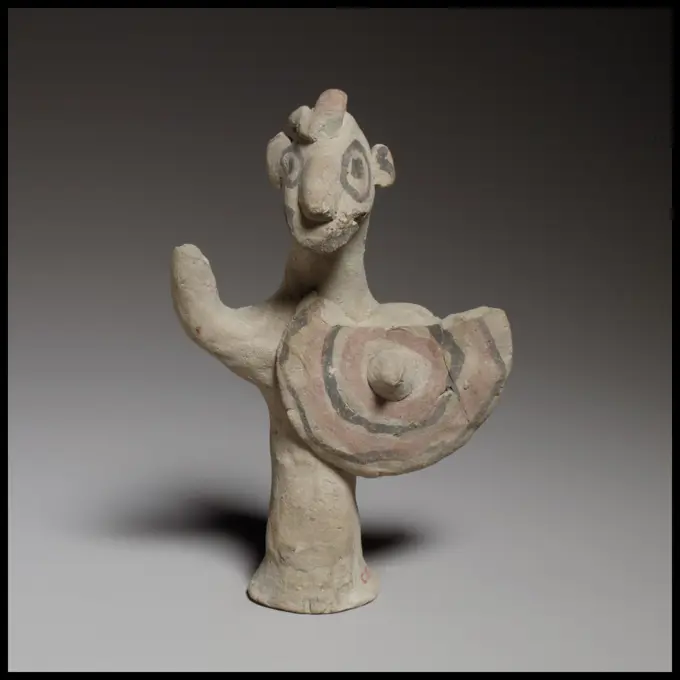
Shield bearer ca. 600-480 B.C. Cypriot The cylindrical body, flaring at the bottom, is handmade and solid.. Shield bearer 241208
6145-29126351
Standing Couple; Male Figure. Mexico, Nayarit, Nayarit, 200 BCE-500 CE. Ceramics. Burnished ceramic with slip, paint, and incised decoration.
4409-17410732
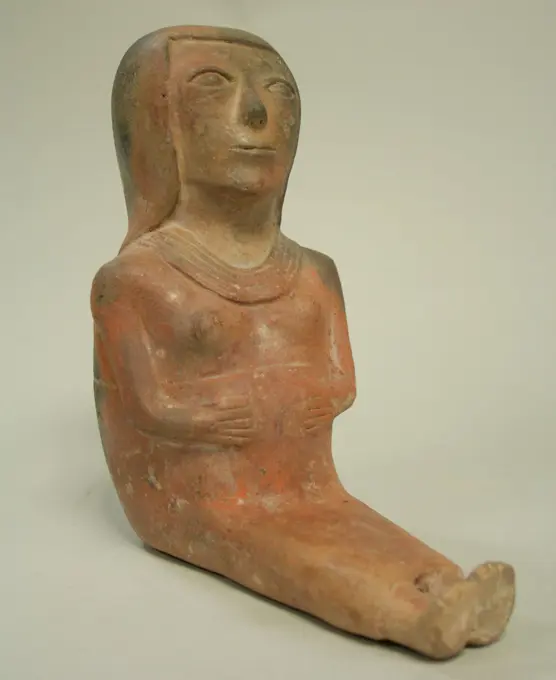
Female Figure. Culture: Xochipala. Dimensions: L. 5 1/2 x W. 3 7/8 x D. 5 1/2 in. (14 x 9.8x 14 cm). Date: 15th-10th century B.C. ().This figure, made in the unusual Xochipala style, depicts a female seated with her legs crossed modeled in grey-colored clay. A full garment with horizontal stripes worked as evenly spaced grooves and a border indicated by fine incisions is draped around her body covering her shoulders and legs below her knees leaving her bare, full breasts and stomach visible. She raise one hand as if in mid-gesture. Her naturalistically rendered facial features with open eyes, large nose and thin closed lips show a serious expression. She has a full head of short hair indicated by striations parted in the center. Museum: Metropolitan Museum of Art, New York, USA.
6145-46819131
MaleFigure
6145-29811804
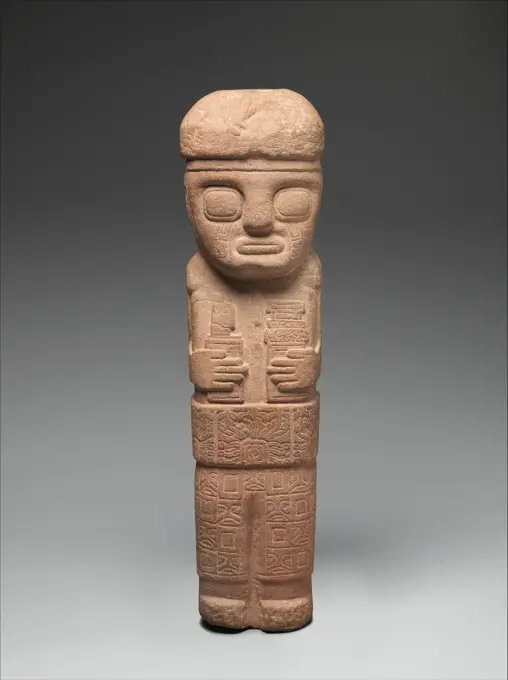
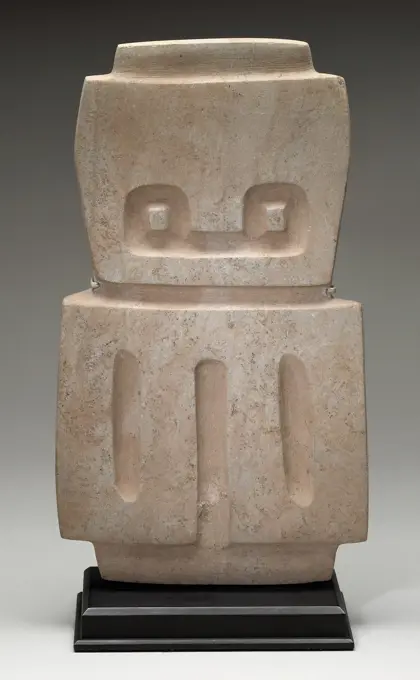
Figure with Ceremonial Objects 5th-9th century Tiwanaku The city of Tiwanaku near the southern shore of Lake Titicaca in the Bolivian highlands has been renowned for its stone architecture and imposing, finely carved stone sculptures since the sixteenth century. A small version of a type of columnar stone image that existed at Tiwanaku in sizes that reach twenty-four feet in height, this figure is thought to depict an elite lineage founder. While the full-size sculptures may have been part of public rituals honoring ancestors, the smaller version may have been for private ceremonies conducted by upper-class families or clans.Contained within the roughly rectangular confines of the stone block, the figure has a large head topped by a plain cap with a chin strap. Prominent square, slightly bulging eyes have small profile animal heads incised below them like a band of tears. The figure holds two objectspossibly snuff trayswith stylized, symmetrical hands tightly clasped to his unclad ch
6145-29117134
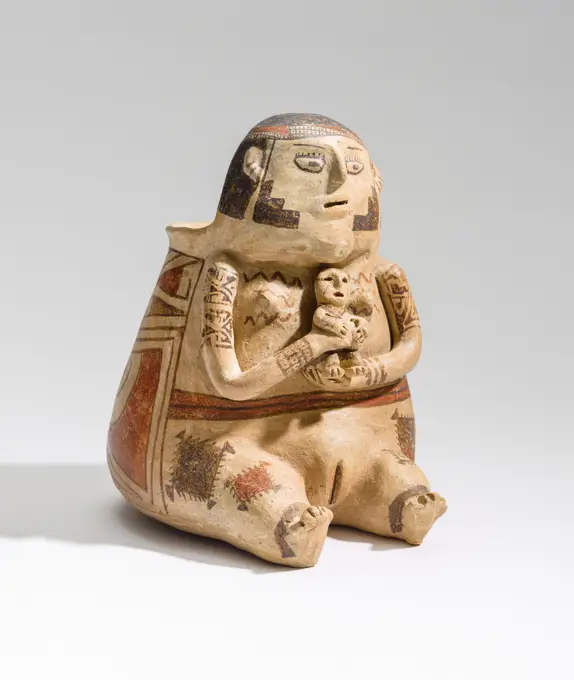
Anthropomorphic Polychrome Effigy Vessel of a Woman with Child. Noth America, Southwest, Mexico, Chihuahua, Casas Grandes, 1250-1450. Ceramics. Slip-painted ceramic
4409-20139280
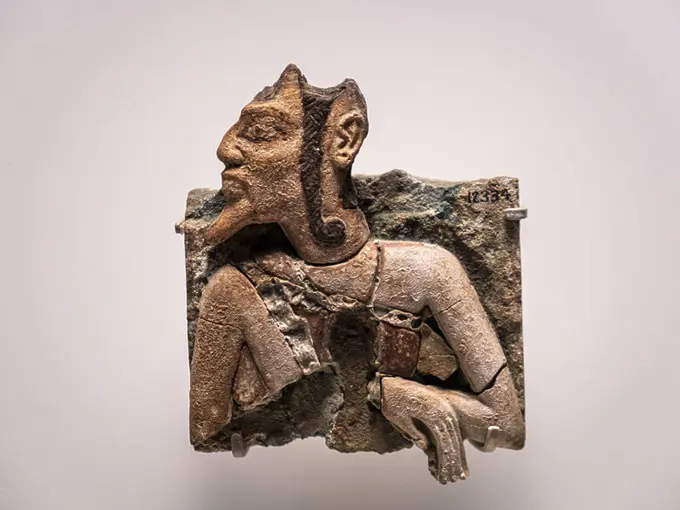
tile with the representation of a Libyan prisoner, faience, 20th dynasty, reign of Remeses III, 1184-1153 BC, Tell el-Yahudiya, Egypt, collection of the British Museum.
4409-17544079
Female Figure. Tlatilco; Tlatilco, Valley of Mexico, Mexico. Date: 500 BC-400 BC. Dimensions: H. 59.7 cm (23 1/2 in.). Ceramic and pigment. Origin: Valley of Mexico. Museum: The Chicago Art Institute, Chicago, USA.
6145-29121011
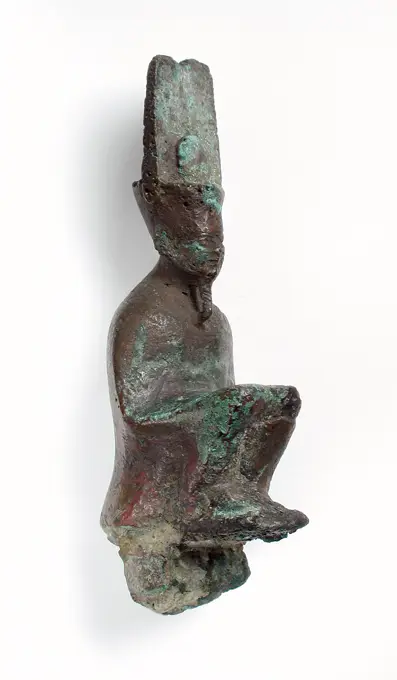
Squatting Figurine of Amen-Re. Egypt, Late Period (664 - 332 BCE). Sculpture. Bronze
6145-29163342
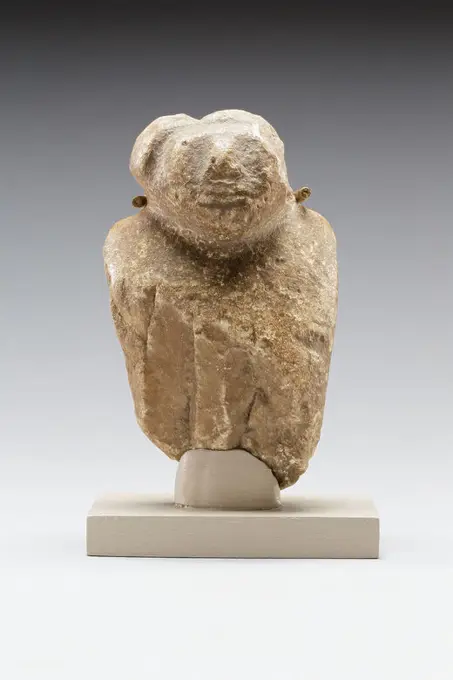
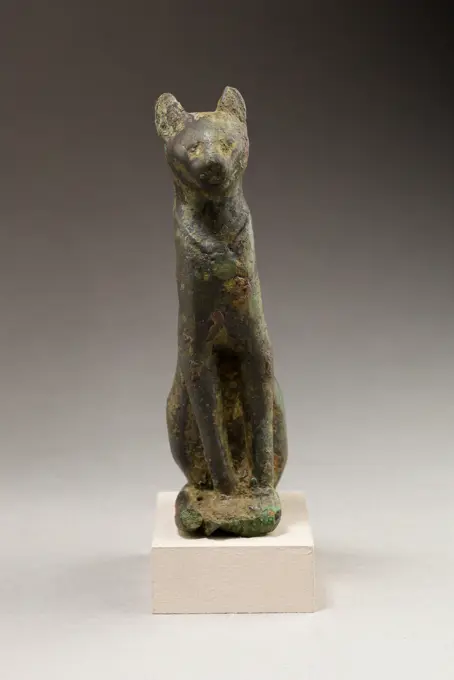
Statuette of cat 664-30 B.C. Late Period-Ptolemaic Period Bastet was a powerful goddess of Lower Egypt, one who was protective and could bring about great prosperity. In zoomorphic form, she was represented as a cat and cats were considered sacred to her. As a cat, she is poised and alert, on guard against external forces. Like cat-headed Bastet statuettes, these seated cats often have special adornments, like earrings or broad collars. This figure wears an amulet on its chest, probably an aegis. Cat statuettes were among some of the most common zoomorphic dedications of the Late and Ptolemaic Periods. Small statuettes would have been dedicated as offerings to temples or deposited in catacombs alongside cat mummies, as at the extensive catacombs at Bubastis and Saqqara. Sometimes larger hollow examples held a cat mummy inside.. Statuette of cat 570732
4409-63013464
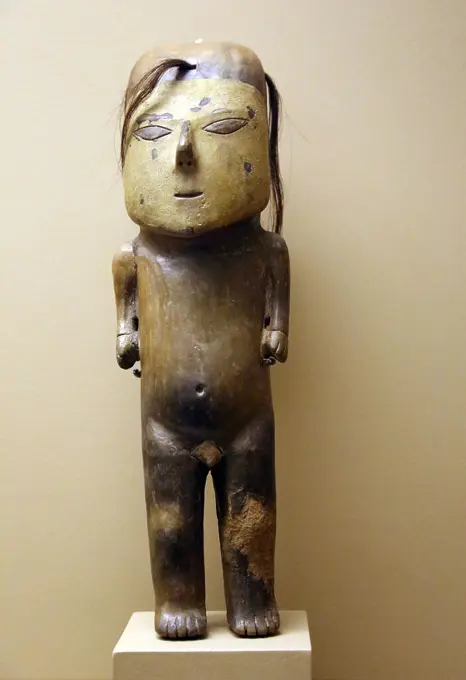
Pre-Columbian era. Ceramic figurine with painted face and three hanks of huma hair. Paracas. Peru. American museum of Natural History. Ny.
1746-21108928
Mayan ceramic figurine of an old woman carrying a baby. from Jaina, Campeche, Mexico. 600-900AD
6145-44298749
Statuette of Seated Hercules. Unknown
6145-29785232
Standing male figurine ca. 600-480 B.C. Cypriot The figurine is handmade and solid. His legs are shown full length and joined together.. Standing male figurine 241181
4409-20926931
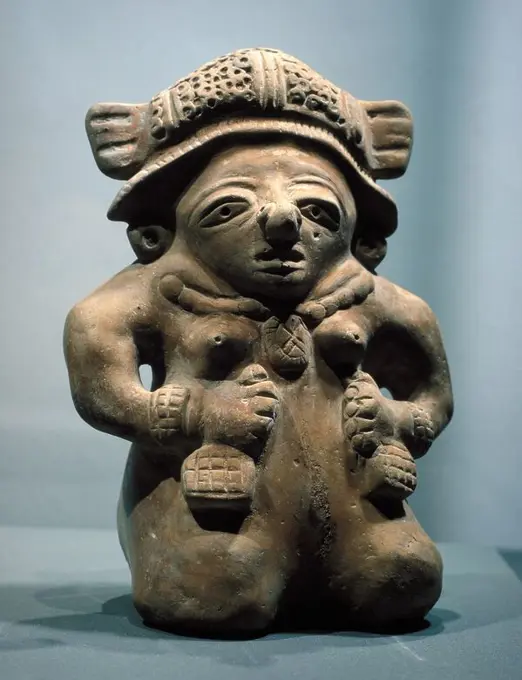
Maya terracotta filled mold, Anthropomorphic figure of woman talking, 550-900, height 22,5cm, width 17cm, thickness 11cm. Valley of Sula classical recent period 550-900. (Honduras). Mayan Civilization. Museum: Museo San Pedro de Sula, HONDURAS.
4409-17400891
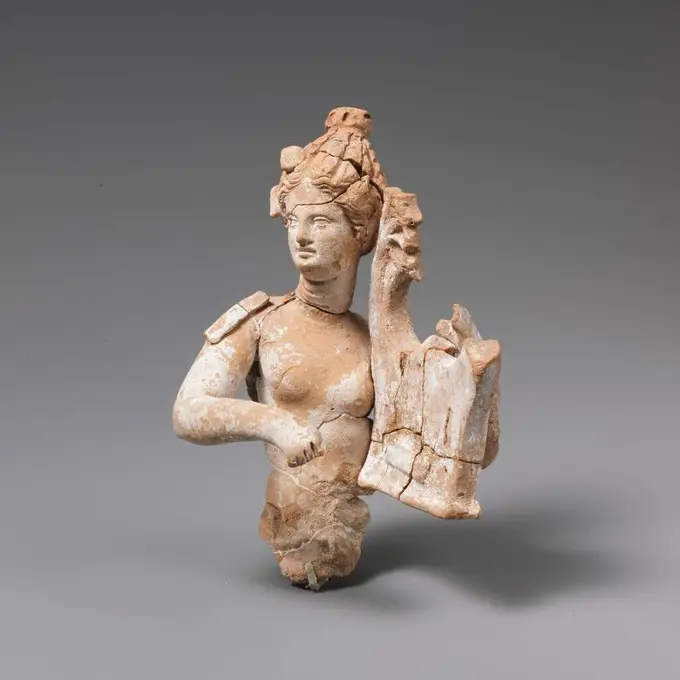
Fragmentary terracotta statuette of a woman with a kithara. Culture: Greek, South Italian, Tarentine. Dimensions: H. 4 9/16 in. (11.6 cm). Date: 3rd century B.C..Fragmented upper body of a woman holding a kithara in her left arm. Museum: Metropolitan Museum of Art, New York, USA.
4409-20920789
FIGURA DE TANAGRA - MONO EN TERRACOTA - SIGLO II AC - PERIODO HELENISTICO. Location: BRITISH MUSEUM. LONDON. ENGLAND.
6145-29065674
Statuette of a Warrior, 500-450 BC. Italy, Etruscan. Bronze; overall: 28 cm (11 in.).
6145-29710356
Seated Male Figure 8th century Vietnam (). Seated Male Figure 39143
6145-29151720
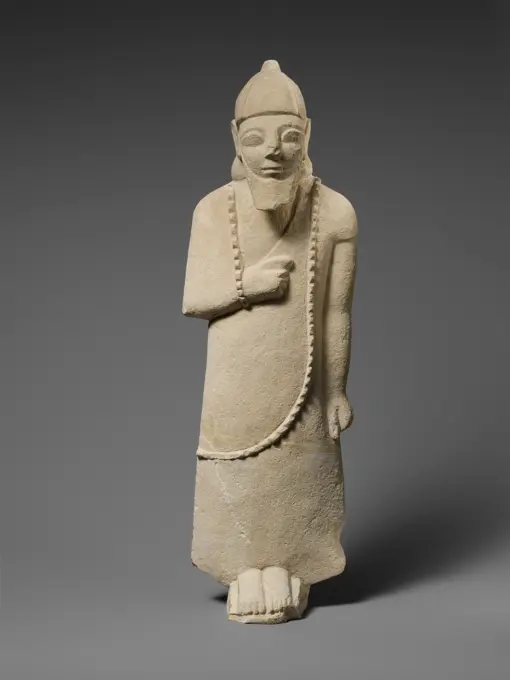
Limestone statuette of a male votary probably mid-6th century B.C. Cypriot The figure wears a long garment and a conical helmet.. Limestone statuette of a male votary 242127
6145-48840705
Figure of Astarte. Unknown
1746-21109084
Mayan ceramic figure representing a dwarf.
6145-29726590
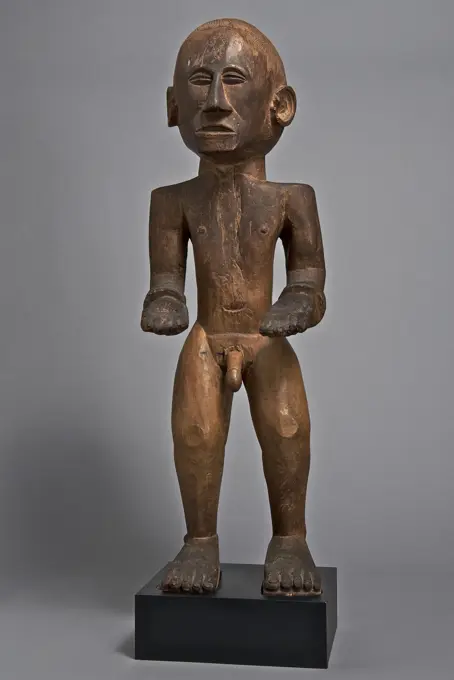
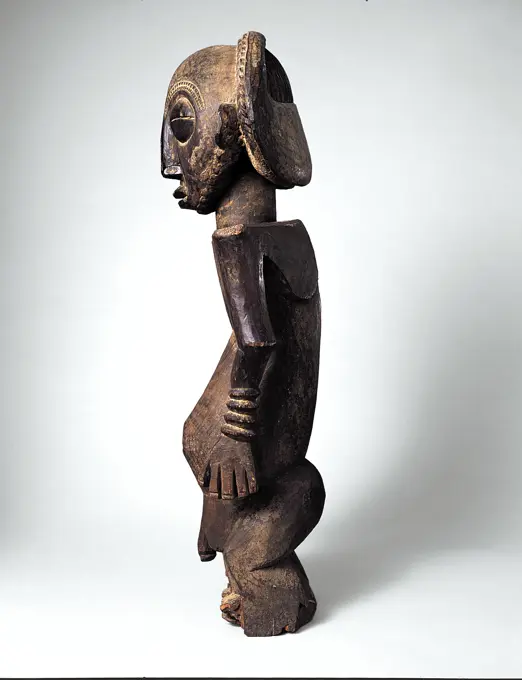
Ancestor Figure: Male 18th-19th century Boyo peoples Boyo communities within the Democratic Republic of Congo are renowned for their series of majestic royal ancestral representations. This figure is said to memorialize Akessa, grandson of a chief who migrated north to the current location of the Boyo peoples. It is a classic example of Boyo commemorative representations in which distinguished leaders are depicted simultaneously as serenely introspective and as an awesome, otherworldly physical presence. The prominence of the large and bulging closed eyes refers to the subjects status as a being endowed with a heightened sense of the spiritual realm. The massive spheres of the head and abdomen are kept in balance by the still tension of the arms and shoulders, which create an overall rectilinear contour to the figure. The surface of the figure is decorated with the incised patterns and ridges of the coiffure, beard, eyebrows, and bracelets. In addition, a dense inscribed motif of bold
4409-63351
Asia Minor. Ancient Art. Maiden in Wedding adornment. 100-50 BC. Kymi (Aeolis). The Antikensammlung Berlin (Berlin antiquities collection).
6145-29744040
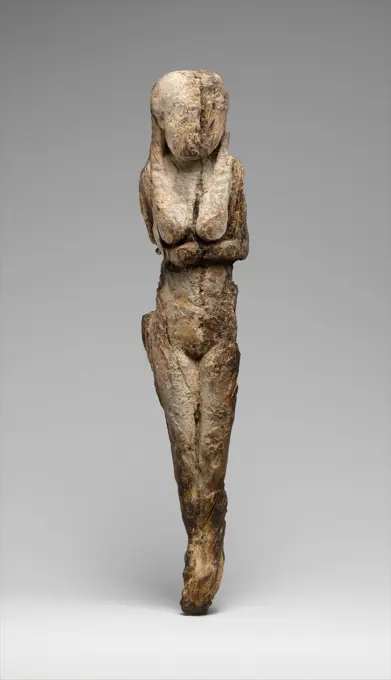
Statuette of a Standing Woman ca. 3100-2900 B.C. Early Dynastic Period. Statuette of a Standing Woman. ca. 3100-2900 B.C.. Ivory. Early Dynastic Period. From Egypt, Northern Upper Egypt, Abydos, Osiris temple. Probably Dynasty 1
6145-29729655
Standing Figure of a Nomad 5th-3rd century B.C. China. Standing Figure of a Nomad 61766
4409-17397782
Figure representing a chief. Ceramics. Nayarit style (400 BC-700 AD). West Mexico. Museum of the Americas. Madrid, Spain.
6145-29066498
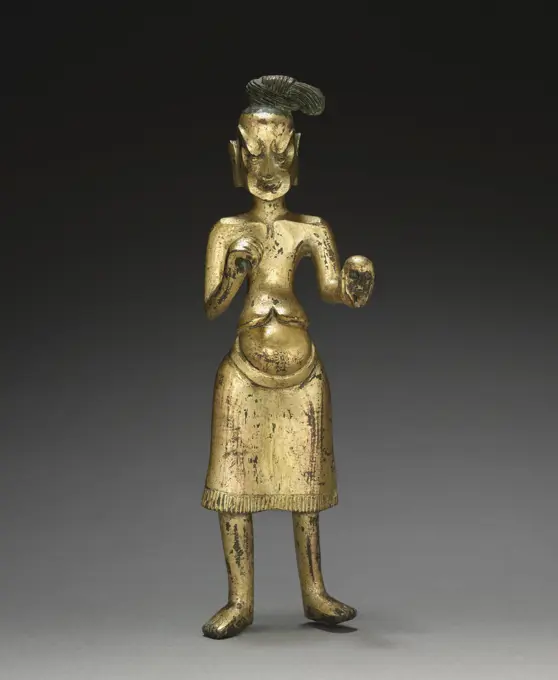
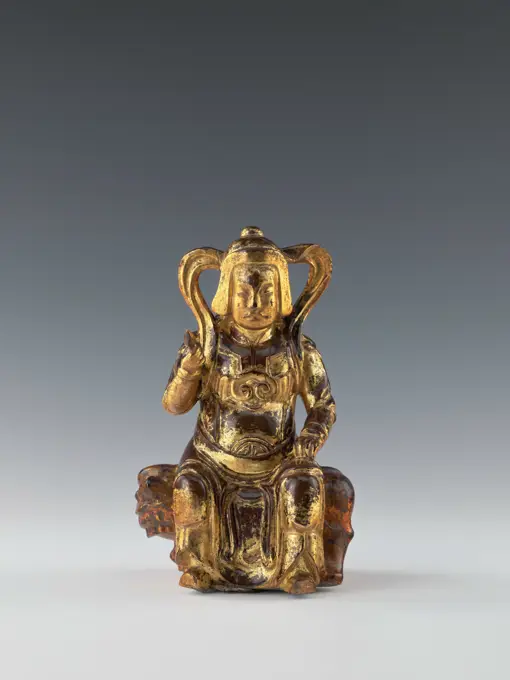
Ascetic Holding a Skull, c. 500. China, Northern Wei dynasty (386-534). Gilt bronze; overall: 19.4 cm (7 5/8 in.); figure: 18.1 cm (7 1/8 in.).
6145-30190773
Goddess Durga Slaying the Buffalo Demon (Mahishasuramardini) 101 CE-200 CE Mathura. Molded terracotta .
1788-22366
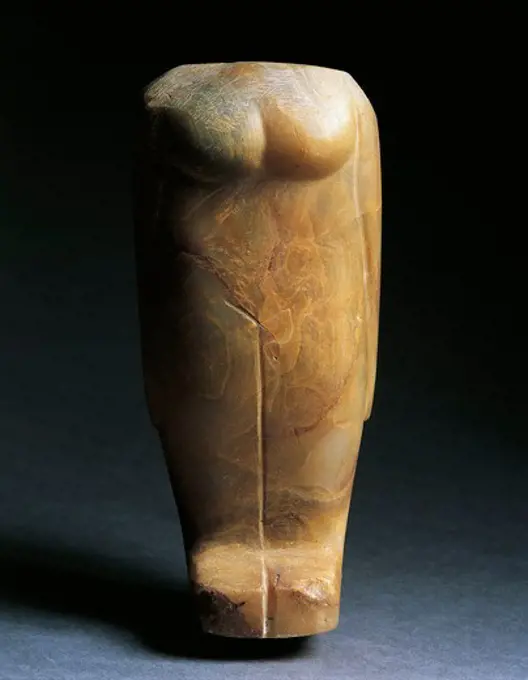
Sculpture representing a nude female figure, circa 3300-2900 B.C., yellow alabaster
6145-29826734
Pataikos Figure ca. 712-343 B.C. Late Period. Pataikos Figure 561163
6145-44293684
Statuette of Eros. Unknown
6145-29124865
Architectural Support with Squatting Dwarf. Nepal, 11th century. Architecture; Architectural Elements. Stone
4409-17356042
Figure of a Dancer. Culture: China. Dimensions: H. 4 in. (10.2 cm). Museum: Metropolitan Museum of Art, New York, USA.
6145-29125497
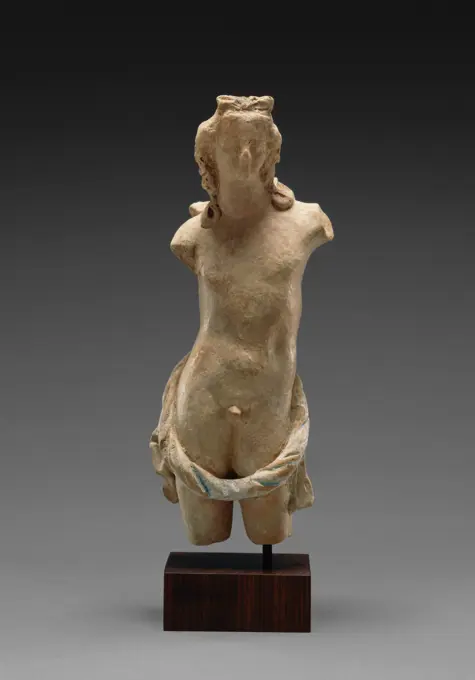
Male Torso. Egypt, Ptolemaic Period - Roman Period (332 BCE - 337 CE). Sculpture. Terracotta
6145-29079332
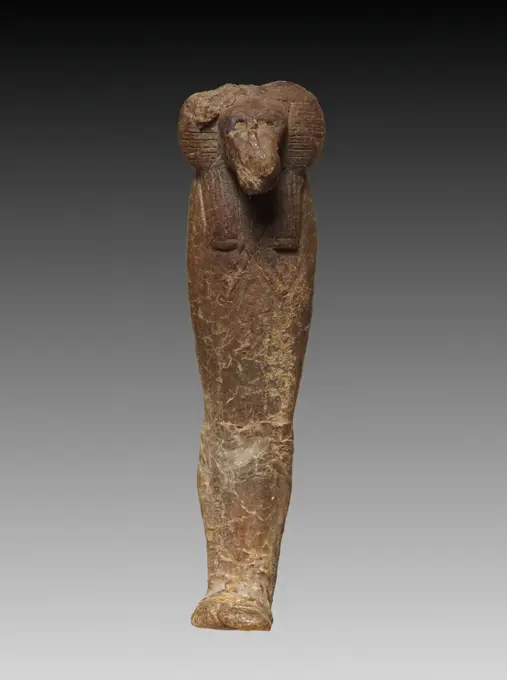
Son of Horus: Hapy, 1000-900 BC. Egypt, Third Intermediate Period, late Dynasty 21 (1069-945 BC) or early Dynasty 22 (945-715 BC). Wax with dark amber varnish; overall: 8.2 x 2.2 cm (3 1/4 x 7/8 in.).
6145-29719346
Ceramic Seated Female Figure 11th-16th century Carchi. Ceramic Seated Female Figure. Carchi. 11th-16th century. Ceramic. Ecuador. Ceramics-Sculpture
4409-17354892
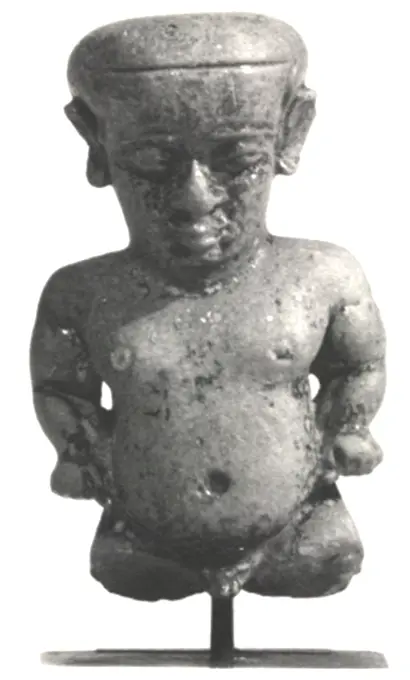
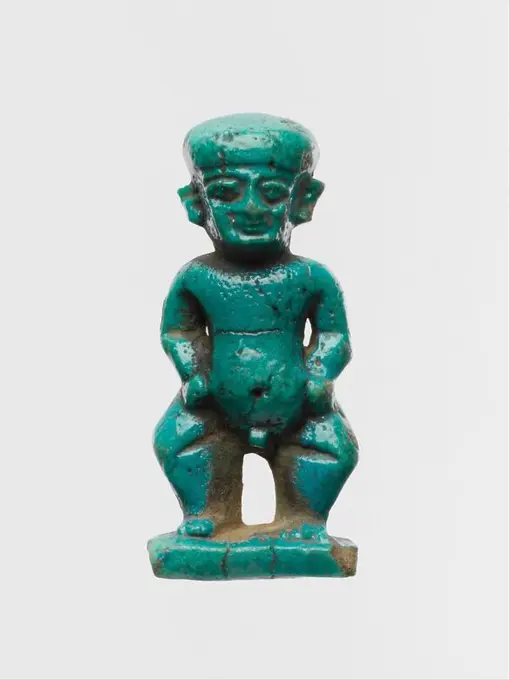
Faience amulet in the form of the dwarf god Pataikos. Culture: Egyptian. Dimensions: H.: 2 5/16 in. (5.8 cm). Date: ca. 1090-900 B.C..Amulet, Ptah-seker. Museum: Metropolitan Museum of Art, New York, USA.
4409-17372613
Standing Ceramic Figure. Culture: Moche. Dimensions: H x W: 6 1/4 x 3 5/8in. (15.9 x 9.2cm). Date: 3rd-5th century. Museum: Metropolitan Museum of Art, New York, USA.
4409-63015336
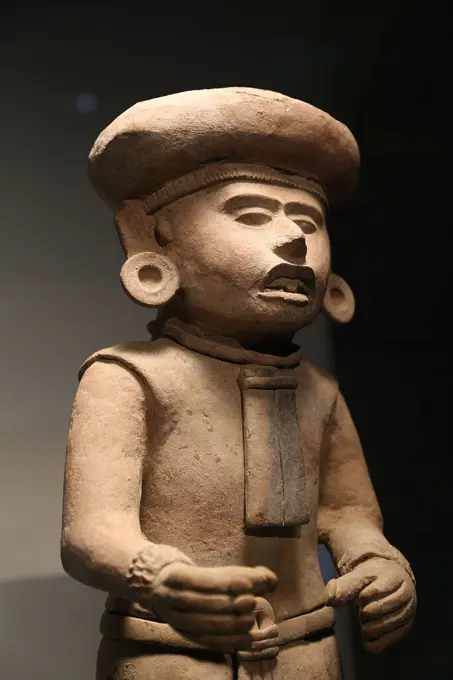
Mesoamerica. Anthropomorphic figure. Veracruz. Gulf of Mexico. 300-900 BC. Mexico. Museum of Cutures of the World. Barcelona. Spain.
6145-29175891
Anthropomorphic Figure ca. 500 B.C.-A.D. 300 Indonesia (Sumatra). Anthropomorphic Figure. Indonesia (Sumatra). ca. 500 B.C.-A.D. 300. Bronze. Bronze and Iron Age period. Metalwork
6145-46818619
MaleFigure
6145-29166577
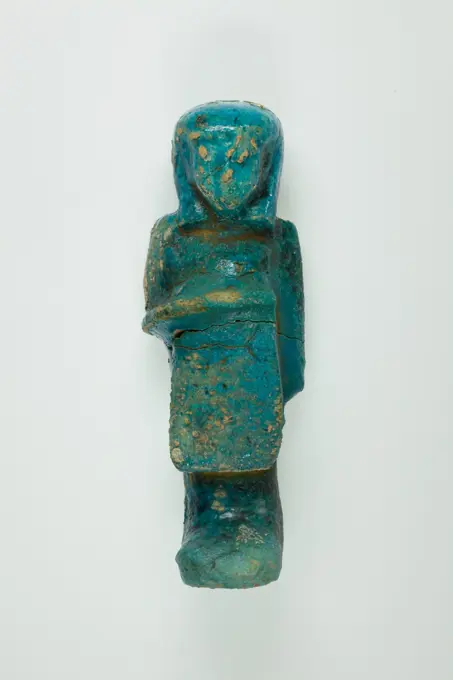
Overseer Shabti of Henettawy (C), Daughter of Isetemkheb ca. 990-970 B.C. Third Intermediate Period. Overseer Shabti of Henettawy (C), Daughter of Isetemkheb 551099
4443-28729094
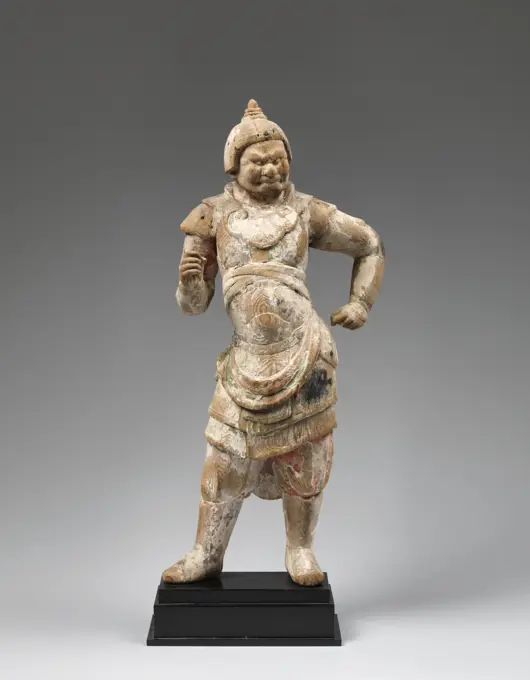
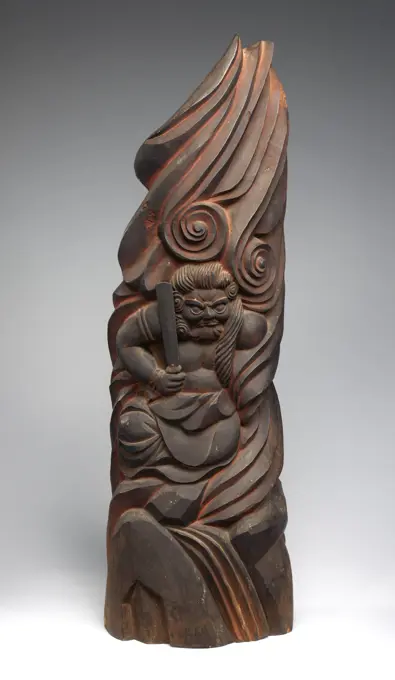
Vajra Warrior, late 12th century, Unknown Japanese, 15 3/4 × 7 1/8 × 4 1/4 in. (40.01 × 18.1 × 10.8 cm), Cypress wood with traces of polychrome, Japan, 12th century
6145-29827790
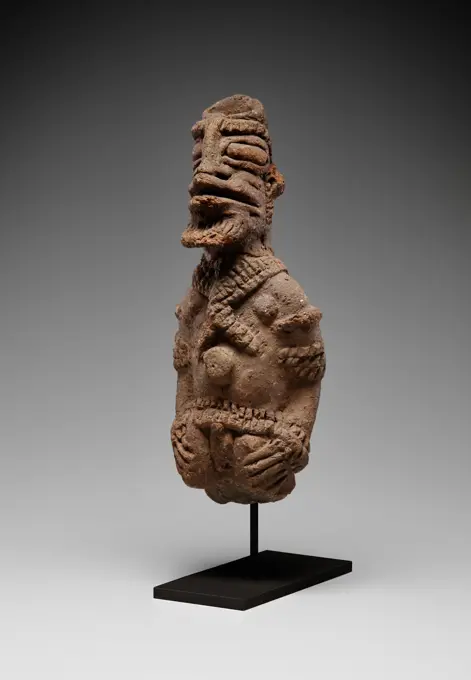
Figure: Male 12th-17th century () Dogon peoples () Although its precise culture and date of origin are unknown, this work is intriguing for both stylistic and chronological reasons. Its abstract, protuberant facial features, spare but elegant dress, and prestigious objects relate it to Dogon sculptures, but its style and iconography share much in common with that of Inland Niger Delta terracottas of the twelfth to seventeenth centuries as well. Indeed, it has been suggested that this sculpture is contemporaneous with these terracottas, a hypothesis that has been reinforced by early radiocarbon dates.This wooden sculpture depicts a distinguished elder whose demeanor, attire, and presentation command respect. His short trousers and cotton cap are characteristic of traditional Dogon dress, and the L-shaped wooden staff slung over his right shoulder is used as a weapon, tool, and ritual object by Dogon men. Accoutrements such as the decorative pendant hanging about his neck and the knife
6145-29118980
Standing Male Figure
4409-17404506
Harpokrates in an Egyptianizing Crown and holding the club of Herakles. Dimensions: H. 18.5 cm. Date: A.D. 1st century.Harpokrates, or "Horus the child," the son of Isis and Osiris/Serapis, is here represented as a chubby toddler with a plump, crooked forefinger reaching toward his small mouth. He holds the knobby club of the Greek god Herakles and on his head wears a vestigial Egyptian double crown detailed with striations and dots. The crown is obscured in the front by a very large sun disk bearing a uraeus. A rarely noted deep blue corrosion gives the piece a rich tone.Harpokrates, the quintessential divine son, was extremely popular and had already been assimilated to other gods during pharaonic times. During the Hellenistic and Roman eras the syncretisms multiplied. The association of Harpokrates with Herakles in these eras seems to be based on warrior characteristics that Harpokrates had acquired in earlier conflations with other dieties. Once Roman rule came to Egypt the worship
6145-59129207
Campania Caserta Capua Museo Campano33. Hutzel, Max 1960-1990 Medieval: Byzantine architectural fragments; parchment fragments with miniatures (12th century) from Montecassino; painted wooden crucifix (13th century); Carolingian crucifixes; Bishop's miter (11th century) of gold and silver damask; fresco (13th century). Post-medieval: Architecture (15th century). Formerly the Palazzo Antignano. Unusual Catalan/Moorish-style portal; Paintings on panel and canvas (15th-18th centuries); marble intarsia (16th century); marble sculpture: busts of Christ and Mary (17th century); sculpture of saints in marble and in wood (15th century); painted and gilded sculpture in wood; marble grave sculpture (16th century); sarcophagus with allegorical carvings; gold reliquary "Rosa d'Oro"; crucifix made of elephant tusk Specific Location: Pianterreno Antiquities: Italic sculpture (seated women holding babies); inscription. Photo campaign #1: 533 photos. Roman relief and sculpture; cinerary urns; Greek an
4409-17433212
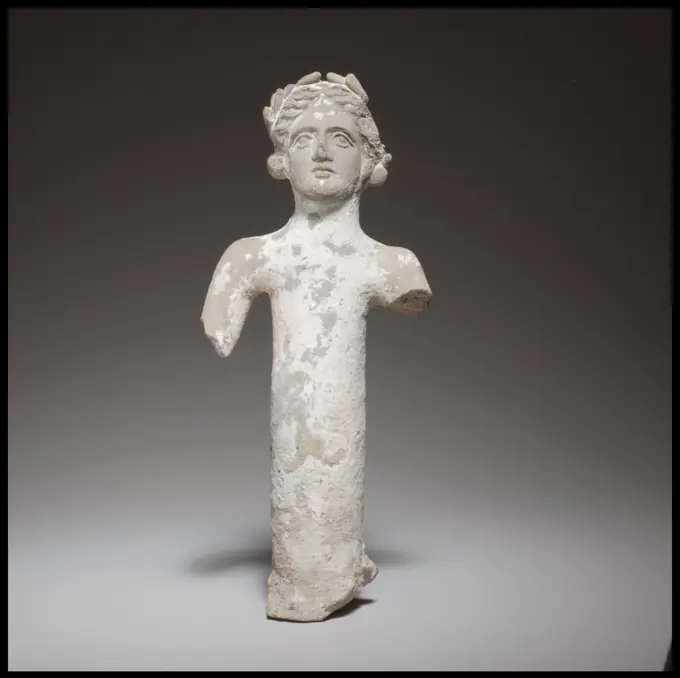
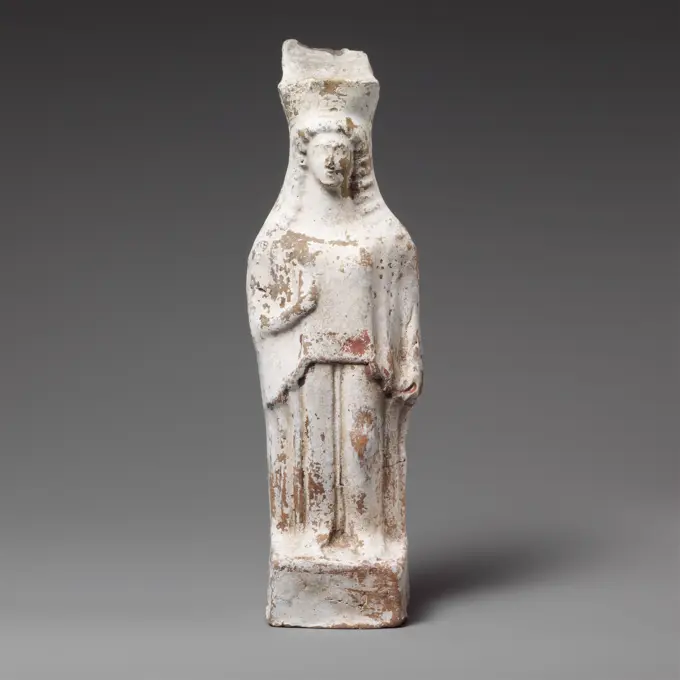
Terracotta statuette of a seated woman. Culture: Greek, probably Boeotian. Dimensions: H. 6 1/8 in. (15.5 cm). Date: late 6th-early 5th century B.C..Small figurines were made to be presented as votive gifts to a deity. It is not always clear whether they represent a god, a priest or priestess, or a person offering a gift. These rigid figures seated on thrones and wearing elaborate headdresses are probably goddesses. Hundreds of such statues were buried in trenches on the Akropolis after the Persians looted and burned Athens in 480 B.C., and it has been suggested that they represent an early cult statue of Athena. Museum: Metropolitan Museum of Art, New York, USA.
4409-17361330
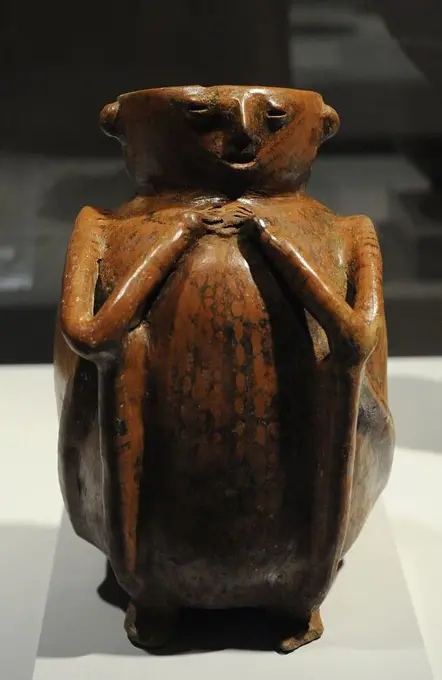
Vasija antropomorfa. Cerámica pintada. Cultura Calima. Período de Integración (800-1500 d. C.). Colombia. Museo de América. Madrid. España.
6145-29067790
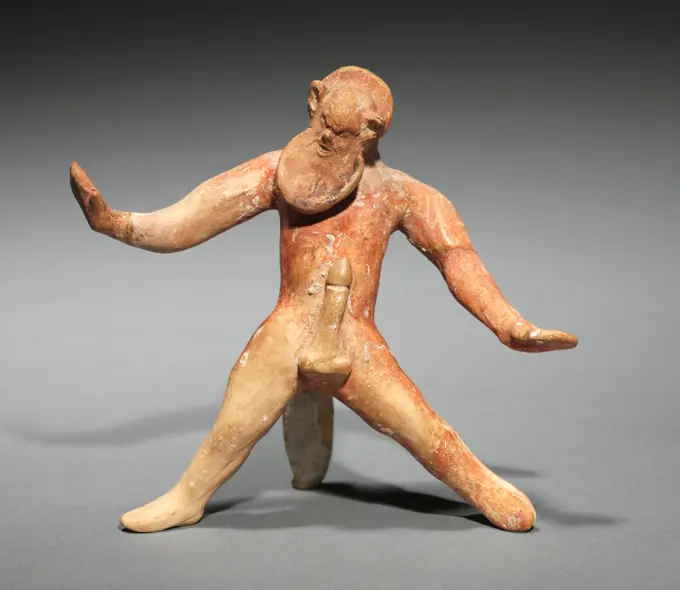
Dancing Satyr, 500-475 BC. Greece, Boeotia, early 5th Century BC. Painted terracotta; overall: 9.8 x 10.8 x 4.7 cm (3 7/8 x 4 1/4 x 1 7/8 in.).
4409-17282459
AGRICULTOR CHINO EN MARFIL. Location: PRIVATE COLLECTION. MADRID. SPAIN.
6145-58997437
Male character mingqi. Terracotta, brown glaze, traces of polychromy. Paris, Cernuschi museum. 78843-22 Beyond, belief, figurine, mingqi, funeral object, male character, model character, funeral rite, statuette
4409-17544872
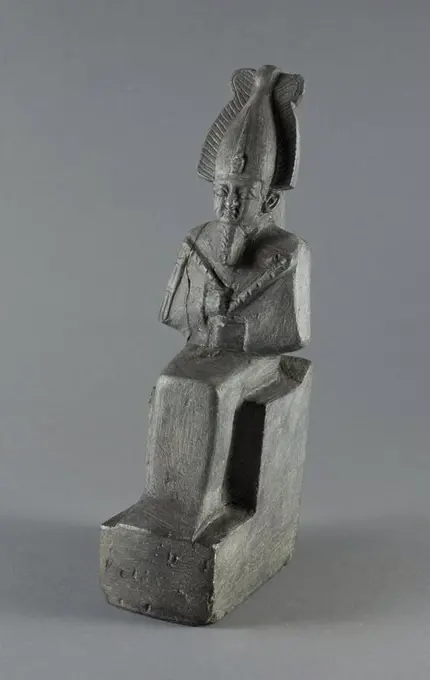
Statuette of the God Osiris Seated. Egyptian. Date: 664 BC-332 BC. Dimensions: 28.9 × 7 × 11.43 cm (11 3/8 × 2 3/4 × 4 1/2 in.). Steatite. Origin: Egypt. Museum: The Chicago Art Institute, Chicago, USA. Author: Ancient Egyptian.
6145-29073159
Male Figure, early 1800s. Central Africa, Democratic Republic of the Congo, Kongo or Vili, early 19th century. Wood, iron, and metalized glass; overall: 55.9 cm (22 in.).
6145-44297703
Statuette of Nike. Unknown
6145-30178438
Statuette of Herakles 400 BCE-200 BCE Etruria. Bronze . Ancient Etruscan
6145-29153999
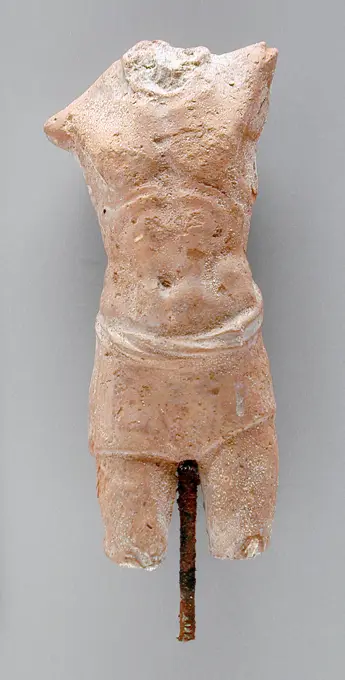
Figurine of a Head and Torso of a Man 306-30 B.C. Ptolemaic Period. Figurine of a Head and Torso of a Man. 306-30 B.C.. Pottery. Ptolemaic Period. From Egypt, Upper Egypt, Thebes, Asasif, MMA excavations
4409-26382
URNA FUNERARIA REPRESENTANDO UN PERSONAJE SENTADO - CULTURA ZAPOTECA - PERIODO CLASICO TEMPRANO Y MEDIO (100-700 DC) - Nº 85/1/127. Location: MUSEO DE AMERICA-COLECCION. MADRID. SPAIN.
6145-29792294
Lion China. Lion. China. Gilt bronze. Tang dynasty (618-907). Sculpture
6145-30374494
JanusFigure
6145-29118994
Kneeling Female Figure
6145-29715510
Seated female ca. 14th-13th century B.C. Hittite. Seated female 327406
6145-29792498
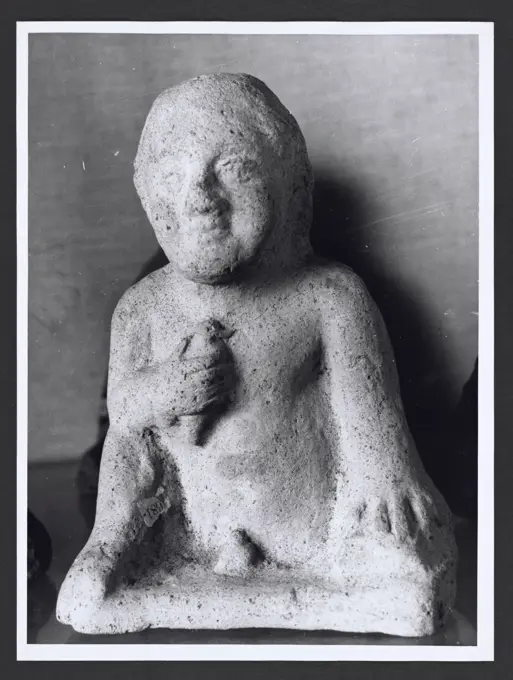
Limestone statuette of a temple boy 4th century B.C. Cypriot The body of the seated boy is flat and very awkwardly rendered. A pleated tunic covers the body. The right hand holds a large bird against his lower body.. Limestone statuette of a temple boy. Cypriot. 4th century B.C.. Limestone. Classical. Stone Sculpture
6145-45865237
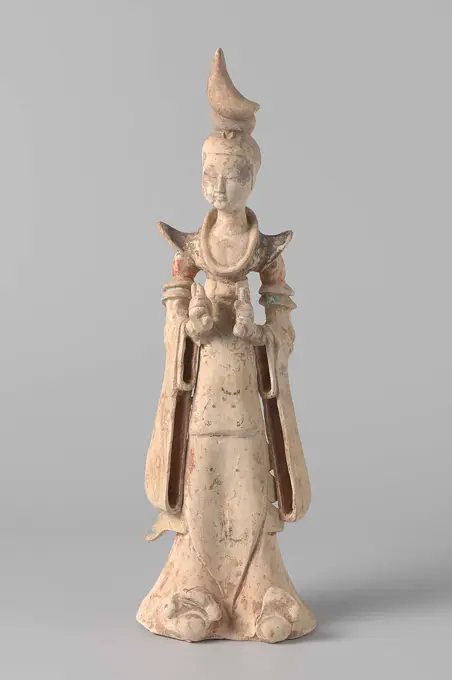
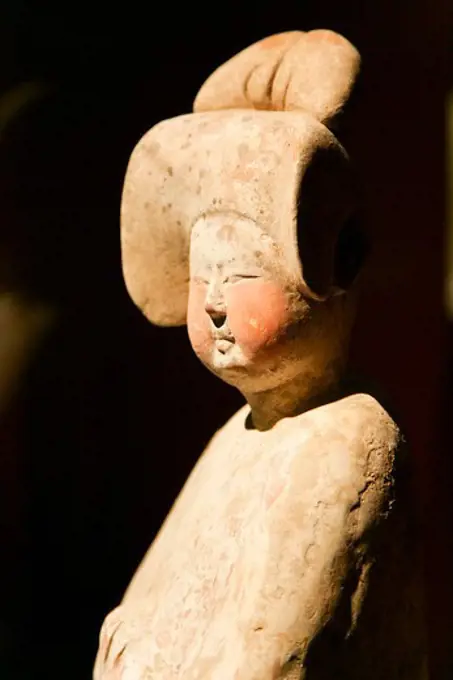
Courtly lady. With its slender figure, high headdress, long robes and conspicuously long, wide sleeves, this small sculpture provides a fine impression of feminine ideals of beauty and fashions at the beginning of the Tang Dynasty.
4409-17437766
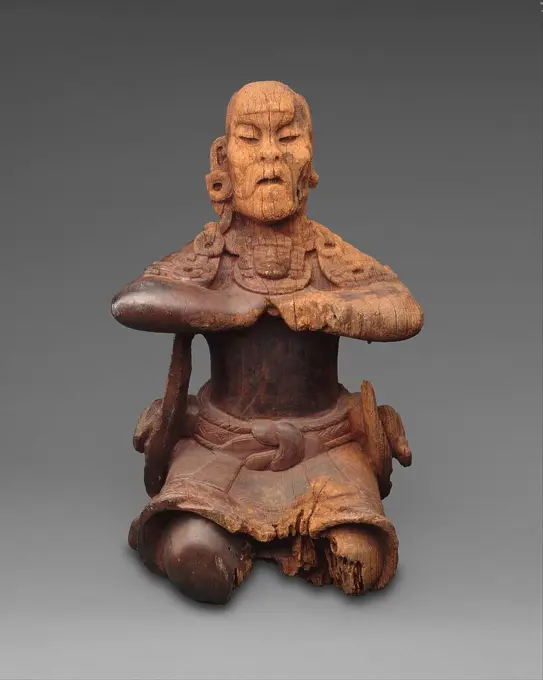
Mirror-Bearer. Culture: Maya. Dimensions: H. 14 1/8 x W. 9 x D. 9 in. (35.9 x 22.9 x 22.9 cm). Date: 6th century.This Mirror-Bearer figure is the best-preserved example of portable Maya wood sculpture and one of the highlights of the Early Classic period (ca. A.D. 250-550) Maya art. The artist created this figure out of a solid piece of hardwood from the genus <i>Cordia</i>, known locally as <i>bocote</i>. Research determined a radiocarbon age for the wood of 1425 years before present (± 120 years), or a range of A.D. 410 to 650. It was said to have come from the border region between Guatemala and Tabasco, Mexico. Most likely, to judge from its extraordinary preservation, the findspot must have been a dry cave or well-sealed funerary chamber. The damage on its left side is the result of some wear or decay in that context, perhaps from resting against a surface or being subjected to varying passage of air. The person, a male, wears an elaborate knee-length woven skirt with ties that co
6145-59072750
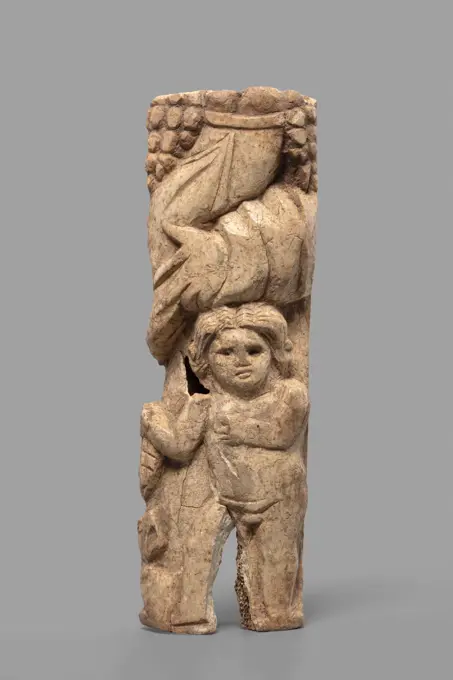
Presentation of a good with a corner of abundance; Unknown Italian workshop; 1st century BC (-100-00-00-1-00-00);
6145-29753051
Charioteer 4th century B.C. Cypriot The handmade solid figurine is from a chariot group. The face is mold-made. The standing figure is preserved to the hem of his Greek charioteer's long chiton.. Charioteer 241178
6145-30176409
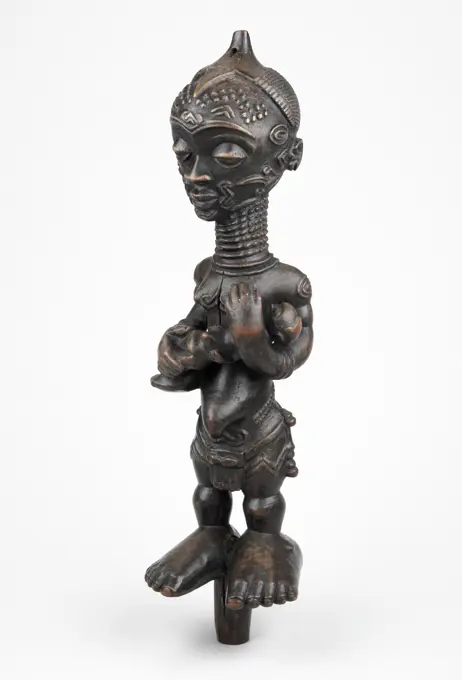
Mother-and-Child Figure (Bwanga bwa Chibola) 1850-1899 Democratic Republic of the Congo. This delicate rendering of a mother holding her newborn child celebrates human fertility. The figure was related to rituals dedicated to helping women with childbirth and preventing infant mortality. Scarification patterns, hairstyles, jewelry, and anatomical details expressed the Luluwa concept of bwimpe, which unites beauty with goodness. Such figures may have served as both containers for medicine and symbols of status, reflecting societal changes in the latter half of the 19th century.. Wood and pigment . Luluwa
7079-69914303
Lima, Peru. Pre-Columbian artifacts and art in the Larco Museum, Lima, Peru.
4409-17503376
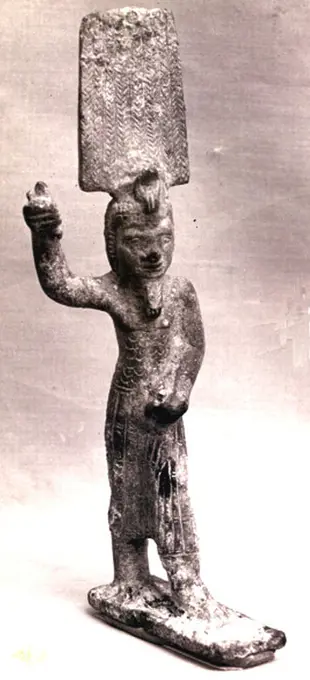
Onuris. Dimensions: H. 12.2 cm (4 13/16 in.); W. 3.7 cm (1 7/16 in.); D. 5 cm (1 15/16 in.). Date: 664-30 B.C..Onuris is depicted here, recognizable by his short hair and distinctive garment, which comprises a long patterned kilt, in this case combined with a finely detailed feathered or scaled cuirass. His crown comprises four tall feathers, represented flat and side-by-side, and he has a triple-strap suspension loop on the back. Onuris was a fierce god, known for capturing enemies in battle or hunting dangerous animals. His right arm is raised in the act of spearing a defeated enemy or animal, or holding a rope, which presumably he used to snare his prey. In this role, he personified good conquering and controlling forces of chaos and disruption. Museum: Metropolitan Museum of Art, New York, USA.
6145-29076802
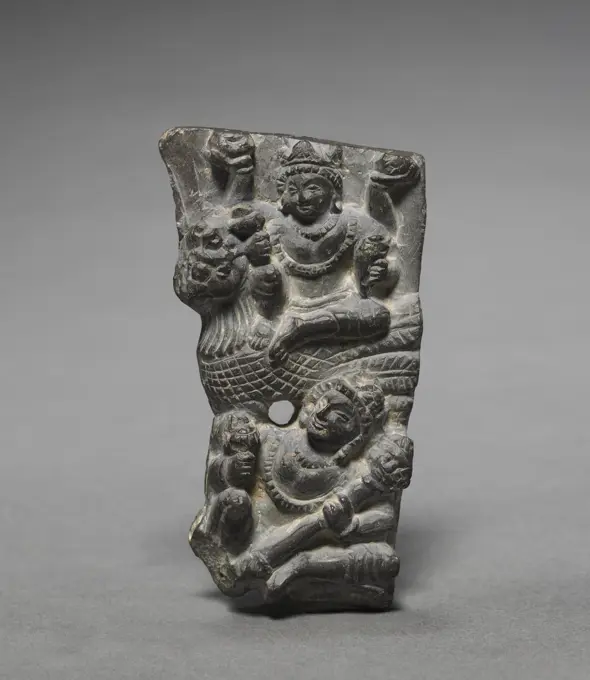
Vishnu, 700s. India, Kashmir, 8th century. Steatite; overall: 8 cm (3 1/8 in.).
4409-17435011
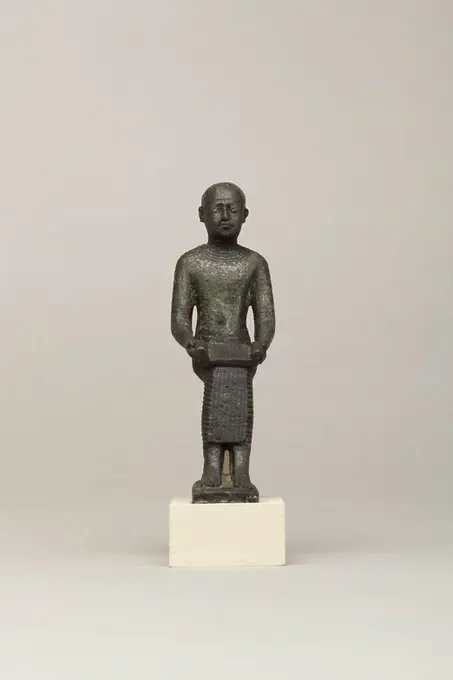
Imhotep. Dimensions: H. 9.9 cm (3 7/8 in.); W. 3.5 cm (1 3/8 in.); D. 6.5 cm (2 9/16 in.)H. (with tang): 11.1 cm (4 3/8 in.). Date: 664-30 B.C..Imhotep was adviser to King Djoser in the third dynasty and he is credited with the design of the Step Pyramid in Saqqara, the earliest pyramid in Egypt. For this and other achievements of wisdom and learning attributed to him, in later periods he became one of the only historical non-royal people to be divinized and to have a dedicated cult, which was particularly strong in the Memphite region. In copper alloy statuettes like this one, he is shown sitting, wearing his close-fitting cap and holding a scroll on his lap. Imhotep's scroll serves to emphasize his wisdom and erudition, his role as a patron of scribes, and hints at the many intellectual forays into medicine, architecture, and engineering that were later ascribed to him. His attire varies, but in this instance he wears a broad collar that is articulated on the front and back of his
4409-37344
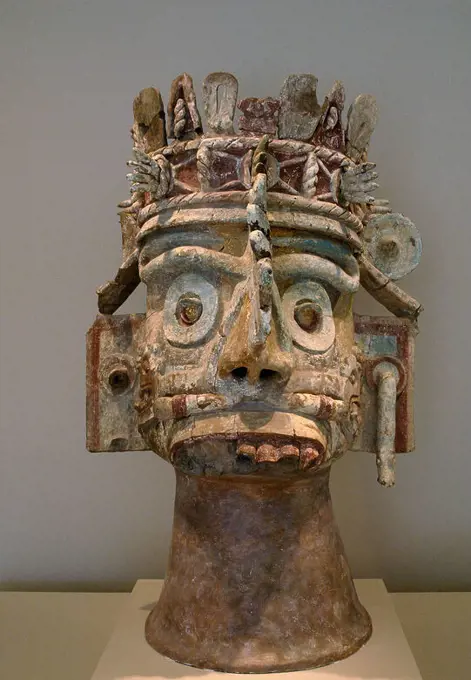
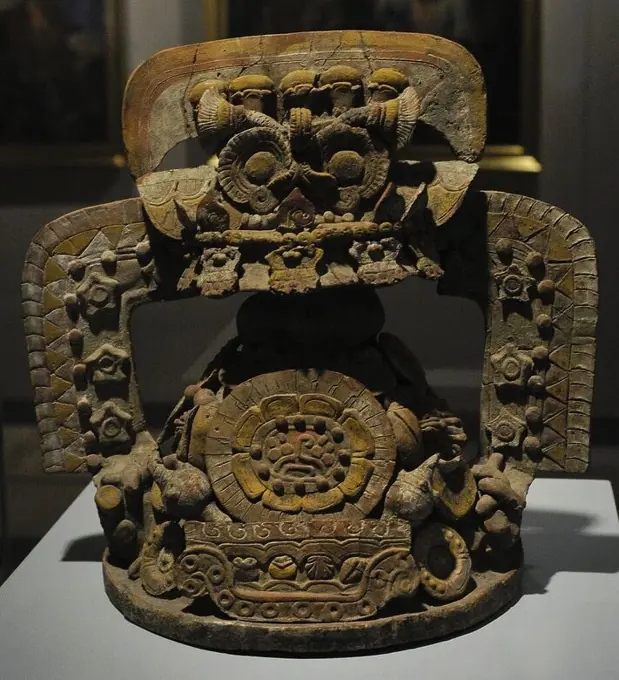
Censer representing the god of rain Tlaloc. Postclassical period (1300-1521). Mixtec Culture. Ceramic, stucco, tufa and paint. Teotitlan del Camino (State of Oaxaca, Mexico). Dallas Museum of Art, State of Texas. United States.
6145-48832980
Statuette of Mars Ultor. Unknown
6145-29194538
Terracotta statuette of a goddess mid-5th century B.C. Greek, Boeotian The polos (headdress) identifies the figure as a goddess. She is impressive for her size, rigidity, and severity. Some traces of color survive on the edge of the overfold. There are traces of burning, either from a funerary pyre or from fire at the precinct where the statuette was dedicated.. Terracotta statuette of a goddess 254794 Greek, Boeotian, Terracotta statuette of a goddess, mid-5th century B.C., Terracotta , H. 10 7/16 in. (26.5 cm). The Metropolitan Museum of Art, New York. Gift of The Honorable Herbert H. Lehman, 1953 (53.206)
6145-45878257
Man and Machine. This statue stood at the entrance of the Amsterdam office of a company that exported machines to Dutch businesses in the former Dutch East Indies. The Javanese man, nude and sitting cross-legged, symbolizes the colony. The modern diesel engine in his lap alludes to the companys trading activities, as well as to the progress that the Netherlands hoped to bring to Indonesia.
6145-29785070
Limestone head of a bearded man early 6th century B.C. Cypriot The head belonged to a figure of over lifesize proportions. The conical cap, identifying him as an individual of high rank, appears at the end of the eighth century B.C. in the Levant and had reached Cyprus by the mid-seventh century B.C. It is characterized by a protuberance at the top and flaps at the sides that could be let down or fastened up by the ties ending in tassels. While, unfortunately, nothing of the body remains, the head represents a very early and impressive example of this figural type. The articulation of the beard, with its round, generalized curls, is often interpreted as an indication of the influence of terracotta sculpture on stoneworking.. Limestone head of a bearded man 242408
7155-70382941
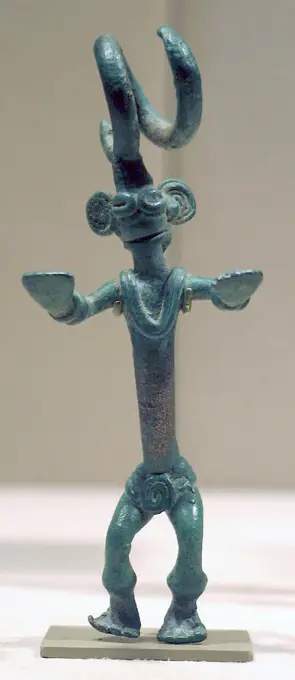
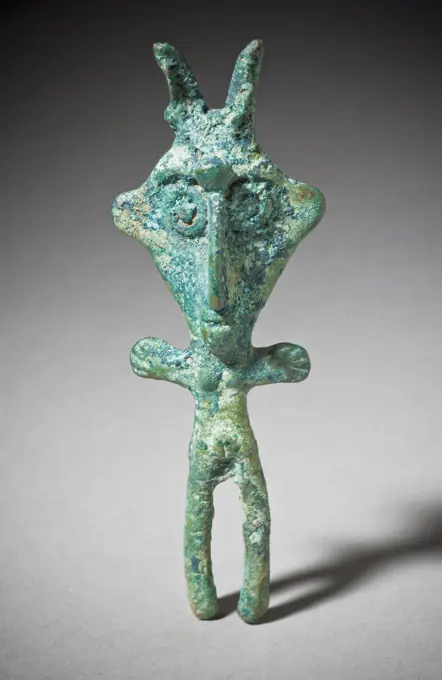
Bronze statuette. The Horned God. Enkomi.
6145-29766172
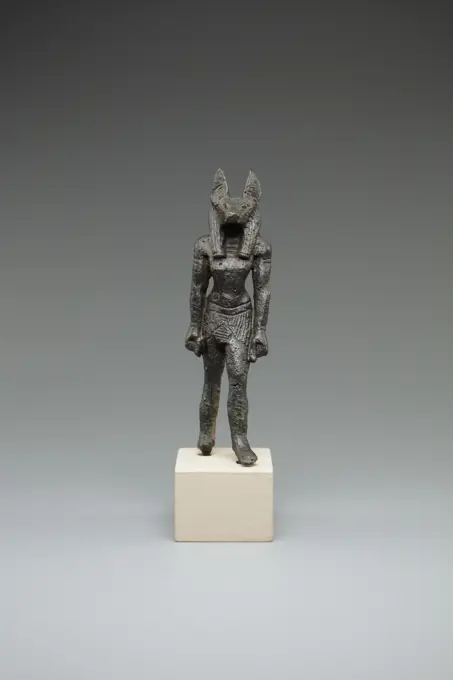
Anubis 664-30 B.C. Late Period-Ptolemaic Period. Anubis. 664-30 B.C.. Bronze or cupreous alloy. Late Period-Ptolemaic Period. From Egypt
6145-58993154
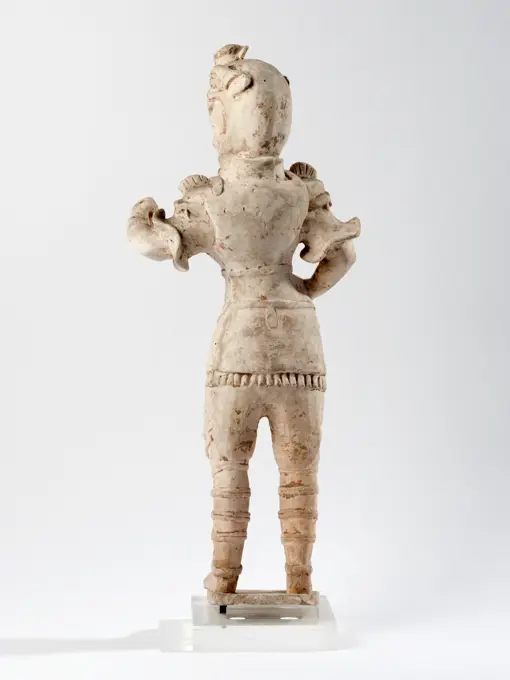
Talter guard ". Terracotta. China, Tang dynasty. Paris, Cernuschi museum. 72691-6 Chinese art, standing, tang dynasty, goalkeeper falls, soldier, statuette, terracotta, back view
4271-1422
Costa Rica, San Jose, Pre-Columbian Gold Museum, Pre-columbian art
4443-28735572
Haniwa Head of an Aristocratic Male, 6th century, Unknown Japanese, 9 1/4 x 6 1/4 in. (23.5 x 15.88 cm), Earthenware, Japan, 6th century, During the Kofun period, huge burial mounds were constructed for powerful clan leaders. Clay cylinders and figures, known as haniwa, were placed atop the mound to signify the sanctity of the area and to serve as protectors of the interred spirit and his or her belongings. Extant haniwa represent a vast array of people, animals, buildings, and other objects, providing us with a glimpse of this prehistoric culture. The unique hat worn by this figure suggests that he is an aristocratic male.
1746-19984954
Pre-Colombian feminine statuette, from Ecuador. Dated 300 AD
4449-83831
Exhibited object at Shanghai Museum, earthen figure of a women, from the Tang Dynasty, EXPO 2010 Shanghai, Shanghai, China, Asia
6145-29724643
Canopic jar with head of jackal (Duamutef) ca. 800-650 BC Third Intermediate Period This canopic is part of a set (13.180.1-.4) found in a Ptolemaic cemetery at Thebes. Use of canopics had gone out of fashion at that period, however, so these are certainly reused. Their style suggests they were originally created in the late Third Intermediate Period.. Canopic jar with head of jackal (Duamutef). ca. 800-650 BC. Limestone. Third Intermediate Period. From Egypt, Upper Egypt, Thebes, Asasif, cemetery 300, Ptolemaic vaulted tomb, Pit 1, MMA excavations, 1912-13
6145-29756743
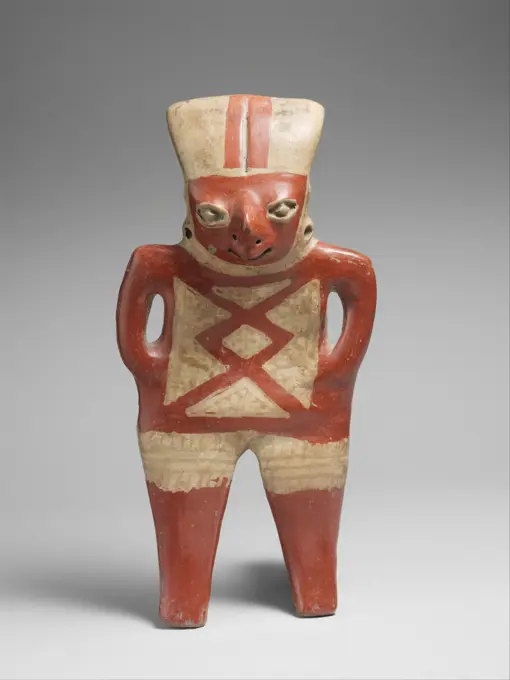
Standing Figure 3rd century B.C.-A.D. 1st century Chupícuaro The spectacular finish of this solid figure is a classic feature of the Chupícuaro style. The red slip is brilliant and multi-tonal, with white or cream slip providing contrast and detail. Overall, the surfaces of the sculpture are smooth and highly burnished. In profile, the figure appears quite flat. The top of the elongated head curves backward, its shape suggestive of cranial deformation. Instead of hair covering the head, the figure seems to be wearing a white cap with a thick strap under the chin; on the front of the cap, at the top, is a thin white stripe dividing a block of red. The facial features are modeled: large eyes, outlined in white with carved rounded pupils; a protruding nose with drilled nostrils; and a deeply gouged mouth, slightly smiling. Ears are indicated by simple, rounded indentations on the sides of the head. The figure wears an elaborately decorated costume. A pattern of diamond shapes and cross-ha
4443-28741755
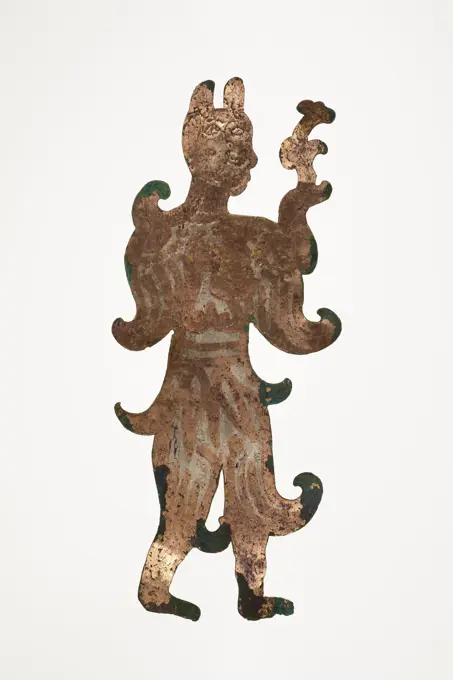
Figural Plaque, 2nd-3rd century, 11 1/4 x 4 13/16 in. (28.58 x 12.22 cm), Gilt bronze, China, 2nd-3rd century
1746-21129681
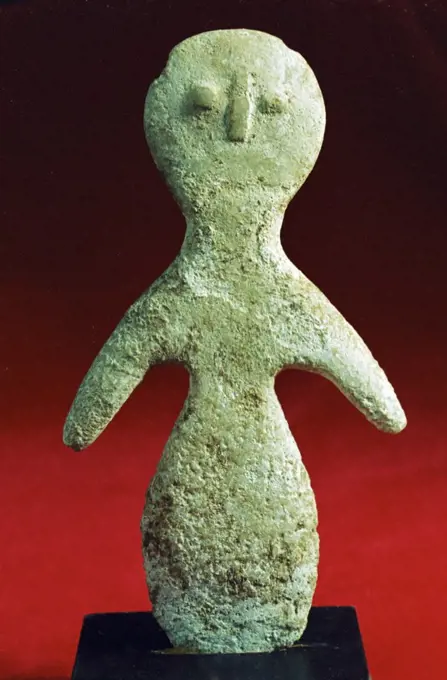
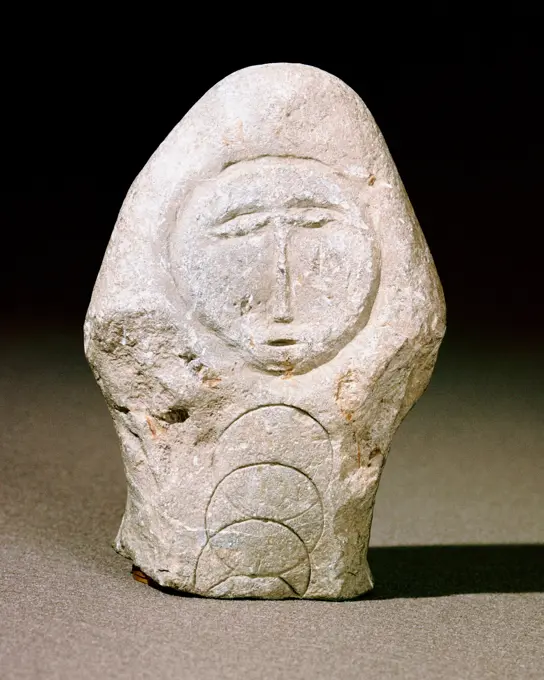
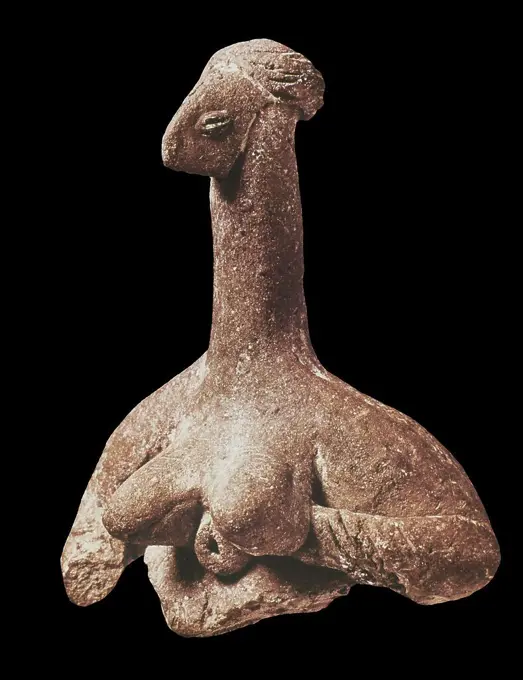
Anatolian female idol, third millennium BC, showing highly stylized, simplified form.
4409-17411813
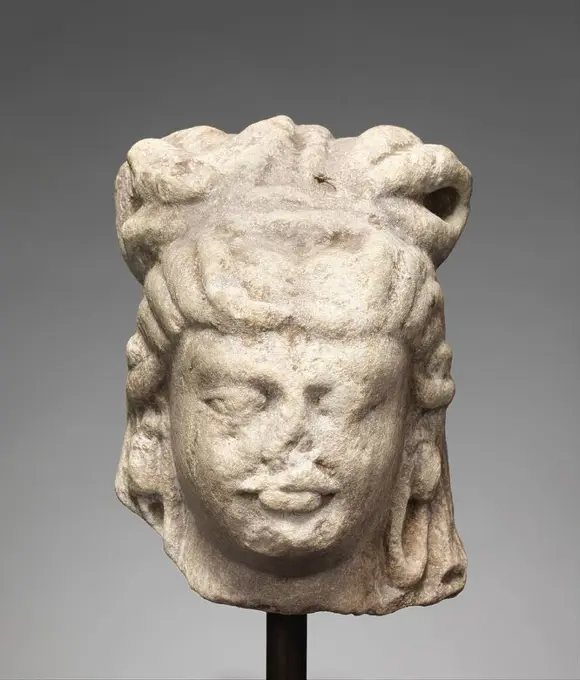
Head of Shiva. Culture: Northern Pakistan (Brahmanical post-Gupta). Dimensions: H. 4 3/4 in. (12 cm); W. 3 1/2 in. (8.9 cm); D. 3 3/8 in. (8.6 cm). Date: ca. 6th century.The Head of Shiva is powerful testimony to the sculptural and conceptual sophistication of Brahmanical sculpture in the 6th century, at the close the Gupta period in northern India, a moment when new experimentation was underway. The stern-faced Shiva is moustached and his braids of hair are drawn up on his head, bound and allowed to fall in a double loop, a rendering directly descended from Gandharan bodhisattva imagery. This distinctive hair treatment can be traced via the northwest art of preceding centuries to Hellenistic models, as most exemplified in Apollo imagery. Already at this early date Shiva's dreadlocks are adorned, as here on the upper right, with a crescent moon, Shiva's lunar symbol. His other key identifier, the forehead eye, can be detected directly beneath the parting of the braids framing his fore
6145-29777796
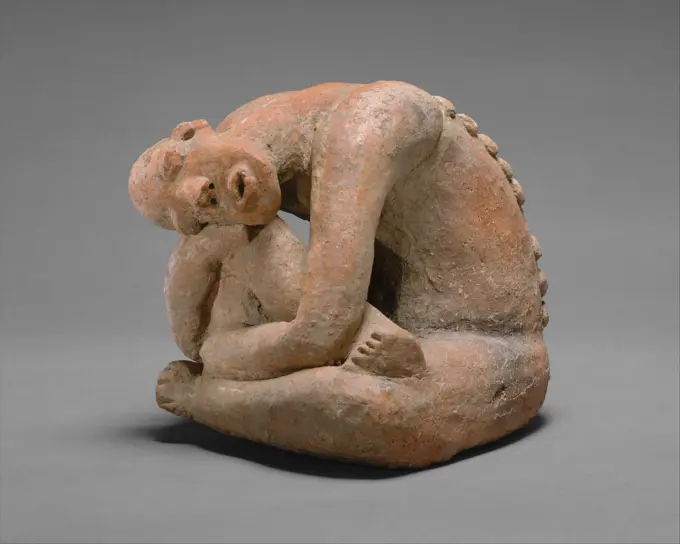
Seated Figure 13th century Middle Niger civilization This haunting figure huddles with its leg hugged to its chest and its head dropped on its knee. It simultaneously suggests the knotted tension of anxiety and the sublime absorption of deep prayer. Created over 700 years ago, in the Inland Niger Delta region of present-day Mali, this elegant work's intense emotional immediacy blurs the boundaries of time and place.This terracotta sculpture comes from a site called Jenne-jeno, the oldest known city in sub-Saharan Africa. Jenne-jeno flourished in the ninth century A.D., but declined and was abandoned by 1400. Items of cast brass and forged iron, clay vessels, and figures like this one survive. They testify to what scholars contend was a richly varied and highly sophisticated urban society.A few controlled archaeological digs provide only the vaguest outlines of the original significance of the art of this time and region. Recovered terracotta figures are frequently quite detailed. They
1746-21109128
Mayan doorway Censers made for burning incense, with a decorative representation of a jaguar. From Tacotalpa, Tabasco, Yucatan, Mexico 600-900 AD
1788-16237
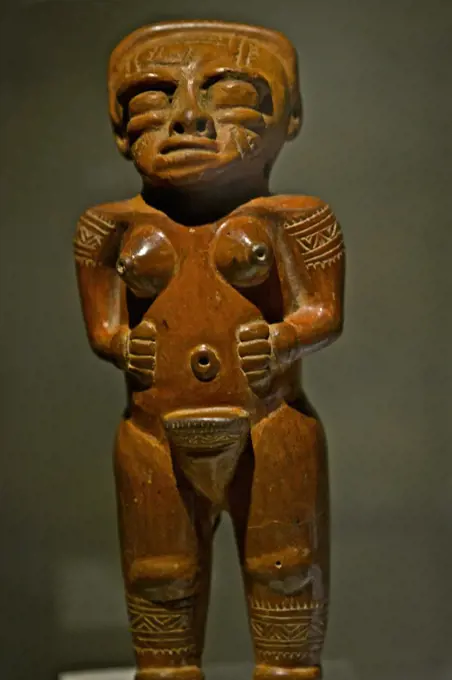
Curayacu culture, Female statuette
4443-28744511
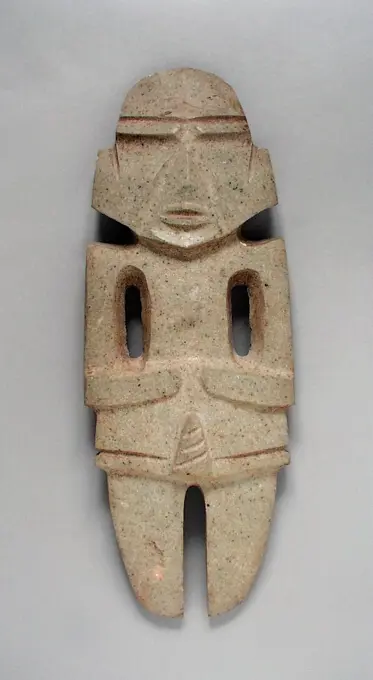
Figure, 4000-3000 BCE, 13 x 7 7/16 x 1 in. (33.02 x 18.89 x 2.54 cm), Tufa, Ecuador, 40th-29th century BCE, One of the earliest sculptural traditions of the ancient Americas was that of the Valdivia culture, which began around 3550 BC and lasted until approximately 1500 BC along the Pacific Coast of present-day Ecuador. Valdivian artists created figures out of both stone and ceramic, portraying men, women and animals in a variety of sizes. Sculptures such as this one are believed to depict a stylized owl, perhaps with supernatural associations relating to the bird's nocturnal habits.
4409-60196
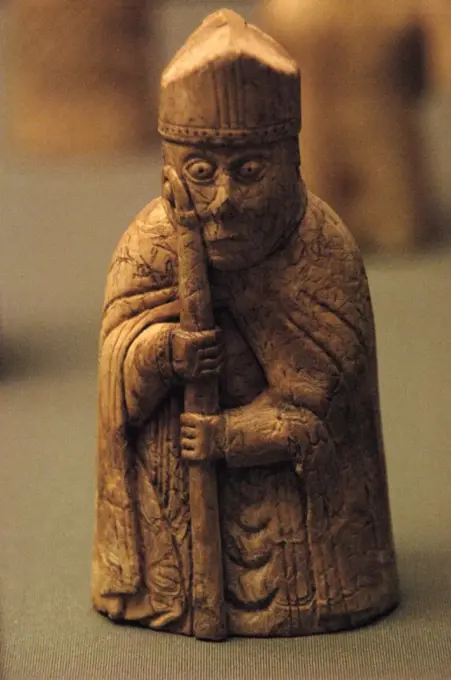
The Lewis Chessmen. Carved in walrus ivory. 1150-1175. Located in Uig. Island of Lewis. Scotland. British Museum. London. England. United Kingdom.
4409-63015107
Mesoamerica. Female figure, censer. Veracruz. Gulf of Mexico. 300-900 BC. Mexico. Museum of Cutures of the World. Barcelona. Spain.
6145-59004137
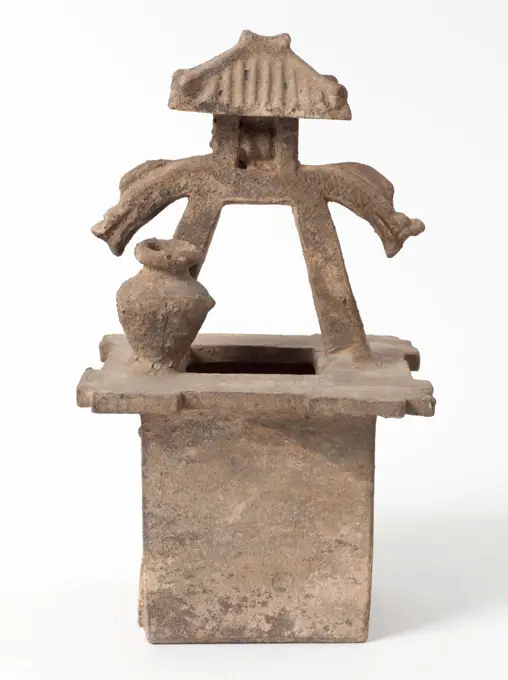
Wells ". Terracotta. DynaStie des Han (206 BC-220 AD). Paris, Cernuschi museum. Chinese art, Chinese ceramic, Han dynasty, Han time, Chinese object, well, terracotta
1746-29016565
Benin Bronze metal plaque that decorated the royal palace of the Benin Kingdom in modern-day Nigeria. the plaques form the best known examples of Benin art, created by the Edo people from the thirteenth century
1788-16739
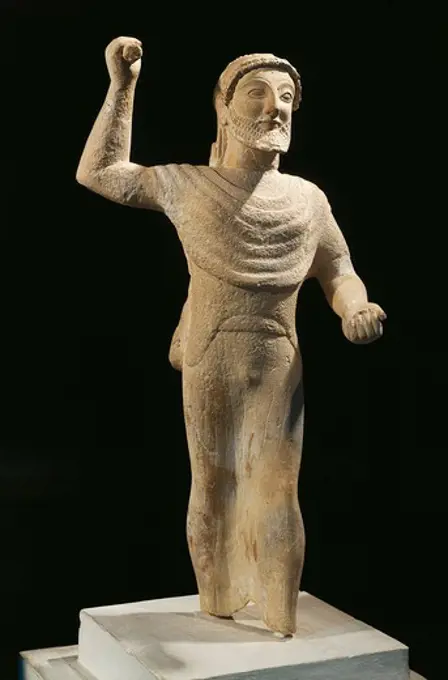
Statue of Zeus Keraunios, detail, From ancient Kition (Larnaca), Cyprus, 4th Century B.C.
1746-19686911
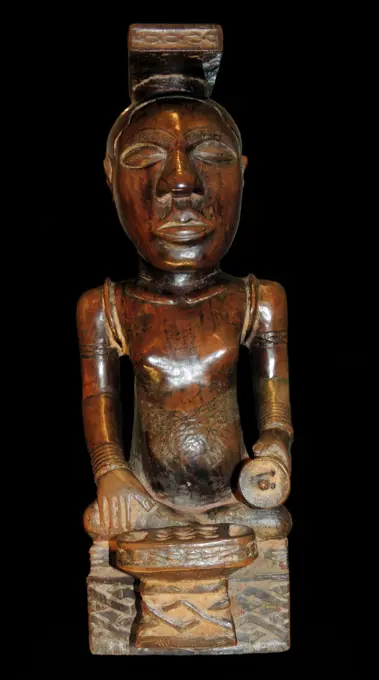
Wooden statue showing a tribal king. 18th century, Democratic Republic of the Congo. Used to establish the continuous unbroken link between tribal kings from different generations.
4409-21480983
Male figurines of wood with traces of polychrome. Placed inside the rich tombs of ancient Egypt. 20th-19th century BC. Middle Kingdom. The State Hermitage Museum. St. Petersburg. Russia.
4409-17391640
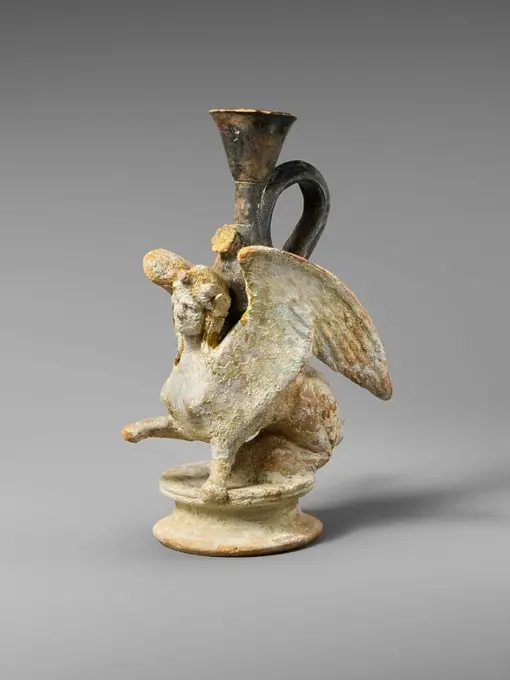
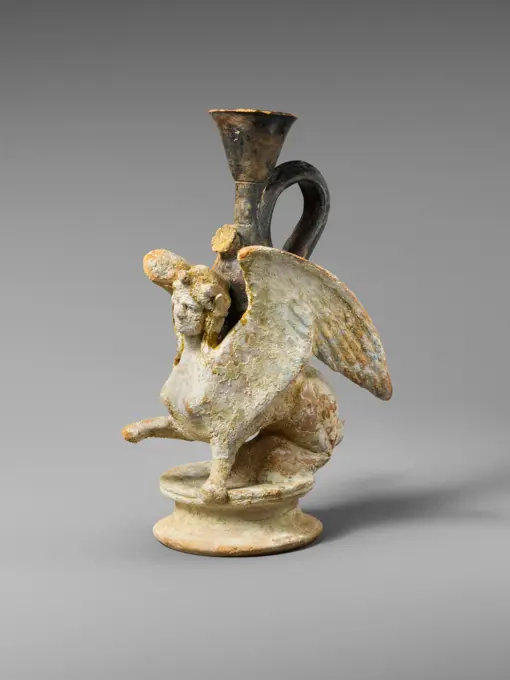
Terracotta lekythos (oil flask) in the form of a sphinx. Culture: Greek, Attic. Dimensions: H. 5 5/8 in. (14.3 cm.). Date: ca. 380-360 B.C..Many traces of paint remain on this sphinx: pale blue on the wings and the eyes, red on the lips, and gold on the fillet. Museum: Metropolitan Museum of Art, New York, USA.
6145-29830731
Fragment of a Relief 12th century Central Asia. Fragment of a Relief 39950
1746-21112792
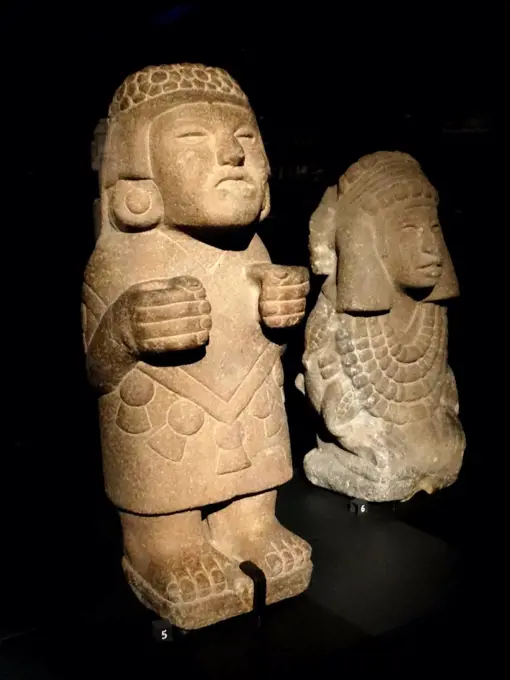
Aztec volcanic rock statue of Xochiquetzal the Goddess of love and beauty. Dated 14th Century
6145-58877378
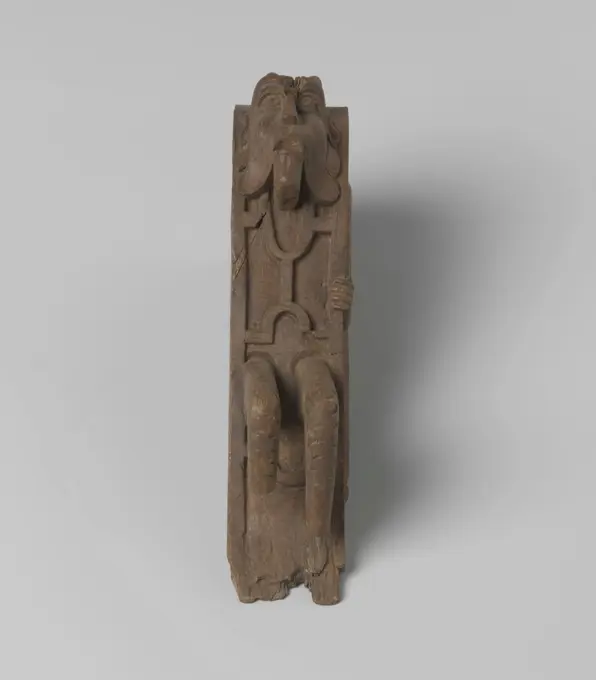
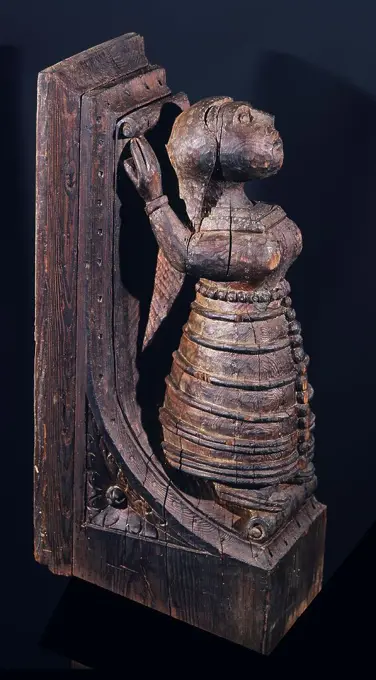
Console of the organ in the Oude Kerk in Delft, Anonymous, 1560 Wooden Console, from the organ in the Oude Kerk in Delft. The console consists of a men's figure with legs raised, which is, as it were, locked up in the console. See: BK-NM-8524-A and BK-BR-502. Northern Netherlands wood (plant material) Wooden Console, from the organ in the Oude Kerk in Delft. The console consists of a men's figure with legs raised, which is, as it were, locked up in the console. See: BK-NM-8524-A and BK-BR-502. Northern Netherlands wood (plant material)
6145-29191580
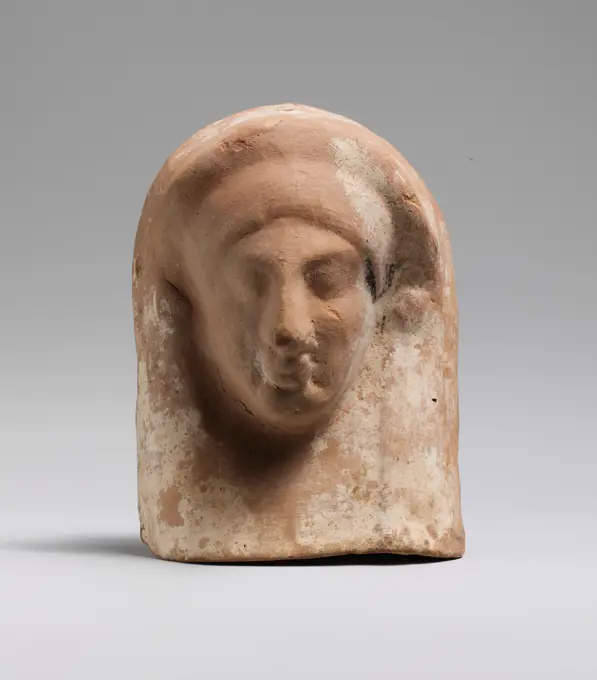
Terracotta relief with head of a woman ca. 500-450 B.C. East Greek Traces of red and black color remain. A hole at the top was for suspension.. Terracotta relief with head of a woman 252587 East Greek, Terracotta relief with head of a woman, ca. 500450 B.C., Terracotta, 4 1/8 in. x 3 in. (10.5 cm x 7.6 cm). The Metropolitan Museum of Art, New York. Gift of The American Society for the Excavation of Sardis, 1926 (26.164.24)
1746-19670721
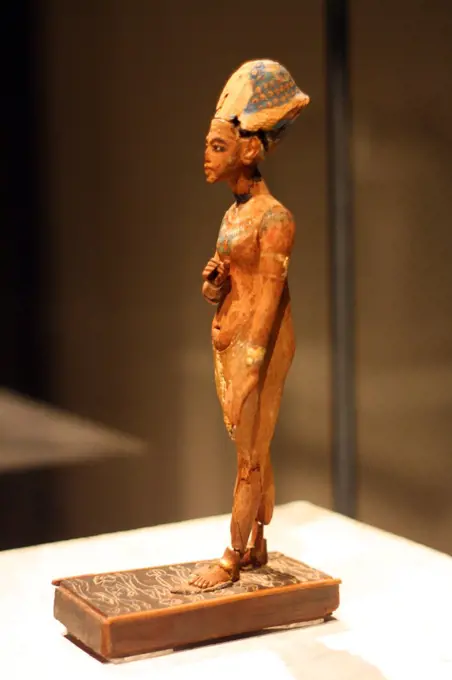
Standing-striding figure of Akhenaten or Tutankhamen New Kingdom, 18th Dynasty around 1340-1330 BC Wood, Gold
4409-17352865
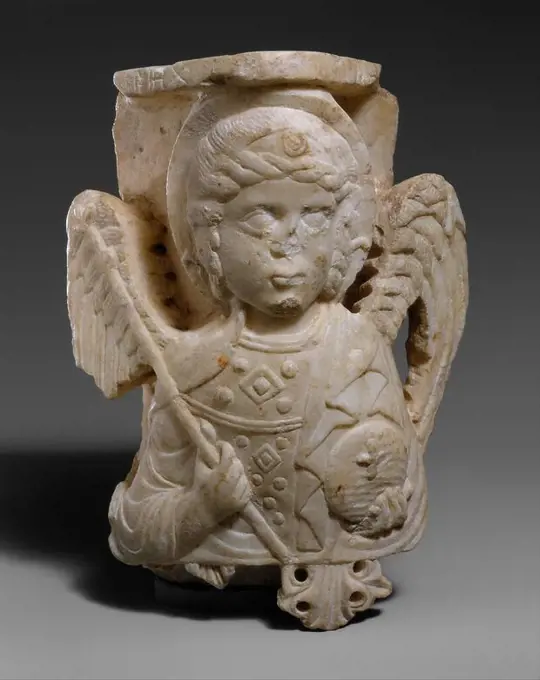
Capital with Bust of the Archangel Michael. Culture: Byzantine. Dimensions: Overall: 10 x 6 3/4 x 4 3/16 in. (25.4 x 17.1 x 10.6 cm). Date: 1250-1300.This beautifully carved fragment was once part of the interior architecture of a church, perhaps placed at the top of a tomb niche or altar screen. Archangels were often portrayed, as here, in the ceremonial dress of the Byzantine emperor, the head of Christ's earthly court. Museum: Metropolitan Museum of Art, New York, USA.
4435-6227
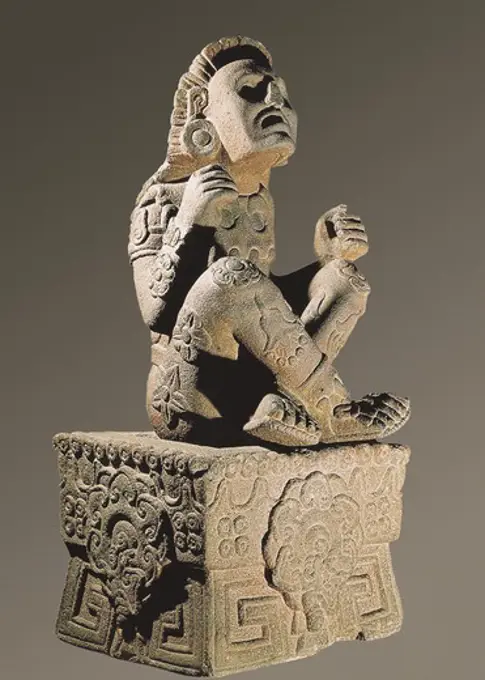
Xochipilli. Mexica deity of love, games, beauty, dance, flowers, maize, pleasure, arts and songs. Postclassic period (1325-1521). Aztec art. Sculpture on rock. MEXICO. FEDERAL DISTRICT. Mexico City. National Museum of Anthropology. Proc: MEXICO. FEDERAL DISTRICT. Mexico City. Tenochtitln.
6145-59045138
Mingqi servant. Terracotta. China, Western Han Dynasty (206 BC-9 AD). Paris, Cernuschi museum. Chinese art, Chinese Art, Han dynasty, Han Dynasty, Mingqui Servant, Mingqi servant, statue, statuette, terracotta, terracotta
6145-29154417
Terracotta lekythos (oil flask) in the form of a sphinx ca. 380-360 B.C. Greek, Attic Many traces of paint remain on this sphinx: pale blue on the wings and the eyes, red on the lips, and gold on the fillet.. Terracotta lekythos (oil flask) in the form of a sphinx 247343
6188-68093017
Anthropomorphe Figur Anthropomorphic figure, Veracruz, Atlantic coast of the Gulf of Mexico, between 300 and 900 AD, ceramic, MuEC, Barcelona, Catalonia, Spain LicenseRF Copyright: xZoonar.com/Tolox 23171272
6145-29220250
Fud My (Achala Vidyaraja), The Immovable Wisdom King 1805 Mokujiki Shnin Statues of the Buddhist protective deity Fud My, the “immovable wisdom king,” are a familiar sight at temples in Japan. In contrast to meticulously carved works by professionals, this type of roughly hewn sculpture is the creation of an amateur monk-sculptor, Mokujiki, who was motivated by religious enthusiasm to make thousands of sculptures of Buddhist deities and popular gods of good fortune. His sculptures were rediscovered in the early twentieth century by art critic Yanagi Setsu (1889-1961), an advocate of the of Mingei, or “people’s art.” Yanagi admired the direct, unaffected power of Mokujiki’s sculpture, which he saw as representing the ideal of an indigenous, popular Japanese art. While Mokujiki’s technique is referred to as natabori (“hatchet-carved”), the artist actually used round-headed chisels.. Fud My (Achala Vidyaraja), The Immovable Wisdom King. Mokujiki Shnin (Japanese, 1718-1810). Ja
1788-41749
Terracotta funeral urn with anthropomorphic breastplate. Artefact from the village of Xoxocotlan, Mexico. Zapotec Civilization, classical period, 200-900.
1746-21111312
Wooden protective statue used to protect the owner from evil, from Mambila, Nigeria. Dated 19th Century
4409-157377
CANECILLO DE ALERO EN MADERA. Location: MUSEO ARQUEOLOGICO-COLECCION SIN CLASIFICAR. GRANADA. SPANIEN.
6145-29136583
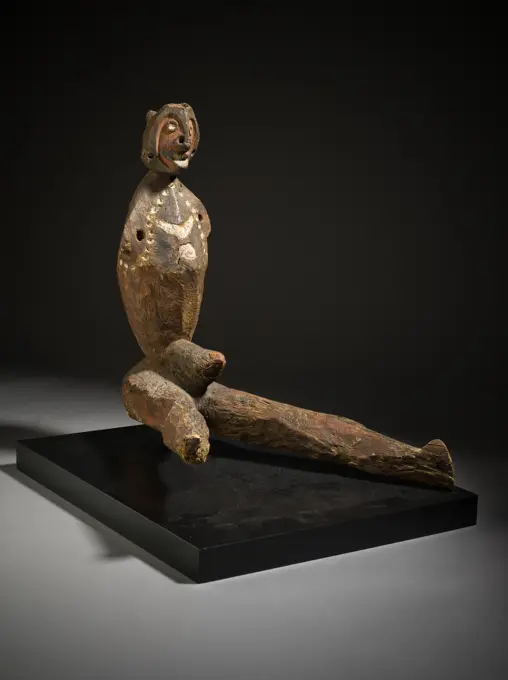
Male Figure. Papua New Guinea, Gulf province, Lower Fly River, no date. Sculpture. Wood
6145-48834509
Male Harp Player of the Early Spedos Type. Unknown
1525-22305129
Rear view of a wooden horse
6145-29240967
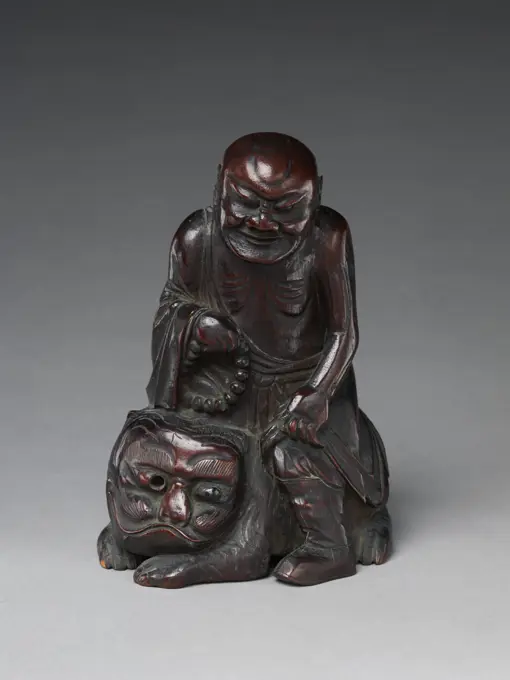
Arhat with a tiger 18th century China. Arhat with a tiger. China. 18th century. Bamboo. Qing dynasty (1644-1911). Sculpture
6145-45552102
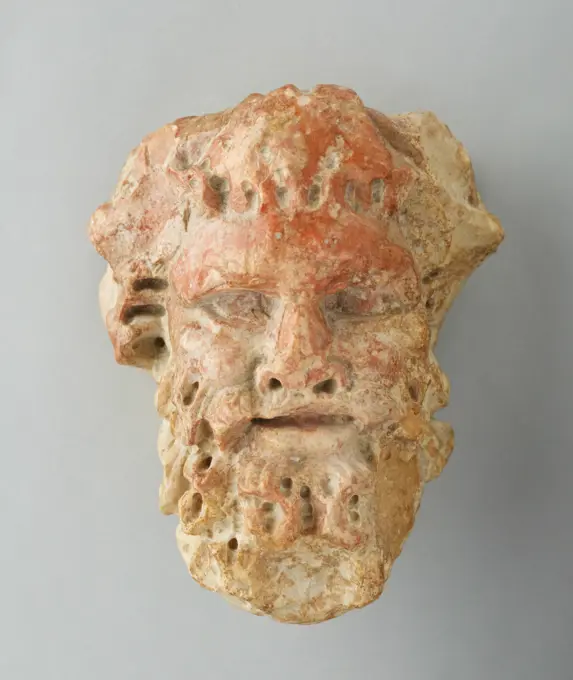
Head of Silenus
6145-29125446
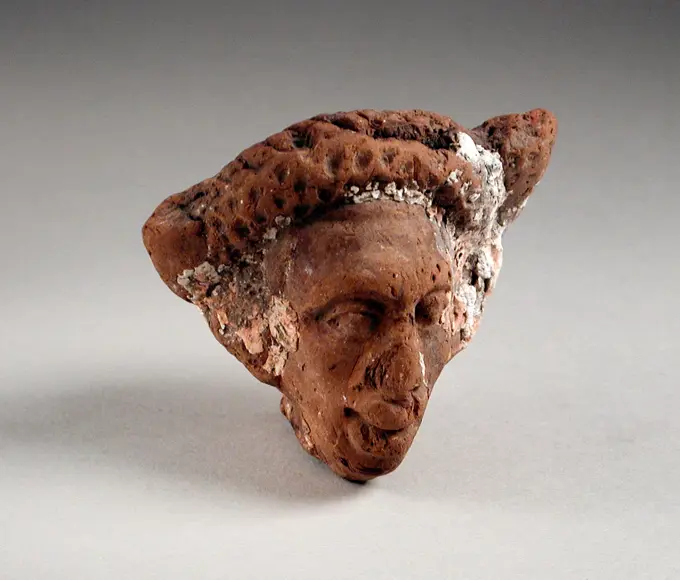
Head. Egypt or Northern Africa, 305 BCE - 641 CE. Sculpture. Terracotta
4409-62729525
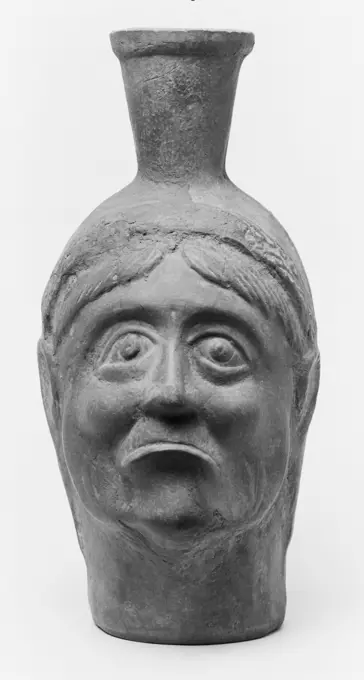
Female comic mask. Roman period. National Roman Museum (Baths of Diocletian). Rome. Italy.
6145-46808631
Female AncestorFigure
4409-17232538
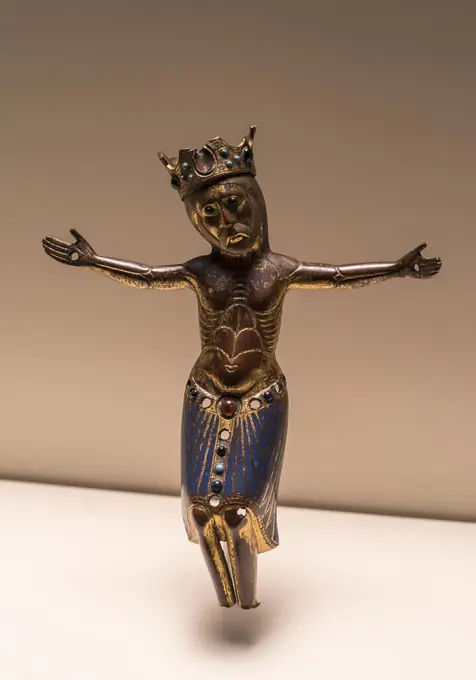
Romanesque art in the National Art Museum of Catalonia,Barcrelona,Romanesque Christ (1200-1220) from Limoges,reinforced copper, chiseled, pointillate .
1746-19664796
Plaque, Brass, Benin, Nigeria, 16th century.
4409-17215580
Arte Edad Antigua. Exvoto Ibérico. Bronce. 400-101 a.c. Museum: MUSEO ARQUEOLOGICO, MADRID, SPAIN.
4443-22016543
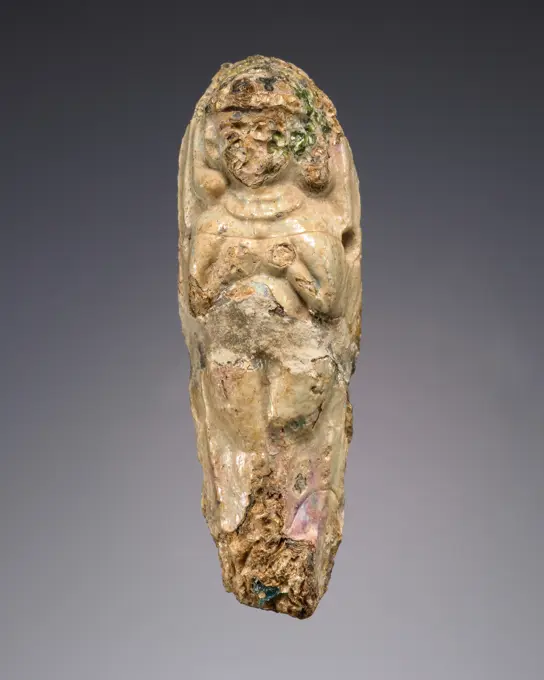
Handle with Male Figure; Egypt; 712 - 30 B.C; Glass; 4.6 cm (1 13,16 in.)
6145-29126219
Joined Couple
6145-29137866
Horned Female Figure. Western Iran, Iron Age II-III, about 1000-650 B.C.. Sculpture. Bronze, cast
6145-29126347
Joined Seated Male Figures
6145-46802134
Fragment of a MaleFigure
6145-29809410
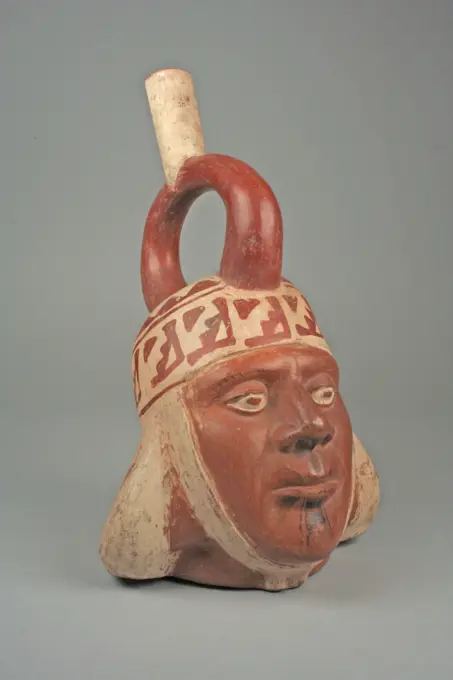
Portrait Head Bottle 5th-7th century Moche The Moche (also known as the Mochicas) flourished on Perus North Coast from AD 200-850, centuries before the rise of the Incas. Over the course of some six centuries, the Moche built thriving regional centers from the Nepeña River Valley in the south to perhaps as far north as the Piura River, near the modern border with Ecuador, developing coastal deserts into rich farmlands and drawing upon the abundant maritime resources of the Pacific Oceans Humboldt Current. Although the precise nature of Moche political organization is a subject of debate, these centers shared unifying cultural traits such as religious practices (Donnan, 2010). Moche potters produced tens of thousands of modeled and painted ceramic vessels over the course of some six centuries, and these were used in specific rituals; many, but not all, were ultimately placed in tombs. Portrait heads—so-called for their striking apparent resemblance to specific individuals—are a subset
6145-29066763
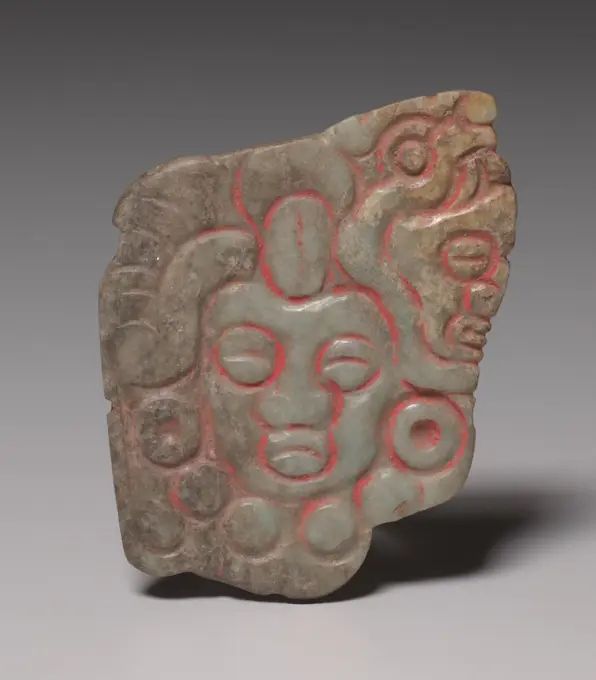
Offering Group: Plaque with Frontal and Profile Faces, 800-1200(). Mexico, Guerrero(), San Jerónimo de Juárez, Xochicalco style. Jadeite with albitite; overall: 7.9 x 6.3 x 0.7 cm (3 1/8 x 2 1/2 x 1/4 in.). This greenstone plaque is said to have been found inside a translucent stone vessel, together with two shells (1990.252.1-3). A similar offering was found in a pyramid ornamented with feathered serpents at Xochicalco, a site south of the Valley of Mexico.
6145-29127416
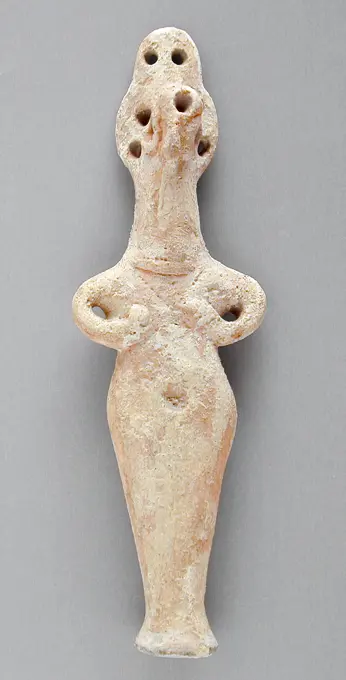
Female Figure. Northern Syria, 2nd millennium B.C.. Sculpture. Terracotta
6145-46811508
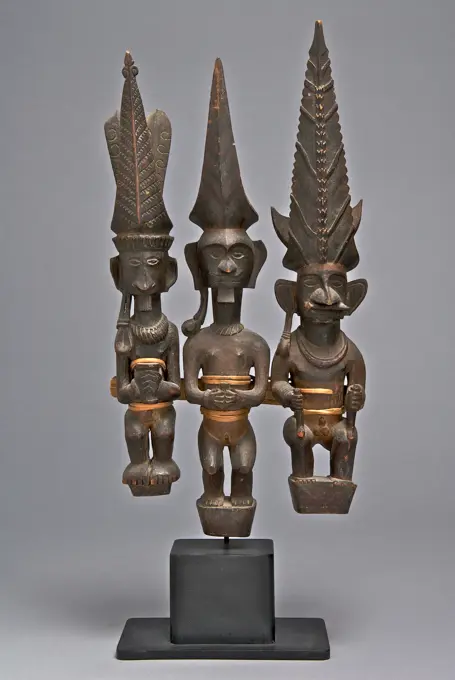
Ancestor TriadStatue
6145-29806963
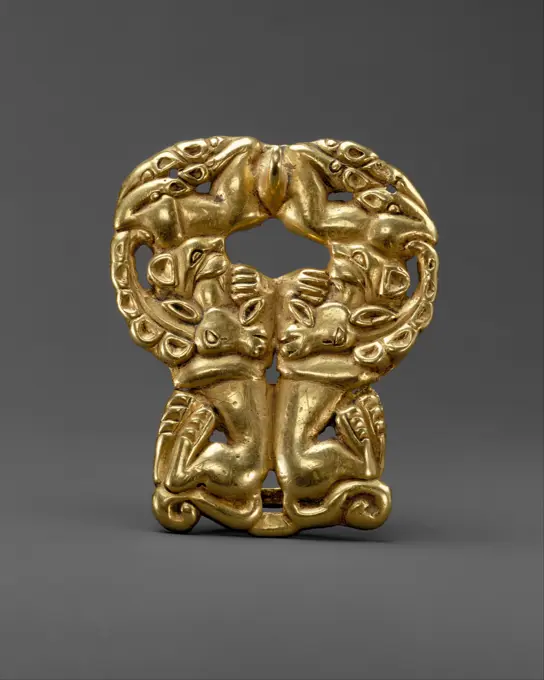
Belt buckle with paired felines attacking ibexes ca. 3rd-2nd century B.C. Xiongnu During the first millennium B.C., many horse-riding nomadic tribes controlled the vast Eurasian steppes to the north of the Black and Caspian seas. Some of the nomadic groupsparticularly Scythian tribes that lived in the plains north of the Black Seawere described by the Greek historian Herodotus in his Histories. But we also know about them from their burial mounds, which contained sumptuous golden objects made in a variety of styles that reflect contacts with Greece, Persia, and China.Following earlier Scythian migrations, Sarmatian tribes moved in the fourth century B.C. from the area north of the Caspian Sea into the Caucasus and Europe. Sarmatian animal-style art is distinguished by complex compositions in which stylized animals are depicted twisted or turned back upon themselves or in combat with other animals. Plaques, clasps, and weapons were frequently made of precious metals and embellished wi
6145-59098921
Izida figurine with Horus on the knees;  664-525 BC ; Half period, 26 dynasty (-664-00-00--525-00-00);Horus (mitol.), Izyda (mitol.), ureusze
1788-22770
Italy, Calabria, Francavilla Marittima, Statuette representing a warrior from the sanctuary, bronze
6176-67062361
Celtic carved head, Eype, Dorset, c1st century. Artist: Unknown
6145-29128901
Seated Figure
1848-50664369
Pair of clay figurines of worshippers (1650-1500 BC), Archaeological Museum with most important finds of the Minoan culture, Heraklion, Crete, Heraklion, Crete, Greece, Europe
6145-48867793
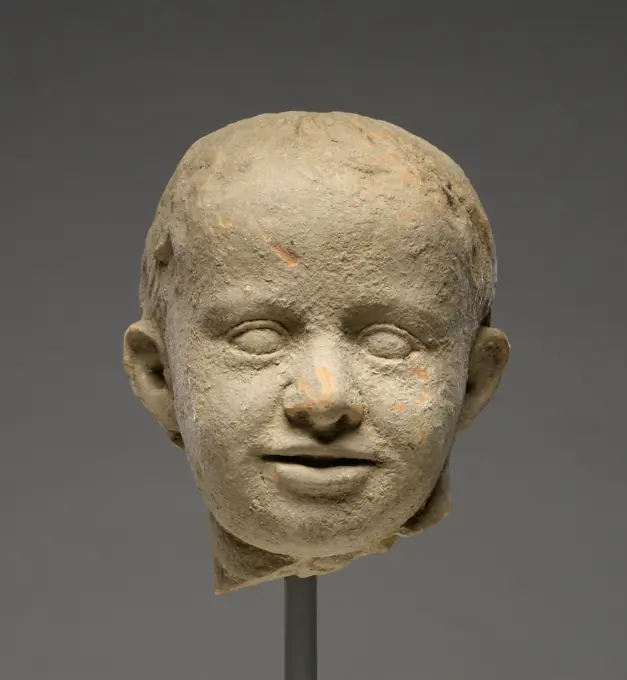
Head of a Child. Unknown
1788-17342
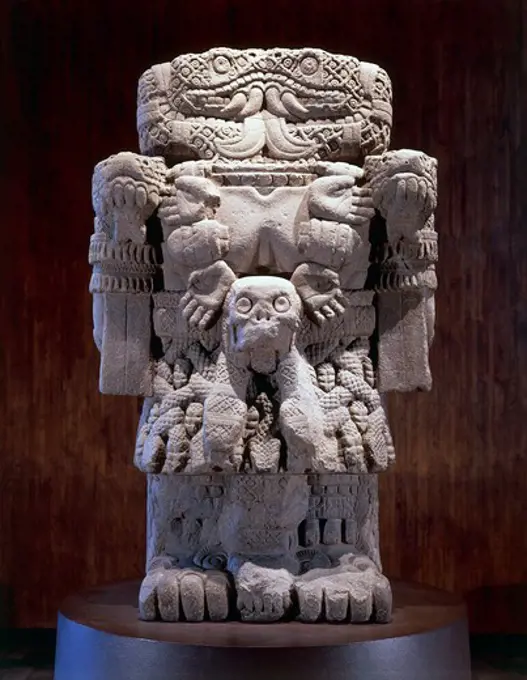
Statue of Coatlicue, earth goddess of life and death, aztec civilization
6145-29129957
Figurine of the Goddess Athena (). Egypt, Roman Period (30 BCE - 395 CE) or modern. Sculpture. Bronze
6145-29735956
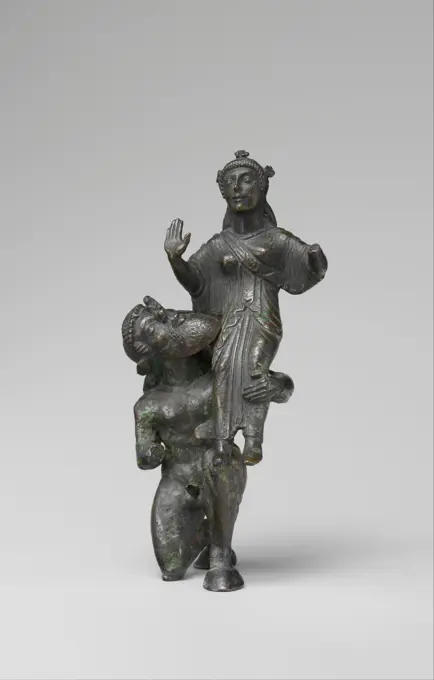
Bronze statuette of a satyr and maenad ca. 510-480 B.C Etruscan This bronze depicts a satyr abducting a maenad, one of the Archaic period's favorite subjects. Both figures are modeled with a great deal of attention to details, including facial features, hair, and drapery. The ultimate source of inspiration for the maenad is the series of Greek sculpted korai set up as votive offerings in many Greek sanctuaries.. Bronze statuette of a satyr and maenad 248674
4409-17413011
Figure. Culture: Chupicuaro. Dimensions: H. 2 5/8 in. (6.7 cm). Date: 3rd century B.C.-A.D. 4th century. Museum: Metropolitan Museum of Art, New York, USA.
1746-21111398
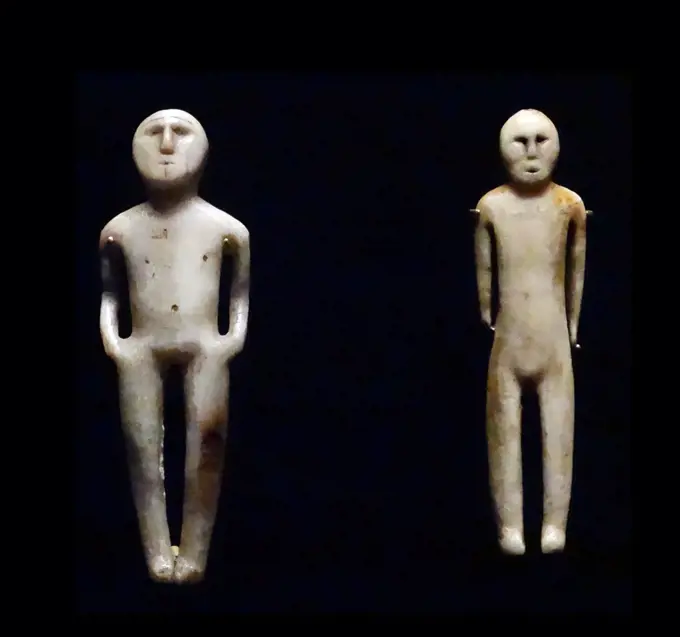
Ivory figurines from Alaska. Dated 20th Century
6145-29714459
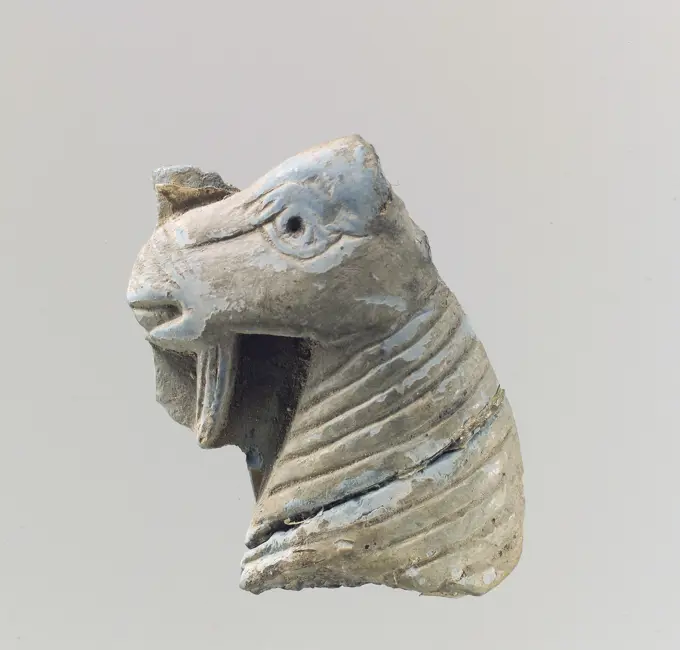
Plaque fragment ca. 9th-8th century B.C. Assyrian This small ivory fragment is blue-gray in color, probably due to exposure to fire when the palace complexes at Nimrud were sacked during the final defeat of Assyria at the end of the seventh century B.C. It depicts the head and neck of a goat carved in high relief with mouth slightly open, perhaps to graze on vegetation, although the rest of the scene is not preserved. Carved ivory pieces such as this were widely used in the production of elite furniture during the early first millennium B.C. They were often inlaid into a wooden frame using joinery techniques and glue, and could be overlaid with gold foil or inlaid with colored glass or stone pieces to create a dazzling effect of gleaming surfaces and bright colors. Grazing goats, deer, and other ungulates were frequently depicted in carved ivory plaques, including two well-preserved pieces from Nimrud which are also in the collection of the Metropolitan Museum (58.31.3, 61.197.6).Built
4443-28735884
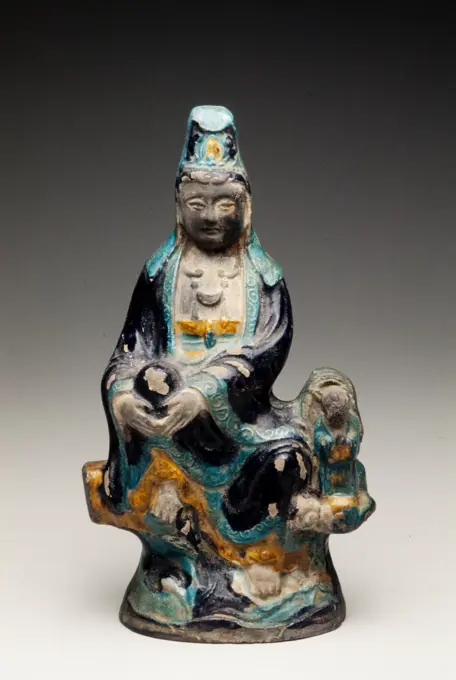
Seated Bodhisattva, c. 1600, 11 7/8 x 6 7/8 x 3 1/4in. (30.2 x 17.5 x 8.3cm), Glazed ceramic, China, 16th-17th century
6145-29195780
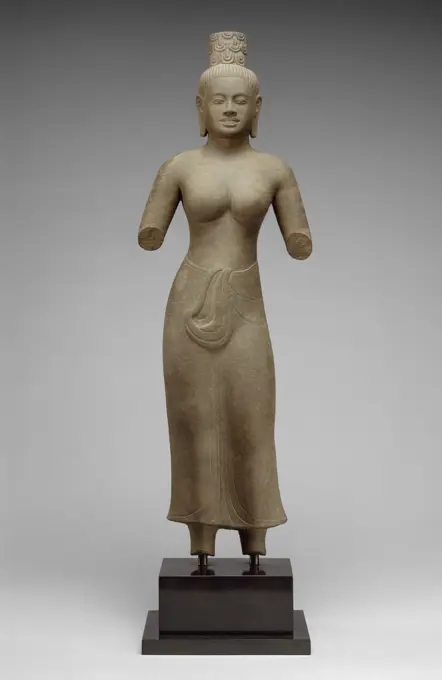
Standing Uma ca. 975 Cambodia. Standing Uma. Cambodia. ca. 975. Stone. Angkor period. Sculpture
6145-29737798
Fragmentary Smiling Figure 6th-9th century Remojadas. Fragmentary Smiling Figure. Remojadas. 6th-9th century. Ceramic. Mexico, Mesoamerica, Veracruz. Ceramics-Sculpture
4409-60300814
Museum of prehistory and archeology (MUPAC), Santander, Cantabria, Spain.
1788-18363
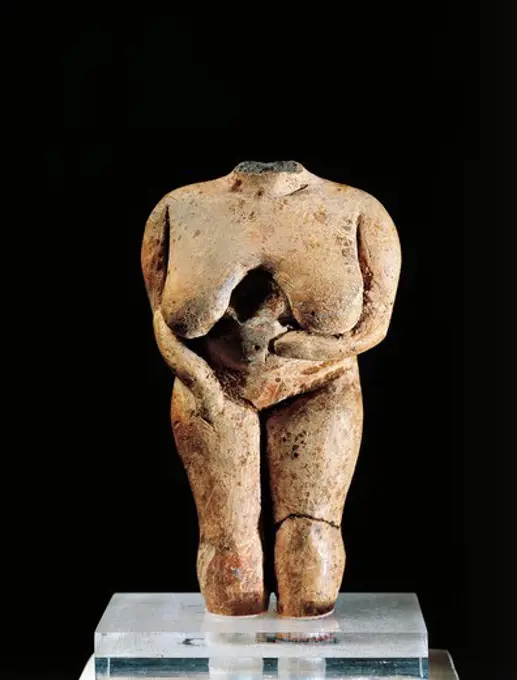
Terracotta figurine known as the Venus of Malta, from the Temple of Hagar Qim
4409-17519993
Portrait Head. Totonac, Remojadas; Veracruz, south-central Gulf Coast, Mexico. Date: 250 AD-550 AD. Dimensions: 26 × 24.8 × 27.3 cm (10 1/4 × 9 3/4 × 10 3/4 in.). Ceramic and pigment. Origin: Veracruz, southern. Museum: The Chicago Art Institute, Chicago, USA.
4443-28734059
Head, 4 1/8 x 6 1/2 x 5 3/4 in. (10.5 x 16.5 x 14.6 cm), Earthenware, Mexico
6145-29068475
Shawabty of Ditamenpaankh, 715-656 BC. Egypt, Late Period, Dynasty 25. Terracotta; overall: 5.8 x 1.6 x 1.4 cm (2 5/16 x 5/8 x 9/16 in.).
6145-29150032
Limestone head of a bearded male with a plain headdress middle of the 6th century B.C. Cypriot Bearded head with collar in the Egyptian fashion.. Limestone head of a bearded male with a plain headdress 242423
4409-17221364
Figure representing a chief. Ceramics. Bahia Culture (500 BC-500 AD). Ecuador. Museum of the Americas. Madrid, Spain.
7155-70381238
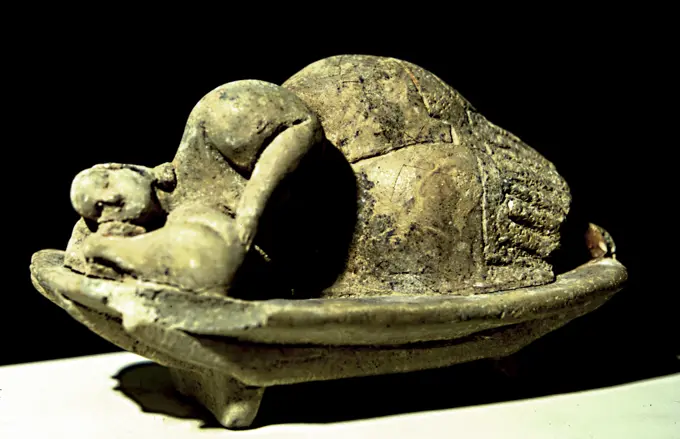
Sleeping Lady. Earth Mother Gaia Goddess figure from Hal Saflien Hypogeum. 3000-2500 BC. Fertility symbol. Malta.
6176-67036743
Dwarf from Sigiriya Rock fortress, 5th century, Sri Lanka. (20th century). Artist: Unknown.
6145-59066586
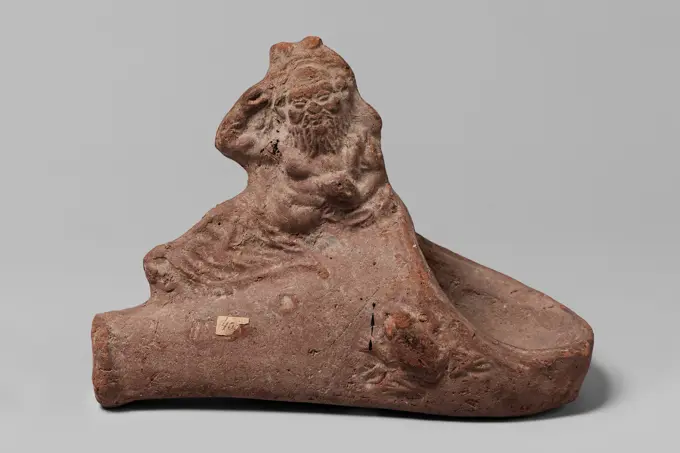
Iconic vessel with the representation of the God of the Nile;  1st century BC - 1st century AD ; Ptolemean-Roman period (-100-00-00-100-00-00);Nile (personification), scenes.gal.eg., Egyptian ceramics, figurines, frogs
6145-44292116
Carthaginian Vase Fragment. Unknown
6145-44292121
Carthaginian Vase Fragment. Unknown
6188-62355411
Relief plate made of Benin with a warrior relief plate made of Benin with warrior copyright: xzoonar.com/hgvorndranx 22075989
6145-48531342
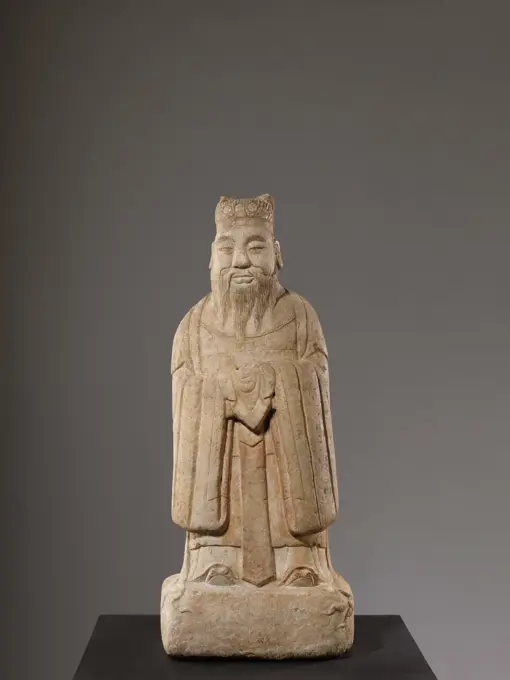
Urzędnik cesarski - mnich Zhang Daoling. unknown, craftsman
6145-29124543
Joined Couple
4430-3798
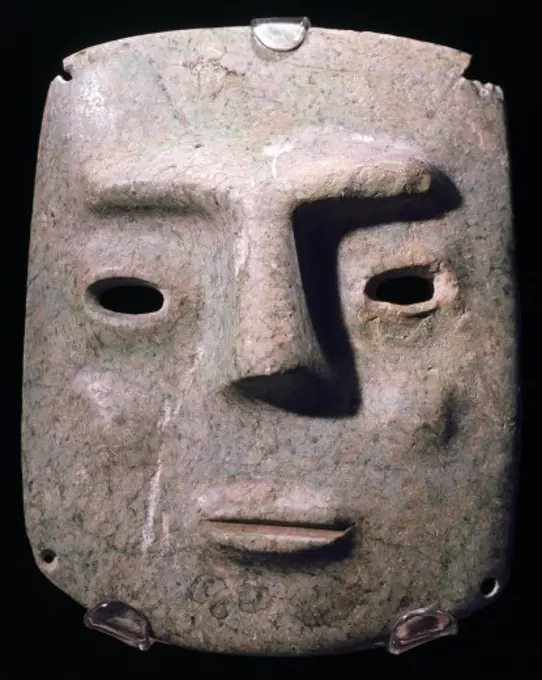
fine arts, Mesoamerica, Colima, sculpture, mask, green stone, Mexico, circa 200 BC, Stolper Gallery, Munich,
4409-20887811
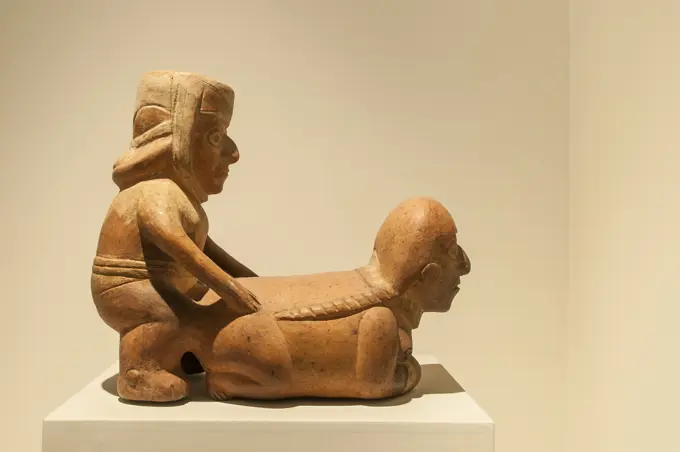
Ceramic vessel, erotic art Moche culture 100 AC-800 AC Perú.
6145-29187825
Figure of a dancer 7th-8th century China. Figure of a dancer. China. 7th-8th century. Earthernware with pigments. Tang dynasty (618-907). Tomb Pottery
6145-29737839
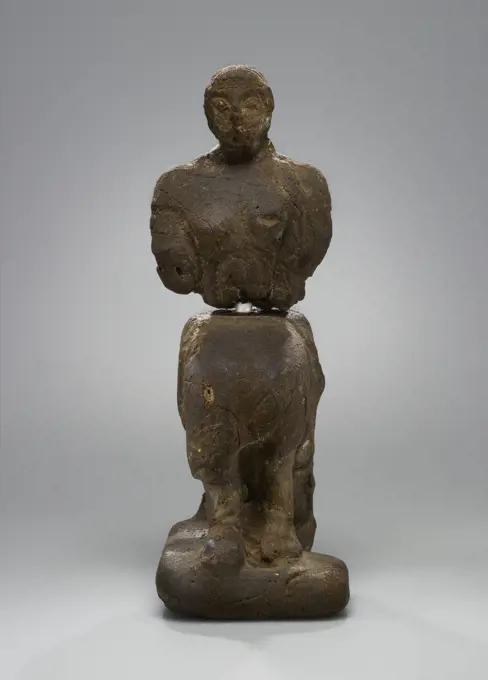
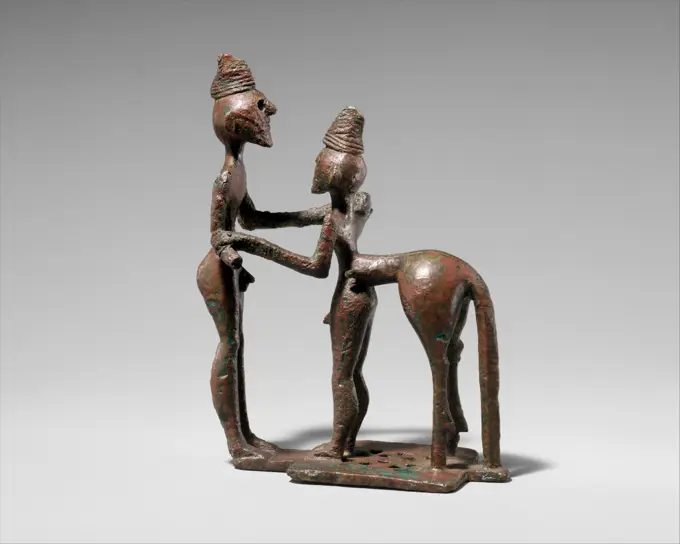
Bronze man and centaur mid-8th century B.C. Greek Half man, half horse, the centaurs were thought to inhabit remote wooded areas. In much of Greek art, they appear in combat with humans and, by implication, are the antithesis of civilized men. The classic rendering of this subject can be seen in the metopes of the Parthenon in Athens. It is, however, already fully presented in this bronze statuette. The outcome of the conflict is indicated by the end of the spear preserved in the centaur's left flank and by the greater height of the man. Listen to experts illuminate this artwork's story Listen Play or pause #1441. Bronze man and centaur Play or pause #1005. Bronze man and centaur Supported by Bloomberg Philanthropies We're sorry, the transcript for this audio track is not available at this time. We are working to make it available as soon as possible.. Bronze man and centaur. Greek. mid-8th century B.C.. Bronze. Geometric. Bronzes
4409-17436897
Horse figurine. Culture: Cypriot. Dimensions: H. 10 15/16 in. (27.8 cm). Date: ca. 750-600 B.C..The handmade and solid horse was originally part of a horse-and-rider figurine. The rider is now missing, but traces remain on the horse's body and parts of his hands are visible on the mane. Museum: Metropolitan Museum of Art, New York, USA.
4409-17434445
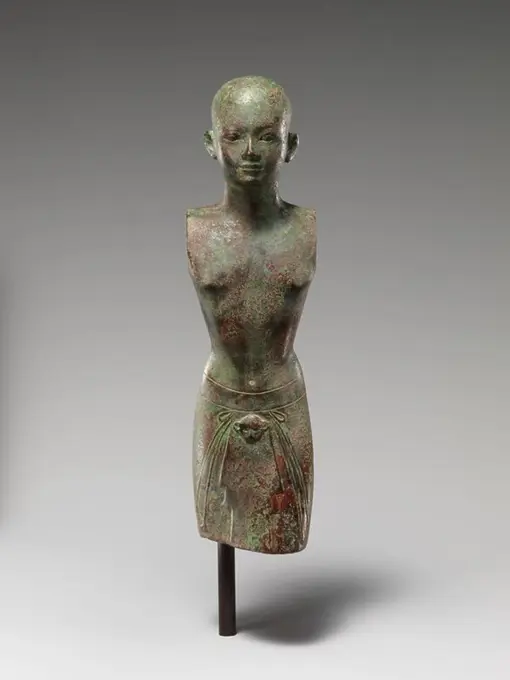
Kushite priest wearing garment with leopard's head and tassels, subsequently adapted for a king. Dimensions: H. 21 x D. 5.5 cm (8 1/4 x 2 3/16 in). Dynasty: Dynasty 25. Date: ca. 712-664 B.C..The rounded head with small features atop a slender but powerful body identifies this statue as Kushite. Beneath the bare torso, the lower body is clothed with a kilt. From a wide belt hangs a leopard's head, signifiying priestly office, and long cords ending in vegetal tassels. The arms and legs, now missing, would have been attached separately. Museum: Metropolitan Museum of Art, New York, USA.
1788-17253
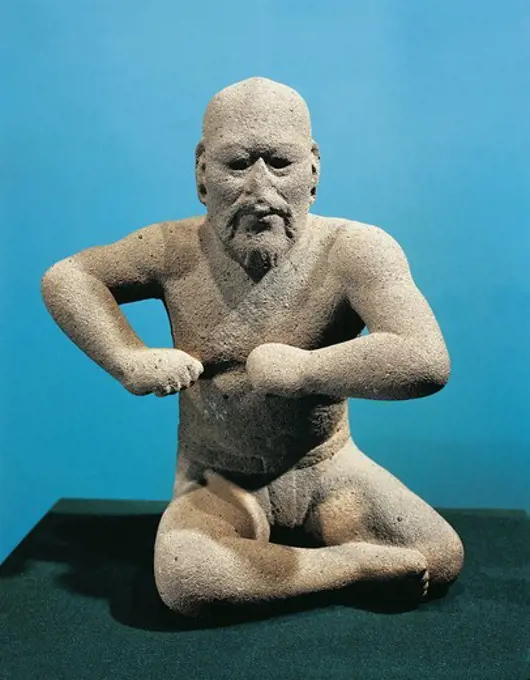
Statue of a wrestler from Santa Maria Uxpanapan
4409-38912
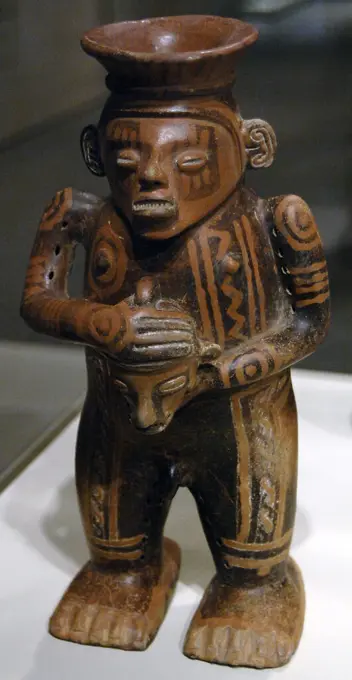
Pre-Columbian art. Costa Rica. Warrior figure with trophy head, 500-1000 AD. Baked clay. Dimensions; height: 37,76 cm; width: 18,72 cm; depth: 12,7 cm. Denver Art Museum. Denver, Colorado, United States.
4409-18761093
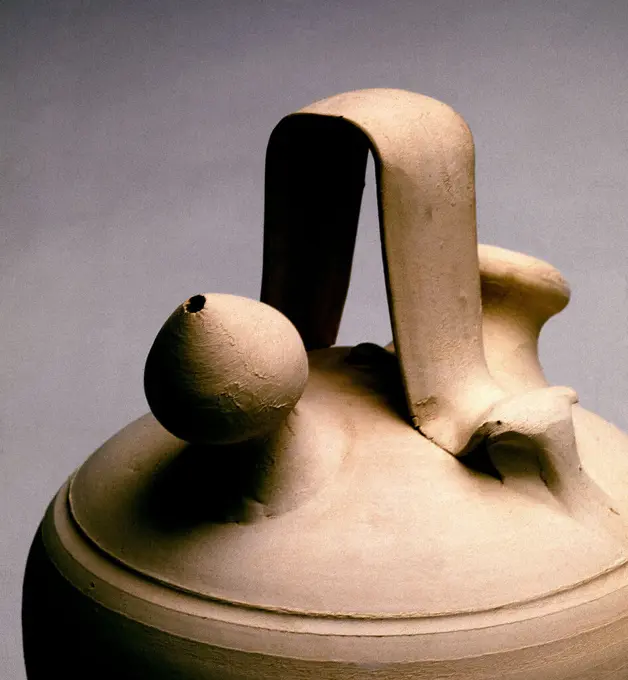
PORRON DE FAROLILLO-DETALLE DE ASA Y PITORRO-ARTE POPULAR S XX. Location: ALFARERIA. LA RAMBLA. CORDOBA. SPAIN.
4409-17545734
Simian Mother and Child. Indonesia; Java. Date: 1201-1300. Dimensions: 25.1 x 23.8 x 22.9 cm (9 7/8 x 9 3/8 x 9 in.). Andesite. Origin: Java. Museum: The Chicago Art Institute, Chicago, USA.
6145-59656744
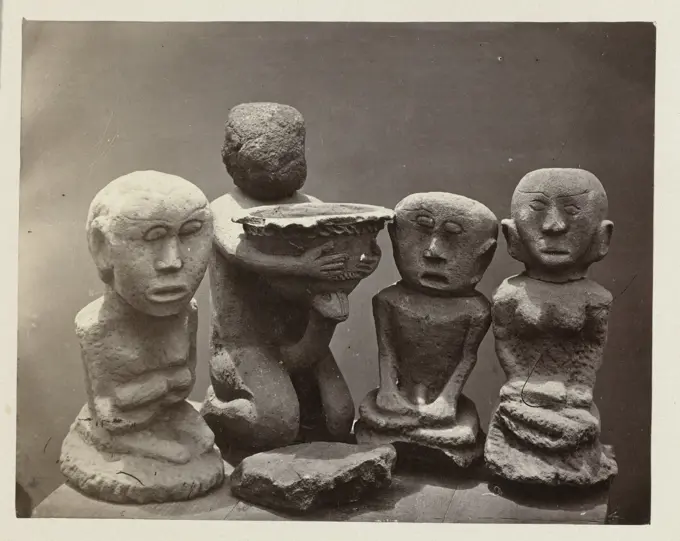
Terra cotta group holding two itiphallic figures and two female figures with child. Karta Wangungan, Kuningan district, West Java province,, 1863 - 1864 photograph  Java (possibly) paper. photographic support. cardboard albumen print
4409-44090
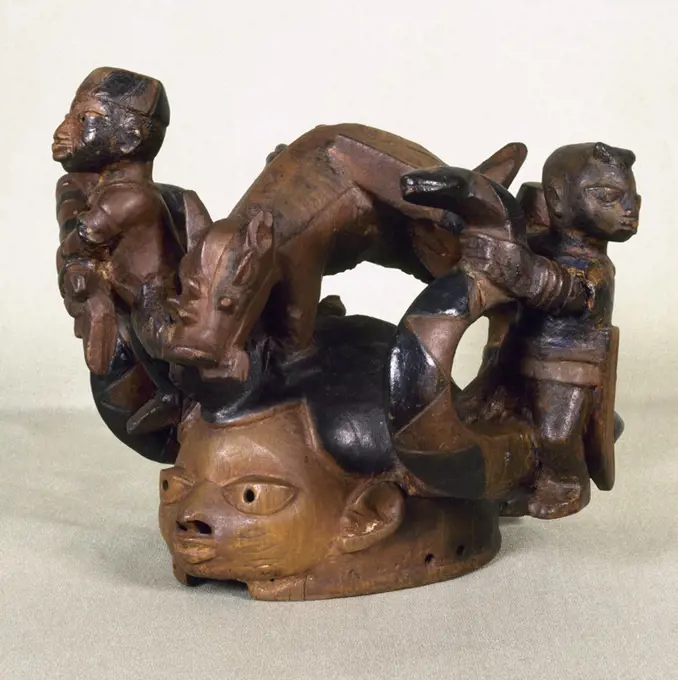
Black African Kingdoms. Yoruba. Anthropomorphic mask. Carved and painted wood. Used in the gelede rite. Africa. Museum of Ethnology and World Cultures. Barcelona. Catalonia. Spain.
7074-70252314
Guayaquil, Ecuador. indigenous garden statue.
4409-17694
GRIFOMAQUIA (HOMBRE LUCHANDO CONTRA GRIFO) PROCEDE DE PORCUNA - SIGLO V AC - IBERICO. Location: MUSEO ARQUEOLOGICO-COLECCION. JAEN. SPAIN.
6145-29824793
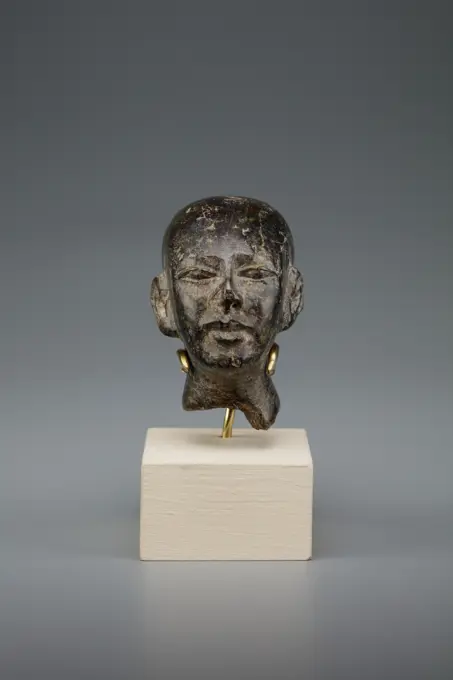
Head of male statue ca. 1802-1640 BC  Middle Kingdom. Head of male statue. ca. 1802-1640 BC . Steatite or serpentinite. Middle Kingdom. From Egypt. Dynasty 13
6145-48530831
Strażnik Niebios i Obrońca Wiary. unknown, sculptor
866-4270
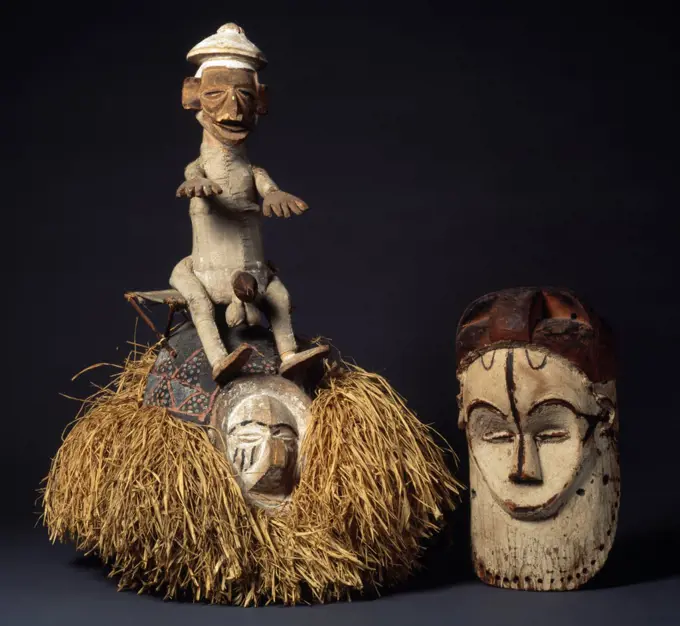
Yaka Mask and Fang Mask, England, London, Christie's Images, Primitive Art
4409-9350
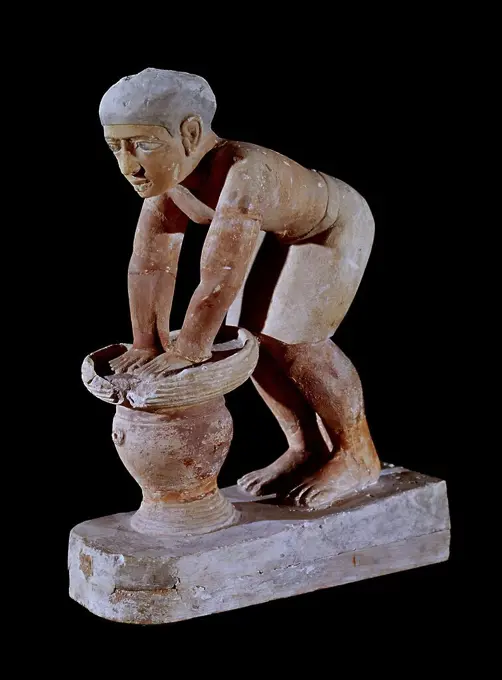
ESTATUA DE HOMBRE FABRICANDO CERVEZA-CALIZA DEL IMPERIO ANTIGUO V DINASTIA PROCEDE DE SAQQARA. 40 C. Location: EGYPTIAN MUSEUM. KAIRO. EGYPT.
4409-65764749
female anthropomorphic vessel, Neolithic, sixth millennium BC,, Bulgarian National Archaeological Museum, Sofia, Republic of Bulgaria, Europe.
6145-29772423
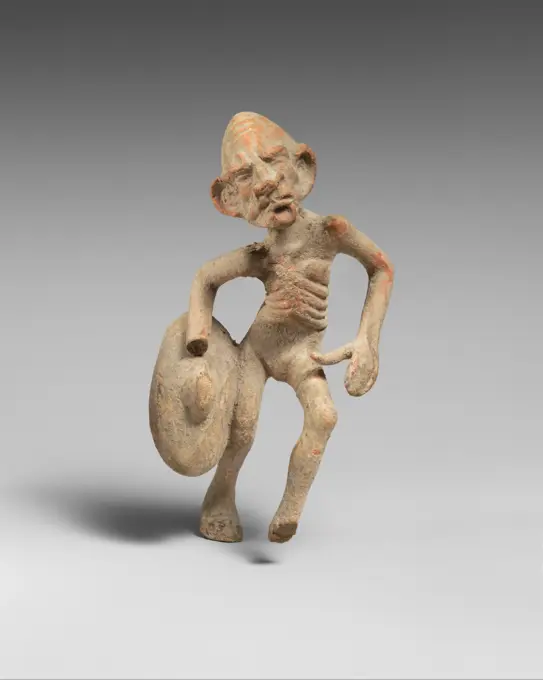
Terracotta statuette of a mime with a shield 2nd-1st century B.C. Greek Statue of an emaciated old man, with an oversized head and grotesque features. A shield is under is right arm, resting on his leg.. Terracotta statuette of a mime with a shield 257521
6176-67037021
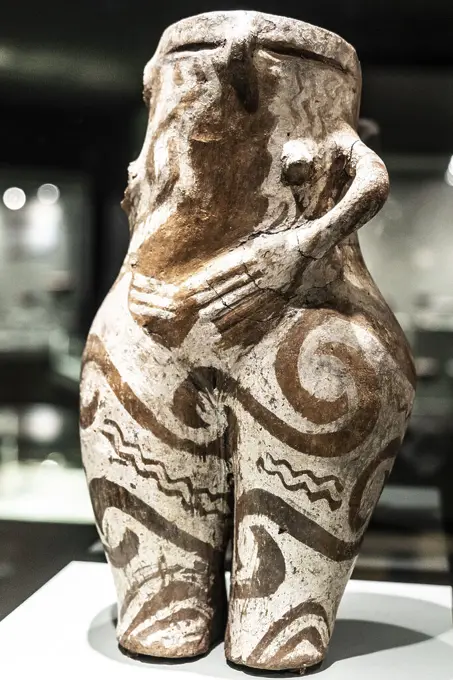
Late Neolithic female figure from Romania, 40th century BC. Artist: Unknown
6145-29129930
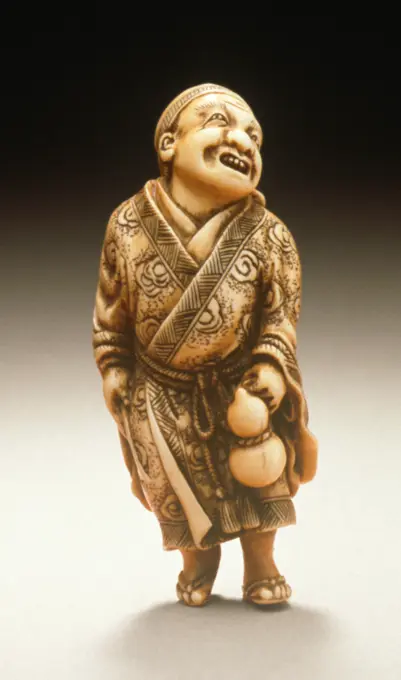
Peddler. Ryūkei II (Japan, active mid- to late 19th century). Japan, mid- to late 19th century. Costumes; Accessories. Ivory with staining, sumi
4409-21512156
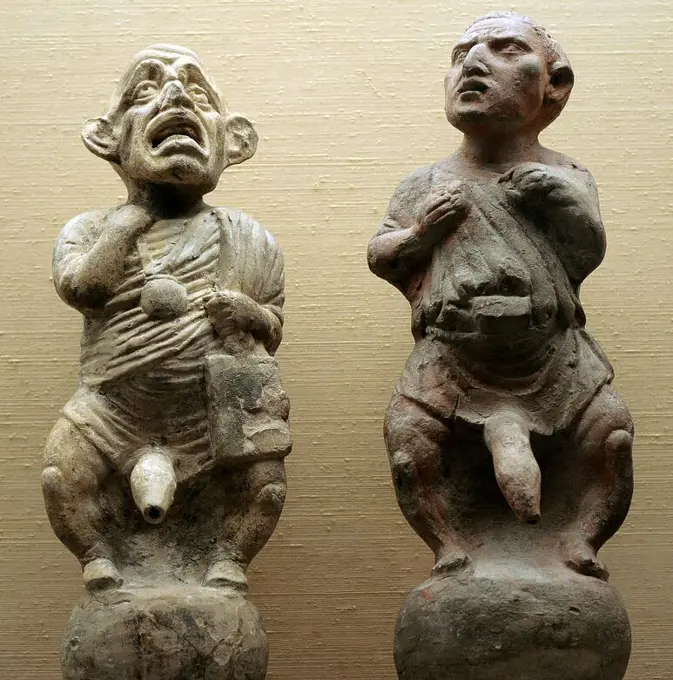
Roman art. "Mariones" dwarf buffoons with erect penises. Clay pot. Herculaneum, Italy. 1st century AD. National Archaeological Museum. Naples. Italy.
6145-58995975
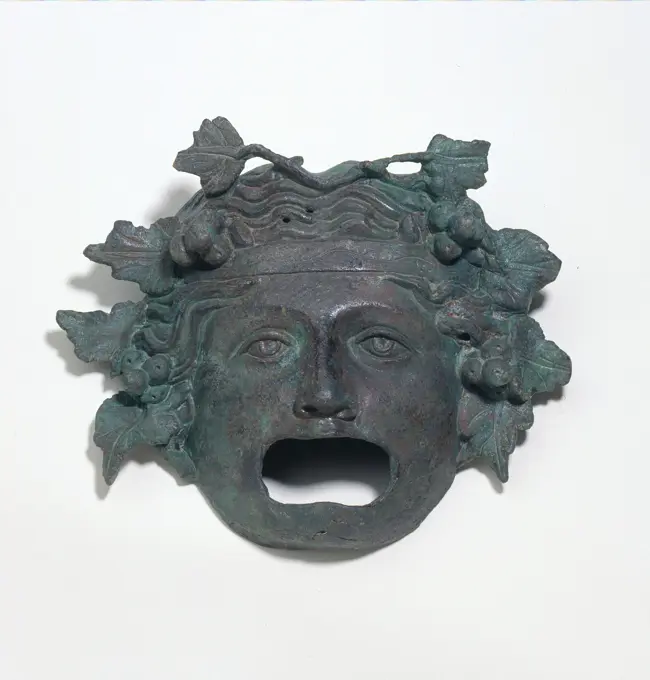
Mask of Dionysos Tauros/Large Mask of Bacchante ". First half of the 2nd century Production: Rome. Museum of Fine Arts of the City of Paris, Petit Palais. 26982-2 Bacchante, bronze, divinity, large mask, Greek, ancient Rome, bullfighting, wine, mythology
1848-60290496
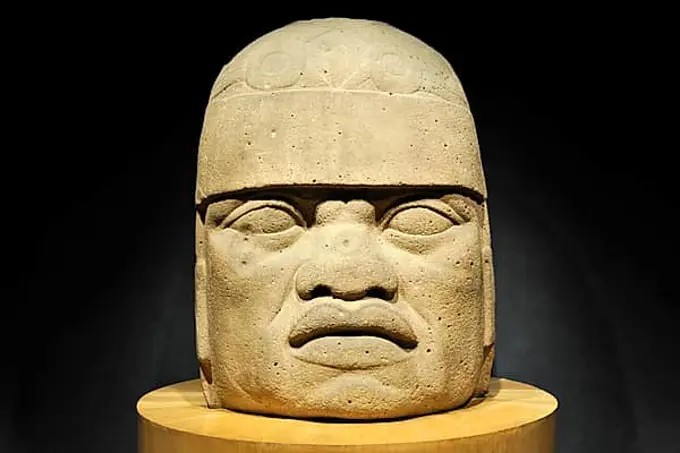
Museo Nacional de Antropología, Mexico City, Mexico, Central America, An ancient Mexican stone head sculpture with detailed facial features in a museum, Central America
6145-29133249
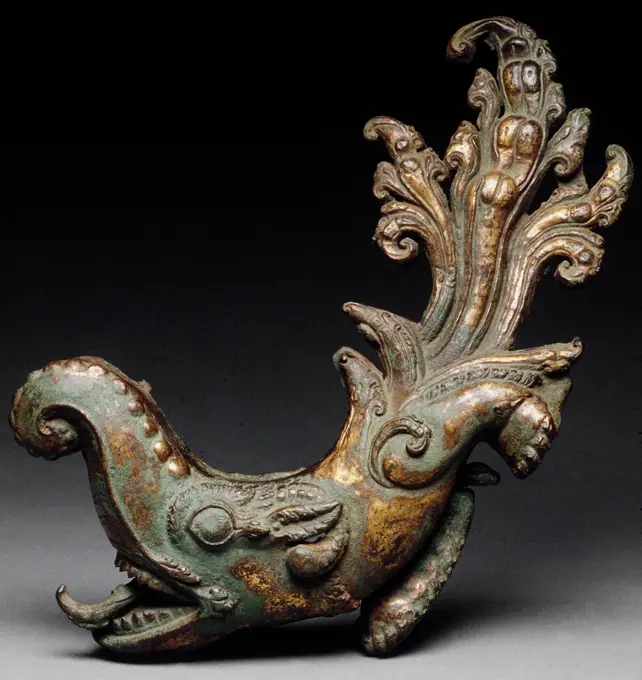
Mythical Aquatic Creature (Makara). Nepal, 10th century. Sculpture. Repoussé copper alloy with traces of gilding
6145-44301999
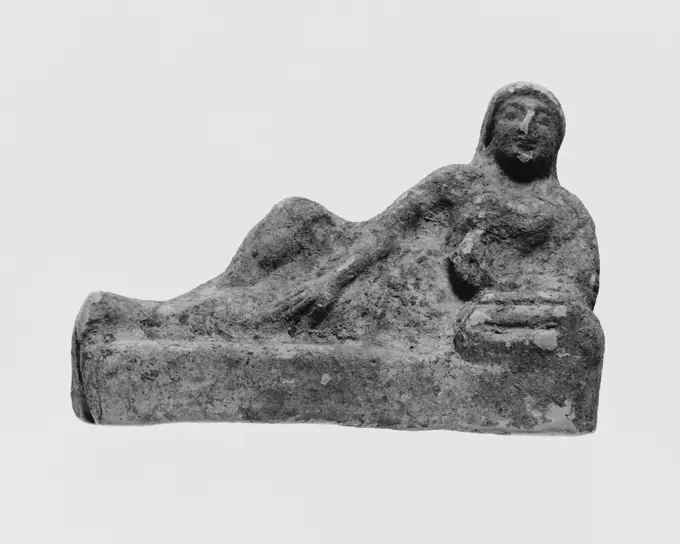
Figure of a Reclining Banqueter. Unknown
1850-46852
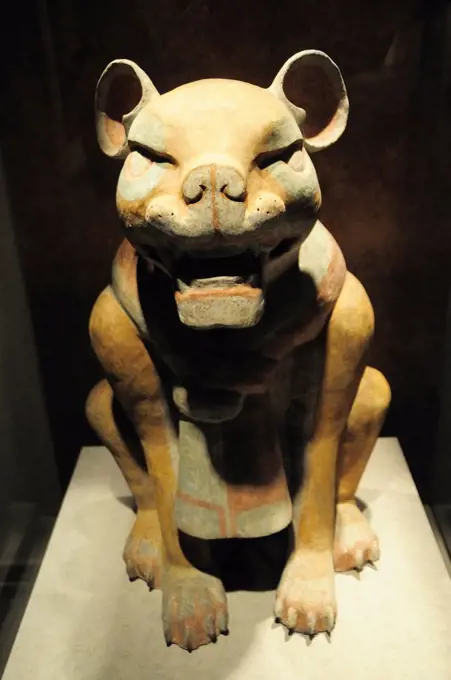
Mexico, Federal District, Mexico City, Museo Nacional de Antropologia Gran Jaguar 200 BC-200 AD.
1746-19699547
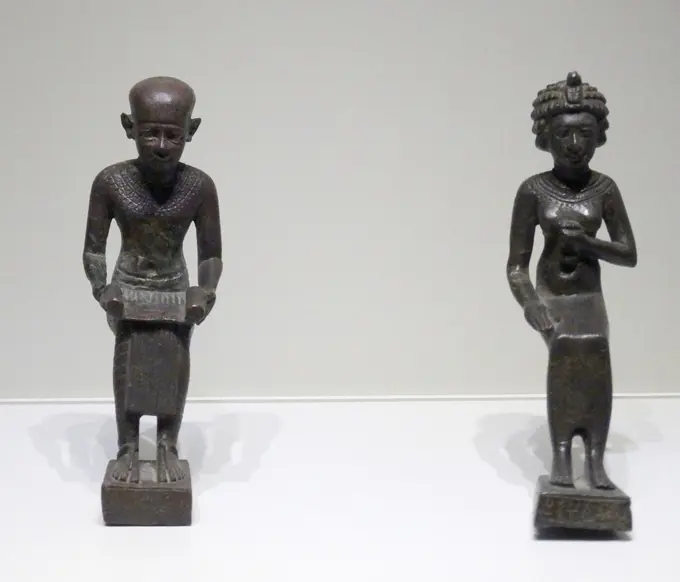
Statuettes of Imhotep and Kherduankh. Imhotep was the architect of the step pyramid at Saqqara, while Kherduankh was venerated as his mother. 3rd-2nd century.
6145-52335347
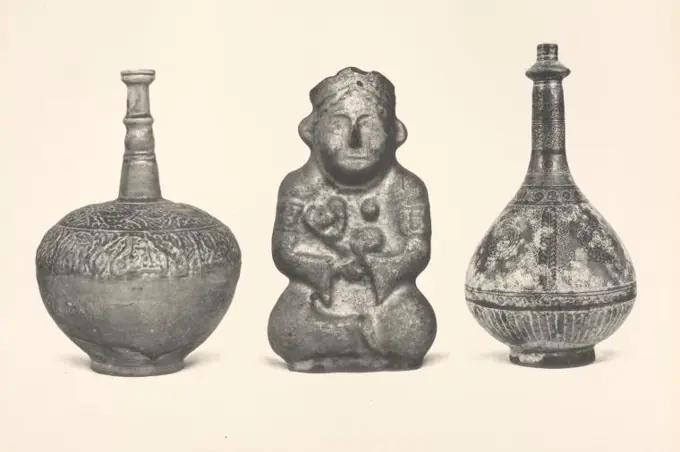
Flasche; Flasche in Form einer sitzenden Figur; Flasche.. Prints. 1912. The Miriam and Ira D. Wallach Division of Art, Prints and Photographs: Art & Architecture Collection
4409-17356439
Censer cover. Painted ceramic. Teotihuacan culture. Xolalpan Phase. Classic Middle Period (400-700 AD). Central Mexico. Museum of the Americas. Madrid, Spain.
1899-18611438
Censer cover. Painted ceramic. Teotihuacan culture. Xolalpan Phase. Classic Middle Period (400-700 AD). Central Mexico. Museum of the Americas. Madrid, Spain.
6176-67038609
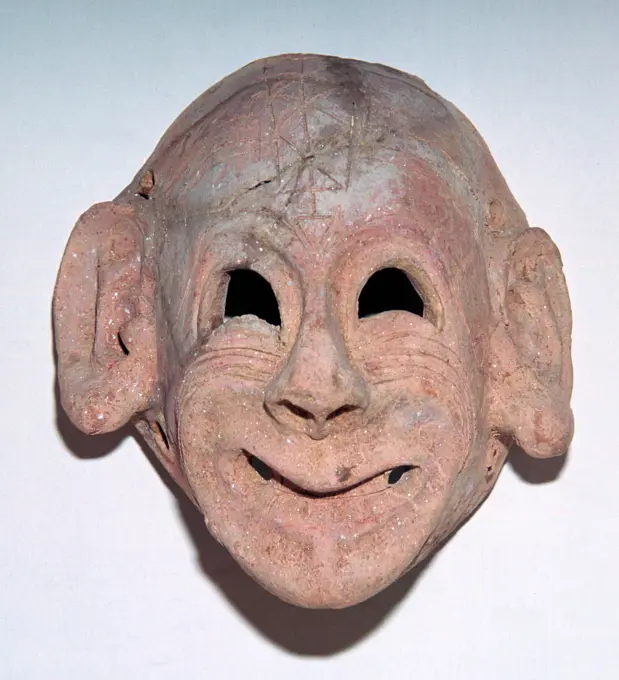
Carthaginian grinning mask, 6th century. Artist: Unknown
1848-50664367
Pair of clay figurines of worshippers (1650-1500 BC), Archaeological Museum with most important finds of the Minoan culture, Heraklion, Crete, Heraklion, Crete, Greece, Europe
1848-51332363
Steinerner Mann in Stadtmauer, district Bleich and Pfaerrle, Augsburg, Swabia, Bavaria, Germany, Europe
4409-21381632
TERRACOTAS PUNICAS IBICENCAS HALLADAS EN LA NECROPOLIS DE PUIG DES MOLINS (IBIZA). Location: MUSEO ARQUEOLOGICO DE CATALUÑA. Barcelona. SPAIN.
4409-62729369
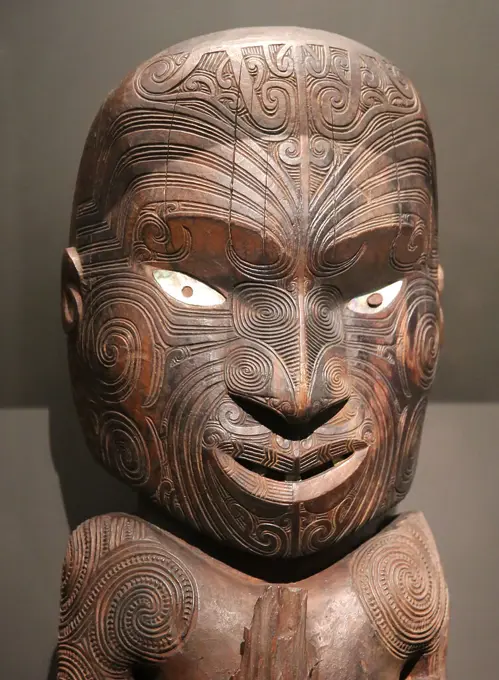
Tattooed ancestor Central stick figure. Maori village, Aotearoa (New Zealand). 1840-1860. Wood, sea shell. Exposition The Human Image. Organised by British Museum and "La Caixa" Foundation. Barcelona. Spain.
4445R-1667
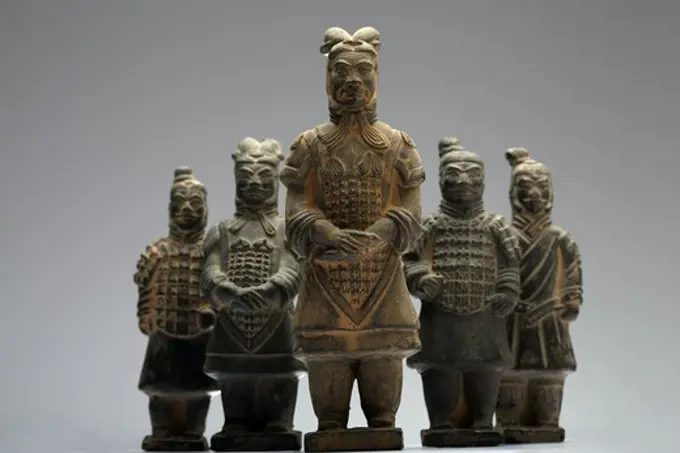
Terra-Cotta Warriors
6145-29117537
Figurine of a Man in Avian Costume. Northern Guatemala or Southeastern Mexico, Maya, 600-900 CE. Ceramics. Slip-painted ceramic
7003-71253770
France, Paris, Musee du Quai Branly museum, Ancestor Pole, Indonesia, 20th century
4409-20887480
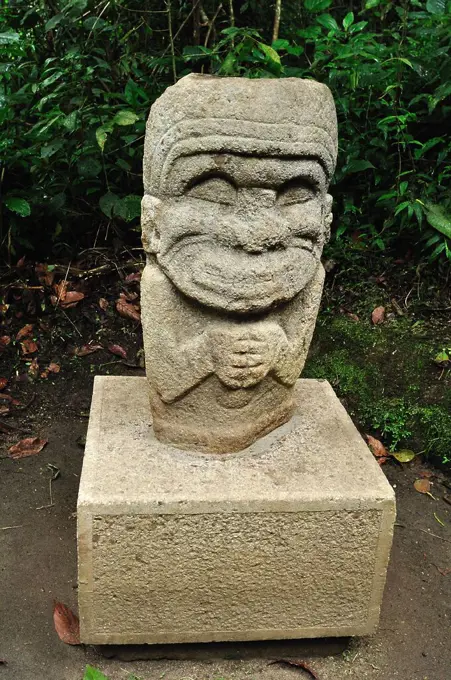
Bosque de las Estatuas - Archaeological Park in SAN AGUSTIN . Department of Huila.COLOMBIA.
1812-11026
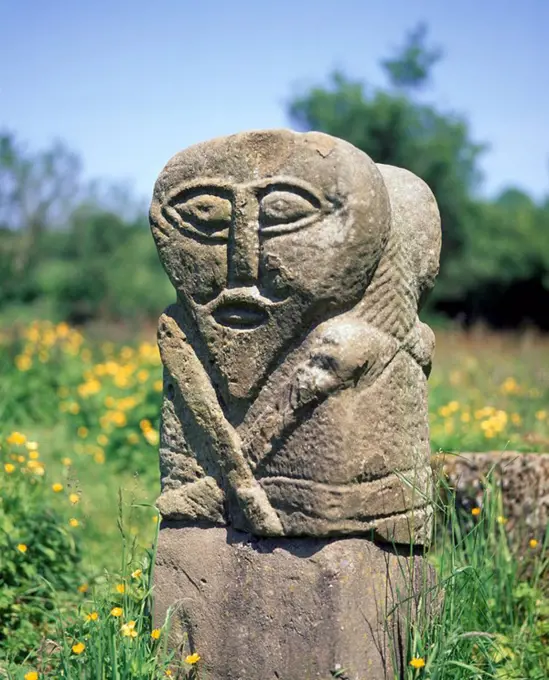
Stone carving, Boa Island, County Fermanagh, Northern Ireland
1848-56654917
Monolithic figure in schematic relief, Chanka culture, silo IV-VIII after Christ, carved gray granite, Sa Bassa Blanca Museum (msbb) Yannick Vu and Ben Jakober, Alcudia, Majorca, Spain, Europe
4409-21356101
R-BUSTO DE MUJER EN ARCILLA-NEOLITICO GRIEGO. Location: MUSEO. Volos. GREECE.
6145-29189647
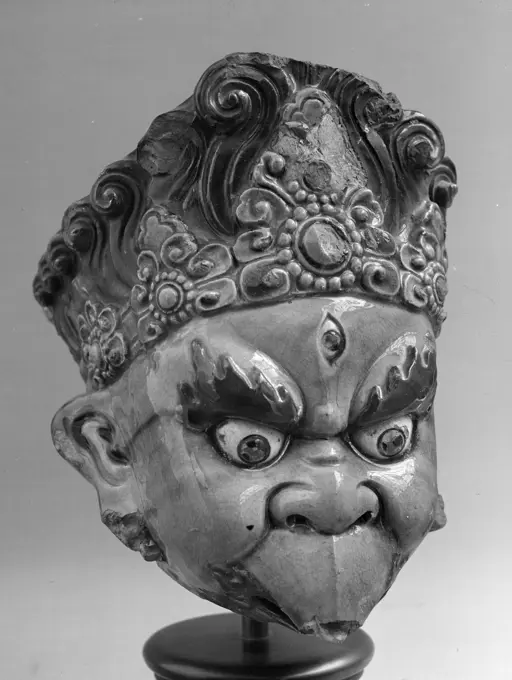
Architectural ornament: head of Garuda 15th century China. Architectural ornament: head of Garuda. China. 15th century. Stoneware with polychrome glazes. Ming dynasty (1368-1644). Ceramics
6145-48967757
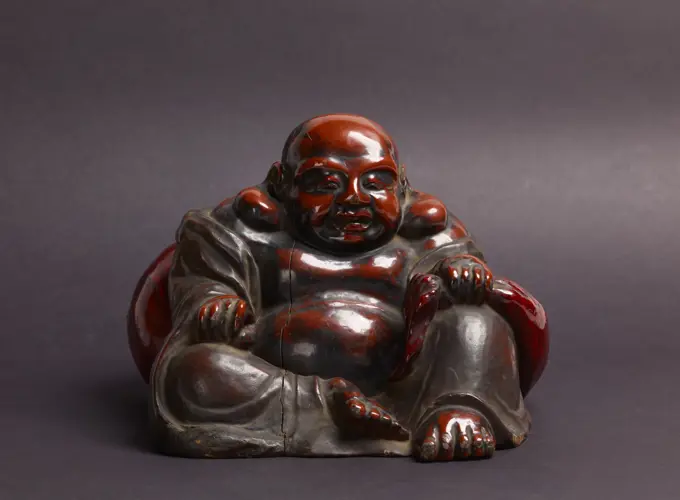
ReaIIstic sculpture  the seated god of fortune Hotei holding a bag unknown
1746-30016043
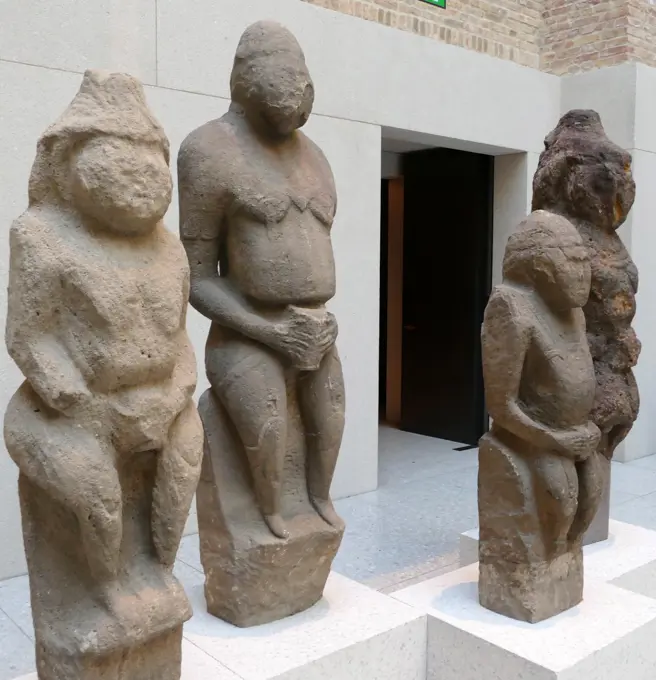
Sandstone Cuman stone figures of men and women
4443-28741969
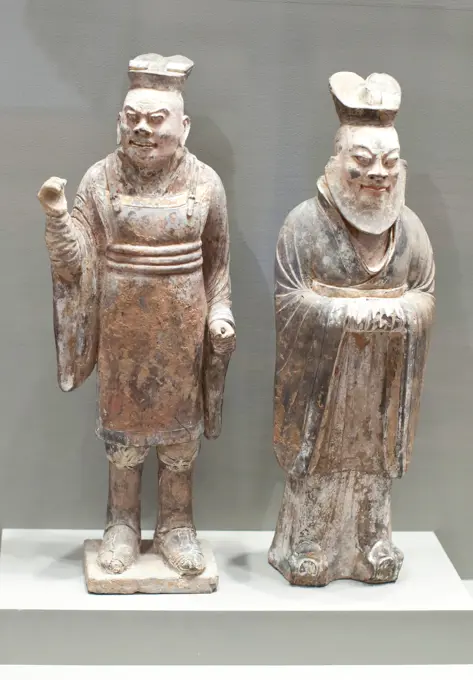
Tomb Figurine, one of pair, late 6th century, 26 in. (66.04 cm), Earthenware with traces of pigments, China, 6th century, These painted figures represent a bearded civil dignitary clad in official court dress and a military officer wearing riding boots and protective clothing. The faces are highly individualized, indicating through their large mouths, eyes and beard, that they are of Khotanese, rather than Chinese origin. Painted figures such as these are the predecessors to the impressive glazed tomb figurines that later distinguished Tang ceramics.
6145-29128470
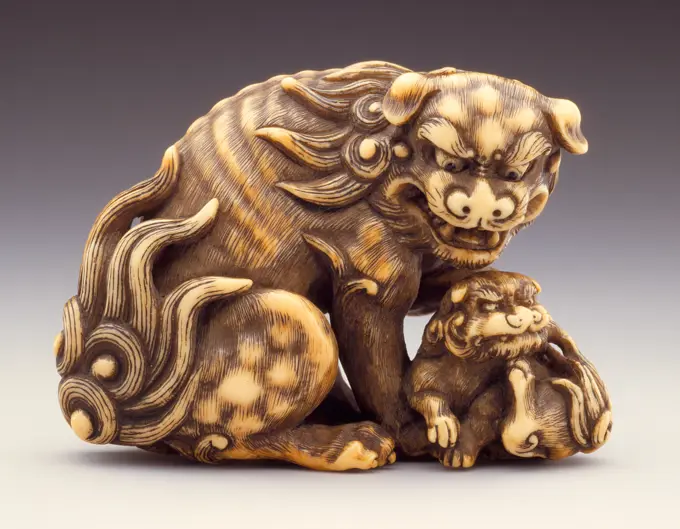
Chinese Lion and Young. Tomotada (Japan, active before 1781). Japan, 18th century. Costumes; Accessories. Ivory with staining, sumi, inlays
7155-70375849
Ahriman, god of Evil. Sassanian. bronze, 5th cent. AD. IRAN.