Ancient Egyptian Statues

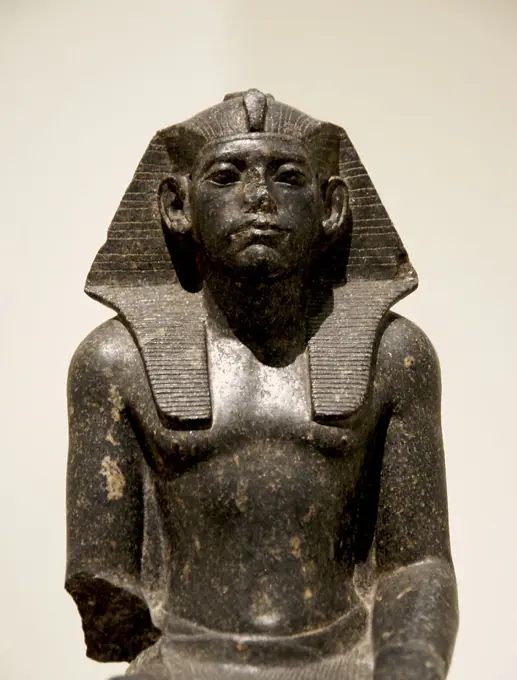
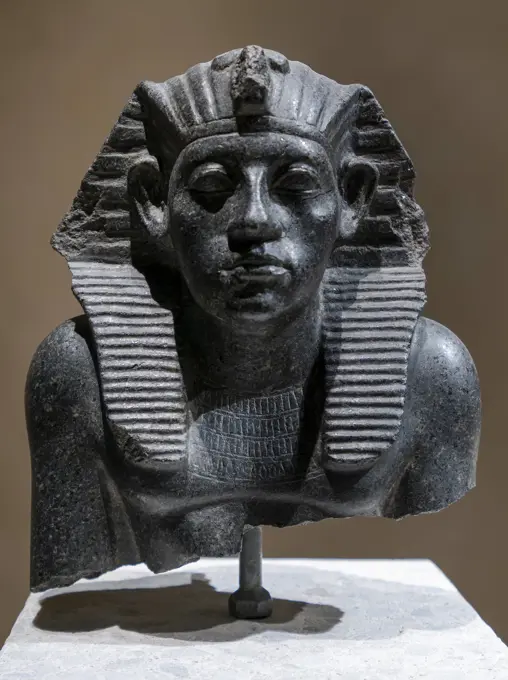
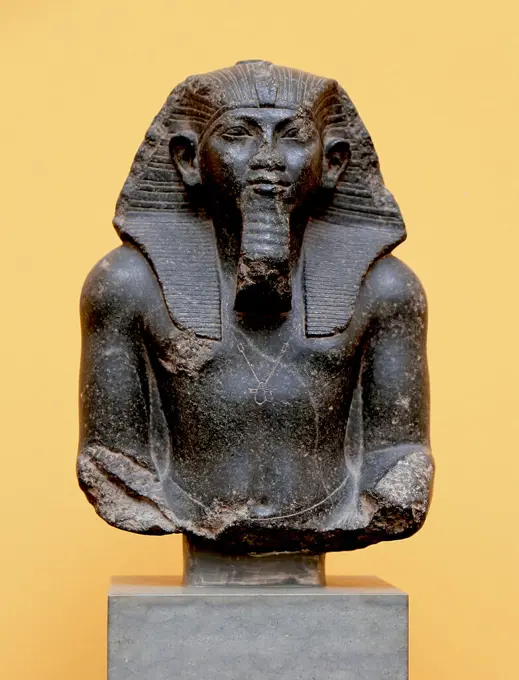
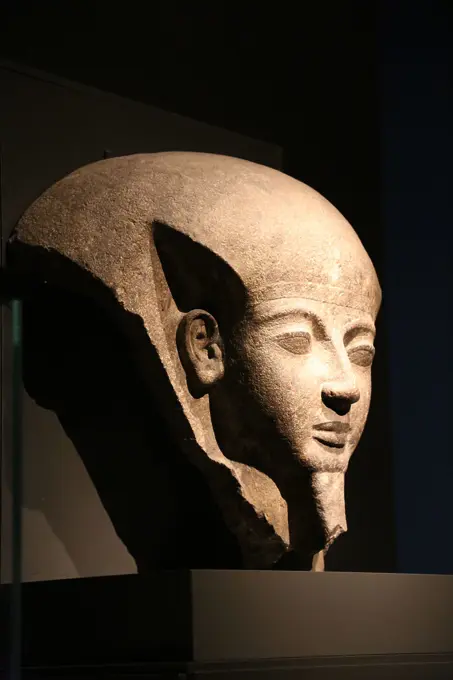
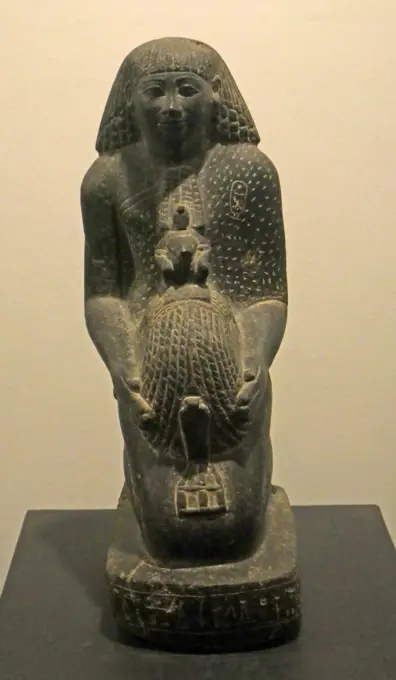
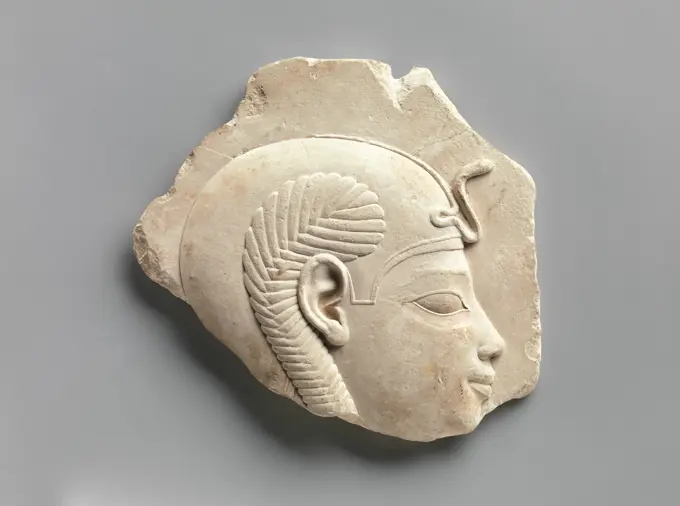
A collection of black granite statues depicting ancient Egyptian rulers from different dynasties, showcasing intricate carvings and historic royal attire.
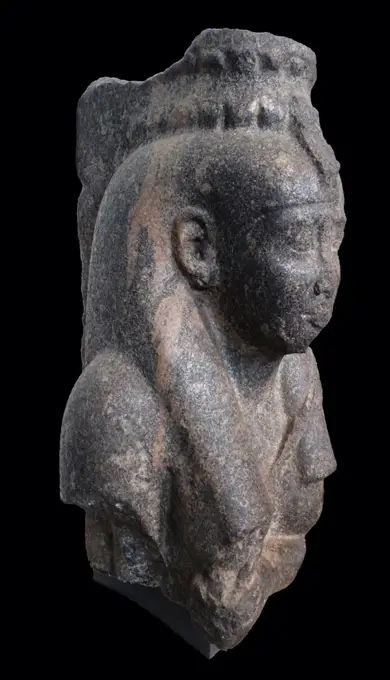
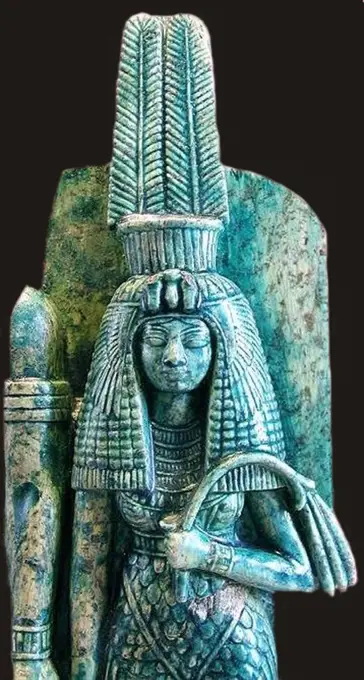
The Kingís Mother Tasherenese 26th Dynasty, reign of Amasis (570-526 BC), Granodiorite, Egypt

Assets in this Story

4409-63014148
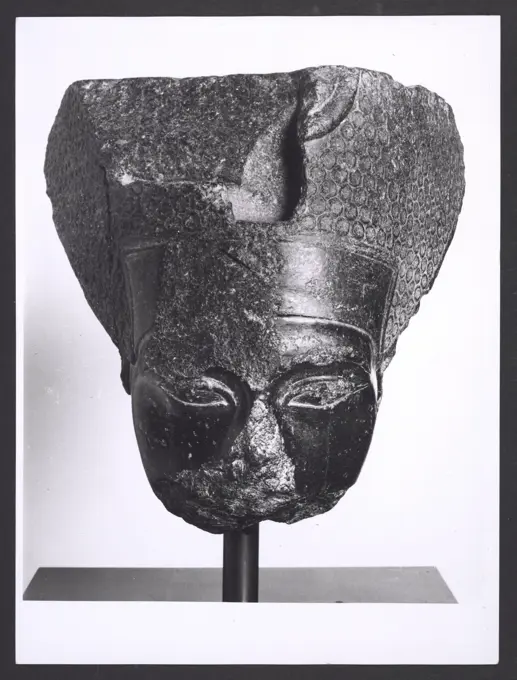
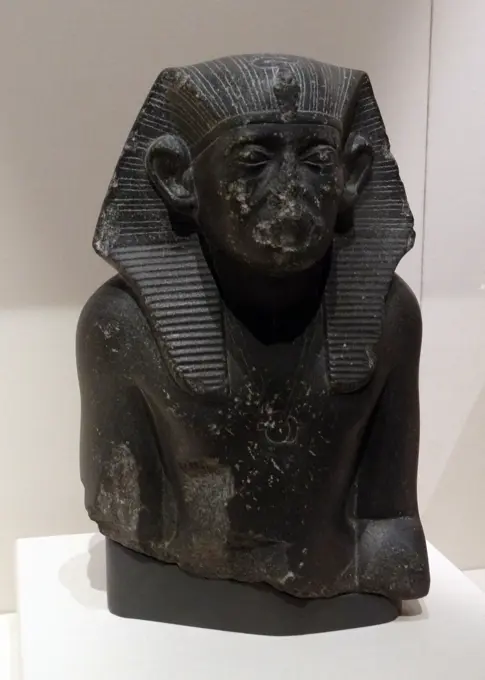
Portrait of Amenemhat III, king of Egypt (1853-1806 BC). Middle kingdom, 12th Dynasty. Black granite (1850-1800 BC). Hermitage.
6188-65547047
Figures, Sculptures and other Historical Exhibits, Old Museum on Pleasure Garden, Berlin, Germany 1020926329
4435-3789
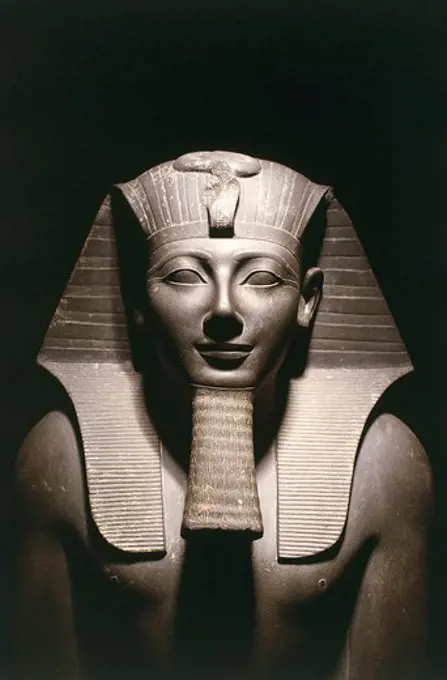
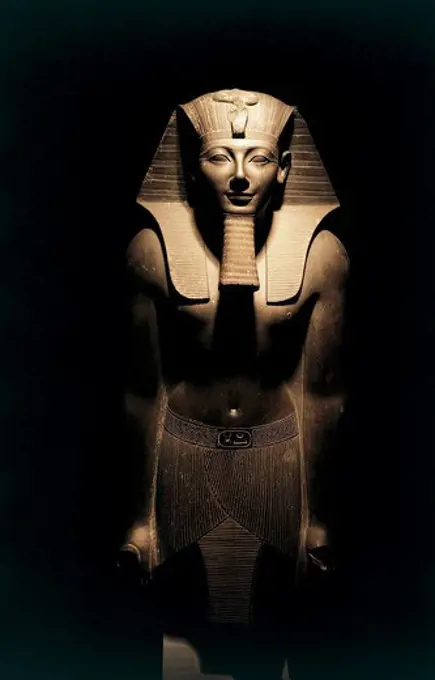
Statue of Tuthmosis III. 1490 -1439 BC. Egyptian art. New Kingdom. Sculpture on rock. EGYPT. CAIRO. Cairo. Egyptian Museum. Proc: EGYPT. QUENA. Karnak.
4409-63013779
Statue of King Sesostris II. Origin unknown, granite. The reign of Sesostris II (1897-1878 BC).
4409-63014127
Egypt. Fragment of lid of the sarcophagus of Ramese VI. 20 Dynasty. C. 1150BC. Valley of the Kings. Thebes. New Kingdom. British Museum. London.
4435-3665
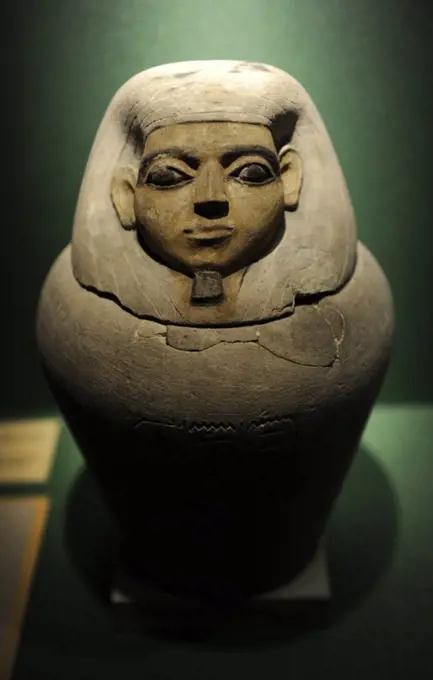
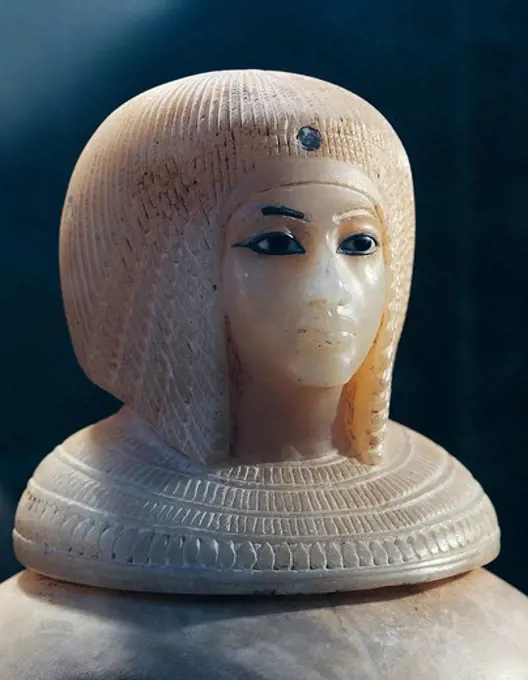
Canopic vase lid with Tutamkhamen's effigy. 1370 - 1352 BC. Egyptian art. New Kingdom. Sculpture in the round. EGYPT. CAIRO. Cairo. Egyptian Museum. Proc: EGYPT. QUENA. Dayr al-Bahri. Valley of the Kings. Tomb of Tutankhamun.
4409-17544031
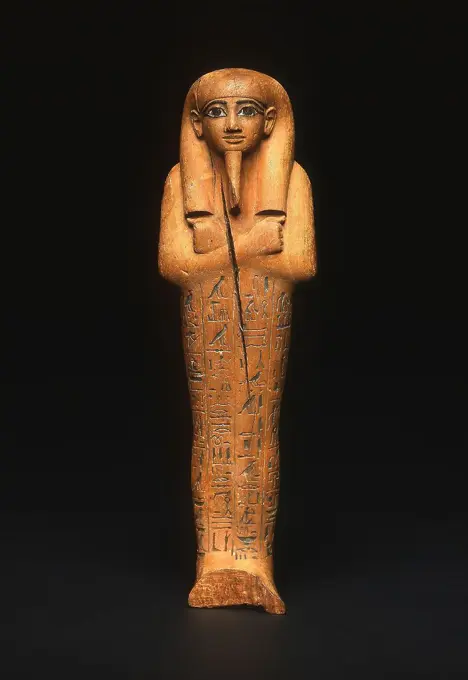
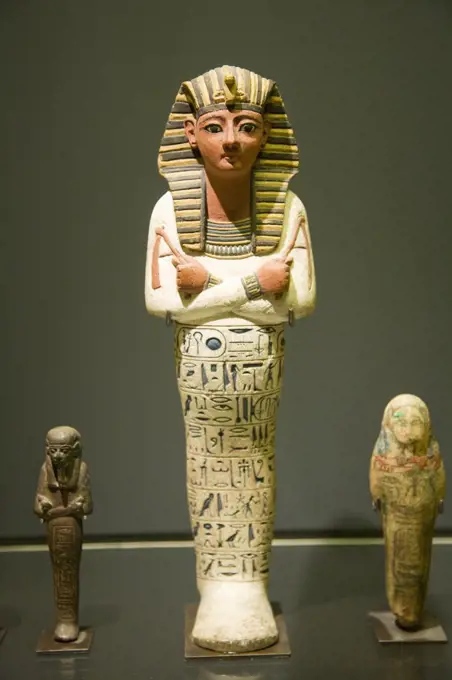
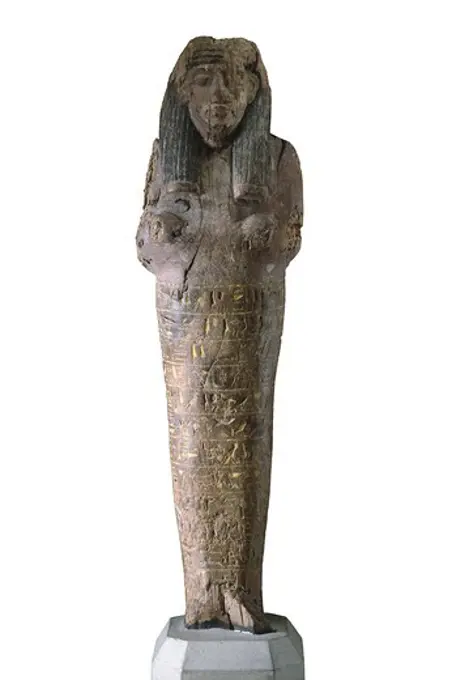
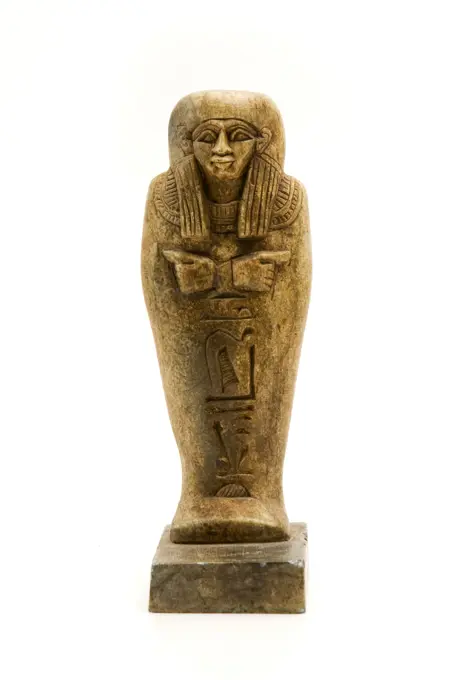
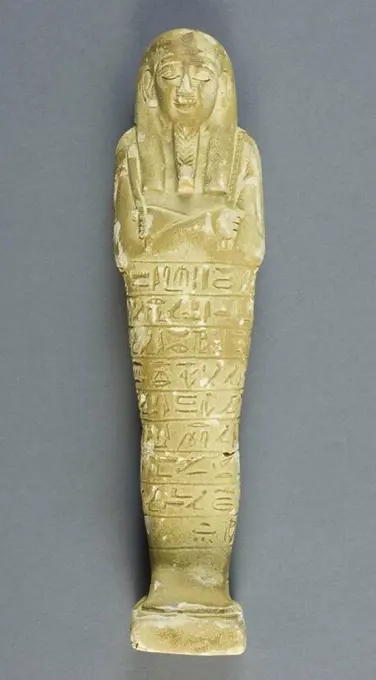
Shabti (Funerary Figurine) of Nebseni. Egyptian. Date: 1570 BC-1292 BC. Dimensions: 17.5 × 8.25 × 7 cm (6 7/8 × 3 1/4 × 2 3/4 in.). Wood (tamarisk) and pigment. Origin: Egypt. Museum: The Chicago Art Institute, USA. Author: Ancient Egyptian.
6145-29717688
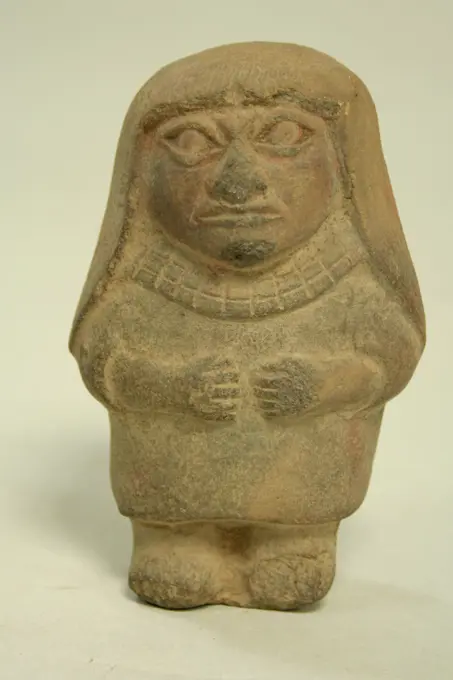
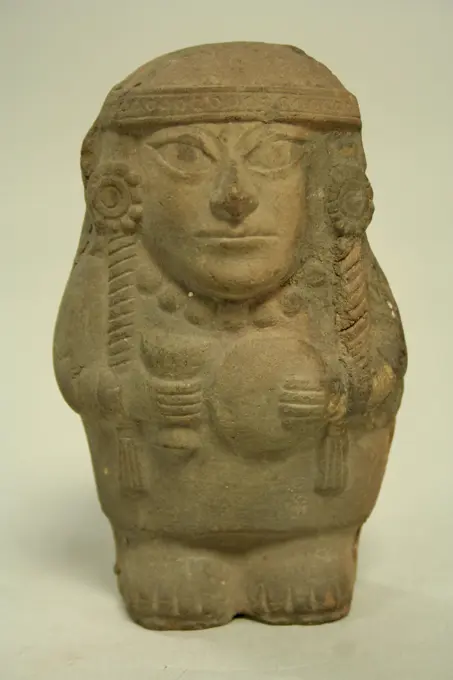
Standing Ceramic Figure 3rd-5th century Moche. Standing Ceramic Figure 309312
1746-21112267
The Kingís Mother Tasherenese 26th Dynasty, reign of Amasis (570-526 BC), Granodiorite, Egypt
4409-28807403
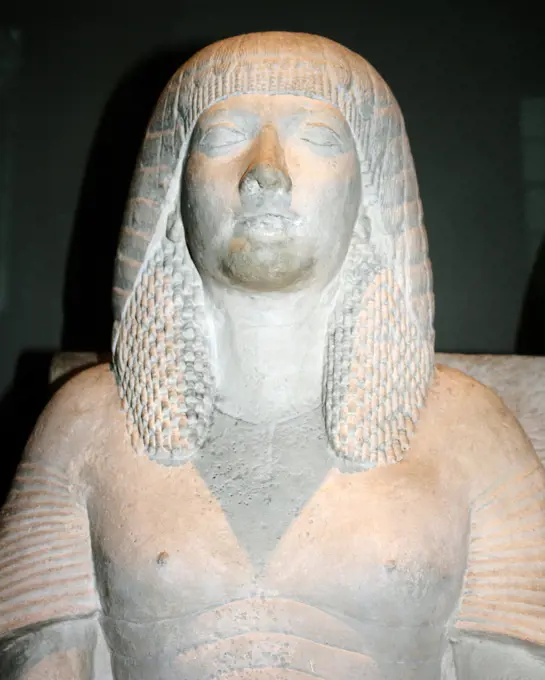
statue of government official, Sennefer, granodiorite, , granite, 26th dynasty, 1479-1425 BC, Thebes, Egypt, collection of the British Museum.
1746-111347838
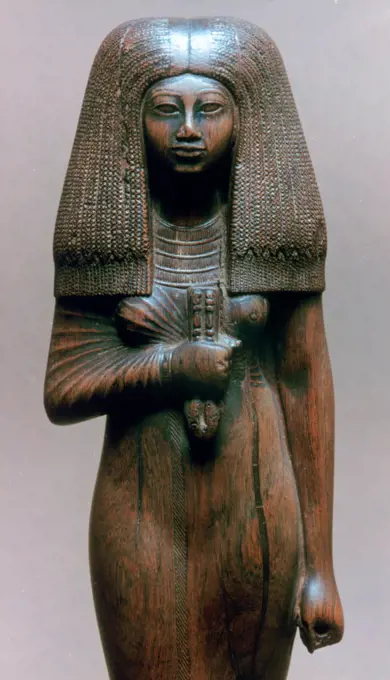
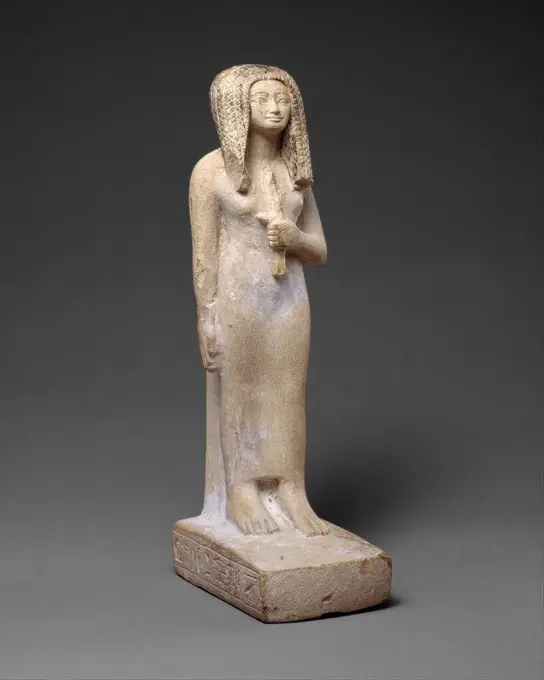
Wood statue of Lady Nay, painted and gilded. 18th dynasty (1550-1295). Musée du Louvre, Paris.
1746-19692060
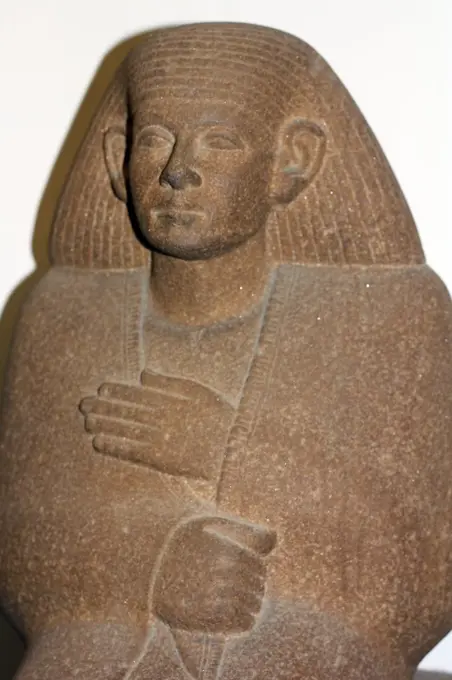
Quartzite statue of Ankhrekhu, 12th dynasty, about 1850 BC. The figure wears a long cloak from which only the hands emerge. The inscriptions give his titles and name.
1606-189319
France, Paris, Louvre, Egyptian Antiquities Section, Egyptian Mummy
1899-18720979
Tiye (c. 1398 BC - 1338 BC, also spelled Taia, Tiy and Tiyi) was the daughter of Yuya and Tjuyu (also spelled Thuyu). She became the Great Royal Wife of the Egyptian pharaoh Amenhotep III and matriarch of the Amarna family from which many members of the royal family of Ancient Egypt were born. Tiye's father, Yuya, was a wealthy landowner from the Upper Egyptian town of Akhmin, where he served as a priest and superintendent of oxen. It sometimes is suggested that Tiye's father, Yuya, was of foreign descent due to the features of his mummy and the many different spellings of his name, which might imply it was a non-Egyptian name in origin. Some suggest that the queen's strong political and unconventional religious views might have been due not just to a strong character, but to mixed Nubian, Sudanese or Asian origin.
4409-63991
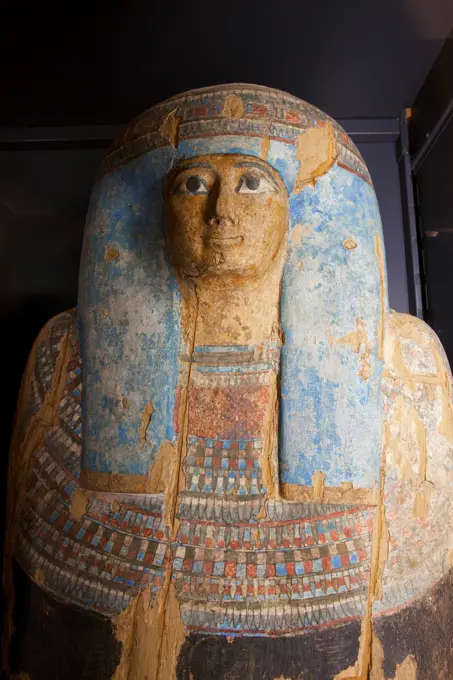
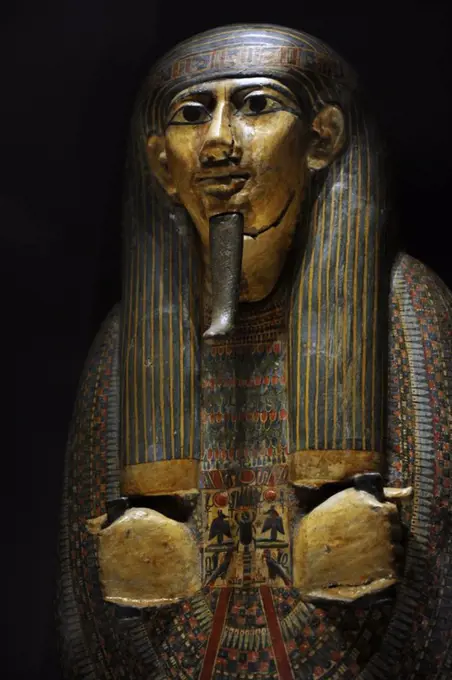
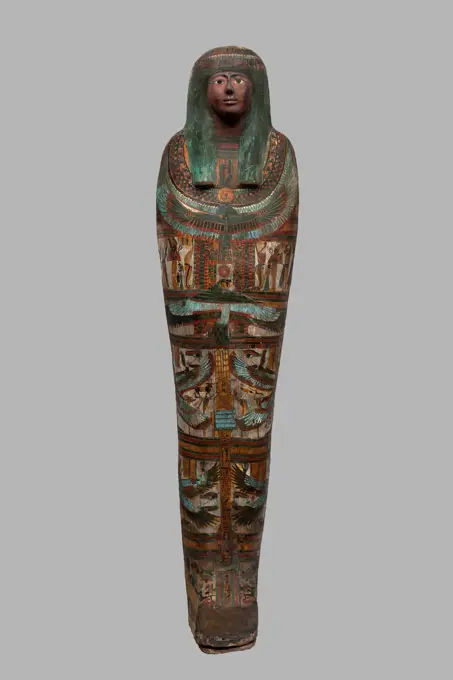
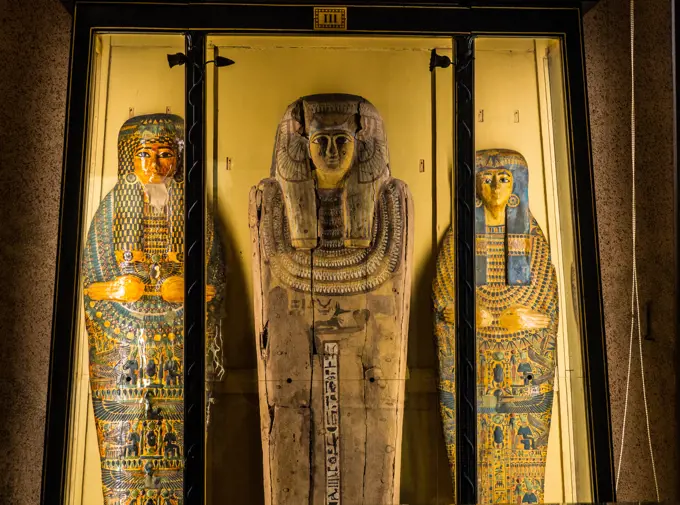
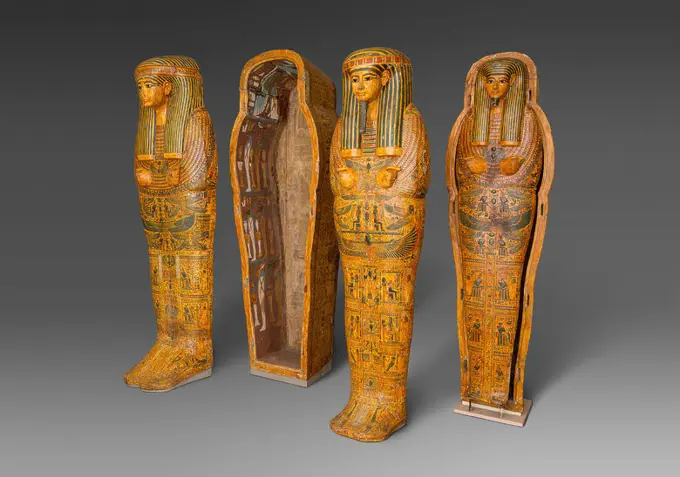
Coffin of Khonsu-hotep. Painted wood. 21st-22nd Dynasty. C. 950-900 B.C. Third Intermediate Period. Carlsberg Glyptotek Museum. Copenhagen. Denmark.
4042-256
Shabti figure of Ramses IV,  wood sculpture,  France,  Paris,  Musee du Louvre,  Egyptian Art
4292-69941
Egypt, Luxor, Karnak Temple
6145-29807675
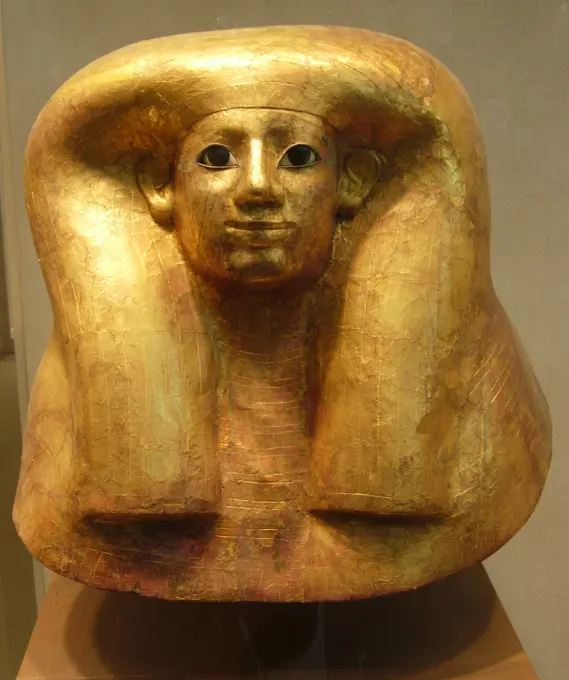
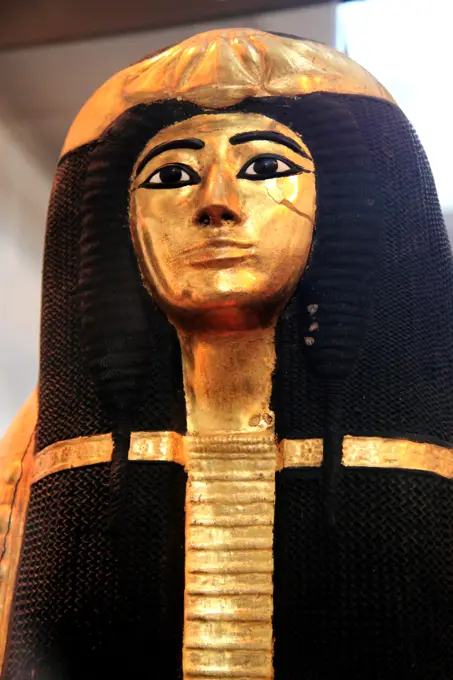
Funerary mask of Hatnefer ca. 1492-1473 B.C. New Kingdom In 1936, the Museum's Egyptian Expedition discovered a rock-cut tomb on a hillside just below the offering chapel of Senenmut, one of Hatshepsut's best known officials. The tomb had been prepared for the burial of Senenmut's mother, Hatnefer, who had died in her 70s, early in the joint reign of Hatshepsut and Thutmose III. By this time, Senenmut had become an important official, and he could provide a comparatively rich burial for his mother, including this gilded mummy mask, an exquisite heart scarab, and a canopic box. She was also buried with several fine pieces of personal jewelry.Hatnefer's small burial chamber also contained the reburial of her husband, Ramose, who had died years earlier in his mid-30s. In addition, there were two wooden coffins containing the unidentified mummies of three women and four children who were probably members of the same family. Some personal items and simple grave goods had also been placed in
4409-63012327
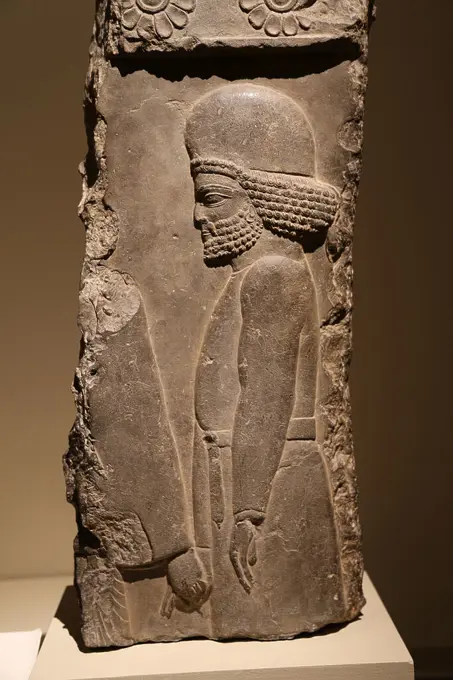
Achaemenid period. Reign of Artaxerxes II, 405-360 B.C. Figure in a procession. Palace of Darius I. Persepolis. Iran. Metropolitan Museum. Ny. USA.
6145-29196272
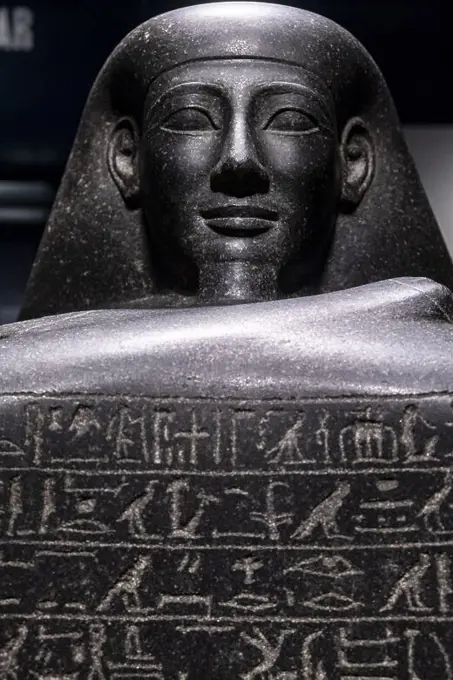
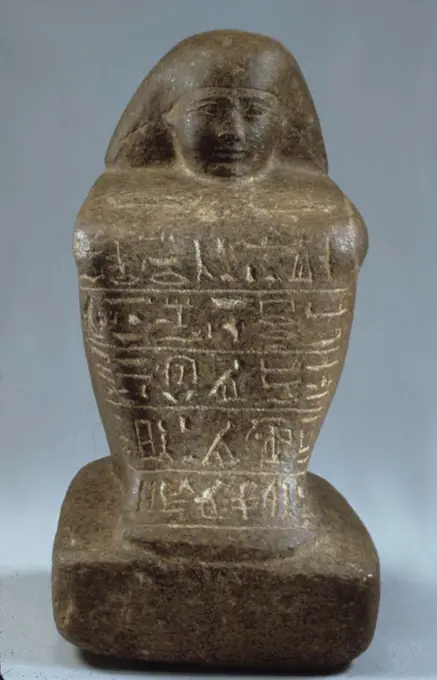
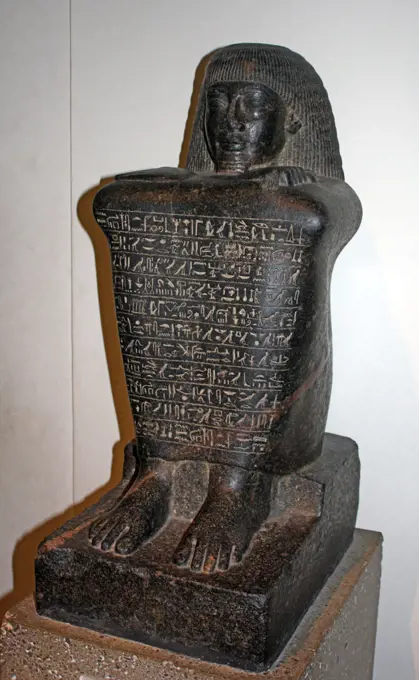
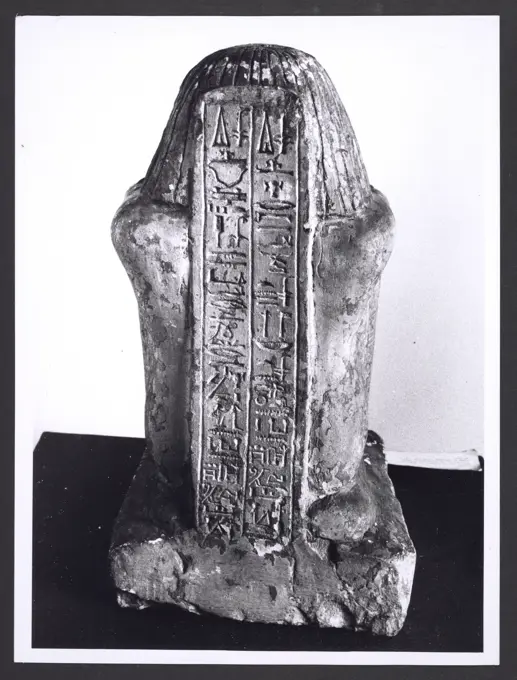
Block statue of Mersuptah ca. 945-712 B.C. or earlier Third Intermediate Period. Block statue of Mersuptah. ca. 945-712 B.C. or earlier. Quartzite. Third Intermediate Period. From Egypt; Probably from Memphite Region, Memphis (Mit Rahina). Dynasty 22-23 or earlier
1788-18684
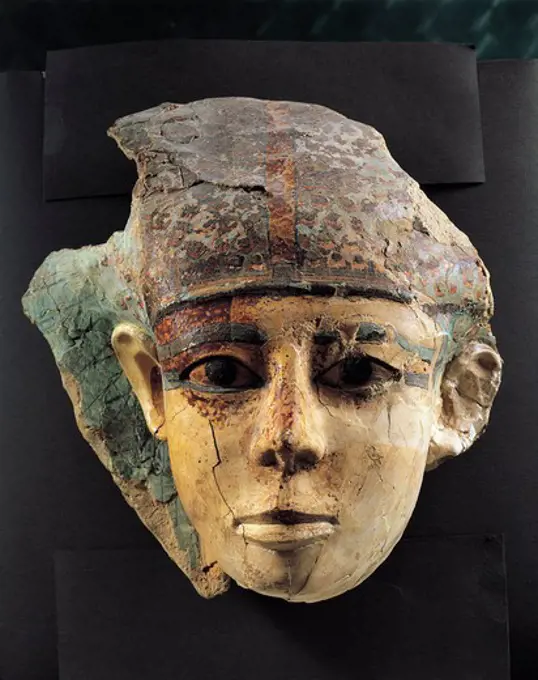
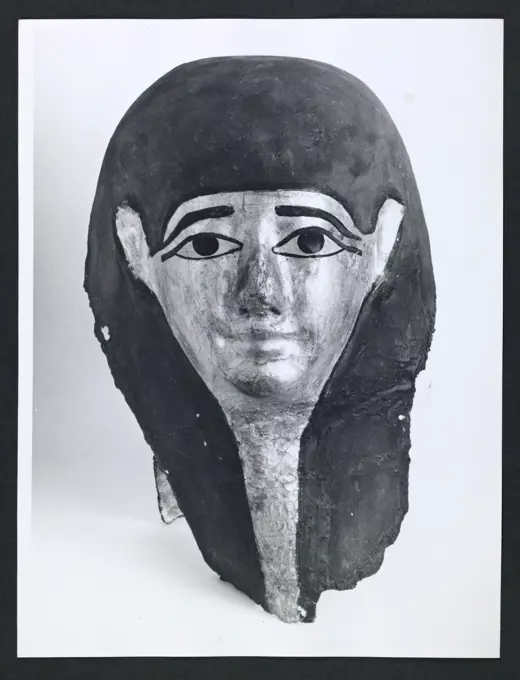
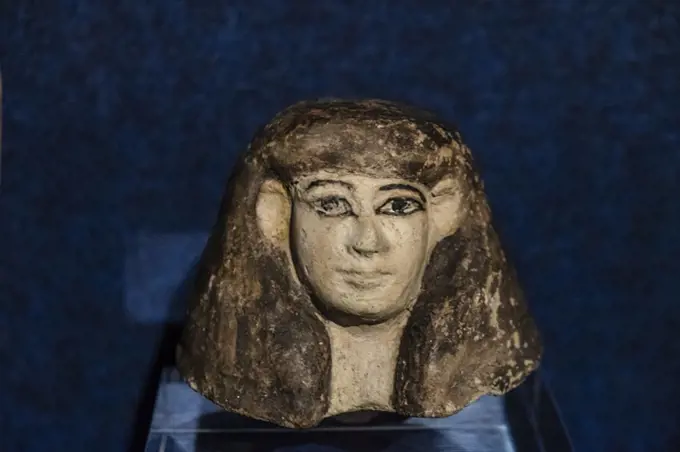
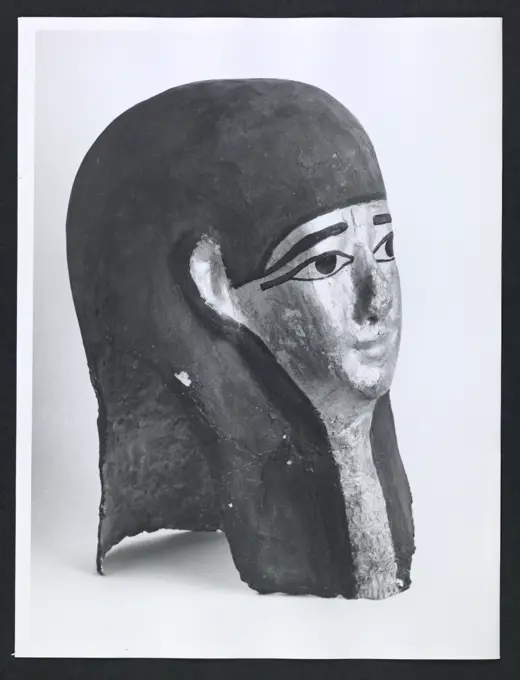
Egypt, Mirgissa, Painted stucco sarcophagus mask
1788-18721
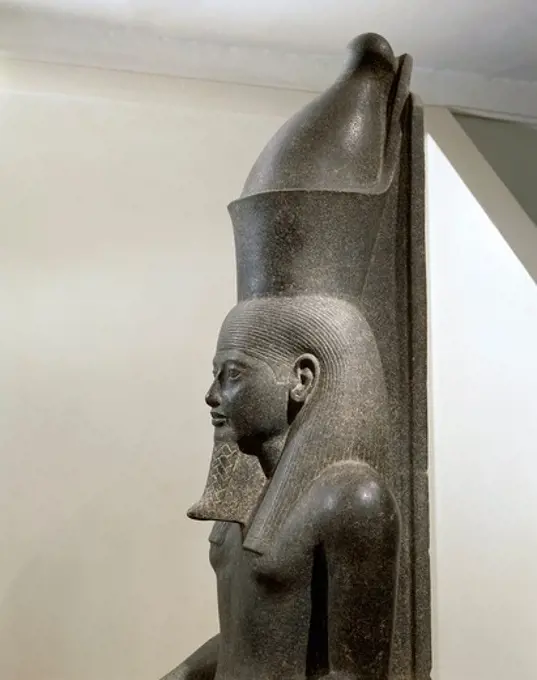
Granite statue of Horemheb before god Amon
1788-22271
Egypt, Detail of Statue of Thutmose III (before 1479-circa 1425 B.C.), eighteenth dynasty, from the temple of Amun at Karnak in Luxor, basalt
6145-59138298
Emilia-Romagna Bologna Bologna Museo Civico Archeologico Sale III, IV, V5. Hutzel, Max 1960-1990 Specific Location: Sale III, IV, V (Egyptian antiquities) Owner: Museo Civico Archeologico Antiquities: III: basalt sculptural fragments; reliefs from the tomb of Horemheb; funerary stele; dynasties XVIII, XIX, XX, Ptolomeic dynasty reliefs, generally in limestone. IV: XVIII, XIX dynasty sculptures in granite, limestone, sarcophagi, statuette in basalt, statuette in wood, statuettes in bronze, statuette faience, mummy mask: V: basalt sculptures of Horus, Sekhmet, limestone stele (Antiq. count: 202); Republican portrait sculpture, Republican cippi with portrait bust, cippus with portraits (single and group), cippi with inscriptions from all periods, architectural fragments, basin with inscription, torso fragment of cuirassed figure of the 1st century AD (Nero) (Antiq. count: 185); disk lamps from the late republic to 6th century, with erotes, animals, erotica, mythological scenes, menorah, p
4409-21485724
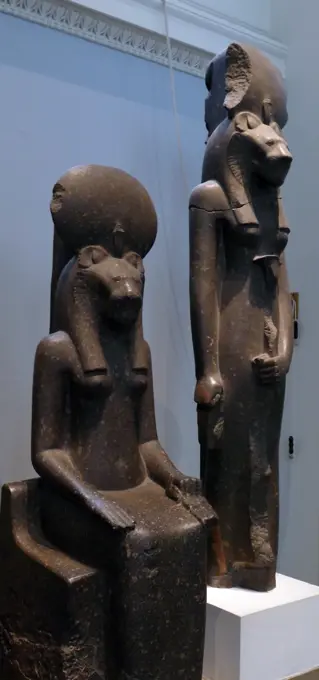
Statue of the Goddes Sekhmet-Mut. 14th c. BC. New kingdom, 18th Dynasty. Granite. The State Hermitage Museum. Saint Petersburg. Russia.
1746-19669457
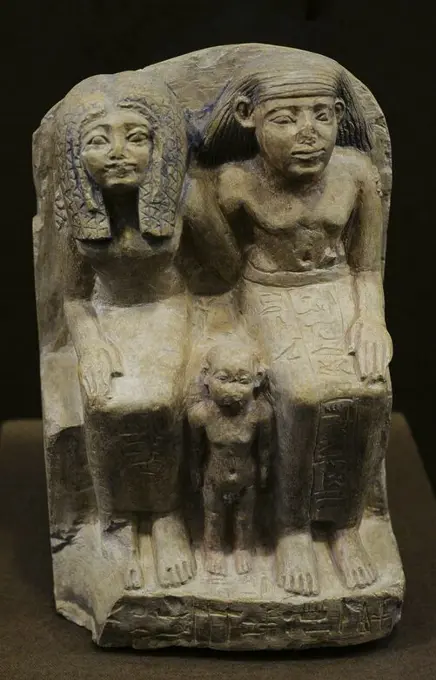
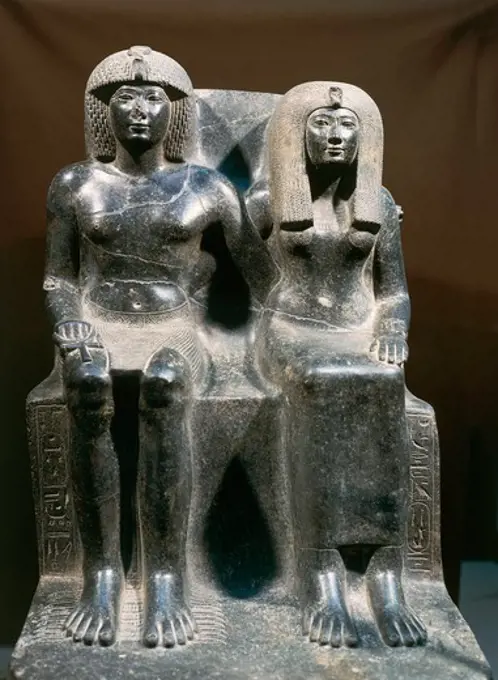
Lime stone dyad of man and wife. Eighteenth Dynasty, about 1250 BC. The elaborate coiffure and pleated costumes worn bu the unnamed man and his wife indicate a date the later part of the eighteenth dynasty for this fine dyad. The lack of inscription suggests the piece was unfinished.
4409-17410955
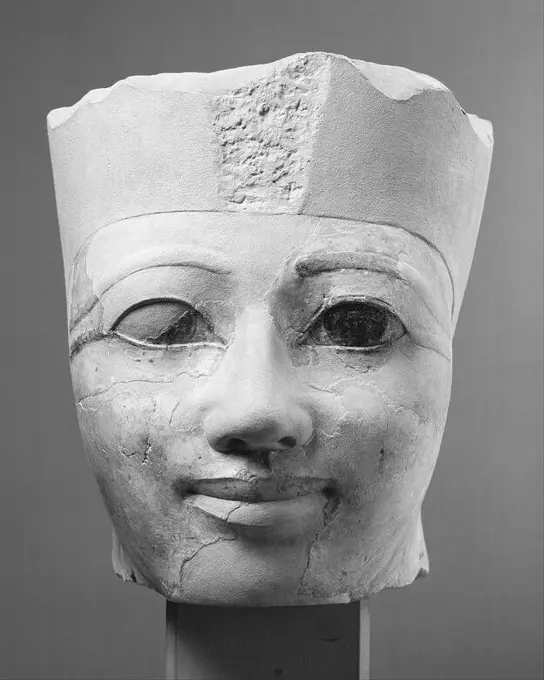
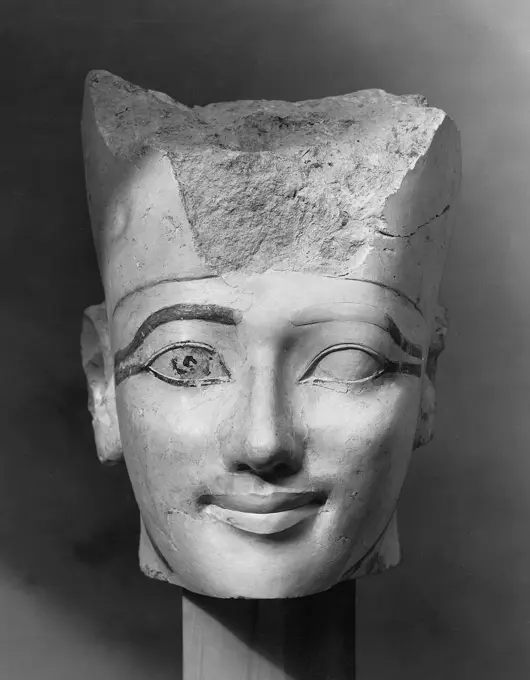
Head of an Osiride Statue of Hatshepsut Originally in the Temple Sanctuary SE Corner. Dimensions: 22 cm (8 11/16 in), 25.8 kg (56.8 lb.). Dynasty: Dynasty 18. Reign: Joint reign of Hatshepsut and Thutmose III. Date: ca. 1479-1458 B.C..This head is one of three in the Museum's collection that belong to four Osiride figures of Hatshepsut that decorated the sanctuary of Amun in her funerary temple at Deir el Bahri. The head wears the White Crown of Upper Egypt and was originally at the southern end of the sanctuary. Another head (31.3.153) wears the Double Crown and came from the northern end. Like all the architectural limestone sculptures in Hatshepsut's temple, the sanctuary Osiride statues were painted, but they are distinguished by the unusual light pink pigment used for their flesh tone. Museum: Metropolitan Museum of Art, New York, USA.
4435-3649
Ushabti with inscriptions. 1554 BC. Polychrome wood. Egyptian art. New Kingdom. Sculpture on wood. SPAIN. MADRID (AUTONOMOUS COMMUNITY). Madrid. National Museum of Archaeology.
6145-29707026
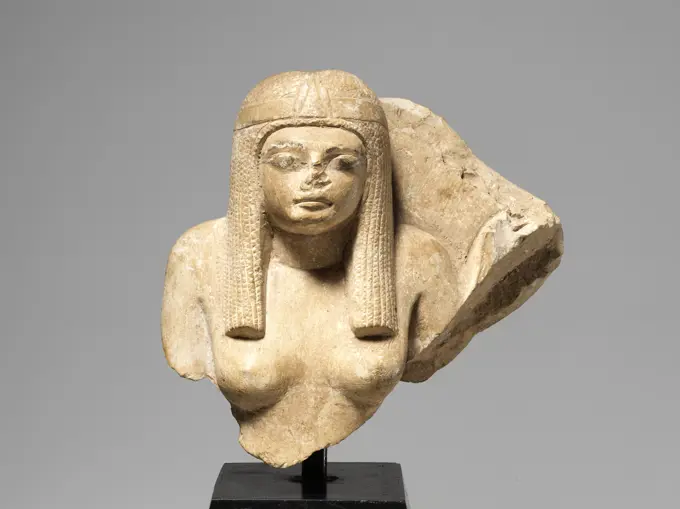
Upper Part of a of Woman from a Pair Statue ca. 1295-1070 B.C. () Late New Kingdom The woman here was once part of a small pair statue, the shoulder of another individual, probably her spouse, is just visible to her left. Her strong features, round face, and particularly her wig, diadem, and style of lotus suggest her Ramesside date. Much of the upper portion of a rounded rectangular back pillar inscribed with a classic hetep di nesu formula survives. In the inscription, Re-Horakhty and Hathor are the deities being revered, but the break in the pillar is just after the words "for the ka of" so we do not know whom the statue honored, except the spouse may have been a wab-priest.. Upper Part of a of Woman from a Pair Statue. ca. 1295-1070 B.C. (). White limestone with traces of black paint. Late New Kingdom. From Egypt. Dynasty 19-20
6176-67050694
Statue of Rameses II, 13th century BC. Artist: Unknown
6145-29196225
Head of a God ca. 1429-1400 B.C. New Kingdom The style of this head is similar to a statue in the temple of Karnak that depicts Amenhotep II with a god. Both works may have been part of a series of statues representating gods that were commissioned by the king for his jubilee festibal or "heb-sed." The king's grandson, Amenhotep III also commissioned a series of divine statues for his own jubilee. For examples of these, see 19.2.5 and 19.2.15.. Head of a God. ca. 1429-1400 B.C.. White Limestone. New Kingdom. From Egypt; Probably from Upper Egypt, Thebes. Dynasty 18
6145-29794832
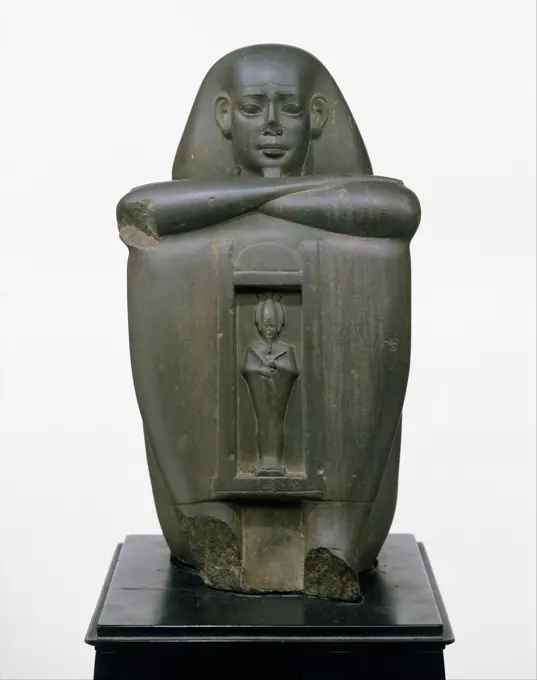
Naophorous Block Statue of a Governor of Sais, Psamtikseneb 664-610 B.C. Late Period, Saite This block statue represents a governor of the Saite nome (district) in the western Nile Delta, and was intended for a temple called the "House of the Bee," a temple dedicated to Osiris in Sais, Egypt's capital city at this time. A shrine is represented in relief on the front of the statue, and inset in the the shine is a figure of the god Osiris.Although the end of the man's name is partly broken away, leaving only Psamtik-, he can be identified based on his titles and two other monuments as the Psamtikseneb who was governor during the reign of Psamtik I. The statue shows characteristics of statuary of the early Saite Period: the indentation in the hair over his forehead, the shrine on the front surface of a block statue. The bare arms and elongated forms of the block statue are also characteristic of the early Saite period. The long liquid curves of this figure would have been further exaggera
6145-29707524
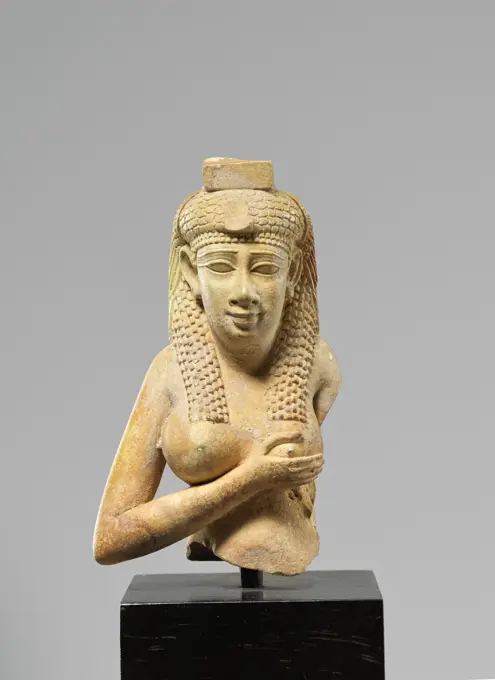
Upper part of a figure of Isis nursing Horus 4th to 3rd Century B.C. Early Ptolemaic Period The upper part of an Isis lactans amulet, when complete this would have depicted Isis nursing Horus, her posthumous son with the god Osiris (see 55.121.5). Enough of the figure is preserved to show that the goddess is offering her breast to her baby, although his figure is now missing. Part of the throne hieroglyph that symbolized her name is still visible, over a beautiful example of the vulture headdress that identified her both as a queen and as a divine mother, as the vulture was also the hieroglyph for the latter term (mwt).The face and form of a second figure of Isis with Horus, of which again only the upper part is preserved, is almost identical to this one, and both also display similarities to certain shabtis, suggesting a date in the early Ptolemaic Period. Additional study of these pieces may allow us to add to our understanding of workshop practices. Isis was seen as the embodiment o
1606-198637
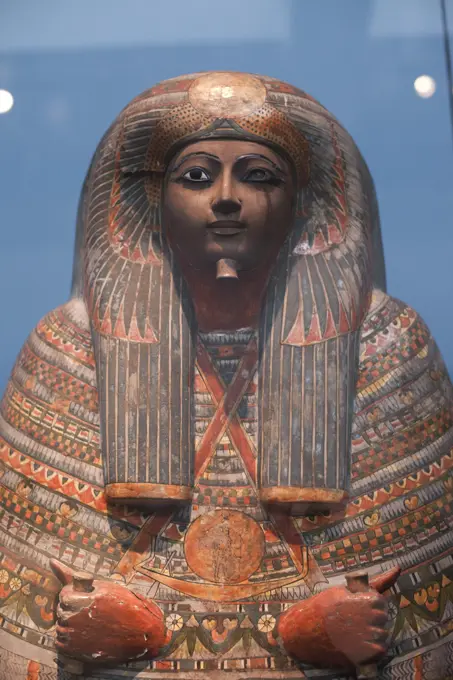
England, London, British Museum. Inner Coffin Of Henutmehyt    From The Tomb Of Henutmehyt, Thebes, Egypt
4409-65639
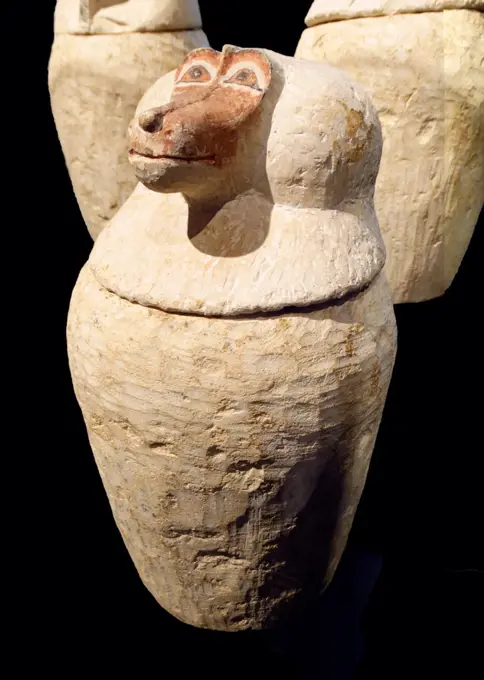
Canopic jar to contain the entrails of a deceased. Tomb of Iunefer, number 57. Hawara Cemetery. Egypt. Limestone. 12th Dynasty. Middle Kingdom. Reign of Amenemhat III. C. 1831-1786 BC. Ny Carlsberg Glyptotek Museum. Copenhagen. Denmark.
6145-29718803
Standing Ceramic Figure Holding Disk 4th-5th century Moche. Standing Ceramic Figure Holding Disk 309320
1788-19241
Head of Hatshepsut, close-up, from Deir-el-Bahari
4409-17434258
Statuette of Taweret. Dimensions: h. 17.2 cm (6 3/4 in); w. 4.7 cm (1 7/8 in); d. 7.6 cm (3 in). Dynasty: Dynasty 18, early. Reign: reign of Ahmose I-Amenhotep I. Date: ca. 1550-1504 B.C..Taweret stands with her left foot slightly advanced, suggesting movement. This pose is usually reserved for images of men in earlier periods. She also has one arm bent and holds a lotus bud in her raised hand, a gesture not previously seen in representations of women. The introduction of new poses and gestures in the statues of nonroyal women in the early New Kingdom may reflect the increasingly prominent roles played by women at all levels of Egyptian society at the beginning of this period.Taweret's hairstyle was fashionable from Dynasty 17 into early Dynasty 18. The front of the hairdo is a mass of braids pulled forward over the shoulders. In the back, three thick plaits are drawn together, exposing parts of the neck and shoulders.This statuette was dedicated to Taweret by her mother, suggesting
4409-17421580
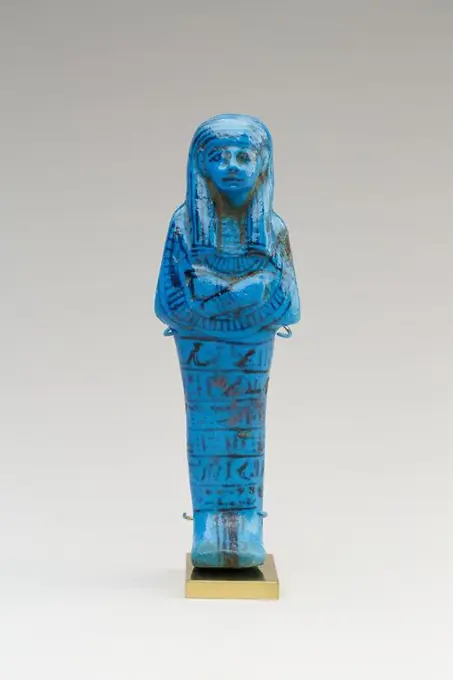
Shabti of Paser, the Vizier of Seti I and Ramesses II. Dimensions: H. 15 cm (5 7/8 in.); W. 4.9 cm (1 15/16 in.); D. 3 cm (1 3/16 in.). Dynasty: Dynasty 19. Patron: Paser (vizier under Seti I and Ramesses II). Date: ca. 1294-1213 B.C..A glazed faience shabti portraying its owner Paser in a mummiform, carrying two hoes and a basket, and inscribed with six horizontal lines of text intended to free its owner from obligatory tasks in the afterlife. Museum: Metropolitan Museum of Art, New York, USA.
1746-30005214
Red quartzite kneeling statue of Aba.
6145-29157689
Relief head of a child god 400-200 B.C. Late Period-Ptolemaic Period Small Late Period and Ptolemaic reliefs or sculptures that depict a subject in a partial or unfinished way but are themselves complete objects constitute a special class of object. Guidelines like those for artists are often prominently exhibited as part of the object, although, in fact, many instances can be noted where the object simply could not serve as a suitable model for a traditional formal Egyptian representation. Personifications of kingship, figures that may represent the now emerging demigods Imhotep and Amenhotep Son of Hapu, and popular gods like Harpokrates or Isis, are heavily represented within the corpus. Taken together, the figures represented and these other features indicate the reliefs and sculptures of this class, sometimes called by Egyptologists "sculptors models / votives," were the material of a donation practice, perhaps connected with the prolific temple building of these centuries. Unfor
6145-29762233
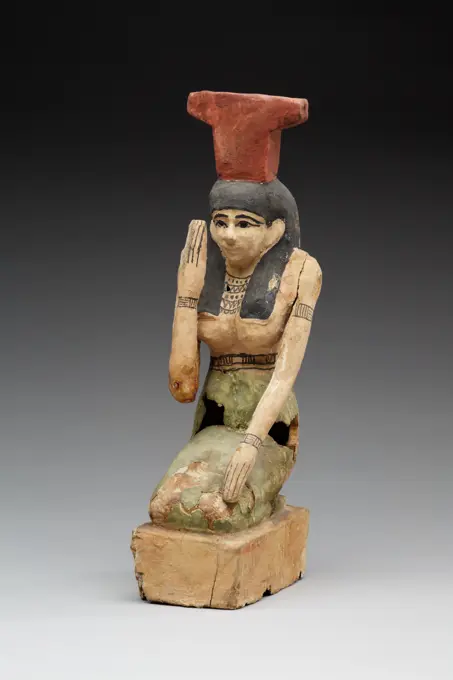
Mourning Nephthys 332-30 BC Ptolemaic Period The goddess Nephthys, identifiable by her hieroglyph on her head, kneels and raises a hand before her face in a gesture of mourning. The figure forms a pair with the figure of Isis 12.182.23b.Figures of the two mourning goddess accompany the body of Osiris in representations. In Late Period and Ptolemaic burials kneeling figures of the goddesses may be among the wooden figures in a burial. Presumably they were placed at either end of the sarcophagus of the deceased as they appear at either end of the body of Osiris.. Mourning Nephthys. 332-30 BC. Wood, gesso, paint. Ptolemaic Period. From Egypt
1746-19677160
Granite statue of Sekhmet from Thebes, Egypt. 18th dynasty, around 1350 BC she who is powerful. The Egyptian goddess Sekhmut was associated with destruction. According to myth, she was the fiery eye of Re, which he sent against his enemies. In this form she also appeared as the cobra on the brow of the king, rearing to protect him.
4409-61110
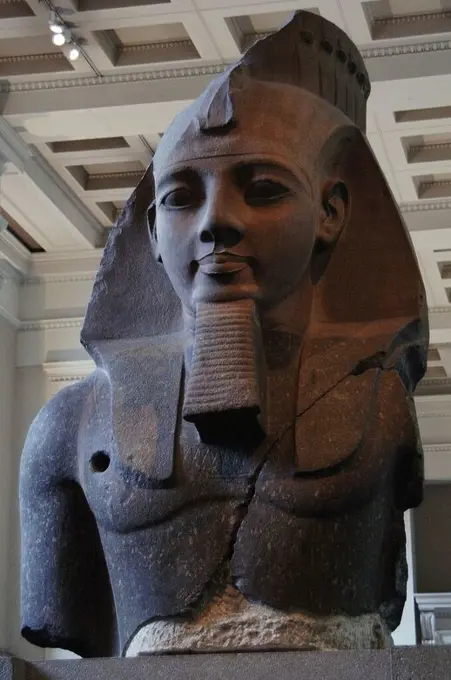
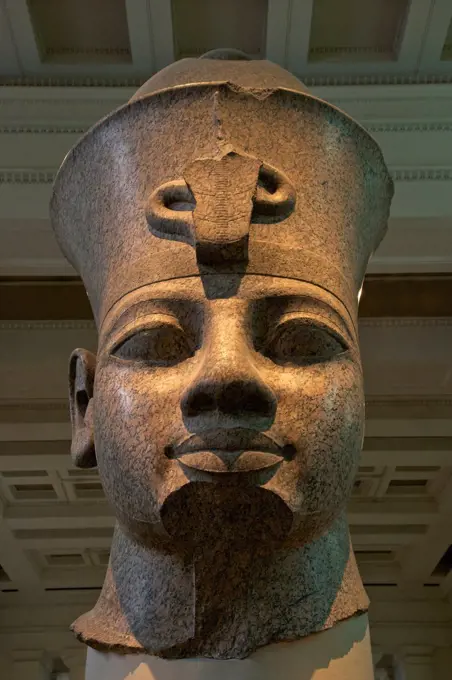
Colossal statue of Ramesses II, the Younger Memnon. C. 1250 BC. 19th Dynasty. New Kingdom. From the Ramesseum (Thebes, Egypt). Granite. Detail. British Museum. London. United Kingdom.
4409-21480987
Egypt. Sculptural group representing a scribe with his wife and son. 15th century B.C. New Kingdom. Limestone with traces of polychrome. The State Hermitage Museum. St. Petersburg. Russia.
6176-67035920
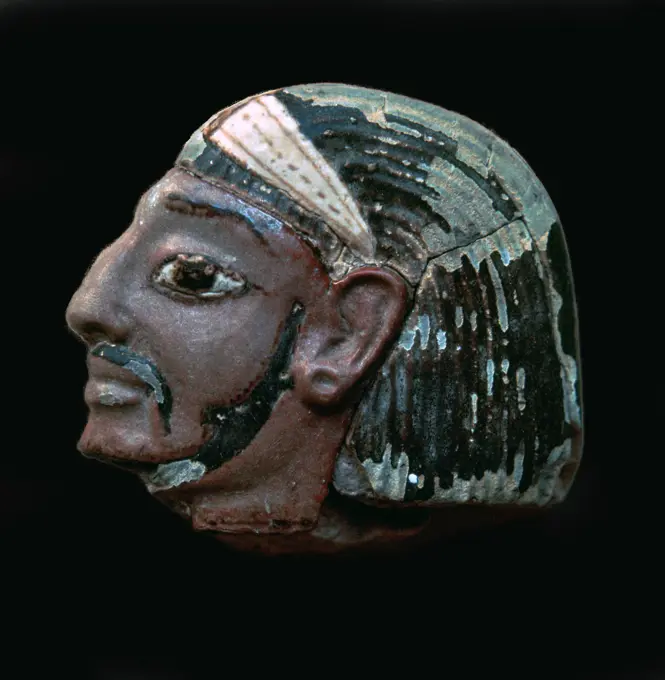
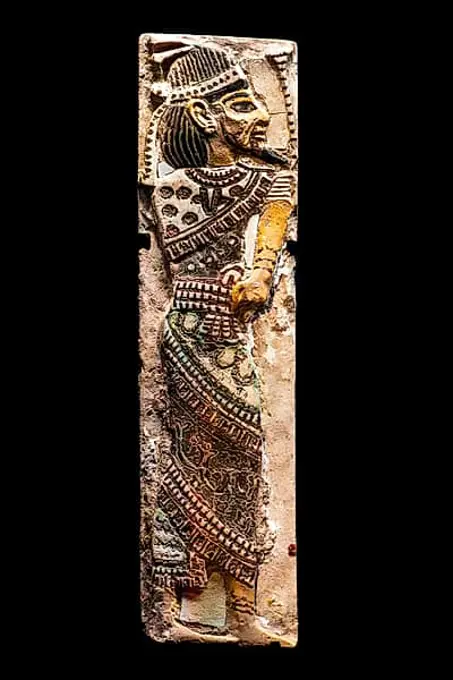
Egyptian glazed relief of a Hittite slave. Artist: Unknown
4042-2756
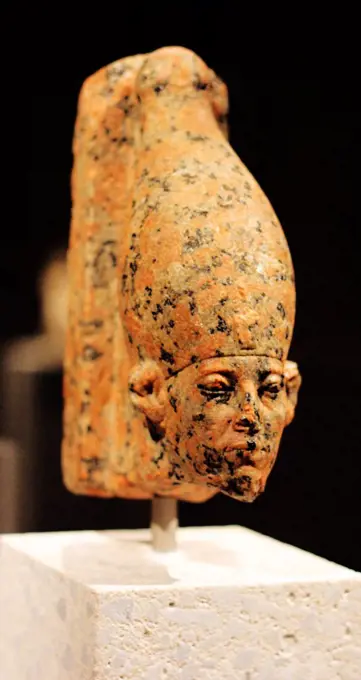
UK, England, London, British Museum, Red granite head of King from Temple of Mut, 1390 BC
6145-29156931
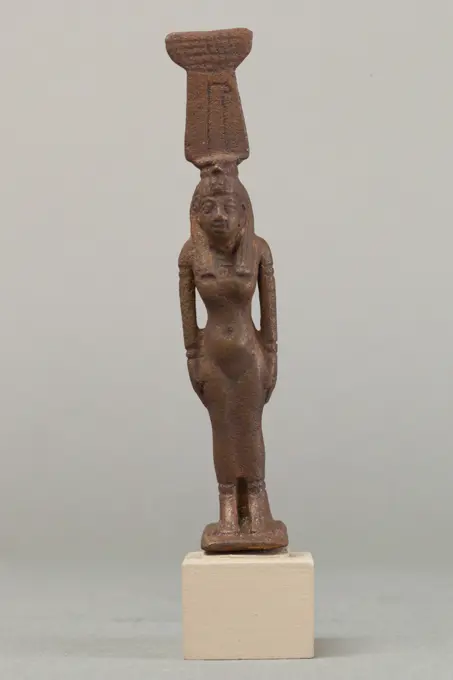
Statuette of Nephthys 304 B.C.-A.D. 364 Ptolemaic or Roman Period. Statuette of Nephthys. 304 B.C.-A.D. 364. Cupreous metal. Ptolemaic or Roman Period. From Egypt
4409-21488163
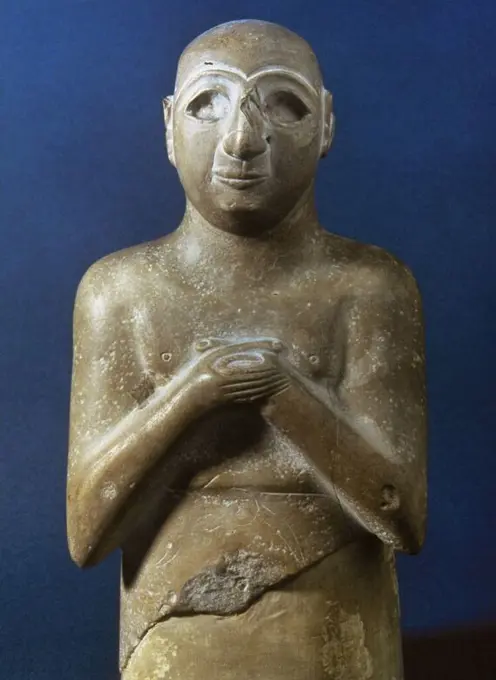
Statue bearing an inscription on the back: Satam, son of Lu-Barab, son of Lugal-Kisal-si, king of Uruk, servant of Girim-si, prince of Uruk. Limestone, Early Dynastic III, ca. 2400 BC. Louvre Museum. Paris, France.
6145-29161024
Statuette of a nude woman with moveable arms, one missing ca. 945-664 BC Third Intermediate Period This statuette of a woman is an ancient mechanical figure. Both of her arms were attached to an axle that runs between her shoulders; a string was wound around the axle, then ran through a channel in her body and left leg to emerge beneath the base under her feet, so that pulling the string caused the axle to turn and the arms to rise. Such figures, called automata, are known: the museums figure of a pygmy (34.1.130) was part of an ensemble of dancing pygmies that turned on a base by a string mechanism, and the mouth of the ivory dog (40.2.1) opens by a simpler lever system. The figurine had been considered problematic, but a recent study has adduced strong technical evidence to support its antiquity, thus restoring it to a place in our displayed collection.The study also endeavored to place the statuette in terms of style, suggested a reconstruction for the pose of its missing left arm,
1746-19670713
Head of a statue of the king Sesostris 111 12th dynasty 1875-1840 BC Thebes / Karnak Rose granite
6145-29196286
Head from Shabti ca. 1550-1295 B.C. New Kingdom. Head from Shabti. ca. 1550-1295 B.C.. Limestone. New Kingdom. From Egypt, Upper Egypt, Thebes, Sheikh Abd el-Qurna, Tomb of Ahmose (TT 121), MMA excavations, 1930-31
1899-17320249
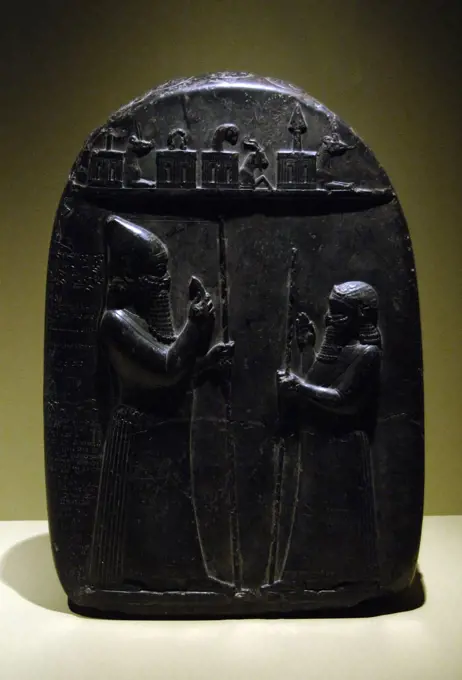
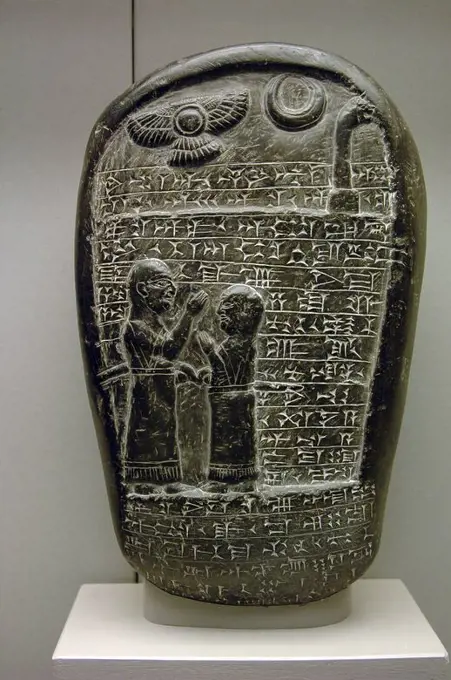
Marduk-apla-iddina II or Marduk-Baladan. Chaldean prince who usurpedd the Babylonian throne in 721BC. Reigned 722-710BC and 703-703BC. Kudurro (stela). Babylon exposore. Louvre. Paris.
4409-139007
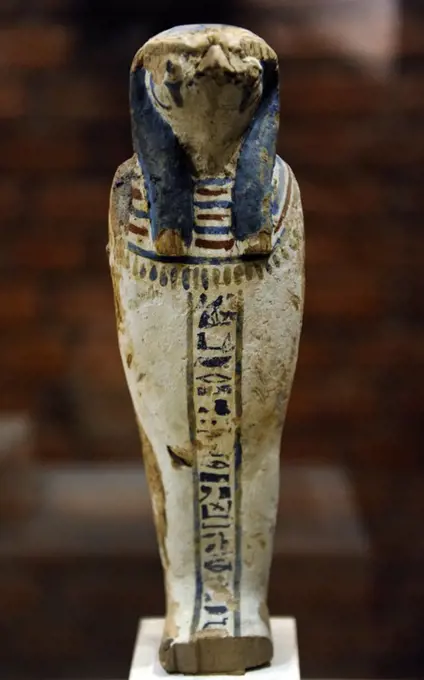
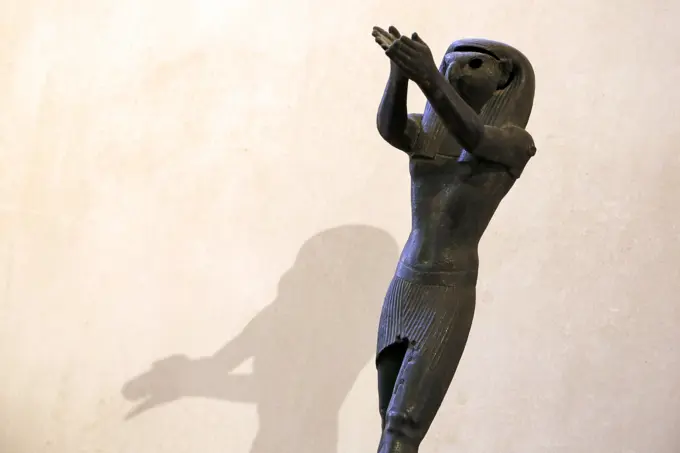
Qebehsenuef, son of Horus. Protective deity. Depicting as a human mummify body with falcon head. Wood. Late Period. 746-332 BC. Neues Museum. Berlin. Germany.
6145-59138292
Emilia-Romagna Bologna Bologna Museo Civico Archeologico Sale III, IV, V. Hutzel, Max 1960-1990 Specific Location: Sale III, IV, V (Egyptian antiquities) Owner: Museo Civico Archeologico Antiquities: III: basalt sculptural fragments; reliefs from the tomb of Horemheb; funerary stele; dynasties XVIII, XIX, XX, Ptolomeic dynasty reliefs, generally in limestone. IV: XVIII, XIX dynasty sculptures in granite, limestone, sarcophagi, statuette in basalt, statuette in wood, statuettes in bronze, statuette faience, mummy mask: V: basalt sculptures of Horus, Sekhmet, limestone stele (Antiq. count: 202); Republican portrait sculpture, Republican cippi with portrait bust, cippus with portraits (single and group), cippi with inscriptions from all periods, architectural fragments, basin with inscription, torso fragment of cuirassed figure of the 1st century AD (Nero) (Antiq. count: 185); disk lamps from the late republic to 6th century, with erotes, animals, erotica, mythological scenes, menorah, pe
1746-21115217
Ancient Egyptian funerary urn or Canopic jar 26th Dynasty, 664-525 BC
6145-30176460
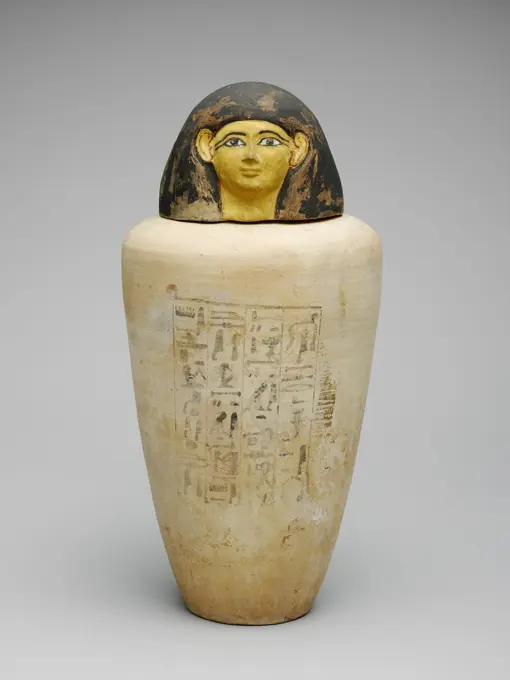
Canopic Jar of the Overseer of the Builders of Amun, Amenhotep 1427 BCE-1400 BCE Egypt. During the mummification process, the liver, lungs, stomach, and intestines were removed from the body, separately mummified, and stored in the tomb in four vessels, called Canopic jars. Each organ was placed under the protection of a deity whose head often appears on the stopper of each jar, however the head on this jar depicts the deceased man, named Amenhotep, for whom it was made. Amenhotep held an important civil job as an overseer of building contractors involved in the cult of Amun, the primary god of Thebes (modern-day Luxor in Egypt).. terracotta and pigment . Ancient Egyptian
1746-21112605
Limestone tomb Stela of Anhurnakht from Naga el-Deir. Dated 21st Century BC
6176-67038218
Egyptian sculpture of Queen Hatsheput, 15th century BC Artist: Unknown
1746-19691542
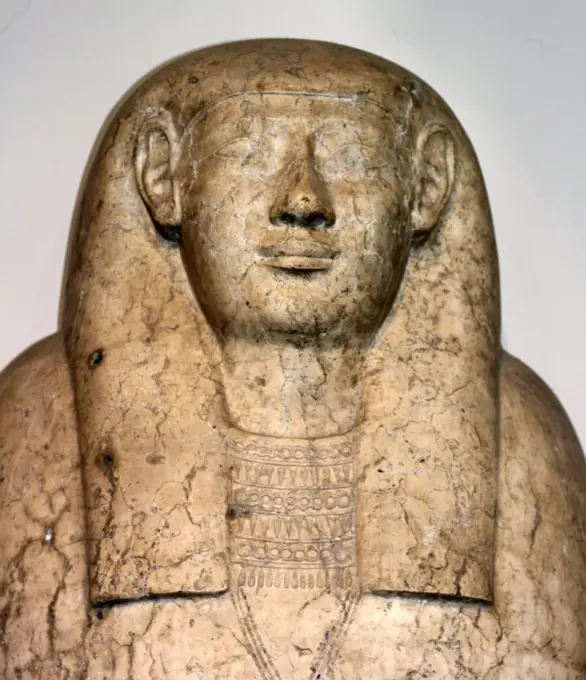
Limestone anthropoid coffin lid of Padihorhephep. Ptolemaic Period, about 200 BC. Beneath the broad collar hangs a pectoral containing seated figures of Osiris, Isis and Horus. The Four Sons of Horus and other funerary deities flank the central text which names the deities represented and contains a formula concerning the deceased's acceptance in the Other World after death.
4409-17421500
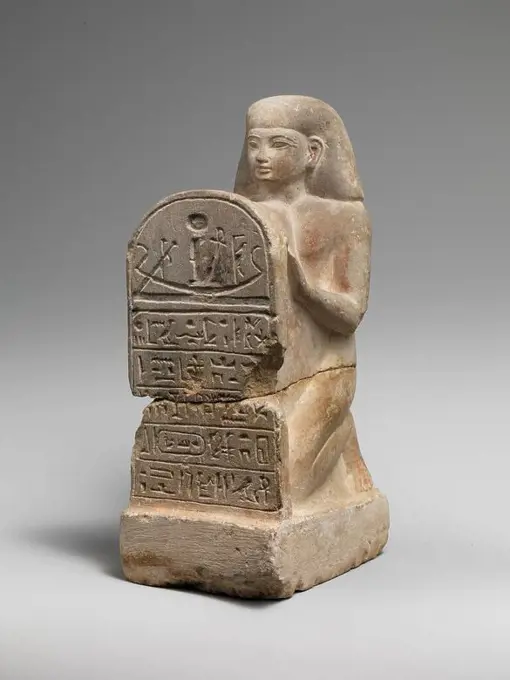
Stelophorous Statue of Bay. Dimensions: Overall: H. 28.1 cm (7 1/2 in); w. 15 cm (4 in); d. 15 cm (5 7/8 in)upper half: h. 17.8 cm (7 in)lower half: h. 11.5 cm (4 1/2 in). Dynasty: Dynasty 19. Reign: reign of Seti I or later. Date: ca. 1294-1250 B.C..This statuette depicts a kneeling man holding a stela inscribed with a hymn to the sun. An inscription on the back of the statuette identifies the man as Bay, who was a scribe working in the administration of the temple of Seti I, a post he probably held into the reign of Seti's son, Ramesses II. Complete statues of nonroyal individuals from this period are uncommon, and pieces of this fine quality are extremely rare. Museum: Metropolitan Museum of Art, New York, USA.
1788-17048
Ancient Egyptian granite statue of Thutmose IV and mother Tio, from Karnak, Egypt, New Kingdom, XVIII Dynasty
1788-18870
Ancient Egyptian figurine of sun god Ra in as falcon
1746-21126414
Sculpture of General Horemheb from ancient Egypt. Dated 1550 BCE
6176-67039681
Detail of a Phoenician sarcophagus-lid, 5th century BC. Artist: Unknown
1746-30005326
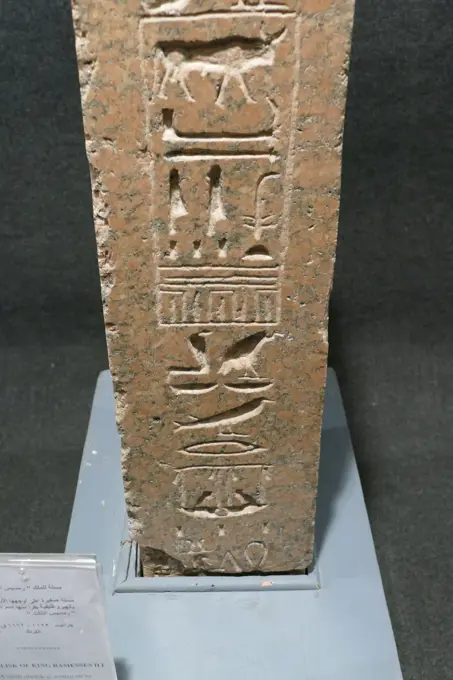
Obelisk of King Ramesses II made from granite
1848-55369676
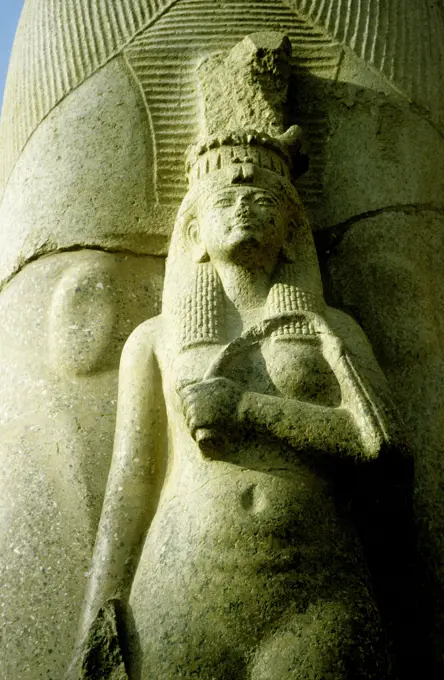
Queen Nefertari, Luxor Temple, Luxor, Nile Valley, Egypt, Africa
1746-30005217
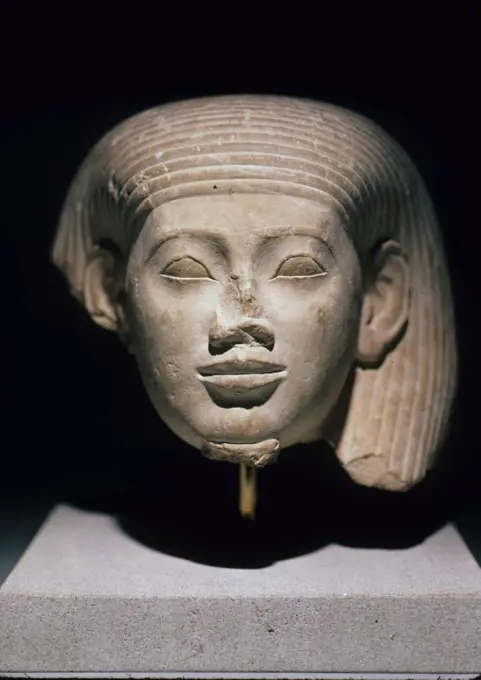
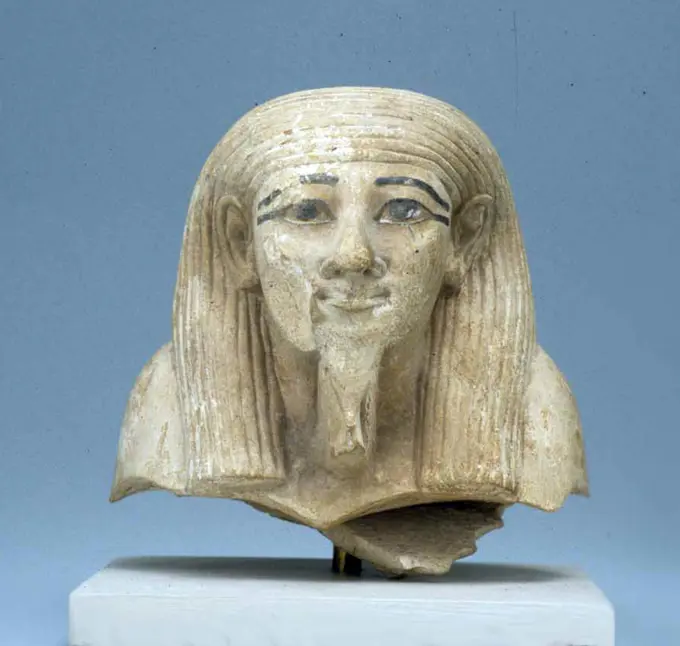
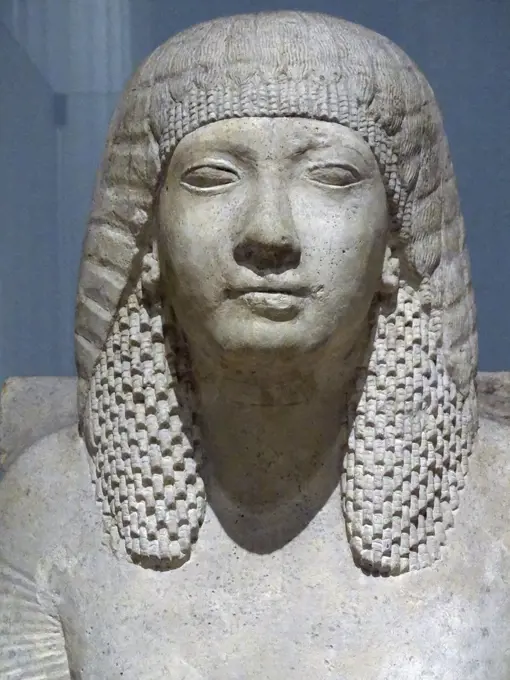
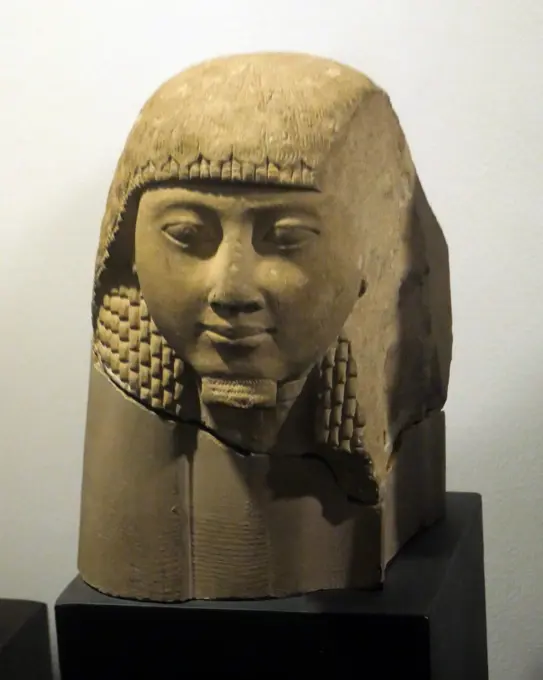
Limestone statue of an official wearing an elaborate wig
1848-63261421
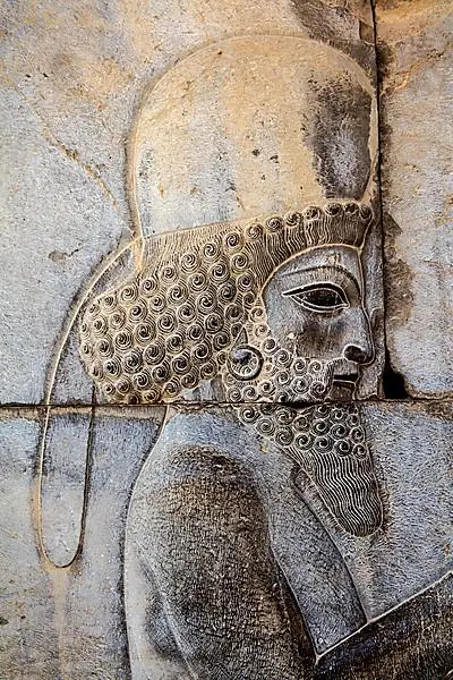
Relief detail of the delegation of nations bringing gifts to Darius on the steps of Apadana Palace, Persepolis, Persepolis, Iran, Asia
1746-28978348
Statue of King Senwosret III from ancient Egypt.
1746-29016641
Black granite statue of the goddess Sakhmet, from the Temple of Mut, Thebes, Egypt. circa 1400 BC. In Egyptian mythology, Sekhmet was a warrior goddess as well as goddess of healing
6188-64635086
Handmade sand statue, india, asia Copyright: xMohammedxSharif/DinodiaxPhotox
6145-30176976
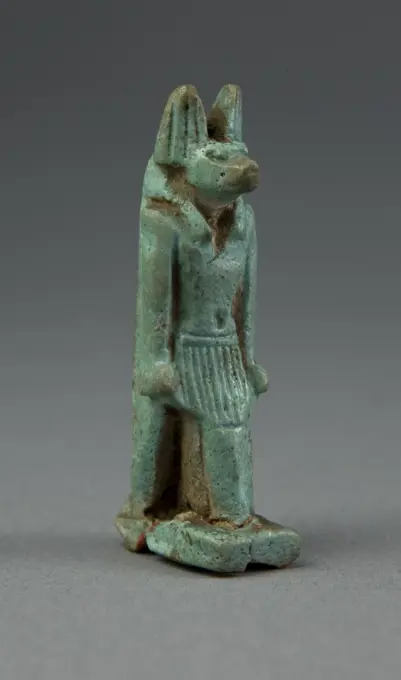
Amulet of the God Anubis 664 BCE-332 BCE Egypt. Faience . Ancient Egyptian
1746-19664457
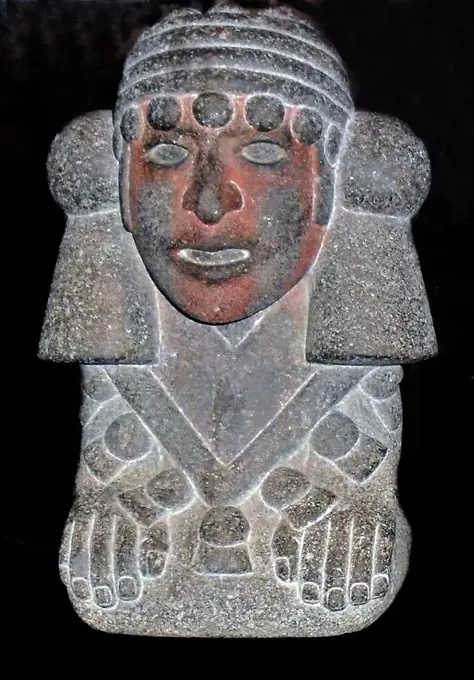
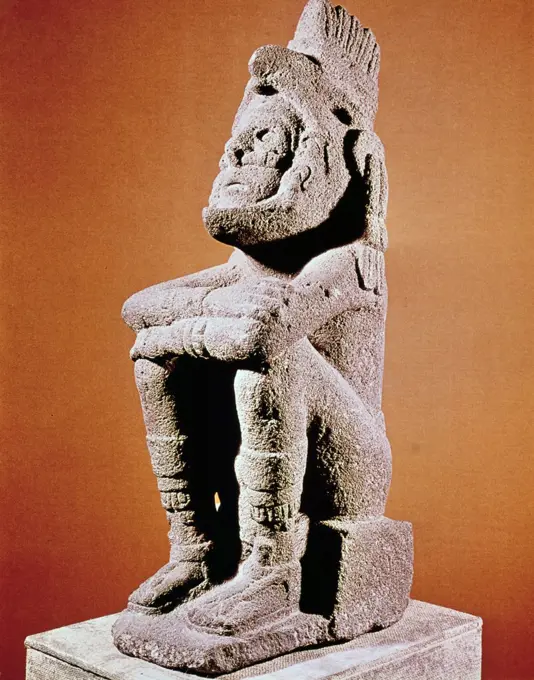
Tonatiuh The Sun God. Aztec, volcanic stone carved, circa 1350-1521 Mexico
4409-4881
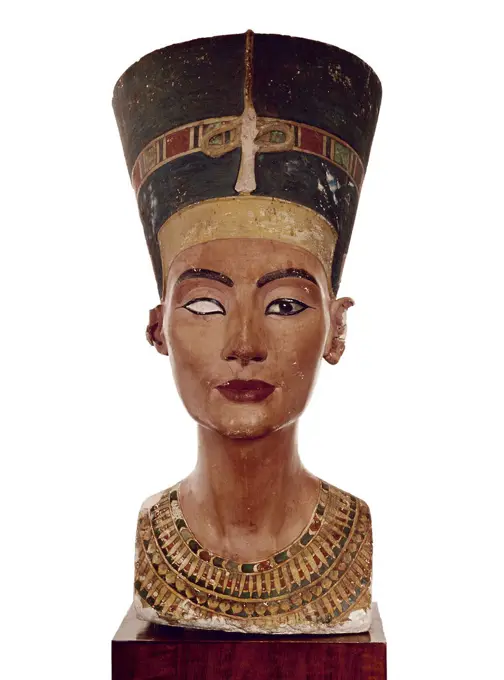
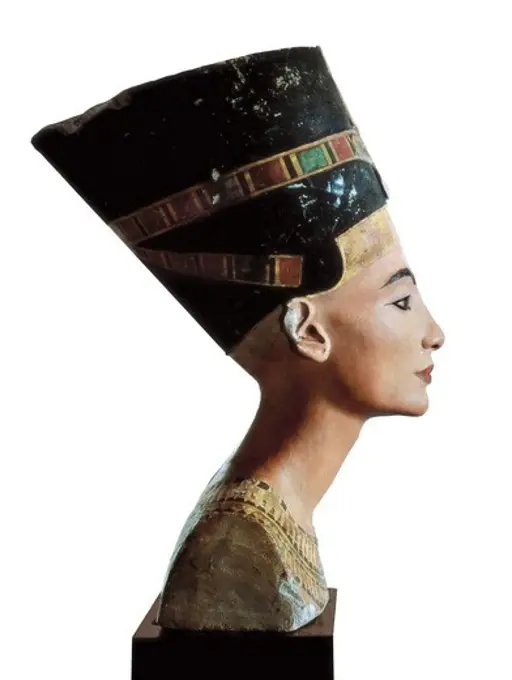
Full-sized bust of Nefertiti. 1335 B.C.. 18th dynasty. Painted limestone. Berlin, Staatliche museum. Author: TUTMOSE o DYEHUTYMOSE (1330 a. c.). Location: NEUES MUSEUM. BERLIN. DEUTSCHLAND. NEFERTITI. AMENOFIS IV ESPOSA. AKENATON ESPOSA.
4409-17242429
female protome, from Motya, tofhet, central favissa, clay, 6th cent. BCE, Motya Museo G Whitaker, The Coliseum , Rome, Lazio, Italy ,.
4409-63013558
Pectoral of mummy showing Amon-Re. Wood, painted. Thebes, New Kingdom (1550-1069 BC ). National museum of Naples. Italy.
4409-17544059
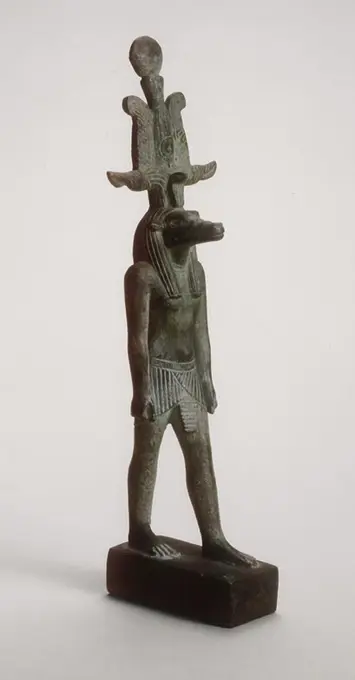
Statuette of Sobek. Egyptian. Date: 664 BC-332 BC. Dimensions: 16.7 × 4.5 × 5 cm (6 5/8 × 1 7/8 × 2 in.). Copper alloy. Origin: Egypt. Museum: The Chicago Art Institute, Chicago, USA. Author: Ancient Egyptian.
4409-21483990
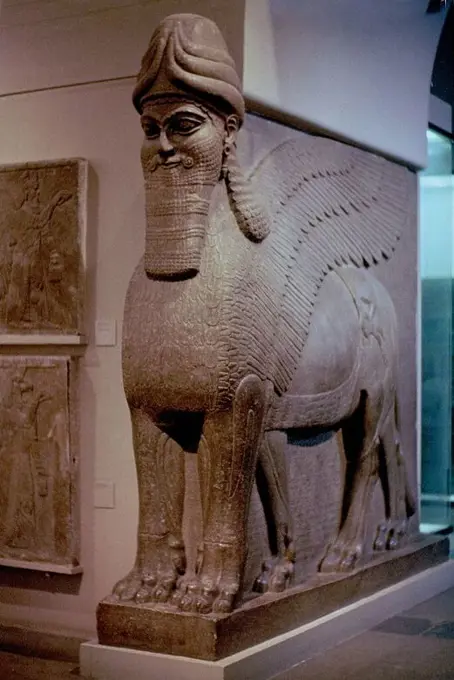
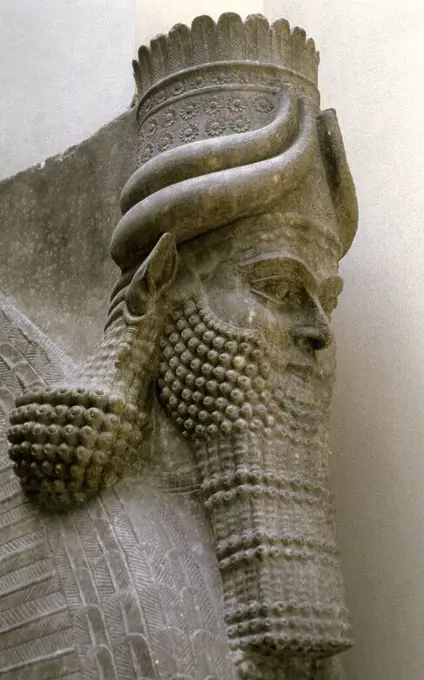
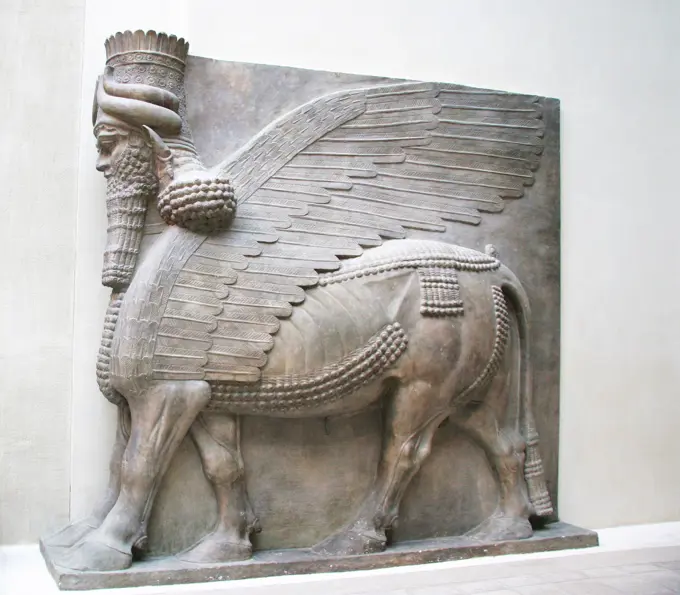
TORO ALADO CON CABEZA HUMANA - PALACIO DE NIMRUD - 865 AC. Location: BRITISH MUSEUM. LONDON. ENGLAND.
4409-59927
Mesopotamia. Commemorative stone stela. Babylonian, about 900-800 BC. Iraq. British Museum. London. England. United Kingdom.
6212-62159736
Egyptian art on a white background
1746-19669885
Granodiorite statue of Amenhotep. Eighteenths Dynasty, about 1400 BC From Abydos. Amenhotep held the title of overseer of the royal palace in Memphis.
4409-17288727
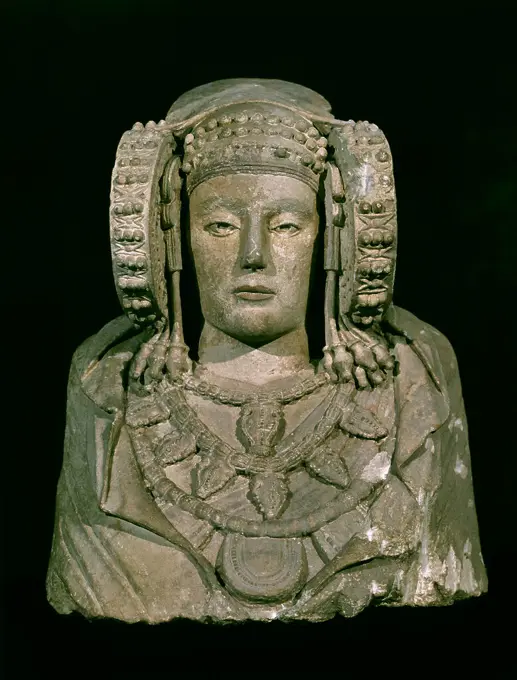
Lady of Elche, 56 x 45 x 37 cm. 4th century BC. Museum: MUSEO ARQUEOLOGICO, MADRID, SPAIN.
4409-133584
Head of a statue of prince Khaemwaset, son of King Ramesses II. Quartzite. New Kingdom. 19th Dynasty. 1260 BC. Neues Museum. Berlin. Germany.
6145-59138210
Emilia-Romagna Bologna Bologna Museo Civico Archeologico Sale III, IV, V17. Hutzel, Max 1960-1990 Specific Location: Sale III, IV, V (Egyptian antiquities) Owner: Museo Civico Archeologico Antiquities: III: basalt sculptural fragments; reliefs from the tomb of Horemheb; funerary stele; dynasties XVIII, XIX, XX, Ptolomeic dynasty reliefs, generally in limestone. IV: XVIII, XIX dynasty sculptures in granite, limestone, sarcophagi, statuette in basalt, statuette in wood, statuettes in bronze, statuette faience, mummy mask: V: basalt sculptures of Horus, Sekhmet, limestone stele (Antiq. count: 202); Republican portrait sculpture, Republican cippi with portrait bust, cippus with portraits (single and group), cippi with inscriptions from all periods, architectural fragments, basin with inscription, torso fragment of cuirassed figure of the 1st century AD (Nero) (Antiq. count: 185); disk lamps from the late republic to 6th century, with erotes, animals, erotica, mythological scenes, menorah,
1788-1895
Egyptian civilisation. Nubian statuary group, detail.
6145-29157509
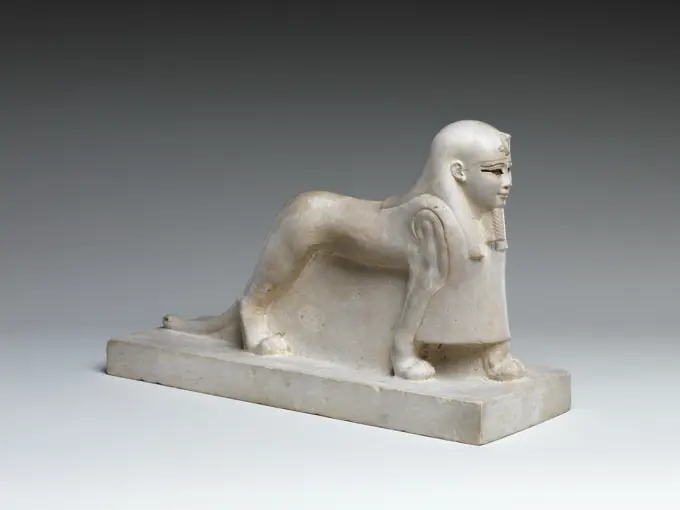
Tutu 300-150 B.C. Ptolemaic Period Tutu was a late addition to the Egyptian pantheon: the name of the god first appears in the 6th century B.C, and he flourished in the last centuries B.C. and in the Roman Period. The god was the son of the goddess Neith, and he was usually represented in the form of a striding royal sphinx composed of a lion's body and a human head, with usually a snake as his tail. In later periods he may be depicted in a pantheistic mode with other elements like a crocodile head or a lion head attached to his body.Tutu had many aspects (a powerful and victorious god, a divine king, master of demons), but most essentially he was understood as an accessible god to whom people could turn for help in their everyday existence. Very often he was represented on stelae where he was shown in side view but with his head turned to be viewed frontally, emphasizing this approachability.This beautiful statue is thought to date relatively early in the god's history because of its
4409-17416494
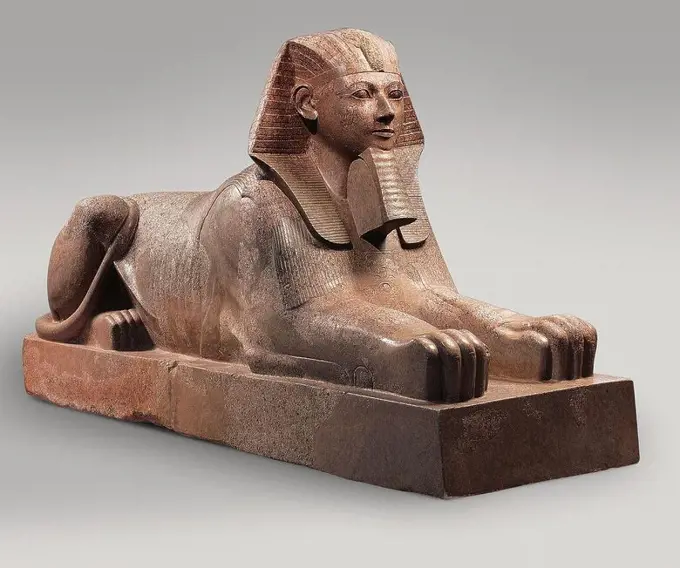
Sphinx of Hatshepsut. Dimensions: H: 164 cm (64 9/16 in.); L: 343 cm (135 1/16 in.); Wt: 6758.6 kg (14900 lb.). Dynasty: Dynasty 18. Reign: Joint reign of Hatshepsut and Thutmose III. Date: ca. 1479-1458 B.C..This colossal sphinx portrays the female pharaoh Hatshepsut with the body of a lion and a human head wearing a nemes headcloth and royal beard. The sculptor has carefully observed the powerful muscles of the lion as contrasted to the handsome, idealized face of the pharaoh. It was one of at least six granite sphinxes that stood in Hatshepsut's mortuary temple at Deir el-Bahri. Smashed into many fragments at the order of Hatshepsut's nephew and successor Thutmose III and dumped in a quarry close by, this beast was recovered by the Museum's Egyptian Expedition and reassembled. It weighs more than seven tons.Part of a second sphinx of Hatshepsut (31.3.164) is on display in gallery 115. The sphinx has a long history in Egyptian art, the most famous example being the great sphinx at
1788-22270
Egypt, Statue of Thutmose III (circa 1479-1425 B.C.) from the temple of Amun at Karnak in Luxor, eighteenth dynasty, basalt
1746-19676545
Granite Bust of A king Late 11th dynasty to Early 12th Dynasty B.C.
4409-17295237
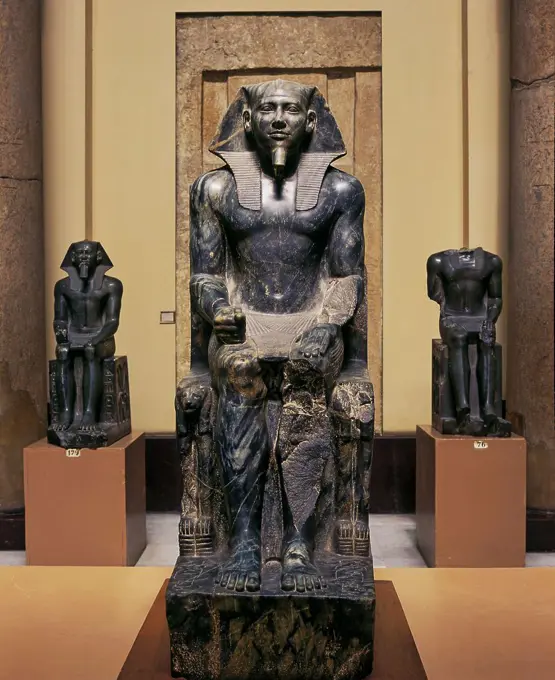
Diorite statue of Pharaoh Khafra - 26th century BC, Museum of Egyptian Antiquities, Cairo, Egypt, Africa.
6145-29243621
Head of a Queen or Goddess ca. 1961-1917 B.C. Middle Kingdom. Head of a Queen or Goddess. ca. 1961-1917 B.C.. Limestone, paint. Middle Kingdom. From Egypt, Memphite Region, Lisht South, Pyramid Temple of Senwosret I, Altar Court, MMA excavations, 1908-09. Dynasty 12
6145-29731189
Head of an early Ptolemy, possibly from a sphinx 4th-early 3rd century B.C. Macedonian or Ptolemaic Period The early Ptolemies visually emphasized their role as traditional Egyptian kings through stylistic continuities.This head displays features that are a strong continuation of the style of Dynasty 30, notably the single continuous arc created by the brow line over the eyes.. Head of an early Ptolemy, possibly from a sphinx 546109
4409-9355
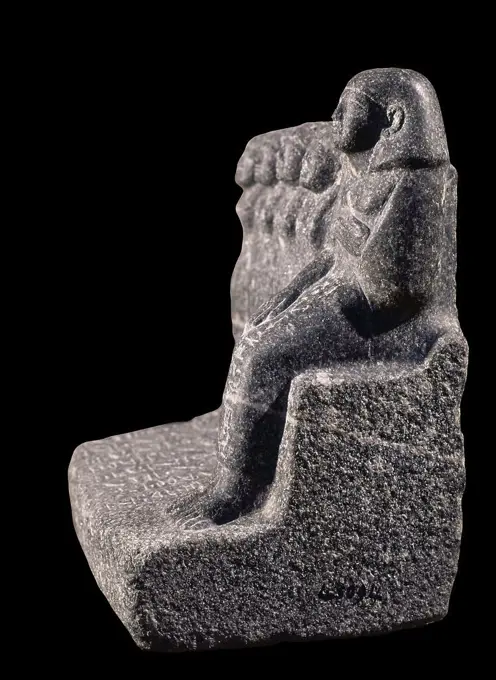
RELIEVE DE CUATRO PEQUENAS FIGURAS XII DINASTIA IMPERIO MEDIO - VISTA LATERAL. Location: EGYPTIAN MUSEUM. KAIRO. EGYPT.
1848-56131543
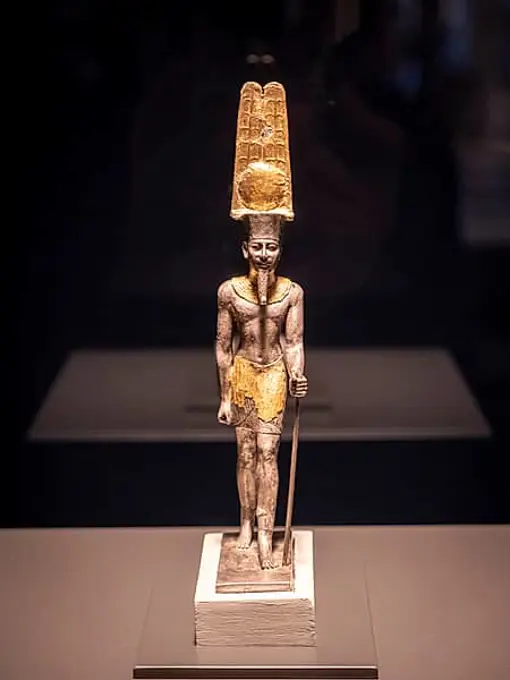
Statuette of the god Amun-Re, silver gilt, Third Intermediate Period, Karnak, Thebes, Egypt, collection of the British Museum, Africa
6145-29770881
Arm or hand holding stela with Aten cartouche ca. 1352-1336 B.C. New Kingdom, Amarna Period. Arm or hand holding stela with Aten cartouche 549822
4409-21498693
Tumba de Setau o Sethau (EK-4), Elkab, Egipto.
6145-29801699
Head of an Osiride Statue of Hatshepsut ca. 1479-1458 B.C. New Kingdom This head belonged to a statue that represented Hatshepsut as Osiris, god of the underworld. It was one of four Osiride figures that decorated the sanctuary of Amun in her funerary temple at Deir el Bahri. This head and another in the collection (31.3.154) wear the White Crown of Upper Egypt and were originally at the southern end of the sanctuary. Another head in the collection (31.3.153) wears the Double Crown and came from the northern end. The Osiride statues that decorated Hatshepsut's temple were "engaged" statues - in other words, they were attached to the temple itself. However, approximately 20 years after her death, the statues were hacked off the walls and smashed. The fragments were then thrown into a quarried area next to the temple causeway where they were discovered there during the Museum's excavations in the early Twentieth Century.. Head of an Osiride Statue of Hatshepsut. ca. 1479-1458 B.C.. Limes
6176-67052830
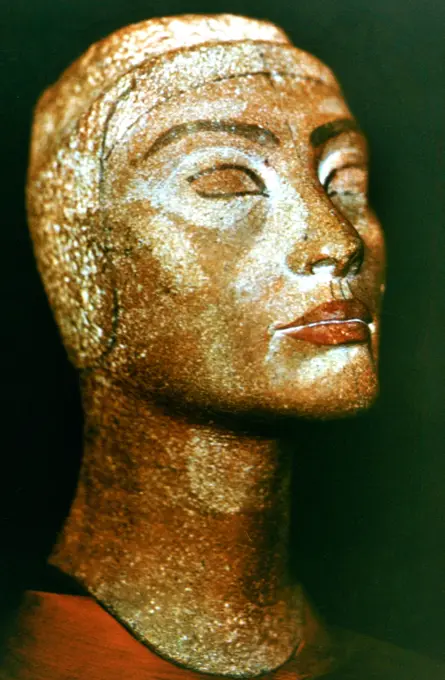
Bust of Nefertiti, queen and wife of the Ancient Egyptian Pharaoh Akhenaten (Amenhotep IV). Artist: Unknown
6145-59138258
Emilia-Romagna Bologna Bologna Museo Civico Archeologico Sale III, IV, V3. Hutzel, Max 1960-1990 Specific Location: Sale III, IV, V (Egyptian antiquities) Owner: Museo Civico Archeologico Antiquities: III: basalt sculptural fragments; reliefs from the tomb of Horemheb; funerary stele; dynasties XVIII, XIX, XX, Ptolomeic dynasty reliefs, generally in limestone. IV: XVIII, XIX dynasty sculptures in granite, limestone, sarcophagi, statuette in basalt, statuette in wood, statuettes in bronze, statuette faience, mummy mask: V: basalt sculptures of Horus, Sekhmet, limestone stele (Antiq. count: 202); Republican portrait sculpture, Republican cippi with portrait bust, cippus with portraits (single and group), cippi with inscriptions from all periods, architectural fragments, basin with inscription, torso fragment of cuirassed figure of the 1st century AD (Nero) (Antiq. count: 185); disk lamps from the late republic to 6th century, with erotes, animals, erotica, mythological scenes, menorah, p
1848-51696297
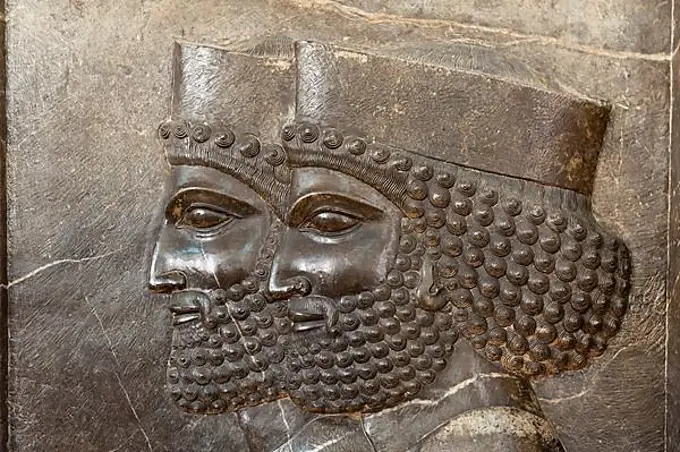
Ancient treasure house relief of the Achaemenids, audience relief of Darius I, two Persians with beard and headgear, guardians of the immortal garde, archaeological relic from Persepolis, National Museum of Iran, Tehran, Iran, Asia
4409-7191
ESTELA DE AKENATON. IMPERIO NUEVO, PERIODO AMARNA XVIII DINASTIA HACIA 1350 A.C. ALABASTRO. ALTURA 9. Location: NEUES MUSEUM. BERLIN. DEUTSCHLAND.
1746-19670620
Plastic from Syria and Upper Mesopotamia.
1746-30015694
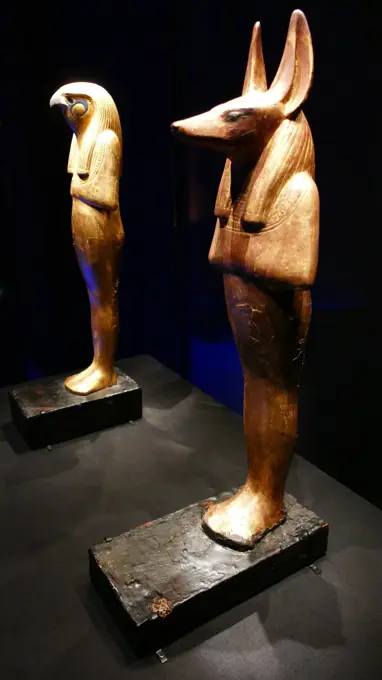
Gilded wooden statues of Herwer (Horus the elder) and Jackal headed Daumutef, From the tomb of King Tutankhamun. 1326 BC
1848-61306548
Egyptian relief with ostrich feather, CP Nel Museum of Ostrich History, Oudtshoorn, South Africa, Western Cape, Africa
1788-20338
Schist head of Userkaf, from Abusir, Solar temple of Userkaf
6145-43622907
Mumia Panepiego w kartonażu, odźwiernego świątyni Amona, Panepi. unknown, author
6145-30176659
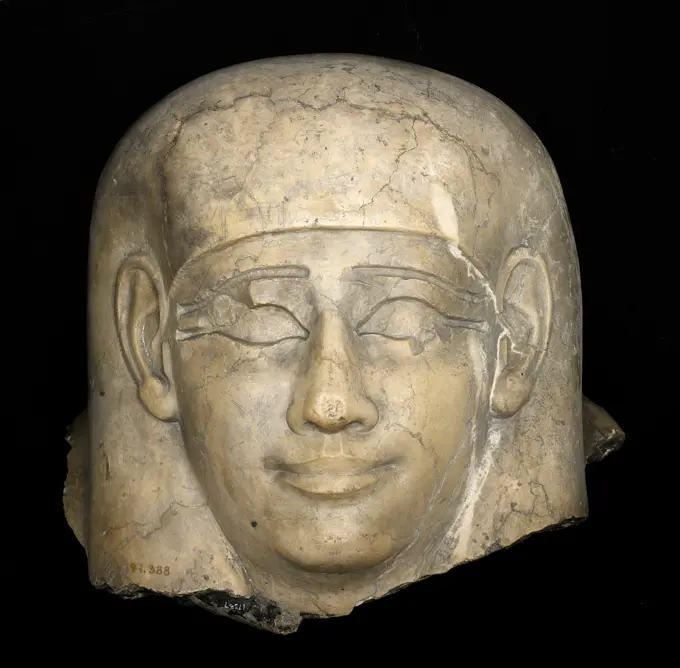
Head From a Sarcophagus 332 BCE-30 BCE Egypt. Stone . Ancient Egyptian
1606-174091
England,London,British Museum,Egyptian Mummies
4409-18577673
egyptian canopic jar lid, clay, new kingdom , Spain.
4409-21515346
Lamassu from the Palace of Sargon II. Assyrians. Detail of Head. 706 BC. Khorsabad Palace. Louvre Museum. Paris. France.
4409-21515208
Statue of Puzur Ishtar, governor of Mari, Neo-sumerian art. Period Ur III, between 2100-200 BC. Istanbul Archaeology Museums.
4292-19063415
Museo archeologico, Archeological Museum, Florence, Tuscany, Italy
4409-20888240
Ceramic vessel Tiwanaku culture 1500 BC-1200 BC Perú.
1746-19677147
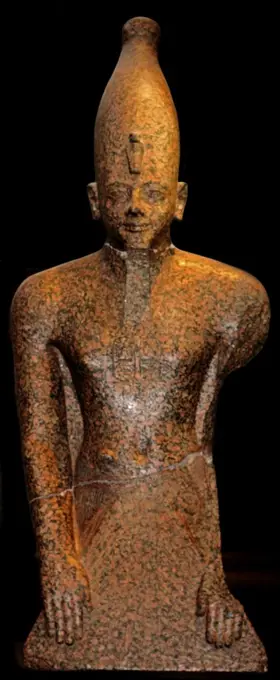
Red granite standing figure of an 18th Dynasty king, ca 1450 BC, Karnak
6145-59138202
Emilia-Romagna Bologna Bologna Museo Civico Archeologico Sale III, IV, V18. Hutzel, Max 1960-1990 Specific Location: Sale III, IV, V (Egyptian antiquities) Owner: Museo Civico Archeologico Antiquities: III: basalt sculptural fragments; reliefs from the tomb of Horemheb; funerary stele; dynasties XVIII, XIX, XX, Ptolomeic dynasty reliefs, generally in limestone. IV: XVIII, XIX dynasty sculptures in granite, limestone, sarcophagi, statuette in basalt, statuette in wood, statuettes in bronze, statuette faience, mummy mask: V: basalt sculptures of Horus, Sekhmet, limestone stele (Antiq. count: 202); Republican portrait sculpture, Republican cippi with portrait bust, cippus with portraits (single and group), cippi with inscriptions from all periods, architectural fragments, basin with inscription, torso fragment of cuirassed figure of the 1st century AD (Nero) (Antiq. count: 185); disk lamps from the late republic to 6th century, with erotes, animals, erotica, mythological scenes, menorah,
6145-30178056
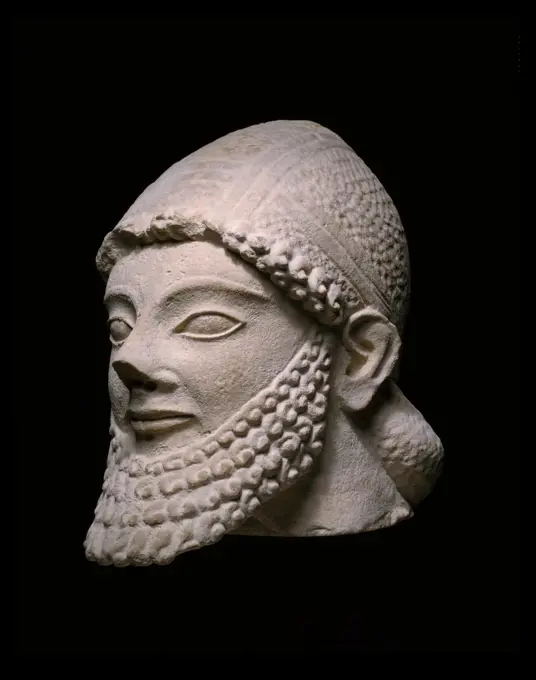
Head of a Bearded Man 500 BCE-401 BCE Cyprus. This limestone head from the island of Cyprus has features that are common to marble sculptures carved in Greece before 500 B.C. These include almond-shaped eyes, the ringlets framing his upper face, the rows of snail-shell curls stacked in layers to form his beard, which juts out from his chin, and a faint smile. Located in the eastern Mediterranean off the coast of Asia, Cyprus was a major center of maritime commerce. Along with goods, ideas were also exchanged there. The sculptor of this head may have visited Greece or otherwise known about earlier Greek art, which inspired this sculpture.. Limestone . Ancient Cypriote
4409-12432
DAMA DE ELCHE (ALICANTE) ESCULTURA IBERICA - SIGLO IV AC -DESCUBIERTA EN 1897. Location: MUSEO ARQUEOLOGICO NACIONAL-COLECCION. MADRID. SPAIN.
1746-19697984
Statue of the Egyptian Pharaoh (king) Taharqa 690-664 BC
6176-67037709
Faience head of the Egyptian goddess Hathor. Artist: Unknown
4443-75460083
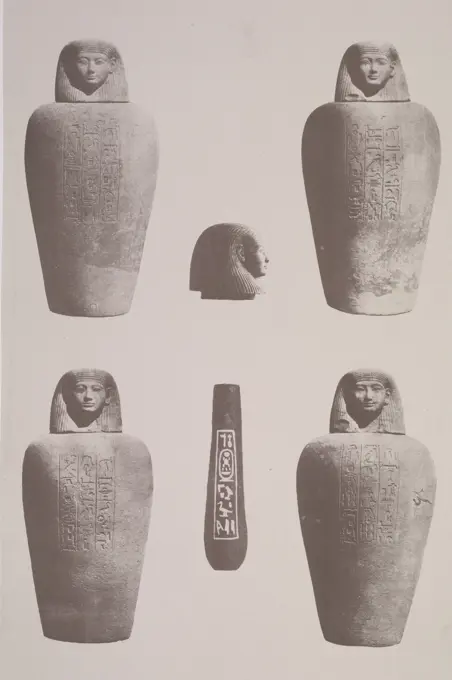
XVIIIe dynastie Apis II, mort sous Amentouonkh, 1857, 1857, Paris, Publisher, Gide, Serapeum (aqqārah, Egypt), Canopic Jars -- Egypt -- To 499, Photolithographs
1606-19068220
Paris 1st arrondissement, Louvre Museum. Department of Egyptian Antiquities. Statue of the god Horus.
1848-62774240
Faience tiles with foreign prisoners from the exhibition: Ramses the Great and the Gold of the Pharaohs, Cologne, North Rhine-Westphalia, Germany, Europe
4409-21487034
Museo de Luxor.
1746-19629657
Aztec sculpture of seated male figure. Reissmuseum, Zeughaus, Mannheim .
1916-9006
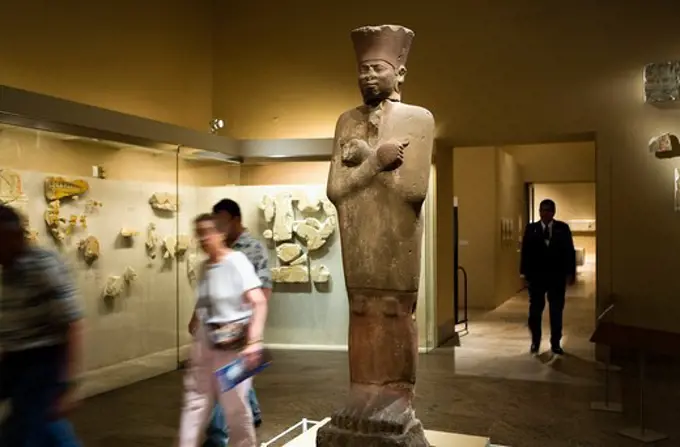
The MET, Metropolitan Museum of Art. Egyptian galleries,New York City, USA
1788-22420
Egypt, Pharaoh Ahmose (circa 1550-1525 B.C..), eighteenth dynasty, canopic jar
6176-66907542
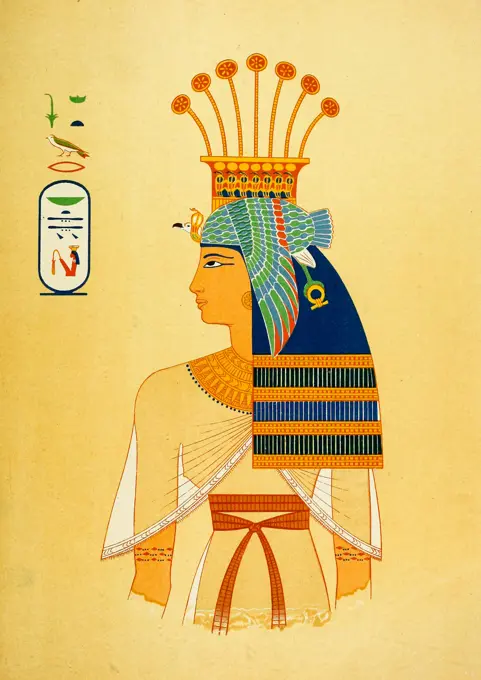
Portrait of Queen Nebto, Daughter of Ramses Meiamun (XIX Dynasty)
6145-52523968
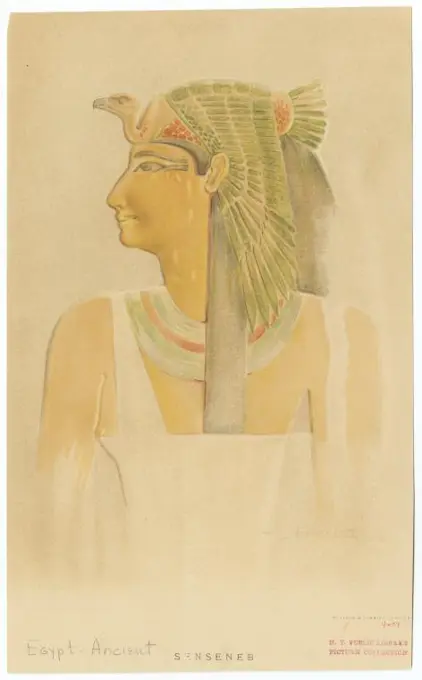
Senseneb Carter, Howard, 1874-1939. 1904. still image. Illustrations. The Miriam and Ira D. Wallach Division of Art, Prints and Photographs: Picture Collection. Egyptians , Clothing & dress, headdresses , To 499, Queens , Egypt , To 499
1788-19367
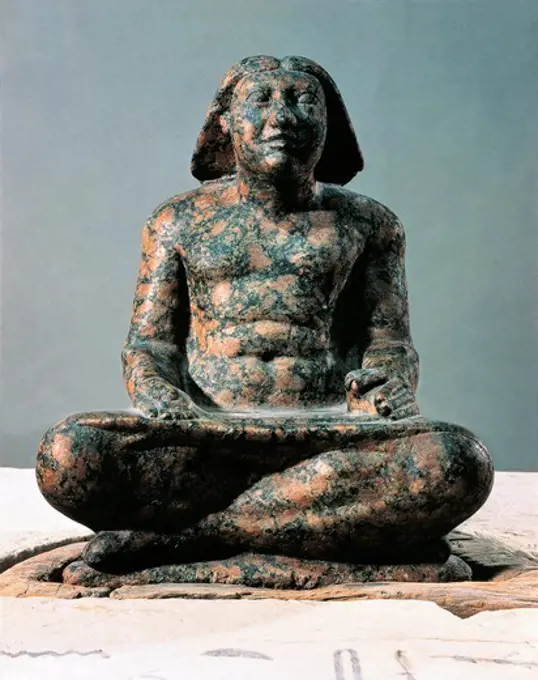
Granite statue of Setka, son of Didufri, as seated scribe, from Abu-Raash
4409-17519520
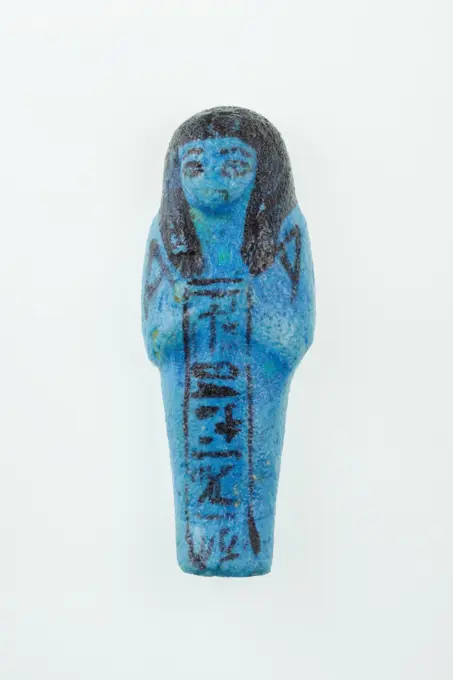
Shabti of Psamtek. Egyptian, Saqqara. Date: 664 BC-332 BC. Dimensions: 19.5 × 5 × 4 cm (7 5/8 × 2 × 1 9/16 in.). Faience. Origin: Egypt. Museum: The Chicago Art Institute, Chicago, USA. Author: Ancient Egyptian.
1746-30016236
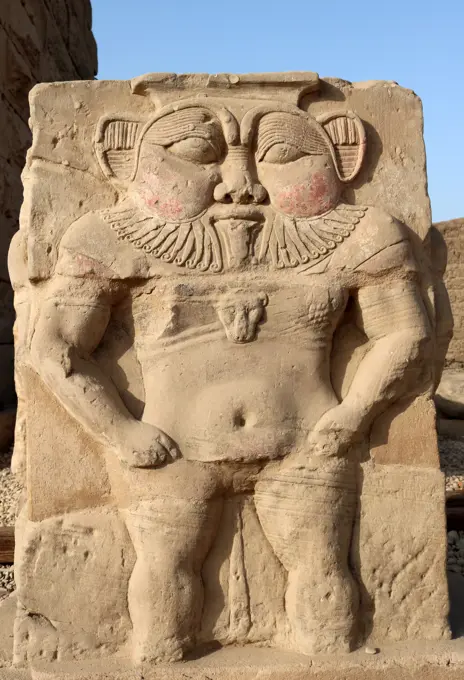
Relief sculpture of the Egyptian God, Bes in the forecourt of the Hathor Temple at Dendera. The dwarf-like god was seen as the protector of pregnant women, new-born babies and the family. The relief dates to the Ptolemaic-Roman period
1848-50678112
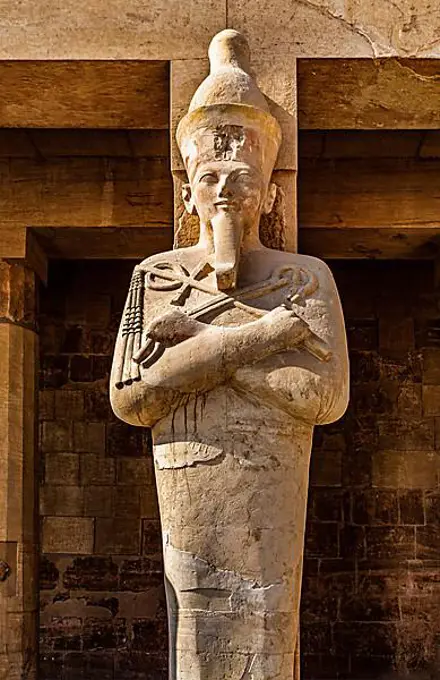
Hatshepsut's larger-than-life (5 m) statues of Osiris in the central colonnade, statues in the robes of the god Osiris, funerary temple of the pharaoh Hatshepsut, Deir el-Bahari, Luxor, Thebes-West, Egypt, Luxor, Thebes, West, Egypt, Africa
4409-63917
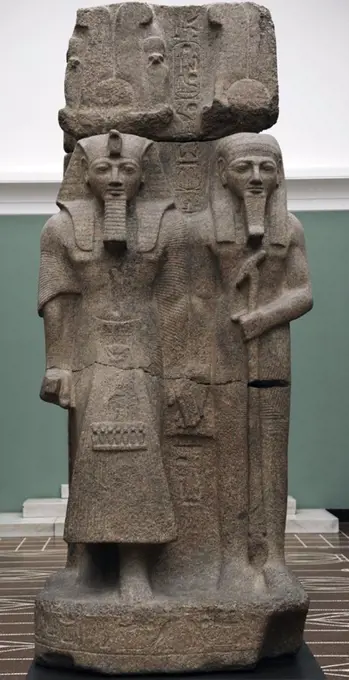
Sculpture of Pharaoh Ramesses II and the God Ptah. Granite. From Temple of Ptah, Memphis. Reign of Ramesses II. C. 1290-1224 BC. 19th Dynasty. New Kingdom. Ny Carlsberg Glyptotek. Copenhagen. Denmark.
7192-70581580
Assyrian Art. Lamassu or Bull-man. Gate from Sargon II's Palace. Dur-Sharrukin (Khorsabad). Assyria, 721-705 BC. Alabaster. Louvre Museum. Paris, France.
6176-66089509
Wooden Coffin of Men-ka-ra. Ancient Egypt History. Old 19th century engraved illustration from El Mundo Ilustrado 1879
4409-17293044
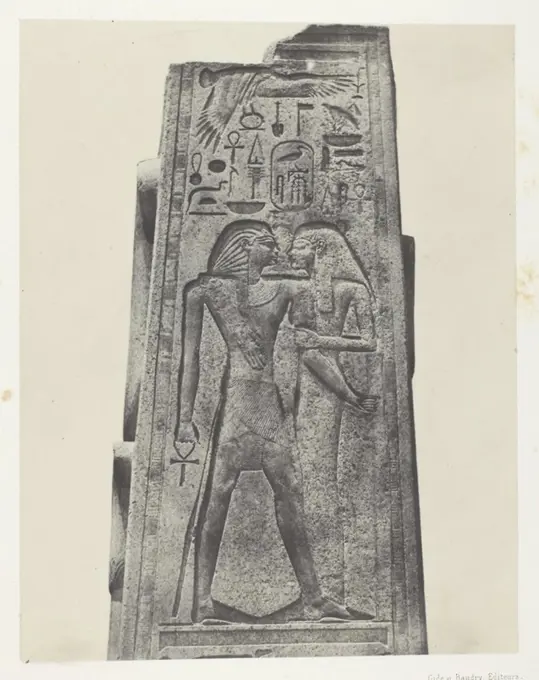
Palais de Karnak, Pilier Devant le Sanctuaire de Granit; Thèbes. Maxime Du Camp; French, 1822-1894. Date: 1849-1851. Dimensions: 20.4 × 16 cm (image/paper); 43.1 × 29.8 cm (album page). Salted paper print, plate 38 from the album "Egypte, Nubie, Palestine et Syrie" (1852). Origin: France. Museum: The Chicago Art Institute, Chicago, USA.
4409-17292726
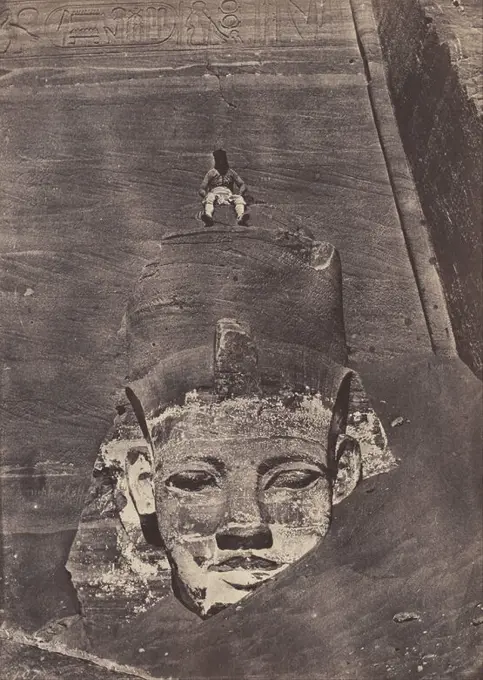
Westernmost Colossus, the Great Temple, Abu Simbel. Date/Period: 1850. Print. Salted paper. Height: 227 mm (8.93 in); Width: 162 mm (6.37 in). Author: Maxime Du Camp (.
6176-66086294
Hyksos sphinx from archaeological site of Tanis, Egyptian Civilisation. Ancient Egypt History. Old 19th century engraved illustration from El Mundo Ilustrado 1879
6145-48877818
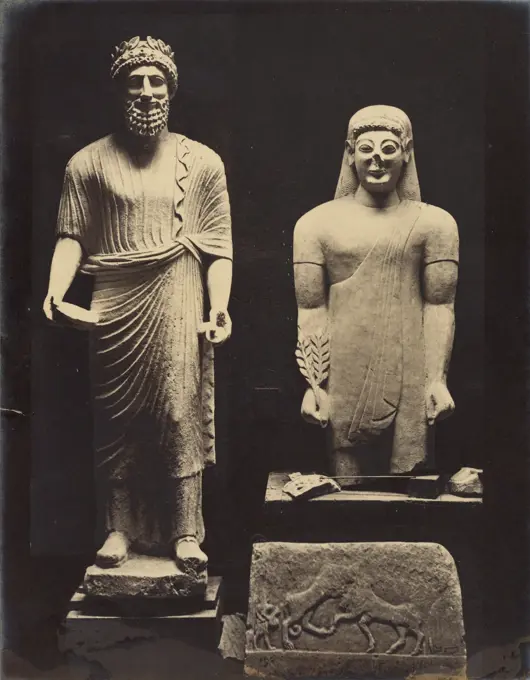
Two dedicatory Figures: the right-hand figure like the last; the left-hand showing a hieratic style kept up in a period of freer art. Stephen Thompson (British, about 1830 - 1893)
1899-18611382
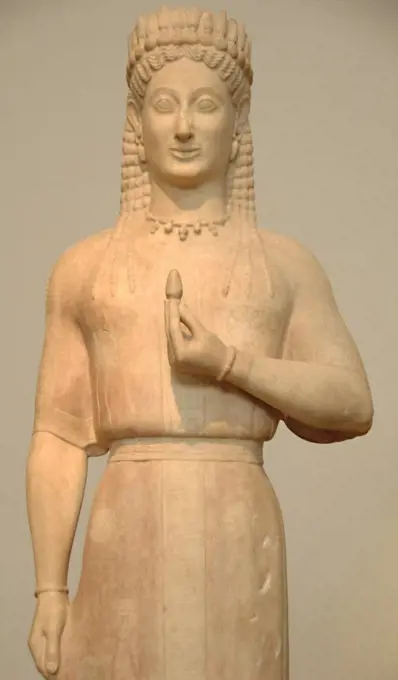
Kore. Parian marble. Found in Merenda (ancient Myrrhinous), Attica. Detail. It was stood atop of the grave of Phrasikleia. Archaic style. Sculpted by Aristion from Paros, 550-540 BC. National Archaeological Museum of Athens, Greece.
4409-9551
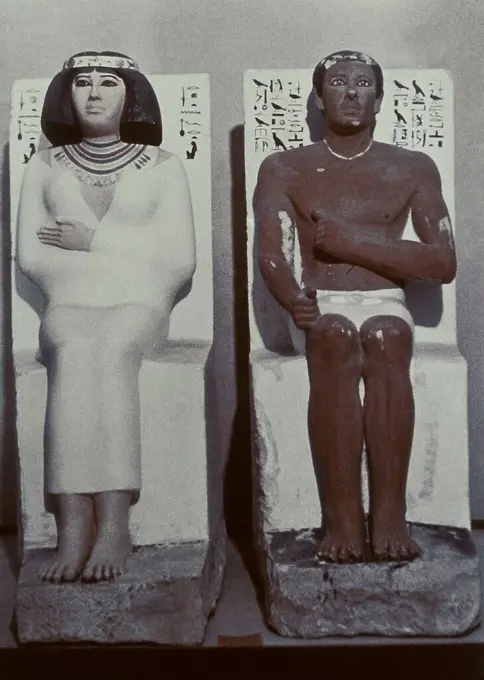
DOBLE ESTATUA DEL PPE RAHOTED O REHOTPE Y DE SU ESPOSA NOFRET. Location: EGYPTIAN MUSEUM. KAIRO. EGYPT. NOFRET. Rahotep. REHOTPE. NOFER.
4409-17429251
Outer Coffin of Menkheperre (C), usurped from Ahmose. Dimensions: H. 205 cm (80 11/16 in); W. 68 cm (26 3/4 in); D. 90 cm (35 7/16 in). Dynasty: Dynasty 21. Date: ca. 1000-945 B.C..The nested coffins of the God's Father, Priest of Amun-Re, Menkheperre, son of Fai-Mut (), were found in the far left corner of the chamber, alongside the burial of the three original occupants of the tomb (see for one of these 25.3.1a, b). Menkheperre's coffins had been usurped from a priest named Ahmose, but they belong stylistically to the type of coffins produced in Thebes at that time, and were therefore still fairly new when Menkheperre reused them. The well-preserved mummy found inside was that of a male, forty to fifty years old.This is the outermost of a three-part set (with inner coffin, 25.3.8a, b and mummy board, 25.3.9). Menkheperre wears a tripartite wig with the locks indicated by striations, bound by a fillet. The remainder of the lid and the sides of the box are adorned in densely-packed
1899-61458932
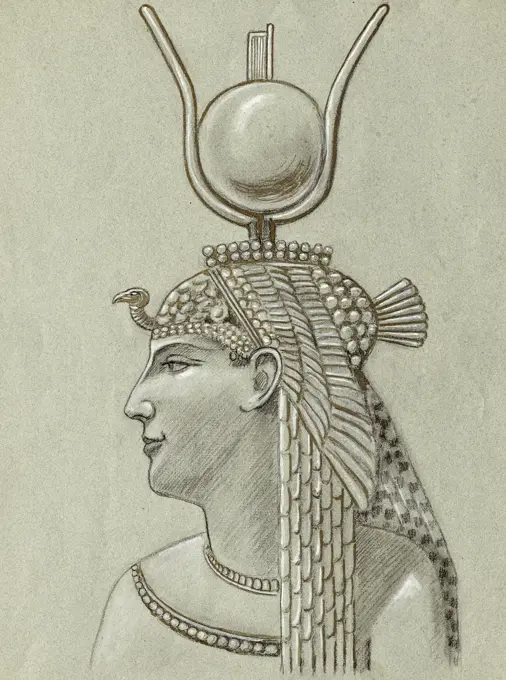
Pharaoh Cleopatra VII born 69 BC, died 12 August 30 BC, ruled Egypt as the last queen of the Macedonian-Greek dynasty of the Ptolemies from 51 BC to 30 BC, Historical, digitally restored reproduction from an original of the time.
618-382
USA, Nevada, Las Vegas, Replica of Egyptian sphinx at Luxor Hotel and Casino resort
4409-17430120
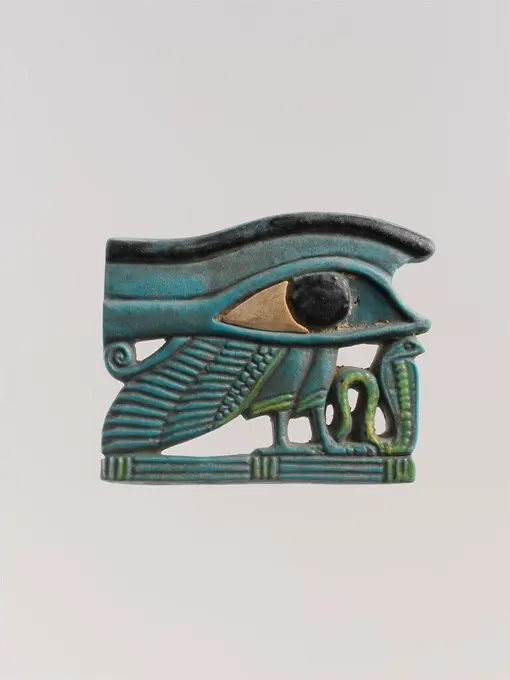
Wedjat eye Amulet. Dimensions: H. 5.1 cm (2 in); W. 6.4 (2 1/2 in); Th. 0.9 cm (3/8 in). Dynasty: Dynasty 27-30. Date: 525-332 B.C.. Museum: Metropolitan Museum of Art, New York, USA.
7155-70384036
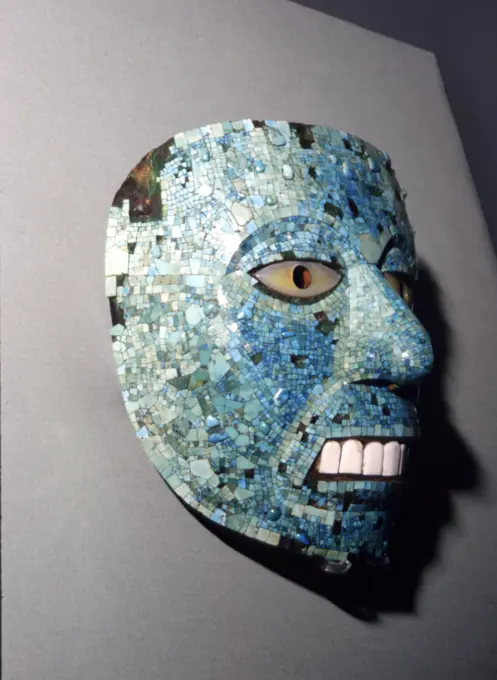
Mixtec-Aztec mosaic mask, 1400-1520, Mexico.
1788-17391
Egyptian civilization, New Kingdom, Dynasty XVIII. Bust of Queen Nefertiti.
4409-17590932
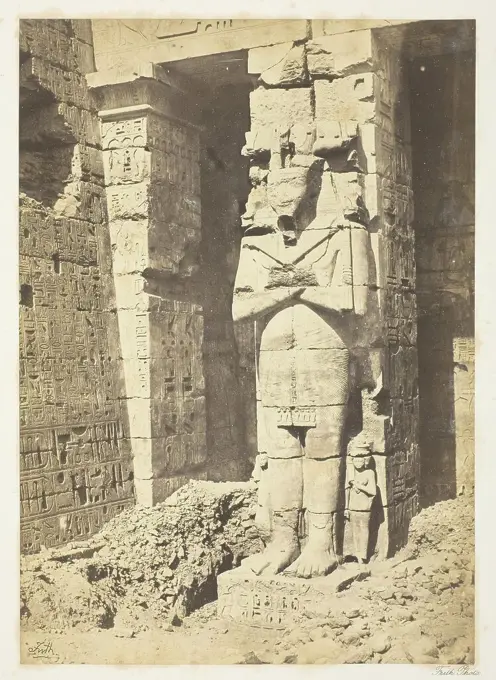
Osiride Pillars at Medinet-Haboo. Francis Frith; English, 1822-1898. Date: 1852-1862. Dimensions: 22.5 × 16 cm (image/paper); 31.5 × 43.4 cm (mount). Albumen print. Origin: England. Museum: The Chicago Art Institute, USA.
6145-29236266
Worker Shabti of Nany ca. 1050 B.C. Third Intermediate Period See 30.3.26.1a, b. Worker Shabti of Nany. ca. 1050 B.C.. Faience. Third Intermediate Period. From Egypt, Upper Egypt, Thebes, Deir el-Bahri, Tomb of Meritamun (TT 358, MMA 65), first corridor, burial of Nany, MMA excavations, 1928-29. Dynasty 21
6176-67041185
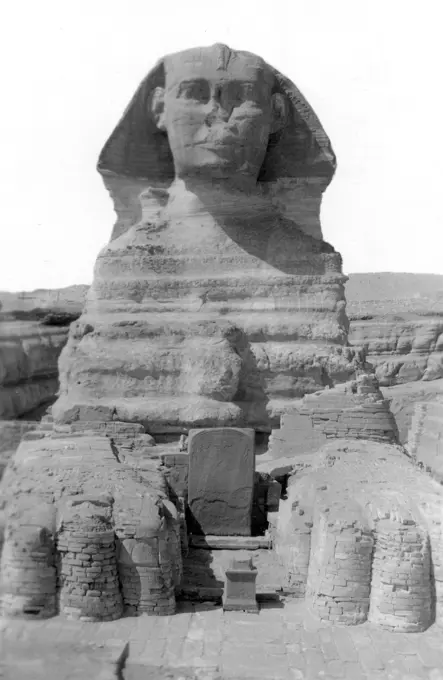
The Great Sphinx of Giza, Egypt, May 1949. Artist: Unknown
4435-3831
Bust of Nefertiti. s.XIV BC. 18th Dynasty. Polychrome limestone. Egyptian art. New Kingdom. Sculpture on rock. GERMANY. BERLIN. Berlin. Altes Museum. Proc: EGYPT. MENIA. Amarna.
1899-17319165
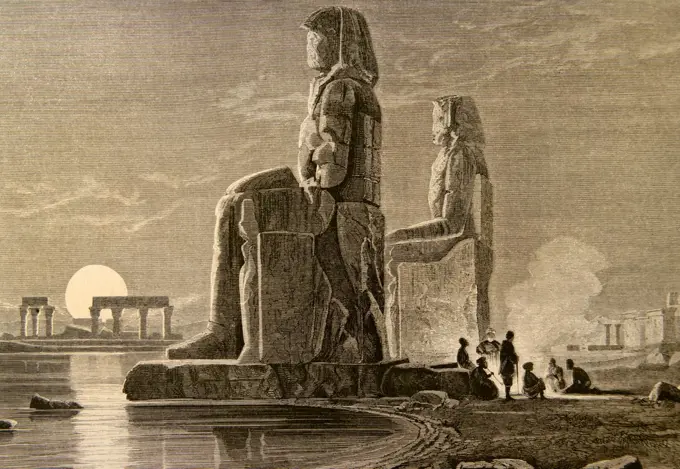
Colossi of Memnon. Stone statues depicting pharaoh Amenhotep III (14th century B.C.) in a seated position. Eighteenth Dynasty. New Kingdom. Luxor. Egypt. Engraving by Arturo Carretero. "La Ilustracion Española y Americana", 1877.
4408-8071
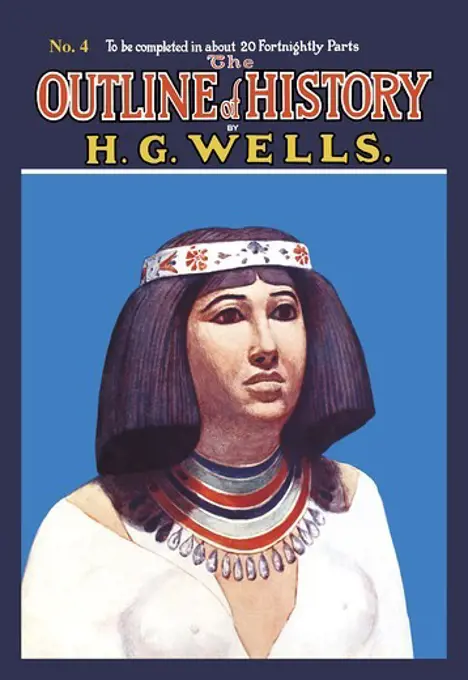
Outline of History by HG Wells, No. 4: Royalty, H.G. Wells Outline of History