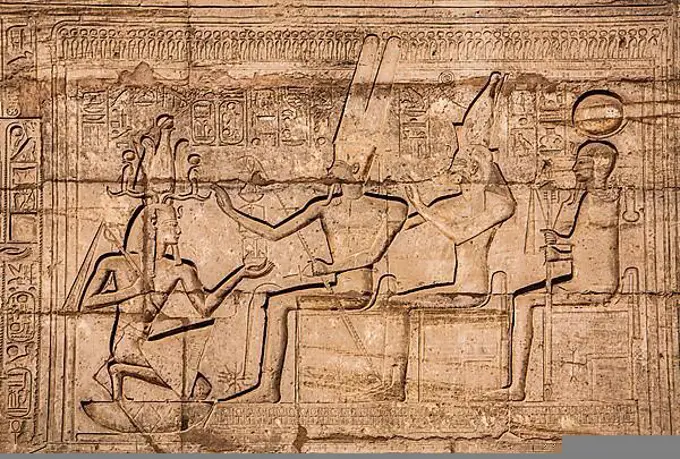
Ancient Egyptian Reliefs

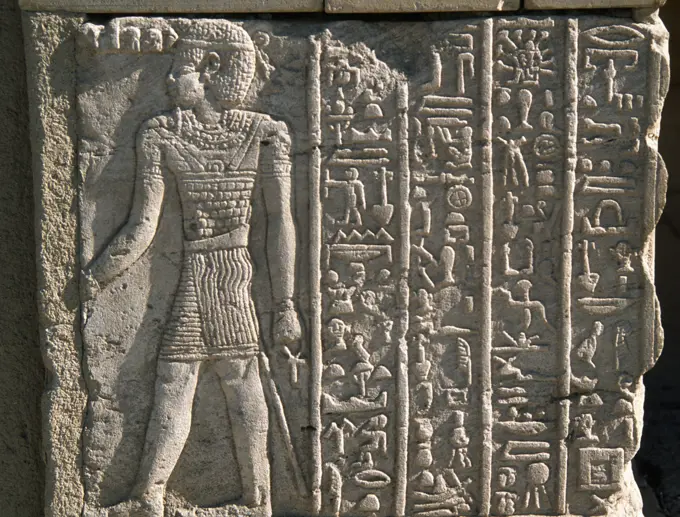
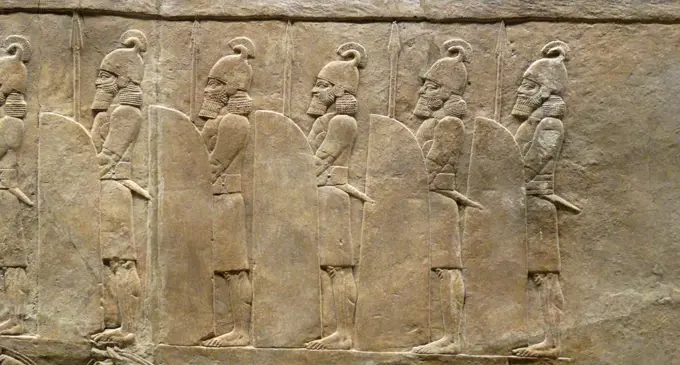
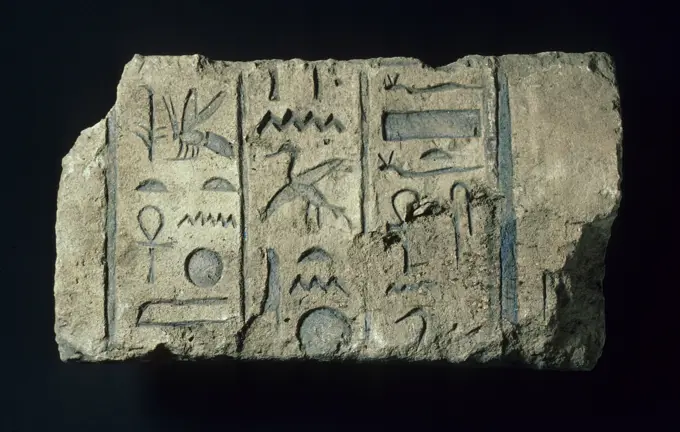
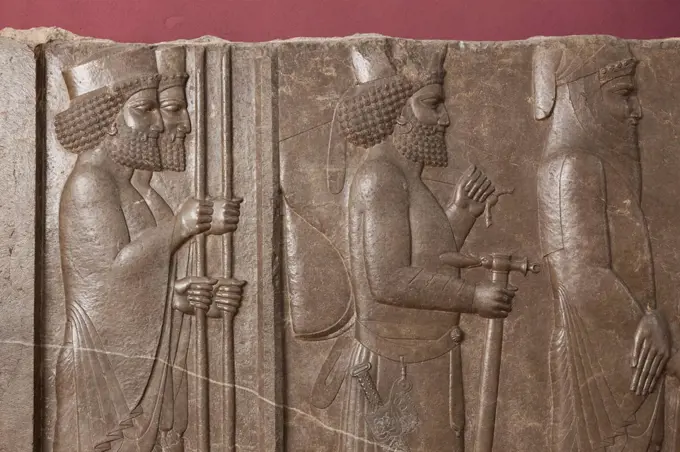
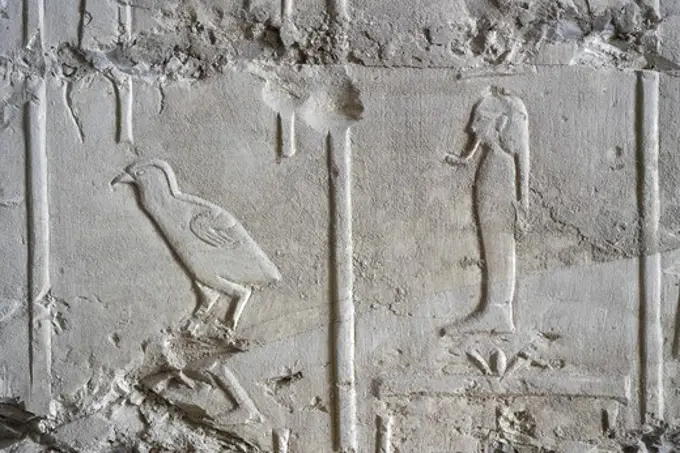
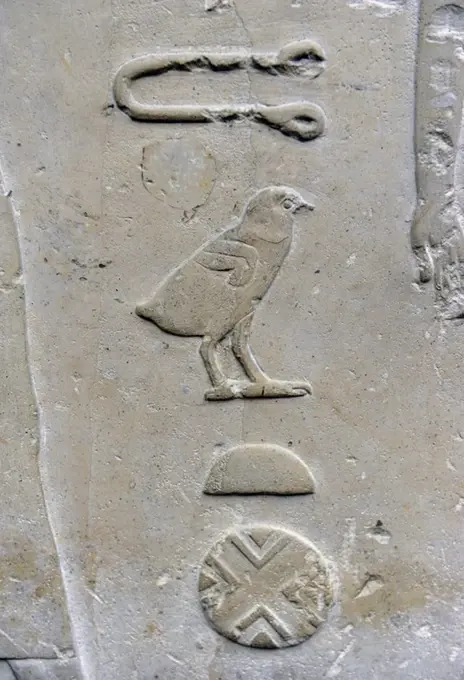
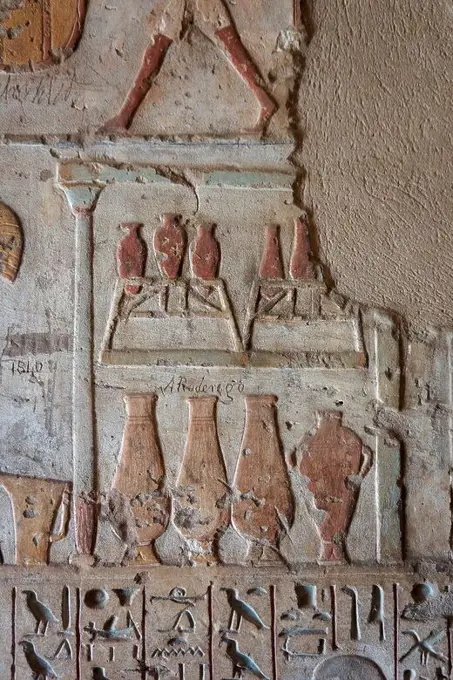
Detailed carvings depicting scenes from ancient Egyptian life and rituals, showcasing figures, deities, and offerings, highlighting the rich history and artistry of the civilization.
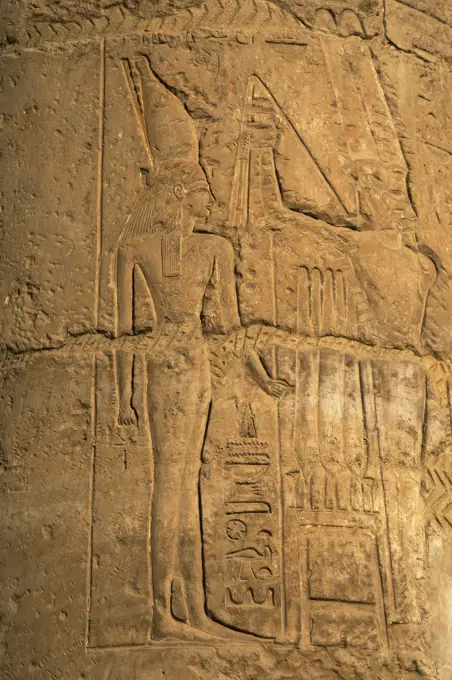
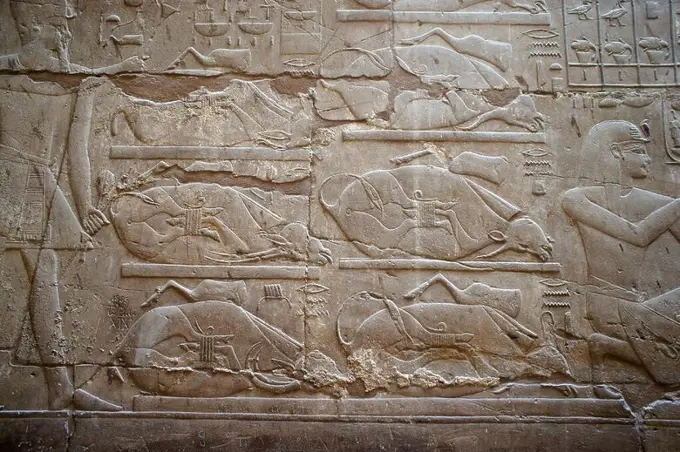
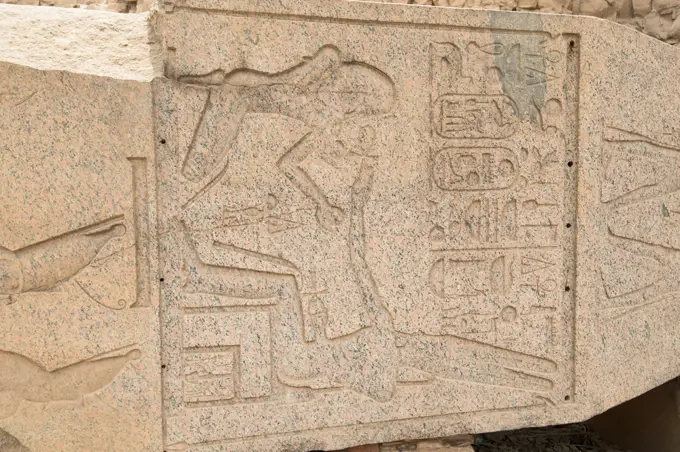
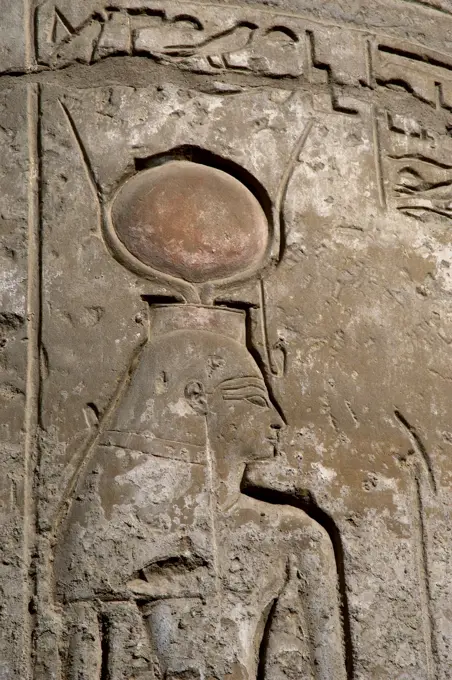
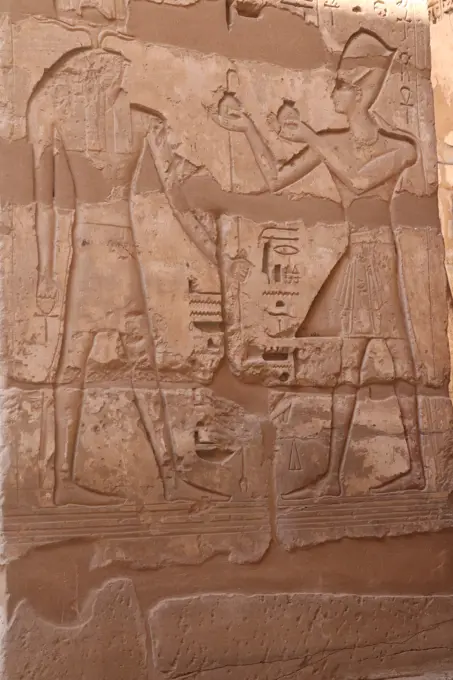
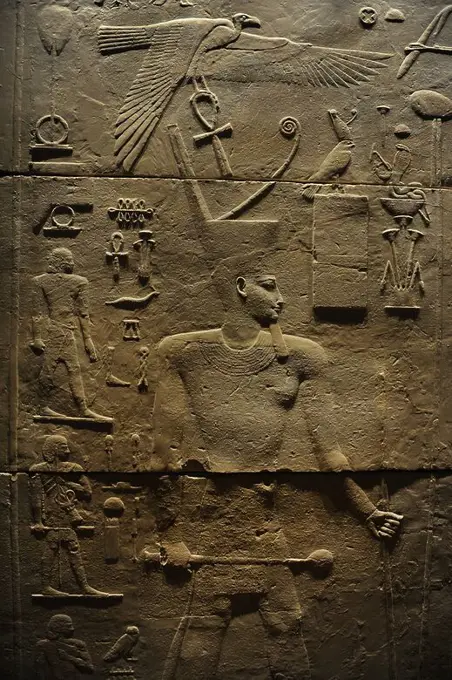
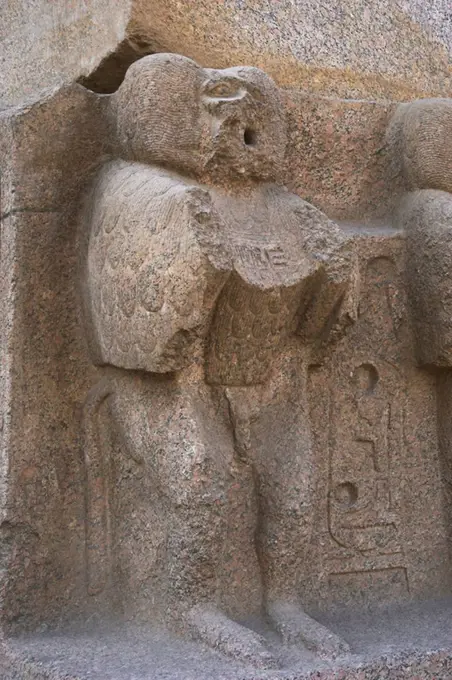
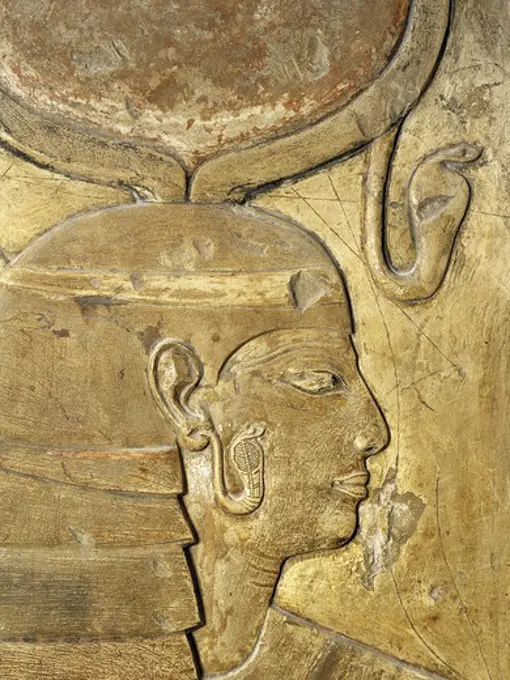
Relief depicting Egyptian deities. New Kingdom. Temple of Luxor. Egypt.

Assets in this Story

4409-21480978
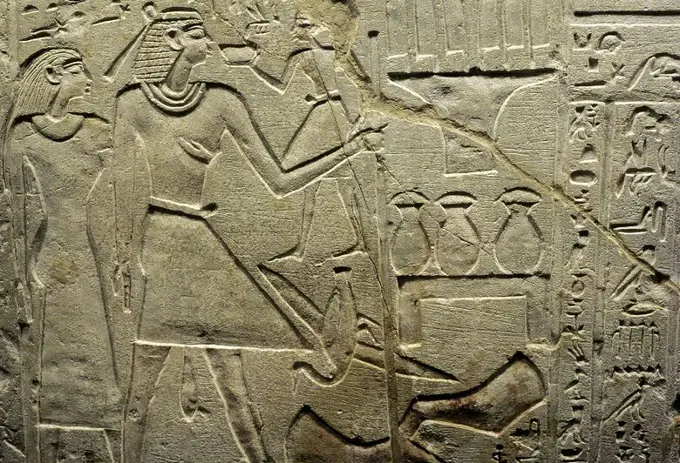
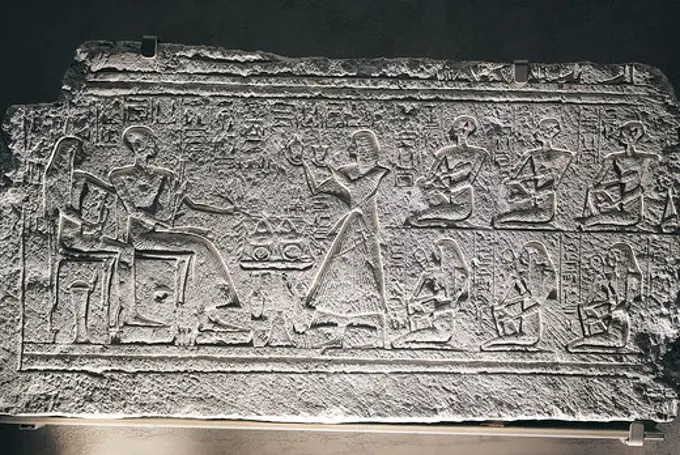
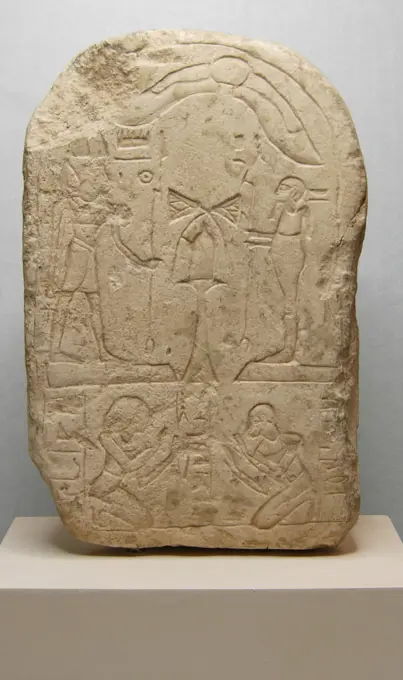
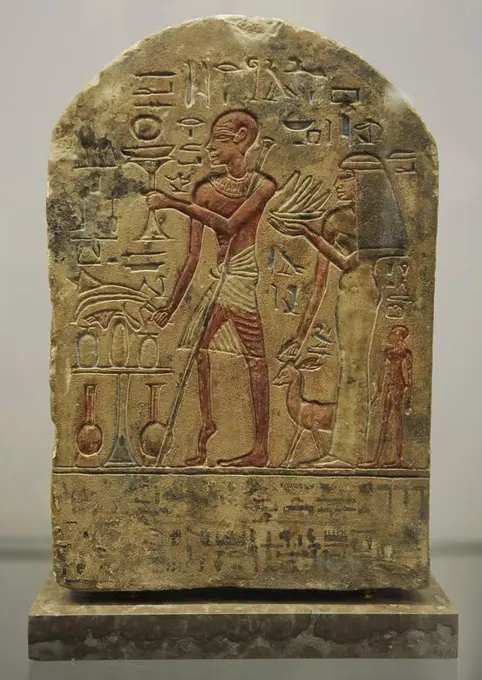
Egypt. Stela of Heqaib. 22nd-21st centuries BC. Heqaib and the wife before sacrificial altar and the small figure (sevant). Necropolis of Gemelein. First Intermediate Period, 10th dynasty. The State Hermitage Museum. Saint Petersburg. Russia.
4409-17288666
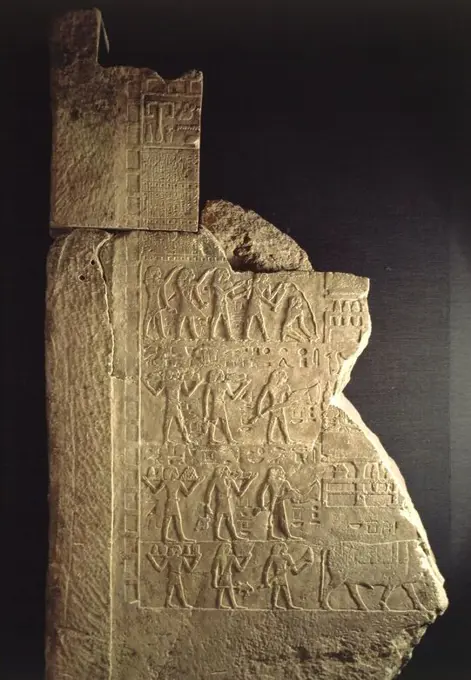
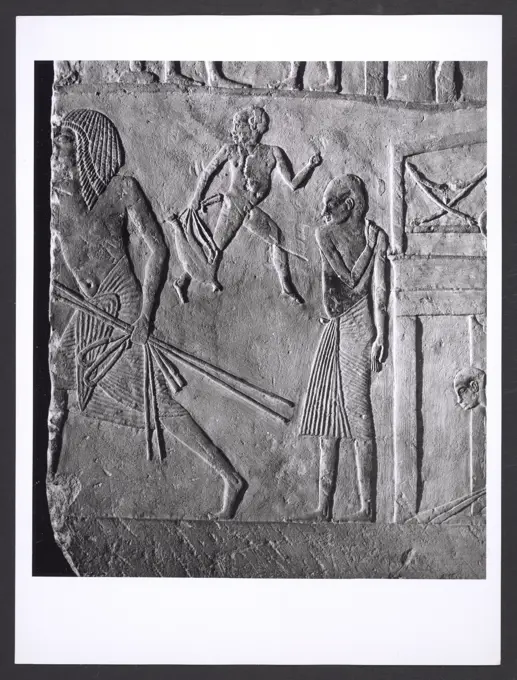
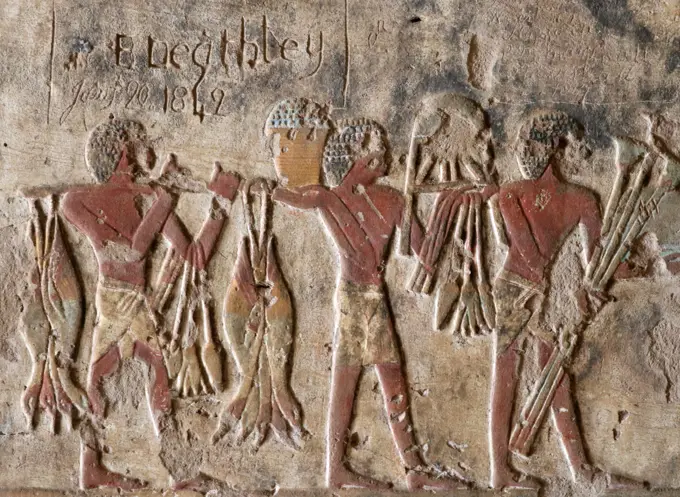
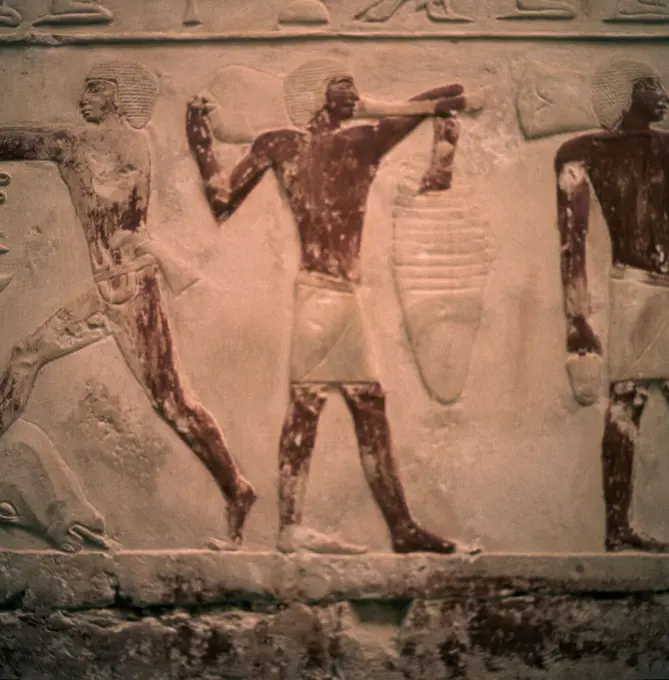
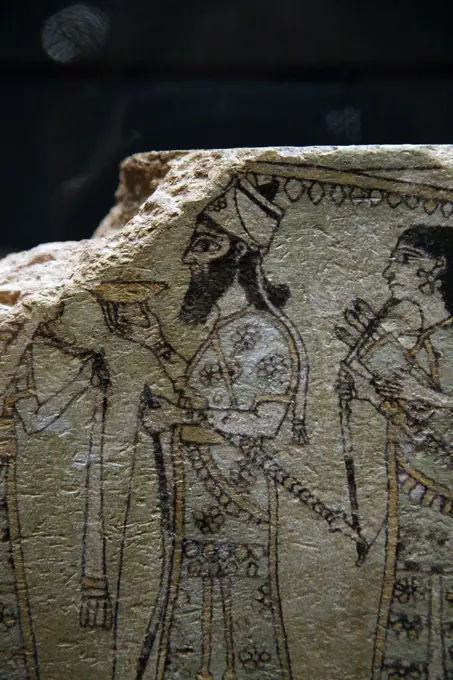
Madrid, M.A.N. Arte Egipcio. Fragmento de pared procedente de una tumba de Heracleópolis Magna (Egipto) de Satbahetep, con escenas de portadores de ofrendas y datada en torno al 2000 a.c. (Primer Periodo Intermedio). Al construirse la Gran Presa de Assuan, la UNESCO realizó en 1959 un llamamiento para salvar vestigios arqueológicos en la zona. Excavaciones de la Misión Arqueológica.
7192-70580425
Relief depicting Egyptian deities. New Kingdom. Temple of Luxor. Egypt.
1746-30012258
A photograph taken of the Abu Simbel Temple, in Nubia, Southern Egypt, near the border with Sudan. The complex is a UNESCO World Heritage Site. The temple dates to the 13th century BC, during the 19th dynasty reign of the Pharaoh Ramesses II. It is a monument to the king and commemorates his victory at the Battle of Kadesh. The complex was relocated in its entirety in 1968 under the supervision of a Polish archaeologist, Kazimierz Michalowski, on an artificial hill made from a domed structure, high above the Aswan High Dam reservoir.
6145-54682883
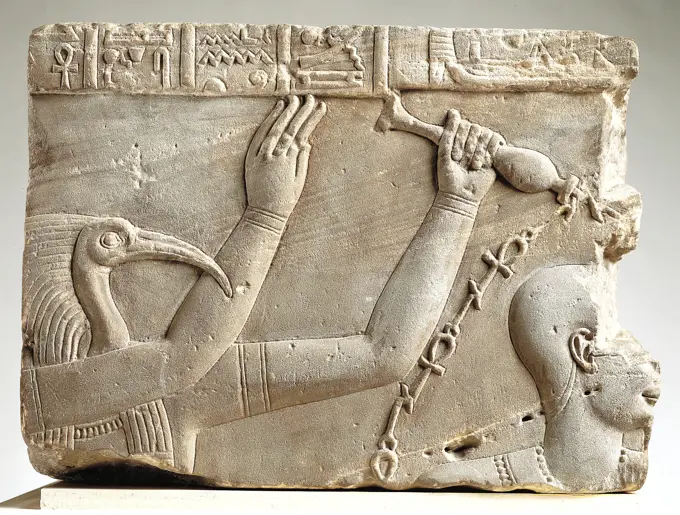
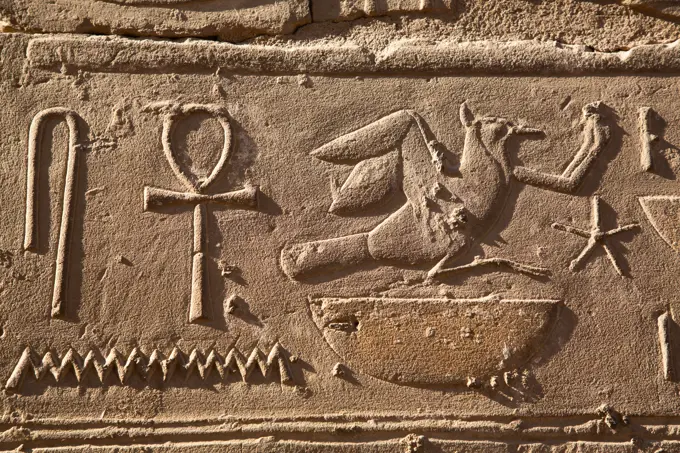
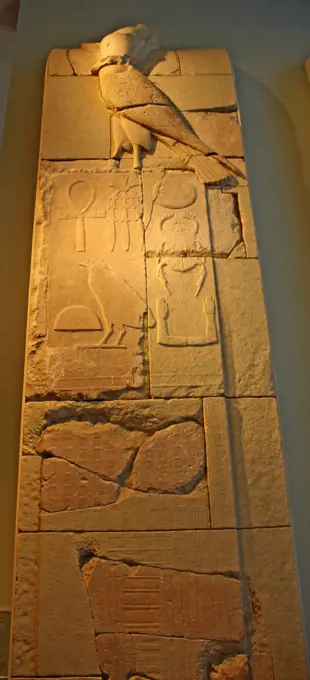
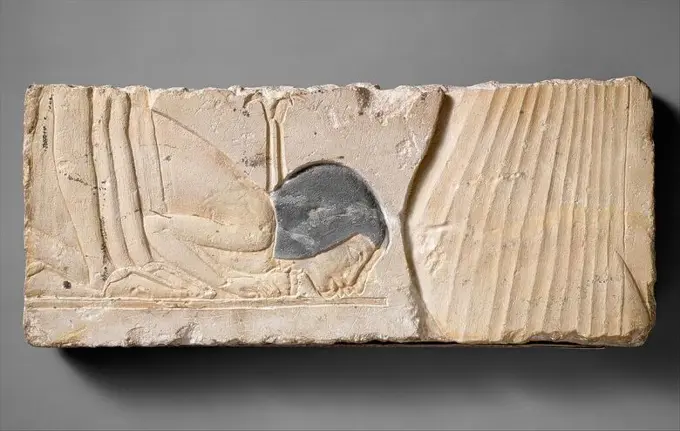
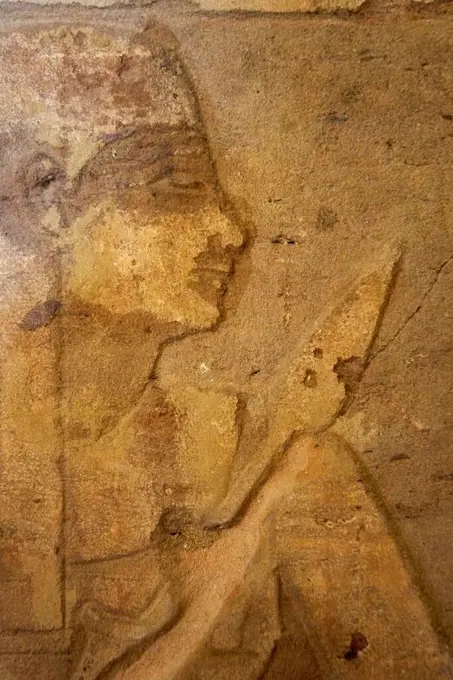
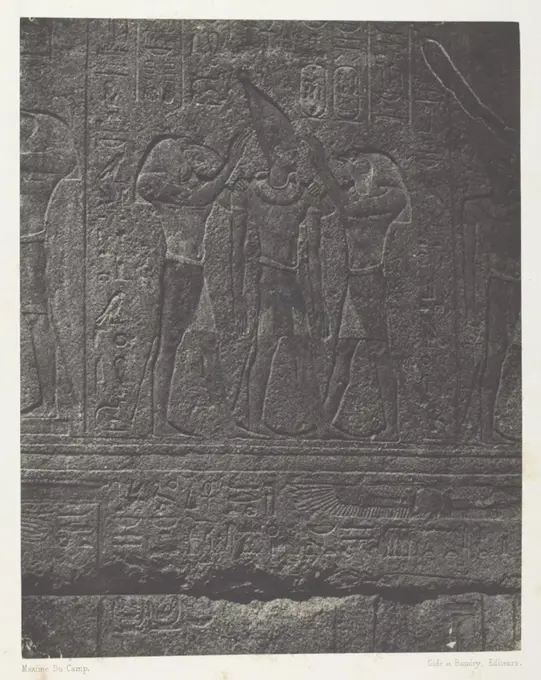
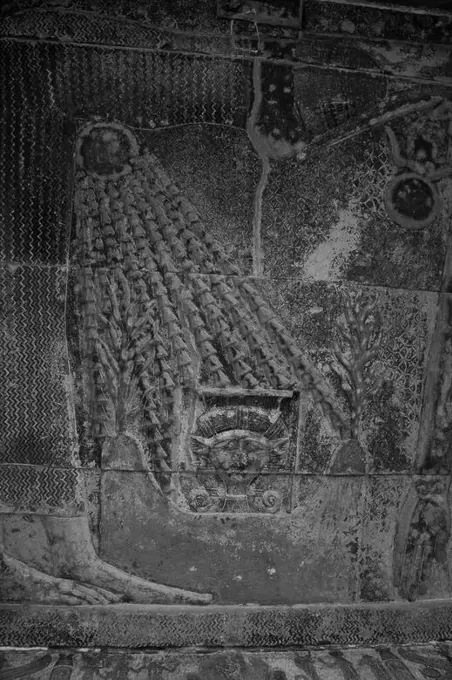
Cornice Block with Relief Showing the Baptism of Pharaoh Roman Period A.D. 41-68 This block originally formed part of a screen wall that connected the four front columns and the sidewalls of the temple of Harendotes ("Horus the Avenger") on the island of Philae. The relief represents the "Baptism of Pharaoh," a purification ritual that was part of Egyptian coronation ceremonies. The gods Horus (not preserved) and the ibis-headed Thoth poured water-here represented by streams of ankh (life) and was (dominion) hieroglyphs-over the head of the king. The pharaoh whose head is partially preserved is a Claudian emperor, most probably either Claudius or Nero. View more Listen to experts illuminate this artwork's story #3533. Cornice Block with Relief Showing the Baptism of Pharaoh 0:00 RWSkip backwards ten seconds. FWSkip forwards ten seconds. 0:00 Your browser doesn't support HTML5 audio. Here is a link to download the audio instead. View Transcript. Cornice Block with Relief Showing the Bap
4409-139012
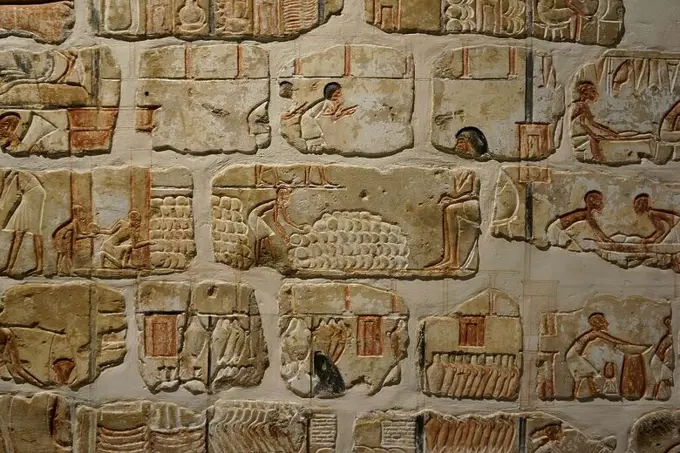
Relief depicting a diferent phases of harvesting. Tomb of Seshemnefer, Giza. Limestone. Old Kingdom. 5th Dynasty. 2430 BC. Neues Museum. Berlin. Germany.
4409-63013544
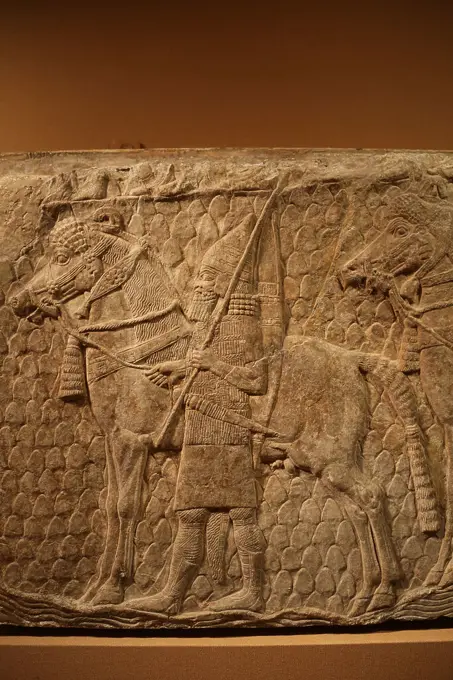
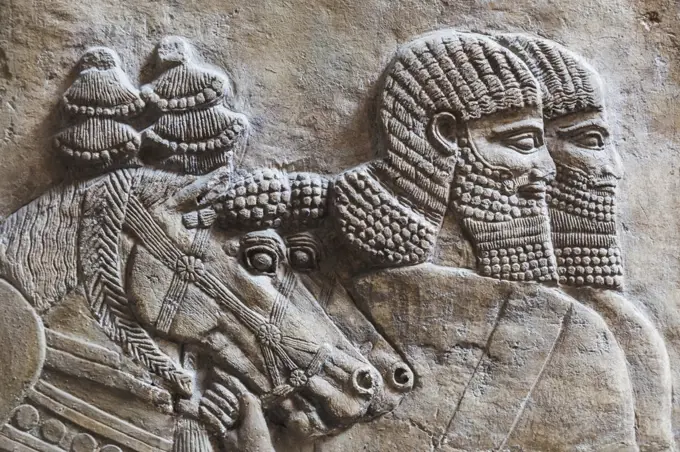
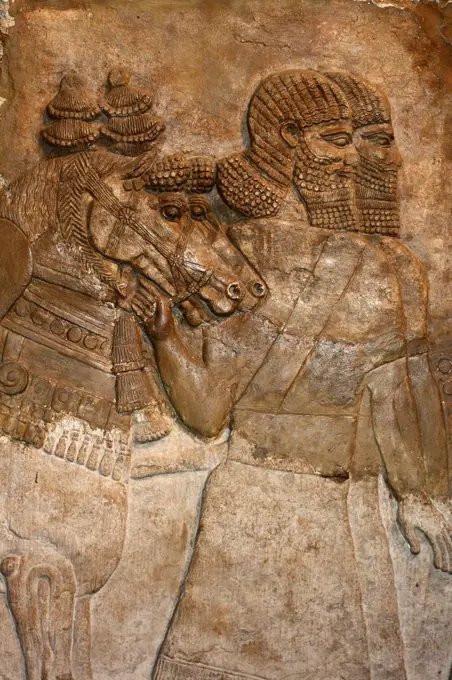
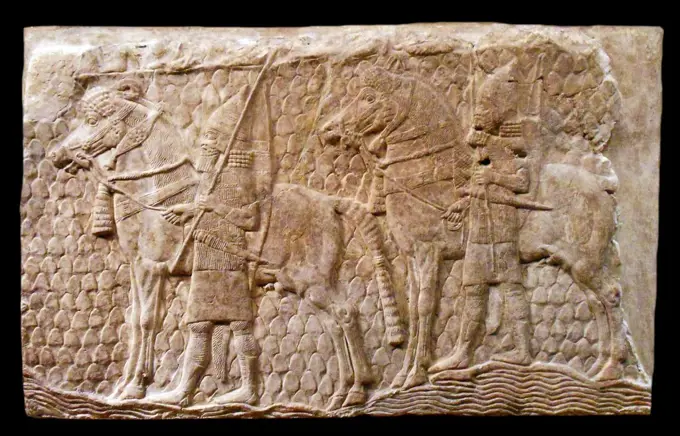
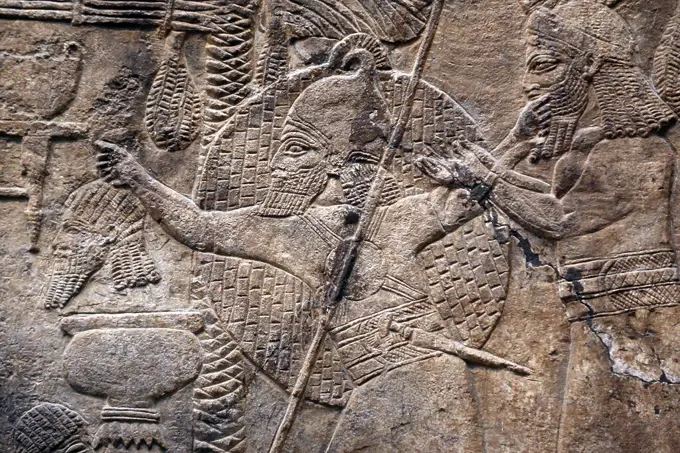
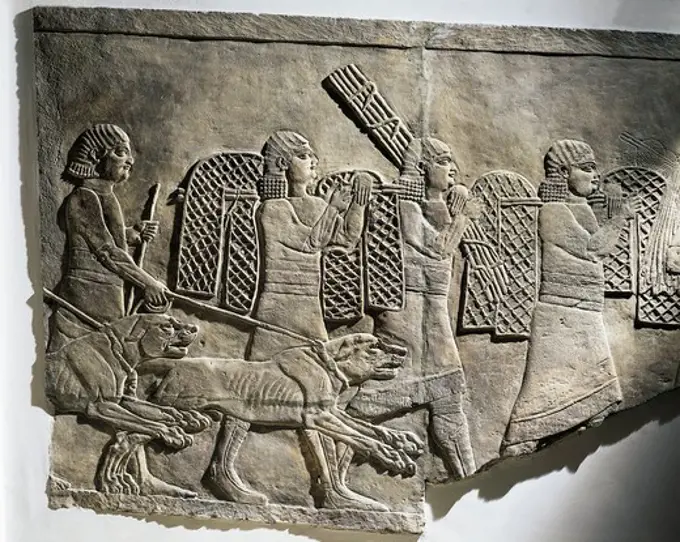
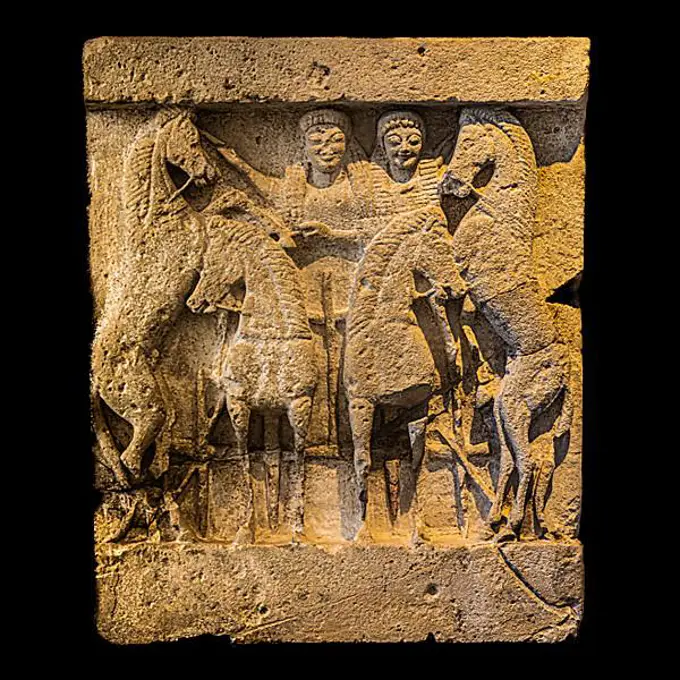
Fragment of relief. Assyrian horse trappings. Cavalrymen. Detail. Ca. 704-681 B.C. Metropolitan Museum. Ny. United State.
7058-70090714
New York City, New York, USA. Egyptian section of the Metropolitan Museum. (Editorial Use Only)
4409-21362156
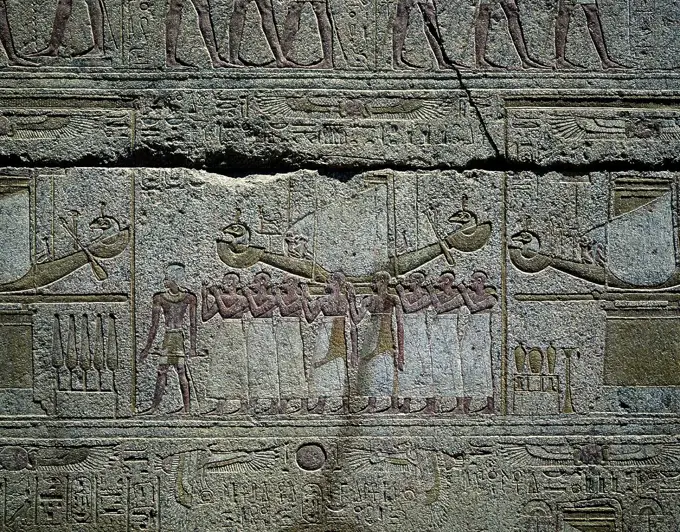
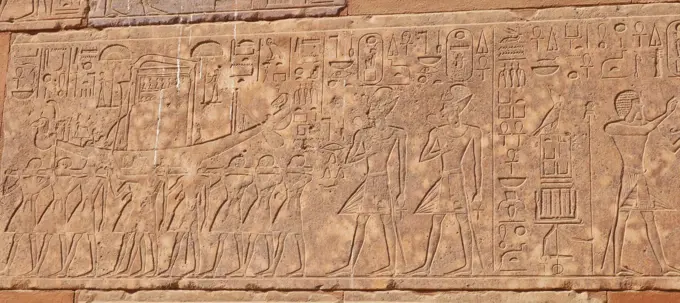
RELIEVES CON LA BARCA SAGRADA - FOTO AÑOS 80. Location: KARNAC. Thebes. EGYPT.
1788-18058
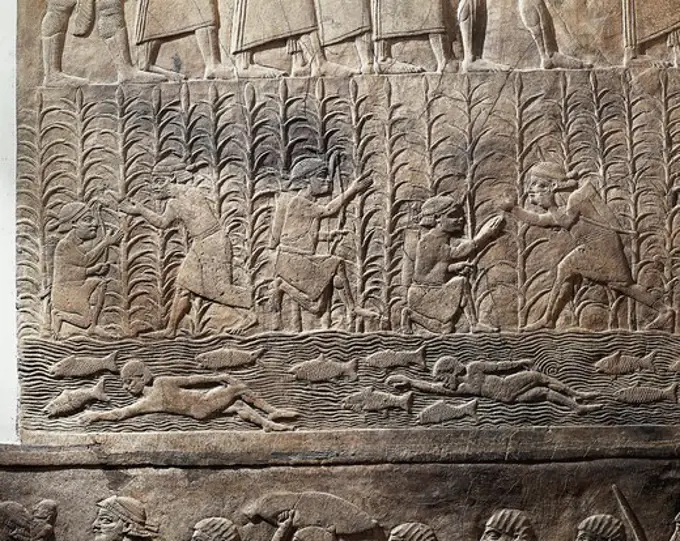
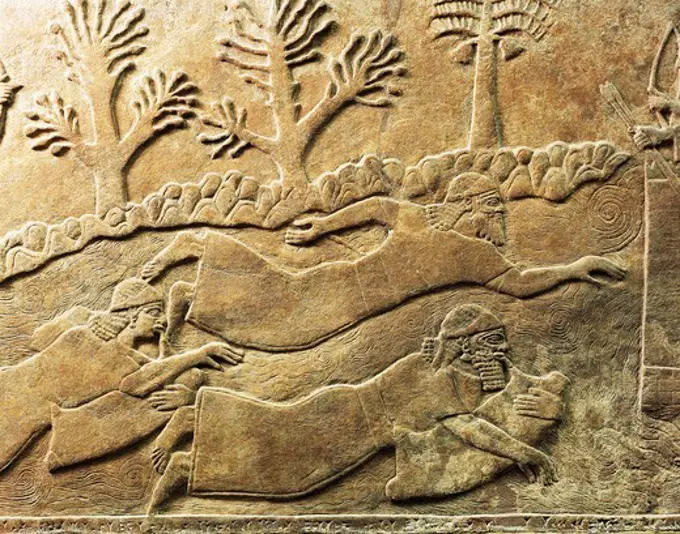
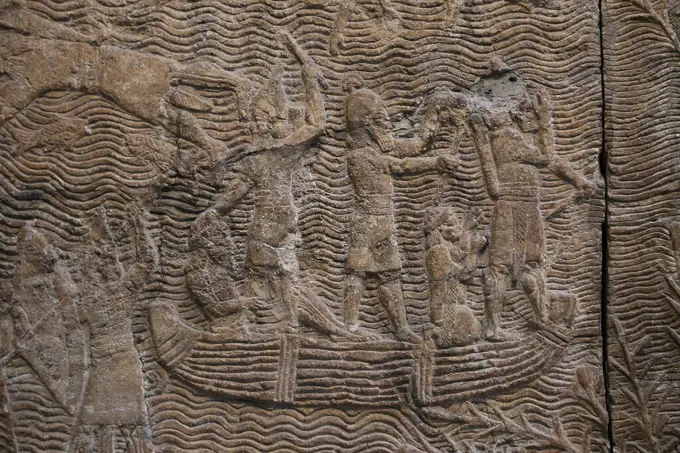
Scene of agricultural work and swimmers in river, Relief from Royal Palaces of Nineveh, circa 645 B.C.
1788-15608
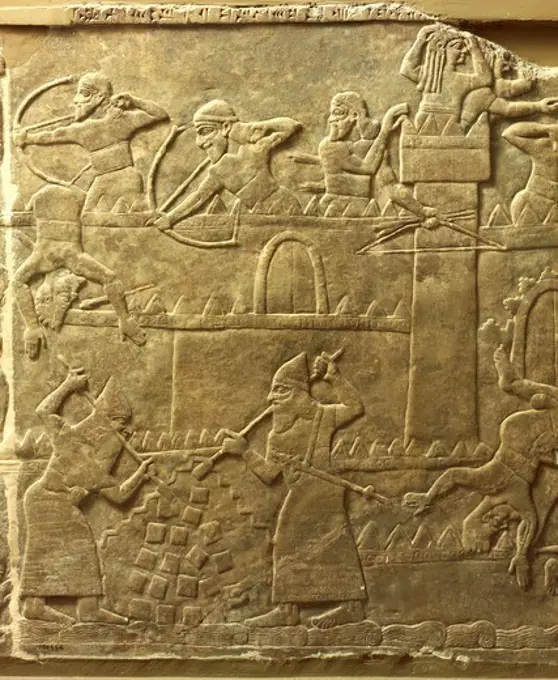
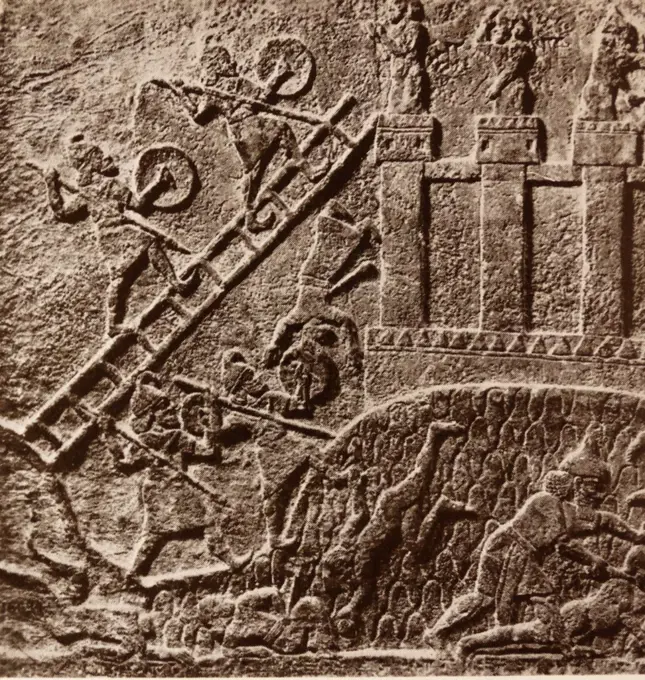
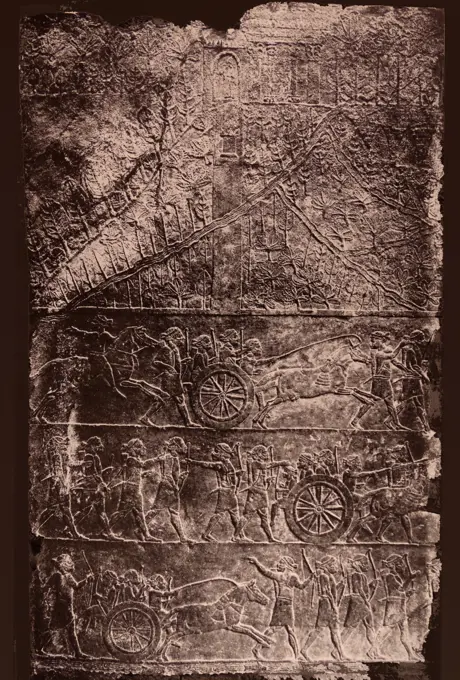
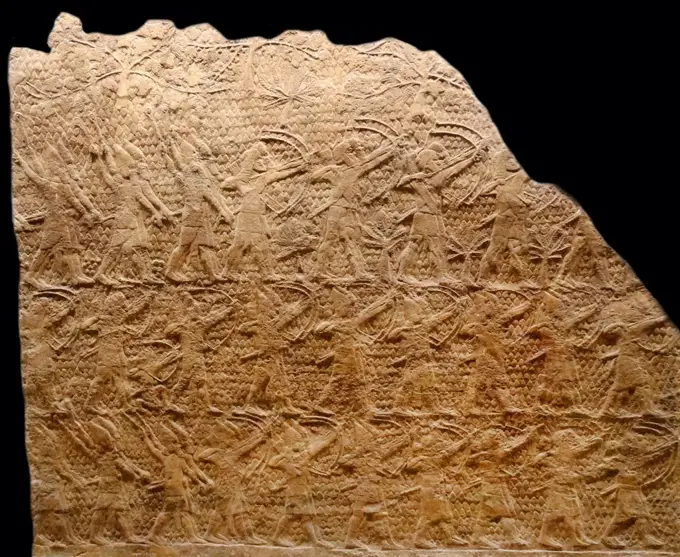
Detail of relief with scene of assault on city besieged by Ashurbanipal, from ancient Nimrud, Calah, Iraq
1746-29955462
Limestone relief from the tomb of an unknown noble. Found at Meidum, Meidum or Meidum, Egypt. 3rd Dynasty. 2600 BC
1606-174110
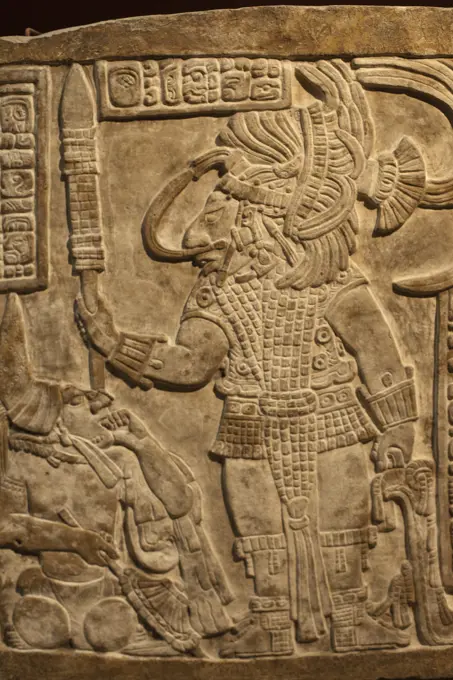
England,London,British Museum,Maya Lintel from Yaxchilan in Mexico 600-900AD
6188-66542354
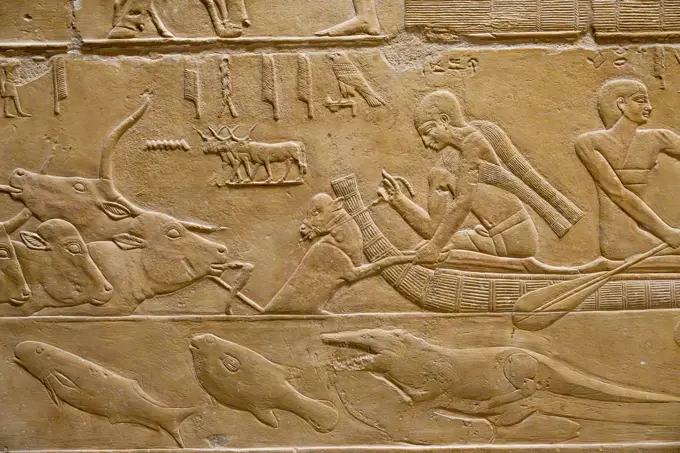
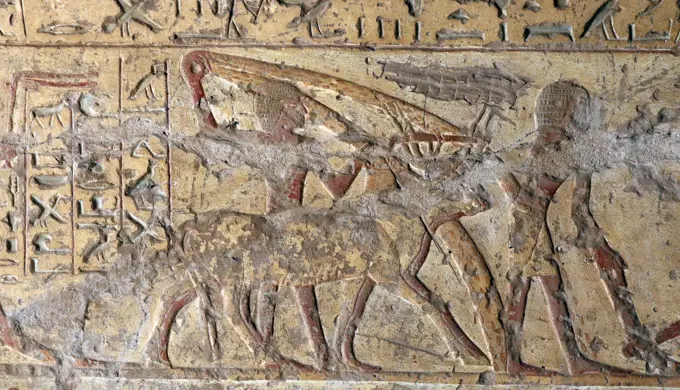
Detail der Schnitzereien an den Wänden des Kagemni-Grabes in Sakkara Man using calf to persuade cattle to swim across Nile with alligator under the surface on walls of the tomb of Kagemni at Saqqara Copyright: xZoonar.com/StevenxHeapx 22739240
1746-30004995
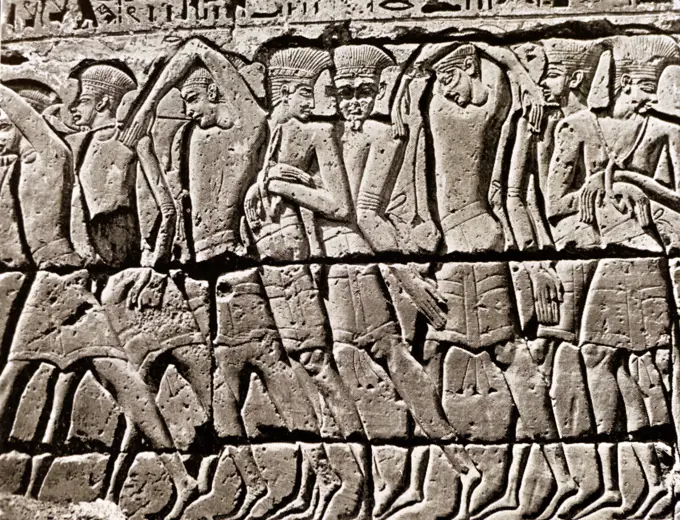
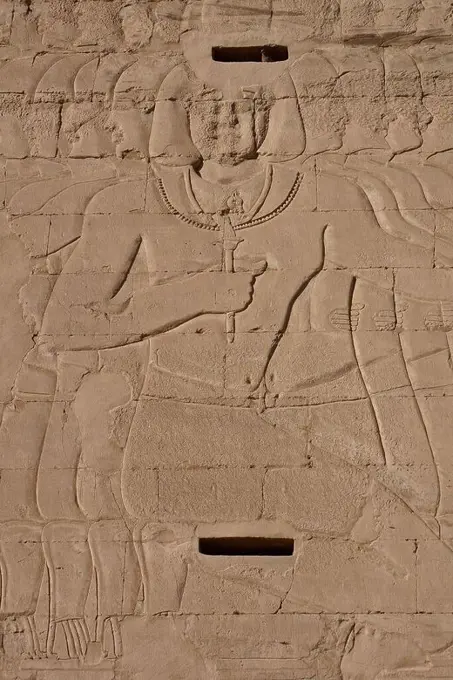
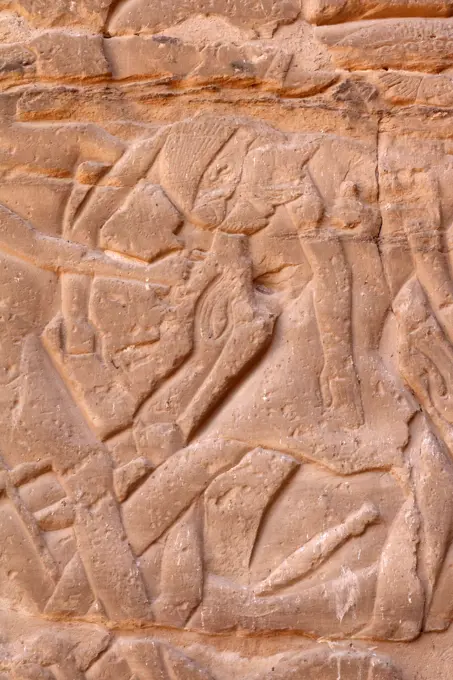
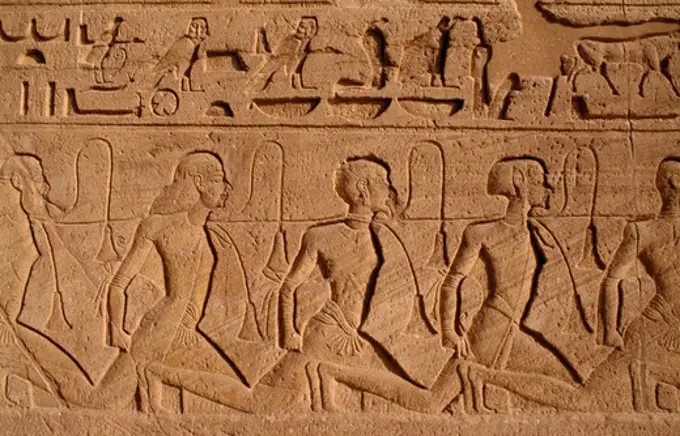
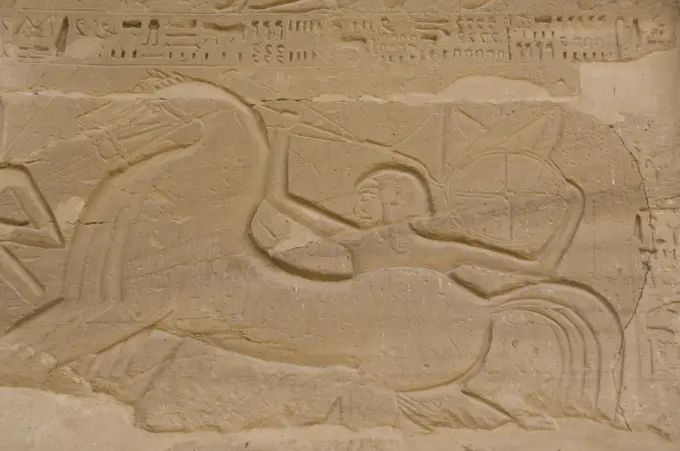
Relief depicting the prisoners of Ramses III on the second pylon at Medinet Habu
4409-21488087
El Templo de Edfu está ubicado en la ciudad de Edfu (Egipto), que durante el periodo grecorromano fue conocida como Apolinópolis Magna, dedicada al dios de los dioses, Horus-Apolo.
4409-62729771
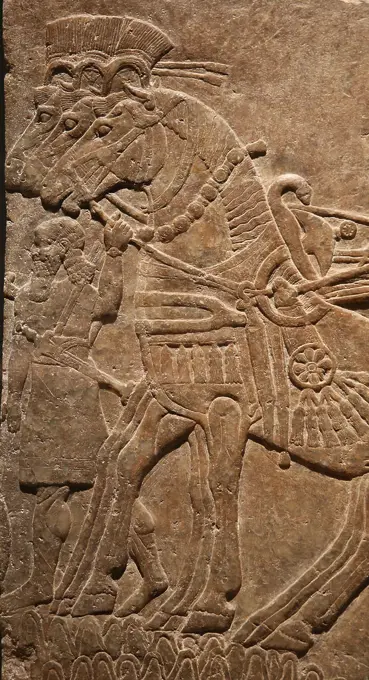
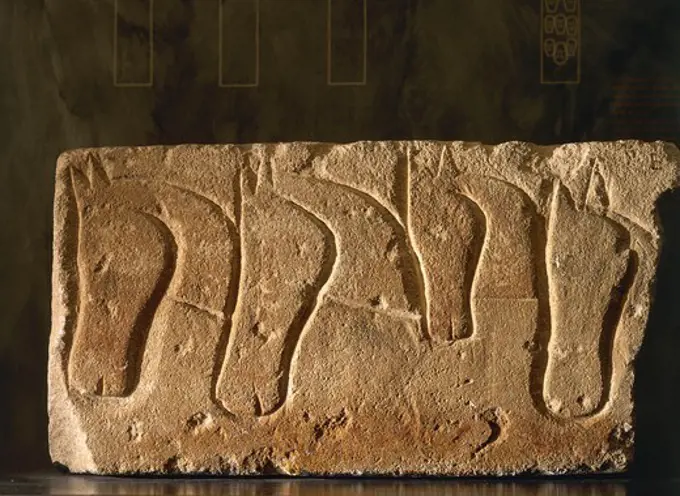
Nimrud palace wall relief (Iraq). Neo-Assyrian Empire. 875-860 BC. Alabaster. The monarch Ashurnasirpal II in a chariot. Detail horses. Exposition The Human Image. Organised by British Museum and "La Caixa" Foundation. Spain.
4409-63011841
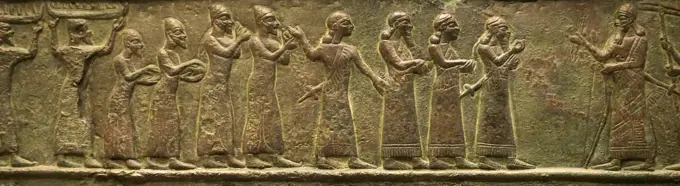
Campaigning in southern Iraq. Prisoners acompanied by their families. Assyrian, 640-620 BC. Nineveh, South-West Palace, Iraq. British Museum. London.
1746-21111997
Assyrian Battle scene 865-860 BC, From Nimrud, Iraq; North-West Palace, Room B, panel 9. Assyrian cavalry charge the enemy.
1788-2430
Egypt - Cairo - Ancient Memphis (UNESCO World Heritage List, 1979). Saqqara. Necropolis. Private funerary mastaba of Kagemni. Old Kingdom, 6th Dynasty. Great Hall. Relief of agricultural works
4409-20988361
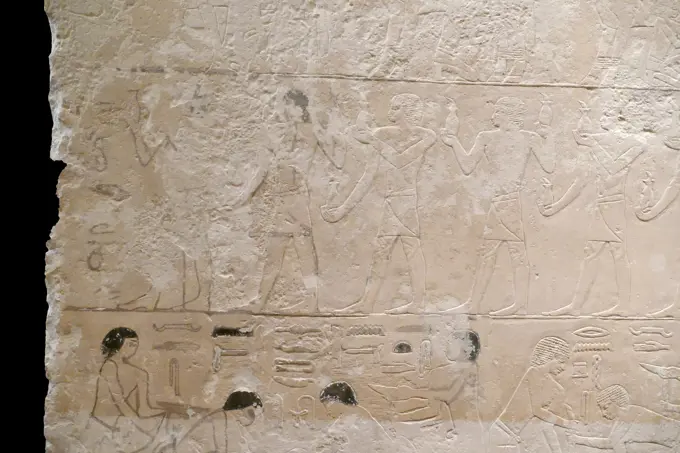
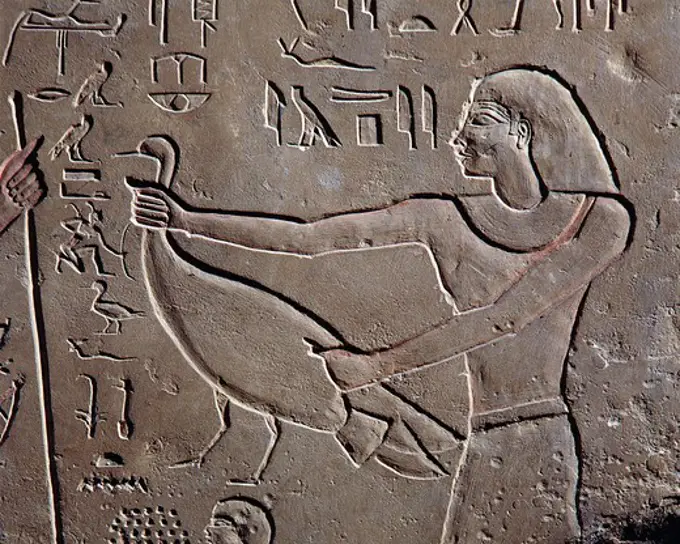
Relief depicting the name and titles of the High Priest of Memphis. The priest appears with shaved head carrying the offerings to the God. Egypt. Museum of Mediterranean and Near Eastern Antiquities. Stockholm. Sweden.
1848-50677809
Ramesseum, Mortuary Temple of Ramses II Luxor, Thebes West, Egypt, Luxor, Thebes, West, Egypt, Africa
4409-62748017
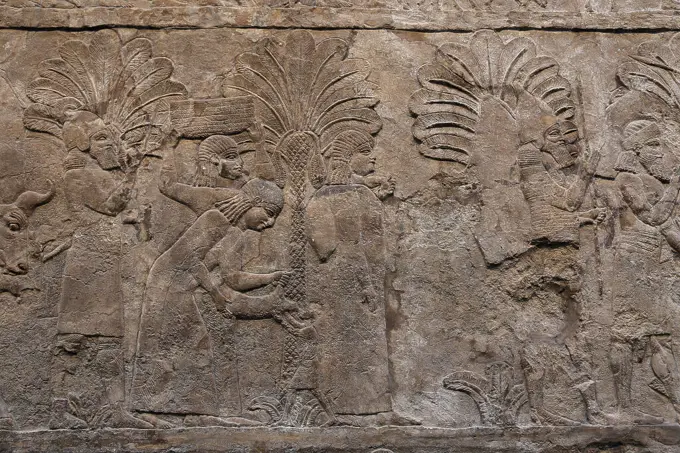
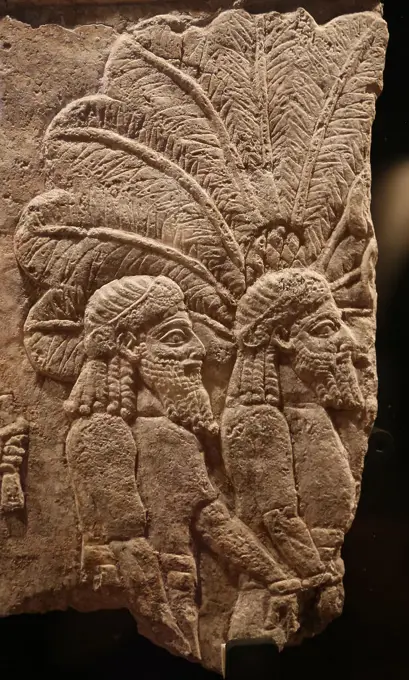
Chaldean prisoner taken to a palm-grove. Palace of Ashurbanipal. Niniveh. Iraq. Neo-Assyrian Period. 648-631 BC.
1885-7849
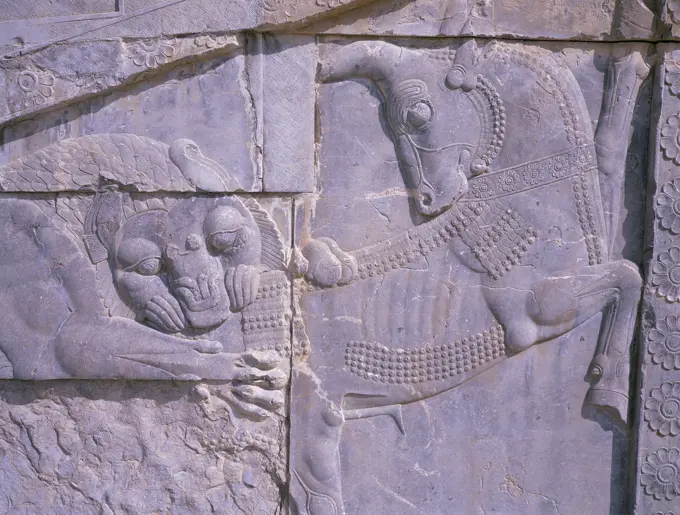
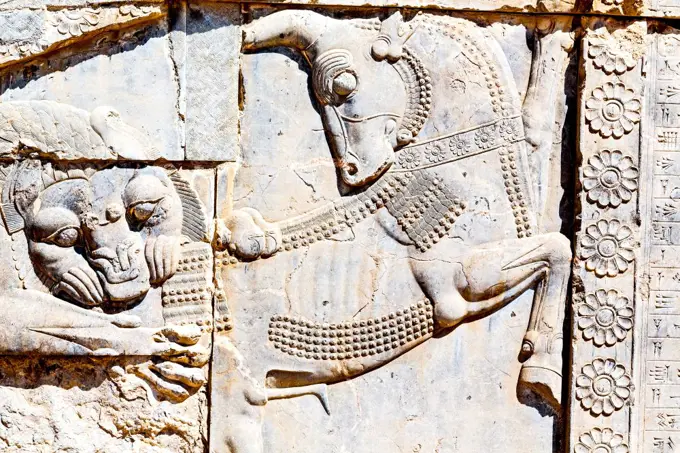
Iran, , Persepolis, Ancient Ruins - Detail of Palace of Darius
1746-29016415
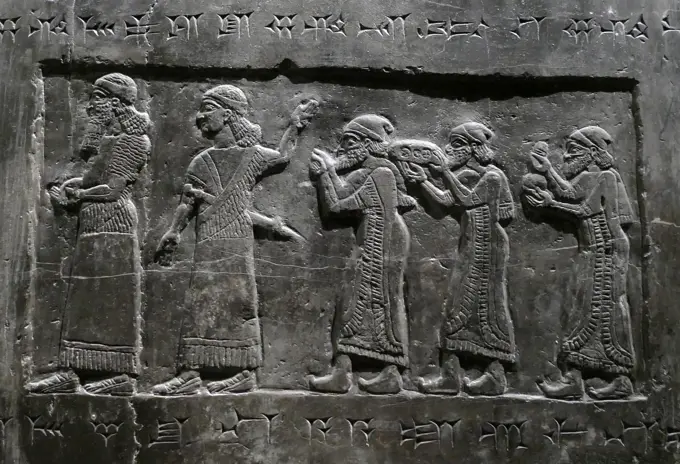
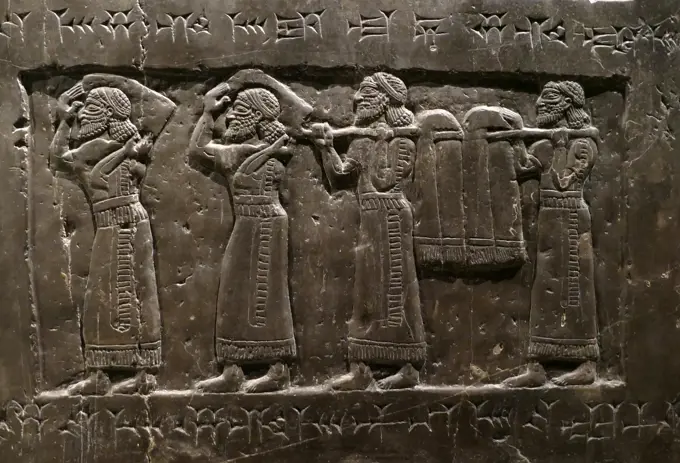
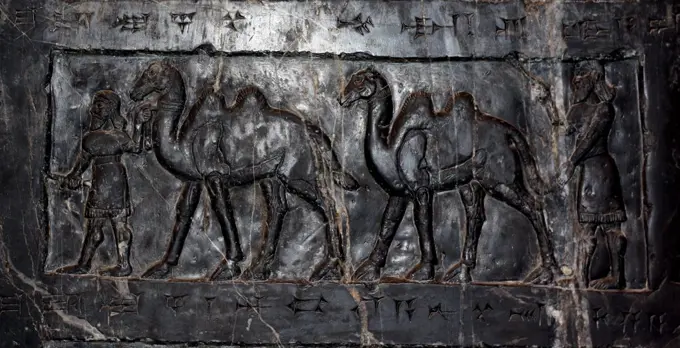
Detail from the Black Obelisk, of Shalmaneser III. A black limestone Assyrian sculpture with scenes in bas-relief and inscriptions. It comes from Nimrud (ancient Kalhu), in northern Iraq, and commemorates the deeds of King Shalmaneser III (reigned 858-824 BC).
4409-21488088
El Templo de Edfu está ubicado en la ciudad de Edfu (Egipto), que durante el periodo grecorromano fue conocida como Apolinópolis Magna, dedicada al dios de los dioses, Horus-Apolo.
4409-21485955
Templo de Luxor. Egipto. Situado en el corazón de la antigua Tebas, fue construido esencialmente bajo las dinastías XVIII y XIX egipcias.
6176-66097265
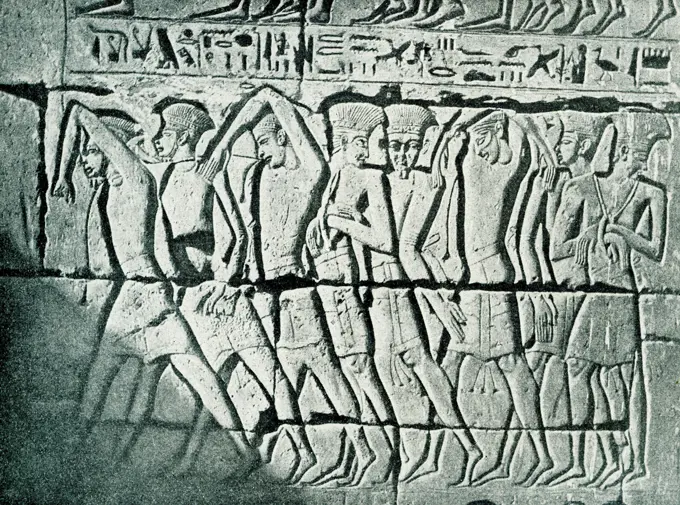
This 1908 image shows representative Asian coast people (Philistines) as prisoners of the king Ramses III. A wall relief in a temple at Medinet Habu (ancient Thebes). Medinet Habu is the mortuary temple of the Egyptian 20th Dynasty pharaoh Ramesses III (c. 1150 B.C.) on the West Bank of ancient Thebes (present-day Luxor).
7227-71363473
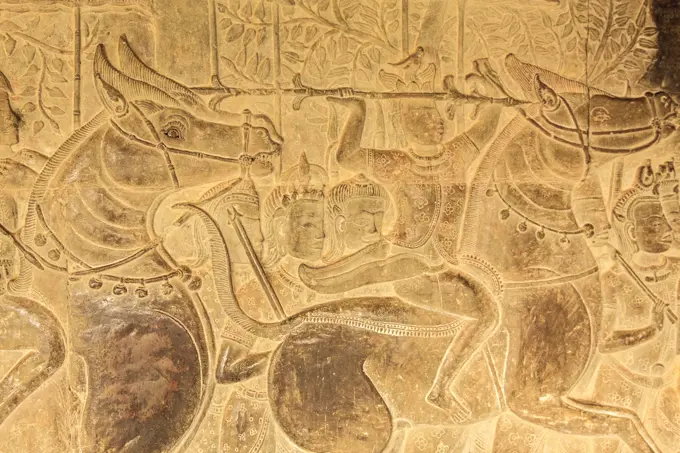
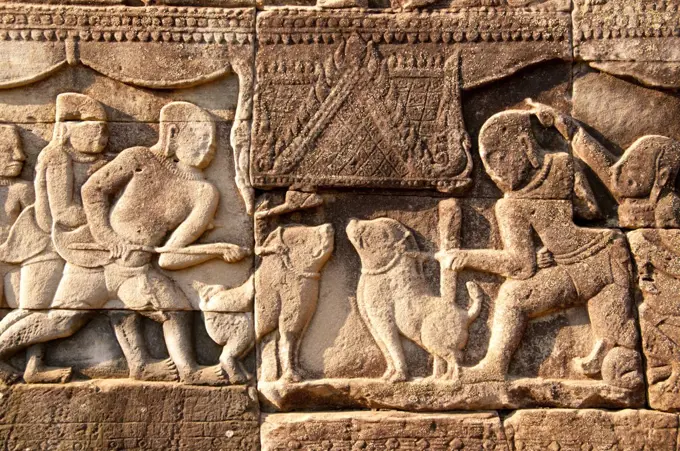
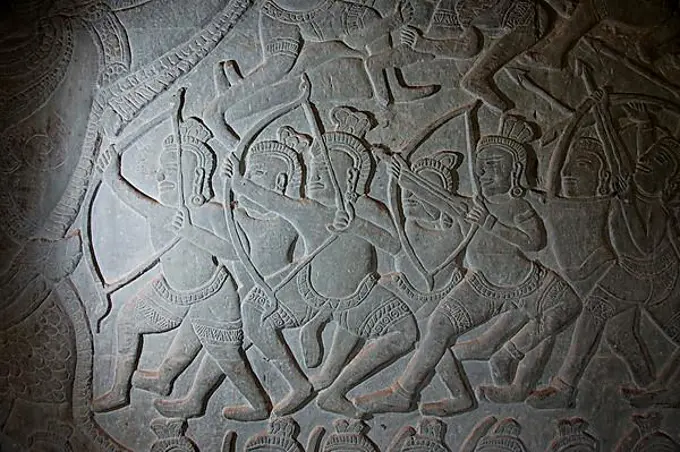
Cambodia, Siem Reap. Angkor Wat. Stone carvings of warriors on horseback.
1606-155487
Egypt, Aswan, Elephantine Island, Ptolemaic Shrine of Kalabsha,
1788-22273
Egypt, Right side of a false door from the mastaba of Khnumit in Meidum, sixth dynasty, limestone
1746-21110979
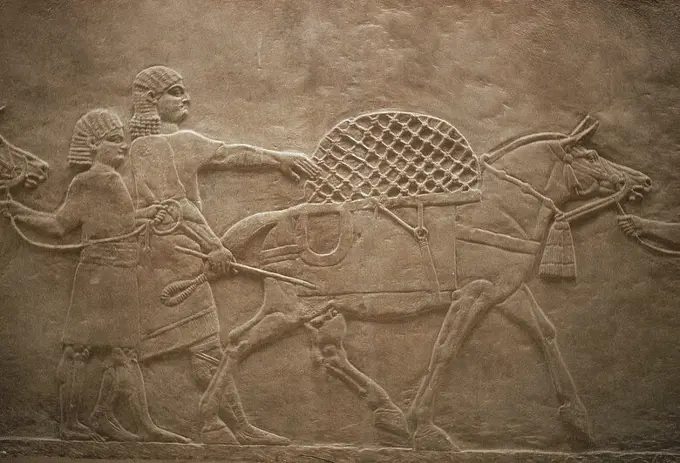
Relief depicting The royal lion hunt. Assyrian, about 645-635 BC From Nineveh, North Palace. Grooms lead horses towards a screened enclosure, within which the royal chariot is being prepared for the hunt. Men struggle to push one horse into position; the other is having its hamess tightened. King Ashurbanipal is already in the chariot
6145-29196503
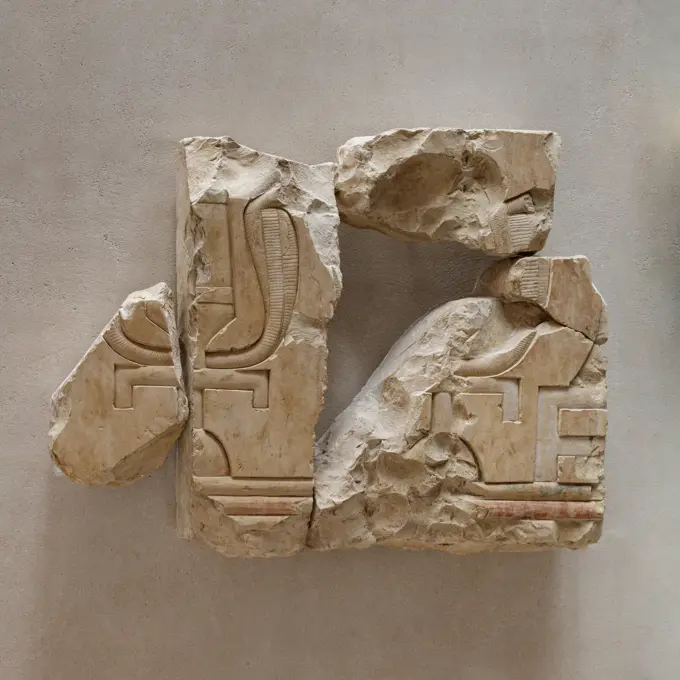
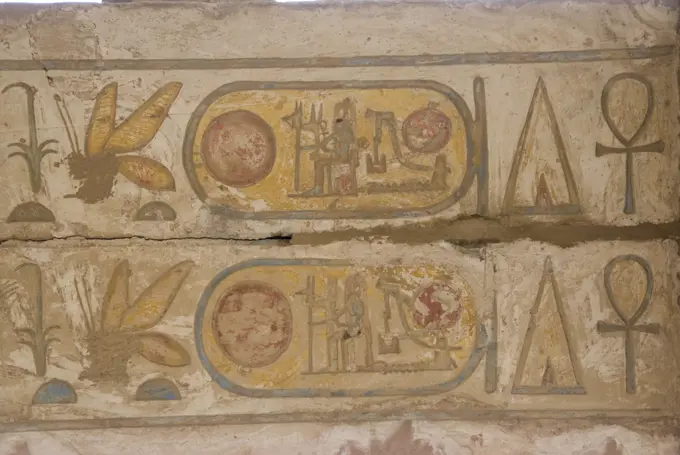
Relief with royal names ca. 1353-1336 B.C. New Kingdom, Amarna Period. Relief with royal names. ca. 1353-1336 B.C.. Limestone, paint (mostly modern). New Kingdom, Amarna Period. From Egypt; Probably from Middle Egypt, Hermopolis (Ashmunein; Khemenu); Probably originally from Amarna (Akhetaten). Dynasty 18
1558-14113386
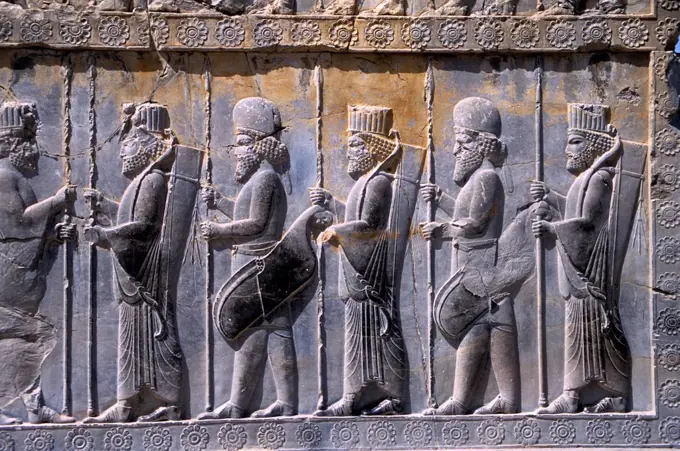
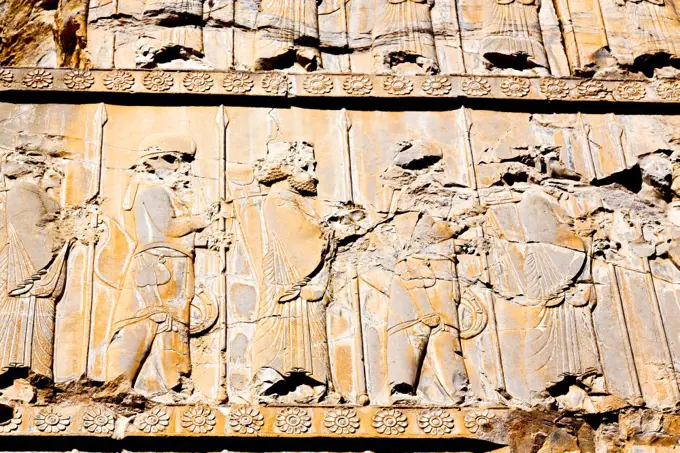
Iran, Tehran, National Museum of Iran, Procession of Xerxes frieze from the ancient city of Persepolis
1746-21112254
Relief showing Lion hunt on horseback. Assyrian, about 645-635 BC From Nineveh, North Palace, Iraq.
4409-133575
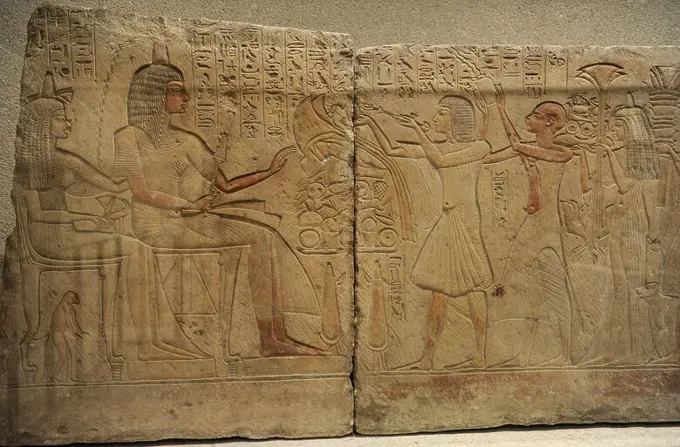
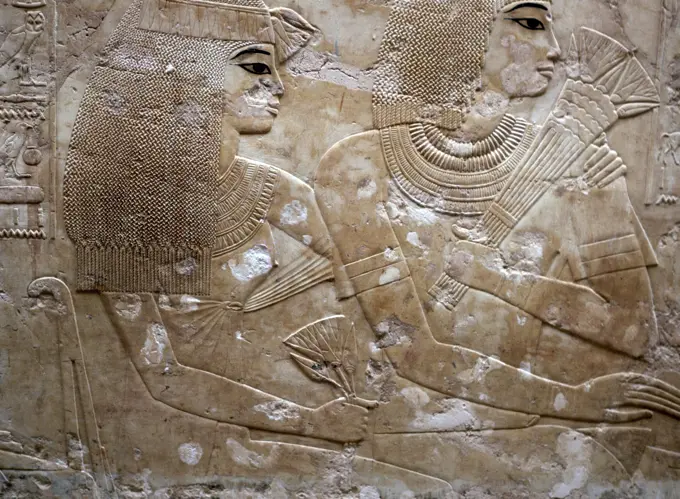
Relief with traces of polychromy depicting Riy with his wife Maya and some priests at a table of offerings. Dynasties 18-19. New Kingdom. C.1320-1290 BC. Limestone. Memphis. Saqqara. Neues Museum. Berlin. Germany.
1525-27665549
part of stella.  Great Hypostyle Hall of  Temple of Karnak. Luxor, Egypt.
1746-29016413
Detail from the Black Obelisk, of Shalmaneser III. A black limestone Assyrian sculpture with scenes in bas-relief and inscriptions. It comes from Nimrud (ancient Kalhu), in northern Iraq, and commemorates the deeds of King Shalmaneser III (reigned 858-824 BC).
6176-67064807
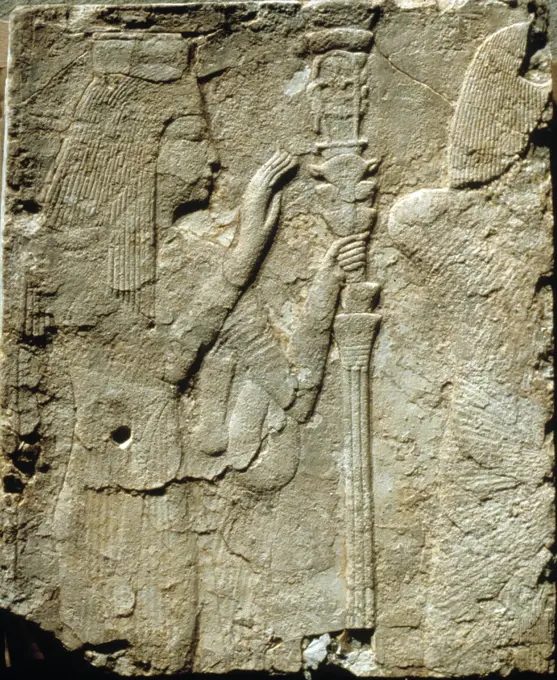
Relief showing the fertility god Min, Temple of Amun, Karnak, Egypt. Artist: Unknown
1848-63262402
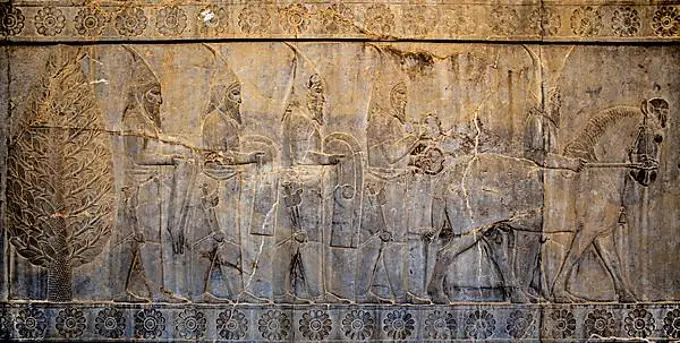
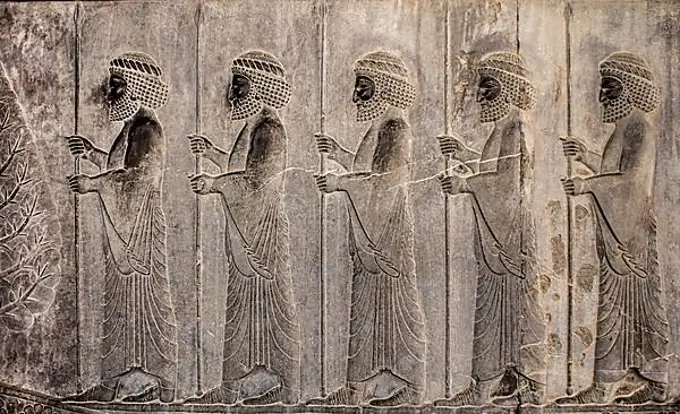
Relief detail of the delegation of nations bringing gifts to Darius on the steps of Apadana Palace, Persepolis, Persepolis, Iran, Asia
1788-19152
Relief of Ptahotep and Tauseret from Saqqara, the couple receiving offers from their eldest son Amenheb and other children
4409-61212
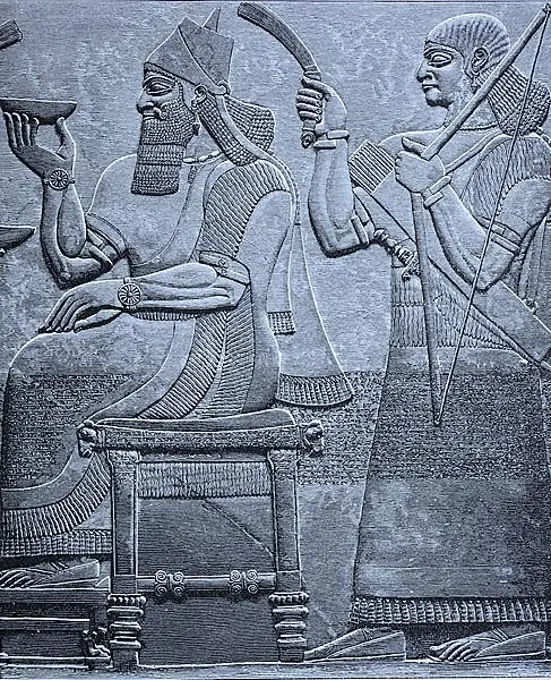
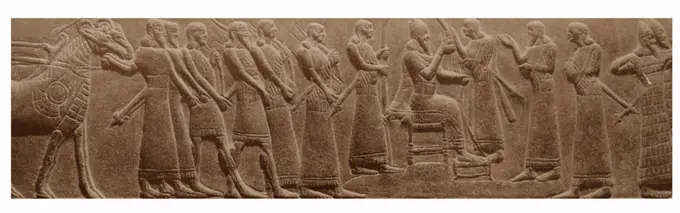
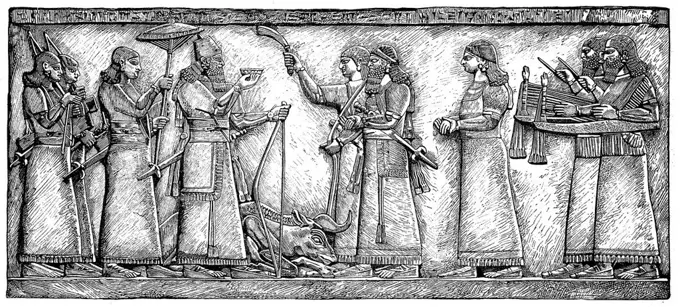
Relief depicting a court scene. King Ashurnasirpal II seated on his throne between two assistants. 865-860 BC. From Nimrud. Northwest Palace. British Museum. London. United Kingdom.
1788-7683
Egypt - Ancient Thebes. UNESCO World Heritage List, 1979. Karnak. Relief depicting Thutmose III's plant and animal offerings to god Amon after Syrian campaign. New Kingdom, 1552-1070 BC
1746-19670662
Egyptian temple reliefs Second millennium BC
1899-17319673
Egypt. Fragment of the family tomb of King Khnumhotep royal butler. 19th century BC. Middle Kingdom. The State Hermitage Museum. Saint. Petersburg. Russia.
7192-70580325
Egyptian Art. Egypt. (1320-1200). Relief depicting Isis, the goddess who gives life and health. Symbol of fertility. Mother of Horus and wife and sister of Osiris. Represented as a woman with cow horns and the solar disk. First Courtyard of Ramses II. Temple of Luxor. 19th Dynasty. New Empire.
1746-29965839
Courtyard of the Temple of Rameses III at Medinet Habu, Egypt. The Mortuary Temple of Ramesses III at Medinet Habu was an important New Kingdom period temple structure in the West Bank of Luxor in Egypt. The temple has inscribed reliefs depicting the advent and defeat of the Sea Peoples during the reign of Ramesses III. Initial excavation of the temple took place sporadically between 1859 and 1899
4409-17336894
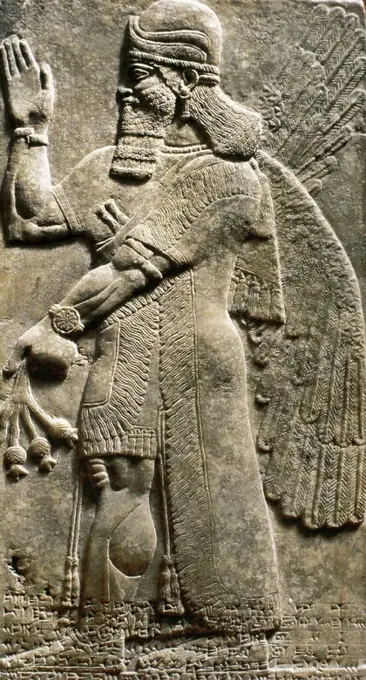
Mesopotamian-Assyrian art. Relief depicting a winged genius, protector of King Ashurnasirpal II. Palace of Ashurnasirpal. Nimrud. 883-859 BC. British Museum. London, England.
1746-19670660
Egyptian temple reliefs Second millennium BC
4409-17405426
Relief of Queen Nefertiti. Dimensions: H. 22 cm (8 11/16 in.); W. 32 cm (12 5/8 in.). Dynasty: Dynasty 18. Reign: reign of Akhenaten. Date: ca. 1353-1336 BC.Nefertiti, whose name means "the Beautiful One Is Here," was principal queen of Akhenaton. Like her mother-in-law Queen Tiye, Nefertiti was a powerful figure in the court. She is frequently shown participating in religious rituals on an equal footing with her husband, and she already played an unprecedented role in the decoration of the Aten structures that Amenhotep IV built at Karnak, from which this block almost certainly came, before his move to Tell el-Amarna.This relief block shows the queen wearing an elaborate wig surmounted by what was originally a towering crown of uraei, sun disk, two cow horns, and two feathers. Her arm is raised in offering to the Aten. The queen's image is depicted, with a drooping chin, thin slanted eyes, and a sharply angled nose and brow similar to that is seen in depictions of her husband in an
1746-30012875
A photograph taken of the Red Chapel of Hatshepsut (the Chapelle Rouge) constructed initially as a barque shrine during the reign of Hatshepsut, the fifth pharaoh of the eighteenth dynasty of Ancient Egypt and ruled from approximately 1479 to 1458 BC. Although it had been demolished and parts were reused in antiquity, following rediscovery, the chapel has been reconstructed using its original materials. Its original location is thought to have been in the central court of the temple of Amun at Karnak, near Thebes.
4409-60669
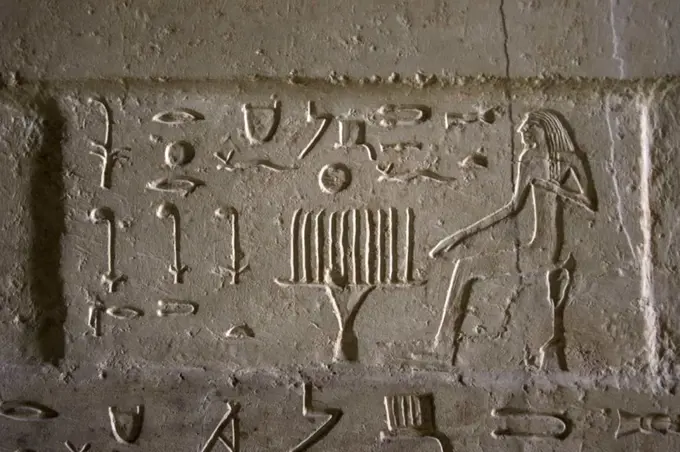
Mastaba of Nefer and Kahay. Relief. Hieroglyphic depicting the deceased next to the offerings' table. 5th Dynasty. Old Kingdom. Saqqara. Egypt.
1746-21110987
Relief depicting protective spirits. Assyrian, about 645-635 BC From Nineveh, North Palace. Assyrian, about 645-635 BC
4409-48992
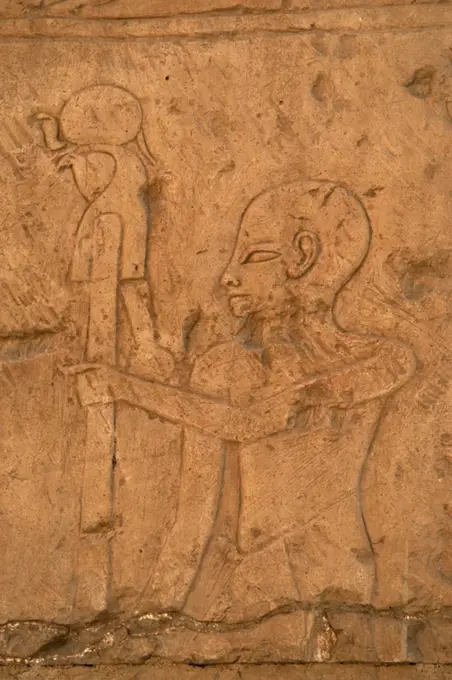
EGYPTIAN ART. Relief depicting a priest carrying the image of the god Ra (solar disc). Temple of Hatshepsut, Queen of the Eighteenth Dynasty. New Kingdom. Deir El Bahari. Luxor. Ancient Thebes (Waset).
1746-19669756
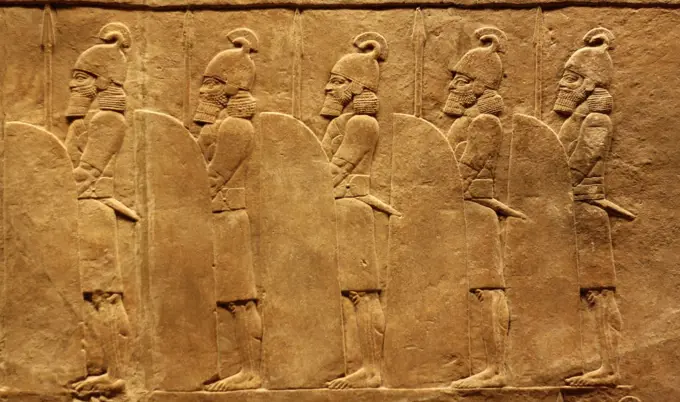
Assyrian wall, circa 645-635 BC. From the North Palace in Nineveh.
1938-2884
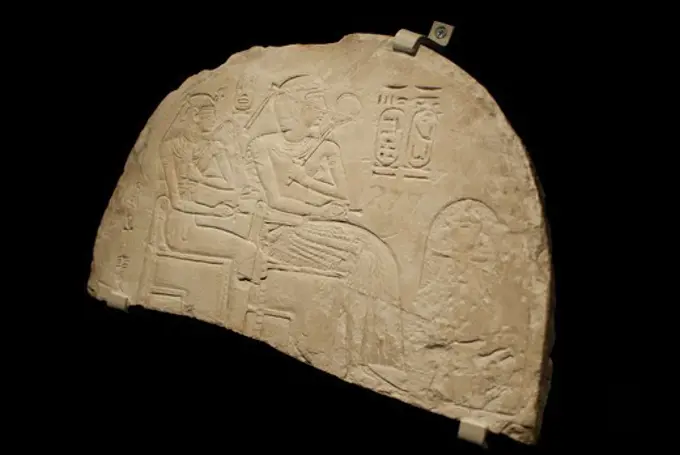
Limestone stela with King Amenofis I. Teba, Egypt, XIX Dynasty, about. 1200 BC.
6145-29196428
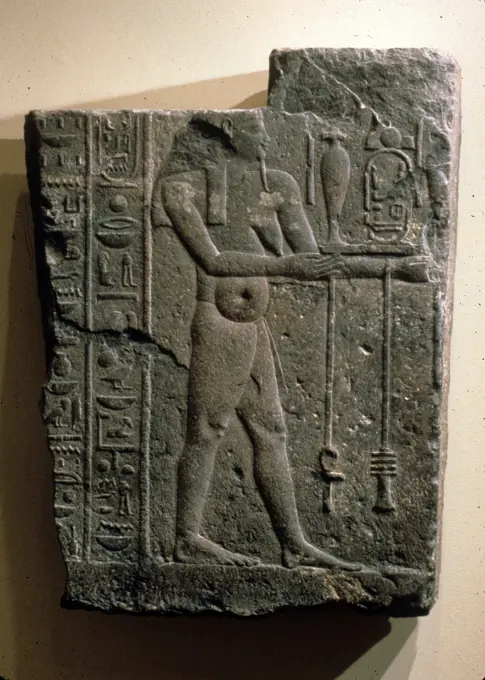
Fecundity Figure 360-343 B.C. Late Period The city of Sebennytos (Sammanud) in the central Delta was the origin place of the kings of Dynasty 30. Remains indicate that they undertook a major temple to the god Onuris-Shu there. After the hiatus of the second Persian invasion, the work was continued by Alexander the Greats immediate successors in order to identify themselves closely with the native dynasty. The temple was built of hard stone and apparently had granite columns over thirty feet high. Fecundity figures like this one often decorate the lowest register of temple walls, where they represent the fertility of the nomes of Egypt being rendered to the gods. The original scene would have shown a file of fecundity figures in compartments in between the slightly raised bands of inscription. This figure bears one of the names of Nectanebo II on the offering table, and another cartouche of the king appears in the inscription along with the name of Onuris-Shu, lord of Sebennytos. In an
1746-19669755
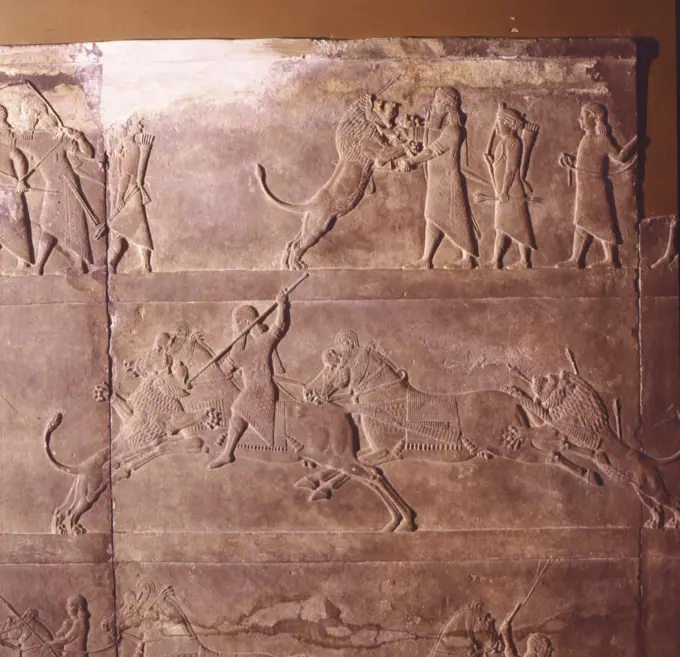
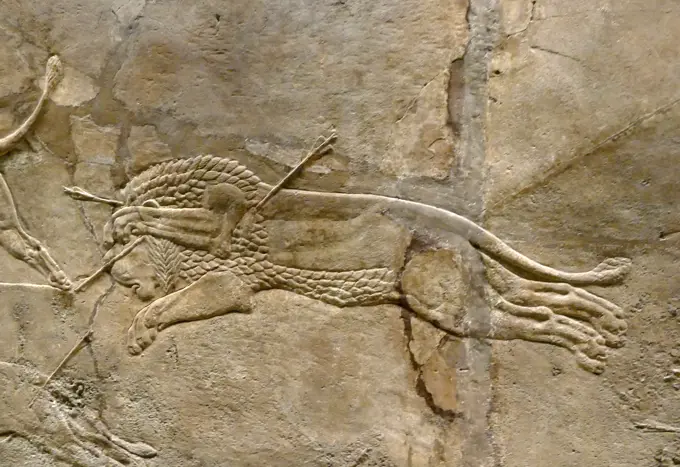
Lion hunt on horseback. Wall fragment depicting King Ashurbanipal and his attendants hunting lions. Assyrian, circa 645-635 BC. From the North Palace in Nineveh.
6145-29067114
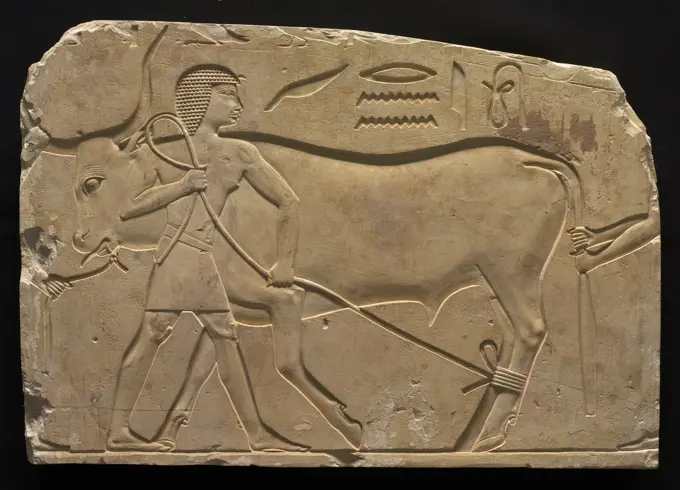
Men Trussing an Ox, 667-647 BC. Egypt, Thebes, Late Period, Late Dynasty 25 to Early Dynasty 26. Limestone; overall: 38.4 x 55.6 cm (15 1/8 x 21 7/8 in.).
4409-36044
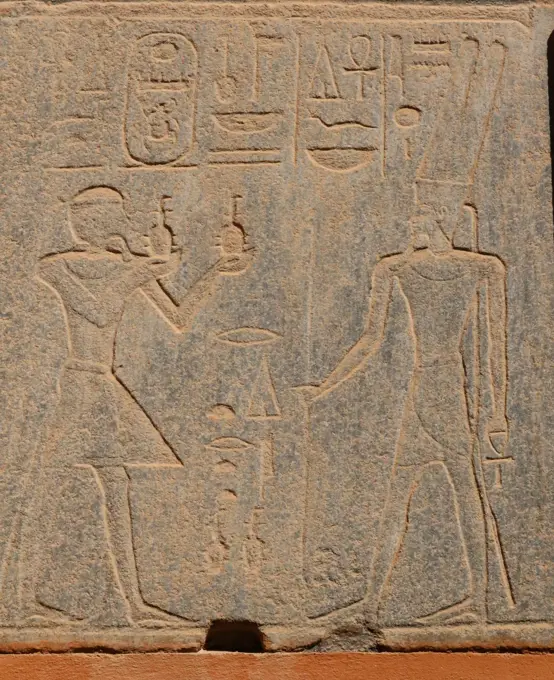
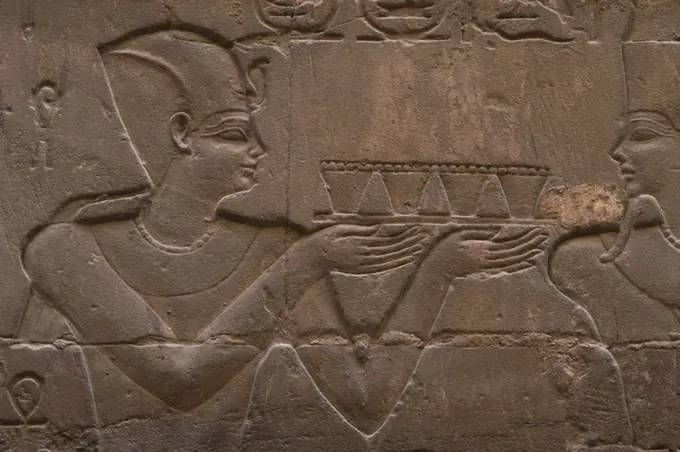
Relief depicting a pharaoh making offerings to the god MIN, god of fertility. Chapel dedicated to Amun-Min. New Empire. Temple of Luxor. Egypt.
6145-29196453
Fragments from stela of the Chief Steward Henenu ca. 2030-2000 B.C. Middle Kingdom These two limestone relief fragments, now joined, derive from one of the several rectangular stelae that were originally inserted into the interior walls of the owners tomb cut into the rocky cliff at Deir el-Bahri. The inscriptions from another stela identify the official, Henenu, as the chief steward who served King Nebhepetre Mentuhotep II. The preserved portion of this stela shows the head and upper torso of Henenu, wearing bracelets and an ornate broad collar made of cylindrical and drop-shaped beads. He delicately holds a beaker up to his nose, perhaps to sniff the perfume inside it. His other hand reaches toward the sumptuous amount of offerings that would have been depicted in front of him. Of the offerings, only one ointment vase and the tail of a duck remain today.. Fragments from stela of the Chief Steward Henenu. ca. 2030-2000 B.C.. Limestone. Middle Kingdom. From Egypt, Upper Egypt, Thebes,
1850-1778
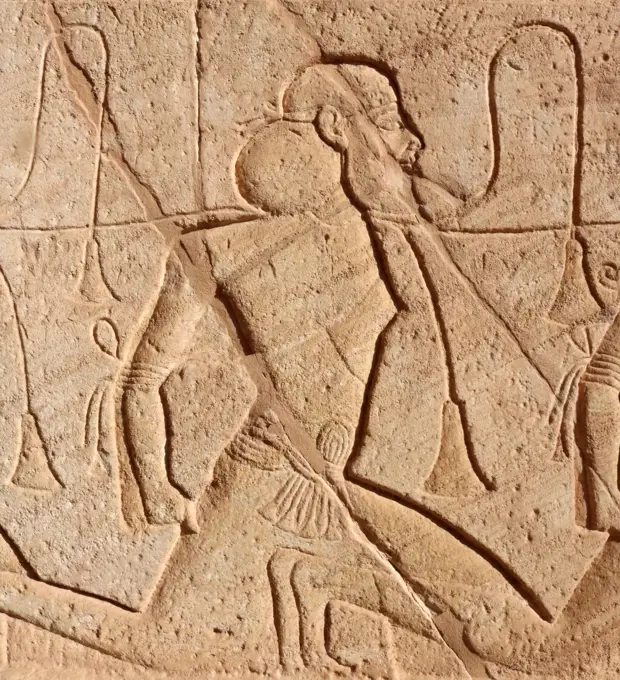
Egypt, Abu Simbel, Hieroglyphics Above Relief Carving Of Nubian Slaves
1890-60648017
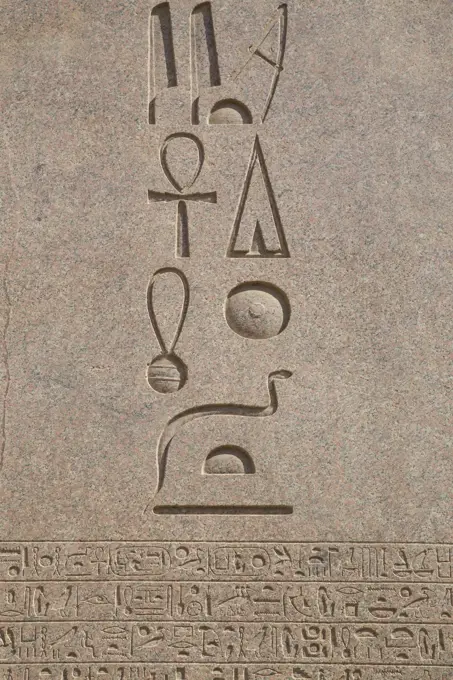
Image of Ankh with other Bas Relief, Luxor Temple, UNESCO World Heritage Site, Luxor, Egypt, North Africa, Africa
4409-20999786
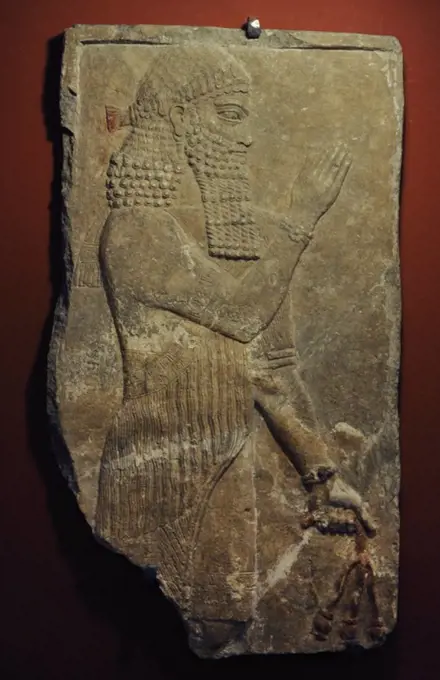
Priest holding a sprout. Relief from the Palace of sargon II at Dur-Sharrukin( Khorsabad, Iraq). Limestone. 8th century BC. The state Hermitage Museum. Saint Petersburg. Russia.
4409-20923914
RELIEVE DEL PALACIO NINIVE - SOLDADO CAMINO DE LA BATALLA - SIGLO VII AC. Location: BRITISH MUSEUM. LONDON. ENGLAND.
6145-54598561
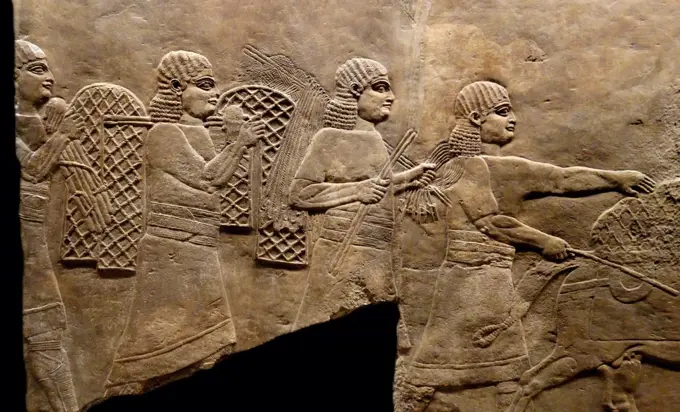
Fragment of a Carved Relief from a Palace Wall, 668 BC-627 BC. Iraq / Nineveh. h522 x w285 x d26 mm.  Flat limestone slab showing Assyrian lancer advancing left into reeds by the side of a marsh of pool.
4409-17215895
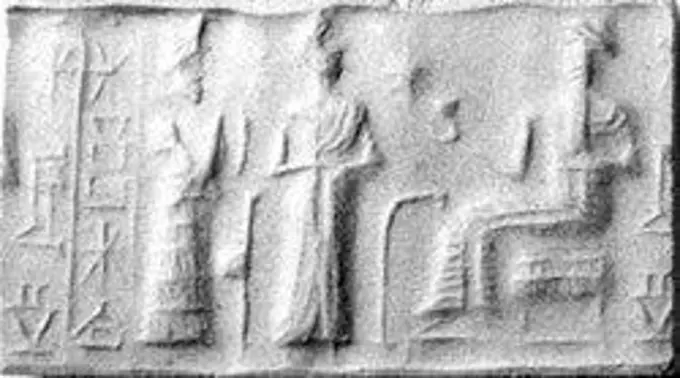
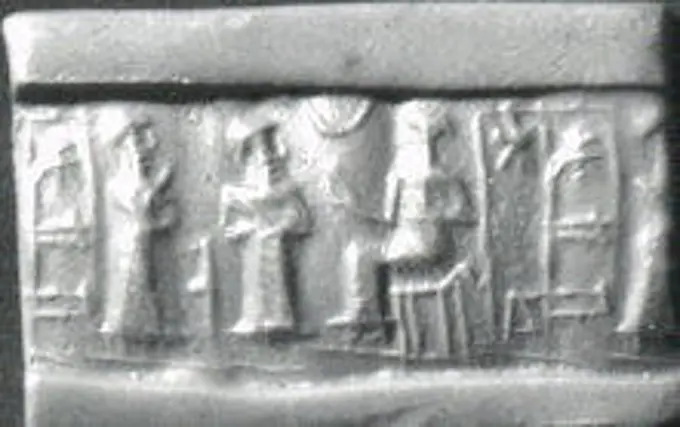
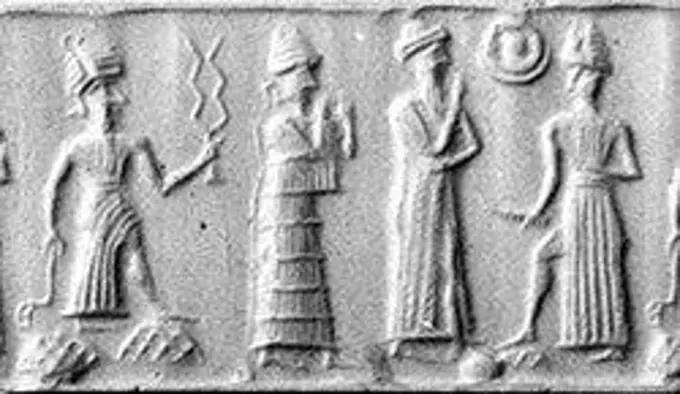
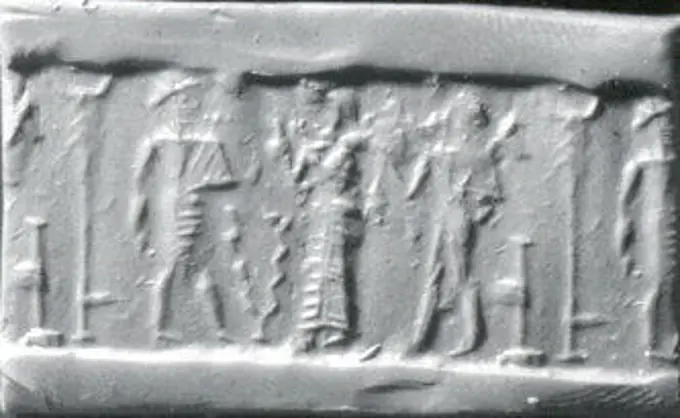
Anónimo Sumerio, Siglo XXI A.C.Sello cilíndrico: Presentación de una Diosa. Museum: MUSEE DU LOUVRE, Paris, France.
1899-17319602
Assyria. Winged deity. Relief from the Palace of Ashurnasirpal II at Kalhu (Nimrud, Iraq). The state Hermitage Museum. Saint Petersburg. Russia.
1746-21112249
Relief showing hunting. Assyrian, about 645-635 BC From Nineveh, Iraq, North Palace. panel comes from a corridor which led to a postern-gate out of the palace; probably the king passed this way as he went out to hunt
6145-29737851
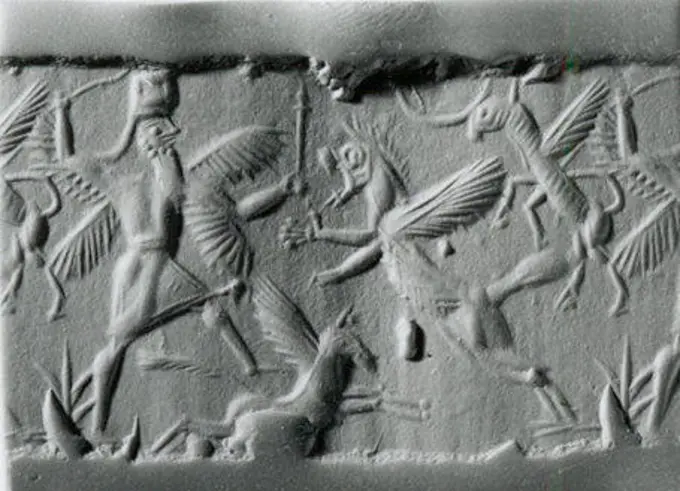
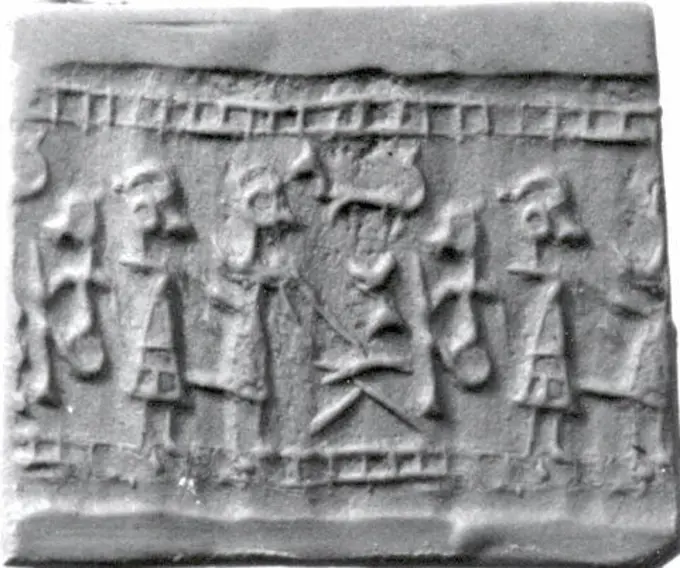
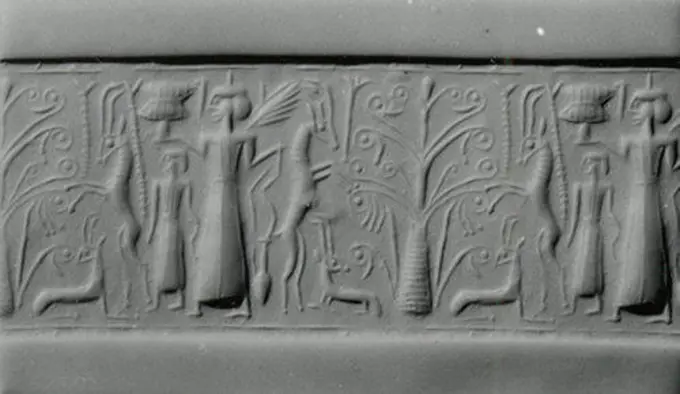
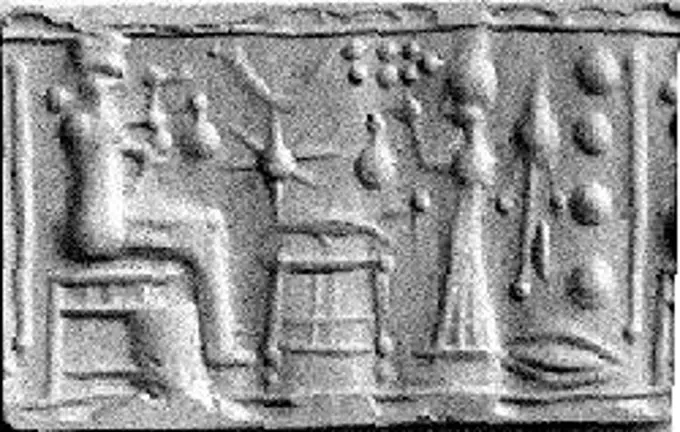
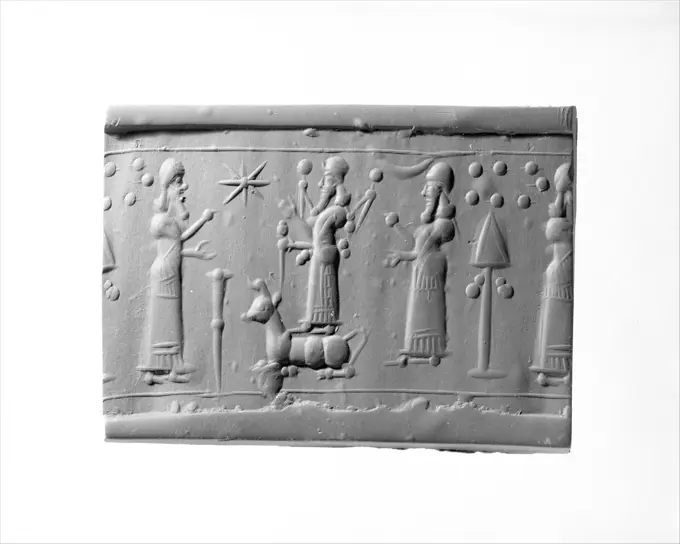
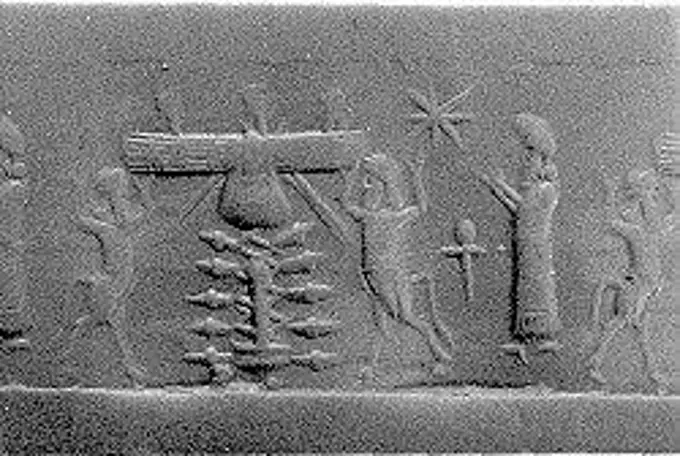
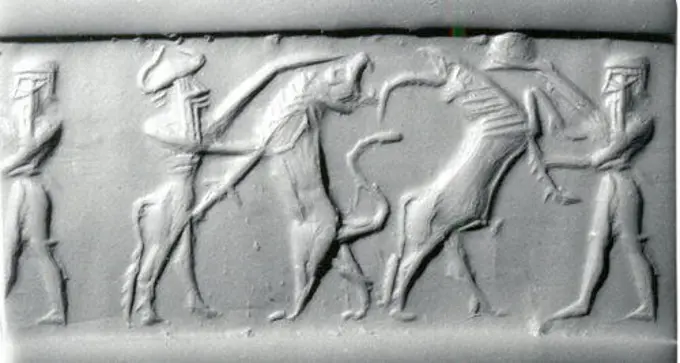
Cylinder seal ca. early 2nd millennium B.C. Babylonian. Cylinder seal. Babylonian. ca. early 2nd millennium B.C.. Hematite. Old Babylonian. Mesopotamia
4409-17218452
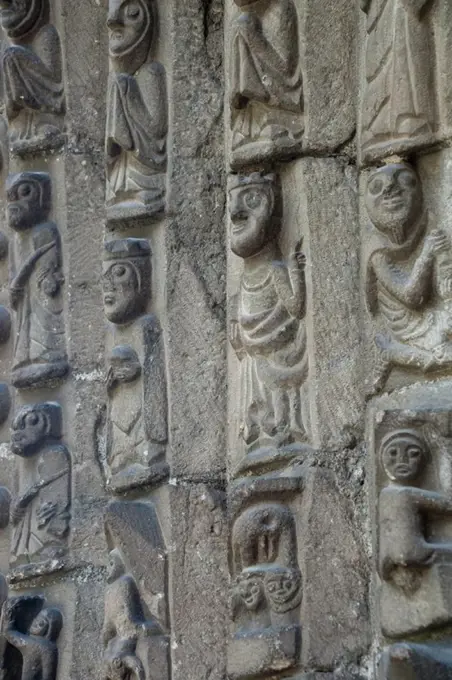
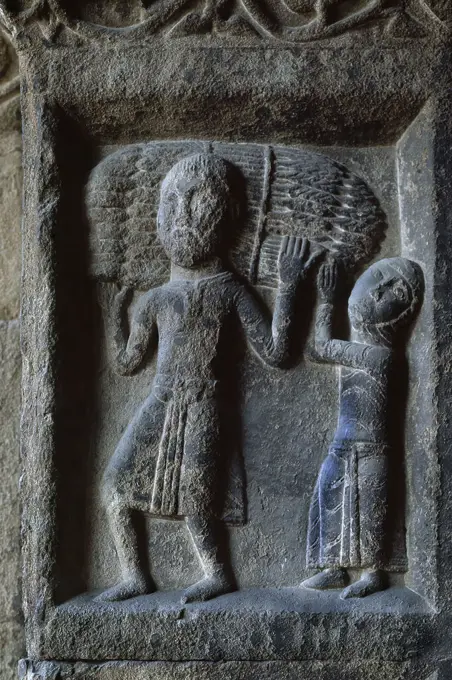
Detail of the sculptural relief of the capital of the cloister of the cathedral of Gerona, 12th century, Gerona, Gerona, Catalonia, Spain.
1746-21103379
Alabaster relief used to decorate the walls of the palace of Ashurnasirpal II in Nimrud. Dated 875 B.C.
1788-17453
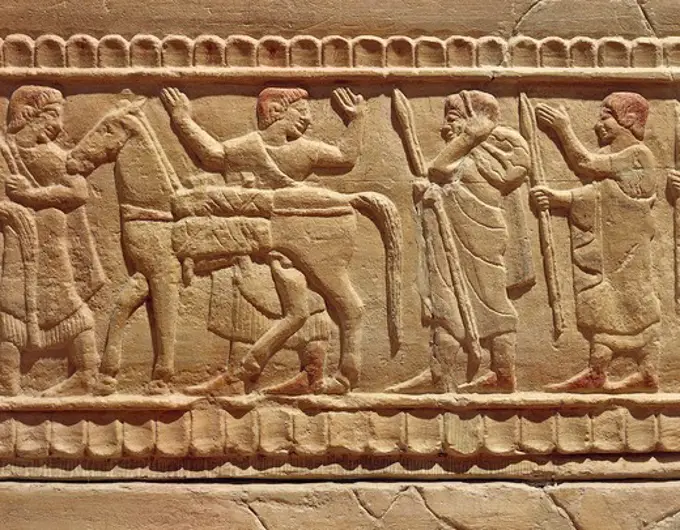
Sarcophagus depicting peasants, from necropolis of Sperandio, Perugia province, Italy
1746-30012073
A photograph taken within the Tomb of Renni, the 'Overseer of the priests of Nekhbet' at the time of Amenhotep I at Elkab, situated 90 km to the south of Thebes. Amenhotep I was the second Pharaoh of the 18th dynasty of Egypt. His reign is generally dated from 1526 to 1506 BC.
1899-18859280
Nineveh (Akkadian: Ninua) is an ancient Mesopotamian city on the eastern bank of the Tigris River, and capital of the Neo-Assyrian Empire. It was the largest city in the world for some fifty years until, after a bitter period of civil war in Assyria itself, it was sacked by an unusual coalition of former subject peoples, the Babylonians, Medes, Persians, Chaldeans, Scythians and Cimmerians in 612 BCE. Its ruins are across the river from the modern-day major city of Mosul, in the Ninawa Governorate of Iraq. In early 2015 the jihadist group ISIL (Islamic State in Iraq and the Levant) announced their intention to destroy the walls of Nineveh if the Iraqis try to liberate the city, they also threatened to destroy artifacts. On February 26 they destroyed several items and statues in the Mosul Museum, and are believed to have plundered others to sell overseas. The items were mostly from the Assyrian exhibit, which ISIL declared blasphemous and idolatrous.
6145-29731166
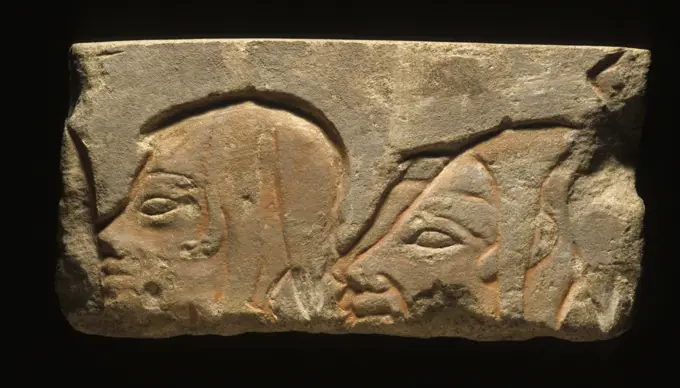
Relief block with the heads of three Libyans ca. 1353-1323 B.C. New Kingdom, Amarna Period The sidelocks of the people on this relief block identify the men as Libyans. They need not be prisoners but could be members of the Egyptian army or envoys at a festival. As usual with sandstone relief pieces the block was part of a temple decoration at Karnak.. Relief block with the heads of three Libyans. ca. 1353-1323 B.C.. Sandstone, paint. New Kingdom, Amarna Period. From Egypt, Upper Egypt, Thebes, Karnak. Dynasty 18
1788-2121
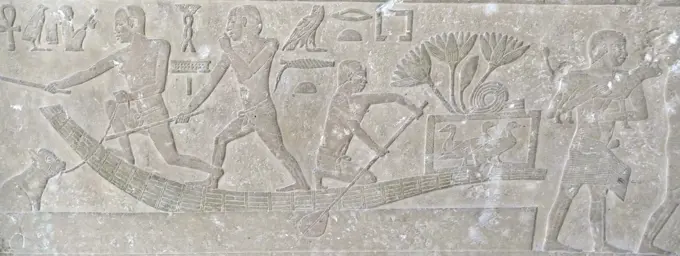
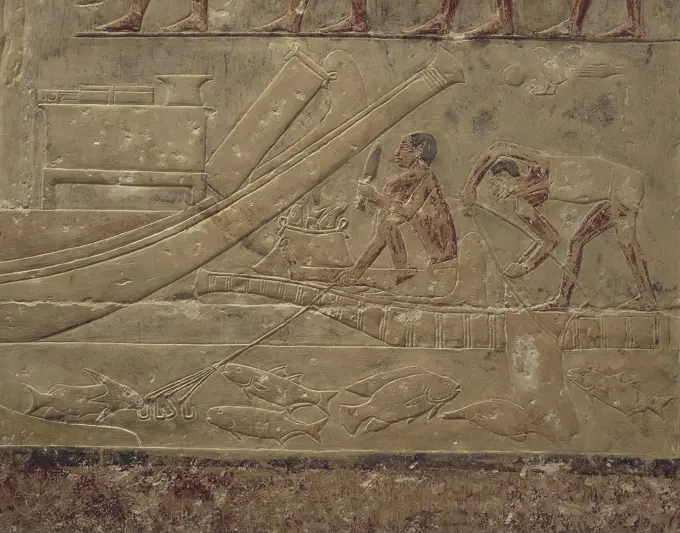
Egypt - Cairo - Ancient Memphis (UNESCO World Heritage List, 1979). Saqqara. Necropolis. Funerary mastaba of Idut. Painted relief of fishing scene
1746-21123289
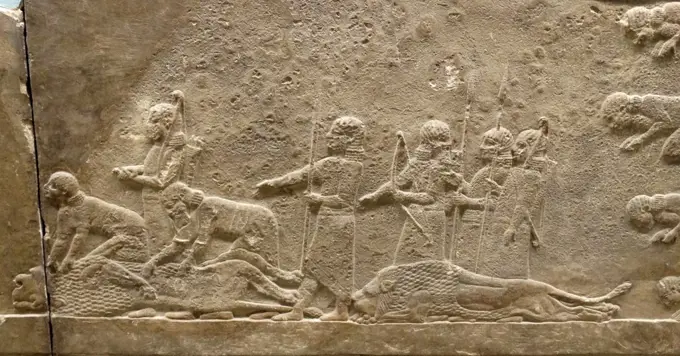
Relief of a siege depicts Assyrians attacking a fort. 1365ñ609 BC
1746-19665633
Two Osiride statues of King Senwosret 1, 12 Dynasty, (ca 1961-1917 BC). Limestone. Along both sides of the causeway leading from the valley temple at the edge of the agricultural land to Senwosret 1's pyramid were niches with royal statues of the so-called Osiride type.
6176-67079507
Relief from the tomb of Ramose, Luxor, Egypt, 14th century BC. Artist: Unknown
4409-35233
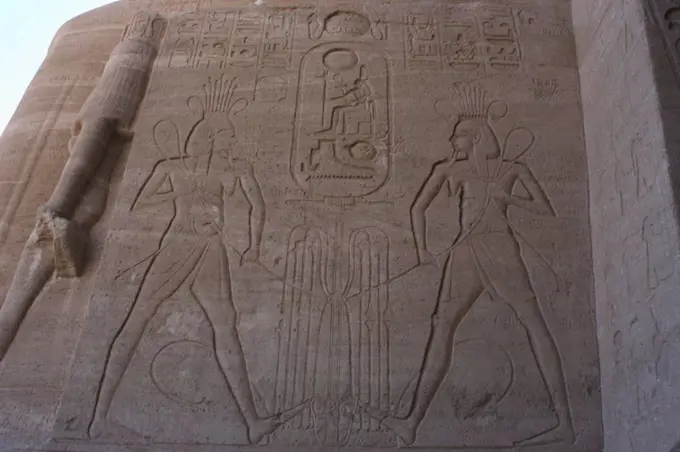
Relief depicting the union between Upper and Lower Egypt with the Royal cartidge of the pharaoh Ramses II. Great Temple of Ramses II. 19th Dynasty. New Kingdom. Abu Simbel. Egypt.
4435-3725
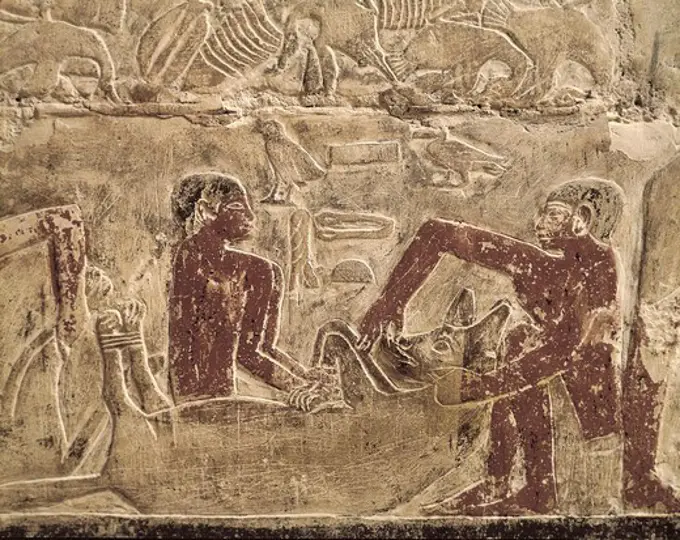
Mastaba of Mereruka. ca. 2323 BC. EGYPT. Saqqara. Capture of a hyena. Egyptian art. Old Kingdom. Relief on rock.
6145-29140319
Stela ca. 1550-1295 B.C. New Kingdom. Stela 569270
1788-16228
Peru, Cerro Sechin, pre-Inca archaeological site, Stone stele with relief depicting massacre
4409-21487995
Museo de Luxor.
4409-17403790
Two bowing courtiers behind Nefertiti. Dimensions: H. 22.5 cm (8 7/8 in); w. 54 cm (21 1/4 in). Dynasty: Dynasty 18. Reign: reign of Akhenaten. Date: ca. 1353-1336 B.C..This block preserves part of an offering scene. The large figure to the right can be identified as a woman by the garment. The size suggests Nefertiti. The smaller figures to the left are two bowing male and two standing females who may be two of the queen's daughters. Museum: Metropolitan Museum of Art, New York, USA.
1746-30012782
18th Dynasty tomb of Paheri, at Elkab,south of Thebes, Egypt. dating from of the New Kingdom in the middle of the 18th Dynasty, under the reign of Thutmosis III. The tomb had already been located by the scholars of the Egyptian expedition in 1799. The titles associated with Paheri are those of nomarch (governor prince) and scribe. He is often called nomarch of Nekheb and Anyt
1788-10444
Egypt, Thebes, Luxor, Valley of the Kings, Tomb of Ramses II, relief of hieroglyphics illustrating Litany of Ra from 19th dynasty
4409-63911
Offering-bearers. Detail of the hieroglyphic writing. Limestone. From the tomb of Princess Nofert at Medum. 4th Dynasty. Old Kingdom. C. 2550 BC. Ny Carlsberg Glyptotek. Copenhagen. Denmark.
4409-21498730
Tumba de Paheri. Paheri era el nieto de Ahmose hijo de Ebana, y sirvió bajo las órdenes de Tutmosis III. Ostentó varios cargos, fue Intendente de Nekheb, así como Escriba de Amon, Tutor del Príncipe, y Jefe de los sacerdotes de la diosa Nejbet, entre otros.
6176-67049371
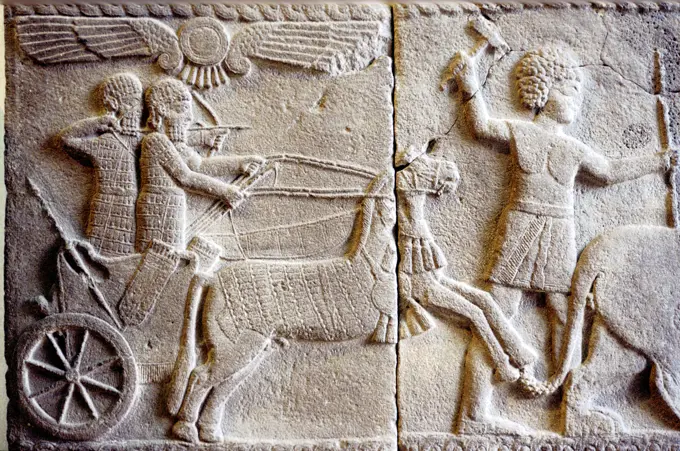
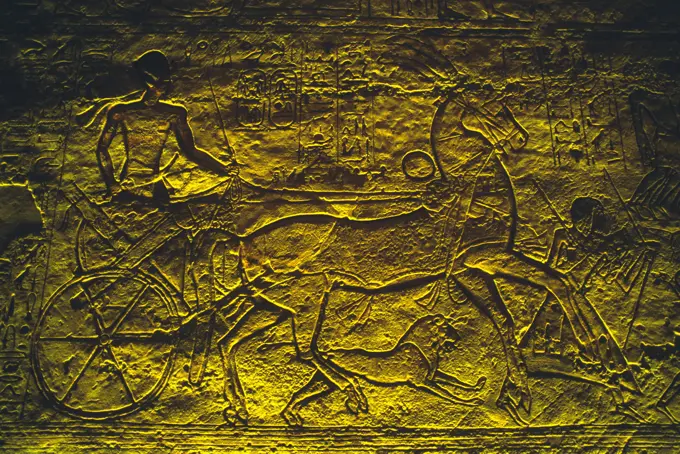
Relief of a Chariot, Hittite. Artist: Unknown
1848-55369723
Hieroglyphs in the temples of Medinat Habu or Haboe, West Bank, Luxor, Nile Valley, Egypt, Africa
4409-63929
Stele of Roma the doorkeeper dedicated to Goddess Astarte. Limestone. 18th Dynasty. New Kingdom. C. 1400-1365 BC. Origin unknown. Ny Carlsberg Glyptotek. Copenhagen. Denmark.
6145-29734954
Cylinder seal with cultic scene late 8th - 7th century B.C. Assyrian. Cylinder seal with cultic scene. Assyrian. late 8th - 7th century B.C.. Flawed Carnelian (Quartz). Neo-Assyrian. Mesopotamia
1746-19674946
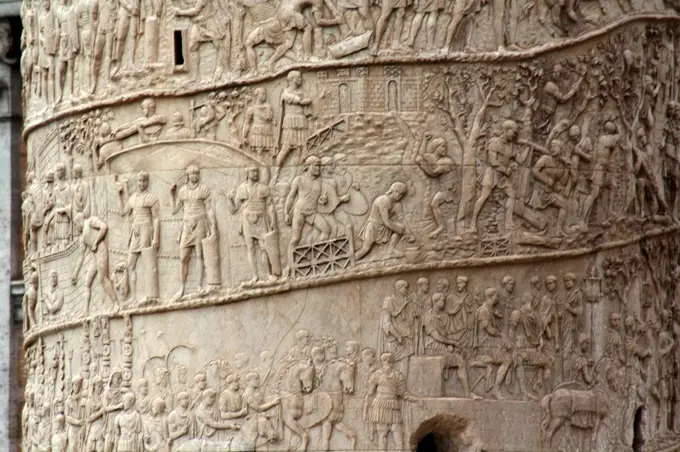
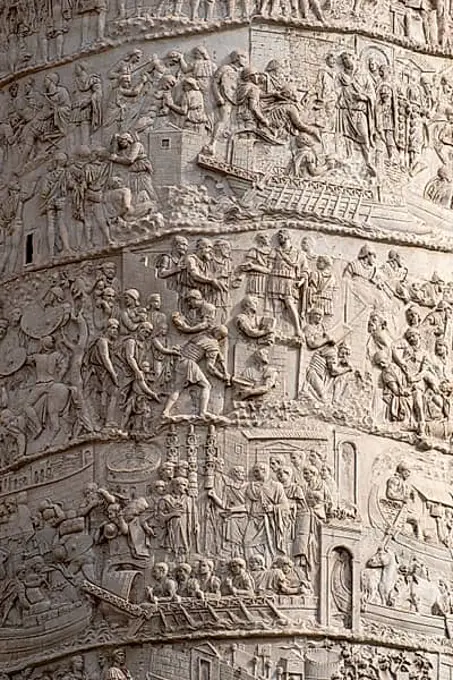
Trajans Column is a Roman column commemorating the Roman Emperor Trajans victory in the Dacian Wars. Located in Trajans Forum, north of the Roman Forum. The spiral Bas Relief artistically describes the epic battles between the Romans and Dacians. Completed in 113 AD. Rome. Italy 2013
4409-45891
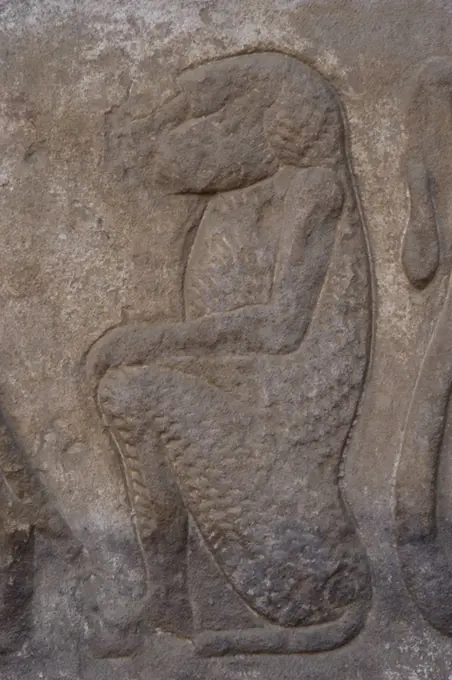
Egypt. Temple of Edfu. Ancient temple dedicated to Horus. Ptolemaic period, 237-57 BC. Relief depicting a monkey.
6145-59138119
Emilia-Romagna Bologna Bologna Museo Civico Archeologico Sale III, IV, V4. Hutzel, Max 1960-1990 Specific Location: Sale III, IV, V (Egyptian antiquities) Owner: Museo Civico Archeologico Antiquities: III: basalt sculptural fragments; reliefs from the tomb of Horemheb; funerary stele; dynasties XVIII, XIX, XX, Ptolomeic dynasty reliefs, generally in limestone. IV: XVIII, XIX dynasty sculptures in granite, limestone, sarcophagi, statuette in basalt, statuette in wood, statuettes in bronze, statuette faience, mummy mask: V: basalt sculptures of Horus, Sekhmet, limestone stele (Antiq. count: 202); Republican portrait sculpture, Republican cippi with portrait bust, cippus with portraits (single and group), cippi with inscriptions from all periods, architectural fragments, basin with inscription, torso fragment of cuirassed figure of the 1st century AD (Nero) (Antiq. count: 185); disk lamps from the late republic to 6th century, with erotes, animals, erotica, mythological scenes, menorah, p
4409-21498767
Tumba de Ahmose, hijo de Ebana (EK-5). Elkab, Egipto.
4409-65764070
False door of princess Wehemnefret. Limestone. Old Kingdom. Fourth Dynasty. Giza. Mastaba di Uhem-neferet. 2543-2435 BCE. Offerings. Egyptian Museum of Turin. Italy.
4409-43285
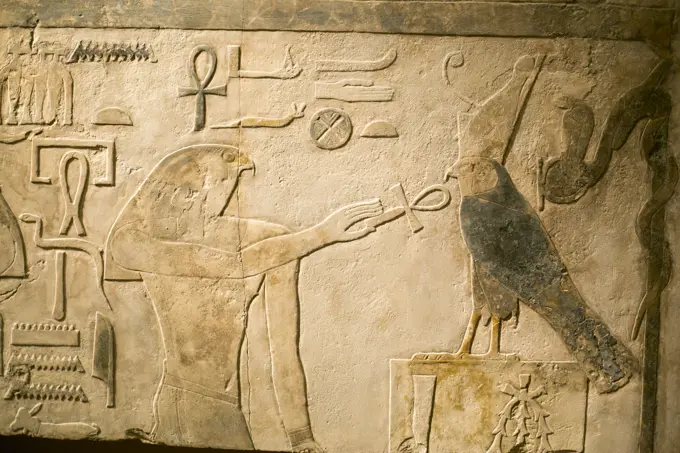
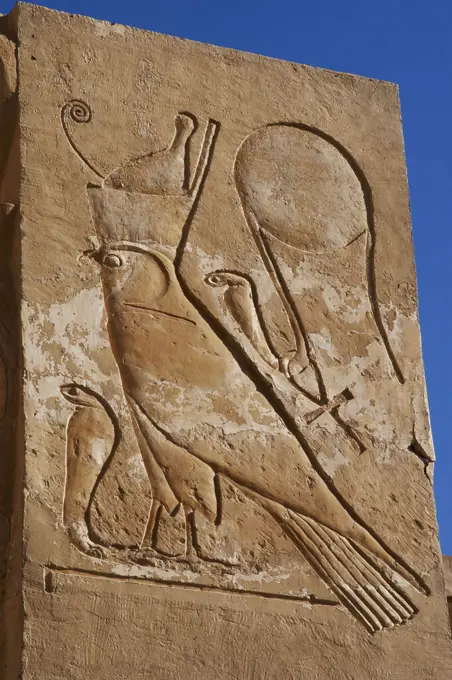
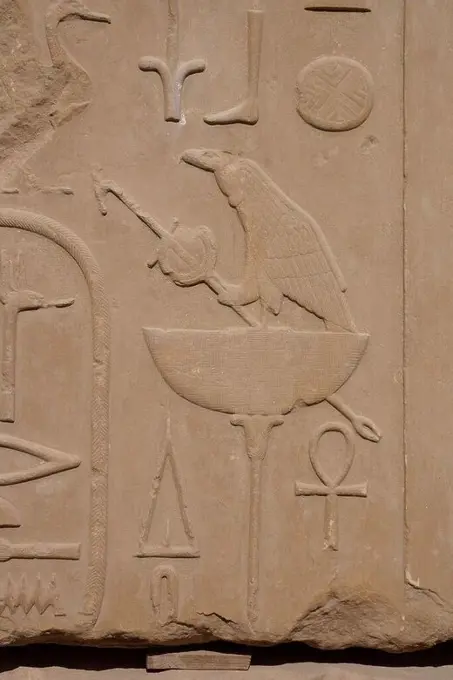
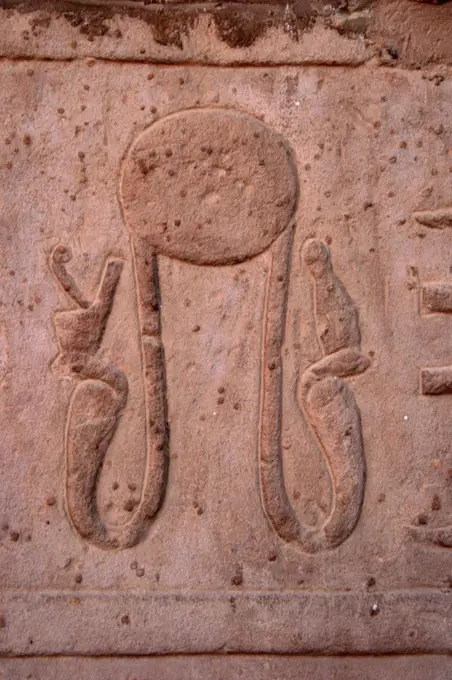
Relief with an inscription in hieroglyphics. Solar disk with snake (cobra) with the ankh around his neck and Falcon with double crown over a cobra. Temple of Hatshepsut. 18th Dynasty. New Kingdom. Deir el-Bahari. Egypt.
4168-12615
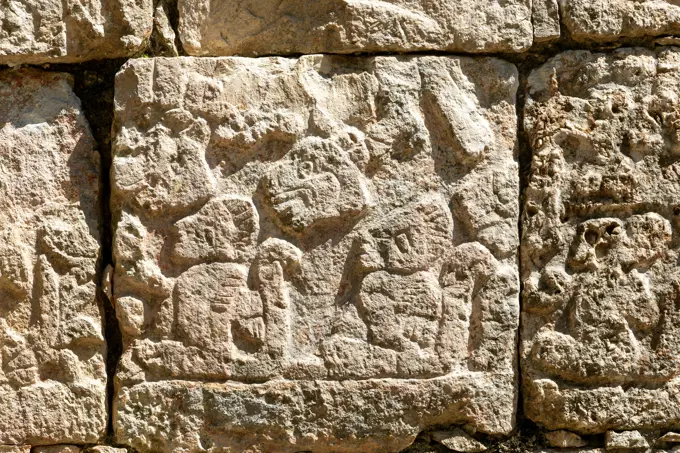
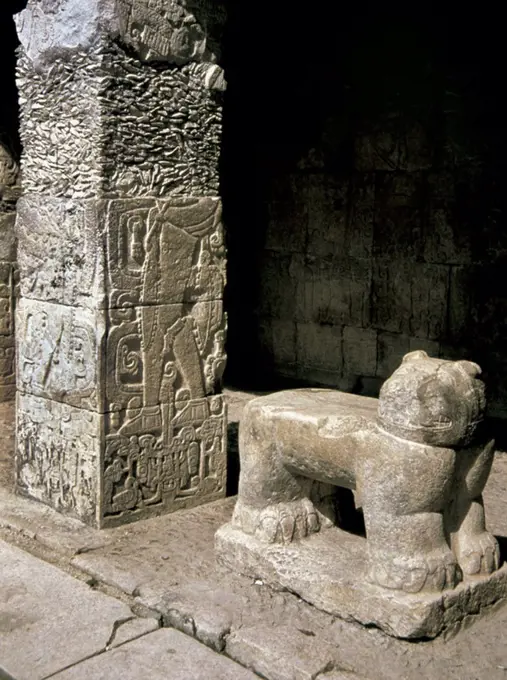
Mexico, Yucatan Peninsula, Near Cancun, Maya Ruins Of Chichen Itza, Temple Of The Jaguar, Detail Of Stone Carvings
1746-30015818
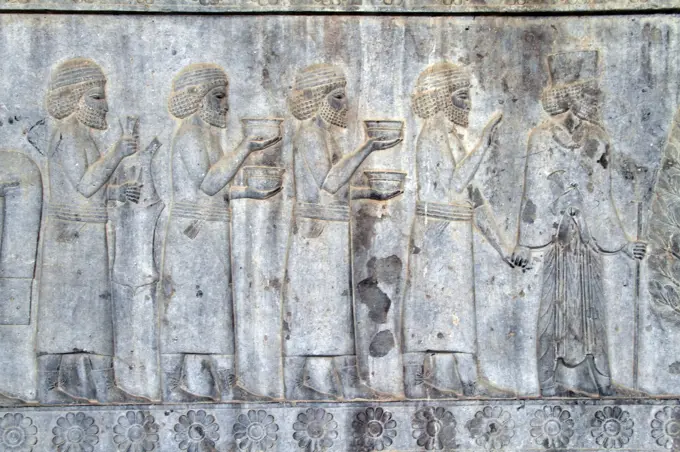
Detail of a relief of a delegation bearing gifts, (Apadana, East staircase) at Persepolis, Iran
4409-63014595
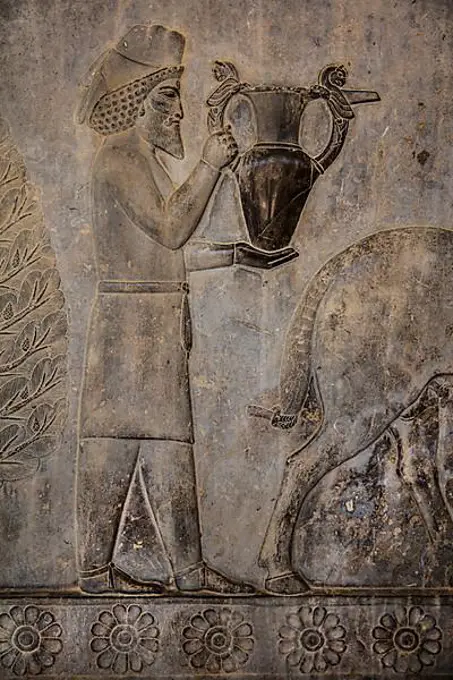
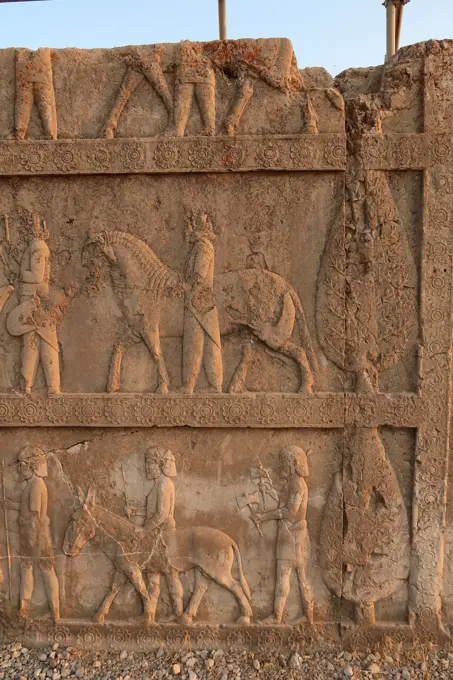
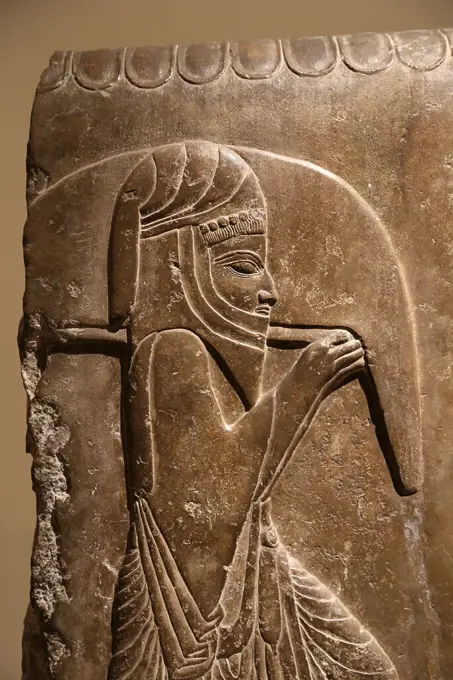
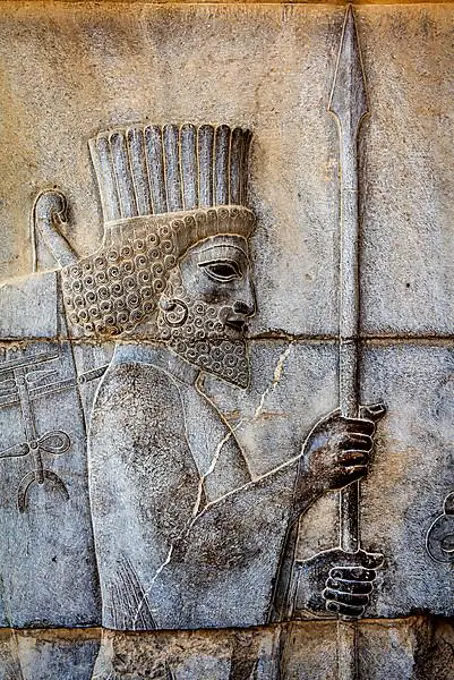
Servant bearing food and drink. Palace of Darius I. Reign of Artaxerxes III. 358-338 BC. B.C. Persepolis. Iran. Achaemenid period. Metropolitan Museum of Art. Ny. USA.
6176-67037645
Detail of Trajan's column, showing surrender to the Romans, 2nd century. Artist: Unknown
1746-29966062
Second Courtyard of the Feasts, Medinet Habu, Thebes, Egypt. Temple of Rameses II at Medinet Habu, Egypt. The Mortuary Temple of Ramesses III at Medinet Habu was an important New Kingdom period temple structure in the West Bank of Luxor in Egypt. The temple has inscribed reliefs depicting the advent and defeat of the Sea Peoples during the reign of Ramesses III. Initial excavation of the temple took place sporadically between 1859 and 1899
1788-39442
Celtic civilization, France, 3rd-2nd century b.C. Frieze with engraved horse heads. Detail of the architrave of Roquepertuse Sanctuary.
4409-17351971
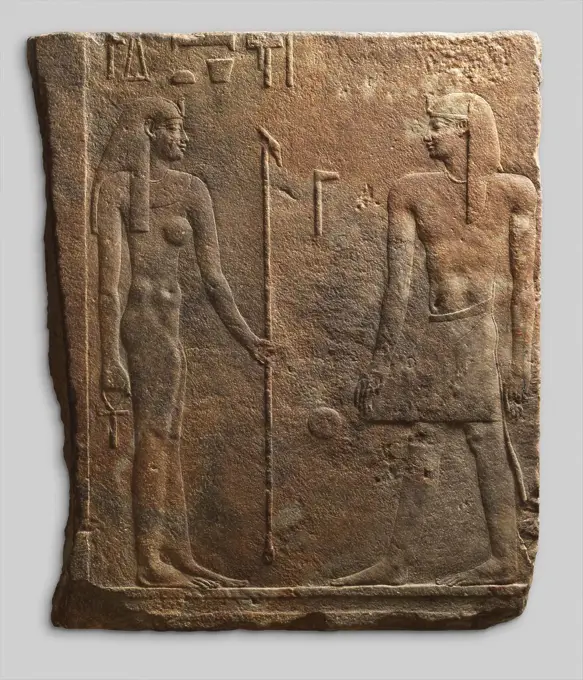
Ball-Playing Ceremony: the king before a goddess, possibly Hathor. Dimensions: H. 85 × W. 71 × D. 7.2 cm, 104.3 kg (33 7/16 × 27 15/16 × 2 13/16 in., 230 lb.). Dynasty: Dynasty 30 or later. Date: 380-246 B.C..This quartzite relief appears to depict the ritual called "Striking the Ball". A king wearing the royal nemes head-cloth with uraeus and the traditional bull's tail stands on the right. Between him and a goddess opposite is the god hieroglyph and, lower down, a round ball. The goddess wears a uraeus on her forehead and holds an ankh and a was scepter. The latter is by this time usually held only by gods, although precursors of this particular scene show the goddess with a was, and certain important goddesses may hold was scepters. Remnants of her epithets are preserved.The ball represents the evil eye of the serpent Apopy who wants to stop the sun bark in its travels, which would be a cosmic disaster. Although this scene is somewhat incomplete, or possibly under revision, the king
1525-26069190
blur  in iran persepolis the old   ruins historical destination monuments and ruin
1848-55374559
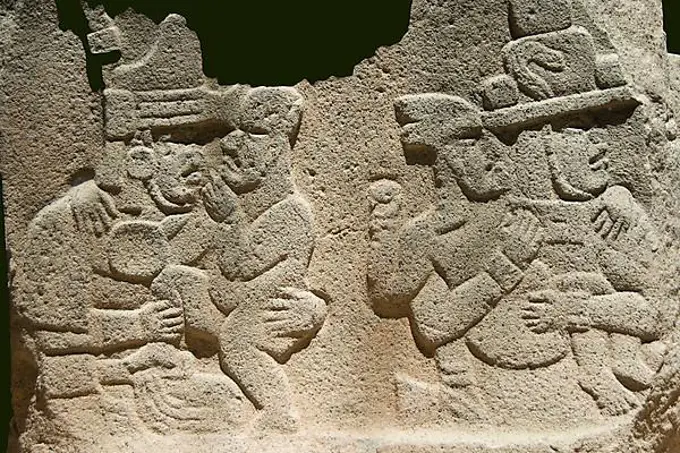
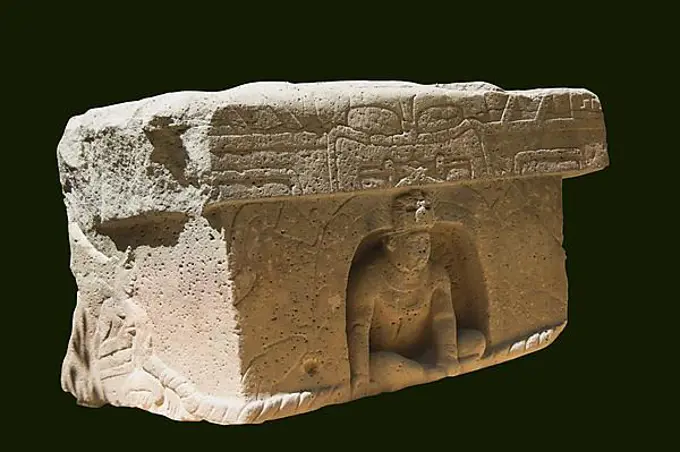
Altar of the Children, Olmec Sculpture, Parc Museum La Venta, Villahermosa, Tabasco, Mexico, Central America
1746-19666847
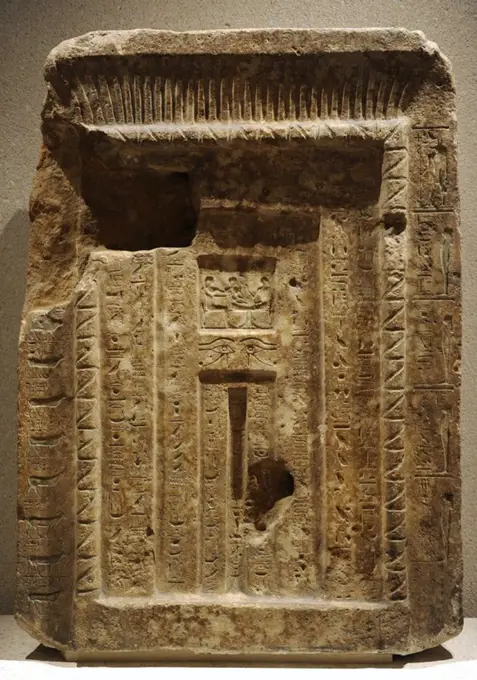
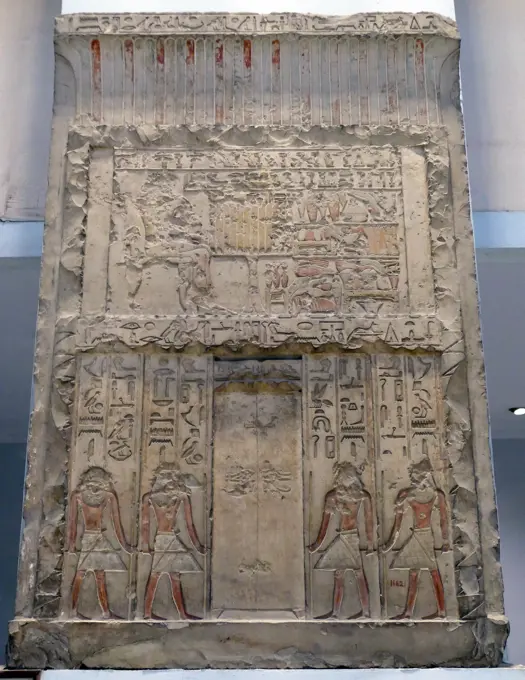
False door from a chapel in an Old Kingdom, Egyptian tomb. From Saqqara tomb 3513.
1788-15579
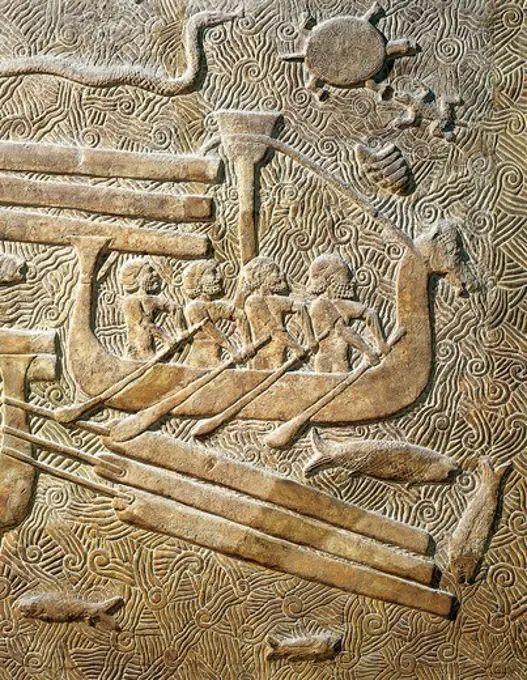
Detail of relief depicting transportation of cedar wood by boats, from Palace of Sargon, Dur Sharrukin, Iraq
1848-53367894
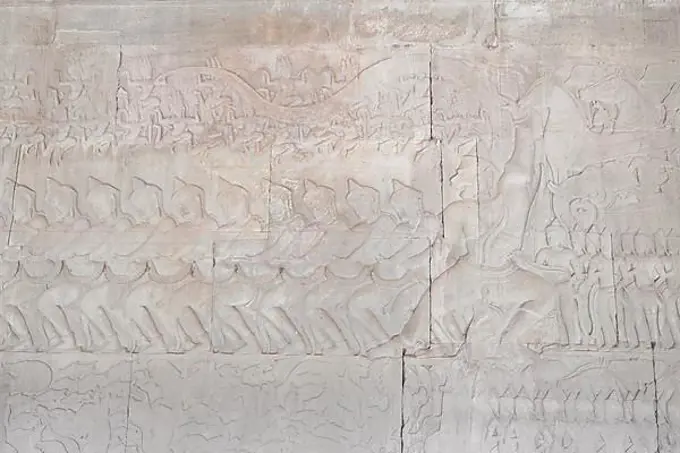
Bas-relief depicting The Churning of the Ocean of Milk, Angkor Wat, Cambodia, Asia
1899-18854540
The Bayon was originally the official state temple of the Mahayana Buddhist King Jayavarman VII. The Bayon, at the centre of Angkor Thom (Great City), was established in the 12th century by King Jayavarman VII. Angkor Thom, meaning The Great City’, is located one mile north of Angkor Wat. It was built in the late 12th century CE by King Jayavarman VII, and covers an area of 9 km², within which are located several monuments from earlier eras as well as those established by Jayavarman and his successors. It is believed to have sustained a population of 80,000-150,000 people. At the centre of the city is Jayavarman's state temple, the Bayon, with the other major sites clustered around the Victory Square immediately to the north. Angkor Thom was established as the capital of Jayavarman VII's empire, and was the centre of his massive building programme. One inscription found in the city refers to Jayavarman as the groom and the city as his bride. Angkor Thom seems not to be the first Khmer
442-21155162
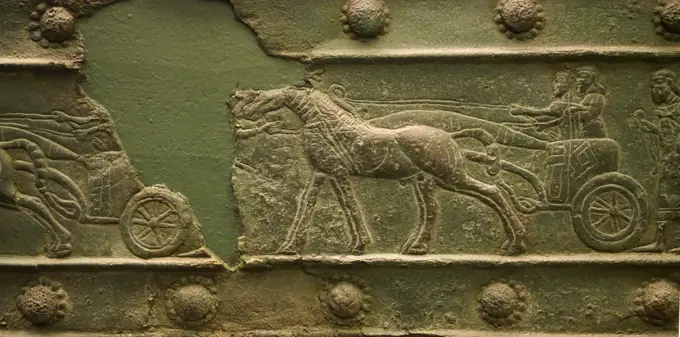
England, London, British Museum, Assyrian Relief from Nimrud depicting Chariots dated 728 BC
1746-30012043
A photograph taken within the Tomb of Renni, the 'Overseer of the priests of Nekhbet' at the time of Amenhotep I at Elkab, situated 90 km to the south of Thebes. Amenhotep I was the second Pharaoh of the 18th dynasty of Egypt. His reign is generally dated from 1526 to 1506 BC.
1746-29963472
Sixth Dynasty, sacrificial chamber and wall from the tomb of Manufer, circa 2,335 BC. Facing the entrance gate, a false door, approximately two metres high, stands at the top of a flight of three steps; it is part of the sacrificial chamber of Manufer, chief wig-maker to the king.
1746-30012928
A photograph taken of the Red Chapel of Hatshepsut (the Chapelle Rouge) constructed initially as a barque shrine during the reign of Hatshepsut, the fifth pharaoh of the eighteenth dynasty of Ancient Egypt and ruled from approximately 1479 to 1458 BC. Although it had been demolished and parts were reused in antiquity, following rediscovery, the chapel has been reconstructed using its original materials. Its original location is thought to have been in the central court of the temple of Amun at Karnak, near Thebes.
4409-65657
Relief depicting a scene from the King's Heb Sed. Monumental gateway from the Palace of Apries, Memphis, Egypt. Limestone. Late Period, Saite. 26th Dynasty. C. 589-570 BC. Ny Carlsberg Glyptotek Museum. Copenhagen. Denmark.
1848-50678007
Side view of the throne of Ramses II Luxor Temple, Thebes, Egypt, Luxor, Thebes, Egypt, Africa
1746-28970067
The Balawat Gates, three sets of gates from Balawat, an ancient Assyrian Empire, with embossed scenes showing scenes of warfare, the presentation of tribute and hunting of Lions and bulls.
1848-50246092
Ashur-nasir-pal II on the throne, Ashur is guardian of the heir to the throne, was king of Assyria from 883 to 859 B. C. photograph after the original in the British Museum in London, digitally improved reproduction of an original print from 1880
6145-52958395
Cylinder seal with two-figure contest scene Babylonian ca. 9th-8th century BCE
1848-51095834
Ancient relief of the Achaemenids, delegation brings gifts, Apadana Palace, archaeological excavation site, ancient Persian royal seat Persepolis, Fars Province, Iran, Asia
6145-29819252
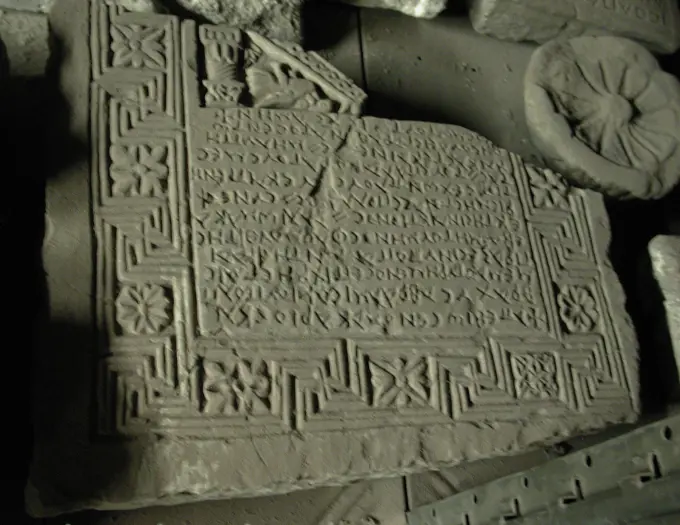
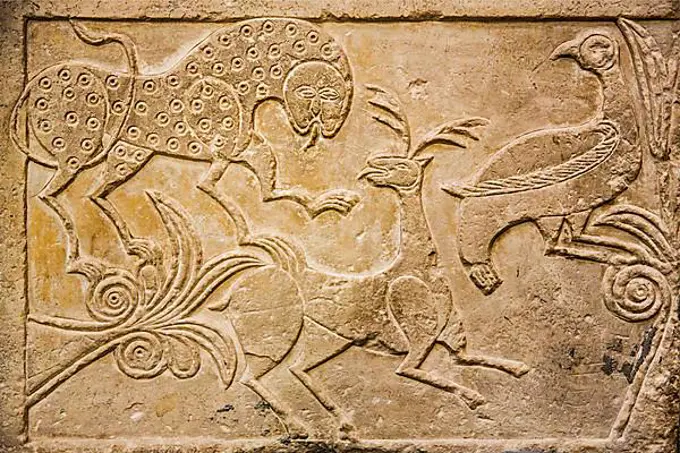
Fragment of an Inscribed Stele Enclosed in a Frame with Swastikas and Rosettes; Part of a Gable with Bird and a Pilaster. 7th-8th century. Fragment of an Inscribed Stele Enclosed in a Frame with Swastikas and Rosettes; Part of a Gable with Bird and a Pilaster. 456131
1899-61455213
Neolithic Period. Temple Period (3600 to 2500 BC). Tarxien Temple Complex. Malta. Built in honour of a mother goddess of fertility. Detail of an architectural fragment decorated with reliefs depicting a procession of animals. National Museum of Archaeology. Valletta. Malta.
4409-63012839
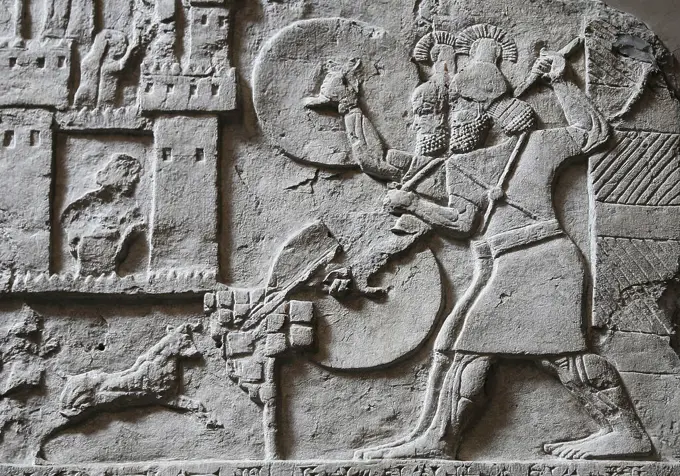
Tiglath-pileser III's army attack on enemy town (perhaps in Syria). Assyrian, 728 BC. Nimrud, Palace. British Museum. London. GBR.
1788-19049
Limestone stele of Hagi. Detail of a relief depicting the deceased and his son making offering
4409-17261821
CALIZA PINTADA-PORTEADORES DE ALIMENTOS(TI=FUNCIONARIO V DINASTIA) - FOTO AÑOS 70. Location: MASTABA DE TI. Saqqarah. EGYPT.
1525-25220693
Mahabharata on the wall of Angkor wat, Cambodia
1788-15610
Relief with scene of flight from city besieged by Ashurbanipal, from ancient Nimrud, Calah, Iraq
1746-28969967
Elamites flee the city during Ashurbanipal's brutal campaign against Elam in 647 BCE. recorded in this relief. Assyrian
1746-21101863
The Gates of Shalmaneser III. Ninth century B.C. The King of Assyria arriving to lay siege to a city.
1746-21110982
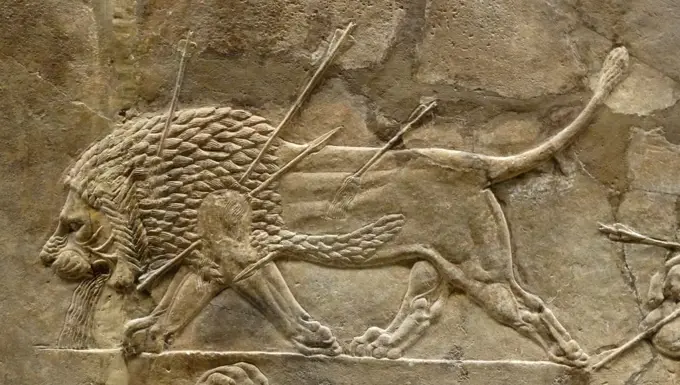
Relief depicting The royal lion hunt. Assyrian, about 645-635 BC From Nineveh, North Palace. The king, with his high distinctive hat, races round the arena in his chariot, shooting arrows at a succession of lions; one arrow, in mid-air, follows a wounded lion. Meanwhile attendants with spears, in the kingís chariot, ward off another wounded Uon that is attacking from behind.
4409-17217767
Detail of the sculptural relief of the timpano of the church Sant Esteve de Betrén, 13th century, Betrén, Lérida, Catalonia, Spain.
1746-19670074
Assyrian wall panel, dated approximately 728 BC depicting the royal chariot. From the Central Palace in Nimrud.
7155-70375694
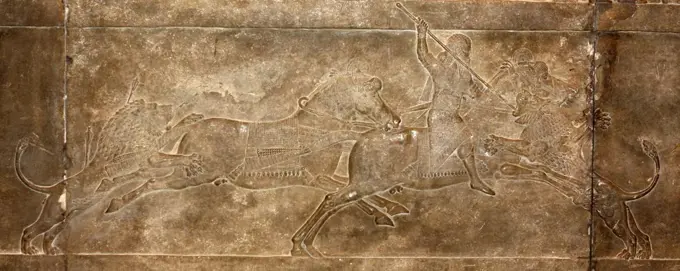
Assyrian relief- King Ashurbanipal hunting lions. IRAQ.
6145-29757009
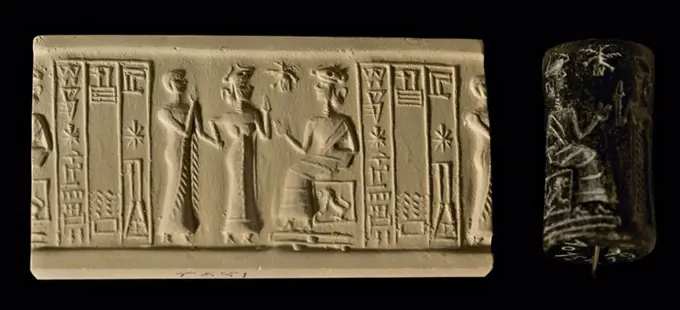
Cylinder seal and modern impression: cultic banquet scene late 2nd millennium or 10th-9th century B.C. Elamite Although engraved stones had been used as early as the seventh millennium B.C. to stamp impressions in clay, the invention in the fourth millennium B.C. of carved cylinders that could be rolled over clay allowed the development of more complex seal designs. These cylinder seals, first used in Mesopotamia, served as a mark of ownership or identification. Seals were either impressed on lumps of clay that were used to close jars, doors, and baskets, or they were rolled onto clay tablets that recorded information about commercial or legal transactions. The seals were often made of precious stones. Protective properties may have been ascribed to both the material itself and the carved designs. Seals are important to the study of ancient Near Eastern art because many examples survive from every period and can, therefore, help to define chronological phases. Often preserving imagery
4409-37586
EGYPTIAN ART. EGYPT. Mandrill carved into the base of the obelisk of Ramses II. TEMPLE OF LUXOR. Ancient Thebes "Waset. New Kingdom. Egypt.
6145-29193211
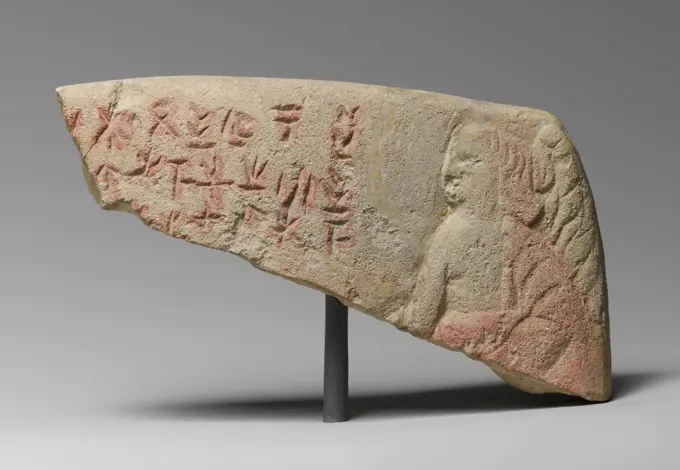
Limestone votive relief fragment of a seated deity with an inscribed dedication to Apollo 3rd century B.C. Cypriot Inscribed "Onasioros dedicated to the god Apollo in (good fortune!)"The inscription on this relief is in Cypriote syllabary, the origin of which has proven difficult to trace. Past attempts have been made to link it to Egyptian and Hittite hieroglyphics, the letter forms of the Phoencian alphabet and to the Cretan script Linear A, as well as the Mycenaean script Linear B.. Limestone votive relief fragment of a seated deity with an inscribed dedication to Apollo 241867
1899-18717617
The Bayon was originally the official state temple of the Mahayana Buddhist King Jayavarman VII. The Bayon, at the centre of Angkor Thom (Great City), was established in the 12th century by King Jayavarman VII. Angkor Thom, meaning 'The Great City', is located one mile north of Angkor Wat. It was built in the late 12th century CE by King Jayavarman VII, and covers an area of 9 km, within which are located several monuments from earlier eras as well as those established by Jayavarman and his successors. It is believed to have sustained a population of 80,000-150,000 people. At the centre of the city is Jayavarman's state temple, the Bayon, with the other major sites clustered around the Victory Square immediately to the north. Angkor Thom was established as the capital of Jayavarman VII's empire, and was the centre of his massive building programme. One inscription found in the city refers to Jayavarman as the groom and the city as his bride. Angkor Thom seems not to be the first Khmer
6176-67036529
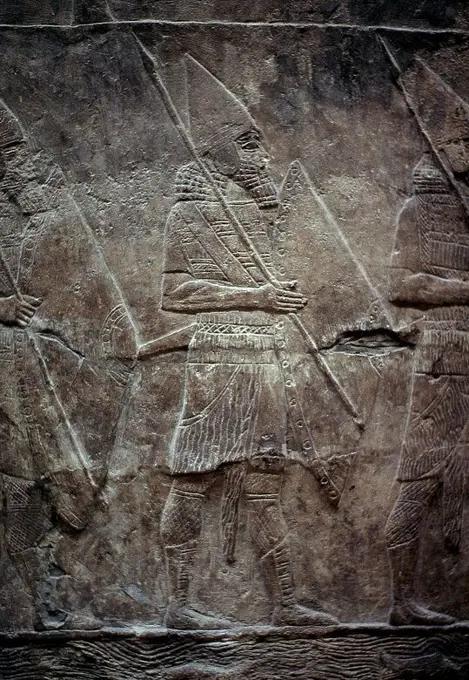
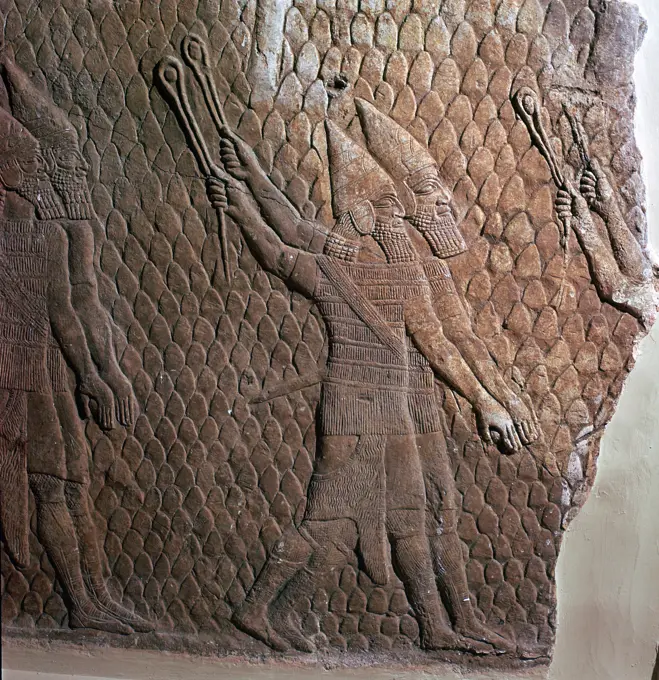
Stone panels from northern Iraq, Neo-Assyrian, c700-c681 BC. Artist: Unknown
1746-29016380
Assyrian wall relief depicting the royal lion hunt. Assyrian, about 645-635 BC From Nineveh, North Palace.
4409-133566
False door of Senenmut, architect and official government. Sandstone. New Kingdom. 18th Dynasty. 1480-1460 BC. West Thebes. Neues Museum. Berlin. Germany.
1746-19698748
detail from the Shrine of Taharqa is a sandstone shrine built by King Taharqa (690-664 BC)
1788-22595
France, Burgundy, Vix krater (vase used to mix wine and water) from the Vix Grave, detail of quadriga, bronze
6176-67036565
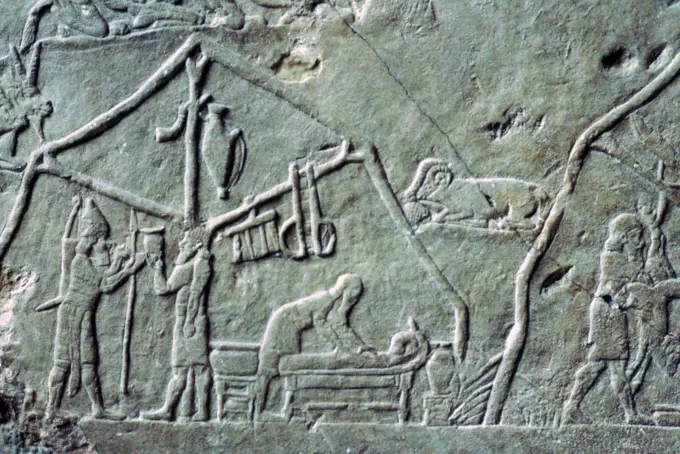
Assyrian relief of a military camp. Artist: Unknown
1848-61327963
Relief detail of the delegation of nations bringing gifts to Darius on the steps of Apadana Palace, Persepolis, Persepolis, Iran, Asia
4409-48378
Temple of Ramses III. Egyptian hieroglyphs. Relief. New Kingdom. (1550-1069 b.C). Twentieth dynasty. Thebes. Medinet-Habou. Egypt.
4409-18473
RECOLECCION DE LA MIES - REPRESENTANDO EN EL CALENDARIO EL MES DE JULIO - DETALLE DE LA PORTADA- SIGLO XII. Location: MONASTERIO DE SANTA MARIA. RIPOLL. GERONA. SPAIN.
6145-29767244
Cylinder seal and modern impression: mistress of animals flanked by rampant horned animals ca. 14th century B.C. Cypriot Although engraved stones had been used as early as the seventh millennium B.C. to stamp impressions in clay, the invention in the fourth millennium B.C. of carved cylinders that could be rolled over clay allowed the development of more complex seal designs. These cylinder seals, first used in Mesopotamia, served as a mark of ownership or identification. Seals were either impressed on lumps of clay that were used to close jars, doors, and baskets, or they were rolled onto clay tablets that recorded information about commercial or legal transactions. The seals were often made of precious stones. Protective properties may have been ascribed to both the material itself and the carved designs. Seals are important to the study of ancient Near Eastern art because many examples survive from every period and can, therefore, help to define chronological phases. Often preservin
1889-12423579
Tablet From The Palace, Alberto Ruz Lhuillier Site Museum, Palenque, Chiapas, Mexico
4409-36062
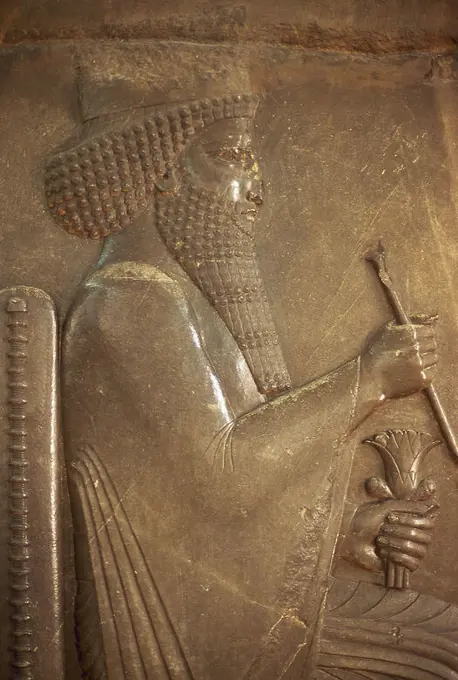
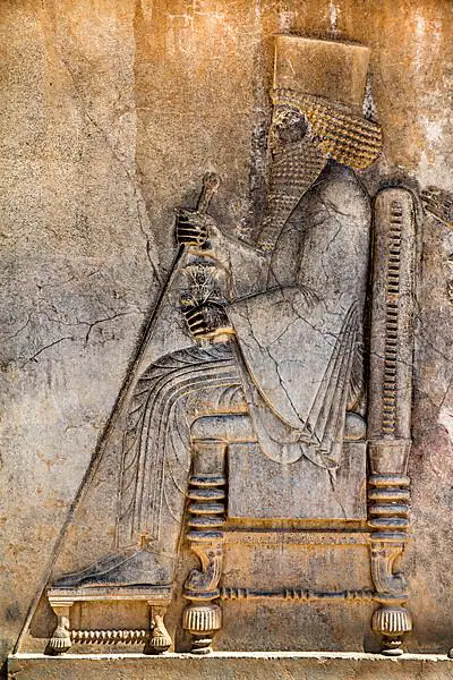
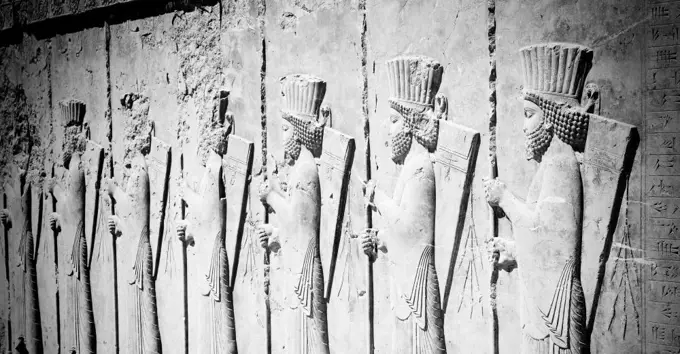
Achaemenid Empire. Palace of Persepolis. Relief of King Darius the Great (521-485 BC). 5th century BC. Archaeological Museum of Tehran, Islamic Republic of Iran.
1788-10353
Egypt, Thebes, Luxor, Valley of the Kings, close-up of relief in corridor representing Isis, Tomb of Seti I
1746-19664247
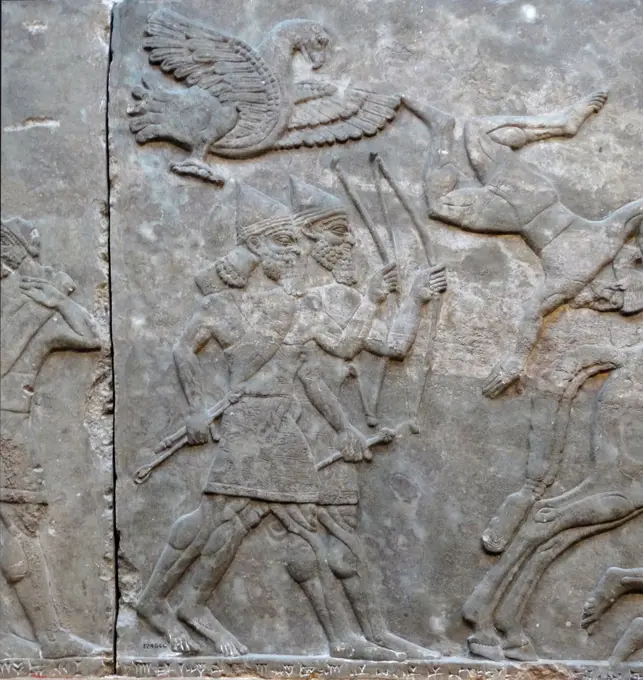
Relief fragment: cavalrymen along a stream in mountainous terrain. Neo-Assyrian, ca. 704681 B.C. from Mesopotamia, Nineveh. made from Gypsum alabaster
7012-69849539
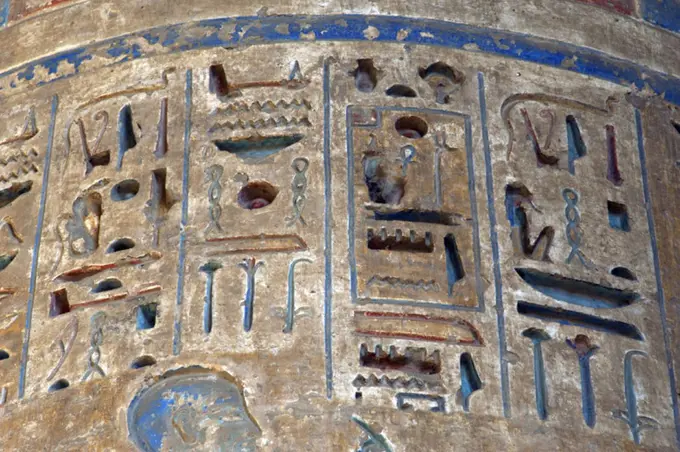
Egypt, Luxor, West Bank, Medinet Habu Temple (aka Djanet). Highly carved hieroglyphic covered wall detail.
4409-19059303
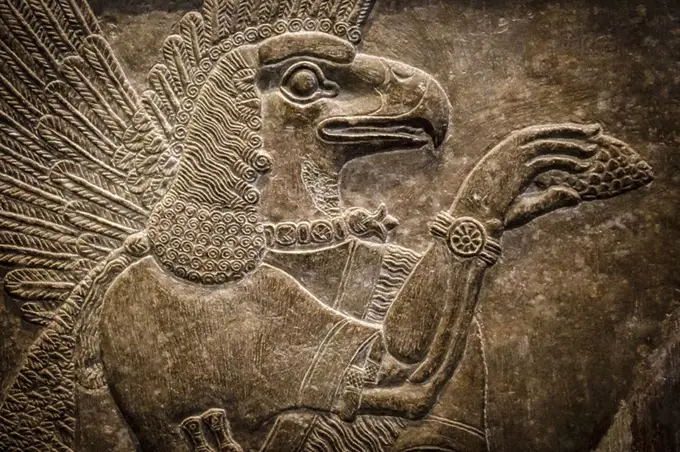
Eagle-headed protective spirit, Assyrian, 865-860 BC, from Nimrud, Temple of Ninurta, British museum, London, England, Great Britain.
1848-63250289
Relief of King Darius enthroned under a canopy, Persepolis, Persepolis, Iran, Asia
1899-20257592
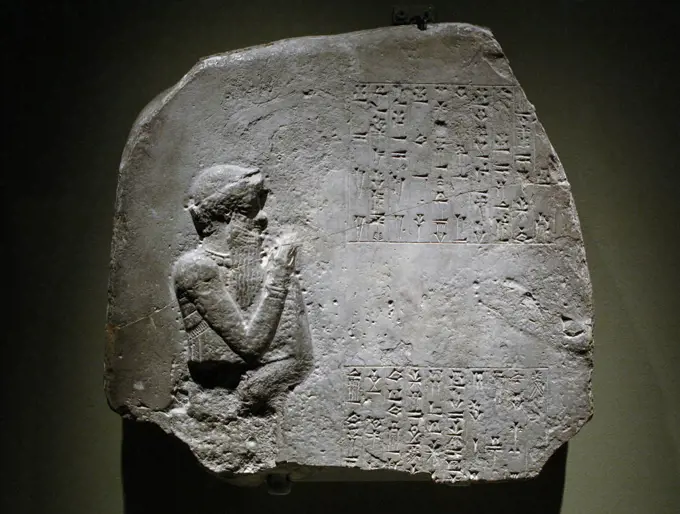
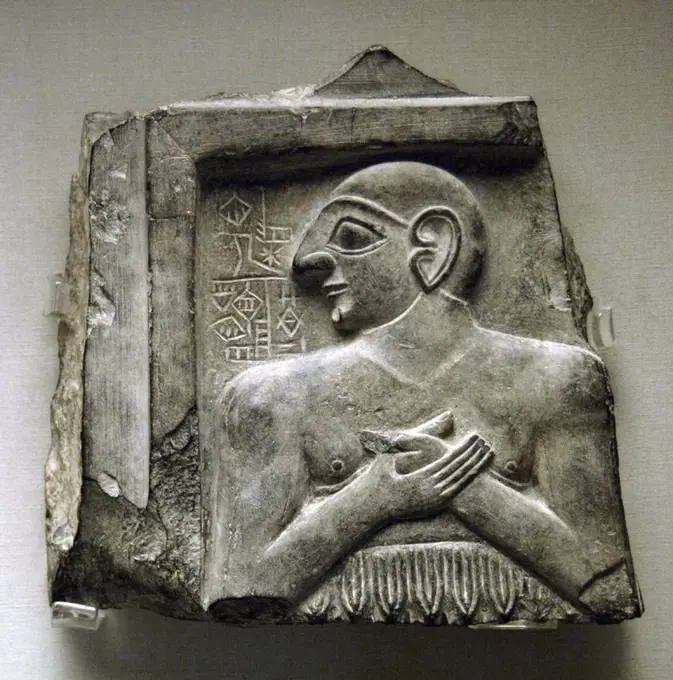
Votive offering. Fragment of a stone stele dedicated by Itur-Ashdum. First Dynasty of Babylon, c. 1760-1750 BC. Probably from Sippar, southern Iraq. Limestone. The cuneiform inscription states that a high official called Itur-Ashdum dedicated a statue to the goddess Ashratum in her temple, on behalf of King Hammurabi (reigned 1792-1750 BC). The figure carved may represent  Hammurabi. British Museum. London, England, United Kingdom.
4409-17415059
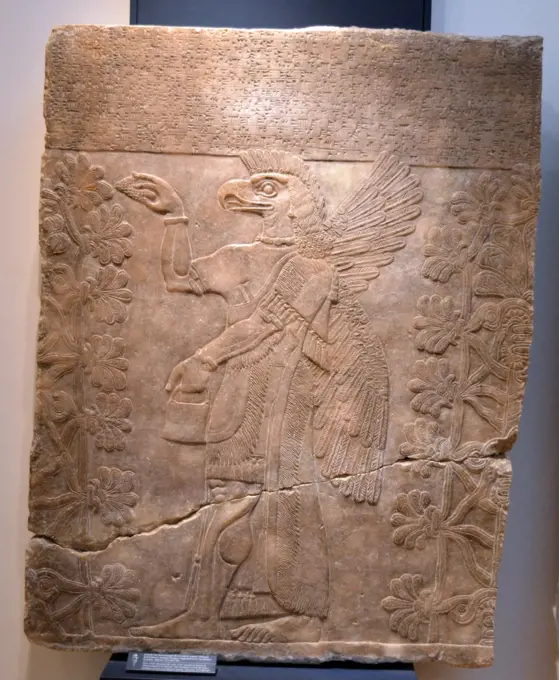
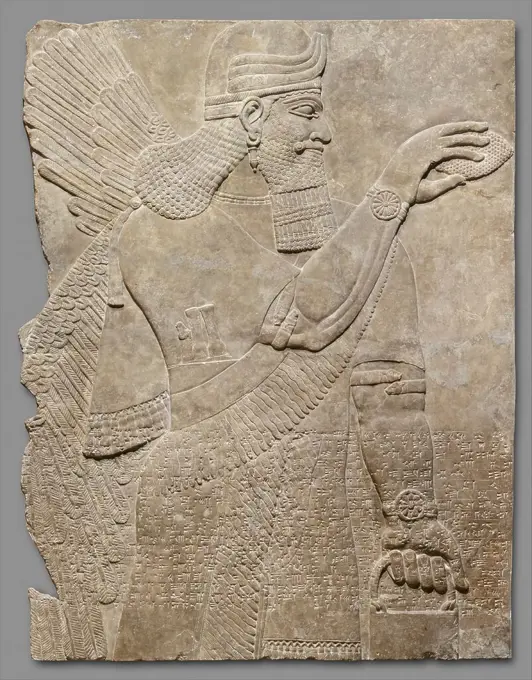
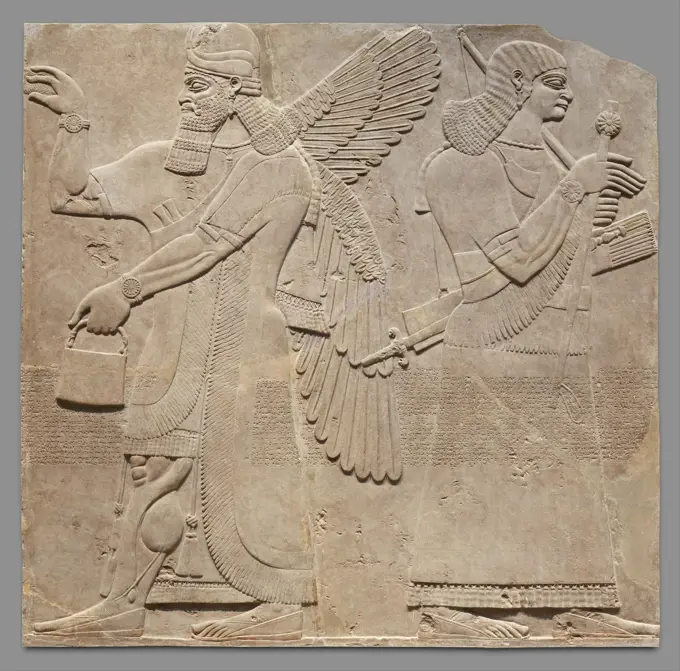
Relief panel. Culture: Assyrian. Dimensions: 64 5/8 x 49 1/2 x 3 1/2 in. (164.1 x 125.7 x 8.9 cm). Date: ca. 883-859 B.C..This panel from the Northwest Palace at Nimrud (ancient Kalhu) depicts a winged supernatural figure. Such figures appear throughout the palace, sometimes flanking either the figure of the Assyrian king or a stylized "sacred tree." The reliefs were painted, but today almost none of the original pigment survives. However, the reliefs themselves retain incredible detail, including intricate incised designs on many of the figures' clothing.The protective figure on this panel originally stood back to back with another on one side of a doorway, with parallel figures on the other side, so that one pair of figures faced out toward a courtyard and the other into the room. The Museum collection includes fragments of all four figures. The figure is human-headed and faces right, holding in his left hand a bucket and in his right hand a cone whose exact nature is unclear. One su
4409-133567
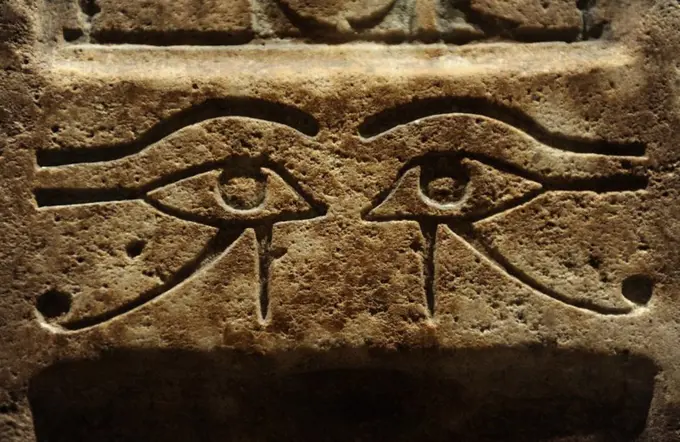
False door of Senenmut, architect and official government. Detail of the Eye of Horus. Sandstone. New Kingdom. 18th Dynasty. 1480-1460 BC. West Thebes. Neues Museum. Berlin. Germany.
1788-16588
Detail of relief
1848-61442182
Relief detail of the delegation of nations bringing gifts to Darius on the steps of Apadana Palace, Persepolis, Persepolis, Iran, Asia
1899-18611361
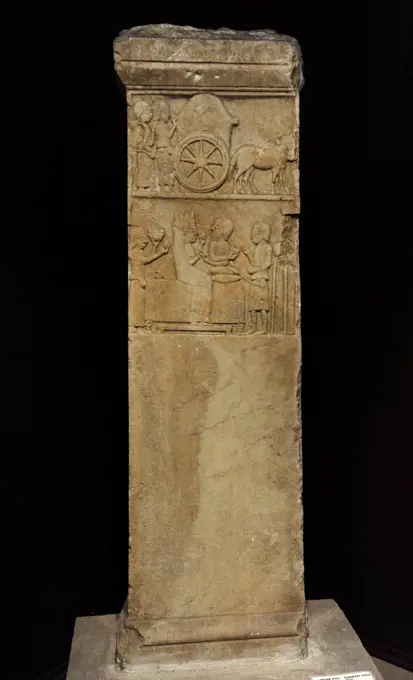
Anatolian-Persian funerary stele, 5th century BC. Marble. From Daskylaion (Ergili, Lake Manyas). Stele with depiction of a funerary cortege in two scenes: two mourning women walk behind a funeral cart (upper scene). A woman and a bearded man sit on a couch (lower scene). The woman's left hand holds an object, while her right hand receives an egg from the man. The couch is flanked by servants or slaves. On the right, the slave stands in front of a vessel placed on a tripod. On the left, the other slave carries a fruit bowl. Archaeological Museum. Istanbul, Turkey.
6145-29747419
Relief with chariots ca. 1352-1336 B.C. New Kingdom, Amarna Period This relief was discovered in the Sanctuary area of the Great Aten Temple at Amarna. In the upper register are chariots with their spirited horses held in check by grooms. Scenes of waiting chariots flanked depictions of the royal family inside the temple worshipping the Aten: the family had driven to the temple in their chariots, and left the restless horses to await their return after worshipping. The register below depicts various attendant groups also waiting outside the temple for the return of the royal family.. Relief with chariots. ca. 1352-1336 B.C.. Limestone, paint. New Kingdom, Amarna Period. From Egypt, Middle Egypt, Amarna (Akhetaten), Great Temple of the Aten, Sanctuary, Egypt Exploration Society excavations, 1926-27. Dynasty 18
1606-155493
Egypt, Abu Simbel, Great Temple, interior,
6188-64521634
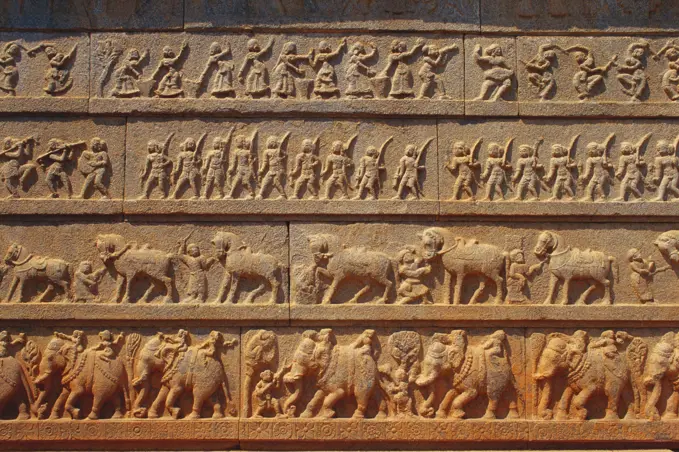
Entrance wall depicting statues on Hazara Ramchandra temple 1406-22 , Hampi , Hospet , Karnataka , India Copyright: xPxMistry/DinodiaxPhotox
1788-111118947
Stele with relief design of arrow heads at MAG, Upper Garda Museum, Riva del Garda, Lake Garda, Trentino-Alto Adige, Italy.
4409-29041198
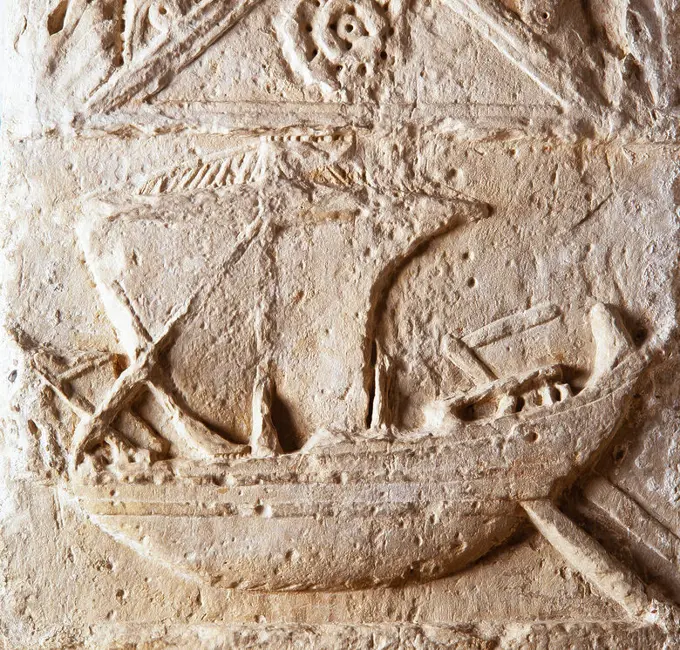
Estela funeraria de la nave, siglo II d. C. Museu de Tortosa.
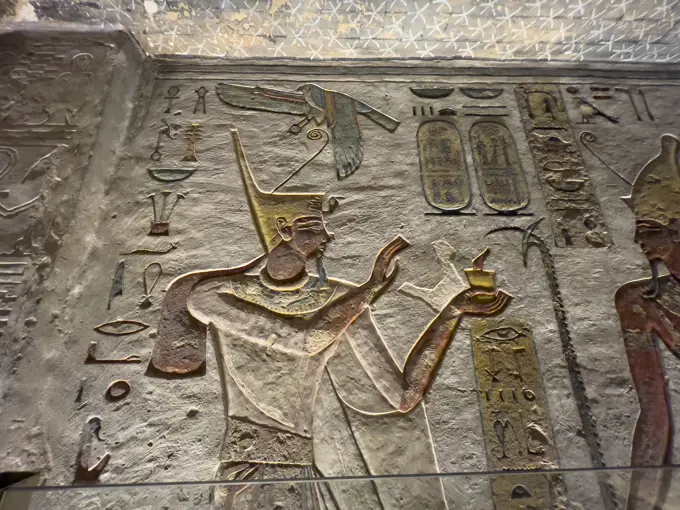
1890-30468020
Reliefs and paintings in the tomb of Tomb KV11, the tomb of ancient Egyptian Ramesses III, Valley of the Kings, UNESCO World Heritage Site, Thebes, Egypt, North Africa, Africa
6145-29190144
Relief panel ca. 883-859 B.C. Assyrian This relief, from the palace of the Assyrian king Ashurnasirpal II (r. ca. 883-859 B.C.), depicts a supernatural protective figure and a mortal Assyrian courtier. The two larger-than-life-sized figures are carved in low relief. This panel joins a second relief (32.143.4, see Additional Images’ above) that shows the king and a second courtier. Together, the two panels show the king flanked by his human courtiers. The winged figure here formed part of a similar neighboring scene, this time with the king flanked by divine protectors.The winged human-headed figure wears a horned crown - a traditional Mesopotamian marker of divine status - and bracelets adorned with rosettes, as well as armbands, a necklace of beads, and large pendant earrings. He wears a tunic with long tassels and a fringed shawl, emerging from which at chest level can be seen the decorated handles of two knives. Embroidery on the clothes is represented by fine incised patterns of s
4409-63014184
Campaigning in southern Iraq. Decapitated head. Assyrian, 640-620 BC. Nineveh, South-West Palace. Iraq. British Museum. London.
1788-18897
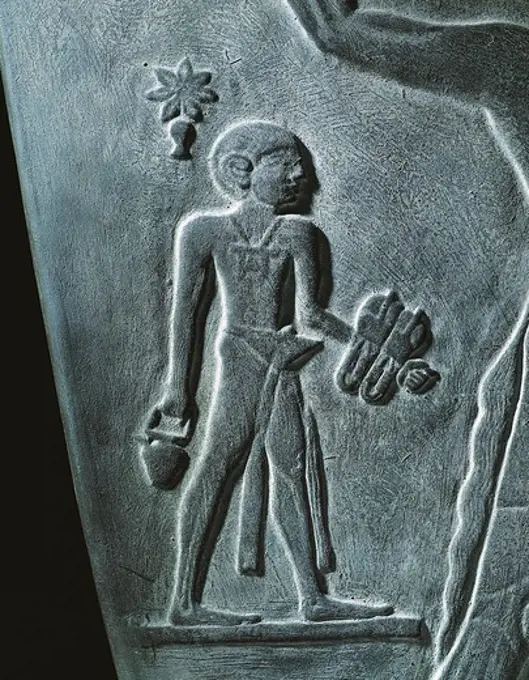
Detail of ancient Egyptian Cast of Narmer palette, Early Dynastic Period, I Dynasty (plaster copy)
7155-70375813
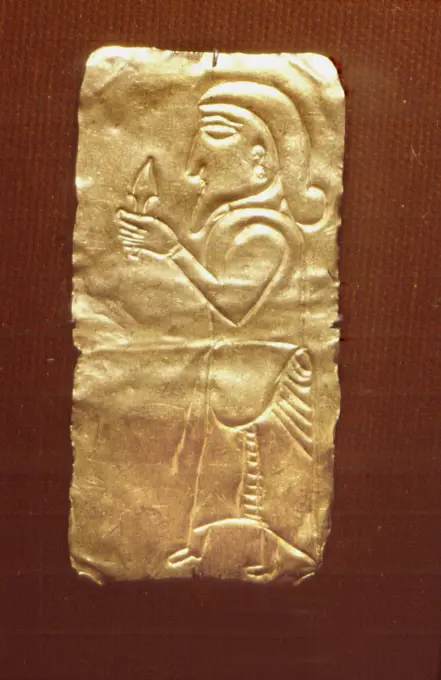
Oxus Treasure- gold plaque PERSIA- IRAN.
1848-64416265
Beautiful carving of a goat mother and child on a wall of the ancient Egyptian Horus temple, Edfu
1746-19984529
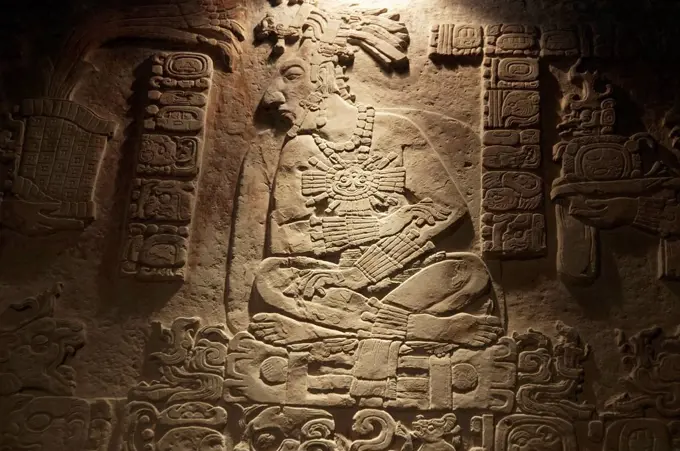
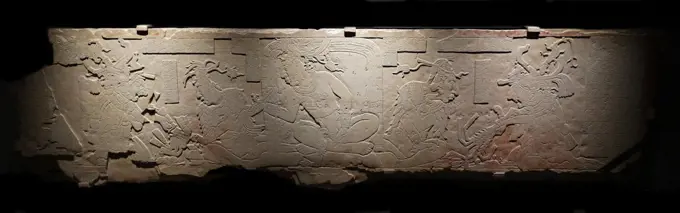
Mayan auto sacrificial stone panel from structure XXI, Palenque, Mexico. 600-900 AD. At the centre we can see the king K'nich Janahb Pakal with his son
1899-48083769
Carved stonework details, Temple of Panels, Templo de los Tableros Esculpidos, Chichen Itza, Mayan ruins, Yucatan, Mexico.
4409-17279266
CALIZA PINTADA-PORTEADORES DE ALIMENTOS-V DINASTIA(2450 AC). Location: MASTABA DE TI. Saqqarah. EGYPT.
6145-29759351
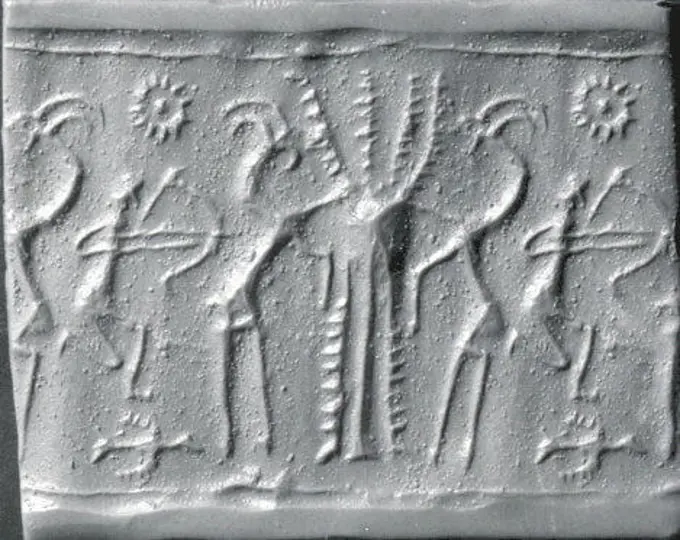
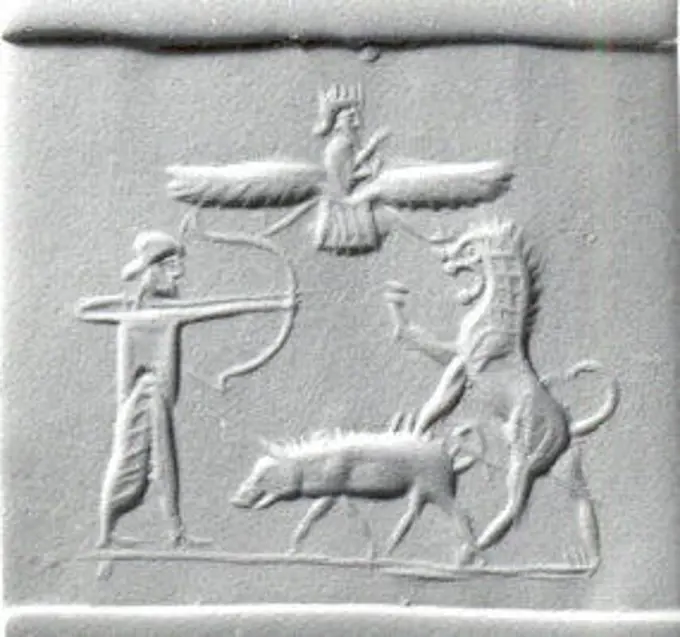
Cylinder seal and modern impression: kneeling archer and goats flanking tree ca.10th century B.C. Elamite Although engraved stones had been used as early as the seventh millennium B.C. to stamp impressions in clay, the invention in the fourth millennium B.C. of carved cylinders that could be rolled over clay allowed the development of more complex seal designs. These cylinder seals, first used in Mesopotamia, served as a mark of ownership or identification. Seals were either impressed on lumps of clay that were used to close jars, doors, and baskets, or they were rolled onto clay tablets that recorded information about commercial or legal transactions. The seals were often made of precious stones. Protective properties may have been ascribed to both the material itself and the carved designs. Seals are important to the study of ancient Near Eastern art because many examples survive from every period and can, therefore, help to define chronological phases. Often preserving imagery no lo
6145-29769369
Cylinder seal ca. 2000-1750 B.C. Isin-Larsa. Cylinder seal. Isin-Larsa. ca. 2000-1750 B.C.. Hematite. Isin-Larsa. Mesopotamia
4409-59910
Mesopotamia. Summer. Archaic Dynasty III. King Eannatum of Lagash. From Girsu. 2424-2405BC. British Museum. London. England. United Kingdom.
6145-29752267
Cylinder seal with cultic banquet scene 8th - 7th century B.C. Assyrian. Cylinder seal with cultic banquet scene 327666
1848-52961446
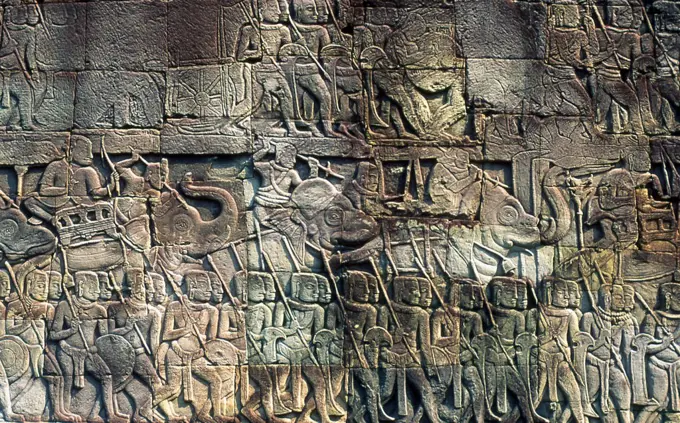
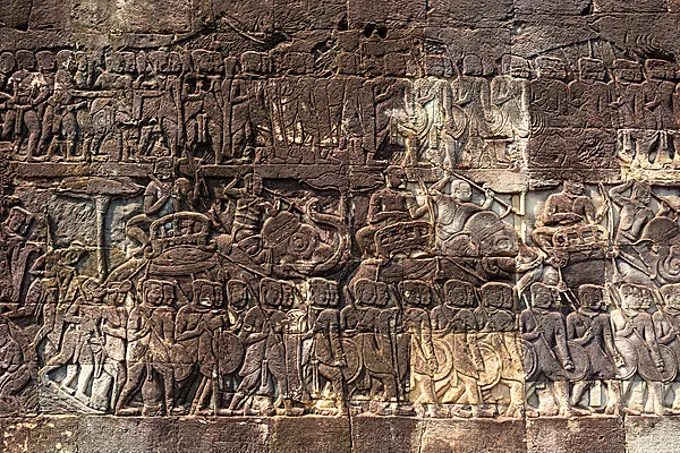
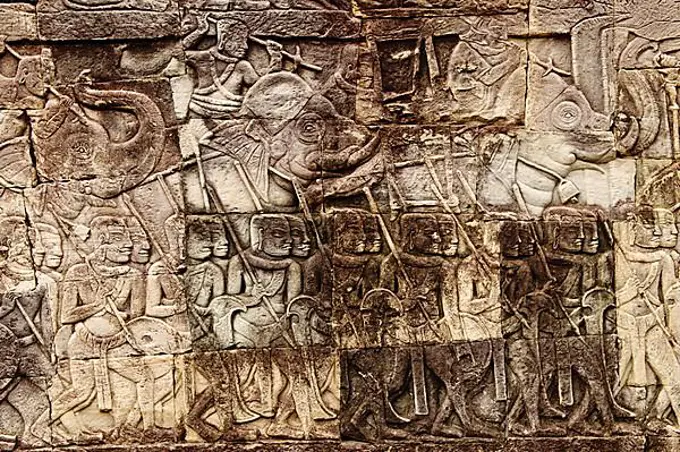
Marching army, soldiers, war scene, bas-relief, gallery, third ring of walls, Bayon Temple, Angkor Thom, Siem Reap, Cambodia, Asia
1848-60283146
Unesco World Heritage Site Monte Alban, Oaxaca, Mexico, Central America, Ancient stone engraved relief with several figures, exhibited in a museum on a gravel surface, Mitla, Central America
7003-69641048
ITALY, Campania, (Bay of Naples), ISCHIA, ISCHIA PONTE: Bas Relief at the 15th century Castello Aragonese
4168-14199
Iran, Persepolis, Apadana Staircase, Carving, King'S New Year'S Reception
6145-29819524
Cylinder seal ca. early 2nd millennium B.C. Babylonian. Cylinder seal. Babylonian. ca. early 2nd millennium B.C.. Hematite. Old Babylonian. Mesopotamia
6145-29773407
Processione sulla facciata della grande scala 1858 Luigi Pesce Italian. Processione sulla facciata della grande scala 271262
4409-21498662
Tumba de Paheri. Paheri era el nieto de Ahmose hijo de Ebana, y sirvió bajo las órdenes de Tutmosis III. Ostentó varios cargos, fue Intendente de Nekheb, así como Escriba de Amon, Tutor del Príncipe, y Jefe de los sacerdotes de la diosa Nejbet, entre otros.
1848-50847693
Stela of Apries, detail, 580 BC circa, sandstone, Mit Rahina museum, Memphis, Egypt, Africa
4409-17560009
Palais de Karnak, Sculptures Extérieures du Sanctuaire de Granit; Thèbes. Maxime Du Camp; French, 1822-1894. Date: 1849-1851. Dimensions: 20.4 × 16 cm (image/paper); 43.1 × 29.7 cm (album page). Salted paper print, plate 42 from the album "Egypte, Nubie, Palestine et Syrie" (1852). Origin: France. Museum: The Chicago Art Institute, Chicago, USA.
4409-21481005
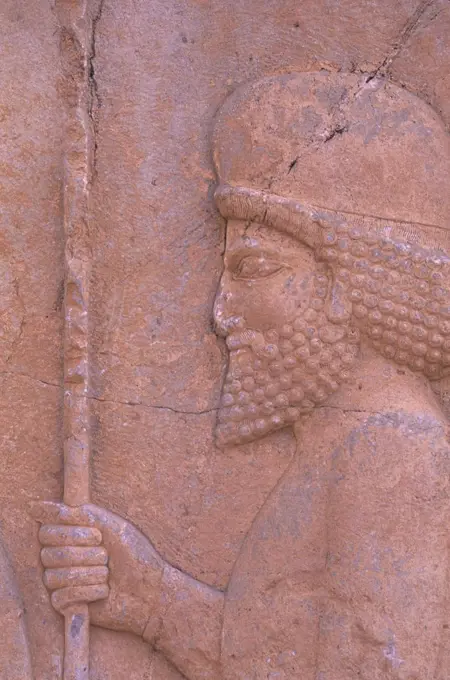
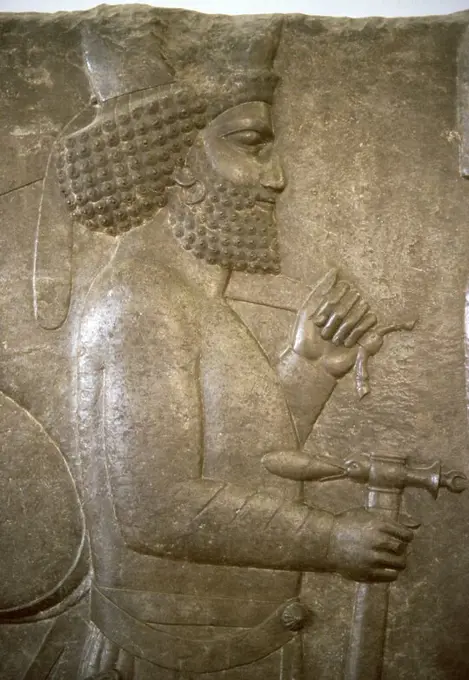
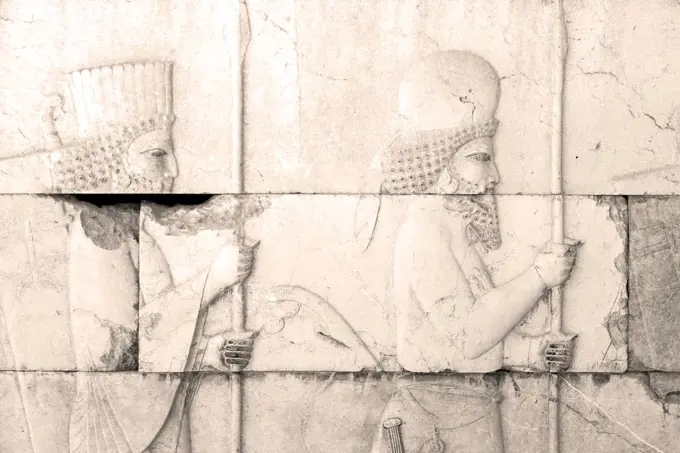
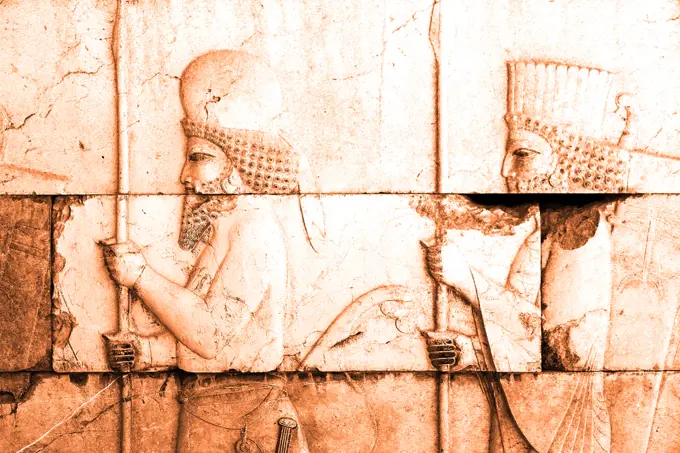
Sculptural relief depicting a Median squire (round cap) during a reception with king Darius I. 5th century BC. From Persepolis (Iran). UNESCO World Heritage Site. National Museum of Iran. Tehran, Islamic Republic of Iran.
1788-18063
Scene of Ashurbanipal hunting, Relief from Royal Palaces of Nineveh, circa 645 B.C.
4413-35531952
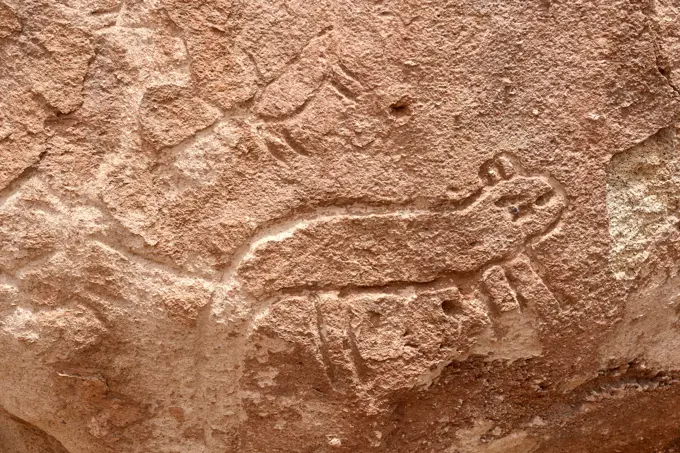
Pre-Hispanic petroglyphs. Stopover for caravans linking the altiplano to the Pacific coast. Hierbas Buenas, Atacama Desert, Chile.
7075-70253149
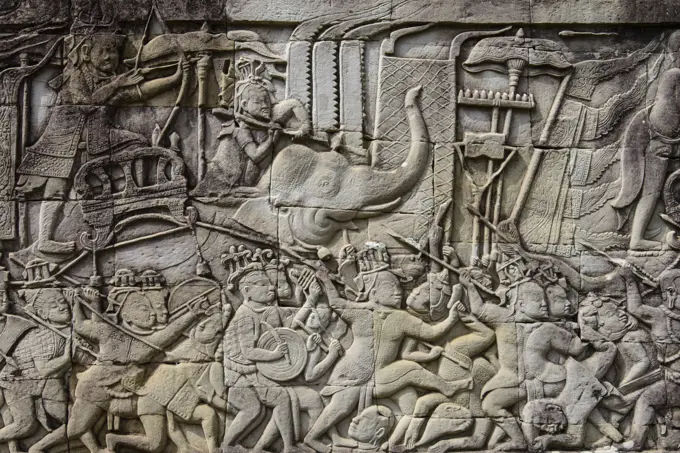
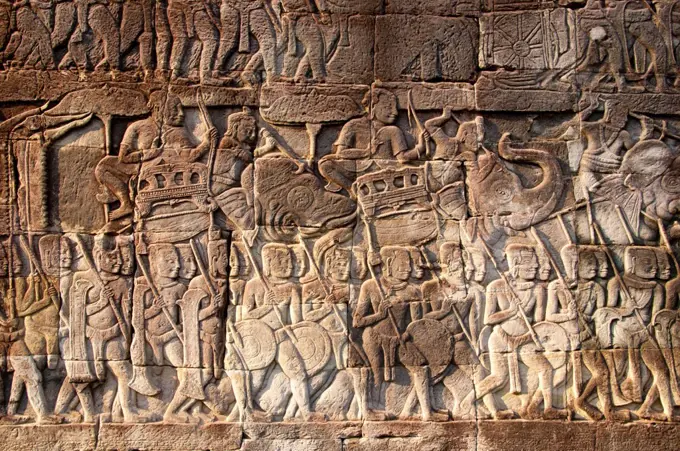
Cambodia, Angkor Wat. Angkor Thom, Bayon. Bas relief carving of battle scene, with elephant. (Large format sizes available)
1848-51095835
Ancient relief of the Achaemenids, delegation brings gifts, Apadana Palace, archaeological excavation site, ancient Persian royal seat Persepolis, Fars Province, Iran, Asia
1746-30012642
18th Dynasty tomb of Paheri, at Elkab,south of Thebes, Egypt. dating from of the New Kingdom in the middle of the 18th Dynasty, under the reign of Thutmosis III. The tomb had already been located by the scholars of the Egyptian expedition in 1799. The titles associated with Paheri are those of nomarch (governor prince) and scribe. He is often called nomarch of Nekheb and Anyt
4409-17374761
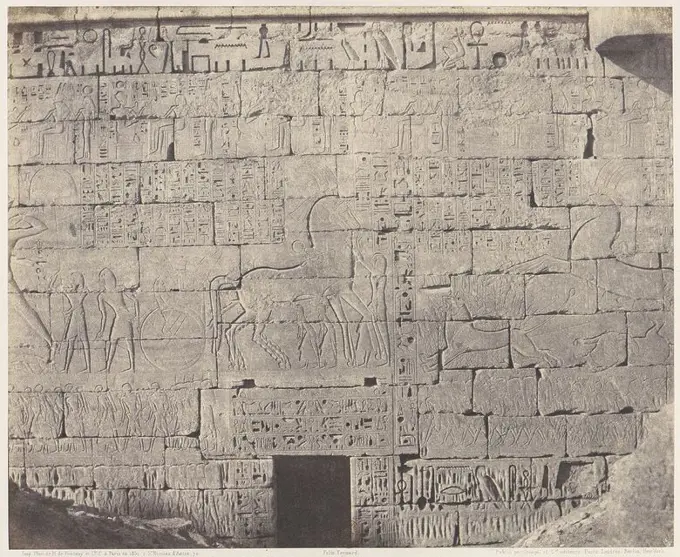
Médînet-Abou (Thèbes), Constructions Postérieures - Fragment de Sculptures Sur la Face Nord-Est. Artist: Félix Teynard (French, 1817-1892). Dimensions: 24.6 x 30.1 cm. (9 11/16 x 11 7/8 in.). Printer: Imprimerie Photographique de H. de Fonteny et Cie. Date: 1851-52, printed 1853-54. Museum: Metropolitan Museum of Art, New York, USA.
1746-19659710
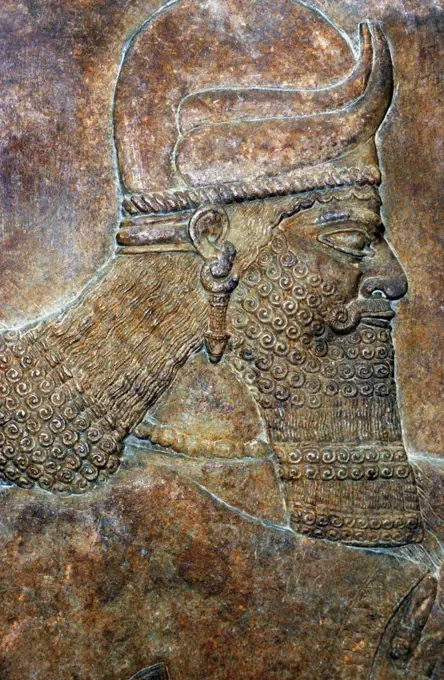
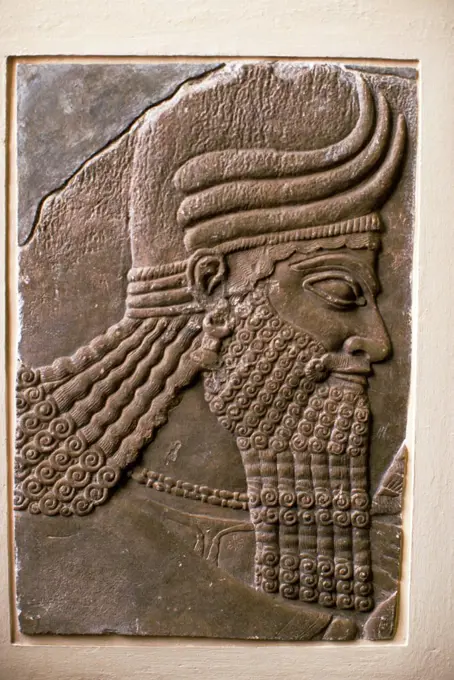
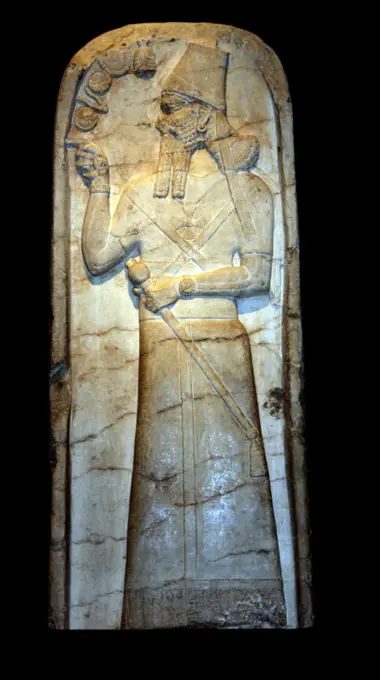
King Ashurnasirpal II from   Nimrud, c 865 BC
1746-19666279
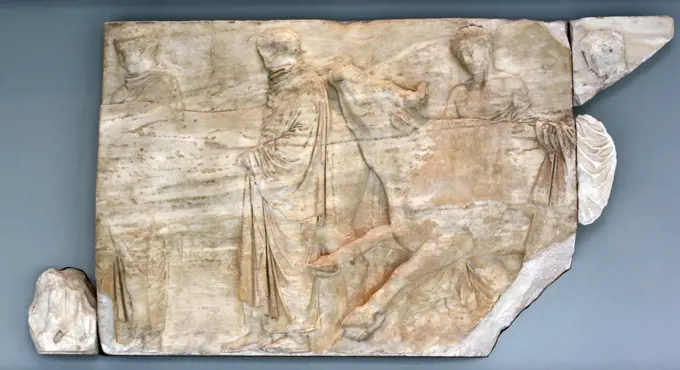
Three men with short curly hair and wearing himatia lead two more bulls. The second bull is resisting, but he is restrained by a rope (once shown in paint) held by one of the men, whose body is partly depicted on this block.
4435-3816
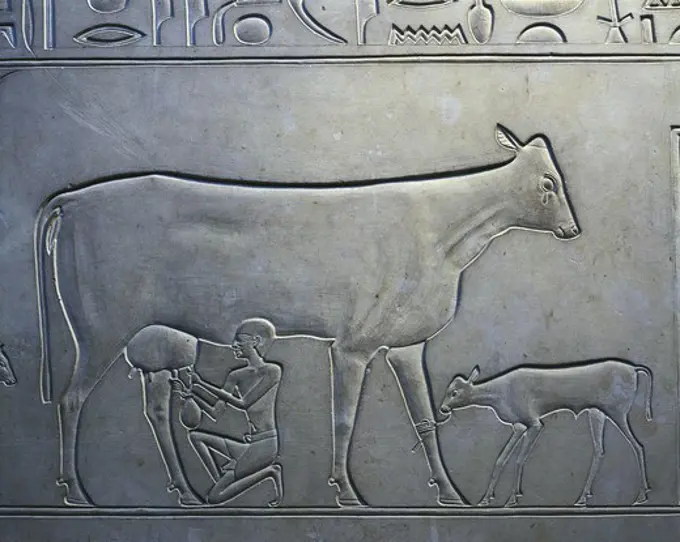
Sarcophagus of Queen Kawit. 2040 BC. Detail of the servant milking a cow. Egyptian art. Middle Kingdom. Relief on rock. EGYPT. CAIRO. Cairo. Egyptian Museum. Proc: EGYPT. QUENA. Dayr al-Bahri. Mortuary Temple of Mentuhotep II.
4443-21936078
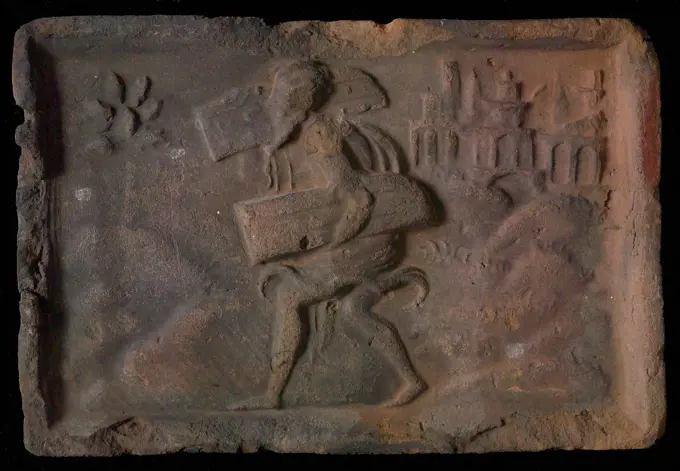
Hearthstone, from Antwerp Belgium, with narrow frame, with Simson, hearth fireplace component ceramics brick, fired Hearth of the Antwerp type with narrow list depicting Samson carrying the gate doors of Gaza (Judges 16: 1v) on the background mountainous landscape with right the city of Gaza and left tree building history heating bible religion old testament Simson Gaza Rotterdam City Triangle Lombard Street Originating from house on the Lombardstraat in 1885 demolished.
6145-29137355
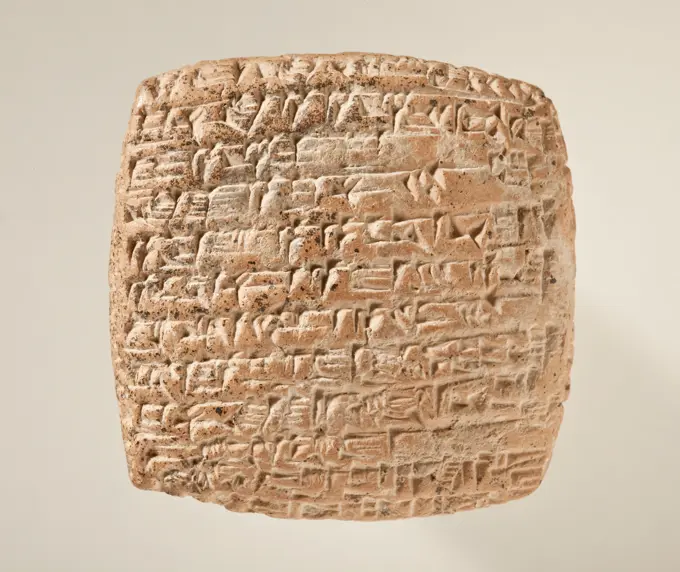
Tablet. Anatolia, circa 1900 B.C.. Tablets. Clay
1746-29955508
"Limestone stela of the sole Companion and Mayor, Meni. . Egyptian, Dendera, Egypt. End of the first Intermediate Period. The First Intermediate Period, often described as a ""dark period"" in ancient Egyptian history, spanned approximately one hundred and twenty-five years, from c. 21812055 BC, after the end of the Old Kingdom
6145-29164223
Cylinder seal with cultic scene late 9th - 7th century B.C. Assyro-Babylonian. Cylinder seal with cultic scene. Assyro-Babylonian. late 9th - 7th century B.C.. Neutral Chalcedony (Quartz). Neo-Assyrian / Neo-Babylonian. Mesopotamia
4409-21487852
Templo de Karnak. Museo al aire libre. Egipto.
4409-9341
GRUPO FAMILIAR. KA-EM-HESET Y SU FAMILIA IV DINASTIA PIEDRA CALCAREA POLICROMADA. PROCEDE DE SAQQARA. Location: EGYPTIAN MUSEUM. KAIRO. EGYPT.
1746-29016384
Assyrian wall relief depicting the royal lion hunt. Assyrian, about 645-635 BC From Nineveh, North Palace.
4409-62730762
Glazed tile. The Assyrian king Ashurnasirpal II, below a parasol, is arrounded by guards. North West Palace, Nimrud, Iraq. 845-850 BC. Clay. British Museum.
1746-21110961
Beginning of the attack on Lachish. Assyrian, about 700-692 BC From Nineveh, South-West Palace, Room XXXVII panela 5-6. long-range artillery are slinging stones and shooting arrows
1848-55374570
Young Goddess, Olmec Sculpture, Parc Museum La Venta, Villahermosa, Tabasco, Mexico, Central America
1848-61263408
Demeter and Kore on a quadriga from the temple at Selinunte, Museo Archeologico Regionale Antonino Salinas, collection of Etruscan, Roman, Egyptian and Greek works, Palermo, Palermo, Sicily, Italy, Europe
4409-60578
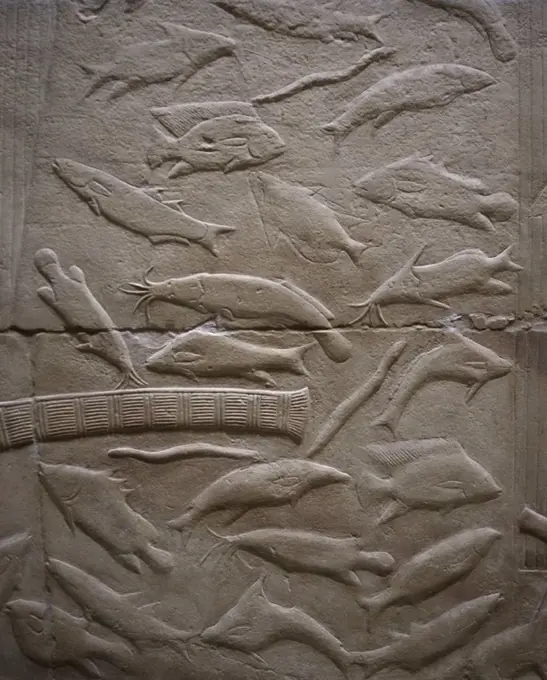
Egypt. Necropolis of Saqqara. Mastaba of Kagemni (2350 BC). Chief Justice and vizier of the Pharaoh Teti. Relief depicting fishes in the river Nile. 6th Dynasty. Old Kingdom.
6145-30176480
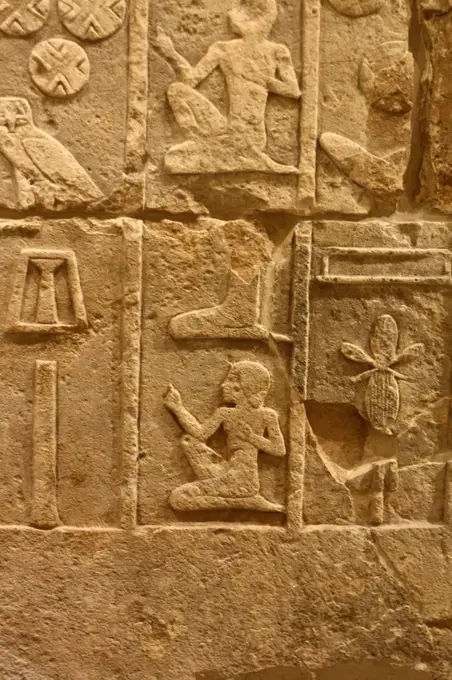
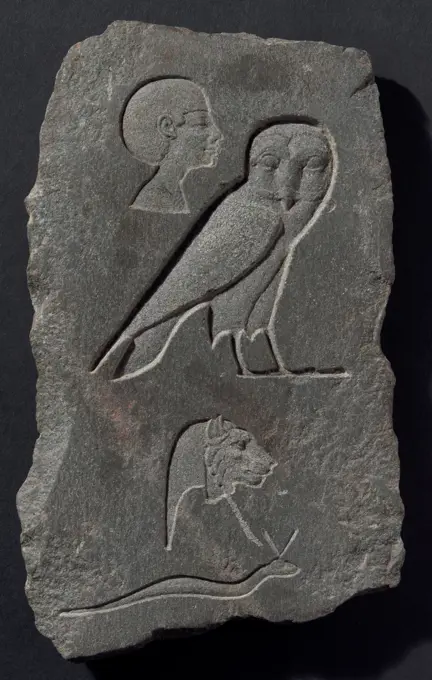
Relief Plaque Depicting Hieroglyphic Signs 300 BCE Egypt. This plaque, which originally served as a sculptorís model, is carved with three images that the Egyptian used in their hieroglyphic writing. The human head represents the sound tp, the owl stands for m, and the viper represents the sound f. These signs would have been copied by artists as they carved pictures and words on the walls of tombs.. Stone . Ancient Egyptian
1850-46715
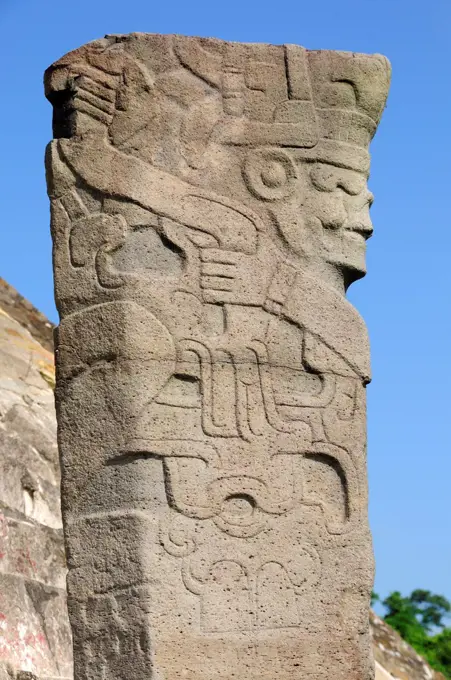
Mexico, Veracruz, Papantla, El Tajin archaeological site Stone carving at Monument 5.
1848-50678068
Upper part of the Hatshepsut obelisk, Karnak Temple, Luxor, Thebes, Egypt, Luxor, Thebes, Egypt, Africa
1746-19692040
The Black Obelisk of Shalmaneser III (858-824 BC) Assyrian, about 827 BC. The obelisk was erected in the centre of Nimrud, shortly before Shalmaneser III's death. It records the king's campaigns, showing tribute brought from all directions. The stone itself is a fine-grain black limestone streaked with white.
1848-56097979
Bas relief, Angkor Wat main temple, Cambodia, Asia
6145-29757553
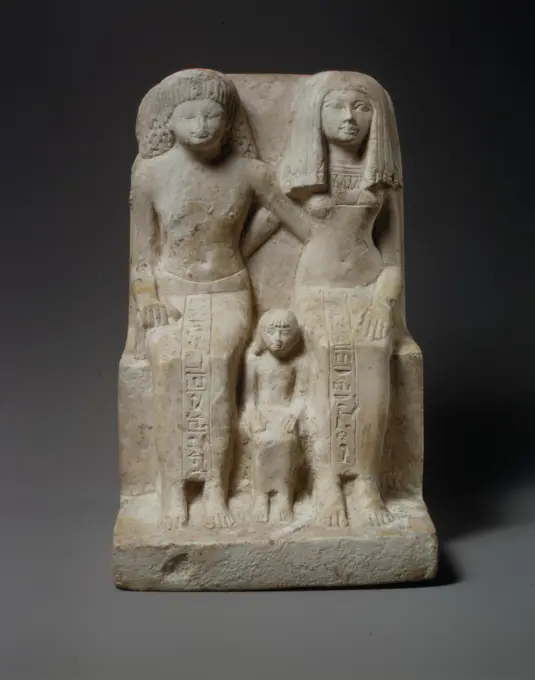
Statue of Kedamun and His Family ca. 1550-1295 B.C. New Kingdom. Statue of Kedamun and His Family. ca. 1550-1295 B.C.. Limestone, paint. New Kingdom. Probably from Upper Egypt, Thebes; From Egypt. Dynasty 18
4168-14338
Germany, East Berlin, Pergamon Museum, Relief, Assyria
6145-59138316
Emilia-Romagna Bologna Bologna Museo Civico Archeologico Sale III, IV, V. Hutzel, Max 1960-1990 Specific Location: Sale III, IV, V (Egyptian antiquities) Owner: Museo Civico Archeologico Antiquities: III: basalt sculptural fragments; reliefs from the tomb of Horemheb; funerary stele; dynasties XVIII, XIX, XX, Ptolomeic dynasty reliefs, generally in limestone. IV: XVIII, XIX dynasty sculptures in granite, limestone, sarcophagi, statuette in basalt, statuette in wood, statuettes in bronze, statuette faience, mummy mask: V: basalt sculptures of Horus, Sekhmet, limestone stele (Antiq. count: 202); Republican portrait sculpture, Republican cippi with portrait bust, cippus with portraits (single and group), cippi with inscriptions from all periods, architectural fragments, basin with inscription, torso fragment of cuirassed figure of the 1st century AD (Nero) (Antiq. count: 185); disk lamps from the late republic to 6th century, with erotes, animals, erotica, mythological scenes, menorah, pe
1848-55026044
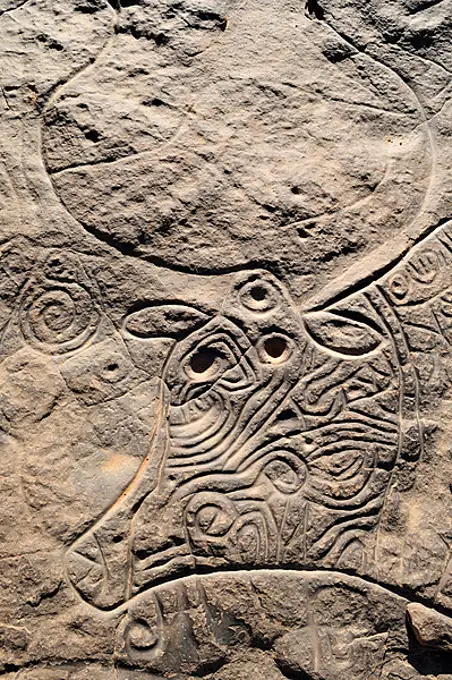
Rock engraving, petrograph of the famous curly cow, neolithic rock art of Tinterhert, Dider Valley, Tassili n'Ajjer National Park, Unesco World Heritage Site, Wilaya Illizi, Algeria, Sahara, North Africa, Africa
4409-63014682
Campaigning in southern Iraq. Band of river (Tigris or Euphartes). Assyrian, 640-620 BC. Nineveh, South-West Palace. Iraq. British Museum. London.
6145-29766410
Cylinder seal ca. 2350-2150 B.C. Akkadian. Cylinder seal 323874
4409-20937015
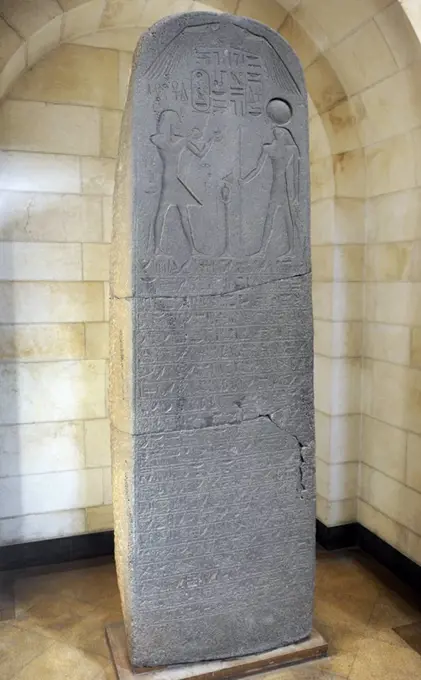
Egypt. Stele of Seti I. Beth-Shean. 1289-1278 B.C. Basalt. Commemorates the king's victory in the Military expedition into Canaan. The pharaoh (left), crowned with an Uraeus, presents the libation and incense to the sun god Re-Harakhty. Relief. 19th Dynasty. New Kingdom. Rockefeller Archaeological Museum. Jerusalem. Israel.
4409-17331375
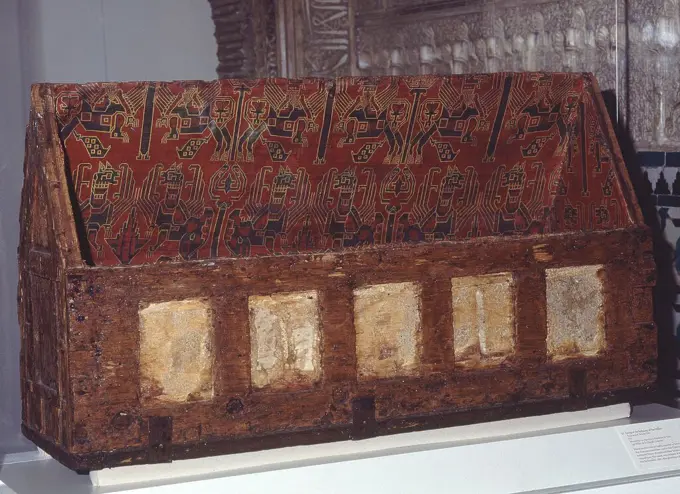
FORRO DEL RELICARIO DE SAN MILLAN - TEJIDO LLAMADO SARGA - SIGLO XI. Location: MONASTERIO DE YUSO. Rioja. SPAIN.
4409-21486697
TEMPLO DE DENDERA, DEDICADO A LA DIOSA HATHOR.
6145-29723262
Relief fragments of two sacred emblems ca. 2051-2030 B.C. Middle Kingdom Old Kingdom temple inventories describe sacred pillars of gold that played a role in the festivals honoring various deities. The two pillars seen here resemble most closely the so-called Abydos fetish, an emblem of the place sacred to the great god Osiris.For other reliefs of Neferu, see 26.3.353* and 31.3.1.. Relief fragments of two sacred emblems. ca. 2051-2030 B.C.. Limestone, paint. Middle Kingdom. From Egypt, Upper Egypt, Thebes, Deir el-Bahri, Tomb of Neferu (TT 319, MMA 31), MMA excavations, 1923-25. Dynasty 11
4409-28803057
Lapida con jaguar rugiendo, originaria de Tula. Museo Nacional de antropologia. Estado de Mexico D.F. Mexico.
6145-29756295
Cylinder seal ca. 6th-5th century B.C. Achaemenid. Cylinder seal. Achaemenid. ca. 6th-5th century B.C.. Calcite. Achaemenid. Iran
1525R-201426
Luxor, Egypt, Africa
1899-17317111
The Yaxchilan lintels. Lintel 24. Classica Maya. 723-726. Mexico, Chiapas, Yaxhilan.Detail of Lady K'ab'al Xook. Limestone. The British Museum, London, United Kingdom.
1746-21101872
The Gates of Shalmaneser III. Ninth century B.C. Homage to the King.
1746-21112250
Relief showing hunting. Assyrian, about 645-635 BC From Nineveh, Iraq, North Palace. panel comes from a corridor which led to a postern-gate out of the palace; probably the king passed this way as he went out to hunt
1848-19344774
Assur-napir-apli II. also Ashshur-nasir-apli, Assur-nasirpal, reigned as Assyrian king from 883 to 859 B. C. here he brings a libation to the gods aft...
1746-19670280
Stele of Shamshi- Adad V (823-811 BC). Assyrian, about 514 BC From Nimrud, Temple of Nabu. This stele shoes the kind worshipping in front of symbols of the gods. The large cross on his chest is a symbol of the sun god.
1848-67231971
Rome, Roma, Imperial Forums, Trajan's Forum with Trajan's Column, Colonna di Traiano
6145-29154321
Inscribed lintel from Perneb's mastaba ca. 2381-2323 B.C. Old Kingdom. Inscribed lintel from Perneb's mastaba. ca. 2381-2323 B.C.. Limestone. Old Kingdom. From Egypt, Memphite Region, Saqqara, Tomb of Perneb
1899-18854547
The Bayon was originally the official state temple of the Mahayana Buddhist King Jayavarman VII. The Bayon, at the centre of Angkor Thom (Great City), was established in the 12th century by King Jayavarman VII. Angkor Thom, meaning The Great City’, is located one mile north of Angkor Wat. It was built in the late 12th century CE by King Jayavarman VII, and covers an area of 9 km², within which are located several monuments from earlier eras as well as those established by Jayavarman and his successors. It is believed to have sustained a population of 80,000-150,000 people. At the centre of the city is Jayavarman's state temple, the Bayon, with the other major sites clustered around the Victory Square immediately to the north. Angkor Thom was established as the capital of Jayavarman VII's empire, and was the centre of his massive building programme. One inscription found in the city refers to Jayavarman as the groom and the city as his bride. Angkor Thom seems not to be the first Khmer
4409-137674
MOLDE EN YESO DE LA LAPIDA FUNDACIONAL DE LAS ATARAZANAS DE TORTOSA. (EXPOSICION EL LEGADO CIENTIFICO DE AL-ANDALUS)(DEPOSITO: MUSEO MUNICIPAL BARCELONA).
1525-26074835
blur  in iran persepolis the old   ruins historical destination monuments and ruin
1848-55226802
Gallery of the Bayon, Angkor Thom temple complex, Siem Reap, Cambodia, Southeast Asia, Asia
1788-16281
Mixtec civilization, Mexico, Wooden drum with figure of eagle, From Malinalco
1848-63256169
Hunting scene, Seljuk period, 13th century Ince Minare Medresesi, Konya, Turkey, Konya, Turkey, Asia
4409-17279202
CALIZA PINTADA-HIPOPOTAMO - (HACIA2.450)(TI=FUNCIONARIO V DINASTIA) - FOTO AÑOS 70. Location: MASTABA DE TI. Saqqarah. EGYPT.
6145-29774332
Cylinder seal with cultic scene 7th century B.C. Assyrian. Cylinder seal with cultic scene. Assyrian. 7th century B.C.. Veined orange Carnelian (Quartz). Neo-Assyrian. Mesopotamia
1899-18859231
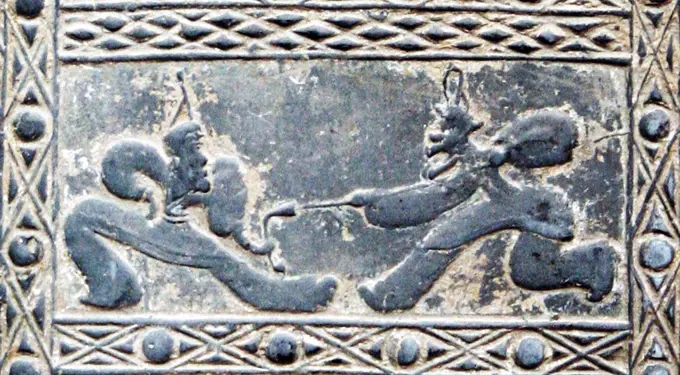
A pottery tile of the Han Dynasty, depicting hunting and battle scenes containing emblematic figures of the 'five cardinal directions' (the four cardinal directions plus the centre). The Four Symbols (Chinese: 象; pinyin: Sì Xiàng) are four mythological creatures in the Chinese constellations. They are the Azure Dragon, of the East, the Vermilion Bird of the South, the White Tiger of the West, and the Black Turtle of the North. Each one of them represents a direction and a season, and each has its own individual characteristics and origins. Symbolically and as part of spiritual and religious belief, they have been culturally important in China, Korea, Vietnam, and Japan.
1525-21172425
Bas-relief with ceremony on the wall of palace in Persepolis, Iran
1746-30015676
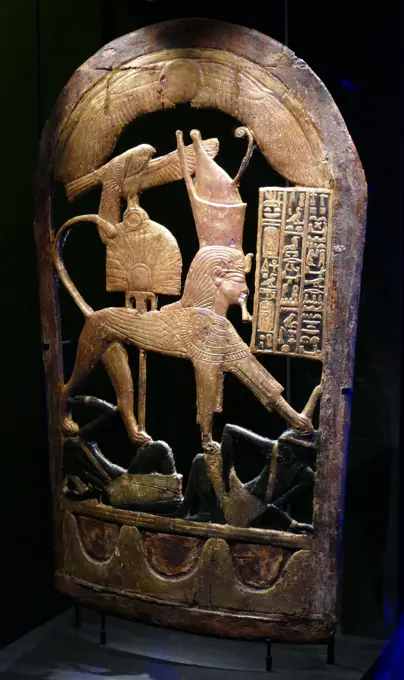
Gilded wooden ceremonial shield depicting King Tutankhamun as a sphinx crushing his Nubian enemies. from the tomb of the king. 1326 BC
4409-39361
Pre-Columbian Art. Maya. Jaguar. Sculpture in the center of the Jaguar Temple (or Temple of the Jaguars). Maya-Toltec style. Classical period (late 900-1224). Chichen Itza. State of Yucatan. Mexico.
1525-26143659
blur  in iran persepolis the old   ruins historical destination monuments and ruin
1783-25537
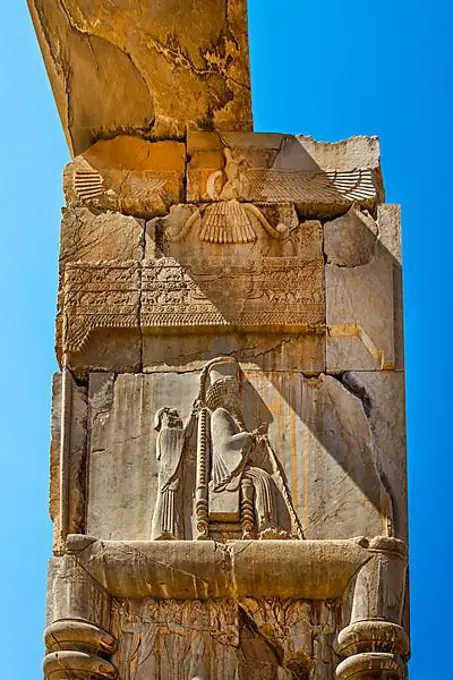
Close_up of carvings on Monumental Door, Persepolis, Iran
7012-69849764
Egypt, Luxor, East Bank, Karnak Temple. Colored hieroglyphic detail.
4409-65763672
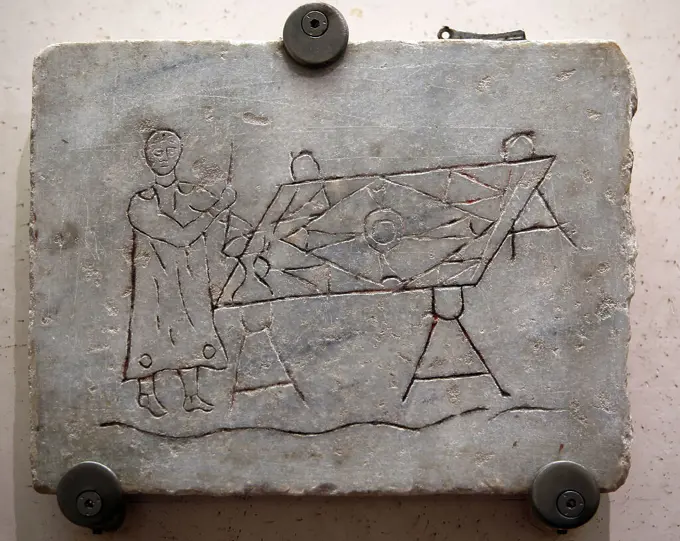
An anonymous slab with the portrayal of a working scene. A marmorarius. He is busy marking marble marquetry )opus sectile) placed on a trestle. 4th century. Origin unknown. National Roman Museum. Baths of Diocletian. Rome. Italy.
6145-29196424
Relief from the South Wall of a Chapel of Ramesses I ca. 1295-1294 B.C. New Kingdom, Ramesside Ramesses I, first king of Dynasty 19, was a military officer from the eastern Delta. He served as a general and vizier under Haremhab, last king of Dynasty 18, and was designated by him as his successor. Probably quite old when he became king, most of his monuments were finished by his son, Seti I.The south wall, shown here, depicts Ramesses I and his family presenting offerings to Osiris. The upper register (now lost) showed Ramesses leading four young bulls to "Osiris Onnophris." In the lower register, Ramesses is shown "making incense and libation" over offerings piled before the shrine of "Osiris, lord of continuity, great god at home in the Abydene nome"; behind the statue of Osiris stand Isis and Hathor.Ramesses is accompanied by his queen, Sitre, shaking two sistra "to your beautiful face." Behind her is a procession of men and women bearing bouquets. In the dedicatory stela of this te
1848-61333561
Relief detail of the delegation of nations bringing gifts to Darius on the steps of Apadana Palace, Persepolis, Persepolis, Iran, Asia
1746-21124000
Frieze from Xanthos depicting Satyrs hunting wild animals. Dated 460 BC
1746-29016381
Assyrian wall relief depicting the royal lion hunt. Assyrian, about 645-635 BC From Nineveh, North Palace.
4409-65764215
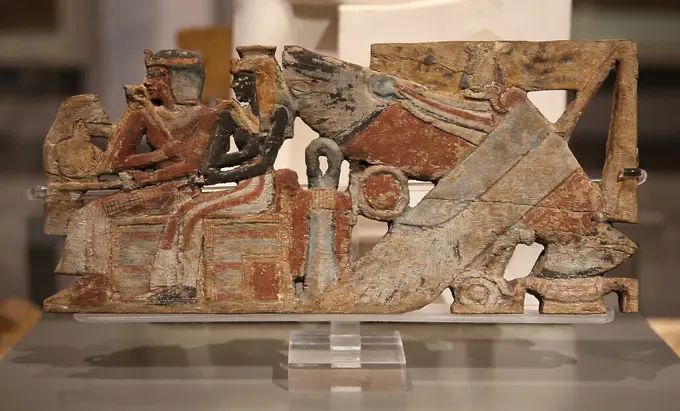
Sedan chair element decorated with the image of Amenhotep I, Ahmose-Nefertari and goddess Nekhbet. Wood. New Kingdom (1539-1077 BCE). Deir e-Medina.
1788-15571
Detail of frieze of Archers of polychrome glazed brick, from Palace of Darius I, from Shush (ancient Susa), Iran
1525-23763384
blur  in iran persepolis the old   ruins historical destination monuments and ruin
4409-17304724
CENTRO CEREMONIAL-LOS DANZANTES-RELIEVE EN PIEDRA-ZAPOTECAS. Location: EXTERIOR. MONTE ALBAN. CIUDAD DE MEXICO.
1848-62774169
Statue of Ramses II prostrating himself from the exhibition: Ramses the Great and the Gold of the Pharaohs, Cologne, North Rhine-Westphalia, Germany, Europe
6145-29777515
Cylinder seal ca. 6th-4th century B.C. Achaemenid. Cylinder seal 326986
1746-29016383
Assyrian wall relief depicting the royal lion hunt. Assyrian, about 645-635 BC From Nineveh, North Palace.
1848-55311311
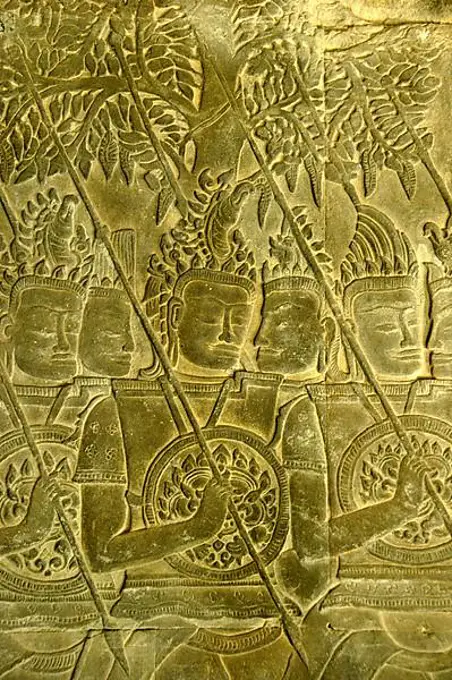
Intricate stone relief, warriors with spears and shields in front of trees, Angkor Wat Temple, Siem Reap, Cambodia, Southeast Asia, Asia
1746-19670456
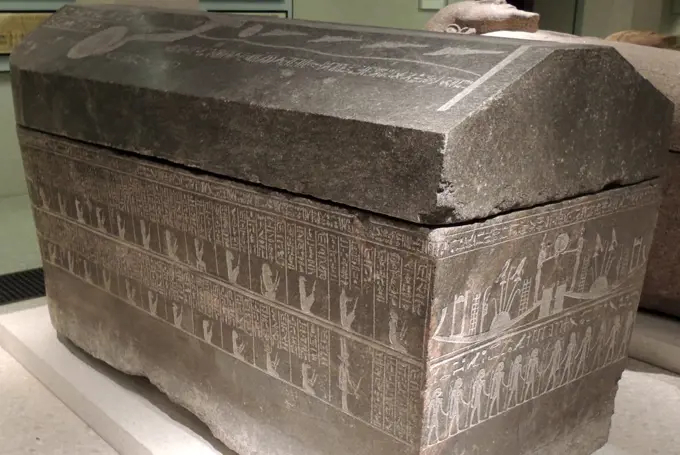
Sarcophagus of the general Pedi iset, 746-332 BC granite Sarcophagus of Anch-Hor with illustrations of daemons of the Netherworld, 746-332 BC Memphis Granodiorite.
1746-21123312
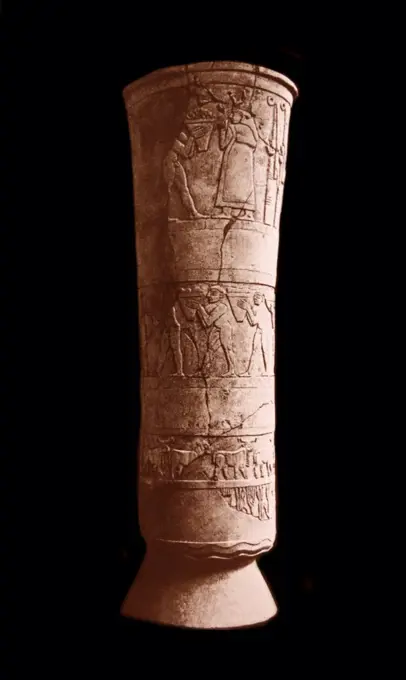
The Warka Vase is a carved alabaster stone vessel found in the temple complex of the Sumerian goddess Inanna in the ruins of the ancient city of Uruk, located in the modern Al Muthanna Governorate, in southern Iraq. Like the Uruk Trough and the Narmer Palette from Egypt, it is one of the earliest surviving works of narrative relief sculpture, dated to c. 3200ñ3000 BC.
4409-21481021
Egypt. Sarcophagus of Nana, priest of the god Ptah. Granite. Piece from Memphis. New Kingdom. 13th century a.C. The State Hermitage Museum. St. Petersburg. Russia.
1848-62773859
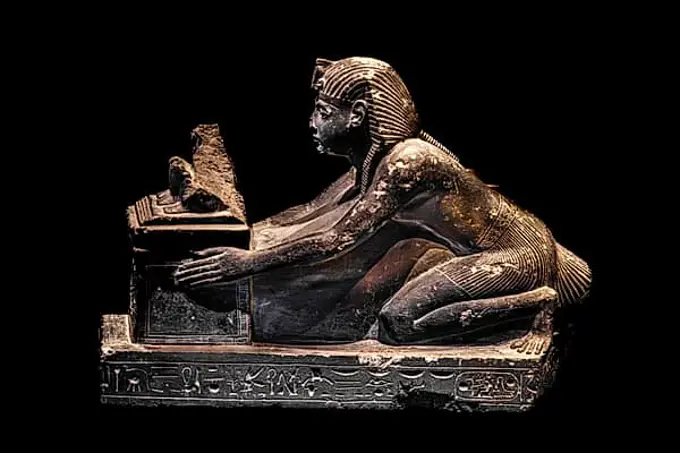
Statue of kneeling Ramses II offering a rebus of his name from the exhibition: Ramses the Great and the Gold of the Pharaohs, Cologne, North Rhine-Westphalia, Germany, Europe
1848-50683807
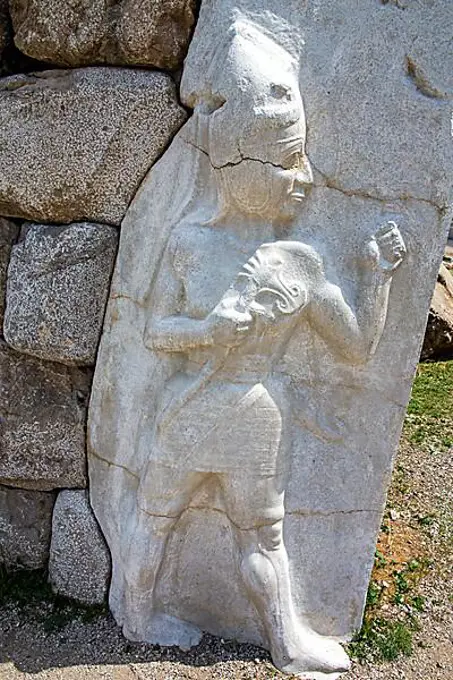
King's Gate, it depiction of a god in warlike form with sword, Hattusha, ancient capital of the Hittites, Turkey, Hattusha, Turkey, Asia
6145-29186182
Canopic jar of princess Sithathoryunet - Hapy ca. 1887-1813 B.C. Middle Kingdom The four canopic jars of the king's daughter Sithathoryunet all have human-headed lids like most jars dating to the Middle Kingdom. The jars were intended to store the four internal organs removed during mummification, the lungs, liver, intestines, and stomach. The inscriptions on the jars invoke the four funerary goddesses and the Four Sons of Horus who protect these organs. The inscription on this jar invokes Nephthys and Hapy, who protect the lungs.. Canopic jar of princess Sithathoryunet - Hapy. ca. 1887-1813 B.C.. Travertine (Egyptian alabaster), paint. Middle Kingdom. From Egypt, Fayum Entrance Area, Lahun, Tomb of Sithathoryunet (BSA Tomb 8), BSAE excavations 1914. Dynasty 12
1626R-20687
Warrior Petroglyph
6145-29767395
Cylinder seal ca. 19th-16th century B.C. Babylonian. Cylinder seal 323914
1525-26134089
in iran near persepolis the old ruins historical  destination monuments and ruin
4409-63010691
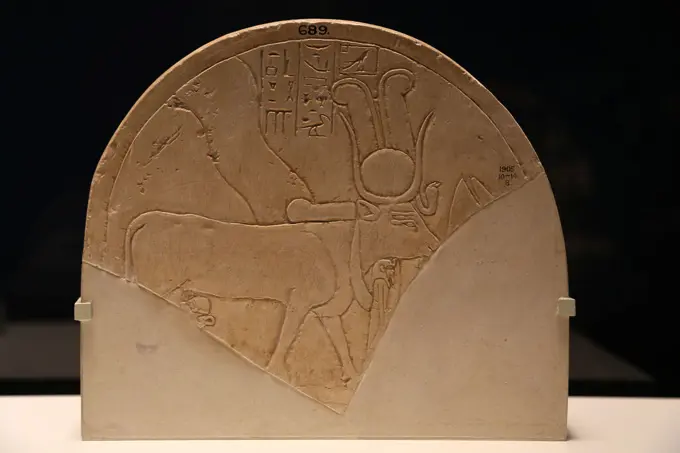
Goddess Hathor-cown. Stele. Limestone. Dynasty 18. 1550-1295 BC. Mentuhotep II temple. Deir el-Bahari, Thebes. Egypt. British Museum.
1848-54945892
Historical characters on a wall in Berlin, Germany, Europe
1746-28970064
The Balawat Gates, three sets of gates from Balawat, an ancient Assyrian Empire, with embossed scenes showing scenes of warfare, the presentation of tribute and hunting of Lions and bulls.
1890-80133
Detail of the Obelisk, Temple of Karnak, Thebes, UNESCO World Heritage Site, Egypt, North Africa, Africa
4409-18688
RELIEVE PALACIO NINIVE-TRANSPORTE DE MERCACIAS. Location: BRITISH MUSEUM. LONDON. ENGLAND.
7012-69886818
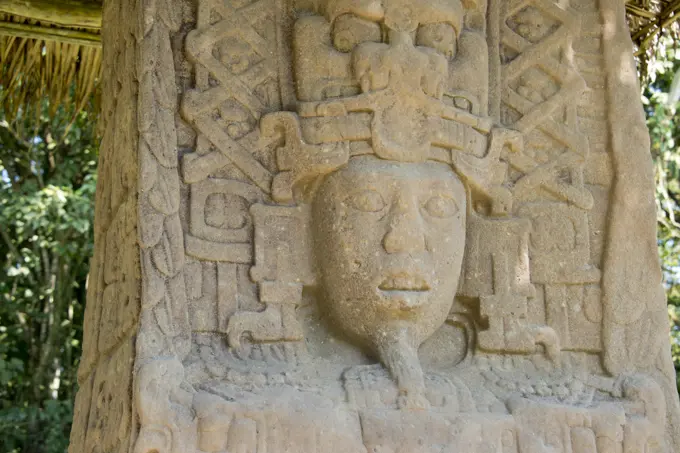
Guatemala, Quirigua Mayan Ruins Archaeological Park (UNESCO). Ruins of a once prosperous capital city, inhabited since the 2nd century A.D. Detail of ornately carved stone stele. (Large format sizes available)
4409-12277
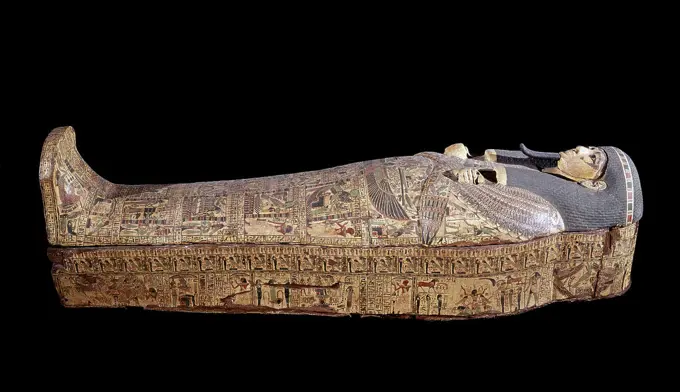
SARCOFAGO DE UN SACERDOTE DE AMON - XXI DINASTIA. Location: MUSEO ARQUEOLOGICO NACIONAL-COLECCION. MADRID. SPAIN.
1848-63250221
Gate relief in the Trohn Hall, Darius the I with audience scene, Persepolis, Persepolis, Iran, Asia
1746-19631183
Golden outer sarcophagus of Tutenkamen (Tutankhamun) dc1340BC with guardian figures. Ancient Egyptian Pharaoh
6145-29719117
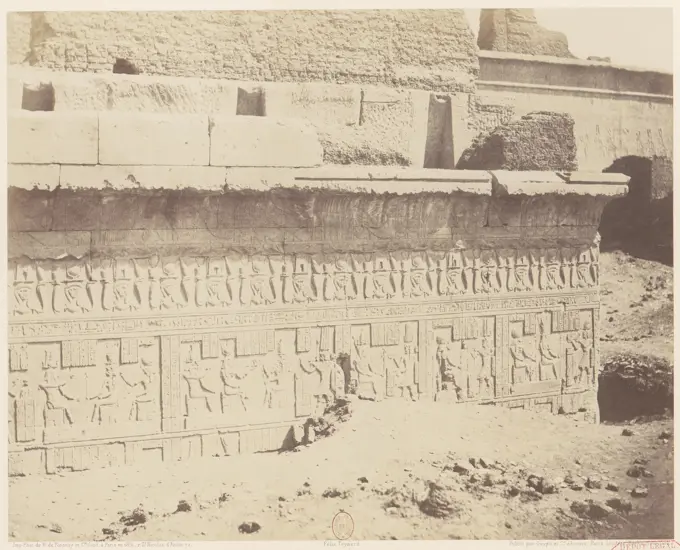
Dendérah (Tentyris), Mammisi - Décoration Extérieure de la Face Sud 1851-52, printed 1853-54 Félix Teynard French. Dendérah (Tentyris), Mammisi - Décoration Extérieure de la Face Sud 261824
6145-29772602
Cylinder seal ca. 2350-2150 B.C. Akkadian. Cylinder seal 326967
4409-133832
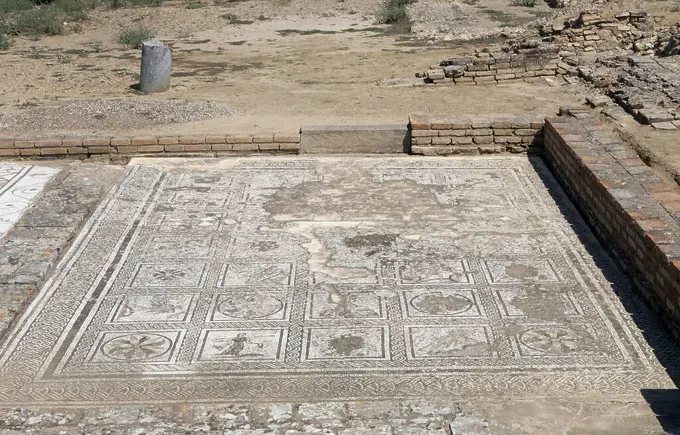
Spain. Italica. Roman city founded c. 206 BC. Domus of Neptune. Mosaic. Andalusia.