Space

Explore the vastness of space with SuperStock's comprehensive collection of stock images and clips. Our gallery offers a unique opportunity to discover the wonders of the solar system, from planets and galaxies to asteroids and comets. With our expansive selection, you can find the perfect image or clip to bring your project to ...Read more
RM
1746-21118059
Artist's impression of the planet Pluto. Dated 2015
RM
1746-21117825
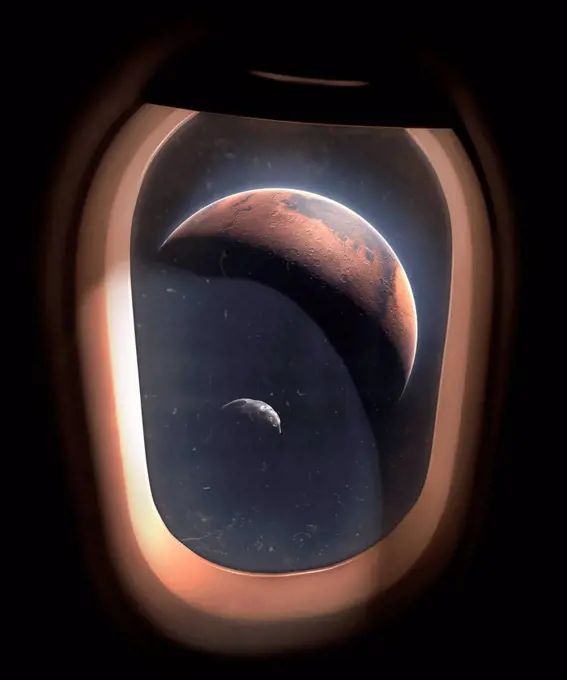
Enhanced-color image of Phobos from the Mars Reconnaissance Orbiter with Stickney crater on the right
RM
1746-21118975
Photograph of Enceladus, the sixth-largest moon of Saturn. Dated 2015
RM
1746-21118050
Artist's impression of the planet Pluto. Dated 2015
RM
1746-21120462
Graphic of the Synchronous Meteorological Satellite, the forerunner of the GOES satellites.
RM
1746-21120502
GOES G going for a short ride aboard Delta Launch Vehicle 178. 71 seconds into the mission the first stage engine shut down necessitating destruction 20 seconds later. 1986
RM
1746-21120229
Still from an animation demonstrating that an invisible galaxy shrouded in dust can become glaringly bright when viewed in infrared light
RM
1746-21120461
Scientist working on GOES-D model satellite prior to launching 1980
RM
1746-21121967
TIROS satellite mated to rocket for launching, 1960.
RM
1746-21121818
TIROS I satellite on test stand during preliminary test stage. In: 'Weather Analysis from Satellite Observations; ' U.S. Navy Research Facility; December 1960
RM
1746-21132627
The Discovery space shuttle framed by a full moon. Its maiden flight was STS-41-D which launched on August 30, 1984. Over 27 years of service it flew 39 missions, gathering more flight time than any other spacecraft to date.
RM
1746-21131588
Space rocket launchers developed since the 1950s. Dated 20th Century
RM
1746-21102651
Space Station. Designed by members of the British Interplanetary Society, this space-station incorporates a huge reflector to collect the sun's rays for the generation of electricity.
RM
1746-21102453
Futuristic vision of how an interstellar spacecraft (nuclear rocket) might be look. 1948
RM
1746-21102454
Futuristic vision of how an interstellar spacecraft (nuclear rocket) might be look. 1948
RM
1746-21102450
Futuristic vision of how an interstellar spacecraft (nuclear rocket) might be look. 1948
RM
1746-21102452
Futuristic vision of how an interstellar spacecraft (nuclear rocket) might be look. 1948
RM
1746-21102477
Futuristic vision of how an interstellar spacecraft might refuel in space from a space station 1948
RM
1746-21133679
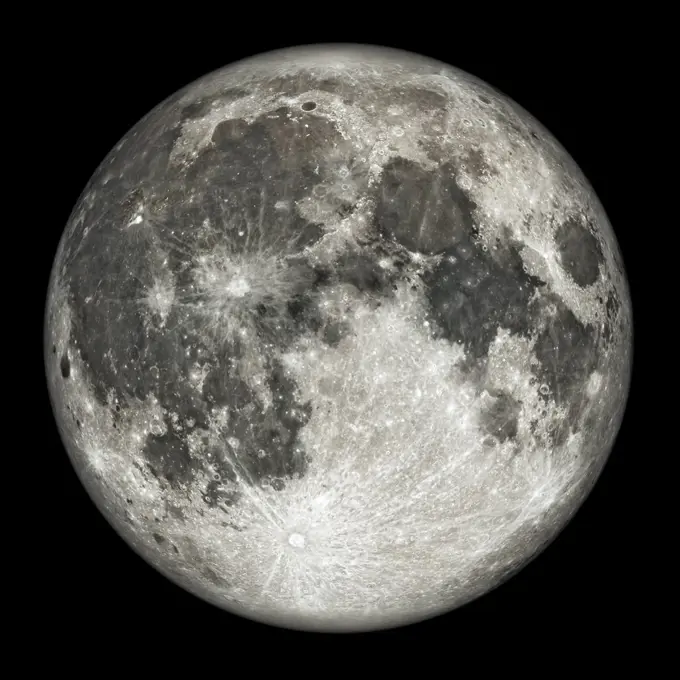
Full moon at closest proximity to earth, August 2014.
RM
4266-21630318
The cosmonaut Yuri Gagarin (1934-1968), the first human in outer space, Anonymous
RM
4266-21641299
Listen to the cosmos (Earth listens), Nesterov, Vladimir Dmitrievich (*1932)
RM
1746-21102398
Futuristic vision of how a moon bound spacecraft (rocket) would take off to return from the Moon to the Earth. 1936
RM
4282-21164671
Astronomical instrument at Jantar Mantar observatory.
RM
1746-21099369
drawing showing sunspots noted on the surface of the sun
RM
1035-21071891
London, England:  c. 1920 An astronomical model for higher education in the New County Hall in Westminster showing the motions of the earth, moon and sun.
RM
1035-20589379
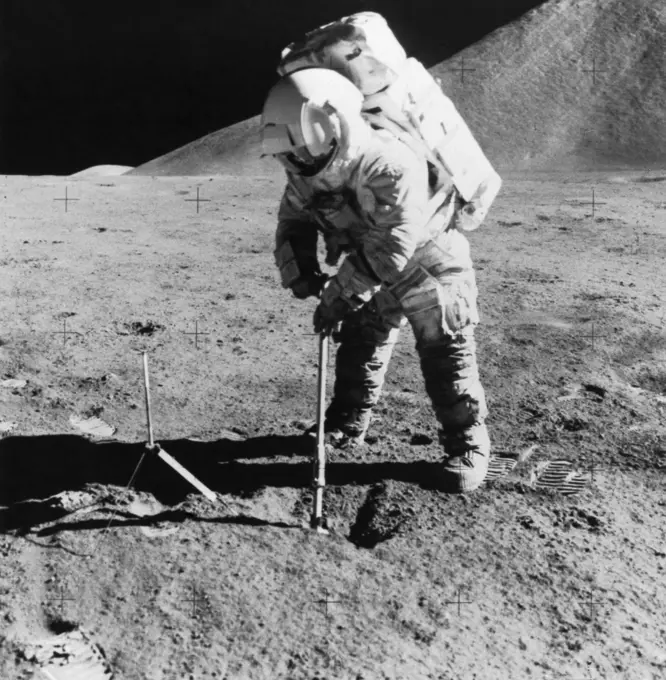
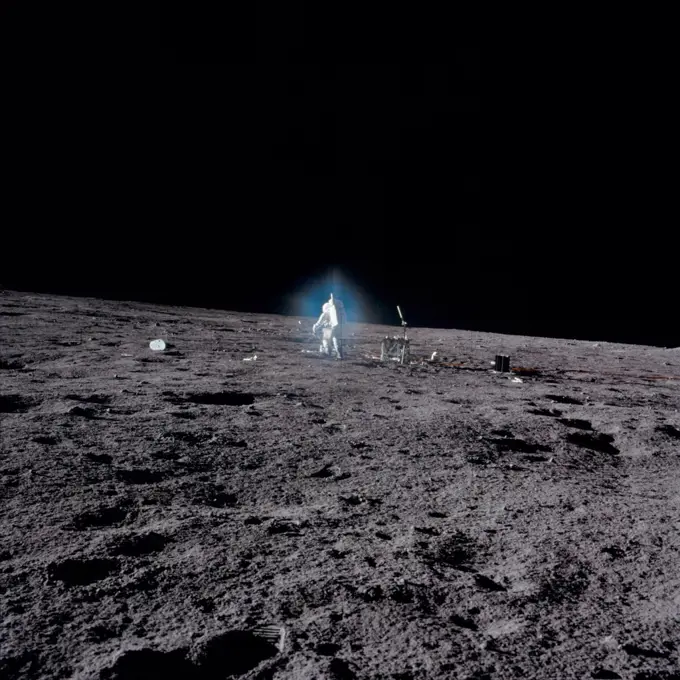
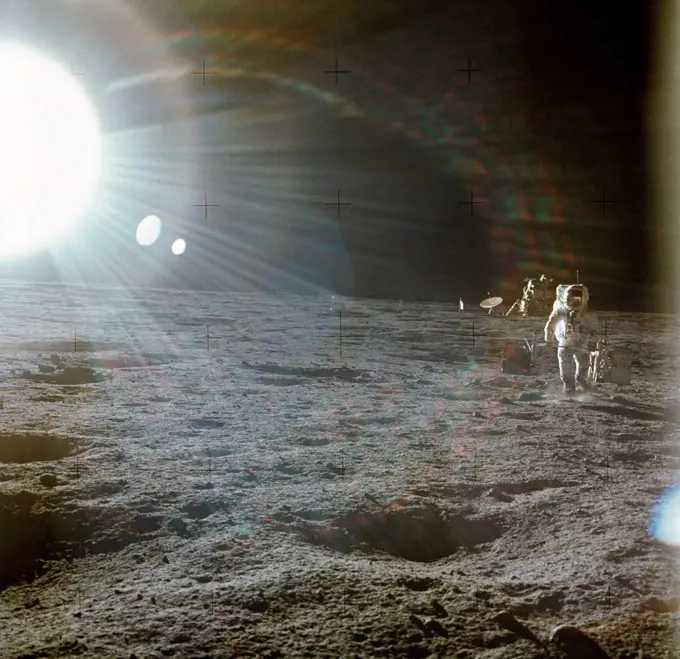
Moon:  April 21, 1972 Astronaut John Young,  commander of the Apollo 16 lunar landing mission, leaps from the lunar surface as he salutes the U.S. flag at the Descartes landing site during the mission's first extravehicular activity. The Lunar Module and the Lunar Roving Vehicle are at the left.
RM
1035-20589372
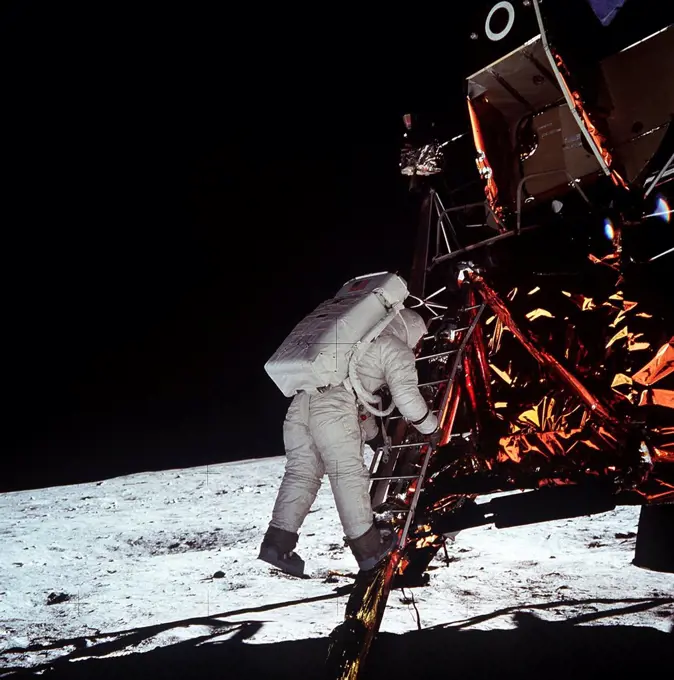
Moon:  July 20, 1969 Astronaut Edwin "Buzz" Aldrin, pilot of the lunar module, walks on the moon during the Apollo 11 lunar landing. A leg of the Lunar Module "Eagle" can be seen in the foreground, and the module is reflected in Aldrin's faceplate. Commander Neil Armstrong took the photograph.
RM
1035-20589382
Mars:  July 21, 1976 The Martian landscape as photographed by the Viking 1 Lander Module the day after it landed on the surface of Mars.
RF
4239R-20480438
March 13, 2008 - Backdropped by Earth's horizon and the blackness of space, the logistics module for the Japanese Kibo laboratory in Space Shuttle Endeavour's payload bay, vertical stabilizer and orbital maneuvering system (OMS) pods are featured in this image photographed by a STS-123 crewmember.
RF
4239R-20480375
October 25, 2007 - Backdropped by a blue and white Earth, Space Shuttle Discovery approaches the International Space Station during STS-120 rendezvous and docking operations. Docking occurred at 7:40 a.m. (CDT) on October 25, 2007. The Harmony node is visible in Discovery's cargo bay. A Russian spacecraft, docked to the station, is visible at left.
RF
4239R-20480143
Saturn
RF
4239R-20480171
Mars
RF
4239R-20480382
October 24, 2007 - Backdropped by the blackness of space and Earth's horizon, the Harmony node in Space Shuttle Discovery's payload bay, vertical stabilizer and orbital maneuvering system (OMS) pods are featured in this image photographed by a STS-120 crewmember during flight day two activities. Earth's moon is visible at center.
RF
4239R-20480489
February 4, 2007 - Magnificent blue and gold Saturn floats obliquely as one of its gravity-bound companions, Dione, hangs in the distance. The darkened rings seem to nearly touch their shadowy reverse images on the planet below.  This view looks toward the unlit side of the rings from about 9 degrees above the ring plane. The rings glow feebly in the scattered light that filters through them.
RF
4239R-20480439
Newborn stars peek out from beneath their natal blanket of dust in this dynamic image of the Rho Ophiuchi dark cloud. Called Rho Oph by astronomers, it's one of the closest star-forming regions to our own solar system. Located near the constellations Scorpius and Ophiuchus, the nebula is about 407 light years away from Earth.
RF
4239R-20480546
Cape Canaveral, Florida, September 20, 2008 - With a rainbow serving as a backdrop in the sky, space shuttle Atlantis (foreground) sits on Launch Pad A and Endeavour on Launch Pad B at the Kennedy Space Center in Florida. At the left of each shuttle are the open rotating service structures with the payload changeout rooms revealed. The rotating service structures provide protection for weather and access to the shuttle.
RF
4239R-20480520
March 11, 2009 - A nearly full Moon sets as the Space Shuttle Discovery sits atop Launch pad 39A at the Kennedy Space Center in Cape Canaveral, Florida.
RF
4239R-20480354
August 19, 2007 - Backdropped by Earth's horizon and the blackness of space, the International Space Station appears to be very small as the Space Shuttle Endeavour departs from the station. Endeavour's vertical stabilizer and orbital maneuvering system (OMS) pods are seen in this image photographed by an STS-118 crewmember onboard the shuttle. Earlier the STS-118 and Expedition 15 crews concluded nearly nine days of cooperative work onboard the shuttle and station. Undocking of the two spacecra
RF
4239R-20480440
March 11, 2008 - Against a black sky, the Space Shuttle Endeavour and its seven-member STS-123 crew head toward Earth-orbit and a scheduled link-up with the International Space Station. Liftoff was on time at 2:28 a.m. (EDT).
RF
4239R-20480271
Planet Mercury
RF
4239R-20480543
Kennedy Space Center, Florida, May 26, 2005 - Space Shuttle Discovery, resting on the Mobile Launcher Platform, returns to the Vehicle Assembly Building (VAB) along the crawlerway, which seems to stretch to the Atlantic Ocean on the horizon.
RF
4239R-20480245
Mars
RF
4239R-20480273
Mimas drifts along in its orbit against the azure backdrop of Saturn's northern latitudes in this true color view. The long, dark lines on the atmosphere are shadows cast by the planet's rings.  Saturn's northern hemisphere is presently relatively cloud-free, and rays of sunlight take a long path through the atmosphere. This results in sunlight being scattered at shorter (bluer) wavelengths, thus giving the northernmost latitudes their bluish appearance at visible wavelengths.  At the bottom, cr
RF
4239R-20480388
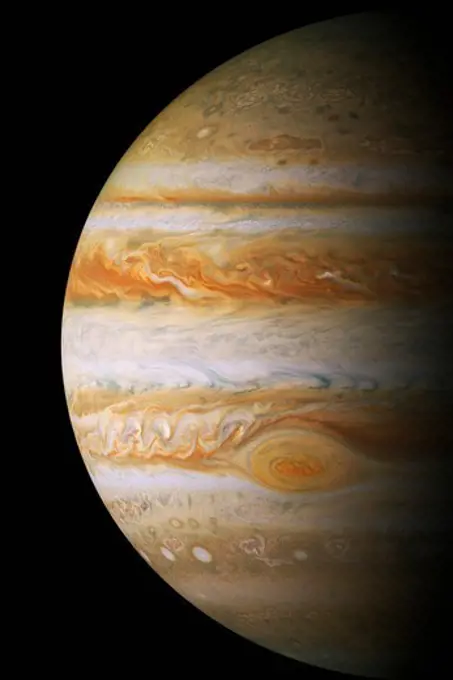
This montage of images of Jupiter and its volcanic moon Io, was taken by the New Horizons spacecraft's flyby in early 2007. The Jupiter image is an infrared color composite taken by the spacecraft's near-infrared imaging spectrometer on February 28, 2007. The infrared wavelengths used highlight variations in the altitude of the Jovian cloud tops, with blue denoting high-altitude clouds and hazes, and red indicating deeper clouds. The prominent bluish-white oval is the Great Red Spot.  The Io ima
RF
4239R-20480299
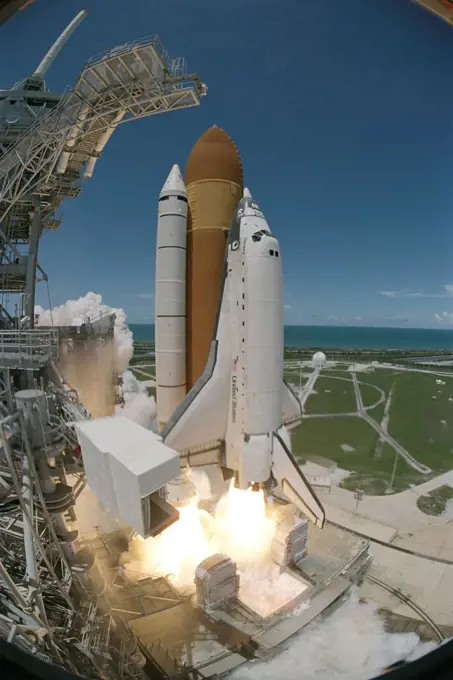
July 4, 2006 - Captured on film by a remote camera equipped with a special fish-eye lens, the Space Shuttle Discovery and its seven-member crew launch at 2:38 p.m. (EDT) to begin the two-day journey to the International Space Station on the historic Return to Flight STS-121 mission. During the 12-day mission, the STS-121 crew of seven will test new equipment and procedures to improve shuttle safety, as well as deliver supplies and make repairs to the space station
RF
4239R-20480540
This artist's conception shows a young, hypothetical planet around a cool star. A soupy mix of potentially life-forming chemicals can be seen pooling around the base of the jagged rocks. Observations from the Spitzer Space Telescope hint that planets around cool stars, the so-called M-dwarfs and brown dwarfs that are widespread throughout our galaxy, might possess a different mix of life-forming, or prebiotic, chemicals than our young Earth. Life on our planet is thought to have arisen out of a
RF
4239R-20480328
Helix nebula
RF
4239R-20480554
Cape Canaveral, Florida, May 15, 2009 - This aerial view of the Kennedy Space Center Visitor Complex shows the rockets on display in an area known as the Rocket Garden.
RF
4239R-20480142
March 22, 2004 - This view of Saturn is so sharp that many individual ringlets can be seen in Saturn's ring plane.
RF
4239R-20480407
October 25, 2007 - A close-up view of Space Shuttle Discovery's tail section is featured in this image photographed by an Expedition 16 crewmember during a backflip maneuver performed by the approaching visitors (STS-120) to the International Space Station. The image provides partial views of the shuttle's main engines, orbital maneuvering system (OMS) pods, vertical stabilizer and the Harmony node in the payload bay.
RF
4239R-20480296
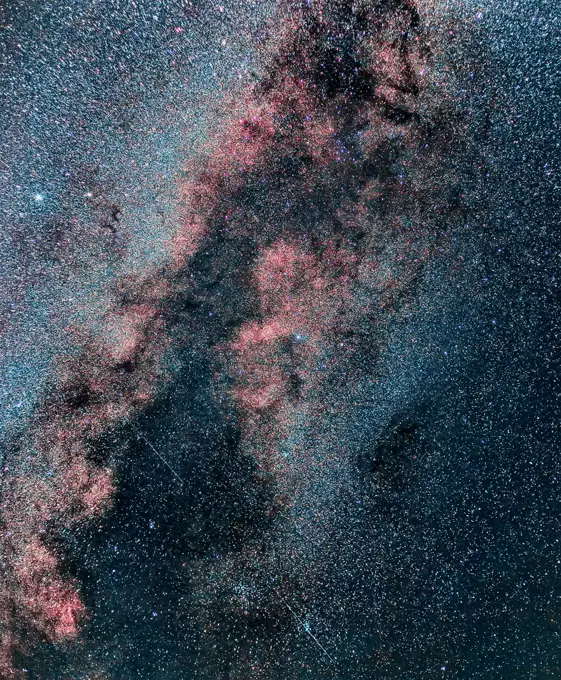
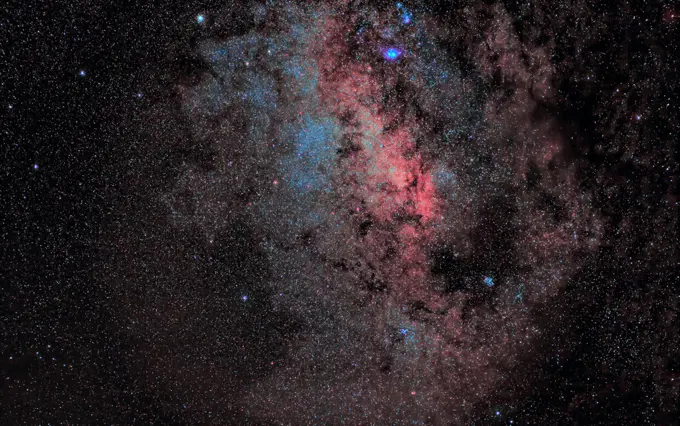
NASA successfully launched more than 200 Earth-orbiting satellites, including Goddard's eighth Orbiting Solar Observatory aboard this Delta rocket on June 21, 1975, at Cape Canaveral, Florida. The satellite, the final in a series of spacecraft specifically designed to look at the Sun in high-energy wavelength bands that scientists cannot see on Earth, gathered data on energy transfer in the Sun's hot, gaseous atmosphere and its 11-year sunspot cycle.
RF
4239R-20480301
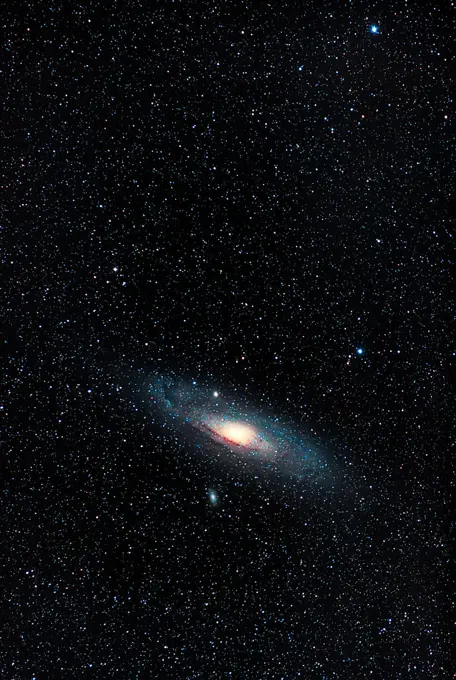
An Atlas vehicle is shown as it is raised into its launch gantry. This Atlas attempted to launch a Mercury spacecraft (without any astronauts aboard) into orbital flight. The launch vehicle developed 360,000 pounds of thrust and burned RP-1, a kerosene-like fuel, and liquid oxygen. It was about 60 feet in length and 10 feet in diameter at the tank section. This was the first attempt to put a Mercury spacecraft into Earth orbit. Unfortunately, this Atlas exploded at launch. Atlas was designed to
RF
4239R-20480549
Cape Canaveral, Florida, April 18, 2009 - Space shuttle Atlantis on Launch Pad 39A is viewed across the lagoon at the Kennedy Space Center in Florida. Atlantis is targeted to launch May 12 on the STS-125 mission to upgrade the Hubble Space Telescope.
RF
4239R-20480264
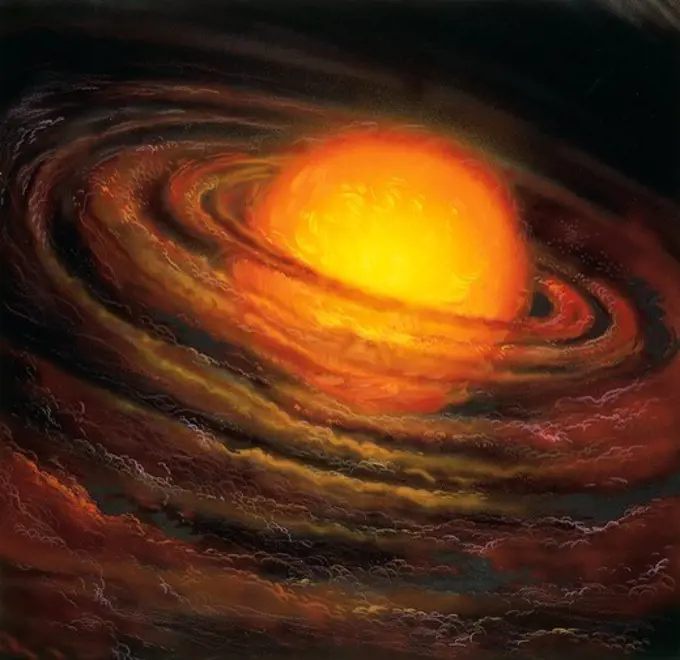
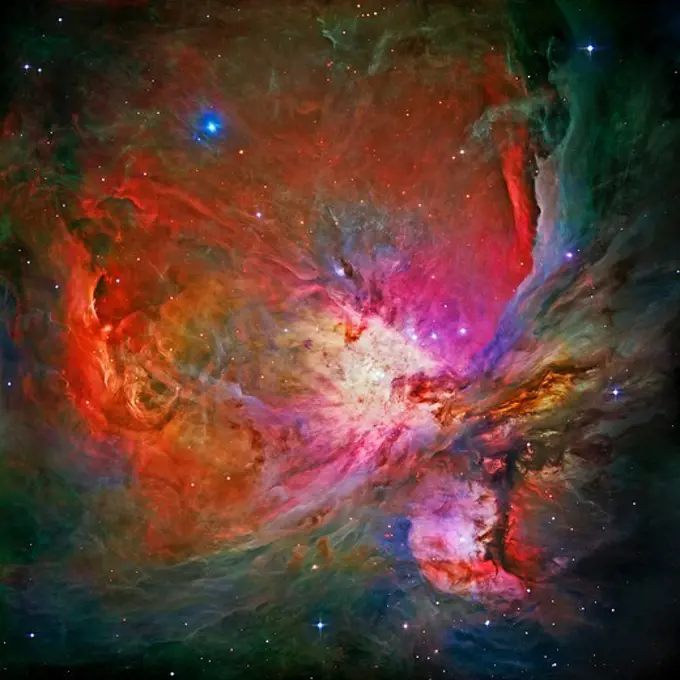
This artist's concept illustrates a solar system that is a much younger version of our own. Dusty disks, like the one shown here circling the star, are thought to be the breeding grounds of planets, including rocky ones like Earth. Astronomers using the Spitzer Space Telescope spotted some of the raw ingredients for DNA and protein in one such disk belonging to a star called IRS 46. The ingredients, gaseous precursors to DNA and protein called acetylene and hydrogen cyanide, were detected in the
RF
4239R-20480408
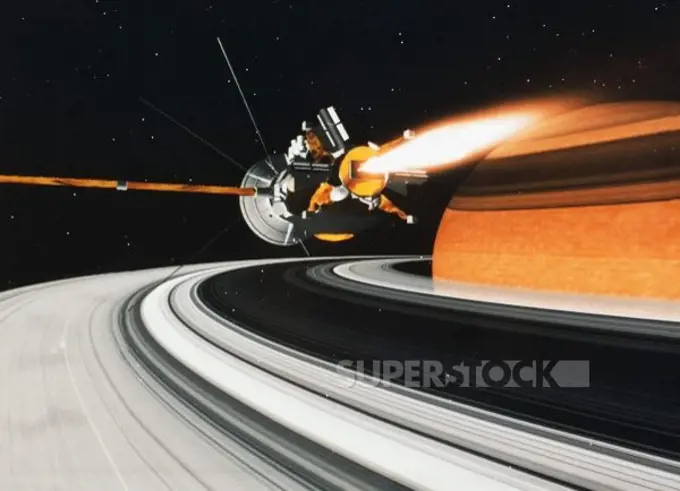
This artist's concept shows the view from Cassini during the star occultation that detected Mittens, the small object to the right of the star. As Cassini watched the star pass behind Saturn's F ring (foreground), the star blinked out when Mittens blocked it, indicating it may be a solid moonlet.
RF
4239R-20480528
March 28, 2009 - Space Shuttle Discovery's drag chute is deployed as the spacecraft rolls toward wheels stop on Runway 15 of the Shuttle Landing Facility at the Kennedy Space Center, concluding the 13-day, 5.3-million mile journey of the STS-119 mission to the International Space Station.
RF
4239R-20480365
June 22, 2007 - Space Shuttle Atlantis' main landing gear touches down on runway 22 at the Dryden Flight Research Center at Edwards Air Force Base in California concluding a successful assembly mission to the International Space Station.
RF
4239R-20480184
Space Shuttle Launch
RF
4239R-20480391
July 29, 2005 - A fish-eye lens on a digital still camera was used to record this image of the Space Shuttle Discovery from the International Space Station, to which it is docked for several days of joint activities.
RF
4239R-20480468
Artist's concept of the New Horizons spacecraft as it approaches Pluto and its largest moon, Charon, in July 2015. The craft's miniature cameras, radio science experiment, ultraviolet and infrared spectrometers and space plasma experiments will characterize the global geology and geomorphology of Pluto and Charon, map their surface compositions and temperatures, and examine Pluto's atmosphere in detail. The spacecraft's most prominent design feature is a nearly 7-foot (2.1-meter) dish antenna, t
RF
4239R-20480596
July 15, 2009 - Captured by a remote camera equipped with a special fish-eye lens, Space Shuttle Endeavour and the STS-127 crew head toward Earth orbit and rendezvous with the International Space Station. Liftoff was on time at 6:03 p.m. (EDT) on July 15, 2009 from launch pad 39A at the Kennedy Space Center.
RF
4239R-20480640
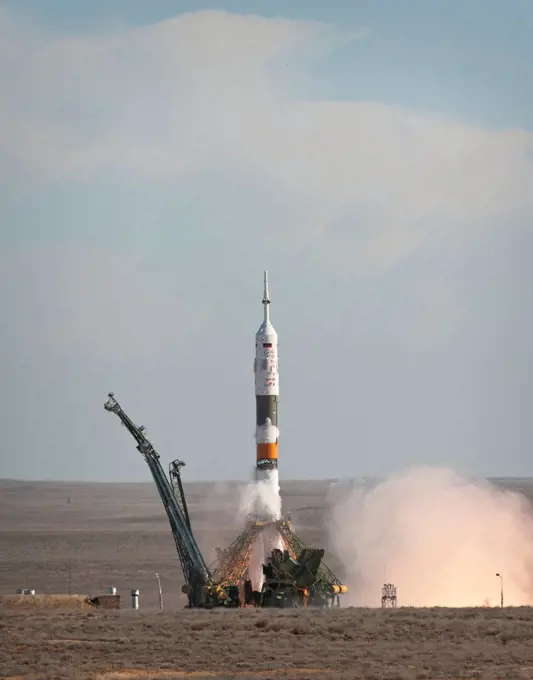
April 2, 2010 - The Soyuz TMA-18 rocket launches from the Baikonur Cosmodrome in Kazakhstan.
RF
4239R-20480759
June 3, 1965 - The Gemini-Titan 4 spaceflight launches from Cape Canaveral, Florida.
RF
4239R-20480620
November 16, 2009 - With nearly 7 million pounds of thrust generated by twin solid rocket boosters and three main engines, space shuttle Atlantis zooms into the blue skies over Launch Pad 39A at the Kennedy Space Center in Florida. The crew will deliver two ExPRESS Logistics Carriers to the International Space Station, the largest of the shuttle's cargo carriers, containing 15 spare pieces of equipment including two gyroscopes, two nitrogen tank assemblies, two pump modules, an ammonia tank asse
RF
4239R-20480744
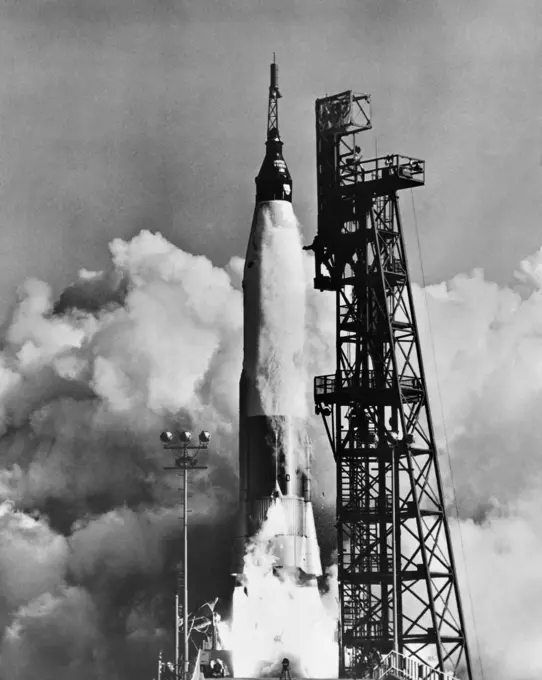
April 21, 1961 - Mercury-Redstone 3 prelaunch activities on the Mercury 5 launch pad.
RF
4239R-20480765
November 8, 1967 - High-angle view of Launch Complex 39, Kennedy Space Center, Cape Canaveral, Florida, showing the Apollo 4 (Spacecraft 017/Saturn 501) unmanned, Earth-orbital space mission being readied for launch.
RF
4239R-20480584
August 24, 2009 - On Launch Pad 39A at the Kennedy Space Center in Florida, technicians in the rotating service structure's control booth begin to roll the structure from space shuttle Discovery. The service structure provides weather protection and access to the space shuttle at the launch pad.
RF
4239R-20480779
NASA recently performed a trial run on a rocket sled test fixture, powered by rockets, to replicate the forces a supersonic spacecraft would experience prior to landing. The sled tests will allow the Low-Density Supersonic Decelerator Project, or LDSD, to test inflatable and parachute decelerators to slow spacecraft prior to landing and allow NASA to increase landed payload masses, improve landing accuracy and increase the altitude of safe landing-sites. These new devices represent the first ste
RF
4239R-20480737
July 15, 1975 - Liftoff of the Saturn IB launch vehicle (SA-210), for the Apollo/Soyuz Test Project (ASTP) mission, from Launch Complex 39B, Kennedy Space Center, Florida. The Apollo-Soyuz Test Project (ASTP) was the first international docking of the U.S. Apollo spacecraft and the U.S.S.R. Soyuz spacecraft in space. The objective of the ASTP mission was to provide the basis for a standardized international system for docking of manned spacecraft.
RF
4239R-20480645
Cape Canaveral, Florida, April 5, 2010 - Space shuttle Discovery lifts off from launch pad 39A at Kennedy Space Center in Florida, on the STS-131 mission. The crew will deliver the multi-purpose logistics module Leonardo, filled with supplies, a new crew sleeping quarters and science racks that will be transferred to the International Space Station's laboratories. The crew also will switch out a gyroscope on the stations truss, install a spare ammonia storage tank and retrieve a Japanese experi
RF
4239R-20480771
Cape Canaveral, Florida, November 9, 1970 - A high-angle view at Launch Complex 39, Kennedy Space Center, showing the Apollo 14 (Spacecraft 110/Lunar Module 8/Saturn 509) space vehicle on the way from the Vehicle Assembly Building to its launch pad. The Saturn V stack and its mobile launch tower sit atop a huge crawler-transporter.
RF
4239R-20480767
May 13, 1969 - Aerial, high-angle view of the Apollo 10 (Spacecraft 106/Lunar Module 4/Saturn 505) space vehicle at Launch Complex 39, Kennedy Space Center, Cape Canaveral, Florida
RF
4239R-20480770
April 16, 1972 - The huge, 363-feet tall Apollo 16 (Spacecraft 113/Lunar Module 11/Saturn 510) space vehicle is launched from Kennedy Space Center, Cape Canaveral, Florida, on a lunar landing mission.
RF
4239R-20480748
February 21, 1961 - In this Project Mercury test, a spacecraft booster by a modified Atlas was launched from Cape Canaveral, Florida. The Mercury capsule reached a peak altitude of 107 statute miles and landed 1.425 miles down range. Atlas was designed to launch payloads into low Earth orbit, geosynchronous transfer orbit or geosynchronous orbit.
RF
4239R-20480706
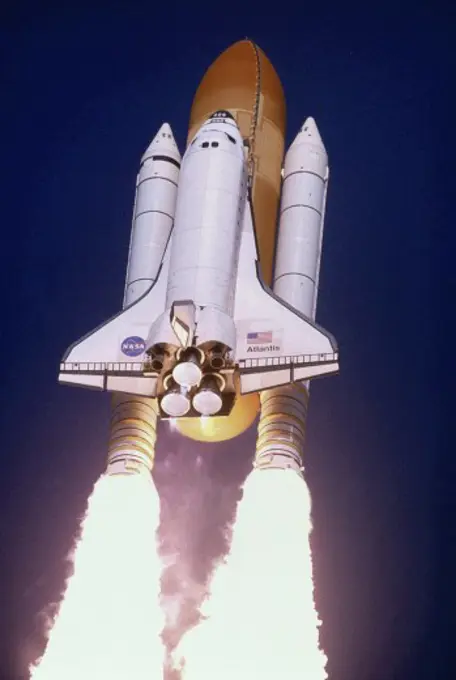
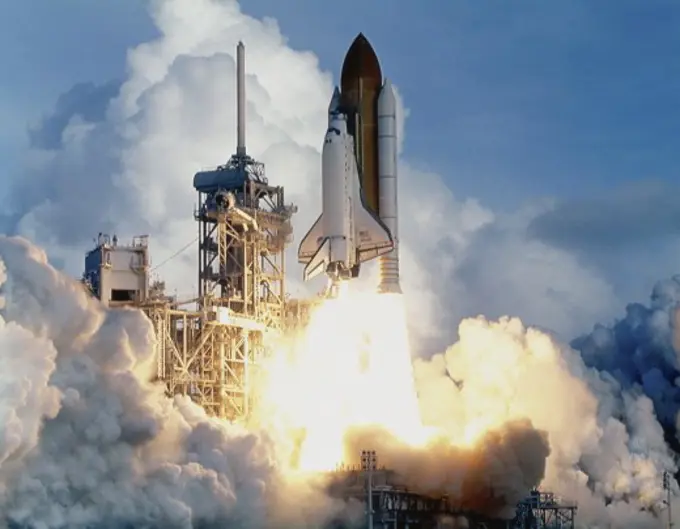
July 8, 2011 - Space shuttle Atlantis is seen as it launches from pad 39A at the Kennedy Space Center in Cape Canaveral, Florida. The launch of Atlantis, STS-135, is the final flight of the shuttle program, a 12-day mission to the International Space Station.
RF
4239R-20480564
Cape Canaveral, Florida, May 11, 2009 - Space Shuttle Atlantis lifts off from launch pad 39A at the Kennedy Space Center in to Earth orbit and rendezvous with the Hubble Space Telescope. The payload includes Wide Field Camera 3, fine guidance sensor and the Cosmic Origins Spectrograph.
RF
4239R-20480742
November 11, 1966 - Gemini 12 astronauts lift off aboard a Titan launch vehicle from the Kennedy Space Center, an hour and a half after their Agena target vehicle was orbited by an Atlas rocket. Launched atop an Atlas booster, the Agena target vehicle (ATV) was a spacecraft used by NASA to develop and practice orbital space rendezvous and docking techniques in preparation for the Apollo program lunar missions. The objective was for Agena and Gemini to rendezvous in space and practice docking pro
RF
4239R-20480739
June 8, 1959 - A model of the Mercury capsule undergoes floatation tests at NASA's Langley Research Center.
RF
4239R-20480751
May 5, 1961 - Launching of the Mercury-Redstone 3 rocket from Cape Canaveral, Florida.
RF
4239R-20480749
August 21, 1959 - Little Joe on launcher at Wallops Island. Little Joe was a test of the escape and recovery systems on the Mercury spacecraft.
RF
4239R-20480597
July 15, 2009 - Space Shuttle Endeavour lifts off from launch pad 39A at the Kennedy Space Center in Cape Canaveral, Florida.
RM
1899-20317758
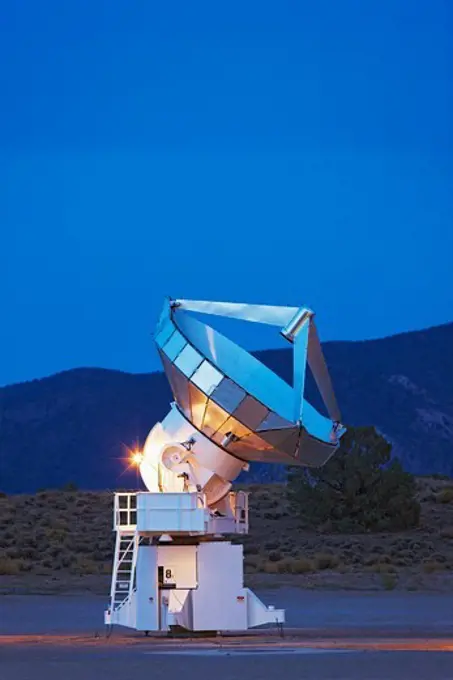
Deep Space Communications Complex Tidbinbilla, Canberra, Australian Capital Territory, Australia
RM
1580-20365220
Aurora Borealis or Northern Lights by the town of Gardur, Reykjanes Peninsula, Iceland
RM
1580-20365167
Aurora Borealis or Northern lights, Hvalfjordur, Iceland
RM
1580-20014836
Photographing the Aurora Borealis or Northern lights,  Jokulsarlon, Breidamerkurjokull, Vatnajokull Ice Cap, Iceland
RM
1580-1355
Aurora Borealis or Northern Lights at Lake Thingvallavatn, Thingvellir National Park, Iceland
RM
4443-18437
PLANET SATURN AS SEEN IN NOVEMBER, 1852, BUT ALTERED FOR A NON-INVERTING TELESCOPE. Scale 7 seconds of Arc to one inch.
RM
1899-91251
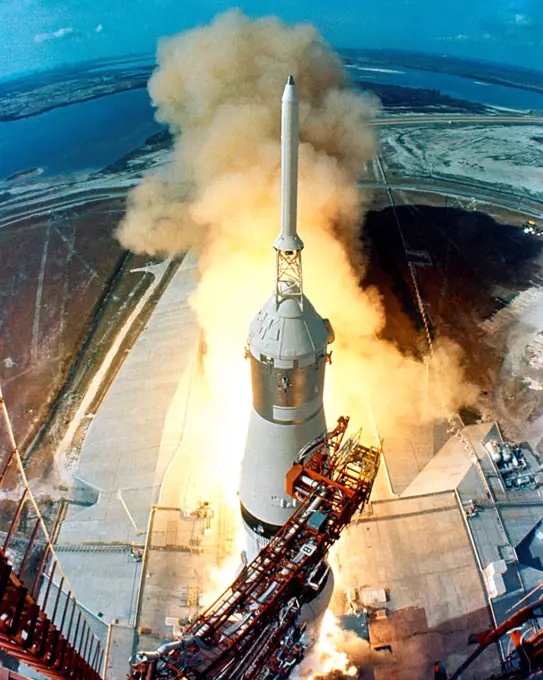
Departure of the Saturn V rocket and the Apollo11 spaceship from Kennedy Space Center. Cape Canaveral, USA, July 16th 1969
RM
1899-91250
Departure of the Saturn V rocket and Apollo 11 spaceship from the Kennedy Space Center. Cape Canaveral, United States of America, July 16, 1969
RM
1899-91248
Distant view of the rocket Saturn V that will launch the Apollo 11. The Apollo 11 mission will bring the three crew members on the lunar surface. Kennedy Space Center, USA, July 1969
RM
4282-37073
England, Dorset, Corfe. Looking up at the Super Moon.
RM
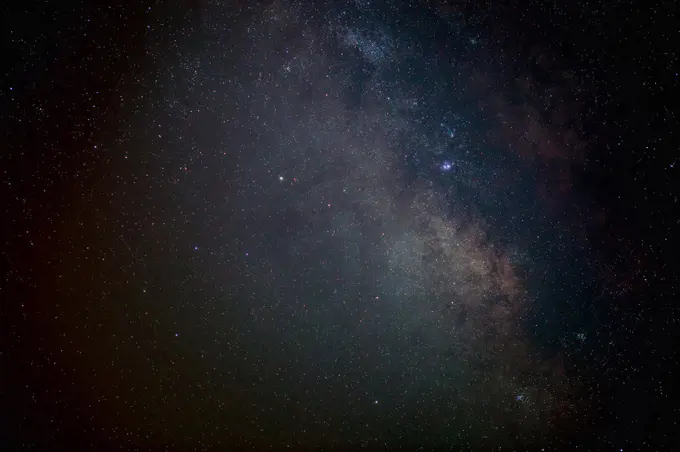
4282-34003
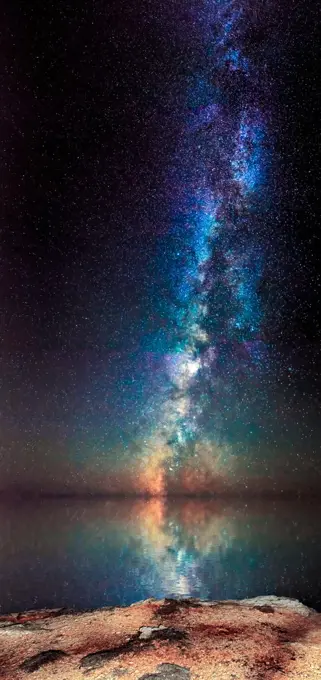
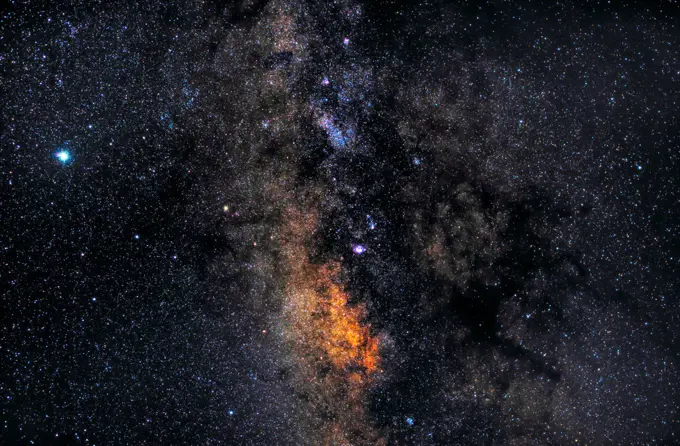
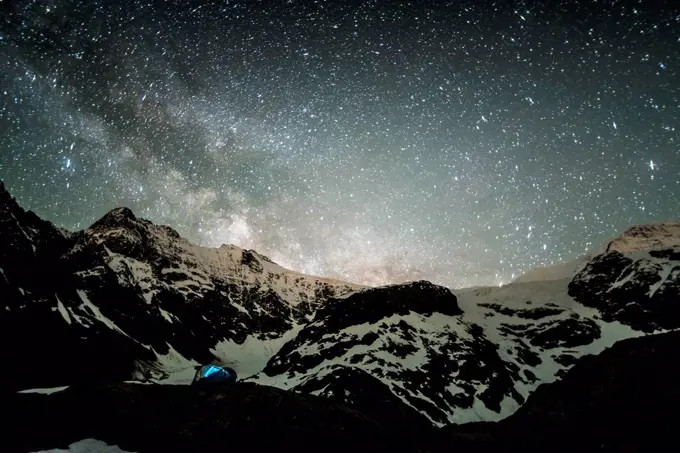
France, Reunion Island, Cirque de Salazie. The Milky Way as seen from the French island of Reunion in the Indian Ocean.
RM
4141-71308
Space Entry Module of International Space Station - Hydrolab: Neutral Buoyancy Training Module for Space teams, Zvezdniy Gorodok, Russia
RM
4430-11043
astronomy world view ""man breaking through horizon and looking at new universes"" colour woodcut from ""L` Atmosphere meteorologique populaire"" by Camille Flammarion (1842 - 1925) France 1888 private collection,
RM
4430-11042
astronomy measuring instruments armillary sphere with zodiac colour woodcut by Erhard Sch_n title for nativity calendar by Leonhard Regmann Nuremberg 1515 private collection,
RM
4430-6512
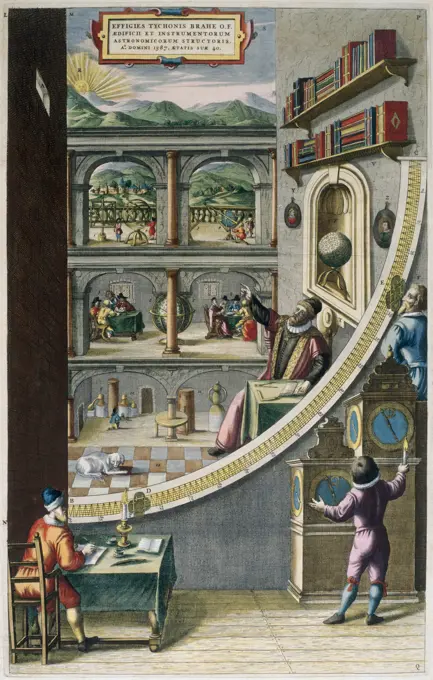
astronomy instruments armillary sphere copper engraving ""Astonomiae instaurate Mechanica"" by Tycho Brahe Nuremberg 1602,
RM
4430-11046
astronomy measuring instruments armillary sphere of Tycho Brahe (1546 - 1601) from ""Stjerneborg"" observatory colour engraving end 16th century Brahe Museum Ven,
RM
4430-7431
astronomy world views geocentric world view explanations to the Ptolemaic view image of planet constellation cover tot Epitome from Almagest (original from Ptolemy) by Georg von Peuerbach and Regiomontanus 15th century,
RM
4430-5340
astronomy world views geocentric world view planet orbits copper engraving coloured from an atlas by Gerard de Valck and Peter Schenk circa 1700,
RM
4435-11355
BRAHE, Tycho (1546-1601). Danish astronomer. Xylography.