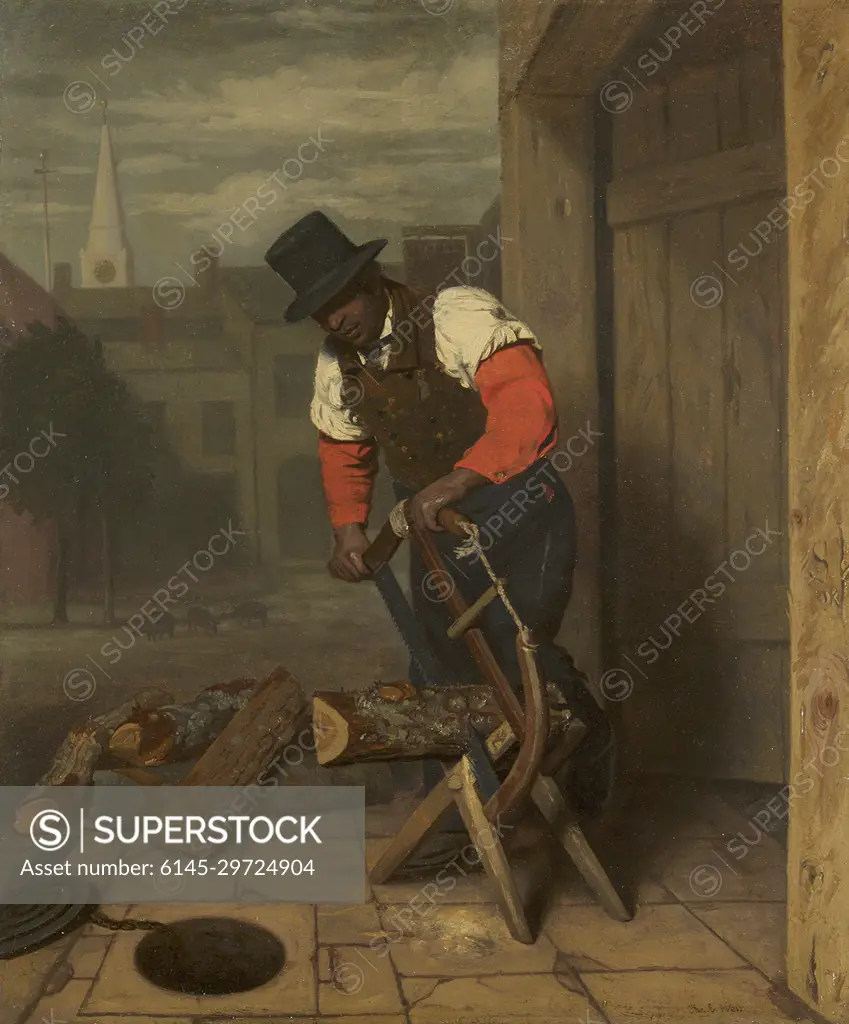
The Wood Sawyer 1842 Charles E. Weir "The Wood Sawyer" is unlike any known early 19th-century genre scene in its positive focus on a Black figure. Painted by New York-trained Charles Weir (younger brother of the better-known Robert Weir), it is one of just two existing works by the artist. As noted in the title, the depicted figure is a sawyer’, cutting wood to be sent down an open scuttle—visible with its chained cast-iron cap in the stone sidewalk—into the cellar of a hotel, identified by the hanging sign. The man’s elegant dress may also imply different responsibilities as a porter. The presence of rooting hogs in the middle distance indicate sanitation challenges in a rapidly industrializing New York, especially in working-class neighborhoods, where the animals also functioned as a source of food. On his 1842 visit to the city, English writer and social critic Charles Dickens was astonished by their "roving, gentlemanly, vagabond kind of life. They are never attended upon, or fed,
SuperStock offers millions of photos, videos, and stock assets to creatives around the world. This image of The Wood Sawyer 1842 Charles E. Weir "The Wood Sawyer" is unlike any known early 19th-century genre scene in its positive focus on a Black figure. Painted by New York-trained Charles Weir (younger brother of the better-known Robert Weir), it is one of just two existing works by the artist. As noted in the title, the depicted figure is a sawyer’, cutting wood to be sent down an open scuttle—visible with its chained cast-iron cap in the stone sidewalk—into the cellar of a hotel, identified by the hanging sign. The man’s elegant dress may also imply different responsibilities as a porter. The presence of rooting hogs in the middle distance indicate sanitation challenges in a rapidly industrializing New York, especially in working-class neighborhoods, where the animals also functioned as a source of food. On his 1842 visit to the city, English writer and social critic Charles Dickens was astonished by their "roving, gentlemanly, vagabond kind of life. They are never attended upon, or fed, by Piemags/PL Photography Limited is available for licensing today.
Looking for a license?
Click here, and we'll help you find it! Questions? Just ask!
Click here, and we'll help you find it! Questions? Just ask!
DETAILS
Image Number: 6145-29724904Royalty FreeCredit Line:Piemags/PL Photography Limited/SuperStockCollection:PL Photography Limited Contributor:Piemags Model Release:NoProperty Release:NoResolution:1092×1316