Woman's Dress. Culture: Chuquibamba. Dimensions: H. 51 1/2 x W. 60 1/2 in. (130.8 x 153.7 cm). Date: 14th-early 16th century.Women's wraparound dresses, made in the Andes of southern Peru during late preconquest centuries, were worn pinned at one shoulder and held in place by a wide belt. Basically such dresses when worn were large rectangles that were folded over at the top to form a kind of wide collar or double bodice. Those with panels of an intricately repeated pattern top and bottom, such as this example that is folded over at the top, were carefully balanced visually, the wide panels effectively framing the ordered diagonal elements in the center. Consistant with the Chuquibamba textile style, this dress is thought to have been woven in the southern Andean region near Arequipa, and to have been contemporary with Inca textiles that were made within a similar highland textile tradition. It was a tradition based on the use of camelid hair, here probably alpaca, with a design progr
This asset has restrictions and cannot be purchased online. Get in touch for more details.
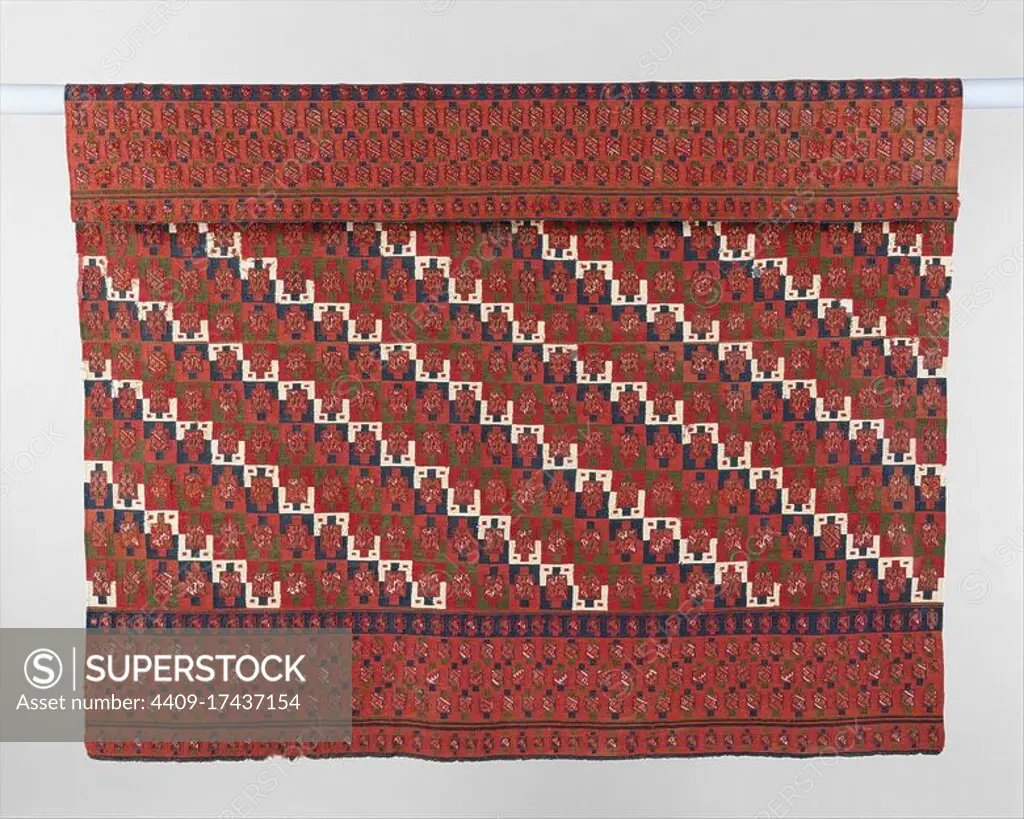
SuperStock offers millions of photos, videos, and stock assets to creatives around the world. This image of Woman's Dress. Culture: Chuquibamba. Dimensions: H. 51 1/2 x W. 60 1/2 in. (130.8 x 153.7 cm). Date: 14th-early 16th century.Women's wraparound dresses, made in the Andes of southern Peru during late preconquest centuries, were worn pinned at one shoulder and held in place by a wide belt. Basically such dresses when worn were large rectangles that were folded over at the top to form a kind of wide collar or double bodice. Those with panels of an intricately repeated pattern top and bottom, such as this example that is folded over at the top, were carefully balanced visually, the wide panels effectively framing the ordered diagonal elements in the center. Consistant with the Chuquibamba textile style, this dress is thought to have been woven in the southern Andean region near Arequipa, and to have been contemporary with Inca textiles that were made within a similar highland textile tradition. It was a tradition based on the use of camelid hair, here probably alpaca, with a design progr by Album/Metropolitan Museum of Art, NY/Album Archivo is available for licensing today.
Looking for a license?
Click here, and we'll help you find it! Questions? Just ask!
Click here, and we'll help you find it! Questions? Just ask!
DETAILS
Image Number: 4409-17437154Rights ManagedCredit Line:Album/Metropolitan Museum of Art, NY/Album Archivo/SuperStockCollection:Album Archivo Contributor:Album / Metropolitan Museum of Art, NY Model Release:NoProperty Release:NoResolution:4192×3354