Womans blouse (Huipil), c. 1930, 22 1/4 x 39 11/16 in. (56.52 x 100.81 cm), Cotton, silk; discontinuous supplementary weft patterning, Mexico, 20th century, Mayan huipiles are silent but eloquent expressive forms that convey multiple meanings. They are the principal medium through which community and individual identity is transmitted and constructed. In the late nineteenth century, Mayan villages officially adopted community-based styles of dress, reflecting local weavers' technical proficiency, aesthetic sensibility, and unique perception of color. While Mayan men adopted Western dress in increasing numbers, Mayan women continued to wear the traditional blouse (huipil) and skirt (corte) of their ancestors, embellished in the readily identifiable style of their community.
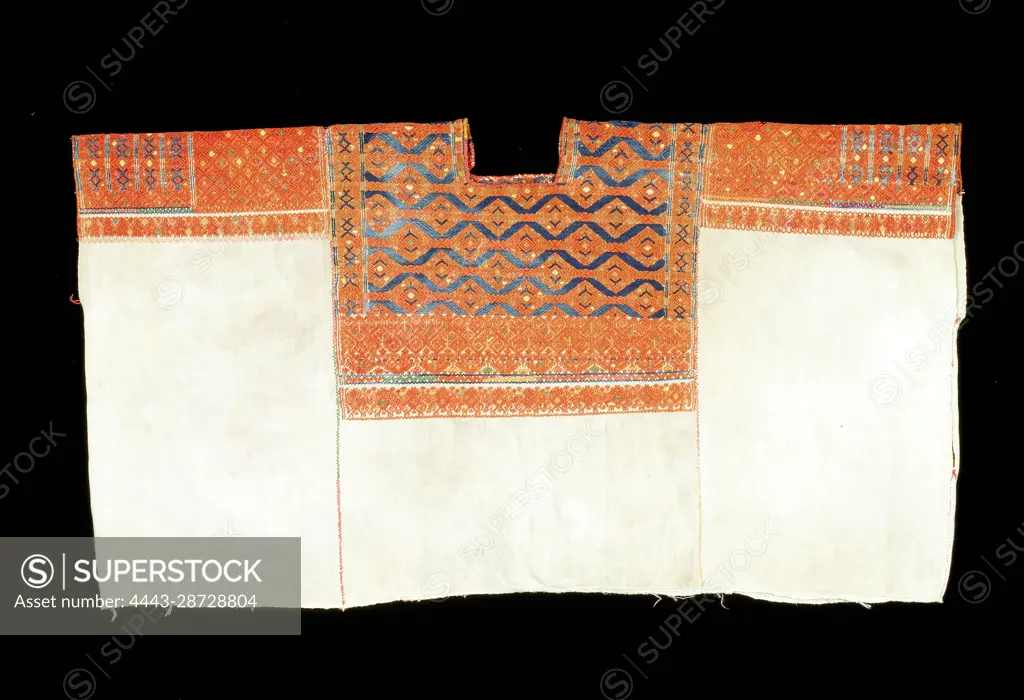
SuperStock offers millions of photos, videos, and stock assets to creatives around the world. This image of Womans blouse (Huipil), c. 1930, 22 1/4 x 39 11/16 in. (56.52 x 100.81 cm), Cotton, silk; discontinuous supplementary weft patterning, Mexico, 20th century, Mayan huipiles are silent but eloquent expressive forms that convey multiple meanings. They are the principal medium through which community and individual identity is transmitted and constructed. In the late nineteenth century, Mayan villages officially adopted community-based styles of dress, reflecting local weavers' technical proficiency, aesthetic sensibility, and unique perception of color. While Mayan men adopted Western dress in increasing numbers, Mayan women continued to wear the traditional blouse (huipil) and skirt (corte) of their ancestors, embellished in the readily identifiable style of their community. by Artokoloro is available for licensing today.
Looking for a license?
Click here, and we'll help you find it! Questions? Just ask!
Click here, and we'll help you find it! Questions? Just ask!
DETAILS
Image Number: 4443-28728804Rights ManagedCredit Line:Artokoloro/SuperStockCollection:Artokoloro Model Release:NoProperty Release:NoResolution:4828×3301