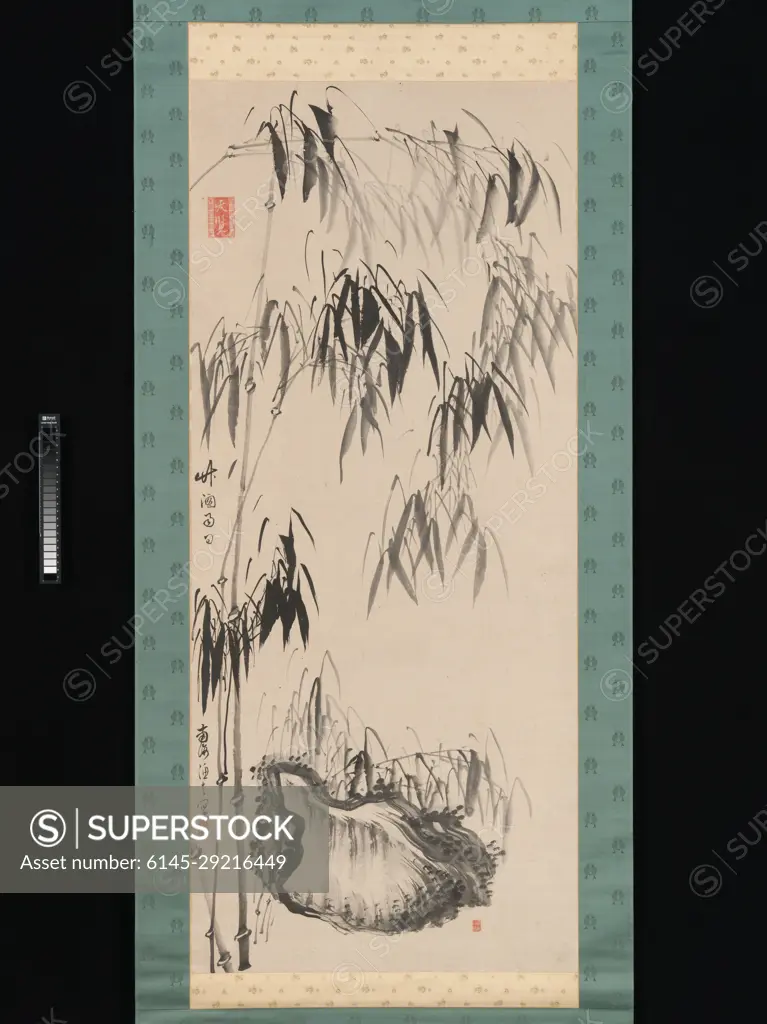
Window onto Bamboo on a Rainy Day first half of the 18th century Gion Nankai Bamboo was a favored theme of Nanga artists, who were largely based in Kyoto and often had backgrounds in Confucian studies and Chinese literati theory. Nankai was the son of a physician and clan official in Wakayama Prefecture. He studied literature and Confucianism in Edo (present-day Tokyo), but belonged to the first generation of influential Nanga painters. His earliest dated painting (1719) was of bamboo, and he produced a number of studies on the same subject.In this depiction, the artist precisely brushed leaves and jointed stalks in varying tones to evoke a rain-soaked atmosphere and dotted ink on the nearby rock for moss. His handling reflects brushwork in woodcut-illustrated Chinese painting manuals, such as the early eighteenth-century Mustard-Seed Garden Manual, that were newly available to Japanese artists. In the Chinese tradition, the strength and flexibility of bamboo are likened to the spirit
SuperStock offers millions of photos, videos, and stock assets to creatives around the world. This image of Window onto Bamboo on a Rainy Day first half of the 18th century Gion Nankai Bamboo was a favored theme of Nanga artists, who were largely based in Kyoto and often had backgrounds in Confucian studies and Chinese literati theory. Nankai was the son of a physician and clan official in Wakayama Prefecture. He studied literature and Confucianism in Edo (present-day Tokyo), but belonged to the first generation of influential Nanga painters. His earliest dated painting (1719) was of bamboo, and he produced a number of studies on the same subject.In this depiction, the artist precisely brushed leaves and jointed stalks in varying tones to evoke a rain-soaked atmosphere and dotted ink on the nearby rock for moss. His handling reflects brushwork in woodcut-illustrated Chinese painting manuals, such as the early eighteenth-century Mustard-Seed Garden Manual, that were newly available to Japanese artists. In the Chinese tradition, the strength and flexibility of bamboo are likened to the spirit by Piemags/PL Photography Limited is available for licensing today.
Looking for a license?
Click here, and we'll help you find it! Questions? Just ask!
Click here, and we'll help you find it! Questions? Just ask!
DETAILS
Image Number: 6145-29216449Royalty FreeCredit Line:Piemags/PL Photography Limited/SuperStockCollection:PL Photography Limited Contributor:Piemags Model Release:NoProperty Release:NoResolution:2998×4000