Votive Mirror with Eleven-Headed Kannon 12th century Japan Images of deities carved in bronze mirrors (kyz) had spiritual and ritual significance in the late Heian period. The incised representation of the Eleven-headed Kannon (Ekdashamukha) merges visual and symbolic attributes of both Shinto and Buddhist religions. Kannon sits on a lotus flower, holding a hanging rosary with his right hand and forming a gesture that signifies the discussion and transmission of Buddha’s teachings with his left hand. He wears a headdress composed of eleven small-scale heads, which symbolize Kannon’s ability to see and care for the suffering of all sentient beings. The two bronze loops on the upper portion of the disc suggest that the mirror was suspended.. Votive Mirror with Eleven-Headed Kannon. Japan. 12th century. Gilt bronze. Heian period (794-1185). Metalwork
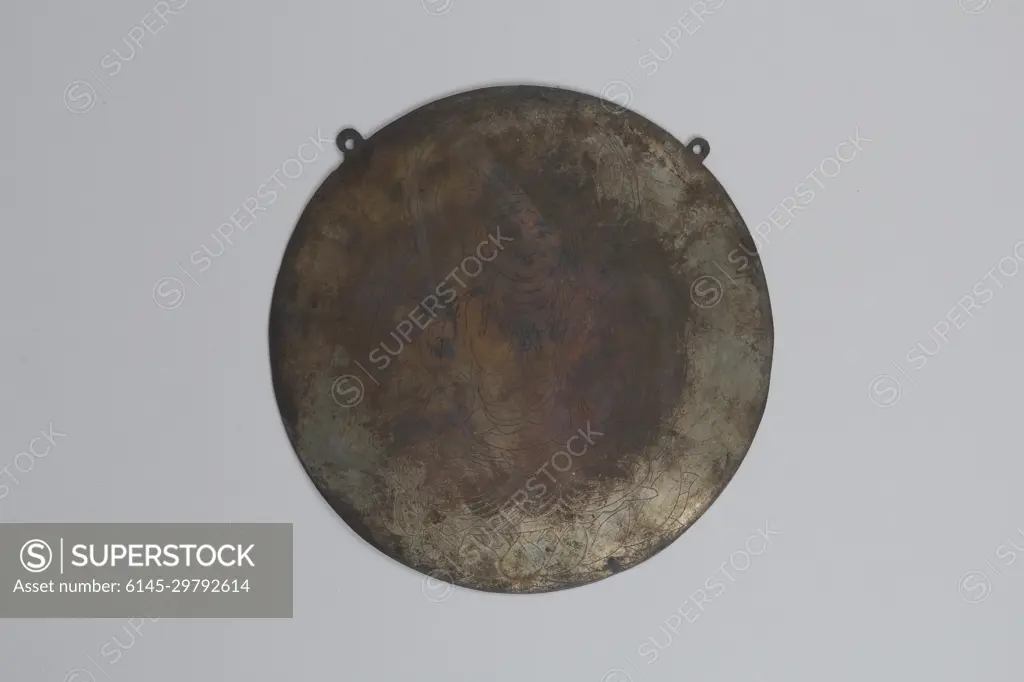
SuperStock offers millions of photos, videos, and stock assets to creatives around the world. This image of Votive Mirror with Eleven-Headed Kannon 12th century Japan Images of deities carved in bronze mirrors (kyz) had spiritual and ritual significance in the late Heian period. The incised representation of the Eleven-headed Kannon (Ekdashamukha) merges visual and symbolic attributes of both Shinto and Buddhist religions. Kannon sits on a lotus flower, holding a hanging rosary with his right hand and forming a gesture that signifies the discussion and transmission of Buddha’s teachings with his left hand. He wears a headdress composed of eleven small-scale heads, which symbolize Kannon’s ability to see and care for the suffering of all sentient beings. The two bronze loops on the upper portion of the disc suggest that the mirror was suspended.. Votive Mirror with Eleven-Headed Kannon. Japan. 12th century. Gilt bronze. Heian period (794-1185). Metalwork by Piemags/PL Photography Limited is available for licensing today.
Looking for a license?
Click here, and we'll help you find it! Questions? Just ask!
Click here, and we'll help you find it! Questions? Just ask!
DETAILS
Image Number: 6145-29792614Royalty FreeCredit Line:Piemags/PL Photography Limited/SuperStockCollection:PL Photography Limited Contributor:Piemags Model Release:NoProperty Release:NoResolution:4000×2667