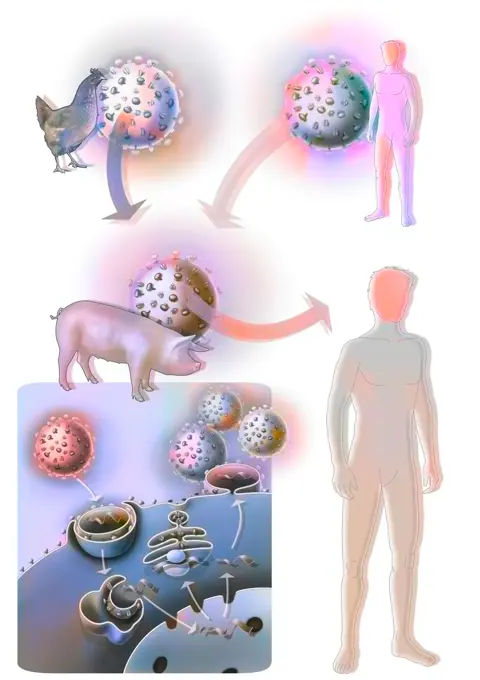
Viruses can only multiply within living cells, by replicating their nucleic acid. The infection of a cell by a virus, then the multiplication of the virus can be summarized in different stages. 1. Adsorption of the virus in contact with the membrane of the infected cell, thanks to specific receptors 2. Penetration into the cell 3. Decapsidation (release of the nucleic acid) 4. Replication of the viral genome 5. Synthesis of viral proteins 6 Assembly and encapsidation of the viral particles produced 7. Release of the new viruses from the host cell
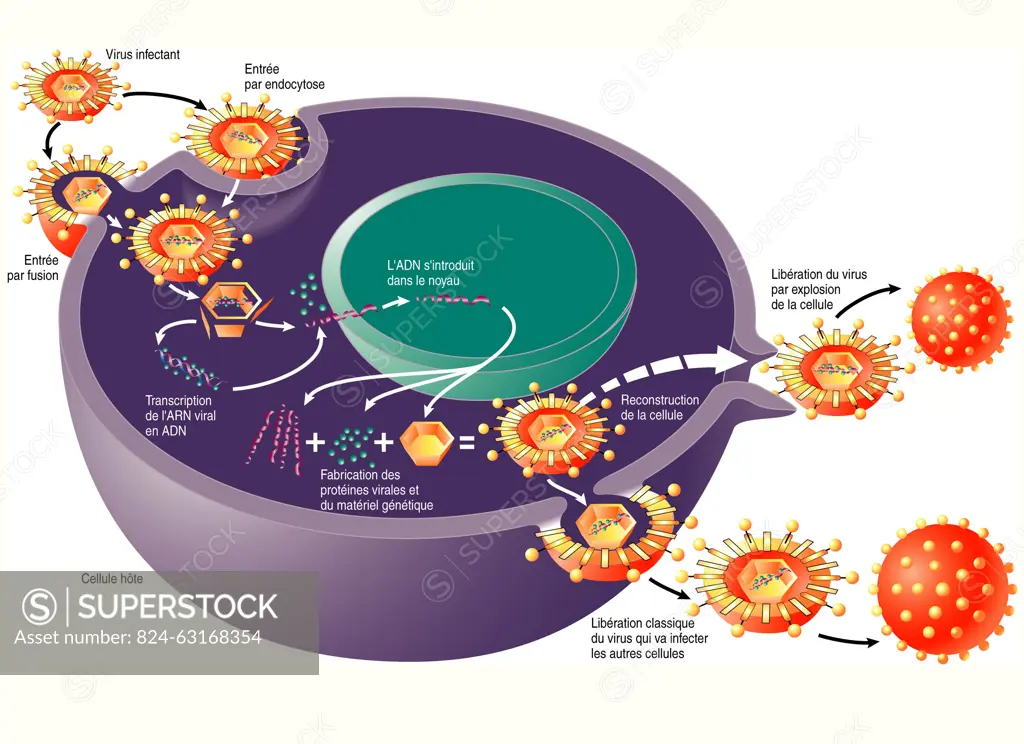
SuperStock offers millions of photos, videos, and stock assets to creatives around the world. This image of Viruses can only multiply within living cells, by replicating their nucleic acid. The infection of a cell by a virus, then the multiplication of the virus can be summarized in different stages. 1. Adsorption of the virus in contact with the membrane of the infected cell, thanks to specific receptors 2. Penetration into the cell 3. Decapsidation (release of the nucleic acid) 4. Replication of the viral genome 5. Synthesis of viral proteins 6 Assembly and encapsidation of the viral particles produced 7. Release of the new viruses from the host cell by KERMOAL/BSIP is available for licensing today.
Visually Similar More from Microbiology and Cellular Structures story






Looking for a license?
Click here, and we'll help you find it! Questions? Just ask!
Click here, and we'll help you find it! Questions? Just ask!
DETAILS
Image Number: 824-63168354Rights ManagedCredit Line:KERMOAL/BSIP/SuperStockCollection:BSIP Story:Microbiology and Cellular StructuresContributor:KERMOAL / BSIP Model Release:NoProperty Release:NoResolution:3630×2640