View of Amsterdam, c. 1640, Rembrandt Harmensz. van Rijn, Dutch, 1606-1669, 4 3/8 x 6 in. (11.11 x 15.24 cm) (plate), Etching, The Netherlands, 17th century, Because his father was a miller, Rembrandt must have enjoyed adding the windmill to View of Amsterdam, his first landscape print. The early 1640s marked a flurry of landscape activity for him in and around his adopted city. Several etchings reflect the area near the new house that he and Saskia bought in Amsterdam in 1639. Then, after her death in 1642, he may have consoled himself by walking the countryside, with its picturesque old farmhouses. Scholars even speculate that, because Rembrandt ceased making self-portraits around this time, he may have found in nature the sort of meditative self-reflection that he had previously found in self-portraiture.
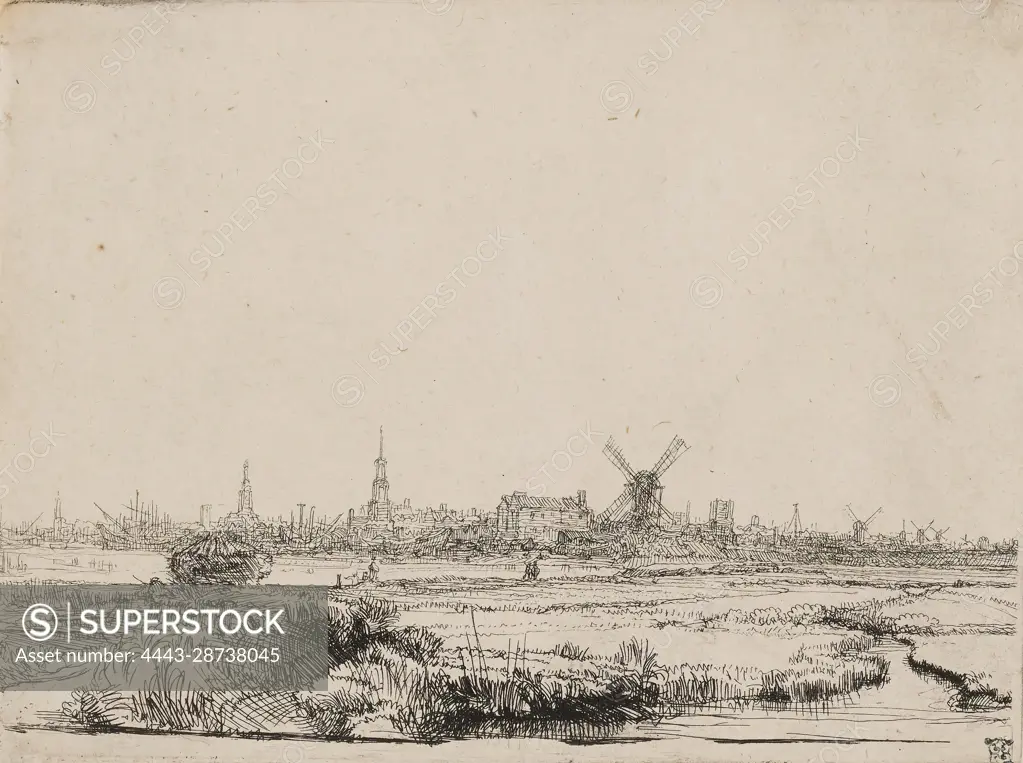
SuperStock offers millions of photos, videos, and stock assets to creatives around the world. This image of View of Amsterdam, c. 1640, Rembrandt Harmensz. van Rijn, Dutch, 1606-1669, 4 3/8 x 6 in. (11.11 x 15.24 cm) (plate), Etching, The Netherlands, 17th century, Because his father was a miller, Rembrandt must have enjoyed adding the windmill to View of Amsterdam, his first landscape print. The early 1640s marked a flurry of landscape activity for him in and around his adopted city. Several etchings reflect the area near the new house that he and Saskia bought in Amsterdam in 1639. Then, after her death in 1642, he may have consoled himself by walking the countryside, with its picturesque old farmhouses. Scholars even speculate that, because Rembrandt ceased making self-portraits around this time, he may have found in nature the sort of meditative self-reflection that he had previously found in self-portraiture. by Artokoloro is available for licensing today.
Looking for a license?
Click here, and we'll help you find it! Questions? Just ask!
Click here, and we'll help you find it! Questions? Just ask!
DETAILS
Image Number: 4443-28738045Rights ManagedCredit Line:Artokoloro/SuperStockCollection:Artokoloro Model Release:NoProperty Release:NoResolution:3662×2729