Vessel stand with ibex support ca. 2600-2350 B.C. Sumerian Temple rituals during the Early Dynastic period included making offerings of food, drink, and probably incense to the gods. This stand, with four rings supported by a magnificent ibex, would have supported lamps or bowls holding offerings or incense and may have been used in temple or in banquet rituals.This stand was made by a sophisticated method of metalwork known as the lost-wax technique. The desired image was sculpted in wax and surrounded with clay that hardened into a mold when baked. When the mold was fired, the wax was melted and "lost," leaving a negative space that corresponded to the wax image. Molten metal was then poured into the cavity to form a reproduction of the original wax model.. Vessel stand with ibex support. Sumerian. ca. 2600-2350 B.C.. Copper alloy, inlaid with shell and lapis lazuli. Early Dynastic III. Mesopotamia
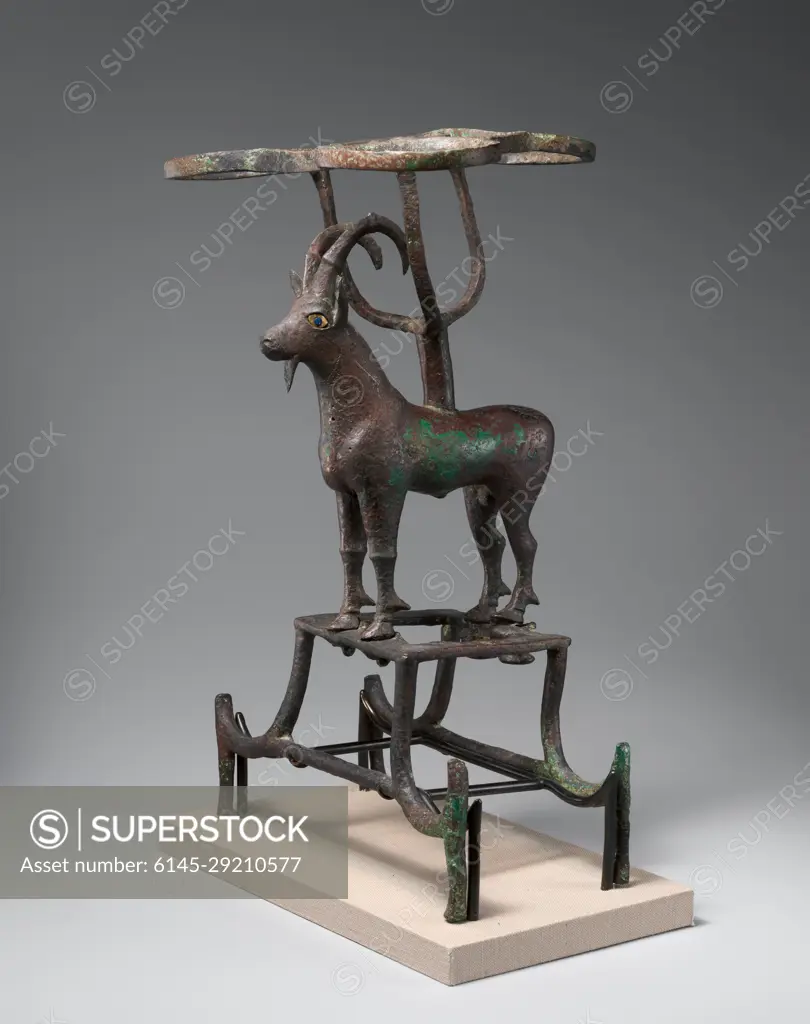
SuperStock offers millions of photos, videos, and stock assets to creatives around the world. This image of Vessel stand with ibex support ca. 2600-2350 B.C. Sumerian Temple rituals during the Early Dynastic period included making offerings of food, drink, and probably incense to the gods. This stand, with four rings supported by a magnificent ibex, would have supported lamps or bowls holding offerings or incense and may have been used in temple or in banquet rituals.This stand was made by a sophisticated method of metalwork known as the lost-wax technique. The desired image was sculpted in wax and surrounded with clay that hardened into a mold when baked. When the mold was fired, the wax was melted and "lost," leaving a negative space that corresponded to the wax image. Molten metal was then poured into the cavity to form a reproduction of the original wax model.. Vessel stand with ibex support. Sumerian. ca. 2600-2350 B.C.. Copper alloy, inlaid with shell and lapis lazuli. Early Dynastic III. Mesopotamia by Piemags/PL Photography Limited is available for licensing today.
Looking for a license?
Click here, and we'll help you find it! Questions? Just ask!
Click here, and we'll help you find it! Questions? Just ask!
DETAILS
Image Number: 6145-29210577Royalty FreeCredit Line:Piemags/PL Photography Limited/SuperStockCollection:PL Photography Limited Contributor:Piemags Model Release:NoProperty Release:NoResolution:3165×4000