Vase with lid (one of a pair) ca. 1826-45 C. J. Mason and Co. These two vases are made of a ceramic body introduced in the early nineteenth century that was called by the factory "Masons Ironstone China". In fact, a fine white earthenware was employed for "ironstone", but the name given by the firm implied both durability and the elegance of Chinese porcelain. Ironstone could be inexpensively made, and works in this medium were enormously popular throughout the nineteenth century. In addition, the decoration involved painting over transfer-printed designs which was far less expensive that applying decoration entirely by hand. Thus works such as these, despite their imposing size, were much more affordable than comparable porcelain vases with traditional painted decoration.. Vase with lid (one of a pair). British, Fenton, Staffordshire. ca. 1826-45. Earthenware with transfer-printed and enamel decoration. Ceramics-Pottery
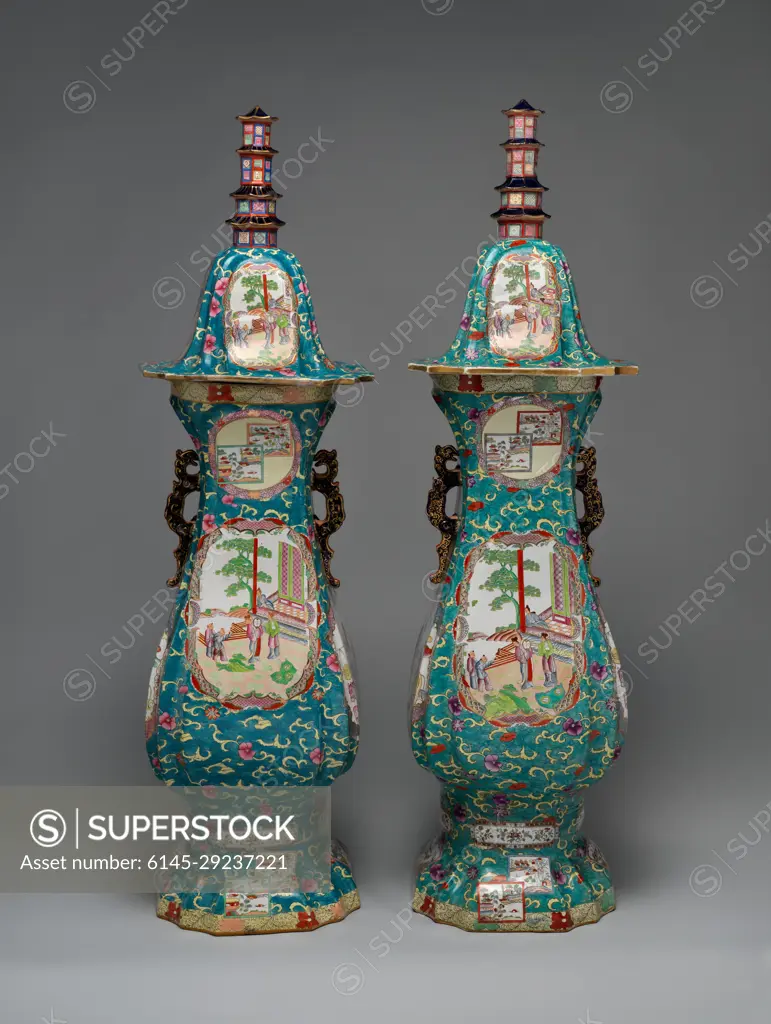
SuperStock offers millions of photos, videos, and stock assets to creatives around the world. This image of Vase with lid (one of a pair) ca. 1826-45 C. J. Mason and Co. These two vases are made of a ceramic body introduced in the early nineteenth century that was called by the factory "Masons Ironstone China". In fact, a fine white earthenware was employed for "ironstone", but the name given by the firm implied both durability and the elegance of Chinese porcelain. Ironstone could be inexpensively made, and works in this medium were enormously popular throughout the nineteenth century. In addition, the decoration involved painting over transfer-printed designs which was far less expensive that applying decoration entirely by hand. Thus works such as these, despite their imposing size, were much more affordable than comparable porcelain vases with traditional painted decoration.. Vase with lid (one of a pair). British, Fenton, Staffordshire. ca. 1826-45. Earthenware with transfer-printed and enamel decoration. Ceramics-Pottery by Piemags/PL Photography Limited is available for licensing today.
Looking for a license?
Click here, and we'll help you find it! Questions? Just ask!
Click here, and we'll help you find it! Questions? Just ask!
DETAILS
Image Number: 6145-29237221Royalty FreeCredit Line:Piemags/PL Photography Limited/SuperStockCollection:PL Photography Limited Contributor:Piemags Model Release:NoProperty Release:NoResolution:3014×4000