Vasculature cells and dopamine-producing neurons of the human brain, both generated from a patients stem cells in the Brain-Chip for research on Parkinsons disease. The Brain-Chip was developed at Cedars-Sinai in collaboration with Emulate, Inc. A top-down view of the brain and vascular channels of a stained Brain-Chip shows brain microcapillary cells (red) interacting with dopamine neurons (white). Here, the Brain-Chip was stained with glucose transport molecule-1 (GLUT1), which is necessary for uptake of glucose from the blood, and tyrosine hydroxylase (TH), a key enzyme in dopamine production.
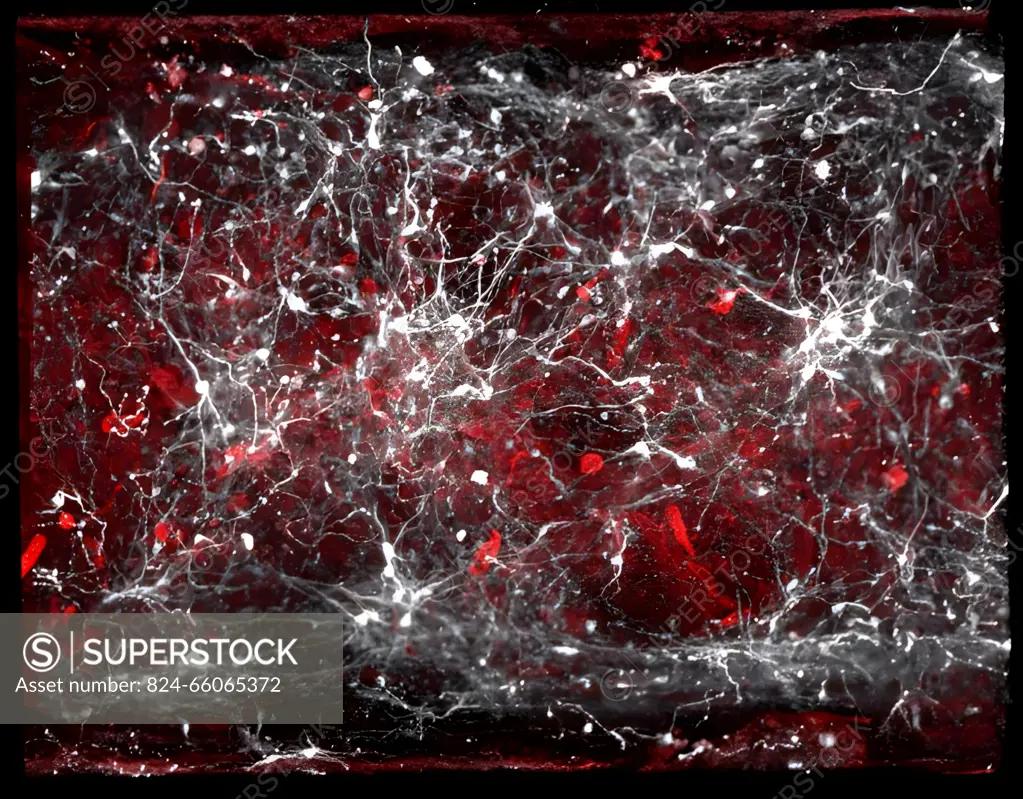
SuperStock offers millions of photos, videos, and stock assets to creatives around the world. This image of Vasculature cells and dopamine-producing neurons of the human brain, both generated from a patients stem cells in the Brain-Chip for research on Parkinsons disease. The Brain-Chip was developed at Cedars-Sinai in collaboration with Emulate, Inc. A top-down view of the brain and vascular channels of a stained Brain-Chip shows brain microcapillary cells (red) interacting with dopamine neurons (white). Here, the Brain-Chip was stained with glucose transport molecule-1 (GLUT1), which is necessary for uptake of glucose from the blood, and tyrosine hydroxylase (TH), a key enzyme in dopamine production. by NIH/IMAGE POINT FR/BSIP is available for licensing today.
Looking for a license?
Click here, and we'll help you find it! Questions? Just ask!
Click here, and we'll help you find it! Questions? Just ask!
DETAILS
Image Number: 824-66065372Rights ManagedCredit Line:NIH/IMAGE POINT FR/BSIP/SuperStockCollection:BSIP Contributor:NIH / IMAGE POINT FR / BSIP Model Release:NoProperty Release:NoResolution:3870×3020