Vajrapani, the Thunderbolt-bearing Bodhisattva. Culture: Eastern India (Bihar, probably Nalanda). Dimensions: H. 30 7/8 in. (78.4 cm); W. 23 13/16 in. (60.5 cm); D. 6 in. (15.2 cm). Date: 7th-early 8th century.This is a rare representation of the Buddhist savior Vajrapani from the seventh century or soon after. Vajrapani, the "holder of a thunderbolt" (vajra), shares his origins with the Vedic deity Indra, god of storms. Early in Buddhist iconography, the thunderbolt scepter assumed an independent meaning associated with clarity of pure thought leading to enlightenment. Vajrapani stands flexed holding the vajra in his raised hand, the other resting on the dwarf attendant with a club-axe who seemingly mimics his gestures. Vajrapani has long, unkempt dreadlocks that imply an esoteric aspect to his personality, evocative of Shiva; the large, asymmetrical ear ornaments only strengthen this association, as does the gana-type dwarf guardian. He is best understood as a purusa, a personificat
This asset has restrictions and cannot be purchased online. Get in touch for more details.
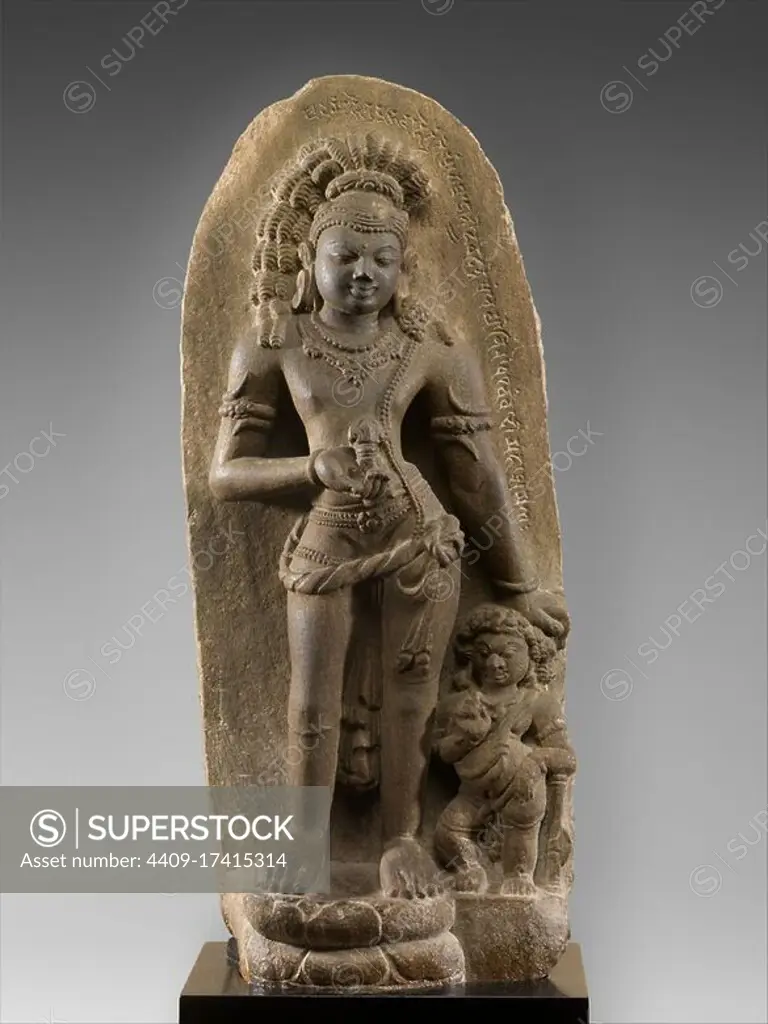
SuperStock offers millions of photos, videos, and stock assets to creatives around the world. This image of Vajrapani, the Thunderbolt-bearing Bodhisattva. Culture: Eastern India (Bihar, probably Nalanda). Dimensions: H. 30 7/8 in. (78.4 cm); W. 23 13/16 in. (60.5 cm); D. 6 in. (15.2 cm). Date: 7th-early 8th century.This is a rare representation of the Buddhist savior Vajrapani from the seventh century or soon after. Vajrapani, the "holder of a thunderbolt" (vajra), shares his origins with the Vedic deity Indra, god of storms. Early in Buddhist iconography, the thunderbolt scepter assumed an independent meaning associated with clarity of pure thought leading to enlightenment. Vajrapani stands flexed holding the vajra in his raised hand, the other resting on the dwarf attendant with a club-axe who seemingly mimics his gestures. Vajrapani has long, unkempt dreadlocks that imply an esoteric aspect to his personality, evocative of Shiva; the large, asymmetrical ear ornaments only strengthen this association, as does the gana-type dwarf guardian. He is best understood as a purusa, a personificat by Album/Metropolitan Museum of Art, NY/Album Archivo is available for licensing today.
Looking for a license?
Click here, and we'll help you find it! Questions? Just ask!
Click here, and we'll help you find it! Questions? Just ask!
DETAILS
Image Number: 4409-17415314Rights ManagedCredit Line:Album/Metropolitan Museum of Art, NY/Album Archivo/SuperStockCollection:Album Archivo Contributor:Album / Metropolitan Museum of Art, NY Model Release:NoProperty Release:NoResolution:3202×4268