Two Views from the Eight Views of the Xiao and Xiang Rivers early 16th century Kantei One of the most popular subjects in traditional Chinese poetry and landscape painting is the Eight Views of the Xiao and Xiang Rivers. It highlights a region in southern China that was the source of a rich literary tradition and the locus of ancient myths and popular lore. Song Di (active 11th century), who retreated to the area after his dismissal from court in 1074, is reputed to have been the first to paint the site in a group of eight images. These codified scenes became popular in Japan, beginning in the Muromachi period.Little is known about Kantei, the artist of these two paintings, save that he may have been a monk of the Ritsu sect of Buddhism, in Nara. It is apparent that both compositions, with their strong horizontal and vertical lines, were influenced by works of the master ink painter Sessh Ty (1420-1506).. Two Views from the Eight Views of the Xiao and Xiang Rivers. Kantei (Japanese,
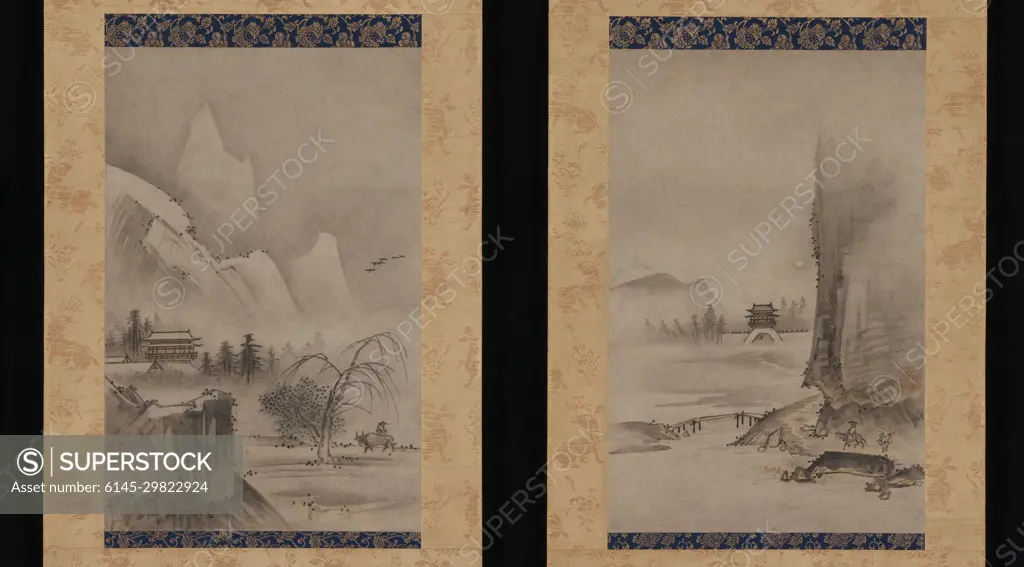
SuperStock offers millions of photos, videos, and stock assets to creatives around the world. This image of Two Views from the Eight Views of the Xiao and Xiang Rivers early 16th century Kantei One of the most popular subjects in traditional Chinese poetry and landscape painting is the Eight Views of the Xiao and Xiang Rivers. It highlights a region in southern China that was the source of a rich literary tradition and the locus of ancient myths and popular lore. Song Di (active 11th century), who retreated to the area after his dismissal from court in 1074, is reputed to have been the first to paint the site in a group of eight images. These codified scenes became popular in Japan, beginning in the Muromachi period.Little is known about Kantei, the artist of these two paintings, save that he may have been a monk of the Ritsu sect of Buddhism, in Nara. It is apparent that both compositions, with their strong horizontal and vertical lines, were influenced by works of the master ink painter Sessh Ty (1420-1506).. Two Views from the Eight Views of the Xiao and Xiang Rivers. Kantei (Japanese, by Piemags/PL Photography Limited is available for licensing today.
Looking for a license?
Click here, and we'll help you find it! Questions? Just ask!
Click here, and we'll help you find it! Questions? Just ask!
DETAILS
Image Number: 6145-29822924Royalty FreeCredit Line:Piemags/PL Photography Limited/SuperStockCollection:PL Photography Limited Contributor:Piemags Model Release:NoProperty Release:NoResolution:2628×1457