Two Ladies. Artist: Suzuki Harunobu (Japanese, 1725-1770). Culture: Japan. Dimensions: H. 11 1/8 in. (28.3 cm); W. 8 1/8 in. (20.6 cm). Date: 1764-72.In 1765 Harunobu introduced nishiki-e, the polychrome woodblock print, adding further luxury and realism to ukiyo-e art. Although the use of reflection appeared in the earliest woodblock prints, the advent of color and use of embossing and mica enhanced the illusion represented by the mirror.In this print two courtesans gaze at each other through a mirror, using reflection as a means of communication. The artist enables the viewer to see both the back of the woman's head and her face at the same time. The portrayal reflects the tradition of women cutting the hair from the nape of the neck. A beautiful nape was essential to female beauty and was also considered an area of erotic charm.With the addition of the poem to his print, Harunobu heightens the power and narrative of his image. The poem, by Mitsunari, a Heian-period poet, reads:Even
This asset has restrictions and cannot be purchased online. Get in touch for more details.
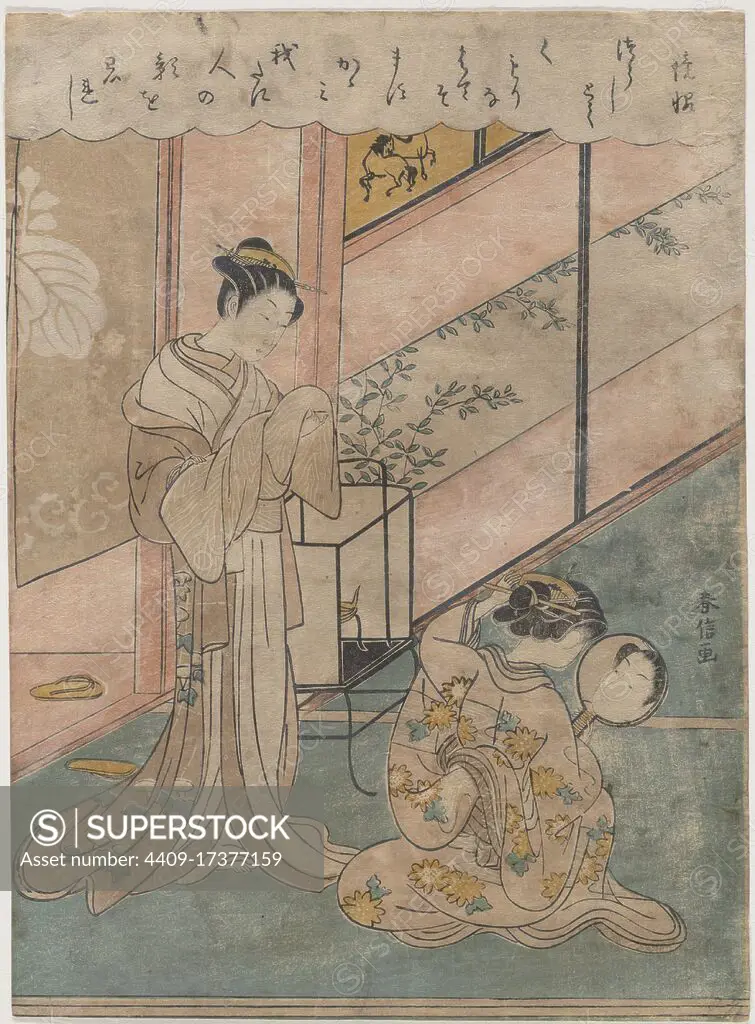
SuperStock offers millions of photos, videos, and stock assets to creatives around the world. This image of Two Ladies. Artist: Suzuki Harunobu (Japanese, 1725-1770). Culture: Japan. Dimensions: H. 11 1/8 in. (28.3 cm); W. 8 1/8 in. (20.6 cm). Date: 1764-72.In 1765 Harunobu introduced nishiki-e, the polychrome woodblock print, adding further luxury and realism to ukiyo-e art. Although the use of reflection appeared in the earliest woodblock prints, the advent of color and use of embossing and mica enhanced the illusion represented by the mirror.In this print two courtesans gaze at each other through a mirror, using reflection as a means of communication. The artist enables the viewer to see both the back of the woman's head and her face at the same time. The portrayal reflects the tradition of women cutting the hair from the nape of the neck. A beautiful nape was essential to female beauty and was also considered an area of erotic charm.With the addition of the poem to his print, Harunobu heightens the power and narrative of his image. The poem, by Mitsunari, a Heian-period poet, reads:Even by Album/Album Archivo is available for licensing today.
Looking for a license?
Click here, and we'll help you find it! Questions? Just ask!
Click here, and we'll help you find it! Questions? Just ask!
DETAILS
Image Number: 4409-17377159Rights ManagedCredit Line:Album/Album Archivo/SuperStockCollection:Album Archivo Contributor:Album Model Release:NoProperty Release:NoResolution:3242×4400