Tupu (pin) Before 17th century Wari or Inca () This object is a tupu, a Quechua term for pin ("pithu" in Aymara and "alfiler" in Spanish), and it is made of silver. Women in the Andes have used these pins to fasten textile garments. The basic tupu form consists of a head and a stem. This particular example is nearly identical in size, shape, and fabrication technique to Metropolitan Museum of Art 64.228.702. While there is no documentation available to suggest that they were from the same archaeological context, it is possible that one person may have worn them as a pair. Typically, women wear two tupus, their heads pointed downward, in order to fasten the acsu or anacu (sometimes referred to in Spanish as saya). This garment is a rectangular textile made of camelid wool that wraps around the body. The tupus may be worn threaded along a cord that passes through their perforations. Indeed, the head of this tupu is undecorated except for a single perforation along its central lengthwise
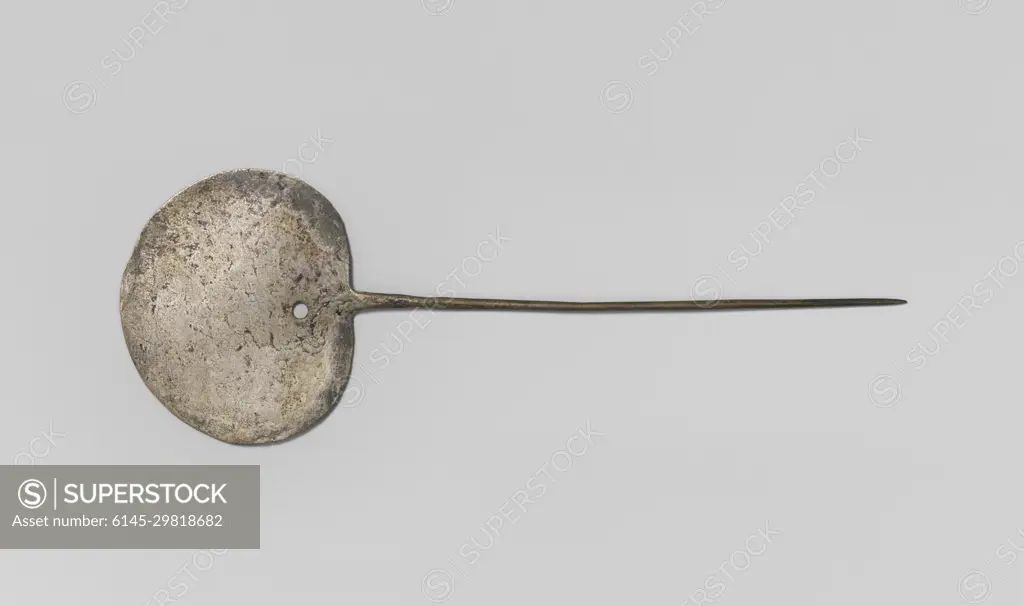
SuperStock offers millions of photos, videos, and stock assets to creatives around the world. This image of Tupu (pin) Before 17th century Wari or Inca () This object is a tupu, a Quechua term for pin ("pithu" in Aymara and "alfiler" in Spanish), and it is made of silver. Women in the Andes have used these pins to fasten textile garments. The basic tupu form consists of a head and a stem. This particular example is nearly identical in size, shape, and fabrication technique to Metropolitan Museum of Art 64.228.702. While there is no documentation available to suggest that they were from the same archaeological context, it is possible that one person may have worn them as a pair. Typically, women wear two tupus, their heads pointed downward, in order to fasten the acsu or anacu (sometimes referred to in Spanish as saya). This garment is a rectangular textile made of camelid wool that wraps around the body. The tupus may be worn threaded along a cord that passes through their perforations. Indeed, the head of this tupu is undecorated except for a single perforation along its central lengthwise by Piemags/PL Photography Limited is available for licensing today.
Looking for a license?
Click here, and we'll help you find it! Questions? Just ask!
Click here, and we'll help you find it! Questions? Just ask!
DETAILS
Image Number: 6145-29818682Royalty FreeCredit Line:Piemags/PL Photography Limited/SuperStockCollection:PL Photography Limited Contributor:Piemags Model Release:NoProperty Release:NoResolution:4000×2371