Tunic 700-850 Wari The so-called patchwork tunics of Peru, which date from the eighth to ninth century, comprise individual pieces of fabric that were woven exactly to shape and dyed before being sewn together. Their brilliantly hued patterns are often complex, with diagonal repeats of specifically colored patches that make for intriguing combinations and a lively surface. These lightweight tunics were woven from the hair of Andean camelids such as the alpaca, a kind of fiber that can be dyed to intense color. This tunic is among the oldest patchwork textiles in the collection of the Metropolitan Museum.. Tunic 315050
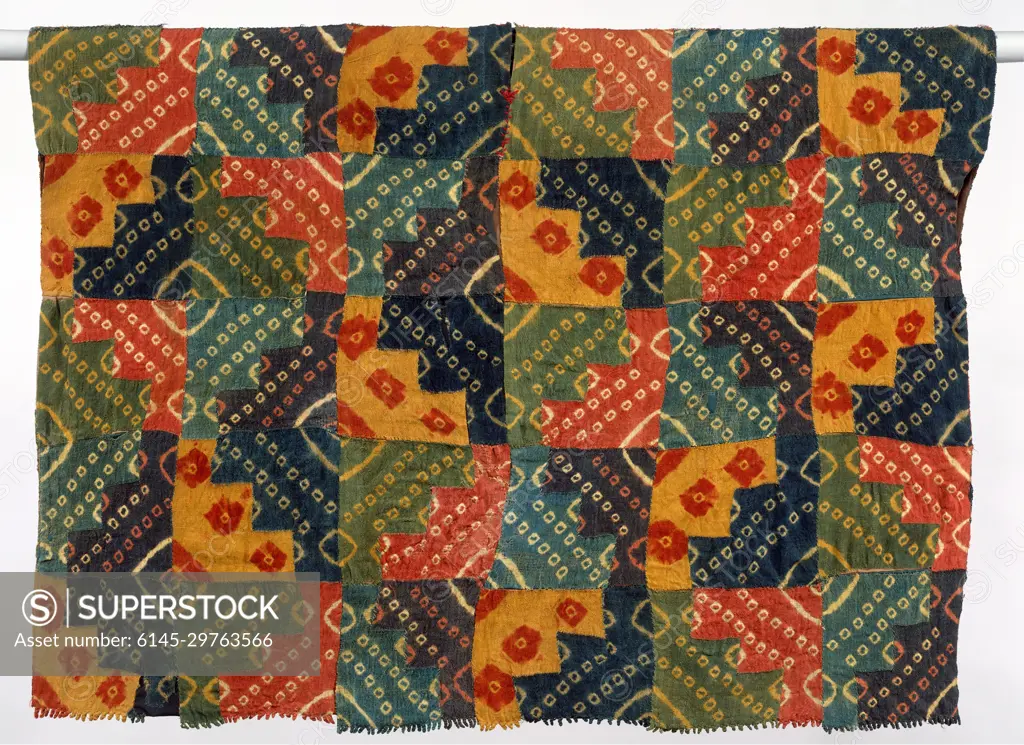
SuperStock offers millions of photos, videos, and stock assets to creatives around the world. This image of Tunic 700-850 Wari The so-called patchwork tunics of Peru, which date from the eighth to ninth century, comprise individual pieces of fabric that were woven exactly to shape and dyed before being sewn together. Their brilliantly hued patterns are often complex, with diagonal repeats of specifically colored patches that make for intriguing combinations and a lively surface. These lightweight tunics were woven from the hair of Andean camelids such as the alpaca, a kind of fiber that can be dyed to intense color. This tunic is among the oldest patchwork textiles in the collection of the Metropolitan Museum.. Tunic 315050 by Piemags/PL Photography Limited is available for licensing today.
Looking for a license?
Click here, and we'll help you find it! Questions? Just ask!
Click here, and we'll help you find it! Questions? Just ask!
DETAILS
Image Number: 6145-29763566Royalty FreeCredit Line:Piemags/PL Photography Limited/SuperStockCollection:PL Photography Limited Contributor:Piemags Model Release:NoProperty Release:NoResolution:1905×1386