Tunic with Interlace Decoration 4th-8th century Interlaces and knots are among the most frequently employed motifs in the arts of the early Byzantine period. They are especially common on textiles, including large hangings, furniture covers, and clothing, and the high level of craftsmanship required to create such patterns suggests luxury and wealth. The belief that a person could inflict harm with only a glance was widespread throughout the ancient world, and intricate interlaces and knots may have been intended to serve a protective function: they created a labyrinth for the eye, drawing in the injurious or envious gaze and thus preventing it from doing evil. Indeed, certain designs, such as the knot of Solomon - a motif formed by looped bands that interlace to form a cross - were believed to be apotropaic (from the Greek apotropaios, meaning "turning away evil"). The decoration of this tunic consists entirely of repeated patterns of interlace and knots. Nested squares form the tabul
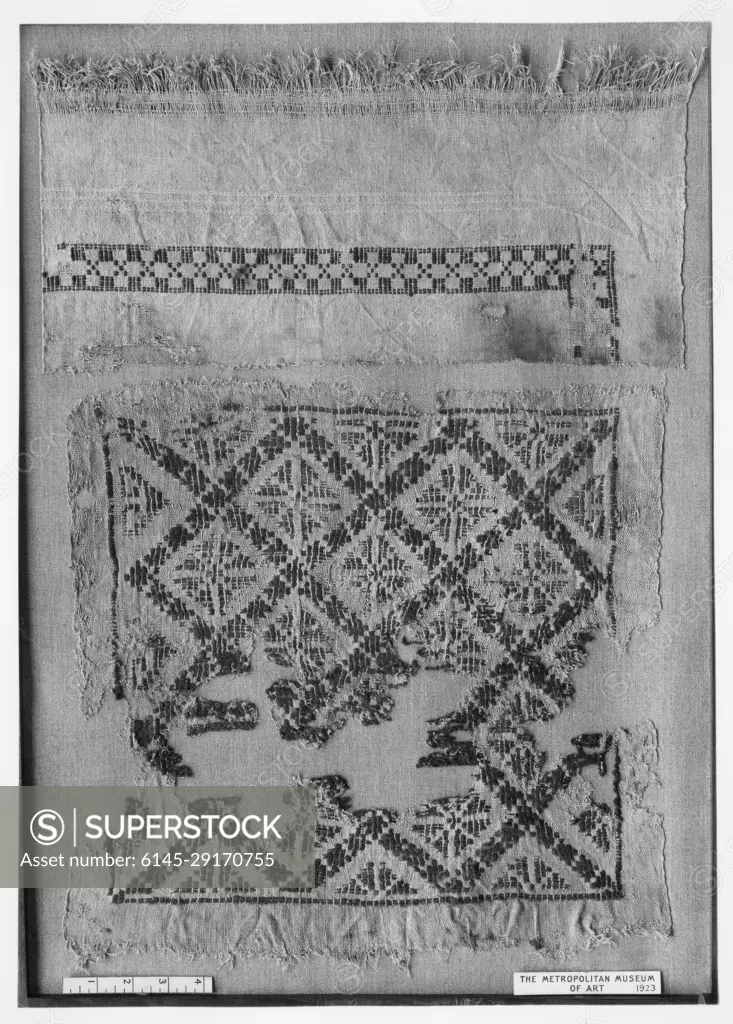
SuperStock offers millions of photos, videos, and stock assets to creatives around the world. This image of Tunic with Interlace Decoration 4th-8th century Interlaces and knots are among the most frequently employed motifs in the arts of the early Byzantine period. They are especially common on textiles, including large hangings, furniture covers, and clothing, and the high level of craftsmanship required to create such patterns suggests luxury and wealth. The belief that a person could inflict harm with only a glance was widespread throughout the ancient world, and intricate interlaces and knots may have been intended to serve a protective function: they created a labyrinth for the eye, drawing in the injurious or envious gaze and thus preventing it from doing evil. Indeed, certain designs, such as the knot of Solomon - a motif formed by looped bands that interlace to form a cross - were believed to be apotropaic (from the Greek apotropaios, meaning "turning away evil"). The decoration of this tunic consists entirely of repeated patterns of interlace and knots. Nested squares form the tabul by Piemags/PL Photography Limited is available for licensing today.
Looking for a license?
Click here, and we'll help you find it! Questions? Just ask!
Click here, and we'll help you find it! Questions? Just ask!
DETAILS
Image Number: 6145-29170755Royalty FreeCredit Line:Piemags/PL Photography Limited/SuperStockCollection:PL Photography Limited Contributor:Piemags Model Release:NoProperty Release:NoResolution:2867×4000