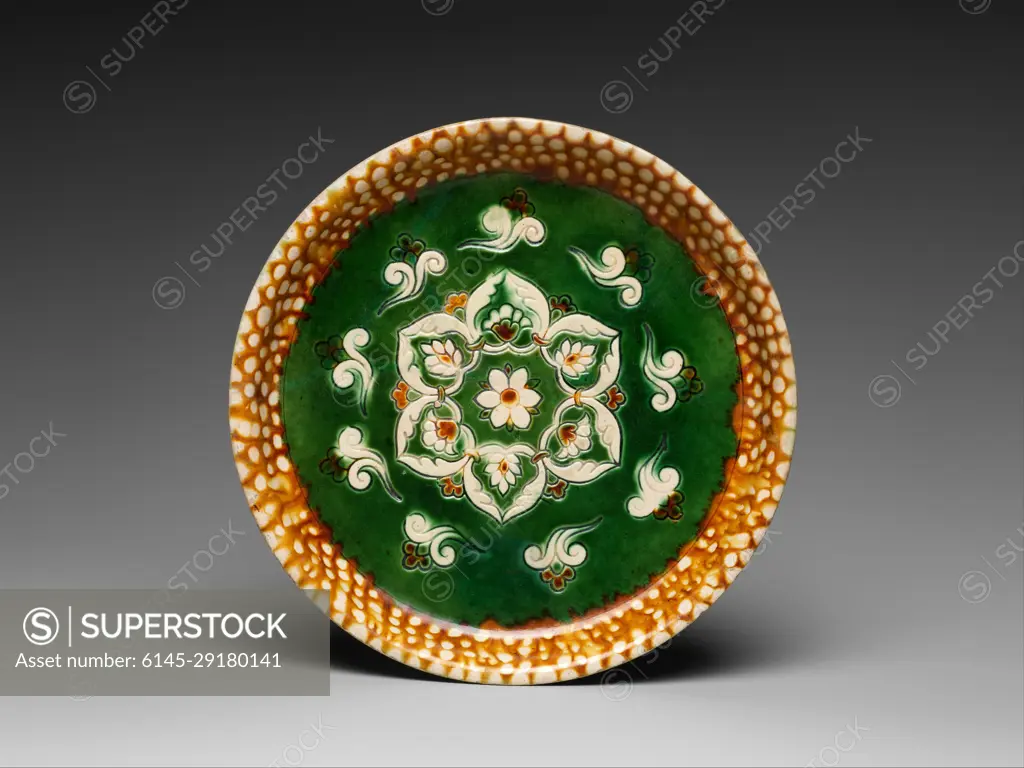
Tray 8th century China Combinations of white, amber, and green glazes, typically known as sancai or three-colored” wares, were first developed in China in the late seventh century, and were used primarily for funerary goods. The bright colors, clear tones, and superior bonding power of this technique were achieved by firing twice, first at high temperature to achieve a hard pottery body, and then at low temperature, after the glazes were applied, to bring out the vibrant colors. The shape and medallion decor of this tray were derived from metalwork prototypes. The deep, intaglio lines of the floral patterns, impressed onto the surface of the still-soft clay by stamps, helped to contain the glaze in the intended areas. The pearl-like white spots on the rim were created by the use of wax or clay resists, a technique commonly employed in dyed textiles.. Tray 44348
SuperStock offers millions of photos, videos, and stock assets to creatives around the world. This image of Tray 8th century China Combinations of white, amber, and green glazes, typically known as sancai or three-colored” wares, were first developed in China in the late seventh century, and were used primarily for funerary goods. The bright colors, clear tones, and superior bonding power of this technique were achieved by firing twice, first at high temperature to achieve a hard pottery body, and then at low temperature, after the glazes were applied, to bring out the vibrant colors. The shape and medallion decor of this tray were derived from metalwork prototypes. The deep, intaglio lines of the floral patterns, impressed onto the surface of the still-soft clay by stamps, helped to contain the glaze in the intended areas. The pearl-like white spots on the rim were created by the use of wax or clay resists, a technique commonly employed in dyed textiles.. Tray 44348 by Piemags/PL Photography Limited is available for licensing today.
Looking for a license?
Click here, and we'll help you find it! Questions? Just ask!
Click here, and we'll help you find it! Questions? Just ask!
DETAILS
Image Number: 6145-29180141Royalty FreeCredit Line:Piemags/PL Photography Limited/SuperStockCollection:PL Photography Limited Contributor:Piemags Model Release:NoProperty Release:NoResolution:3919×2940