Torso of a Bodhisattva ca. 5th century Probably Sahri-Bahlol Workshop Cult images of bodhisattvas became an important dimension of Mahayana (the Great Wheel sect of North Indian Buddhism) Buddhist worship in the fourth to the fifth century. The monasteries of the Gandharan region commissioned large-scale bodhisattvas in recognition of the growing popularity of these interventionist deities, which embody Buddhist compassion. The cult of Avalokiteshvara represents the highest expression of this sentiment. Probably from the Sahri-Bahlol monastery, this large stone torso, from a figure originally about ten feet tall, is a spectacular survivor from that era. Sensitively modeled and dressed in a draped monks robe, it reflects a lingering memory of contact with the Hellenistic West. Listen to experts illuminate this artwork's story Listen Play or pause #7910. Torso of a Bodhisattva, Part 1 Play or pause #7910. Torso of a Bodhisattva, Part 2 Supported by Bloomberg Philanthropies We're sorry,
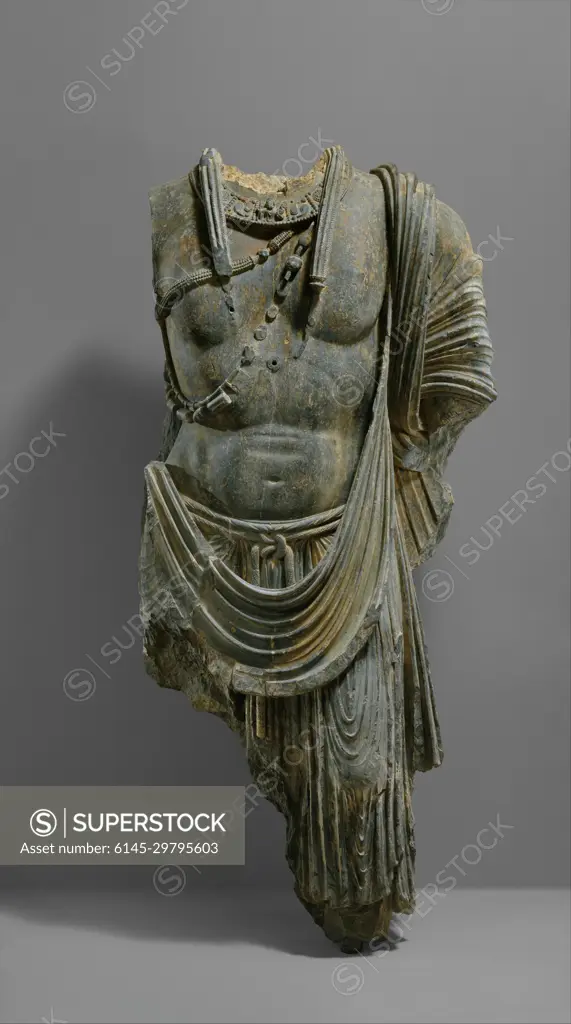
SuperStock offers millions of photos, videos, and stock assets to creatives around the world. This image of Torso of a Bodhisattva ca. 5th century Probably Sahri-Bahlol Workshop Cult images of bodhisattvas became an important dimension of Mahayana (the Great Wheel sect of North Indian Buddhism) Buddhist worship in the fourth to the fifth century. The monasteries of the Gandharan region commissioned large-scale bodhisattvas in recognition of the growing popularity of these interventionist deities, which embody Buddhist compassion. The cult of Avalokiteshvara represents the highest expression of this sentiment. Probably from the Sahri-Bahlol monastery, this large stone torso, from a figure originally about ten feet tall, is a spectacular survivor from that era. Sensitively modeled and dressed in a draped monks robe, it reflects a lingering memory of contact with the Hellenistic West. Listen to experts illuminate this artwork's story Listen Play or pause #7910. Torso of a Bodhisattva, Part 1 Play or pause #7910. Torso of a Bodhisattva, Part 2 Supported by Bloomberg Philanthropies We're sorry, by Piemags/PL Photography Limited is available for licensing today.
Looking for a license?
Click here, and we'll help you find it! Questions? Just ask!
Click here, and we'll help you find it! Questions? Just ask!
DETAILS
Image Number: 6145-29795603Royalty FreeCredit Line:Piemags/PL Photography Limited/SuperStockCollection:PL Photography Limited Contributor:Piemags Model Release:NoProperty Release:NoResolution:2077×3722