Top fragment of a kudurru with a mushhushshu dragon and divine symbols ca. 1156-1025 B.C. Known as kudurrus or narus, a distinctive group of Babylonian stone monuments were once thought to be boundary markers placed in fields. In fact they are more likely to have been placed in temples, where their contents were preserved and sanctified. The monuments, often made from polished black limestone, are usually uneven and boulder-like in shape. They carry inscriptions describing grants of land, often from the king to a high official. Around the text are placed divine symbols, which act to protect and guarantee the gift. Kudurrus first appear in the second millennium B.C., during the period of Kassite rule in Babylonia. This fragmentary example dates to the 12th century B.C. The surviving piece, which comes from the top part of the kudurru, shows part of the body of a snake coiling round the upper surface. Below the snake is a mushhushshu, a composite dragon associated with Babylons chief de
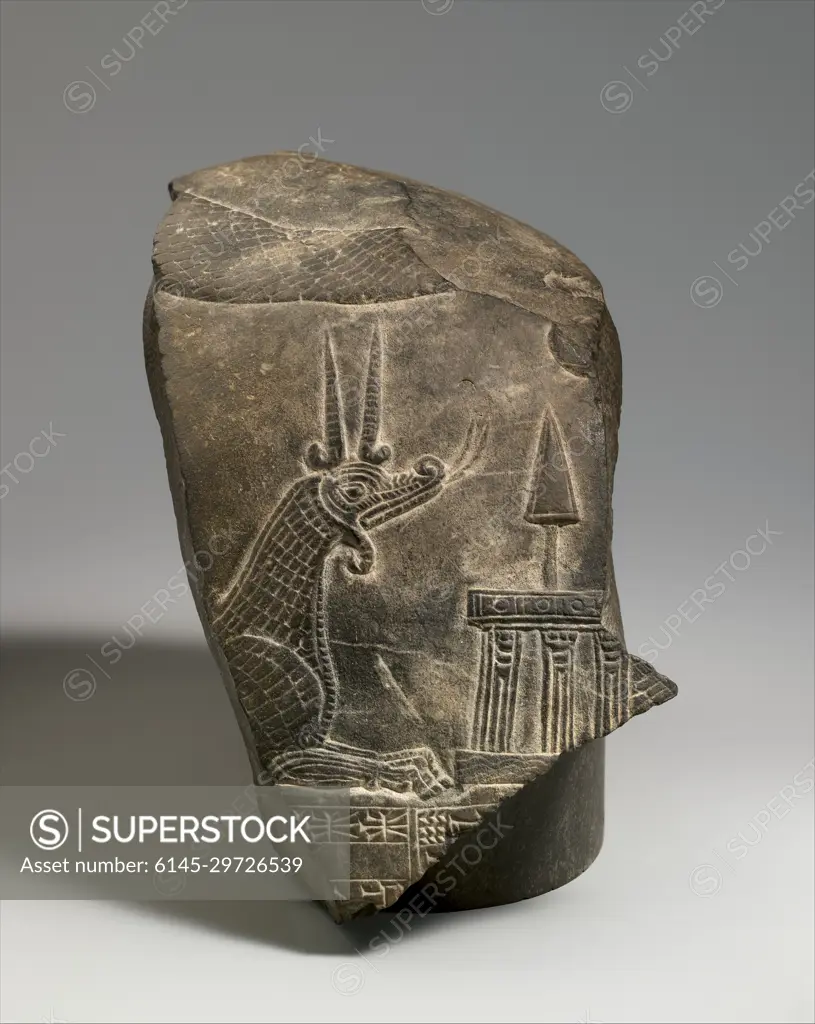
SuperStock offers millions of photos, videos, and stock assets to creatives around the world. This image of Top fragment of a kudurru with a mushhushshu dragon and divine symbols ca. 1156-1025 B.C. Known as kudurrus or narus, a distinctive group of Babylonian stone monuments were once thought to be boundary markers placed in fields. In fact they are more likely to have been placed in temples, where their contents were preserved and sanctified. The monuments, often made from polished black limestone, are usually uneven and boulder-like in shape. They carry inscriptions describing grants of land, often from the king to a high official. Around the text are placed divine symbols, which act to protect and guarantee the gift. Kudurrus first appear in the second millennium B.C., during the period of Kassite rule in Babylonia. This fragmentary example dates to the 12th century B.C. The surviving piece, which comes from the top part of the kudurru, shows part of the body of a snake coiling round the upper surface. Below the snake is a mushhushshu, a composite dragon associated with Babylons chief de by Piemags/PL Photography Limited is available for licensing today.
Looking for a license?
Click here, and we'll help you find it! Questions? Just ask!
Click here, and we'll help you find it! Questions? Just ask!
DETAILS
Image Number: 6145-29726539Royalty FreeCredit Line:Piemags/PL Photography Limited/SuperStockCollection:PL Photography Limited Contributor:Piemags Model Release:NoProperty Release:NoResolution:3073×3857