Toggle harpoon head Japan The Jmon period is the earliest period in Japanese history, lasting from roughly 14,000 to 300 BCE. The Jmon people were primarily hunter-gatherers, hunting land animals and gathering vegetables and nuts on the land as well as hunting and fishing at sea. This toggle harpoon head, which works by detaching from the shaft of the harpoon once it is stuck in an animal while remaining attached to the shaft by a rope, facilitated the hunting of larger animals at sea. It allowed the Jmon people to practice both opportunistic as well as deliberate hunting of large sea mammals including whales, which are known to have been part of the diet of some Jmon communities along with other sea mammals like seals.. Toggle harpoon head. Japan. Bone. Final Jmon period (ca. 1000-300 B.C.). Bone
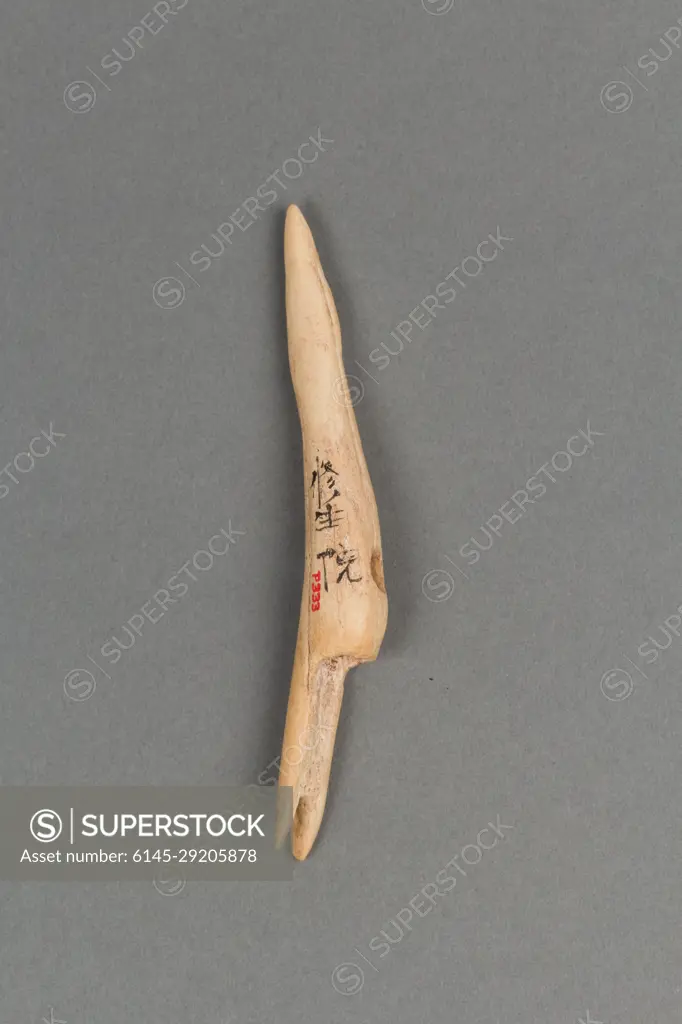
SuperStock offers millions of photos, videos, and stock assets to creatives around the world. This image of Toggle harpoon head Japan The Jmon period is the earliest period in Japanese history, lasting from roughly 14,000 to 300 BCE. The Jmon people were primarily hunter-gatherers, hunting land animals and gathering vegetables and nuts on the land as well as hunting and fishing at sea. This toggle harpoon head, which works by detaching from the shaft of the harpoon once it is stuck in an animal while remaining attached to the shaft by a rope, facilitated the hunting of larger animals at sea. It allowed the Jmon people to practice both opportunistic as well as deliberate hunting of large sea mammals including whales, which are known to have been part of the diet of some Jmon communities along with other sea mammals like seals.. Toggle harpoon head. Japan. Bone. Final Jmon period (ca. 1000-300 B.C.). Bone by Piemags/PL Photography Limited is available for licensing today.
Looking for a license?
Click here, and we'll help you find it! Questions? Just ask!
Click here, and we'll help you find it! Questions? Just ask!
DETAILS
Image Number: 6145-29205878Royalty FreeCredit Line:Piemags/PL Photography Limited/SuperStockCollection:PL Photography Limited Contributor:Piemags Model Release:NoProperty Release:NoResolution:2667×4000