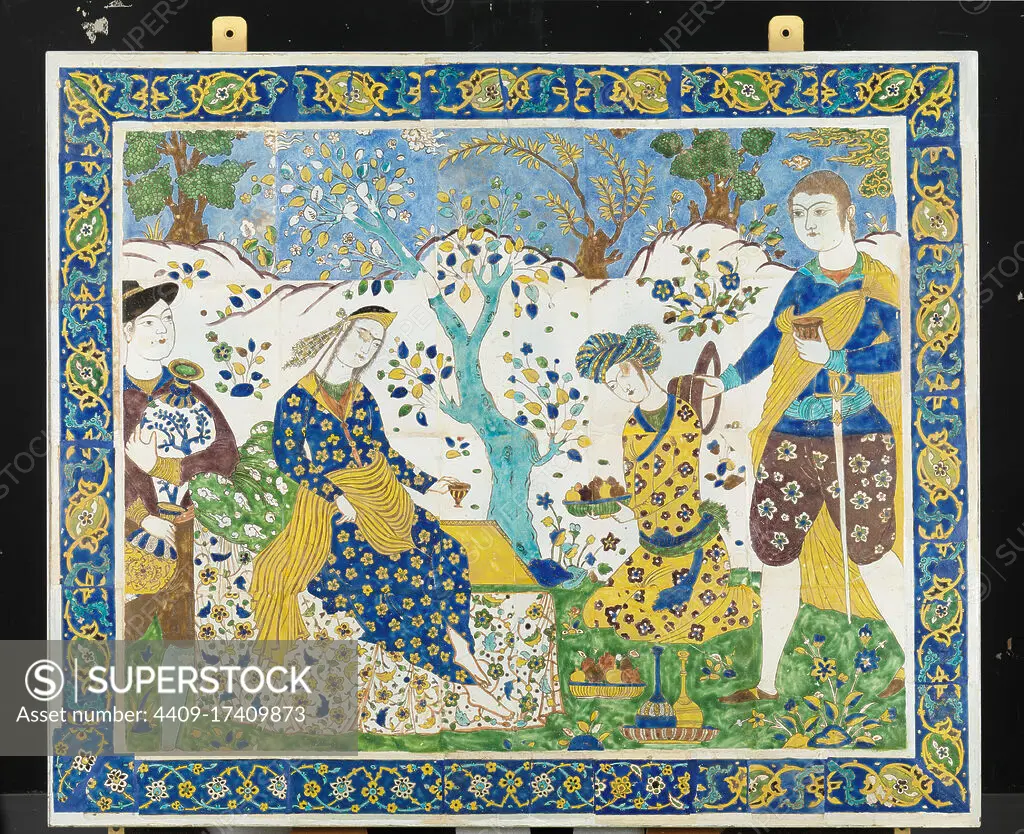
Tile Panel. Dimensions: Panel: H. 45 1/2 in. (115.6 cm)W. 54 5/8 in. (138.7 cm)D. 2 9/16 in. (6.5 cm)Each tile: H. 8 7/8 in. (22.5 cm)W. 8 7/8 in. (22.5 cm)Top Mounts: H. 2 3/8 in. (6 cm) W. 2 in. (5.1 cm) D. 1/2 in. (1.3 cm)Bottom mounts: H. 1 in. (2.5 cm)W. 1 in. (2.5 cm)D. 1/2 in. (1.3 cm). Date: first quarter 17th century.Isfahan, the Safavid capital, and Na'in were the two main centers in which buildings were lavishly decorated with tilework. The old tile-making tradition of composing repetitive geometrical or vegetal patterns was kept alive on mosques and madrasas, but an important innovation on secular buildings was a composition of square tiles individually painted as single elements of an outdoor scene with characters set in a garden landscape. These were placed in royal garden pavilions from the time of Shah 'Abbas to that of Shah Sulayman (the last example being the Hasht Bihisht of 1669). The Museum owns three of these panels, all purchased in 1903 and reported to come from
This asset has restrictions and cannot be purchased online. Get in touch for more details.
SuperStock offers millions of photos, videos, and stock assets to creatives around the world. This image of Tile Panel. Dimensions: Panel: H. 45 1/2 in. (115.6 cm)W. 54 5/8 in. (138.7 cm)D. 2 9/16 in. (6.5 cm)Each tile: H. 8 7/8 in. (22.5 cm)W. 8 7/8 in. (22.5 cm)Top Mounts: H. 2 3/8 in. (6 cm) W. 2 in. (5.1 cm) D. 1/2 in. (1.3 cm)Bottom mounts: H. 1 in. (2.5 cm)W. 1 in. (2.5 cm)D. 1/2 in. (1.3 cm). Date: first quarter 17th century.Isfahan, the Safavid capital, and Na'in were the two main centers in which buildings were lavishly decorated with tilework. The old tile-making tradition of composing repetitive geometrical or vegetal patterns was kept alive on mosques and madrasas, but an important innovation on secular buildings was a composition of square tiles individually painted as single elements of an outdoor scene with characters set in a garden landscape. These were placed in royal garden pavilions from the time of Shah 'Abbas to that of Shah Sulayman (the last example being the Hasht Bihisht of 1669). The Museum owns three of these panels, all purchased in 1903 and reported to come from by Album/Album Archivo is available for licensing today.
Looking for a license?
Click here, and we'll help you find it! Questions? Just ask!
Click here, and we'll help you find it! Questions? Just ask!
DETAILS
Image Number: 4409-17409873Rights ManagedCredit Line:Album/Album Archivo/SuperStockCollection:Album Archivo Contributor:Album Model Release:NoProperty Release:NoResolution:4200×3421