Tiger () figurine ca. 3100 B.C. Iran This fragmentary figurine is missing its forelegs, hindquarters and parts of its face. Yet the shape of its head and ears and the dark vertical stripes on its reddish-orange body suggest the appearance of a tiger.The figurine was excavated at Yarim Tepe in northeastern Iran, six miles south of the modern town of Gonbad-e Kavus. Yarim Tepe was a small settlement, inhabited from the Neolithic to the Parthian period, with many interruptions. This figurine likely dates to the Chalcolithic period, since pottery with similar fabric and coloring excavated at the site belongs to this period as well.Tigers are little known in the ancient world. They are mentioned in Mesopotamian, Hittite and Greek literature only in passing, and no representations of them are known except for this one. This part of Iran was, however, home to the Caspian tiger, which went extinct in the late twentieth century A.D. Thus this figurine may be the earliest known image of a tiger
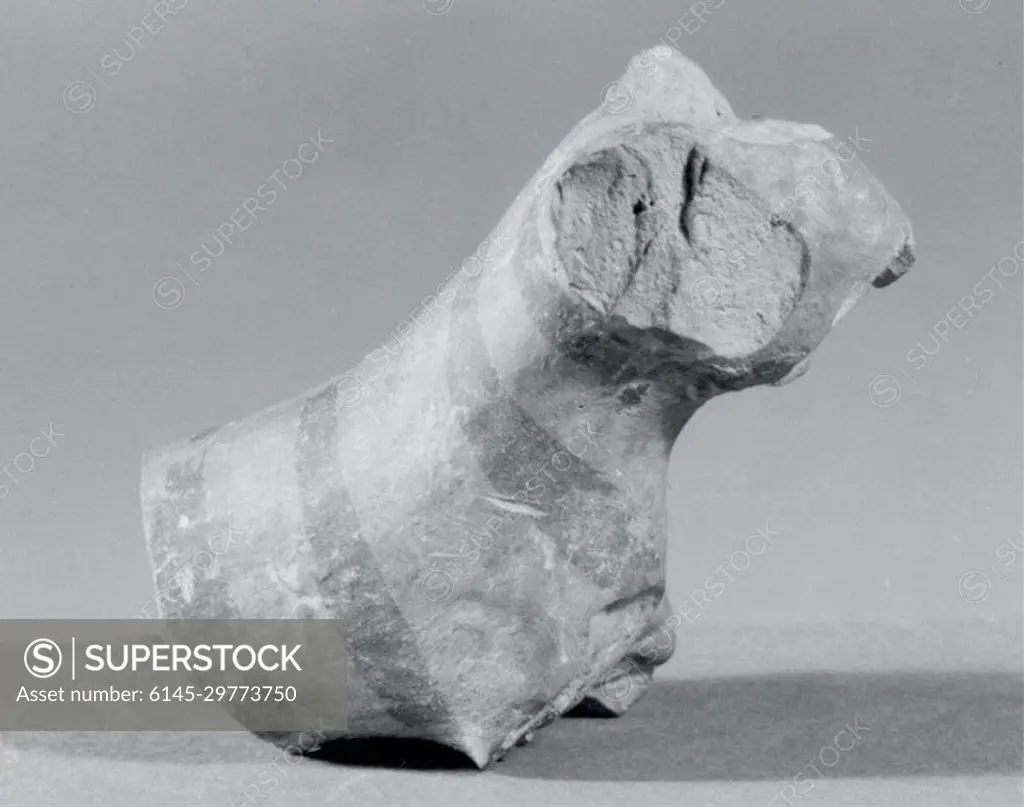
SuperStock offers millions of photos, videos, and stock assets to creatives around the world. This image of Tiger () figurine ca. 3100 B.C. Iran This fragmentary figurine is missing its forelegs, hindquarters and parts of its face. Yet the shape of its head and ears and the dark vertical stripes on its reddish-orange body suggest the appearance of a tiger.The figurine was excavated at Yarim Tepe in northeastern Iran, six miles south of the modern town of Gonbad-e Kavus. Yarim Tepe was a small settlement, inhabited from the Neolithic to the Parthian period, with many interruptions. This figurine likely dates to the Chalcolithic period, since pottery with similar fabric and coloring excavated at the site belongs to this period as well.Tigers are little known in the ancient world. They are mentioned in Mesopotamian, Hittite and Greek literature only in passing, and no representations of them are known except for this one. This part of Iran was, however, home to the Caspian tiger, which went extinct in the late twentieth century A.D. Thus this figurine may be the earliest known image of a tiger by Piemags/PL Photography Limited is available for licensing today.
Looking for a license?
Click here, and we'll help you find it! Questions? Just ask!
Click here, and we'll help you find it! Questions? Just ask!
DETAILS
Image Number: 6145-29773750Royalty FreeCredit Line:Piemags/PL Photography Limited/SuperStockCollection:PL Photography Limited Contributor:Piemags Model Release:NoProperty Release:NoResolution:800×631