Three Dragon Brushrest, Wanli mark and period (1573-1619), 4 1/8 x 6 5/8 x 2 9/16in. (10.5 x 16.8 x 6.5cm), Wucai ware Porcelain with underglaze blue and polychrome overglaze enamel décor, China, 16th -17th century, Under Ming royal patronage, potters at Ching-te-chen introduced a series of fine porcelains decorated with new and improved overglaze polychrome enamels. The term wu-ts'ai means 'five colors' but it was used generically to mean 'polychrome' regardless of how many colors actually appeared on a vessel. The Wu-ts'ai overglaze colors included red, blue, green, yellow, and purple, and during Ming, they were usually used in conjunction with underglaze cobalt blue designs. The Wu-ts'ai palette gained favor during the Chia-ching (1522-66) and Wan-li (1573-1620) periods and was produced at imperial as well as private kilns.
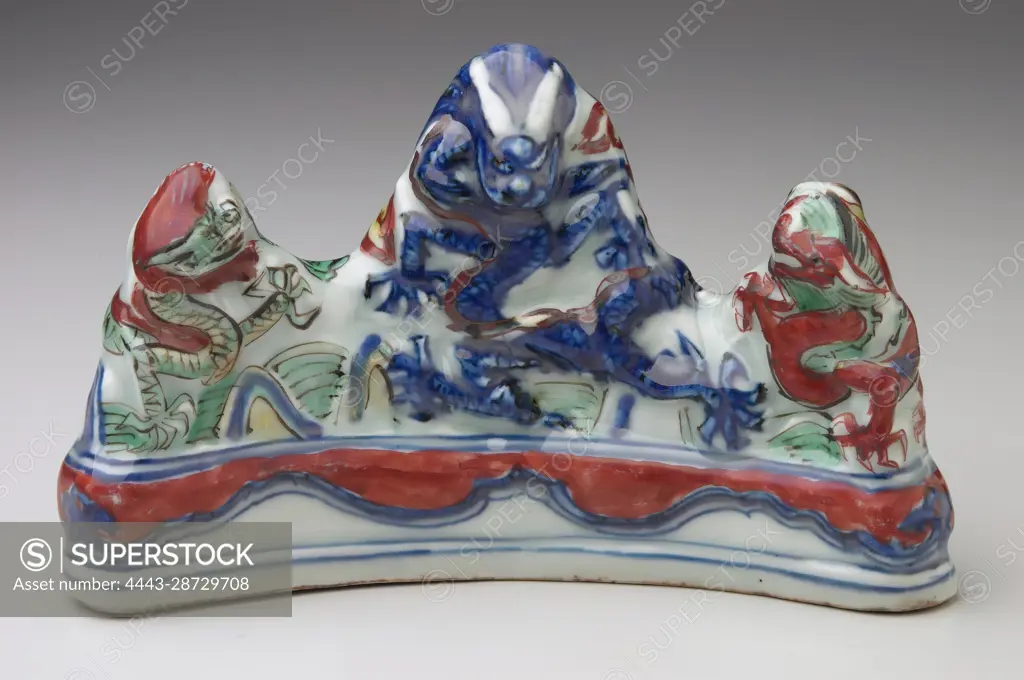
SuperStock offers millions of photos, videos, and stock assets to creatives around the world. This image of Three Dragon Brushrest, Wanli mark and period (1573-1619), 4 1/8 x 6 5/8 x 2 9/16in. (10.5 x 16.8 x 6.5cm), Wucai ware Porcelain with underglaze blue and polychrome overglaze enamel décor, China, 16th -17th century, Under Ming royal patronage, potters at Ching-te-chen introduced a series of fine porcelains decorated with new and improved overglaze polychrome enamels. The term wu-ts'ai means 'five colors' but it was used generically to mean 'polychrome' regardless of how many colors actually appeared on a vessel. The Wu-ts'ai overglaze colors included red, blue, green, yellow, and purple, and during Ming, they were usually used in conjunction with underglaze cobalt blue designs. The Wu-ts'ai palette gained favor during the Chia-ching (1522-66) and Wan-li (1573-1620) periods and was produced at imperial as well as private kilns. by Artokoloro is available for licensing today.
Looking for a license?
Click here, and we'll help you find it! Questions? Just ask!
Click here, and we'll help you find it! Questions? Just ask!
DETAILS
Image Number: 4443-28729708Rights ManagedCredit Line:Artokoloro/SuperStockCollection:Artokoloro Model Release:NoProperty Release:NoResolution:4278×2845