Three-Cornered Stone (Trigonolito) 13th-15th century Taíno Portable-sized sculptures, known as three-pointed stones or trigonolitos, were described by the Spanish chroniclers as having a connection to yucca or cassava, a staple root crop in the Caribbean. Three-pointed stones come in various sizes, from handheld to quite heavy, and feature a diversity of imagery ranging from anthropomorphic and zoomorphic phone. They mainly come from the Greater Antilles, but examples have been found as far south in the windward islands as The Grenadines. Creative sculptural expression, both extractive and additive, for the Taíno peoples was intertwined with sacred concepts such as zemí, ceremony, and rulership. Zemí figures were used as stands, reliquaries, or personal adornment. >. Zemí (or cemí) is a term used by Taíno peoples, the diverse societies that inhabited the Antilles archipelago before European contact, that linguistically relates to a quality akin to sweetness. Zemí refers not to an objec
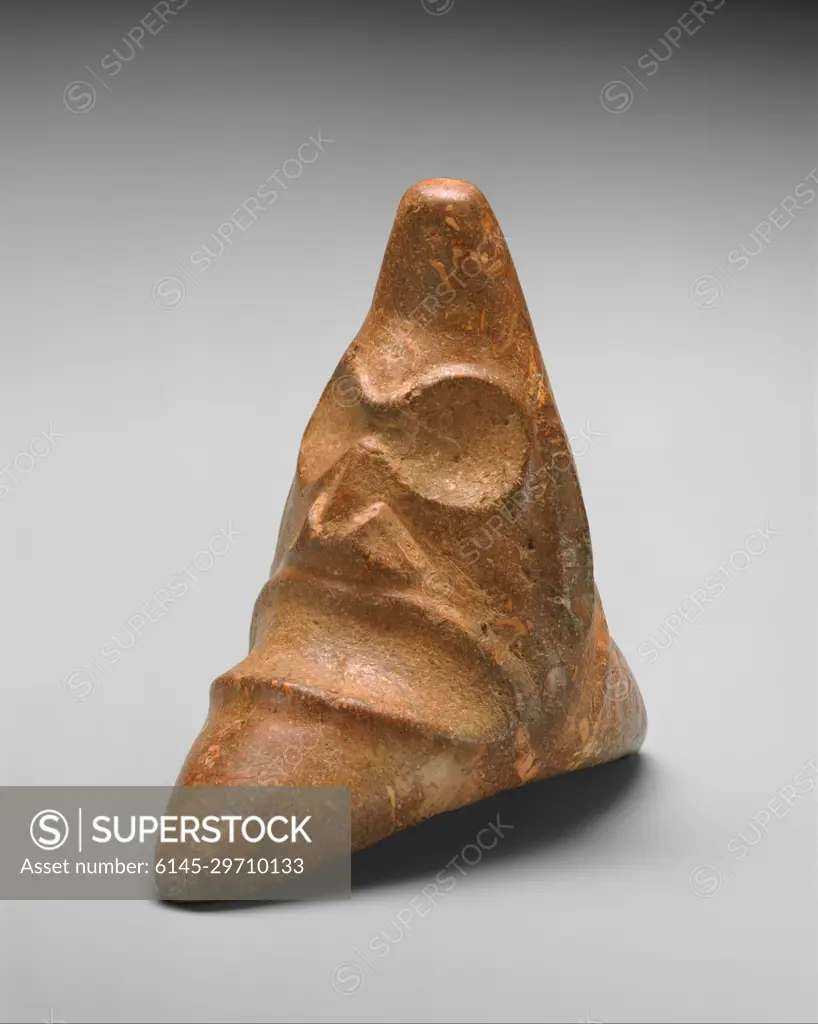
SuperStock offers millions of photos, videos, and stock assets to creatives around the world. This image of Three-Cornered Stone (Trigonolito) 13th-15th century Taíno Portable-sized sculptures, known as three-pointed stones or trigonolitos, were described by the Spanish chroniclers as having a connection to yucca or cassava, a staple root crop in the Caribbean. Three-pointed stones come in various sizes, from handheld to quite heavy, and feature a diversity of imagery ranging from anthropomorphic and zoomorphic phone. They mainly come from the Greater Antilles, but examples have been found as far south in the windward islands as The Grenadines. Creative sculptural expression, both extractive and additive, for the Taíno peoples was intertwined with sacred concepts such as zemí, ceremony, and rulership. Zemí figures were used as stands, reliquaries, or personal adornment. >. Zemí (or cemí) is a term used by Taíno peoples, the diverse societies that inhabited the Antilles archipelago before European contact, that linguistically relates to a quality akin to sweetness. Zemí refers not to an objec by Piemags/PL Photography Limited is available for licensing today.
Looking for a license?
Click here, and we'll help you find it! Questions? Just ask!
Click here, and we'll help you find it! Questions? Just ask!
DETAILS
Image Number: 6145-29710133Royalty FreeCredit Line:Piemags/PL Photography Limited/SuperStockCollection:PL Photography Limited Contributor:Piemags Model Release:NoProperty Release:NoResolution:1488×1861