Three border strips ca. 9th-8th century B.C. Assyrian These narrow strips are decorated with incised rows of connected circles, called a guilloche pattern, set within a border marked by a single line. Carved ivory pieces such as this were widely used in the production of elite furniture during the early first millennium B.C. They were often inlaid into a wooden frame using joinery techniques and glue, and could be overlaid with gold foil or inlaid with colored glass or stone pieces to create a dazzling effect of gleaming surfaces and bright colors. The gray color of these strips suggests that they were damaged by fire during the sack of the Assyrian palace buildings at Nimrud at the time of Assyrias final defeat in 614 and 612 B.C.Built by the Assyrian king Ashurnasirpal II, the palaces and storerooms of Nimrud housed thousands of pieces of carved ivory. Most of the ivories served as furniture inlays or small precious objects such as boxes. While some of them were carved in the same s
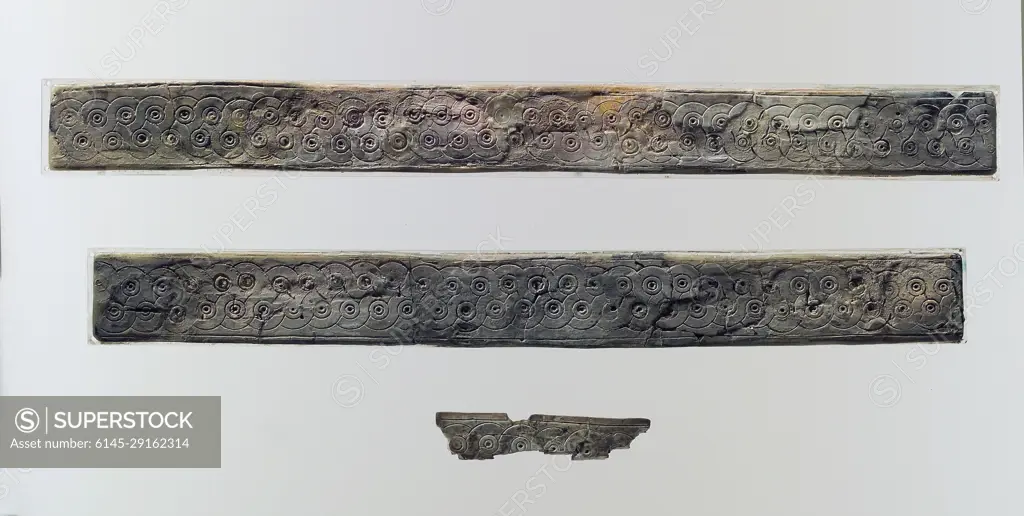
SuperStock offers millions of photos, videos, and stock assets to creatives around the world. This image of Three border strips ca. 9th-8th century B.C. Assyrian These narrow strips are decorated with incised rows of connected circles, called a guilloche pattern, set within a border marked by a single line. Carved ivory pieces such as this were widely used in the production of elite furniture during the early first millennium B.C. They were often inlaid into a wooden frame using joinery techniques and glue, and could be overlaid with gold foil or inlaid with colored glass or stone pieces to create a dazzling effect of gleaming surfaces and bright colors. The gray color of these strips suggests that they were damaged by fire during the sack of the Assyrian palace buildings at Nimrud at the time of Assyrias final defeat in 614 and 612 B.C.Built by the Assyrian king Ashurnasirpal II, the palaces and storerooms of Nimrud housed thousands of pieces of carved ivory. Most of the ivories served as furniture inlays or small precious objects such as boxes. While some of them were carved in the same s by Piemags/PL Photography Limited is available for licensing today.
Looking for a license?
Click here, and we'll help you find it! Questions? Just ask!
Click here, and we'll help you find it! Questions? Just ask!
DETAILS
Image Number: 6145-29162314Royalty FreeCredit Line:Piemags/PL Photography Limited/SuperStockCollection:PL Photography Limited Contributor:Piemags Model Release:NoProperty Release:NoResolution:4000×2016