Textile with Lotus and Arabesque Design 15th century This cotton, block-printed textile employs both Indian and Chinese ornamental motifs. Looking closely at Yuan period (ca. 1271-1368) silks, this textile emulates frontal facing lotus flowers seen in its center. The border of the textile fragment which include square-and-star patterning reflects Gujarati designs seen in tie-dye textiles (known as bandani.) The wavy lotus pattern was often used on Chinese storage jars found in Iran and therefore reflect the transregional dissemination of designs across geographies, especially during the fifteenth century. This textile fragment is one of a larger group of objects which were made in Gujarat, India, but found in Fustat, Egypt (known as Old Cairo.) It represents the intercontinental market and demand for vibrantly dyed and intricately block-printed Gujarati textiles that traveled across the Indian Ocean.. Textile with Lotus and Arabesque Design 448528
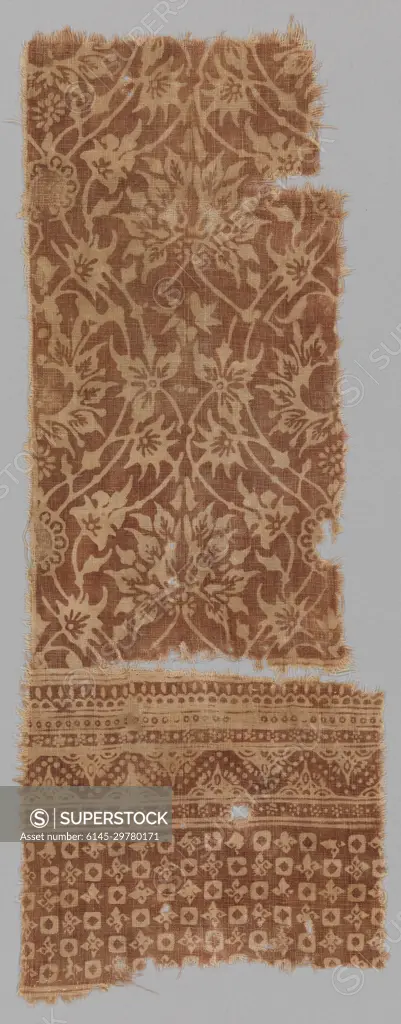
SuperStock offers millions of photos, videos, and stock assets to creatives around the world. This image of Textile with Lotus and Arabesque Design 15th century This cotton, block-printed textile employs both Indian and Chinese ornamental motifs. Looking closely at Yuan period (ca. 1271-1368) silks, this textile emulates frontal facing lotus flowers seen in its center. The border of the textile fragment which include square-and-star patterning reflects Gujarati designs seen in tie-dye textiles (known as bandani.) The wavy lotus pattern was often used on Chinese storage jars found in Iran and therefore reflect the transregional dissemination of designs across geographies, especially during the fifteenth century. This textile fragment is one of a larger group of objects which were made in Gujarat, India, but found in Fustat, Egypt (known as Old Cairo.) It represents the intercontinental market and demand for vibrantly dyed and intricately block-printed Gujarati textiles that traveled across the Indian Ocean.. Textile with Lotus and Arabesque Design 448528 by Piemags/PL Photography Limited is available for licensing today.
Looking for a license?
Click here, and we'll help you find it! Questions? Just ask!
Click here, and we'll help you find it! Questions? Just ask!
DETAILS
Image Number: 6145-29780171Royalty FreeCredit Line:Piemags/PL Photography Limited/SuperStockCollection:PL Photography Limited Contributor:Piemags Model Release:NoProperty Release:NoResolution:773×1970