Terracotta neck-amphora (jar) ca. 525-510 B.C. Attributed to the Antimenes Painter Obverse and reverse, between warriors, eyesA major iconographical innovation in Attic vase-painting about 540 B.C. was the introduction of pairs of eyes. Traditionally attributed to Exekias, it appears most commonly on cups but occurs on nearly every other shape. The motif was intended to ward off evil. In the context of the symposium (drinking party), it may have served against sickness and hangovers.. Terracotta neck-amphora (jar). Greek, Attic. ca. 525-510 B.C.. Terracotta; black-figure. Archaic. Vases
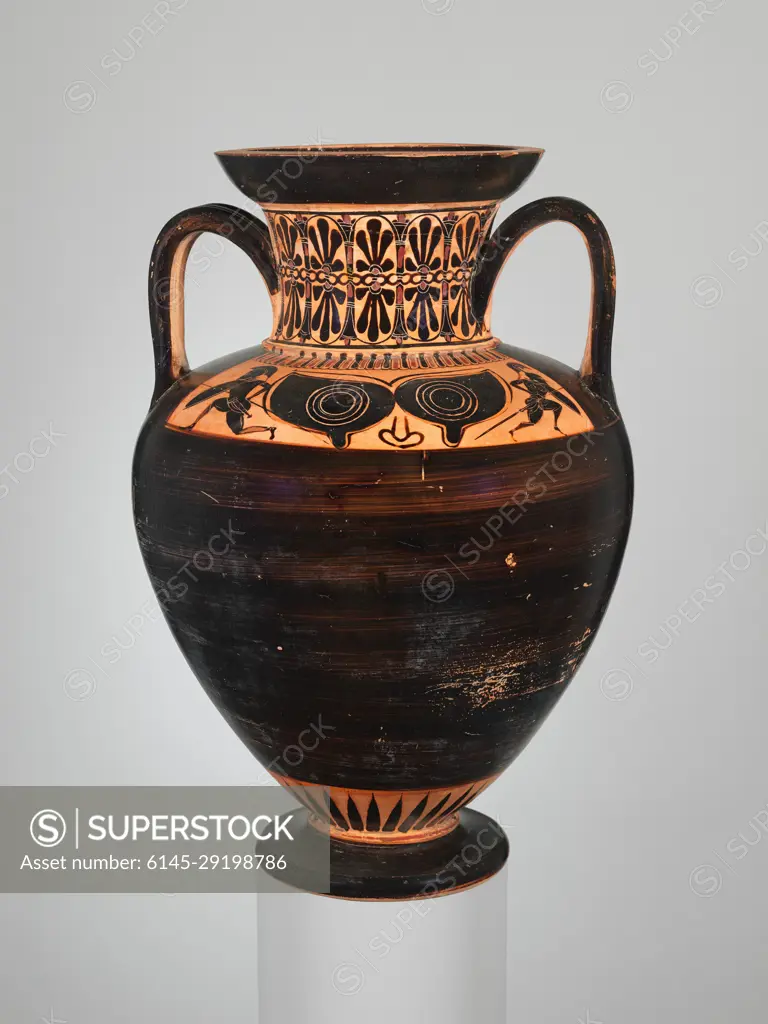
SuperStock offers millions of photos, videos, and stock assets to creatives around the world. This image of Terracotta neck-amphora (jar) ca. 525-510 B.C. Attributed to the Antimenes Painter Obverse and reverse, between warriors, eyesA major iconographical innovation in Attic vase-painting about 540 B.C. was the introduction of pairs of eyes. Traditionally attributed to Exekias, it appears most commonly on cups but occurs on nearly every other shape. The motif was intended to ward off evil. In the context of the symposium (drinking party), it may have served against sickness and hangovers.. Terracotta neck-amphora (jar). Greek, Attic. ca. 525-510 B.C.. Terracotta; black-figure. Archaic. Vases by Piemags/PL Photography Limited is available for licensing today.
Looking for a license?
Click here, and we'll help you find it! Questions? Just ask!
Click here, and we'll help you find it! Questions? Just ask!
DETAILS
Image Number: 6145-29198786Royalty FreeCredit Line:Piemags/PL Photography Limited/SuperStockCollection:PL Photography Limited Contributor:Piemags Model Release:NoProperty Release:NoResolution:3000×4000