Terracotta calyx-krater (mixing bowl) ca. 400-390 B.C. Attributed to the Dolon Painter Obverse, scene from a phlyax play. Reverse, three youthsThe representation shows a stage structure at the far right and the characters of a phlyax play, a type of farce favored in Southern Italy. A recent interpretation characterizes the two male figures in the center as accomplices about to steal the hag's goose and kid or to defy her threats to turn them in. Written in Attic Greek, the inscriptions indicate that the farce originated in mainland Greece but do not explain the story. Formerly attributed to the Tarporley Painter, a major Apulian master, the vase is now recognized as Lucanian under Apulian influence.. Terracotta calyx-krater (mixing bowl). Greek, South Italian, Lucanian. ca. 400-390 B.C.. Terracotta; red-figure. Late Classical. Vases
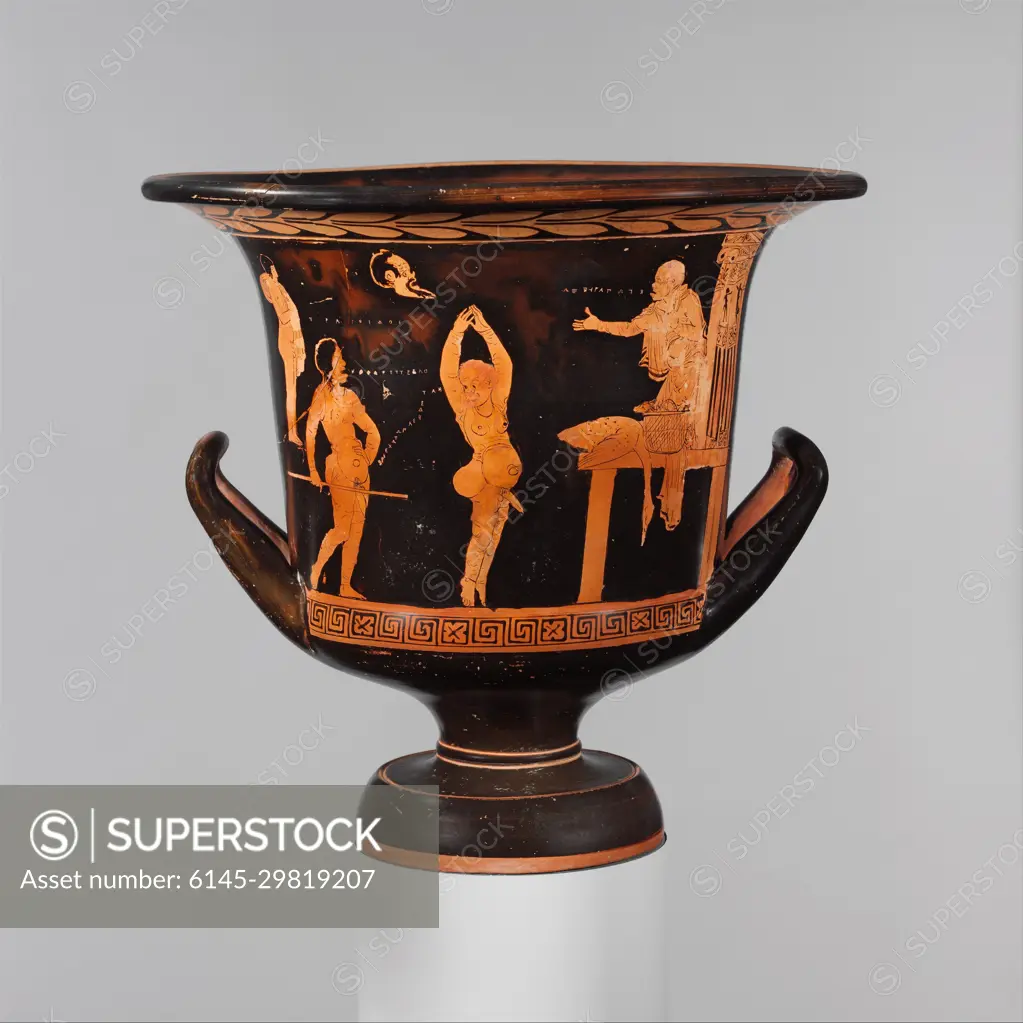
SuperStock offers millions of photos, videos, and stock assets to creatives around the world. This image of Terracotta calyx-krater (mixing bowl) ca. 400-390 B.C. Attributed to the Dolon Painter Obverse, scene from a phlyax play. Reverse, three youthsThe representation shows a stage structure at the far right and the characters of a phlyax play, a type of farce favored in Southern Italy. A recent interpretation characterizes the two male figures in the center as accomplices about to steal the hag's goose and kid or to defy her threats to turn them in. Written in Attic Greek, the inscriptions indicate that the farce originated in mainland Greece but do not explain the story. Formerly attributed to the Tarporley Painter, a major Apulian master, the vase is now recognized as Lucanian under Apulian influence.. Terracotta calyx-krater (mixing bowl). Greek, South Italian, Lucanian. ca. 400-390 B.C.. Terracotta; red-figure. Late Classical. Vases by Piemags/PL Photography Limited is available for licensing today.
Looking for a license?
Click here, and we'll help you find it! Questions? Just ask!
Click here, and we'll help you find it! Questions? Just ask!
DETAILS
Image Number: 6145-29819207Royalty FreeCredit Line:Piemags/PL Photography Limited/SuperStockCollection:PL Photography Limited Contributor:Piemags Model Release:NoProperty Release:NoResolution:3791×3792