Terracotta amphora (jar) ca. 540 B.C. Attributed to the Orvieto Painter Obverse, the Return of HephaistosReverse, banquetIn Attic vase-painting, horses are, by far, the most frequently depicted animal, with an emphasis on their beauty and speed. Representations of the Return of Hephaistos, in which the smith-god goes to Mount Olympos on the back of a donkey or mule, probably bring with them an implicit comparison with aristocratic riders and their noble mounts.This Chalcidian vase is a simplified adaptation of an Attic black-figure model.. Terracotta amphora (jar). Greek, Chalcidian. ca. 540 B.C.. Terracotta; black-figure. Archaic. Vases
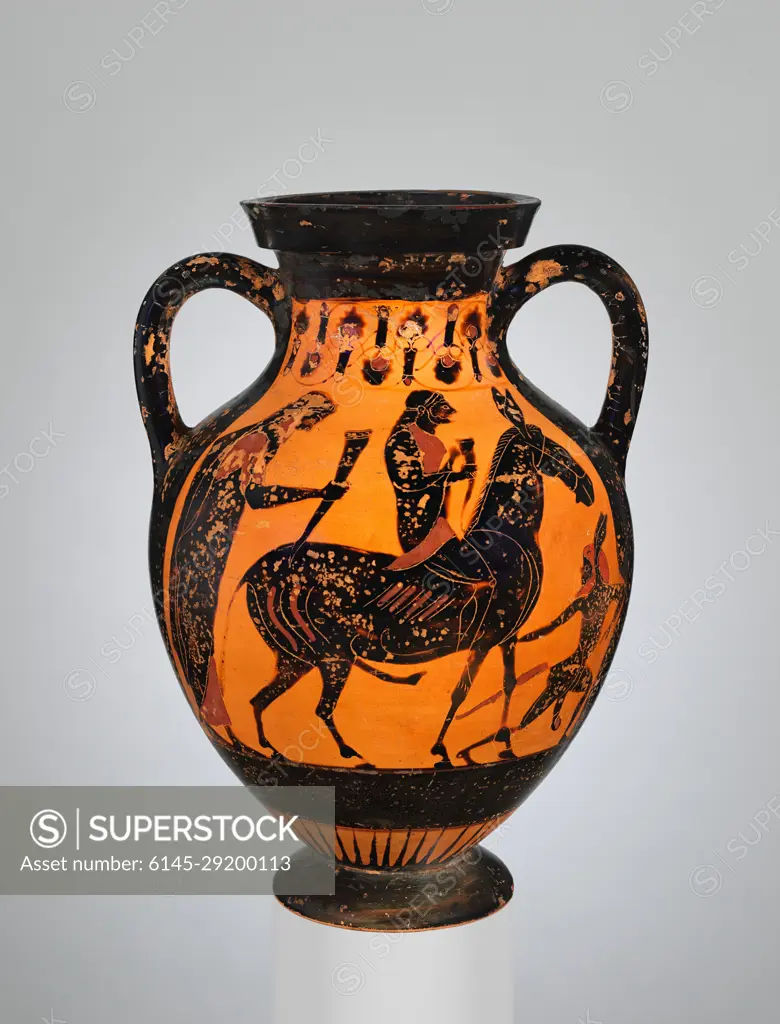
SuperStock offers millions of photos, videos, and stock assets to creatives around the world. This image of Terracotta amphora (jar) ca. 540 B.C. Attributed to the Orvieto Painter Obverse, the Return of HephaistosReverse, banquetIn Attic vase-painting, horses are, by far, the most frequently depicted animal, with an emphasis on their beauty and speed. Representations of the Return of Hephaistos, in which the smith-god goes to Mount Olympos on the back of a donkey or mule, probably bring with them an implicit comparison with aristocratic riders and their noble mounts.This Chalcidian vase is a simplified adaptation of an Attic black-figure model.. Terracotta amphora (jar). Greek, Chalcidian. ca. 540 B.C.. Terracotta; black-figure. Archaic. Vases by Piemags/PL Photography Limited is available for licensing today.
Looking for a license?
Click here, and we'll help you find it! Questions? Just ask!
Click here, and we'll help you find it! Questions? Just ask!
DETAILS
Image Number: 6145-29200113Royalty FreeCredit Line:Piemags/PL Photography Limited/SuperStockCollection:PL Photography Limited Contributor:Piemags Model Release:NoProperty Release:NoResolution:3047×4000