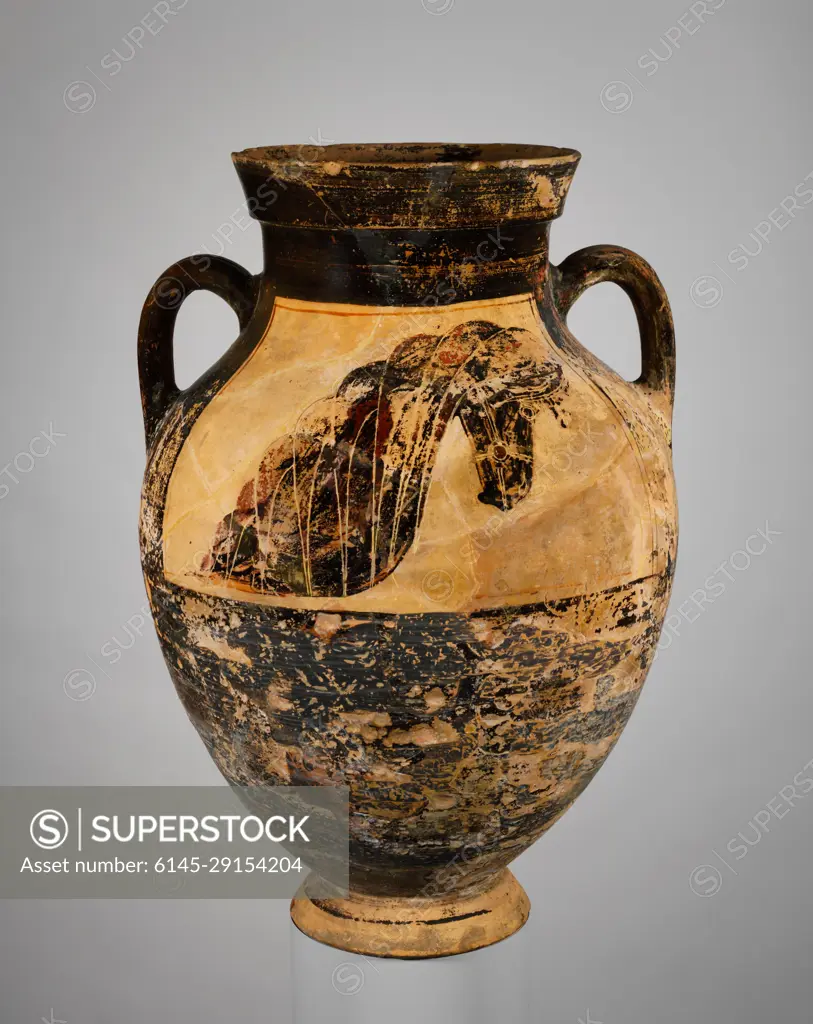
Terracotta amphora (jar) ca. 600 B.C. Attributed to The Horse-Head Amphorae Obverse and reverse, head of a horseThe so-called Horse-Head amphorae were produced during the first half of the sixth century B.C., especially the early part. With few exceptions, the subject of the front and back is a horse's head and neck. While the precise significance is unclear, the reference is clearly to the horse as a symbol of status and wealth. The vases vary in size and were widely exported in antiquity, to Italy, the eastern Mediterranean, and Egypt. Their function would have varied as well. Because of its size and the signs of wear, this example may have stood on a grave.. Terracotta amphora (jar) 251187 : Attributed to The Horse-Head Amphorae, Terracotta amphora (jar), ca. 600 B.C., Terracotta, H. 22 11/16 in. (57.6 cm). The Metropolitan Museum of Art, New York. Rogers Fund, 1922 (22.139.7)
SuperStock offers millions of photos, videos, and stock assets to creatives around the world. This image of Explore Ancient Greek Art: Exquisite Black-Figure Amphora Depicting Horse Motif by Piemags/PL Photography Limited is available for licensing today.
Looking for a license?
Click here, and we'll help you find it! Questions? Just ask!
Click here, and we'll help you find it! Questions? Just ask!
DETAILS
Image Number: 6145-29154204Royalty FreeCredit Line:Piemags/PL Photography Limited/SuperStockCollection:PL Photography Limited Contributor:Piemags Model Release:NoProperty Release:NoResolution:3178×4000