"Tenmangu," Sugawara no Michizane as Tenjin Traveling to China. Artist: Sengai Gibon (Japanese, 1750-1837). Culture: Japan. Dimensions: Image: 150 13/16 x 17 11/16 in. (383 x 45 cm). Date: early 19th century.This spontaneously sketched image of a Japanese courtier by the Rinzai Zen monk Sengai Gibon alludes to the famous story of Tenjin traveling to Tang-dynasty China. Tenjin is the name given to Heian-period statesman Sugawara Michizane (845-903) after he died in exile and was posthumously recognized as a Shinto deity. The three highly-cursive characters to the left of the figure read ""Tenmangu," which is the name of shrines created in Tenjin's honor. By extension, "Tenmangu" can also be used to refer to Tenjin or Michizane himself, as here. The plum was Michizane's favorite flower and he is often represented holding a branch of blossoming prunus. This theme was particularly popular with artists inspired by Zen Buddhism, for instance, see the version created by Konoe Nobutada (2015.
This asset has restrictions and cannot be purchased online. Get in touch for more details.
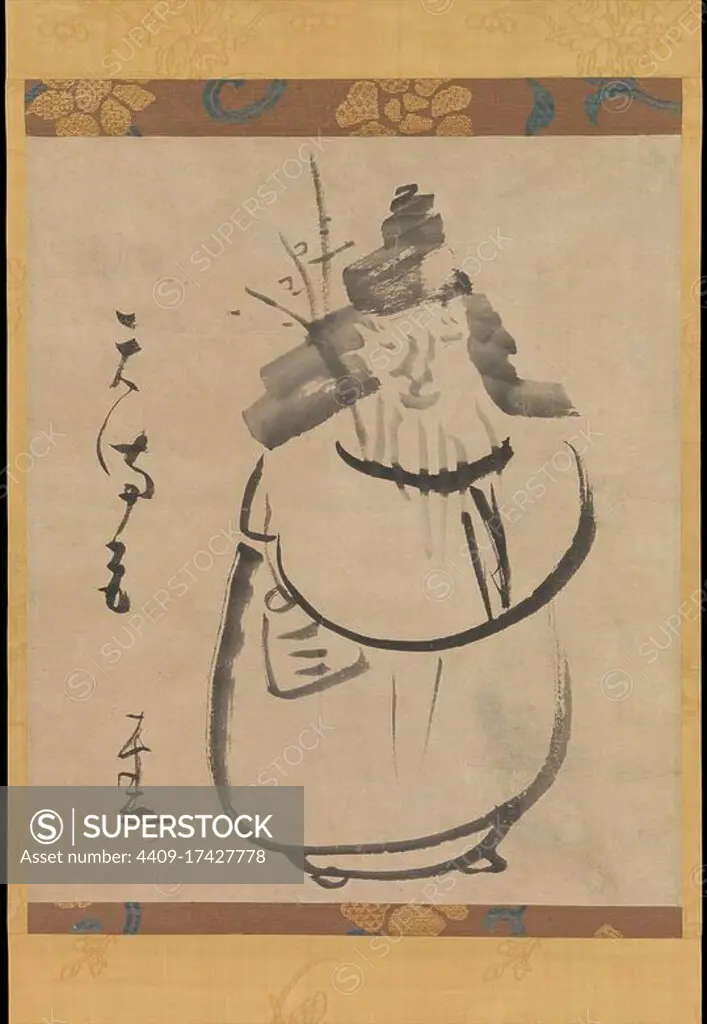
SuperStock offers millions of photos, videos, and stock assets to creatives around the world. This image of "Tenmangu," Sugawara no Michizane as Tenjin Traveling to China. Artist: Sengai Gibon (Japanese, 1750-1837). Culture: Japan. Dimensions: Image: 150 13/16 x 17 11/16 in. (383 x 45 cm). Date: early 19th century.This spontaneously sketched image of a Japanese courtier by the Rinzai Zen monk Sengai Gibon alludes to the famous story of Tenjin traveling to Tang-dynasty China. Tenjin is the name given to Heian-period statesman Sugawara Michizane (845-903) after he died in exile and was posthumously recognized as a Shinto deity. The three highly-cursive characters to the left of the figure read ""Tenmangu," which is the name of shrines created in Tenjin's honor. By extension, "Tenmangu" can also be used to refer to Tenjin or Michizane himself, as here. The plum was Michizane's favorite flower and he is often represented holding a branch of blossoming prunus. This theme was particularly popular with artists inspired by Zen Buddhism, for instance, see the version created by Konoe Nobutada (2015. by Album/Metropolitan Museum of Art, NY/Album Archivo is available for licensing today.
Looking for a license?
Click here, and we'll help you find it! Questions? Just ask!
Click here, and we'll help you find it! Questions? Just ask!
DETAILS
Image Number: 4409-17427778Rights ManagedCredit Line:Album/Metropolitan Museum of Art, NY/Album Archivo/SuperStockCollection:Album Archivo Contributor:Album / Metropolitan Museum of Art, NY Model Release:NoProperty Release:NoResolution:2949×4268