Tār (تار ) late 19th century Iranian (Persian) The tār first appeared around Shiraz and was quickly adopted in Afghanistan and Caucasia where it was modified. Iranian style tārs have bodies with two unequal heart-shaped openings which are covered by a thin lamb fetus membrane, a horn bridge and three double courses of strings. The skin belly is very responsive to the players touch and thus demands a high degree of virtuosity when plucked with a brass plectrum. In addition to lutes like the ūd, with large, vaulted backs, wood bellies, and relatively short, unfretted necks, the Middle East possesses a large number of long necked lutes. These may be identified by carved or carvel-built (strips of wood glued together) tear-shaped bodies, fretted necks, wooden bellies, and pegblocks which extend from the lute's neck (sāz, tanbūr types), or by bodies that incorporate a waist, bipartite, parchment-covered bellies and openwork pegboxes (tār type). Linguistic connections may be made between th
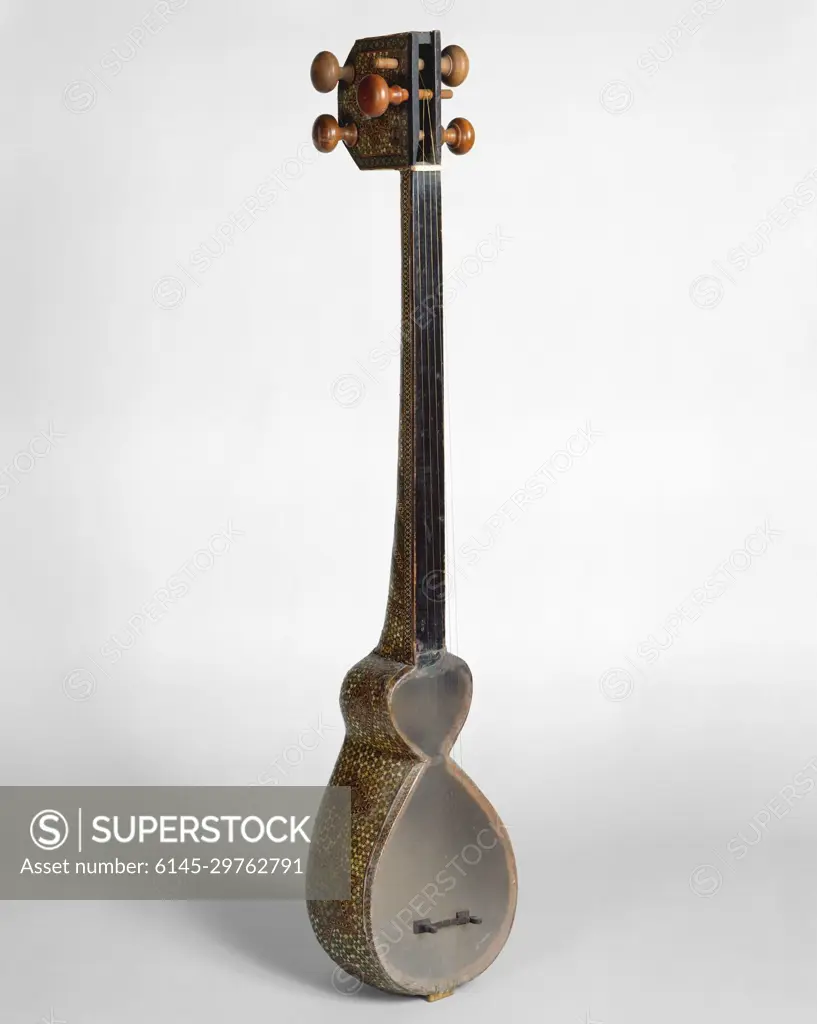
SuperStock offers millions of photos, videos, and stock assets to creatives around the world. This image of Tār (تار ) late 19th century Iranian (Persian) The tār first appeared around Shiraz and was quickly adopted in Afghanistan and Caucasia where it was modified. Iranian style tārs have bodies with two unequal heart-shaped openings which are covered by a thin lamb fetus membrane, a horn bridge and three double courses of strings. The skin belly is very responsive to the players touch and thus demands a high degree of virtuosity when plucked with a brass plectrum. In addition to lutes like the ūd, with large, vaulted backs, wood bellies, and relatively short, unfretted necks, the Middle East possesses a large number of long necked lutes. These may be identified by carved or carvel-built (strips of wood glued together) tear-shaped bodies, fretted necks, wooden bellies, and pegblocks which extend from the lute's neck (sāz, tanbūr types), or by bodies that incorporate a waist, bipartite, parchment-covered bellies and openwork pegboxes (tār type). Linguistic connections may be made between th by Piemags/PL Photography Limited is available for licensing today.
Looking for a license?
Click here, and we'll help you find it! Questions? Just ask!
Click here, and we'll help you find it! Questions? Just ask!
DETAILS
Image Number: 6145-29762791Royalty FreeCredit Line:Piemags/PL Photography Limited/SuperStockCollection:PL Photography Limited Contributor:Piemags Model Release:NoProperty Release:NoResolution:1464×1833